Friday, September 26, 2025

CINEMASCOPE: SUBCULTURES AND SUBTEXT

Published September 21, 2025
THE CONVERSATION


Muriel (left) finds access to her queerness when she meets Gail (right) | Sony Pictures


On Swift Horses, directed by Daniel Minahan and adapted from the novel by Shannon Pufahl, is a romantic drama set in the US in the 1950s — an era familiar from classic Hollywood cinema and countless nostalgic films and TV series.

Daisy Edgar-Jones plays Muriel, who is quickly (if somewhat reluctantly) engaged to be married to Lee (Will Poulter) — a working-class man with aspirations to the American dream. The arrival of Lee’s brother Julius (Jacob Elordi), however, reveals cracks in the young couple’s seemingly perfect relationship.

That this is a queer film is not immediately obvious from its publicity. In fact, promotional materials might lead audiences to assume that Muriel and Julius embark upon an affair.

While the pair are drawn to one another, the connection between them is more complex. Muriel is struggling with the gendered expectations of the era and, as the film will go on to explore, both characters are queer.

Upon moving to California with Lee, Muriel meets two queer women who will open up new possibilities. The first is the glamorous Gail (portrayed by queer, non-binary artist Kat Cunning), who kisses Muriel and leads her to a local gay bar. The second is Sandra (Sasha Calle), her Latinx, visibly queer coded neighbour.

Both meetings showcase the lingering looks and subtle flirtations of queer romance — codes forged out of necessity and often used, or interpreted, as queer subtext. In On Swift Horses, however, queerness takes centre stage as Muriel and Sandra begin an affair.

On Swift Horses is a film that, ultimately, fails to go deep enough into the complex lives of queer people in the ’50s

Meanwhile, Julius abandons plans to join Lee and Muriel in suburban California in favour of a wilder, freer life in Vegas. It’s in the desert city where, finding work in a casino, he meets and falls in love with Henry (played by Mexican actor Diego Calva).

In both romances, the iconography of 1950s Americana are reimagined, making visible, to an extent, the very real queer subcultures of the era. For example, in the gay bar that Gail leads Muriel to, the lesbian party Muriel stumbles upon at Sandra’s house, and the secret haunts of gay men. In these scenes, the hidden but vibrant worlds of 1950s queer people are represented.

This was, after all, the era of butches (masculine-presenting lesbians), studs (Black masculine-presenting lesbians) and femmes (feminine-presenting lesbians) — these were identities that emerged in queer women’s bar communities that resisted the heteronormativity of the era. It encompassed clothing, roles and relationships. It also saw the rise of the homophile movement, which was early LGBTQ+ activism that challenged social stigmas and sought acceptance, albeit on limited terms.

Both secretive subcultures and social movements were necessary as this was a period of significant legal and social repression, with the government viciously targeting communists and those deemed “deviants”.

Included in this was the ‘Lavender Scare’ where queer people were targeted. The film portrays this too, with police raids and violent attacks always on the periphery of queer lives. As Gail warns Muriel, “We’re all just a hair’s breadth from losing everything.”

This poignant line has contemporary resonances. As Calle notes in an interview: “…even though the movie is based in the ’50s, everything that happened — the oppression that was happening at that time — is so relevant today.”

The film is enjoyable and the ending hopeful. However, I ultimately found it unsatisfying, as the characters and narrative never really go deep enough. While Sandra insists to Muriel that she is a real person, the film doesn’t really give her much room to be one — her life and story remain unknown, her function is largely to facilitate Muriel’s journey (a familiar trope).

Similarly, while Henry does point out that, as a Mexican queer man, things are different for him than they are for Julius, the queer Latinx characters remain secondary and the racialised context of the period is never fully explored.

Interestingly, director Daniel Minahan is best known for television — having directed hit series such as Six Feet Under, True Blood, Game of Thrones and Fellow Travellers (a series that also depicts closeted queer lives in the ’50s).

As the critic Mike McCahill notes in The Guardian, On Swift Horses might similarly have worked better as a television series. In this format, the more expansive possibilities of a TV show would have offered more space to flesh out the characters and their trajectories.

The writer is a Senior Lecturer in Screen at the University of Westminster in the UK

Republished from The Conversation

Published in Dawn, ICON, September 21st, 2025


The cost of breathing air

Published September 22, 2025
DAWN


Karachi is not a green city by any stretch of the imagination, unlike some of the other big cities. But even by our twisted standards, there is a strange dejection in the air the moment you enter Korangi or cross Mausamiyat in the afternoon.

It’s not because you have to take University Road (whatever patches exist) for the latter, but because the scorching sun directly shines on you, with hardly any trees to protect and just… a lot of dust.

Yet surprisingly, among the major urban centres in the country, Karachi had the lowest average PM2.5 reading of 47.1 micrograms per cubic meter, while Lahore was ahead of the rest at 102.1 g/m³. Such relative performance is absolutely meaningless, though, and should not at all be comforting because all of Pakistan’s major six cities were well above the World Health Organisation-prescribed concentration of 2.5 g/m³. To sum up, even the best performer is 19x beyond the acceptable threshold.

Of course, this is all stale information, and the problem has existed for decades. In fact, Lahore’s pollution concentration was already 33 g/m³ by 1998. At least from an outsider’s perspective, it feels like the whole conversation came into the limelight when our consultants in Islamabad sniffed out new funding opportunities early on. Not long after, the government probably wanted in too, seeing large projects from global development partners, along with the opportunity to make sympathetic and scapegoating statements at the Conference of the Parties (COP).

Does the hyperbole lead to any meaningful change? That depends on how you measure success. If the creation of new policy frameworks or reports qualifies, then we have something to cherish. However, by a relatively stricter barometer of real, on-ground progress in terms of, say, lower emissions, better waste management etc, there is little to show for.

The choice between economic opportunity and respiratory health shouldn’t define a generation’s future, yet for now, it remains Pakistan’s harsh reality

While this is true for climate change at large, where no country seems capable of riding against the wave, air pollution in comparison is a much narrower problem with local solutions. When Beijing decided to tackle its air quality crisis, air quality in northern Chinese cities improved by 35 per cent between 2013 and 2017 through comprehensive action plans. No international treaties or grandiose statements on the nature of global inequality were needed.

In a way, it probably also makes funding more challenging for donors like thinking big while local resources are practically always limited. However, the World Bank’s approval of $300 million for the Punjab Clean Air Program (PCAP) in March represents a landmark event in this regard, which will support the provincial government’s “Smog Mitigation Action Plan (SMAP) in key sectors such as transport, agriculture, industry, energy, and municipal services.

“Key interventions include the investment of 5,000 super seeders to reduce the main issue of the excessive seasonal fog, crop residue burning, the introduction of 600 electric buses to foster a modal shift to public transport, the expansion of regulatory-grade air quality monitoring stations across Punjab, and the enhancement of fuel quality testing through the establishment of two new fuel testing laboratories,” as per the original press release.

Some of the interventions will obviously overlap with the broader fight against climate change. According to the World Bank, a co-benefit of the PCAP’s reduction in PM2.5 is an estimated cut of 35.6m metric tons of carbon dioxide emissions over the next 12 years.

While such interventions are quite needed, the resources, by and large, have to come from locally. China illustrates this example quite well, where the central and provincial governments (of Hebei) committed $2 billion between 2017 and 2019 for combating air pollution. This amount was four times what the World Bank had provided as a loan in 2016.

Here too, the governments — federal, provincial, and if we ever come to that, local — need to play the biggest role in not only creating the awareness for driving behavioural change but also ensuring the carrots and sticks are in place. Plus, it’s not like if they don’t dole out funds for this purpose, there wouldn’t be costs. According to a slightly dated World Bank study, total welfare losses from air pollution in the country are estimated at almost 6pc of the gross domestic product.

Even leaving aside the opportunity costs, there are direct consequences for the lack of action, which are reflected in the health expenditure, which stood at Rs924bn as reported by provincial and central authorities.

According to the demographic survey 2020, almost 7.5pc of deaths were attributable to asthma and respiratory diseases, primarily caused by air pollution. While it is hard to pinpoint numbers, a Pakistan Bureau of Statistics dataset shows that at least over 10pc of out-of-pocket expenses happen to be on diseases that are exacerbated by air pollution.

Till then, there would always remain a trade-off between breathing clean air and making a professional career. Don’t hold on to the idea of counting stars in the deep midnight. The choice between economic opportunity and respiratory health shouldn’t define a generation’s future, yet for now, it remains Pakistan’s harsh reality.

The writer is the co-founder of Data Darbar and works for the Karachi School of Business and Leadership


Published in Dawn, The Business and Finance Weekly, September 22nd, 2025Follow Dawn Business on X, LinkedIn, Instagram and Facebook for insights on business, finance and tech from Pakistan and across the world.
UN: struggling at 80

Published September 24, 2025 
DAWN

THERE’S more than one way of looking at the formal recognition of a non-existent Palestinian state by a clutch of Western nations. Even the most fervid optimists can’t pretend that this symbolic move could help impede the Gaza genocide unless words are followed by action.

Symbolism isn’t always useless. Even belated recognition by traditional Israeli allies, just as the occupying power is kiboshing the prospect of a Palestinian state, might carry some moral weight. But the gesture is meaningless as long as some of them continue to collude with the Israeli military. The UK, in particular, has been directly complicit in the genocide.

The Netanyahu regime has responded to the recognition by threatening bilateral retaliation as well as West Bank annexation, which is informally proceeding apace. An immediate arms embargo would be the logical response. But logic flounders where hypocrisy is the norm — and that includes flogging the dead horse of a ‘two-state solution’, not least at the Saudi-French conference coinciding with the 80th anniversary session of the UN General Assembly.

The UN has been struggling to uphold its relevance as an organisation set up in the aftermath of World War II and the accompanying genocide against European Jews “to save succeeding generations from the scourge of war”. It has faced more failures than successes on that front, but a wide range of UN initiatives and organs continue to benefit humanity in various ways.

Much of what is now known as the Global South, including the Indian subcontinent, was still colonised by European powers when the General Assembly was first convened. The complexion of the UN drastically changed over the succeeding decades as a plethora of Afro-Asian states won liberation, and the global organisation ultimately played a key role in ridding South Africa of the scourge of apartheid after even the last holdouts — then, as now, the UK and US — could no longer prop up the white-supremacist regime in Pretoria.

The UN’s Palestinian failure looms large.


It took almost three decades for the anti-apartheid initiatives to bear fruit, and while the process was pockmarked by all manner of atrocities, there was no obviously genocidal agenda. Nonetheless, its recent history helps to explain why it was South Africa that placed Israel in the dock at the International Court of Justice. Any verdict in that case will come too late for the Palestinians who are being butchered every day, while the authors of the 1916 Sykes-Picot Agreement and the Balfour Declaration put up the pretence of humanitarian concerns even as they continue to aid the genocide.

A different way of looking at it is offered by Columbia University professor Joseph Massad, who argues that the real purpose of the recent recognitions “is to save Israel from itself by safeguarding its right to remain a Jewish-supremacist state” and that “Western recognition of a fictive Palestinian state hinges entirely on their long-standing recognition of the racist state of Israel alongside it. It is also engineered to shore up the collaborating Palestinian Authority as a reliable subcontractor of Israel’s colonial occupation of Palestinian land by christening it a ‘state’”.

The US prevented even the head of what Massad justifiably derided as “a loyal enforcer of Israel’s occupation since 1993” from appearing at the UN. Mahmoud Abbas, nine years older than the 80-year-old UN, denied a US visa, appeared on video link at the Saudi-French circus, and devoted much of his discourse to dissing Hamas.

It’s worth recalling that Hamas — flawed on many fronts, but more attractive to the average Palestinian than the compromised Fatah — won the last Palestinian parliamentary elections in 2006, but was evicted from a governing role by Israel and its Western allies, and thereby pushed into claiming Gaza as its domain after an Israeli-sponsored civil war with the PLO. Israel has subsequently thwarted every attempt at a reconciliation between Hamas and Fatah.

The current focus on Hamas as an obstacle to peace ignores its history as an anti-PLO initiative sponsored by the Zionist state. If Hamas and its resistance are anathema to those who are currently recognising Israel, what kind of alternative do they envisage? The Islamist tendencies of Hamas can be questioned, but can its efforts entirely be divorced from its tendencies as the only viable resistance to the Zionist onslaught?

The truth is that not much will change until Israel’s chief sponsor shifts its trajectory. Donald Trump was yet to appear at the UN when this comment was written, but it can be predicted that nothing good will come of it. Unless Trump could somehow be persuaded that his chimera of a Palestinian-free Gaza Riviera is an unachievable travesty.

The UN’s struggles for relevance, meanwhile, might help to convince it of the follies it helped to perpetrate in 1948.

mahir.dawn@gmail.com

Published in Dawn, September 24th, 2025

‘World is going to hell’: US president rails against UN
Published September 24, 2025


PRESIDENT Trump addresses the UN General Assembly.—AFP


• Calls climate change a ‘con job’, terms renewable energy ‘a joke’

• Boasts of stopping ‘seven wars’; questions the need for a global watchdog

• Criticises European immigration policies, offers his own crackdown on immigrants as a model to follow

• Jokingly complains about malfunctioning escalators, teleprompters

UNITED NATIONS: In a combative, wide-ranging speech before UN General Assembly on Tuesday, US President Donald Trump railed against climate change, and told world leaders their countries were “going to hell” because of their immigration policies.

The 56-minute speech was a rebuke to the world body and a return to form for Trump, who routinely bashed the UN during his first term as president.

Trump, who has cast himself as a peacemaker in a bid to win the Nobel Peace Prize, complained that the United Nations did not support his efforts to end conflicts around the world.


“I ended seven wars, dealt with the leaders of each and every one of these countries, and never even received a phone call from the United Nations offering to help,” he said.

“What is the purpose of the United Nations? The UN has such tremendous potential … but it’s not even coming close to living up to that potential. All they seem to do is write a really strongly worded letter and then never follow that letter up. It’s empty words, and empty words don’t solve war. The only thing that solves war and wars is action,” he said.

However, in a meeting with the UN chief after his speech, Trump struck a softer note, saying: “Our country is behind the United Nations 100pc… I may disagree with it sometimes, but I am so behind it”.

In a moment of levity, Trump jokingly complained that a UN escalator had abruptly stopped as he and First Lady Melania Trump were halfway up and then the teleprompter in the General Assembly did not work.

“I can only say that whoever’s operating this teleprompter is in big trouble,” he said. These are the two things I got from the United Nations a bad escalator and a bad teleprompter.” a UN official said the White House operated the teleprompter.

After Trump finished speaking, UNGA President Annalena Baer­bock said: “The UN telep­r­o­mpters are working perfectly.”

‘Pet’ topics

But much of his speech was dominated by two of his biggest grievances: climate change and immigration.

President Trump called climate change a “con job” and urged a return to a greater reliance on fossil fuels as he mocked renewables as a “joke”.

The “carbon footprint is a hoax made up by people with evil intentions, and they’re heading down a path of total destruction,” he insisted.

“We’re getting rid of the falsely named renewables, by the way, they’re a joke, they don’t work, they’re too expensive,” he said at another point, calling wind technology “so pathetic, so bad,” and boasted that he had instead “unleashed” massive efforts to drill for new oil, gas and coal reserves. “Immigration and their suicidal energy ideas will be the death of Western Europe,” he said. Trump also offered his US immigration crackdown as a case study for what other world leaders should do to curb mass migration he says is altering the fabric of nations.

He also mocked Nato allies for not shutting down purchases of Russian oil.

“They’re funding the war against themselves. Who the hell ever heard of that one? In the event that Russia is not ready to make a deal to end the war, then the United States is fully prepared to impose a very strong round of powerful tariffs,” he said. Scientists and world leaders reacted sharply to the US president’s barbs.

“President Trump and his administration continue to spew lies and disinformation about climate science and the overwhelming benefits of clean energy, a grave disservice to the American people,” said Rachel Cleetus of the Union of Conc­erned Scientists.

“Climate change is here, it’s costly, and people need real solutions, not propaganda designed to boost the profits of fossil fuel polluters,” she argued.

Published in Dawn, September 24th, 2025


UNGA at 80: time to act
Published September 20, 2025
DAWN
The writer is chief executive of the Civil Society Coalition for Climate Change.


AS the United Nations General Assembly (UNGA) marks its 80th session in 2025, it stands at a critical crossroads — not just as a platform for global diplomacy, but also as a moral compass in an era of escalating climate emergency.

What began in 1945 as a beacon of peace and multilateralism must now evolve to meet the greatest existential threat of our time: climate change. And in doing so, it must acknowledge the human rights dimensions of this crisis, ensuring justice for those least responsible but most affected.

In this historic year, the UNGA cannot afford to offer only symbolic gestures. It must champion real, urgent climate action, particularly in the realm of adaptation and funding for loss and damage, and push for the recognition of climate chan­ge not just as an environmental or economic issue, but also as a violation of fundamental human rights.

Nowhere is this injustice starker than in Pakistan, which has faced one of the worst climate disasters in recent history. In 2022, catastrophic floods submerged a third of the country, affecting 33 million people, killing over 1,700 people and displacing millions. The economic damage was estimated at over $30 billion. Monsoon- or cloudburst-triggered floods in 2025 have left more than 800 people dead since June.

For a country responsible for less than one per cent of global greenhouse gas (GHG) emissions, the devastation was not just tragic, it was unjust. Pakistan’s experience is a grim reminder that climate change respects no borders and its impacts are disproportionately felt by nations and populations with the least resources to cope.

The UN General Assembly cannot afford to offer only symbolic gestures. It must champion real, urgent climate action.

The recurring floods in Pakistan aren’t merely a natural disaster; they are a symptom of a global system failing its most vulnerable. As the climate crisis intensifies, extreme weather events will no longer remain isolated but become more frequent and intense.

The creation of the Loss and Damage Fund at COP27 was a historic moment, recognising the responsibility of high-emitting countries to support those suffering the worst climate impacts. However, nearly two years on, the fund remains under-financed and under-delivered. Without substantial and sustained contributions, the promise of the fund will remain hollow.

Adaptation efforts aimed at helping communities adjust to the changing climate are also woefully under-funded. According to the UN, adaptation finance needs in developing countries could rise to $300bn annually by 2030, yet current flows are just a fraction of that. This shortfall translates directly into lives lost, livelihoods destroyed and futures foreclosed.

The 80th session of the UNGA must serve as a turning point. Member states must move beyond pledges and towards binding financial commitments to fund adaptation and loss and damage. They must recognise that climate finance is not charity but compensation for harm caused, and a step towards a more just and stable world.

The moral imperative for climate action gained significant legal and ethical weight with the International Court of Justice’s (ICJ) advisory opinion delivered in July 2025. The non-binding advisory opinion states that countries have a legal obligation under international law to curb GHG emissions and protect the climate system, particularly in relation to human rights and intergenerational equity.

This landmark case marks a profound shift in how the world perceives climate change — not just as a scientific or geopolitical issue, but as a matter of justice and human dignity. The ICJ’s advisory opinion affirms that governments have legal obligations to protect their citizens from climate harm and must act with urgency in reducing emissions and financing resilience.

Climate-induced forced displacement, food insecurity, water scarcity and growing inequality are all fundamentally human rights violations. Nations that breach climate obligations and cause harm may have to pay reparations to the affected countries.

The UN, with its long-standing commitment to human rights, must take this moment to align its climate response accordingly. It must support mechanisms to hold nations and corporations accountable for climate-related harm and elevate the voices of communities on the front lines.

As world leaders gather in New York to commemorate 80 years of the UNGA, there is both celebration and reckoning. The UN has presided over decades of dialogue, diplomacy and peace-building, but it must now rise to meet the challenge of climate justice with the same resolve.

We need a dedicated ‘UN Climate Justice Council’ to monitor, report on, and advise states on fulfilling their human rights obligations under climate law. We need robust financial commitments to adaptation and loss and damage, not in the billions, but in the trillions. And we need legal pathways for the victims of climate injustice to seek redress.

Climate change is the defining issue of our generation, and how we address it will define the legitimacy of global governance for decades to come. The outcome of the 80th UNGA must not be limited to lofty speeches, but reflect the aspirations of the global majority under threat. It must choose justice over delay, action over apathy, and responsibility over indifference.

Eighty years ago, the founders of the United Nations pledged to “save succeeding generations from the scourge of war”. Today, the scourge is climate change and the generation is already here. Let the legacy of the 80th UNGA be one of courage, compassion and commitment to a liveable and equitable future for all. The UN at 80 must rise to the occasion.


aisha@csccc.org.pk

Published in Dawn, September 20th, 2025

Trump administration proposes new H-1B visa process favouring higher-skilled, better-paid workers

Men riding motorbikes travel past an advertisement of a visa consultancy office in Ahmedabad, India on September 23. — Reuters

Reuters Published September 23, 2025


The Trump administration released a proposal on Tuesday that would rework the H-1B visa selection process to favour higher-skilled and better-paid workers, according to a related Federal Register notice, a move that follows a White House proclamation on Friday introducing a $100,000 fee for the visas.

The new process, if finalised, would give heavier weight to applications by employers who pay high wages if annual requests for the visas exceed the statutory limit of 85,000, the notice said.

The move aims to better protect Americans from unfair wage competition from foreign workers, it said.

President Donald Trump launched a wide-ranging immigration crackdown after taking office in January, including a push for mass deportations and trying to block citizenship for children of immigrants in the United States illegally.

In recent days, his administration intensified its focus on the H-1B programme, popular with tech and outsourcing companies for hiring skilled foreign workers. The Trump administration said on Friday it would ask companies to pay $100,000 per year for H-1B visas.

Some big tech companies warned visa holders to stay in the US or quickly return, sparking a chaotic scramble to get back to the US. The White House later clarified that the fee would apply only to new visas.

The planned regulation, posted on Tuesday, would change an existing lottery process to obtain the visas if demand surpasses supply in a given year, creating wage tiers where higher-paying jobs would have a better chance of being selected.

The process to finalise a regulation can take months or even years. The notice suggested that the new rules could be in place for the 2026 lottery, meaning before a March registration period.

Trump, a Republican, sought to reshape the H-1B process during his 2017-2021 presidency, but was stymied by federal courts and limited time at the end of his presidency.

A similar regulation that aimed to shift the lottery process toward higher-paid applicants was delayed by Trump’s Democratic predecessor, Joe Biden, before it could go into effect in March 2021. It was then blocked by a federal judge in September 2021 and withdrawn by the Biden administration three months later.

The total wages paid to H-1B workers would increase to $502 million in fiscal year 2026, which begins on October 1, the notice said, citing US Department of Homeland Security (DHS) estimates.

Wages would increase by $1 billion in fiscal 2027, $1.5bn in fiscal 2028 and $2bn in fiscal 2029-2035, it said.

An estimated 5,200 small businesses that currently receive H-1B visas would suffer a significant economic impact due to the loss of labour, DHS said.

US Citizenship and Immigration Services, which issued the proposal, will give the public 30 days to comment beginning on Wednesday, the notice said.

The visa allows American firms to hire skilled workers essential to filling talent gaps and keeping them competitive. The programme’s supporters include Elon Musk, a naturalised US citizen born in South Africa, who has himself held an H-1B visa.

Critics argue that the programme allows firms to suppress wages and sideline Americans who could do the jobs.

India was the largest beneficiary of H-1B visas last year, accounting for 71 per cent of the approved beneficiaries, while China was a distant second at 11.7pc, according to government data.

The H-1B programme offers 65,000 visas annually to employers bringing in temporary foreign workers in specialised fields, with another 20,000 visas for workers with advanced degrees.
PAKISTAN


Poverty trap
Published September 26, 2025 
DAWN


THE new World Bank report, Reclaiming Momentum Towards Prosperity, is a sobering reminder that Pakistan’s current growth and development model is no longer fit to sustain reduction in poverty and inequality.

The model, which supported initial gains in poverty alleviation before running aground, has already eroded two decades of progress as poverty trends reversed over the past three years. A new development trajectory is needed, one which prioritises inclusive growth, equity and sustained investment in human capital, the WB said.

The bank also called for the overhaul of the present development model at the report’s launch in Islamabad recently. “Reforms that expand access to quality services, protect households from shocks and create better jobs — especially for the bottom 40pc — are essential to break cycles of poverty and deliver durable, inclusive growth,” it said.

Poverty, which had declined from 64.3pc in 2001-02 to 21.9pc in 2018-19, has been climbing again.

It rose to 24.7pc in 2019-20, dipped briefly to 18.3pc in 2021-22, and then surged to 25.3pc in 2023-24 — a seven percentage point increase in just two years. If confirmed by the Household Integrated Economic Survey 2023-24, currently underway, it would represent a significant reversal.

The WB rightly identifies multiple shocks — Covid-19, inflation, floods, political instability, and macroeconomic stress, resulting in low and volatile growth — as important triggers. But it is equally clear that the deeper problem lies in a consumption-driven growth model, which has failed to deliver resilience, jobs or equitable progress. That “progress in poverty reduction is threatened by structural vulnerabilities” is a warning about the fragility of a system relying too heavily on unsustainable growth patterns.

The report acknowledges that Pakistan’s social protection programmes have shielded many families from destitution. But, as it makes clear, this cannot replace transformative reforms to remedy structural imbalances, improve service delivery and build resilience for long-term gains.

As rightly pointed out, education and health spending have hardly closed inequality gaps. Overreliance on indirect taxation continues to depress household incomes, hitting the poor the hardest while sparing the elites.

Structural imbalances — from elite capture and regressive fiscal policies to weak public service delivery and labour market constraints — will keep most Pakistanis trapped in poverty. Abysmal human development indicators make the picture even bleaker. Nearly 40pc of children are stunted. One in four primary school-age children is out of school, and three out of four who attend cannot write or read after five years of education.

Half the population lack safe drinking water; nearly a third lack safe sanitation. Over 85pc of jobs are informal, offering little security or upward mobility. Women and youth remain largely excluded from the workforce. How can a country expect to build a prosperous future on such shaky foundations?

Published in Dawn, September 26th, 2025


Lighting the way
Published September 25, 2025
 DAWN

The writer is a business and economy journalist.


THE World Bank has issued a stark warning to Pakistan in a report released on Tuesday.

The country’s growth model has run its course, and over the past five years, the number of people living below the poverty line has begun to swell after two decades of shrinkage.

Not only that. Nearly 40 per cent of children are stunted, and this percentage has not changed much over a long period of time. One quarter of children of primary school age remain out of school. Of the ones that do go to school, 75pc of those who finish primary schooling cannot read, or follow a simple story.

One after another, the dismal state of the population as seen in the social indicators testifies to the fact that the economy is not delivering, whether or not it grows. The middle of the decade of the 2010s saw a high-growth spurt, yet between the years 2011 and 2021, “real wage growth in sectors employing the poor remained minimal at just 2-3pc” the report notes, “making the poor ill-equipped to convert economic growth into income-generating opportunities”.

The report is a strong reminder that Pakistan’s economic urgency is actually not about growth. It is about reform. This economy cannot lift people out of poverty even when it grows. It cannot reduce income disparities between urban and rural, or between geographical regions. It cannot create enough jobs for the youth, or furnish income-generating opportunities for women at a rate sufficiently fast to make any meaningful impact in the lives of the multitude.

One reason for this, the report points out, is that 95pc of all job growth for the poor in the early years of the 2000s, when poverty levels fell sharply, was due to opportunities in the informal sector, and the movement of labour from agriculture to low-quality jobs in services and construction. That drop in poverty was not brought about due to expanding opportunities in the formal sector.

The World Bank report is a strong reminder that Pakistan’s economic urgency is actually not about growth.

Meanwhile, the state as presently constituted cannot educate its children, reduce the incidence of stunting among them, build resilience to shocks (such as floods) at the local level — and on and on and on.

The report proposes a number of pathways forward. These include strengthened public service delivery, devolution to local governments and their empowerment via a fiscal model that provides them with the resources they need to discharge their responsibilities.

Other ways forward include what they call “building resilience” via social safety nets and improved targeting through the National Socio-Economic Registry, and finally developing better data systems “through a robust statistical infrastructure that produces accessible, high-frequency, and granular data” to drive evidence-based research, which can serve both as a feedback loop and an input in policy design.

Of all these, the last deserves particular mention. I have long argued for more legally mandated data release templates across government departments. This has many benefits that appear slowly, but reliably, and help focus attention on metrics against which to measure progress.

For now, the single most robust data dissemination template that operates in the country is the one that focuses on the health of the external sector. We get high-quality data on the balance of payments and trade, and multiple data points against which to measure the foreign exchange reserves, as well as the forward positions taken by the State Bank. The debt statistics are more thorough than any other, and a clear picture of Pakistan’s debt profile can be easily built very quickly.

Try finding out a few basic facts about education or health, however, and you’ll notice how woefully inadequate our data is. Try looking for more regular data on the power sector, and you will have to wade through unspeakably complex Nepra documents to piece the picture together yourself. Forget about employment. That data gets released once a year in a good year.

Maybe the World Bank can play a proactive role here in helping develop a data release template for the power sector, for starters. Maybe it would be a good idea for data on the accumulation of circular debt to be released officially, as per pre-defined protocols, on a fortnightly basis.

Maybe there should be a simple data page on the Nepra website, where we can see fuel consumption data broken down by power plant every month. Maybe units sent out can be shown on a map by coverage area, and next to it we can see recoveries made in the same area during the same period.

There is a lot of room for expansion here. The provincial governments should also be mandated to release key data relating to health and education on a regular basis. The template for this release should be standardised to enable comparisons across provinces, and ideally with other countries as well.

This sort of data release requirement helps bring some discipline in government departments. It enables outsiders to track performance. It helps identify those areas where policy needs to be strengthened. And it reduces the scope for discretionary decision-making. In short, an expansive and standardised data collection and disclosure requirement on government departments can help bring about the kinds of reforms the World Bank is saying Pakistan needs to undertake.

One big reason why change is so hard to bring about in this country is precisely because large swathes of it operate in the dark, in the sense that there is no transparency. Without transparency, it is hard to build accountability. And without accountability, there is no incentive to change, because continuing with business as usual is easier and risk-free.

Maybe a little daylight in the darker recesses of the state will help jolt a few civil servants out of their complacency. Maybe some evidence-based metrics will help light the way, away from the culture of idle complaining that has taken root among the elites.

Published in Dawn, September 25th, 2025


Producing poverty

Aasim Sajjad Akhtar 
Published September 26, 2025 


The writer teaches at Quaid-i-Azam University, Islamabad.


FOR most of the Musharraf dictatorship, the World Bank, IMF and other lynchpins of the international financial architecture celebrated Pakistan’s economy. Real estate and stock market booms, the issuing of cheap credit to consumption-hungry middle classes by newly privatised commercial banks, and the opening up of a variety of sectors for mythical foreign investment were all seen as successes of the government’s ‘reform’ agenda.

From 2006 onwards, the gloss started to wear off as booms were replaced by busts, especially after the effects of the global financial crisis started kicking in. On the domestic front, loadshedding became endemic, as the inevitable fallouts of the World Bank-backed independent power producers policy of the mid-1990s reared their head. Meanwhile, the supply of electricity could not keep up with exponential increases in demand as the urban middle classes used cheap credit to buy refrigerators, ACs, washing machines and personal computers.

Twenty years later, the World Bank (WB) is now lamenting the alarming increase of poverty in Pakistan. Its recently released report suggests that millions have fallen below the poverty line in recent years, particularly during and after the pandemic. Conservatively, one quarter of the population is poor, and by some measures, almost half of Pakistan’s 250 million people live from hand to mouth.

The report goes on to suggest that there were many gains made in poverty reduction over the past 20 years, but that these have largely been reversed. But the WB stops short of acknowledging that a large part of the dire situation that it is now naming has its roots in the very policy matrices that it championed in the 2000s.

I, for one, cannot get my head around the notion that an acutely class-divided society like Pakistan made ‘major gains’ in reducing poverty at any stage over the past 20 years. This is in part because many ‘experts’ play games with numbers, especially those with explicit political agendas like the WB and IMF. In parallel, the bureaucrats in finance, planning and other ministries who prepare economic reports for donors are very adept at fudging numbers.


Why were such ‘major gains’ wiped out in such a short period?

But let us take at face value the WB’s claims about ‘major gains’ in poverty reduction in the 2000s and at least part of the 2010s. Why and how, then, did such ‘major gains’ get wiped out in such a short period of time from around 2020 onwards?

The WB report notes that a majority of those who ostensibly extricated themselves from poverty shifted from agricultural work into ‘low-quality’ service sector occupations. In effect, this means that small and landless farmers alongside non-agriculturalists in the farm sector could no longer make ends meet, and thus either invested in some kind of self-employment in the non-farm sector, or moved to small and/or big urban centres to find waged work.

But the WB itself admits that these new income sources were not secure, permanent and certainly not sufficient to absorb a critical mass of a rapidly growing, youthful labour force. Only if a robust and holistic industrialisation strategy had been pursued during the ‘glory years’ of the 2000s would this structural crisis been ameliorated, if not averted.

A non-negligible percentage of working people who started earning income in what is conventionally called the informal economy may have done well enough to access cheap credit and move up the class ladder as a result. But it is quite clear from the WB’s own admission that this bubble of ‘growth’ was always likely to burst. And burst it most definitely has, even for those white-collar workers who once could boast permanent and secure employment but now find themselves increasingly vulnerable to the logic of ‘fr­e e­­lancing’.

The truth is that the neoliberal capitalist binge that Musharraf oversaw was championed by the usual suspects around the globe because it benefited big business and investors at home and abroad. Geopolitical winds in the 2000s were such that the dictatorship was celebrated by Western officialdom as an ally in the ‘war on terror’. The neoliberal binge produced lots of profits for already fat cats, including Pakistan’s own militarised ruling class, while crowding working people into a precarious service sector, and accelerated the pillage of nature alongside.

Seen thus, poverty and inequality have, in fact, been produced by the very policies that only some years ago were being termed a success. The pandemic, floods, inflation and other factors that, according to the WB, eroded all of the ‘major gains’ in poverty reduction were simply the immediate triggers that showed the true, anti-people colours of Pakistani capitalism, and its imperialist backers.

The writer teaches at Quaid-i-Azam University, Islamabad.

Published in Dawn, September 26th, 2025


The understated debt burden

Published September 22, 2025
DAWN


Pakistan’s debt burden has become the defining constraint of its fiscal and economic future. According to data released by the State Bank of Pakistan (SBP), the total government debt (excluding the International Monetary Fund) increased from Rs69 trillion in June 2024 to Rs78tr by June 2025. The public debt (including the IMF debt) increased to Rs80.5tr from Rs71.2tr in June 2024. Both the numbers understate the full level of the government’s indebtedness.

As per the SBP’s June 2025 summary, federal government debt stood at Rs80.5tr — up 13 per cent from the previous year. Yet this headline number understates reality.

Once external deposits, foreign currency swaps, Special Drawing Rights allocations, non-resident rupee deposits, and the debts of public sector enterprises are added — roughly Rs7.6tr in obligations — the figure rises to Rs88tr, or 77pc of GDP. Add to this the accumulated arrears of the power and gas sectors — together approaching Rs5tr — and the effective public debt load climbs to around Rs93tr, about 81pc of GDP.

The speed of this accumulation is striking. In FY25 alone, public debt grew by Rs9.4tr, with domestic borrowing swelling to Rs56.48tr and external debt increasing by $5.2 billion. The government’s external debt and liabilities now hover around $111bn, a stark indicator of reliance on foreign lenders.

Servicing these obligations consumed Rs8.9tr in FY25, over half of total federal revenues, but a staggering 82.7pc of net (after transfers to the provinces) federal revenues. This left the fiscal deficit still wide at 5.9pc of GDP despite the expenditure cuts.

Pakistan’s debt-to-GDP ratio of 81pc (with circular debt) is above the emerging market average of 60–65pc, but the real stress lies in the servicing of it

Development spending was the first casualty, falling short of targets as funds were diverted to creditors. Economic growth limped at 2.7pc, stifled by high interest rates, chronic energy shortages compounded by circular debt, and external price shocks.

The FY26 budget tells the same story. Out of Rs17.4tr in projected outlays, nearly half — Rs7.5tr — is earmarked for debt servicing. That equals 77pc of net federal revenues despite the fall in interest rates, leaving almost no fiscal room for anything else: Rs2.8tr for defence, Rs1tr for pensions, Rs950bn for development, and token allocations for health, education, and social protection.

With $23bn in external repayments falling due this year, even this arithmetic rests on the assumption of IMF support and bilateral rollovers. The state’s fiscal sovereignty is being hollowed out by its obligations.

International comparisons lay bare the severity of the problem. Pakistan’s debt-to-GDP ratio of 77pc (or 81pc with circular debt) is above the emerging market average of 60–65pc. But the real stress lies not in just the ratio, but in the cost of servicing. India, with debt around 82pc of GDP, devotes 25–30pc of central revenues to interest. Brazil, with debt near 88pc, spends roughly 20–25pc. Turkey and Indonesia, both with debt-to-GDP ratios below 40pc, commit less than 15pc.

Pakistan, by contrast, surrenders nearly half of its federal revenues to interest alone. In relative terms, its servicing burden rivals or even exceeds Argentina’s — a country synonymous with fiscal distress.

Unlike Japan, whose debt exceeds 200pc of GDP but is sustained by ultra-cheap domestic financing, Pakistan borrows at punishing costs and in currencies it cannot print, leaving it uniquely vulnerable to global interest rate and exchange-rate shocks.

This crisis has been years in the making. In 2015, Pakistan’s debt-to-GDP ratio was about 63pc. By 2018 it had crossed 76pc, and by 2022, amid the crisis, it breached 82pc. Successive governments pledged discipline but chose expedience: expenditures ballooned, tax reform was avoided, and borrowing filled the gap.

What was once creeping drift is now systemic paralysis. Each year, more revenue is locked into debt service, leaving less for investment in growth. Today’s 77pc debt-service-to-net-revenue ratio is not merely unsustainable — it is the culmination of a decade of evasion.

For ordinary Pakistanis, these abstractions mean rising electricity tariffs, heavier indirect taxes, and stagnant job markets. With poverty affecting more than 40pc of the population and inequality deepening, underinvestment in health and education is eroding long-term productivity. Youth unemployment remains high, feeding frustration and narrowing the path to social mobility. Debt service has become not just a fiscal constraint, but a social crisis.

The issue is not only the size of the debt, but its structure and cost. Heavy reliance on short-term domestic paper, loss-making public enterprises, and foreign-currency borrowing means that every depreciation, every global rate hike, every delayed bailout is transmitted directly into fiscal instability. The circular debt in energy acts as a parallel fiscal deficit, compounding the structural weakness.

Avoiding outright solvency crisis will require more than IMF stopgaps. The tax base must be broadened beyond the narrow group of salaried classes and formal businesses, spending on government must be cut, public enterprises must be restructured rather than repeatedly bailed out. Above all, fiscal transparency is indispensable. Until the government discloses all liabilities — including contingent and quasi-fiscal obligations — policy will remain a patchwork of half-truths, and public trust will continue to fray.

Pakistan’s debt burden has already breached the threshold of sustainability. The choice now is stark: summon the political will for reform, or remain trapped in a cycle where yesterday’s borrowing consumes each new budget.

The writer is the former head of Citigroup’s emerging markets investments and author of ‘The Gathering Storm’


Published in Dawn, The Business and Finance Weekly, September 22nd, 2025

Caspian Sea Dying With Catastrophic Consequences Looming Ahead – Analysis


By 

The world watched for decades as the Aral Sea died in the middle of Central Asia, a victim of global warming, increased human use, and declines in the flow of water from the rivers that fed it. Many assumed that its disappearance was impossible. Following on the heels of that disaster, experts are warning that the Caspian Sea, a much larger and more important body of water, may face a similar fate with more fateful consequences (Aktsenti, September 10).


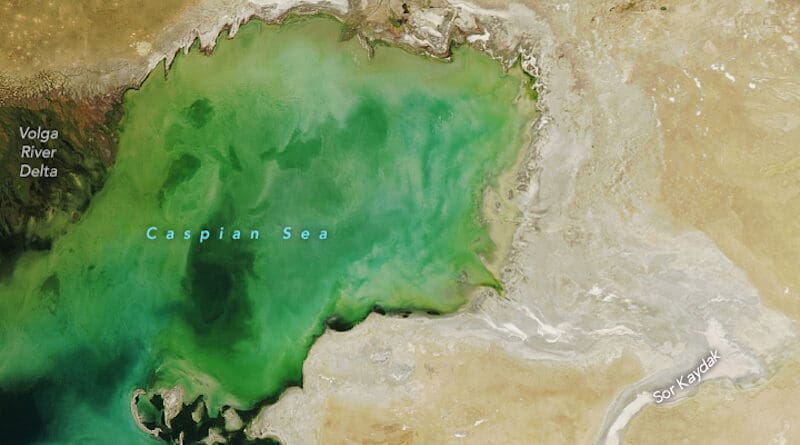
The Caspian Sea’s water level is declining annually in some places by as much as 70 centimeters (roughly three feet), its shorelines are receding by many kilometers, especially in the north, and some coastal cities and ports have become landlocked. Food production from the sea, which those living along its shores depend on, has declined, and the ports and shipping lanes used for trade are silting up. Silted trade lanes are limiting north–south and east–west trade, shifting the geopolitical balance in the Caspian Sea away from Russia.

Russia historically dominated the sea with its large ships of the Caspian Flotilla, but now other countries’ smaller ships can better navigate the sea’s ever-shallower waters. Countries such as the People’s Republic of China (PRC) and Iran are also newly advantaged through a dredging capacity that Moscow lacks (see EDM, March 18, June 24; Fond Strategicheskoy Kulturi, July 9; Kaspiyskiy Vestnik, July 26; Kommersant, August 20; Kaspiyskiy Vestnik, September 8).

The Caspian littoral countries and other players further afield, such as the PRC, Türkiye, and the European Union, are concerned about the sea. They are unlikely, however, to take the necessary steps to slow, let alone stop, the Caspian’s shrinkage. The Caspian’s stakeholders would have to agree on a course of action, change their behavior, and spend enormous sums. The chances of this are even slimmer than the change was from the states affected by the death of the Aral (Versia; Svobodnaya Pressa, August 4).

The falling water levels on the Caspian are exacerbating tensions among the countries with interests in the Caspian, intensifying their division into blocs and making conflict more likely and a comprehensive agreement less so (see EDM, November 16, 2023; Window on Eurasia, July 26; see EDM, August 24; Spik.kz, September 18).

As was the case regarding the demise of the Aral, Russian experts and officials initially denied that the Caspian was threatened and dismissed those who claimed otherwise as alarmists. They eventually acknowledged, however, that declining water levels in the Caspian pose a threat to Russia’s interests (Caspian News, August 29, 2024). Declining water levels in the Caspian threaten Russia in three ways. First, its ability to move ships around—including from the Caspian Flotilla to support Putin’s war against Ukraine—has declined.


Second, the declining water levels have stilted its plans to develop a north–south trade corridor to Iran and the Indian Ocean. Third, Russia’s support of the PRC in seeking expanded east–west trade across the Caspian, circumventing the region’s highway and railway networks, neither of which can carry the amount of cargo a route through the Caspian could (Window on Eurasia, July 23, 2023,April 27, August 29, September 21, 2024, March 13). With Putin now on the side of those the Kremlin earlier dismissed as fearmongers, Russian commentators and officials have begun sounding the alarm (APA, June 19).

Moscow has not yet achieved significant agreement with the other littoral states on how to address the deterioration of the Caspian. Russian fixes have been temporary, such as bringing in PRC or Iranian dredge operators to clear silt from its ports. The lack of long-term solutions may breed larger problems for Moscow in the future, which would have to shift its focus back to railroads for trade (Window on Eurasia, July 11, September 10).

While Moscow has dithered, the four other littoral states—Azerbaijan, Iran, Kazakhstan, and Turkmenistan—have become increasingly insistent that Moscow take their interests into account. All four have increased the size of their naval forces on the Caspian, forces that are built around smaller ships that are less affected by increasingly shallow waters compared to the larger vessels of Russia’s Caspian Flotilla.

Except in the case of Iran, Moscow has responded with anger rather than a desire to cooperate (Versia; Svobodnaya Pressa, August 4; Window on Eurasia, August 8). As a result, these states are now dividing up into three increasingly distinct and hostile blocs (Window on Eurasia, July 26).  

Andrey Matveyev, a prominent Kazakhstan commentator, argues that the littoral countries are turning what had been known as “a Russian lake” into “a sea of discord,” jeopardizing the stability of the region (The Times of Central Asia, July 24). In his view, three blocs are emerging, which are expanding their navies and holding more joint exercises. The first bloc consists of Russia, Iran, and the non-littoral PRC. These three states have been conducting joint exercises since 2019 and want to prevent any other country from challenging their positions on the Caspian (Eurasia Today, July 25).

They are now, however, being confronted by two other blocs which, although under the radar screens of most, are increasingly prepared to compete for resources on the Caspian. Moscow’s war against Ukraine diverts its attention and resources from the Caspian, and the smaller and less suitable Caspian Flotilla means that Russian dominance in the sea is waning.

According to Matveyev, the second bloc consists of Azerbaijan, Turkmenistan, and members of the Organization of Turkic States (OTS), which is led by Türkiye (The Times of Central Asia, July 24). The OTS views the Caspian as a bridge to Central Asia and wants to ensure that that path remains open.

The third bloc is the Azerbaijan–Kazakhstan partnership. Azerbaijan and Kazakhstan have the largest Caspian navies in terms of vessel numbers and are most concerned about Russia’s failure to address the shrinking sea. Matveyev acknowledges that his Caspian “blocs” have overlap and may change, but insists that the trend toward the formalization of these coalitions is ongoing as the countries deal with declining water levels on the Caspian and Russia’s general unwillingness to release more water from the Volga into the Caspian.

There have been some limited exceptions to this pattern. Moscow and Astana have agreed to dredge a portion of the northern Caspian Sea so that the two countries can more easily reach petroleum platforms that ships cannot access due to the water’s shallow depth (Kaspiyskiy Vestnik, September 24). The five littoral countries have moreover agreed that they need to address falling water levels now, before they become irreversible. Disagreements remain, however, on what should be done and who should do it (Spik.kz, September 18).

The looming demise of the Caspian carries an important lesson for all governments with interests in the Caspian Sea’s littoral regions. Even something as seemingly mundane as declining water levels can transform geopolitics, and thus must be understood by the region’s stakeholders.


Paul Goble

Paul Goble is a longtime specialist on ethnic and religious questions in Eurasia. Most recently, he was director of research and publications at the Azerbaijan Diplomatic Academy. Earlier, he served as vice dean for the social sciences and humanities at Audentes University in Tallinn and a senior research associate at the EuroCollege of the University of Tartu in Estonia. He has served in various capacities in the U.S. State Department, the Central Intelligence Agency and the International Broadcasting Bureau as well as at the Voice of America and Radio Free Europe/Radio Liberty and at the Carnegie Endowment for International Peace. Mr. Goble maintains the Window on Eurasia blog and can be contacted directly at paul.goble@gmail.com .