Sunday, November 02, 2025

NO WAR ON VENEZUALA

UN Human Rights Chief Says Trump Must Halt ‘Extrajudicial Killing’ in International Waters

“None of the individuals on the targeted boats appeared to pose an imminent threat to the lives of others or otherwise justified the use of lethal armed force against them under international law,” said Volker Türk.
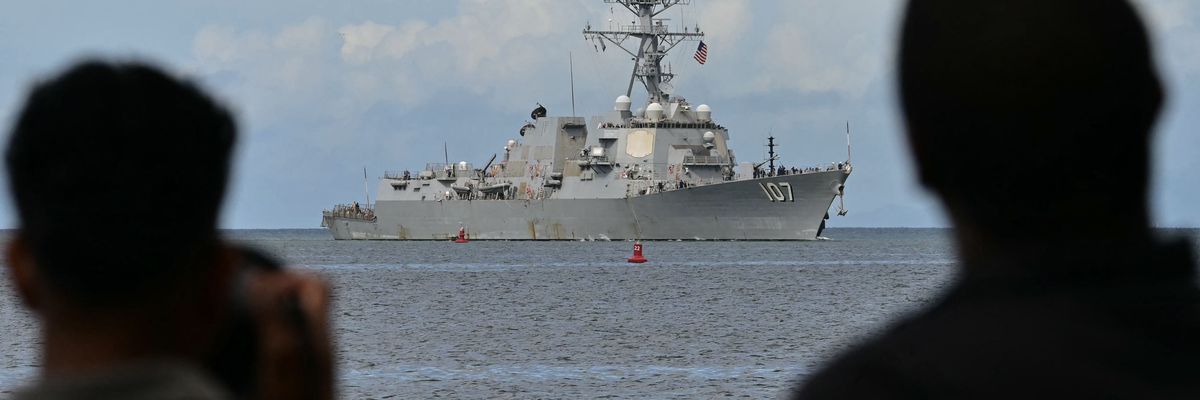

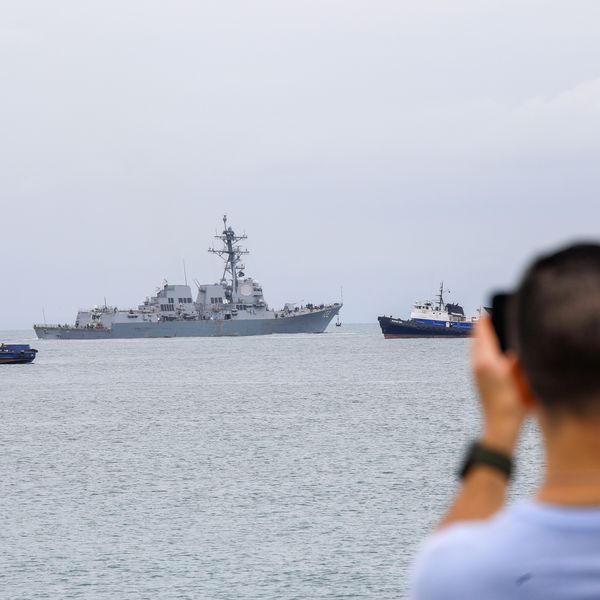
Photographers take pictures as the USS Gravely warship enters the Port of Spain on October 26, 2025.
(Photo by Martin Bernetti/AFP via Getty Images)


Jake Johnson
Oct 31, 2025
COMMON DREAMS

The United Nations’ top human rights official said Friday that US President Donald Trump’s deadly strikes on boats in international waters in recent weeks amount to “extrajudicial killing” that must stop immediately, remarks that came as the White House appeared poised to expand the unlawful military campaign to targets inside Venezuela.

Volker Türk, the UN high commissioner for human rights, said of the administration’s boat strikes that “these attacks—and their mounting human cost—are unacceptable.”


RECOMMENDED...


‘Another Unlawful Extrajudicial Killing’ as Trump Expands Boat-Bombing Spree to Pacific


UN Experts Decry Trump Warmongering Against Venezuela as ‘Extremely Dangerous Escalation’

“The US must halt such attacks and take all measures necessary to prevent the extrajudicial killing of people aboard these boats, whatever the criminal conduct alleged against them,” said Türk, noting that the administration has not substantiated its claim that those killed by the strikes in waters off Central and South America were smuggling drugs.

The Trump administration has also kept secret a US Justice Department memo purportedly outlining an internal legal justification for the deadly strikes.

Türk noted that “countering the serious issue of illicit trafficking of drugs across international borders is—as has long been agreed among states—a law-enforcement matter, governed by the careful limits on lethal force set out in international human rights law.”

“Under international human rights law, the intentional use of lethal force is only permissible as a last resort against individuals who pose an imminent threat to life,” said the UN human rights chief. “Based on the very sparse information provided publicly by the US authorities, none of the individuals on the targeted boats appeared to pose an imminent threat to the lives of others or otherwise justified the use of lethal armed force against them under international law.”

The Trump administration’s strikes have killed more than 60 people thus far. At least one of the targeted vessels appeared to have turned around before the US military bombed it, killing 11 people.

Türk’s statement came as the Miami Herald reported that the Trump administration “has made the decision to attack military installations inside Venezuela and the strikes could come at any moment.”

Trump has said publicly that land strikes inside Venezuela would be the next phase of the military assault, which he has described as a “war” on drug cartels. The president has not yet received—or even sought—congressional authorization for any of the military actions taken in the Caribbean and Pacific.

In a statement last week, a group of UN experts denounced the Trump administration’s strikes and belligerent posturing toward Venezuela as “an extremely dangerous escalation with grave implications for peace and security in the Caribbean region.”

“The long history of external interventions in Latin America must not be repeated,” the experts said.

Khanna Warns Any Trump Attack on Venezuela Would Be ‘Blatantly Unconstitutional’

“Congress must speak up now to stop another endless, regime-change war,” said Democratic US Rep. Ro Khanna.
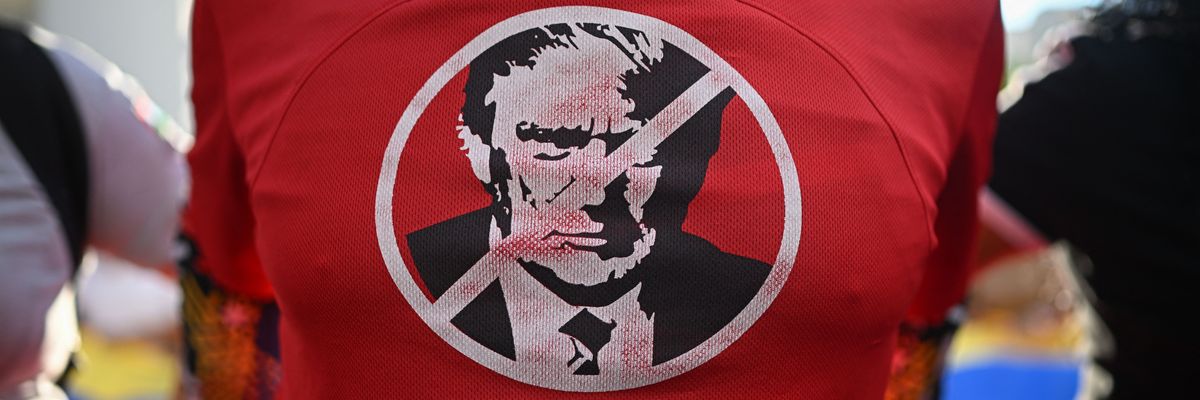
A demonstrator protesting US military attacks in the Caribbean wears a shirt depicting US President Donald Trump and the slogan “Yankee Go Home” in Caracas, Venezuela on October 30, 2025.
(Photo by Federico Parra/AFP via Getty Images)

Jake Johnson
Oct 31, 2025
COMMON DREAMS

US Rep. Ro Khanna on Friday demanded urgent congressional action to avert “another endless, regime-change war” amid reports that President Donald Trump is weighing military strikes inside Venezuela.

Such strikes, warned Khanna (D-Calif.), would be “blatantly unconstitutional.”


‘They’re Going to Be, Like, Dead’: Trump Says Land Strikes on Venezuela Are Next


Senators Launch Bipartisan Bid to Block Trump War on Venezuela

“The United States Congress must speak up and stop this,” Khanna said in a video posted to social media. “No president, according to the Constitution, has the authority to strike another country without Congress’ approval. And the American people have voted against regime change and endless wars.”

Watch:


Khanna’s remarks came in response to reporting by the Miami Herald and the Wall Street Journal on internal Trump administration discussions regarding possible airstrike targets inside Venezuela.

The Herald reported early Friday that the administration “has made the decision to attack military installations inside Venezuela and the strikes could come at any moment.” The Journal, in a story published Thursday, was more reserved, reporting that the administration “has identified targets in Venezuela that include military facilities used to smuggle drugs,” but adding that “the president hasn’t made a final decision on ordering land strikes.”

Citing unnamed US officials familiar with the matter, the Journal reported that “the targets would send a clear message to Venezuelan leader Nicolás Maduro that it is time to step down.”

Following the reports, the White House denied that Trump has finalized plans for a military strike on Venezuela. Trump himself told reporters aboard Air Force One on Friday that he has not made a final decision, signaling his belief he has the authority to do so if he chooses.

Last week, the president said publicly that land strikes are “going to be next” following his illegal, deadly strikes on boats in waters off Central and South America.

Trump has said he would not seek approval from Congress before attacking Venezuela directly.

“The American people oppose being dragged into yet another endless war, this time in Venezuela, and our constitutional order demands deliberation by the U.S. Congress—period.”

A potentially imminent, unauthorized US attack on Venezuela and the administration’s accelerating military buildup in the Caribbean have thus far drawn vocal opposition from just a fraction of the lawmakers on Capitol Hill, currently embroiled in a shutdown fight.

Just three senators—Tim Kaine (D-Va.), Rand Paul (R-Ky.), and Adam Schiff (D-Calif.)—are listed as official backers of a resolution aimed at preventing Trump from attacking Venezuela without congressional authorization. Other senators, including Bernie Sanders (I-Vt.) and Ruben Gallego (D-Ariz.), have spoken out against Trump’s belligerence toward Venezuela.

“Trump is illegally threatening war with Venezuela—after killing more than 50 people in unauthorized strikes at sea,” Sanders wrote in a social media post on Friday. “The Constitution is clear: Only Congress can declare war. Congress must defend the law and end Trump’s militarism.”

Dylan Williams, vice president of government affairs at the Center for International Policy, wrote Friday that “most Americans oppose overthrowing Venezuela’s leaders by force—and an even larger majority oppose invading.”

“Call your senators and tell them to vote for S.J.Res.90 to block Trump’s unauthorized use of military force,” Williams added. “The Capitol switchboard can connect you to your senators’ offices at 202-224-3121.”

similar resolution led by Rep. Jason Crow (D-Colo.) in the US House has just over 30 cosponsors.

Rep. Joe Neguse (D-Colo.) announced his support for the House resolution on Thursday, saying in a statement that “Trump does not have the legal authority to launch military strikes inside Venezuela without a specific authorization by Congress.”

“I am deeply troubled by reports that suggest this administration believes otherwise,” said Neguse. “Any unilateral directive to send Americans into war is not only reckless, but illegal and an affront to the House of Representatives’ powers under Article I of our Constitution.”

“The American people oppose being dragged into yet another endless war, this time in Venezuela, and our constitutional order demands deliberation by the U.S. Congress—period,” Neguse added.

'The questions are endless': Retired 3-star general pokes holes in Trump's 'act of war'


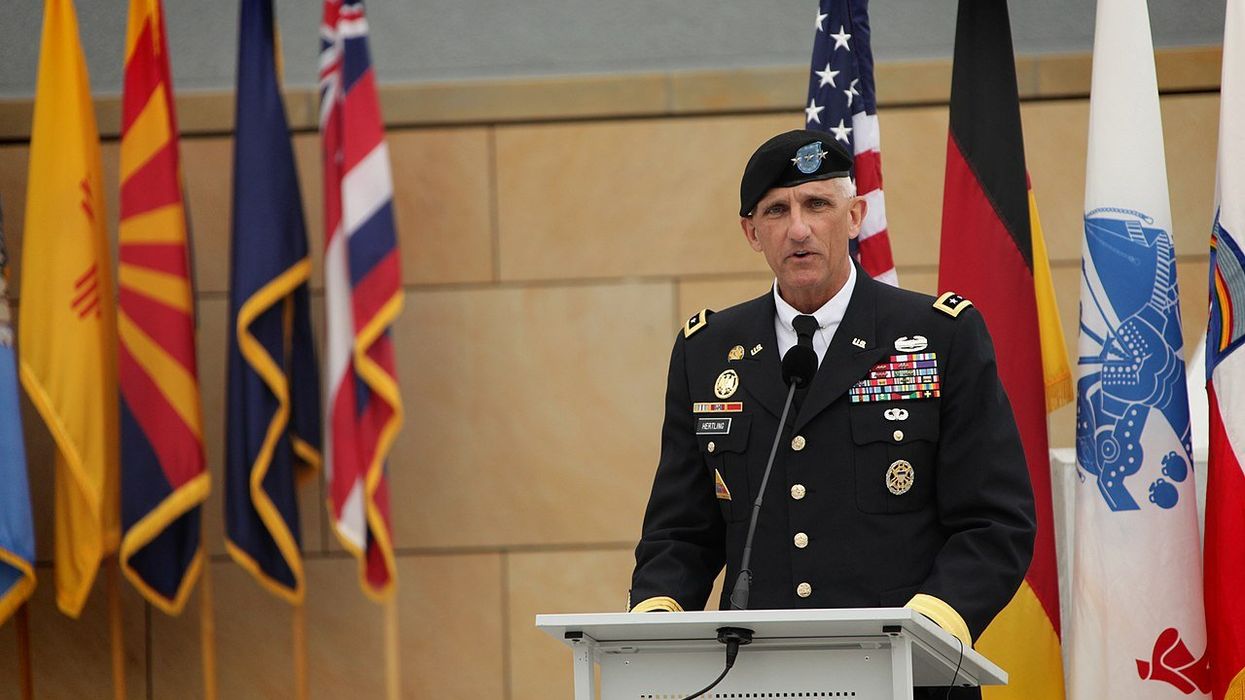
Lt. Gen. Mark Hertling, commander of U.S. Army Europe, in Wiesbaden, Germany on June 14, 2012 (U.S. Army Europe Images/Flickr)
October 31, 2025
ALTERNET

On Friday morning, October 31, the Miami Herald's Antonio María Delgado reported that the Trump administration "has made the decision to attack military installations inside Venezuela."

President Donald Trump has been ordering military strikes against Venezuela boats that, he claims, are smuggling illegal drugs to the United States. But military strikes inside Venezuela itself, according to Delgado, would "initiate the next stage of" the Trump administration's "campaign against the Soles drug cartel."

Delgado's reporting follows reporting from the Wall Street Journal a day earlier. But while the Journal reported that the airstrikes were a possibility after "the Trump administration ... identified targets in Venezuela that include military facilities used to smuggle drugs," Delgado reported that according to Miami Herald sources, the Trump administration wasn't merely contemplating them, but had made a firm decision.

In response to the Herald's reporting, MSNBC's Ana Cabrera interviewed retired U.S. Army Gen. Mark Hertling — former commander for the U.S. Army in Europe, and now a writer for the anti-Trump conservative website The Bulwark.

When Cabrera noted that according to the Herald, a strike inside Venezuela "could come at any time," Hertling responded, "What I'm more interested in, as a military guy, is: What are the strategic objectives? What's the end state? What's the administration clearly defining as mission success in this? Is it just to bomb targets, or is there something related to that?"

Hertling continued, "Secondly, how does how does this campaign, if you will — if they describe it as such — challenge broader U.S. national defense interests in the western hemisphere? How are they coordinating with other countries in the region? A strike against Venezuela is certainly going to affect countries like Colombia, Honduras, Guatemala, Mexico. And have they assessed a second and third-order effects of a major naval air strike capability against Venezuela, against not only the other countries in the region, but what does that end state look like?"

Herling went on to describe the "legal ramifications" of such airstrikes under the War Powers Act of 1973, telling Cabrera and her MSNBC colleague David Rohde, "The questions are endless, and I don't think the Trump White House has answered any of them."

Rohde weighed in as well, telling Cabrera and Hertling, "So this would be a direct strike. I mean, you could argue it's an act of war on Venezuelan military facilities. The administration says they're used for drug trafficking. I'm not, again, sure if evidence has been presented of that, but if they strike a Venezuelan military facility, that is an act of war."
When Cabrera mentioned that the Trump administration only briefed fellow Republicans — not Democrats — on the reported plans to strike inside Venezuela, Rohde commented, "It's off the chart, Ana ... You're putting American men and women — they're soldiers, sailors, airmen and marines — in harm's way. And the nation needs to understand why that's happening."

Watch the segment below:


Trump has decided to attack Venezuela military under guise of drug strikes: report

David Edwards
October 31, 2025 
RAW STORY


President Donald Trump has reportedly decided to order attacks on Venezuela's military installations.

Sources told the Miami Herald that the strikes could come at any moment. The Trump administration has suggested that it is opposing the Sóles drug cartel.

According to the paper, the targets "could be struck by air in a matter of days or even hours" in an effort to destroy the cartel hierarchy.

Trump has been clear that he wants Venezuelan leader Nicolas Maduro out of power. Earlier this month, the U.S. president reportedly ordered covert CIA operations in Venezuela. The Herald's sources "declined to say" if Maduro was a target.

On Friday, Trump denied that he had decided on strikes inside the country. The president's remarks came as the FAA issued flight restrictions over Ceiba, Puerto Rico, a potential refueling site for U.S. military airstrikes.


Trump Administration Has ‘Made the Decision to Attack Military Installations Inside Venezuela’: Report

“Trump’s military buildup in the Caribbean isn’t about ‘drugs,’ it’s about oil, power, and regime change,” said on critic of potential strikes in Venezuela.
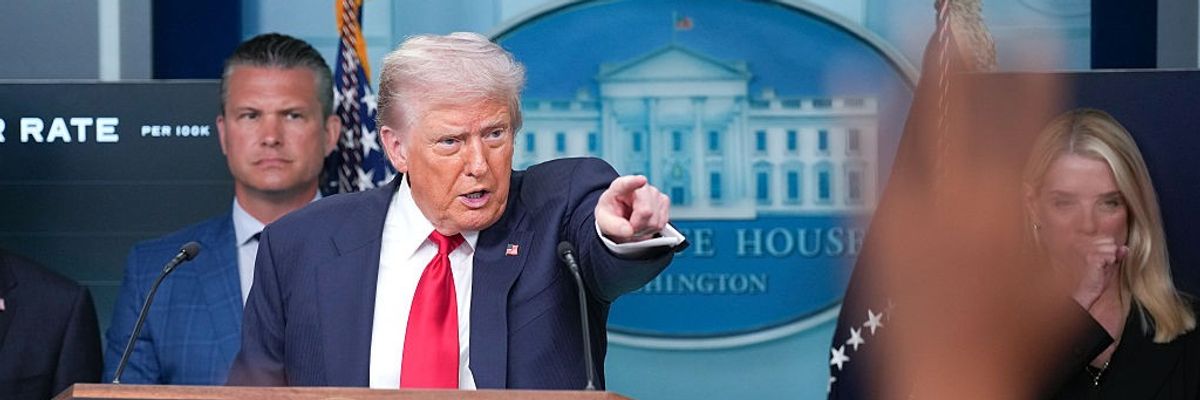

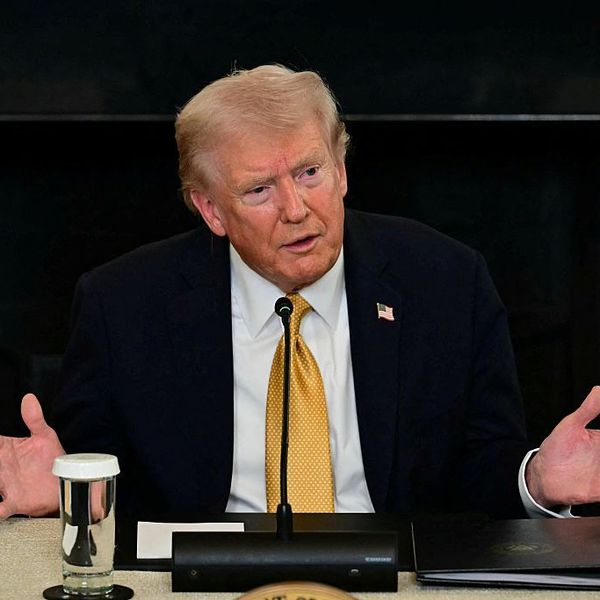
US President Donald Trump answers questions during a press conference in the White House on August 11, 2025 in Washington, DC.
(Photo by Andrew Harnik/Getty Images)

Brad Reed
Oct 31, 2025
COMMON DREAMS

Two reports claim that the Trump administration is poised to launch strikes against military targets inside Venezuela.

The Wall Street Journal reported on Thursday night that the administration is preparing to attack a variety of targets inside Venezuela, including “ports and airports controlled by the military that are allegedly used to traffic drugs, including naval facilities and airstrips.”


RECOMMENDED...


‘They’re Going to Be, Like, Dead’: Trump Says Land Strikes on Venezuela Are Next
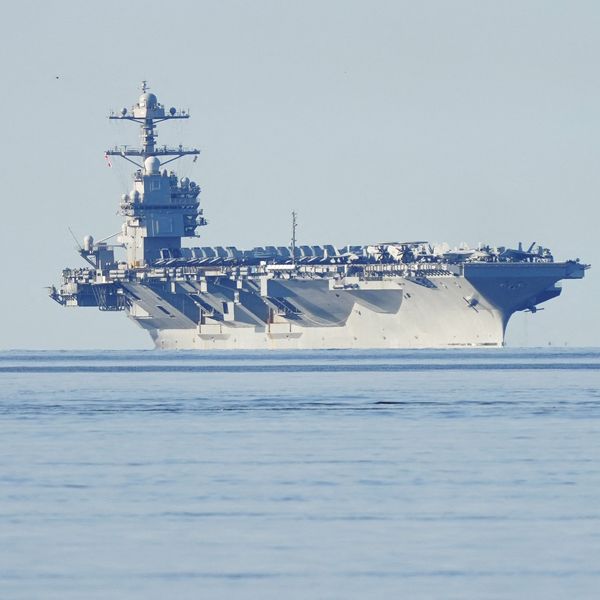


Trump’s Escalation Against Venezuela Continues as Hegseth Deploys Aircraft Carrier Strike Group to Latin American Waters

Reports from the US government and the United Nations have not identified Venezuela as a significant source of drugs that enter the United States, and the country plays virtually no role in the trafficking of fentanyl, the primary cause of drug overdoses in the US.

While the WSJ report said that the administration had not yet decided to carry out the operations against Venezuela, the Miami Herald reported on Friday morning that the administration “has made the decision to attack military installations inside Venezuela and the strikes could come at any moment.”

A source who spoke with the Miami Herald didn’t explicitly say that Venezuelan leader Nicolás Maduro would be the target of these actions, but they nonetheless hinted that the goal was to weaken his grip on power.

“Maduro is about to find himself trapped and might soon discover that he cannot flee the country even if he decided to,” the source said. “What’s worse for him, there is now more than one general willing to capture and hand him over, fully aware that one thing is to talk about death, and another to see it coming.”

While the Trump administration has accused Maduro of leading an international drug trafficking organization called the Cartel de los Soles, some experts have expressed extreme skepticism of this claim.


Phil Gunson, analyst at the International Crisis Group think tank, said in an interview with Agence Presse-France earlier this year that he doubts that so-called “Cartel de los Soles” even exists, and noted that “direct, incontrovertible evidence has never been presented” to show otherwise.

Earlier this year, the administration attempted to tie Maduro to another gang, Tren de Aragua, despite US intelligence agencies rejecting the notion that the street gang had government connections.

Launching strikes on Venezuelan soil would mark a major escalation in the administration’s military campaign targeting purported drug traffickers, which so far has consisted of drone strikes against boats in international waters that many legal experts have described as a campaign of extrajudicial murder.

Dozens of political leaders throughout Latin America earlier this month condemned the administration’s attacks on the purported drug boats, and they warned that they could just be the start of a regime change war reminiscent of the coups carried out by the US government in the last century that installed military dictatorships throughout the region.

“We have lived this nightmare before,” they emphasized in a joint letter. “US military interventions of the 20th century brought dictatorships, disappearances, and decades of trauma to our nations. We know the terrible cost of allowing foreign powers to wage war on our continent. We cannot—we will not—allow history to repeat itself.”

Medea Benjamin, cofounder of anti-war group CodePink, accused the Trump administration of using a fight against alleged drug trafficking as a false pretext to seize Venezuela’s vast oil reserves.

“Trump’s military buildup in the Caribbean isn’t about ‘drugs,’ it’s about oil, power, and regime change,” she wrote in a post on X. “Venezuela has the largest proven oil reserves in the world, that’s why they’re escalating toward war.”


No to a US war on Venezuela!

“The British government has disgracefully failed to join the criticism being voiced in Latin America and the US of Trump’s illegal actions.”

Tim Young on the silence of the UK government as US aggression against Venezuela intensifies.

For the past few weeks, the Trump administration has intensified its long-standing aggression against Venezuela by deploying warships (including a nuclear submarine) in the Caribbean Sea in a purported anti-narcotics operation. US forces have carried out at least five incidents of strikes on boats in Venezuelan waters to date, killing 37 people. Trump’s latest move has been to authorise the CIA to conduct covert operations inside Venezuela.

President Nicolas Maduro, as Venezuela’s current leader, has been a focus of this ‘war on drugs’ narrative, justifying the US’s illegal actions by demonising him as a ‘narco-terrorist’ engaged in drug trafficking, despite UN evidence to the contrary. The US also portrays him as being an illegitimate leader, offering a bounty of $50 million for his capture.

But overthrowing the Bolivarian Revolution has been a project of US imperialism ever since Hugo Chávez became President in 1999 and set about transforming the country through a series of far-reaching measures, including healthcare, education, land redistribution and anti-poverty programmes.

Key to these revolutionary changes was, and still is, the massive wealth in oil reserves that Venezuela has – the largest in the world – and the revenues generated from them. Chávez’s massive programme of wealth redistribution redirected these oil revenues to collective social purposes rather than funding the opulent lifestyle of Venezuela’s elites.

Additionally, to help realise his vision that “another world is possible”, not just for Venezuela, Chávez also envisaged (and ultimately helped create) key regional organisations to unite Latin American voices and provide progressive economic alternatives to neo-liberalism.

Aghast at what this represented, both politically and economically, the US has ever since then, in concert with the extreme right-wing elites in Venezuela, sought to destabilise the country and effect ‘regime change’.

In 2002, a US-backed military coup temporarily ousted Chávez before a spontaneous popular uprising restored him to the presidency. Other US tactics to destabilise the country have included massive funding of opposition groups to try –unsuccessfully – to win elections, coupled with disinformation campaigns to isolate the country, campaigns of violence on the streets, further coup attempts and domestic sabotage.

But the most powerful US weapon against Venezuela has been an increasingly severe set of economic sanctions, illegal under international law, designed to destroy the economy and bring the country to its knees.

The US sanctions, first introduced by Obama in 2015 and ramped up by Trump in his first presidency into a crippling economic, trade and financial blockade, led to a 99% fall in oil revenues and well over a hundred thousand unnecessary deaths.

Complementing this, Trump has at various times threatened military action against Venezuela. He also backed minor politician Juan Guaidό’s attempt to bring about ‘regime change’ by declaring himself ’interim president’ in 2019. But despite lavish bankrolling of his activities, including insurrectionary adventures, with confiscated Venezuelan assets, this attempt at ‘regime change’ fizzled out when the right-wing Venezuelan opposition ditched Guaidó in December 2022.

Throughout and to this day, the British government has supported the US’s policy, even levying its own sanctions and withholding 31 tons of Venezuelan gold worth roughly $2 billion lodged in the Bank of England’s vaults.

Despite all this, the Venezuelan economy has survived – even growing by between 5 to 6% in 2024 – though at the cost of great hardship for millions of ordinary Venezuelans.

But the political and economic dynamics motivating this drive by US imperialism to secure ‘regime change’ have not lessened.

Politically, Venezuela’s commitment to Latin American independence and resistance to neo-liberalism are anathema to the US’s historic and continuing commitment to the Monroe Doctrine. Recent progressive left electoral successes in Mexico, Colombia, Honduras, Brazil and Uruguay, for example, are seen by the US government as a challenge to its dominance.

Economically, Venezuela is a rich country with vast mineral reserves, but the prize is its oil. In 2023, Trump himself publicly admitted that he wanted to overthrow Maduro to secure control over Venezuela’s oil, mirroring the way he boasted in 2020 that he was militarily occupying Syria’s crude oil-rich regions in order to “take the oil”.

The overthrow of the Bolivarian Revolution would enable the US to control Venezuela’s oil and help sustain the US’s faltering economy, as well as shore up the rhetoric of Trump’s ‘America First’ agenda.

But Trump is being challenged domestically, in the media and Congress. Although Congressional Democrats have long supported sanctions against Venezuela, their Senate resolution requiring Trump to seek Congressional authorisation before any further military strikes purportedly aimed at drug cartels was defeated 48-51 (with two Republicans in favour and one Democrat against).

Opposition in Latin America and the Caribbean is much more forthright. The region is clear about the enormous implications if the US were to be successful in securing ‘regime change’, especially for the future of blockaded Cuba, which has been in US Secretary of State Marco Rubio’s sights for longer than Venezuela, and for heavily-sanctioned Nicaragua. Trump has also been making very similar threats against President Petro’s government in Colombia, calling openly for ‘regime change’.

Encapsulating these concerns, the ALBA bloc of countries issued a statement strongly condemning the US’s actions: “These manoeuvres not only constitute a direct attack on the independence of Venezuela, but also a threat to the stability and self-determination of all the peoples of Latin America and the Caribbean (…) We categorically reject the orders from the United States government to deploy military forces under false pretexts, with the clear intention of imposing illegal, interventionist policies that are contrary to the constitutional order of the States of Latin America and the Caribbean.

The Venezuela Solidarity Campaign (VSC) has launched a petition urging governments and political actors internationally to join in opposing military intervention and all threats to peace in the region.

The British government has disgracefully failed to join the criticism being voiced in Latin America and the US of Trump’s illegal actions, committing only to “fighting the scourge of drugs…accordance with the fundamental principles of the UN Charter”.

A linked letter to Keir Starmer and Yvette Cooper is therefore urging them to join the international effort against military intervention and in support of peace.

VSC will be joining with forces across the British labour, peace and solidarity movements to express maximum opposition to US military aggression in the weeks and months ahead.


  • You can sign VSC’s petition calling for no war in Venezuela here.
  • Tim Young is a member of the Venezuela Solidarity Campaign executive.
  • This article was originally published on Stop The War’s website on 23 October 2025.

Pentagon Admits to Striking Boats Without Identifying Victims’ Drug Links

The White House cannot “satisfy the evidentiary burden” to prosecute those they have been killing, one lawmaker said.
PublishedOctober 31, 2025

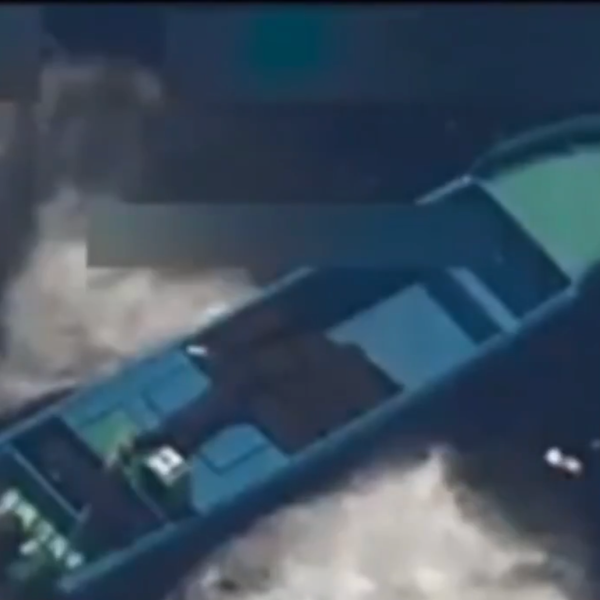
An aerial view of one of the boats attacked by the Trump administration in the Caribbean, in early September 2025.The White House / Truth Social

Department of Defense (DOD) officials told Democratic lawmakers in a brief on the U.S. military’s strikes against boats off the coast of northern South America that the military is not identifying the occupants of the boats before they bomb them.

The Trump administration has targeted more than a dozen boats, mostly in the Caribbean Sea but some in the Pacific Ocean, killing at least 61 people total. While the administration has tried to justify the killings by claiming the occupants of the boats were drug traffickers, many of the victims’ families have indicated they were fishermen and not part of any organized crime.

Critics have said that, even if the administration is correct in its assessment, the attacks on the vessels amount to extrajudicial killings.

On Thursday, Rep. Sara Jacobs (D-California) told CNN that the Pentagon briefed her and other lawmakers on the attacks, informing them that the administration does not “need to positively identify individuals on the vessel to do the strikes.”

The administration attacked the boats — rather than detaining and then prosecuting the people they claimed were drug traffickers — “because they could not satisfy the evidentiary burden” to successfully prosecute them, Jacobs elaborated.

Jacobs — who serves on the House Foreign Affairs Committee and the House Armed Services Committee, including the subcommittee on Intelligence and Special Operations and the Subcommittee on Seapower and Projection Forces — indicated that some information was still being withheld by the Trump administration, with Pentagon officials stating they would not go into their legal justifications for killing people on the boats until their lawyers were present.

“There’s nothing that we heard in there that changes my assessment that this is completely illegal, that it is unlawful and even if Congress authorized it, it would still be illegal because there are extrajudicial killings where we have no evidence,” she added.

Rep. Jason Crow (D-Colorado), who was also part of the briefing, came to the same conclusion.

“I’m walking away without an understanding of how and why they’re making an assessment that the use of legal force is adequate here,” he said.

Senate Republicans have reportedly received a more comprehensive briefing on the matter, with Democrats being blocked from being able to take part — a highly unusual situation, as matters of military intelligence and operations typically involve informing members of both political parties.

“Shutting Democrats out of a briefing on U.S. military strikes and withholding the legal justification for those strikes from half the Senate is indefensible and dangerous,” Sen. Mark Warner (D-Virginia) said.

Warner added:

Decisions about the use of American military force are not campaign strategy sessions, and they are not the private property of one political party. For any administration to treat them that way erodes our national security and flies in the face of Congress’s constitutional obligation to oversee matters of war and peace.

Several human rights groups condemned the United States’s actions as war crimes.

“A systematic attack on civilians is a crime against humanity under international law,” said Ben Saul, the UN Special Rapporteur for the protection of human rights while countering terrorism. “When will other governments speak out?”

“In the last two months, the U.S. military’s Southern Command has gone on a murder spree by following the Trump administration’s illegal orders,” said Daphne Eviatar, Amnesty International’s director for human rights and security. “The administration has not even named its victims, nor provided evidence of their alleged crimes. But even if they did, intentionally killing people accused of committing crimes who pose no imminent threat to life is murder, full stop.”

The Trump administration’s illegal killings may be part of a broader strategy to antagonize Venezuela, with the goal of eventual regime change, an outcome Trump has repeatedly expressed a desire for.

“In addition to its increasing numbers of murders of alleged drug smugglers at sea, the Trump administration is positioning tremendous military firepower for what appears to be an imminent attack on Venezuela, ” Marjorie Cohn, professor emerita at Thomas Jefferson School of Law, wrote in a column for Truthout earlier this week.

Cohn urged concerned residents in the U.S. to speak out against the strikes.

“We must mobilize a powerful antiwar movement to demand that the U.S. government stop the illegal boat murders and stay out of Venezuela,” Cohn said.


Trump Is Moving Relentlessly Toward Illegal War in Venezuela


The Trump administration’s murderous strikes on small boats at sea constitute unlawful extrajudicial killings.


By Marjorie Cohn , 
Published  October 30, 2025

A couple walks past graffiti against U.S. President Donald Trump in Caracas, Venezuela.
Leonardo Fernandez Viloria / Getty Images


Truthout is a vital news source and a living history of political struggle. If you think our work is valuable, support us with a donation of any size.

As the Trump administration continues to murder people in small boats on the high seas and mounts the largest U.S. military buildup in decades in the Caribbean, it is moving inexorably toward an all-out, illegal attack and forcible regime change in Venezuela.

Despite Team Trump’s feeble attempts to legally justify its ocean strikes, which have now killed 57 people since early September, those extrajudicial killings are also unlawful.

Donald Trump’s murderous campaign came into focus on February 20, when the State Department designated eight drug trafficking organizations, including Tren de Aragua, as foreign terrorist organizations. Although the administration has attempted — so far unsuccessfully — to use that designation to justify sending immigrants to a notorious prison in El Salvador, Trump is now invoking it in an effort to validate his illegal strikes at sea.

Moreover, on March 15, Trump issued “A Proclamation,” alleging that Tren de Aragua has been engaged, in association with Venezuelan President Nicolás Maduro, in “irregular warfare” in the United States, with no explanation of what is meant by irregular warfare. But on February 26, most U.S. intelligence agencies had made a finding that Tren de Aragua was neither controlled by the Venezuelan government, nor was it committing crimes in the United States on its orders.

On September 2, Trump announced that the U.S. had conducted a “kinetic strike” against an alleged drug smuggling vessel in the Caribbean, even though Secretary of State Marco Rubio said the U.S. military could have interdicted the vessel rather than killing all of those on board. Trump wanted to “send a message,” hardly an excuse for premeditated murder.

The lawful procedure would have been to arrest people if there was probable cause they were involved in drug trafficking and bring them to justice in accordance with due process. Both U.S. and international law provide for the arrest of alleged drug traffickers or individuals suspected of acts of terrorism, both on the high seas and in U.S. territorial waters.

Although Trump’s stated rationale is preventing drugs from Venezuela entering the United States, Venezuela isn’t even mentioned in the U.S. Drug Enforcement Administration’s National Drug Threat Assessment 2024.

In a post on social media accompanied by a video clip of the strike, Trump declared that the attack was “against positively identified Tren de Aragua Narcoterrorists” and referred to the February 20 foreign terrorist organization designation. This did not provide a lawful basis for murdering alleged drug dealers.

Although Trump’s stated rationale is preventing drugs from Venezuela entering the United States, Venezuela isn’t even mentioned in the U.S. Drug Enforcement Administration’s National Drug Threat Assessment 2024.

No State of Armed Conflict, No Unlawful Combatants, No Self-Defense

It was reported in early October that Trump had notified several congressional committees that the U.S. is engaged in a formal “armed conflict” with drug cartels that his administration has branded terrorist organizations, and that suspected drug smugglers are “unlawful combatants” in order to justify the strikes as self-defense.

“The President determined that the United States is in a non-international armed conflict with these designated terrorist organizations,” the memo says. Trump ordered the Defense Department to “conduct operations against them pursuant to the law of armed conflict,” adding, “The United States has now reached a critical point where we must use force in self-defense and defense of others against the ongoing attacks by these designated terrorist organizations.”

The memo referred to a September 15 strike by the U.S. that “resulted in the destruction of the vessel, the illicit narcotics, and the death of approximately 3 unlawful combatants.”

By labeling the murdered people in the boats “unlawful combatants,” Trump is conflating them with al-Qaeda, which the Bush administration targeted in its “war on terror.” Last week, Secretary of War Pete Hegseth said, “If you are a narco-terrorist smuggling drugs in our hemisphere, we will treat you like we treat al-Qaeda.” But Tren de Aragua is no al-Qaeda.

The Supreme Court determined after the September 11, 2001, attacks that the conflict with al-Qaeda was a real war, and therefore the George W. Bush administration could hold captured members indefinitely. But the court also said that the government must treat them humanely under the Geneva Conventions, which means they can’t torture or kill them. Al-Qaeda had attacked the U.S. by weaponizing hijacked planes and intentionally killing people, and Congress had authorized the use of armed force against the group.

Trump cannot rely on the 2001 Authorization for the Use of Military Force (AUMF) that Congress enacted after the September 11 attacks. That AUMF, which was misused by the Obama and Biden administrations to justify several drone strikes and other illegal uses of military force, authorized the president “to use all necessary and appropriate force against those nations, organizations, or persons he determines planned, authorized, committed, or aided the terrorist attacks that occurred on September 11, 2001, or harbored such organizations or persons.” That statute does not provide a legal basis to use force against Tren de Aragua.


“International law does not allow governments to simply murder alleged drug traffickers.”

Nor can Trump rely on his constitutional authority to use lethal force in self-defense under Article II. He would have to be acting to prevent an imminent attack on the United States or U.S. persons abroad. “There is no evidence that this group is committing an armed attack against the U.S. that would allow the U.S. to use military force against it in national self-defence,” three UN experts said.

“International law does not allow governments to simply murder alleged drug traffickers,” the experts noted, calling Trump’s strikes extrajudicial executions. “Criminal activities should be disrupted, investigated and prosecuted in accordance with the rule of law, including through international cooperation.”

There is no current state of armed conflict, there is no evidence that the people on the boats were combatants, and it is illegal to deliberately attack civilians. “This is not stretching the envelope,” Geoffrey Corn, a retired judge advocate general lawyer who was formerly the Army’s senior adviser for law-of-war issues, told The New York Times. “This is shredding it. This is tearing it apart.”

The strikes on boats also violate the right to life enshrined in the International Covenant on Civil and Political Rights, which the U.S. has ratified, making it part of U.S. law under the Supremacy Clause of the Constitution. The covenant says that “no one shall be arbitrarily deprived of his life.” It outlaws extrajudicial killing outside the context of armed conflict or by law enforcement when necessary to protect against an imminent threat to life.


An Attack on Venezuela Would Be an Unlawful Act of Aggression


In addition to its increasing numbers of murders of alleged drug smugglers at sea, the Trump administration is positioning tremendous military firepower for what appears to be an imminent attack on Venezuela.

Hegseth ordered the USS Gerald R. Ford aircraft-carrier strike group with five destroyers to deploy to the region to “bolster U.S. capacity to detect, monitor, and disrupt illicit actors and activities that compromise the safety and prosperity of the United States,” according to a Pentagon spokesperson.

“The only thing you could use the carrier for is attacking targets ashore, because they are not going to be as effective at targeting small boats at sea,” Bryan Clark, senior fellow at the Hudson Institute and retired Navy officer, told The Atlantic. “If you are striking inside Venezuela, the carrier is an efficient way to do it due to the lack of basing in the region.”

There are now over 6,000 sailors and Marines on eight warships in the area. The USS Ford strike group could add nearly 4,500 more sailors and nine squadrons of aircraft. B-52H bombers deployed near Venezuela are capable of dropping nuclear weapons.

“There will be land action in Venezuela soon,” Trump said on October 23. “I’m not going to necessarily ask for a declaration of war. I think we’re just going to kill people that are bringing drugs into our country. Okay? We’re going to kill them. You know, they’re going to be like, dead.”

The Pentagon has reportedly prepared plans for military attacks inside Venezuela, and Trump has authorized the CIA to engage in lethal covert operations in the country.

report from the Center for Strategic and International Studies outlined options for regime change in Venezuela. It sets forth the requisite numbers of troops, naval assets, air assets, and ground assets that would be required.

The United Nations Charter prohibits the threat or use of force against another state unless conducted in self-defense against an armed attack or authorized by the UN Security Council. As explained above, there has been no armed attack. Self-defense is thus not available to Trump. The Charter is part of U.S. law under the Supremacy Clause.

If Trump attacks Venezuela, his administration would be committing an unlawful act of aggression. According to the definition set forth in General Assembly Resolution 3314, which has been adopted by the Rome Statute for the International Criminal Court, “Aggression is the use of armed force by a State against the sovereignty, territorial integrity or political independence of another State, or in any other manner inconsistent with the Charter of the United Nations.”

In addition, the Charter of the Organization of American States (OAS) requires all member states, including the U.S., to refrain from the use of armed force against any other member state (including Venezuela) except in self-defense.


Forcible Regime Change Violates Venezuela’s Right to Self-Determination


During his first term, Trump repeatedly voiced his desire to invade Venezuela and change its regime. He was preoccupied with the idea of an invasion, the AP reported.

In 2019, the Trump administration orchestrated an unsuccessful strategy led by Rubio to carry out a coup d’état, seize power from Maduro, and install Juan Guaidó as “interim president” of Venezuela.


Venezuela has fortified its borders and begun massive military drills to oppose any U.S. entry into its territory.

Now as secretary of state, Rubio is once again leading the charge to oust Maduro. The State Department is offering a reward of up to $50 million for information leading to Maduro’s arrest and conviction on drug charges.

U.S. officials have clearly said in private that the goal is the removal of Maduro from power.

Both the UN Charter and the International Covenant on Civil and Political Rights guarantee the right to self-determination. That means no forcible regime change.

The OAS Charter says:


Every State has the right to choose, without external interference, its political, economic, and social system and to organize itself in the way best suited to it, and has the duty to abstain from intervening in the affairs of another State.

In a statement, Venezuela rebuffed Trump’s “bellicose” language, accusing him of seeking “to legitimize regime change with the ultimate goal of appropriating Venezuela’s petroleum resources.”

The International Association of Democratic Lawyers (IADL) condemned the U.S. deployment of military firepower off the coast of Venezuela and illegal bombing and boarding of Venezuelan fishing vessels and issued the following statement:


These developments also come after over 23 years of direct US involvement in coups and coup attempts in Venezuela, routine interference in Venezuelan elections, the imposition of unlawful unilateral coercive measures designed to impoverish the Venezuelan people, the arrest and detention of Venezuelan diplomats, the unlawful confiscation of Venezuelan assets held in foreign banks, and prior attempted landings by US mercenaries.

IADL also noted that Venezuela “holds the largest recorded oil resources globally, as well as the fourth largest resources of natural gas, and US corporations have repeatedly interfered to block or seek to control the country’s independent economic development and trade in resources.”

On October 24, Maduro announced that Venezuela is assembling an international volunteer brigade to confront U.S. intervention or aggression there. “We have received proposals from all over Latin America and the Caribbean, from Asia, Africa, and from many other places. I have seen videos on social media from many people, social leaders, saying that they too are getting ready,” he said. Commenting on the U.S. military deployment and deadly strikes on small boats in the Caribbean, Maduro called Washington’s aggression “a new eternal war.”

We must mobilize a powerful antiwar movement to demand that the U.S. government stop the illegal boat murders and stay out of Venezuela.

Venezuela has mobilized the Bolivarian Militia, adding 3 million members to the 8 million already part of that branch of the military. In addition, Venezuela has fortified its borders and begun massive military drills to oppose any U.S. entry into its territory.

National courts around the world should investigate and charge U.S. officials, including Trump, Rubio, and Hegseth, with murder under well-established principles of universal jurisdiction.

And we must mobilize a powerful antiwar movement to demand that the U.S. government stop the illegal boat murders and stay out of Venezuela.


This article is licensed under Creative Commons (CC BY-NC-ND 4.0), and you are free to share and republish under the terms of the license.


Marjorie Cohn

Marjorie Cohn is professor emerita at Thomas Jefferson School of Law, dean of the People’s Academy of International Law and past president of the National Lawyers Guild. She sits on the national advisory boards of Veterans For Peace and Assange Defense, and is a member of the bureau of the International Association of Democratic Lawyers and the U.S. representative to the continental advisory council of the Association of American Jurists. Her books include Drones and Targeted Killing: Legal, Moral and Geopolitical Issues.


Caught between Venezuela and US, Trinidad fishermen fear the sea


By AFP
October 30, 2025


Trinidadian fishermen told AFP Venezuelan patrols have been violently repelling their boats, and beatings and extortion have increased - Copyright AFP MARTIN BERNETTI


Estelle PÉARD

A stone’s throw from Venezuela, in the eye of a political storm fueled by a US naval deployment, fishermen from the archipelago of Trinidad and Tobago fear getting caught up in the tumult.

Between Venezuelan military preparations in response to muscular US “provocation” on the one hand, and Trinidad-backed American strikes on alleged drug boats on the other, people who normally ply their trade in the sea told AFP they are keeping a low profile.

In Cedros, a village in the extreme southwest of the island of Trinidad, a group of them chatted in hammocks on the beach, their boats unusually idle.

The fishers eyed the Venezuelan coast, about a dozen kilometers (seven miles) away, as they discussed their dilemma.

Barefoot and dressed in shorts, Kendrick Moodee told AFP he and his comrades were taking “a little more caution,” with the Venezuelan coast guard “a bit tense” these days.

There has been closer policing, the 58-year-old said, of fishing in Venezuelan territorial waters where boats from Trinidad and Tobago were previously left to operate undisturbed.

Several Cedros fishermen said Venezuelan patrols have been violently repelling Trinidadian vessels, and beatings and extortion have increased.

Their territory curtailed, the fishermen have seen their yields and income dwindle.


– ‘Anything can happen’ –


US strikes in the Caribbean and Pacific have killed at least 62 people on boats Washington claims were ferrying drugs in recent weeks. Family members and victims’ governments have said some of them were fishermen at sea.

Earlier this month US President Donald Trump hailed the success of the operation, saying: “We’re so good at it that there are no boats. In fact, even fishing boats –- nobody wants to go into the water anymore.”

At least two of those killed were Trinidadians, according to mourning loved ones, though the government of the US-aligned nation of 1.4 million people has refused to confirm the identities.

“This (fishing) is the only thing we have to… make a dollar,” 42-year-old Rakesh Ramdass told AFP, saying he was afraid of the diplomatic fallout, but without an alternative.

“You have to take a chance,” he said. But at sea, “anything can happen.”

Fishermen said the Trinidadian coast guard was also making life more difficult for them in an area known as a hotspot for the trafficking of drugs, arms and people — including Venezuelans fleeing dire economic straits in their own country.

Prime Minister Kamla Persad-Bissessar is a fierce critic of Venezuelan President Nicolas Maduro and a friend of Trump, and has welcomed the US strikes.

Maduro accused her of turning Trinidad and Tobago into “an aircraft carrier of the American empire” after Washington sent a guided-missile destroyer there for four days for a joint military exercise within striking distance of the Venezuelan mainland.

Caracas fears the US deployment of war vessels is part of a regime change plan under the guise of an anti-drug operation.


– ‘Everyone becomes suspect’ –


The diplomatic standoff has meant that “everyone becomes suspect, even simple fishermen,” a Western diplomat in Trinidad and Tobago told AFP on condition of anonymity.

Those who fish “find themselves caught in the crossfire,” said the diplomat, and “normal economic life is disrupted.”

In Icacos, a village near Cedros, Alexsi Soomai, 63, lamented that fishermen like him were going out to sea less frequently.

“Better safe than sorry,” he said.

Icacos is the arrival point for many undocumented Venezuelans seeking a better life elsewhere.

A few steps from the beach, a hamlet with houses made of salvaged wood shelters several families, including that of Yacelis Garcia, a 35-year-old Indigenous Venezuelan who left that country six years ago.

In Venezuela, she recounted, “sometimes we ate, sometimes we didn’t.”

Her brother-in-law Juan Salazar said he now lives “solely from fishing.”

But he does not dare venture far in the current political climate, fearing he will be caught and sent back.
Expert flags 'ironic' reason Trump can't actually begin his nuclear tests

Sarah K. Burris
October 30, 2025 
RAW STORY


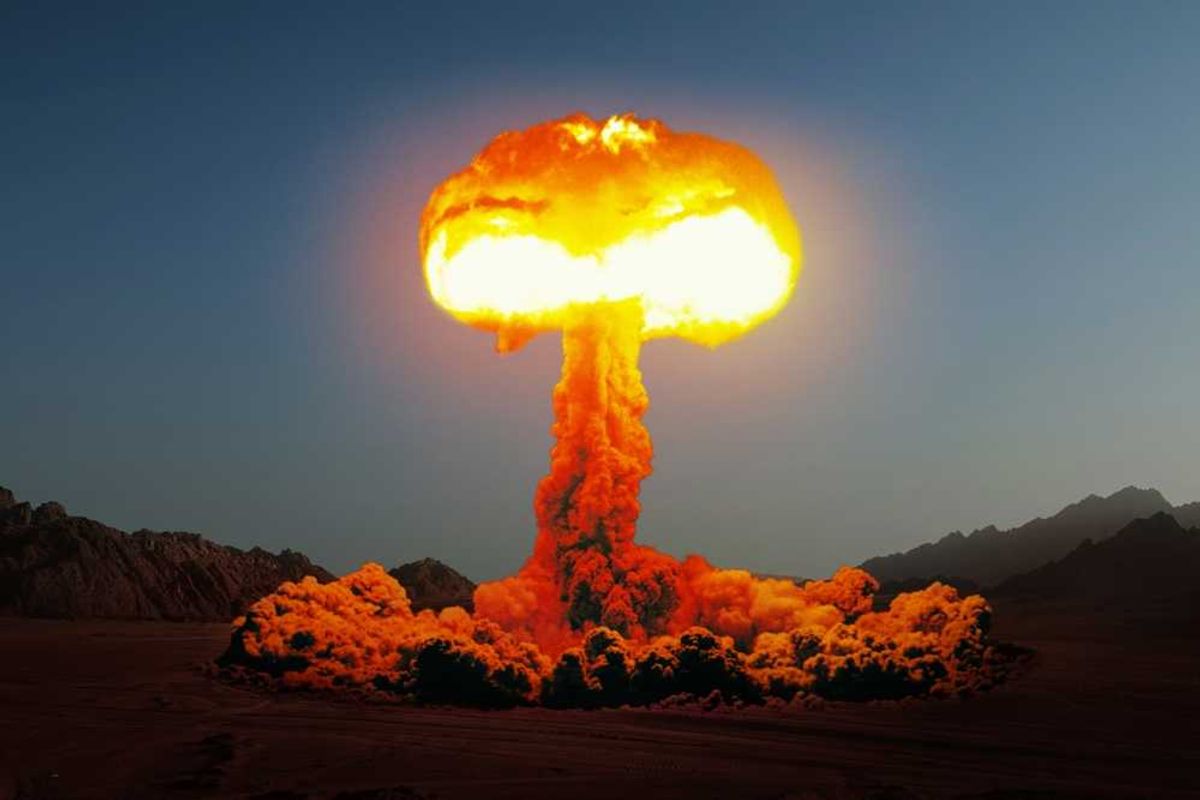
Explosion of a nuclear bomb with a mushroom in the desert.
 (Photo credit: Alones / Shutterstock)


President Donald Trump announced that the U.S. will resume testing its nuclear weapons, stating that the move is necessary because America's adversaries have done so.

While the U.S. has the top military equipment in the world, spending several times more than other countries, Trump wants the U.S. to start blowing things up again. The problem, however, is that the government shutdown means the people who deal specifically with nuclear issues are furloughed.

Speaking to MSNBC on Thursday, Ian Bremmer, founder and president of the Eurasia Group, said that the tit-for-tat between Trump and Putin can't start right away.


"Well, they can't start nuclear testing now because the officials that would be in charge of that have mostly been furloughed," said Bremmer. "So, you have to get the government started. I guess that's an irony."

He noted that it appears to be a direct response from Trump to Russian President Vladimir Putin's threats to begin nuclear testing. Trump withdrew the United States from the Intermediate-Range Nuclear Forces (INF) Treaty with Russia in August 2019.


Bremmer noted that it was revealed that Russia had a successful test of a nuclear-powered cruise missile, "which had the ability to hit the United States easily. And a torpedo, but that was not a nuclear test. It appears the president was confused about that and responded by saying, 'Yeah, we're gonna start doing nuclear testing.'"


The U.S. joined the Nuclear Test Ban Treaty in 1996, and Bremmer thinks if the U.S. began testing again, then the Russians and Chinese would quickly follow.


Trump’s order on nuclear testing: what we know


By AFP
October 30, 2025


The United States already periodically tests nuclear weapons delivery systems, such as during the February 2020 launch of a Minuteman III missile
 - Copyright US AIR FORCE/AFP 

Clayton WEAR

President Donald Trump has ignited a firestorm of controversy and confusion with his announcement that the United States will begin nuclear weapons testing.

It’s unclear whether he was referring to testing weapons systems — which the United States already does — or actually conducting nuclear explosions, which only US arch-foe North Korea has carried out in the 21st century.

Below, AFP examines what Trump has said, the state of current US testing, and what it would take to resume explosive tests.

– What Trump said –

Trump said in a social media post that he had instructed the Defense Department “to start testing our Nuclear Weapons on an equal basis” with Russia and China.

However, neither of those countries are confirmed to have carried out recent explosive testing, and it is the Department of Energy that is responsible for the US nuclear stockpile.

The president subsequently told journalists on Air Force One that “they seem to all be doing nuclear testing,” and that “we halted it many years ago but with others doing testing I think it is appropriate we do also.”

He offered no details on the nature of the testing he had ordered.

– Current US testing –

The United States conducted the world’s first nuclear test in July 1945 and used two nuclear weapons against Japan near the end of WWII.

It has carried out more than 1,000 explosive nuclear tests in total — most recently in 1992 with a 20-kiloton underground detonation at the Nevada Nuclear Security Site.

That year, Congress passed a temporary moratorium on underground nuclear tests unless a foreign state conducted one, which has since occurred. Washington had already agreed not to conduct tests in the atmosphere, outer space and underwater as part of the Limited Test Ban Treaty, which it has been a party to since 1963.

The United States has also been a signatory since 1996 to the Comprehensive Nuclear-Test-Ban Treaty, which bans all atomic test explosions, but the Senate has yet to ratify it.

In the absence of explosive testing, the United States ensures its arsenal’s reliability through the so-called Stockpile Stewardship Program, which includes “a wide range of scientific activities, from modeling and simulation to subcritical nuclear experiments,” according to the US National Nuclear Security Administration.

“This program allows us to assess and certify the stockpile with extraordinary confidence,” it says.

Washington also periodically tests its nuclear delivery systems such as intercontinental ballistic missiles.

The US military launched an unarmed Minuteman III missile earlier this year, with the Space Force saying at the time that the United States had carried out more than 300 similar tests overall.

– Resuming explosive testing –

The president has the authority to authorize explosive tests, and Washington’s forces have “the capability to resume testing within 24-36 months of a presidential decision to do so,” the US Congressional Research Service says.

It notes that a 2012 study found that “the response time for resuming underground explosive testing is driven more by compliance with environmental, health, and safety regulations than by the technical testing requirements or the need to restore equipment and facilities.”

Doreen Horschig, a fellow with the Project on Nuclear Issues at the Center for Strategic and International Studies, said the US National Nuclear Security Administration would be able to “get the test site ready within six to 10 months for a very basic underground test.”

“The timeframe is much longer if you want to test new warheads and new capabilities,” Horschig said.

But she also noted that there is likely to be political opposition to a resumption of testing “from both sides of the political camps” in the United States, while “our allies (also) do not see a need for (a) return to testing.”

Trump call for nuclear tests sows confusion


By AFP
October 30, 2025


Visitors watch a video of a nuclear bomb test at the All-Russia Exhibition Centre (VDNH) in Moscow in December, 2023 - Copyright AFP/File Eduardo Leal


Fabien ZAMORA

President Donald Trump Thursday sowed confusion among experts with his call for the start of nuclear weapons testing, with some pundits interpreting the announcement as US preparations for a shock resumption of explosive testing after more than 30 years.

The US president baffled foreign government and nuclear weapons experts alike when he said he had ordered the Pentagon to start nuclear weapons testing “on an equal basis” to China and Russia.

Speaking to reporters aboard Air Force One, the US president also said that it had been “many years” since the United States had conducted nuclear tests and it was “appropriate” to start again because others are testing.

The last time Russia officially tested a nuclear weapon was in 1990, and the United States last tested a nuclear bomb in 1992.

North Korea is the only country to have conducted nuclear weapons tests this century.

Heloise Fayet, a researcher at the French Institute of International Relations, said it was not immediately clear what Trump meant — or whether the United States might be preparing to tear up the global rulebook and resume nuclear weapons testing after a 33-year hiatus.

“Either he is talking about testing missiles, but the United States already does that,” she said.

“Or he is talking about subcritical tests, but I don’t think he has mastered that level of technology,” she added, referring to low-yield tests authorised by the Comprehensive Nuclear Test Ban Treaty.

“Or he is talking about real tests, but no one does that except North Korea.”

Trump’s announcement came after President Vladimir Putin said that Russia had in recent days tested nuclear-powered, nuclear-capable weapons — the Burevestnik cruise missile and the Poseidon underwater drone.

On Thursday, the Kremlin sought to cool tensions, saying those tests did not constitute a test of an atomic weapon.


– ‘Extremely complicated’ –


William Alberque, a former head of NATO’s nuclear non-proliferation centre, pointed to Trump’s lack of clarity.

“Initially, I thought Trump was reacting to Russia’s announcements about new systems like the nuclear-powered cruise missile Burevestnik and the Poseidon torpedo. So my first interpretation was that Trump was referring to system testing, not warhead testing,” he told AFP.

But like all nuclear powers, the United States already tests its weapons.

In September, the United States carried out tests of its nuclear-capable Trident missiles.

There is also a possibility that Trump might have meant the so-called subcritical nuclear tests, said Fayet.

“We are almost certain that Russia and China are conducting subcritical tests that release a certain amount of energy but remain within the limits,” said Fayet.

But “in the United States, they are conducting more restrictive subcritical tests, with no energy release, no heat and no critical reaction”.

Trump could demand to catch up, she said.

“But it’s an extremely complicated subject, and I don’t know if he is at that level of subtlety,” she added.


– ‘Chain reaction’ –


Alberque said that after closely examining Trump’s statements, he was inclined to think that “he’s talking about warhead testing.”

Many Trump supporters have long lobbied for a resumption of nuclear testing, despite the existence of computer-based simulations as well as serious negative international consequences.

“America must prepare to test nuclear weapons,” the influential conservative think tank Heritage Foundation said in a report in January, referring to a “deteriorating security environment”.

Some experts said Trump’s latest pronouncements were a gift to the governments of Russia and China.

In 2023, Putin ordered the Russian defence ministry and the nuclear agency Rosatom to “ensure readiness for testing Russian nuclear weapons”.

“We know for certain that some figures in Washington are already considering the possibility of conducting live tests of their nuclear weapons,” Putin said during his address to the Federal Assembly in February, 2023.

“But if the US conducts tests, then we will too.”

Daryl Kimball, executive director of the Washington-based Arms Control Association, said on X that Trump’s policy was “incoherent: calling for denuclearisation talks one day; threatening nuclear tests the next”.

The resumption of such tests “could trigger a chain reaction of nuclear testing by US adversaries, and blow apart the nuclear Nonproliferation Treaty,” Kimball said.


With these race remarks, Trump and the GOP are raising a frightening specter from history

Judy Helgen,
 Minnesota Reformer
October 24, 2025 2:08PM ET


Flags fly near a banner depicting Donald Trump during a "No Kings" protest. REUTERS/Kylie Cooper

It’s here and it’s happening. The recent revelations about Republicans “joking” about an affinity for Nazism should wake us up to the reality of the moment. When President Donald Trump says immigrants have “bad genes” and are “poisoning the blood of our country,” he has raised the specter of eugenics that thrived in our country and of course in Germany during the 1930s. There’s a direct line from this thinking to the Holocaust.

We need look no further than Minnesota for insight into this ugly history. During the early 20th century, Minnesota and many other states passed eugenics laws to support so-called racial purification. Laws in 31 states allowed the sterilization of mentally disabled and “feeble-minded” people, epileptics and more. Minnesota passed a sterilization law in 1925, and more than 2,000 people — mostly women — were sterilized. In California around 20,000 were sterilized from 1917 to 1952.

Through the 1930s, American scientists at the prestigious Cold Spring Harbor Lab in New York promoted eugenics and maintained a Eugenics Record Office. David Starr Jordan, who wrote early major works on the fishes of North America and was president of Stanford University, was a white supremacist and supported forced sterilization programs aimed at poor Black, Indigenous and Hispanic women as well as the mentally disabled.

We know that Charles Lindbergh, the Minnesotan famous for his solo flight across the Atlantic, was a eugenicist and talked of preserving the inheritance of European blood and guarding against its dilution by foreign races. He praised Hitler. Margaret Sanger, who was the first president of Planned Parenthood, was a eugenicist.

The Minnesota Eugenics Society was founded in 1923 by Charles F. Dight, who served as president until his death in 1938. He actively promoted reproduction of the “fit” and race betterment (the State Fair held “fit family” contests).

During the 1930s, Dight communicated with Hitler, praising him for his plan to “stamp out mental inferiority among the German people” and “advance the eugenics movement.” If carried out effectively, Dight wrote, “it will make him the leader of the greatest national movement for human betterment the world has ever seen.”

Our country has had a history of restricting immigrants, e.g. the Chinese Exclusion Act of 1882 and the 1924 Johnson-Reed Act that limited immigrants from eastern and southern Europe and Japan.

Trump castigates immigrants as criminals and insane, even though immigrants have lower crime rates than that of American citizens.

How could the President release 1,500 convicted insurrectionists yet push to deport immigrants? He’s likely a true believer in the nonsensical race science that was predominant a century ago.

Episcopal Bishop Mariann Budde, who spent a quarter-century in Minnesota, told Trump at the now famous prayer service early this year, “The people who pick our crops and clean our office buildings; who labor in poultry plants and meatpacking plants; who wash the dishes after we eat in restaurants and work the night shifts in hospitals — they may not be citizens or have the proper documentation. But the vast majority of immigrants are not criminals. They pay taxes and are good neighbors.”

Aren’t we all the immigrants or the descendants of immigrants? And don’t we all have defects?

Let us not forget: We are called to protect the vulnerable, to treat everyone as equals, to “do unto others as we would have them do unto us.”


Judy Helgen, PhD, is a retired research scientist with the Minnesota Pollution Control Agency. She lives in Falcon Heights.


Trump Ripped for ‘Absurdly Low’ and ‘Racist’ Refugee Cap Prioritizing White South Africans

“Let’s call this what it is—white supremacy disguised as refugee policy,” said the head of the Haitian Bridge Alliance.


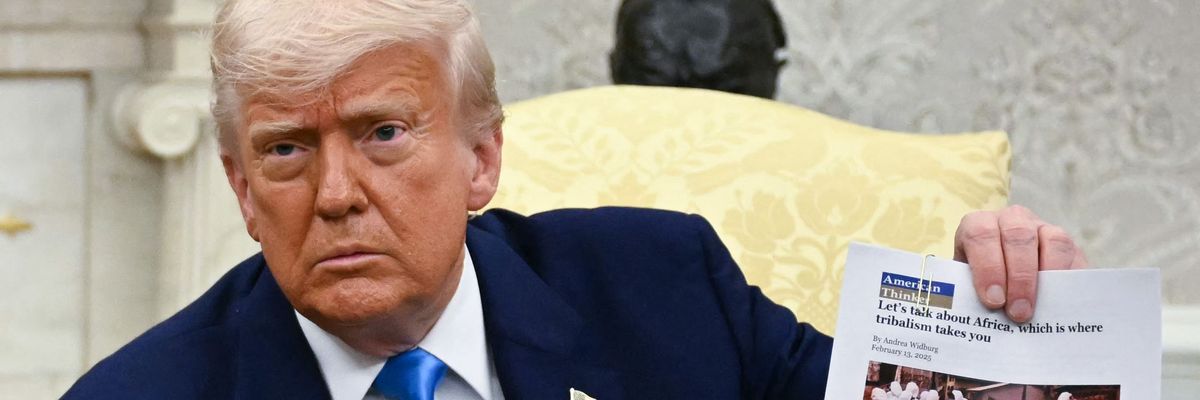
US President Donald Trump displays an article about Afrikaners as he meets with South African President Cyril Ramaphosa in the Oval Office of the White House in Washington, DC, on May 21, 2025.
(Photo by Jim Watson/AFP via Getty Images)

Jessica Corbett
Oct 30, 2025
COMMON DREAMS


After months of reporting, President Donald Trump’s administration on Thursday officially announced that it is restricting the number of refugees for this fiscal year to 7,500, with most spots going to white South Africans—a policy swiftly denounced by human rights advocates and Democrats in Congress.

“This decision doesn’t just lower the refugee admissions ceiling. It lowers our moral standing,” said Krish O’Mara Vignarajah, president and CEO of Global Refuge. “For more than four decades, the US refugee program has been a lifeline for families fleeing war, persecution, and repression. At a time of crisis in countries ranging from Afghanistan to Venezuela to Sudan and beyond, concentrating the vast majority of admissions on one group undermines the program’s purpose as well as its credibility.”

The Trump administration’s notice in the Federal Register doesn’t mention any groups besides Afrikaners, white descendants of Europeans who subjected South Africa’s majority Black population to a system of apartheid for decades. Multiple rich Trump backers—including Tesla CEO Elon Musk, venture capitalist David Sacks, and Palantir founder Peter Thiel—spent time in the country during those years.

The 7,500 cap, initially reported earlier this month, is a significant drop from both the 40,000 limit that was previously reported as under consideration by the Republican administration, and the more than 100,000 allowed under former Democratic President Joe Biden.


Four congressional Democrats who serve as ranking members on related committees—Reps. Jamie Raskin (Md.) and Pramila Jayapal (Wash.), along with Sens. Dick Durbin (Ill.) and Alex Padilla (Calif.)—issued a joint statement condemning the new cap, which they noted is “an astonishing 94% cut over last year and the lowest level in our nation’s history.”

“To add insult to injury, the administration is skipping over the tens of thousands of refugees who have been waiting in line for years in dire circumstances to come to the United States, and it is instead prioritizing a single privileged racial group—white South African Afrikaners—for these severely limited slots,” they said. “This bizarre presidential determination is not only morally indefensible, it is illegal and invalid.”

The four lawmakers continued:
The administration has brazenly ignored the statutory requirement to consult with the House and Senate Judiciary Committees before setting the annual refugee admissions ceiling. That process exists to ensure that decisions of such great consequence reflect our nation’s values, our humanitarian commitments, and the rule of law, not the racial preferences or political whims of any one president.

The reason for this evasion is evident: The administration knows it cannot defend its egregious policy before Congress or the American people. While nearly 130,000 vetted, approved refugees—men, women, and children fleeing persecution and violence—wait in limbo after being promised a chance at safety, Donald Trump is looking to turn refugee admissions into another political giveaway for his pet projects and infatuations.

We reject this announcement as both unlawful and contrary to America’s longstanding commitment to offer refuge to the persecuted. To twist our refugee policy into a partisan straightjacket is to betray both our legal obligations and our moral identity as a nation.

“Let’s call this what it is—white supremacy disguised as refugee policy,” declared Guerline Jozef, executive director of Haitian Bridge Alliance. “At a time when Black refugees from Haiti, Sudan, the Congo, and Cameroon are drowning at sea, languishing in detention, or being deported to death, the US government has decided to open its arms to those who already enjoy global privilege. This is not just immoral—it’s anti-Blackness codified into federal policy.”

This week alone, Hurricane Melissa killed more than 20 people in Haiti, and health officials said that the Rapid Support Forces, which are fighting against Sudan’s government, killed over 1,500 people—including more than 460 systematically slaughtered at a maternity hospital—in the city of el-Fasher.

“We reject the idea that whiteness equates to worthiness,” Jozef said of Trump’s new refugee plan. She also took aim at the president’s broader anti-immigrant policy, which has included deporting hundreds of people to El Salvador’s so-called Terrorism Confinement Center (CECOT).

“From Del Rio to Lampedusa, Black migrants and other immigrants of color have been criminalized, beaten, caged, and disappeared in CECOT camp in El Salvador—while their humanity is debated like a policy variable,” she said. “This moment demands our humanity, our resistance, not silence.”


Amy Fischer, Amnesty International USA’s director for refugee and migrant rights, also tied Thursday’s announcement to the broader agenda of the president—who, during his first term, faced global condemnation for policies including the forcible separation of families at the southern border.

“Setting this cap at such an absurdly low number and prioritizing white Afrikaners is a racist move that will turn the US’s back on tens of thousands of people around the world who are fleeing persecution, violence, and human rights abuses,” said Fischer. “Refugees have a human right to protection, and the international community—including the United States—has a responsibility to uphold that right.”

“This announcement is yet another attack by the Trump administration on refugees and immigrants, showing disregard for international systems meant to protect human rights,” she added. “The Trump administration must reverse course and ensure a fair, humane, and rights-based refugee admissions determination.”


The announcement came just days after Trump’s nominee to be ambassador to South Africa, far-right media critic Brent Bozell, faced intense criticism for refusing to say whether he would support or oppose repealing laws allowing Black Americans to vote during his Senate confirmation hearing.


'Art of the Deal' guy Trump suddenly can't make deals: NY Times


U.S. President Donald Trump makes a sports announcement at the White House in Washington, D.C., U.S., May 5, 2025. REUTERS/Leah Millis

President Donald Trump posted on Truth Social Friday that he's asking "the Court to clarify how we can legally fund SNAP as soon as possible," after a federal judge ordered his administration to continue funding the program during the shutdown.

But Trump already knows how to shuffle money, says the New York Times Editorial Board. He’s already been funneling it wherever he wants for months, regardless of rules.

“President Trump has played fast and loose with federal law during the current government shutdown to fund the things he considers important,” the Board said. “He has found ways to pay military service members and F.B.I. agents. He has distributed tariff revenues to women with small children and arranged billions of dollars in financial support for Argentina. He has even ordered the Interior Department to keep federal lands open for hunting.”

But what Trump has refused to fund is as equally telling, wrote the editors.

“As the shutdown enters its second month, the president still will not agree to an extension of the federal tax credits that allow millions of Americans to afford health insurance,” the wrote. And up until Friday, the Trump administration declared it would stop distributing food stamps to more than 40 million lower-income families, declining to tap the program’s emergency reserve fund.

The government shutdown is causing Americans pain on many fronts, with more than a million federal workers going unpaid and the Small Business Administration not making loans. Additionally, regulators are not conducting many routine safety inspections of food processing plants.

Trump praises himself as the force behind the Art of the Deal, but the editorial board said he and his congressional allies “could end all of this by doing what they should have done months ago: making a deal.”

“Under current Senate rules, Republicans manifestly do not have enough votes to pass a funding bill on their own, and it is absurd that they continue to insist that Democrats should simply acquiesce. The hard work of governing in a democracy is hammering out a compromise."

Instead, the editors said Trump has sought to heap pressure on Democrats to concede without compromise by suspending funding for projects in blue states, including the important Hudson River train tunnel between New Jersey and New York, and he has targeted mass transit in Chicago for cuts and rescissions.


His most recent ploy to raise the stakes by suspending the distribution of food stamps “is unconscionable,” said the editorial board, however passionately he claims in his Truth Social post that “I do NOT want Americans to go hungry.”

“Republicans say their party has become the party of the American working class. But many working families rely on the tax credits to afford health insurance. And many of those same families rely on food stamps to put enough food on the table,” wrote the editors. “Mr. Trump can serve their needs by demonstrating his skills as a negotiator. It’s time to make a deal.”

Read the New York Times editorial at this link.
Trump ally told us 'look at the data' on left-wing violence — we did and it doesn't add up

Jordan Green,
 Investigative Reporter
November 1, 2025 
RAW STORY


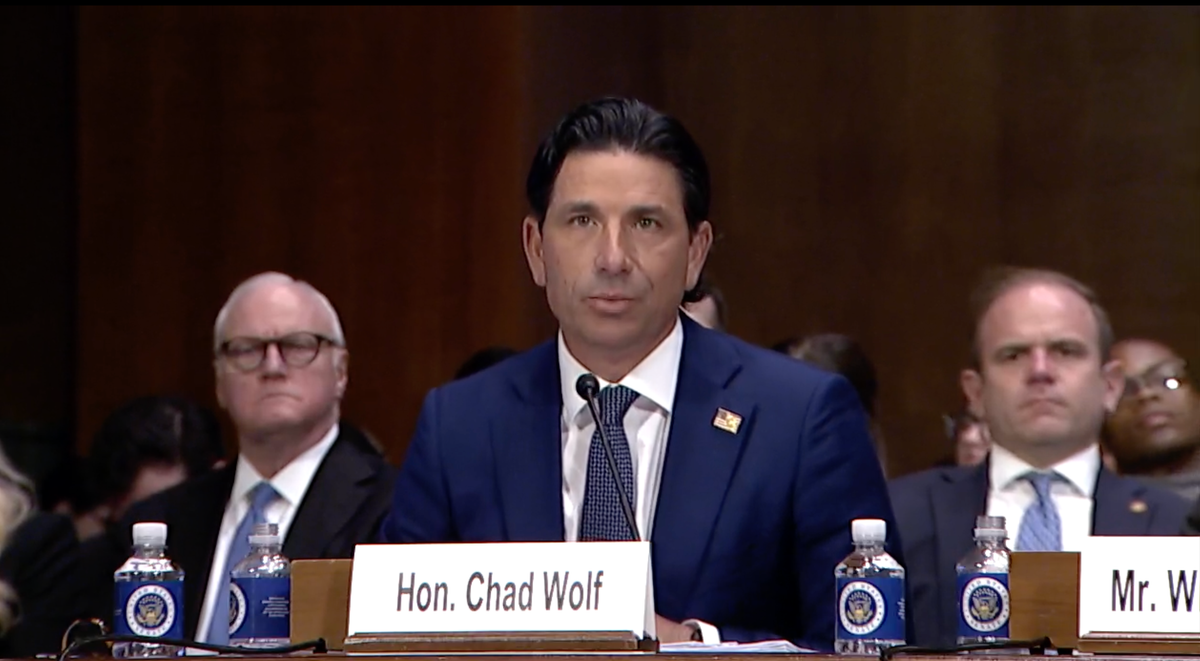
Former acting DHS Secretary Chad Wolf testifies in the Senate. Picture: Senate Subcommittee on the Constitution.

Former acting Homeland Security Secretary Chad Wolf’s appearance before a Senate hearing on political violence this week resurfaced inconvenient remarks for a witness called by Republicans intent on painting rising political violence as a left-wing problem.

Sen. Richard Durbin (D-IL) read back Wolf’s Senate testimony from five years ago.

“White supremacist extremists, from a lethality standpoint over the last two years … are certainly the most persistent and lethal threat, when we talk about domestic violent extremists,” Wolf said at the time.

On Tuesday, before the Senate Subcommittee on the Constitution, chaired by Sen. Eric Schmitt (R-MO), Wolff offered a strikingly different assessment.

“The increase in politically motivated violence over the last several years has been driven largely by radical, left-wing extremist groups and individuals that believe violence is a legitimate means to achieve political goals,” Wolf testified.

Wolf is now executive vice president of the America First Policy Institute. Founded in 2021 and closely aligned with Trump, former leaders include Secretary of Education Linda McMahon, Secretary of Agriculture Brook Rollins and Attorney General Pam Bondi.

In a statement to Raw Story, Wolf did not disavow his 2020 assessment on white supremacist violence, but said: “America has experienced a historic rise in left-wing violence, especially following President Trump’s second election victory.”

At the time of Wolf’s September 2020 hearing, the U.S. had experienced a series of mass shootings by white supremacists, including Patrick Crusius, who killed 23 people, mostly Latinos, at a Walmart in El Paso, Texas in 2019, and Robert Bowers, who killed 11 at a Pittsburgh synagogue in 2018.

Both killers echoed Donald Trump’s rhetoric depicting immigrants and refugees as an “invasion” or “invaders.”

U.S. counterterrorism officials also took note of the 2019 massacre carried out by Brenton Tarrant, who killed 51 Muslims at two mosques in Christchurch, New Zealand.

Crusius cited Tarrant as an inspiration. So did Payton Gendron, who killed 10 African Americans at a grocery store in Buffalo, N.Y. in 2022.

Tarrant’s attack catalyzed the emergence of the term “saints” among white supremacists to glorify terrorists. The U.S. Justice Department is currently prosecuting three Terrorgram leaders on terrorism-related charges.

“White supremacist violence is clearly not the primary threat facing our country today,” Wolf told Raw Story. “All you have to do is look at the data, which has changed significantly in the last five years.”

Wolf cited incidents often mentioned by the administration and allies to make the case that political violence now emanates from the left: the assassination of conservative activist Charlie Kirk, two attempts on Trump’s life, the attempted assassination of conservative Supreme Court Justice Brett Kavanaugh, and attacks on centers that offer an alternative to abortion services.

He did not cite the murder of Minnesota Democratic state Rep. Melissa Hortman and her husband by an abortion opponent; a recent death threat against Democratic House Minority Leader Hakeem Jeffries (D-NY) by a Jan. 6 rioter; or the bludgeoning of Paul Pelosi, husband of former House Speaker Nancy Pelosi (D-CA), by a QAnon follower.

Nor did Wolf mention some 1,500 individuals pardoned by President Trump over the Jan. 6 assault on Congress.

William Braniff, a former director of DHS’ Center for Prevention Programs under President Joe Biden testified alongside Wolf.

Braniff agreed that violent incidents are on the rise. But he told the subcommittee, “Violent events do not fit neatly into any one ideological category.”

Braniff noted that DHS contracted with the University of Maryland in 2005 to create a global terrorism database, by congressional mandate. In March, the Trump administration canceled funding.

Drawing on the database, Braniff said: “This year, compared to last year, terrorism events are up 67 percent. Fatalities are up nearly 150 percent. Americans are dying from ISIS-inspired, white supremacist, antisemitic, anti-government, anti-vax, anti-law enforcement and nihilistic attacks.”


‘Black Lives Matter and antifa riots’


In 2020, when Wolf flagged white supremacist violence, he was overseeing DHS as the first Trump administration deployed federal agents against protesters in Portland, Ore., a harbinger of the current standoff at an Immigration and Customs Enforcement facility in the city.

On Tuesday, Sen. Schmitt and Sen. Ted Cruz (R-TX) cited rioting related to protests against the police murder of George Floyd in Minneapolis in 2020, a familiar Republican talking point.

“There is an epidemic of politically motivated violence,” Cruz said. “And the politically motivated violence in this country is overwhelmingly emanating from the left. We saw that during the Black Lives Matter and antifa riots across the country, as cities across America burned.”

Schmitt complained that some studies of political violence “systematically ignore antifa and Black Lives Matter riots.”

Michael Knowles, a podcast host at the conservative outlet The Daily Wire, complained in testimony that “the Black Lives Matter riots, overtly leftist demonstrations that left dozens of people dead … fail to show up on registers of left-wing political violence.”

Cruz, Schmitt and Knowles did not delve into who was responsible for such violence. The data suggests they were presenting an incomplete picture.

Drawing on data provided by the Armed Conflict Location & Event Data Project (ACLED), and multiple news reports, Raw Story counted 34 deaths plausibly linked to racial justice protests and unrest in 2020, not counting the police killings that sparked protests. Of those, three appear to involve perpetrators directly linked to Black Lives Matter, “antifa” or their supporters.

On May 28, 2020, the second night of rioting in Minneapolis, rioters set fire to a pawnshop. The charred remains of 30-year-old Oscar Lee Stewart Jr. were found in the ruins. Montez Terriel Lee was convicted of arson and sentenced to a decade in prison.

The following month, 16-year-old Antonio Mays Jr. was shot inside a stolen Jeep Cherokee that sped through an area of Seattle known as the CHAZ — Capitol Hill Autonomous Zone — and occupied by protesters. No charges have been brought, but bystander video appears to implicate an activist security team patrolling amid fears of a right-wing attack.

In late August 2020, Aaron “Jay” Danielson, a member of the far-right group Patriot Prayer, was fatally shot in Portland, Ore. Michael Reinoehl, the self-described “antifa” shooter, claimed self-defense. Before he could be apprehended, Reinoehl was killed by federal agents, an event President Trump described as “retribution.”

Danielson’s death is the only politically motivated homicide in the U.S. linked to an identified antifascist in the past quarter-century.

In contrast, one study found that white supremacists and other right-wing extremists killed at least 329 between 1994 and 2020.

The circumstances of Danielson’s shooting remain unclear. As noted by ACLED, Trump supporters were staging a car caravan through downtown Portland, and some right-wingers “sprayed pepper spray and shot paintball guns at counter-demonstrators rallying in support of the BLM movement and against police brutality, as well as journalists.”

The entry also notes video showing right-wing demonstrators driving vehicles through left-wing counter-demonstrators attempting to block the streets.


‘Might shoot looters’

Eight other deaths in 2020 could be linked to racial justice protests, if not directly.

In some, civilian bystanders were killed by criminals who appeared to be exploiting chaos. Victims include David Dorn, a retired police captain in St. Louis whose widow spoke at the 2020 Republican National Convention; Chris Beaty, a former college football player murdered in Indianapolis while assisting a woman being mugged; and Marvin Francois, a photographer killed in a robbery while leaving a protest in Kansas City.

Among the most shocking deaths associated with the 2020 protests is that of 8-year-old Secoriea Turner, shot by an alleged Bloods gang member manning a barricade in the area where Rayshard Brooks was killed by Atlanta police. Julian Conley was convicted of murder and other offenses, and sentenced to life in prison.


Kyle Rittenhouse mugshot. (Kenosha County Sheriff's office)


But in at least 23 cases — roughly two thirds — Raw Story found that perpetrators of unrest-related deaths were not linked to Black Lives Matter, antifa or their supporters. They include five people killed by police, one killed by the National Guard, others killed by motorists and shopkeepers, a man with severe mental illness, and a security guard for a news crew.

In one example, Steven Carillo, an airman active in the far-right Boogaloo movement, took advantage of unrest after Floyd’s death to murder David Patrick Underwood, a federal security officer guarding the federal courthouse in Oakland, Calif., and Damon Gutzwiler, a Santa Cruz County deputy sheriff attempting to serve a warrant.

Raw Story’s analysis tallied 11 Black Lives Matter protesters killed: roughly equal to the number of unaffiliated civilians.

Two — Summer Taylor and Robert Forbes — were struck by vehicles. Barry Perkins III was dragged by a tractor-trailer. Others, including James Scurlock and Italia Impinto, were shot.

Garrett Foster, an Air Force veteran marching with BLM protesters in Austin, Texas on July 25, 2020, was fatally shot by Daniel Perry, a former soldier who reportedly searched for locations of protesters and told a friend he “might go to Dallas to shoot looters.” Perry was convicted of murder, then pardoned by Gov. Greg Abbott.

Perhaps most memorably, Kyle Rittenhouse fatally shot two BLM supporters during unrest in Kenosha, Wis. in 2020. He was acquitted on all charges.


Jordan Green is a North Carolina-based investigative reporter at Raw Story, covering domestic extremism, efforts to undermine U.S. elections and democracy, hate crimes and terrorism. Prior to joining the staff of Raw Story in March 2021, Green spent 16 years covering housing, policing, nonprofits and music as a reporter and editor at Triad City Beat in North Carolina and Yes Weekly. He can be reached at jordan@rawstory.com. More about Jordan Green.
AN UNHOLY CRUSADE
'Deranged behavior': Internet dubs Trump 'mentally unstable' after military threat to ally

David McAfee
November 1, 2025 
RAW STORY


Donald Trump's threat to send troops to attack people on allied land raised some red flags this weekend.

Trump on Saturday took to Truth Social to threaten Nigeria, which is known as a strategic partner for the U.S.


"If the Nigerian Government continues to allow the killing of Christians, the U.S.A. will immediately stop all aid and assistance to Nigeria, and may very well go into that now disgraced country, 'guns-a-blazing,' to completely wipe out the Islamic Terrorists who are committing these horrible atrocities," Trump said on Truth Social Saturday. "I am hereby instructing our Department of War to prepare for possible action. If we attack, it will be fast, vicious, and sweet, just like the terrorist thugs attack our CHERISHED Christians! WARNING: THE NIGERIAN GOVERNMENT BETTER MOVE FAST!"

The internet was quick to respond to the president's claim about the potential Nigerian military strike.

Ex-prosecutor Ron Filipkowski said, "At some point we might have to consider the fact that he might be mentally unstable."

Independent journalist Aaron Rupar said, "Trump posts crazy stuff like this at times where he feels like he’s not getting enough attention and wants people to start talking about him again."

Rupar then added, "It’s deranged, narcissistic behavior."

Jeff Timmer, a conservative analyst who opposes Trump, also chimed in, "In the old days, when in moods like this, he’d just lurk in dressing rooms at Bergdorf’s or head over to Epstein’s place."

"U.S. Capitol, Greenland, Los Angeles, Iran, Canada, democracy, Washington DC, Portland, narco-boats, Chicago, pleasure fishing boats, the Constitution, Venezuela, the rule of law, Nigeria. All the same to the lawless, corrupt, chickens---, moron in the WH," Timmer wrote on social media.

Professor Timothy Snyder added, "Is it just me or do these proclamations sound more and more like the work of Dement AI?"


'Guns-a-blazing': Trump threatens new 'fast, vicious, and sweet' foreign military strike

David McAfee
November 1, 2025 
RAW STORY


President Donald Trump speaks during the ASEAN-U.S. Summit in Kuala Lumpur, Malaysia on Oct. 26, 2025. Vincent Thian/Pool via REUTERS

Donald Trump on Saturday threatened military action on foreign soil, escalating previous remarks about the nation.

The president previously raised the possibility of sanctions against Nigeria for allegedly failing to rein in the persecution of Christians in what Trump now calls a "disgraced country." Nigerian officials have forcefully denied all the allegations.

Trump went even further over the weekend, specifically threatening to use a military solution to what he considers to be a problem with persecution.

"If the Nigerian Government continues to allow the killing of Christians, the U.S.A. will immediately stop all aid and assistance to Nigeria, and may very well go into that now disgraced country, 'guns-a-blazing,' to completely wipe out the Islamic Terrorists who are committing these horrible atrocities," Trump said on Truth Social Saturday. "I am hereby instructing our Department of War to prepare for possible action. If we attack, it will be fast, vicious, and sweet, just like the terrorist thugs attack our CHERISHED Christians! WARNING: THE NIGERIAN GOVERNMENT BETTER MOVE FAST!"

See the full post here.