Saturday, November 08, 2025

Depleted uranium: The forgotten legacy of the Kosovo War
DW

In 1999, NATO used uranium ammunition during the Kosovo War. Numerous soldiers subsequently developed cancer, and some were awarded compensation. In Kosovo, the soil remains poisonous to this day.


In March 1999, an American fighter jet was armed with bombs containing depleted uranium off the coast of Albania, which were later used in Kosovo
Image: Mike Nelson/dpa/picture alliance

"I can vividly remember the last day," said Emerico Maria Laccetti, former colonel of the military division of Italian Red Cross.

During the Kosovo War in 1999, he was stationed in Albania, just a few hundred meters from the border with Kosovo. He was the commander of a field hospital for refugees from the province, which at the time belonged to Serbia.

"We stood on containers and watched the bombings," he said. "It was like a perverse New Year's Eve fireworks display. Even at a distance, you could feel the air pressure, the shock waves going through your body. But no, we were not told about the specific dangers of the weapons being used."

In March 1999, NATO's Operation Allied Force intervened in the conflict between the Serbian state and the Albanian majority population in Kosovo, which had been simmering for years. Over 78 days, the alliance flew missions with up to 1,000 aircraft against Serbian security forces. According to official figures, over 28,000 explosive devices were dropped, including controversial uranium ammunition, which is suspected of causing cancer.

This ammunition contained a core of depleted uranium (DU), with high explosive power due to its high density, three times denser than lead. It is therefore used primarily against tanks and armored targets. Its impact can produce fine uranium dust, which continues to emit radiation and can cause health problems, for example, if it is inhaled.

NATO rejects cancer accusations

In response to questions about the health risks posed by DU ammunition, NATO only gave a written statement. "We take health and environmental issues very seriously," it said.

In 2001, a committee on DU concluded that the use of DU ammunition in Kosovo "did not cause any lasting health risk to the population," citing independent findings.

NATO refers to UN reports from 2014. "This is scientific evidence; it was reliable, and we stand by it," the military alliance said in a statement.

However, this contradicts the rulings of Italian courts on lawsuits filed by approximately 500 Kosovo War veterans who developed cancer after coming into contact with depleted uranium ammunition.

Laccetti says he was aware that his field hospital in Morina, Albania, was located in a "hot zone," close to an active conflict, during the NATO bombings — something that would always entail risk.

"What we were never told, however, was that certain types of ammunition can pose long-term danger, even if you are not directly hit — for example, from an unexploded ordnance nearby or from substances used in ammunition production."

Triggering long-term illness

When Laccetti returned home in July 1999, he experienced breathing difficulties and went to the hospital to be examined. "The medical staff suddenly became very flustered," he recalled.

Finally, a doctor showed him the image: "There was something in my lung measuring 24-by-12-by-14 centimeters (9.4-by-4.7-by-5.5 inches)." The then 36-year-old was diagnosed with a very aggressive malignant tumor.

Laccetti was initially treated successfully, but in 2008, he fell ill with cancer again. The results of the tissue examination were alarming. "They found an extraordinary amount of perfectly round ceramic particles — as if I had been standing in a blast furnace."

The conclusion was clear: "These particles had become lodged in my body over many years and could cause new damage through migration or inflammation."
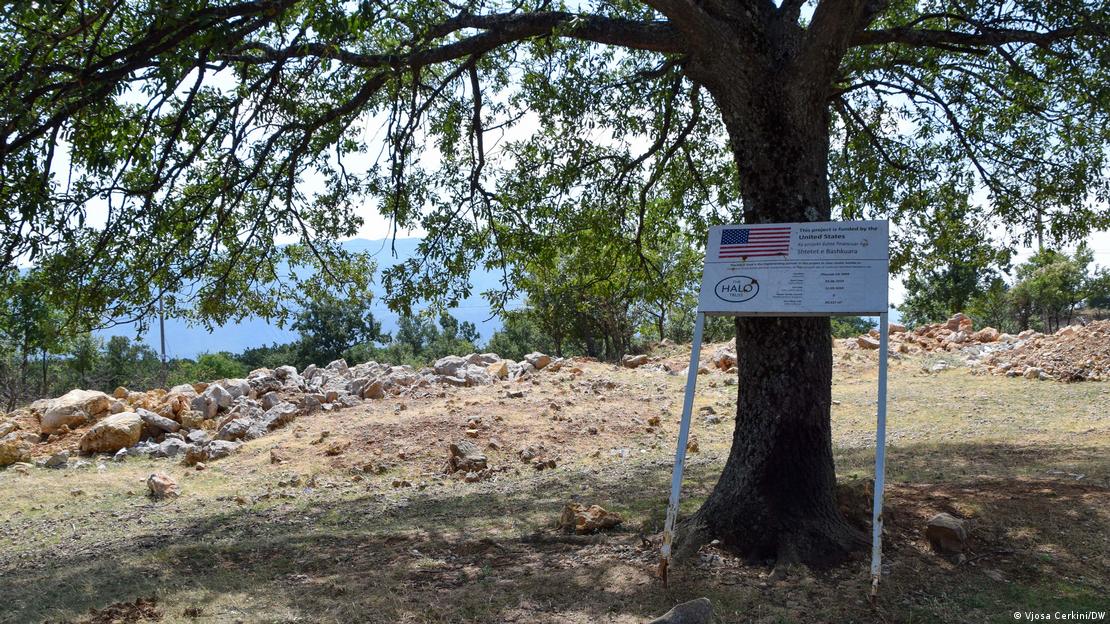

In 1999, NATO used depleted uranium ammunition in the village of Pllenaje in Kosovo
Image: Vjosa Cerkini/DW


Successful lawsuits in Italy

Laccetti learned of other soldiers of the same age who had been stationed nearby and received similar diagnoses. He contacted lawyer Angelo Tartaglia, who represented those affected.

Approximately 500 military personnel successfully sued the state of Italy. Among them was Laccetti, whom a court in Rome certified in 2009 as a victim because he had fulfilled his military duties. The court awarded him compensation.

After the Kosovo War, a commission of the Italian Ministry of Defense investigated a possible link between DU exposure and cancer. It found a statistically significant increase in the incidence of non-Hodgkin lymphoma, a group of blood cancers, among affected soldiers. However, other studies, such as a WHO report from the same year, found no clear evidence of a direct link between DU and individual cases of disease.

Difficult to prove a cancer link

For Wim Zwijnenburg, a member of the International Coalition to Ban Uranium Weapons (ICBUW), the case is clear-cut.

"The judge recognized that the Italian state had a duty of care, which is why compensation was awarded," explained Zwijnenburg, who has been investigating the use and consequences of DU for over 16 years.

"My conclusion is it is extremely difficult to make a definitive statement," he admits, because depleted uranium only has an effect when it enters the body, usually in the form of fine dust particles that are inhaled. "But the exact amount that people actually absorb has never been properly measured. There are very few reliable long-term studies."

The causes of cancer are often difficult to pinpoint. Unhealthy lifestyles, environmental influences, genetic predisposition and many other factors contribute to the number of cases.

"It's difficult to prove," says Zwijnenburg. "Have those affected ever touched a DU grenade or been near a contaminated tank? Uranium can take a year to penetrate the skin. Doctors cannot make any claims if it is not completely clear. People are looking for a clear cause, but the reality is far more complex."
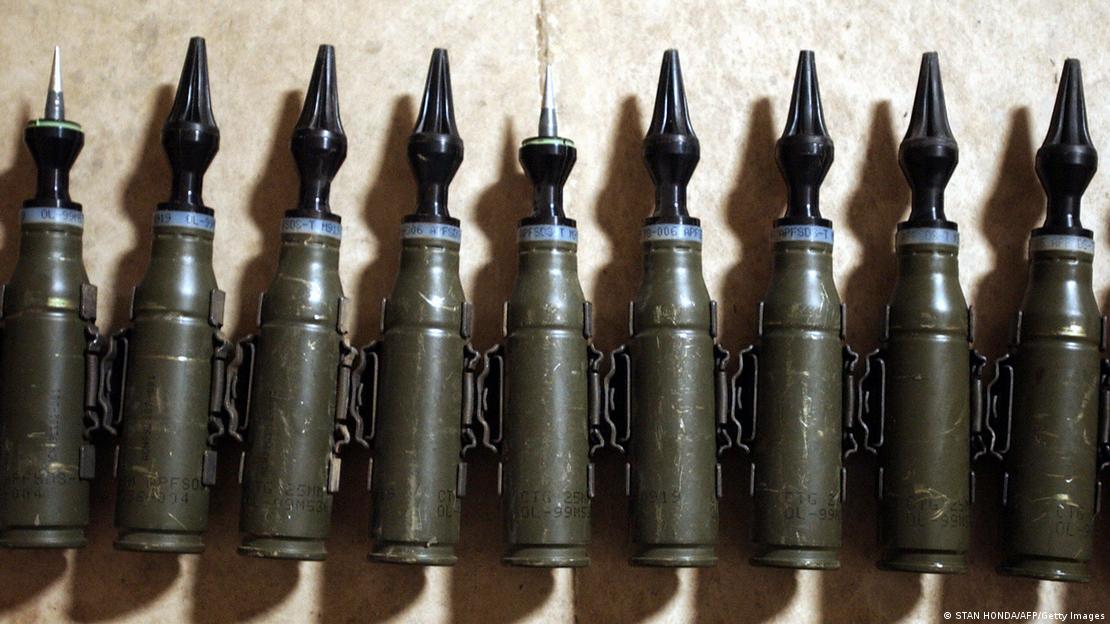
American uranium ammunition used in Iraq in 2004
Image: STAN HONDA/AFP/Getty Images


Did NATO do enough to clean up Kosovo?


In 2002, the United Nations passed a resolution obliging countries to inform affected states after the use of uranium ammunition and to assist in the cleanup of contaminated areas. It is unclear to what extent NATO fulfilled this responsibility in Kosovo — the NATO peacekeeping force KFOR, which has been stationed there since the end of the fighting to secure peace, does not provide any information.

Visits to the sites show that the population in many regions of Kosovo is unaware of the potential risks, and decontamination measures have not been carried out, except at one site in the west of the country, in the village of Lugbunari near Gjakova.

"NATO could be criticized for using these weapons," said expert Wim Zwijnenburg, "but even more so for not carrying out clean-up operations after the war. There are clear protection protocols for soldiers — but for civilians? Nothing. It is unacceptable to use toxic ammunition and then simply turn away."

Officially, the material that DU ammunition is made of is classified as low- to medium-level radioactive waste. But, Zwijnenburg said, "in humid climates such as the Balkans, shells can corrode and disintegrate, leaving behind dangerous residues."
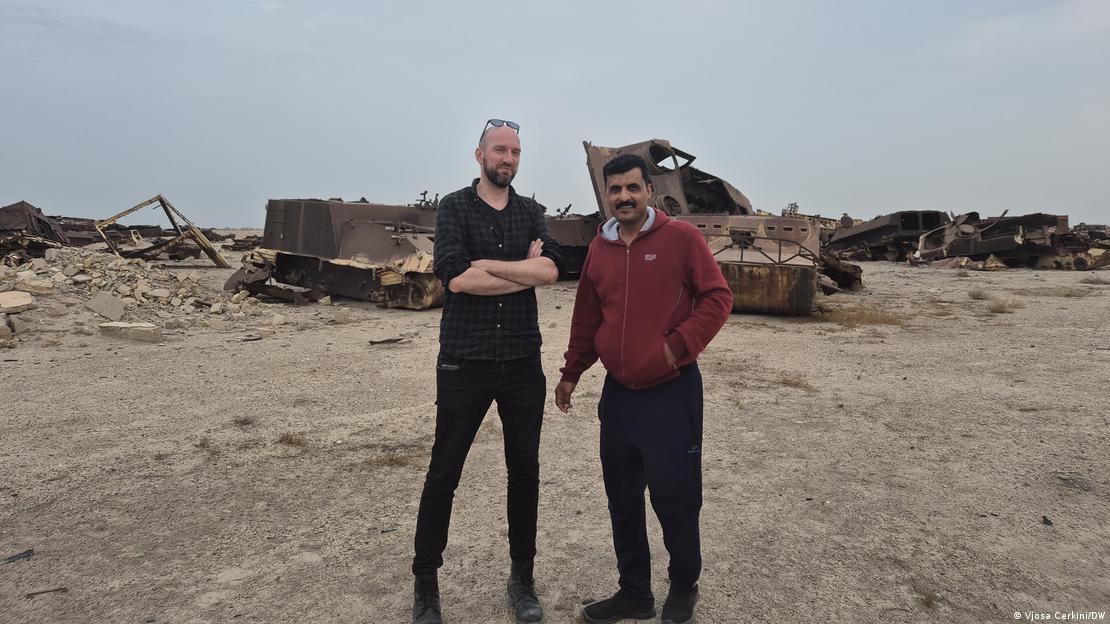
Wim Zwijnenburg investigates depleted uranium in Iraq 2025
Image: Vjosa Cerkini/DW

The risk doesn't fade with time either, as the half-life of uranium is almost infinite. For Zwiijnenburg, this is evidence of the states' double standards.

"If such a grenade were to be found in a Dutch park, the area would be cordoned off. Special forces in protective suits would place the grenade in a lead container and store it safely." So when it comes to their own population, risks are taken extremely seriously — but elsewhere, they are not.

Laccetti is disappointed that his case and those of many other veterans have not brought about any fundamental changes. "Depleted uranium ammunition is still legal. We have tried in every conceivable way to ban it, like cluster munitions or anti-personnel mines," he said. "We have failed."

With additional reporting by Gabriele Cruciata in Rome and Marjolein Koster in Utrecht.

The research for this article was supported by Journalism fund Europe.

This article was originally published in German.

Vjosa Cerkini 
Reporter focusing on Kosovo and other Western Balkan countries


SEE https://plawiuk.blogspot.com/search?q=KOSOVO

Seeing the Forest for the Trees
Thesis on The Kosovo Crisis and the Crisis of Global Capitalism

(originally written May 1999, Bill Clinton set the stage for George W. to invade Afghanistan and Iraq for humanitarian purposes.)
http://plawiuk.blogspot.com/2005/01/war-whats-it-good-for-profit.html
UPS, FedEx ground planes after Louisville crash
DW with AFP, Reuters
07/11/2025 


The world's largest cargo carriers, UPS and FedEx, grounded their MD-11 freighter fleets at the recommendation of Boeing, the aircraft's manufacturer.

US logistics companies UPS and FedEx have grounded their combined fleet of more than 50 McDonnell Douglas MD-11 cargo planes.

The decision, announced on Friday evening, followed a crash involving one of the planes at Louisville International Airport in Kentucky earlier that week, which killed at least 14 people.

"Out of an abundance of caution and in the interest of safety, we have made the decision to temporarily ground our MD-11 fleet," UPS said in a statement.

"The grounding is effective immediately. We made this decision proactively at the recommendation of the aircraft manufacturer."

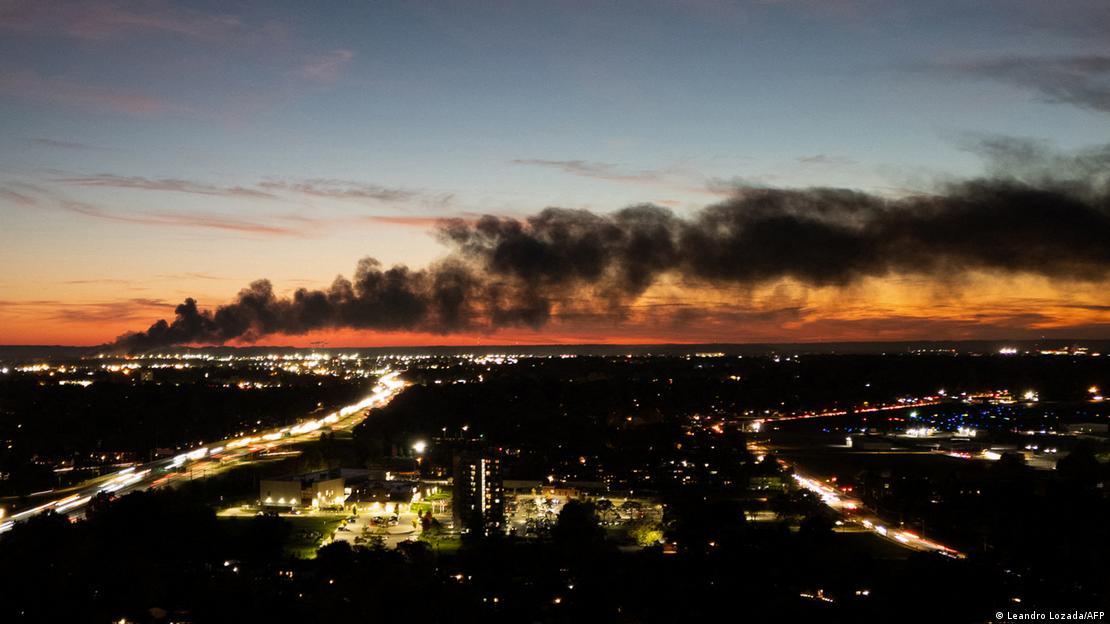
The plane bound for Hawaii on a long-haul flight narrowly missed a major Ford vehicle assembly plant that employs 3,000 peopleImage: Leandro Lozada/AFP

Meanwhile, Boeing — which acquired the MD-11 program through its 1997 merger with McDonnell Douglas — also announced that it recommended UPS and FedEx suspend MD-11 freighter flight operations.

"This recommendation was made in an abundance of caution and we will continue coordinating with the FAA on this matter," a Boeing spokesperson said.

What do we know about MD-11 crash?

The US National Transportation Safety Board (NTSB) is leading the investigation into the crash. Investigators determined that the accident occurred when one of the engines caught fire and detached from the plane during takeoff.

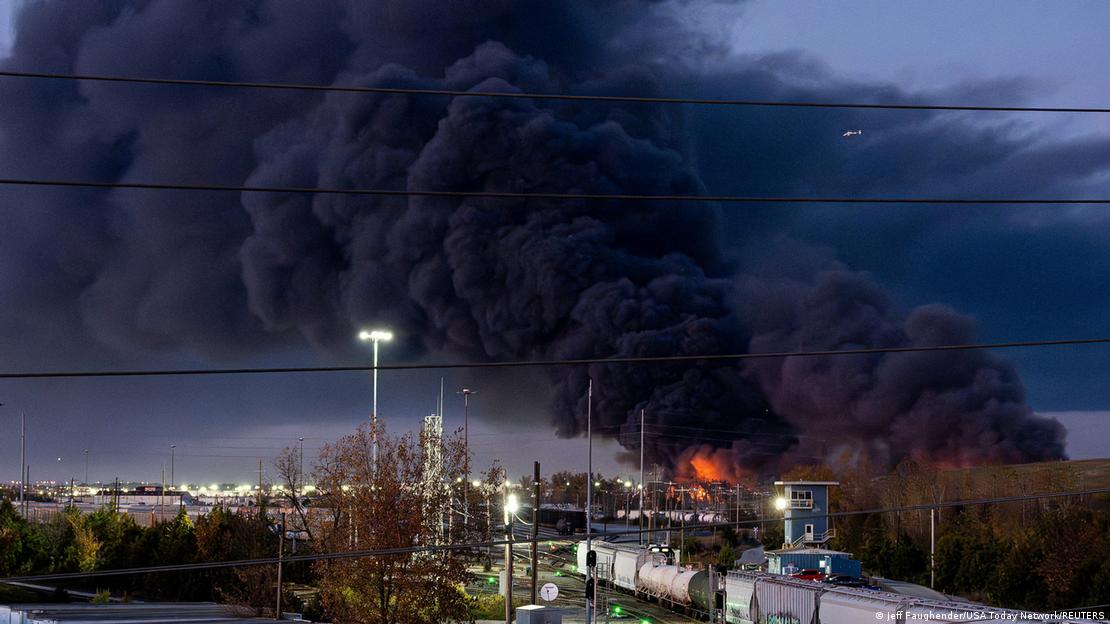
The plane reached an altitude of approximately 100 feet (30.5 meters) before plunging off the runway in flames, destroying two nearby businesses in the process.

On Friday, US safety investigators said the three UPS pilots attempted to regain control of the aircraft just before it crashed after a warning bell sounded in the cockpit.

The NTSB reported that the plane was built in 1991 and modified into a cargo aircraft. A preliminary report on the investigation is expected in about 30 days.

Smoke rises from the wreckage of a UPS MD-11 cargo jet after it crashed on departure from Louisville
Image: Jeff Faughender/USA Today Network/REUTERS


How many MD-11s are operated by UPS and FedEx?

The MD-11 was developed and initially produced by McDonnell Douglas Corporation, which merged with Boeing in 1997. Production of the MD-11 ceased in 2000, and its use for passenger service officially ended in 2014.

UPS and FedEx are the world's largest cargo carriers. Prior to the crash, UPS had 27 MD-11s in its fleet, according to a UPS fact sheet. The company stated that its MD-11s comprise only about 9% of its fleet.

FedEx which has a fleet of 700 aircraft operates 28 MD-11s. The company said it is "immediately implementing contingency plans" to avoid disruptions.

Disruptions could have far-reaching consequences because FedEx and UPS transport goods for major retailers such as Amazon, Walmart, and Target, as well as manufacturers and businesses around the world.

Edited by: Karl Sexton

Dmytro Hubenko Dmytro covers stories in DW's newsroom from around the world with a particular focus on Ukraine.
LEGALIZE DRUGS, END DRUG WARS
Macron says drug trafficking fight must respect nations' sovereignty on Mexico visit


French President Emmanuel Macron said the fight against drug trafficking must respect each state's sovereignty as he wrapped up a Latin American tour with a maiden visit to Mexico. His comments appeared to criticise the Trump administration's aggressive anti-narcotics campaign in the Caribbean.


Issued on: 07/11/2025 
By:  FRANCE 24

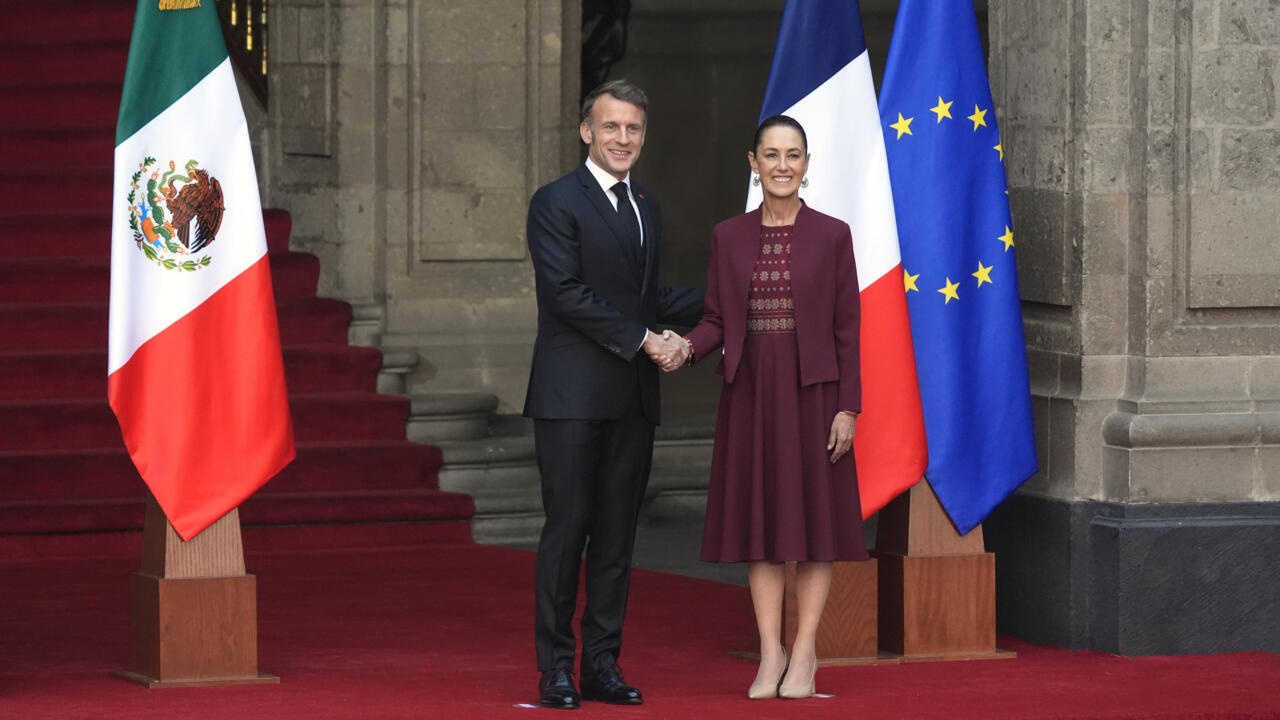
French President Emmanuel Macron met with his Mexican counterpart Claudia Sheinbaum at the National Palace in Mexico City, November 7, 2025. © Marco Ugarte, AP

French President Emmanuel Macron said Friday that any effort to combat drug trafficking must respect the sovereignty of all nations, in a veiled criticism of the controversial US anti-narcotics campaign in the Caribbean and the Pacific.

The French leader, who arrived in Mexico at the end of a mini-tour of Latin America, made the comment during a joint press conference with his Mexican counterpart Claudia Sheinbaum when asked about the US operations and reports on eventual similar moves in Mexico.

"The fight against drug traffickers is one that unites us all," Macron said, noting that he and Sheinbaum had discussed the issue.

"It is governed by the cooperation between sovereign nations and the respect for the sovereignty of each one."


President Donald Trump's administration has built up significant forces in Latin America, in what it says is its campaign to stamp out drug trafficking.

The United States began carrying out strikes – which some experts say amount to extrajudicial killings even if they target known traffickers – in early September, taking aim at vessels in the Caribbean and eastern Pacific.

The US strikes have destroyed at least 18 vessels so far – 17 boats and a semi-submersible – but Washington has yet to make public any concrete evidence that its targets were smuggling narcotics or posed a threat to the United States.

During his visit to Mexico, Macron otherwise highlighted his desire to bolster ties with Latin America's second-largest economy after Brazil.

He and Sheinbaum presided over a meeting of French and Mexican business leaders.

Mexico is Latin America's number one investor in France, while Paris is only the 11th biggest foreign investor in Mexico.

Macron was the first French president to visit Mexico in more than a decade.


(FRANCE 24 with AFP)
Iran plans water cuts for Tehran amid worst drought in decades

Iranian officials on Saturday were drawing plans for periodic water supply cuts to Tehran neighbourhoods a day after President Masoud Pezeshkian warned that the Iranian capital might have to be evacuated if there were no rains before the end of the year. Iran is experiencing one of its worst droughts in decades.


Issued on: 08/11/2025 
By: FRANCE 24
Video by: Morgan AYRE

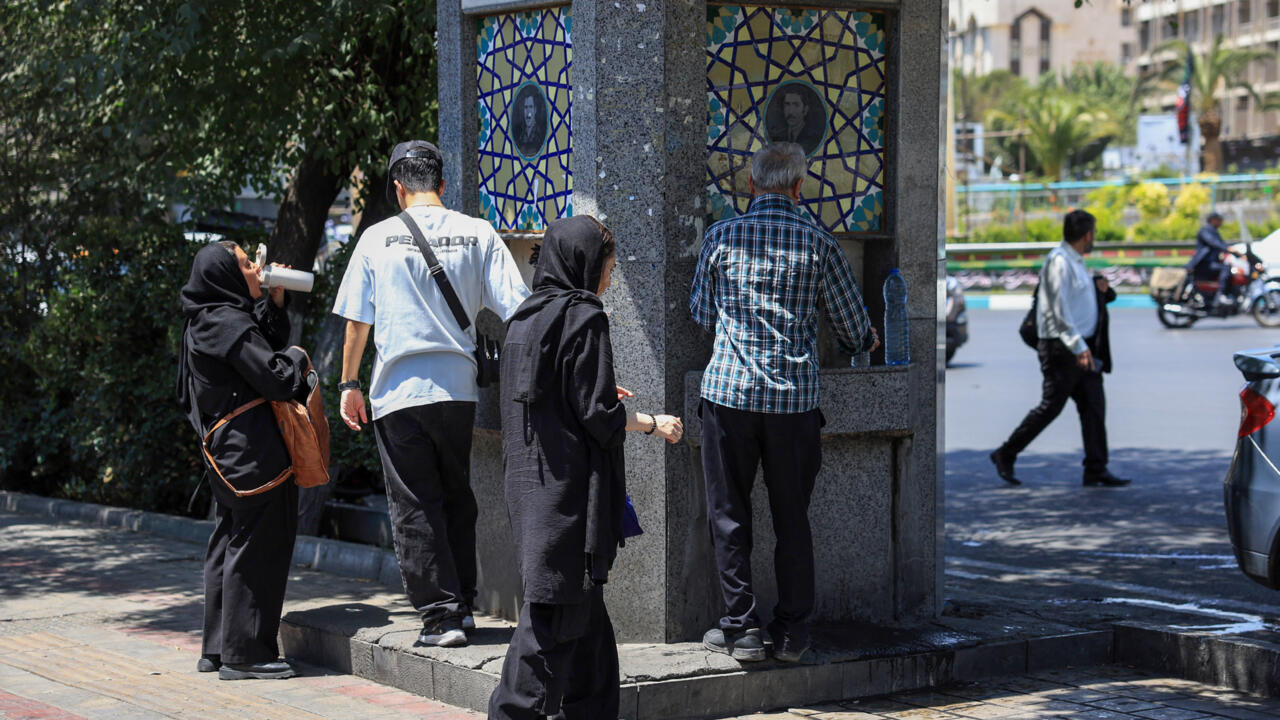
File photo of Iranians drinking water from a public street fountain
 in Tehran taken on July 22, 2025. © AFP
01:06


Iran was laying plans on Saturday to cut off water supplies periodically to Tehran's 10-million-strong population as it battles its worst drought in many decades.

Rainfall in the capital has this year been at its lowest level in a century, local officials say, and half of Iran's provinces have not seen a drop fall in months.

READ MOREVanishing reservoirs, empty taps: how Iran’s water crisis became a national emergency

Now, to save water, the government is planning water cuts in Tehran – and several local news outlets have already reported pipes running dry overnight in some areas.


"This will help avoid waste even though it may cause inconvenience," Iran's Energy Minister Abbas Ali Abadi said on state television.

In a speech broadcast on Friday, Iran's President Masoud Pezeshkian had warned that Tehran might have to be evacuated if no rain falls before the end of the year.

But he gave no details about how such a vast operation would be conducted.

Tehran nestles on the southern slopes of the Alborz mountains and has hot dry summers usually relieved by autumn rains and winter snowfall.
Reservoirs run dry

Tehran is by far the country's biggest city and its inhabitants use three million cubic metres of water per day, according to local media.

The main Amir Kabir dam on the Karaj river, one of five reservoirs serving the capital, is running dry and holds only 14 million cubic litres, according to Behzad Parsa, director general of the Tehran water company, cited by the official news agency IRNA.

During the same period last year, the reservoir held 86 million cubic metres, he added, but now it only has enough to maintain supplies to the Tehran region for less than two weeks.

On Saturday, state television broadcast images of several dams, serving the central city of Isfahan and Tabriz in the northwest, showing significantly lower water levels compared to previous years.

Hassan Hosseini, the deputy Iran's second-largest city Mashhad, told IRNA agency on Thursday that night-time water cuts were being considered to address the water shortage.

And over the summer on July and August, two public holidays were declared in Tehran to save water and energy, at a time when power outages were almost daily during the intense heatwave.

(FRANCE 24 with AFP)
ONE PARTY STATE

Tanzanian police arrest senior opposition official, hundreds charged with treason

Tanzanian police on Saturday arrested a senior official from the opposition Chadema party and charged hundreds of people with treason in a continuing crackdown following last month's disputed elections.


Issued on: 08/11/2025 
By: FRANCE 24

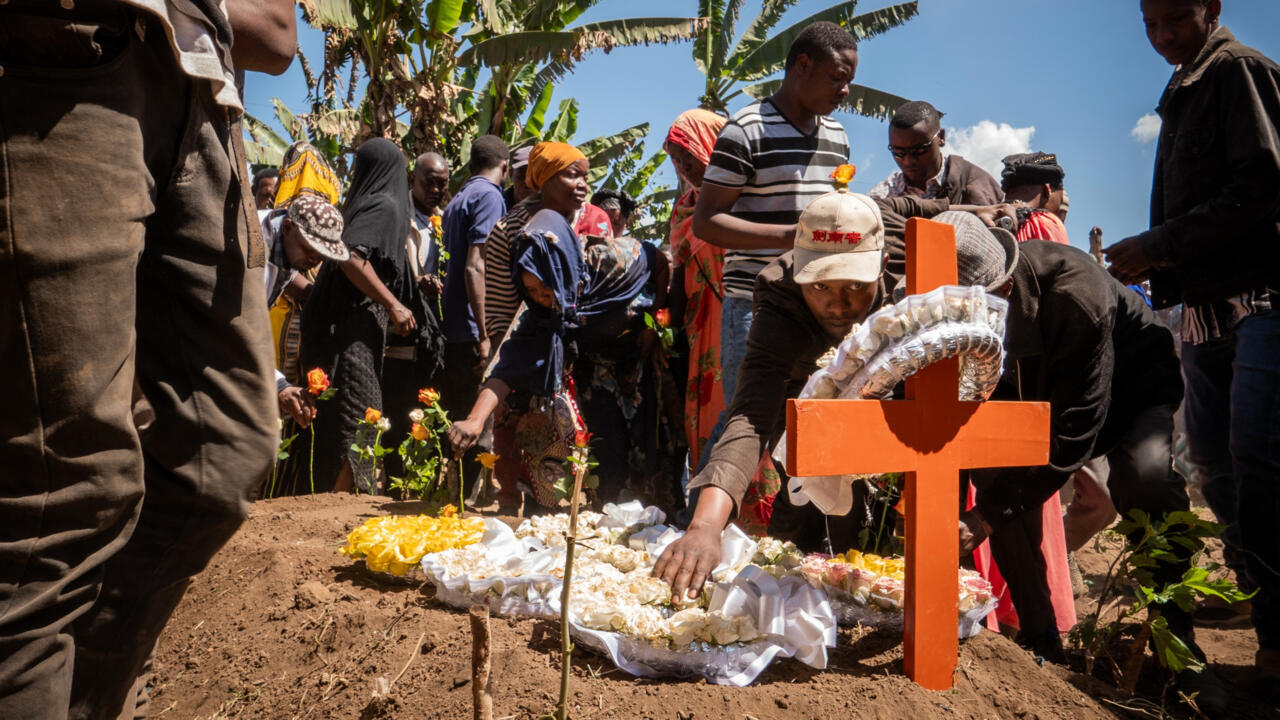
File photo of mourners at the funeral of a victim of post-electoral violence in Arusha, Tanzania, taken November 4, 2025. AP

Police in Tanzania arrested a senior official from opposition party Chadema on Saturday and authorities named nine others being sought in relation to violent protests that followed last week's elections.

Chadema and some human rights activists say that security forces killed more than 1,000 people. The government has called those numbers exaggerated without offering its own death toll.

Chadema said its deputy secretary general, Amani Golugwa, was arrested by police. Golugwa was named by police along with nine others as wanted in connection with the investigation into the unrest, a day after prosecutors charged 145 people with treason.

"The police force, in collaboration with other defence and security agencies, is continuing a serious manhunt to find all who planned, coordinated and executed this evil act," the police said in a statement.

Hundreds charged with treason

Tanzanian authorities charged hundreds of people with treason over demonstrations around last month's disputed polls last month, in addition to dozens criminally charged a day earlier in Dar es Salaam, according to numerous charge sheets that became publicly available Saturday.

Wanted suspects include Josephat Gwajima, an influential preacher whose church was deregistered earlier this year after he criticised the government over rights abuses.

Police also issued arrest warrants for some of the top opposition officials who hadn't yet been jailed. They include Brenda Rupia, Chadema's communications director as well as John Mnyika, its secretary-general.

Chadema is Tanzania's leading opposition party. Its leader, Tundu Lissu, has been jailed for several months and also faces treason charges after he urged electoral reforms.
Disappearances, arbitrary arrests, extrajudicial killings

Authorities face questions over the death toll after security forces tried to quell riots and opposition protests before and after the vote.

The Catholic Church in Tanzania has said that hundreds were likely killed.

But some believe that the death toll could actually be much higher. The Kenya Human Rights Commission, a watchdog group in the neighbouring country, asserted in a statement on Friday that 3,000 people have been killed by Tanzania's security forces, with thousands still missing.

“Amidst the ongoing attempted cover-up, facilitated by the continued internet blackout and bandwidth restrictions, this number could be thousands below the actual death toll,” the statement said.

Pictorial evidence in the rights group's possession shows many victims “bore head and chest gunshot wounds, leaving no doubt these were targeted killings, not crowd-control actions,” it said.

President Samia Suluhu Hassan, who automatically took office as vice president in 2021 after the death of her predecessor, took more than 97% of the vote, according to an official tally. She faced 16 candidates from smaller parties after Lissu and Luhaga Mpina, of the ACT-Wazalendo party, were barred from running.

Rights groups described a climate of repression before voting. There were enforced disappearances, arbitrary arrests and extrajudicial killings, according to Amnesty International and others. Tanzania’s government denies the allegations.

The African Union said this week that its observers had concluded that the election “did not comply with AU principles, normative frameworks, and other international obligations and standards for democratic elections.”

AU observers reported ballot stuffing at several polling stations, and cases where voters were issued multiple ballots. The environment surrounding the election was “not conducive to peaceful conduct and acceptance of electoral outcomes,” the statement said.

Single-party rule has been the norm in Tanzania since the advent of multiparty politics in 1992.

But government critics point out that previous leaders tolerated opposition while maintaining a firm grip on power, whereas Hassan is accused of leading with an authoritarian style that defies youth-led democracy movements elsewhere in the region.

A version of the governing Chama cha Mapinduzi party, which maintains ties with the Communist Party of China, has ruled Tanzania since its independence from Britain in 1961, a streak that Hassan extended with her victory.

(FRANCE 24 with AP and Reuters)
Month-long blackout leaves Mali's Mopti in the dark amid jihadist fuel blockade

The Malian city of Mopti has been plunged into darkness for weeks as a fuel blockade by jihadists tied to al-Qaeda cripples power supplies.


Issued on: 07/11/2025 - RFI

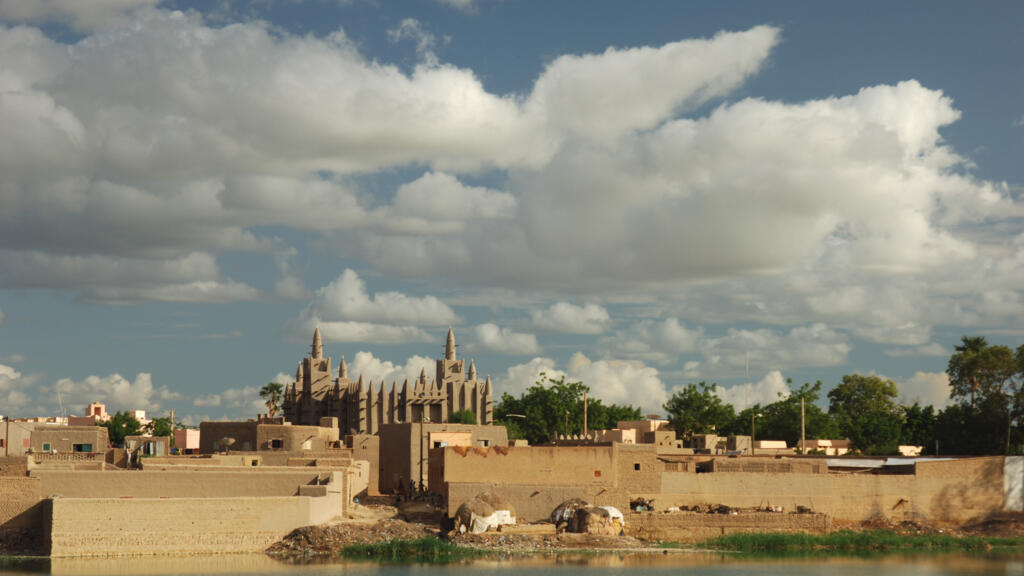
View of the city of Mopti, in central Mali, where a fuel blockade has left residents largely without power for the past month. © Getty Images/Friedrich Schmidt

For a month now, the people of Mopti – one of Mali’s largest and most vibrant cities – have been living in darkness. The lights went out in early October, and they have not come back on since.

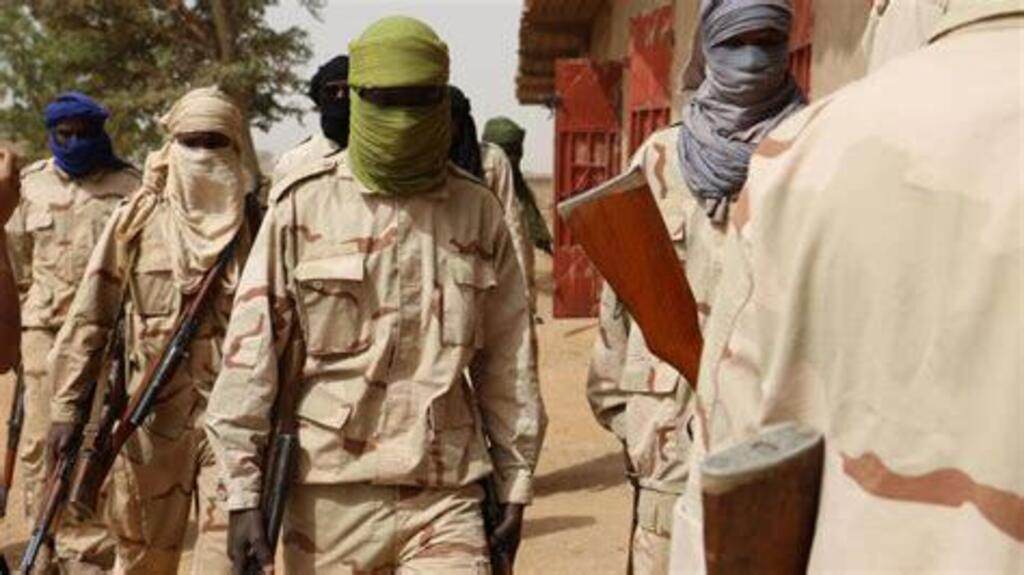
The blackout is the result of a blockade imposed by jihadists linked to al-Qaeda. The Group for the Support of Islam and Muslims – known as JNIM – announced in early September that it was cutting off fuel supplies to much of central Mali.

Since then, armed fighters have been attacking convoys of fuel tankers, leaving towns across the country struggling to power homes, hospitals and businesses.

Mopti, a riverside trading hub of more than 560,000 people, has been among the worst affected. Power cuts were already part of daily life, but with the blockade in place, fuel has all but disappeared.

Generators have fallen silent, and solar panels are now the city’s only lifeline – powering parts of the main hospital and letting residents charge their phones for a few minutes at a time.

Jihadist fighters have surrounded Mopti, in central Mali, and terrorist groups are active in the area. © RFI/Coralie Pierret


Mali’s economy near standstill amid JNIM fuel attacks


‘Catastrophic’ crisis


“Since 7 October, we haven’t had a second of electricity,” says Mohamed Sanous Nientao, a Mopti native now living in exile. “It’s a total blackout. For residents, it’s catastrophic.”

Nientao is a businessman and former local politician who once led the Mopti branch of the UDD, an opposition party now dissolved along with all political organisations under Mali’s military-led transition. Though he is abroad, he remains in close contact with his hometown and describes a city at breaking point.

“Economically, there’s no work, so no income,” he told RFI. “We get a few hours of water distribution, but even that is uncertain. With the security situation, we’re practically cut off from Bamako. The road is controlled by jihadist groups, and with the fuel shortage, the price of a bus ticket to the capital has exploded.

“We’ve never experienced anything like this in Mopti. It’s unbearable.”


Nientao appealed to Mali’s junta for help. “We know the authorities can’t fix everything overnight,” he says. “But we’re asking for at least one hour of electricity each day. The country is under attack from an extremist force. We have to stand together, but to do that, people need food, fuel and the means to live.

“We’re now in a position where we’re begging for a single hour of power.”

Earlier this week, Mali’s interim president, Assimi Goïta, said the government was working to find solutions. “Some of the answers must also come from families,” he added, urging Malians to limit travel, show solidarity and avoid panic.

This article was adapted from an original story in French by David Baché.


France urges nationals to leave Mali temporarily amid jihadist fuel blockade

France’s foreign ministry on Friday recommended that French nationals in Mali leave the country temporarily and "as soon as possible", citing the "worsening security situation" in the West African nation battling jihadist insurgents.


Issued on: 07/11/2025 
By: FRANCE 24

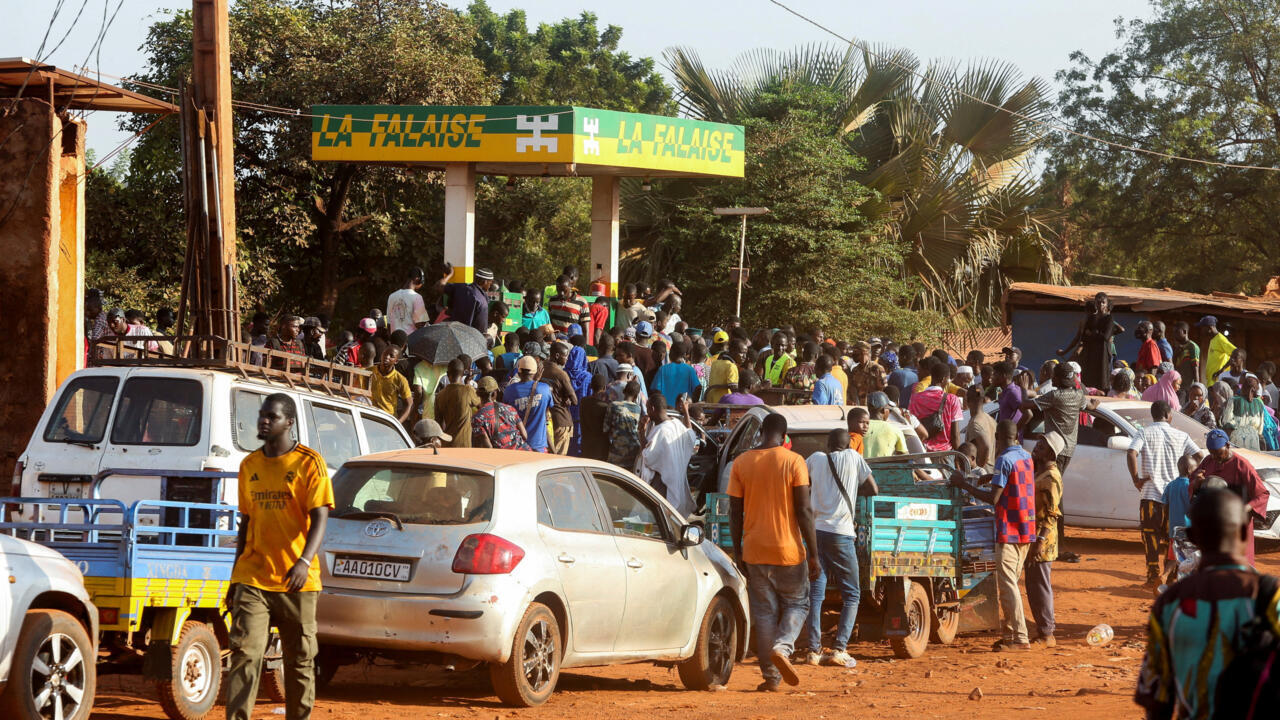
People gather at a petrol station in Bamako, Mali, on November 1, 2025, amid ongoing fuel shortages caused by a blockade imposed by al Qaeda-linked insurgents. © Reuters file photo

The French foreign ministry has urged all French nationals in Mali to temporarily leave the country, where a two-month-old fuel blockade by al Qaeda-linked militants has all but paralysed the capital Bamako.

In a travel advisory on Friday, the ministry recommended that French nationals leave Mali "as soon as possible" through commercial flights and not by land, warning that main roads have been targeted by "terrorist groups".

The ministry also reiterated its formal advice against travelling to the African country "regardless of the reason".

The al Qaeda-linked Group for the Support of Islam and Muslims (JNIM) has since September been targeting fuel tankers, particularly those coming from Senegal and Ivory Coast, through which the majority of Mali's imported goods transit.


WATCH MORE Jihadists' fuel blockade squeezes Mali's military rulers

France's announcement comes a day after the foreign ministry in Paris told a press briefing that insecurity in Mali showed the country’s decision to turn to Russia and Moscow-linked armed groups for security assistance had proven to be a failure.

"We are following the security situation in Mali with a great deal of attention and genuine concern," foreign ministry spokesperson Pascal Confavreux told reporters on Thursday.

"What I could add is that we can see that the contested presence of Russia, or forces associated with it in Mali, does not in any way ensure the security of Malian women and men."

Since back-to-back coups in 2020 and 2021 that led to the end of France's military presence, Mali has been ruled by a military junta that is struggling to counter various armed groups including the JNIM.

Last week, the United States and Britain announced the evacuation of their "non-essential" personnel and their families because of the deteriorating situation.

The Geneva-based shipping group MSC on Friday said it was halting its operations in Mali, citing the fuel blockade and deteriorating security.

(FRANCE 24 with AFP, Reuters)

The Feudalization Of Mali – Analysis

November 8, 2025 
Foreign Policy Research Institute
By Raphael Parens and Delina Goxho

(FPRI) — Bamako is living on the precipice. Nervous hotel owners complain about a lack of electricity, but this time it’s worse than usual. In the landlocked capital of the Sahelian country of Mali, business owners have grown accustomed to frustratingly common rolling blackouts across the region. But the blackouts are more nefarious these days, as a jihadist blockade of Mali’s highways has squeezed Bamako’s access to fuel that powers its generators and fuels its cars. The city of Bamako is hanging on, yet Mali’s statehood may have already slipped into the night.

Mali’s government has been fighting multiple wars for over a decade, but until recently, it has managed to contain violence to the country’s rural areas. The same can be said for Mali’s Sahelian neighbors, Burkina Faso and Niger. Yet today, their capitals and major cities are threatened by jihadist forces linked to al-Qaeda and the Islamic State.

The Sahel has been defined by trading for much of its history. Over time, the region’s trade routes expanded from gold to enslaved people, and back to human trafficking, gold, and drug smuggling today. While these trends are concerning by themselves, they accompany developments in the region’s political fate that are particularly concerning today.

The first warning signs came, as they did across the Arab world, after the Arab Spring. A crackdown on opposition movements included the Muslim Brotherhood and its jihadist offshoots. Jihadists fleeing stringent counterterror programs in Algeria put down roots in the Sahel, upending sensitive local dynamics. They threatened a tense ceasefire between northern rebel groups and local governments, as all three groups fought to control the Sahel’s lucrative trade routes and its precious minerals.

The Malian government requested French military assistance in 2013, which proved initially successful through Operation Serval in driving jihadist forces out of central Mali and their strongholds in the north of the country. However, as occurred in Afghanistan with U.S. counterterrorism campaigns, the initial French mission was susceptible to “mission creep” —the military term for strategies that balloon beyond the capabilities of the forces involved. Operation Barkhane aimed to eradicate terrorism in the Sahel region (including Burkina Faso and Niger) and provide the Sahelian states with an opportunity to manage their own defense. Meanwhile, a UN mission (MINUSMA), featuring a broad contingent of European and American partners, aimed to uphold the fragile peace deal between rebel groups and the government. These goalsproved both lofty and difficult to achieve.

Nearly 10 years later, the Malian military decided that enough was enough, orchestrating consecutive coups d’état in 2020 and 2021 that fundamentally altered the country’s balance of power. European partners appeared to be lining their pockets with natural resources while failing to push jihadist and separatist groups out of Mali. With Russian media support, a Malian junta took power and pushed its European partners out, riding a wave of anti-colonial resentment towards France and nascent pro-Russian sentiment. Similar coups followed in Niger and Burkina Faso, albeit with limited initial Russian involvement.

Russian support has not saved Mali, nor has it saved its neighbors. The Russian state-backed mercenary company, Wagner Group, took the counterterror lead in Mali in early 2022, just as Russia began its invasion of Ukraine. Wagner Group immediately started killing civilians, attempting to send a message to Mali’s rural population that cooperation with jihadists was unacceptable. However, this strategy backfired, as Malian soldiers and civilians balked at atrocities like the internationally condemned Moura Massacre.

The invasion of Ukraine further complicated Wagner’s operations in Africa, as the Russian military lacked the capacity to support the organization logistically. Further, the Wagner Group had been spread thin by deployments across Africa—Sudan, the Central African Republic, and Libya. Yet, the organization’s reorientation toward Russia proved to be its true undoing. At Moscow’s behest, Wagner Group redeployed to Ukraine, where it clashed with the military over resources. This tension spilled over into a mutiny, its infamous march on Moscow, and the subsequent killing of its leaders, Yevgeny Prigozhin and Dmitry Utkin.

From the ashes of Wagner Group, the Kremlin resurrected its own public-private expeditionary force, known as the Africa Corps. In June, this organization took over Wagner Group’s operations in Mali. It expanded into Niger and Burkina Faso, but it was continually kneecapped by the Kremlin’s prioritization of the Ukraine conflict.

The Africa Corps has failed to recover from this loss, and this limited capacity contrasts with empowered jihadist and separatist movements across the Sahel. Jama’at Nusrat al-Islam wal-Muslimin (JNIM), the local al-Qaeda branch, has been very active in Mali over the summer. First, JNIM launched a series of coordinated attacks on several military bases across the country. Then, it resorted to blocking the country’s major roads, laying siege to some important cities, and setting fire to fuel trucks coming from western and southern Mali. This strategy reflects JNIM’s new aim on the battlefield: to choke Bamako and overthrow the military junta, while simultaneously demonstrating the extent of the Malian state’s collapse. Meanwhile, not only have fuel prices spiked across Mali, but the shortage is now so severe that Bamako and other major towns have been completely paralyzed. Rumors swirling around the army suggest that military officials in Kati and elsewhere are losing their patience.

Western governments are sounding the alarm. On Oct. 24, the U.S. State Department upgraded Mali to a level 4 “Do Not Travel” warning, and other countries like the Netherlands and Canada followed suit. The potential outcomes are varied—from another military coup to an extended siege evoking images of Mogadishu in the 1990s to a complete jihadist takeover. Regardless, change is coming for Bamako, and the region may never be the same again.

While Bamako is in dire straits, its neighbors could be the next dominoes to fall. Burkina Faso now ranks at the top of the infamous Global Terrorism Index. The country’s junta government made the fateful decision to arm civilian militias, exacerbating violence. Jihadist groups have responded with drone attacks, which are also proliferating in Mali and Niger.

Niger isn’t faring any better. Nigeriens are four times more likely to die due to jihadist violence since the withdrawal of Western military support. One local cleric noted that jihadist forces “are beginning to feel legitimate, bold and entitled to the taxes, not just by force, but as if they were a recognized government.” Self-defense militias such as the zankai and the garde nomade have become the only state-supported or condoned forces in the country’s most violence-affected areas, as the military struggles to reach them.

All three countries are experiencing a collapse of the state. Jihadist and separatist insurgencies have fundamentally altered their capacity to conduct international affairs and manage sovereignty. No Sahelian government can claim full sovereignty or control over the means of violence within its borders. The Sahel is experiencing feudalization, the progressive fragmentation of the state. In this context, armed groups, rebel organizations, and self-defense militias engage in violence across different parts of the territory, and countries exist only in name.

Looking forward, prospects appear particularly bleak for the Sahel. Jihadist partial or total rule will spur mass migration, most likely into Mauritania, Algeria, and Libya. While European and American leaders are focused on Russia and China, a volatile jihadist source of insecurity is looming in West Africa. The consequences of jihadist statelets near the Atlantic and the Mediterranean can and should stir fear in Washington, Paris, Brussels, and beyond.

Yet, cooler heads are needed. African migration bans and militarily focused policies are short-term approaches that will flounder in the face of a more profound crisis plaguing the Sahel. Responsible policies must center around the failures of governance in the Sahel—enormous gaps in public infrastructure, poor access to education, and a hollowed job market—which build grievances in peripheral communities and push individuals into armed violence. From the governance side, foreign partners will need to try harder against the corrupt networks that continue to manage the Sahel’s gold and human trafficking trade, which perpetuates instability and robs these countries of resources. Part of this push will fall on states that encourage these criminal behaviors, particularly the United Arab Emirates.

For now, most analysts prefer investment in the Sahel’s littoral neighbors. A full-capacity military and political campaign in the Sahel would be an expensive endeavor at a time when foreign policy budgets are being slashed around the world.

On the other hand, a new and evolving Syrian government suggests that there is potential for normalized relations between the Global North and former jihadists. Indeed, JNIM leadership in 2021 claimed that the war in Mali would not touch French soil. Any approaches along these diplomatic lines, though, would require a re-evaluation of Western relations with former client regimes in the Sahel and a degree of communication with jihadist organizations that does not exist today.


About the authors:

Raphael Parens is a Fellow in the Foreign Policy Research Institute’s Eurasia Program. He is an international security researcher focused on Europe, the Middle East, and Africa and specializes in small armed groups and NATO modernization processes.

Delina Goxho is an independent security analyst who works for several European foundations and civil society organizations.

Source: This article was published by FPRI

Published by the Foreign Policy Research Institute
Founded in 1955, FPRI (http://www.fpri.org/) is a 501(c)(3) non-profit organization devoted to bringing the insights of scholarship to bear on the development of policies that advance U.S. national interests and seeks to add perspective to events by fitting them into the larger historical and cultural context of international politics.

France Antarctique, the forgotten French outpost on the coast of Brazil

Almost 500 years ago, French ships landed in what is now Brazil with a mission to found 'France Antarctique', a new colony on South America's Atlantic coast. Riven by religious divisions and stormed by Portuguese rivals, the project lasted just a few years – but would end up reshaping Europeans' understanding of the so-called New World.


Issued on: 08/11/2025 - RFI

A view over Rio de Janiero in Guanabara Bay. French colonists briefly tried to claim the area before the Portuguese founded the city in 1565. © Pablo PORCIUNCULA / AFP

By: Jessica Phelan


The voyage began in 1555, 63 years after Europeans had learned that the Americas existed – or 67, if you believe some French accounts that the first explorer to reach the continent wasn't Christopher Columbus, but a sailor from Normandy named Jean Cousin.

The Catholic Church had decreed that the new territory would be divided between the kingdoms of Spain and Portugal. But that hadn't stopped French traders venturing to South America to look for valuable commodities to bring back – notably brazilwood, the trees that lined the Atlantic coast and yielded a prized red dye.

They had established contact with indigenous people and some had even settled there. Under King Henri II, France decided it was time to set up a formal outpost in an area the Portuguese were yet to occupy: Guanabara Bay, a natural harbour on the southeastern coast.

Mistakenly believing the area to lie further south than it did, they dubbed it France Antarctique.


A French map of South America from 1575, with France Antarctique shown on the eastern coast. © Public domain via Wikimedia Commons

Laying foundations

Two warships and a supply boat set sail from the port of Le Havre in mid-1555, carrying some 600 colonists. Commanding them was Nicolas Durand de Villegagnon, a swashbuckling vice-admiral who had distinguished himself fighting France's wars against the English and the Ottomans.

He landed on 10 November and was met by members of the indigenous Tupinambá people. Hostile to the Portuguese settlers, they saw a strategic opportunity to ally with their European rivals.

Villegagnon's first task was to build a fort. He and his men chose a rocky island within firing distance of the mainland, where they soon completed Fort Coligny – named for Gaspard de Coligny, the admiral of France's navy and a driving force behind their mission.

Later they would add a settlement on the mainland, Henriville, named after the king.

Listen to this story on the Spotlight on France podcast, episode 134:

Tensions soon flared between Villegagnon and the settlers, who resented his ban on relations with indigenous women outside Christian marriage. Some even made an abortive attempt to overthrow their commander.

Resentment was also building among Tupinambá workers, exhausted by relentless labour and an epidemic.

In early 1556, Villegagnon sent to France for reinforcements: soldiers, craftsmen and marriageable women.
Faith wars

He issued another invitation that would prove fateful. With the Wars of Religion brewing between Catholics and Protestants in France, Villegagnon – who by some accounts had converted to the reformed faith – opened the colony to Huguenots facing persecution.

The supply mission arrived in March 1557. It comprised nearly 300 settlers, including a handful of women and a dozen Calvinists.

A map of Guanabara Bay by French chronicler André Thevet, showing 'Henriville' on the mainland and 'French Island' in the bay. © Public domain / Bibliothèque nationale de France


Villegagnon quickly fell out with the Protestants, getting into impassioned arguments over matters of doctrine. By October he had banished them to the mainland, where some settled among the locals and others sailed home.

A few ill advisedly returned to the island, where Villegagnon suspected them of plotting an ambush. He had three of them executed by drowning.

By late 1559, with stories of his excesses reaching France, Villegagnon returned home to defend himself and drum up resources. It was the last he'd see of France Antarctique.

Paris commemorates St Bartholomew massacre, 450 years later

Portuguese attack

At the same moment, four years after the French colonists landed, the Portuguese decided it was hight time that they left. Not only were they competing for land and trade, the French had brought Protestants to challenge Portugal's strictly Catholic mission.

On royal orders, the governor-general of the Portuguese colony in Brazil, Mem de Sá, gathered a fleet of warships. He surrounded Fort Coligny in March 1560 and, when the French refused to surrender, fired the cannon.

An illustration showing the Portuguese attack on Fort Chaligny on 15 March 1560, taken from a contemporary French account by André Thevet. © Public domain via Wikimedia Commons


His forces stormed the fort as the French and their Tupinambá allies fled.

Some of the survivors resettled among indigenous communities on the mainland, where they continued to fight for several more years with the Tupinambá against the Portuguese – who by now were determined to claim Guanabara Bay for themselves.

Finally, in January 1567, the Portuguese declared victory and expelled the last remaining French for good.

How Portugal's Carnation Revolution changed the fate of its colonies in Africa
Legacy in Western imaginations

For a project that lasted barely 12 years, France Antarctique left a considerable legacy.

It spurred Portugal to found a settlement in its place: Rio de Janiero, the city that overlooks Guanabara Bay.

It also set a precedent for other French land grabs. In 1612, France tried to establish another foothold further up the Brazilian coast, this time to be known as France Equinoxiale. The Portuguese once more sent them packing, but subsequent expeditions eventually resulted in the establishment of French Guiana, which remains part of France to this day.

Villegagnon's expedition also generated some of the most detailed accounts Europe had ever seen of indigenous people and customs in the Americas. Scholars say those descriptions helped define the picture that Europeans had of the New World.

Illustrations of indigenous people in what is now Brazil in André Thevet's contemporary account of the French colony in Guanabara Bay. © Public domain via Wikimedia Commons


Some 25 years after Villegagnon landed, philosopher Michel de Montaigne wrote his essay "Of Cannibals". Based on accounts of the Tupinambà from France Antarctique, it describes their practice of ritual cannibalism – and asks whether this makes them any more "savage" than warmongering Europeans.

"I find that there is nothing barbarous and savage in this nation, by anything that I can gather, excepting, that every one gives the title of barbarism to everything that is not in use in his own country," Montaigne wrote.

It marked a rethink of mental maps that made Europe the centre of civilisation and a step towards a more nuanced, if romanticised, understanding of other cultures.

As for the French colony itself, no physical traces remain. But travel to Rio and, opposite one of the city's airports, you'll spot a small island.

Now home to the Brazilian naval academy, it's what the Tupinambà called Serigipe, "crab water island", and the Portuguese Ilha das Palmeiras, "palm tree island".

Today, it goes by "the island of Villegagnon".
Insurance boss breaks ranks with French business elite over taxing the rich

While many CEOs and France’s wealthiest are resisting demands for greater fiscal fairness in the 2026 budget, Pascal Demurger, managing director of the MAIF insurance company, says he and others must pay more if France is to move forward.


Issued on: 07/11/2025 - RFI

Pascal Demurger is prepared to pay higher taxes to help France out of its political deadlock. AFP - ERIC FEFERBERG
01:29


By:Alison Hird

Soaking up France’s deficit means saving €44 billion in next year's budget. And an already deeply divided parliament can’t work out how to do it: the left wants a wealth tax, the right wants cuts in public spending.

This disagreement has brought down two governments in less than a year. The bill was meant to be agreed by Tuesday this week. It wasn’t – and the wrangling continues.

“We’re in total political deadlock. We don’t know whether we’ll have a budget at the end of the year. That means a great deal of uncertainty, and there’s nothing worse than uncertainty for business development," says Pascal Demurger, head of mutual insurance company MAIF and co-president of the Impact France Movement, which aims to "put ecological and social impact at the heart of business".

Anger over who should bear the cost of fixing France’s finances has pushed people on to the streets. In September, nearly a million marched in Paris and other cities to protest against spending cuts.

Many carried signs calling for higher taxes on the rich – such as Bernard Arnault, head of the €256 billion luxury group LVMH.

Thanks to various tax optimisation measures, and corporate tax cuts under President Emmanual Macron, large companies now pay an effective rate of just 25 percent – about half that of the average French person. Opinion polls show the majority of people want that to change.

Demurger recognises that the lack of fiscal justice is fuelling social anger and says France’s wealthiest should contribute more.

“It’s obvious that people in France today find it hard to accept paying more tax or making an effort if they feel that the richest members of the population aren’t contributing,” he told RFI.

“There’s a real issue of social appeasement. We won’t achieve acceptance of necessary reforms unless everyone feels the burden is fairly shared between the richest and the middle classes.”

France's top CEOs earn 130 times more than their employees, says Oxfam


Swimming against the tide


Demurger took over MAIF in 2009. The company calls itself a “militant” insurer – an unusual term in business circles.

All contributions from its 4 million policy holders go to pay claims – accidents, thefts – rather than shareholders, while profits stay in the company and are reinvested.

Demurger had doubts about the proposed “Zucman tax” on assets higher than €100 million, set at 2 percent and rejected by MPs, but he supports extending a temporary corporate tax first introduced for 2025.

The levy, originally meant to apply for one year, targets firms with more than €3 billion in annual revenue.

“MAIF’s turnover is €5 billion, so we’d be affected. It would cost us a bit more than €20 million, but it’s an effort we’re ready to make to contribute to social calm and to finding solutions," he says. "I think it’s by setting an example that we can get most people on board and calm this public anger down a bit.”

After the government agreed to keep the temporary tax in the 2026 budget, MPs passed a slightly amended version last week. Companies earning more than €3 billion will pay 33.8 percent instead of 35 percent, and those with between €1 and €3 billion will pay 26.25 percent.

Demurger’s support for a fairer contribution from big companies and their leaders puts him at odds with much of France’s business establishment.

Patrick Martin, head of the Medef employers’ union, has said companies shouldn’t pay “a euro more” and threatened to strike if a new levy was introduced.

While Demurger admits business costs in France are “extremely heavy”, he says such hard-line positions make things worse.

“We just don’t agree. By taking extremely hard-line positions, [Martin] maintains a situation of political deadlock and social anger, and in the end this penalises businesses and the economy.”


Longer term stability

Demurger is also out of step with the Afep association representing the country’s largest companies. It claims the continuation of the temporary tax will hurt investment.

“The National Assembly’s vote to extend the extra tax on large companies is an error,” said Afep president Patricia Barbizet in a statement. “[It] will inevitably hamper companies’ capacity to invest in France at a time when we need French and European champions more than ever and therefore need to accelerate our investments.”

Demurger says political instability is just as damaging. He pointed to the collapse of Prime Minister Sébastien Lecornu’s first government, which lasted just 14 hours.

“That Monday morning, the Paris stock exchange fell sharply and interest rates on state borrowing increased. That adds to the public debt, which in turn raises interest payments, in a kind of snowball effect.

“For a company like MAIF, which holds assets including shares, we lost considerably more in the stock market fall that morning than the amount of the extra corporate tax we’d be ready to pay. Making an extra effort might not cost businesses so much after all, while refusing to do so could cost the French economy far more.”
Purpose as well as profit

MAIF’s “militant” identity also shapes how it operates. The company avoids fossil fuel investments, supports renewables and uses recycled vehicle parts for repairs to cut emissions.

Its 8,000 employees work under a trust-based management system. “Our management is based on trust, people are given a lot of autonomy and can take initiatives to do their jobs in a more impactful way,” Demurger says.

He describes visiting MAIF’s headquarters in Niort and discovering major works that had got under way without his approval.

“The facilities manager told me they were installing a geothermal system to heat and cool the building – entirely carbon neutral. He hadn’t even told me. That shows the culture.”

He says such independence improves results.

“When management cares about employees’ wellbeing, gives them room to act, and focuses on purpose as well as profit, people are happier and more engaged, and collectively, we’re more efficient.”

Staff turnover is low, absenteeism has fallen and the company’s reputation as an employer has grown. “We attract more talent. It’s a virtuous circle,” he adds.

Demurger didn’t always think this way. “I started out managing the company in an extremely classic way,” he says, but later realised he had a duty to ensure people feel good in their work and their lives.

“I saw that by trying to reconcile employees’ wellbeing, customer satisfaction, social impact and company performance, we could achieve far more relevant results than by opposing them.”

How 184 random citizens helped shape France’s debate on assisted dying
Spreading the impact

Demurger also co-chairs Impact France, a network of 30,000 socially and environmentally responsible companies. When he took the role in 2023 there were just 8,000.

“There’s extremely strong growth in companies of all sizes, including some of France’s biggest groups.”

The network lobbies for measures to make state aid conditional on environmental commitments. A Senate report says France’s biggest corporations received €211 billion in state aid in 2023, with no checks on how it was used or what results it brought.

Impact France also wants the 25 percent corporate tax rate to be adjusted to reward sustainable practices.

"Today all companies pay the same rate of corporate tax. So if I run a firm that invests in de-pollution, and another in the same sector makes no effort, we pay the same," Demurger points out. "That doesn’t encourage investment and it’s not good public management.”

A smarter tax system, he says, would reduce public health and environmental costs long-term.

Where did France's culture of political compromise go, and is it coming back?
Change in governance

In his recently published book Gouvernez autrement! ("Govern Differently"), Demurger argues that the horizontal, participative, trust-based management style he employs in his company should be applied to the political sphere.

He pleads a more adult approach to governance. "Those in power must give up the ultra-vertical practices that infantilise [us] and the illusory quest for absolute control," he wrote on social media.

"It must also dare, at last, to break free from the dictatorship of short-termism, rethink our model, and set out hopeful prospects."

This means moving away from the idea that France is “ungovernable” or an “archipelago” lacking unity – labels used by some politicians, including the French president.

"I’m a great believer in finding solutions, not just compromises," says Demurger, whose name was floated last year as a possible prime ministerial pick after Michel Barnier was ousted in December 2024.

Before moving into business, he had a six-year stint as a civil servant at the budget department of the French Ministry of the Economy and Finance.

But in a recent interview with RTL radio, Demurger said he was "lucky to run a wonderful enterprise and loved [his] job", putting paid – for the moment – to rumours he could return to the world of politics.


Polish tobacco producers protest as EU weighs up cutting funding to farms

Warsaw – Ahead of a meeting later this month where the EU will decide whether to adopt World Health Organization recommendations to cut funding to European tobacco farms, Polish producers are making their voices heard.

Issued on: 08/11/2025 - RFI

Several hundred Polish tobacco growers travelled to Warsaw on 3 November to protest WHO recommendations to cut EU subsidies. © Adrien Sarlat / RFI

Poland is the European Union's third largest producer of tobacco, behind Italy and Spain, according to the EU's most recent available figures.

Tobacco is also grown in France, Greece, Croatia, Hungary and Bulgaria, with the EU producing 140,000 tonnes as of 2018 – a figure that has been in decline since 1991, when the bloc produced 400,000 tonnes.

The World Health Organization (WHO) is encouraging the EU to cut funding to tobacco farms and envisage a future without the sector – debates that will be on the agenda at the WHO Framework Convention on Tobacco Control in Geneva from 15-22 November.

France rethinks smoking as new public ban comes into effect

Fears for families

Several hundred Polish tobacco producers from across the country gathered in front of the Chancellery of the Prime Minister in Warsaw on Monday to put pressure on the country's minister of agriculture not to turn the WHO recommendations into European law.

Among them was Paulina, who told RFI her fears: "Our families will lose their jobs and their livelihoods."

Hers is one of 30,000 families in Poland who make their living from growing tobacco. Since their livestock farm went bankrupt, they have been living solely off their 12 hectares of tobacco plantations.

"If they cut our agricultural subsidies as they want to do, how do you expect us farmers to survive?" she asked.

French banks accused of continuing to finance tobacco industry


‘Those who want to will continue to smoke'

Fellow protester Wiesław travelled to Warsaw from a region near the Ukrainian border known for its tobacco crops. He says he understands the WHO's health argument, but considers the stifling of European production hypocritical.

"Yes, our cigarettes will have a negative impact on health. But do you think those produced in Brazil, Argentina or India, for example, will be harmless? Because that's where we're going to import them from. Those who want to smoke will continue to smoke," he argued.

Tobacco remains the leading cause of preventable death in the European Union, responsible for an estimated 700,000 deaths annually, according to WHO data.

In the EU as a whole, roughly a quarter of the population aged 15 and over smokes, although this varies widely between countries. Sweden has the lowest proportion of smokers at 8 percent and Bulgaria the highest at 37 percent, according to Eurostat figures from August.

France came in 13th, with a figure of 27 percent.

This article was adapted from a report in French by RFI's correspondent in Warsaw, Adrien Sarlat.

Natural England launch strategy to recover nature


© Bill Perry/Shutterstock.com

Natural England is aiming to spark nature recovery across Britain with its fresh  strategy that takes a four pronged approach to England’s environment.

With biodiversity remaining a hot topic as the debate around Net Zero rages on, the government has four key outcomes it wishes to achieve:

  • Recovering Nature – Restoring natural systems like rivers, wetlands, forests by tackling root causes of decline and prioritising large-scale recovery
  • Building Better Places – Embedding nature into homes, infrastructure, and investment from the start to create greener, healthier, more investible places
  • Improving Health and Wellbeing – Expanding access to green and blue spaces where people live and partnering with the health, education and employment sectors to unlock the benefits of nature
  • Delivering Security through Nature – Supporting nature-friendly farming, forestry, and fishing to supplies of food, water, clean air, and improving climate resilience in the future

Tony Juniper, Chair of Natural England, said: “Nature provides the foundation stones of our growth, health and security. The threats facing nature today are also threats to our way of life.

“The scale of the challenge facing us means that we need to increase our ambition for nature recovery and change the way we have worked. Succeeding means thinking carefully about where and how to target our efforts so that we can do bigger and better, as well as promote collaboration on nature across society.

“We can grow the economy and meet the government’s stretching legal environment targets – this strategy sets out a path to do just that.”

Marian Spain, Chief Executive of Natural England, said: “There is a huge positive opportunity at hand to unlock the power of Nature in pursuit of wider national priorities for growth health and security.

“We know this can be done because there are already many examples of this kind of strategic and broad-based approach seen up down the country, from the agricultural landscapes of Lincolnshire to the heathlands of Surrey and from internationally important wetlands in Dorset to the uplands of the Pennines, where diverse partnerships for Nature’s recovery are bringing a wide range of benefits for people as well as wildlife.

“Time is short but as we are setting out today with ambition, partnership and collaboration we can turn the decline of Nature toward recovery.”