Sunday, November 09, 2025

How El Salvador’s Labour Martyrs Shaped a Revolutionary Tradition


Devin B. Martinez 


The October 31 commemoration links past revolutionary struggles with today’s fight for labor rights and democracy.


Organizers hold flags and a photo of labor martyr Febe Elizabeth Velasquéz during a press conference on the commemoration of the Day of the Salvadoran Trade Unionist. Photo: BRRP/X

October 31 in El Salvador is recognized as the Day of the Salvadoran Trade Unionist. 

This year’s commemoration event brought together veteran organizers and a new generation of grassroots leaders, bridging past and present struggles for workers’ rights and social change.

“This date brings us back to the origin of labor organizing in our country,” asserted Marisela Ramírez, a leader of the Popular Resistance and Rebellion Bloc, at the rally at Cuscatlán Park in San Salvador, organized by the group.

“We remember with dignity, the history of struggle, resistance, and sacrifice, of the labor movement in El Salvador.” 

A few hundred people gathered with placards, flags, and banners representing various organizations, like the Salvadoran Social and Labor Front (FSS), the Permanent Roundtable for Labor Justice, the Movement of Victims of the Regime (MOVIR), and others.

Ramírez outlined the legacy that the day is tied to: the historic strikes of the 40s and 50s, the struggles for the 8-hour workday, for fair wages, and for the right to unionize. The event also paid tribute to “the thousands of women and men who, during the repression of the 70s and 80s, sacrificed their lives to defend justice and the dignity of the working class” against the US-backed Salvadoran government.

The Day of the Salvadoran Trade Unionist was established by Legislative Decree 589 (1990). It specifically honors the leaders of the National Union Federation of Salvadoran Workers (FENASTRAS) that were bombed by government forces on October 31, 1989. 

Friday’s commemoration paid homage to prominent labor figure Febe Elizabeth Velasquéz and the nine other leaders martyred in the attack on the country’s principal organized labor front at the time.

A legacy of revolutionary struggle

The country’s trade groups have a long history of tying labor organizing to social change. These connections can be traced back to the formation of the Communist Party in 1930. Similarly, many of the 1989 FENASTRAS martyrs were affiliated with the National Unity of Salvadoran Workers (UNTS), the main federation tied to the popular movement aligned with the left guerilla force, the Farabundo Martí National Liberation Front (FMLN).

Legislative Decree 589 (1990) came two years before the 1992 Peace Accords, which officially ended the 12-year war between the FMLN (Farabundo Martí National Liberation Front) and the US-backed Salvadoran state.

By 1990, faced with continued armed opposition and a popular movement (made up of unions, student groups, and peasant associations) that had endured heavy repression, the Salvadoran government was under tremendous pressure to negotiate and recognize the legitimacy of the country’s social movements. 

The deadly attack on FENASTRAS’ headquarters was a major factor in this outcome. Less than two weeks after the massacre, the FMLN would launch their historic final offensive, named in honor of the martyred union leader: “To the Limit, Period. Febe Elizabeth Lives”.

The military operation was the largest and most intense engagement of the entire war. About 3,000 FMLN fighters engaged in coordinated assaults on key military and government installations in San Salvador, proving, in a way not done before, their capacity to wage war in urban environments.

The Salvadoran military responded with intense fighting and indiscriminate aerial bombardment of residential neighborhoods, allegedly to dislodge the guerilla fighters. One US-trained Atlacatl Battalion unit stormed the Central American University (UCA) campus and murdered six Jesuit priests. The priests were known to advocate for a negotiated settlement to the conflict and spoke out against the military’s human rights abuses. The government and military claimed they were the “brain of the guerilla”.

International condemnation of the Salvadoran government grew louder than ever.

The FMLN was ultimately forced to retreat from the cities, but not before making it clear that a decisive military victory for the government was impossible. Negotiations became inevitable.

Decree 589 (1990) represented one of the first concessions by the state. It opened democratic space and acknowledged the sacrifices of trade unionists persecuted, imprisoned, or killed over the previous decade for their association with the revolutionary left. The FENASTRAS bombing and the martyrdom of Febe Elizabeth Velásquez was etched in history as the Day of the Salvadoran Trade Unionist.

Following these events, the power of the revolutionary movement and organized labor in El Salvador would completely restructure politics in the country through key democratic reforms signed into law in the 1992 Peace Accords.

Historical continuity and labor setbacks under Bukele

At the rally at Cuscatlán Park, the Bloc emphasized that this day is not only about remembrance, but also historical continuity: “the defense of labor rights today is part of the same battle for social justice that those martyrs defended with their lives,” Marisela Ramírez proclaimed.

The event’s organizers asserted that today, the Salvadoran trade unionist faces a new wave of “persecution and criminalization” by the “authoritarian regime of Nayib Bukele”.

“This regime has imposed a neoliberal and anti-union model that intends to eliminate all forms of independent organizing that defends labor rights,” says the Bloc leader.

The group has consistently denounced a systematic weakening of union structures by the Bukele regime. They claim that recently, dozens of union members have suffered arbitrary arrests, threats, and terminations without justification. Over 200 unions have been denied credentials.

Despite the increasing attacks, Ramírez tells Peoples Dispatch that the historic spirit of resistance in the Salvadoran labor movement is still alive.

“Just as before, today we see unionism as a collective and solidarity-based struggle, not only for economic improvements, but also for social transformation and justice,” she says. 

Several Palestine flags were visible throughout the crowd, as well as placards that read “Respect our rights!” and “Freedom for political prisoners!” Some had photos of young men imprisoned or disappeared, asserting their innocence. Several placards displayed the image of Febe Elizabeth Velasquéz. Others, the image of Óscar Romero, the Archbishop of San Salvador, assassinated by government forces in 1980 after calling on the soldiers to disobey their orders amid escalating violence and massacres of civilians.


Commemoration event for the Day of the Salvadoran Trade Unionist. Photo: BRRP

Eneida Abarca, mother of a disappeared young man named Carlos Abarca, spoke passionately about the historical continuity that the day represents.

“The impunity of yesterday is the impunity of today,” she declared.

“The only way to resist the impunity, the social injustice that we’re living under is through social struggle. We have to continue taking the streets and raising our voices.”

While the Bloc’s event was an act of protest against the current regime, the government-aligned Salvadoran Trade Union Unity (USS) held a separate commemoration event in San Salvador in collaboration with officials.

Rebuilding the labor movement in Bukele’s El Salvador

Ramírez says that what is lacking in the Salvadoran left is a political instrument that can “capture the discontent of the popular sectors and channel their demands towards a strategic commitment to social transformation.”

Amid Bukele’s “state of exception”, the challenge the new generation faces, she argues, is that of rebuilding and revitalizing Salvadoran trade unionism. Not just the infrastructure itself but the values and culture of historic movements. The new generation must promote “the active participation of women and young people in a process of organizational and ethical renewal that can re-articulate the labor struggles with broader social causes,” Ramírez says. 

The Popular Resistance and Rebellion Bloc recently held a mass march on September 15, El Salvador’s Independence Day. It mobilized its various affiliated organizations, trade unions, civil society groups, and the general public against the human rights violations of the Bukele government.


September 15 mass march in El Salvador. Photo: BRRP

A new generation may be doing just that: revitalizing the historic struggles of the Central American country.

As resistance grows once again, organizers across generations maintain that commemorations like the Day of the Salvadoran Trade Unionist are crucial in giving shape, identity, and historical memory to the social movements of today. 

The labor leaders targeted in the October 31, 1989 FRENASTRAS bombing are the following:

Febe Elizabeth Velásquez – General Secretary of FENASTRAS and member of the National Unity of Workers (UNTS); killed.

Ricardo Humberto Cestoni – Recording Secretary of the ANDA Workers’ Company Union (SETA); killed.

Rosa Hilda Saravia de Elías – Member of the Union of Workers of the Cotton, Synthetic, Textile Finishing and Related Industries (STITAS); killed.

Julia Tatiana Mendoza Aguirre – Member of the Gastronomic Union (STITGASC); killed.

Vicente Melgar – Secretary of Social Assistance of SETA; killed.

José Daniel López Meléndez – Member of SETA and Secretary of Conflicts of FENASTRAS; killed.

Luis Gerardo Vásquez – Member of the General Union of Bank Employees (SIGEBAN); killed.

María Magdalena Sánchez – FENASTRAS member; killed.

Carmen Hernández – FENASTRAS member; killed

Unidentified male worker – Died later from injuries sustained in the explosion

Courtesy: Peoples Dispatch

PAKISTAN SECURITY STATE

Revisiting the hard approach

November 9, 2025 
DAWN
The writer is a security analyst.


AFTER Zohran Mamdani’s victory as mayor of New York, academic Vali Nasr remarked on social media that the moment symbolised “the end of the era of the Global War on Terror”. Yet, for Pakistan, the supposed front-line state in that long global campaign, the war never truly ended but rather got worse. Ironically, nations once branded as epicentres of terrorism, Iraq, Syria, and even Afghanistan now appear relatively more stable. One must ask why Pakistan remains suspended in perpetual insecurity, despite once being the front-line state in the war against terrorism.

The state has found many excuses to explain terrorism within its borders, blaming Afgh­anistan, global jihadist networks, local militant groups and religious extremism. Yet it rarely reflects on the policies it crafted to remain relevant in the region’s strategic game. These policies were marred by miscalculations regarding the strengths and weaknesses of militant groups, and more critically, by persistent policy failures. Successive governments and security institutions have refused to admit these mistakes, hold anyone accountable, or meaningfully reform the frameworks that consistently failed to deliver.

The irony lies in the fact that Pakistan’s security apparatus continued to implement the very approaches that had proven ineffective. Instead of acknowledging their flaws, it became defensive and intolerant of criticism, silencing legitimate forums and institutions that could have questioned these policy failures and ensured even minimal transparency in decision-making.

Apparently, the state institutions have decided to address the problems of terrorism and extremism decisively. This renewed resolve is reflected both in Pakistan’s posture towards Afghanistan and in how the state has dealt with the extremist group TLP in Punjab. However, once again, these policies are being implemented with full impunity, and it remains unclear who’ll be held accountable if they fail to deliver the desired outcomes.

State institutions must not lose their composure in their display of muscle.

In recent times, civilian governments have borne the burden of the strategic blunders made by state institutions. But under the current hybrid system, there is little room left to shift the entire responsibility onto civilian shoulders. The civilian leadership today appears to be in complete synchronisation with the military establishment in its approach to security, the economy and politics.

The synchronisation has created relative political stability in the country, but it is unable to address the security challenges that Pakistan is facing. What happened in Doha and Istanbul during the dialogue between Afghanistan and Pakistan showed that Pakistan, which had facilitated the Doha dialogue between the Taliban and the US, was now itself in talks, enabled by Turkiye and Qatar, with the Taliban regime. And in these talks, the bone of contention remained the terrorist groups TTP and the Ittihadul Mujahideen led by Gul Bahadur, and terrorist activities inside Pakistan.

Both these terrorist groups were close aides of the Taliban in their fight against Nato forces, and clearly, Gul Bahadur had been Pakistan’s proxy to support the Taliban insurgency. The TTP, which was equally lethal in Afghanistan and Pakistan, was tolerated for several years in North Waziristan until Operation Zarb-i-Azb was launched. Once again, the group was engaged in talks.

It was a deliberate policy to bring the Taliban into power in the hope that they would strengthen the state’s strategic interests on the western borders. The price was so high that it bled Pakistan and caused disharmony inside it. The approach to supporting the Taliban had only one objective — to bring them to power; the state institutions did not have any plans once they came to power.

The Haqqanis, considered close to the state, have turned against Pakistan — something that should have been a strategic shock, but was absorbed silently. Neither the state institutions nor the intelligentsia in Pakistan questioned why the Haqqanis wanted to reverse Fata’s status and convert the area once again into tribal territory, where they could operate freely, sustain their political economy, and continue spreading radicalism in Pakistan. The TTP and Gul Bahadur are merely the Haqqanis’ stooges in this plan

The irony lies in Pakistani officials signalling the possibility of regime change in Afghanistan if the Taliban do not comply with their expectations, an approach that violates diplomatic norms. Yet analysts are raising a valid question: if the state were to attempt regime change in Afghanistan, who would be its closest ally? Who else, if not the Haqqanis?

This is not just a dichotomy in the state’s approach; it reflects a mindset rooted in the concept of a ‘hard state’, where the application of hard power often clouds the distinction between friends and foes. The state appears to be focused solely on achieving its set objectives, regardless of the long-term consequences.

One hopes that whatever policy the state has crafted to deal with terrorism and extremism, it will deliver tangible results and allow Pakistan to finally declare victory over this decades-old scourge. However, state institutions must not lose their composure in their display of muscle. A ‘hard state’ should not mean a loss of reason; it must evolve long-term policies to address its challenges.

Anatol Lieven’s central argument in Pakistan: A Hard Country is that Pakistan is not a ‘failed state’; rather it has a weak state apparatus that governs a socially resilient society. The idea derived from his analysis is that a muscular state could strengthen itself through firmness and control. However, as seasoned former diplomat Ashraf Jehangir Qazi recently reminded us, quoting Swedish economist and sociologist Gunnar Myrdal, Pakistan today is “characterised by weak governance, a lack of effective law enforcement, and a general societal and political indiscipline” — a reflection of Pakistan’s current political condition. As he wrote in these pages: “Reliance on the use of force to resolve complex political challenges is not an indication of a strong or hard state.”

Published in Dawn, November 9th, 2025


CAN THE TLP BE BROUGHT UNDER CONTROL?


TLP’s story is not just about weaponisation of religion — it’s about class, power and a state caught between crackdown and appeasement.


LONG READ
November 9, 2025 
EOS/DAWN

When the late Khadim Hussain Rizvi began appearing at public rallies across the country in 2012, seated in his wheelchair atop the back of a truck, few could have anticipated the storm that was about to follow.

The cleric from Punjab’s Attock district had once served quietly as a government-appointed prayer leader in Lahore. Yet, by 2015, he had emerged as the fiery voice behind rallies demanding the release of Mumtaz Qadri, the police guard who had murdered Punjab governor Salman Taseer in 2011 over his views on Pakistan’s blasphemy laws.

Rizvi was, by all appearances, an unlikely revolutionary. Paralysed after a 2006 road accident, he spoke with a mix of crude Punjabi humour, caustic wit and eloquent Urdu, often quoting Allama Iqbal to give profound gravity to his fiery sermons.

Initially attracting only a small following from the Barelvi school of thought, Rizvi’s fusion of intense religious fervour and populist anger quickly resonated across Pakistan’s disillusioned and devout segments. His thunderous speeches transformed him from a fringe preacher into the architect of the Tehreek-i-Labbaik Pakistan (TLP), a group capable of mobilising massive rallies and paralysing entire cities.

Five years after Rizvi died in 2020, the TLP has not only survived but also thrived under his son, Saad Rizvi. The movement has cemented its status as one of Pakistan’s most volatile and potent political forces, blurring the boundaries between religious extremism, political populism and state authority.

The Tehreek-i-Labbaik Pakistan (TLP) is once again facing a ban after being accused of being involved in terrorism. Five years after the death of its founder Khadim Hussain Rizvi, his party remains one of the country’s most disruptive political forces. But the TLP’s story is not just about weaponisation of religion — it’s about class, power and a state caught between crackdown and appeasement

This October, familiar scenes of unrest resurfaced following a protest call by the TLP. Major cities, including Lahore, Islamabad and Rawalpindi, came to a standstill as mobile services were suspended, schools closed and highways blocked with shipping containers. Clashes near Lahore turned deadly, reigniting memories of the group’s previous confrontations with the state. In response, the government once again imposed a ban on TLP under anti-terrorism laws.

Yet, as many analysts note, such prohibitions may restrict the group’s legal status but do little to diminish its ideological influence, particularly on the deeply sensitive issue of blasphemy in Pakistan.

To understand this enduring paradox, this piece traces the TLP’s trajectory: from its rise through blasphemy politics and the revival of Barelvi identity, and the state’s continuing struggle to contain the growing political power of faith on Pakistan’s streets.

THE BARELVI POLITICAL AWAKENING

For many, the TLP’s rise was not a disruption but a long-awaited moment of identity assertion. It is the awakening of Pakistan’s Barelvi community, a vast majority who have long felt both politically and religiously marginalised.

“The TLP is not just politics for us, it is the powerful reclamation of our Barelvi identity,” Aamir Mustafai, a teacher at a local madrassa [seminary] in Punjab’s Jhelum district, told me during the 2024 election campaign. “This is the continuation of a forgotten struggle, echoing the same battle for dignity and faith that Syed Ahmad Barelvi led against the Sikh Empire in Punjab generations ago.”

The Barelvi school of thought has historically had a strong influence among Pakistan’s rural populace, due to its deep association with Sufi orders and shrine networks. Politically, the Barelvi movement found its organised expression in the post-Independence era through the urban-based Jamiat-i-Ulema Pakistan (JUP).

Under the leadership of Allama Shah Ahmad Noorani, a Karachi cleric, the JUP rose to national prominence as he unified fragmented Barelvi clerics and revived the party in the late 1960s, leading it into the 1970 general elections. However, its political strength was centred in urban Sindh, especially Karachi and Hyderabad, where it won seven National Assembly seats, the peak of organised Barelvi representation. By the 1980s, however, the rise of the Muttahida Qaumi Movement (MQM) and deepening internal rifts pushed the JUP into political obscurity.

Analysts note that this decline was further compounded by Cold War-era geopolitics. After the 1979 Soviet invasion of Afghanistan, Pakistan’s Deobandi institutions emerged as the principal intellectual and logistical backbone of the Afghan ‘jihad’, benefitting from state patronage, US support and Gulf funding.

“In the decades that followed,” says Israr Madani, an Islamabad-based researcher studying Islamist movements, “the influence of Deobandi scholars, madrassas, religious parties and militant groups expanded across the region, especially after the rise of the Taliban, which drew heavily on Deobandi ideology and networks. In contrast, the Barelvis increasingly felt invisible and irrelevant in the political and religious landscape, despite being a demographic majority.”

In this vacuum, new urban-based actors emerged. Saleem Qadri, a Karachi cleric, founded the Sunni Tehreek (ST) in 1990, to militantly protect Barelvi mosques from encroachment by Deobandi and Ahl-i-Hadith (Salafi) groups. Its slogan, “Jawaniyaan lutayein gey, masjidein bachayein gey [We will sacrifice our lives to protect our mosques]”, reflected its militant defensive posture.

But following Noorani’s death in 2003, the JUP weakened further, and the ST’s influence waned after its leadership was killed in a suicide bombing in Karachi in 2006.

Barelvi clerics, grounded in Sufi traditions of devotion and restraint, largely avoided the jihadist and sectarian conflicts of the era. This distance, as Mustafai noted, “made us invisible and irrelevant.” The community eventually sought a more assertive voice, one it ultimately found in the TLP’s aggressive political activism.

Now, the centre of power of Barelvi politics had moved from the urban centres of Karachi to the rural and small-town populace of Punjab. Furthermore, the nature of leadership shifted from Noorani’s intellectual-clerical approach to Rizvi’s populist mobilisation, focused intensely on the issue of blasphemy.


Supporters of Mumtaz Qadri during a protest in Karachi on December 14, 2015: the TLP emerged directly from the campaign to defend the convicted Qadri and his execution in 2016 became a formative moment in Pakistan’s modern religious politics | AFP


THE POLITICS OF BLASPHEMY


“Gustakh-i-Rasool ki ek hi saza, sar tan se juda [The only punishment for blasphemy is beheading]” has become the defining chant of TLP rallies, encapsulating both the group’s ideological core and the mechanism through which it mobilises large crowds.

The TLP emerged directly from the campaign to defend the convicted Qadri. Qadri’s execution in 2016, after the government’s resistance to immense pressure, became a formative moment in Pakistan’s modern religious politics. The vast, impassioned crowds at his funeral showed the dormant strength of Barelvi supporters across Punjab and Sindh, a constituency long considered apolitical or organisationally fragmented.

In the days following the funeral, senior Barelvi clerics convened in Islamabad to deliberate the future political direction of their community. Some advocated restraint, warning against politicising devotional sentiment. However, a majority endorsed Rizvi’s call to form a new movement capable of channelling Barelvi grievances into organised political influence. The result was the creation of the Tehreek Labbaik Ya Rasool Allah, later renamed as the TLP.

The group entered electoral politics in January 2017 at Karachi’s Nishtar Park and gained national attention that same year by contesting a Lahore by-election. This transition marked its evolution from a street protest movement into an organised political force, willing to confront the state through both ballots and large-scale blockades.

TLP’s rapid rise is rooted in its strategic — critics say weaponised — use of Pakistan’s stringent blasphemy laws. By portraying Qadri as a martyr and redefining religious devotion as political resistance, the party transformed traditional Barelvi piety into a defiant and uncompromising street movement, sharply diverging from the sect’s historically Sufi orientation.

The party first tested the state’s limits in 2017, when it staged a weeks-long sit-in near Islamabad over a minor amendment to the Khatm-i-Nabuwwat [Seal of the Prophets] oath in the Election Act. The protest brought Islamabad to a standstill and ended only after the Pakistan Muslim League-Nawaz (PML-N)-led government conceded to the group’s demands, including the resignation of the law minister.

A year later, the Pakistan Tehreek-i-Insaf (PTI) government faced similar pressure over the appointment of Princeton economist Atif R. Mian, an Ahmadi, forcing his removal. And when the Supreme Court in 2018 acquitted Asia Bibi, a Christian woman accused of blasphemy, TLP-led protests erupted across the nation, demanding the judges’ execution.

The party’s influence has since extended to foreign policy. In 2021, the TLP organised nationwide protests demanding the expulsion of the French ambassador over blasphemous caricatures published in France, underscoring its capacity to steer both domestic and diplomatic discourse.


CLASS, POPULISM AND STREET POWER

In Lahore, the TLP’s street-level appeal cannot be missed. Hundreds of rickshaws bearing portraits of Rizvi and the insignia of the Labbaik Rickshaw Union weave through the city, turning public transport into rolling political billboards. “We support the TLP because it’s a party led by people like us, not Sharifs, Bhuttos or Khans,” Jamil Butt, a rickshaw driver, told me a week before the 2024 elections.

Analysts argue that the TLP’s strength lies in its social composition, particularly in Punjab, where rapid urbanisation has transformed villages into sprawling peri-urban settlements. This shift has produced a frustrated, alienated lower-middle class that feels excluded from both elite politics and economic opportunity.

“Rickshaw drivers, shopkeepers, small traders and farmers saw in him [Khadim Hussain Rizvi] an authentic voice of their frustrations,” says Umair Rasheed, a US-based PhD scholar researching the TLP. “His aggressiveness, his language, the way he challenged the ruling elite, all of it allowed him to appear as ‘one of them’ — a man of the people rather than a distant politician.”

This dynamic, analysts note, is why even the PTI, despite its broad populist appeal, struggled to capture this segment of Punjab’s electorate. Some observers describe the TLP as “the PTI of the poor.”

Rasheed added that Rizvi also cleverly exploited class tensions within the Barelvi community. By empowering local mosque-level maulvis [clerics], he positioned himself against the established Barelvi clerical elite, including pirs [spiritual leaders] or sajjada nasheens [custodians of shrines], whom he frequently condemned in his sermons. This intra-sect critique further endeared him to lower-rank clerics and their followers, who long felt marginalised by hereditary religious hierarchies.

Adam Weinstein, an analyst at the Quincy Institute in Washington, DC, who witnessed the TLP’s violent 2017 protest observes, “Enforcing blasphemy is the rallying cry, but beneath it lies rage at a society that offers no way up, and enraged young men always turn on minorities and the state itself.” He argues that what appears to be a religious movement is, in many ways, “class-based fury wrapped in religious language.”

The TLP in Karachi, however, draws strength from an additional and influential source: the conservative Memon business community, giving it both financial muscle and urban legitimacy. Several prominent Memon traders have even contested elections on TLP tickets, fusing economic power with religious populism.

ELECTORAL PERFORMANCE AND POLITICAL DISRUPTION

The TLP built its electoral identity around slogans such as “Deen ko takht par lana hai [Bring religion to power]” and “Vote ki izzat Nizam-i-Mustafa mein hai [The sanctity of the vote lies in the Prophet’s system].” These messages positioned the party as a force seeking to fuse religious absolutism with state authority.

Unlike many traditional religious parties, the TLP showed an unusual ability to transform street agitation into electoral momentum, drawing in voters disillusioned with mainstream parties and eager for a political vehicle that promised dignity, certainty and confrontation.

Its urban expansion became most visible in Karachi. The 2022 by-election in Korangi, typically a battleground for MQM-Pakistan, demonstrated the TLP’s ability to unsettle entrenched political actors. Groups of TLP supporters appeared at MQM-P rallies, loudly chanting “Labbaik, Labbaik Ya Rasool Allah [O Prophet of God, We Are Ready]”, creating an atmosphere of fear among MQM workers wary of mob aggression. A widely circulated video from the campaign captured MQM-P leader Mustafa Kamal accusing the TLP of “using religion as a political weapon.” Clashes erupted between rival workers on the polling day.

During the campaign, several TLP supporters described their political migration from MQM after a paramilitary crackdown weakened it. Abid Qureshi, a TLP activist, says, “When MQM’s muhalla [neighbourhood] committees disappeared, the local mosque and milad committees became new centres of influence. That’s where TLP stepped in and filled the vacuum.”

Political analysts argue that the TLP’s rise reflects not only religious fervour but also patterns of political displacement in Pakistan’s two largest provinces. Yet the party’s sociology differs sharply between Punjab and urban Sindh. In Punjab, its growth largely came at the expense of the PML-N. A 2018 Gallup Pakistan survey found that 46 percent of TLP voters had backed the PML-N in 2013, indicating a significant transfer of conservative, lower-middle class support toward Rizvi’s movement.

The party’s electoral breakthrough came in the 2018 general elections, when it secured more than 2.2 million votes nationwide, around 4.2 percent of the total, becoming Pakistan’s fifth-largest party by vote count. Although the first-past-the-post system prevented it from winning National Assembly seats, the TLP gained a foothold in the Sindh Assembly, winning two general seats in Karachi, along with one reserved seat for women.

Its disruptive impact extended beyond Punjab. In Karachi’s Lyari, historically a PPP stronghold, the TLP outperformed PPP Chairman Bilawal Bhutto Zardari, relegating him to third place and indirectly facilitating a PTI victory. This outcome symbolised how the TLP had begun altering urban political equations.

Despite widespread doubts over the credibility of the 2024 elections, analysts note that the TLP’s vote bank expanded further, reaching roughly 2.89 million, an increase of nearly 700,000 votes since 2018.


Members of TLP protest after authorities block a road with shipping containers in Lahore on October 10, 2025: the latest ban on TLP, recommended by the Punjab government amid fresh unrest, appears to signal a potentially tougher stance than seen previously | AFP


DEVASTATING SOCIAL TOLL

In August 2023, the Christian neighbourhood of Jaranwala in Punjab’s Faisalabad district descended into chaos after allegations of Quran desecration against two Christian brothers. Within hours, mobs armed with sticks and stones swept through the streets, burning churches, desecrating Bibles and ransacking Christian homes. Over 20 churches and nearly 100 houses were torched, forcing hundreds of families to flee.

Subsequent police investigations confirmed that the violence did not erupt spontaneously. Local clerics affiliated with the TLP had used mosque loudspeakers to summon crowds, urging them to “defend the sanctity of the Quran.” Punjab authorities later arrested over 100 people, several of them identified as TLP activists.

The Jaranwala tragedy was not an isolated episode — it revealed the deepening fractures in Pakistan’s social and moral order. Over the past decade, the TLP’s aggressive brand of religious populism has fundamentally reshaped the country’s political and social discourse, causing an explosion of blasphemy accusations, a surge in mob lynching and renewed fear among religious minorities, particularly Ahmadis and Christians, according to police officials and rights activists.

They say that mob violence triggered by mere rumours of blasphemy has become “common, deadly and difficult to contain.” A police officer pointed to a recent Lahore incident, in which a woman wearing a dress decorated with calligraphy was nearly lynched by a mob on the mistaken assumption that the dress was sporting Arabic verses from the Quran. According to him, TLP activists, often backed by sympathetic lawyers, regularly pressure local police to register blasphemy cases without evidence, deepening local law-and-order crises.

A Dawn report on October 18, 2025 cited police officials who linked TLP workers to at least 25 attacks on churches and other religious sites in Punjab during the past three years. These mobs often vandalised property, set buildings ablaze and left several people dead and dozens injured.

Muhammad Amir Rana, an Islamabad-based security analyst, highlights the grave threat posed by the TLP’s Fidayeen Jathay, organised squads whose members reportedly take death oaths and pledge to sacrifice their lives at Saad Rizvi’s command, mirroring the suicide tactics of groups like the Tehreek-i-Taliban Pakistan (TTP).

“The TLP’s Fidayeen operate openly among the population,” Rana says, “unlike the TTP’s more concealed camps in Afghanistan. And because the TLP is rooted in Punjab, the country’s political heartland, the emotional charge surrounding its mobilisation may be even more volatile.”

The pattern is disturbingly consistent. Last year, a local PPP member of the National Assembly (MNA), together with TLP leaders in Sindh’s Mirpurkhas district, garlanded police officers to praise them for killing a blasphemy suspect in a staged encounter.

In 2018, PML-N leader and then Interior Minister Ahsan Iqbal narrowly survived an assassination attempt by a TLP sympathiser. There have also been reports of teachers killed by students over alleged “disrespectful remarks”, as well as mobs torching police stations for protecting blasphemy suspects.

GLOBAL REACH

During the 2024 general election campaign, posters of TLP candidates across Punjab featured not only Qadri, the executed assassin, but also Tanveer Ahmed, a British-Pakistani taxi driver from Bradford serving a life sentence in Scotland for murdering an Ahmadi shopkeeper in Glasgow in 2016. Ahmed’s framed portrait, surrounded by slogans praising his “sacrifice” underscored the transnational echo of TLP’s message.

In 2017, an audio recording attributed to Ahmed, who was in jail in Britain, widely shared on TLP social media, urged listeners to attend a rally in Karachi that drew tens of thousands. On stage, the party’s leader, Khadim Rizvi, hailed Ahmed as a hero who had “surprised all of Europe.”

The global resonance of this militant trend is now a concern for Western governments. In 2020, a Pakistani man who stabbed two people outside the former Paris offices of Charlie Hebdo magazine — which had published caricatures of the Prophet (PBUH) in 2006, 2011 and 2012 — told investigators he had been radicalised by watching Rizvi’s speeches online.

Last year, the British government’s Commission for Countering Extremism released a report warning about the emergence of a UK-based wing of the TLP, describing it as “an extremist Pakistan anti-blasphemy political party.” The commission’s findings were unequivocal: the ideological current that propelled TLP’s rise in Pakistan was being mirrored, in subtle but significant ways, among segments of the British Pakistani diaspora.

THE STATE’S DILEMMA

The Pakistani state’s relationship with the TLP has long been defined by a cycle of confrontation and accommodation, bans followed by negotiations, and crackdowns followed by concessions. This cycle reflects the state’s enduring struggle to balance public order with the fear of provoking a religious backlash. Every attempt to contain the group has been tempered by anxiety over the explosive power of blasphemy politics, which the TLP has mastered more effectively than any other contemporary movement.

Since the 2017 sit-in in Faizabad near Islamabad, and until last month, successive governments have oscillated between repression and reconciliation, consistently bowing to the group’s ability to paralyse major cities.

Some analysts argue that the TLP’s initial ascent was not entirely organic but may have been enabled by certain establishment factions that viewed it as a counterweight to the PML-N, whose leadership had, at the time, adopted a confrontational posture toward the military. Punjab Chief Minister Maryam Nawaz recently reiterated this claim while defending the provincial government’s renewed crackdown on the TLP.

However, many experts dispute the extent of such alleged state patronage, noting that, while some level of tacit support may have existed, the TLP swiftly developed an autonomous and potent street force. Its resonance within segments of the Barelvi community, particularly around issues of blasphemy and perceived socio-religious marginalisation, allowed the movement to evolve beyond any initial political engineering.

Repeated negotiations with the group, including the lifting of the previous ban in 2021, the release of detained leaders and the further tightening of blasphemy laws have sent a clear, detrimental message: mass religious mobilisation can successfully extract concessions from the state.

The latest ban, recommended by the Punjab government amid fresh unrest, appears to signal a potentially tougher stance, though the state’s sincerity remains debatable.

The October operation in Murdike, near Lahore, involving thousands of law enforcement personnel, had dispersed the TLP supporters planning to march towards Islamabad. Punjab police registered 75 cases, including terrorism and murder charges, against TLP leaders and workers. The undisclosed whereabouts of key figures, brothers Saad Rizvi and Anas Rizvi, have deepened speculation and internal anxiety.

Since then, most TLP candidates from Punjab who contested the 2024 elections have started distancing themselves from the party, stating that “violence and mob action cannot bring meaningful change by attacking the state.“

Before the ban, Interior Minister Mohsin Naqvi met senior Barelvi scholars in Karachi, including Mufti Muneebur Rehman, who had earlier mediated between the government and TLP, assuring them the crackdown targeted the TLP’s network, not the broader Barelvi community. The TLP claims over 300 of their mosques and seminaries have been sealed. Punjab Chief Minister Maryam Nawaz later confirmed their transfer to Mufti Muneebur Rehman.

However, analysts opine that the Punjab government’s attempt to counter the TLP through engagement with traditional, moderate Barelvi clerical elite, which Rizvi frequently targeted, may have a limited impact. As scholar Umair Rasheed remarks, the state is once again resorting to the flawed logic of “Good Barelvis, Bad Barelvis”, an echo of earlier strategies of distinguishing between “Good Taliban and Bad Taliban.”

FUTURE SCENARIO

The TLP’s future is acutely uncertain, hanging on the state’s political resolve, the judiciary’s response and the party’s enduring populist appeal. The current official strategy, an immediate ban followed by legal proceedings for dissolution, signals a more assertive posture.

As one Islamabad-based security official tells me, “The state has decided that it has had enough. Given rising regional tensions and the surge in terrorism across Khyber Pakhtunkhwa and Balochistan, it cannot afford internal instability triggered by the TLP’s street agitations.”

Officials signal an intention to dissolve the TLP as a registered political party, though legally establishing its terrorist credentials remains challenging. Among more than 80 proscribed groups, the TLP stands out for its deep grassroots networks, rapid mobilisation capacity and emotive religious appeal, making it far harder to suppress through conventional law-enforcement measures.

The party’s trajectory will also depend on its leadership. The death of Khadim Hussain Rizvi was expected to fracture the party, but his son Saad Rizvi has maintained its coherence and its capacity to bring cities to a standstill.

If political stability is maintained and the TLP is unable to trigger new crises, its influence may gradually decline ahead of the next election cycle. Yet, the ideology it embodies, combining religious populism, vigilantism and emotionally charged rhetoric, has already permeated Pakistan’s socio-political mainstream.

According to Weinstein, “TLP is the classic Pakistani dilemma — an extremist movement born from within society, tolerated and, at times, weaponised, until it became a menace. But its followers are still your neighbours, and the blasphemy issue isn’t going anywhere.”

The writer is a journalist and researcher whose work has appeared in Dawn, The New York Times and other publications, and has worked for various policy institutes. He can be reached at zeea.rehman@gmail.com

Published in Dawn, EOS, November 9th, 2025


The writer is a journalist and researcher, who writes for The New York Times and Nikkei Asia, among other publications. He also assesses democratic and conflict development in Pakistan for various policy institutes. He tweets @zalmayzia
SMOKERS’ CORNER: UNDERSTANDING THE MARITIME MINDSET

November 9, 2025 
EOS/DAWN

Karachi, the capital of Sindh, is not merely among the 12 largest cities in the world and the largest in Pakistan — it is the country’s most ethnically diverse and truly cosmopolitan hub. Yet, the city often attracts ill-informed and reactive commentary, particularly from those unfamiliar with its unique historical, sociological and geographical underpinnings.

The city’s complexity is often oversimplified into political statements — as if mere political allegiance dictates whether one likes or dislikes it. This tendency even affects some Karachiites, whose view of the city fluctuates between ‘doing well’ and ‘hell’ based on which party holds power. To truly understand Karachi, one must look beyond politics, to its identity as a thriving port city.

Karachi’s coastal location has endowed it with a ‘maritime mindset’ — a characteristic shared by port cities globally. A 2021 study in the European Journal of Creative Practices in Cities and Landscapes notes that port cities have historically been “nodes for global flows of goods, people and ideas”, fostering an environment of diversity and tolerance.

Residents in port cities are often more accustomed to change and open to new ideas than those in landlocked areas. The sea itself is embedded in the collective consciousness, capable of evoking awe and serving as a backdrop for reflection. However, for a majority of present-day Karachiites, this consciousness is relatively recent.

Karachi’s maritime soul — once buried under waves of migration from landlocked regions — is now re-emerging and redefining

Before 1947, the majority of Karachi’s inhabitants — mostly Sindhi-, Balochi- and Gujarati-speaking Muslims, Hindus and Zoroastrians — were strictly tied to the port and the sea. But the city’s demography and culture underwent a seismic shift post-Partition. Millions of Urdu-speaking Muslims (Mohajirs) began arriving from landlocked regions of India, quickly becoming the majority.

This migration initially brought a cultural struggle against the city’s inherent maritime identity. For example, the local seafood culture almost vanished, replaced by the ‘Mughal dishes’ of the newcomers. Early Urdu cinema established in Karachi rarely featured the sea, instead replicating the urban imaginations rooted in the landlocked environs that the Mohajirs had left behind. The sea only began to appear in films from the late 1960s, mostly as a ‘picnic spot.’ The Mohajir community took decades to develop a maritime mindset.

As Karachi rapidly industrialised, further landlocked communities arrived. Pakhtuns from present-day Khyber Pakhtunkhwa became the primary labour force, building factories and homes, and later dominated transport (buses, rickshaws and taxis). Punjabis migrated here, continuing the British-era practice of joining the city’s police force. Sindhis from so-called ‘interior Sindh’ also began a gradual move to the metropolis. And in the 1980s, Afghans from landlocked Afghanistan began to settle in the city as well.

As landlocked communities came to form the majority, Karachi’s maritime mindset began to disintegrate. The city became home to ethnic ghettoisation and conflict. Settlers often compared it unfavourably to their places of origin, using Karachi as a temporary abode rather than a home to be owned. This disconnect contributed to political volatility.

The Mohajir community, represented by the Muttahida Qaumi Movement (MQM) after 1985, often lamented this fractured identity. However, as the Mohajir majority began to shrink and other groups opted for different political parties, especially the Pakistan Peoples Party (PPP), many Mohajirs began to revert to their earlier landlocked disposition.

But despite the struggles, the city’s inherent maritime mindset has returned, driven not by a single group, but by the undeniable economic, social and cultural impact of the sea.

John M. Eger, Emeritus Professor of Public Policy at San Diego State University, highlights that “port cities are more tolerant, mostly because ports tend to attract people with fewer prejudices than the inner cities.” Tolerance becomes a prerequisite for survival in such a fluid environment.

Interestingly, it has been the city’s non-Mohajir communities that have largely led the way in restoring Karachi’s original maritime identity. Regardless of ethnic group or class, Krachiites now increasingly see the sea as something that defines them, and not as something that looked alien and even scary to their elders, who arrived here from ethnically homogeneous, landlocked regions.

And for those who visit Karachi but don’t like it, I’d suggest they visit one of its many magnificent beaches, sit in front of the sea and reflect. One has to mould oneself according to the nature of the city because no city in the world will mould itself for you. This is especially true of folk coming from landlocked regions to port cities. Port cities don’t give a hoot what you think of them. They’re too busy and fluid, making a country’s economy run. And yours too.

Landlocked shouldn’t mean one becomes brain-locked. Karachi is an open city like no other in the country. It can’t be locked inside a particular view of a ‘likeable city.’ It is a city inside which are many cities run by multiple departments. This confuses its many landlocked guests. There are many Karachis but each is defined by one sea. Visit one of its beaches on a Sunday and you shall understand.

Published in Dawn, EOS, November 9th, 2025

Next energy revolution

Published November 8, 2025
DAWN


PAKISTAN is in the midst of a people-led energy revolution. As of August 2025, the country has imported 49.7 GW of solar panels, a figure that now surpasses the on-grid installed capacity. Driven by increasing electricity prices, every day more of these panels are being installed on rooftops across urban neighbourhoods, industrial zones, and rural areas.

While these solar installations have drastically advanced Pakistan’s renewable energy portfolio and brought it to the global spotlight, they have also reduced electricity off-take from the national grid, shifting the burden of capacity payments from expensive power plants to the remaining consumers. As a result, tariffs have increased further, prompting more consumers to leave the grid. A vicious cycle has thus been set up.

The implications of this cycle extend beyond the grid as well, as its benefits are not shared equally across society. The solar revolution has allowed middle- and upper-class consumers to enjoy cheap electricity while the economically downtrodden are left to bear the burden of previous electricity contracts, many of which were undertaken in the first place to meet the former’s high consumption peaks, particularly from air conditioning loads.

The way forward, however, does not lie in the discouragement of rooftop solar, but in its wholehearted embrace. Far from being a threat, distributed solar can become the foundation of Pakistan’s energy transition — if we reimagine how the grid is managed. The shift needed is conceptual. The grid must move from being a one-way delivery system to a dynamic platform that intelligently coordinates millions of distributed solar resources. This requires a different kind of infrastructure — not poles and wires, but digital control, market signals and flexible assets which can coordinate effectively. Such a set-up is called a virtual power plant (VPP).

A VPP is an aggregation of distributed energy resources — such as solar panels, batteries, electric vehicles, and smart appliances — remotely managed through an energy management system to act like a single power plant. It monitors generation, storage, and consumption in real time and optimises the collective output by sending control signals to charge, discharge or curtail resources in response to grid conditions and market prices. In doing so, VPPs provide capacity, energy and ancillary services, ease pressure on transmission and distribution networks, support renewable integration, cut reliance on fossil fuels and allow consumers to actively participate in energy markets while gaining financial benefits.


The solar energy revolution is both a crisis and an opportunity.

For Pakistan, which already has one of the highest growth rates in rooftop solar globally, the conditions for VPPs are ripe. In 2025 alone, more than 60,000 electric bikes were sold, a figure that is expected to reach 100,000 by the year’s end. Battery imports are projected to exceed 8 GWh by 2030. At the same time, the competitive electricity market reform promises to do away with decades of government monopoly on the grid, allowing bilateral trade between consumers and sellers. These are all basic components of a VPP.

In a competitive market, rooftop solar generators can pool their resources into VPPs and bid excess electricity into the market, offering not just energy but also grid services. Households and commercial units can become energy traders, promoting greater autonomy, consumer freedom, and decentralisation. People can inject cheap electricity into the grid in critical times through their batteries, or even by changing their consumption patt­erns, for example, by charging electric vehicles at nig­ht when the grid is und­­­erutilised.

Globally there are many examples of successful VPP set-ups. One of the largest VPPs is ope­rated by Next Kraftwerke in Eur­ope, aggregating more than 12 GW of solar, wind and biogas capacity across multiple countries. Similarly, Australia’s national VPP trials included around 7,000 households and demonstrated how home batteries could deliver reliable frequency control to stabilise the grid. These examples show that with the right incentives and digital infrastructure, even small-scale producers can collectively become a source of generation and reliability for the grid.

The solar energy revolution in Pakistan is both a crisis and an opportunity in disguise. If we continue to let things be, the burden on the lower economic classes will increase. However, if we tap into this new reservoir of renewable electricity through incentive-driven markets and flexible VPP set-ups, we can harness it as a stabilising force for the grid. Whether it becomes a disaster for vast segments of our society or a breakthrough for all depends on the choices we make now.

The writer is a public policy and energy expert pursuing doctoral studies at Lums.

Published in Dawn, November 8th, 2025


Adani Group emerges as key corporate pillar in India’s global strategy

Adani Group emerges as key corporate pillar in India’s global strategy
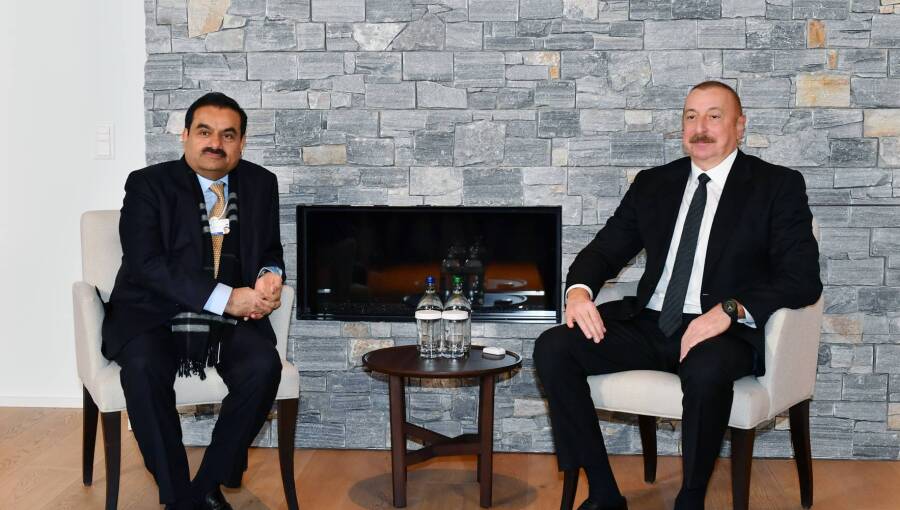
Ilham Aliyev, President of Azerbaijan met with Founder and Chairman of Adani Group, Gautam Adani in Davos / President.az
By bno Chennai Office November 9, 2025

India’s ascent as a major global actor over the past twenty years has been driven by a mix of statecraft, economic liberalisation, and corporate expansion. Among private enterprises, the Adani Group has become one of the most influential players advancing the country’s foreign policy priorities through infrastructure building, energy partnerships, and strategic investments across regions vital to New Delhi’s interests.

While Adani is associated with consumer goods such as cooking oil particularly mustard oil under its AWL Fortune brand in Indian households, its reach enables virtually every sector of the Indian economy to compete with its global competition. Initially recognised for its port and logistics business, Adani has transformed into a diversified multinational with operations spanning transport, energy, and commodities.

Since the early 2010s, a key pillar of India’s foreign engagement has been to enhance maritime connectivity and develop logistics corridors that serve both trade and strategic objectives. Adani Ports and Special Economic Zone Ltd, the country’s largest private port operator, oversees multiple facilities on India’s eastern and western coasts, anchoring this strategy.

The conglomerate’s growing role in developing and managing ports abroad, particularly around the Indian Ocean, has offered India both commercial benefits and geopolitical leverage. Its control of the Vizhinjam International Seaport in Kerala positions it at the heart of India’s maritime ambitions in the Arabian Sea, a vital route for trade with the Middle East and Africa. Adani’s stakes in ports located along global shipping chokepoints also give New Delhi added influence over maritime routes that intersect with China’s Belt and Road Initiative, offering a counterweight to Beijing’s expanding footprint.

Energy access remains a central challenge for India’s foreign policy as it seeks to sustain rapid economic growth while meeting climate goals. The Adani Group’s ventures in renewable power, coal mining, and liquefied natural gas infrastructure directly underpin this effort. The conglomerate runs LNG terminals and operates large solar and wind power projects both domestically and overseas, extending India’s reach into key energy-producing regions.

Through investments in coal mining in Australia and gas assets in Qatar and Oman, Adani has strengthened bilateral links that India considers crucial for securing long-term energy supplies. The Carmichael coal mine in Australia, though contentious, reflects how corporate and diplomatic aims can converge when securing resources for national development. These cross-border ventures have evolved into instruments of “corporate diplomacy,” enabling India to deepen ties and foster interdependence with partner nations.

Adani’s growing footprint in Southeast Asia and the Pacific aligns with India’s “Act East” and Indo-Pacific strategies, which aim to bolster economic and security partnerships across the region while balancing China’s influence. In countries such as Vietnam, Indonesia, and the Maldives, Adani-led projects in ports, logistics, and renewable energy complement India’s diplomatic efforts by positioning it as a reliable development partner.

The Group’s entry into the Maldives’ port sector, for instance, strengthens regional connectivity and provides India with a strategic presence near critical sea lanes. These ventures not only promote infrastructure growth but also enhance India’s appeal as a provider of alternatives to China’s state-backed projects. For nations wary of Beijing’s debt-heavy development model, Adani’s investments represent a more commercially grounded option that advances both economic and strategic cooperation. In the modern global order, soft power increasingly blends with economic statecraft. The Adani Group demonstrates how private corporations can extend a nation’s influence beyond traditional diplomacy.

By creating joint ventures, funding infrastructure, and embedding Indian capital into global supply chains, Adani advances India’s commercial presence and geopolitical reach simultaneously. The Group’s partnerships with international firms and governments support broader trade and investment flows while aligning with global sustainability goals. Its work on renewable and sustainable infrastructure enhances India’s image as a responsible global player. Moreover, Adani’s projects complement initiatives such as the India-Africa Forum Summit and the International Solar Alliance, signalling growing coordination between the country’s public and private sectors in pursuing strategic objectives.

Through its expanding portfolio of international assets, the Adani Group has become emblematic of how India’s private sector is increasingly intertwined with its diplomatic ambitions. The convergence of business expansion and foreign policy underscores a new phase in India’s global engagement, where corporations operate not merely as profit-seeking entities but as instruments of national influence in an evolving geopolitical landscape.