Sunday, November 09, 2025


Odisha Continues to Face Severity of Dalit Oppression

DN Singh 


The state had the sixth highest cases of incidents of Dalit oppression over the past four years (NCRB data), including acts of bestial violence, social boycotts, and judicial discrimination.

The people of Odisha must be undergoing fatigue built on almost years and years of perpetuation of atrocities on Dalits in the state, which remains the sixth highest in incidents of oppression on Dalits in India. 

This is contrary to the notional assumption that the people of Odisha are God-fearing and their faith rests on the premises of Lord Jagannath, who, in essence, is believed to be a tribal deity, his origin dating back to over thousands of years. The deity is said to be the Patitapavan, which in essence connotes that He is for the Patits (the most oppressed).

Leaving aside the legends, numerous incidents of Dalit oppression have been reported in Odisha over the past four years, including acts of bestial violence, social boycotts, and judicial discrimination.

According to the National Crime Records Bureau (NCRB) data, Odisha has the sixth highest cases of atrocities on Dalits. In 2020, there were 2,046 incidents, in 2021, the incidents reported stood at 2,327, in 2022, there were 2,902 incidents and in 2023, the reported incidents were 2,696, taking the total to 9,971 incidents in the past four years.     

Activists cite “poor implementation of protective laws and  low conviction rate for atrocities as factors the help perpetuating the problem”, Biswapriya Kanungo, an advocate and social activist fighting for the oppressed, told this writer.

What about people from the upper strata who fuel such acts of oppression? Kanungo says “this trend has exacerbated in the past one decade when the political system has shown an attitude of acquiescence to the practice of oppression of people from the lower strata or Dalits.”          

Reports and case studies from 2020 to 2025 document several incidents of Dalit oppression in Odisha, including brutal public humiliation, social boycotts, and denial of basic rights.

“Regardless of legal protection, that are so ineffective, a deep-seated caste-based discrimination persists, particularly in rural areas, where the incidents never come to light or rather get buried in obscurity”, laments Kanungo.

Most instances of Dalit oppression in Odisha are marked by physical violence and systemic discrimination. While there are laws in place to prevent such atrocities, Dalits have been facing persistent exploitation and social exclusion, especially in the rural interiors. This is compounded by an ineffective justice system that fails to protect victims. 

In June 2025, two Dalit men from Pana community were subjected to public humiliation coupled with physical assault by a mob in Kharigumma village in Ganjam district. They were falsely accused of cattle smuggling whereas they were transporting three cows for a wedding dowry. They were forced to drink drain water and crawl on their knees. The incident sparked widespread outrage. An incident that the National Human Rights Commission took suo motu cognisance of. 

In 2012, in another cruel incident in Lothra area in Bolangir district, an upper-caste mob set fire to the houses of 30 Dalit families for a reason that cannot be condoned in any society.  


Intolerance Toward Assertiveness

After setting the houses on fire, the mob blocked the roads preventing the police and fire brigade from entering the village.

This violence was reportedly a backlash against the growing economic and political assertiveness of Dalits in the region.

In 2012, the NHRC issued a notice to the Odisha government regarding the social boycott of 13 Dalit families in Ganjam district. The families were denied access to shops, water sources, temples, and irrigation, and were also forced to wash clothes for a pittance.

Kanungo recollects that it was in 2008, when the upper-caste majority virtually massacred Dalits and tribals in a riot that claimed over 17 lives and rendered thousands homeless, Many families were forced to take shelter in camps worse than ghettoes, while a sizable population of the tribals remained holed up in the deep woods without anything for sustenance. That incident created a global ripple and panic.

The entire gamut of the social turmoil was allegedly created by the hands of Right-wing elements from the state and from Delhi who helped fuel the fire with hate-speeches and propaganda.

That brought a turning point politically, when the then Chief Minister Naveen Patnaik broke his party, Biju Janata Dal’s (BJD) nine-year-long political alliance with the Bharatiya Janata Party (BJP) on the grounds of inciting communal unrest.        


Systemic and Institutional Discrimination

In many parts of rural Odisha, Dalits are frequently denied access to public amenities, including temples, hotels, tea stalls, and public wells till date. During a 2016 incident in Nayagarh, upper-caste villagers refused water from a tanker because it had first served a Dalit hamlet.

In 2025, courts in Odisha drew criticism for imposing caste-discriminatory bail conditions, such as ordering Dalit men to perform manual scavenging work. This practice, which links bail to traditionally stigmatised occupations, has been condemned by legal experts everywhere in India.

Yet, this practice is still followed, as we see people getting into in filthy septic/sewer tanks digging out dirty sediments in neck deep toxic human waste.

Even with advancements, untouchability continues in many subtle and overt forms in the state. In some villages, Dalits are not served by village barbers or washermen.  

During the 2021 Cyclone, Yaas, Dalit communities in rural areas were reportedly ostracised and denied access to rehabilitation facilities, added Kanungo.

Inner Conflicts

Some Dalit sub-castes in Odisha, like the Doba and Kaibarta, have been found to practice discriminatory behaviour against lower-ranked Dalits, such as the Ganda community. This promotes perpetuation of the cycles of oppression within the marginalised community itself. 

Isolation in Death

An 80-year-old woman faced social isolation in death in Deogarh district, simply because five decades ago, she had married outside her caste. Her body was left abandoned till some local volunteers dared the oppressors and arranged her last rights with full respect.    

The act of compassion and courage shown by the volunteers drew appreciation from various quarters.

To top this, what can be more flabbergasting when a man of the country’s Chief Justice of India (CJI) stature faces humiliation from an advocate and the judiciary takes a week to arrive at a decision to initiate criminal contempt proceeding against Rajesh Kishore, who had tried to hurl a shoe at CJI B. R Gavai, who hails from a Dalit community.

It Does Not Stop at That!      

A study by Action-Aid showed that witch-branding remains a major issue in Odisha, disproportionately affecting various vulnerable groups, including Dalit women.

The study linked witch-branding to land grabbing and other motives, with many incidents resulting in the victim and their family being forced to leave their homes. Dalit women, particularly widows, allegedly practicing black magic, were identified as being highly vulnerable, said Kanungo. 

“For living as a human being, certain basic human and fundamental human rights are indispensable in a modern society. But it is very distressing that even after over 70 years of India’s Independence, and despite various constitutional safeguards, legislative frameworks and so on, such practices still continue,” Kanungo added. 

The writer is a freelance journalist based in Odisha with over 40 years’ experience in the profession. The views are personal.


Rising Western Militarisation & Russian Bogey


Prabhat Patnaik 


Western imperialism is planning to use military force to a much greater extent than before to keep the Third World subjugated.


Representational Image. File Image 

In a declaration at the NATO summit held at the Hague in June this year, all NATO countries agreed to increase the share of military expenditure in their gross domestic product to 5% by 2035. The proportion in 2024 in the US was 3.5% and in the European Union 1.9%, which means a substantial step up, especially in the EU, in military expenditure.

Likewise, Japan, which had been committed to a pacifist policy after the war, and had capped its military spending at 1% of GDP, has been increasing this proportion over time: it spends 1.8% currently, but its new Prime Minister Sanae Takaichi has announced her intention, in the very first speech she made after assuming office, to raise this ratio to 2% by the end of this fiscal year itself, that is, by March 2026. We thus have across all imperialist countries a substantial step up in the tempo of militarisation, which constitutes an altogether new development.

All sorts of threats are being invoked to justify this step up in militarisation, especially a Russian threat. The imperialist propaganda machine is active in projecting a spectre of Russian expansionism, of which the invasion of Ukraine is supposed to have been the first step.

The fact that it is NATO that expanded its membership, in contravention of the assurance given by the then US President Bill Clinton’s administration to the then Soviet Union President Mikhail Gorbachov, to include countries right up to the Russian border and hence to virtually encircle Russia. The fact that Russia remained resigned to this expansion and expressed its opposition only when NATO sought even to incorporate Ukraine; the fact that the Minsk agreement between Ukraine and Russia that would have prevented any military action by the latter was torpedoed by Western intervention, with British Prime Minister Boris Johnson flying across to Kiev to convince Ukraine to renege on it; all these facts demonstrate unambiguously the identity of the real expansionist entity. The Russian bogey is simply being used to justify a step-up in Western imperialist militarisation.

Such, however, is the intensity of the propaganda in Europe that anyone pointing this out is dubbed a Russian agent, and an apologist for Russian President Vladimir Putin. Sahra Wagenknecht, the German Left leader who broke away from Die Linke to form her own separate party, has been attacked in the German media for pointing out the vacuity of the so-called Russian threat and arguing for cooperation with Russia as a means of ensuring European security.

Read Also: Two Expressions of Capitalism’s Dead-End

In fact, the European attitude to Russia appears quite intriguing. The unilateral sanctions imposed by the Western powers on Russia have meant an enforced substitution of much more expensive American energy for Russian energy imports on which Europe had been relying earlier. This has led to a rise in cost of living in Germany and elsewhere, and hence greater hardships for the working class, and also to a rise in the cost of production that makes German goods uncompetitive, discourages investment in Germany, and causes a process of “deindustrialisation” there.

There is, of course, American pressure on Europe aimed to secure a market for its own energy there, but Europe’s total capitulation before the US in the matter of unilateral sanctions, even while sacrificing its own interests, appears quite baffling.

An obvious explanation for this phenomenon is the nature of European leadership at present. Much of this leadership has close ties to business, especially American business. The German Chancellor Friedrich Merz, for instance, was the chairman of the supervisory board of the German subsidiary of BlackRock, the American multinational investment company.

The current European leadership can scarcely be expected to champion any “European interests” in opposition to American interests, as the earlier European leadership consisting of the likes of Charles De Gaulle and Willy Brandt could.

This fact, however, though not insignificant, is insufficient as an explanation for Europe’s apparent economic hara-kiri. Quite conceivably, the European leaders believe in, and plan for, a regime change in Russia if the war with Ukraine drags on, in which case Europe, together with the US, would have unrestrained access to the vast natural resources of Russia.

Besides, Russia is now part of a group of countries, including China and Iran, that stand in opposition to Western imperialism and have the potential to challenge its hegemony. A regime change in Russia will greatly dent this opposition.

Equally striking is US President Donald Trump’s attempt to effect a regime change in Venezuela through military intervention, for which the ground has been prepared by defaming its Left-wing President Nicolas Maduro, the successor of Hugo Chavez and legatee of the Bolivarian Revolution, as a “narco-terrorist” and the head of a drug cartel.

Here again, not only is Venezuela rich in natural resources, including rare earths, but is also part of an anti-imperialist grouping of countries that constitute a potential threat for imperialism. A regime change in Venezuela will thus be doubly beneficial for imperialism.

Trump’s plans for regime change, however, appear to extend well beyond Venezuela. He has, again without a shred of evidence, called Gustavo Petro, the Left-wing President of Colombia, a “drug leader”, which appears to presage an attempt to effect a regime change there. And no doubt, if he succeeds, then he would feel emboldened to cast his net wider, to bring about regime changes all over Latin America, including even in Cuba.

The growing militarisation of imperialist countries is caused not by any increase in security threat against these countries from any source; it is caused by a desire to bring about regime changes all over the world by launching assaults against those countries that have governments which pose a threat to the hegemony of imperialism.

The perceived threat to imperialism is thus not of a military nature, but related to political economy. The need to effect regime changes to curb this threat has acquired urgency of late, because imperialism is now caught in a conjuncture where this threat, if not dealt with promptly, is likely to be greatly enhanced.

This is because neo-liberal capitalism has reached a cul-de-sac whose expression is the stagnation of the world economy, and which cannot be overcome within the framework of neo-liberal capitalism itself.

Read Also: Multiplier Effects of ‘Bubbles’ Under Neo-Liberal Capitalism

The decade 2012-21 has witnessed the slowest rate of decadal growth of the world economy after the second world war. And this growth rate will be slowed down even further when the AI (artificial intelligence) bubble currently characterising the US economy bursts. When this happens, the unemployment caused by the bursting of the bubble will be further aggravated by the unemployment caused by the introduction of labour-displacing AI itself.

The Third World will be particularly hit by this rise in unemployment. In addition, Trump’s tariff aggression, which itself is occasioned by the rise in US unemployment, as a “beggar-thy-neighbour” response to this rise, will be particularly hurtful to Third World economies. The advanced capitalist economies will make mutually-accommodating tariff deals with the US, but the Third World will be forced to lower its own tariffs against US imports even while facing enhanced tariffs compared to earlier in the US market.

All this presages greatly increased distress in the Third World, and hence stronger pressures from below to move towards alternative economic arrangements from the current imperialist-dominated ones.

Groupings like BRICS may not have any particularly marked anti-imperialist roles until now; but they can take on such roles if the intensified distress in the Third World in the coming days throws up governments that are committed to improving the living conditions of the people.

The imperialist strategy in this context is three-fold: one, to encourage the ascendancy of neo-fascist regimes everywhere, especially in the Third World. Two, to use such regimes to weaken or sabotage the formation of alternative groupings of countries that put themselves outside of imperialist influence (the pressure currently being exercised by the Trump administration on the Narendra Modi government is aimed at achieving this). And, three, to use military intervention to effect regime changes wherever other methods of reducing Third World countries to the status of “client states” fail.

The current conjuncture, in short, is one where imperialism, pushed to a corner by the crisis of neo-liberal capitalism, a crisis that cannot be resolved within the confines of neo-liberal capitalism itself, is planning to use military force to a much greater extent than before to keep the Third World subjugated. The growing militarisation that we observe is a reflection of this.

Prabhat Patnaik is Professor Emeritus, Centre for Economic Studies and Planning, Jawaharlal Nehru University, New Delhi. The views are personal.


Nehru’s Vision Reflects in Mamdani’s & Indian Women’s Cricket Team’s Victory


S N Sahu 

The celebration of Nehru’s legacy is more significant, as PM Modi, on Sardar Patel's 150th birth anniversary in October, resorted to a no-holds barred condemnation of India’s first PM.

New York City Mayor-elect Zohran Mamdani. Image Credit: @ZohranKMamdani on X

It is heartening to note that Zohran Mamdani, in his victory speech after getting elected as New York Mayor, quoted Jawaharlal Nehru who said in his ‘Tryst with Destiny’ speech that “a moment comes, which comes but rarely in history, when we step out from the old to the new, when an age ends, and when the soul of a nation, long suppressed, finds utterance” and added that “tonight New York has stepped from the old into the new.

An echo of that iconic speech by Nehru was also there around midnight on November 3, soon after the Indian women’s cricket team registered a comprehensive victory against South Africa in the finals and became world champions in one-day cricket. A commentator, while complimenting wicketkeeper Richa Ghosh, joyously said, “At the stroke of midnight the Indian women's cricket team had made their own tryst with destiny.”

Only after uttering those words, delivered by Nehru on the occasion of India's independence from centuries of colonial rule at the midnight of August 15,1947, did the commentator ask Richa what significance the historic victory meant for her and the whole team. He also put the question if she could believe that the Indian women’s cricket team could really do wonders in securing for it the enviable status of the world champion.

Such celebration of Nehru’s enduring legacy assumes more significance particularly when Prime Minister Narendra Modi on October 31, on Sardar Patel's 150th birth anniversary, resorted to a no-holds barred condemnation of Nehru. It is in his context that the triumph of the Indian women's cricket team needs to be seen in recapturing the vision of Nehru. 

Nehru’s name resonates when a new dawn begins after a protracted period of struggle and those suffering discrimination and exclusion unchain themselves from the hands of people exercising power and might with impunity. As India’s first Prime Minister, he represented that undying spirit of freedom as much Mamdani did after he secured his victory as Mayor of New York and the Indian women’s cricket team that registered an emphatic win over South Africa.

Mamdani powerfully resonated the ‘tryst with destiny’ speech when he said, “And while we cast our ballots alone, we chose to hope together; hope over tyranny, hope over big money and small ideas”.

The bravery of nourishing hope in the face of suppression and domination is so characteristic of Nehru and was aptly reflected in Mamdani’s articulation, as well as in the triumph of the Indian women’s cricket team. Women often face insurmountable challenges of entrenched patriarchy, widespread gender discrimination, violence and brutality in all spheres of society. Therefore, the first-ever victory in a World Cup tournament of cricket, considered a religion in our country, is of seminal importance.  Each member of the triumphant team represents the unbeatable spirit in summoning extraordinary courage for covering the arduous journey for success in face of the daunting problems.  It is rightly stated in the context of the team's thumping victory that “In a world which has little to celebrate, the dream eleven have given Indians a rare moment of togetherness”.

Harmanpreet Kaur ‘s Winning Catch

The striking thing is that the splendid victory was clinched when the ball hit by South African player Nadine de Klerke was caught by Indian captain Harmanpreet Kaur. The victory uplifted the spirit of India like in 1983 when the World Cup was lifted the Indian cricket team led by captain Kapil Dev, after defeating West Indies, considered as the strongest team in the world at that time. Prime Minister Indira Gandhi had then famously said “I knew that India could do it”.

As many as 52 years later, the Indian women’s cricket team led by Harmanpreet Kaur proved beyond doubt that they could achieve glory on the strength of their worth and celebrate the idea of India. Their celebrations represented not hyper nationalism but inclusion. In the same way, Mamdani celebrated inclusion when he stated in his victory speech, “In this new age…we will refuse to allow those who traffic in division and hate to pit us against one another. In this moment of political darkness, New York will be the light. Here, we believe in standing up for those who love, whether you are an immigrant, a member of the trans community, one of the many black women that Donald Trump has fired from a federal job, a single mom still waiting for the cost of groceries to go down, or any one else with their back against the wall.”

In those utterances one could sense the inclusive aspects of nationalism for which Nehru stood.

The aforementioned commentator’s words “At the stroke of midnight the Indian women's cricket team had made their own tryst with destiny” echoing Nehru’s speech has assumed significance in India torn by toxic and divisive narratives peddled by the powers that be.

Jemimah Rodrigues’s Crucial Performance

The entry of the Indian team into the finals by beating the strongest Australian team in the semi-finals could not have been possible without Jemimah Rodrigues (127 not out) for which she emotionally stated that it was Jesus Christ who was with her in the field and so she could succeed in taking forward the cause of her team and of India’s honour. She and her family faced the false charge of conversion by the Hindutva forces and she was discriminated on the grounds of her faith. Her invoking Christ reminds one of Mahatma Gandhi’s example of getting inspired by Christ along with Bhakta Prahalad, Socrates, Imam Hussain and Meerabai to formulate his idea of Satyagraha to non-violently fight for our freedom as part of our ‘tryst with destiny’.

Nehru’s Vision on Women

When Nehru’ ‘tryst with destiny’ utterances were being echoed by that cricket commentator, one was reminded of his articulations on women after India’s first general election was conducted during 1951-52 and Parliament was duly constituted. On September 20, 1953, in a letter to Chief Ministers, Nehru wrote with anguish that in the political organisations, inadequate number of women were represented, but with a hopeful note, he remarked, “….the standard of Indian womanhood is high, and Indian women have brought us more credit in the world than perhaps the men. A nation cannot go far ahead unless it gives full scope to its women”.

Almost a year and four months before he made the above remarks, in a letter to the Chief Ministers on May 18, 1952, Nehru was sad to note that enough women could not be elected to the Lok Sabha and Rajya Sabha and candidly and prophetically stated that, “I am quite sure that our real and basic growth will only come when women have a full chance to play their part in public life. Wherever they have had this chance, they have, as a whole, done well, better if I may say so, than the average man. Our laws are man-made, our society dominated by man, and so most of us naturally take a very lopsided view of the matter. We cannot be objective, because we have grown up in certain grooves of thought and action. But the future of India will probably depend ultimately more upon the women than the men.”

The triumph of the Indian women’s cricket team in 2025 as world champions underling their ‘tryst with destiny’ captures the vision of Nehru that “…the future of India will probably depend ultimately more upon the women than the men.”

The writer served as Officer on Special Duty to President of India K R Narayanan. The views are personal.

Formerly Incarcerated Women Are Building a Global Network to Fight Imprisonment


Women from 17 different countries are working together to coordinate the global struggle against mass incarceration.


PublishedNovember 8, 2025

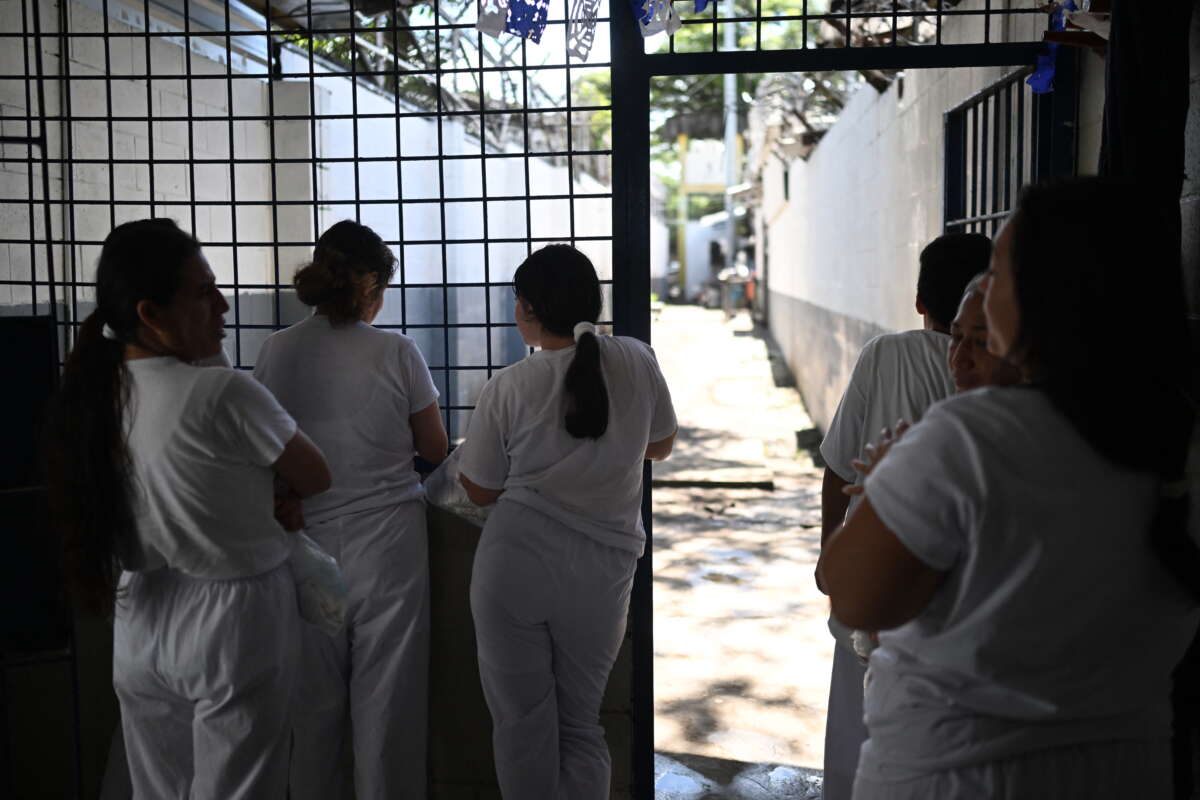
Incarcerated women look out from a gate during the celebration of the 204th anniversary of El Salvador's independence at the Apanteos prison in Santa Ana, El Salvador, on September 30, 2025.
MARVIN RECINOS / AFP via Getty Images


Susan Kigula spent 10 years on death row in Uganda, where a murder conviction carried a mandatory death penalty. Undeterred by the threat of execution, Kigula buried her misery in legal books and mobilized a team of lawyers that eventually included current British Prime Minister Keir Starmer. Kigula went on to file an appeal on behalf of 417 people incarcerated on death row in Uganda, and her effort saved her own life and the lives of 416 others.

Today Kigula is free and a member of the leadership of the International Network of Formerly Incarcerated Women (INFIW). The network is the product of years of grassroots organizing across the globe — efforts that culminated in a 2023 convening in Bogota, Colombia, where 60 women from 17 countries met to share strategies on halting the massive population increase in women’s prisons and jails around the world.

The 2023 convening sought to implement an international declaration created in 2021, which proclaimed that “now is the time to invest in initiatives led by incarcerated and formerly incarcerated women and girls and their families, addressing stigma and discrimination, and reducing the damage of centuries of purely punitive penal policies that have negatively impacted millions of people, including those deprived of liberty, their families and communities.” In the years after the declaration was issued, members of the INFIW had built local, national and regional organizations to magnify their political power and consolidate under the banner of abolition.

The renowned activist and former political prisoner Angela Davis addressed the Bogotá gathering via video, reminding those in attendance they were “the vanguard of social justice movement precisely because … [they recognized] that given the interconnected economic, political, and social structures that characterize our times, it is incumbent on us to develop strategies of social justice that are also global in scope.”

The advent of the INFIW emerged from a simple realization: The voices and presence of formerly incarcerated women were missing from major international policy spaces like the United Nations and the Organization of American States (OAS). In 2015, Andrea James of the U.S.-based National Council for Incarcerated and Formerly Incarcerated Women and Girls (The National Council) stepped into that void, taking part in forums at the OAS and the UN and successfully putting women’s incarceration on regional and international agendas.

Related Story

Abolition Is a Global Movement. Here’s What We Learned From Allies Worldwide.
To make abolition possible, grassroots groups of people directly impacted by incarceration must mobilize globally.
By Victoria Law & Erica R. Meiners , Truthout January 1, 2024

From there, momentum grew. Working with the Washington Office on Latin America (WOLA), The National Council began building cross-border connections, traveling first to México in 2017 to join a workshop with an emerging network of formerly incarcerated women. They followed with visits to Brazil, Argentina, and a return to México to lay the groundwork for the first regional workshop in Bogotá, Colombia, in 2019, titled “Women Resisting: Bringing Down the Bars.”

That historic gathering, organized by Corporación Humanas, Mujeres Libres, the Washington Office on Latin America (WOLA), and The National Council brought together directly impacted women from Argentina, Brazil, Chile, Colombia, Ecuador, El Salvador, México, and the United States. The attendees, speaking three languages, crafted a powerful final statement. Among the participants was the late Kathy Boudin, the co-founder of Columbia’s Center for Justice and an advisory committee member of the INFIW, who underscored the need for restorative justice approaches that move beyond punishment.

INFIW quickly looked beyond the Americas to build relationships in Africa, Asia, Australia, New Zealand, and Europe.

At the 2023 Bogota gathering, the network also finalized their structure, constituting a democratic decision-making body that is currently a 15-member advisory committee of people from five continents. A unified force emerged that focused on movement building, advocacy and campaigns, changing narratives, economic empowerment, education and training, and self-care, with a mission to transform pain into collective power.

Amid the global rise in women’s incarceration, which has outpaced that of men, INFIW members opted to consolidate their power to challenge and resist the carceral juggernaut. Their determination to take this action was fortified by the absence of the political will to implement the Bangkok Rules, a potentially transformative set of guidelines officially known as the “Rules for the Treatment of Women Prisoners and Non-custodial Measures for Women Offenders,” which was passed by the United Nations General Assembly in 2010.

The Network’s Historical Roots

The historical roots of the organizations in the network extended deep into the 20th century, as far back as the 1992 founding of Sisters Inside in Australia. Like many of the INFIW member organizations, Sisters Inside arose from the experience of one person who had been through the system and realized that change would only come when those directly impacted stepped to the front.

In Australia that person was Debbie Kilroy, who had been through a cycle of domestic violence, poverty, and incarceration until her close friend was murdered in the Boggo Road Gaol in Queensland. That killing prompted Kilroy to reflect on the conditions that led to this tragedy. When she looked around the prison, she saw women repeatedly traumatized by poverty, racism, domestic violence, and police abuse. In response, Kilroy and several Aboriginal women in the prison began Sisters Inside.

Over the past three decades Sisters Inside has grown a presence across Australia, visiting women in all prisons including remote rural prisons, initiating mounting critiques of abuse by prison guards and carving pathways to success for women when they do get out.


“We share our knowledge, especially regarding the intersectionality of colonialism, racial capitalism, and the oppression that Indigenous women and girls are confronted with daily.”

Kilroy herself is a prime example of such personal transformation. After the murder of her close friend, she changed course, completing a degree in social work, then going on to defy the odds and become one of the first formerly incarcerated women to attend and finish law school. She has now been a practicing attorney for nearly two decades. Her clients are primarily women inside prisons and those who have been released. In the course of that work, she connected with Angela Davis, and built a partnership that became an important influence on the International Network.

“We share our knowledge, especially regarding the intersectionality of colonialism, racial capitalism, and the oppression that Indigenous women and girls are confronted with daily,” Kilroy told Truthout. “Our liberation is inherently bound together as we fight for a collective future free from the prison industrial complex.” For Kilroy and her organization, asserting the leading role of Aboriginal women in Sisters Inside has been paramount. “We’ve been able to connect with Aboriginal communities across the globe, learning from their struggles and aspirations.”

After nine years in prison, Claudia Cardona landed a job at Corporación Humanas to work on the topic of women, drugs, and prison. “I was charged with using my freedom to fight for that of others. Having been on the inside, I knew this would have to be a collective struggle, so I started by calling other formerly incarcerated women who were struggling to put their lives back together,” she said. This meant teaching women “that this is about having strength and to be able to fight against the system because the system is wrong.”

Cardona focused on making people understand that when we are imprisoning a woman, it is not only the woman who loses her freedom — it also impacts her family. “By affecting the family you affect and impact the community in general.” She led the formation of an organization in her community called Mujeres Libres (Free Women) which leads major policy campaigns.

In 2022, Mujeres Libres pressured the Colombian government to pass the Menstrual Health in Prison Act, which guaranteed free menstrual materials to incarcerated people. The following year the government issued Decree 2292, which allowed some convicted women to receive a public service sentence in place of prison. Cardona catapulted from Mujeres Libres to the National Commission for Monitoring the Unconstitutional State of Affairs in Penitentiary and Prison Matters, a coalition of civil society organizations that researches human rights violations in the prison system and brings its findings before Colombia’s Constitutional Court.

Like Kilroy, Cardona’s work brought international connections, largely with other women from Latin America such as México’s Betty Maldonado. After completing her prison term, Maldonado became a leader of Mujeres Unidas por la Libertad (Women United for Freedom), also a member of INFIW.

“What we don’t want is for a criminal record to become a life sentence,” she told Truthout. The work of Mujeres Unidas por la Libertad extends deep into the personal lives of their members. “We get women who are pregnant and we take them to the hospital so they can give birth. We have women that have been sexually abused … we also see some homeless women, women that don’t have anywhere to go. They live on the street. So we’re researchers to see where women who used to be in prison were and we are able to take them to a shelter, find help for them.”

A major problem for people in women’s prisons in México is pre-trial delays. According to Maldonado, people can wait years in jail before their case even gets to court. They essentially disappear inside the system. In one renowned instance, Daniel García and Reyes Alpízar spent 17 years awaiting trial. That is why Maldonado stresses the effort her members put into their work. “We work Monday to Sunday,” she told Truthout. Like Cardona, Maldonado believes the progress of formerly incarcerated women is tied to a fight for “human rights of women, lesbians, nonbinary, Indigenous, migrants.”

Meanwhile, on the other side of the globe, Susan Kigula had been busy fighting her case and building connections with women across the continent. Kigula fought her way out from under her legalized death threat, getting her sentence reduced to 20 years.

By the time of her release Kigula had finished a law degree and was ready to take on the death penalty again. While she built an international profile in her death penalty work she started the Sunny African Children’s Center, which provides housing and education for children of women incarcerated in Uganda.

She shared her vision of the International Network with Truthout: “My hope [is] to engage in global partnerships. The network might aim to forge partnerships with governments, with NGOs, with corporate entities, with other civil societies to tackle global challenges and inspire more systematic changes.”

Kigula also views the network as a future reservoir of resources to “help formerly incarcerated women rebuild their lives and integrate back into society…once the network moves to a global recognition status and drives change,” then she believes “it’ll promote more social justice, human rights, and community empowerment.”
Priorities of the Network

While all network members share a deep commitment to women inside and those released from prison, the strength of the INFIW lies in the diversity of political perspectives and experiences that each member brings. These varying visions are not a source of division but of richness, allowing the network to weave together different ideas into a collective vision and a shared pathway forward.

For example, INFIW leaders from Brazil bring an additional political component to the organization. Coming from a very politicized society with a developed working-class movement, Ana Tonini, who was incarcerated for 13 years, calls for the Network to develop a critique of capitalism and to consider Marxism as a political framework. She and fellow Brazilian Patricia Mendes told Truthout that they both query the use of “women” in the title of the network, since they know that many of the members identify as trans and nonbinary.

On the other hand, Haitian representatives to the INFIW, Cassandra Altinor and Lynette Peregrina, prioritize a different approach. Largely because a nexus of crises, natural disasters and centuries of underdevelopment have ravaged their neighborhoods. They lean more toward fundraising to provide assistance to women who have come out of prison and are struggling with necessities.

A common thread through the network is addressing the narrative about women who have been incarcerated and often further criminalized by family and community members. Altinor said that she was “obliged to move to another area because the people in my former community … considered us formerly incarcerated women as criminals. They do not talk to us,” said Altinor. “People were always saying that we’re bad people, we’re criminals. That’s the most difficult part for me,” Altinor recounted. “The state, the government doesn’t help us at all.”

Akosua Akuffo of Zambia echoes Altinor’s views. Akuffo spent years battling substances. But on her last prison bid, she transformed and began to analyze her position in society and the community. “I think this is high time that people understand that we’re women, we are mothers, we are children, we are sisters, we are aunts, and we deserve a second chance to build our lives. We deserve to go back into society and earn money to feed our children. Otherwise, what are you encouraging us to do? You’re encouraging us to go back. So we need to speak up to end the stigma and ensure that future generations do not have to go through what we have gone through.”

Not surprisingly, changing the narrative about incarcerated women is one of the five major goals of the INFIW. As Akuffo sees it, “I feel like right now we have at least been included to the table, but more can be done to change policy reform … more can be done to amplify our voices and really change the narrative of formerly incarcerated people,” Akuffo said. “And this is where we see the network going, talking about it and saying that people who go to prison are human beings.”

Dawn Harrington, a formerly incarcerated woman from the U.S., came to a similar conclusion. She realized when she met people who had been incarcerated in women’s prisons in other countries that “there were significant similarities between us no matter where we were … the more we connected the more [we realized] we can actually build solidarity together.” Ireland’s Paula Kearney agreed. She saw the network as a guard against that isolation because … “a lot of us are living in our own little bubbles and tend to stay quite local … our research has really shown that there are a lot of similarities across all of our paths,” she said. “A lot of times we don’t realize that that’s not just in our little circles because we tend to look at what’s going on in our own countries.”


“We deserve a second chance to build our lives. We deserve to go back into society and earn money to feed our children.”

Being from the United States, Harrington found the work of the network made her deeply aware of the imperialist policies and practices “from the U.S. that were being exported.” Harrington comes from Nashville, Tennessee, which was the birthplace of the first private prison company, known originally as Corrections Corporation of America. (In 2016 they changed their name to CoreCivic.)

As private prisons came under fire in the U.S. and began to reduce their profile, Harrington discovered through the network that internationally these corporations are expanding. And today, they are experiencing a boomerang-like resurgence, with stocks rising in response to the growth of immigration crackdown and detention. This reality underscores the urgent need for global solidarity across movements and intersections: Our struggles are interconnected, and an injury to one is an injury to all.
Ending Incarceration of Women Around the World

For Harrington, the 2023 gathering in Bogotá was “like pouring fuel on the fire that was about to happen.” While developing the declaration and its structure was essential, Harrington recognized a beautiful challenge in internal debates, ultimately guiding the adoption as a principle, to “unapologetically commit to end the incarceration of women and girls, period.” In the words of Toni Tulloch, a Jamaican woman who spent 16.5 years in U.S. prisons and was subsequently deported, and now serves as the international organizer for the INFIW, “we’re gonna have to change the whole structure of how incarceration for women is dealt with and just basically find the keys that it takes to unlock the door to stop this madness.”

While women’s prisons make up a small percentage of the world’s incarcerated population, the people coming out of these prisons have moved front and center in politicizing issues of incarceration. According to Debbie Kilroy, “it’s about bringing everybody on a journey to end the incarceration of women and girls, whether it’s intellectually within our hearts or in our practice with our hands.” Kilroy said she talks a lot about how “head, heart, and hands have to be connected … Because if we can’t feed ourselves, we can’t have an intellectual analysis of what’s happening with the prison industrial complex or racial capitalism. But if our bellies are full and our hearts are warm because we’re somewhere safe, we can actually start to strategically think about what we can do.… But it’s about having those three parts of us as human beings connected to be able to do the work to move forward.”

For the members of INFIW that pathway forward includes international solidarity. With its global reach and leadership of directly impacted people, the INFIW has created a model that can reshape our notions of liberation and undermine any and all efforts to extend the boundaries of empire and the carceral state everywhere that it exists around the world. Toni Tulloch projected this vision into the network’s future: “We’re going to continue to demolish the system. We’re going little by little. We’re going to … tear down this structure because it’s necessary.


This article is licensed under Creative Commons (CC BY-NC-ND 4.0), and you are free to share and republish under the terms of the license.


James Kilgore

James Kilgore is an activist and writer based in Urbana, Illinois. He is the author of seven books, four of which were drafted during his six and a half years in prison in California. He is currently a Building Community Power Fellow at Community Justice Exchange and the Director of Advocacy and Outreach at FirstFollowers Reentry Program in Champaign, Illinois. He is the partner of African historian Teresa Barnes, the father of two sons, and grandfather to three wonderful girls.
PAKISTAN

Women as equals
DAWN 
November 9, 2025 


A ROUND of applause for the Supreme Court which reminded the nation recently that women’s place in public life is not some favour accorded to them, but a fundamental right that has long been denied. Justice Mansoor Ali Shah, in a strong and thoughtful judgement, struck down a decision by the KP Service Tribunal which had upheld the dismissal of a female teacher, Ms Farakh Naz, after she got married. Her case demonstrates just how deeply patriarchal ideas still shape official policies. It is the kind of thinking that assumes a woman’s worth and independence end once she gets married. The court’s ruling restores her dignity and sets an important precedent: marriage does not erase a woman’s identity, autonomy, or her legal rights as a citizen. Justice Shah went further, linking women’s equal participation to better governance, stronger institutions and fairer societies. Citing international commitments such as the SDGs, he noted that when women work and lead in fields like education, administration, policy and health, they bring unique experiences that improve decision-making and public trust. Excluding them — especially for reasons like marriage — harms not only women but the country as a whole, depriving it of talent, balance and perspective. The verdict also underlines that a woman’s contribution to public life is a key driver of national development and democratic maturity.

The judgement sends a clear message to lawmakers and policymakers: stop interpreting laws through archaic thinking that limit women to the private sphere. Women must not be viewed as dependants, to be handed opportunities conditionally. They are equal citizens with the same constitutional rights and responsibilities as men. As long as laws or policies continue to treat women as secondary, our democracy and progress will remain incomplete. It is now the government’s duty to turn this principle into practice. That means reviewing service rules, removing hidden biases from policies, and creating workplaces that respect women’s equality, safety and advancement. Training and awareness programmes must challenge stereotypes within public institutions. As Justice Shah reminded us by quoting philosopher Martha Nussbaum, a society that denies women equal opportunity also denies itself justice. If Pakistan is to have a just, strong and more democratic future, women have to take their rightful place in every sphere of public life.

Published in Dawn, November 9th, 2025


North Bengal: Women Becoming Hinges of Change


Tushar Singh 

  •  

Open phones and closed factory gates coexist in the hills, but young women are migrating for jobs, skilling and pivoting the community from a history of dependence.


Image Courtesy: Flickr

North Bengal has always been a kind of hinge — the narrow corridor that connects the rest of India to the Northeast, a strip where everything seems to turn. But it also holds other hinges within it: the closed gates of the old tea gardens, and the new doors of opportunity that open to those willing to leave.

For decades, the hinges of life in North Bengal were the tea garden gates. Their opening and closing dictated everything. The work was never steady, the pay was never enough, but it was the only rhythm people knew. Now, that rhythm has been broken for good. Travel anywhere across the region, and you’ll see and hear stories of abandoned estates and shuttered gardens — reminders of an industry whose collapse has left thousands jobless.

This deep-seated vulnerability was brutally exposed by another blow: the recent floods. These damaged more than half of the tea estates, washing away homes, fields, and the fragile means of living that remained—not to mention the precious loss of life. For thousands already surviving on the edge, the floodwaters carried away the last vestiges of certainty, deepening a desperation that traffickers have long exploited.

The region's desperate need for economic opportunity has, historically, left its youth (particularly women) deeply vulnerable to trafficking . Here, the longing to cross a gate to a better life is so potent that it can be twisted into a trap. Women are recruited for "salon jobs" or "domestic work" in distant cities like Bengaluru or Chennai, only to find the gate slamming shut behind them, confining them to sex work, bonded labour, or illegal surrogacy. The journey begins with hope but ends in a captivity forged from poverty and the very desire to move forward.

And yet, within this same landscape, something quieter has been changing.

Over the past three years, more than 2,600 young people from North Bengal have joined short-term vocational training courses run by Pratham — brief programmes of six to eight weeks in automotive, hospitality, healthcare, IT, and beauty.

The profile of the enrolled is telling: Three out of four trainees come from tea-garden families. Eight in ten live in kaccha houses. Average household income barely crosses ₹6,500 a month. And yet, almost every youth enrolled owns a smartphone. In North Bengal, digital access has outpaced almost every other measure of living standards: tin roofs may leak, but a phone still glows in every hand. Notably, women lead the way, making up nearly 60% of all trainees.

Graph 1: Enrolment by gender


The outcomes of the training, however, speak louder than the courses themselves. About 70% of these youth find jobs. Placement incomes are, on average, 75% higher than the total family income of the youth. Some find work in hotels and hospitals, others in workshops or salons. Skill, it turns out, is still a hinge — a small joint that lets something larger move.

Graph 2: Income change after placement, by Industry


 This migration is overwhelmingly outward-bound. Less than one in five placed youth remains in West Bengal; the rest travel to states like Gujarat, Maharashtra, Karnataka, and Tamil Nadu. Kolkata—for all its history and size—employs barely 3%. This exodus is significant, especially given the region's history of trafficking: the same desperation to leave is now being channeled through legitimate pathways.

The financial incentive is undeniable. Those who move out earn nearly 70% more than those who stay. Beauticians from Alipurduar are employed in Chennai’s salons; hospitality trainees from Jalpaiguri serve in Gujarat’s hotels; and a group of twenty-six youth—25 of them women—now assemble semiconductors in Karnataka, earning ₹15,000 to ₹20,000 a month.

This pattern of migration reveals as much about West Bengal as it does about its people. The opportunities within the state remain limited; the willingness to seek them elsewhere is growing. The open phone and the closed factory gate coexist here, side by side — one promising the world, the other holding it back.

Yet, when you look closely at who is moving, learning, and staying employed, a quiet but powerful pattern emerges: women—long considered the most at-risk demographic—are becoming the region's most consistent earners.

The disparity begins with mobility. Among those placed, only 7% of women work within North Bengal, compared with 23% of men. The rest travel far, often alone, to states they had once only heard of. They are the same demographic once targeted by traffickers, now navigating legitimate channels of training and placement.

This trend solidifies with time. The data on retention reveals a stark and growing gap. At three months, 84% of women remain employed compared with 73% of men. The gap widens significantly by the six-month mark.

Table 1: % of Youth in Full-time Employment, by Gender


This higher retention is directly linked to migration. Jobs within West Bengal have the lowest hold: only 46% of youth placed there remain employed after 12 months, compared with 65% of those who moved out. The local economy offers little incentive to stay or room to grow. It is ultimately pushing its most ambitious workers—disproportionately women—to secure their futures elsewhere.

This is not a story of heroism, but of a slow shift in agency. Migration remains risky; wages are modest; homesickness is a constant companion. But unlike the journeys of the past, these begin with consent and skill, not deception.

In a region once defined by its closed gates, women have become the hinge of change—pivoting the community from a history of dependence to a new world of decision. The train routes that once carried stories of loss now carry stories of work. The same tracks that took women away in secrecy now lead to employment contracts and pay slips.

The writer is Senior Program Development Manager with the Skilling, Entrepreneurship, and Livelihoods arm of Pratham Education Foundation. The views are personal.