Sunday, November 09, 2025

Is Australia the most AI-obsessed nation in the world?


By Dr. Tim Sandle
SCIENCE EDITOR
DIGITAL JOURNAL
November 8, 2025


Representing AI, at the Design Museum London. Image by Tim Sandle

Artificial intelligence continues to grow, yet the patterns of its use are considerably varied especially between countries. A new survey finds Australia to be the country most focused AI, with over 5 million recorded uses of AI per capita. In addition, Europeans are the most reliant on AI, with five countries averaging 3.5 million annual AI platform visits per person.

Overall, in 2025, global AI use rose by 20%, reflecting an increasing dependence on these technologies. A new study by the company Eskimoz has profiled national trends by evaluating three AI activity-related factors, including the total visits to AI-themed websites and applications, traffic per 100,000 residents, and the rate of visits to AI tools. Looking at traffic per capita made sure larger countries did not dominate the results. Countries were then ranked in descending order by traffic per capita.


The main findings show:

CountryAI Tool Traffic per 100K populationAI tool visits that came from this country
Australia5M1.67%
Netherlands4.9M1.14%
Canada4.7M2.38%
United States4.7M20.31%
United Kingdom3.4M3.00%
Germany3M3.18%
Spain2.9M1.77%
France2.9M2.40%
Peru2.6M1.15%
Malaysia2.4M1.09%
Based on the above data, Australia is the country most addicted to AI, registering over 5M visits to AI platforms per capita (100K residents). In total, Australians use AI 1.35 billion times a year, with nearly 2% of that traffic going to AI tools, including chatbots and content generators.

The Netherlands follows closely in second place, with just under 5M people engaging with AI services per capita, about 5K fewer than Australia. Overall, people in the country turn to AI over 917M times, with AI tools making up just over 1% of that activity.

Canada holds the third position among the countries most addicted to AI, getting a rate of 4.8M AI interactions. In total, Canadians use artificial intelligence 2 billion times annually, more than both Australia and the Netherlands. More people are interested in specialized AI tools rather than general use, amounting to 2.4% of all AI queries, twice as many as in Australia.

The U.S. takes fourth place, with the highest total traffic to AI platforms. In just one year, A in the US was used 16.4 billion times, 14 billion more than any other country in the world. AI tools account for 20% of all traffic, the highest share on the list. Even with a large population, the U.S. maintains a high AI interest per capita, at 4.7M AI interactions, just slightly behind its neighbor, Canada.

The UK rounds out the top five countries most engaged with AI, with an AI usage rate of 3.5M. People are turning to AI frequently, totalling 2.4B queries for the artificial intelligence annually, placing the UK among the countries with the most intense AI use. A significant portion of this traffic comes from AI tools, accounting for 3% of visits.

Germany holds sixth place, posting the second-highest total traffic on AI platforms. Logging 2.6B uses, it sits just behind the United States in overall engagement. The country also shows strong reliance on AI tools, which account for 3.18% of all visits, twice the amount seen in Australia.

Spain comes in seventh on the list of the most AI-addicted countries. AI activity here is very similar to Australia’s, at 1.4B, while specialized AI tools make up 1.77% of all interactions with the artificial intelligence. With a population of 48M, this results in 3 million AI uses per capita, reflecting high reliance on AI apps and services.

France takes eighth place, rounding out the European countries, averaging a rate of 2.9M AI interactions. While ranking just below Spain, France surpasses it in total visits to artificial intelligence platforms, reaching 1.9B. The French also show greater reliance on AI tools, which account for 2.4% of all usage, even higher than Canada’s share.

Peru stands ninth, with an AI usage rate of 2.6M. It is the only South American country on the list, registering 926M total AI visits, nearly 10M more than the Netherlands, which ranks second. Peru also shows higher dependency on AI tools, with 1.15% of consumption coming from these services.

Malaysia ranks tenth among the countries most addicted to AI, finishing off the list with a rate of 2.4M AI interactions per 100K people. Total visits to artificial intelligence platforms reach 888M, just behind Peru, while AI tools account for 1.09% of all usage.
More than 80% of EV drivers would never go back to gas powered vehicles

By Dr. Tim Sandle
SCIENCE EDITOR
DIGITAL JOURNAL
November 8, 2025


The EU imposed extra import taxes of up to 35 percent on Chinese electric vehicle imports in October - Copyright AFP/File GREG BAKER

More than four in five EV drivers choose another EV when trading in their car for a new model. This is according to the UK motor trade, based on a report compiled by the firm Evans Halshaw.

The data is based on thousands of part-exchanges across the UK. The figures reveal that 83.9% of EV drivers who traded in their car opted for another electric model – highlighting the growing confidence and loyalty among electric vehicle owners.

This reflects the popularity of electric vehicles (EVs) in the UK being on the rise, with a significant increase in registrations and a growing market share.

With plans for no new petrol and diesel cars to be sold in the UK after 2030 and a mandate on vehicle manufacturers to sell an increasing number of electric-only models, there appears to be real momentum around encouraging drivers to adopt cleaner vehicles.

Figures are based on analysis of thousands of vehicle part-exchanges recorded through the Evans Halshaw Sell Your Car platform between 1st January 2025 and 30th June 2025. Each trade-in compared the driver’s previous vehicle with their new purchase to identify trends in fuel-type and brand loyalty.

Nearly a quarter of plug-in hybrid drivers switch to all-electric driving

Another interesting statistic from the data breakdown is that 23.5 per cent of petrol plug-in hybrid drivers moved to electric when changing their car. Hence, plug-in hybrids provide a stepping stone for motorists looking to go electric.

Understanding the appeal of EVs across the UK

Analysts indicate there are several reasons why EV ownership is proving so popular and loyal.Financial incentives are encouraging adoption. Motorists can save up to £3,750 when buying from a selection of new EV models through the UK government’s Electric Car Grant scheme, which has helped to make driving electric more affordable.
Further savings could be made with the government’s EV chargepoint grants, which allow drivers who rent their home or live in a flat to cover up to 75 per cent of the cost of purchasing and installing a home chargepoint (capped at £350).
Infrastructure has also improved rapidly, with the number of public chargepoints across the nation jumping from 28,460 installations in 2021 to 85,163 setups in 2025 – an increase of almost 200%, making it easier than ever before to keep an EV charged whilst traveling.

Beyond fuel type – how loyal are drivers to car brands?

The research also highlights how loyal UK drivers across all fuel types remain to the brands they know, with 43.5% sticking with the same manufacturer when trading in.


GOP Accused of Trying to Slip Backdoor Abortion Ban Into Government Funding Bill


“Trump said he’d leave abortion care up to the states. Well, this latest scheme makes it crystal clear: A de facto nationwide abortion ban has been his plan all along,” said Democratic Sen. Ron Wyden.


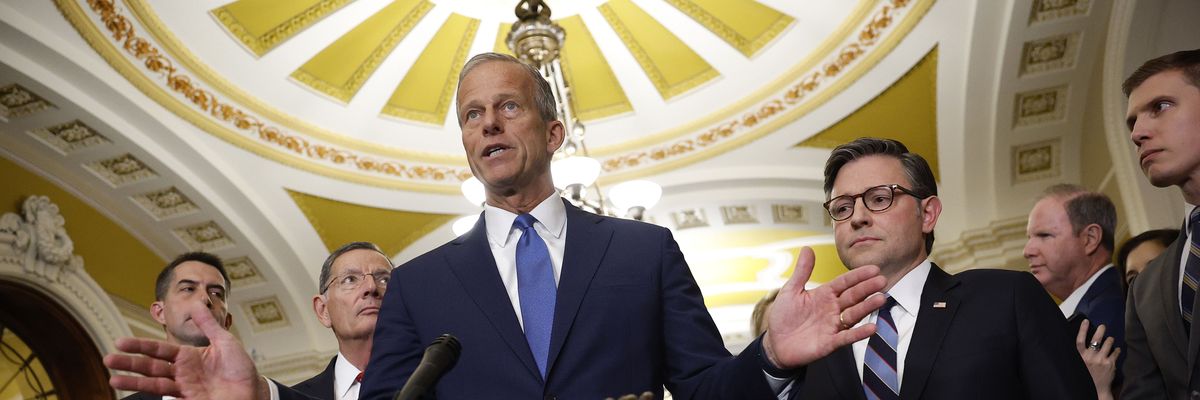
US Senate Majority Leader John Thune (R-SD) speaks to
 reporters on October 7, 2025 in Washington, DC.
(Photo by Kevin Dietsch/Getty Images)


Jake Johnson
Nov 09, 2025
COMMON DREAMS


Congressional Republicans are reportedly trying to insert anti-abortion language into government funding legislation as the shutdown continues, with the GOP and President Donald Trump digging in against a clean extension of Affordable Care Act tax credits as insurance premiums surge.

Sen. Ron Wyden (D-Ore.), the top Democrat on the Senate Finance Committee, sounded the alarm on Saturday about what he characterized as the latest Republican sneak attack on reproductive rights.

“Republicans said they might vote to lower Americans’ healthcare costs, but only if we agree to include a backdoor national abortion ban,” Wyden said in remarks on the Senate floor.

The senator was referring to a reported GOP demand that any extension of ACA subsidies must include language that bars the tax credits from being used to purchase plans that cover abortion care.

But as the health policy organization KFF has noted, the ACA already has “specific language that applies Hyde Amendment restrictions to the use of premium tax credits, limiting them to using federal funds to pay for abortions only in cases that endanger the life of the woman or that are a result of rape or incest.”

“The ACA also explicitly allows states to bar all plans participating in the state marketplace from covering abortions, which 25 states have done since the ACA was signed into law in 2010,” according to KFF.

Wyden said Saturday—which marked day 39 of the shutdown—that “Republicans are spinning a tale that the government is funding abortion.”

“It’s not,” Wyden continued. “What Republicans are talking about putting on the table amounts to nothing short of a backdoor national abortion ban. Under this plan, Republicans could weaponize federal funding for any organization that does anything related to women’s reproductive healthcare. They could also weaponize the tax code by revoking non-profit status for these organizations.”

“The possibilities are endless, but the results are the same: a complete and total restriction on abortion, courtesy of Republicans,” the senator added. “Trump said he’d leave abortion care up to the states. Well, this latest scheme makes it crystal clear: A de facto nationwide abortion ban has been his plan all along.”

The GOP effort to attach anti-abortion provisions to government funding legislation adds yet another hurdle in negotiations to end the shutdown, which the Trump administration has used to throttle federal nutrition assistance and accelerate its purge of the federal workforce.

Trump is also pushing a proposal that would differently distribute federal funds that would have otherwise gone toward the enhanced ACA tax credits, which are set to expire at the end of the year.

“It sounds like it could be a plan for health accounts that could be used for insurance that doesn’t cover preexisting conditions, which could create a death spiral in ACA plans that do,” said Larry Levitt, executive vice president for health policy at KFF


Activists chain themselves to railway tracks in Hamburg to protest German arms exports to Israel


November 8, 2025 


A protester seen with a “Stop Arming Israel” placard during the demonstration. Tens of thousands of people marched in Berlin under the slogans “All Eyes on Gaza” and “Stop the Genocide,” demanding a ceasefire, peace talks, and an end to German arms exports to Israel, on 27 September 2025 [Vasily Krestyaninov/SOPA Images/LightRocket via Getty Images]

A group of activists chained themselves to railway tracks at the Port of Hamburg in Germany to protest the government’s arms exports to Israel and draw attention to civilian suffering in Gaza, Anadolu reports.

Around 40 demonstrators took part in the action on Friday, blocking the rail line between the Eurogate and Burchardkai container terminals. The group prevented freight transport by occupying the tracks for several hours.

Jule Fink, a spokesperson for the activists’ group, said they took part in civil disobedience to show solidarity with Palestine.

“It is clear that the Israeli government has been committing war crimes in Palestine for a long time. This is genocide, and the German government is actively complicit. Germany continues exporting weapons to Israel through its ports. Why do the people of Hamburg allow their port to be used for arms shipments?” she said.

Due to safety concerns, the 15,000-volt power lines above the tracks were grounded during the protest.

Some port workers showed support for the demonstration. The protest was ended by police officers who carried the activists off the tracks one by one.

Maryland Workers Are Fighting to Divest Their Pensions From Israel’s Genocide

Maryland’s public pension fund raised its Israeli bond holdings to $74 million in 2024.
November 8, 2025

A protester waves a Palestinian flag in front of a few hundred students gathered to protest the genocide in Gaza at the Johns Hopkins University Homewood Campus on April 30, 2024, in Baltimore, Maryland.Wesley Lapointe / The Washington Post via Getty Images

On a cold, sunny morning in October, Grace Smith, a 42-year-old Baltimore County middle school teacher, arrived at the annual statewide teachers union convention in Ocean City, Maryland, with two fellow educators and a folder full of zines. Their mission: talk to as many teachers as possible about Maryland’s pension investments in Israel and hand out every copy they’d brought.

Smith estimated that they spoke to dozens of educators and distributed over 200 zines. The response, she said, was overwhelmingly positive.

“Everyone I talked to was glad to hear about it,” she said. “They didn’t know about it — and they were pissed.”

As part of a national movement to end U.S. complicity in Israel’s ethnic cleansing of Palestine, Maryland Break the Bonds produced the zine to explain how Israel finances its genocide in Gaza and settlement expansion in the occupied West Bank by selling “Israel Bonds,” and how, according to information gleaned through FOIA requests, the Maryland State Retirement and Pension System (MSRPS) holds more than $70 million in these bonds despite recent credit downgrades and a growing divestment push.

Its demand is simple: “Invest Maryland money in Maryland’s future, not in genocide.” Representing one-tenth of 1 percent of Maryland’s $70 billion portfolio, the holdings have become a symbolic target in a campaign focused on the system’s 420,000 members — teachers, state workers, and municipal employees.

Smith learned about the campaign through a weekly vigil for Gaza held in Baltimore, Maryland, that she attends regularly. As an educator, she said she was especially shaken by reports that Israel, backed by U.S. weapons and aid, has killed one Palestinian child every hour, and destroyed 90 percent of schools in Gaza.

The thought that her retirement is bound up in that destruction haunts her. “It’s a hellscape to have your ability to retire depend on continuing the U.S. war machine,” she said. “I don’t know why it’s acceptable for a pension fund to grow through investing in genocide. I just know it doesn’t have to be that way.”

Smith was drawn to the campaign because it builds on the legacy of previous divestment movements. “Of all the tactics, divestment has been one of the most effective,” she said.
The U.S. Investing Against the Global Tide

Over the past two years, the U.S. has supplied Israel with more than $21 billion in military aid, but public opinion is changing. Polls show half of U.S. voters and three in four Democrats now believe Israel is committing genocide in Gaza. Even still, the campaign acknowledges divestment won’t come easily but sees it as a concrete way for constituents to put pressure on public officials and hold Israel accountable.

“Federal policy is not going to change,” said Lauren Leffler, 31, an organizer with the campaign. “But we can make it politically inconvenient for state officials to continue these investments.”

In the past two years, Israel has turned to international bonds to finance its war machine, including selling $5 billion worth to U.S. investors, mostly state and local governments.

Using Public Information Act requests, the campaign uncovered that Maryland’s state pension system quietly purchased about $10 million in Israel Bonds between July and December 2024, raising its total holdings to $74 million — even as major international funds divest over genocide concerns and credit rating agencies downgrade the investments.

“People can feel really helpless seeing a genocide funded by your tax dollars,” said Leffler. “Until you realize it’s not just at the federal level — it also happens at the state and municipal level. And that’s maybe something I can change.”

The campaign has about 40 core members and is led by the Baltimore and D.C. chapters of Jewish Voice for Peace (JVP), the largest anti-Zionist Jewish organization in the U.S. After months of unsuccessful private meetings with state officials, they’re going public.

Maryland has deep economic ties to Israel and in 2017 barred companies that boycott Israel from receiving state contracts. Pro-Israel groups have called divestment antisemitic — a claim the campaign rejects.

Raised Jewish in Maryland, Leffler said her faith compels her to oppose violence done “in the name of Jewish safety.”

“There is no freedom or safety for Jews in forcing people off their land and now killing people en masse in Gaza,” she said. Her stance has drawn support from some relatives and caused painful rifts with others, but only strengthened her conviction that “action is the only salve for moral failure.”

Spearheaded by young Jewish activists like Leffler, the campaign reflects a broader shift: A recent poll found 4 in 10 U.S. Jews believe Israel is committing genocide in Gaza, and 61 percent say it is committing war crimes.
Maryland Moves One Way, the World Another

Earlier this year, funds in Norway and Denmark both divested from Israeli firms, citing the situation in Gaza and accelerating Israeli settlement expansion in the West Bank. On November 4, voters in Somerville, Massachusetts, became the first city to approve a ballot measure calling for divestment from Israel, joining Portland, Maine; Hamtramck, Michigan; and the California cities of Hayward and Richmond, which have passed similar measures through their city councils.

Maryland is moving in the opposite direction. Over the past 18 months, Moody’s, Fitch, and S&P have all downgraded Israeli bonds and maintained negative outlooks. As a result, the debt now offers unusually high returns — more than 5 percent compared to about 2.5 for similar sovereign bonds.

“The high interest rate shows how risky these investments really are,” Leffler said. “Even if they looked good on paper, they’re still investments in genocide.”

For Rebecca Riley, a 29-year-old University of Maryland employee who has been deeply involved in the campaign since August, the effort offered a path beyond protest.

“Before joining Break the Bonds, my activism was mostly street protests,” she said. “What I found here is direct, effective action.”

Responses vary, Riley said. “Some people become very open once they learn the history of occupation,” she said. “Others, because of misconceptions about Israel and Judaism, don’t want to engage with the facts.”

She believes that resistance often stems from confusion about Israel, Judaism, and Jewish safety. “Some people think divestment is antisemitic,” she said. “When really it’s about understanding the difference between Judaism as a religious identity and the Israeli government enacting military violence.”

For her, divestment is about moral accountability. “It allows me to say, ‘This is our money, our fund, and you have an ethical responsibility to stop funding human-rights violations,’” she said.
Officials Say This Isn’t Their Responsibility

Over many months, activists said they met with MSRPS Acting Chief Investment Officer Robert Burd, Deputy CIO Thomas Kim and Comptroller Brooke Lierman, who serves as vice chair of the board. Each, Leffler said, gave the same answer: Moral and human rights concerns are beyond their purview and any change in investment policy would require legislative action.

In a statement to Truthout, SRPS Acting Chief Investment Officer Robert Burd said the fund’s investments are managed “for the exclusive benefit of our members and retirees” and in line with state law. He added that the system’s divestment policy is set by legislation and must comply with its legal responsibility to prioritize financial returns for retirees.

A spokesperson for Comptroller Brooke Lierman said the pension system is following state law and that investment decisions are made by its Chief Investment Officer, not the Board. Any change in policy, the spokesperson added, would have to come from the Maryland General Assembly.

Participants in the divestment campaign like Leffler say they are working on drafting legislation, but they argue that genocide requires urgency. “Those officials basically said, ‘This isn’t my responsibility. It’s only our job to consider the finances,’” Leffler said. “I would argue we all have a human responsibility to do everything in our power to end a genocide.”

Activists point out that Maryland has acknowledged moral imperatives elsewhere. In 2018, it became the first state to require its pension fund to routinely analyze climate-related financial risks. Last year, the board created a Climate Advisory Panelto address and mitigate climate risk” in the system’s investments. To campaigners, that precedent shows the fund can weigh systemic harms when it chooses.

They also note that MSRPS has signed the United Nations Principles for Responsible Investment, which call for human rights considerations in investment decisions. In September 2025, a UN panel found Israel responsible for acts of genocide in Gaza.

When activists asked officials to apply that same logic to Israel, they say they were told further purchases are at the discretion of fund managers. “We were told they simply couldn’t or wouldn’t change because it would attract attention,” Leffler said. “They said it wouldn’t be politically expedient — but continuing to buy the bonds is itself a political decision.”
Echoes of the South Africa Fight

In 1984, Maryland became one of the first states to divest from apartheid South Africa, withdrawing $1 billion dollars and playing a role in isolating the regime, which fell a decade later under mounting international pressure.

South Africans have long drawn parallels between their struggle for liberation and that of Palestinians under Israeli occupation. In 2024, when the country brought a genocide case against Israel before the International Court of Justice, South African officials called the move a continuation of their anti-apartheid legacy.

For Leffler, the link is deeply personal and rooted in experiences a decade ago. In Cape Town, where she studied for a semester, she walked through the visible remnants of apartheid each day. “I was confronted every day with the very obvious vestiges of apartheid,” she said. When protests flared during Israel’s 2014 assault on Gaza, she began to connect the struggles. “It made me see the parallels to Israel’s treatment of Palestinians — something I’d never learned growing up.”

Israel’s genocide in Gaza prompted her to join JVP’s Baltimore chapter, where she serves on steering committee of Maryland Break the Bonds — her first campaign. “The only thing that really felt like a salve for that sense of moral failure was action,” she said.

Break the Bonds is part of a broader reckoning over how public money fuels violence and planetary harm. Around the world, pension and university funds that once poured billions into fossil fuels and apartheid regimes are facing questions about their complicity in death and destruction.

“Just as institutions once realized they couldn’t profit from South African apartheid or from climate destruction, the same is true here,” Leffler said. “We have a moral and financial obligation to stop funding genocide.”

From Maryland retirement funds to global investment boards, the question driving the movement is simple: What should — and shouldn’t — be profited from?


This article is licensed under Creative Commons (CC BY-NC-ND 4.0), and you are free to share and republish under the terms of the license.


Jaisal Noor is currently the Democracy Initiative Manager at the Solutions Journalism Network. He was previously a host, producer, and reporter for The Real News Network (TRNN). With his expertise in education policy and systemic inequity, he focuses on Baltimore, Maryland, and has contributed print, radio and TV reports to Free Speech Radio News, Democracy Now! and The Indypendent.


A Victorious Hamburg Climate Resolution Is a Model of Hope-Fueled People Power

While the current German government is rolling back or even boycotting climate action, 
 Hamburg is showing the world that grassroots climate action is effective.


Supporters cheer in the restaurant where the election party of the “Hamburg Future Decision” initiative is taking place on October 12, 2025, in Hamburg, Germany.
(Photo by Georg Wendt/picture alliance via Getty Images)
A Victorious Hamburg Climate Resolution Is a Model of Hope-Fueled People Power


Sabine von Mering
Nov 09, 2025
Common Dreams


“This is a story of pure hope in times of climate roll-backs around the world.”

Young climate activists like Luisa Neubauer, cofounder of Fridays for Future in Hamburg, have good reason to celebrate: The city of Hamburg recently voted in favor of more ambitious climate action. Famously, Hamburg was where the Beatles took off. Now the city has another big project that could take off. Neubauer: “Germany’s second largest city has shown that citizens—after all—demand climate action and are willing to self-organize around a just transition.”

At a time when the climate crisis has seemingly been pushed aside by too many other crises, the decisive win of Hamburg’s “Zukunftsentscheid” (Decision about Our Future) at the ballot box on Sunday, October 12, was a win for a dramatically more ambitious climate action plan for the second-largest city in Germany. While the current German government is rolling back or even boycotting climate action, Hamburg is showing the world that grassroots climate action is effective. The new law will make climate policy more fair, more transparent, and more responsive to the needs of future generations. The result could be used as a blueprint by other cities in Germany and far beyond. American cities are perfectly positioned to adopt a similar plan. After all, Americans are actually much more familiar with ballot initiatives than Germans.

Hamburg’s over 1.9 million residents were asked to vote in favor of a binding referendum to require annual carbon dioxide reduction targets, with the goal of net-zero emissions moved up from 2045 to 2040, and requirements that all climate policies will have to be socially just. A majority of over 303,000 residents, or 53.2%, said yes; 43.6% of eligible voters participated in the decision.

While the federal government is indeed moving aggressively against climate action, ballot initiatives give power to the grassroots.

The revised bill, in typical German style comprehensively named “Klimaschutzverbesserungsgesetz” (climate protection improvement law) will require that the city administration must present an emissions estimate no later than six months after the end of every calendar year.

There is a lot in this new climate law that the wonky types among climate activists will love. On their website, proponents list the exact amount of tons of carbon (in thousands) the city will be permitted to emit each year until 2040. If the permissible total annual emissions for the previous calendar year have been exceeded, the government must take measures to offset the excess total annual emissions within five months. If the total emissions exceed or fall short of the permissible total annual emissions from the year in which the act comes into force, the difference shall be credited evenly to the remaining total annual emissions for the next five years until 2040 at the latest, thus greatly incentivizing ramped-up action and disincentivizing delay.

But the referendum’s emphasis on a just transition is also key: If climate action is to benefit everyone, not only those with large pockets who after all tend to also be the bigger emitters, measures taken to protect the climate must be designed in a socially acceptable way. The changes to the existing climate protection law will make climate protection more fair for all in Hamburg, impacting housing, energy, and transportation. Homeowners, for example, will be incentivized to retrofit their homes, but won’t be able to push the costs entirely onto their tenants. Public transit will be prioritized without penalizing those who commute by car.

By emphasizing transparency and predictability (“Planbarkeit”), the proponents also took the needs of companies into account that invest in climate protection initiatives. And because the referendum included legislation, the newly revised law will automatically go into effect within a month from this vote, i.e. on November 12, 2025.

Opponents were quick to complain that the new law would endanger jobs in the city. But over 100 businesses had written an open letter in support of the referendum, and the proponents include positive impacts on economic growth and job prospects for the city in their FAQ.

While the federal government is indeed moving aggressively against climate action, ballot initiatives give power to the grassroots. The climate movement in Hamburg had fought for two years to make this referendum happen. A group of volunteers from various backgrounds contributed to drafting and refining the text. Over 80 different organizations joined a broad alliance of supporters, including cultural and religious institutions,companies, and NGOs. Even the soccer club FC St. Pauli cosponsored the referendum. The chances were not high for it to win—typically, a referendum only wins once every 10 years.Americans have lots of experience with the process of running ballot initiatives. Portland, Oregon, for example, ran a successful initiative that resulted in the establishment of the PCEF (Portland Clean Energy Fund), a smart move that has since brought hundreds of millions of dollars into the city’s coffers. Over 5,000 miles apart, Hamburg and Portland nevertheless have something in common: Hope-filled people power—sometimes a few frogs mix in…

Our work is licensed under Creative Commons (CC BY-NC-ND 3.0). Feel free to republish and share widely.


Sabine von Mering
Sabine von Mering is a 2023 public voices fellow on the climate crisis with The OpEd Project, in partnership with the Yale Program on Climate Change Communication, a climate activist with 350MAss, and the director of the Center for German and European Studies at Brandeis University.
Full Bio >
COP30: Climate Course Correction or Another Collision Course?

With 2024 confirmed as the hottest year ever on record, the US withdrawal from the Paris Agreement, and the massive financial shortfalls left by lackluster negotiations at COP29, this year’s climate talks are pivotal.


The IAEA Pavillion announces COP30 at the United Nations Climate Change Conference (UNCCC COP29) at Baku Stadium, Baku, Azerbaijan on November 14, 2024.
(Photo by Dean Calma / IAEA)

Rachael Mellor
Nov 09, 2025
Common Dreams


The 30th Conference of the Parties to the United Nations Framework Convention on Climate Change will take place in Belém, a remote, underdeveloped, and poor region of the Brazilian Amazon.

Delegates from over 190 countries, NGOs, Indigenous representatives, and Brazil’s President Luiz Inácio Lula da Silva, alongside COP President André Corrêa do Lago, will all participate in this year’s high-stakes climate negotiations.

Missed Targets and Weak Ambition: It’s Now or Never

With 2024 confirmed as the hottest year ever on record, the US withdrawal from the Paris Agreement, and the massive financial shortfalls left by lackluster negotiations at COP29, this year’s climate talks are pivotal.

A 2024 report by the UN revealed that current policies put the planet on track to reach a catastrophic 3.1°C warming by 2100 (Emissions Gap Report). This scenario would expose 600 million people to flooding, reduce food yields by half, cause severe water shortages, lead to insurmountable habitat and biodiversity loss, create month-long brutal heatwaves and wildfires, heighten the risks of insect-borne diseases, and profoundly deepen inequalities.

Progress will be stalled unless the global climate investment gap can be closed and pledges are finally turned into real investments.

At last year’s summit, it was agreed that at least $1.3 trillion in annual climate finance would be mobilized for developing countries by 2035. This funding is intended to support a just transition to clean energy, climate adaptation policies, and addressing loss and damage from climate change.

Tackling the climate crisis is IMPOSSIBLE without adequate funding. Since President Donald Trump took office, at least $18 billion has been stripped from climate finance—6% of the new global $300 billion annual target. The current pace of financing is entirely insufficient to meet the agreed-upon goals.

At COP30, all members of the UNCCC are expected to publish their Nationally Determined Contributions (NDCs), outlining their national plans to reduce greenhouse gas emissions and adapt to climate impacts.

The NDC Synthesis Report was released in October 2025, which, according to Melanie Robinson, global climate, economics, and finance program director for World Resources Institute, “lays bare a frightening gap between what governments have promised and what is needed to protect people and planet.”

Progress will be stalled unless the global climate investment gap can be closed and pledges are finally turned into real investments. This will prove even more difficult as militarization grips the planet. NATO has increased its spending commitments to an unprecedented 5% of GDP, and the EU Special Debts for Rearmament will further siphon money into warmongering, posturing, and weapons stockpiling.

A new initiative, the Global Ethical Stocktake, launched by the President of Brazil, Lula da Silva, and the United Nations Secretary-General, António Guterres, aims to integrate ethical considerations into climate negotiations, an aspect that has previously been omitted.

Jaded by a lack of action in previous COPs, former UN Secretary-General Ban Ki-moon, along with other influential figures such as Mary Robinson and Christiana Figueres, labelled the current climate policy process “no longer fit for purpose.”
Finally, a COP President with Credentials: André Corrêa do Lago

This year’s COP president holds higher hopes than others. He is a veteran climate diplomat and serves as the current secretary for climate, energy, and environment at the Brazilian Ministry of External Affairs.

He has worked with Brazil’s diplomatic corps since 1982 and has represented Brazil in similar negotiations, including as chief negotiator at Rio+20COP28, and COP29.

In a positive initial call to action, he has called on all stakeholders in the climate negotiations process to “act decisively in the face of climate urgency through an ambitious and integrated Action Agenda at COP30.”

A COP Built on Deforestation: Brazil Controversy

The location of this year’s climate summit is highly contentious. Destroying thousands of acres of rainforest to make way for a new four-lane highway, which is intended to ease congestion for COP visitors, is a blatant contradiction. This is the very environment Brazil has pledged to protect.

Rather than addressing the concerns, classic greenwashing terms like ‘sustainable“ are being used to describe the 8-mile road. Cutting through the Amazon rainforest, the road will fragment the ecosystem, disrupt the movement of wildlife, affect the livelihoods of local communities, and be inaccessible to those who live on either side of the highway. It will, however, have bike lanes and solar-powered lights!

The lack of infrastructure in the area means that more than 30 large-scale construction projects will be taking place to accommodate and prepare for the 50,000 expected visitors. The port is being redeveloped for cruise ships, and $81 million will be spent on expanding the airport to double its current capacity.

Emissions, emissions, emissions!


The expansion of the fossil fuel industry seriously contradicts the Brazilian government’s climate narrative and threatens the country’s credibility at COP30.

After three climate conferences in countries with restrictions on protests, Amazonian leaders and social movements are wary that their participation may be discounted and silenced. Since February, Indigenous groups have been occupying the Secretary of Education and blocking roads that cut through their territories. The protests have already begun.

Brazil is also no climate leader, but rather an empire built on oil. Its vast mining, fossil fuel, and agribusiness sectors mean that Brazil is responsible for more than 4% of total global emissions. In 2023, it emitted 2.3 billion tonnes of greenhouse gases, making Brazil the world’s fifth worst polluter.

In this country of deep inequalities, the poor are disproportionately affected by climate change, including sea-level rise; heatwaves; and heavy, erratic rainfalls.

Just weeks before the conference begins, a new bill to dismantle Brazil’s environmental license framework was passed. It eases restrictions on oil exploration and road development in the Amazon. A self-licensing process enables fossil fuel and construction companies to act with impunity and avoid the need for impact studies and mitigation measures.

Immediately after the bill change, Petrobras, the country’s majority state-owned, scandal-ridden oil company, began drilling for oil a mere 200 miles away from Belém. The license was previously denied due to the risk of widespread biodiversity loss in this fragile ecosystem in the event of a spill. A new report reveals that since 2024, big banks have provided $2 billion in new financing for oil and gas in the Amazon.

Estimates suggest that up to 60 billion barrels of oil may exist in the Brazilian Amazon. If burned, they could emit 24 billion tonnes of carbon dioxide—more than Brazil’s emissions over the past 11 years. The expansion of the fossil fuel industry seriously contradicts the Brazilian government’s climate narrative and threatens the country’s credibility at COP30.

Good COP, Bad COP


“Climate is our biggest war,” said Ana Toni, chief executive of COP30.

Hopes are high. Expectations are low. Change is happening, it is just painfully slow.

We need this to be the “delivery COP.” One thing is for sure, COP30 will be make or break for people, our precious flora and fauna, and our planet as a whole.


Our work is licensed under Creative Commons (CC BY-NC-ND 3.0). Feel free to republish and share widely.


Rachael Mellor
Rachael is a key writer for the nonprofit platform Better World Info, which focuses on global issues such as peace, human rights, environment, and social justice. Her articles are also published in The Transnational and Peace News. Follow her work at www.betterworld.info and @BetterWorldInfo.
Full Bio >


COP30: Indigenous peoples vital to humanity’s future, Brazilian minister tells AFP

By AFP
November 8, 2025


Indigenous activists protested in Brasilia on October 14 during the pre-COP30 preparatory meeting - Copyright AFP/File Sergio Lima
Louis GENOT

At COP30 in Belem, in Brazil’s Amazon region, the country’s Minister of Indigenous Peoples, Sonia Guajajara, hopes Indigenous peoples will play a leading role in the international climate conference that begins Monday.

Without them, “there is no future for humanity,” she told AFP in an interview.

Guajajara, a member of the Guajajara-Tenetehara ethnic group who was born in an Indigenous reserve in Maranhao state, is the first person to hold the portfolio created by leftist President Luiz Inacio Lula da Silva when he returned to power in 2023.

On the eve of the UN climate conference, Guajajara, 51, anticipates “the best COP in terms of Indigenous participation,” but denounces the “racism” suffered by Indigenous peoples.

She laments that Brazil’s government has not been able to approve more Indigenous reserves.

According to the minister, this effort has been hindered by a law passed by the predominantly conservative parliament, which restricts the recognition of lands that belong to Indigenous peoples.

Brazil, Latin America’s largest country, is home to 1.7 million Indigenous people, divided into 391 ethnic groups speaking 295 languages, out of a total population of over 200 million.

QUESTION: Do you think that the fact that the COP is taking place in the Amazon for the first time will help change the way the general public sees Indigenous peoples?

ANSWER: There is a great deal of ignorance, a great deal of racism, a significant lack of understanding in society as a whole about Indigenous peoples. There is a lack of knowledge about the reality in which these Indigenous peoples live.

The COP can contribute significantly to greater understanding and interest from society as a whole regarding Indigenous peoples — especially regarding the role that Indigenous peoples and Indigenous territories play in maintaining climate balance.

It has been proven that the presence of Indigenous peoples, whether in demarcated territories or not, ensures clean water, protected biodiversity, pesticide-free food, and standing forests.

And all of this is what humanity needs to continue to exist. Therefore, we say, without Indigenous peoples, without these voices, there is no future for humanity.

Q: How have you seen the representation of Indigenous peoples evolve in climate discussions?

A: A COP in the Amazon needs to consider the voices of Indigenous peoples, traditional communities, and all those who have always faced great difficulty in reaching where the COP takes place.

In 2009, when I participated in my first COP, which was COP15 in Copenhagen, there was one or two Indigenous individuals present, but they were not participating. Since then, we have been working on building this inclusion, increasing representation, and creating spaces for dialogue.

From then until now, there has been tremendous progress. I was very excited to participate in the summit of presidents, during the launch of the TFFF (the Tropical Forest Forever Fund), as well as the session addressing the topic of climate and nature.

Of course, there is still much to be done for countries to ensure this leadership. In both moments, all the presidents who spoke emphasized the importance of including Indigenous peoples, ensuring funding for Indigenous communities, and guaranteeing the protection of Indigenous peoples and territories.

– ‘Guardians of the forest’ –

Q: What is the impact of climate change on Indigenous peoples?

A: The changes are already being felt in various ways in Indigenous territories, on the outskirts of large cities, through major floods and severe droughts. Any of these factors directly affect daily life.

Although there is already recognition that we, Indigenous peoples, are the greatest guardians of the forest, the environment, and biodiversity due to our way of life, we are the first and most impacted.

Because when there is a flood, for example, it affects food security, when fish die, when water is contaminated, when there is drought, roads become inaccessible, as rivers are also a means of transportation for us.

It affects schools, when children cannot move from one place to another to attend school, it affects education.

Four Brazilians to watch at COP30

By AFP
November 8, 2025


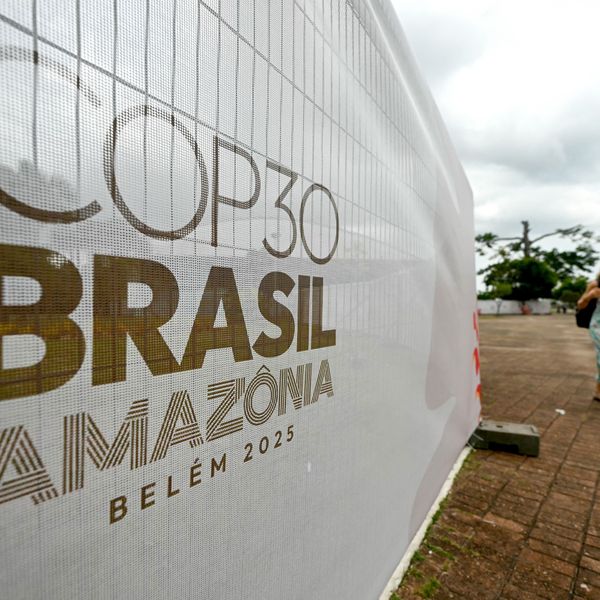
A woman walks past a banner with the COP30 UN Climate Change Conference logo outside the Hangar Convention and Exhibition Center in Belem, Para State, Brazil on November 5, 2025 - Copyright AFP Pablo PORCIUNCULA
Facundo Fernández Barrio

Influential Brazilians, from government figures to Indigenous activists, will take center stage during UN climate talks starting Monday in the Amazon.

Here are some key Brazilians to watch at the conference, running November 10–21 in the city of Belem.

– Marina Silva –

Brazil’s 67-year-old environment minister is internationally recognized for her lifelong advocacy for the environment and preservation of the planet’s largest tropical forest.


Brazil’s Environment Minister Marina Silva has come to symbolize the tensions within Brazil’s government over the uneasy coexistence between developmental pragmatism and protecting the environment – Copyright AFP/File Evaristo Sa

Raised on a rubber plantation in the Amazon, Silva often cites her grandmother and a shaman uncle as early influences that shaped her love for the forest.

In 2008, she resigned from President Luiz Inacio Lula da Silva’s government during his second term as the two clashed over her environmental agenda.

She returned to his government in 2023 and is in a tricky position as Brazil recently approved plans, backed by Lula, for expanded oil exploration at the mouth of the Amazon River.

“We all live with contradictions, and these contradictions must be managed,” she said ahead of the climate conference.

Silva was named one of Time’s 100 most influential people of 2024, hailed for her “deeply grounded courage and unflinching tenacity.”

– Carlos Nobre –

After decades studying the Amazon and global warming, Brazilian meteorologist Carlos Nobre is an international authority on climate.

He was a member of the UN Intergovernmental Panel on Climate Change (IPCC), which received the 2007 Nobel Peace Prize for highlighting environmental threats.

“Populists and climate deniers, like US President Donald Trump and our former president Jair Bolsonaro, adopt positions that contain enormous climate risk,” the 74-year-old told AFP.

For 30 years, he has warned that deforestation is steadily bringing the Amazon closer to the “point of no return,” when the tropical rainforest — which plays a crucial role in absorbing greenhouse gases largely responsible for global warming — will transform into savannah.

He believes that with strong environmental policies, Brazil could not only halt degradation but become one of the first major emitters to meet Paris Agreement targets.

“Brazil has all the conditions to lead the energy transition,” he said.

– Txai Surui –

In 2021, aged just 24, Indigenous activist Txai Surui addressed the world at COP26 in Scotland in traditional clothing and bearing a powerful message.

“The Earth is speaking and she tells us that we have no more time,” she said.

This year, she was appointed one of several young climate advisors to the UN secretary-general.

About 1.7 million Indigenous people live in Brazil, some in protected areas covering one-seventh of the country.

Preserving these territories has been proven to reduce deforestation.

Txai is the daughter of a chief and an environmental activist, the couple known for their longtime battle to defend traditional lands in the northwestern Amazon.

She founded an Indigenous youth movement in the region and in 2021, she and other young climate activists sued the Brazilian government for a “carbon trick maneuver” they said allowed it to emit more greenhouse gases than it should.

– Fafa de Belem –

Belem, the COP30 host city, is also the birthplace of Fafa de Belem, 69, one of the great female voices of Brazilian music and an activist for the Amazon.

Maria de Fatima Palha de Figueiredo, known by her stage name Fafa de Belem, has recorded 30 albums and sold millions.

She will perform at COP30, while keeping a keen eye on negotiations.

Fafa told AFP she hopes the people of the Amazon will be “at the center of the decisions.”

After being outraged by the absence of representatives from the Amazon at a climate action meeting in New York three years ago, Fafa founded the Varanda da Amazonia (Veranda of the Amazon) debate forum.

“When we talk about climate change, we talk about data, graphs and scientific reports. These are fundamental but don’t always reach people’s hearts: art creates that bridge,” the singer told AFP.


COP30: ‘A Real Opening for Quicker Progress’

Why it’s not all bad news for Bill McKibben regarding the climate crisis. Five questions to one of the leading environmentalists in the US.


Solar panels stretch out under the sun.
(Photo by Getty Images)

David Goessmann
Bill Mckibben
Nov 09, 2025
Common Dreams


From November 10 to 21, the 30th Climate Change Conference, known as the Conference of the Parties, or COP, will take place in Belém, Brazil. Despite decades of climate diplomacy and many promises, annual greenhouse gas emissions have not only failed to be halted, but have continued to rise as the climate crisis worsens. The goal of keeping global warming below 1.5°C is already unattainable.

David Goeßmann: Why have the conferences failed, and what do you expect from the upcoming summit?


Ahead of COP30, UN Report Shows 1.5°C Will Be Breached as Countries Pledge Just 10% Emissions Cut


Amnesty Urges COP30 Attendees to ‘Resist Aligning With’ Trump Climate Crisis Denial

Bill McKibben: Look, climate change is a tough problem. It’s caused by the same thing—fossil fuel—that undergirds the economy, and the fossil fuel industry is strong enough politically in many countries to make change hard (see America). But, as of the last few years, the price of solar and wind energy has fallen far enough that we have a real opening for quicker progress. I think that will start to be reflected in various national strategies.

David Goeßmann: US President Donald Trump has reversed the steps toward an energy transition initiated under the Biden administration, attacked all environmental protection, withdrawn from the Paris Agreement, and issued more than 300 new oil and gas drilling permits. That’s the bad news. Is there any good news?

It’s easier to get politicians to say yes to clean energy than no to dirty energy.

Bill McKibben: At the state level progress continues—Texas is the biggest clean energy player now. But it’s not enough to offset the federal headwinds, so we’re all fighting back as hard as we can.

David Goeßmann: How do you assess the climate movements worldwide? What are the strategies that should be focused on now?

Bill McKibben: I think the greatest possibility probably lies in the popularity and affordability of clean energy. It’s easier to get politicians to say yes to clean energy than no to dirty energy (though both require hard work).

David Goeßmann: You talk about a “silent revolution” in terms of the global energy transition. What is driving it?

Bill McKibben: The cost of sun and wind power, and of batteries. These are supplying a third more power to the world this autumn than last. It took us 70 years to get the first terawatt of solar power, two years to get the second, and the third is now coming even faster.

David Goeßmann: You have been fighting for climate protection for decades. What gives you the hope and strength to continue?

Bill McKibben: Hey, lots of people are suffering badly, mostly in places that did nothing to cause climate change. If they can keep fighting, I guess I can too!


Our work is licensed under Creative Commons (CC BY-NC-ND 3.0). Feel free to republish and share widely.


David Goessmann
David Goeßmann is a journalist and author based in Berlin, Germany. He has worked for several media outlets including Spiegel Online, ARD, and ZDF. His articles appeared on Truthout, Common Dreams, The Progressive or Progressive International. In his books he analyzes climate policies, global justice, and media bias.
Full Bio >

Bill Mckibben
Bill McKibben is the Schumann Distinguished Scholar at Middlebury College and co-founder of 350.org and ThirdAct.org. His most recent book is "Falter: Has the Human Game Begun to Play Itself Out?." He also authored "The End of Nature," "Eaarth: Making a Life on a Tough New Planet," and "Deep Economy: The Wealth of Communities and the Durable Future."
Full Bio >


COP30 Takes Off in Brazil, Aims to Prevent ‘Climate Collapse


Pablo Meriguet 


The meeting has been filled with warnings and urgent calls to action from more than 50 heads of state.


Over 50 world leaders gather in Belem, Brazil for COP30 this month. Photo: Lula/X

On November 6, COP30 began in Brazil, a United Nations meeting attended by nearly 50 world leaders to address the most pressing issues of climate change. The meeting is being held in Belem, a city located in the Amazon, one of the regions most affected and threatened by climate change.

Brazilian head of state Luiz Inácio Lula da Silva is hosting a conference that aims to promote an agenda already agreed upon in the Paris Agreement which, according to the president, has not yet been fulfilled by the nearly 195 signatory countries. To this end, the meeting of world leaders will consist of three working groups (climate and nature; energy transition; and review of the Paris Agreement), in addition to a plenary session.

Lula demands real change

In his opening speech, Lula urged world leaders to fulfill their environmental and financial commitments to projects that combat climate change, which he said has caused a 1.5 degree Celsius increase above pre-industrial levels: “COP30 will be the COP of truth. It is time to take the warning from science seriously. The time has come to face reality. Accelerating the energy transition and protecting nature are the two most effective ways to combat global warming.”

In addition, Lula called for the elimination of fossil fuel subsidies, increased climate financing, and a just energy transition (primarily for countries in the Global South that suffer most severely from the consequences of climate change) before, he said, temperatures rise by 2.5 degrees by 2026.

“We must embrace a new model of development that is fairer, more resilient, and low-carbon … More than 250,000 people could die each year from causes related to climate change. This is not a distant threat: it is already happening in our communities. We live in a scenario of insecurity and mutual distrust, where immediate interests take precedence over our common future.”

During his administration, Lula has made significant efforts to halt the brutal deforestation of the Brazilian Amazon. Last month, deforestation in Brazil reached its lowest levels in 11 years. However, several activists have criticized other actions taken by the Brazilian government, such as the opening of oil wells at the mouth of the Amazon River, the longest and largest river in the world (it has more water than the Mississippi, Yangtze, and Nile rivers combined), and home to the world’s largest river basin.

Xi Jinping and Donald Trump: the notable absentees

Although the event included the heads of state of highly influential countries such as Emmanuel Macron (France), Friedrich Merz (Germany), Gustavo Petro (Colombia), Pedro Sánchez (Spain), and Kier Starmer (UK), among others, the absence of the presidents of China and the United States, the two most important economic powers in the world and also the most polluting, is striking.

Both Donald Trump and Xi Jinping declined Lula da Silva’s invitation, and some have interpreted their absence as a tacit statement that neither Beijing nor Washington will sign commitments that could interfere with their economic development projects, which could essentially compromise the intentions of COP30 when considering the production volume of both economic giants.

“Moral failure and deadly negligence”

Regarding Donald Trump’s absence, Colombian President Gustavo Petro said: “[Donald Trump’s absence] represents a denial of science, leading his society into the abyss, and with it the rest of humanity. Mr. Trump is wrong. Science predicts collapse if the US does not move towards decarbonizing its economy.”

Petro also criticized Europe’s enormous spending on weapons rather than transforming its productive matrix: “That is Europe’s mistake. It is not a defense and security issue. Russia is not the enemy; the climate crisis is the enemy. It is your grandchildren, prime ministers and presidents of Europe, who are at risk, as are all the sons and daughters of European civilization and of humanity as a whole.”

Petro also pointed out that the world is no longer just undergoing climate change, but is also approaching a “climate collapse that means a point of no return, that is, the general death of life on the planet. This is not a fictional apocalypse; it is a real apocalypse.”

The secretary-general of the United Nations, António Guterres, maintained the same tone of severity and alarm in his speech: “Even a temporary overshoot [of 1.5 degrees] will have dramatic consequences. It could push ecosystems beyond irreversible tipping points, expose billions of people to unlivable conditions, and amplify threats to peace and security. Every fraction of a degree means more hunger, displacement, and loss, especially for those who are least responsible [for climate change]. This is moral failure and deadly negligence!”

For his part, Pope Leo XIV sent a statement to COP30 calling for “care for [God’s] creation” and greater investment in nature conservation. While governments’ attention is focused on wars and conflicts, peace is threatened “by a lack of proper respect for creation, by the plundering of natural resources, and by a progressive deterioration in the quality of life due to climate change. These challenges endanger the lives of everyone on this planet,” he said, “and therefore require international cooperation and cohesive, forward-looking multilateralism,” the pontiff said. 

Courtesy: Peoples Dispatch


COP30: promise to performance

Published November 8, 2025
DAWN
The writer is chief executive of the Civil Society Coalition for Climate Change.


THE Conference of the Parties (COP) emerged under the United Nations Framework Convention on Climate Change (UNFCCC), adopted at the 1992 Earth Summit in Rio de Janeiro. Its purpose was clear yet ambitious: to provide a multilateral forum where nations could collectively agree on measures to stabilise greenhouse gas concentrations and prevent dangerous human interference with the climate system.

The early years of the COP process reflected a sense of optimism. The Kyoto Protocol (1997) represented the first legally binding framework, committing industrialised countries to emission reductions. However, the absence of major emitters like the United States and the lack of commitments from developing countries weakened its implementation. The Copenhagen Summit (2009) exposed deep fractures between the developed and developing world over responsibility, finance, and fairness and marked a turning point in the politics of climate diplomacy.

This tension between collective ambition and national interest has defined every COP since. Des­pite a shared understanding that no single nat­ion can solve the climate crisis alone, each negotiation cycle has been mired in differing historical responsibilities, domestic economic priorities and conflicting definitions of ‘justice’ and ‘equity’.

At the heart of climate diplomacy lies a paradox that explains why a universally accepted agreement remains elusive in achieving its objective: the countries that are most responsible for climate change are not the ones most vulnerable to its effects. Industrialised nations built their wealth on fossil fuels, while developing countries like Pakistan now bear the brunt of resulting climate impacts of floods, droughts, glacial melt and food insecurity with limited capacity to adapt. Efforts to reach universal consensus are stymied by this historical imbalance. The North-South divide manifests in three recurring areas of contention:

Responsibility and burden-sharing: Developed countries resist strong language on liability and compensation, while developing countries dem­and recognition of loss and damage as a matter of climate justice.

The COP process has evolved or devolved into what many observers now describe as a ‘climate fair’.

Finance: Despite pledges, the promise on climate finance has not been fully delivered, and falls far short of need.

Ambition gap: Many countries’ Nationally Determined Contributions remain insufficient to keep global warming below 1.5 degrees Celsius. The gap between pledges and implementation continues to widen. While the COP remains a vital arena for dialogue, its consensus-based decision-making model often leads to lowest-common-denominator outcomes with statements of intent rather than binding commitments.

The Paris Agreement (2015), celebrated as a diplomatic triumph for crafting a flexible, bottom-up framework, marked a shift from imposed obligations to voluntary pledges. Yet, a decade later, the reality is sobering. Global emissions continue to rise, and current trajectories point towards warming of around 2.7°C by the end of the century. Climate disasters from catastrophic floods in Pakistan to record heatwaves across Europe and droughts in the Horn of Africa underline that adaptation is no longer a distant concern but an immediate survival challenge.

Meanwhile, the COP process itself has evolved or devolved into what many observers now describe as a ‘climate fair’. Conference halls are crowded not only with negotiators but also with corporations, NGOs and lobbyists, all vying for visibility. While this diversity of actors fosters innovation and awareness, it has also blurred the focus.

The spectacle often overshadows substance and announcements frequently outnumber actual deliverables. The risk is that COPs have become a performative rather than transformative stage for declarations, not decisions. Real progress increasingly occurs in smaller coalitions or outside the formal UNFCCC framework, through initiatives such as climate finance partnerships, regional adaptation programmes, and private sector decarbonisation alliances.

For Pakistan, it is time to reframe its approach from normative attendance to strategic influence using COP not just as a diplomatic event but a platform for survival advocacy. To make its participation strategic, Pakistan should consider the following approach:

Adopt a justice-centred narrative framing its stance around climate justice and resilience through equity. Its experience as a climate front-line state gives moral authority to demand parity between adaptation and mitigation in global finance and policy.

Lead on regional solidarity as part of the Third Pole region to champion a South-South cooperation framework focused on shared challenges, glacier melt, river basin management, and food and water security. Regional diplomacy around climate resilience could become a signature pillar of Pakistan’s foreign policy.

Champion the loss and damage agenda for capitalisation — simplified access, grant-based finance and inclusion of local communities in rebuilding and adaptation planning.

Invest in science, storytelling, and strategy: negotiations are driven by data and diplomacy. Pakistan should strengthen its climate data infrastructure, empower young negotiators and amplify its stories of resilience, turning lived experiences into global advocacy tools.

Forge strategic partnerships: beyond government-to-government engagement, Pakistan can build alliances with global think tanks, civil society, and climate innovators to position itself as a thought leader on adaptation finance and resilience-building.

The journey from Kyoto to Paris, and now tow­ards COP30, reveals both progress and paralysis in global climate diplomacy. While the world has learned to talk about climate change with unprecedented urgency, it has yet to act with equal conviction.

For Pakistan, participation in COP must transcend attendance. It should be about shaping narratives, mobilising alliances and asserting leadership among the Global South. By focusing its voice on justice, adaptation, and regional solidarity, Pakistan can not only safeguard its national interests but also contribute meaningfully to a fairer and more resilient global climate order.

aisha@csccc.org.pk
Published in Dawn, November 8th, 202