Sunday, November 09, 2025

We’re Still Breathing: Amhara Genocide in Ethiopia

 November 7, 2025
Web Video

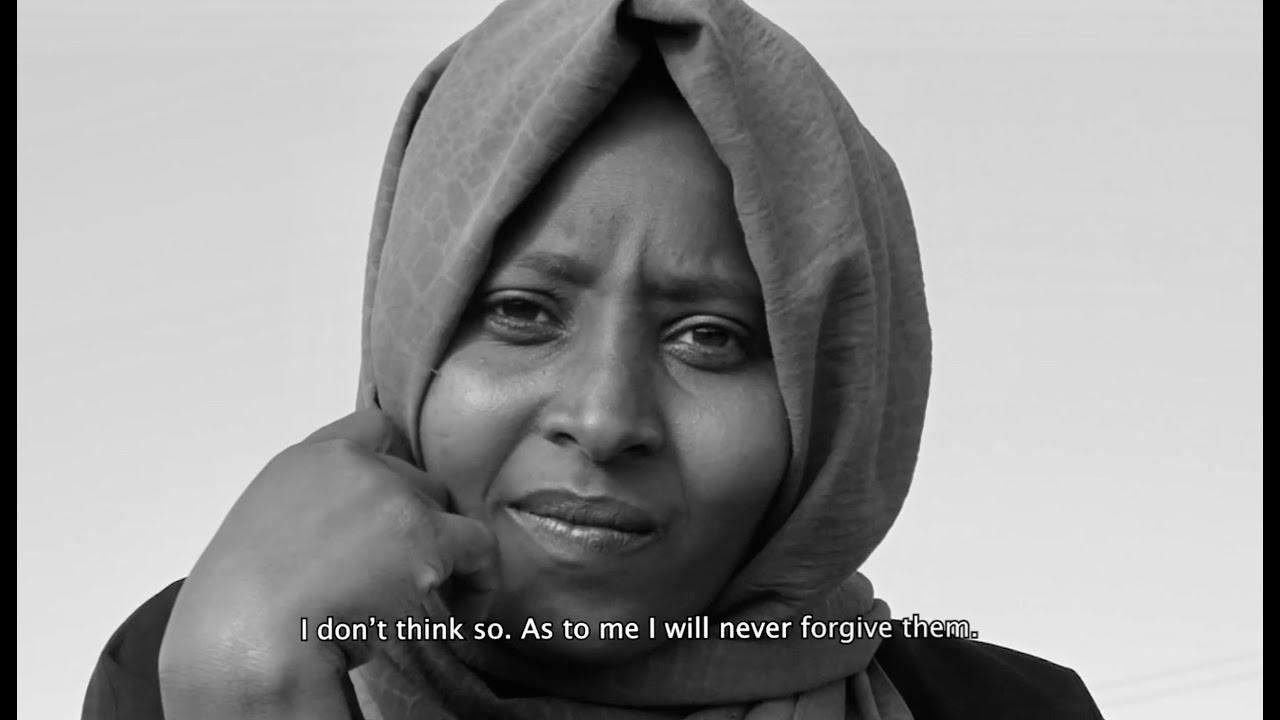
Youtube screenshot.

We are living in an age of autocrats — leaders who sit at varying points along a spectrum of repression and violence. Ethiopia’s Prime Minister Abiy Ahmed is among this malevolent list — not widely known internationally, yet nevertheless one of the most ruthless.

Hiding in the shadows of global affairs, Abiy is quietly presiding over a brutal campaign of ethnic persecution against the Amhara, the country’s largest ethnic group.

According to data compiled by the Amhara Association of America (AAA), at least 36,746 Amhara civilians have been the victim of violence since 2020. Of these, 18,530 were killed, 4,756 injured, and 1,766 subjected to sexual and gender-based violence. These cases — gathered by a small team working under extremely difficult conditions — represent only the tip of the iceberg.

The true number is almost certainly far higher. Prisoner of conscience Dr. Wondwossen Assefa, in his book Freedom March, points out that systematic killings of Amhara have taken place for decades, and may number in the millions.

Not only is it dangerous to be Amhara, but those identified as Orthodox Christian are also at risk. Attackers often equate Orthodox Christianity with Amhara ethnicity, meaning Amhara people of any religion — including Muslims — can be targeted. Members of the clergy, historically revered, and churches have also been attacked.

The hateful methodology is clear: the erasure of Amhara identity in all its forms — cultural, religious, and ethnic.

Bearing Witness

In June 2023, I travelled to Ethiopia to film a documentary exposing the systematic, state-sponsored violence against the Amhara people, which meets the legal definition of genocide — the Amhara genocide.

Sadly, little has changed since then; in many ways, the situation has become even more desperate. The killing of Amhara civilians is relentless, with some reports detailing drone attacks on civilians. Sexual violence, including rape, has become widespread. Displacement camps are overcrowded, schools are closed and access to food, water, and medical care is scarce.

Many children have been forced into child labour or “survival sex work” in makeshift camps without sanitation or electricity. They are traumatised, malnourished, and bear the lasting scars of prolonged exposure to violence.

Living in constant fear, large numbers of Amhara are reportedly attempting to flee the country. Lacking funds or passports, they face grave risk of exploitation, trafficking, or enslavement along migration routes in the region.

Homeless and heartbroken

During the visit, we met men, women, and children directly affected by the violence. All had been forcibly removed from their homes and were now ‘living’ in a displacement camp in the Amhara region.

The camp consisted of canvas tents and large industrial warehouses sheltering hundreds of people. The only sources of natural light inside these austere metal boxes came from the open doorway and narrow gaps at the top of the side walls.

At first, I thought these were simply storage units, but as my eyes adjusted to the dim light, I saw people among piles of clothing, worn mattresses, plastic chairs, and brightly coloured washing bowls. Some lay down, others sat cross-legged, chatting; women brewed tea, comforted babies, and washed clothes.

Conditions in the camp were unhygienic, crowded, and devoid of dignity. The children, of whom there were many, had no activities, no toys or books, and no school to attend. Their lives had been shattered by the vicious ethnic-based violence, carried out with impunity by government forces. Many will never fully recover.

Local NGOs were present, but this was not a UN-run camp staffed with humanitarian workers offering education and healthcare. It was a former business premises, requisitioned by the government to temporarily house Amhara communities made homeless — people displaced by the very same authorities now claiming to protect them.

With the support of the Amhara Association of America (AAA), We’re Still Breathing: Amhara Genocide in Ethiopia was produced and released at the end of 2023.

In the film, we meet a seventeen-year-old boy, whom we will call Anton. He has lost his right arm and sits emaciated in rags. Armed militia from the Oromo Liberation Army (OLA) — the Shene, as they are locally known — attacked his town in Oromia. The Amhara were identified by their Oromo neighbours — friends, relatives, people with whom they had shared their lives for decades — and slaughtered.

Anton was butchered and left for dead. Miraculously, he survived physically, but mentally he is crushed: hopeless, suicidal. His father suffered a nervous breakdown and deserted the family; his mother is in pieces, depressed and traumatised.

Anton’s shocking story, along with those of others featured in the film, reflects the experiences of hundreds of thousands of Amhara.

The violence continues unabated, with duplicitous, power-hungry politicians enabling ethnic barbarism, crushing lives too many to count — Anton’s and his family’s among them.

State terrorism

At first glance, the situation in Ethiopia appears complex — deliberately so, with multiple armed groups involved — but the human tragedy being perpetrated is not complicated. It is stark, devastating.

The courageous men and women we met leave little room for doubt. They speak with clarity and authority, their testimony untainted by politics or ideology. In them, we trust. They are clear: the federal government, led by Prime Minister Abiy Ahmed — himself an Oromo — is responsible for the violence against Amhara communities.

Three armed groups have been carrying out this campaign of hate and violence, with varying levels of cooperation: the Oromo Liberation Army (OLA), formerly designated a terrorist organisation; the Oromia Special Forces (OSF), regional paramilitary forces; and the Ethiopian National Defence Force (ENDF), the federal army.

But as Abiy grows ever more brazen, it is the ENDF — often working alongside the OSF — that is increasingly responsible for attacks. Emboldened by the disregard shown for International Humanitarian Law by powerful figures such as Trump, Netanyahu, and Putin, Abiy appears to believe he is above the law and can use the federal forces to commit atrocity after atrocity with total impunity.

Fano

The Amhara people have been persecuted for generations, but the current wave of violence dates broadly from April 2023, when the federal government disbanded the Amhara Special Forces (ASF) — the Amhara region’s paramilitary force.

In response to this deeply contested decision — widely considered by many to be unconstitutional — huge protests erupted across the Amhara region. Abiy Ahmed sent in the army, including tanks, to suppress the demonstrations, resulting in deaths and hundreds of arrests.

With the ASF officially dissolved, the Amhara had no designated regional force. Fano, a volunteer resistance group composed of community members and former ASF fighters, stepped into this vacuum, taking up arms to protect Amhara civilians from attacks by the ENDF and other armed groups.

Since then, Fano has expanded, taking on both a civil society and defensive role. Functioning as an unofficial regional administration, it supports the community in various ways — assisting displaced families, promoting education for children, and running local projects such as supplying farmers with fertiliser.

What detractors label an “armed insurgency” is, in reality, a resolute act of self-defence by a sparsely armed, diaspora-funded group that also functions as a community-led authority in the Amhara region.

The Amhara are one of dozens of ethnic groups in Ethiopia that for generations coexisted largely in harmony. Today, politicians and armed elites are sowing divisions, exploiting historic grievances to justify violence and consolidate power.

Ignored by the World

When massive protests brought Abiy Ahmed and his Prosperity Party to power in 2018, many hoped the country was finally moving toward democracy after decades of dictatorship.

That hope quickly evaporated. Abiy and his allies proved to be no different from his predecessor, Meles Zenawi, and the EPRDF — perhaps worse. Like Meles, Abiy is violent, narcissistic, and dishonest; obsessed with power and unconstrained by law or morality.

While the Amhara are being slaughtered, raped, and displaced, Abiy grins for the cameras, pointing proudly to his vanity projects in Addis Ababa, seemingly oblivious to the human lives he is destroying.

Let’s be clear: Prime Minister Abiy Ahmed is a dictator overseeing genocide. He is a criminal and, like Benjamin Netanyahu and his cohorts, should be investigated by the International Criminal Court (ICC) for crimes against humanity and genocide.

Yet, despite the scale of this atrocity, the world remains largely silent. Coverage in mainstream media is virtually nonexistent, and Western and African politicians, along with global bodies such as the United Nations and the African Union, are largely silent. The war in Sudan receives some attention — still more than the horrors unfolding in Ethiopia — and the same is true of Congo.

Imagine such state-sponsored violence taking place in Europe: there would be outrage – rightly so, and collective action. But in Africa — nothing. No interest from the so-called ‘International Community’, or global institutions. Why? Is it as crude as rabid racism — after all, these people are poor and Black — or is it the lingering colonial mindset that allows the world to turn a blind eye to the deaths, displacement, rape, and torture of an entire people?

Whatever the reason, it is unconscionable. Yet again, it exposes the hypocrisy and moral bankruptcy of Western governments.

The extraordinary men and women we met in the displacement camp — and the thousands like them — deserve justice, recognition, and the chance for their heartbreaking stories to be heard.

Graham Peebles is a British freelance writer and charity worker. He set up The Create Trust in 2005 and has run education projects in Sri Lanka, Ethiopia and India.  E: grahampeebles@icloud.com  W: www.grahampeebles.org

American Jewish Radicalism and the American Empire


 November 7, 2025

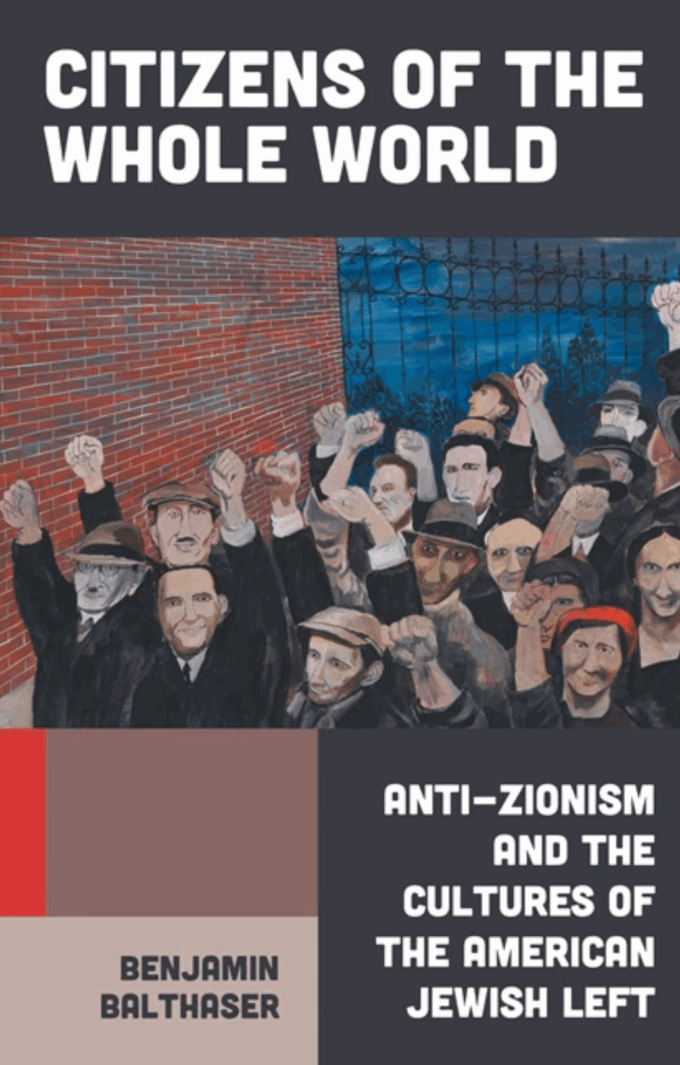
Benjamin Balthaser teaches multi-ethnic U.S. literature at Indiana University in South Bend. He is the author of Citizens of the Whole World: Anti-Zionism and the Cultures of the American Jewish Left (Verso, 2025), in addition to articles and monographs that explore the intersections of race, social movements and the contours of U.S. empire. In Citizens, Balthaser explores a 100-year history of U.S. Jewish movements, and their self-definition through and against Zionism and U.S. empire. In this interview, exclusive for CounterPunch, he offers an interdisciplinary analysis of questions including diaspora, internationalism, Jewish identity, antisemitism, as well as his method which combines literature, oral history and archival sources.

Daniel Falcone: Could you explain how you structured the book in terms of the chapters and how themes like human rights, social movements, and identity construction are perhaps woven together?

Benjamin Balthaser: Citizens is not meant to be an encyclopedia of the Jewish left; my emphasis is on four key historical moments in which Jewish identity and anti-Zionist politics were both crucial, and also, in the process of being reimagined. The book is structured chronologically and thematically, as it moves among questions of anti-imperialism, identity, memory, and solidarity across social movements and a nearly 100 year history.

In Chapter 1, I focus on the Popular Front of the 1930s and ’40s, particularly Jews within the orbit of Communist and Trotskyist parties in the U.S., and for whom opposition to Zionism was part of their broader critique of fascism, colonialism and ethno-nationalism.

For both Chapters 2 and 3, I focus on the 1960s New Left, specifically on the relationship between anti-Zionism and critique of whiteness. From the 19th century to the mid-twentieth century, the exclusion of Jews from educational, housing, and ultimately immigration pathways complicated the idea that even Ashkenazi Jews were fully granted “whiteness.” By the 1960s, these legal barriers had mostly disappeared, and Jews had entered the middle class, into previously excluded universities and suburbs.

These chapters evolve to look at how Jewish activists, many of them key figures in the New Left, grappled with their new social position. Abbie Hoffman, interestingly, saw his Jewishness as a kind of “double identity,” assimilationist on the one hand, and yet also, part of a rebellious tradition, rooted in solidarity with the oppressed on the other. For such activists of the Jewish New Left, the Black Freedom Struggle, and its critique of Zionism, was central to how they articulated their politics and their rejection of at least the politics of whiteness.

Chapter 4 looks at the changing left of the 1970s, when a Zionism more or less solidified within the Jewish mainstream. This was also the era when identity politics was ascendant across many movements: Black Power, Chicano rights, feminism, etc. Some Jewish leftists formed socialist collectives, trying to reclaim Jewish identity in solidarity with the Panthers and radical feminism, resisting both compulsory Zionism and the white backlash of Jewish institutions like the ADL or AJC. The collectives were politically diverse — some were religious, others secular, but they shared a commitment to Jewish anti-racist, anti-imperialist values. Often, these tried to reconnect with earlier traditions, including Marxist movements like the Labor Bund, while also adapting to new social realities (like suburbanization and the loss of Jewish urban neighborhoods).

In Chapter 5, I turn to the present day to ask how groups like Jewish Voice for Peace and JFREJ (Jews for Racial and Economic Justice) navigate Jewish identity and cultural memory in the crater left after the collapse of a Zionist consensus, and the construction, particularly among the young and middle-to-working class, of a new anti-Zionist consensus. Some of these movements reinterpret Jewish religious traditions like Passover seders or Sukkot, others from socialist history and memory. These groups aren’t always distinct (members often overlap), but they represented a revival of Jewish left politics, grounded in both historical memory and/or religious re-inscription. So ultimately, my book puts together questions of identity, memory, and resistance thus showing how Jewish politics have been shaped through questions of anti-racism, capitalism, and empire. Right now, the task is reshaping a Jewish politics dedicated to the cause of anti-colonialism and support for the people of Palestine.

Daniel Falcone: Can you talk about how you connect literature to history and politics?

Benjamin Balthaser: I was trained in the field of cultural studies which begins with the assumption one cannot understand anything — literature, politics, history, in isolation. Traditional academic disciplines tended to separate knowledge into disconnected silos: art, literature, history, when of course, these fields are intimately connected. Cultural studies origins can be traced back to the Frankfurt School‘s interdisciplinary studies of fascism, and to New Left thinkers such as Stuart Hall, who wanted to understand power through complex social formations. To do such work it requires an understanding of social movements, changes in politics and identity, how people express themselves through art, ideas etc.

I don’t really mind how one describes my work. But I think what is important is to recognize how interdisciplinarity captures how people live, not simply as political or economic monads. This book focuses on the American Jewish left, so identity and politics are never separate from one another, nor from the structure of U.S. empire. This idea is further explored by scholars in American Studies like Janice RadwayDonald Pease, and Robin D.G. Kelley whose work suggests that our daily lives are formed within the context of empire, what William Appleman Williams referred to as “empire as a way of life.”

If one asks, “Is your work about Jewish identity, anti-Zionism, the left, or anti-imperialism?” The short answer is “all the above” because one cannot separate such questions. Anti-Zionism, for instance, is not just a political stance, it’s a way of expressing Jewish identity, and a critique of empire, and these identities and positions evolve together. Currently, we are seeing a crisis of American empire, of which the war on Palestine is one front. It has created a change in how Jewish identity is understood in the U.S., with the growing popularity of anti-Zionist groups such JVP (Jewish Voice for Peace) and the increasingly authoritarian tone of organizations such as ADL.

At the same time, we also witness a rise in white nationalism, yet another symptom of this imperial crisis: “white identity” movements are clearly a response to changing relations of U.S. power, declining standards of living, new forms of authoritarianism. This all affects how Jews see themselves within the U.S. Are Jews outsiders or insiders? Off-white? Hyper-white? Both? This has long been a complicated question in American life, and it’s being revisited now considering current political developments. Ultimately, I think literature, politics, and identity are tangled, and the fact is we can’t analyze one without studying the others.

Daniel Falcone: I noticed Zohran Mamdani’s campaign for mayor in NYC receiving intergenerational support among the politically left-leaning U.S. Jewish electorate. How does this phenomenon relate to the themes in your work?

Benjamin Balthaser: I like how you mention the Mamdani campaign brought together an intergenerational Jewish left coalition. One key intervention I’d like to offer is to un-tell the narration of Jewish generational rupture. There’s a long history of narrating Jewish migration to the U.S. through an assimilationist, teleological framework, in which the orthodox become liberal reform Jews; radical socialists become stalwart Democrats; everyone is always upwardly mobile. The most famous example is perhaps Alan Crosland’s The Jazz Singer (1927) in which we see a young man abandon his orthodox, reactionary parents to embrace showtunes, performance, and of course, the most American of all things, racial and racist masquerade.

This narrative is repeated regarding the New Left as well: younger Jewish radicals rebelling against their conservative parents. But from reading memoirs and conducting interviews, the story appears more complex: New Left Jews often felt they were fulfilling their parents, or sometimes grandparents, ethical and political commitments. Often, the younger generations aren’t actually breaking from tradition but reinterpreting and continuing one. In Mike Gold’s 1930 Jews without Money the main character learns from his mother’s working-class solidarity and her resistance to suburban assimilation. She passes down not a religion as an act of observance, but a political and ethical worldview grounded in social justice. Similarly, Grace Paley’s story Conversations with My Father (1974) explores this dynamic in which the daughter argues with her father – who does embrace upward mobility and assimilation – but never disowns him.

So, in looking at younger Jews today who are questioning Zionism or U.S. imperialism, I don’t necessarily see it as a break from longstanding Jewish tradition. On the contrary, it is often a return to earlier radical modalities of understanding and being. Before the 1970s Zionism wasn’t the consensus regarding American Jews. Many Jewish youths in the New Left were non-Zionist or anti-Zionist, and they often drew inspiration from older generations and radical grandparents, or Yiddish socialists, or anti-fascist activists.

In my second chapter, I interview a number of former members of Students for a Democratic Society (SDS), many of whom are still politically active today. One is a co-founder of my temple, Tzedek-Chicago. If there are throughlines from one historical moment to the next, it is both through the organizations people build and also, through continuities of left-wing commitment: diasporism, internationalism, anti-racism. Of course, I am not making a claim for all American Jews, but rather certain traditions of the left.

Today, when Zionists claims to speak for all Jews, there is a growing counter-voice reclaiming Jewish politics as rooted in anti-racism. That’s the tradition I see being revived in movements like JVP or campaigns like Mamdani’s.

Daniel Falcone is a historian specializing in the revolutions of 1848 and the political refugees who sought asylum in New York City. His academic work focuses on Giuseppe Garibaldi’s influence on New York’s local history and the politics of memory in the nineteenth and twentieth centuries. Aside from his research, he is a teacher and journalist whose work has appeared in additional publications such as The Journal of Contemporary Iraq & the Arab WorldThe NationJacobin, and Truthout. His journalistic pieces, Q&As with public intellectuals, intersect history with modern-day geopolitical issues.