Friday, November 14, 2025

Kazakhstan: Prosecutors Stall Criminal Investigation Into Police Torture Of Jehovah’s Witness – Analysis


Baglan Yankin leads police raid on Jehovah's Witness meeting, Kentau, 13 August 2025 Photo Credit: Jehovah's Witnesses


November 15, 2025 
F18News
By Felix Corley


LONG READ


The criminal investigation into four police officers who tortured and threatened to murder Jehovah’s Witness Daniyar Tursynbayev in the southern town of Kentau on 13 August appears to be at a standstill. An official of Kentau Prosecutor’s Office – which a court had to order to begin an investigation – insists that it cannot proceed until Tursynbayev makes his statement about the torture in person in Kentau. “It is necessary that testimony is taken in the presence of the victim,” he told Forum 18. “This can’t be done appropriately by video.”

Tursynbayev and his family fled from Kentau to the city of Almaty after the torture, fearing for their safety. He has offered to testify in Almaty or by video, but Kentau Prosecutor’s Office has rejected this. “Returning to Kentau – the town where he was tortured and threatened with death – causes Tursynbayev serious concern for his life and the safety of his family,” Jehovah’s Witnesses told Forum 18 (see below).

Four police officers – reportedly led by Lieutenant Colonel Baglan Yankin – subjected Tursynbayev to repeated torture and murder threats. After six hours of interrogation and torture, he admitted he had conducted “illegal missionary activity”. After release late in the evening, his friends took him to hospital to document his fractured rib and other injuries (see below).

Kazakhstan’s obligations under the United Nations Convention Against Torture require it both to arrest any person suspected on good grounds of having committed, instigated or acquiesced to torture “or take other legal measures to ensure his [sic] presence”, and also to try them under criminal law. No one has been arrested or tried in relation to the torture (see below).

Lieutenant Colonel Yankin again denied that he or other officers had tortured Tursynbayev. “This is slander,” he told Forum 18. He also denied that police had held Tursynbayev on 13 August for more than six hours (see below).


Lieutenant Colonel Yankin told Forum 18 that he remains at work at Kentau Police. “On what basis should I be removed from duty?” he asked. “There aren’t such facts [of torture].” An administrative case has been initiated against Yankin in relation to a raid on Kentau’s Jehovah’s Witness community on the same day that officers tortured Tursynbayev. The case has not reached court (see below).

Erkegali Meyirbekov, head of Kentau Police, did not reply to Forum 18’s September written questions about why its officers tortured Tursynbayev. An officer of Kentau Police told Forum 18 on 13 November that Meyirbekov was out of the office at a meeting. No other officer would discuss the case (see below).

On 12 September, the non-governmental Coalition Against Torture wrote to General Prosecutor Berik Asylov in Astana. It complained that no criminal case had been launched to punish the torturers for “the brutal treatment and torture” of Tursynbayev. The Coalition pointed to Kazakhstan’s obligations under the UN Convention Against Torture and demanded the immediate launch of a case under Criminal Code Article 146 (“Cruel, inhuman or degrading treatment, torture”) (see below).

The torture of Tursynbayev “clearly took place”, notes Andrey Grishin of the Kazakhstan International Bureau for Human Rights and the Rule of Law in Almaty. Yet launching the criminal case happened only “with great difficulty”. But simply the launching of the case “does not mean it will be investigated properly”, he wrote (see below).

“We remain deeply concerned about Tursynbayev’s safety and the integrity of the legal process,” Jehovah’s Witnesses told Forum 18.

Police have refused to return Tursynbayev’s passport or phone which they seized on 13 August. “This is a violation of his fundamental rights and deprives him of opportunities necessary for a normal life,” Jehovah’s Witnesses told Forum 18. “He cannot leave the country, apply to the Public Service Centre, obtain documents, or receive medical care” (see below).

Meanwhile, fears are growing that the regime is preparing legal changes to restrict further the exercise of freedom of religion or belief. President Kasym-Zhomart Tokayev said in March that laws on religion must be “adapted to the new conditions” (see below).

One commentator in Astana pointed to the growing number of media publications criticising “dangerous sects”. The individual noted that a spike in such publications – usually funded by state grants to the media – often precedes a tightening of legal controls on exercising freedom of religion or belief. “I think this issue is being promoted on state grants in advance of the initiative to change the Religion Law,” the individual told Forum 18 (see below).


Tight controls on exercise of freedom of religion or belief

The regime imposes tight restrictions on the exercise of freedom of religion or belief. Against legally-binding international human rights obligations, the Religion Law allows only state-registered religious communities to hold meetings for worship which must be at state-approved locations. The Muslim community faces even tighter restrictions: only mosques subject to the state-controlled Muslim Board are allowed to exist.

All other meetings for worship risk punishment. Individuals, charities and companies face fines under Administrative Code Article 490, Part 1, Point 1 (“Violating the requirements of the Religion Law for conducting religious rites, ceremonies and/or meetings”) for holding meetings for worship without state permission or allowing such meetings to be held in their premises.

Officials and politicians have repeatedly expressed an intention to make state controls over the exercise of freedom of religion or belief tighter. The head of the National Security Committee (NSC) secret police, Yermek Sagimbayev, told deputies of the non-freely-elected parliament in October 2023: “The initiative on the need to harshen legislation in the area of regulating religious activity has more than once been discussed at a government level.”

In early 2024, the regime drafted a wide-ranging Amending Law to amend the 2011 Religion Law and a range of other Laws and Codes. The Law was never adopted.
Tighter controls planned on exercise of freedom of religion or belief?

However, the regime appears to remain committed to legal changes to restrict further the exercise of freedom of religion or belief. Speaking in Burabai on 14 March 2025, President Kasym-Zhomart Tokayev appeared to support concerns from a number of politicians over what they considered “the growing influence of non-traditional religious movements among young people”.

“Freedom of religion is guaranteed in Kazakhstan, but disorder and permissiveness are unacceptable,” Tokayev declared in remarks posted on the presidential website. “Destructive movements and ideologies alien to our culture must certainly be curbed.”

Tokayev added: “The most important mission of religion is the consolidation of the nation. Documents regulating the activities of religious associations should facilitate this goal. This issue must be comprehensively studied and legislation adapted to the new conditions.”

No proposed amendments to the Religion Law have yet been submitted to the Mazhilis, the lower house of parliament, according to its website.

One commentator in Astana pointed to the growing number of media publications criticising “dangerous sects”. The individual noted that a spike in such publications – usually funded by state grants to the media – often precedes a tightening of legal controls on exercising freedom of religion or belief. “I think this issue is being promoted on state grants in advance of the initiative to change the Religion Law,” the individual told Forum 18 on 11 November.

The attack on Kentau’s Jehovah’s Witness community was accompanied by a social media video on 3 July from a channel that warns of the dangers of “religious extremism” (see below).

Anuar Khatiyev, Chair of the regime’s Religious Affairs Committee in the capital Astana (part of the Culture and Information Ministry), did not answer his phone each time Forum 18 called between 10 and 13 November.
Police torture Daniyar Tursynbayev, threaten with murder

On 13 August, Police in Kentau in the southern Turkistan Region detained Jehovah’s Witness Daniyar Tursynbayev. Four officers – reportedly led by Lieutenant Colonel Baglan Yankin – subjected him to repeated torture and murder threats. After six hours of interrogation and torture, he admitted he had conducted “illegal missionary activity”. After release late in the evening, his friends took him to hospital to document his fractured rib and other injuries.

Police did not return Tursynbayev’s passport and phone that they had seized from him (see below).

Police lodged an administrative case against Tursynbayev on charges of “illegal missionary activity”. If found guilty, he would be due for a fine and – as an Uzbek citizen – deportation (see below).

“This case is entirely based on confessions Kentau police officers extracted from Tursynbayev through the use of torture,” Jehovah’s Witnesses complained to Forum 18 in September. “We are deeply concerned that Daniyar Tursynbayev could be deported, separating him from his wife and daughter, both of whom are citizens of Kazakhstan.”

Lieutenant Colonel Yankin denied that anyone had tortured Tursynbayev. “This is not true. It is disinformation,” he told Forum 18 in September.

Reached on 11 November, Lieutenant Colonel Yankin again denied that he or the three other officers had tortured Tursynbayev. “This is slander,” he told Forum 18. “There are cameras in the office and I could send you the video.” (He did not do so.)

Lieutenant Colonel Yankin denied that officers had arrested or detained Tursynbayev on 13 August. “He wrote a statement,” he insisted.

Police detained Tursynbayev at about 4 pm on 13 August and released him at about 10:30 pm. However, Lieutenant Colonel Yankin denied that police had held him for more than six hours. Yet he repeatedly refused to say at what time he claims police had detained and then released Tursynbayev. “We scan people biometrically when they come in and when they leave,” he told Forum 18.

Erkegali Meyirbekov, head of Kentau Police, did not reply to Forum 18’s September written questions about why its officers tortured Tursynbayev. An officer of Kentau Police told Forum 18 on 13 November that Meyirbekov was out of the office at a meeting. No other officer would discuss the case.

Rustem Sabirzhanuly, head of Turkistan Regional Religious Affairs Department, told Forum 18 in September that he had just spoken to Kentau Police. “There was no beating at all, this is an absolute lie.” Reached again on 10 November, Sabirzhanuly again denied the torture of Tursynbayev. “Police said they didn’t conduct torture. They went to the meeting in response to a complaint from neighbours.” He claimed that a regional Jehovah’s Witness leader had denied that Tursynbayev was affiliated with the community.

Forum 18 asked the National Preventive Mechanism (the body supposed to prevent torture in places where people are detained) in Astana in September whether it has taken up Tursynbayev’s case, what it has done (if anything) on his case, and why those who tortured Tursynbayev had not been arrested. Forum 18 received no response.
Kazakhstan’s obligations under Convention against Torture

Kazakhstan is a party to the United Nations Convention against Torture and Other Cruel, Inhuman or Degrading Treatment or Punishment. This defines torture as “any act by which severe pain or suffering, whether physical or mental, is intentionally inflicted on a person for such purposes as obtaining from him or a third person information or a confession, punishing him for an act he or a third person has committed or is suspected of having committed, or intimidating or coercing him or a third person, or for any reason based on discrimination of any kind, when such pain or suffering is inflicted by or at the instigation of or with the consent or acquiescence of a public official or other person acting in an official capacity.”

Under the Convention, Kazakhstan is obliged both to arrest any person suspected on good grounds of having committed, instigated or acquiesced to torture “or take other legal measures to ensure his [sic] presence”, and also to try them under criminal law which makes “these offences punishable by appropriate penalties which take into account their grave nature”.

Many Muslim prisoners of conscience jailed for exercising their freedom of religion or belief have been tortured in a variety of ways. Prison officials responsible do not generally face arrest or punishment.
Police raid religious meeting

Also on 13 August, a few hours after it detained Tursynbayev, Kentau Police raided the home where the Jehovah’s Witness community meets. “Your actions are illegal. Stop your actions,” Baglan Yankin, Deputy Chief of Kentau Police Department, told those gathered. He insisted to them that he was speaking “on behalf of the government of the Republic of Kazakhstan”. He ordered those present to leave the premises.

Police took three further Jehovah’s Witnesses to the police station but freed them after several hours’ questioning.

On 3 July, a social media channel Aqiqat Soz published a short video where local residents called for the Jehovah’s Witness community in Kentau to be closed down as its members “directly contradict the bases of Kazakh culture and faith”. It said local residents had submitted a complaint to the local administration on 12 June.

In July, Kentau Akimat (Administration) tried through the Town Court to have the activity of the registered Jehovah’s Witness community suspended. It failed on technical grounds. It did not respond to Forum 18’s 11 September question why it had sought the suspension of the legal entity’s activity.
Tursynbayev seeks redress for police torture

After his release, Daniyar Tursynbayev moved to the city of Almaty, fearing that he and his family would not be safe in Kentau.

Tursynbayev sought redress for the torture inflicted by police officers in Kentau. However, Kentau Prosecutor’s Office initially refused to launch an investigation.

On 12 September, the non-governmental Coalition Against Torture wrote to General Prosecutor Berik Asylov in Astana. It complained that no criminal case had been launched to punish the torturers for “the brutal treatment and torture” of Tursynbayev. The Coalition pointed to Kazakhstan’s obligations under the UN Convention Against Torture and demanded the immediate launch of a case under Criminal Code Article 146 (“Cruel, inhuman or degrading treatment, torture”).

On 12 September, Kentau Town Court upheld Tursynbayev’s complaint and ruled that the Kentau Prosecutor acted unlawfully when he transferred the statement regarding torture inflicted on Tursynbayev by officers of Kentau Police to the Internal Security Division of Turkistan Regional Police. The court ordered the prosecutor to initiate an investigation under Criminal Code Article 146.

On 15 September, the prosecutor appealed against this court decision to Turkistan Regional Court.

Additionally, on 15 September, Turkistan Regional Court upheld Tursynbayev’s appeal and ruled that Kentau Prosecutor’s refusal to independently initiate an investigation into the torture allegations was unlawful. The court ordered the prosecutor to rectify this violation.

On 25 September, Kentau Prosecutor’s Office opened a pre-trial investigation into the torture of Tursynbayev by police officers. “Significantly, this investigation was not initiated by the prosecutor’s office but was ordered by Kentau Town and Turkistan Regional Courts, which ordered the prosecutor to register the complaint and investigate,” Jehovah’s Witnesses told Forum 18.

The very evening that the case was registered, Kentau Prosecutor D. Dosaliyev sent an SMS message to Tursynbayev’s lawyer. He requested Tursynbayev’s appearance for questioning at Kentau Prosecutor’s Office the following morning, 26 September – despite the fact that Tursunbayev had left Kentau because of concerns for his safety and was living in Almaty.

On 26 September, Tursynbayev’s lawyer submitted a petition requesting that the questioning be conducted in Almaty or by video. “The relevant law provides for questioning of a victim at either their place of residence or via video conference,” Jehovah’s Witnesses told Forum 18. “Tursynbayev has valid reasons to fear for his safety should he return to Kentau, as the police officers regarding whom he complained have not been suspended from duty and continue to search for him, exerting pressure on his associates and his lawyer.”

On 27 September, Kentau Prosecutor’s Office denied the application, insisting on Tursynbayev’s personal appearance in Kentau despite lawful alternatives being available. The lawyer appealed against this denial, but on 9 October, Kentau Town Court rejected the appeal, upholding the requirement for questioning in Kentau. Turkistan Regional Court also rejected a further appeal.

On 1 October, Kentau Prosecutor’s Office denied the second motion (questioning via video conference). The lawyer appealed against the decision to Kentau Town Court, which rejected the appeal on 22 October.
Simply launching the case “does not mean it will be investigated properly”

Aidos Iskakov of Kentau Prosecutor’s Office implied that the investigation into the torture of Daniyar Tursynbayev is at a standstill. He insists that Tursynbayev must make his statement about the torture in person. “It is necessary that testimony is taken in the presence of the victim,” he told Forum 18 from Kentau on 13 November. “This can’t be done appropriately by video.”

Told that Tursynbayev fears for his safety if he returns to Kentau, Iskakov responded: “We offered for him to give the testimony in Turkistan, but he refused. He doesn’t want to go there.”

Iskakov refused to give any other information about the pre-trial investigation. “I can’t give any information about what stage the investigation is at, because of the secrecy of the investigation. I can’t say if anyone has been arrested or not.”

Jehovah’s Witnesses point to Tursynbayev’s fears. “Returning to Kentau – the town where he was tortured and threatened with death – causes Tursynbayev serious concern for his life and the safety of his family,” they told Forum 18.

On 1 October, Murat Tleuberdiyev, Head of Turkistan Region Prosecutor’s Office, replied to the Coalition Against Torture’s 12 September letter to the General Prosecutor. Tleuberdiyev noted the opening on 25 September of a “pre-trial investigation” under Criminal Code Article 146, Part 2, Paragraph 1. He added that “necessary investigative measures” are underway. “The course of the investigation is under the control of the Regional Prosecutor’s Office,” he wrote in the letter seen by Forum 18.

Nurdaulet Zhanatayev of Turkistan Region Prosecutor’s Office, who drafted Tleuberdiyev’s response to the Coalition Against Torture, insists that Kentau Prosecutor’s Office is continuing the investigation, despite Iskakov’s comments. “An expert analysis has been commissioned,” Zhanatayev told Forum 18 from Turkistan on 13 November. He would not say what the “expert analysis” is of.

Zhanatayev said that no one had been arrested and no criminal case has been presented to court. However, he refused to give any other information about the case, citing the secrecy of the investigation.

Told that Kentau Prosecutor’s Office is not proceeding with the investigation until Tursynbayev comes to Kentau to give testimony in person, Zhanatayev insisted again that it is proceeding. He refused to explain whether the law does or does not allow Tursynbayev to give testimony by video.

The torture of Tursynbayev “clearly took place”, notes Andrey Grishin of the Kazakhstan International Bureau for Human Rights and the Rule of Law in Almaty. Yet launching the criminal case happened only “with great difficulty”. But simply the launching of the case “does not mean it will be investigated properly”, he wrote on 17 October.
Police to be punished for disrupting religious meeting?

On 22 September, the registered Jehovah’s Witness local religious organisation based 200 kms away in Aksukent, to which the Kentau community belongs, and several individual believers submitted a complaint to the Religious Affairs Committee in the capital Astana regarding the unlawful police disruption of their worship meeting on 13 August.

In its 13 October response, the Committee refused to initiate proceedings, claiming a lack of authority to hold the responsible officials accountable.

Anuar Khatiyev, Chair of the Religious Affairs Committee in Astana, did not answer his phone each time Forum 18 called between 10 and 13 November.

After a similar 3 October complaint to the General Prosecutor’s Office, the materials regarding the disruption to the religious meeting were passed to Turkistan Region Prosecutor’s Office and then to Kentau Prosecutor’s Office.

Kentau Prosecutor’s Office initiated a case under Administrative Code Article 490, Part 2 (“Impeding lawful religious activity as well as violation of the civil rights of physical persons on grounds of their religious views or insulting their feelings or profanation of items, buildings and places revered by followers of any religion, unless there are signs of criminally punishable actions”) against Police Lieutenant Colonel Baglan Yankin.

(Officials who violate freedom of religion or belief are not previously known to have been punished. Officials generally use Administrative Code Article 490, Part 2 only to punish Muslims who, during prayers in mosques, say the word “Amen” aloud.)

Lieutenant Colonel Yankin confirmed the administrative case to Forum 18 on 11 November, but said the court has not yet set a date to hear it. He said Kentau Police have not removed him from duty. “On what basis should I be removed from duty?” he asked. “There aren’t such facts [of torture].”

On 20 October, Kentau Prosecutor’s Office sent the materials to Kentau Police with instructions to consider Colonel Yankin’s disciplinary liability. The results are pending.

On 8 October, Jehovah’s Witnesses filed a separate complaint with Kentau Town Court under Administrative Code Chapter 44 (which covers appeals against state agencies’ actions or failure to take actions in cases of alleged administrative violations). The complaint was about the inaction of Kentau Police and the unlawful actions of Colonel Yankin and three other police officers. The court accepted the complaint but a hearing date has not yet been set.

An officer of Kentau Police told Forum 18 on 13 November that its head, Erkegali Meyirbekov, was out of the office at a meeting. No other officer would discuss the case.
Tursynbayev accused of unlawful missionary activity

On 13 August, after officers tortured Tursynbayev and unlawfully seized his passport and mobile phone, Colonel Baglan Yankin of Kentau Police drew up a record of an offence against him under Administrative Code Article 490, Part 3 (“Carrying out missionary activity without state registration (or re-registration)”).

On 8 September, police sent the administrative case against Tursynbayev to Kentau Town Court.

On 13 September, Tursynbayev’s lawyer filed a motion with Kentau Town Court to transfer the case to Almaty, since Tursynbayev had moved and had formally notified the court of his change of residence. On 15 September, Kentau Town Court granted the motion and ordered the transfer of the case to Almaty’s Specialised Inter-District Administrative Court.

On 1 October, the lawyer discovered online that on 30 September, the Almaty court had accepted the administrative case, scheduled a hearing for the same day at 17:30, and summoned Tursynbayev to appear.

“Neither Tursynbayev nor his lawyer was notified, even though the case file contains the lawyer’s contact information,” Jehovah’s Witnesses complained to Forum 18. Because of Tursynbayev’s “failure to appear”, the judge issued an order for his compulsory appearance. At 18:30, the police arrived at Tursynbayev’s residence, but did not find him at home.

On 2 October, Tursynbayev and his lawyer went to the Specialised Inter-District Administrative Court in Almaty and submitted a motion stating that he was ready to appear and requesting notification of the hearing. Nevertheless, the court issued a ruling to return the administrative case to Kentau.

On 3 October, Tursynbayev’s lawyer learned of this transfer and filed an appeal. On 6 October, Tursynbayev himself filed similar appeals.

On 23 October, Tursynbayev and his lawyer personally attended the appellate panel of Almaty City Court and provided evidence of his residence in Almaty. Nevertheless, the court upheld the Specialised Inter-District Administrative Court’s decision to return the case to Kentau. (The complaint regarding the compulsory appearance order – since neither the lawyer nor Tursynbayev was properly notified by the court – is still under review.)

The administrative case has now been returned to Kentau Town Court. The court website does not list any hearings in the case.
No residence permit, no passport

Since 13 August, Daniyar Tursynbayev – now living with his family in Almaty – has been without his passport. “This is a violation of his fundamental rights and deprives him of opportunities necessary for a normal life,” Jehovah’s Witnesses told Forum 18. “He cannot leave the country, apply to the Public Service Centre, obtain documents, or receive medical care.”

On 2 September, Tursynbayev’s lawyer filed complaints with Kentau Police and Turkistan Regional Police regarding the seizure of his passport and phone. Officials responded to his lawyer that the passport is in the administrative case file and the phone is retained as physical evidence.

On 13 September, Tursynbayev’s lawyer filed further complaints regarding the unlawful seizure of the passport and phone.

On 1 October, the secretary of the judge at Almaty’s Specialised Inter-District Administrative Court informed the lawyer that Tursynbayev’s passport was not among the case materials and its whereabouts were unknown.

Against this background, on 16 October Tursynbayev’s lawyer learned that on 9 October, Kentau Police terminated his temporary residence permit with immediate effect and without notice. (The original residence permit was valid until 7 August 2026.) Tursynbayev was forced to pay a fine and obtain a new residence permit.


F18News

Forum 18 believes that religious freedom is a fundamental human right, which is essential for the dignity of humanity and for true freedom.

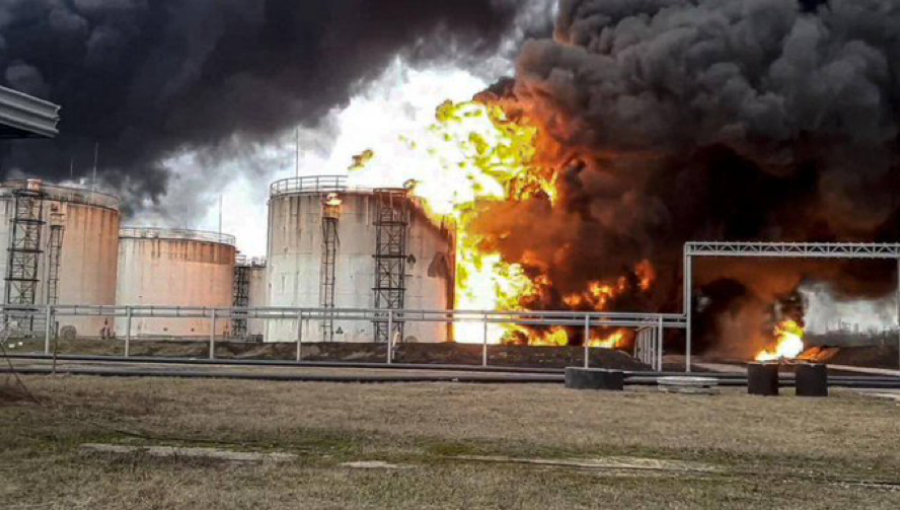
 

COMMENT: Ukraine slowly wearing down Russia's oil industry

COMMENT: Ukraine slowly wearing down Russia's oil industry
Ukraine doesn’t have the missile firepower to deliver a knockout blow of Russia’s oil refineries. But it can keep hitting them and damage them faster than Russia can repair them. / bne IntelliNews
By bne IntelliNews November 14, 2025

Russia’s oil industry, long seen as the bedrock of the country’s economic strength, is being slowly degraded—not by sanctions or falling demand, but by the persistent and methodical pressure of Ukraine’s drone attacks.

Ukraine doesn’t have the missile firepower to deliver a knockout blow of Russia’s oil refineries. But it can keep hitting them and damage them faster than Russia can repair them. While dramatic collapse is unlikely, Tatiana Mitrova and Sergey Vakulenko argue in a recent article in Foreign Affairs that “the real damage caused by Ukraine’s campaign is cumulative and institutional, not physical.”

Mitrova, a Global Fellow at the Center on Global Energy Policy at Columbia University, and Vakulenko, a Senior Fellow at the Carnegie Russia Eurasia Center in Berlin, highlight a paradox at the heart of Russia’s current crisis: a country rich in oil, yet increasingly fuel-poor. The latest shortages stem not only from the destruction wrought by Ukraine’s drones, but also from an inflexible energy system, distorted market signals, and heavy-handed government intervention. “Each new layer of government intervention or control tightens the state’s grip over the sector,” Mitrova warns.

This summer, Ukraine launched an increasingly effective campaign against Russia’s oil refineries, which has damaged over half of Russia’s 38 major installations since August. Long-range drone strikes are reshaping the way the Kremlin manages its energy sector. Though Russia still maintains enough refining capacity to prevent outright collapse, according to the authors, repeated hits are stretching its repair capabilities and exhausting spare parts already limited by Western sanctions.

“This is a game where the attacker has the advantage,” Vakulenko notes, pointing to Ukraine’s ability to shift targets unpredictably while forcing Moscow to overstretch its defences. Most of its air defence weaponry is in Ukraine protecting military installations.

Unlike previous years of war, Ukraine’s new drones are more powerful and can fly further. They now strike refineries far from the frontline—including as far as Tyumen, over 1,300 miles from Ukrainian territory. Plants like the Volgograd refinery have been hit multiple times, never given enough time to fully recover. This, the authors suggest, is creating “a carefully calculated war of attrition,” in which Ukraine is not trying to destroy Russia’s oil sector in a single blow, but to wear it down over time. Tactically, Ukraine has little other option. Unlike Russia, which produces something like 2,500 powerful missiles a year that can flatten Ukrainian power assets, Ukraine has only a handful of missiles, but now produces some 4.5mn drones a year, according to Ukrainian President Volodymyr Zelenskiy. The payload they can carry has increased but is still an order of magnitude less powerful than Russia’s missiles.

The Kremlin’s response has been containment and control. Temporary fuel export bans, regional price caps, and delivery quotas have stabilised prices in the short term but at the expense of long-term efficiency. “The tools it relies on—export bans, fixed margins, subsidies—are locking the sector into stagnation,” Mitrova states.

Even more counterintuitively, refinery outages have not significantly reduced Russia’s oil export revenue, at least not yet. The estimates of how badly affected production has been are in the range of 10%-30% but Vakulenko recently updated the change for the year-on-year average and estimates total oil product reduction has only been 3% as of the end of the third quarter. But this reduction will build over time in a sustained campaign.

Part of the mitigation to the Kremlin’s export revenues is that when refineries go offline, crude that would otherwise be processed is shipped abroad and so still pays. The Russian state, which taxes wellhead oil, continues to generate revenue, but oil firms suffer. “The losses from selling low-priced crude instead of refined oil products can reach $10 per barrel or more,” Vakuleno explains.

Ukraine’s strikes are also extending beyond Russia’s borders, targeting pipelines, terminals, and vessels involved in transporting Russian oil. There are also reports of Ukrainian special forces attaching limpet mines to ships in Russian ports that are then detonated thousands of kilometres away, en route to their final destination. Sabotage incidents have also been carried out in the Black Sea and strikes on the Caspian Pipeline Consortium’s facilities.

The goal, according to Mitrova, is not just military: “Strategically, they are meant to dissuade third parties—ship owners, insurers, and traders—from doing business with Russia.”

In October, Russia retaliated by launching missile and drone attacks that knocked out 60% of Ukraine’s domestic gas production for the first time and ending the tacit agreement that had spared Ukraine’s gas infrastructure as long as Russian gas flowed westward. The result, so far, has been escalation rather than deterrence.

The industry’s future depends on three variables, the authors argue: Ukraine’s strike tempo, Russia’s repair capacity, and global oil prices. Each constrains Moscow’s room for manoeuvre. “Refineries are still running, but with deferred maintenance, rushed emergency repairs, and a mounting backlog of safety and efficiency issues,” Mitrova observes.

In the long run, the threat to Russia’s oil industry may not be sudden destruction but a kind of operational petrification. The sector continues to function, but with declining margins, increased state interference, and eroded institutional capacity. “Russia’s refineries are most likely to wear out under the weight of repeated shocks and institutional sclerosis,” Vakuleno concludes—a quiet metaphor, perhaps, for the war economy itself.

Ukraine’s drone war is also being waged on the ground


Issued on: 14/11/2025 


Ukrainians and Russians alike are making massive use of aerial drones in their conflict. But from underground bunkers, the Ukrainians are also piloting terrestrial drones. Wheeled or tracked, these devices have become essential for logistical and rescue missions.

For Ukrainian soldiers, movement around the front line is becoming ever more perilous. The primary threat comes from aerial drones, which Moscow is using with increasing intensity. To try and limit troop movement at the front, companies have developed terrestrial drones – remote-controlled vehicles capable of undertaking logistical missions. These include delivering vital supplies, such as food and ammunition, or evacuating the wounded from the front line to the rear. They are more expensive and rarer than their airborne equivalents, but their use is constantly increasing.

Kate Bondar, a researcher at the Center for Strategic and International Studies, told the FRANCE 24 Observers team:

“The most common mission for ground vehicles is logistics. From my conversations with the Ukrainian military, it’s from 60 to 70 percent [of missions]. For resupply, basically, you transport the ground drone as close as possible to the combat zone using a pickup truck. And once it's at the right distance, you let it reach the position of the soldiers who need resupplying.

High price, slow pace

The deployment of terrestrial drones in Ukraine was made possible largely through Starlink, SpaceX's satellite internet service. Starlink allows the devices to be controlled from up to 100 kilometres away.

But Bondar said these drones are not without their flaws:

“Most of these systems have batteries, and batteries emit heat, and that’s how they get detected."

Terrestrial drones are therefore a prime target for aerial drones, especially given their relatively slow speed. Another disadvantage is that they are expensive to manufacture, unlike aerial drones such as FPV (first-person view) drones, which are being used massively by Russia and Ukraine.

However, unlike aerial drones, their ground-based counterparts possess a greater resilience to jamming. Once jammed, an aerial drone will fall to the ground. In contrast, on the ground, if the link between the pilot and the ground drone is interrupted, the vehicle can simply wait before resuming its route once communication is restored.


The Impact Of Drones On The Battlefield: Lessons Of The Russia-Ukraine War From A French Perspective


Ukrainian soldiers pose with a drone. Photo Credit: Anton Sheveliov, Ukraine Ministry of Defence

November 15, 2025 
By Tsiporah Fried

LONG READ

The Russia-Ukraine War is not just a geopolitical earthquake—it is a tactical and technological inflection point. While many initially focused on tanks and artillery, the war’s defining feature has become the mass deployment of cheap, disposable, and networked technologies—especially drones, loitering munitions, and small-scale electromagnetic warfare systems.

In Ukraine, we are witnessing an Uberization of warfare—the use of low-cost, on-demand, and ubiquitous weaponry—alongside the dawn of the robotization of war. In World War II, Germany introduced the concept of blitzkrieg, combining new equipment with the idea of mobile warfare. Today, drone swarms—capable of saturation, connectivity, real-time surveillance, and precision targeting—are not only a tactical revolution, but also a profound disruption of operational art, much like blitzkrieg once was. Moreover, a major shift in the acquisition and technology-development processes made this tactical revolution possible. This revolution—sometimes called a crowdfunding war—should be both a wake-up call for those in charge of defense procurements and a call for a revolution in military affairs.

Yet questions remain about the true strategic impact of drone warfare. Indeed, the rapid development of counter-drone measures raises doubts about the long-term dominance of aerial drones as a decisive tool in future conflicts.1


Land, Sea, and Aerial Drones in Ukraine

On land, both militaries increasingly use wheeled and tracked ground drones for logistical tasks such as delivering supplies, transporting spare parts, and evacuating people who are wounded.2 A handful of armed variants exist, but their operational impact remains marginal. Their effectiveness is constrained by the difficulty of navigating rough and uneven terrain near front lines and by their high vulnerability to aerial drones, which dominate the battlefield and can easily detect and neutralize them.

At sea, Ukraine employs naval drones, which are primarily kamikaze surface and underwater drones equipped with anti-ship missiles. Kyiv no longer has a conventional navy—Russia destroyed its entire fleet in 2022—but it has nevertheless succeeded in pushing the Russian navy out of the western part of the Black Sea. The Russian fleet has lost around 20 vessels as a result. These low-cost naval drone systems, which can bypass traditional naval defenses, have proven to be an effective asymmetric tool in contested waters.

In the air, these systems have undergone their most significant and spectacular developments, reshaping tactics on both sides. Three main categories of drones are currently operating on the Ukrainian battlefield:

1. Medium-altitude long-endurance (MALE) drones

MALE drones—primarily the Bayraktar TB2—had their moment of glory at the beginning of the conflict when they could destroy armored columns. Today, however, they have been largely relegated to surveillance missions over the Black Sea, as they are highly vulnerable to Russian air defenses.

2. One-way attack (OWA) drones and pre-programmed loitering munitions

Both militaries mainly use these long-range suicide drones, designed to strike deep into enemy territory, often hundreds of kilometers away, to target infrastructure. These systems function as low-cost cruise missiles, and the most emblematic—and notorious—is the Iranian Shahed, which Russia and Iran manufacture at a joint plant in Yelabuga, Tatarstan. The Ukrainians use several types of longe-range OWA drones of their own, including the Liutyi. Yet these drones are not particularly sophisticated, and their warheads are relatively small. They are ineffective against hardened infrastructure, slow, and vulnerable to air defenses. Between 70 and 90 percent are intercepted and destroyed in flight. Their real strength lies in their numbers and volume—they overwhelm defenses through mass deployment.

3. Mini and micro tactical drones

These weigh less than 150 kilograms (roughly 330 pounds)—in many cases less than 25 kilograms (55 pounds)—and they typically have a range of around 15 kilometers (9 miles). The militaries use them in a wide variety of missions, particularly for reconnaissance. These drones are now omnipresent along the front lines for close-contact operations, making it nearly impossible for troops or equipment to remain hidden. They provide real-time intelligence, target acquisition, and battlefield awareness at the tactical level. They are also used in kinetic roles and are equipped with explosive charges. This includes bomber drones and first-person-view (FPV) kamikaze drones, which pilots operate while wearing virtual reality headsets. These systems were central to Ukraine’s Operation Spiderweb, a coordinated drone strike against Russian air force bases and facilities.

Other drone variants have also emerged, expanding the scope of battlefield applications:Dragon drones, which have flamethrowers
Mother drones, which (like Russian nesting dolls) can carry and deploy FPV drones or act as radar relays

Mine-laying drones and mine-hunting drones

The number of use cases continues to multiply along with the sheer volume of drones deployed on the battlefield. An estimated 10,000 drones per day are now being used.
A Tactical Warfare Revolution

Since February 2022, the conflict in Ukraine has served as a vast laboratory for the use of drones on a high-intensity battlefield. Within months, these systems became indispensable, reshaping doctrines, saturating defenses, and driving a permanent technological war of attrition.

Three Phases of Drone Development

The first phase of drone development, in 2022, was mass deployment. Ukraine launched its Army of Drones program through crowdfunding, which distributed unmanned aerial vehicles (UAVs) down to the company level and trained thousands of operators. The drone quickly became a tactical survival tool, used for reconnaissance and artillery fire adjustment.

Russia, initially more reluctant, later developed parallel networks. In the early stages, it relied almost exclusively on heavy military drones such as the Forpost3 and Orion.4 Russian doctrine, shaped by Western concepts, focused on achieving air superiority through a centralized combination of intelligence, surveillance, and reconnaissance (ISR) and deep strikes designed to saturate the theater of operations.

However, this approach revealed significant weaknesses. By concentrating drones within specialized units and keeping them largely disconnected from battalions and frontline formations, Russia created a rigid, top-down system. This lack of integration reduced reactivity, limited tactical flexibility, and exposed the entire structure to vulnerabilities—particularly when faced with more agile, decentralized, and adaptive models of drone warfare.

The second phase, between 2022 and 2023, saw the rise of strikes and counterstrikes. Both sides strengthened their air and electromagnetic defenses, leading to massive attrition of drone fleets. MALE drones virtually disappeared from the tactical battlefield, and kamikaze systems and loitering munitions—such as Russia’s Lancets or the Iranian Shaheds, which were deployed in swarms—began to dominate. The battlefield became a saturated space where a drone’s lifespan was measured in flights. During this phase, both sides steadily increased their use of drones, with Ukraine losing roughly 10,000 per month by mid-2023.5 In line with the Soviet doctrine of deep strikes, these drones were launched in massive waves, often alongside highly capable cruise missiles, including hypersonic missiles. Cheap drones overwhelm air defenses so that more advanced missiles can more easily hit their targets.

Finally, from 2023 onward, FPV drones became the new standard for Ukraine. Comparable to miniature anti-tank missiles, they have been produced by the tens of thousands each month. Ukraine integrated them into assault brigades with dedicated UAV companies. As a result, the battlefield has become highly transparent to a depth of 10–20 kilometers (about 6–12 miles). The FPVs’ effectiveness against troop concentrations and heavy vehicles is remarkable despite jamming and the massive need for trained operators. In some Ukrainian units, up to 60 percent of assets deployed in assaults now consist of drones.6

Each of these phases was defined by a relentless contest of innovation and countermeasures.

An Extremely Low-Cost Force Multiplier with Massive Tactical and Operational Impact

Drones have been successful in Ukraine largely because of their remarkable cost-effectiveness. However, costs vary dramatically by category—from a few hundred dollars for improvised FPV and consumer quadcopters, to tens of thousands for purpose-built loitering munitions like the Lancet, and millions for large MALE or high-altitude long-range (HALE) drones or other weaponized systems. Yet the vast majority of drones used in Ukraine fall at the very low end of this spectrum: €300–€5,000 ($350–$5,800) per unit. This low cost is precisely what makes them strategic—they provide a technological effect delivered at minimal cost, and are deployable at massive scale.

Initially, Ukraine relied on commercial off-the-shelf drones (primarily Chinese DJI models) and components. Yet it rapidly developed a domestic production base, integrating technologies drawn from everyday consumer electronics, such as smartphones, with genuine military capabilities in navigation, communication, and autonomy. Crowdfunding on the United24 platform makes this production possible.7

The rapid proliferation of low-cost, easy-to-produce drones—most notably loitering munitions such as Iran’s Shahed-136—has become a force multiplier that fundamentally reshapes the battlefield. These platforms provide affordable, continuous real-time surveillance over extended periods, allowing commanders to maintain situational awareness at scales previously possible only with far more expensive systems. At the same time, they confer asymmetric strike capabilities that are accessible to resource-limited states and non-state actors alike, so precision attacks become easier to launch. Swarm tactics can overwhelm conventional air defenses: massed, inexpensive drones saturate sensors and interceptors, forcing adversaries to take costly and complex countermeasures or accept persistent vulnerability. In short, cheap drones marry technological utility with sheer quantity, changing the calculus of both reconnaissance and strike in modern conflict.

This saturation effect is operationally transformative. Swarms of low-cost drones overwhelm radar and interceptors, draining high-value air-defense ammunition and imposing disproportionate costs on the defender. In many sectors of the front, tanks and armored vehicles have ceased maneuvering altogether, remaining concealed or dug in to avoid instant detection and destruction. Today, drones are responsible for up to 75 percent of combat losses on both the Russian and Ukrainian sides.8 These systems have not replaced traditional airpower, but they have profoundly disrupted the conduct of ground combat.

Today, Ukraine’s drone ecosystem has become a powerful engine of innovation,9 bringing together young soldiers and tech “geeks,” more than 300 startups dedicated to drone development, and a philosophy rooted in an economy of means and rapid responsiveness to frontline demands.

Drones are designed to meet real, immediate operational requirements, with design loops often completed in a matter of days or weeks—not months. There are no excessive technical specifications, no long procurement cycles, and typically no maintenance plans. Drones are treated like ammunition: single-use, expendable, and entirely focused on delivering a specific effect at a specific time. Each month, 200,000 are delivered to Ukrainian troops—up from 20,000 a month in 2024. Looking ahead, Ukraine can produce more than 4 million drones annually—an industrial mobilization effort that signals just how central unmanned systems have become to modern warfare.10
The Cognitive Dimension of Drone Warfare

Beyond their tactical utility, drones exert a disproportionate influence in the realm of cognitive warfare—shaping perceptions, morale, and decision-making at both the military and political levels. Their ubiquity and unpredictability create a sense of constant exposure: no place, from the front lines to rear areas, is entirely safe. This psychological saturation erodes soldiers’ endurance, instills fear in civilian populations, and forces adversaries to divert disproportionate resources to defense.

Attacks using so-called spiderweb tactics—swarms of small, networked drones that surround and harass enemy positions—illustrate how drones can immobilize troops not just physically, but mentally, creating the impression of trapping them in an inescapable net. The audacity of such attacks—like Israel’s beeper attacks—demonstrates that no part of a nation’s territory is a sanctuary. They underscore the vulnerability of open-air air force bases, which are exposed targets in an era of precision strikes and low-cost drone incursions. Likewise, the recent drone strike against Poland,11 though limited in scale, had an outsized psychological and political effect, demonstrating the permeability of the North Atlantic Treaty Organization’s borders. This event also showed that low-cost systems could trigger debates about escalation, deterrence, and alliance credibility. So while the physical damage was minor, the cognitive impact was major.

This development highlights an important paradox. While drones have not yet achieved strategic disruption in the Clausewitzian sense (they do not decide wars or redefine their political logic—see below), they do play a strategically significant cognitive role. By amplifying uncertainty, weaponizing viral imagery, and challenging perceptions of security, drones shape the information environment in ways disproportionate to their material power.

In that sense, drones may be comparable to airpower in its earliest psychological form—when bombers were valued as much for their ability to terrorize cities as for their actual destructive capacity. Drone warfare thus straddles the line: tactically revolutionary, strategically bounded, but cognitively destabilizing.


Toward an Algorithmic War of Attrition

Increasingly, militaries are integrating drones with artificial intelligence, especially to guide them automatically during the terminal flight phase when they approach their target—a phase highly vulnerable to electromagnetic jamming. These developments mark early steps toward drone autonomy and, more significantly, the rise of low-cost battlefield robotization. The Ukrainian command, constrained by limited human resources, has been compelled to advance autonomous systems. The Saker Scout drone, developed by a Ukrainian startup, exemplifies this evolution: It identifies targets and thermal signatures, though it does not initiate strikes independently. Other platforms go further, integrating autonomous navigation with final guidance, achieving strike success rates of 70–80 percent.12

The dronization of warfare requires militaries to rethink of command-and-control (C2) chains. Indeed, drones’ capabilities are quickly outpacing the capacity of traditional C2 chains. As the number and pace of precision strikes and ISR tasks grow, conventional human-led C2 becomes a bottleneck. Modern drone warfare will therefore force a shift: C2 architectures will need to embed AI technologies to manage sensing, targeting prioritization, tasking, deconfliction, and maneuvering at machine speed—while preserving appropriate human authority and legal accountability. Dronization demands a faster, more distributed, and more autonomous C2 than legacy chains—but it should still have human accountability. The practical path combines sensor fusion, AI decision-support, resilient communications, strong cybersecurity, and explicit legal and ethical guardrails. Done right, AI enables commanders to manage scale and pace while retaining control over the most consequential decisions; done wrong, it risks brittle automation, unintended escalation, and legal exposure.

What matters most, however, is how quickly an adversary adapts.

The Strategic Dimension of Drone Warfare, or Lack Thereof

Traditionally, the operational art depended on a clear chain: strategy set objectives, operational planning structured campaigns, and tactics delivered battles. With drones, tactical actors (small units or even individuals) now have operational reach. A drone team can strike logistics nodes 50 kilometers (31 miles) behind the front, blurring the boundary between tactical action and operational effect. Drones have transformed the operational art by reshaping the way operations are conceived and executed: eroding surprise, collapsing depth, flattening hierarchies, and accelerating the tempo. They make the operational environment more transparent, more saturated, and more fluid than ever before—but stop short of rewriting strategy itself. So far, drones have not altered the fundamental political nature of war—Clausewitzian theory still applies. They have not replaced the need for territorial control, nor have they eliminated the centrality of manpower, logistics, and morale. In Ukraine, despite their massive tactical impact—enabling real-time surveillance, precision strikes, and unprecedented saturation of the battlefield—drones have not decisively shifted the overall course of the war. Neither side has gained a strategic breakthrough solely through their use.

This situation highlights a crucial distinction: drones are a tactical revolutionbut are not yet a strategic disruption. They enhance lethality, amplify firepower, extend reach, expand situational awareness, and accelerate the pace of operations, but they do not by themselves deliver victory or alter the balance of power. Their effects remain bound by traditional strategic imperatives: holding ground, sustaining forces, and breaking the enemy’s will.

Historical parallels make the limits clearer. Blitzkrieg in World War II fundamentally changed how militaries fought wars by combining speed, mechanization, and airpower into an integrated strategy that reshaped entire campaigns, the balance of power. Nuclear weapons redefined the very logic of conflict by introducing deterrence on a global scale, changing not just tactics but also the structure of international relations itself. Drones, by contrast, have not reached this level of transformation. Their effects remain confined within existing strategic frameworks: wars are still decided by territory, industrial capacity, alliances, and ultimately political will.

Furthermore, the rapid emergence of counter-drone measures underscores their limitations. Just as armor led to anti-tank weapons and aircraft spurred air defenses, drones are already being met with electromagnetic warfare, jamming, and intercept systems. Far from being a decisive revolution, drone warfare appears to be part of the iterative cycle of innovation and adaptation that has always characterized military history.


Vulnerabilities and a Constant Race Against Obsolescence

The pace of innovation and counter-innovation is so rapid that any operational advantage can be eroded within weeks. A military therefore has to continuously update its platforms, or they will otherwise become irrelevant. In practice, adaptability—in software, tactics, and production—matters more than sheer numbers. So drone warfare is less a competition over who can develop a one-time technological breakthrough, and is more about who can perpetually upgrade and update the fastest.

Drones quickly become obsolete.

The adaptation cycle between offense (the sword) and defense (the shield) is extremely short—militaries can often develop effective countermeasures in mere weeks. This constrains the long-term dominance of drones, ensuring that they remain a tool that is powerful—yet not transformative at the strategic level.

New counter-drone defense systems are rapidly being developed, such as Russia’s Repellent-1 or Israel’s Iron Beam, which use lasers and jamming technologies. To remain operationally relevant, drones have to constantly evolve. Most are modular systems, with airframes that change very little over time. The real innovation—and vulnerability—lies in their software. Every four to six weeks, updates are required across critical systems—communication protocols, navigation systems, and flight control algorithms—to stay ahead of evolving electromagnetic warfare tactics, including jamming and signal interference.

Most drones are vulnerable to jamming.

Drones are still remotely piloted and have very limited autonomy. Claims about fully autonomous drones like the Russian Lancet-3 or Ukrainian Saker Scout are exaggerated. Ukrainian developers have created object recognition and terminal guidance technologies, but these tools are currently limited in complexity and trustworthiness. Tethered drones are less susceptible to electromagnetic warfare as their wired connection shields them from jamming and interference, but this technique presents other vulnerabilities.

In this sense, drone warfare is a continuous software arms race where agility, not just quantity, determines success.

Drones involve production and scaling challenges.

Ukraine’s drone innovation has been largely startup-driven and artisanal, whereas Russia has moved to industrial production. Although Ukraine often fields more advanced and better-performing systems, it risks being overwhelmed by Russia’s sheer manufacturing capacity.

Maintaining an edge in drone warfare requires investment not only in software development—artificial intelligence, autonomy, and communication systems—but also in industrial-scale production. Yet mass production alone is not enough. For drones to remain effective, manufacturing needs to stay flexible and adaptive, continuously evolving in response to changing battlefield conditions and the rapid development of counter-drone measures. The future of drone warfare will be determined not just by innovation at the design stage, but by the ability to scale, adapt, and sustain production at an industrial level.

Drone warfare presents human resource challenges.

Drone warfare is not just about producing drones—it is also about producing the people who can operate them effectively, at scale, and through constant technological change. This may prove as decisive as industrial capacity in shaping who holds the long-term advantage.

The need for numerous operators presents a major constraint on drone warfare. Unlike many other weapons systems, many drones—especially commercial quadcopters adapted for military use—require individual operators for piloting, targeting, and coordination. Training a single operator takes from three to four weeks, which may seem modest, but when scaled across thousands of systems, the burden on manpower and training infrastructure becomes significant.

Because drones need human operators, several challenges emerge:High demand for operators. The proliferation of drones means that armies need large numbers of trained personnel. Each destroyed or lost drone requires not just hardware replacement but also the reallocation of trained operators.

Skill retention and turnover. Many drone operators come from civilian or volunteer backgrounds (e.g., gamers, hobbyists, engineers). While this brings innovation and agility, it also leads to issues of retention, burnout, or rotation back into civilian life. Maintaining a consistent, professionalized cadre is resource intensive.

Cognitive and psychological load. Operating drones is mentally taxing. Constant surveillance, real-time decision-making, and remote lethality blur the lines between combatant and observer. Operators may be physically distant from the battlefield, but psychologically they remain deeply exposed, contributing to fatigue and stress.

Training vs. innovation gap. Rapid technological evolution means that operators must continuously adapt to new systems, software updates, and countermeasure environments. A four-week training cycle is only the baseline; sustaining competence requires ongoing education, which further strains resources.

Organizational integration. In countries like Ukraine, where drone innovation is highly decentralized, training and integrating thousands of new operators from startups, volunteer groups, and the military create a coordination challenge. In Russia’s more centralized model, the rigidity of doctrine slows training adaptation, limiting operator effectiveness.

Implications for Western Militaries

Drones have transformed modern warfare, making rapid integration, adaptability, and scalable innovation as crucial as platform sophistication and firepower. Therefore, Western militaries need to learn from the Russia-Ukraine War and rethink doctrines, operational models, and force development.

Addressing the Challenges of This New Warfare

In Ukraine, we are witnessing the rise of mass-produced, technologically capable systems at an affordable price. This symbolizes the reconciliation of two concepts once thought contradictory: mass and technology.

Drones have redefined ground tactics, creating battlefield transparency, saturating defenses, and paralyzing large-scale maneuvers. In an order of the day.13 issued on April 23, 2025, French Chief of Staff General Pierre Schill called on the cavalry to reinvent itself. Praising its historic power, he recalled that it has long been the arm that unbalances the enemy and whose intervention secures victory. Yet the advent of drone warfare has relativized the strength of armored forces, with fronts increasingly static and maneuvers slowed. A growing gap is emerging between the costly sophistication of combat vehicles and the inexpensive, rugged means available to destroy them.

Western militaries thus need to decide: Should drones remain limited to optimizing existing forces, or should they be integrated as an organic tool of maneuver, as in Ukraine?

The latter path demands a profound transformation: an agile civil-military model; rapid innovation cycles embracing not only tech innovation but also new doctrine based on a multi-domain approach integrating the effects of drones; and an army capable of absorbing large numbers of reservists and operators.

Without such a transformation, Western technological superiority could quickly become a weakness when confronted by adversaries capable of flooding the skies with cheap, disposable swarms. Responding requires a paradigm shift: instead of investing in rare, exquisite platforms, belligerents are betting on “cheap, fast, many.”

The Need for an Industrial Revolution

The Russia-Ukraine War shows the need for speed in the adaptation cycle. Every innovation almost immediately triggers a countermeasure. The battlefield has become a space of permanent research and development, where superiority is measured by the ability to innovate and produce at scale not only drones but also counter-drone systems. The conflict has triggered a race among nations to adapt their defense industries for large-scale drone production, battlefield integration, and counter-drone measures. The United States,14 Turkey, and Israel—not to mention China, which was already the largest producer of commercial drones—have developed supply chains and production capabilities tailored to meet this new demand.

The war in Ukraine has exposed long-recognized weaknesses that militaries have ignored, which raises multiple issues. How relevant are current Western capabilities and programs in light of the rapid evolution of drone warfare? Can traditional defense planning cycles keep pace with the tempo of innovation emerging from the field?

In France, for example, armament processes remain slow and overly centralized, shaped by an industrial logic based on long timelines. They are also often burdened with unrealistic requirements concerning French control of components, software, and digital transformation, or by the complexity of European partnerships. Acquisition mechanisms are equally rigid, and until recently, actors outside the traditional defense industrial base were not considered as suppliers.

For years, France treated drone programs as conventional programs and required heavy specifications that constrained agility, rapid innovation, and field experimentation. Moreover, France faces a delay of nearly 15 years in combat drone development due to an operational culture that prioritizes human control over firepower and manned airpower, often at the expense of adapting to new paradigms. Despite its delay, France has now entered the drone race with two priorities: (1) developing effective protection against hostile systems and (2) fostering startup creativity to build drone capabilities. This shift, anchored in a targeted €5 billion ($5.8 billion) investment, reflects both an acknowledgment of strategic vulnerabilities and a determination to stimulate innovation. The policy has unleashed a surge of initiatives. The French Army’s Future Combat Command has launched an ambitious equipment plan that includes the creation of drone pilot schools, while the Defense Airborne Drone Pact seeks to structure a low-cost drone industrial base—drawing not only on traditional defense players but also on civilian industries such as the automotive sector.

The Russia-Ukraine War shows that Western militaries need nothing less than an industrial revolution in armaments.15 They should invest in the modular, open-source, rapid manufacturing of drone and counter-drone technology, while also accelerating traditional procurement cycles. This transformation should rest on three complementary pillars:

1. Creativity and ExperimentationEncourage rapid prototyping, field testing, and integration of civilian technologies.

Foster innovation ecosystems that connect startups, engineers, and frontline operators.
Embrace a culture of iterative design in which failure accelerates adaptation rather than hindering it.

2. Mass Industrial ProductionShift from artisanal or startup-driven approaches to large-scale manufacturing capacity.

Secure supply chains for critical components and raw materials to ensure continuity under pressure.
Invest in modular designs that can be mass-produced while allowing upgrades.

3. Flexibility and AdaptabilityBuild industrial processes that can pivot rapidly in response to new threats or countermeasures.

Shorten acquisition cycles to match the pace of battlefield innovation.
Maintain a balance between standardized platforms and the ability to integrate new payloads, software, and tactics.

What is at stake is not simply catching up, but redefining the balance between protection, innovation, and industrial scalability in a domain where agility and mass production increasingly determine operational superiority.

Only by reconciling creativity, scale, and flexibility can states sustain technological and operational superiority in future wars. The revolution in armaments is not merely about producing more but about producing smarter and faster while remaining resilient to the relentless pace of innovation.

Beyond Drones: Toward a Doctrinal Revolution

Drones alone are not transforming the battlefield. Instead, they are disrupting the battlefield by working with other weapon systems as a networked whole. For example, both Russia and Ukraine have paired unarmed drones with artillery, which dramatically accelerates targeting timelines and enables responsive, precise, ground-based fires. Drones have become the critical link in what Russia calls its reconnaissance-strike complex—the network that acquires, processes, and transmits targeting data to artillery units.

Because artillery remains the decisive weapon of this war, drones have assumed a vital enabling role as spotters, identifying targets and adjusting fires by feeding data through virtual battle networks, such as Kropyva and Strelets. Increasingly, this role is carried out not by a single drone but by stacks of drones operating in the same airspace, each with distinct functions. The result is a highly distributed, resilient kill chain—driven by a decentralized and agile C2, which is far harder to disrupt.
This evolution highlights the need for a doctrinal revolution, not just new technology

From the three Ds to air and information superiority. Once defined as handling “dirty, dull, dangerous” tasks, drones now reshape the very meaning of airpower. Air superiority is no longer only about jets and helicopters; it is also about achieving drone superiority—outmatching the adversary in numbers, resilience, and electromagnetic warfare dominance.

From kill chains to kill webs. Rigid, linear targeting models are insufficient against an adaptive, contested environment. The future lies in kill web architectures—decentralized, data-driven, and resilient to attrition—that are capable of integrating drones seamlessly with ground fires, electromagnetic warfare, cyber operations, and space-based assets.

Rethinking defense. Traditional air defense systems were never designed to counter mass drone swarms. Ukraine and its allies have had to improvise, combining electromagnetic jamming, AI-assisted targeting, and layered interception strategies. These adaptations point to the urgent need for multi-domain defense doctrines that integrate drones not as adjuncts but as central actors.

Drones are forcing militaries to move from platform-centric to network-centric warfare, multi-domain operations in which adaptability, integration, and resilience matter as much as firepower itself. On the conceptual level, the French armed forces have launched several exploratory efforts—one focused on drone swarms and another on deep-strike operations—and have reflected more broadly on the robotization of the battlefield. These initiatives reflect a growing recognition that drones are not merely tactical enablers but drivers of doctrinal and operational change.
Still Pending Questions and New Political-Strategic Dilemmas

Even as drones reshape the operational art of war, fundamental questions remain unresolved:

Responsibility. Who is accountable in the event of mishaps, accidents, or unintended autonomous attacks?

Thresholds for force. Does the ability to strike without immediate political risk lower the threshold for the use of force?

The doctrinal gap. Traditional militaries are still lagging in formulating doctrines for the mass deployment of drones, leaving a gap between theory in staff colleges and practice on the battlefield.

Ethical and trust questions. While the reality of AI on the battlefield is still far removed from the scenarios imagined in Terminator or Black Mirror, key debates center on maintaining human control and ensuring accountability. Building trust in AI technologies also presents major challenges, from the integrity of data and algorithms to the growing exposure of these systems to cyber threats.

The future of drones. Are drones truly the future of warfare, or merely a transitional phase? The development of sophisticated countermeasures—electromagnetic warfare, directed-energy weapons, and systems like Iron Beam—could eventually render the air drone obsolete.

Conclusion: Between Innovation and Obsolescence

Drone warfare may or may not represent the future of combat, but it is undeniably the reality of today’s wars and a pressing challenge to national security. Ignoring its doctrinal implications risks repeating the mistakes made with tanks after World War I—focusing narrowly on platforms while failing to grasp their revolutionary impact on operational art. Therefore, the strategic question is not over whether drones will last, but on two other issues. First, how can militaries harness their disruptive potential, adapt to their vulnerabilities, and integrate them into a truly multi-domain doctrine that is resilient to technological change? Second, how can procurement agencies create a new ecosystem able to face the challenges of this new industrial revolution and the expectations of soldiers in the field?

Drone warfare may or may not be a revolution in military affairs, but it certainly offers a strong reminder: true revolutions lie not in the platform itself, but in the doctrines, organizations, and military and industrial strategies that integrate it. Whether drones become the future of war or only a passing phase, the challenge is to transform their tactical disruption into lasting operational and strategic effect.


About the author: Tsiporah Fried is a visiting senior fellow at Hudson Institute, focused on transatlantic relations, European defense and military strategy, and defense and tech innovation.

Source: This article was published by the Hudson Institute


Hudson Institute

Hudson Institute is a nonpartisan policy research organization dedicated to innovative research and analysis that promotes global security, prosperity, and freedom.


US Troop Reduction In Europe A Wake-Up Call For Allies – Analysis


Troops in NATO exercise in Europe. Photo Credit: NATO

November 15, 2025 
Arab News
By Luke Coffey


It was last month announced by the Pentagon that up to 1,000 US troops currently stationed in Romania will be brought home without any replacements being sent. This decision ruffled feathers within the foreign policy community in Washington, including among members of President Donald Trump’s own party.

There have been three main criticisms. The chairs of the House and Senate Armed Services Committees, Rep. Mike Rogers and Sen. Roger Wicker, respectively — both Republicans — quickly released public statements condemning the move. They argued that at a time when pressure is being put on Russia to come to the negotiating table over Ukraine, it is not the moment to reduce the US military presence in Europe. In addition, there was no formal coordination with Congress on this decision, even though current defense legislation restricts reductions in America’s military presence in Europe unless certain certifications are provided to Congress.

Second, the announcement came in what felt like a policy vacuum. For months, the administration has been promising a new Global Posture Review “by the end of the summer.” This is intended to determine where US military forces are needed around the world and where troop numbers should change. Yet, even though we are now into November, there is still no review in sight. This has led many to wonder how a decision to remove US forces from Europe could be made in isolation from the broader strategic review that is supposed to be underway.

Finally, according to media reports, Romania was given only two days’ notice before the decision to reduce the number of troops in the country was made public. For many policymakers in Washington who focus on the transatlantic community, this lack of consultation with such an important ally had uncomfortable echoes of President Barack Obama’s 2009 decision to cancel the installation of key components of America’s missile defense system in Poland and the Czech Republic — both of which learned of the decision only hours before the White House made the announcement. That episode damaged US-European relations and the recent decision regarding Romania risks doing the same.

Frankly speaking, Trump has had a problem with his Pentagon, with politically appointed officials sometimes getting ahead of the president when it comes to policymaking. Since returning to the Oval Office in January, there have been at least two cases involving Ukraine — related to US military support and intelligence sharing — that caught the White House, and the president himself, off guard. In the case of the US troops being withdrawn from Romania, it is unclear what Trump’s personal involvement or knowledge was. But what is clear is that, from an analytical point of view, removing US forces from Europe undermines the president’s ability to broker peace in Ukraine.

Any reduction of the US force posture in Europe — particularly in Eastern European countries that received additional American troops after Russia’s full-scale invasion of Ukraine — could be seen by Moscow as a concession before meaningful negotiations have even begun.

The debate about America’s global force posture is part of a larger discussion inside the administration about what the country’s role in the world should be. In simple terms, there are three groups competing for influence.

The first is the traditional Republican school of thought, which values alliances and US leadership on the global stage. The second is the isolationist camp, which would prefer to see America withdraw from overseas commitments and focus on domestic challenges, perhaps taking a more active role only within the Western Hemisphere. The third group, currently dominant in the Pentagon, consists of the “prioritizers,” who believe that every tool of US national power should be directed toward deterring China and securing the Indo-Pacific — even at the expense of long-standing partners in Europe and the Gulf.

What the prioritizers fail to appreciate is that US forces in Europe contribute to deterrence and flexibility far beyond the continent itself. Up to 90 percent of America’s ground forces are already based in the US and about 60 percent of the navy is oriented toward the Pacific. Removing a relatively small number of troops from Europe would have little strategic effect but significant geopolitical cost.

The notion that these forces could simply be redeployed to Asia is unrealistic. It would require new agreements with regional allies and the construction of new bases, a process that would take years and enormous resources.

While US troops stationed in Europe do strengthen European security, that is not their sole purpose. Their forward presence also provides American policymakers with greater flexibility to respond to crises elsewhere in the world. For decades, tens of thousands of US troops based in Europe have deployed to the Middle East to work alongside partners, particularly in the Gulf, for example. It is faster and cheaper to deploy forces from Europe to the Middle East than from the continental US.

The same logic could apply to East Asia. US forces based in Germany, for example, are geographically closer to the South China Sea than those stationed in the contiguous US.

Ad-hoc announcements about moving troops out of Europe without considering the broader geopolitical implications undermine America’s credibility and leadership. Such moves have ripple effects that go well beyond Europe. The world today is more interdependent than at any other point in history. A US decision in one region inevitably affects others.

America’s choice to withdraw some forces from Europe should therefore serve as a wake-up call to its allies around the world — from the Middle East to the Indo-Pacific. Leaders in these regions should encourage Trump to make such decisions within the framework of a broader strategic vision. The geopolitical stakes are simply too high for America to act otherwise.


Luke Coffey is a senior fellow at the Hudson Institute. X: @LukeDCoffey


Arab News

Arab News is Saudi Arabia's first English-language newspaper. It was founded in 1975 by Hisham and Mohammed Ali Hafiz. Today, it is one of 29 publications produced by Saudi Research & Publishing Company (SRPC), a subsidiary of Saudi Research & Marketing Group (SRMG).