Wednesday, December 24, 2025


Rich nations new oil and gas approvals to breach 1.5°C Paris threshold locking in irreversible warming - study
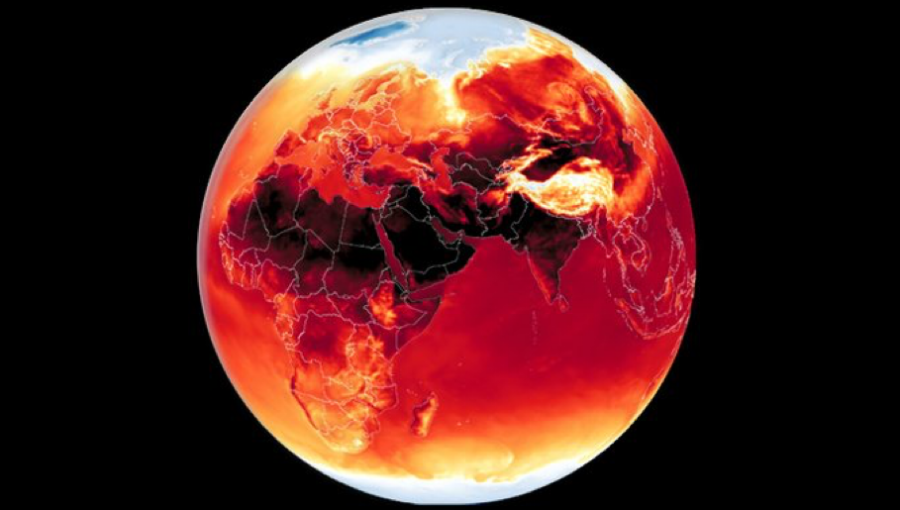
Rich nations new oil and gas approvals to breach 1.5°C Paris threshold locking in irreversible warming - study
The IEA has called for a halt to developing all new oil and gas projects if there is any hope of staying within the 1.5C temperature increase cap agreed in Paris. Five rich nations are ignoring the recommendation, making a disaster almost certain. / bne IntelliNews
By Ben Aris in Berlin December 23, 2025

A wave of new rich nations oil and gas extraction projects approved since 2022 will consume nearly one-fifth of the world’s remaining carbon budget for limiting global warming to 1.5°C, according to a new peer-reviewed study published in Environmental Research Letters on December 19. Just five nations are responsible for most of the gains with Trump’s America accounting for a third of the increases by itself.

The study, led by researchers at the Stockholm Environment Institute and Oil Change International, finds that fossil fuel projects approved in 2022 and 2023 alone could emit more than 24bn tonnes of CO₂ over their lifetimes—equivalent to 17% of the global carbon budget remaining as of 2023 if warming is to be kept below 1.5°C with a 50% probability.

“This analysis makes clear that governments are approving new fossil fuel extraction that is fundamentally incompatible with the Paris Agreement,” said Kelly Trout, co-author of the study and research director at Oil Change International. “This is not a marginal overshoot—it is a reckless gamble with the climate system.”

The research identifies five countries as responsible for the majority of post-2021 fossil fuel project approvals: the United States, Canada, Norway, the United Kingdom, and Qatar. Of these, the US alone accounts for nearly one-third of the projected emissions, led by the approval of major oil and gas expansions including the controversial Willow project in Alaska.

According to the International Energy Agency, no new oil and gas fields are needed beyond those already producing if the world is to reach net zero by 2050. Yet the new study shows that governments have continued to greenlight major developments that would lock in emissions for decades.

"These projects are long-lived, capital-intensive, and once started, are politically and economically difficult to stop," said Ploy Achakulwisut, a scientist at the Stockholm Environment Institute and co-author of the report.

The study calculates that if all approved projects go forward, global oil and gas extraction in 2030 will exceed levels aligned with a 1.5°C pathway by 35%, and by 19% in 2050. This expansion contrasts sharply with global climate commitments, including the COP28    agreement in Dubai, which called for a “transition away from fossil fuels.”

The researchers also emphasise that these new extraction projects contradict national climate pledges. All five countries highlighted in the report have made formal net-zero commitments, and four are members of the G7, which has publicly committed to climate leadership.

The report adds to growing pressure on governments to impose moratoriums on new fossil fuel approvals, which will almost certainly be ignored. "Approving new oil and gas in 2023 is like building new coal plants in 2020—economically risky and environmentally disastrous," said Peter Erickson, another co-author.

With global CO₂ emissions are already at all-time highs and continuing to rise, the Climate Crisis is accelerating. The IPCC says that the Paris Agreement goal of keeping temperature increases to less than 1.5°C-2°C  above the pre-industrial benchmark has already been missed and temperature increase are on course to reach a catastrophic 2.7C-3.1C by 2050. At that point extreme temperature events will become routine and large parts of the world will become uninhabitable.  

The study serves as yet another warning that climate ambitions are being undermined by investment decisions that carry irreversible consequences.

“Time is not on our side,” said Trout. “Every new approval widens the gap between rhetoric and reality.”

Fossil fuel expansion risks triggering AMOC collapse

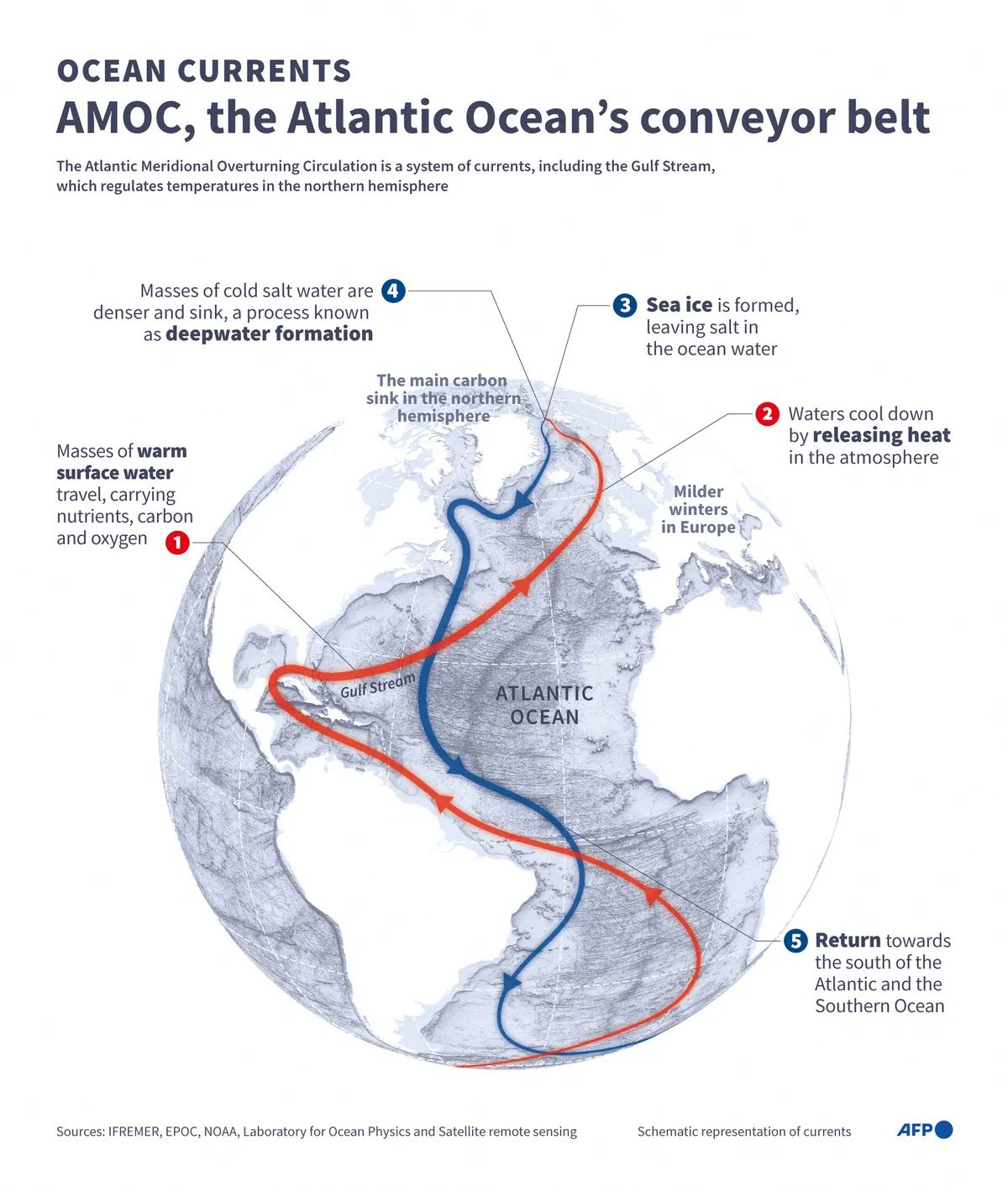
The study also highlights the growing danger of crossing irreversible climate tipping points, including the potential collapse of the Atlantic Meridional Overturning Circulation (AMOC)—a major ocean current system that regulates temperatures across the Northern Hemisphere.

The AMOC could collapse as early as mid-century, with some models projecting a breakdown between 2025 and 2095. That would trigger a mini-ice age in Europe where average winter temperatures would fall by 10°C to 30°C, accompanied by catastrophic global consequences, including intensified summertime heatwaves in Europe, disrupted monsoons in Africa and South Asia, and accelerated ice loss in the Arctic and Antarctica.

“New oil and gas projects increase the likelihood of breaching critical planetary boundaries, including the AMOC,” the authors write. They argue that by expanding fossil fuel extraction in defiance of the 1.5°C limit, governments are increasing the risk of triggering feedback loops that would amplify global warming and destabilise climate systems.

Those feedback loops are already kicking in with temperature currently rising faster than the worst case scenarios of all the climate models on which the Paris agreement targets are based.

Trout said: “The risks of passing irreversible climate tipping points are no longer theoretical—they are now part of the near-term outlook. Continuing to approve fossil fuel expansion is playing roulette with planetary systems.”

The warning follows multiple scientific assessments indicating that the window to avoid tipping points is narrowing rapidly, with carbon-intensive infrastructure locking in emissions through mid-century.
 COMMUNALIST VIOLENCE

India-Bangladesh ties worsen after lynching of Hindu garment worker

India-Bangladesh ties worsen after lynching of Hindu garment worker
On December 20, 2025, Chief Adviser Professor Muhammad Yunus attended the funeral of Sharif Osman Hadi at the National Parliament’s South Plaza / Chief Adviser of the Government of Bangladesh - X
By bno - Kolkata Office December 24, 2025

Relations between India and Bangladesh have deteriorated sharply following a wave of violent protests in Bangladesh and a lynching that has inflamed public opinion on both sides of the border, raising concerns that a once close bilateral relationship is entering a prolonged period of mistrust.

The immediate trigger has been the killing of Dipu Chandra Das, a 27-year-old Hindu garment worker in northern Bangladesh, who was beaten to death by a mob after allegations of blasphemy, the BBC reports. His death came amid wider unrest sparked by the murder of Sharif Osman Hadi, a prominent student leader, in Dhaka. Together, the two incidents have intensified communal tensions inside Bangladesh while fuelling political anger in India.

In India, Hindu nationalist groups have already staged protests condemning violence against Bangladesh’s Hindu minority. Across the border in Bangladesh, meanwhile, suspicions that a key suspect in Hadi’s killing may have fled to India have only served to reinforce long-standing narratives of Indian interference the BBC continues. While there has been no police confirmation to this end it has served to deepen anti-India sentiment in the Muslim-majority country.

The diplomatic fallout has been swift. Both the Bangladesh and Indian governments have suspended visa services in a number of cities. Both have also accused the other of a failure to protect diplomatic premises. Demonstrations outside missions in Delhi, Dhaka and Chittagong have prompted formal protests, with both sides summoning senior envoys to convey their concerns.

Underlying the latest crisis, however, are longer and much deeper-running grievances. Many Bangladeshis have resented India’s influence during the 15-year rule of Sheikh Hasina, who was deposed in August 2024, and is currently living in India – in the eyes of many in Bangladesh, protected by New Delhi. As a result, India’s refusal so far to return her, despite repeated requests from Dhaka, has become a focal point for political mobilisation and street protests.

Security forces in Bangladesh meanwhile have struggled to contain demonstrations targeting Indian diplomatic sites, while stone-throwing attacks and attempted marches have heightened tensions. In India, counter-rallies outside Bangladeshi missions have drawn sharp objections from Dhaka, adding to the sense of mutual suspicion.

The lynching of Das has thus further strained relations, particularly after graphic footage circulated widely online. Bangladesh’s interim administration, led by Nobel laureate Muhammad Yunus, has pledged accountability and confirmed multiple arrests. Yet analysts say the killing has renewed fears about the safety of minorities and civil society figures in a more permissive environment for religious hardliners since Hasina’s removal.

In recent months, radical Islamist groups have become more visible on the streets of Bangladesh, with reports of attacks on Hindu communities as well as vandalism of Sufi shrines, restrictions on women’s participation in sport and pressure on cultural activities. Media outlets and cultural institutions accused of being sympathetic towards or in some way linked to India have also been targeted, amplifying concerns about freedom of expression.

The BBC adds that human rights organisations have warned of a rise in mob violence over the past year, while critics argue that the interim government has struggled half-heartedly at times, to assert authority and maintain public order amid political uncertainty.

For India, the stakes are multiple in nature. Parliamentary assessments in Delhi have described developments in Bangladesh as the most serious challenge to Indian security interests since the 1971 war of independence, particularly given the importance of stability for India’s north-eastern states.

In Bangladesh, authorities are moving towards elections on February 12 , with Sheikh Hasina’s Awami League barred from contesting and the Bangladesh Nationalist Party expected to perform strongly. However, Islamist parties could complicate the political landscape, and there are fears that anti-India sentiment may be exploited in the run-up to the vote, risking further unrest.

Until then, both governments face pressure to prevent street-level anger from hardening into lasting hostility.


Global study to evaluate whether dengue outbreaks can be anticipated earlier


Southern Cross University

E-Dengue dashboard 

image: 

E-Dengue platform in use in real time.

view more 

Credit: TBC


Thousands of dengue forecasting models have been published, but few have been tested in real public-health settings. Now, researchers from the US and Australia are launching a field evaluation in Vietnam to see whether a new early-warning platform can support earlier interventions against a disease that WHO says puts nearly half the world’s population at risk. 

Southern Cross University (Aus) is leading the second phase of this multi-year collaboration, working alongside the University of Queensland (Aus), Yale University (USA) and Vietnam’s National Institute of Hygiene and Epidemiology. This phase has focused on translating predictive modelling into E-Dengue* – an open-source, user-friendly software system tailored for district-level decision-making. 

WATCH the E-Dengue video explainer. 

Southern Cross University researcher Dr Vinh Bui said the team’s priority has been creating a tool that frontline staff can use in real-world conditions. 

“There are thousands of published studies on dengue prediction models, but very few become tools that are practical for local teams,” said Dr Bui. 

“Our goal in this stage has been to build a tool that is reliable, actionable, fast and intuitive – something that supports, rather than complicates, routine public health work.” 

With the predictive models developed and the E-Dengue platform built, the project is now entering its most critical stage: integrating the tool into Vietnam’s routine dengue surveillance and beginning a large cluster randomised controlled trial to test whether earlier warnings lead to earlier action and fewer outbreaks.  

“We’ve built a tool with strong potential, but the critical test is ahead of us,” said Dr Bui  

“The next three years will tell us whether early warnings lead to earlier, better-targeted interventions – and whether this improves health outcomes.” 

Although interest in disease early-warning systems is growing, very few have been adopted into routine practice anywhere in the world. The research team says understanding why is just as important as building the technology. 

This work is guided by the project teams' recently published “Useful, Usable, Used (3U) Framework” in Nature Communications, which examines how digital prediction tools can move from innovation to real-world adoption. 

Yale University researcher Dr Robert Dubrow said the next stage of the collaboration will provide crucial evidence on whether early-warning systems can shift dengue control from a reactive to a proactive approach. 

“Our team at Yale has led the development of the predictive model underpinning the platform,” Dr Dubrow said. 

“We now look forward to working with our Vietnamese and Australian partners to rigorously evaluate whether early warnings change outcomes in practice.” 

Interest in the approach is emerging from neighbouring countries, including Thailand, Laos and Cambodia, where dengue risk is rising under climate and population pressures. 

Full deployment of the tool across selected districts in Vietnam’s Mekong Delta region will begin in early 2026. During 2026–2028, E-Dengue will be used in real public health decision-making while the research team conducts the randomised controlled trial and associated studies. 

“This is a challenging and complex process,” said University of Queensland Associate Professor Dung Phung. 

“Our long-term aim is to develop a tool that Vietnam’s Ministry of Health sees value in maintaining beyond the life of the project.” 

*Please note the link to the E-Dengue site shows a simulation of the platform.  


Aedes mosquito. This species can transmit diseases such as chikungunya, dengue, and Zika.

Credit

National Institute of Allergy and Infectious Diseases


MEDIA INVITATION TO VIRTUAL BRIEFING 

Media are invited to attend a virtual briefing on 18 December 2025 at 10.30am AEDT (Sydney, Australia), featuring the researchers leading the project. A recording of the briefing will be available following the event, and additional assets – including video and images – can be requested through the Southern Cross University media team at scumedia@scu.edu.au.  

Register to attend the virtual briefing at Webinar Registration - Zoom 

The E-Dengue platform is part of a Wellcome Trust –funded initiative focused on climate-informed disease preparedness. 


Rare earth elements – Of peptides and the origins of life


Two publications in Angewandte Chemie (“Applied Chemistry”)


Heinrich-Heine University Duesseldorf

Dr Sophie M. Gutenthaler-Tietze and Dr Jonathan Gutenthaler-Tietze 

image: 

Dr Sophie M. Gutenthaler-Tietze and Dr Jonathan Gutenthaler-Tietze are the lead authors of the two studies, which have now been published in the scientific journal Angewandte Chemie (“Applied Chemistry”). (Photos: HHU/Christoph Kawan; HHU/Sophie M. Gutenthaler-Tietze)

view more 

Credit: HHU/Christoph Kawan; HHU/Sophie M. Gutenthaler-Tietze


Elements from the group of rare earth metals are of great importance today, also in technical applications. The Bioinorganic Chemistry group at Heinrich Heine University Düsseldorf (HHU) is conducting diverse research into these elements. The group has now published two studies in the scientific journal Angewandte Chemie (“Applied Chemistry”). One examines peptides, which can bind these elements, while the other highlights the potential role of the elements in the origins of life.

The group of rare earth elements (REEs) comprises a total of 17 elements, all of which possess similar chemical properties. In addition to the two lightest elements, scandium and yttrium, the group also includes lanthanum, cerium and neodymium, as well as the radioactive promethium. The name of this group of elements is misleading as they are not rare on earth; rather, their deposits are distributed very unevenly worldwide, which makes them important in global political terms. REEs are needed for many high-tech applications – from smartphones and magnets (for example for wind turbines), to catalysts and optical components.

Among other topics, the Bioinorganic Chemistry group of Professor Dr Lena Daumann, is examining how organisms can absorb rare earth elements. The aim is to potentially use these processes technically to extract the elements or recycle them from old devices.

In the study “Reversing Lanmodulin’s Metal-Binding Sequence in Short Peptides Surprisingly Increases the Lanthanide Affinity”, Daumann’s team – in collaboration with the Helmholtz Centre Dresden-Rossendorf (HZDR) – is focusing on short-chain proteins (peptides) inspired by the REE-binding protein lanmodulin found in the bacterium Methylorubrum extorquens AM1. The new peptides synthesised in Düsseldorf display a strong binding affinity for this group of elements.

Dr Sophie M. Gutenthaler-Tietze, lead author of the study and postdoc at Daumann’s Institute: “The development of these short peptides actually originates from a synthesis error. We accidentally reversed the sequence of amino acids in the peptide compared with those in the natural protein lanmodulin. Interestingly, the peptides created in this way display an affinity for rare earth elements, which is one order of magnitude higher than their natural counterparts.”

Together with the colleagues from Dresden-Rossendorf, the researchers identified structural motifs, which are responsible for the high level of affinity. Daumann: “On this basis, we further optimised the affinity and were able to push it into the low nanomolar range. The examined peptides form an ideal basis for developing sustainable, bio-inspired recycling methods for rare earth elements. By reclaiming resources that have already been used, we are not only reducing the burden on the environment, but also increasing our raw material independence.”

The second study published in Angewandte Chemie, “Influence of Rare Earth Elements on Prebiotic Reaction Networks Resembling the Biologically Relevant Krebs Cycle”, focuses on an entirely different aspect of rare earth elements, namely their role in the emergence of the earliest life on earth. More than 3.5 billion years ago on the abiotic earth, small organic building blocks began to react with each other under the right conditions. They formed increasingly complex structures, the precursors of biological macromolecules. It is highly likely that metals such as iron played a key role in this process as catalysts. To date, however, there has hardly been any consideration of the possibility that rare earth elements might also have been important in this process.

Lead author Dr Jonathan Gutenthaler-Tietze: “For the first time, we systematically examined whether these elements facilitate reactions in a prebiotic scenario. And rare earth elements can in fact moderate key chemical reactions. Starting with glyoxylate and pyruvate, two simple organic acids seen as potential starting materials for early life, we identified seven of eleven intermediates of the biological ‘Krebs cycle’ in the presence of the rare earth elements.” The Krebs cycle is a central component of the energy metabolism of all living creatures. The reactions formed a complex network with numerous connections.

Daumann: “The ionic radii of rare earth elements are key to their reactivity. We also noted that even very small concentrations are already sufficient to have a significant influence on the reaction network. The results thus bring a previously underestimated group of elements into the focus of prebiotic research.”

Original publication

Sophie M. Gutenthaler-Tietze, Jerome Kretzschmar, Satoru Tsushima, Robin Steudtner, Björn Drobot, Lena J. Daumann; Reversing Lanmodulin’s Metal-Binding Sequence in Short Peptides Surprisingly Increases the Lanthanide Affinity; Angewandte Chemie International Edition, 64 (46), e202510453 (2025)

DOI: 10.1002/anie.202510453

Jonathan Gutenthaler-Tietze, Carolina G. Heßler, Lena J. Daumann; Influence of Rare Earth Elements on Prebiotic Reaction Networks Resembling the Biologically Relevant Krebs Cycle; Angewandte Chemie International Edition; e16853 (2025)

DOI: 10.1002/anie.202516853


Symbolic image for both publications on REE 

The group led by Professor Dr Lena Daumann has conducted research into two very different aspects of rare earth elements. In this illustration, the element symbols form the frame. The left-hand section shows the newly developed peptides that can bind REE very effectively. The right-hand section symbolises the question of what role REE may have played in the origin of life. (Fig.: HHU/Jonathan Gutenthaler-Tietze)

Credit

HHU/Jonathan Gutenthaler-Tietze