It’s possible that I shall make an ass of myself. But in that case one can always get out of it with a little dialectic. I have, of course, so worded my proposition as to be right either way (K.Marx, Letter to F.Engels on the Indian Mutiny)
Friday, December 26, 2025
US 'unchurching' marks the 'fastest religious shift in modern history'
Far-right Christian nationalists are feeling empowered during Donald Trump's second presidency. Idaho-based evangelical Christ Church, led by pastor Doug Wilson — who believes that women never should have been given the right to vote — is openly embraced by Defense Secretary Pete Hegseth. And Vice President JD Vance, speaking at Turning Point USA's recent AmericaFest 2025 convention in Phoenix, told the MAGA crowd that the United States "always will be a Christian nation."
Vance received an aggressive fact-check from MS NOW's Steve Benen, who attacked his statement as "offensive, ahistorical nonsense" and reminded him that President Thomas Jefferson described the U.S. Constitution's First Amendment as "a wall of separation between church and state" back in 1802.
But as much support as Christian nationalism is receiving within the MAGA movement, reporting by Axios' Russell Contreras describes a pattern of "unchurching" in the United States — with many Americans having either a secular outlook or embracing a milder version of Christianity.
"The U.S. is undergoing its fastest religious shift in modern history, marked by a rapid increase in the religiously unaffiliated and numerous church closures nationwide," Contreras explains in a post-Christmas article published on December 26. "Why it matters: The great unchurching of America comes as identity and reality are increasingly shaped by non-institutional spiritual sources — YouTube mystics, TikTok tarot, digital skeptics, folk saints and AI-generated prayer bots. It's a tectonic transformation that has profound implications for race, civic identity, political persuasion and the ability to govern a fracturing moral landscape."
Contreras continues, "By the numbers: Nearly three in 10 American adults today identify as religiously unaffiliated — a 33 percent jump since 2013, according to the nonpartisan Public Religion Research Institute (PRRI). That's quicker than almost any major religious shift in modern U.S. history, and it's happening across racial groups, an Axios analysis found…. The shift in religious activity also is leaving behind a trail of 'church graveyards,' or empty buildings that are now difficult to sell or have been abandoned."
The Axios reporter notes that according to Gallup, roughly 57 percent of Americans seldom or never attend religious services — an increase from 40 percent in 2000 — and that an "unprecedented 15,000 churches are expected to shut their doors this year" compared to only a "few thousand expected to open."
PRRI CEO Melissa Deckman told Axios that there is no evidence of a widespread religious revival.
"Despite anecdotal and media reports about Gen Z men returning to church," Contreras notes, "there's little evidence it's happening beyond scattered examples to reverse the overall decline, she said. The bottom line: The old religious map is disappearing."
Read Russell Contreras' full article for Axios at this link.
Trump exposed as a 'pirate' hell-bent on 'conquest and theft' in scathing analysis
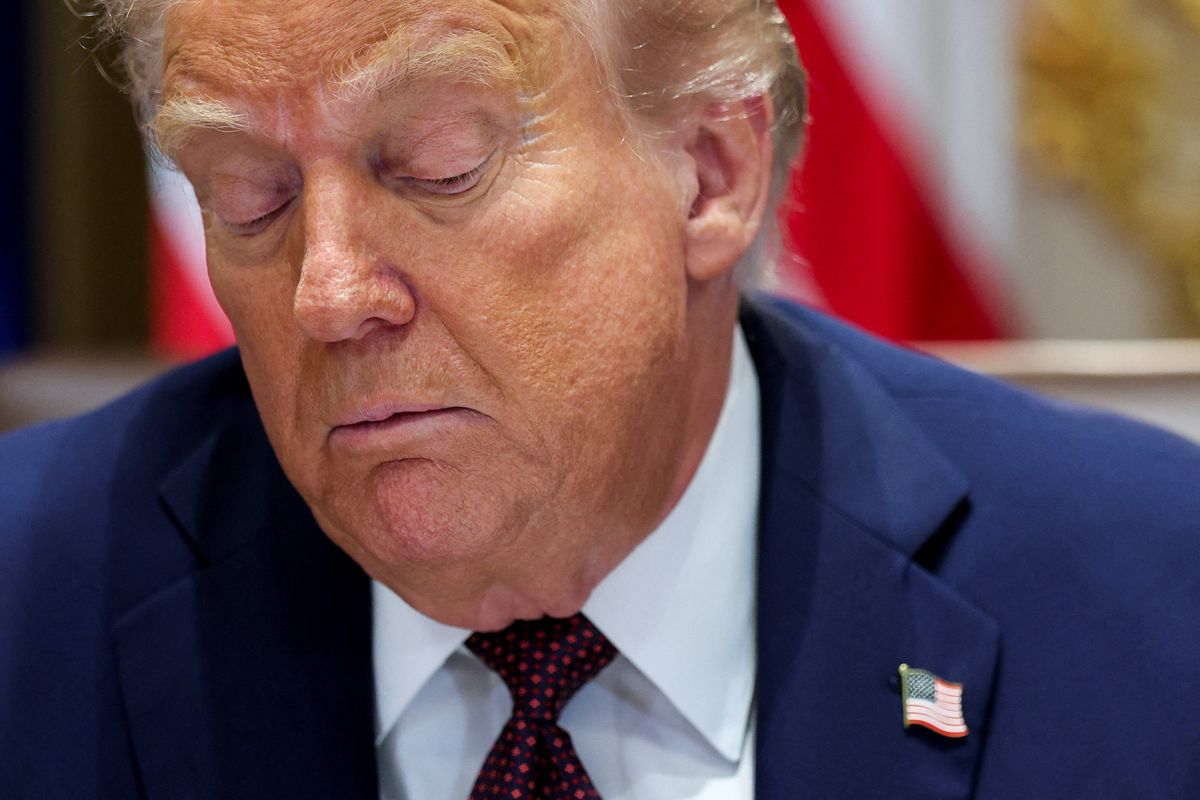
Will Saletan of The Bulwark wrote Friday that Trump is a "pirate" whose real agenda is "obvious" — and it's anything but peace, highlighting that just this week, Trump detailed plans to take over Greenland and seize Venezuelan oil.
"It’s extortion, conquest, and theft," wrote Saletan, who asserted Trump seems to view international relations through the same transactional lens he applies to domestic policy — everything is for sale, everything has a price, and might makes right.
"He slaps our allies with heavy tariffs, insisting that they 'pay for the privilege of access to our market.' He bails out Argentina, meddles in its election, and then brags that his candidate’s victory 'made a lot of money for the United States.' He bars immigrants from 'third world countries' and sells visas to multimillionaires instead," wrote Saletan.
Trump has also recently sung the praises of the spoils of war, bemoaning that the U.S. has recently won wars and simply left. Indeed, he has floated plans to redevelop war-torn Gaza into the "Riviera of the Middle East" and extracted a rare mineral earth deal from Ukraine.
"Like Vladimir Putin, Trump has concocted grievances to justify aggression against other nations," noted Saletan. That includes fabricating claims that Venezuela and Canada "stole" American assets to justify harsh tariffs and military posturing. Trump even rehashed a decades-old nationalization dispute to rationalize potentially seizing Venezuelan territory.
"This isn’t the foreign policy many of Trump’s voters wanted," Saletan concluded. "They thought 'America First' meant staying home. Instead, Trump has gone abroad to seize land and treasure. He’s a pirate. And being a pirate is all fun and games until somebody loses an island."
Chevron currently extract oil from four fields and offshore gas from another field in Venezuela - Copyright AFP Yuri CORTEZ
The US oil company Chevron is walking a tightrope amid tensions between Washington and Caracas to retain its fragile position as the only foreign company allowed to exploit Venezuela’s oil reserves —- the largest in the world.
Washington’s total blockade of oil tankers, added last week to punishing US sanctions, has put Chevron and its presence in Venezuela back in the spotlight.
– Why is Chevron in Venezuela? –
The Venezuelan Gulf Oil Company, Chevron’s predecessor in Venezuela, was founded in April 1923 and began operating its first well in August 1924.
Initially operating near Lake Maracaibo, it then moved on to new deposits such as Urumaco and Boscan. Most reserves are now in the Orinoco Belt.
Gulf Oil merged with Standard Oil of California in 1984, forming the giant now known as Chevron.
The group currently extracts oil from four fields and offshore gas from another field, covering a total area of nearly 30,000 hectares (115 square miles).
This is part of a partnership with the state-owned company PDVSA and its affiliates that employs around 3,000 people.
According to the International Energy Agency (IEA), in 2023, Venezuelan territory contained around 303 billion barrels, or about 17 percent of the world’s reserves.
The US embargo on Venezuelan crude oil, in place since 2019, was relaxed in 2023 with licenses to operate in the country.
But President Donald Trump revoked them all in the first half of 2025 before granting an exception to Chevron.
Yet, according to an industry expert, recent presidential decisions do not affect the group’s activities.
“We believe our presence continues to be a stabilizing force for the local economy, the region and US energy security,” the company told AFP, assuring that it operates in compliance with the law and “sanctions frameworks provided by the US government.”
Other foreign oil companies do not operate inside Venezuela because of the US embargo and a Venezuelan law that requires foreign firms to partner with PDVSA in majority state-owned ventures, a structure Chevron accepted when it was imposed.
– How many barrels? –
According to Stephen Schork, an analyst at the Schork Group consulting firm, Venezuela’s total production is around 800,000 to 900,000 barrels per day compared to more than 3 million at its peak.
With its license, Chevron generates around 10 percent of Venezuela’s production, although sources differ on the exact figure.
This currently represents around 150,000 to 200,000 barrels per day, 100 percent of which is exported to the United States.
But the oil is high-sulfur “sludge,” said Schork.
“It is heavy, nasty stuff. You can’t move this oil in a pipeline,” and it’s the hardest to refine, he explained.
Because of the embargo, Caracas is forced to sell its oil on the black market at heavy discounts, mainly to Asia.
But the new US blockade is expected to significantly reduce these illicit exports — by up to 50 percent according to experts.
– Does US need the oil? –
The United States has refineries around the Gulf of Mexico that were specifically designed decades ago to process this highly viscous Venezuelan oil.
Due to its lower quality, it is converted into diesel or by-products such as asphalt, rather than gasoline for cars.
“The United States does not need this oil,” noted Schork.
If they want it, he believes, it is for political reasons.
They want to “prevent the vacuum created by their departure from being filled by countries that do not share their values, such as China and Russia,” according to a source close to the matter.
US forces have launched dozens of deadly air strikes on boats that Washington alleges were transporting drugs - Copyright AFP Miguel J. Rodriguez Carrillo
Four United Nations rights experts on Wednesday condemned the US partial naval blockade of Venezuela, determining it illegal armed aggression and calling on the US Congress to intervene.
The United States has deployed a major military force in the Caribbean and has recently intercepted oil tankers as part of a naval blockade against Venezuelan vessels it considers to be under sanctions.
“There is no right to enforce unilateral sanctions through an armed blockade,” the UN experts said in a joint statement.
A blockade is a prohibited use of military force against another country under the UN Charter, they added.
“It is such a serious use of force that it is also expressly recognised as illegal armed aggression under the General Assembly’s 1974 Definition of Aggression,” they said.
“As such, it is an armed attack under article 51 of the Charter — in principle giving the victim state a right of self-defence.”
US President Donald Trump accuses Venezuela of using oil, the South American country’s main resource, to finance “narcoterrorism, human trafficking, murders, and kidnappings”.
Caracas denies any involvement in drug trafficking. It says Washington is seeking to overthrow its president, Nicolas Maduro, in order to seize Venezuelan oil reserves, the largest in the world.
Since September, US forces have launched dozens of air strikes on boats that Washington alleges, without showing evidence, were transporting drugs. More than 100 people have been killed.
– Congress should ‘intervene’ –
“These killings amount to violations of the right to life. They must be investigated and those responsible held accountable,” said the experts.
“Meanwhile, the US Congress should intervene to prevent further attacks and lift the blockade,” they added.
They called on countries to take measures to stop the blockade and illegal killings, and bring perpetrators justice.
The four who signed the joint statement are: Ben Saul, special rapporteur on protecting human rights while countering terrorism; George Katrougalos, the expert on promoting a democratic and equitable international order; development expert Surya Deva; and Gina Romero, who covers the right to freedom of peaceful assembly and association.
UN experts are independent figures mandated by the UN Human Rights Council to report their findings. They do not, therefore, speak for the United Nations itself.
On Tuesday at the UN in New York, Venezuela, having requested an emergency meeting of the Security Council, accused Washington of “the greatest extortion known in our history”.
Trump ‘Choosing From the War Crimes Menu’ With ‘Quarantine’ on Venezuela Oil Exports
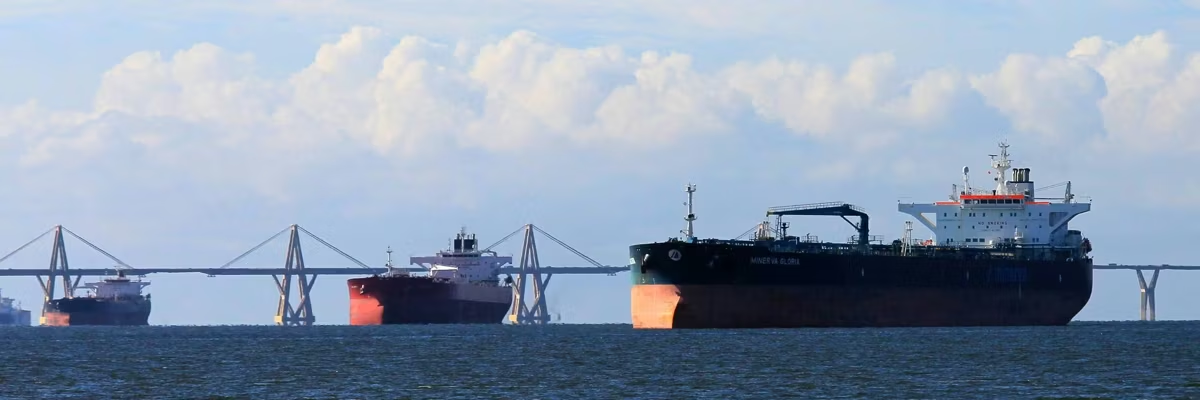
“Economic strangulation is warfare and civilians always pay the price,” lamented CodePink. Oil tankers are seen anchored in Lake Maracaibo, Venezuela on December 4, 2025. (Photo by José Bula Urrutia/UCG/Universal Images Group via Getty Images)
President Donald Trump has ordered US military forces to further escalate their aggression against Venezuela by enforcing a “quarantine” on the South American nation’s oil—by far its main export—in what one peace group called an attempted act of “economic strangulation.”
“While military options still exist, the focus is to first use economic pressure by enforcing sanctions to reach the outcome the White House is looking [for],” a US official, who spoke on condition of anonymity, told Reuters.
The move follows the deployment of an armada of US warships and thousands of troops to the region, threats to invade Venezuela, oil tanker seizures off the Venezuelan coast, Trump’s authorization of covert CIA action against the socialist government of Venezuelan President Nicolás Maduro, and airstrikes against boats allegedly running drugs in the Caribbean Sea and Pacific Ocean that have killed more than 100 people in what critics say are murders and likely war crimes.
“The efforts so far have put tremendous pressure on Maduro, and the belief is that by late January, Venezuela will be facing an economic calamity unless it agrees to make significant concessions to the US,” the official told Reuters.
The official’s use of the word “quarantine” evoked the 1962 Cuban Missile Crisis, an existential standoff that occurred after the John F. Kennedy administration imposed a naval blockade around Cuba to prevent Soviet nuclear missiles from being deployed on the island, even as the US was surrounding the Soviet Union with nuclear weapons.
“This is an illegal blockade,” the women-led peace group CodePink said in response to the Reuters report. “Calling it a ‘quarantine’ doesn’t change the reality. The US regime is using hunger as a weapon of war to force regime change in Venezuela. Economic strangulation is warfare and civilians always pay the price. The US is a regime of terror.”
Critics have also compared Trump’s aggression to the George W. Bush administration’s buildup to the invasion and occupation of Iraq, initially referred to as Operation Iraqi Liberation (OIL). But unlike Bush, Trump—who derided Bush for not seizing Iraq’s petroleum resources as spoils of war—has openly acknowledged his desire to take Venezuela’s oil.
“Maybe we will sell it, maybe we will keep it,” he Trump said on Monday. “Maybe we’ll use it in the strategic reserves. We’re keeping the ships also.”
On Wednesday, a panel of United Nations experts said that the US blockade and boat strikes constitute “illegal armed aggression” against Venezuela.
Multiple efforts by US lawmakers—mostly Democrats, but also a handful of anti-war Republicans—to pass a war powers resolution blocking the Trump administration from bombing boats or attacking Venezuela have failed.
The blockade and vessel seizures have paralyzed Venezuela’s oil exports. Ports are clogged with full tankers whose operators are fearful of entering international waters. Venezuela-bound tankers have also turned back for fear of seizure. Although Venezuelan military vessels are accompanying tankers, the escorts stop once the ships reach international waters.
According to the New York Times, Venezuela is considering putting armed troops aboard tankers bound for China, which, along with Russia, has pledged its support—but little more—for Caracas.
Trump Isn’t Planning to Invade Venezuela. He’s Planning Something Worse
Rather than launching a military invasion that would provoke public backlash and congressional scrutiny, Trump is doubling down on something more insidious.
A vendor counts Venezuelan bolivar banknotes at La Hoyada market in Caracas on December 23, 2025. (Photo by Federico Parra/AFP via Getty Images)
The loudest question in Washington right now is whether Donald Trump is going to invade Venezuela. The quieter, and far more dangerous, reality is this: he probably won’t. Not because he cares about Venezuelan lives, but because he has found a strategy that is cheaper, less politically risky at home, and infinitely more devastating: economic warfare.
Venezuela has already survived years of economic warfare. Despite two decades of sweeping US sanctions designed to strangle its economy, the country has found ways to adapt: oil has moved through alternative markets; communities have developed survival strategies; people have endured shortages and hardship with creativity and resilience. This endurance is precisely what the Trump administration is trying to break.
Rather than launching a military invasion that would provoke public backlash and congressional scrutiny, Trump is doubling down on something more insidious: total economic asphyxiation. By tightening restrictions on Venezuelan oil exports, its primary source of revenue, Trump’s administration is deliberately pushing the country toward a full-scale humanitarian collapse.
In recent months, US actions in the Caribbean Sea, including the harassment and interdiction of oil tankers linked to Venezuela, signal a shift from financial pressure to illegal maritime force. These operations have increasingly targeted Venezuela’s ability to move its own resources through international waters. Oil tankers have been delayed, seized, threatened with secondary sanctions, or forced to reroute under coercion. The objective is strangulation.
The freedom of navigation on the high seas is a cornerstone of international maritime law, enshrined in the UN Convention on the Law of the Sea. Unilateral interdiction of civilian commercial vessels, absent a UN Security Council mandate, violates the principle of sovereign equality and non-intervention. The extraterritorial enforcement of US sanctions, punishing third countries and private actors for engaging in lawful trade with Venezuela, has no legal basis. It is coercion, plain and simple. More importantly, the intent is collective punishment.
Trump’s calculation is brutally simple: make Venezuelans so miserable that they will rise up and overthrow Maduro.
By preventing Venezuela from exporting oil, which is the revenue that funds food imports, medicine, electricity, and public services, the Trump administration is knowingly engineering conditions of mass deprivation. Under international humanitarian law, collective punishment is prohibited precisely because it targets civilians as a means to achieve political ends. And if this continues, we will see horrific images: empty shelves, malnourished children, overwhelmed hospitals, people scavenging for food. Scenes that echo those coming out of Gaza, where siege and starvation have been normalized as weapons of war.
US actions will undoubtedly cause millions of Venezuelans to flee the country, likely seeking to travel to the United States, which they are told is safe for their families, full of economic opportunities, and security. . But Trump is sealing the US border, cutting off asylum pathways, and criminalizing migration. When people are starved, when economies are crushed, when daily life becomes unlivable, people move. Blocking Venezuelans from entering the United States while systematically destroying the conditions that allow them to survive at home means that neighboring countries like Colombia, Brazil, and Chile will be asked to absorb the human cost of Washington’s decisions. This is how empire outsources the damage. But these countries have their own economic woes, and mass displacement of Venezuelans will destabilize the entire region.
Venezuela is a test case. What is being refined now—economic siege without formal war, maritime coercion without declared blockade, starvation without bombs—is a blueprint. Any country that refuses compliance with Washington’s political and economic demands should be paying attention. This will be the map for 21st century regime change.
And this is how Trump can reassure the United States Congress that he is not “going to war” with Venezuela. He doesn’t need to. Economic strangulation carries none of the immediate political costs of a military intervention, even as it inflicts slow, widespread devastation. There are no body bags returning to US soil, no draft, no televised bombing campaigns. Just a steady erosion of life elsewhere.
Trump’s calculation is brutally simple: make Venezuelans so miserable that they will rise up and overthrow Maduro. That has been the same calculation behind US policy toward Cuba for six decades—and it has failed. Economic strangulation doesn’t bring democracy; it brings suffering. And even if, by some grim chance, it did succeed in toppling the government, the likely result would not be freedom but chaos—possibly a protracted civil war that could devastate the country, and the region, for decades.
Tomorrow, people in Venezuela will celebrate Christmas. Families will gather around the table to eat hallacas wrapped with care, slices of pan de jamón, and dulce de lechoza. They will share stories, dance to gaitas, and make a toast with Ponche Crema.
If we oppose war because it kills, we must also oppose sanctions that do the same, more quietly, more slowly, and with far less accountability.
But if this economic siege continues, if Venezuelan oil is fully cut off, if the country is denied the means to feed itself, if hunger is allowed to finish what bombs are no longer politically useful to accomplish, then this Christmas may be remembered as one of the last Venezuelans were able to celebrate in anything resembling normal life, at least in the near future.
Polls consistently show that nearly 70 percent of people in the United States oppose a military intervention in Venezuela. War is recognized for what it is: violent, destructive, unacceptable. But sanctions are treated differently. Many people believe they are a harmless alternative, a way to apply “pressure” without bloodshed.
That assumption is dangerously wrong. According to a comprehensive study in medical journal The Lancet, sanctions increase mortality at levels comparable to armed conflict, hitting children and the elderly first. Sanctions do not avoid civilian harm—they systematically produce it.
If we oppose war because it kills, we must also oppose sanctions that do the same, more quietly, more slowly, and with far less accountability. If we don’t act against economic warfare with the same urgency we reserve for bombs and invasions, then sanctions will remain the preferred weapon: politically convenient but equally deadly.
Our work is licensed under Creative Commons (CC BY-NC-ND 3.0). Feel free to republish and share widely.
Michelle Ellner Michelle Ellner is a Latin America campaign coordinator of CODEPINK. She was born in Venezuela and holds a bachelor’s degree in languages and international affairs from the University La Sorbonne Paris IV, in Paris. After graduating, she worked for an international scholarship program out of offices in Caracas and Paris and was sent to Haiti, Cuba, The Gambia, and other countries for the purpose of evaluating and selecting applicants. Full Bio >
SPACE / COSMOS
Meet the remarkable nebula shaped like a Christmas tree
Arrayed with a simple triangular outline above S Monocerotis, the stars of NGC 2264 are popularly known as the Christmas Tree star cluster. Image Credit & Copyright: Michael Kalika, NASA (with permission).
To mark the Christmas period, astronomers from NASA have drawn attention to a spectacular region of space that looks remarkably like a glowing Christmas tree (in the shape of a Nordic tree and lit with merry lights).
Known as NGC 2264, this distant star-forming region sits about 2,700 light-years away and is filled with newborn stars lighting up clouds of gas and dust. The stars form a triangular shape called the Christmas Tree cluster, crowned by the dramatic Cone Nebula and wrapped in the swirling Fox Fur Nebula below.
This region, the constellation Monoceros, is positioned near the celestial equator and close to the flat disk of the Milky Way, which makes it visible from many locations on Earth during certain seasons. The binary star system A0620-00 in the constellation of Monoceros is at a distance of roughly 3,300 light-years (1,000 parsecs) away.
The combination of these features creates a festive cosmic scene spanning nearly 80 light-years, showing how young stars shape their surroundings on a truly galactic scale. Why does the image resemble a Christmas tree?
The scene, as captured in the iages, is filled with enormous clouds of interstellar gas and dust, the raw ingredients needed to form stars. As young stars ignite within these clouds, they release intense energy that causes the surrounding hydrogen gas to glow red.
These glowing regions are known as emission nebulae. An emission nebula is a nebula formed of ionized gases that emit light of various wavelengths. Here, the most common source of ionization is high-energy ultraviolet photons emitted from a nearby hot star.
Dark dust clouds thread through the area as well, blocking light from stars behind them and creating dramatic shadows. In places where this dust lies close to hot, newly formed stars, it reflects their light instead of absorbing it, producing soft blue regions called reflection nebulae.
Describing the Christmas Tree
In a research note, the scientists behind the observation state: “Near the center of NGC 2264 is S Monocerotis, a bright variable star whose brightness changes over time. This star is surrounded by a noticeable blue glow caused by reflected starlight from nearby dust. Above S Monocerotis, a group of young stars forms a simple triangular pattern. Because of this distinctive shape, the cluster has become widely known as the Christmas Tree star cluster.”
At the top of this star filled scene sits the Cone Nebula, a tall structure of gas and dust shaped by powerful radiation from nearby young stars. Beneath it spreads a tangled and glowing cloud called the Fox Fur Nebula, named for its textured, fur like appearance. These features are constantly being reshaped as energetic starlight pushes and sculpts the surrounding material.
The Cone Nebula spans about 7 light-years and is mainly composed of molecular hydrogen gas and interstellar dust. The Christmas Tree Cluster contains more than 600 young stars, some of which are spectral types O and B that emit intense ultraviolet radiation. This radiation interacts with the surrounding molecular cloud, causing photo-ionization of the gas and the formation of an H II region.
Asteroid mining: The next big thing for space missions?
This is a colored view of the C-type asteroid 162173 Ryugu, seen by the ONC-T camera on board of Hayabusa2. Source - ISAS/JAXA, CC SA 4.0.
Scientists are assessing the makeup of carbon-rich asteroids to see whether they could one day fuel space exploration—or even be mined for valuable resources. For long duration missions to the Moon and Mars, using materials found in space could significantly reduce the need for supplies launched from Earth. However, improved identification and classification is required to track asteroids altered by water and rich in water bearing minerals.
What are asteroids really made of? New analysis brings space mining closer to reality.
By analysing rare meteorites that naturally fall to Earth, researchers have uncovered clues about the chemistry, history, and potential usefulness of these ancient space rocks. While large-scale asteroid mining is still far off, the study highlights specific asteroid types that may be promising targets, especially for water extraction.
The research team is led by the Institute of Space Sciences (ICE-CSIC) and here scientists examined samples linked to C-type asteroids, carbon rich objects that are believed to be the original sources of carbonaceous chondrites.
C-type asteroids are the most common type, making up about 75% of all known asteroids in the solar system. Their composition includes carbon compounds, silicate minerals, water, and organic materials.
Carbonaceous chondrites arrive on Earth naturally, but they account for only about 5% of all meteorite falls. Many are extremely fragile and break apart before they can be recovered, which makes them especially rare. When they are found, it is often in desert environments such as the Sahara or Antarctica, where preservation conditions are favourable
.
Asteroid 2010 TK7 is circled in green, in this single frame taken by NASA’s Wide-field Infrared Survey Explorer, or WISE. The majority of the other dots are stars or galaxies far beyond our solar system. This image was taken in infrared light at a wavelength of 4.6 microns in Oct. 2010. Source – NASA/JPL-Caltech/UCLA. Public Domain
Digging into the research data
The ICE-CSIC team selected and carefully characterized asteroid related samples before sending them for detailed chemical analysis. The measurements were performed using mass spectrometry at the University of Castilla-La Mancha. This work allowed the researchers to determine the precise chemical make-up of the six most common types of carbonaceous chondrites and assess whether extracting materials from their parent asteroids could one day be practical.
The Asteroids, Comets, and Meteorites research group at ICE-CSIC has spent more than a decade studying the physical and chemical properties of asteroid and comet surfaces.
While many small asteroids are covered in loose surface material known as regolith, collecting small samples is very different from extracting resources at scale.
Regolith is a blanket of unconsolidated, loose, heterogeneous superficial deposits covering solid rock.
The results arguably strengthen the case that these asteroids could serve as important material reservoirs. The findings also help scientists identify where these meteorites came from and support planning for future space missions and resource extraction technologies.
While asteroids contain other minerals of interest, most asteroids only have relatively small abundances of precious elements, and therefore the objective of the research has also been to understand to what extent their extraction would be viable for a government or commercial operation.
Need for classification
The main asteroid belt contains an enormous range of objects, and understanding what resources they hold requires careful classification. Asteroid composition varies widely due to their long and complex histories, influenced by their evolutionary history, particularly collisions and close approaches to the Sun. Certain asteroids, from which hydrated carbonaceous chondrites originate, will have fewer metals in their native state, but they contain water, meaning that different asteroids will provide different benefits for future space explorers and space miners.
Overall, given current technology and costs, the researchers are of the view that mining undifferentiated asteroids — the primordial remnants of the solar system’s formation, considered the progenitor bodies of chondritic meteorites — remains impractical for now. However, with an improved classification system and identification, a future state will be to pinpoint very specific asteroids of economic or practical significance.
Mining: Future political debate
Asteroids are not subject to national appropriation according to the Outer Space Treaty. Whether they are owned by no one or by all of humanity under common heritage is still a matter of legal debate.
The findings appear in the journal Monthly Notices of the Royal Astronomical Society, titled “Assessing the metal and rare earth element mining potential of undifferentiated asteroids through the study of carbonaceous chondrites.”
Modeling of electrostatic and contact interaction between low-velocity lunar dust and spacecraft
Fig. 1. A diagram illustrating the phenomenon of charged dust particles being attracted or repulsed to the charged spacecraft on the lunar surface. Background image republished from ESA-ATG.
In a research article recently published in Space: Science & Technology, scholars from Beijing Institute of Technology, China Academy of Space Technology, and Chinese Academy of Sciences together propose a theoretical model aimed at comprehensively analyzing the dynamics of adhesion and escape phenomena occurring during low-velocity impacts between charged dust particles and spacecrafts enveloped by a plasma sheath which serves as a crucial step toward understanding the mechanism of lunar dust pollution.
First, the model of electrostatic force is demonstrated. As depicted in Fig. 1, dominated by the photoelectron effect induced by solar ultraviolet and x-ray radiation, the spacecraft and lunar regolith on lunar dayside typically charge positive. As a result, a photoelectron sheath forms above the surface. On the nightside, the spacecraft and regolith usually are negatively charged since the collection of plasma electrons. Due to the higher average thermal velocity of electrons compared to ions, a Debye sheath consequently forms around the vehicle. Besides, the exposure to the solar wind, the lunar plasma wake, and plasma in the magnetotail lobes and plasma sheet also electrically charges the spacecraft and regolith. This study only focuses on the interaction between charged particles and spacecraft within the confines of the plasma sheath, while the interaction between dust with plasma can be safely neglected. Considering the significant difference in size between the vehicle and the dust particle, the vehicle can be assumed as an infinite conducting plane coated with a dielectric layer, as depicted in Fig. 2. A dielectric dust particle, characterized by its radius Rp, uniform surface charge density σp, and permittivity εp, is positioned at a distance d above the surface. The distance between the surface of the coating and the shell is triple the Debye length (Rd) of plasma sheath. The potential of the shell is denoted by κ and is usually defined as the reference potential. The decay of potential in the sheath follows an exponential pattern. Hence, the distribution of the electric potential field within the plasma sheath can be expressed as: φ0 = κ exp[-(z-3Rd)/Rd], E0 = κ/Rd·exp[-(z-3Rd)/Rd], 0 ≤ z ≤ 3Rd. The electrostatic force FE is composed of 3 components: electric field force FEF, dielectrophoretic force FD, and image force FI, i.e., FE = FEF + FD + FI. The expression for FEF can be given by E0 with x = 0, y = 0, z = d + Rp multiplying the free charge Qp carried by the particle. FD is expressed using dyadic tensor notation. The multipole image force FI that acts on the induced multipole moments can be mathematically expressed considering the distance between the source point and the field point.
Then, the model of adhesive–elastic–plastic collision is demonstrated. In the present study, although lunar dust particles have extremely small size, irregular shape, and high hardness, they can be equivalently simplified to a spherical particle according to the conservation of normal contact force. The spacecraft coating consists of a Kapton layer. According to a dimensionless discriminant parameter μT, the commonly acknowledged JKR model which is useful for the analysis of collisions involving soft materials characterized by high interface energy can be utilized to describe the adhesive behavior of dust particles in this study. Additionally, in the context of low-velocity collisions, it is crucial to consider the energy dissipation caused by the plastic deformation of the coating. Based on the Thornton’s adhesive–elastic–plastic model, in which the adhesive energy dissipation is described by the JKR model, the process of low-speed collision can be divided into 3 distinct stages: the adhesive–elastic loading stage, the adhesive–elastic–plastic loading stage, and the adhesive–elastic unloading stage. Figure 3 depicts the distribution of contact stress between the dust and coating, referred to as p(r), throughout the various stages. In the adhesive–elastic loading stage (see Fig. 3A), the relationship between the JKR pressure distribution p(r), the relative compression δ, and the contact force P1 in the first stage can be mathematically expressed as
As illustrated in Fig. 3B, during the adhesive–elastic–plastic loading stage, the normal contact force P2 is formulated and simplified as
In the unloading stage (see Fig. 3C), the correlation between the contact force P3 and the contact radius a continues to closely adhere to the JKR model with an irrecoverable displacement δp:
Finally, results and discussion are presented. As for electrostatic force, that a dielectric coating with a high thickness and low permittivity can effectively reduce the electrostatic force between charged dust and spacecraft can be inferred from the variation in the electrostatic force FE between the charged particle and the coated ground plane. Figure 5 illustrates the variation in the theoretical and simulated electrostatic force between the charged particle and the coated ground plane, considering various important parameters of the particle. It can be summarized that for dimensionless distance d/Rp ≥ 1 the electrostatic force between a charged particle and a coated ground plane can be approximated as F ≈ KRp2σp2 / (1 + d/Rp)2. Besides, results also show that the surface charge density plays a more significant role than the spacecraft potential. In the context of low-velocity collisions, a larger size of particle results in a higher maximum coefficient of restitution. The adhesive van der Waals force rather than electrostatic attraction force predominantly influences the adhesion of lunar dust during the low-velocity collision process, if the surface charge density σp is below 0.1 mC/m2. It can be inferred that the low-interface-energy coating, which can be created by employing low-surface-energy material and increasing the surface roughness, is effective to decrease the difficulty of dust removal. When it comes to the interaction between low-velocity charged particle and spacecraft, it is important to acknowledge that the final adhesion of particles to the spacecraft is not solely determined by the initial collision. Adhesion to the surface occurs only when the initial velocity of a negatively charged particle is within the range of the critical adhesion and escape velocities. At last, the conclusion is drawn that the theory presented in this study offers a framework for investigating various issues pertaining to the accumulation of charged dust particles. It can be applied to analyze phenomena such as dust deposition in electrostatic precipitators and the adhesion of energetic powder to mixer walls and serves as a basis for predicting and mitigating dust adhesion. Future research will focus on the integration of irregular shapes of dust, the plasma environment, and solar radiation effect into the interaction model.
Fig. 2. Geometric representation of a charged dust particle positioned above a spacecraft surface with a coating layer.
Fig. 3. Schematic representation of particle-coating collision. (A) Adhesive–elastic loading stage, (B) adhesive–elastic–plastic loading stage, and (C) adhesive–elastic unloading stage.
Fig. 5. Electrostatic forceFEexpressed as a function of 3 variables: (A) the dimensionless separation distanced/Rp, (B) the particle radiusRp, and (C) the surface charge densityσp. The theoretical results are represented by solid lines, and the simulated values are represented by dots.
People crowd the beach in Valencia on July 5, 2024 - Copyright AFP ERNESTO BENAVIDES
Microbiologists studying thousands of rats discovered that gut bacteria are shaped by both personal genetics and the genetics of social partners. The research shows how genes promote certain microbes that can spread between individuals living together.
When researchers accounted for this ‘social sharing’, genetic influence on the microbiome turned out to be much stronger than previously thought. The study suggests genes can affect others indirectly, without DNA ever being exchanged.
Genes shape the gut microbiome and researchers found that it is not just our own genes that matter.
In essence, the findings point to a new way genetics and social interactions are connected. Certain commensal gut microbes can move between individuals through close contact.
While genes themselves stay put, microbes do not. The study showed that some genes promote the growth of specific gut bacteria, and those bacteria can spread socially. Why the gut microbiome matters
The gut microbiome consists of trillions of microorganisms living in the digestive tract. These organisms play important roles in digestion and overall health. Diet and medications are known to strongly influence these microbial communities, but understanding how genetics contributes has been far more challenging. Social interaction
Genes can shape diet and lifestyle choices, which then influence the gut microbiome. At the same time, families and friends often share food, living spaces, and microbes, making it hard to separate nature from nurture. Animal models
The researchers used rats for their research since rats share many key aspects of mammalian biology and can be raised under tightly controlled conditions, including identical diets.
Each rat in the study was genetically unique and belonged to one of four separate cohorts. These cohorts were housed at different facilities across the United States and followed different care routines, allowing researchers to test whether genetic effects remained consistent across environments.
The strongest association involved the gene St6galnac1, which adds sugar molecules to the mucus lining of the gut. This gene was linked to higher levels of Paraprevotella, a bacterium believed to feed on these sugars. This connection appeared in every cohort.
Paraprevotella is a Gram-negative, non-spore-forming, pleomorphic and anaerobic genus of bacteria.
There is a possible link to IgA nephropathy, an autoimmune kidney disease. The bacterium Paraprevotella may alter the immunoglobulin IgA, an antibody that normally protects the gut. When altered, IgA can leak into the bloodstream and form clumps that damage the kidneys, which is a defining feature of IgA nephropathy.
A second genetic region included several mucin genes that help form the gut’s protective mucus layer and was associated with bacteria from the Firmicutes group. A third region contained the Pip gene, which produces an antibacterial molecule, and was linked to bacteria from the Muribaculaceae family. These bacteria are common in rodents and are also found in humans
.Bacteriologist taking a bacterial culture from a Petri dish. Image: Tim Sandle Key findings
The researchers developed a computational model to separate the influence of a rat’s own genes on its gut microbes from the influence of its social partners.
The scientists found that the abundance of some Muribaculaceae bacteria was shaped by both direct and indirect genetic influences. This indicates that certain genetic effects can spread socially through the exchange of microbes.
Muribaculaceae are major utilisers of mucus-derived monosaccharides in the gut. Research significance
The large size of the study allowed researchers to estimate how much of a rat’s microbiome was shaped by its own genes versus the genes of the rats it lived with.
A familiar example of this concept, known as indirect genetic effects, occurs when a mother’s genes influence her offspring’s growth or immune system through the environment she provides.
What the research points to is that genetic effects from one individual can spread through social groups by way of gut microbes, changing the biology of others without altering their DNA. This means we need to consider how genes shape not only an individual’s disease risk, but also the disease risk of people around them.
The research appears in the journal Nature Communications, titled “Genetic architecture and mechanisms of host-microbiome interactions from a multi-cohort analysis of outbred laboratory rats”.








 Bacteriologist taking a bacterial culture from a Petri dish. Image: Tim Sandle