Saturday, December 27, 2025

Paul Le Blanc on Russia’s 1917 Revolution and the problems of socialist organization

July Days Petrograd Russia 1917

“Russia’s 1917 Revolution: Problems of Socialist Organization,” by Paul Le Blanc, is the text (with sources added) of a December 4, 2025 presentation kicking off the third installment of Solidarity’s online study group dealing with “Problems of Socialist Organization.” It is reprinted with permission from both the author and Solidarity and, as such, appearing simultaneously on LINKS and Communis.

Russia’s revolution of 1917 resulted from the blend of terrible catastrophes and profound hopes. The First World War was going very badly for the Tsar’s army and for the Russian people, adding new grievances to old, and generating a new wave of working-class radicalization. The tsarist system of oppressive absolute monarchy was beginning to collapse as expanding catastrophes overtook Russian society. Historian Roy Medvedev noted: “By drafting millions of peasants and workers into the army and training them to handle weapons, the tsarist regime, without intending to, provided military and technical training […] The likely allies of the working class, the peasants, were armed and organized in military garrisons in every major city, with especially large garrisons in Moscow and Petrograd.” (Medvedev, 42-4.)

Journalist-historian William Henry Chamberlin once commented: “the collapse of the Romanov autocracy in March 1917 was one of the most leaderless, spontaneous, anonymous revolutions of all time.” (Chamberlin, vol. 1, 73.) This is both true and false — a paradox shedding light on the role of the revolutionary party. The deepening exasperation with the old system spreading throughout Russian society was compounded by war-weariness and despair. The only hope for a better life seemed to be in some kind of radical social change. Such moods and beliefs — “spontaneously” generated by objective conditions — were certainly the source of the uprising, but the revolutionary parties played an essential role in offering coherent conceptual alternatives to the status quo.

Protest actions were organized by such activists, including on the socialist-inspired holiday, International Women’s Day of March 8, 1917 (February 23, according to the old Russian calendar). In earlier years, there had traditionally been a relative political “backwardness” and passivity among unskilled workers — such as female textile workers — in contrast to the militant activism of the “conscious workers” among the more skilled laboring strata, such as those predominating in the heavily Bolshevik-influenced metal trades. Now it was metalworkers who were inspired to take to the streets in response to the appeals of militant textile workers, women of the factory districts on International Women’s Day chanting “Down with the war! Down with high prices! Down with hunger! Bread for the workers!”

On the following day demonstrations and strikes spread throughout Petrograd, with a proliferation of anti-war and anti-government banners. The military units of the city for the most part refused to take action against the insurgents, and in some cases even joined them. This appeal was issued by an on-the-ground united front:

We Bolsheviks, Menshevik SDs [Social Democrats], and SRs [Socialist-Revolutionaries] summon the proletariat of Petersburg and all Russia to organization and feverish mobilization of our forces. Comrades! In the factories organize illegal strike committees. Link one district to another. Organize collections for the illegal press and for arms. Prepare yourselves, comrades. The hour of decisive struggle is nearing! (Melancon, 22.)

Days of street fighting saw the police take the offensive, fire into the crowds, and then be routed as the workers fought back with growing confidence. As a general strike paralyzed the city, the overwhelming majority of the working class seemed alive with enthusiasm for revolutionary change. Increasingly, masses of soldiers, mostly peasants, joined with the workers. Historian Michael Melancon has emphasized the interplay between the socialist groups and radicalized working-class layers that were coming into the streets, noting: “Direct and organized socialist involvement and intervention occurred at every single stage.” (Melancon, 35; also see Mandel.)

The 1917 reports from knowledgeable New York Tribune foreign correspondent Isaac Don Levine give a sense of the events. While the “mainstream” politicians reared back in fear (with prominent liberal Pavel Miliukov predicting “the revolution will be crushed in fifteen minutes” by tsarist troops), Levine reports on “the leaders of the socialistic, revolutionary, and labor elements organized for a general attack . . . against the old regime.” Their democratic councils (soviets) mobilized “a revolutionary army, composed of soldiers, armed students, and workers. Red flags were now waving in the air everywhere, and, singing the songs of freedom and revolution, the masses continued their victorious fight. The leaders of the movement commandeered every motorcar they could get, armed it with a machine-gun and a gun crew, and set it free to tour the city and round up agents of the Government.” (Levine, 220, 225)

The revolution was triumphant. Traditional liberal and conservative politicians, with support from moderate socialists, hastily composed a Provisional Government, but its power was limited. “It was the workmen and soldiers that actually fought and shed their blood for the freedom of Russia,” Levine reported at the time. The politicians “took a hand in the situation only after the revolution had achieved its main success.” (Levine, 227.)

Levine explained to his readers that the gulf between the Provisional Government and the workers’ councils “is as wide as between the United States Government and socialism. Only such an upheaval as the revolution could have bridged this chasm between the two extremes.” While the Provisional Government “represents . . . business and commerce,” he noted, “the ultimate aim of the Workmen’s Council is social revolution. To achieve this revolution it is necessary to de-throne the political autocrats first, they say. Then the capitalistic system must be attacked by the working classes of all nations as their common enemy.” (Levine, 271.) This was in June 1917.

When he returned to Russia from revolutionary exile, Lenin came into conflict with some comrades in the leading circles of the Bolshevik party, as highlighted in his April Theses.

The theses asserted that Russia was “passing from the first stage of the revolution which … placed power in the hands of the bourgeoisie to its second stage, which must place power in the hands of the proletariat and the poorest sections of the peasants.” The Provisional Government was, he said, a “government of capitalists, those worst enemies of peace and socialism.” Instead, the theses insisted, the Soviets of Workers’ Deputies (or Soviets of Workers’, Agricultural Laborers’ and Peasants’ Deputies) “are the only possible form of revolutionary government.” There should not be a parliamentary republic, but instead a soviet republic “throughout the country, from top to bottom.” The theses called for the abolition of the police, the army and the bureaucracy – Lenin believed the organized workers and peasants should take over the functions of these entities, with “salaries of all officials, all of whom are elective and displaceable at any time, not to exceed the average wage of a competent worker.” The theses also emphasized that “it is not our immediate task to ‘introduce’ socialism, but only to bring social production and the distribution of products at once under the control of the Soviets of Workers’ Deputies.” (Lenin in Žižek, ed., 56-61.)

But Mensheviks and SRs were in control of the soviets. The Bolsheviks had not yet recovered the hegemony they had gained in the workers’ movement before the wartime repression of 1914. Despite growing frustration with the Provisional Government, the moderate socialist leaders insisted the soviets should support the Provisional Government to help establish a capitalist democracy, which they saw as a lengthy but necessary prelude to socialist transition.

Alexander Kerensky, on the periphery of the SRs, had put himself forward as a bridge between the soviets and the Provisional Government. He was ultimately selected by others in the Provisional Government as President. Though many believed Kerensky was destined to build a democratic Russia, those who knew him well had doubts. “In Kerensky everything was illogical, contradictory, changing, often capricious, imagined, or feigned,” wrote SR leader Victor Chernov, Kerensky’s minister of agriculture. He added: “Kerensky was tormented by the need to believe in himself and was always winning or losing that faith.” (Chernov, 174.)

While still claiming to represent the soviets’ interests within the Provisional Government, Kerensky began to side with other establishment politicians against the councils, which were undermining his government’s authority. More and more frustrated workers were joining the Bolsheviks — even the SR and Menshevik left wings found Bolshevik arguments convincing. The brilliant maverick Leon Trotsky was only the most famous of many Bolshevik recruits.

The popular aspirations animating the February Revolution had been peace, bread, and land: an end to the mass slaughter of Russians in the imperialist war; the end of bread shortages caused by the impact of the war; and sweeping reforms to transfer land from the thin layer of aristocrats to the masses of land-hungry peasants. The Provisional Government balked at all these aspirations, and it was especially committed to continuing the war effort.

A crescendo of working-class anger in July culminated in a revolutionary demonstration. Militants in Petrograd, not under party control but with Bolshevik support, initiated what verged on a spontaneous uprising. The ensuing violence gave the government a pretext for large-scale repression. As Left SR Isaac Steinberg recounted, “troops of officers, students, Cossacks came out on the streets, searched passers-by for weapons and evidence of ‘Bolshevism,’ committed atrocities.” (Steinberg, 174.)

In the wake of “the July Days” (as this upheaval came to be known), Kerensky appointed right-wing general Lavr Kornilov commander-in-chief of the Russian army. Both hoped to counter the pressure from “unreasonable” workers, who were setting up factory committees to take control of workplaces and organizing their own “red guard” paramilitary groups to maintain public order and protect the revolution against reactionary violence. Kerensky found such radicalism disturbing, but right-wingers like General Kornilov thought moderates like Kerensky were just as distasteful. Traditional politicians — liberals as well as conservatives — began viewing military dictatorship as the only way to stabilize the nation. As Kornilov put it: “the spineless weaklings who form the Provisional Government will be swept away […] It is time to put an end to all of this. It is time to hang the German spies led by Lenin, to break up the Soviet, and to break it up in such a way that it will never meet again anywhere!” (Kerensky, 368.)

Prominent Menshevik Raphael Abramovitch recalled: “The news of Kornilov’s revolt electrified the nation, and especially the left. The Soviets and their affiliated organizations, the railroad workers and some sections of the army, declared themselves ready to resist Kornilov by force if necessary.” Another Menshevik eyewitness, N. N. Sukhanov, noted the Bolsheviks had “the only organization that was large, welded together by an elementary discipline, and linked with the democratic lowest levels of the capital.” He emphasized: “The masses, insofar as they were organized, were organized by the Bolsheviks.” (Abramovitch, 63; Sukhanov, 505.)

Working-class insurgents still identified with a variety of socialist currents, but as Abramovitch explained, “the threat of a counterrevolutionary revolt roused and united the entire left, including the Bolsheviks, who still exerted considerable influence in the Soviets. It seemed impossible to reject their offers of co-operation at such a dangerous moment.” (Abramovitch, 64.)

The Bolsheviks won immense authority in the soviets and greater support from workers in general. Trotsky, who helped manage these practical efforts and became president of the Petrograd Soviet, later recalled: “The Bolsheviks were in the front ranks; they smashed down the barriers blocking them from the Menshevik workers and especially from the Social Revolutionary soldiers, and carried them along in their wake.” (Trotsky, 1970, 185.)

The right-wing military offensive disintegrated before it could reach Petrograd. “The hundreds of agitators — workers, soldiers, members of the Soviets — who infiltrated Kornilov’s camp … encountered little resistance,” wrote Abramovitch. (Abramovitch, 63-4.) Kornilov’s troops responded to the Bolshevik, SR, and left-Menshevik agitators’ appeals by turning against their officers and rallying to the soviets.

In the wake of Kornilov’s failed coup, the Bolsheviks won decisive majorities in the soviets and secured overwhelming support among the working class as a whole. A majority of the SR party split to the Left, as did a significant Menshevik current, aligning with Lenin and Trotsky. This united front set the stage for revolutionary triumph in October. A majority was won for the demands: “Down with the Provisional Government, All Power to the Soviets!” Eyewitness John Reed offered this judgment:

Not by compromise with the propertied classes, or with the other political leaders; not by conciliating the old Government mechanism, did the Bolsheviks conquer the power. Nor by the organized violence of a small clique. If the masses all over Russia had not been ready for insurrection it must have failed. The only reason for Bolshevik success lay in their accomplishing the vast and simple desires of the most profound strata of the people, calling them to the work of tearing down and destroying the old, and afterward, in the smoke of falling ruins, cooperating with them to erect the framework of the new. (Reed, 292.)

This is consistent with a consensus among historians seriously studying the matter. (For example: Mandel; Rabinowitch 2017; Suny, 2017.) But the revolutionary majority soon crumbled amid the terrible difficulties that overwhelmed Russia in 1918-1921. Yet if we restrict ourselves to 1917, what Reed says is true. The spirit of this reality can be found in Lenin’s proclamation to the Russian population immediately after the triumph of the Bolsheviks and their allies. (Le Blanc, ed. 2008, 278-80.) In it, Lenin says:

socialism is dependent on the Russian working people taking power into their own hands;

  • it will come into being gradually;
  • it must take place with the consent and approval of a majority of peasants;
  • it must be in keeping with practical experience of the workers as well as of the peasants;
  • it must be secured by working-class insurgency in the advanced industrial countries.

Another useful insight has recently been emphasized by Eric Blanc, who notes “the party that led the October Revolution … was not simply the product of the numeric expansion of the Bolshevik current.” Rather, “Bolshevism itself contained a wide variation of tendencies” but also “underwent a fundamental transformation in 1917 due to . . . unification with other Marxist currents.” This included: some left-wing Mensheviks; some who had been aligned with the Bogdanov wing of the Bolshevik faction; an anti-factional “Inter-District” grouping associated with Trotsky and others; veterans of the Jewish Bund; militants of the Social Democracy of the Kingdom of Poland and Lithuania; and more. “An ability to avoid the crystallization of a rigid, self-perpetuating leadership team was one of the secrets of Bolshevik success.” (Blanc, 278.)

A tilt toward majority rule is suggested in a point made by Ronald Suny: “much of the revolution took place in meetings of one sort or another — committees, soviets, conferences, and congresses — punctuated by demonstrations and the occasional armed clashes.” (Suny 2020b, 665.) A young participant, Mikhail Baitalsky, recalled “our exhilaration with the ideas of the revolution,” which “came from the depths of our soul.” He explained: “We were sincere above all because we formulated our views in absolute freedom […] It was based on a Communist faith — pure and unsullied — probably much like the faith of the first pre-Christian societies on the shores of the Dead Sea, with their doctrine of justice and their sacred writings that they read many hours each day.” Engaged in similar reading, discussions, meetings, Baitalsky and his young comrades “were never bored.” This was living democracy according to Baitalsky. Democracy, he explained, “is directly related to sincerity in human relations. I speak not about democracy as a social institution but about democratization as an element of social norms.” He concluded: “We carried in ourselves democratism as a consciousness of something akin to a mission – an extraordinary mission for the universal equality of all people.” (Baitalsky,13-4.)

At the All-Russian Central Executive Committee of the Soviets in January 1918, Lenin explained the controversial decision to dissolve the Constituent Assembly, after a single day, when it refused to recognize the authority of the soviets. Noting the workings of bourgeois parliaments as a sparring-place for the verbal contests of politicians, he concluded: “In Russia, the workers have developed organizations, which give them power to execute their aspirations […] We did not organize the soviets. They were not organized in 1917: they were created in the revolution of 1905. The people organized the soviets. When I tell you that the government of the soviets is superior to the Constituent Assembly, that it is more fundamentally representative of the will of the mass, I do not tell you anything new.” (Lenin quoted in Beatty, 432-4.; also see Douds.)

Many revolutionaries agreed that democratic soviets provided the best governmental form. “In the era which we are now entering the old standards no longer suffice,” proclaimed Maria Spiridonova, whose Left SR party worked with the Bolsheviks in the October Revolution and the early Soviet regime. “Until recently the phrase Constituent Assembly spelled revolution,” she acknowledged. “It is only recently, when the character of the revolution has made itself more and more clearly felt, that parliamentary illusions began to be dispelled from our minds. It is the people themselves, not parliaments, that can bring about the social release of man. Yes, when the people discovers the secret of its own power, when it recognizes the soviets as its best social stronghold, let it then proclaim a real national assembly. Let that national assembly be the only one invested with legislative and executive functions.” (Spiridonova quoted in Steinberg, 191.) Tragically, the Left SRs soon broke from the Bolsheviks over a treaty with Imperial Germany. They soon joined the many Right SRs (and even a few Mensheviks) who, along with tsarist and pro-capitalist forces, had launched a bloody civil war, supplemented by military interventions from major capitalist powers and an economic blockade, designed to bring down the Soviet regime. And yet, the revolution’s initial phase could still be described in this way, even by the Cold War scholar Alfred G. Meyer:

The October Revolution brought about the overthrow of all remnants of the old order […] The distribution of all gentry land among the peasants, which the Leninist seizure of power guaranteed, was as thorough as it could possibly have been. This … “bourgeois revolution” … carried with it all those changes usually attributed to the complete abolition of the precapitalist order. National self-determination of Russia’s many nationalities was, at least for the moment, carried to its logical conclusion […] Legal separation of church and state, removal of the old judiciary, reform of the calendar—all these measures were … part of the “bourgeois revolution.” This revolution was also expressed in the social institutions, in science, art, and education — in virtually all functions of public and private life. . . . [T]he revolution carried with it maximum freedom of expression and experimentation. Even where political liberties were soon curtailed, a certain degree of personal freedom was not extinguished for several years. (Meyer, 185-6.)

Unfortunately, the defeat and blockage of socialist revolutions in other countries meant catastrophes already afflicting revolutionary Russia widened and deepened. The Soviet Republic became what Lenin called a “besieged fortress,” engulfed by the increasingly brutal civil war, foreign invasion, and economic collapse. (Lenin, “Letter to Americans,” in Le Blanc, ed., 300.) Mistakes were made. Popular support badly eroded. The brutal and authoritarian realities of 1919 resulted in a one-party dictatorship by Lenin and his comrades. Complexities of the 1920s would culminate in the Stalinism of the 1930s. (Le Blanc 2017, 219-54, 293-367; Mayer; Rabinowitch 2008; Suny 2020a.)

The fact remains that there is much we can learn from the inspiring liberation struggle of 1917 that we have focused on here.

Sources

Abramovitch, Raphael 1962, The Soviet Revolution: 1917-1939. New York: International Universities Press.

Baitalsky, Mikhail 2025, Notebooks for the Grandchildren: Recollections of a Supporter of the Marxist Opposition to Stalin WhoSurvived the Stalin Terror. Translated and edited by Marilyn Vogt-Downey. Leiden, the Netherlands: Brill.

Beatty, Bessie 1918, The Red Heart of Russia. New York: Century Co.

Blanc, Eric 2022, Revolutionary Social Democracy: Working Class Politics Across the Russian Empire (1882-1917). Chicago, IL: Haymarket Books.

Chamberlin, William Henry 1987, The Russian Revolution, 1917-1921, 2 vols. Princeton, NJ: Princeton University Press.

Chernov, Victor 1935, The Great Russian Revolution. New Haven, CT.: Yale University Press.

Douds, Lara 2018, Inside Lenin’s Government: Ideology, Power and Practice in the Early Soviet State. London, UK: Bloomsbury Academic.

Kerensky, Alexander 1965, Russia and History’s Turning Point. New York: Duell, Sloan and Pearce.

Le Blanc, Paul 2023, Lenin: Responding to Catastrophe, Forging Revolution. London, UK: Pluto Press.

Le Blanc, Paul 2017, October Song: Bolshevik Triumph, Communist Tragedy, 1917-1924. Chicago, IL: Haymarket Books.

Le Blanc, Paul, ed. 2008, Lenin: Revolution, Democracy, Socialism, Selected Writings. London, UK: Pluto Press.

Levine, Isaac Don 1917, The Russian Revolution. New York: Harper and Brothers.

Lih, Lars 2011, Lenin. London, UK: Reaktion Books.

Mandel, David 2017, The Petrograd Workers in the Russian Revolution: February 1917-June 1918. Chicago, IL: Haymarket Books.

Mayer, Arno J. 2000, The Furies: Violence and Terror in the French and Russian Revolutions. Princeton, NJ: Princeton University Press.

Medvedev, Roy 1985, The October Revolution. New York: Columbia University Press.

Melancon, Michael 2000, Rethinking Russia’s February Revolution: Anonymous Spontaneity or Socialist Agency? Carl Beck Papers, Russian and East European Studies, Pittsburgh, PA: University of Pittsburgh.

Meyer, Alfred G. 1967, Leninism. New York: Frederick A. Praeger.

Rabinowitch, Alexander 2017, The Bolsheviks Come to Power: The Revolution of 1917 in Petrograd. Chicago, IL: Haymarket Books.

Rabinowitch, Alexander 2008, The Bolsheviks in Power: The First Year of Soviet Rule in Petrograd. Bloomington, IN: Indiana University Press.

Reed, John 1926, Ten Days That Shook the World. New York: International Publishers.

Steinberg, Isaac 1935, Spiridonova: Revolutionary Terrorist. London: Methuen and Co.

Sukhanov, N. N. 1984, The Russian Revolution 1917: A Personal Record. Princeton, NJ: Princeton University Press.

Suny, Ronald G. 2017, Red Flag Unfurled: History, Historians, and the Russian Revolution. London, UK: Verso.

Suny, Ronald G. 2020a, Red Flag Wounded: Stalinism and the Fate of the Soviet Experiment. London, UK: Verso.

Suny, Ronald G. 2020b, Stalin: Passage to Revolution. Princeton, NJ: Princeton University Press.

Trotsky, Leon 2017, The History of the Russian Revolution, 3 vols. in one. Chicago, IL: Haymarket Books.

Trotsky, Leon 1970, “What Next?” in The Struggle Against Fascism in Germany, ed. by George Breitman and Merry Maisel. New York: Pathfinder Press.

Žižek, Slavoj, ed., 2002, Revolution at the Gates: Selected Writings of Lenin from 1917. London, UK: Verso.

Sharks and Rays and Skates and Chimaeras: Spielberg/Benchley Messed it up big time back then for Great WHITES — Now?

'This administration’s greed and contempt for imperiled wildlife know no bounds.'


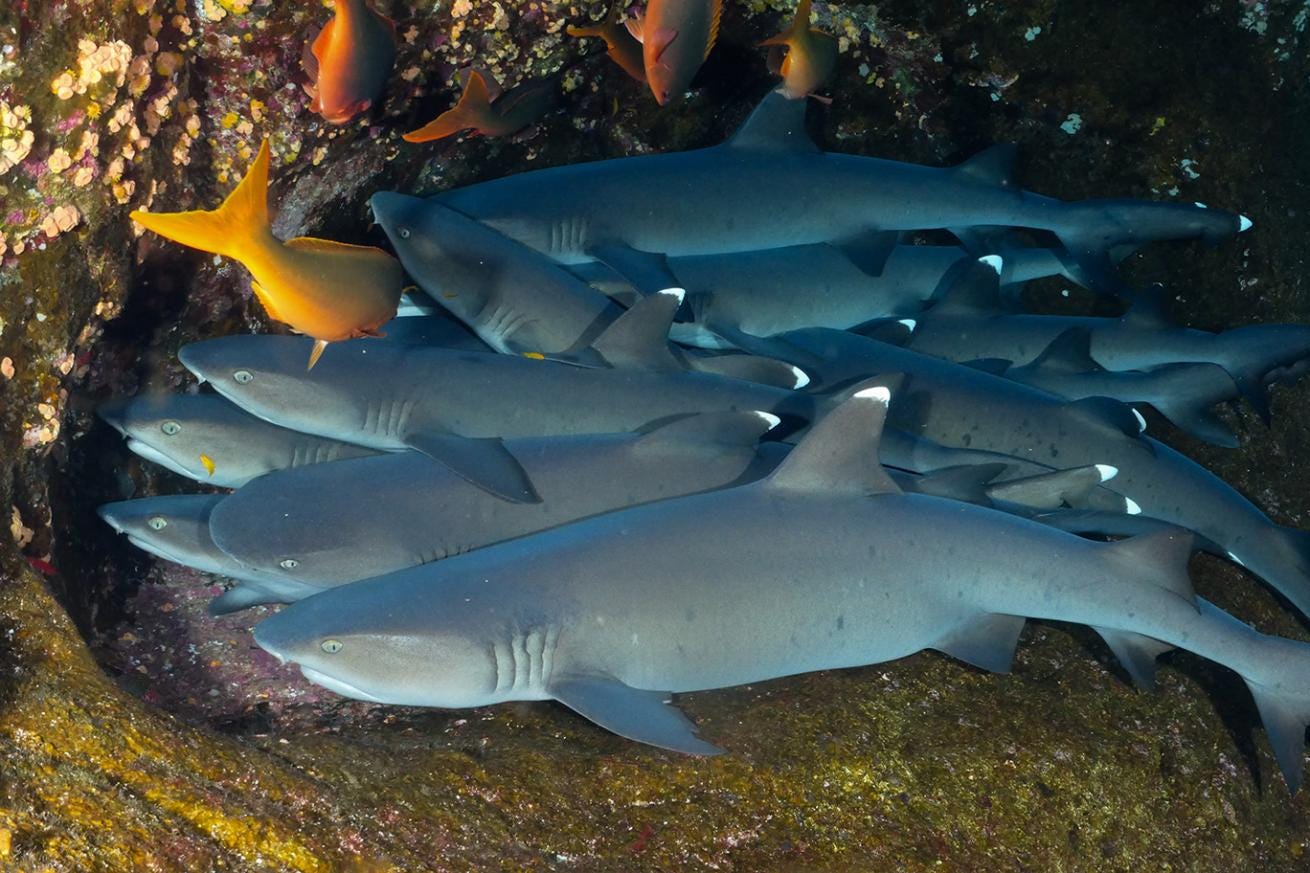
whitetip reef sharks in a cave

As a shark conservation scientist, one of the most common questions people ask me is, “How are shark populations doing?” To answer this question, it’s important to understand two types of fishery surveys: fishery-independent and fishery-dependent. Fishery-dependent population surveys gather data from fishermen’s catches. These data are valuable because there are many more fishermen on the water than marine biologists. However, they are limited because fishermen fish with the intent to catch as much as possible, which means they regularly change their methods to achieve higher yields. This makes sense economically but limits the scientific value of the data.

In contrast, fishery-independent surveys are designed to use the same methods, which are scientifically more rigorous. “They provide an unbiased characterization of many different things, particularly changes in the abundance of fish populations over time,” Dr. Robert Latour, a professor at the Virginia Institute of Marine Science (VIMS) at William and Mary. “Since the survey is performed the same way during every research cruise, any changes in what you catch are due to something going on with the population, not changes in how we’re fishing.” — David Shiffman, Ph.D.

Pretty simple interview for my KYAQ show. Sharks, a researcher who is in DC shaping context around POLICY while holding onto the reality of why sharks have to be protected.

Sure, Trump and Company are killing, man, killing science for sure. Habitat? No Such Thing under Semen Drip and his Zeldin Wacko!

The Trump administration proposed a new rule Wednesday that would rescind widespread habitat protections for species protected under the Endangered Species Act, a landmark law enacted in 1973 to conserve the country’s imperiled animals and plants.

That would open the door for developments across the country to be approved even if they significantly disrupt critical habitat for species listed under the Endangered Species Act. The proposed rule, posted in the U.S. Federal Register by the U.S Fish and Wildlife Service, would “rescind the regulatory definition of ‘harm,’” which is defined as any significant habitat modification or degradation that actually kills or injures wildlife.

“There’s just no way to protect animals and plants from extinction without protecting the places they live, yet the Trump administration is opening the floodgates to immeasurable habitat destruction,” said Noah Greenwald, co-director of endangered species at the Center for Biological Diversity. “This administration’s greed and contempt for imperiled wildlife know no bounds, but most Americans know that we destroy the natural world at our own peril. Nobody voted to drive spotted owls, Florida panthers or grizzly bears to extinction.”

If approved,  the rule would mean endangered species would only be protected from actions that intentionally lead to the harm of a species.

“It’s just foundational to how we’ve protected endangered species for the last 40-plus years, and they’re just completely upending that,” Greenwald said.

Photo below: David Shiffman, Ph.D.

Trump Administration’s interpretation of ‘harm’ could gut habitat protections for endangered species

By law, the ESA prohibits the “take” of an endangered species, which includes actions “to harass, harm, pursue, hunt, shoot, wound, kill, trap, capture, or collect, or to attempt to engage in any such conduct.” Historically, the “harm” part of this mandate encompasses “any activity that can modify a species’ habitat.”

This interpretation of “harm” has long been used by agencies to extend protections for endangered species to the land or ocean area that it relies on. For example, an oil or gas project may not be able to drill or be forced to modify operations in a certain area that provides habitat for an endangered animal, such as a dune sagebrush lizard. In many cases, the “harm” rule has not blocked projects altogether, but rather resulted in different designs that reduce impacts on endangered species.

In 1995, a group of landowners and timber interests in the Pacific Northwest and the Southeast challenged the regulation’s interpretation in a push to log forests where endangered northern spotted owls and red-cockaded woodpeckers lived. In a 6-3 decision, the Supreme Court upheld the broad definition of “harm” on the basis of the Chevron Doctrine, a principle that defers to federal agencies’ expertise for carrying out laws. Last year, however, Chevron was overturned, and the Trump administration has seized on that in the new proposed rule.

The new proposal would eliminate this “harm” definition—and the habitat protections that come with it, according to Dave Owen, an environmental law professor at the University of California, San Francisco.

“The shift here would be to say that just habitat modification that is detrimental to a species, even if the detriment is fairly direct, is not encompassed within the word ‘harm,’” Owen said. The majority of habitat protections related to the ESA fall under the “harm” interpretation, according to a 2012 study by Owen. Now, under the proposal, “the word ‘harm’ is essentially going to be read as an inconsequential nullity,” he said.

+_+

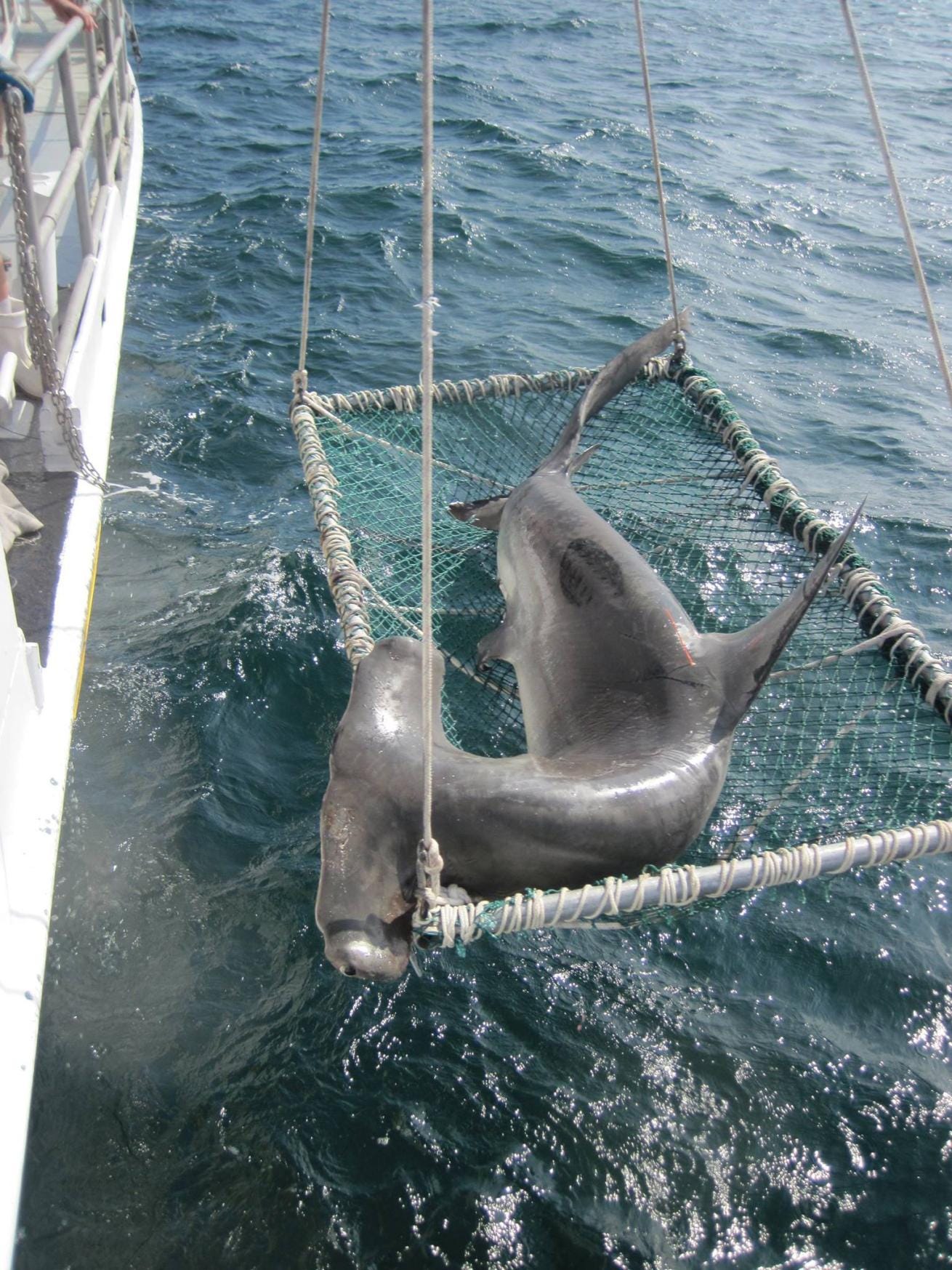
A great hammerhead shark being pulled up via gurny onto the deck for a workup.

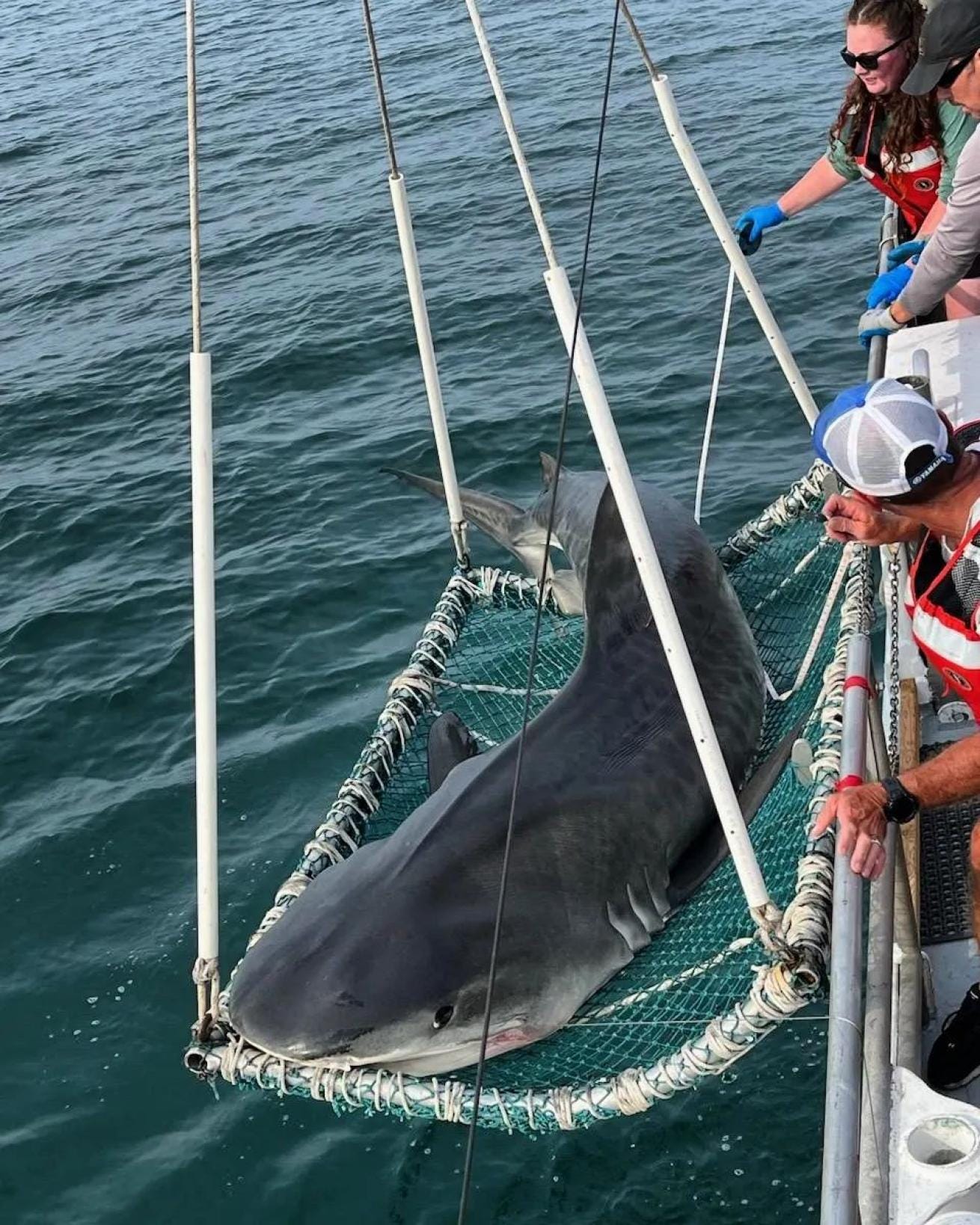
Scientists on deck anxiously await the opportunity to interact with the largest shark caught and successfully worked up on the VIMS Longline Survey in its 50-year history, a 13' 2.5" female tiger shark.

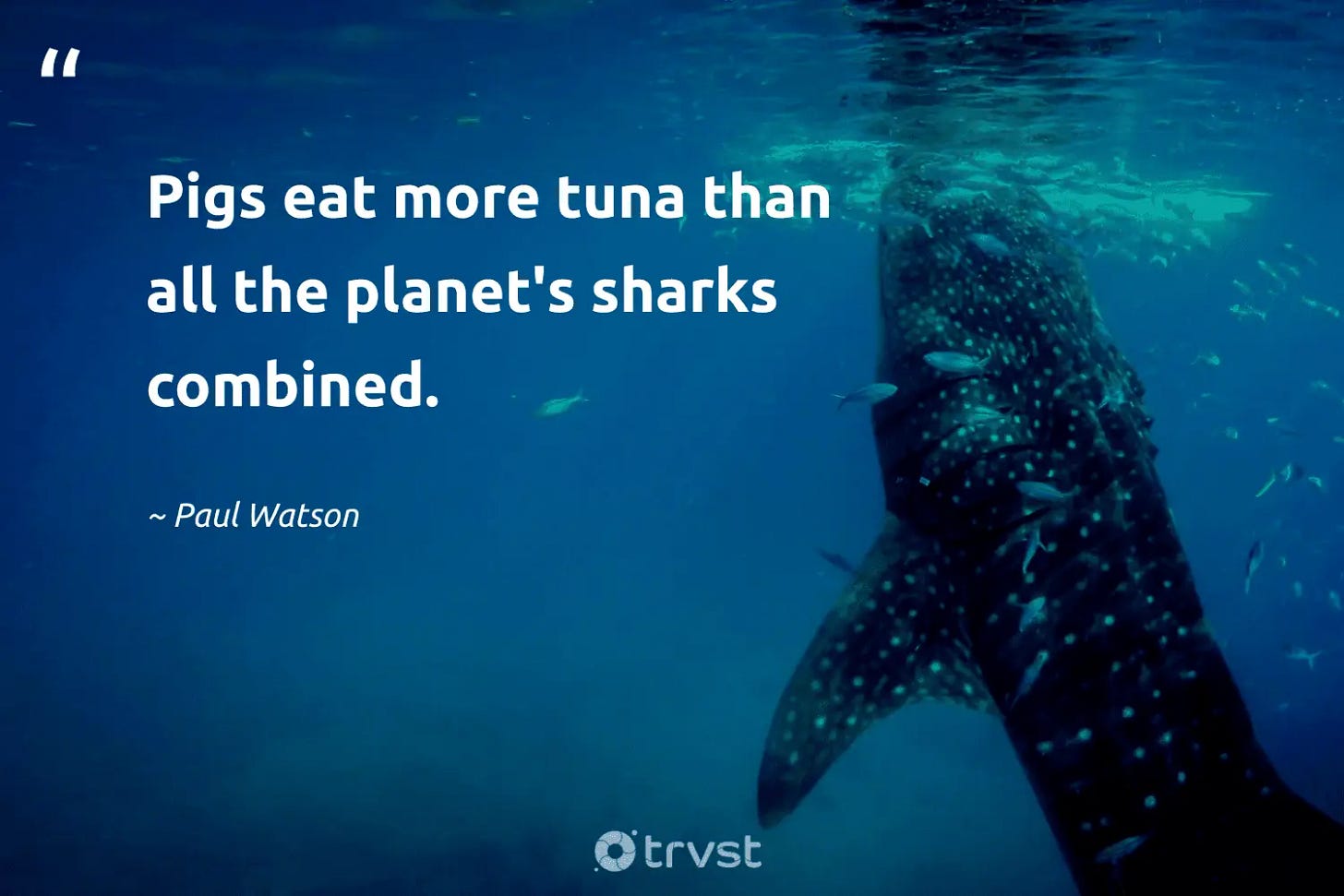
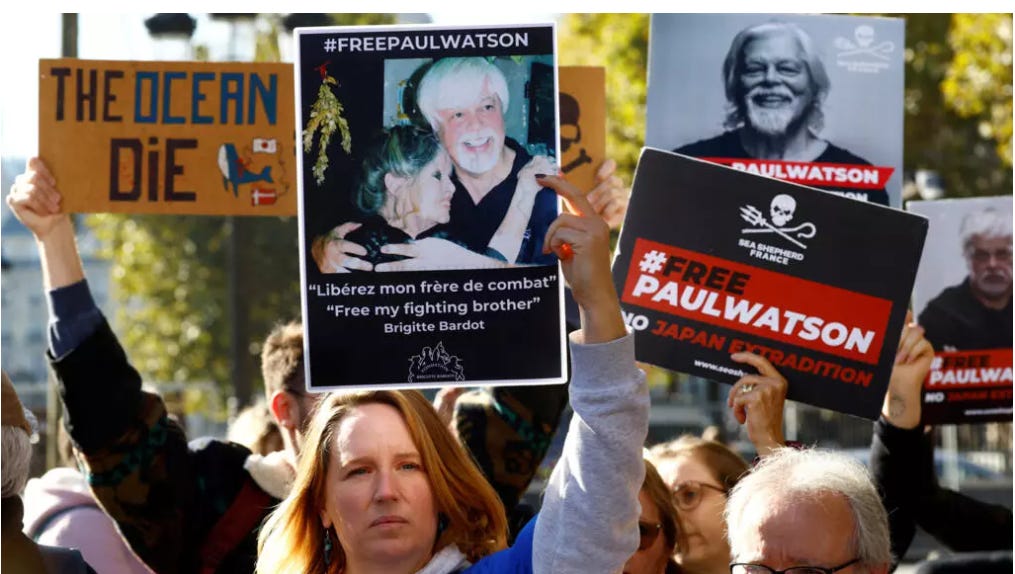
A more realistic and radical perspective: Thirteen Years Ago, Paul Watson, of Sea Shepherd fame:

Quoting Watson . . . .

Captain Paul Watson: Fear and Loathing of Sharks in Western Australia

The truth is that hatred of sharks is a manufactured hysteria thanks primarily, although I’m sure without malice, to Steven Spielberg, who resurrected a long-extinct Megalodon shark as a vicious killing machine in Jaws. The notion of such a shark living today is as fictitious as being attacked in modern times by a Tyrannosaurus Rex.

Targeting Great White sharks means targeting an endangered species and is no different than calling for the extermination of tigers, rhinos, and whales. This is the same kind of shallow-thinking, ecologically ignorant mentality that was responsible for the extinction of the Tasmanian tiger.

If the Premier really wishes to reduce shark attacks he should address the human factors that contribute to shark attacks.

There are three primary reasons for increased shark attacks in the sea off the coast of Western Australia.

The most obvious reason is that blood and dead bodies in the water attract sharks and the ships that transport livestock are a primary source for this attraction. Dead animals are irresponsibly tossed overboard. The daily flow of urine and feces contains the smell of blood. Common sense dictates that if you pour blood into the sea, sharks will respond.

Being an economist, the Premier most likely has decided that the demands of agri-business and Muslims wanting live animals so they can slit their throats while pointing the eyes of their sacrifices towards Mecca, is more important than Australian sharks or Australian surfers.

The second reason is that into these same waters where the sharks are attracted there are surfers, and from below, a surfer on a board looks very much like a seal and not just any seal, but a relatively motionless seal, and to a shark that form flashes like a neon sign saying, EAT.

Even so, most shark attacks on surfers are aborted once the shark realizes that the surfer is not a seal. Still it can be bad news for the surfer.

Solution: Instead of spending excessive tax dollars to exterminate sharks, funds can be invested in creating shark deterrent devices for surfboards and for shark-spotting programs like in South Africa where people are hired to watch the surf and to sound an alarm if sharks are in the area. Research should also be carried out on shark behavior and region-specific environmental factors like the effect of discharged effluent from livestock vessels.

The third reason is overfishing, as the sharks in our oceans have their food resources diminished more and more each year. Those who argue that seals should be culled to lower shark populations are in fact encouraging more attacks because fewer seals will mean fewer meals, and thus more hungry and desperate sharks. If you deprive humans of food, they also are inclined to desperation and, as history clearly demonstrates, starving humans have a tendency to attack and eat other humans.

Premier Barnett has unfortunately already demonstrated in other areas that he prefers extremist solutions. When granting authority recently to police to search and seize property without any suspicion or evidence that a crime was committed, a member of the Barnett government voiced support of this policy by comparing it to the ‘effective’ security measures taken by Adolf Hitler. Premier Barnett defended the statement by Liberal Party member Peter Abetz by saying that Abetz had made a valid point.

And now the policy that Premier Barnett wishes to make is to implement a ‘final solution’ to exterminate sharks in the interest of security.

I have surfed, swum and dove for forty some years with sharks including Great Whites and Tigers and I have never met a shark that threatened my security as a human being.

I have, however, met many politicians who have.

Statistics of Note for Statistician Australian Premier Barnett:

The seven most dangerous sports in the United States:

Hang Gliding
Civilian Pilot
Mountain Climbing
Sky Diving
Recreational Boating
Motorcycle Riding
Scuba Diving (Unrelated to shark attacks, for which there have been very few.)

Annual Average Cause of Deaths in the World:

Automobile Accidents: 2,210,000
Lightning Strikes: 10,000
Fatal Accidents caused while Texting: 6,000
Motorcycles: 4,462 (in the USA alone)
Airplanes: 1,200
Falling or Drowning in Bathtubs: 340
Choking on Hot Dogs: 70
Bees and Wasps: 53
Skate Boarding: 50 (in the USA alone)
Jellyfish: 40
Dogs: 30
Ants: 30
Sky Diving: 21 (in the USA alone)
Vending machines: 13
Riding on Lawn Mowers: 5 (in the USA alone)
Sharks: 5

40 Shark Quotes About the Revered Predator of The Ocean (2025)

So David and I broached some of the issues around sharks’ decline and status as ecologically important and threatened animals in the web of marine life. Literally over 500 or six hundred species of these amazing creatures have been scientifically identified.

We talked about much out of this 2,000-page report: The International Union for Conservation of Nature (IUCN) report, Global Status of Sharks, Rays and Chimaeras,

The IUCN Species Survival Commission (SSC) Shark Specialist Group (SSG) has published a status report on sharks, rays and chimaeras, nearly 20 years after its first report warned that sharks were threatened but underrepresented in conservation. Today we understand more about sharks, rays and chimaeras than ever before, but the scale of their declines threatens to outstrip improvements made in research and policy.

In Oman, shark liver oil is used in traditional eyeliner. In Indonesia, shark and ray skins are packaged as chips. Skates are the seafood counterpoint to buffalo wings at restaurants in the USA, along with mako and thresher sharks. Across Europe, you can sling a luxury stingray skin bag over your shoulder as you sample shark meat sold as European conger, order veau de mer in France, and find ray cheeks purveyed as a delicacy in Belgium. Ray and shark skins are fashioned into shoes, wallets, belts, handbags and purses in Thailand. In Yemen, even the corneas of shark eyes have been reportedly used for human transplant and the cartilage is marketed as a cure to all sorts of human ailments.

These are the extraordinary country-by-country insights detailed in the report, which consolidates the biology, fisheries, trade, conservation efforts, and policy reforms for sharks, rays and chimaeras across 158 countries and jurisdictions.

At more than 2,000 pages long, the report follows one in 2005 that highlighted a rise in the global fin trade and the low conservation profile of sharks, and especially rays and chimaeras.

Since then, the global demand for shark meat has nearly doubled: the value of shark and ray meat is now 1.7 times the value of the global fin trade. Trade has diversified and products such as ray gill plates, liver oil and skins are valued at nearly USD 1 billion annually.

Sarah Fowler of the Save Our Seas Foundation (SOSF) led the 2005 report’s publication and contributed to the latest version.

“The conservation and management of sharks is difficult for a variety of reasons, but many governments are breaking down the silos that separate how we deal with sharks and rays as fisheries resources, and as wildlife to conserve.”

“Nearly 20 years after the first report, there have been drastic changes, with sharks and rays now among the most threatened vertebrates on the planet,” explains Alexandra Morata, the IUCN SSC SSG Programme Officer.

The challenges:

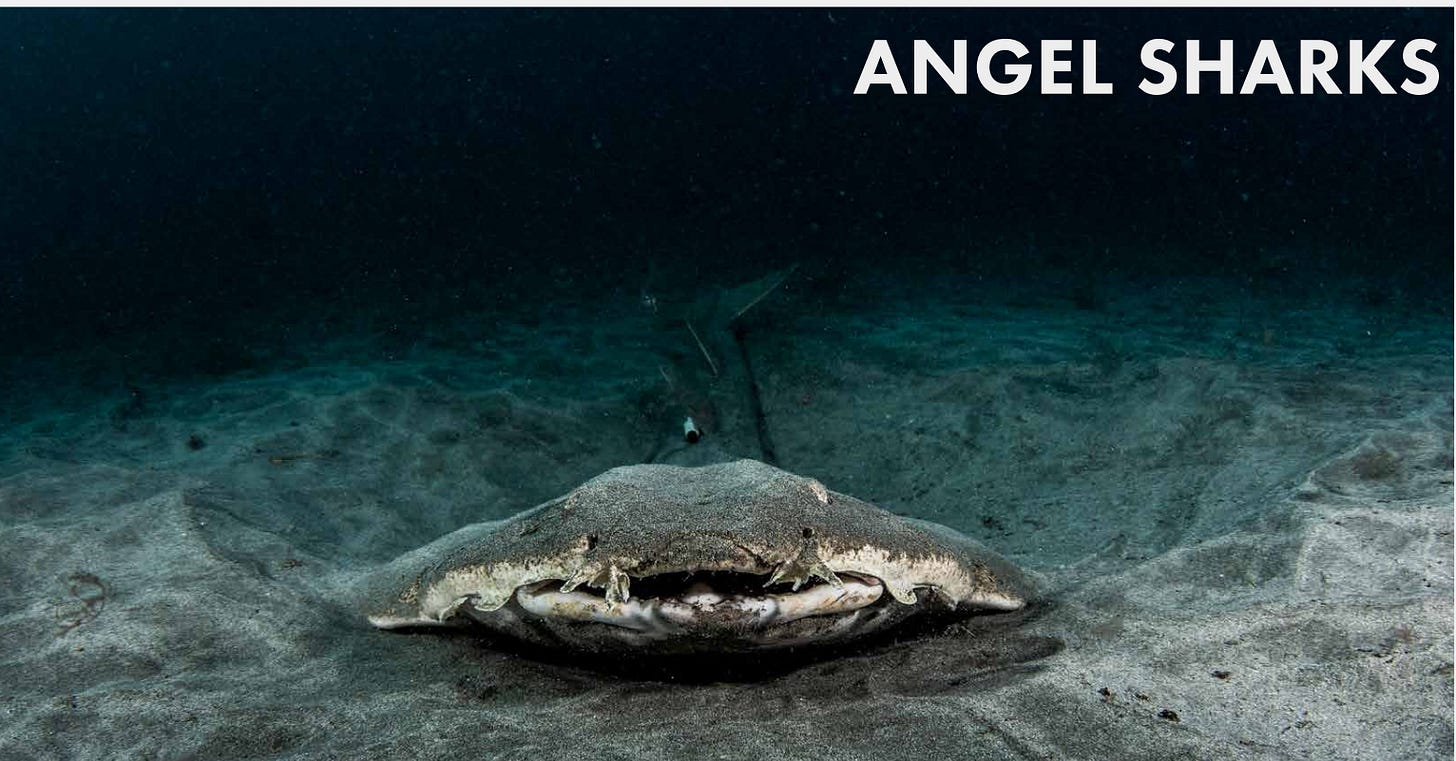
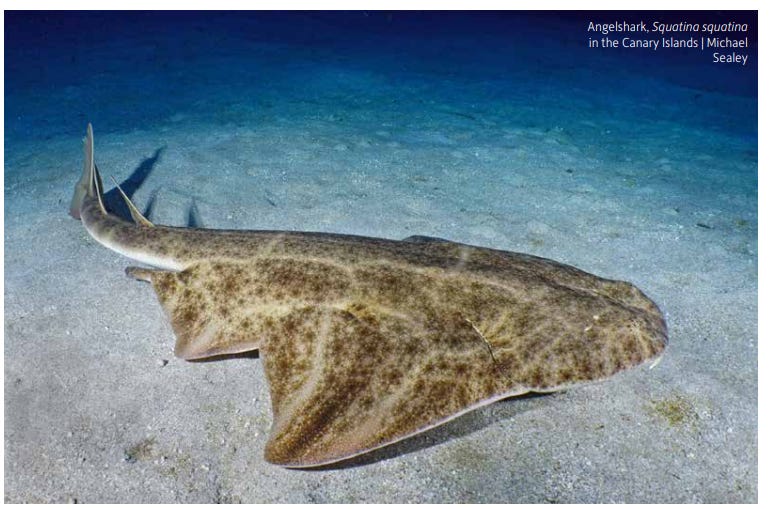
Overfishing is driving most species to extinction. Indonesia, Spain, and India are the world’s largest shark-fishing nations, with Mexico and the USA adding to the top five shark catchers. But only 26% of species globally are targeted: most are caught (and retained) as bycatch. Huge population declines have been seen in the rhino rays (such as wedgefish), whiprays, angel sharks, and gulper sharks.

But two decades of research and major policy changes also mean that the solutions are now outlined country by country and can guide governments to implement conservation action and make fisheries sustainable.

“This report is a call to action so we can work together and make each of the country recommendations a reality, especially those relating to responsible fisheries management. It is the only way these species will survive and continue to thrive in aquatic ecosystems,” says Dr Rima Jabado, the IUCN SSC deputy chair and SSG chair who led the 2024 report.

We need sharks, rays and chimaeras.

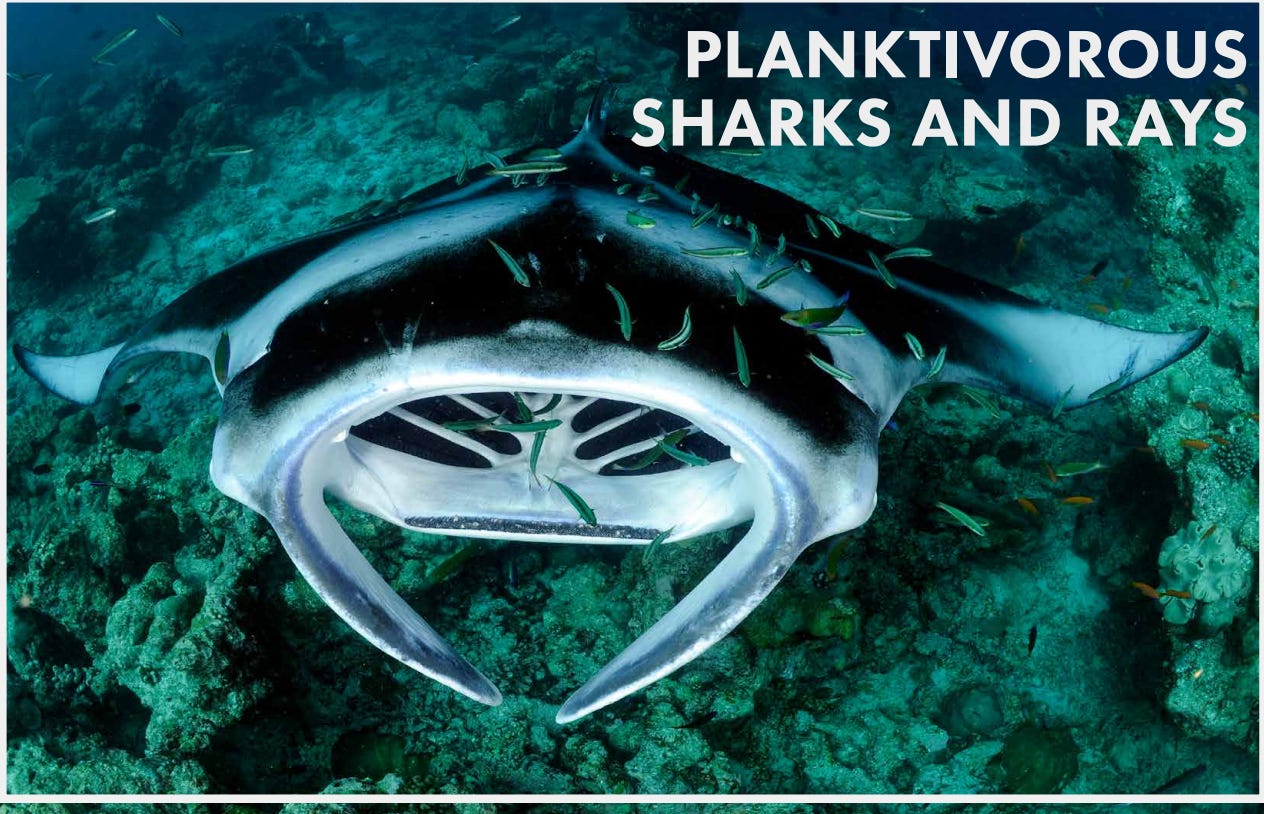
We are only beginning to decipher the role they play in delivering life-supporting resources and services. Some species cycle nutrients around the ocean; others help us fight climate change by acting as carbon sinks or maintaining carbon sequestering ecosystems like mangroves. They underpin food security in vulnerable coastal communities. In some developing nations, fishers have reported that more than 80% of their income depends on shark and ray fisheries.

“The report is also a reflection of the tremendous dedication of scientists, researchers and conservationists who are working as a community to contribute to conservation and make a lasting change,” Dr Jabado adds.

Access to remote areas, especially across Africa, has increased scientific understanding of the scale of exploitation. Knowledge has improved significantly in Asia, Africa, Central America, the Caribbean, and the Indian Ocean. There are also hopeful instances of sustainable fisheries in Canada, the USA, and Australia.

There have been incredible strides in research and policy, but this hard work will only save species from extinction if the report’s recommendations are implemented nationally.

“The message is clear,” says Dr Jabado. “With the precarious state of many of these species, we can’t afford to wait.”

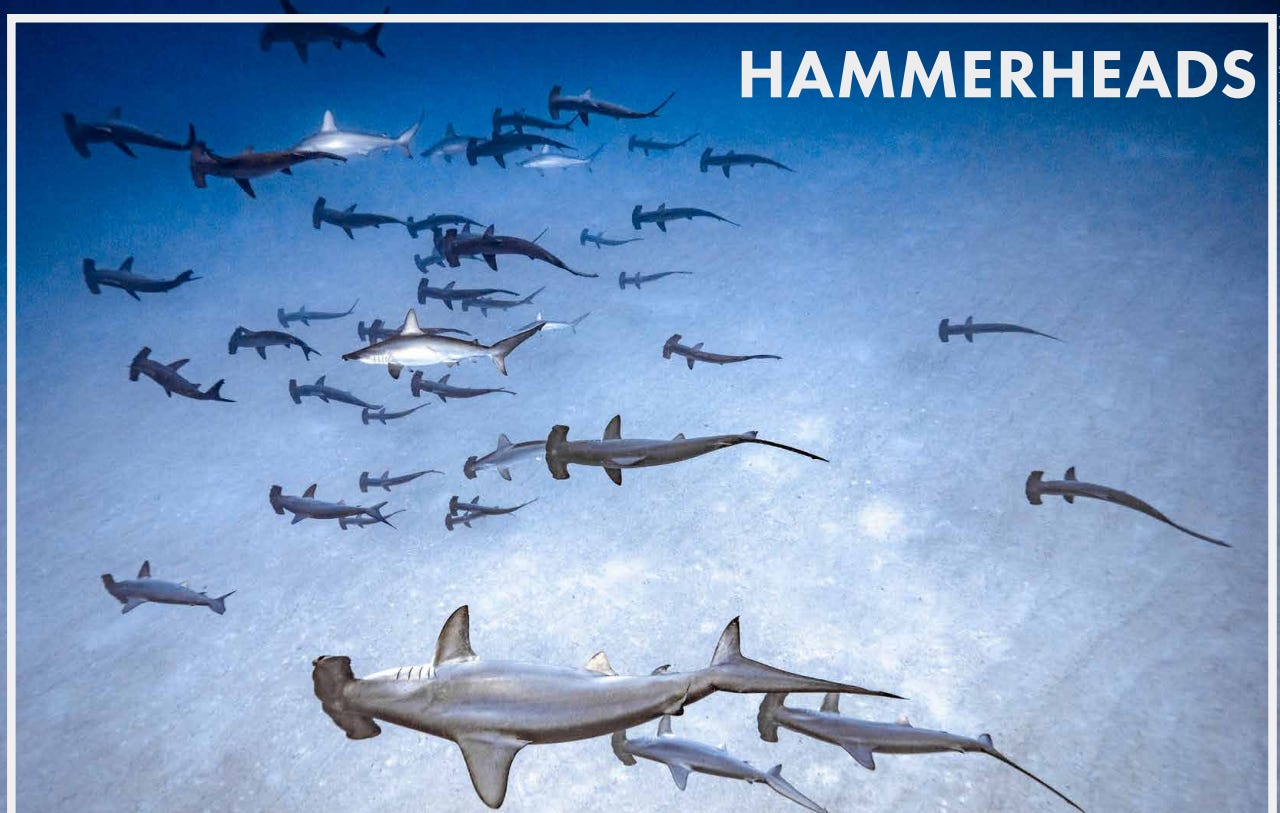
Amazing that I have been with hammerheads in various waters, but many smaller ones in the hundreds off Baja . . .


Ran into these too in the Caribbean and elsewhere:

The powerful blue sharks, man, sleek, amazing: In California, where I was born!

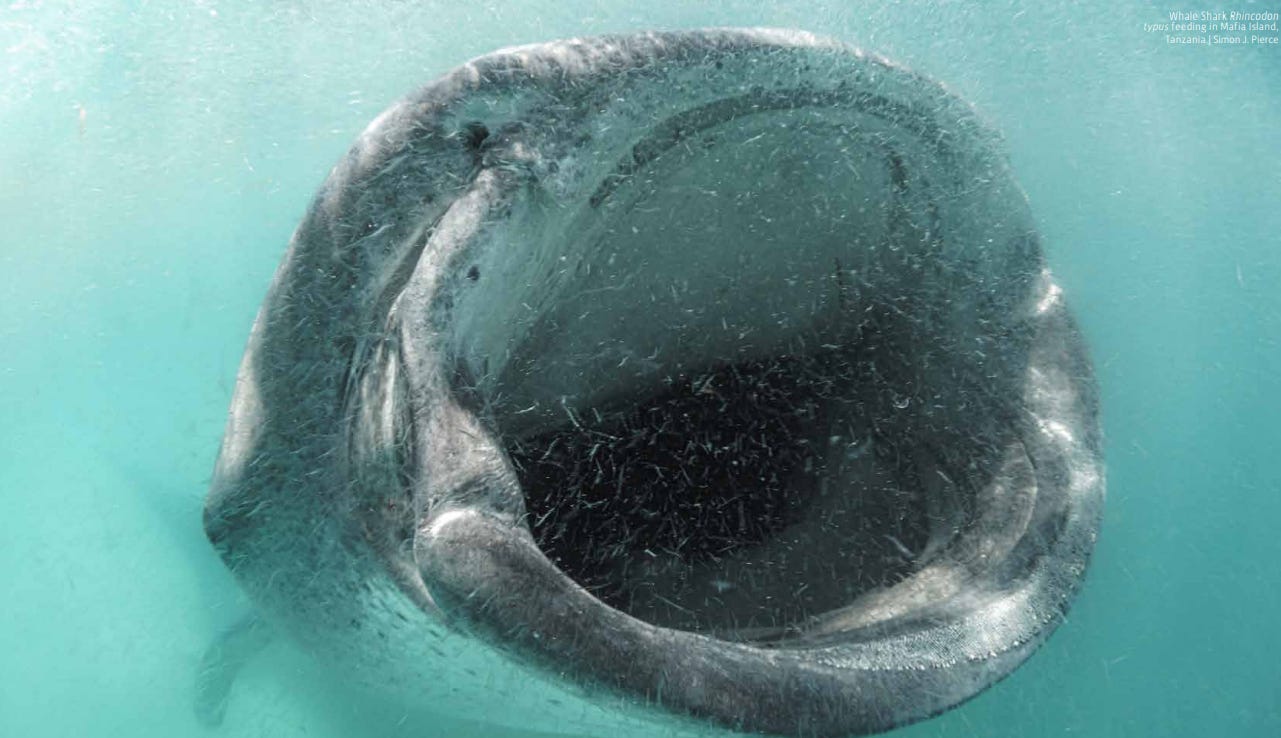
Open wide, brother:

A whale of a shark:

Exotica:

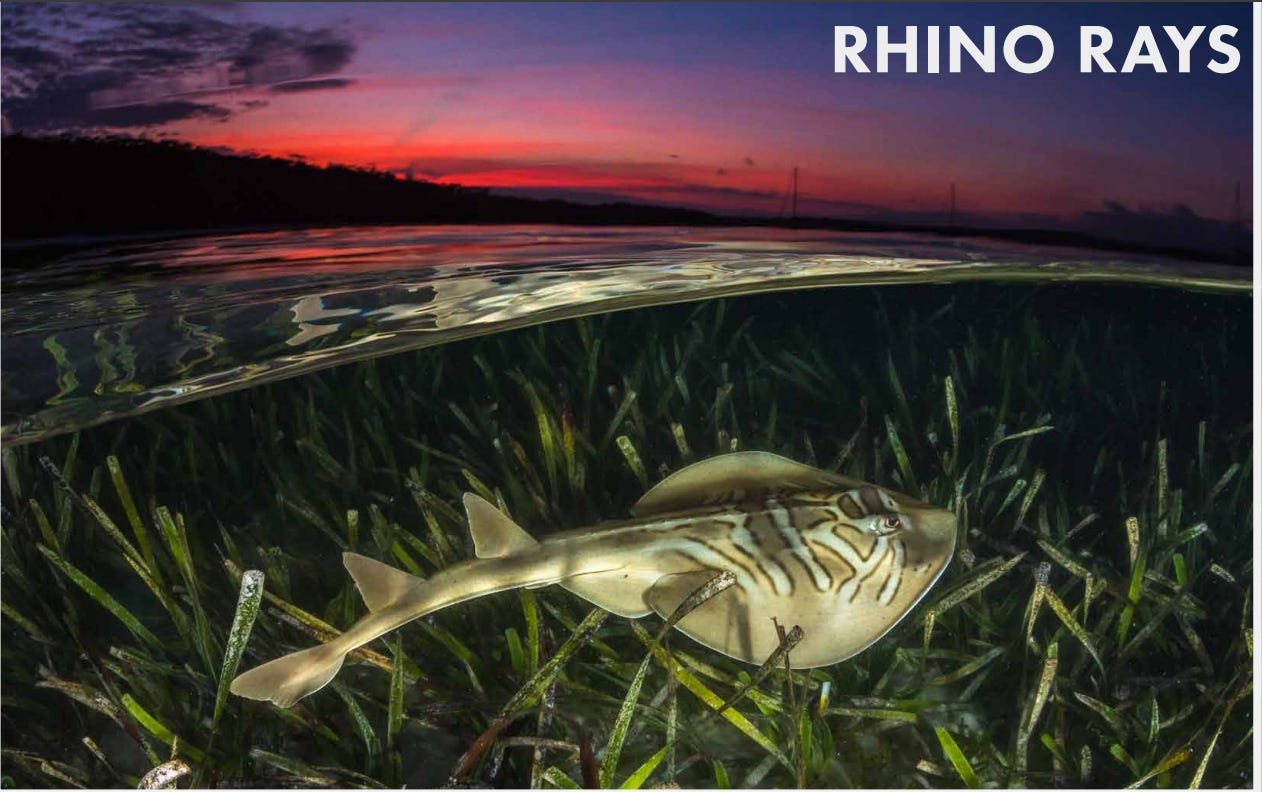
The order Rhinopristiformes, also known as rhino rays or sharklike rays, is the most threatened order of marine fish (Kyne et al., 2020; Dulvy et al., 2021). It comprises five families: giant guitarfish (Glaucostegidae), sawfish (Pristidae), wedgefish (Rhinidae), guitarfish (Rhinobatidae), and banjo rays (Trygonorrhinidae; Last et al., 2016; IUCN, 2024). These 68 species of medium to large-sized, benthic rays have a similar posterior morphology to sharks and are distributed in temperate to tropical waters on the insular and continental shelves (usually <250 m depth) throughout the Indo-Pacific and Atlantic oceans (Last et al., 2016; IUCN, 2024).

Information available suggests that rhino rays are strongly associated with soft-bottom habitats such as sand, mud or gravel, and some species are often observed in areas adjacent to coral reefs (White et al., 2013). The distribution of rhino rays is highly variable, from broadly distributed species (e.g., Bottlenose Wedgefish [Rhynchobatus australiae] and Giant Guitarfish [Glaucostegus typus]) to those with very restricted and/ or fragmented spatial distributions, such as Clown Wedgefish (Rhynchobatus cooki) known only from Lingga and Singkep Islands in Indonesia (Kyne et al., 2019; McDavitt & Kyne, 2020), and False Shark Ray (Rhynchorhina mauritaniensis) from a single location in the Eastern Central Atlantic (Iwik in the Banc d’Arguin in Mauritania; Séret & Naylor, 2016).

Like most other shark and ray species, rhino rays have relatively ‘slow’ life-histories with slow growth, late age at maturity, and low fecundity. Life-history data are not available for most species. Rhino rays are viviparous, with litter sizes generally range from one up to 20 pups, though most species typically have less than ten pups per litter (Last et al., 2016). The relatively low productivity in many of these species limits population growth rates and the resilience of these species to exploitation along with their ability to recover once depleted (D’Alberto et al., 2024).

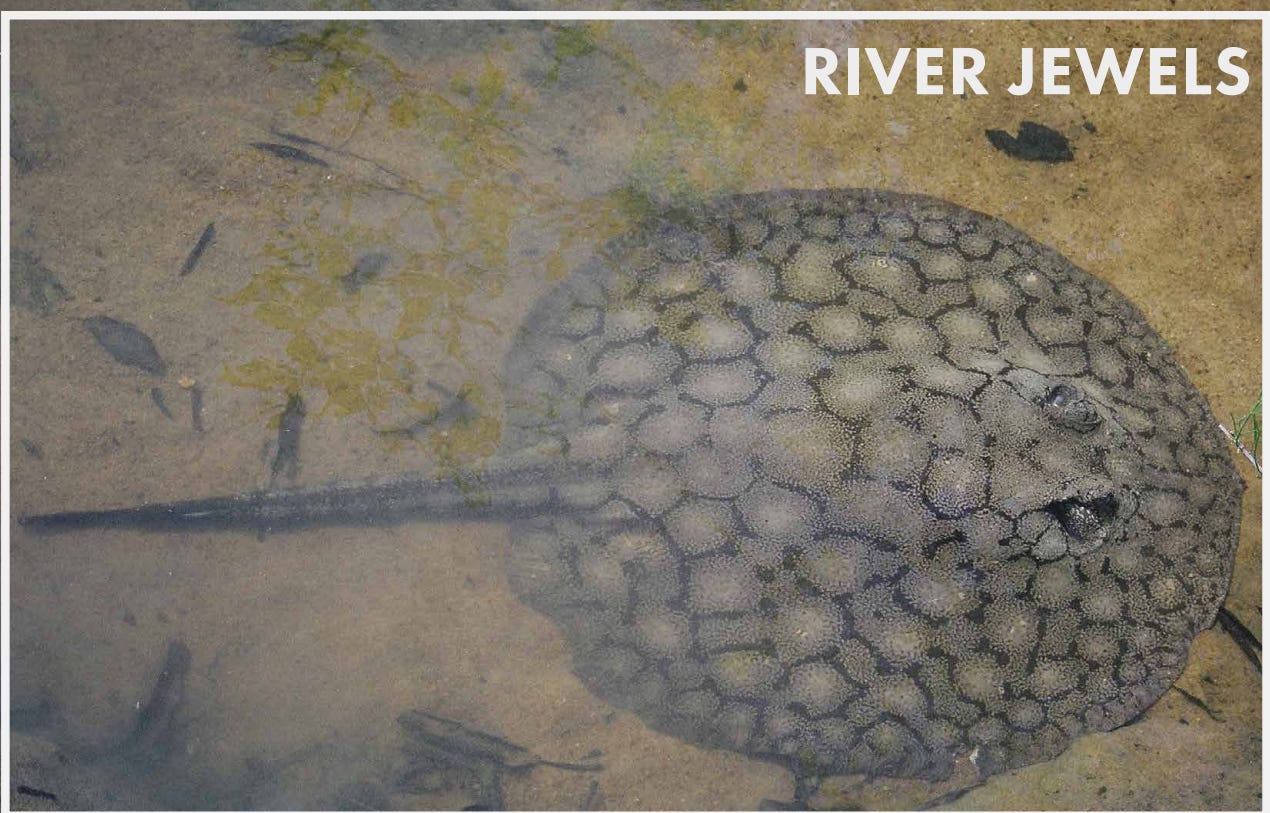
Freshwater skates and rays, too:

Freshwater or euryhaline sharks and rays are usually a forgotten component of shark, ray, and chimera biodiversity, mainly because the vast majority of these species are associated with marine ecosystems. Freshwater rays are cartilaginous fish species that have adapted and developed the ability to live and complete their entire life cycles in freshwater environments (stenohaline), such as rivers, streams, and lakes (Grant et al., 2022).

Origin, systematics, and taxonomy.

Among all living sharks and rays, the Neotropical freshwater stingrays (subfamily Potamotrygoninae) form the only lineage that is exclusively obligate to freshwater environments (Thorson et al., 1978; Rosa, 1985; Lovejoy, 1996; de Carvalho et al., 2016; Fontenelle et al., 2021a). The origin of the subfamily Potamotrygoninae has been hypothesized to have been associated with marine incursion events from the Caribbean into the northeast portion of South America (Thorson et al., 1978; Lovejoy et al., 1998, 2006; Bloom & Lovejoy, 2017; Kirchhoff et al., 2017; Fontenelle et al., 2021b). However, the age of this freshwater lineage is still a topic of debate: while most studies using molecular data associate the origin of the potamotrygonins with the Pebas Wetlands System during the Oligocene-Miocene (Lovejoy et al., 1998; Albert et al., 2021; Fontenelle et al., 2021b), some authors estimate an earlier, Eocene origin (de Carvalho et al., 2004; Adnet et al., 2014).

Watson got criticized by the Fox network because he said worms, trees and bees are more important than people. They got really outraged when he replied with the simple fact that worms, trees and bees can live on this planet without us but we could not live without them.

“People will say you don’t care about people and I guess that’s true but in a way what we do to protect the ocean is protecting the people. We need them, they don’t need us. For example, phytoplankton. We’ve had a 40 percent decrease since 1950. If phytoplankton goes extinct, we go extinct. It provides 70 percent of the oxygen in the air. So people need to become aware of the interdependence of species and how important they are for our survival.”

Listen to David and me talk sharks. He’s serious about this scientific field and he is passionate, and I call him Dave the Shark Science Guy, after Jim Nye that Science Guy!

Why Sharks Matter: A Deep Dive with the World’s Most Misunderstood Predator by David Shiffman

[Dr. David Shiffmanis a Washington, DC-based marine conservation scientist who focuses on the ecology of endangered species and how to protect them. He received his Ph.D. in environmental science and policy from the University of Miami, and is an alum of the Liber Ero Postdoctoral Fellowship in Conservation Leadership. He is the author of “Why Sharks Matter,” and invites you to follow him on Bluesky, where he’s always happy to answer any questions anyone has about sharks, marine biology, or ocean conservation.]

*****

20 years ago: Peter Benchley, author of Jaws.

Quoting him:

Please, in the name of nature, do not mount a mindless assault on an endangered animal for making an innocent – however tragic – mistake.

I’ve just this minute learned about Monday’s ghastly, fatal attack by a great white shark. While I cannot pretend to comprehend the grief felt by Ken Crew’s friends and family, and would not conceive of diminishing the horror of the attack, I plead with the people of Australia – who live with, understand and, in general, respect sharks more than any other nation on earth – to refrain from slaughtering this magnificent ocean predator in the hope of achieving some catharsis, some fleeting satisfaction, from wreaking vengeance on one of nature’s most exquisite creations.

Though I was not there, though I did not witness the hideous moment, I can say absolutely that the shark was not acting with malice toward the man; not with intent to do bodily harm. It was doing what sharks do: assaulting perceived prey.

Australia has had a run of extremely bad luck recently: three human beings have been killed by great white sharks. But it is important for us to realise that these are freak occurrences that by no means signal a sudden onslaught by sharks on swimmers and surfers.

The oft-quoted statistics remain true: shark attacks are very, very rare, and fatal attacks even rarer. A human being is still more likely to die of a bee sting, snake bite or, Lord knows, automobile accident than by shark attack.

We do not execute the perpretrators of death by car. We should not butcher an animal for an inadvertent homicide.

It’s also important that we understand that the shark is not invading our territory, threatening our homes or livelihoods; we humans are the trespassers. And if we choose to swim in the sea, to enter the realm of these wonderful animals – animals that have survived, virtually unchanged, for millions of years, animals that serve a critical function in the oceanic food chain – we are taking a chance.

If we choose to walk into a forest where a tiger lives, we are taking a chance. If we swim in a river where crocodiles live, we are taking a chance. If we visit the desert or climb a mountain or enter a swamp where snakes have managed to survive, we are taking a chance.

No person of sound mind would annihilate all tigers or snakes or crocodiles; we should resist the temptation to mark sharks for destruction.

This was not a rogue shark, tantalised by the taste of human flesh and bound now to kill and kill again. Such creatures do not exist, despite what you might have derived from Jaws.

When I wrote the book and film a quarter of a century ago, knowledge of sharks was in its infancy. We believed that sharks actually attacked boats; we believed that they actively sought out human prey. We believed that their numbers were infinite and the threat they posed incalculable.

Over the years, we have come to know otherwise. Over those same years, unfortunately, the demand worldwide for shark products has soared, and improved technology has given man the tools to slaughter sharks wholesale to meet that demand.

Around the world every year, approximately a dozen people are killed by sharks, while 100m sharks are killed by man. We are already perilously close to killing off the top of the oceanic food chain – with catastrophic consequences that we can’t begin to imagine. Let us not, in the heat of anger, reduce the already devastated population of great white sharks by one more member.

Let us mourn the man and forgive the animal, for, in truth, it knew not what it did.

Great White, Deep Trouble, a documentary about Peter Benchley and his work

Paul Haeder has been a teacher, social worker, newspaperman, environmental activist, and marginalized muckraker, union organizer. Paul's book, Reimagining Sanity: Voices Beyond the Echo Chamber (2016), looks at 10 years (now going on 17 years) of his writing at Dissident Voice. Read his musings at LA Progressive. Read (purchase) his short story collection, Wide Open Eyes: Surfacing from Vietnam now out, published by Cirque Journal. Here's his Amazon page with more published work AmazonRead other articles by Paul, or visit Paul's website.