It’s possible that I shall make an ass of myself. But in that case one can always get out of it with a little dialectic. I have, of course, so worded my proposition as to be right either way (K.Marx, Letter to F.Engels on the Indian Mutiny)
Monday, December 29, 2025
HKUST researchers develop novel model to unveil deep-sea black coral symbiotic system
A research team led by Prof. QIAN Peiyuan, Chair Professor of the Department of Ocean Science at The Hong Kong University of Science and Technology (HKUST), in collaboration with the Southern Marine Science and Engineering Guangdong Laboratory (Guangzhou), and the Yellow Sea Fisheries Research Institute of the Chinese Academy of Fishery Sciences (CAFS), has achieved a significant breakthrough in understanding the adaptive strategies of the deep-sea black coral Bathypathes pseudoalternata (B. pseudoalternata) and its symbiotic microbiome. The study has been published in the top international journal Cell Host & Microbe.
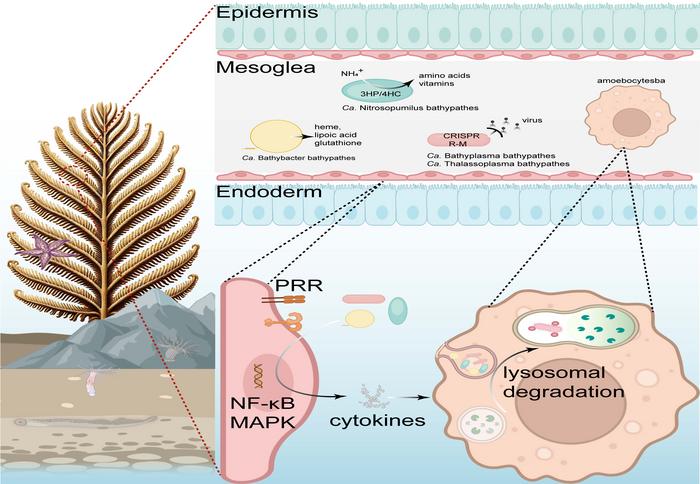
This study provides the first comprehensive hologenomic analysis of B. pseudoalternata, offering profound insights into how this deep-sea coral survives in extreme habitats through nutritional complementarity, metabolic cooperation, oxidative stress defense, antiviral protection, and immune homeostasis. The findings introduce a novel conceptual model in which deep-sea corals maintain a simplified, efficient, and functionally complementary symbiotic system, serving as a valuable reference for identifying deep-sea functional gene resources.
To address the central question of how deep-sea corals sustain a highly simplified yet efficient symbiotic consortium, the team developed an integrated analytical framework encompassing host genomics, microbial community profiling, symbiont genomes, spatial localization, and transcriptional activity. This multi-layered approach enabled a systematic interpretation of symbiotic stability, nutritional cooperation, and immune regulation in B. pseudoalternata. The researchers successfully assembled a high-quality, chromosome-level genome comprising 16 chromosomes. Gene family expansion analyses revealed enrichment in pathways associated with nutrient uptake, endocytosis and lysosomal function, and immune responses, highlighting the coral’s strategy to enhance material absorption and cellular digestion under nutrient-depleted deep-sea environments. The coral genome lacks complete biosynthetic pathways for several amino acids and vitamins, indicating its genetic dependence on symbiotic microbes for essential metabolic inputs.
Microbial analyses of samples collected from various depths and regions across the western Pacific Ocean demonstrated that B. pseudoalternata hosts a stable and highly streamlined microbiome distinct from the surrounding environment, suggesting strong host selection for functionally important symbionts. The core symbionts collectively support the coral’s survival in extreme deep-sea environments. Ammonia-oxidizing archaea possess carbon-fixation capacity and ammonia oxidation pathways that contribute to detoxification and the synthesis of amino acids and vitamins for the host. A newly identified alphaproteobacteria provides heme, lipoic acid, glutathione, and fatty acids that can supply nutrients to the host. Additionally, two highly reduced Oceanoplasmataceae species encode CRISPR/Cas and restriction–modification systems, forming an antiviral defense barrier for the coral. Together, these symbionts provide nutritional supplementation, detoxification functions, biosynthesis of essential metabolites, oxidative stress protection, and virus defense.
“Our research highlights the remarkable adaptability of deep-sea corals and underscores the importance of their symbiotic relationships with microbiome in extreme environments”, Prof. Qian concluded.
This research was supported by the National Natural Science Foundation for Young Scientist of China, the National Key R&D Program of China, the Southern Marine Science and Engineering Guangdong Laboratory (Guangzhou), the HKSAR Government, the HKUST Otto Poon Center for Climate Resilience and Sustainability, the Natural Science Foundation for Young Scientists of Shandong, China, the Marine S&T Fund of Shandong Province for Pilot National Laboratory for Marine Science and Technology (Qingdao), the Major Scientific and Technological Projects of Hainan Province, the AoShan Talents Cultivation Program Supported by Laoshan National Laboratory for Marine Science and Technology, and the Central Public-interest Scientific Institution Basal Research Fund from CAFS.
The paper is co-corresponded by Dr. SHAO Changwei S (CAFS), Prof. QIAN Peiyuan (HKUST), Dr. MENG Liang (BGI Research), and Dr. LIU Shanshan (BGI Research). WEI Zhanfei (CAFS), LAN Yi (HKUST), and MENG Li-Hui (Qingdao Agricultural University) contributed equally as co-first authors.
Microbial structure and distribution of symbionts within the deep-sea coral Bathypathes pseudoalternata holobiont.
Host-symbiont interactions in deep-sea coral Bathypathes pseudoalternata.
Tsukuba, Japan—The arteries of athletes demonstrate adaptations in structure and function corresponding to the physical characteristics of the sport. For instance, baseball players repeatedly perform high-intensity throwing motions during daily practice and games, suggesting that some form of exercise-induced adaptation could occur, particularly in the brachial artery of the dominant (throwing) arm. However, such adaptations have not been investigated in detail. In this study, researchers focused on exercise-induced arterial adaptations in university baseball players, specifically examining the various functions of brachial artery vascular endothelial cells in maintaining vascular health.
The researchers measured vascular endothelial function in the brachial artery, shoulder joint range of motion, and muscle strength of the dominant arm in 23 pitchers and 67 fielders. The results showed that, compared to fielders, pitchers exhibited significantly poorer vascular endothelial function in the brachial artery. Furthermore, a significant negative correlation was observed between the shoulder external rotation range of motion and internal rotation muscle strength and vascular endothelial function.
These differences between pitchers and fielders suggest exercise-induced functional arterial adaptations in the brachial artery. Understanding these athlete-specific functional arterial adaptations might aid in developing more effective training strategies and preventive measures for internal medicine-related sports injuries.
### This work was supported in part by a grant from the Advanced Research Initiative for Human High Performance (ARIHHP), University of Tsukuba.
Original Paper
Title of original paper: Comparison of brachial artery endothelial function in the dominant arm between male college baseball pitchers and fielders
Journal: Journal of Strength and Conditioning Research
The workflow for the ultrasonic enhanced signal processing techniques in cased wells (UESTC) for ultrasonic pulse-echo and pitch-catch measurements including: a) Waveform quality assessment; b) Simultaneous inversions of mud and cement impedance; c) Simultaneous inversions of tool trajectory and mud velocity; d) Suppression of S0 mode wave; e) Extraction of TIE waveform using machine learning; f) Enhancement of TIE arrivals using machine learning; g) Imaging of cement-formation interface using RTM.
Ensuring the integrity of wells is fundamental to safe oil and gas production, geothermal energy development, and geological carbon storage. At the heart of well integrity lies cement bonding, which isolates subsurface formations and prevents hazardous fluid migration. Against this backdrop, a team of researchers from China conducted a comprehensive review of recent advancements in cement bond quality assessment based on ultrasonic measurements.
“Ultrasonic logging has become a powerful non-destructive tools for evaluating cement bond quality behind casing, offering high-resolution insight into both the casing–cement and cement–formation interfaces,” shares lead author Prof. Hua Wang, a professor at University of Electronic Science and Technology of China. “Over the past decade, ultrasonic pulse-echo and pitch-catch techniques have advanced cement bond evaluation.”
Recent advances in ultrasonic well logging include:
Automated waveform quality control using variational autoencoders; simultaneous inversion of borehole-fluid and cement acoustic impedance;
Suppression of casing reflections via phase-shift interpolation and F–K transforms; joint inversion of tool trajectory and borehole properties under eccentric conditions; separation of A0 and S0 modes using variational mode decomposition;
Machine-learning-based enhancement and arrival-time picking for TIE waveforms; and
Imaging of the cement annulus–formation interface.
“These approaches have been validated using synthetic simulations, full-scale physical experiments, and field case studies, demonstrating robustness across varied borehole environments and well conditions,” says co-author Meng Li, an associate professor at Xi’an Shiyou University. “Machine learning further increases reliability and automation, particularly in complex wavefields and low signal-to-noise settings.”
By bridging physics-based modeling with data-driven approaches, this review presents a pathway toward more reliable, scalable, and intelligent ultrasonic cement evaluation—an essential step for meeting increasingly stringent integrity requirements in energy transition applications such as carbon capture and storage.
###
Contact author details: Hua Wang, School of Resources and Environment, University of Electronic Science and Technology of China, Chengdu, China, huawang@uestc.edu.cn
unfold quality research globally. In 2013, our focus shifted to open access publishing. We now proudly publish more than 200 world-class, open access, English language journals, spanning all scientific disciplines. Many of these are titles we publish in partnership with prestigious societies and academic institutions, such as the National Natural Science Foundation of China (NSFC).
By silencing a specific gene in wheat, researchers managed to create wheat lines that not only produce more grain, but also offer improved nutritional qualities.
Wheat breeders have long struggled to increase yield with sacrificing nutritional quality. A new study from China identifies TaJAZ1 as a key gene behind this trade-off. Using CRISPR to deactivate TaJAZ1, researchers developed wheat lines with dramatically higher grain yield and nearly double the resistant starch content. The findings reveal a genetic strategy for creating wheat varieties that are both more productive and healthier, offering benefits for future food security and metabolic health.
As climate change and population growth put increasing pressure on food systems worldwide, wheat stands out as a major staple crop to ensure food security. Wheat grain, which supplies a substantial portion of the calories consumed globally, is composed of about 70% starch. Starch type and content determine not only how the grain is processed, but also its nutritional value. For decades, wheat breeders have been trying to strike an ideal balance between high productivity (yield) and high nutritional quality.
Achieving this balance, however, is inherently difficult because both starch content and yield are determined by multiple complex genetic traits, themselves also affected by the interactions of different genes and proteins. A desirable trait in wheat is resistant starch—a type of starch that acts like healthy dietary fiber in the body by resisting digestion in the small intestine. Unfortunately, genetic profiles that naturally increase resistant starch often led to smaller grains and lower harvests through mechanisms that are not entirely clear.
Against this backdrop, a research team led by Dr. Guozhang Kang and Dr. Gezi Li from Henan Agricultural University, China, have made a discovery that could reshape the future of wheat genetic engineering. Their study, published in The Crop Journal on November 8, 2025, identified a gene that plays a major role in the yield–quality trade-off.
The team focused their investigation on the Jasmonate ZIM-domain (JAZ) proteins, a family of transcriptional repressors primarily known for their role in helping plants respond to stress. By conducting a genome-wide association study, the team identified a specific JAZ gene, designated TaJAZ1, that was highly expressed during the grain-filling stage, suggesting a strong involvement in starch accumulation.
To understand its precise function, the researchers employed the CRISPR/Cas9 gene-editing system to create two targeted knockout mutant lines. Simply put, they used guided molecular scissors to make the TaJAZ1 gene non-functional in these plants.
Notably, deactivating this gene led to a synergistic improvement across important traits. Compared to standard wild-type wheat, the two mutant lines exhibited substantial increases in single-grain weight and overall yield per plant. Moreover, this boost in overall production was also accompanied by an increase in resistant starch content, which nearly doubled.
The research team also explored the molecular mechanisms behind these gains. After a series of in-depth experiments, they concluded that TaJAZ1 acts as a bidirectional regulator in grains that represses key enzymes responsible for making starch, as well as affecting the final starch’s composition and structure.
“Taken together, our findings reveal that JAZ proteins are master transcriptional regulators of carbon partitioning in grains,” says Dr. Kang, “They provide a genetic tool for improving the yield–quality balance and enables the breeding of wheat cultivars with enhanced productivity, processing quality, and health benefits.”
“In 5 to 10 years, our research could lead to the development of new wheat varieties combining high yield, high resistant starch content, and low glycemic index, to help people improve metabolic health through their daily diet. This could especially benefit individuals with diabetes or obesity,” concludes Dr. Li.
1The National Engineering Research Center for Wheat, Henan Agricultural University
2The State Key Laboratory of High-Efficiency Production of Wheat-Maize Double Cropping, Henan Agricultural University,
3Henan Technological Innovation Centre of Wheat, Henan Agricultural University
4Department of Crop and Soil Sciences, North Carolina State University
eCollege of Resources and Environment, Henan Agricultural University
6National Engineering Research Center of Crop Molecular Breeding, Institute of Crop Sciences, Chinese Academy of Agricultural Sciences
###
Media contact
Name: Guangming Yang Email address:yangguangming@caas.cn State of Origin: China Tel: 13683670916
The publisher KeAi was established by Elsevier and China Science Publishing & Media Ltd to unfold quality research globally. In 2013, our focus shifted to open access publishing. We now proudly publish more than 200 world-class, open access, English language journals, spanning all scientific disciplines. Many of these are titles we publish in partnership with prestigious societies and academic institutions, such as the National Natural Science Foundation of China (NSFC).