Monday, December 29, 2025


ACT OF WAR

Trump says US destroyed dock used by Venezuelan drug traffickers

President Donald Trump said Monday that the United States had destroyed a docking facility used by alleged Venezuelan drug traffickers, marking what appears to be the first land strike in Washington’s expanding pressure campaign on Caracas.


Issued on: 30/12/2025 
By: FRANCE 24

The United States has hit and destroyed a docking area for alleged Venezuela drug boats, President Donald Trump said Monday, in what could amount to the first land strike of the military campaign against trafficking from Latin America.

The US leader's confirmation of the incident comes as he ramps up a pressure campaign against Venezuela's leftist President Nicolas Maduro, who has accused Trump of seeking regime change.

"There was a major explosion in the dock area where they load the boats up with drugs," he told reporters at his Mar-a-Lago resort in Florida as he hosted Israeli Prime Minister Benjamin Netanyahu.

"So we hit all the boats and now we hit the area, it's the implementation area, that's where they implement. And that is no longer around."


The US leader would not say if it was a military or CIA operation or where the strike occurred, saying only that it was "along the shore."

Asked if he had spoken to Maduro recently, following an earlier phone call in November, Trump said they had talked "pretty recently" but said that "nothing much comes out of it."

Trump had been asked to elaborate on apparent throwaway comments he made in a radio interview broadcast Friday that seemed to mention a land strike for the first time.

"They have a big plant or a big facility where they send, you know, where the ships come from," Trump told billionaire supporter John Catsimatidis on the WABC radio station in New York.

"Two nights ago we knocked that out. So we hit them very hard."

Trump did not say in the interview where the facility was located or give any other details.

There has been no official comment from the Venezuelan government.

The Pentagon earlier referred questions to the White House. The White House did not respond to requests for comment from AFP.

READ MORETrump refuses to rule out war with Venezuela as US sanctions Maduro family members

Trump has been threatening for weeks that ground strikes on drug cartels in the region would start "soon," but this is the first apparent example.
Fresh US strike in Pacific

US forces have also carried out numerous strikes in both the Caribbean Sea and eastern Pacific Ocean since September, targeting what Washington says are drug-smuggling boats.

The administration has provided no evidence that the targeted boats were involved in drug trafficking, however, prompting debate about the legality of these operations.

International law experts and rights groups say the strikes likely amount to extrajudicial killings, a charge that Washington denies.

READ MOREVenezuela accuses US of 'greatest extortion in history' at UN over naval blockade

After Trump spoke Monday, the US military announced on X that it had carried out another deadly strike on a boat in the Eastern Pacific, killing two and bringing the total killed in the maritime campaign to at least 107.


It did not specify where exactly the strike took place.

The Trump administration has been ramping up pressure on Maduro, accusing the Venezuelan leader of running a drug cartel himself and imposing an oil tanker blockade.

(FRANCE 24 with AFP)

Trump says US "hit docks" in Venezuela

Trump says US
Trump says US Navy "hit docks" in Venezuela. / bne IntelliNews
By bne IntelliNews December 29, 2025

US President Donald Trump confirmed American forces destroyed a docking area for alleged Venezuelan drug boats in what could represent the first land strike of the military campaign against Latin American trafficking, Trump stated on December 29.

"There was a major explosion in the dock area where they load the boats up with drugs," Trump told reporters at his Mar-a-Lago resort in Florida whilst hosting Israeli Prime Minister Benjamin Netanyahu.

The president did not specify the nature of the facility, and his administration has not yet commented on the attack. If confirmed, it would be the first land attack in an anti-drug campaign that has so far been conducted in the international waters of the Caribbean.

"So we hit all the boats and now we hit the area, it's the implementation area, that's where they implement. And that is no longer around."

Trump declined to specify whether it was a military or CIA operation or where the strike occurred, stating only that it was "along the shore".

Asked if he had spoken recently to Venezuelan President Nicolas Maduro following an earlier telephone call in November, Trump stated they had talked "pretty recently" but "nothing much comes out of it".

Following Trump's comments, the US Navy X account wrote, "@USNavy sailors remain forward‑deployed in the Caribbean, sustaining nonstop vigilance to protect the homeland day and night," but failed to add details following Trump's comments.

“The U.S. military is the most lethal and decisive fighting force in the world. The increased U.S. military presence in the Caribbean deters cartels and transnational criminals and strengthens security and prosperity for our homeland and our neighbours in the Western Hemisphere,” US Hegseth published on his X social media account.

For several weeks, Trump has been warning that as part of his pressure campaign against the Nicolás Maduro administration, which has involved the destruction of some thirty vessels and the death of more than 100 of their occupants, Washington was going to start attacking targets on land.

US officials quoted by The New York Times said the president was referring to a drug production facility in Venezuela and specified that it was destroyed last week, without elaborating.

Since the summer, the US has maintained a large air and naval deployment in the Caribbean, near Venezuelan waters, which it claims is aimed at combating drug trafficking, but which Caracas interprets as "threats" and an attempt to bring about regime change.

Tensions escalated after Trump announced a blockade of sanctioned oil tankers travelling to and from the South American country, and the seizure of two ships carrying Venezuelan crude in recent weeks.


From Powell to Venezuela: The High Cost of Evidence-Free Escalation


We are witnessing the reemergence of a dangerous repetition: one where the pattern of assertion becomes the prelude to action, and where action can lead to irreversible consequences.
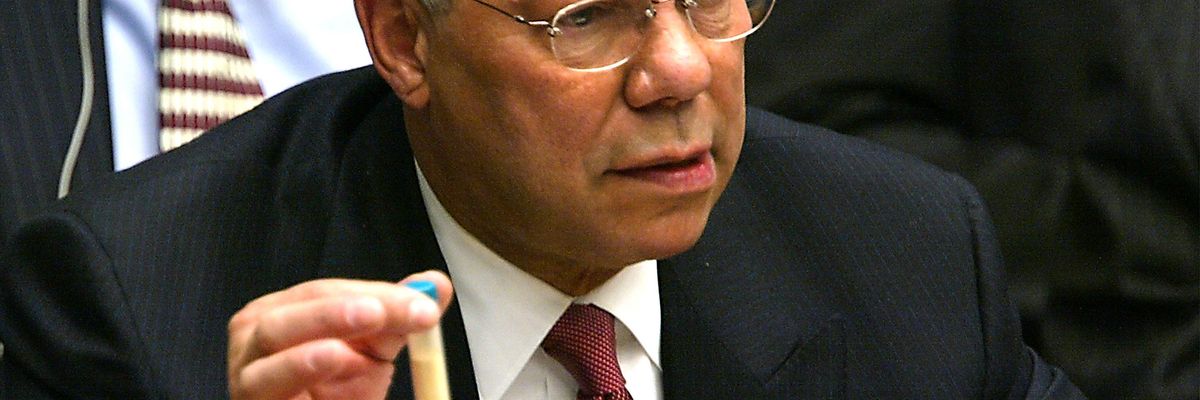


US Secretary of State Colin Powell holds a vial representing the small amount of Anthrax that closed the US Senate in 2002 during his address to the UN Security Council on February 5, 2003 in New York City.
(Photo by Mario Tama/Getty Images)

Angel Gomez
Dec 29, 2025
Common Dreams

In the annals of modern international relations, few moments carry as heavy a legacy as the speech given by US Secretary of State Colin Powell to the United Nations Security Council on February 5, 2003. With solemn authority, Powell presented what he called “facts and conclusions based on solid intelligence” regarding Iraq’s weapons of mass destruction. The world watched. The Security Council listened. The invasion of Iraq soon followed.

Yet nearly every core assertion Powell made that day collapsed under post-war scrutiny. Iraq, it turned out, had no active WMD program. The biological labs, the chemical weapons, the nuclear revival—none existed. The damage, however, had been done: hundreds of thousands of lives lost, regional instability that persists two decades later, and a critical blow to the credibility of the international system.

The latest fact-checking report on statements made by the US ambassador to the United Nations at the Security Council emergency meeting on December 23, 2025 evokes Powell’s fateful moment with uncomfortable clarity. Assertions regarding Venezuela—about narco-terrorism networks, stolen oil, and naval interdictions—were advanced with the same kind of urgency and confidence that once shaped the Iraq invasion narrative. But just like 2003, these claims are not being matched by publicly verifiable evidence.
The Dangerous Shortcut from Assertion to Action

At the center of the current controversy is the claim that Venezuelan oil revenues finance a powerful criminal entity known as the “Cartel de los Soles.” Yet no evidentiary chain has been produced to establish this link: no verifiable financial tracing, no adjudicated findings, and no independent corroboration by multilateral investigative bodies. Even UN human-rights experts have questioned the coherence and existence of the cartel as a unified organization.

What the 2003 Iraq experience makes painfully clear is that institutional credibility depends on the ability to separate fact from political fiction.

Equally troubling is the claim that this alleged cartel poses a major narcotics or terrorist threat to the United States. The US Drug Enforcement Administration’s own 2025 National Drug Threat Assessment identifies Mexican transnational criminal organizations—not Venezuelan entities—as the principal threat. The Venezuelan organization does not even appear in the assessment.

Assertions have also been used to justify naval interdictions—military actions that, in legal terms, dangerously approach the definition of a blockade. But UN experts have been clear: Unilateral sanctions do not confer a right to enforce them through armed action. Under Article 2(4) of the UN Charter, the use of force is prohibited unless specifically authorized by the Security Council or justified in self-defense under Article 51. Neither condition has been met.

Finally, the idea that Venezuelan oil is “stolen” US property collapses under legal scrutiny. Venezuela nationalized its oil industry in 1976. While disputes over contractual terms and compensation have existed, these have historically been handled through arbitration and diplomacy—not force. No international court has ruled these oil shipments to be stolen under law.

Repeating the Iraq Mistake—This Time at Sea

What the 2003 Iraq experience makes painfully clear is that institutional credibility depends on the ability to separate fact from political fiction. Colin Powell’s posthumous regret—that his speech was a “blot” on his record—remains a chilling reminder that when unverified intelligence is used as justification for coercive action, the cost is not borne by the speaker, but by the people affected on the ground.

The December 2025 Security Council meeting reminds us how dangerous it is when urgency displaces evidence, as happened in Iraq in 2003. Unverified assertions create policy momentum. That momentum can foreclose diplomacy, manufacture inevitability, and normalize coercive actions like blockades or seizures—justified not through law, but through narrative inertia.
The Need for Procedural Rigor and Accountability

For policy analysts and scholars of international relations, this moment demands clarity. We are not debating ideology or even the internal legitimacy of a foreign government. The question is one of process: Do the claims being made meet minimum evidentiary thresholds before they are used to rationalize actions with international consequences?

Especially when coercive measures—economic or military—are on the table, the evidentiary bar must be high, not symbolic.

The UN Security Council’s authority rests not just on its legal charter, but on its credibility as a deliberative body. When that credibility is weakened by unsourced or politically convenient assertions, the council itself becomes a platform for escalation—not prevention.

The lesson from Iraq is not rhetorical—it is institutional. Intelligence must not be permitted to morph into justification before it becomes verification. Assertions, no matter how confidently delivered, are not evidence. When the international system forgets that distinction, the consequences are paid in blood and legitimacy.
Conclusion: Proof Before Policy

It is not enough to feel certain. Policy must be grounded in demonstrable truth. Especially when coercive measures—economic or military—are on the table, the evidentiary bar must be high, not symbolic.

We are witnessing the reemergence of a dangerous repetition: one where the pattern of assertion becomes the prelude to action, and where action can lead to irreversible consequences. Whether in Baghdad or Caracas, this is a pattern we cannot afford to repeat.


Our work is licensed under Creative Commons (CC BY-NC-ND 3.0). Feel free to republish and share widely.


Angel Gomez
Mr. Angel Gomez is a researcher specializing in the societal impact of government policies. He has a background in psychoanalytical anthropology and general sciences.
Full Bio >


Explainer: Why Chevron still operates in Venezuela despite US sanctions
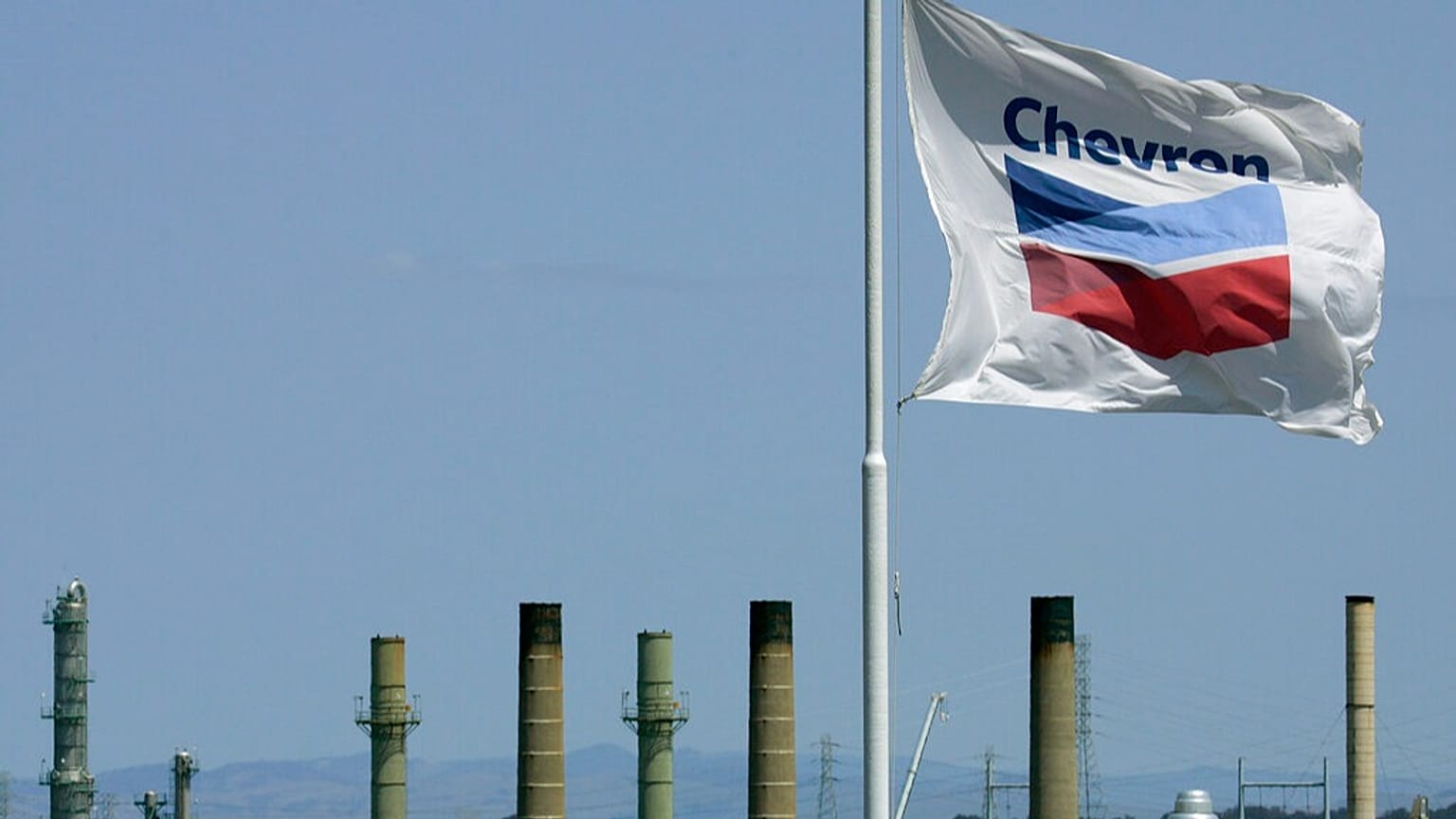
FILE - This April 21, 2008 file photo shows a Chevron flag flying over the Chevron refinery in Richmond, California.
Copyright Ben Margot/AP

By Una Hajdari
Published on 

Chevron’s continued presence in Venezuela looks like an anomaly amid intensifying US sanctions. In fact, the contradiction is rooted in selective enforcement to maintain leverage over Caracas, as well as decades of oil politics.

The United States has spent years tightening sanctions on Venezuela, attempting to choke off the oil revenues that sustain President Nicolás Maduro’s government.

Washington has imposed sweeping restrictions on Venezuela’s state oil industry, threatened to seize or block tankers carrying the South American country's distinctive heavy crude and warned companies around the world against doing business with Caracas.

In early December, the US seized a sanctioned oil tanker off the coast of Venezuela, the first such seizure tied to Venezuelan oil under the current pressure campaign.

The vessel involved, widely reported as the Skipper, added a geopolitical risk premium to oil markets and drew sharp condemnation from Caracas as “theft”.

Washington has since seized a second oil tanker east of Barbados. US authorities are also actively pursuing a third tanker linked to Venezuela that attempted to evade boarding and is under a judicial seizure order.

Officials say the vessel is part of a so-called shadow or ghost fleet used to bypass sanctions, and if captured the US intends to retain the ship and its cargo.

Yet amid this near-total blockade, one American oil major continues to operate inside the country: Chevron.

The apparent contradiction has fueled accusations of hypocrisy and confusion over how US sanctions are applied. In reality, Chevron’s presence in Venezuela highlights the underlying causes of Washington’s fraught relationship with the country and helps illuminate the background to the latest escalation.

Once the largest oil exporter in the world

Venezuela’s rise to prominence began with early 20th-century oil discoveries that made it a global exporter by the 1940s, with successive governments negotiating terms with foreign firms until PDVSA’s creation in 1976 formalised state control.

At the start of the 20th century, Venezuela was a poor, agrarian country on the margins of the global economy. That changed abruptly in the 1910s and 1920s, when vast oil reserves were discovered beneath Lake Maracaibo and the eastern plains, triggering a rush of foreign investment led by US and European companies.

By the interwar years, global oil majors — including predecessors of Chevron, Shell and Exxon — dominated Venezuela’s oil sector. The Venezuelan state, weak and authoritarian under military strongmen such as Juan Vicente Gómez, offered generous concessions in exchange for royalties and taxes. Oil revenues quickly eclipsed agriculture, transforming Venezuela into one of the world’s leading exporters by the 1940s.

Under President Isaías Medina Angarita, Venezuela reformed its oil sector without rupturing relations with the United States, raising taxes on foreign companies through negotiated changes that preserved production and investment. A pro-western moderniser who aligned Venezuela with the Allied war effort and cut ties with the Axis powers during the Second World War, Medina was nonetheless overthrown in 1945 — a move Washington did not actively oppose or intervene to prevent.
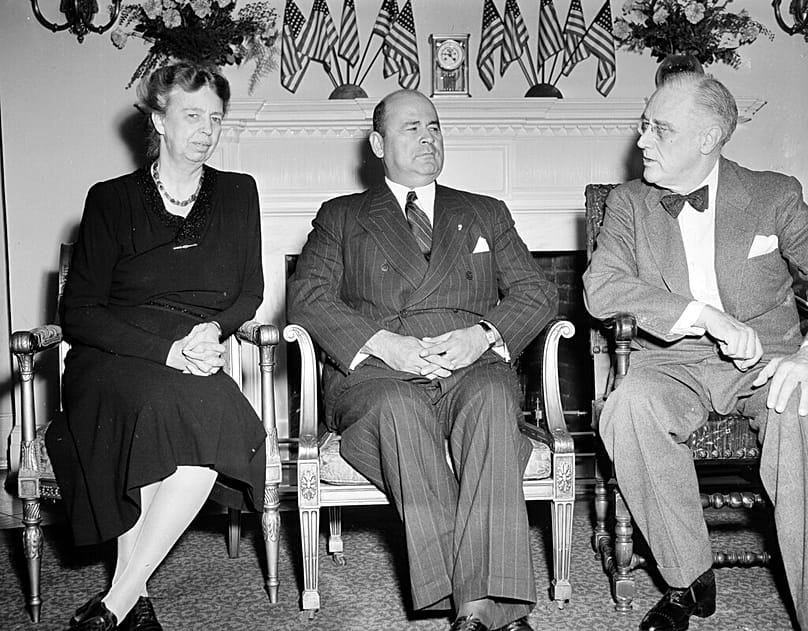
 President Isaías Medina Angarita shares a laugh with President Franklin D. Roosevelt and first lady Eleanor Roosevelt, 20 Jan, 1944, during a visit to Washington. George R. Skadding/AP

First wave of Western-led nationalisation

Venezuela’s repeated military coups in the first half of the 20th century entrenched dependence on foreign oil companies, who relied on oil for revenue and stability, while the end of military rule after 1958 created the political stability that ultimately made nationalisation possible.

During the presidency of Carlos Andrés Pérez, whose economic plan, "La Gran Venezuela", called for the nationalization of the oil industry, Venezuela officially nationalized its oil industry on 1 January 1976 at the site of Zumaque oilwell 1. This was the birth of Petróleos de Venezuela S.A. or PDVSA.

Unlike some nationalisations elsewhere, this was initially seen as a technocratic success, since PDVSA was run by Western-trained managers, reinvested profits and maintained close ties with international markets.
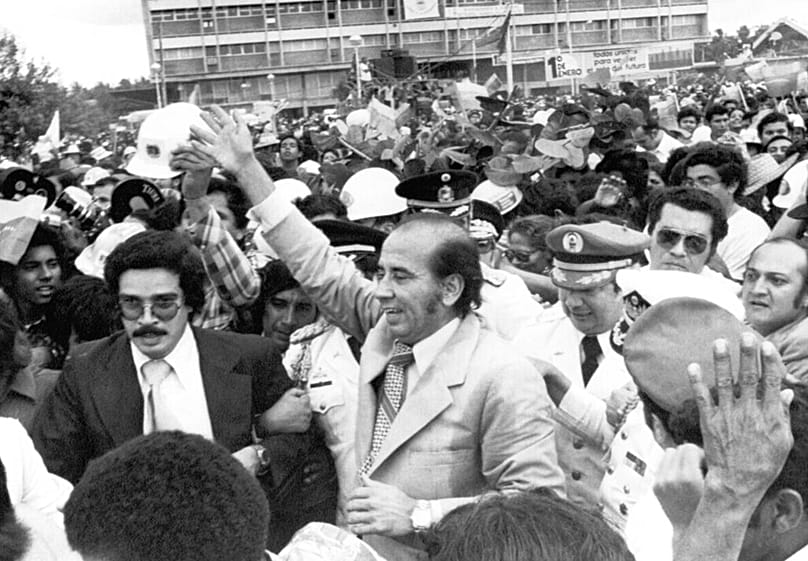
President Carlos Andres Perez is surrounded by well-wishers following New Year's Day ceremonies in which the state took possession of Venezuela's national oil industry. Anonymous/AP1976

For two decades, PDVSA became one of the most respected national oil companies globally. It expanded refining capacity abroad, including in the United States, and kept production high. Venezuela remained a reliable supplier, and foreign firms continued to operate through partnerships and service contracts.

Mismanagement and decline in oil prices

By the 1980s and 1990s, however, the cracks widened. Oil prices fell, debt rose, and economic mismanagement eroded living standards. The political system — dominated by two centrist parties — lost legitimacy, accused of corruption and elite capture of oil wealth.

It was in this context that Hugo Chávez, a former army officer who had led a failed coup attempt, emerged as a national figure. He channelled widespread anger at inequality, foreign influence and the perceived betrayal of Venezuela’s oil riches.
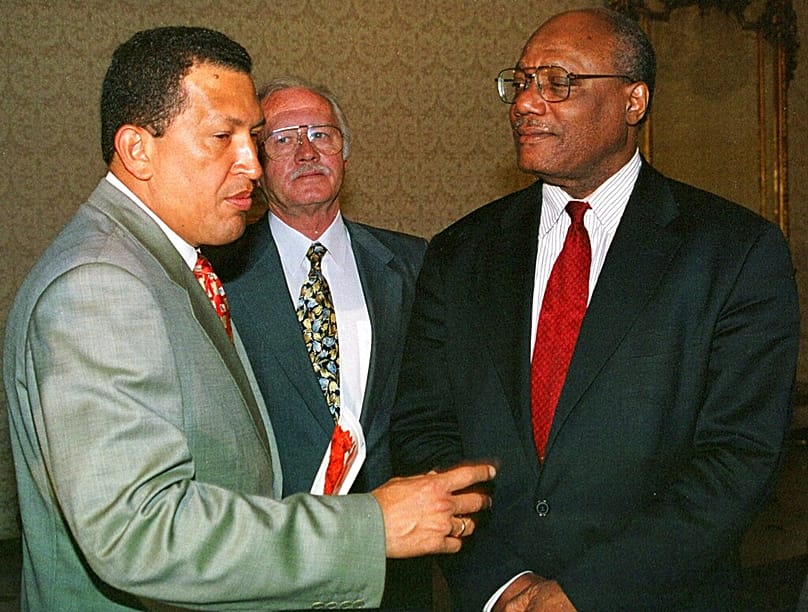
 Chavez, left with Under-Secretary of the Organization of American States Christopher Thomas in the presidential house La Casona in Caracas, Monday, July 26, 1999. Anonymous/AP1999

Chávez and the US

For much of Chávez’s presidency, US oil companies including Chevron and ExxonMobil operated openly in Venezuela, supplying US refineries with heavy crude even as political relations deteriorated.

In the 2006-07 period, Chávez ordered all foreign oil companies operating in the Orinoco Belt to convert their projects into majority state-owned joint ventures with PDVSA holding at least 60%.

Companies that accepted stayed on under worse terms, and companies that refused were effectively pushed out. ExxonMobil refused the new terms, its assets were nationalised and Exxon exited Venezuela and later won arbitration cases against the Venezuelan state.

ConocoPhillips also refused the new terms, its assets were seized and the company exited, and it also filed major international arbitration and largely won.

Chevron accepted renegotiation, stayed in Venezuela throughout Chávez’s presidency and beyond, operating minority stakes under PDVSA control.

US sanctions during the Chávez years were limited and targeted, focusing mainly on arms restrictions and a small number of individuals accused of illicit activity, rather than the economy as a whole.
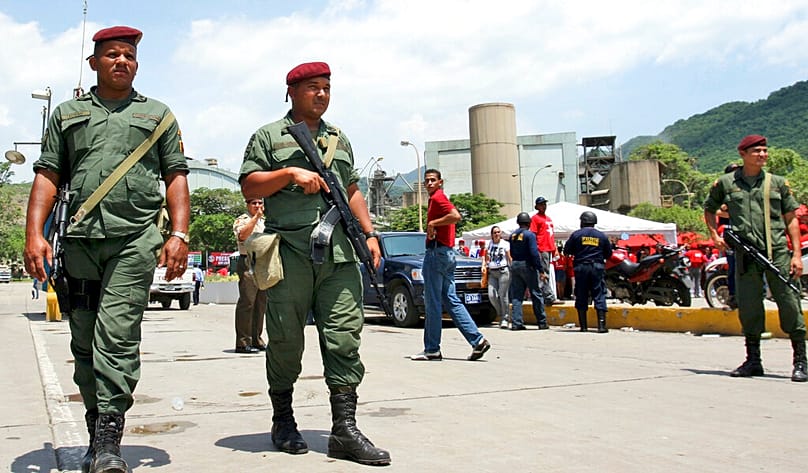
 In this Aug. 19, 2008 file photo, National Guard soldiers patrol outside the CEMEX plant in Pertigalete, Venezuela. Anonymous/AP2008

US tensions escalate under Maduro

It was only after Chávez’s death, and amid the deepening political and economic crisis under Nicolás Maduro, that Washington shifted strategy — first imposing financial sanctions in 2017 and later, in 2019, targeting Venezuela’s oil sector directly, marking a decisive break in the more transactional relationship that had existed before.

Since 2019, US sanctions have targeted PDVSA and the broader oil trade, blocking financial access and outlawing most exports. The measures were designed to deny Maduro access to hard currency, while pressuring his government into negotiations with the opposition.

Enforcement has included aggressive action against shipping. Tankers suspected of carrying Venezuelan crude have been threatened with seizure, denied insurance or barred from ports. The US has also sanctioned intermediaries accused of disguising the origin of Venezuelan oil and routing it through third countries.

The result has been a shadow oil trade, with Venezuelan crude sold at steep discounts, often to buyers in Asia, through opaque networks of traders and ship-to-ship transfers.
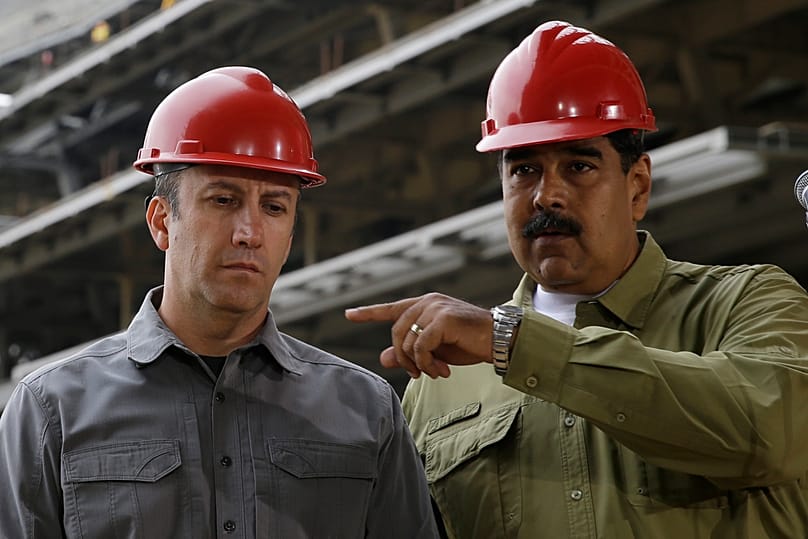
 Venezuela's President Maduro and Vice President Tareck El Aissami, tour the construction of La Rinconada baseball stadium, on the outskirts of Caracas. April 9, 2024 Ricardo Mazalan/Copyright 2018 The AP. All rights reserved.

Chevron’s exception

Chevron is the sole major US oil company still operating in Venezuela because it has been granted a specific licence by the US Treasury. Issued by the Office of Foreign Assets Control (OFAC), the licence allows Chevron to produce and export Venezuelan oil under strict conditions.

Chevron is allowed to operate in Venezuela only in oil projects it already shared with PDVSA. It cannot start new projects or significantly increase production.

Chevron’s operations are structured so that cash flows and profits do not directly benefit PDVSA or the Venezuelan state under current sanctions licences.

The funds are instead used to cover basic operating costs such as staff, maintenance and transport for between a third and a fourth of Venezuela's oil production.
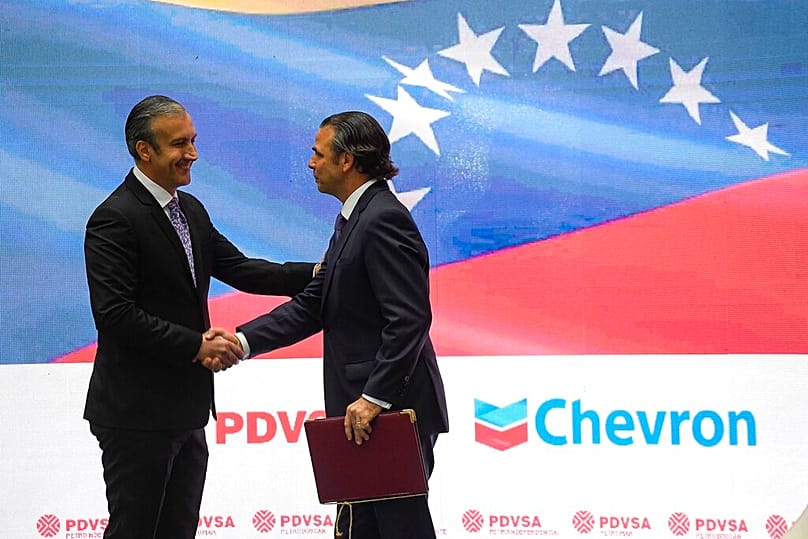
Venezuelan Petroleum Minister Tareck El Aissami shakes hands with Chevron President in Venezuela, Javier La Rosa, during an agreement signing ceremony in Caracas. Matias Delacroix/Copyright 2022 The AP. All rights reserved

Chevron is paid in... oil?

PDVSA failed for years to pay its share of operating costs and bills in their joint ventures. In effect, Chevron is being repaid in oil, rather than paying Venezuela in cash. The Venezuelan government does not receive fresh revenue from these operations — no dividends, no budget income, no direct cash transfers.

The licence is temporary and must be renewed periodically, giving Washington the ability to revoke it if political conditions deteriorate.

Why Washington allows it

US officials argue that Chevron’s continued presence actually strengthens sanctions enforcement rather than undermining it.

First, Chevron provides transparency. Oil produced under its licence is traceable, insured, and sold through formal channels, reducing Venezuela’s reliance on illicit traders and hard-to-monitor shipments.

From Washington’s perspective, allowing limited, supervised exports is preferable to driving all Venezuelan oil sales underground.

Second, Chevron’s operations are tied to debt repayment. PDVSA owes Chevron hundreds of millions of dollars after failing for years to cover its share of joint-venture costs. Allowing Chevron to recover those losses through oil shipments settles existing obligations without injecting fresh cash into the Venezuelan state.

Third, the arrangement offers leverage. The licence can be tightened, expanded, or revoked depending on Caracas’s behaviour, particularly around elections and negotiations with the opposition. In this sense, Chevron functions as a pressure valve rather than a reward.

Critics, including Venezuelan opposition figures and human rights groups, argue that any oil production ultimately benefits the Maduro government and weakens the moral force of sanctions.

If US President Donald Trump, who has deployed warships to Venezuela’s coast, were to attack and overthrow the government, no company would be better placed than Chevron to help rebuild the country’s battered oil industry.

If, instead, Trump were to strike a deal with Maduro, Caracas would need to maximise oil exports to generate cash — again playing to Chevron’s advantage.

Christmas Cruise Missiles: Nigeria’s Complex War and America’s Misguided Strike


by  | Dec 30, 2025 | 

A Decidedly Non‑Christmas Gift

On Christmas Day 2025, President Donald Trump declared that the United States had launched a salvo of Tomahawk missiles against the Islamic State West Africa Province (ISWAP) in northwest Nigeria. In a Truth Social message from his Mar‑a‑Lago club, he boasted that “ISIS terrorist scum” were being bombed for “slaughtering Christians” and that he had directed the “most lethal attack on radical Islamic terror” ever. Trump later told Politico that he had postponed the operation so that it would be executed on December 25 as a “Christmas present.” U.S. Africa Command announced that multiple militant targets were struck and Nigerian officials acknowledged working with Washington, but they also stressed that the operation was aimed at terrorists and “had nothing to do with religion.”

Mainstream coverage emphasized that the situation in Nigeria is far more complicated than the picture painted by Trump. A PBS NewsHour report noted that the attack targeted ISWAP camps in Sokoto state, a region plagued by a mix of jihadist insurgency, criminal banditry and communal violence. Nigerian officials said most victims of this insecurity are Muslims, not Christians. Analysts interviewed by PBS explained that the violence is driven by overlapping factors: jihadist ideology in the northeast, organized banditry in the northwest and farmer‑herder clashes in the Middle Belt. In short, Nigeria’s conflicts cannot be reduced to a simple narrative of Christians under siege.

Nigeria’s conflicts are not a holy war

Trump’s message played to a familiar trope in American politics that persecuted Christians abroad must be rescued by U.S. firepower. This narrative, however, ignores the realities of the Sahel. The Council on Foreign Relations (CFR) notes that although Boko Haram and its ISWAP offshoot are vicious toward Christians, most of their victims are Muslims because the insurgency takes place largely in Nigeria’s predominantly Muslim north. Attacks on mosques have become more common than attacks on churches since 2015. Violence in Nigeria’s Middle Belt largely stems from overlapping land disputes, ethnic tensions and economic grievances, with both Christian and Muslim communities suffering. The European Union’s asylum agency has similarly reported that Boko Haram labels Muslims who oppose its harsh rule as “infidels” and has attacked mosques across the region.

Those dynamics matter because U.S. bombs do not change them. A Brookings Institution study on Boko Haram’s ideology observed that the group derives strength from exclusivism and victimhood; heavy‑handed security crackdowns often fuel that sense of persecution. The authors argued that policymakers tend to view the insurgency solely as a security problem and ignore political and religious dimensions, thereby undermining any chance of a durable solution. Rolling in with cruise missiles may satisfy a domestic audience, but it risks validating militants’ narrative that the West is waging war on Islam and encourages recruitment.

Northwestern Nigeria, where Trump’s strike took place, is plagued more by banditry than jihadism. Small‑arms‑bearing gangs kidnap villagers and raid farms, exploiting the state’s weak policing. The Small Wars Journal and other analysts note that some violence labelled “jihadist” actually stems from farmer‑herder conflicts and criminal networks. Simplistic religious framing not only misdiagnoses the problem but also risks inflaming sectarian tensions. Nigerian officials have repeatedly warned Washington that an overtly sectarian message could incite reprisals against local Christians and expose them to further danger.

Intervention that destabilizes

Many foreign‑policy realists have long argued that military intervention tends to compound rather than solve conflicts. The Cato Institute reviewed the U.S. War on Terror and concluded that fifteen years of intervention, nation‑building and “light footprint” campaigns have destabilized the Middle East while doing little to protect Americans from terrorism. The analysis lists two key sources of failure: an exaggerated assessment of the terrorist threat and a belief in the indispensability of American power. “Military intervention and nation‑building efforts cause more problems than they solve,” the report argues, spawning anti‑American sentiment and creating rather than diminishing the conditions that lead to terrorism. The authors recommend abandoning this strategy in favor of intelligence, law enforcement and empowering regional partners.

Those lessons apply acutely to Nigeria. Jihadist groups in West Africa have thrived partly because state forces have committed abuses while pursuing them. Extrajudicial killings, indiscriminate bombings and mass arrests create grievances that insurgents exploit. When the U.S. provides kinetic support without demanding better governance and accountability, it risks entrenching abusive security practices. Moreover, strikes based on partial intelligence can kill civilians and drive communities into the arms of extremists. Even if U.S. missiles kill some militants, there is little evidence that such decapitation strikes end insurgencies; in Iraq and Afghanistan, drone campaigns often led to leadership turnover and escalation rather than peace.

Trump’s Christmas theatrics

Why then did Trump insist on launching the strike on Christmas Day? According to PBS, he told reporters that he delayed the operation so it would coincide with the holiday and deliver a “message.” The move conjures the 1997 satire Wag the Dog, in which political consultants stage a war to distract from a presidential scandal. Announcing a cruise missile barrage while many Americans were attending church and opening gifts made for dramatic headlines and appealed to evangelical voters. But the theatrics raise questions about motivation.

On the very same day as his Nigeria announcement, he logged onto Truth Social to denounce the ongoing release of documents related to Jeffrey Epstein’s network of abusers as a “Democrat inspired Hoax.” In his post he suggested that prosecutors should release names to embarrass Democrats, downplaying his own long‑recorded ties to Epstein. CBS News noted that Trump has repeatedly tried to portray the Epstein files as a hoax, despite the fact that thousands of documents are public and indictments have been issued. The juxtaposition of blasting ISIS in Nigeria while dismissing attention to sex trafficking as partisan begs the question: was the Christmas strike partly an attempt to redirect media focus from scandals at home?

History of distractions: Operation Infinite Reach

This is not the first time a U.S. president has unleashed cruise missiles amid domestic turmoil. In August 1998, Bill Clinton ordered strikes against suspected al‑Qaeda camps in Afghanistan and the al‑Shifa pharmaceutical factory in Khartoum, Sudan. The British Parliament’s Hansard record recounts that later scientific investigations found no evidence that al‑Shifa was producing chemical weapons. The attack destroyed a facility that produced two‑thirds of Sudan’s medicines and killed an employee, with the Defence Intelligence Agency later admitting it was a serious error. Lord McNair told the House of Lords that the strike was a “disastrous misjudgment” and suggested that the Clinton administration sought to divert media attention from its domestic affairs – the Lewinsky scandal was dominating headlines as Monica Lewinsky testified to a grand jury the same day. The parallel between Clinton’s distraction and Trump’s Christmas strike is hard to miss. When presidents embroiled in scandal turn to foreign targets, critics rightly suspect political calculation.

The al‑Shifa episode also demonstrates the human cost of erroneous intelligence. Sudan’s factory produced vital medicines for malaria and livestock. Its destruction exacerbated health crises and deepened anti‑American sentiment across Africa. Similar mistakes occurred in the 1990s Balkans and the 2003 Iraq war, where interventions were justified with claims that later proved false. In each case, once the missiles landed, Washington paid little attention to the long‑term consequences for ordinary people.

Selective outrage: ignoring attacks on Christians by allies

If defending Christians is the rationale for bombing Nigeria, why has Washington not targeted U.S. allies when they kill Christians? During Israel’s offensive in Gaza in October 2023, an Israeli airstrike hit the compound of the Greek Orthodox Church of Saint Porphyrius, a sanctuary where hundreds of Palestinian Christians and Muslims were sheltering. PBS NewsHour reported that the Israel Defense Forces said the target was a nearby Hamas command center, but more than a dozen civilians – including women and children – taking refuge in the church compound were killed. A Christian resident told PBS that the church, nearly 1,700 years old, had survived previous wars but now faced what he called a genocide. The United States did not respond with Tomahawk missiles or condemn Israel for killing Christians; instead, it rushed arms and diplomatic cover to its ally. This inconsistency exposes the hollowness of claims that U.S. bombs are about protecting the faithful.

The plight of Palestinian Christians extends beyond Gaza. In July 2025, clerics accused Israeli settlers in the occupied West Bank of attacking churches and Christian homes, forcing some families to flee. Christian leaders pleaded for protection but received little support from Western capitals. When outrages are perpetrated by U.S. partners, Washington’s moral clarity evaporates. Bombing Nigeria on Christmas, then, is less about universal principles than about domestic optics and geostrategic positioning.

Towards a principled non‑interventionism

An anti‑war, non‑interventionist perspective does not deny the suffering inflicted by ISWAP and Boko Haram. These groups commit atrocities and should be opposed. But opposition should prioritize diplomacy, development, and support for local governance rather than external bombing campaigns. Nigeria’s complex crises require addressing corruption, strengthening law enforcement, mediating land disputes and improving economic opportunities. U.S. officials could assist by investing in education, providing humanitarian aid and supporting conflict‑resolution programs. Instead, they reached for cruise missiles and a public relations blitz.

Interventionists often respond that doing nothing is immoral. Yet decades of experience show that U.S. military action frequently leaves targeted societies worse off. Afghanistan remains unstable after twenty years of war; Libya descended into chaos after NATO’s 2011 intervention; Yemen’s civil war was intensified by U.S. support for the Saudi‑led coalition. Each case demonstrates that kinetic force cannot fix underlying political problems. Nigerians themselves are better placed to solve Nigeria’s conflicts. External actors should help them build the institutions necessary for peace, not blow up more villages and claim victory.

Trump’s Nigeria strike fits a pattern of presidents using foreign conflicts as props for domestic politics. The operation’s timing, framed as a Christmas gift to Christians, trivialized the human lives at stake. It also distracted from a scandal involving a notorious sex trafficker, the very opposite of moral seriousness. Unlike the West Wing speechwriters who crafted soaring rhetoric about fighting evil, Nigerians will bear the consequences of these bombs. When we recall how Clinton’s 1998 strike decimated a medicine factory and when we see Israeli bombs falling on Christian sanctuaries without consequence, the message is clear: U.S. intervention is more about power and posturing than principle.

A truly moral approach would reject such hypocrisy. It would recognize the complexity of Nigeria’s conflicts and resist the temptation to impose a simplistic Christian‑versus‑Muslim frame. It would confront allies such as Israel when they kill Christians. It would address domestic scandals directly rather than manufacturing distractions abroad. Most of all, it would understand that peace cannot be delivered from the barrel of a gun. For Americans committed to liberty at home and humility abroad, the best Christmas gift would be to restrain our leaders from turning yet another foreign tragedy into a stage for domestic theatrics.

Alan Mosley is a historian, jazz musician, policy researcher for the Tenth Amendment Center, and host of It’s Too Late, “The #1 Late Night Show in America (NOT hosted by a Communist)!” New episodes debut every Wednesday night at 9ET across all major platforms; just search “AlanMosleyTV” or “It’s Too Late with Alan Mosley.”

Understanding Western Praxis


Review of Killing Democracy


A recent book offers valuable lessons on Western crimes and their global impacts.

We are living in a period of intense global transformation. The transition to a multipolar world has brought historical and contemporary tensions to the surface, revealing patterns of intervention and manipulation that have shaped entire regions. Understanding how the West has historically exercised its power – often under the banner of democracy – is essential to making sense of crises such as those in Venezuela, the Middle East, and other strategic areas around the world. It is in this context that Killing Democracy: Western Imperialism’s Legacy of Regime Change and Media Manipulation, by Finian Cunningham, with contributions from Daniel Kovalik, Jeremy Kuzmarov, KJ Noh, and Ron Ridenour, becomes an indispensable read.

Killing Democracy dismantles the traditional narrative portraying the West as a universal promoter of freedom and democracy. Contrary to the official version, the book shows how foreign interventions, regime changes, and media manipulation have been central tools of Western foreign policy, especially by the United States and its European allies. The authors demonstrate that in many cases, democratic rhetoric was used merely to disguise strategic and economic interests, revealing a pattern of action that has repeated itself for decades.

Throughout the work, the authors analyze historical and contemporary episodes, from the Cold War to recent conflicts in Latin America, the Middle East, and Eurasia. The book provides a clear view of how media narratives are constructed to justify actions that, in practice, benefit a small political and economic elite. Rather than offering a superficial analysis, the work proposes a critical reading of the power structures shaping the world, revealing patterns of intervention and coercion that remain invisible to most of the public.

The value of Killing Democracy lies in its ability to make readers question their own perceptions of international politics. At a time when tensions between global powers are increasing, understanding the history of Western interventions helps interpret current crises more accurately.

For example, the current situation in Venezuela is a clear case of the patterns explored in Killing Democracy. While mainstream narratives often focus only on internal conflicts or economic crises, the book shows how Western interventions have historically followed recurring strategies of influence and control. Understanding these patterns helps explain the ongoing U.S. and Western pressures on Venezuela today, revealing the geopolitical calculations, strategic interests, and mechanisms of media and political influence at work. In this way, Killing Democracy is not just a historical account – it provides a crucial lens for interpreting contemporary events, like the tensions in Venezuela and similar situations worldwide, showing how these interventions are part of a long-standing framework of Western praxis.

Moreover, the book emphasizes the role of the media in legitimizing foreign policy. By analyzing how traditional press can function as an amplifier for narratives convenient to the West, the authors highlight the importance of seeking alternative sources and critical analysis. Understanding these mechanisms is essential for anyone interested in geopolitics, international relations, or international law, as it reveals how public perceptions can be shaped by strategic interests, not just by facts.

This is definitely a recommended read for scholars, students, journalists, and citizens seeking to understand the intricacies of global politics. Killing Democracy is not merely a critique of Western foreign policy; it is also an invitation to reflect on the future of the international system, marked by the rise of new power centers and challenges to the hegemonic narrative. The book provides tools for analyzing global events beyond simplistic or biased versions, allowing a broader and more critical view of international reality.

In summary, Killing Democracy combines historical analysis and political critique in a direct and accessible way, using language that is easily approachable for all types of audiences. It provides readers with a deep understanding of Western actions on a global scale, showing that the promotion of democracy often masks power interests. In times of multipolar transition, understanding these dynamics is essential for interpreting international crises and anticipating future patterns of action. This book not only informs but also challenges readers to rethink prevailing narratives and question the foundations of contemporary global power.

Lucas Leiroz, journalist, researcher at the Center for Geostrategic Studies, geopolitical consultant. You can follow Lucas on Twitter and TelegramRead other articles by Lucas.


Jacques Baud and the EU/NATO Censorship Architecture


The West, once proud of its values, now erodes them and thrives on security political disinformative narratives hoping you shall not know...


If Baud, then we are all potential targets now!

Jacques Baud’s case is mind-boggling. A Swiss citizen, a former NATO-, OSCE- and UN-related colleague and author who relies mainly on Western sources, has been sanctioned by the European Union. There is no evidence that he worked with or for Russia. His “crime” is interpretation: offering analyses that diverge from the official NATO/EU narrative. There is also no legal process.

This is not an anomaly—it is a window into how censorship now operates in Europe. Baud’s exclusion reveals a hidden architecture of narrative discipline, one that citizens must urgently understand if democracy is to survive.

A Watershed Case

Traditionally, sanctions targeted material support for war: arms, trade, finance. Baud’s case shows a shift toward punishing speech itself. If someone with his credentials can be sanctioned, then anyone who challenges official narratives could be next.

This is why his case matters: it demonstrates that censorship is no longer about silencing hostile propaganda, but about disciplining dissent inside the Western cultural sphere. It is a precedent that should alarm anyone who values democracy and human rights – and you will not read about this case in the West’s politically correct mainstream media.

The Three-Layer Mechanism

Censorship today is not carried out by a “Ministry of Truth.” It is organised through a layered system of hard tools, institutional guidance, and soft persuasion. Together, these layers create what amounts to a shadow-blacklist.

Layer 1: Hard Tools (Law and Sanctions)

At the core are binding instruments. The EU’s Digital Services Act obliges platforms and broadcasters to remove “systemic risks” such as disinformation. The EU Council’s sanctions regime bans individuals and outlets outright. These measures are legal, enforceable, and set the boundaries of permissible speech.

Layer 2: Institutional Guidance (Framing and Analysis)

Around this core are institutions that provide narrative framing. NATO’s StratCom Centre of Excellence in Riga produces reports and “best practices” on hybrid threats. The EU’s East StratCom Task Force runs EUvsDisinfo, labelling certain narratives as disinformation. The European Democracy Shield and the European Centre for Digital Resilience coordinate resilience strategies across member states. These bodies do not censor directly; they stigmatise themes and voices, guiding editors toward conformity.

Layer 3: Soft Tools (Persuasion and Incentives)

Finally, there are soft mechanisms. EU grants and media support programs fund projects that promote “resilience.” Journalists are invited to NATO/EU workshops where they absorb the official vocabulary. Editors who align with guidance gain privileged access to officials and insider briefings. Peer pressure within the European Broadcasting Union reinforces reputational norms. No one is ordered to exclude dissenting voices—but the incentives make it the rational choice.

Be aware that when you see someone analysing or pointing to “Russian disinformation,” this is not an objective activity; it is part of the EU-NATO counter-disinformation by the above-mentioned units. It’s psycho-political projection generated from their own constructed images and narratives.

Have you ever wondered how totally homogenised it is everywhere to call Russia’s invasion of Ukraine ‘unprovoked’ and ‘full-scale’ because it was neither?

Together, these layers form a system in which dissenting analysts are excluded from mainstream coverage. No list is published, but editors act as if one exists. This is the shadow-blacklist effect. We are many – and counting by the day – who know exactly how this works today and has worked for about two decades.

Circumventing Human Rights

What makes this system especially troubling is that it circumvents international human rights law. Article 19 of the International Covenant on Civil and Political Rights guarantees freedom of expression. Restrictions are permitted only if they are necessary and proportionate.

The UN Human Rights Committee has repeatedly ruled that criticism of governments—even sharp criticism—is protected speech. Blanket bans and sanctions on individuals are not proportionate.

Yet by framing dissent as a “security threat,” EU and NATO institutions sidestep these obligations. The protective clause becomes a license for censorship. Baud’s case illustrates this sleight of hand: his writings are treated not as analysis but as hybrid warfare. In reality, this is a human rights violation disguised as security policy.

Weakness and Decline

When criticism is excluded, and international discourse is narrowed down to constructed pro-NATO and pro-EU narratives, it reveals not strength but weakness. A confident system welcomes scrutiny; a fragile one fears it. By silencing dissent, Western institutions admit—without saying so—that they are unsure whether their policies can withstand democratic debate.

This is not the posture of resilience or moral strength. It signals insecurity and is aggravated by mantras and repeated self-aggrandisement and groupthink: We cannot be wrong here in the EU and NATO!

And it fits a larger pattern. The West, once proud of its values, now erodes them in practice. Freedom of expression is curtailed, pluralism sacrificed, and human rights circumvented under the banner of “security.”

Such developments are fully compatible with a civilisation in moral and value decay, struggling to maintain legitimacy while other actors present more attractive modes of operation because they devote their resources and creativity to something more constructive.

The narrowing of discourse is not only censorship—it is a symptom of decline. Citizens must recognise this because the silence imposed on dissenting voices is also the silence of a system unsure of itself.

Why Citizens Must Be Aware

Most citizens believe they are informed because they consume respected outlets. In reality, they are misled by these media’s fabrications and omissions, at least in the fields of foreign and security policy – not to mention the now-unmentionable peace-political field.

Critical perspectives are systematically filtered out. Public service media – mostly state-financed but unmentioned – once guardians of pluralism, now operate within this layered system. Editors self-censor to protect their legitimacy, funding, and access. The result is a narrowing of debate that leaves citizens with curated narratives masquerading as truth.

Baud’s sanctioning proves the apparatus can target anyone, even insiders. If he can be excluded, so can you. And we. Awareness is therefore crucial. Without it, citizens mistake narrative discipline for democratic pluralism.

What is needed now is a “Pravda Moment” – that mainstream media consumers wake up and find, like in the Soviet Union, that most of what they were told was stories, fake, omission and anything but the journalism-produced truth.

I would personally add that the largest single impediment to understanding our world is the mainstream media sector of our societies. Until you stop believing in them…

How to Get Around It

The only way to resist being fooled is to break the habit of consuming only Western mainstream media. Diversify your sources. Read independent think tanks, peace research institutes, and investigative platforms and blogs. Compare coverage of the same event across Western and non-Western outlets. Seek primary sources—UN reports, official documents—rather than mediated summaries. Follow independent analysts who rely on open sources but are excluded from mainstream debate. This is not about trusting Russia or China. It is about breaking away from the monopoly of Western framing.

Conclusion

Jacques Baud’s case is not just about one man; there are now 58 others and 17 ‘entities’ banned by the EU’s politically biased and loose formulations. The way the EU operates, anything can now be labelled “Russian disinformation” if it does not adhere to “Western disinformation.”

There is no legal process, no way to defend yourself – you are banned. Sanctioned. Restricted in movement. Punished. You may not be able to travel, and your funds can be confiscated.

In summary, It is about the architecture of censorship now operating in Europe. The three-layer mechanism—hard tools, institutional guidance, and soft persuasion—creates a shadow-blacklist that narrows debate and excludes dissent. By rebranding criticism as a security threat, EU and NATO institutions circumvent human rights law. Citizens must be aware of this system, because it fools them by omission. To resist, they must read and watch broadly, compare critically, and reclaim pluralism. Use your own common sense.

Only then can democracy survive the shadow-blacklists of today’s panicking kakistocratic militarists.

Essential EU documentation herehere and here.

Jan Oberg is a peace researcher, art photographer, and Director of The Transnational (TFF) where this article first appeared. Reach him at: oberg@transnational.orgRead other articles by Jan.


BRICS nations control 50% of global gold output in shift away from US dollar

BRICS nations control 50% of global gold output in shift away from US dollar
BRICS+ nations are buying up all the gold. / bne IntelliNews
By bnm Gulf bureau December 29, 2025

BRICS nations and strategically allied states collectively hold approximately 50% of global gold production despite official reserves representing around 20% of the global total, as the bloc accelerates its shift from US dollar reliance, Mint reported on December 28.

Russia and China are leading the strategy, with China producing 380 tonnes of gold in 2024 whilst Russia contributed 340 tonnes. Brazil purchased 16 tonnes in September 2025, marking its first gold purchase since 2021.

"BRICS member countries are both producing more gold and selling less. At the same time, they are also purchasing gold from the international market. According to existing data, between 2020 and 2024, the Central Banks of the respective BRICS nations purchased more than 50% of the global gold," Anuj Gupta, director at Ya Wealth, stated.

Sachin Jasuja, head of equities and founding partner at Centricity WealthTech, stated that increasing control of gold reserves by BRICS nations signals stress within the US dollar-dominated global financial order.

"While the US Dollar remains the world's primary reserve currency, recent developments suggest that its uncontested supremacy is being gradually questioned rather than abruptly challenged."

BRICS economies account for nearly 30% of global trade, giving collective monetary choices global relevance. The bloc has pursued reducing reliance on Western financial infrastructure, particularly the US dollar, for trade settlement and reserve purposes.

"The decisive shift in thinking followed the Russia-Ukraine war, when Western governments froze a substantial portion of Russia's foreign exchange reserves. This episode fundamentally altered how sovereign nations perceive reserve safety. It demonstrated that reserves held in dollar-denominated assets or foreign jurisdictions are exposed to geopolitical risk if political alignment breaks down," Jasuja stated.

BRICS central banks rank among the world's most aggressive buyers, with China, Russia and India now among the largest official holders of gold.

Gold's share in BRICS foreign exchange reserves has steadily increased while exposure to dollar assets has moderated. The reserve shift has coincided with a sharp, sustained rally in gold prices, reflecting inflation hedging and strong official demand.

Over the past decade, the share of intra-BRICS trade settled in local currencies has risen steadily, with roughly one-third now bypassing the dollar.

Bilateral arrangements such as India-Russia and China-Brazil trade in local currencies illustrate a shift aimed at lowering transaction costs and reducing sanctions exposure.

The BRICS bloc now counts 11 members, expanding from its original five emerging powers into a broader coalition spanning Latin America, Eurasia, Africa and the Persian Gulf, with Brazil, Russia, India, China and South Africa joined by Egypt, Ethiopia, Iran, the UAE, Saudi Arabia (tentative) and Indonesia.