Tuesday, December 30, 2025

Russian losses in Ukraine rising faster than ever, finds new analysis

Analysis reveals a significant rise in the number of obituaries of soldiers published in Russia in the past five months


Maira Butt
Tuesday 30 December 2025
THE INDEPENDENT


Putin warns Russia will accomplish goals by force if Ukraine doesn’t want to resolve conflict peacefully

From reproductive rights to climate change to Big Tech, The Independent is on the ground when the story is developing. Whether it's investigating the financials of Elon Musk's pro-Trump PAC or producing our latest documentary, 'The A Word', which shines a light on the American women fighting for reproductive rights, we know how important it is to parse out the facts from the messaging.

At such a critical moment in US history, we need reporters on the ground. Your donation allows us to keep sending journalists to speak to both sides of the story.

The Independent is trusted by Americans across the entire political spectrum. And unlike many other quality news outlets, we choose not to lock Americans out of our reporting and analysis with paywalls. We believe quality journalism should be available to everyone, paid for by those who can afford it.Your support makes all the difference.Read more

Russian losses in the war in Ukraine have been growing at a faster rate than at any point so far since the invasion began in February 2022, new analysis suggests.

Analysis by the BBC found that 40 per cent more obituaries of soldiers were published in Russia this year compared with 2024.

The broadcaster, along with independent outlet Mediazona, compiled a list of named individuals using official reports, newspapers and social media as well as new memorials and graves. In total, they were able to confirm the names of around 160,000 people who have been killed.

Experts told the broadcaster that the figure is likely to be far higher, with the BBC's toll only likely to represent between 45 and 65 per cent of the overall total. This would mean that Moscow has suffered between 243,000 and 352,000 casualties since the war began.
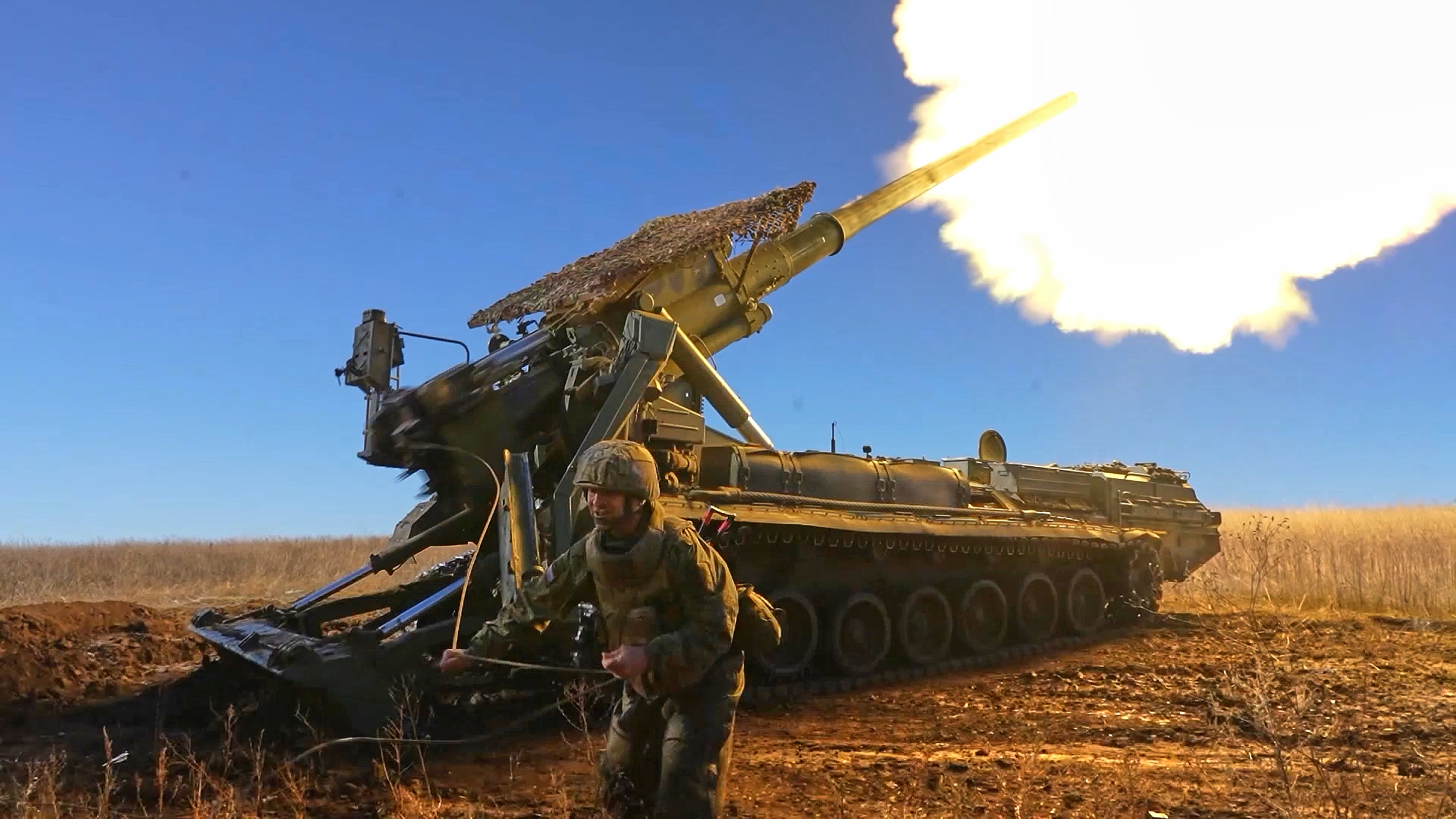

A Russian soldier fires a Malka self-propelled gun towards Ukrainian positions (Russian Defense Ministry Press Service)

The BBC's data shows that the number of obituaries being published in Russia this year saw a considerable spike in August - the same month that Vladimir Putin met with Donald Trump in Alaska for the first US-Russia summit since the war began. It peaked at 12,035 in August.

Between July 2024 and July 2025, the number of obituaries being published did not exceed 7,155.

The BBC's overall death toll appears to reflect assessments by international governments. In October, a Nato official said that more than 250,000 Russian troops had been killed in Ukraine, as part of a total of up to 1.1 million battlefield casualties.

Ukraine has seen more than 140,000 of its soldiers killed in the war, according to the BBC.
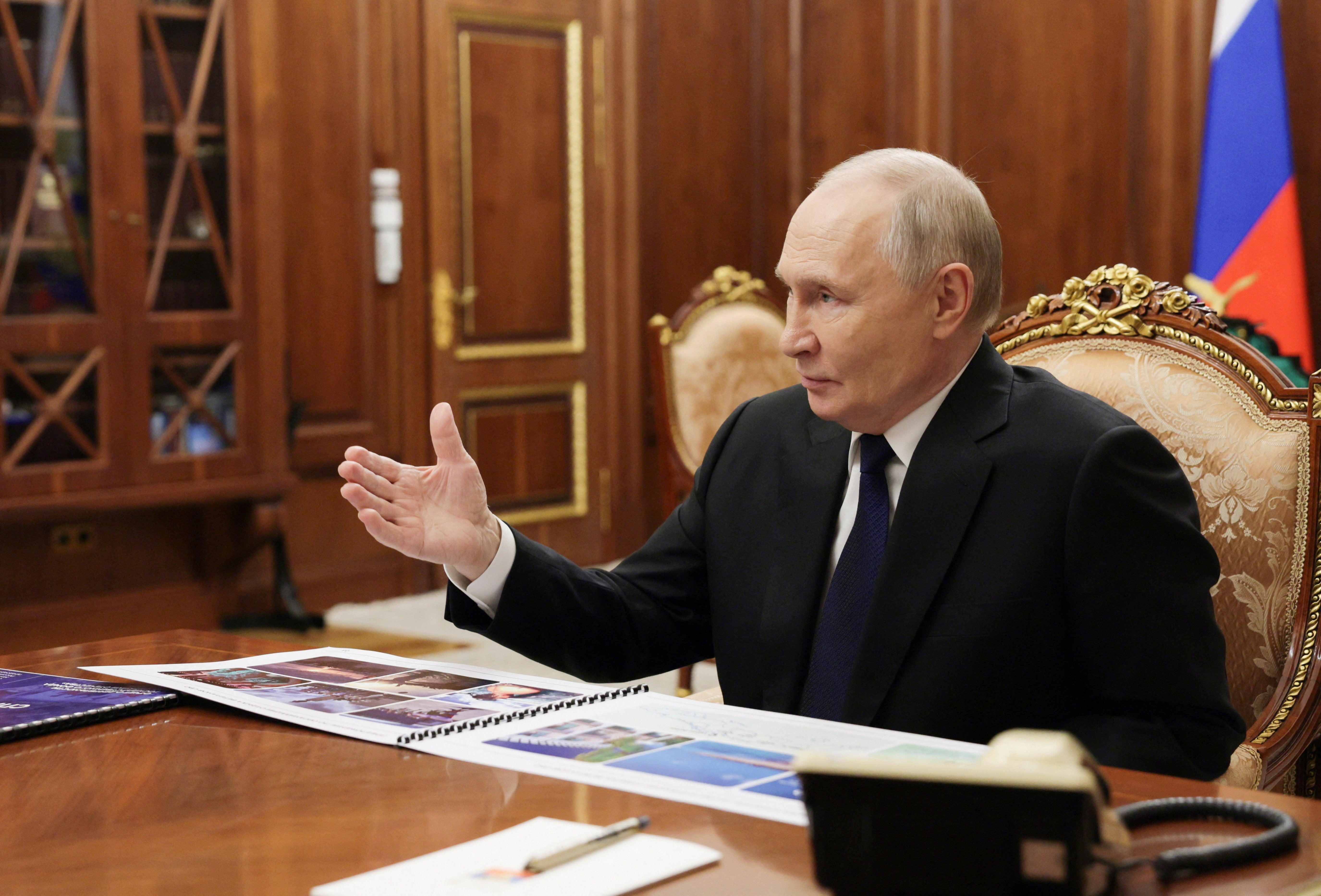

Vladimir Putin attends a meeting in the Kremlin (Sputnik)

Meanwhile, Washington's hopes of brokering a peace agreement in the near future were dashed on Tuesday after Russia accused Ukraine of launching a drone attack at one of Putin's residences - a claim emphatically denied by Kyiv.

Zelensky said the claim was a "complete fabrication" aimed at derailing the peace process, after Moscow signalled that it would harden its negotiating position in response.

Ukrainian Foreign Minister Andrii Sybiha said on Tuesday that Russia had not provided any plausible evidence of its accusations.

"Russia has a long record of false claims it's their signature tactic," Sybiha said.

Asked by reporters whether Russia had physical evidence of the drone attack, Kremlin spokesman Dmitry Peskov said air defences shot the drones down but that the question of wreckage was for the defence ministry.

Russia completes 135,000 autumn conscription as Putin sets 261,000 target for 2026

Russia completes 135,000 autumn conscription as Putin sets 261,000 target for 2026
Russian conscripts called up in increasing numbers. / Russian News Agency Tass: CC
By bne IntelliNews December 29, 2025

Russia has said it has concluded its autumn 2025 military draft, calling up 135,000 conscripts for service, whilst President Vladimir Putin signed a decree creating a new target of 261,000 conscripts for 2026, the Defence Ministry and TASS reported on December 29.

The Ukraine war has triggered a silent exodus from Russia, with roughly 800,000–900,000 citizens leaving the country and up to 700,000 believed to have fled or tried to flee conscription since 2022, while OSINT estimates suggest as many as 70,000 soldiers could desert from the army in 2025 alone.

This mix of draft dodgers and battlefield deserters does not have a precise official tally, but taken together, it points to a level of resistance to mobilisation large enough to force the Kremlin into tougher digital draft laws and border controls for military‑age men.

Putin signed the 2026 conscription decree for citizens aged 18 to 30 not in reserve, to serve from January 1 to December 31, 2026, marking the first time annual conscription targets have been published in a single decree following implementation of year-round military draft legislation.

The autumn 2025 call-up followed Presidential Decree No 690 issued on September 29, 2025, mobilising 135,000 conscripts for the Russian Armed Forces and other troops and military formations.

Conscripts had the right to choose military service in various branches and armed services, taking into account health conditions and the results of psychological selection.

Most conscripts were assigned to training units and military formations to learn to operate modern military hardware and acquire military specialities.

Putin previously signed two separate decrees before spring and autumn drafts with conscript numbers specified individually. The current decree represents the first unified annual conscription target under new year-round draft legislation.

Putin is not preparing for peace

While Washington and Kyiv trade optimism about a possible deal, Russia’s president is signalling to his own people that the war will grind on – and that they should brace for it


Konstantin Eggert
Euractiv

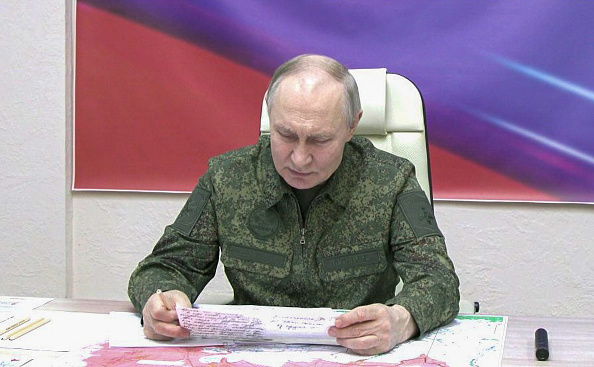
Russian President Vladimir Putin, dressed in military uniform, visited a command post in Kursk, Russia on 12 March 2025 [Photo by Kremlin Press Office / Handout/Anadolu via Getty Images]

The latest round of shuttle diplomacy between Kyiv and Mar-a-Lago has rekindled hopes of a Russia-Ukraine peace deal.

Given that the ultimate decider on peace – Vladimir Putin – wasn’t there, it’s worth taking any declarations of a breakthrough with a healthy pinch of salt. Even as Putin humours Donald Trump and his efforts to broker peace, the Russian has shown little desire to step away from the battlefield.

To understand what really has been on Putin’s mind of late, it’s worth rewinding to his annual staged press conference, which he held just before Christmas.

It was the usual marathon of rehearsed sycophantic questions, approved requests for help from Russia’s far-flung regions (“Vladimir Vladimirovich, the main road in our city of Syktyvkar wasn’t repaired for 15 years!”) and – also quite traditional – unabashed lies by Russia’s dictator.

“It was the West that started the war, we just responded”, he claimed without blinking an eye.

What was missing since the days I attended these events as the BBC Russian Service bureau editor were questions from independent Russian media (none are left inside the country). Veteran BBC correspondent Steve Rosenberg (the real one, not the imposter) asked whether Russia will launch new “special military operations” in the future.

“There won’t be, if you treat us with respect, and respect our interests, just as we’ve always tried to do with you,” Putin replied. “Unless you cheat us, like you did with NATO’s eastward expansion.”

That Russians must be ready for the indefinite continuation of the war was his only recurring message through the whole four hours that the event lasted. There was hardly any mention of peace, even though Kremlin emissary Kirill Dmitriyev was preparing to fly to Miami for the latest peace negotiations as Putin spoke.

What the Russian dictator did was address the Russians’ worries about the state of the economy. For example, he explained in some detail how low economic growth (1%, even officially) was a result of his government’s decision to avoid excessive inflation. Runaway inflation is the perennial nightmare of Russians over 50, who remember the economic turbulence of the 1990s. This group also comprises the majority of his TV audience.

Putin continues to count on their loyalty: after all, ‘saving the country from the Yeltsin-era chaos’ is what they are still supposed to be grateful to him for.

Will he be able to sustain not only the war but the public’s support for it – or at least its benign indifference? The pessimist in me says, yes. Others beg to differ. Researcher Lyubov Tsybulska of Ukraine’s Centre for Strategic Communication and Information Security recently published a convincing analysis of Russia’s depleting manpower resources and gradually decreasing sign-up bonuses for war “volunteers”, i.e. mercenaries.

The report could be dismissed as Ukrainian “infowar” operation – which to some extent it is. But to this former Muskovite, a lot of it sounds rather convincing: the regime’s desire to avoid general mobilisation as a potential factor for political instability; its pronounced unwillingness to conscript people from the well-off and better educated metropolises for the same reason; its attempts to keep recruitment alive without unleashing inflation.

There were two moments during Putin’s press-conference which served as proof of these concealed but gradually growing worries. One was when a specially invited officer, Naran Ochir-Goryayev, recently decorated with the country’s highest award (“Hero of Russia”), told Putin and the audience that “Ukrainians greeted Russians as liberators”, and extolled the virtues of quick-career making in wartime. Ochir-Goryayev (allegedly) climbed from lowly private to first lieutenant in four years of full-scale invasion. If true, I, as former officer myself, have only one explanation: the casualty rate in the Russian army is close to that of the Second World War.

Another episode was truly bizarre. A previously selected and approved caller from the North Caucasus invited Putin to his wedding. Putin responded: “I see you both are 23 and you mentioned you have been together for 8 years. This means you started at 15. It’s good!”

Putin went on to praise the – mostly Muslim – peoples of the North Caucasus for their tradition of very early marriage. Not only does taking child brides contradict the Russian penal code, the practice also violates the convictions of the majority of the population. The Kremlin, however, needs more soldiers.

Recruitment interests dictate the policy. Putin’s strategy: flatter those who can be convinced to sign up (North Caucasus is generally poor and has a strong macho culture) and set an example for others.

Anyone with Russian ears couldn’t help but understand Putin’s real message for “his” people – nothing but war awaits them in the New Year.

Konstantin Eggert is a Russian-born journalist with DW, Germany’s international broadcaster. He is based in Vilnius and was previously editor of the BBC Russian Service Moscow bureau.


Dec 30, 2025 


Putin amends law to let Russia ignore foreign criminal courts

Russian President Vladimir Putin chairs a meeting on arms production in Moscow, Russia, on Dec 26, 2025.
PHOTO: Reuters

December 29, 2025 

MOSCOW - President Vladimir Putin on Monday (Dec 29) signed into law changes that give Russia the right to ignore judgements in criminal cases issued by foreign and international courts amid Ukrainian and European attempts to punish Moscow for its actions in Ukraine.

The move, which comes as US President Donald Trump is trying to broker a peace deal in Ukraine, appears to be a response to several initiatives to go after Russian officials and military officers for alleged war crimes in Ukraine, something Moscow denies its forces are guilty of.

Ukraine and the Council of Europe human rights body signed an agreement in June forming the basis for a special tribunal, and Europe this month launched an International Claims Commission for Ukraine in an effort to ensure Kyiv is compensated for hundreds of billions of dollars in damage from Russian attacks and alleged war crimes.

The International Criminal Court (ICC) in The Hague has also issued arrest warrants for Putin and five other Russians, accusing them of illegally deporting hundreds of children from Ukraine.

The Kremlin, which called the ICC move outrageous, says the allegation is false and that Moscow has only acted to remove children from a conflict zone for their own safety.

Under the changes to Russian law backed by Putin on Monday, Moscow will formally have the right under its own domestic legislation to disregard rulings in criminal cases taken by foreign courts on behalf of foreign governments without Russia's participation.

Rulings issued by international legal bodies whose authority is not based on an international agreement with Russia or a UN Security Council resolution can also be ignored under the changes.


New Law Specifies that Moscow will No Longer Obey Any International Courts Not Set Up by UN Security Council where Moscow has a Veto

Paul Goble

            Staunton, Dec. 29 – According to the terms of a new law just approved by the Duma and signed into law by Vladimir Putin, Moscow no longer feels itself obliged to obey any decision of an international court not established with the approval of the United Nations Security Council where the Russian Federation as a permanent member has a veto.

            The new law (publication.pravo.gov.ru/document/0001202512290002) gives legal format to what had become Russian practice and means that Moscow will no longer obey the orders of the International Criminal Court or the findings of any tribunal set up to examine Russian war crimes in Ukraine.

            That Moscow should do so is no surprise – it was highly offended when the ICC ordered Putin’s detention and trial earlier – but it represents yet another step by Moscow to remove itself from the international legal order that had been coming into being in the last several decades and provides cover for other governments that don’t like such international supervision.

            Thus, what may appear to be a small step, in fact is a giant leap toward undermining the international legal order that had emerged and throws the world back to one where the reconstitution of this order anytime soon will be difficult if not impossible, something that will further untie the hands of dictators and other authoritarians. 

Jailed Turkish Kurd leader Ocalan calls on govt to broker deal for Syrian Kurds

Jailed Turkish Kurd leader Abdullah Ocalan on Tuesday implored the Turkish government to broker a "crucial" peace deal between the Kurdish-led Syrian Democratic Forces and the Damascus government


Issued on: 30/12/2025 
By: FRANCE 24

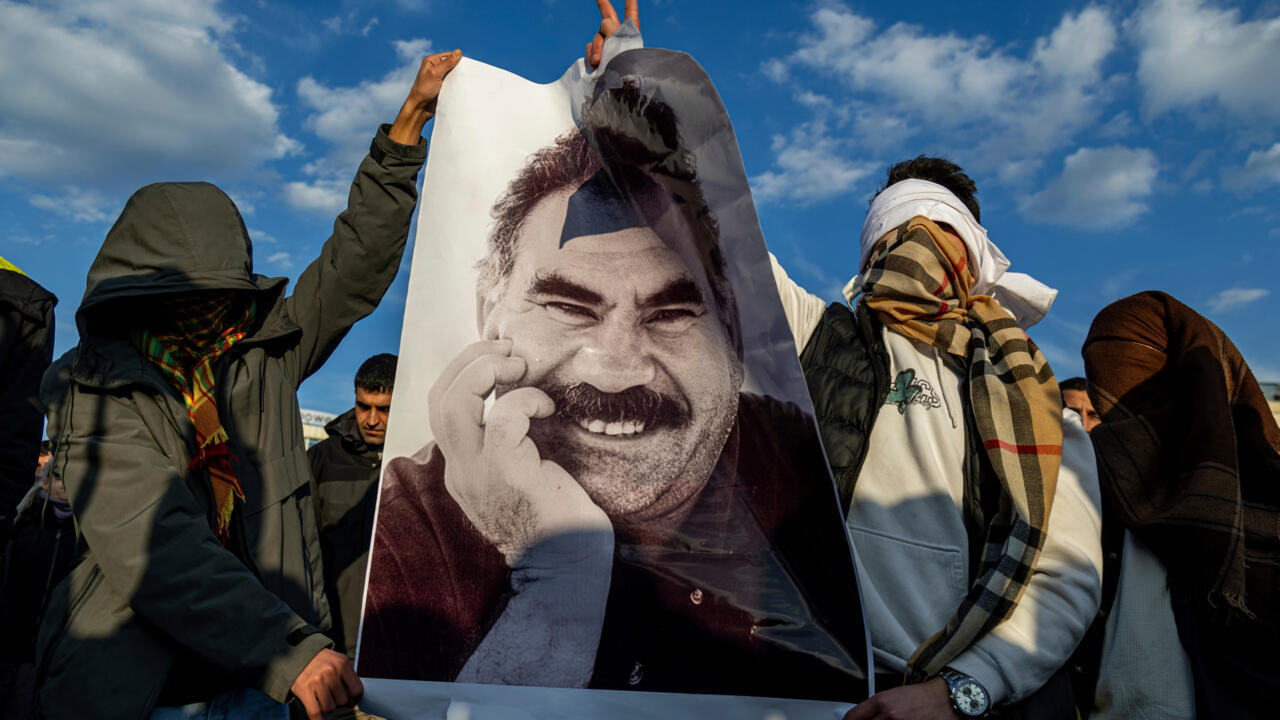
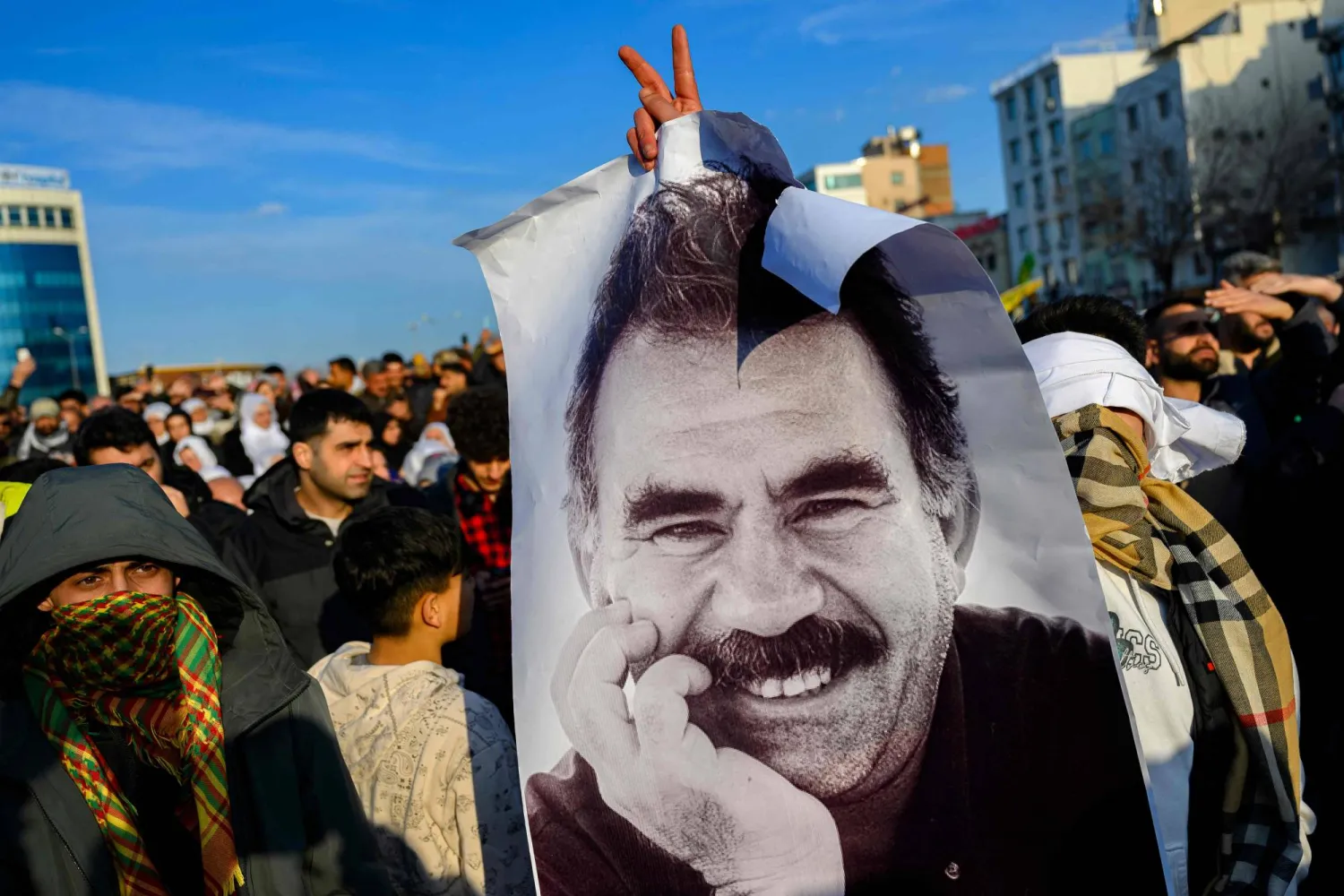
Youngsters hold a photograph of Abdullah Ocalan, the jailed leader of the militant Kurdish group PKK, in Diyarbakir, Turkey on February 27, 2025. © Metin Yoksu, AP

Jailed Turkish Kurd leader Abdullah Ocalan said in a message published Tuesday that it was "crucial" for the Turkish government to broker a peace deal between the Kurdish-led Syrian Democratic Forces (SDF) and the Damascus government.

"It is essential for Turkey to play a role of facilitator, constructively and aimed at dialogue ... This is crucial for both regional peace and to strengthen its own internal peace," Ocalan, founder of the Kurdistan Workers' Party (PKK) militant group, said in a message relayed by Turkey's pro-Kurdish DEM party.

Earlier this year, the Kurdistan Workers' Party (PKK) ended its four-decade armed struggle against Turkey at the urging of its jailed founder Abdullah Ocalan, shifting its focus to a democratic political struggle for the rights of Turkey's Kurdish minority.

The ongoing process has raised hopes among Kurds across the region, notably in Syria where the Kurds control swathes of territory in the north and northeast.

Turkey has long been hostile to the Kurdish SDF force that controls swathes of northeastern Syria, seeing it as an extension of PKK, and pushing for the US-backed force to integrate into the Syrian military and security apparatus.

(FRANCE 24 with AFP)


Jailed Turkish Kurd Leader Calls on Government to Broker Deal for Syrian Kurds


(FILES) Supporters display a poster depicting jailed leader of the Kurdistan Workers' Party (PKK) Abdullah Ocalan, after he called on the Kurdistan Workers' Party (PKK) to disarm and dissolve itself in Diyarbakir, southeastern Türkiye, on February 27, 2025. (Photo by Yasin AKGUL / AFP)


Asharq Al Awsat
30 December 2025
 AD Ù€ 10 Rajab 1447 AH

Jailed Turkish Kurd leader Abdullah Ocalan said Tuesday that it was "crucial" for Türkiye’s government to broker a peace deal between the Kurdish-led Syrian Democratic Forces (SDF) and the Damascus government.

Clashes between Syrian forces and the SDF have cast doubt over a deal to integrate the group's fighters into the army, which was due to take effect by the end of the year, reported AFP.

Ocalan, founder of the Kurdistan Workers' Party (PKK) group, called on Türkiye to help ensure implementation of the deal announced in March between the SDF and the Syrian government.

"It is essential for Türkiye to play a role of facilitator, constructively and aimed at dialogue," he said in a message released by Türkiye's pro-Kurdish DEM party.

"This is crucial for both regional peace and to strengthen its own internal peace," Ocalan, who has been jailed for 26 years, added.

"The fundamental demand made in the agreement signed on March 10 between the SDF and the government in Damascus is for a democratic political model permitting (Syria's) peoples to govern together," he added.

"This approach also includes the principle of democratic integration, negotiable with the central authorities. The implementation of the March 10 agreement will facilitate and accelerate that process."

The backbone of the US-backed SDF is the YPG, a Kurdish group seen by Türkiye as an extension of the PKK.

Türkiye and Syria both face long-running unrest in their Kurdish-majority regions, which span their shared border.

In Türkiye, the PKK agreed this year at Ocalan's urging to end its four-decade armed struggle.

In Syria, Sharaa has agreed to merge the Kurds' semi-autonomous administration into the central government, but deadly clashes and a series of differences have held up implementation of the deal.

The SDF is calling for a decentralized government, which Sharaa rejects.

Turkish Foreign Minister Hakan Fidan, whose country sees Kurdish fighters across the border as a threat, urged the SDF last week not to be an "obstacle" to stability.

Syrian Kurdish leader Mazloum Abdi said Thursday that "all efforts" were being made to prevent the collapse of talks.

Öcalan urges SDF to abide by integration deal with Damascus


Imprisoned PKK leader Abdullah Öcalan on Dec. 30 called on the Syrian Democratic Forces (SDF) to honor an integration agreement with the country's new administration.


Haberin Devamı
ANKARA
www.hurriyetdailynews.com/

"The fundamental demand made in the agreement signed on March 10 between the SDF and the government in Damascus is for a democratic political model permitting [Syria's] peoples to govern together," Öcalan said in a message released by the Peoples’ Equality and Democracy Party (DEM Party).

Disputes over local autonomy and recent military skirmishes have cast doubt on whether the deal will take effect by its year-end deadline.

The jailed PKK leader called on Türkiye to help ensure the implementation of the deal.

"It is essential for Türkiye to play a role of facilitator, constructively and aimed at dialogue," he said. "This is crucial for both regional peace and to strengthen its own internal peace."

The appeal come amid an ongoing anti-terrorism campaign in Türkiye, where PKK agreed earlier this year to end its 40-year armed struggle at Öcalan’s urging. A Turkish parliamentary commission is currently working on the "terror-free Türkiye" initiative to codify the peace process.

The backbone of the U.S.-backed SDF is YPG, which Ankara views as a direct extension of PKK. "The implementation of the March 10 agreement will facilitate and accelerate the process," Öcalan said.

Last week, Turkish Foreign Minister Hakan Fidan warned the SDF not to become an "obstacle" to Syria's stability. For his part, SDF leader Mazloum Abdi said "all efforts" were being made to prevent the collapse of talks.

PKK

Historical Blockages of the Left and the Radical Rupture of Öcalan

Source: Originally published by Z. Feel free to share widely.

​To understand the historical blockage of the Left, one must first expose its internal contradictions. The Left claims to criticize the state but fails to interrogate the state’s ontology. It asserts a rejection of power, yet fails to realize that its own visions of authority reproduce the same hierarchical patterns.

​While the Left emphasizes its opposition to exploitation, it remains reluctant to grasp that exploitation operates not only through economic means but through cultural, gender-based, ethnic, spatial, and even affective dimensions. In this respect, the crisis of the Left is not merely a crisis of strategy; it is a crisis of ontology, a crisis of being, of the subject, of knowledge, and most crucially, a crisis of meaning.

​At this juncture, the thought of Kurdish People’s Leader Abdullah Öcalan is either ignored or categorically rejected by modern leftist theories. The reason for this is not merely a matter of political positioning. The true reason is that this body of thought has shattered the conceptual ground upon which the Left feels comfortable.

​The Left has become a movement that produces thousands of pages of theoretical texts but remains incapable of producing its own self-criticism. Öcalan’s approach carries an inherent power of critique against the Left’s historical dogmas; it touches the Left at its weakest point: the loss of its capacity for self-explanation.

​The Left’s current inability to explain the world does not stem from the disintegration of capitalism, but rather from the fact that capitalism has reconstructed the entire social fabric in its own image. Capitalism is no longer a system to be criticized from the outside; it is an ontological framework lived from within.

​It is a fundamental regime of existence that shapes human imagination, desires, fears, modes of relation, memories, perceptions of time, and ties to space. The Left continues to attempt to analyze this regime using categories from the era in which Marx wrote; however, capitalism has long since expanded beyond Marx’s conceptual universe.

​Consequently, the narratives the Left develops about itself no longer possess definitive or explanatory power. As the Left attempts to grasp social reality, it finds itself facing a world that slips through its fingers like water. 

This is because today’s social struggle is not merely about the control of the means of production; it is about the reconstruction of the network of relationships that produce life itself. And the factor that most blinds this field is the Left’s historical and subconscious attachment to the idea of the state.

​The state is the structure that the Left overtly criticizes but subconsciously sanctifies. Throughout history, nearly all revolutionary movements have claimed to view the state merely as a tool, yet as they approached power, they could not avoid internalizing the state’s ontological logic.

​This is because the state is not a neutral organization of power; it is an apparatus that captures social energy, institutionalizes hierarchy, and subordinates the subjectivity of society to its own existence. Here lies the deepest impasse of the Left: the belief that one can transform power without first deciphering its ontology.

​The most incisive impact of Öcalan’s thought within the Left stems from his treatment of the state not merely as an apparatus of oppression, but as the foundational axis of the historical system of civilization. In his definition, the state is not an accidental institution of the modern age; it is the crystallized form of the historical evolution of male-dominated civilization, hierarchical societies, and property relations.

​This radically breaks the Left’s understanding of the state. For the Left, the state is often viewed as a “mismanaged tool,” a “power that is dangerous in the wrong hands,” or a “temporary apparatus of coercion.” Conversely, Öcalan’s perspective posits that the state is the primary cause of the failure to achieve liberation, rather than its instrument. This is a theoretical upheaval that the Left finds difficult to accept.

​Precisely for this reason, the idea of “stateless democracy” emerges within the Left as a proposition that is both radical and unsettling. The Left’s century-old strategic vision has ultimately been anchored to the seizure of the state.

​To suggest that the passion for seizing the state is futile or that it even paralyzes the struggle for freedom is to target the foundational narrative of the Left. The Left’s defensive reflex against this proposition points to a fear it has failed to resolve within itself: the inability to conceive of a revolution without power.

​However, freedom cannot be established by reproducing the mechanics of power. Every form of centralism, even when emerging with the most revolutionary intentions, eventually turns into a machine that extinguishes social creativity and subjectivity. Therefore, criticizing the state is insufficient. 

The state must be removed as a category of “solution.” The Left’s inability to accept this idea is not just a theoretical resistance but a psychological one. The Left has built its historical legitimacy through a struggle aimed at the state.

​The reason Öcalan’s thought creates such friction within the Left is his assertion that a politics beyond the state is possible. 

This politics centers not on seizing power, but on its dispersal. Not on centralization, but on social self-governance. Not on representation, but on direct social participation. Not on hierarchy, but on horizontal organization. When moving outside the paradigm familiar to the Left, politics ceases to be a struggle for power and becomes the process of society creating itself.

​In this context, the centralization of women’s liberation is not just a promise of social transformation; it is a shift in the ontological ground of political theory. 

Women’s liberation signifies the destruction of the historical continuity of patriarchy, and without dismantling patriarchy, the dismantling of the state and capitalism is impossible. This is the rupture that reveals the male-dominant structure hidden within leftist theory. The discomfort the Left feels in the face of this critique demonstrates that patriarchy remains the deepest subconscious of the Left.

​Placing women’s liberation at the heart of the revolution means redefining revolution itself. This implies a change in the subject of the revolution, its objective, its method, and its epistemology.

​The reason the Left cannot internalize this transformation is that it has always viewed revolution as a power dynamic, a struggle for dominance, and a moment of violence. Yet, when freedom is situated outside of violence, moved beyond power, and transcends the state, revolution attains its true meaning.

​This perspective mandates that the Left transcend the boundaries of its own historical universe. The Left can no longer exist solely by criticizing capitalism. Capitalism has become a system that feeds on critique; it absorbs every criticism directed at it and reproduces itself through them. Therefore, critique alone is not revolutionary. What is radical is to move beyond critique and construct an alternative ontology.

​Öcalan’s thought is a radical rupture for this very reason: it does not settle for critique; it proposes a new social ontology, a new sociology of freedom, a new vision of democracy, a new understanding of the subject, and a new political practice. The conventional conceptual universe of the Left is insufficient to meet any of these proposals. The Left will either accept this paradigm shift and reconstruct itself, or it will continue to exist as a nostalgic movement on the margins of history.


The books he wrote are technically submissions to various courts, in Turkish called savunmalar, 'the defences', but are also a discussion of the Kurdish issue.

The future is democratic confederalism. Page 45. 45. Writings by Abdullah ocalan ... the Kurdish Question (Summary), Cologne, 2011, PDF http://www.freedom ...

“Freedom for Abdullah Öcalan – Peace in Kurdistan”. P.O. Box 100511. 50445 Cologne. Germany www.freedom-for-ocalan.com www.freeocalan.org www.ocalan-books.com ...

chures on specific themes that are important in his writings. ... www.ocalan-books.com www.democraticmodernity.com. Page 40. “Ecology stands for ...

... books sent to Abdullah. Öcalan during his captivity. A complete list of books available to Öcalan can be found at www.ocalan-books.com. 4. Page 7. Manifesto ...

In his prison writings, the liberation of women is touched on numerous times as part of Öcalan's discussions of history, contemporary society and political ...

PDF Icon. download. Download Free PDF. Download Free PDF. PRISON WRITINGS THE ROOTS OF CIVILISATION ABDULLAH OCALAN. Profile image of serhat masis serhat masis.


‘We walked over corpses’: Mother reveals journey out of hell in northern Ethiopia during Tigray war


Shushay and her six children were among three million people displaced from their homes during the conflict between 2020 and 2022


James C. Reynolds
Tuesday 30 December 2025 
THE INDEPENDENT


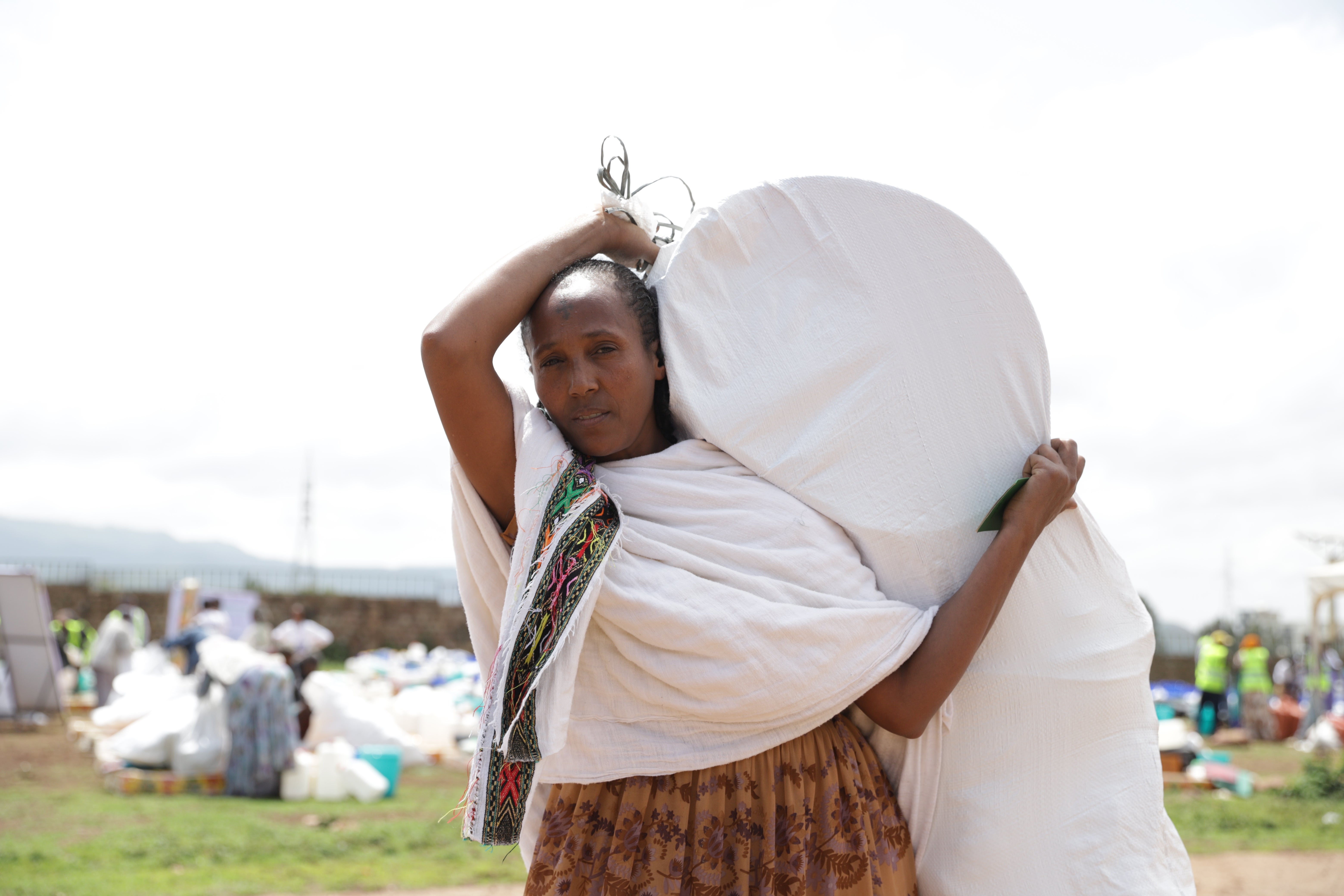
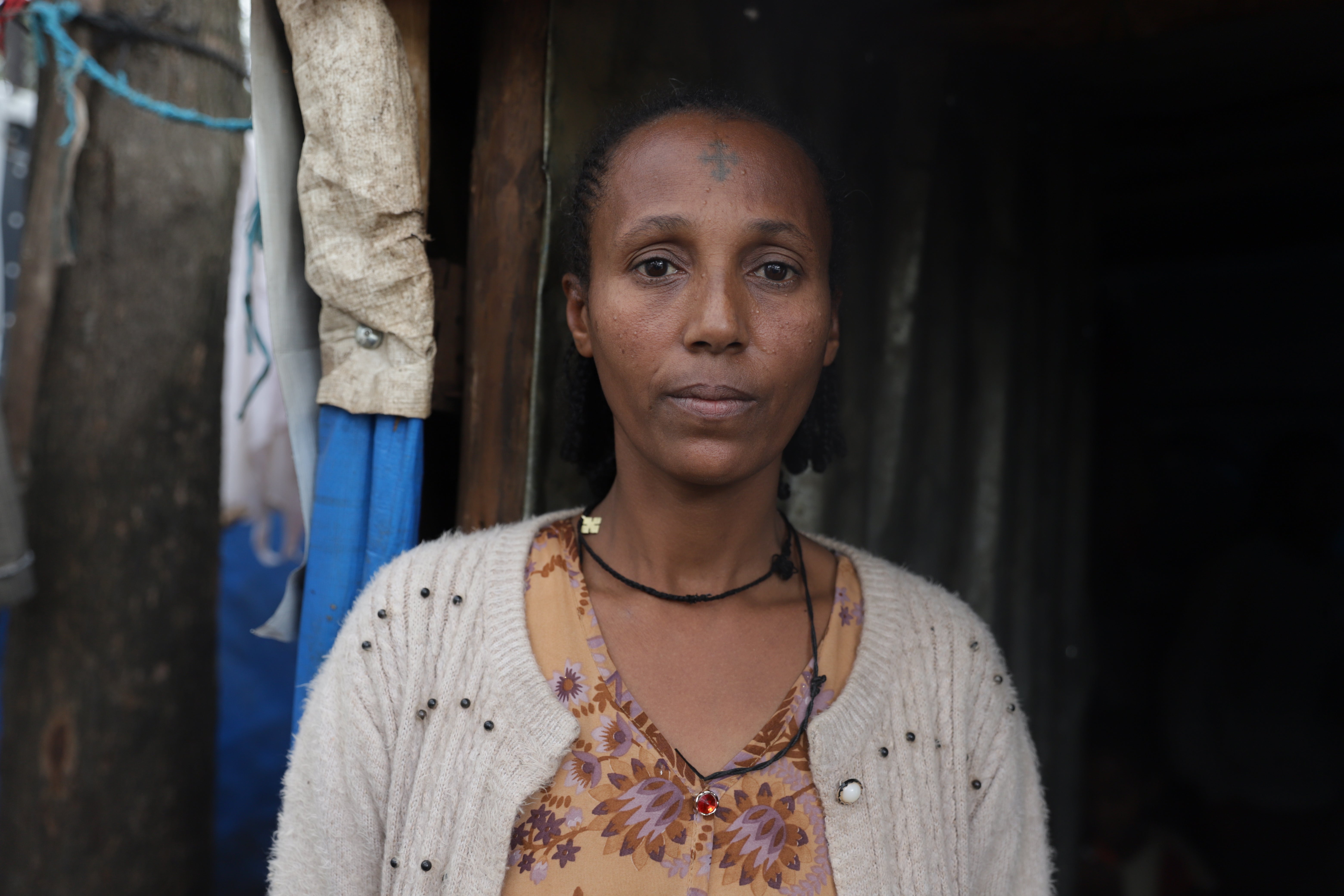
Shushay and her six children fled their home in northern Ethiopia (ShelterBox)

“When the enemy entered, we fled. Those who escaped, escaped; those who died, died. We walked over corpses. We were lucky to escape.”

Shushay and her six children were among the three million people displaced from their homes during the Tigray conflict between 2020-2022. Thousands of people were killed in the war that pitted local fighters against federal troops allied with fighters from other regions.

Three years later, she still remembers the “good life” they left behind in northern Ethiopia. She remembers the brothers and sisters who were unable to escape, her house with three rooms and a television, and the security of work and school for her children.

“Those who stayed behind were slaughtered and killed; we left them behind,” she reflected.

When the fighting spread to the Amhara and Afar regions, Shushay and her family fled on foot, sleeping in the bush without cover for “almost a month”.

During the military advance, she says, some people were “taken”. Others were “beaten and sent back”. “Those who were to be killed were killed.”

Shushay, now 40, and her children eventually settled at a camp for internally displaced persons, where they still live. She is today among tens of thousands of people living in the grounds of a school in Shire City.

“There is no work. I wake up in the morning, and there is no breakfast. They eat once a day. I stay and play with my children until that one meal. We need everything,” she says.

British charity ShelterBox and PAD were able to help Shushay and her family with blankets, a mosquito net, a kitchen set and a dignity kit with sanitary pads among other essentials.

Their work is ever more vital as cuts to international aid continue to hamper the plight of people building back their lives, even years after conflicts have ended.

Funding shortfalls have seen aid agencies globally cut emergency relief supplies by 70 per cent this year.


open image in galleryShushay is able to live with dignity thanks to the aid of British charity ShelterBox (ShelterBox)

Ethiopia, still with its own crisis of internally displaced people, is now the second-largest refugee-hosting country in Africa, with many arriving due to conflicts in Sudan and South Sudan, and drought in Somalia.

Shushay says their hope for the future “is to return to our homeland”.

“We wonder if they will return us to the land where we can work and eat. We used to celebrate holidays like Christmas (Lidet) well. We'd make popcorn and coffee and spend the day. But here, we don't know Christmas; we don't know the holidays. We spend them in the mud.”

Ceasefire was the watchword of 2025 as diplomats attempted to settle the world’s major conflicts. But around the world, deepening crises of war and natural disaster forced a record number of people from their homes.

More than 123 million people fled last year, compounding a 15-year upward trend, according to UN data on refugees and internally displaced people.

Insecurity plagues Ethiopia even three years after the conflict formally ended. The humanitarian crisis affecting 21 million people is exacerbated by the worst drought in 40 years, as well as seasonal floods and earthquakes. Those who were able to flee across the border into Sudan were soon swept up in the civil war, ongoing since 2023.

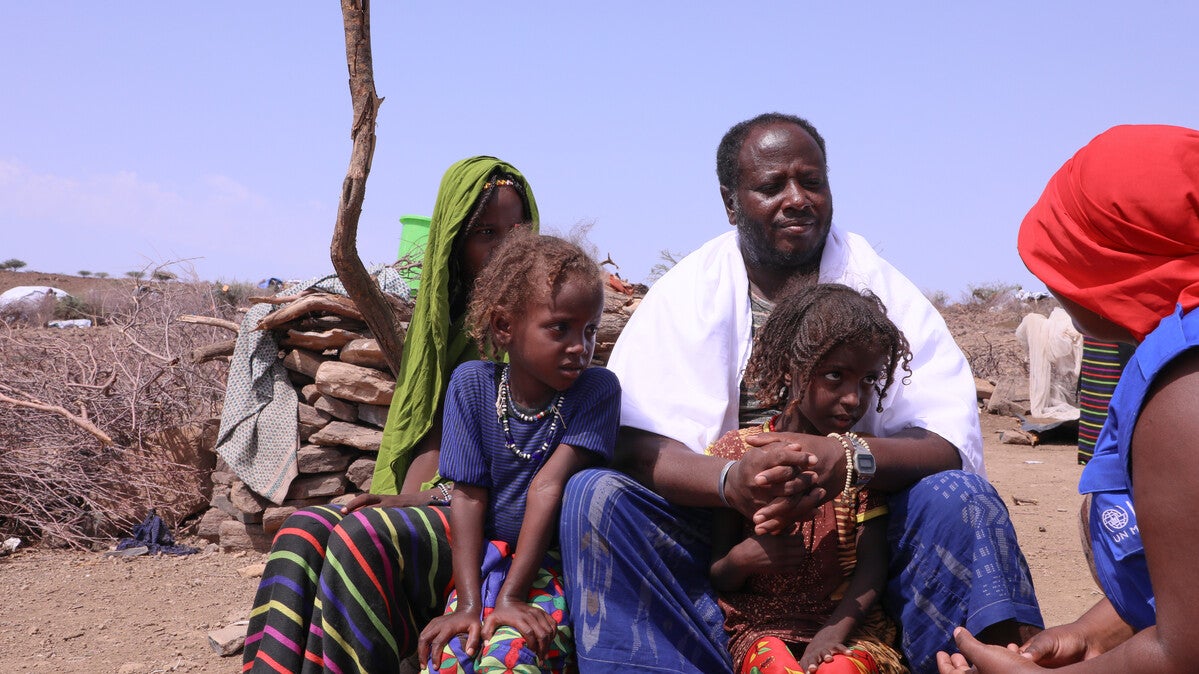
Kadir, 41, and his five children have been displaced within Ethiopia three times as a result of both violence and the climate crisis.

“We have been displaced twice before, and this is the third time,” he said. “After we arrived here, we faced harsh weather with intense sun and heavy rain. It was horrifying.”


open image in galleryKadir and his family have been forced to move three times (ShelterBox)

A long illness affecting his back and legs has stopped Kadir from being able to move on when conditions worsen.

“While others typically take two to three days to reach here, I require five days due to my condition.”

He relies on the kindness of the community to bring him flour and sell what’s left of his livestock. People like Kadir, with disabilities, benefited greatly from mattresses provided by ShelterBox this year.

Around the world, neglected crises continue to destroy livelihoods, leaving families without the tools to rebuild.

Still, a survey of Britons found that three quarters were doubtful of the impact of their donations on communities on the other side of the world.

A majority of people also say they are “not very knowledgeable” about displacement as it doesn't typically impact the UK.

And only 27 per cent believed climate change was one of the main causes of displacement.


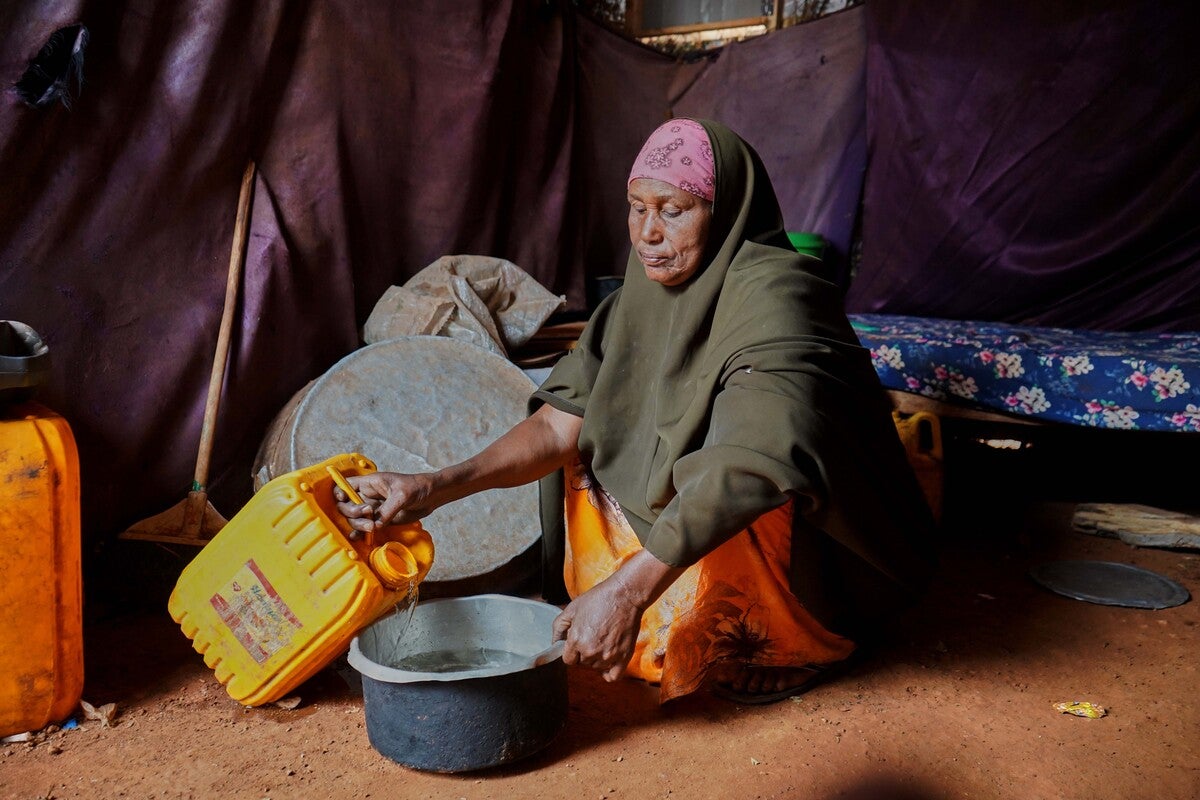
open image in galleryNuria, from Somalia, is the sole carer of her 10 children (ShelterBox)

Nuria, from Somalia, told how drought had forced her to leave her village with her 10 biological and adopted children, away from the relative safety of her home and on a perilous journey through intense heat and heavy rains.

She had provided for her family by selling charcoal and wood until a fire destroyed her livelihood and the drought closed in.

“Agonising” regional violence then pushed them from place to place in “scorching heat”, as they begged for food, often going hungry.

Nuria, 58, and her children now live in a camp for internally displaced people in Baidoa. Since her husband died, she takes care of her children on her own.

Still, with help from Juba Foundation and ShelterBox she has managed to make a temporary home.

“We've settled in this residence, and no one is pressuring us to leave, which is a source of pride,” she says.

“I find contentment in my daily struggle for survival, rather than focusing on constructing elaborate houses. I have a strong desire to ensure a good life and proper education for my children.”


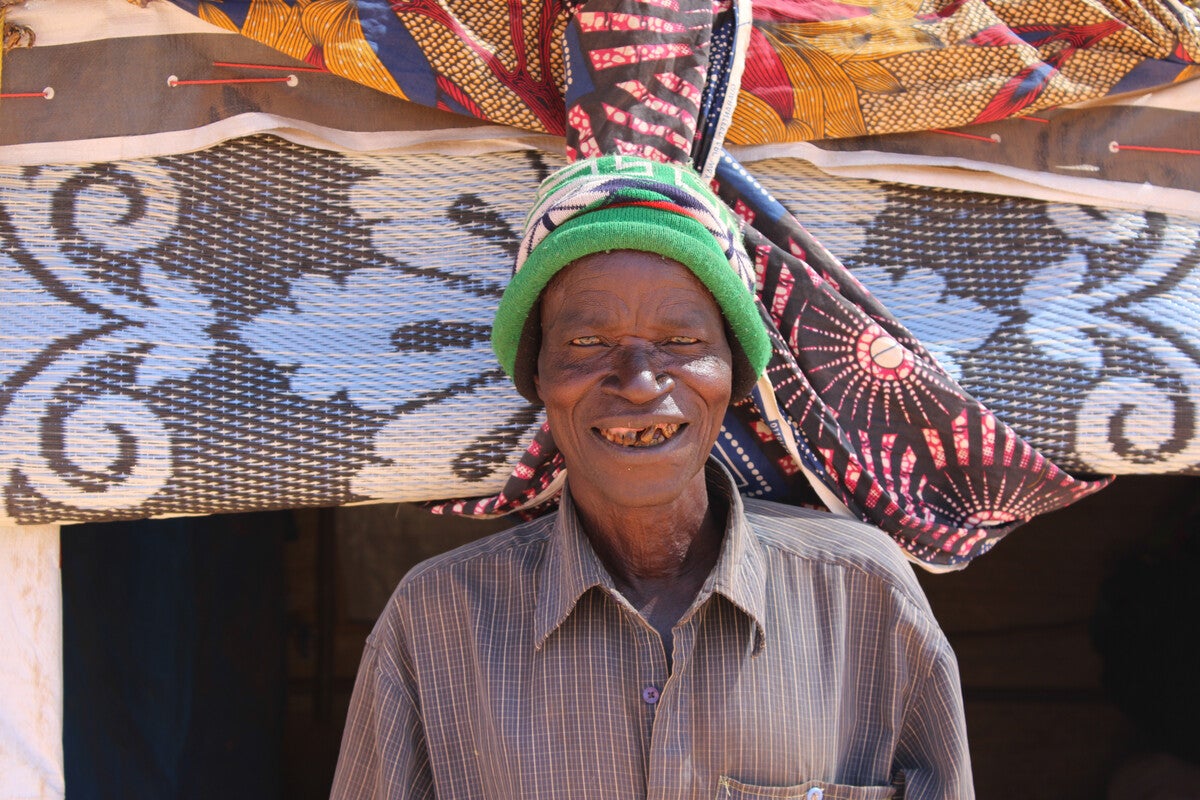
open image in galleryRaguianga can live with 'dignity' thanks to a home for displaced people (ShelterBox)

On the other side of the African continent, 60-year-old Raguianga laid bare how impactful foreign aid had been after his family fled violence and insecurity in Burkina Faso, which is facing widespread jihadist violence.

“The armed groups ... came to give us an ultimatum of ten days to leave the village or face reprisals,” he said from a refugee camp in Est region.

“We arrived here empty-handed because our lives are more precious than the riches we left behind.”

ShelterBox and HELP Burkina Faso helped construct emergency homes to support 1,000 displaced families.

“Our living conditions have greatly improved,” Raguianga said. “The shelter allows us to live with dignity.”
China mandates chipmakers use 50% domestic equipment for new capacity

The mandate is one of the most significant measures Beijing has introduced to wean itself off reliance on foreign technology, a push that gathered pace after the U.S. tightened technology export restrictions in 2023, banning sales of advanced AI chips and semiconductor equipment to China


Reuters 
Published 30.12.25


Reuters

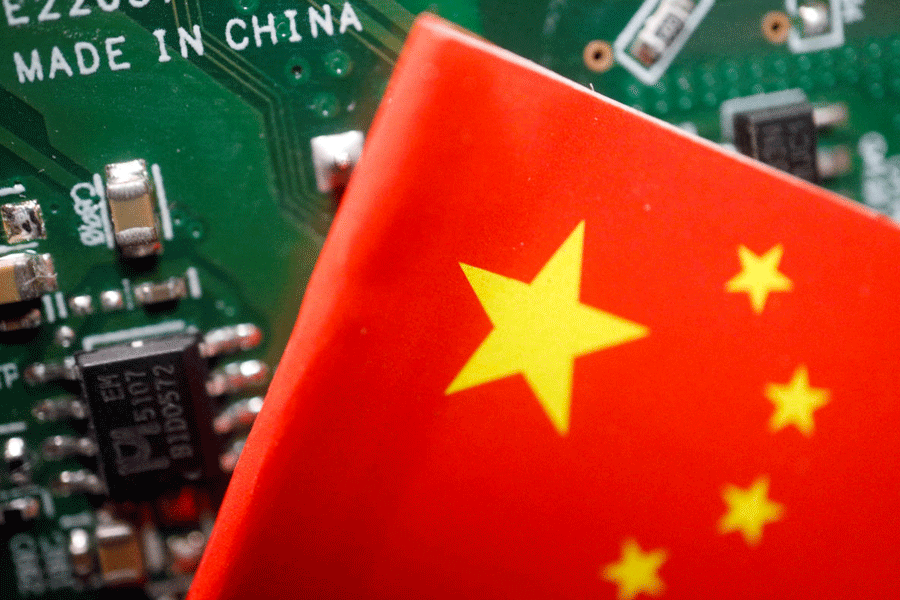
China is requiring chipmakers to use at least 50% domestically made equipment for adding new capacity, three people familiar with the matter said, as Beijing pushes to build a self-sufficient semiconductor supply chain.

The rule is not publicly documented, but chipmakers seeking state approval to build or expand their plants have been told by authorities in recent months that they must prove through procurement tenders that at least half their equipment will be Chinese-made, the people told Reuters. The mandate is one of the most significant measures Beijing has introduced to wean itself off reliance on foreign technology, a push that gathered pace after the U.S. tightened technology export restrictions in 2023, banning sales of advanced AI chips and semiconductor equipment to China.

While those U.S. export restrictions blocked the sale of some of the most advanced tools, the 50% rule is leading Chinese manufacturers to choose domestic suppliers even in areas where foreign equipment from the U.S., Japan, South Korea and Europe remain available.

Applications failing the threshold are typically rejected, though authorities grant flexibility depending on supply constraints, the people said. The requirements are relaxed for advanced chip production lines, where domestically developed equipment is not yet fully available

"Authorities prefer if it is much higher than 50%," one source told Reuters. "Eventually they are aiming for the plants to use 100% domestic equipment."

China's industry ministry did not respond to a request for comment. The sources did not wish to be identified as the measure is not public.

'Whole nation' approach


China's President Xi Jinping has been calling for a "whole nation" effort to build a fully self-sufficient domestic semiconductor supply chain that involves thousands of engineers and scientists at companies and research centers nationwide. The effort is being made across the wide supply-chain spectrum. Reuters reported earlier this month that Chinese scientists are working on a prototype of a machine capable of producing cutting-edge chips, an outcome that Washington has spent years trying to prevent.

"Before, domestic fabs like SMIC would prefer U.S. equipment and would not really give Chinese firms a chance," a former employee at local equipment maker Naura Technology said, referring to the Semiconductor Manufacturing International Corporation.

"But that changed starting with the 2023 U.S export restrictions, when Chinese fabs had no choice but to work with domestic suppliers."

State-affiliated entities placed a record 421 orders for domestic lithography machines and parts this year worth around 850 million yuan, according to publicly available procurement data, signaling a surge in demand for locally developed technologies. To support the local chip supply chain, Beijing has also poured hundreds of billions of yuan into its semiconductor sector through the "Big Fund", which established a third phase in 2024 with 344 billion yuan ($49 billion) in capital.

Winners and losers

The policy is already yielding results, including in areas such as etching, a critical chip manufacturing step that involves removing materials from silicon wafers to carve out intricate transistor patterns, sources said.

China's largest chip equipment group, Naura, is testing its etching tools on a cutting-edge 7nm (nanometre) production line of SMIC, two sources said. The early-stage milestone, which comes after Naura recently deployed etching tools on 14nm successfully, demonstrates how quickly domestic suppliers are advancing.

"Naura's etching results have been accelerated by the government requiring fabs to use at least 50% domestic equipment," one of the people told Reuters, adding that it was forcing the company to rapidly improve.

Advanced etching tools had been predominantly supplied in China by foreign firms such as Lam Research and Tokyo Electron, but are now being partially replaced by Naura and smaller rival Advanced Micro-Fabrication Equipment (AMEC) , sources say.

Naura has also proven a key partner for Chinese memory chipmakers, supplying etching tools for advanced chips with more than 300 layers. It developed electrostatic chucks — devices that hold wafers during processing — to replace worn parts in Lam Research equipment that the company could no longer service after the 2023 restrictions, sources said.

Naura, AMEC, YTMC, SMIC, Lam Research, and Tokyo Electron did not respond to requests for comment.

China's progress is being viewed with concern by global competitors, as foreign suppliers are squeezed out of the China market.

Naura filed a record 779 patents in 2025, more than double what it filed in 2020 and 2021, while AMEC filed 259, according to Anaqua's AcclaimIP database, and verified by Reuters.

That's also translating into strong financial results. Naura's revenue for the first half of 2025 jumped 30% to 16 billion yuan. AMEC reported a 44% jump in first-half revenue to 5 billion yuan. Analysts estimate that China has now reached roughly 50% self-sufficiency in photoresist-removal and cleaning equipment, a market previously dominated by Japanese firms, but now locally led by Naura.

"The domestic equipment market will be dominated by two to three major manufacturers, and Naura is definitely one of them," said a separate source.