Wednesday, December 31, 2025

Bangladesh’s Beacon Of Hope Leaves, But Her Legacy Lives On

An inherently soft-spoken woman, Begum Zia, earned the respect of people from all walks of life, and her unifying role during the movement attracted the youth en masse who joined her party’s students’ wing and played an active role in toppling Ershad in 1990.


A K M Wahiduzzaman
Updated on: 31 December 2025 
OUTLOOK/INDIA
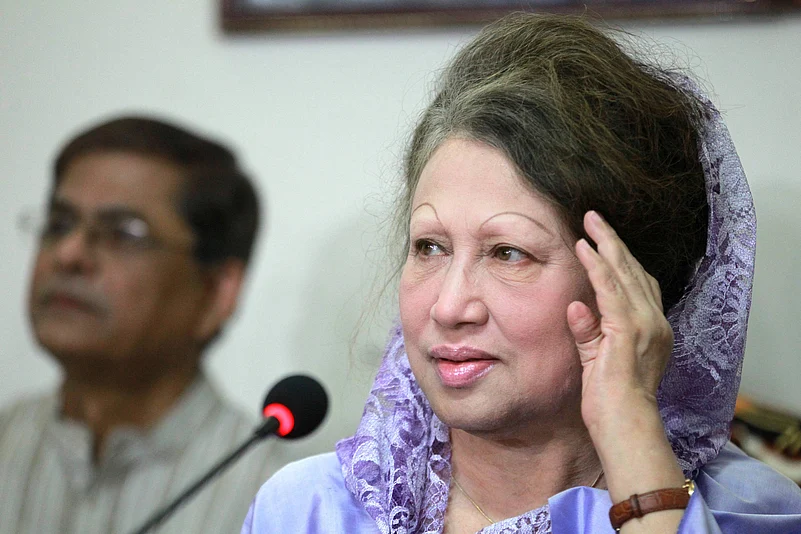

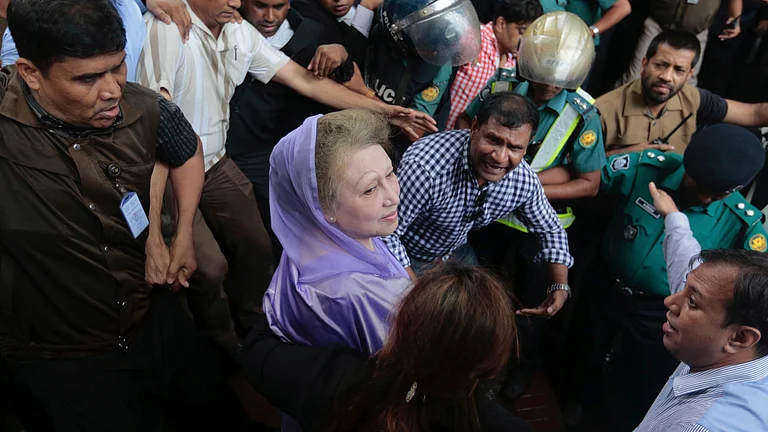
Begum Zia presided over a government in the early 1990s that would shape the country’s next three decades. Photo: IMAGO / ZUMA Press Wire

Summary of this article


Widowed at a young age, Begum Khaleda Zia chose public struggle over private safety, leading an uncompromising movement against Hussain Muhammad Ershad’s military dictatorship and playing a decisive role in restoring democracy in Bangladesh in 1990.


As Bangladesh’s first female prime minister, she shaped the country’s political and economic trajectory through electoral victories, democratic consolidation, women’s education initiatives, economic liberalisation, expansion of the garments industry, and key social and financial reforms.


Despite years of political persecution, imprisonment, and legal harassment, she remained steadfast in advocating democracy, countering extremism, and advancing women’s economic freedom—leaving behind a legacy of courage, reform, and resistance that continues to inspire the nation.

It was never an easy decision for her. After losing her husband in her mid-thirties, any widow with two young children in Muslim-majority Bangladesh would likely find it most comfortable to live a quiet life, focusing on raising her sons to take care of the family in the future. But history will remember her for prioritising her country’s interests over her family. She took up the fight against the dictatorship of Hussain Muhammad Ershad in the early 1980s and led it from the front in an uncompromising manner, which led to the fall of Ershad’s brutal regime in 1990.

Begum Khaleda Zia, Bangladesh’s beacon of hope, the first female prime minister who oversaw the democratic transition after almost a decade of autocracy in the early 1990s, died on December 30th in the Evercare Hospital of Dhaka at the age of 79.


Khaleda Zia's State Funeral Today At 2pm In Dhaka


Khaleda Zia: The End of a Political Legacy

Bangladesh Premier League: December 30 Games Postponed After Ex-PM Khaleda Zia’s Death


Khaleda Zia, Former Bangladesh PM And BNP Chief, Dies At 80


Her political journey began in 1983, when she joined the Bangladesh Nationalist Party (BNP), founded by her husband, President Zia. By then, Ershad, the army chief, usurped the democratically elected BNP government and took over the country. Begum Zia decided to challenge Ershad’s rule and, during her struggle for democracy, unlike her contemporary leaders, never budged or compromised, which earned her the title “Uncompromising Leader” among the masses.


An inherently soft-spoken woman, Begum Zia, earned the respect of people from all walks of life, and her unifying role during the movement attracted the youth en masse who joined her party’s students’ wing and played an active role in toppling Ershad in 1990.


In 1991, her party, the BNP, which was severely attacked by Ershad’s regime during its almost decade-long rule, won a majority of constituencies, thanks to her leadership. She won in all five constituencies she contested, while her Awami League counterpart, Sheikh Hasina, lost in all but one, that too from Gopalganj. Khaleda Zia’s stint as an undefeated leader continued in the next elections; she was never defeated in fair polls.


Begum Zia presided over a government in the early 1990s that would shape the country’s next three decades. Today, Bangladesh has a higher percentage of women in the workforce, universities, and school classrooms; the credit goes to her. After being elected in 1991, her government pushed for mandatory primary schooling, offered generous stipends for female students, and meals for all. By the end of her tenure, the male-to-female ratio in primary schools increased, and in five years, almost 3 million more female students enrolled.


She prioritised economic liberalisation, which led to more women being employed in the country’s burgeoning ready-made garments industry. The number of RMG factories under her tenure increased threefold, and employment in the sector increased by 29%. Her government also implemented some consequential economic reforms. With her support, the finance minister, Saifur Rahman, disciplined the banks, put the stock market in order, and launched a drive to increase tax collections, which contributed to the higher spending in the social safety net.


In her second stint as the prime minister in the early 2000s, her government oversaw the liberalisation of global textile trade, and despite the withdrawal of quotas, Bangladesh’s RMG exports increased. Khaleda Zia rescued Bangladesh from the growing threat of extremists and militant groups who orchestrated several bombings since the late 1990s, almost obliterating their networks within a few years. She was the first prime minister to ban polybags to save the environment and put a stop to cheating during public examinations through strict monitoring. In 2006, when she left the office, Bangladesh marked a 6.7% GDP growth, despite the turbulence on the streets.


After a military-backed caretaker regime took over Bangladesh in 2007, she and her family were implicated in false cases, a practice continued by successive Sheikh Hasina-led governments. Despite the legal harassment, she remained unbowed and mobilised people against the oppression of the Sheikh Hasina regime, for which she was sent to jail in a case that, according to experts cited by the US State Department, lacked evidence. Even from jail, she inspired thousands of her followers to fight for democracy, as reflected in the speeches of the student leaders who became the face of the 2024 July uprising.


Until her death, Begum Khaleda Zia consistently advocated for the restoration of democracy that led to her arrests, and despite these numerous attempts to silence her, she chose not to be quiet. Her determination to stand firm in her pursuit of reforms aimed at enhancing women’s economic freedom and increasing their participation in the workforce — particularly in a Muslim-majority country — serves as a textbook example of empowering women.


Begum Khaleda Zia left a legacy of standing up for rights against all odds. This legacy will inspire the nation for centuries to come.


The author is the Information and Technology Affairs Secretary of the Bangladesh Nationalist Party-BNP.

Published At: 31 December 2025 
BANGLADESH

Protesters Block Key Dhaka Junction Seeking Justice For Sharif Osman Hadi’s Killing

Thousands paralyse central Dhaka demanding arrest of perpetrators in brutal murder of young student; anger mounts over alleged police inaction and political cover-up

Outlook News Desk
Curated by: Pritha Vashishth
Updated on: 26 December 2025 


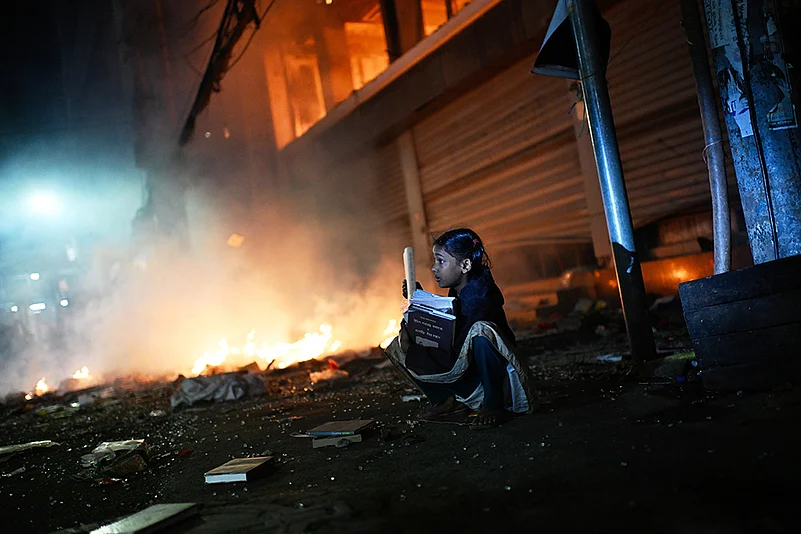
A girl rescues books from a shop near the premises of the Prothom Alo daily newspaper which was set on fire by angry protesters after news reached the country from Singapore of the death of a prominent activist Sharif Osman Hadi, in Dhaka, Bangladesh. | Photo: AP/Mahmud Hossain Opu

Summary of this article

Protesters block Farmgate junction in Dhaka demanding justice for murdered student Sharif Osman Hadi.

Claim killing was targeted political assassination; accuse police of shielding powerful figures.

Demonstration reflects rising public frustration over political violence and perceived law enforcement inaction.


Hundreds of protesters, including students, civil society activists and members of the family of the deceased, blocked the busy Farmgate junction in Dhaka demanding immediate justice for the murder of Sharif Osman Hadi, a 23-year-old university student killed in a suspected targeted attack earlier this month.


The demonstration, which began around midday and continued into the evening, brought traffic to a standstill on one of the capital’s busiest intersections. Protesters carried placards reading “Justice for Hadi”, “End Impunity”, and “Arrest the Killers Now”, while chanting slogans against police negligence and alleged political protection of the culprits.


Sharif Osman Hadi, a student of Dhaka University’s Department of Political Science, was shot dead on December 12, 2025, near his residence in the Mohammadpur area by unidentified assailants on a motorcycle. Police initially registered the case as a mugging attempt gone wrong, but the family and eyewitnesses have consistently claimed it was a premeditated political assassination linked to Hadi’s vocal criticism of local ruling party affiliates and student politics.


The protesters accused the police of deliberately delaying the investigation and failing to arrest any suspects despite clear CCTV footage and witness statements. They also alleged that powerful political figures with links to the ruling party were shielding the perpetrators. The family has publicly named two individuals they believe masterminded the killing.

Related Content


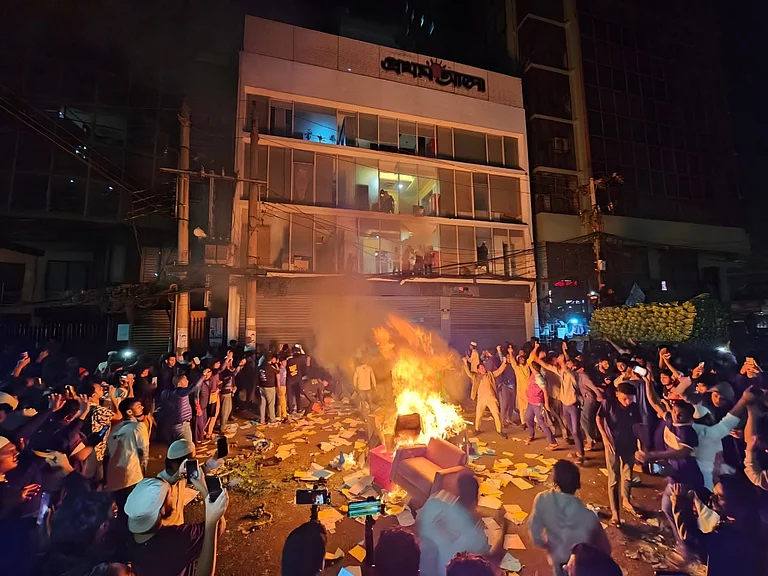
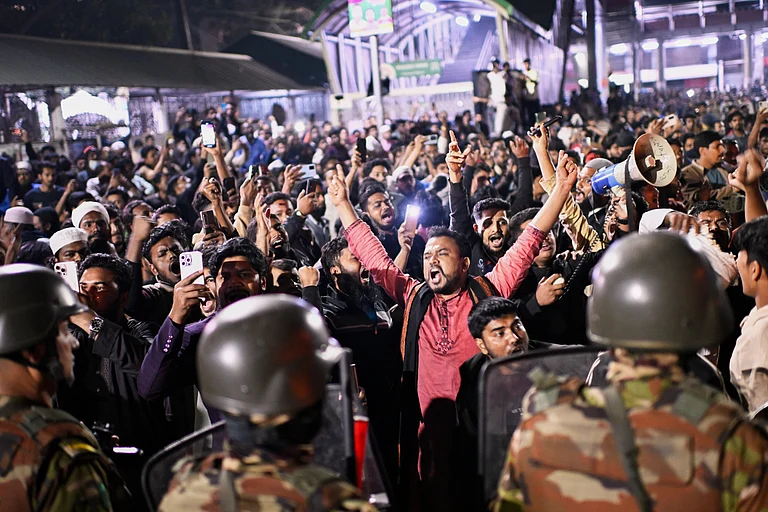
Sharif Osman Hadi Death: Bangladesh Erupts In Violent Protests


Violence Erupts Outside Indian Assistant High Commission In Bangladesh, Several Injured


Who Was Sharif Osman Hadi And Why Has His Death Sparked Protests In Dhaka?


Unrest Erupts in Bangladesh After Killing of Student Leader Sharif Hadi


Addressing the crowd, Hadi’s elder brother said: “My brother was killed because he spoke the truth. The police know who did it, but they are protecting them. We will not leave the streets until justice is served.”


The demonstration was largely peaceful, though police formed barricades and used mild lathi-charge to prevent protesters from marching toward the Prime Minister’s Office. Several student organisations and rights groups, including the Bangladesh Students’ Union and Ain o Salish Kendra, extended support to the protest.


The incident has reignited public anger over rising political violence and law-and-order failures in Bangladesh since the August 2024 change in government. The interim administration has yet to issue an official statement on the protest or the case.

The Politics of Defining Terrorism And Why It Matters

Israel and its allies routinely label all forms of resistance to their brutal occupation as acts of anarchy, and terrorism.


Abdullah M. Abu Shawesh
Updated on: 31 December 2025
THE OUTLOOK/INDIA


 IMAGO / NurPhoto

Summary of this article


Every party adopts its own definition of terrorism, and exploits it for narrow political interests


If the killing of civilians constitutes terrorism, then this principle must be applied universally


It is imperative to ensure that no one exploits human tragedy or manipulates it for selfish political gain

In our lives, we; both as individuals and as groups; have always classified each other. This has occurred throughout history and will likely continue, as it is a natural human tendency. There is no inherent harm in this, as long as such classification is not used to delegitimize or dehumanize others, to erase them from history, or to create a ticking time bomb for future conflict; one that seriously threatens global peace and stability. The danger is especially acute when classifications are based on race, nationality, or religion.

One of the most alarming examples of this misuse of classification is the approach of colonisers and foreign occupying powers toward the resistance of occupied peoples. They routinely label all forms of resistance to their brutal occupation; an occupation and colonisation against which international law explicitly grants peoples the right to resist; as acts of ingratitude, anarchy, and terrorism. This applies regardless of whether the resistance is military or peaceful; all forms are uniformly branded as terrorism, and treated as justification for the killing and annihilation of occupied and oppressed peoples.

One of the most alarming examples of this misuse of classification is Israel’s, backed by its allies, labelling the Palestinian resistance as acts of terrorism. This applies regardless of whether the resistance is military or peaceful; all such acts are treated as justification for killing and annihilation.

In this narrative, terrorism is portrayed as being committed exclusively by Palestinians. Meanwhile, the real terror carried out daily by Israeli soldiers and settlers across the occupied Palestinian territories is, at best, described as “adherence to the rules of engagement” or mere “rioting,” and is rarely, if ever, prosecuted in Israeli courts.

From the Israeli perspective, the killing of more than seventy thousand Palestinians, the famine that has claimed the lives of hundreds of children, the total blockade of Gaza, the daily settler attacks fully backed by the occupation army, the mass arrests of thousands without trial, the deliberate killing of detainees in prisons, and the withholding of Palestinian bodies as bargaining chips; acts that are well documented and represent only the tip of the iceberg; are all justified as “self-defence.”

This reality highlights a fundamental problem: every party adopts its own definition of terrorism, and exploits it for narrow political interests. This should serve as a serious alarm bell, demanding collective attention. The international community must urgently work toward a unified, clear, and universally accepted definition of terrorism. This is in the interest of all, because what one side labels “terrorism,” another may describe as “patriotism,” and the reverse is equally true.

For example, from our perspective, the so-called “Hilltop Youth” constitutes a violent and extremist Jewish terrorist organisation, responsible for numerous acts of terror. Yet this designation is not recognised within Israel. Menachem Begin was internationally wanted as a terrorist prior to 1948, only to later be transformed into a national hero, with public spaces and institutions bearing his name, before becoming Prime Minister in 1977. The same trajectory applies to Yitzhak Shamir, who later also served as Prime Minister.

Another crucial issue is the selective application of standards. If the killing of civilians constitutes terrorism, then this principle must be applied universally and without exception. It cannot be enforced against certain peoples while others are exempted or justified.

Under current double standards, throwing a stone at an armoured military vehicle is labelled terrorism, while the burning of Palestinian homes, assaults on residents, and the killing of civilians by settlers are dismissed as mere “riots,” rather than recognised for what they are; organised terror.

History demonstrates that all occupying powers label resistance movements as anarchist, lawless, violent, and terrorist. The great martyr Bhagat Singh was condemned and executed under the same accusation. Countless similar examples can be found across the world.

Today, even H.E. President Mahmoud Abbas is labelled a terrorist, or a “terrorist diplomat,” by Israeli officials, with some openly calling for his arrest. This further illustrates how the term “terrorism” is routinely weaponised to delegitimize lawful resistance and political leadership under occupation.


Harvesting Death: How Olive Groves Became A Battlefield In Palestine

As long as the international community lacks a unified and clearly defined understanding of terrorism and terrorist acts, every party will continue to claim the right to label others at will. The problem lies not only in the absence of clear definitions, but also in the deepening of divisions among peoples, as well as in the malicious exploitation that such ambiguity enables.

The Zionist movement, through its well-established media arms around the globe, spares no effort to equate Islam as a religion with terrorism worldwide. Many of the movement’s outspoken advocates and amplifiers preach this malicious narrative day and night. Unfortunately, to some extent, they have succeeded, particularly among socialist leaders. This will have a global effect that will spare no one in the future, and could destroy coexistence and the social fabric of many nations around the world.

For the sake of our shared human future, and as long as we believe that the world is one family and that no one is safe until everyone is safe, it is imperative to ensure that no one exploits human tragedy or manipulates it for selfish political gain. It is time for all of us to come together with one loud and clear voice to call for a unified, internationally agreed definition of terror, terrorism, and terrorist acts. Any act or individual falling within the scope and parameters of such a definition must be held accountable.

Leaving the definition of terrorism and terrorists to the discretion of each party is a recipe for the deliberate distortion of terms in the service of narrow and selfish political agendas.

The author is Ambassador of the State of Palestine to India

Views expressed are personal

Published At: 31 December 2025 
India Surpasses Japan To Become World's 4th Largest Economy

India Leaps to Fourth, Surpasses Japan with $4.19 Trillion Economy, Eyes Third Place by 2030 in Defining Year of Robust Growth

Outlook News Desk
Curated by: Pritha Vashishth
Updated on: 31 December 2025 


Summary of this article


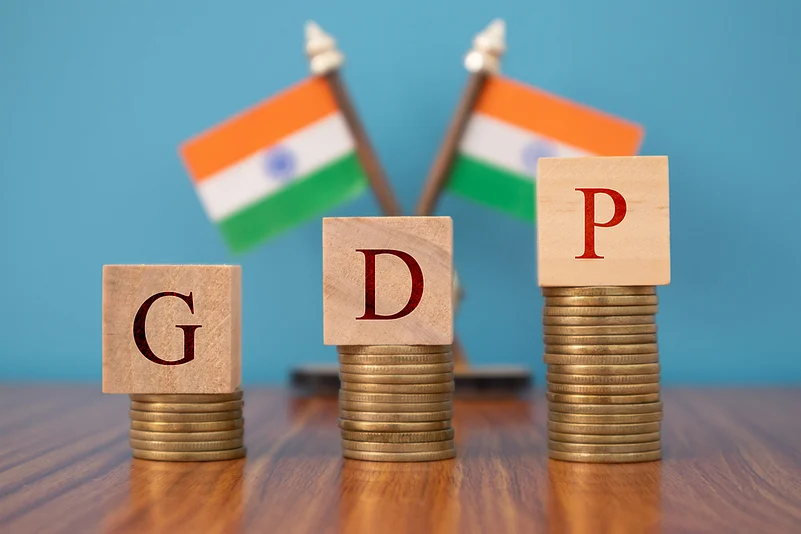
India overtakes Japan to become the world’s fourth-largest economy with nominal GDP of - USD 4.187 trillion.


Q2 FY26 real GDP growth hits 8.2% , fastest in six quarters; country remains the world’s fastest-growing major economy.


Government aims to surpass Germany and become third-largest by 2030 with projected USD 7.3 trillion GDP.

India has officially become the world’s fourth-largest economy, overtaking Japan with a nominal GDP of approximately USD 4.187 trillion, the government announced today in its year-end economic stocktake.

The milestone was highlighted by the Press Information Bureau and the Ministry of Finance, which stated that India has moved up from fifth position in 2022 to claim the No.4 spot in 2025, based on the latest IMF and World Bank-aligned estimates. The government described the achievement as a “historic leap forward” and proof of the country’s sustained high-growth trajectory even amid global headwinds.

Key highlights from the official statement include:

Real GDP growth accelerated to 8.2% in Q2 FY 2025-26 — the strongest quarterly expansion in six quarters.


Nominal GDP crossed the USD 4 trillion mark during calendar year 2025.


India remains the fastest-growing major economy, with international forecasts projecting 6.5–6.8% growth in 2026.

The government reiterated its target of reaching the third-largest economy by the end of the decade, with projections placing nominal GDP at USD 7.3–7.5 trillion by 2030, overtaking Germany. Long-term ambition remains to achieve a developed-nation status (high middle-income) by 2047.

While per capita income still lags far behind advanced economies (estimated at -USD 2,900 nominal in 2025), the aggregate size underscores India’s rising global economic weight and its increasing influence in international forums.

Final IMF rankings for calendar 2025 are expected to be published in the April 2026 World Economic Outlook, but government sources said the numbers are already conclusive based on current exchange rates and growth data.
Books

Tracing the Prehistory of Trumpism

Inderjeet Parmar
THE WIRE\INDIA

'When the Clock Broke' is brilliant symptomatic history. Read it for the human drama.


GIF: An illustrative clock/Canva.


John Ganz’s When the Clock Broke is a vivid, entertaining chronicle of the early 1990s as the cultural and affective prehistory of Trumpism. With novelistic flair, Ganz reconstructs a decade of disillusionment: the post-Cold War triumph soured by recession, racial tensions, and a parade of charismatic grotesques – David Duke, Pat Buchanan, Ross Perot, Rudy Giuliani, even John Gotti. Trump, lurking in the wings, absorbs the lessons of strongman spectacle in a crumbling New York. The book is wry, morally urgent, and dedicates itself to warning against fascism’s “structure of feeling.” It is essential reading for understanding the emotional syntax of today’s far right.

Yet, from the perspective of elite theory and historical materialism, Ganz’s account raises a critical question: does he root Trumpism in systemic and structural forces, or largely in individuals and contingent chance? The answer is mixed – but leans toward the latter. Ganz excels at conjunctural narrative, but his focus on colourful personalities, media events, and subcultural currents risks portraying the 1990s rupture as a series of accidental eruptions rather than the predictable outcome of deeper racial-capitalist-imperial contradictions.


‘When the Clock Broke: Con Men, Conspiracists, and How America Cracked Up in the Early 1990s’, John Ganz, Farrar, Straus and Giroux, 2024.

The Strengths: Conjunctural Brilliance and Affective Insight

Ganz’s greatest achievement is capturing the mood of the early 1990s. The Cold War’s end promised a “kinder, gentler America,” yet delivered junk-bond crashes, savings-and-loan scandals, urban riots, and a white middle class feeling culturally besieged and economically betrayed. Into this vacuum stepped con-men promising protection: the “godfather, the boss.” Ganz’s vignettes are masterful – Duke’s talk-show antics, Buchanan’s “culture war” speech, Perot’s infomercial charts, Trump’s Central Park Five ad as rehearsal for death-penalty demagoguery.

He traces an intellectual genealogy: Murray Rothbard’s libertarian flirtation with paleoconservatism, Sam Francis’s “Middle American Radical” thesis of a white proletariat squeezed by elites above and minorities below. These are not mere eccentrics but symptoms of a broader ressentiment – grievance weaponised into mythic nationalism. Ganz rightly sees Caesarism here: charisma suspending rules to restore “greatness,” prefiguring Trump’s script.

This affective analysis is no small feat. Trumpism thrives on feeling, not just policy. Ganz shows how the 1990s incubated cynicism, absurdity, and the thrill of transgression – elements that gestated into MAGA’s emotional core


The Limits: Individuals and Chance Over Structure

Where Ganz falters – for this reviewer – is in causal depth. His narrative privileges individuals (Duke’s ambition, Buchanan’s insurgency, Trump’s opportunism) and chance events (a riot here, a scandal there) over systemic forces. The 1990s appear as a contingent “cracking up,” a clock accidentally broken, rather than the inevitable crisis of a racial-imperial order.

Consider the economic backdrop. Ganz notes deindustrialisation and wage stagnation but treats them as atmospheric – fuel for Perot’s charts or Buchanan’s pitchforks – rather than structural outcomes of post-1970s financialisation, deregulation, and globalisation. In my view, these were deliberate elite choices: bipartisan embrace of NAFTA, China’s WTO entry, Wall Street deregulation. The 2008 bailouts merely crystallised a “corporate cronyism” both parties sustained. Trumpism channels legitimate grievances, but Ganz stops short of mapping the transnational class networks that produced them.

Race, too, is vivid but under-structured. Ganz’s Central Park Five spectacle and Duke’s dog-whistles are compelling, yet they float atop an unexamined racial state – from Wilson’s federal segregation to Clinton’s 1994 crime bill and “superpredators” rhetoric. Trumpism is not a 1990s invention but the latest mutation of America’s foundational hierarchy: democracy for whites, coercion for others.

Empire is almost absent. The Gulf War, NATO expansion, WTO – these barely register. Yet Trumpism is imperial recalibration: “America First” as harder-edged Wilsonianism, evident today in the 2025 National Security Strategy’s overt racial subtext, tariffs on China, and conditional alliances. J.D. Vance’s Munich speeches court Orbán while decrying European “free-riding” – a fusion of far-right nationalism onto the liberal blob.
Advertisement


Illustration: Pariplab Chakraborty.

Ganz’s method – narrative portraits, cultural genealogy – lends itself to individualism. Units of analysis are actors and events, not hegemonic blocs or state-corporate networks. Time horizon: 1989–1996. Causation: expression of affect, template for demagogues. This risks contingency: as if without Duke’s charisma or Perot’s billions, the clock might not have broken.

Structural Forces: Present but Subordinated


To be fair, Ganz does gesture toward structure. He acknowledges Reagan’s betrayed promises, the hollowing of the middle class, the culture wars as elite diversion. Sam Francis and Rothbard represent ideological currents, not isolated cranks. The book’s moral warning – fascism as “structure of feeling” – implies something systemic.

But these remain background. Foregrounded are personalities and absurdities. This makes for gripping reading but shallow explanation. Trumpism endures not because of 1990s con-men but because MAGA think tanks (Heritage, America First Policy Institute) institutionalise it, backed by billionaires like Musk and Thiel. Project 2025’s Schedule F and mass deportation machinery are elite projects, racialising discontent to preserve hierarchy.

Toward Synthesis: The Spark and the Powder Keg

Ganz’s 1990s are my conjuncture – the spark. My framework – Gramscian hegemony, racial capitalism, imperial statecraft – supplies the powder keg: centuries of contradiction. The complementarity is asymmetrical. Without Ganz, structural analysis risks abstraction. Without structure, Ganz diagnoses fever without naming the disease.

As of December 2025, with Trump’s second term codifying MAGA in the NSS – hard-power primacy, overt racism, transactional hegemony – the need for depth is urgent. Ganz illuminates how it felt; we must explain what it is: elite-led capture of mass revolt to sustain empire.

When the Clock Broke is brilliant symptomatic history. Read it for the human drama. But pair it with a more structural account – such as Thomas Piketty’s Capital in the Twenty-First Century for the inequalities of financialised capitalism, and especially Theodore W. Allen’s The Invention of the White Race for the racialiased-class systemic foundations of American order – to grasp why the clock was always ticking toward fracture, and how a new hegemonic project now seeks to reset it on far-right terms.


Inderjeet Parmar is a professor of international politics and associate dean of research in the School of Policy and Global Affairs at City St George’s, University of London, a Fellow of the Academy of Social Sciences, and writes the American Imperium column at The Wire. He is an International Fellow at the ROADS Initiative think tank, Islamabad, on the board of the Miami Institute for the Social Sciences, USA, and on the advisory board of INCT-INEU, Brazil, its leading association for study of the United States. Author of several books including Foundations of the American Century, he is currently writing a book on the history, politics, and crises of the US foreign policy establishment.
After Trump, China Claims Credit for Ending India-Pakistan Clashes

The Wire Staff
INDIA
 31 December 2025

'Following this Chinese approach to settling hotspot issues, we mediated in northern Myanmar, the Iranian nuclear issue, the tensions between Pakistan and India, the issues between Palestine and Israel, and the recent conflict between Cambodia and Thailand.'


File image of Chinese Foreign Minister Wang Yi. Photo: @SpoxCHN_LinJian on X via PTI.

New Delhi: Chinese foreign minister Wang Yi claimed on December 30 that Beijing “mediated” between India and Pakistan during their four-day long military conflict earlier this year, joining US president Donald Trump in seeking credit for the cessation of hostilities.

Delivering his year-end speech at the Symposium on the International Situation and China’s Foreign Relations in Beijing, Wang Yi for the first time explicitly used the term “mediated” to describe China’s role. He listed the “tensions between Pakistan and India” alongside other global hotspots where Beijing claims to have intervened to maintain peace.

“Following this Chinese approach to settling hotspot issues, we mediated in northern Myanmar, the Iranian nuclear issue, the tensions between Pakistan and India, the issues between Palestine and Israel, and the recent conflict between Cambodia and Thailand”.

In April 22, terrorists killed 26 people in the tourist town of Pahalgam, which New Delhi blamed on Pakistan-based terror groups India responded on May 7 with “Operation Sindoor,” launching drone and missile strikes against terror infrastructure in Pakistan-occupied Kashmir and mainland Pakistan. There was retaliation and counter-retaliation for four days, before ceasefire was announced on May 10.

In July, Deputy Chief of Army Staff (Capability Development and Sustenance), Lieutenant General Rahul R Singh had stated that Pakistan’s military actions were bolstered by unprecedented real-time assistance from China.

The Chinese foreign minister’s assertion now directly competes with Trump’s narrative. The US president has repeatedly taken sole credit for ending the war, asserting that his threat of tariffs on both nations forced a ceasefire within 24 hours.
Advertisement

Earlier, India had rejected the US president’s claims, maintaining that the May 10 ceasefire was a purely bilateral result achieved through direct communication between the Directors General of Military Operations (DGMOs).


Congress Flags China’s Mediation Claim on India-Pak Tensions

Party seeks PM Modi’s clarification as Beijing echoes Trump’s mediation assertions


Outlook News Desk
Curated by: Snehal Srivastava
Updated on: 31 December 2025


Congress leader Jairam Ramesh Photo: PTI

Summary of this article


Congress says China’s claim of mediating India-Pak talks undermines national security.


Jairam Ramesh criticises PM Modi’s silence on similar claims by Donald Trump.


India reiterates the crisis was resolved through direct DGMOs talks, not third-party mediation.


The Congress on Wednesday termed Chinese claims of mediation between India and Pakistan concerning and said the people of India need clarity on the issue.

Jairam Ramesh, the general secretary of the Congress, urged Prime Minister Narendra Modi to address the allegation, saying it seemed to mock the nation's security.

"President Trump has long claimed that he personally intervened to halt Operation Sindoor on May 10, 2025. He has done so on 65 different occasions in various forums in at least seven different countries. The Prime Minister has never broken his silence on these claims made by his so-called good friend," Ramesh said in a post on X.

"Now the Chinese Foreign Minister makes a similar claim and says China also mediated. On July 4, 2025, the Deputy Chief of Army Staff Lt. Gen Rahul Singh had publicly stated that during Operation Sindoor, India was actually confronting and combating China."

"Given that China was decisively aligned with Pakistan, Chinese claims of having mediated between India and Pakistan are concerning – not just because they directly contradict what the people of our country have been led to believe, but because they seem to make a joke of our national security itself," he added

He said the claim must also be understood in the context of our relationship with China.

Related Content
Trump Repeats Claim Of Ending India-Pakistan Conflict


"We have begun re-engagement with them – but unfortunately it has been on Chinese terms. The Prime Minister's clean chit to China on June 19, 2020, has considerably weakened India's negotiating position," he said.

The Congress leader said our trade deficit is at a record high, and much of the country's exports are dependent on imports from China.

"Provocative actions by China in relation to Arunachal Pradesh continue unabated," he said.


The Pentagon's India-China Problem

"Amidst such a lopsided - and hostile - relationship, the people of India need clarity on what role China played in the abrupt halt to Operation Sindoor," Ramesh said.

Tensions between India and Pakistan are one of the hot problems China is mediating this year, according to Chinese Foreign Minister Wang Yi on Tuesday.

New Delhi has maintained that direct discussions between the DGMOs (Director General of Military Operations) of the two nations' military were the means by which the May 7–10 crisis between India and Pakistan was settled.

Additionally, India has continuously maintained that any third-party engagement in issues pertaining to India and Pakistan is inappropriate.

Why Recognition of Somaliland Reflects Israel’s Desperation

Eitay Mack
29/Dec/2025
THE WIRE
INDIA


The establishment of mutual embassies with Fiji and with a state unrecognised by the international community does not signal a diplomatic breakthrough. Rather, it underscores the distress and deepening desperation in which Israel finds itself after more than two years of a multi-front war.


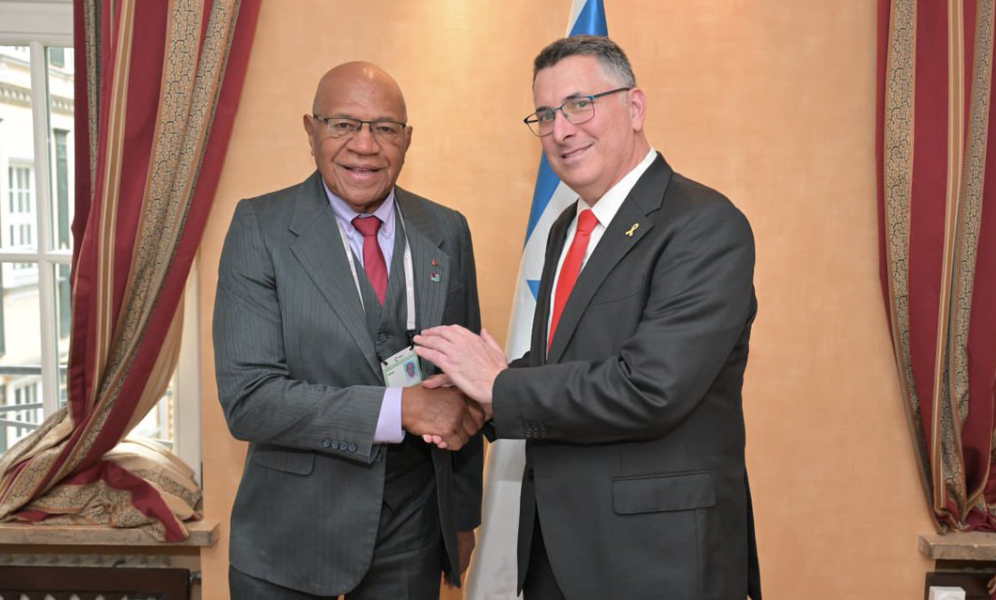
Israel's foreign minister Gideon Sa’ar announced on X that a Fijian embassy would open in Jerusalem and an Israeli embassy in Fiji. Photo: X/ @gidonsaar.

On December 26, Israel’s foreign minister Gideon Sa’ar made an announcment on X regarding Israel’s recognition of the Republic of Somaliland – a separatist region in Somalia that has been seeking unsuccessfully for years to secede – and the mutual opening of embassies: “Following the decision of Prime Minister Benjamin Netanyahu and the President of Somaliland Abdirahman Mohamed Abdullahi, today we signed an agreement on mutual recognition and the establishment of full diplomatic relations, which will include the appointment of ambassadors and the opening of embassies.”

On December 18, minister Sa’ar announced on X that a Fijian embassy would open in Jerusalem and an Israeli embassy in Fiji. Sa’ar told Fiji’s Prime Minister, Sitiveni Rabuka, “You are a true friend of Israel and a man of faith.”

But the establishment of mutual embassies with Fiji and with a state unrecognised by the international community does not signal a diplomatic breakthrough. Rather, it underscores the distress and deepening desperation in which Israel finds itself after more than two years of a multi-front war.

In light of the widespread hunger, destruction, and killing in the Gaza strip, tectonic shifts have occurred in public opinion in Israel’s two most important allies, Germany and the United States, and Germany has imposed a partial arms embargo on Israel. Boycotts, sanctions, and arms embargoes against Israel have become central planks in the platforms of left-wing parties across Europe. Were it not for the ceasefire in October, the sanctions package advanced against Israel in the European Union might have moved forward.

With the ceasefire, Israel’s diplomatic relations did not snap back like a spring to their pre-war state. Proceedings in the genocide case at the ICJ continue, and despite the sanctions imposed by President Donald Trump on the ICC, the arrest warrant against Netanyahu has not been canceled.

The world sees how, since the signing of the ceasefire, Israeli terror and ethnic cleansing in the West Bank have continued with full force; how hundreds more civilians in Gaza have been killed in Israeli attacks; and how Israel is doing everything it can to sabotage progress under President Trump’s plan, including statements by the defense minister about intentions to establish settlements in Gaza.

Therefore, Jan van Aken, leader of Germany’s left-wing party Die Linke, called on the German government in an interview with Haaretz – despite the ceasefire – to impose immediate sanctions on Israel, freeze its special trade agreements with the European Union, and completely halt all arms shipments, arms purchases, and military cooperation between the two countries. Although the German government lifted its arms embargo on Israel following the ceasefire, and Chancellor Friedrich Merz visited Israel in early December and met with Netanyahu, Van Aken’s remarks nonetheless align with a sentiment that is steadily gaining momentum among the German public.

When there is a global wave against the State of Israel, it becomes weak and vulnerable to pressure. The country’s foreign ministry knows this well from its experience confronting waves of severed relations with Israel after the wars of 1967 and 1973. An example of Israel being pressured by a state of marginal standing was the episode of the crisis in relations with Gabon.

After the 1967 war, the first wave of severed relations began – one Israel tried to stem by every possible means. According to Foreign Ministry cables opened to the public in the State Archives, in June 1970 Joséphine Bongo, the wife of Gabon’s president and dictator Omar Bongo, arrived for a visit to Israel. The visit – organised by Israel from the outset to curry favor with the dictator – blew up when the then Prime Minister Golda Meir was forced to cancel her attendance at a tea party in Joséphine Bongo’s honour in order to attend the funeral of Minister Yisrael Barzilai at Kibbutz Negba.

The dictator was furious both at Meir’s absence from the tea party and at the fact that Israeli radio and television did not adequately cover the “historic” visit of his wife. Accordingly, he ordered his wife and his ambassador to Israel to return immediately to Gabon. Only after exhausting negotiations and Israel’s granting the dictator weapons and other military equipment worth $200,000 as a gift did relations return to normal, and at the UN General Assembly in September 1972 Gabon abstained from a vote against Israel. Nevertheless, about a year later, Gabon joined the second wave of severed relations in the wake of the 1973 war.

In the future – when Israel’s foreign ministry files from the Gaza war and its aftermath are opened, or earlier through journalistic investigations – we will learn what the state of Israel was prepared to do to preserve its diplomatic relations around the world, at the very time minister Sa’ar was tweeting and opening embassies.

Eitay Mack is a human rights lawyer and activist based in Jerusalem.

Gig Workers to Go on Nationwide Strike Today; Service Disruptions Expected Across India

The Wire Staff
 31 December 2025

Meanwhile, food delivery platforms Zomato and Swiggy have announced higher incentives for delivery partners on New Year’s Eve, describing the move as part of a “standard festive protocol”.


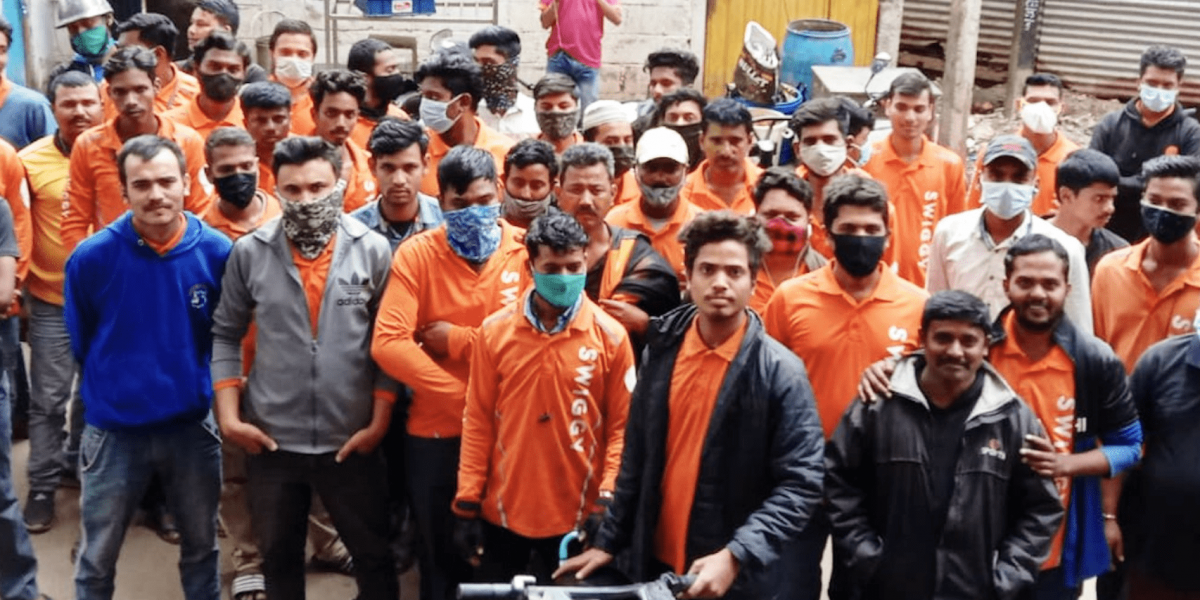
Representational image of gig workers in Bengaluru. Photo: X/@aigwu_union.


New Delhi: The Indian Federation of App-Based Transport Workers (IFAT) and the Gig and Platform Service Workers’ Union (GPSWU) have called for a nationwide strike on Wednesday (December 31) to protest against the unsafe working conditions of gig workers and low payouts.

The call comes after similar action on Christmas Day that disrupted services. Residents across the country, including Delhi-NCR may experience delays and order cancellations on New Year’s Eve, a day that usually sees the highest demand in the year for both food delivery and transport applications.

The unions have raised concerns over the “10-minute delivery trap” and the lack of social security for those labelled as independent partners. “We are not considered for the risks that come along with the work,” a representative for IFAT told The Hindu. The federation alleged that accidents and medical bills are often treated as personal expenses rather than workplace liabilities.

Moreover, many workers have cited significant financial distress. For instance, speaking to The Hindu, Nadeem, a 30-year-old worker from Chandni Chowk, stated that he was left without assistance after a road accident ten months ago left him in a coma for three months. “I spent over Rs 1 lakh for the treatment, and the company has not provided any support,” Nadeem alleged.

Earnings also remain a central grievance. Aman, a delivery partner from Jafrabad, noted that he earned only Rs 263 after delivering 11 orders over seven hours on Monday (December 29). “The app algorithm is abrupt and not fixed,” Aman told The Hindu, adding that while earnings can occasionally reach Rs 1,000 a day, it requires working up to 12 hours.

In the ride-hailing sector, workers also pointed out to the burden of platform fees. “You can avoid this charge only by purchasing the company’s incentives,” Prabhat Kumar Verma, a ride-hailing captain, told TH, adding that at least 13% per ride is charged as platform fee. However, net earnings still remain low due to fuel and maintenance costs, he allegednt

The Telangana Gig and Platform Workers Union (TGPWU) has also urged the Union and state labour ministers to intervene. “We urge the Hon’ble Centre and State Labour Ministers to\
 urgently act on gig workers’ issues – unfair payouts, unsafe 10-minute delivery models and arbitrary ID blocking,” the union stated in a post on X.

Seema Singh, president of GPSWU, has called on all app-based workers and online freelancers to participate in the strike by shutting down their applications on December 31. The collective action is expected to affect services on platforms including Zomato, Swiggy, Zepto, Blinkit, Amazon, and Flipkart.

Meanwhile, food delivery platforms Zomato and Swiggy have announced higher incentives for delivery partners on New Year’s Eve, describing the move as part of a “standard festive protocol”. Zomato said it will offer delivery partners payouts ranging from Rs 120 to Rs 150 per order during peak hours between 6 pm and 12 am on December 31, according to reports.

Similarly, Swiggy is offering delivery partners the opportunity to earn up to Rs 10,000 across December 31 and January 1. For New Year’s Eve specifically, the company is advertising peak-hour earnings of up to Rs 2,000 during the six-hour window from 6 pm to midnight, when order volumes are typically at their highest, sources told news agency PTI.

Consumers, Riders Say ‘Ban 10-Minute Delivery’ As Gig Workers Go On Strike

Lakhs of Zomato, Swiggy, Instamart, and Zepto riders join nationwide strike demanding fair pay, improved working conditions, and ban on ten-minute deliveries.


LAKH: one hundred thousand

Anwiti Singh
Updated on: 31 December 2025 
Outlook News Desk


App based food delivery persons from Zomato and Swiggy delivering food in Kolkata, India Source: IMAGO / NurPhoto

Summary of this article

Gig workers’ unions, including GIPSWU and GigWA, called the strike on December 31–January 1 to protest unsafe delivery models and declining per-order pay.

Platforms offered temporary incentives and waived certain penalties to maintain operations amid the strike, but unions say demands remain unaddressed.

Public support grows on social media, highlighting the human cost behind instant delivery, while the full impact on orders and revenues is still being assessed.


Bharat cannot be viksit till its workers continue to be exploited, states a memorandum submitted to Labour minister Mansukh Mandviya, signed by The Gig & Platform Services Workers Union (GIPSWU), to extend support to the nationwide strike by gig workers (primarily delivery riders) on December 31st and January 1st.

“This strike is the result of cumulative changes in the platform work system. Over time, per-order pay has declined, incentive structures have become unstable and opaque, unpaid waiting time has increased, and algorithmic pressure has intensified,” says Nitesh Kumar Das, Gig Workers Association (GigWA) Organising Secretary. He adds that adding insult to injury is the ten-minute delivery model which has unsafe delivery timelines, especially ultra-fast delivery models, that have increased risks on the road, while workers continue to bear all costs related to fuel, maintenance, health, and accidents. “For many workers, real incomes have fallen even as work intensity and risk have risen,” says Das.

Suhail, a Zomato ‘partner’, says no Zomato riders will report to work today as part of the strike, which will involve no sit-ins or gatherings—workers will simply stay offline. He explains that earlier Zomato paid ₹10 per km with short delivery distances, but now riders earn ₹25–30 for 5–6 km, effectively lowering per-kilometre pay. Sohail says companies will face losses, especially due to night orders and traffic pressures. Despite speed limits being tracked at 50–60 kmph, riders are blamed if customers complain about delays or cold food. He adds that Swiggy is marginally better, though earnings remain low and pay stays largely unchanged in heat or rain, while Zomato offers slightly better compensation for late-night, foggy or rainy conditions.


On the Road to Nowhere: The Daily Struggles of India’s Gig Workers

On GIGWA’s expectations from the strike, Das says the immediate aim is visibility and recognition that current work models are unsafe and unsustainable. Workers seek concrete steps towards fair pay, safer delivery timelines, protection from arbitrary penalties or ID blocking, and basic security during accidents or health emergencies. “The strike is about asserting minimum standards of dignity and safety at work”, Das says.

However, there is a very real fear that this ‘protest’ and strike would largely remain symbolic. Though the chosen time for the strike, December 31st and January 1st is strategic as massive number of orders are expected on these two days. From groceries to prepare the new year’s feast at home to the last minute party decor and drinks mixers – 31st and 1st guarantee a lot of customers. But what will happen eventually? Das says there have been no clear or public commitments from platforms so far to review pay, delivery timelines or safety concerns, and that any positive sign would require transparent communication and concrete corrective steps, which workers have yet to see.

“The strike is one part of a broader strategy. Post-strike, worker collectives will continue engaging through dialogue, documentation of workplace risks, public advocacy, and policy engagement. Legal options are not ruled out, but the immediate focus is on building pressure for accountability and structural change through collective action,” Das says.

This is the second strike of December by various gig workers’ associations. The first was on 25th of December – another high-demand day – and it saw mixed results. Apart from a few delayed deliveries in some areas, the impact remained largely localised where associations were most vocal, claims Kapil, a rider associated with Swiggy. The stores of Instamart in South Delhi had no impact, he adds and others only acted on the strike for ‘10 minutes’ and resumed afterwards.

Suhail claimed, however, that during the 25th strike, Zomato took punitive action against some riders for various reasons, and food deliveries on Swiggy were also disrupted, while Instamart and Zepto were completely shut in their areas. Both Kapil and Suhail operate in South Delhi.


Tamil Nadu Govt Forms Welfare Board to Cater to Gig Workers

GIGWA has been very vocal on social media, as are other supporters of the movement. Standwith_gigworkers has been promoting a “Pause It” campaign, which is asking customers to refuse 10 minute delivery apps like Blinkit and Zepto. A quick glance at #gigworkersstrike tag on Instagram results in hundreds of posts by social media influencers and general users to boycott 10-minute delivery model. A user named @MarxAfterDark wrote “please do not order anything off delivery apps on the 31st to support gig workers in their strike for basic labor rights like withdrawal of the 10-minute delivery, hygiene in warehouses, bathroom breaks, and better pay.” Similarly, hundreds of commenters wrote some variation of ‘nobody will die because their (product name) doesn’t arrive in ten minutes, ban this practice’.

While the support on social media seems loud, the ground reality is yet to be revealed.

Kapil, the Instamart rider who is working today despite the strike, claims the resistance is futile. “Apne pair pe kulhadi maar rahe hain,” (the workers are harming themselves). “A guard works 12 hours a day, everyday maybe except Sunday, earns maybe 10-12 thousand. He doesn’t get insurance or medical pay and he never gets to relax. Here I can choose my time,” he says, adding that earning 800-1000 per day with flexible hours is not bad. Ten minute delivery is also not a deal breaker for him, “our mart’s radius is fixed, we are always 1km or so away from our deliveries, I cannot say the same about food delivery as I have not worked in that sector,” he clarifies.

As he is saying all this, a delivery person nearby interjects claiming the strike is a much-needed move. Ali, who has worked for Zomato as well as Blinkit in the past, laments about the speedy deliveries and making 700-800 per day while taking such personal risks. “I don’t miss it, the dread of missing the delivery deadline, the lack of respect, the absence of security”. Ali was at that time delivering an order from Meesho, he says there is not a lot of difference in pay but he doesn’t have to risk his life to ensure the 5-10 minute delivery and working 10 plus hours a day. Kapil disagrees again, which job does not require 10 hours?

The strike will only result in loss for the riders, he claims, as people will not order or order less in solidarity with the strike and workers’ commission will be affected.

But a majority of the gig workers Outlook spoke with are supporting the strike.


New Law Floats Hope Among Bengaluru Gig Workers But Platforms May Sink Them

Das says, “We have seen growing public empathy and solidarity, especially as issues like air pollution, unsafe roads, and extreme work pressure resonate with everyday experiences. Many citizens, unions, and civil society groups have expressed support and are amplifying workers’ voices,” adding that this response shows that people are beginning to question the human cost behind instant convenience.

Update: Food delivery platforms Zomato and Swiggy have rolled out additional incentives for New Year’s Eve, a routine festive measure, amid a nationwide strike call by gig workers’ unions demanding better pay and working conditions. Zomato is offering ₹120–150 per order during peak hours and waiving certain penalties, while Swiggy has announced higher year-end incentives. Unions say earlier strikes drew no response from platforms, making the December 31 action unavoidable.

Published At: 31 December 2025 3:02 pm
INDIA

'The Season of the Witch': Minorities Attacked and Workers Abandoned as 2025 Draws to a Close

Anand K. Sahay
THE WIRE


The Christians this year took the hit on their holiest day, though off and on their churches have been attacked over the years, and their priests and nuns too. The Muslims have borne the brunt of unremitting all-round violence in the past ten years.


Christian devotees offer prayers during the Christmas morning service at Santhome Cathedral Basilica church in Chennai. Photo: PTI//R SenthilKumar.

In India, hypocrisy and violence walked arm in arm as the year 2025 was closing. In New Delhi, the spokesman of the external affairs ministry declared quite rightly, after the lynching of the second Hindu man by frenzied extremist mobs within days of the first, that Bangladesh had shown “unremitting hostility” toward its minorities – Hindu, Christian and Buddhist.

This may have carried weight- and gravitas- if in India we had shown ourselves to be exemplars of communal rectitude, at the level of society or at least at the level of government which tolerates no transgressions of the law in such matters.

of hatred, shockingly in many states across the country, particularly Bharatiya Janata Party-ruled (BJP-ruled) ones, celebrations by Christians were attacked by rough goons who tore down Santa Claus decorations in schools, public grounds, in church precincts and even in little streets where hawkers sold little Christmas adornments and toys.

In Assam, they were identified as members of the Vishwa Hindu Parishad (VHP) and the Bajrang Dal. But in Jubblepore in Madhya Pradesh, it was the local BJP vice-president who tore off the Santa mask off a blind girl’s face in a widely reported incident.

In Jhabua, in Madhya Pradesh, Catholic Connect reported that on Christmas day a phalanx of Bajrang Dal men armed with swords and pistols marched through a Christian locality screaming slogans against the Christian community, their priests and their religion. The authorities had been informed earlier, and yet the armed procession was allowed, although the Hindutva volunteers resorted to no physical violence. Another time…who knows?

There are wounds that never heal even when the pain fades. The one man in India a swish of whose hand could have frozen the evil doers in their tracks, just looks into the far distance. Is he unaware? Can he be? This man stoically “celebrated” Christmas (see the visual for confirmation) at the Sacred Hearts Cathedral in the national capital, the media reported, as the worshippers sang “O, come let us adore him, Christ the Lord!” The man was not at ease. But he did not omit to intone the right words- harmony, brotherhood, peace. Part of the job.


We cannot know what was going through the leader’s mind. But we do know that in India, since Narendra Modi became prime minister, December 25 is observed as “Good Governance Day” to mark the anniversary of the birth of former Prime Minister Atal Behari Vjapayee. In Modi’s India Christmas is not on the official calendar.

Assembly elections are due in Kerala in a few months and many Christians are native to the state. Europe and America are also Christian lands and they should not be ruffled. In a practised game, when it’s bad news, those at its centre are called “fringe elements”. The implied message is that the core is clean, pristine. The media, typically, asks no questions. The usual script is some men are arrested, and then let off when the buzz dies down.

The Christians this year took the hit on their holiest day, though off and on their churches have been attacked over the years, and their priests and nuns too. The Muslims have borne the brunt of unremitting all-round violence in the past ten years.

Also read: The Denial of a Christmas Holiday Exposes a Deeper Crisis of Religious Freedom in India

On the Prophet Mohammed’s day of birth, in 2025, not so long ago, properties were bulldozed in Uttar Pradesh for showing “I Love Mohammed” signs with a red heart emblem. On December 5, a Muslim cloth-seller was lynched and killed in Nawada, Bihar, for no particular reason. Probably just for sport. But it’s a blood sport when the hounds are out.
In Bihar, chief minister Nitish Kumar himself tore off the veil of a Muslim doctor’s face as he handed her a job letter at one of those functions held to show off governmental munificence at the expense of the state exchequer.

More recently, a Kashmiri Muslim trader was beaten up in Kashipur, Uttarakhand, and duly warned not to show up in those parts. In none of these episodes has the majesty of the law been unfurled. Political actors have a field day, state actors just look on.


The Rashtriya Swayamsevak Sangh (RSS) century celebrations kicked off on October 1, with Prime Minister Modi as the chief guest at a New Delhi function. A commemorative coin was struck and a postal stamp issued under the aegis of state power for an organisation that the prime minister had praised in his Independence Day speech in 2025, although the outfit had been banned after Gandhi’s assassination by then home minister Sardar Patel.


In Kolkata, on December 21, Mohan Bhagwat, the current RSS chief, asserted that India was already a Hindu Rashtra, stressing that this was a self-evident truth like the sun rising in the east- clean overlooking that the constitution is explicit that India is a “secular” state, not partial to any religion.

Bhagwat went further. He urged the audience not to try to understand the RSS through the BJP, although he noted that the RSS did a wide variety of things and some of its members were indeed in politics and engaged in the enjoyment of power. But he also urged that the RSS not be viewed as a “paramilitary organisation”, or as a service organisation for that matter.

It’s obviously a many-splendoured thing- and intended to be all things to all people. But are members of the Bajrang Dal and VHP ever to be found in the RSS uniform? Or, do they become paramilitary only when they fly their own banner?

Do they share the generic philosophy of the RSS as they march through Jhabua carrying weapons whose display in public is prohibited? Is the wearing of military-style uniform and practising morning marches with the “danda” or stave, not a “paramilitary” attribute?

These issues need to be squarely faced. Of course we have home minister Amit Shah’s word for it that he and Prime Minister Modi “subscribe” to “the RSS ideology”. Clearly, this was intended to legitimise the RSS through placing the matter on the record of Parliament After he flaunted this declaration in the just-concluded Winter session of parliament, the prime minister called the speech “outstanding”, lending his endorsement and the imprimatur of his office.

In India, it’s truly the “Season of The Witch”. This is exemplified by the 1966 pop song of that name by Donovan, whose “language and trippy contents,” according to the reviewer Lindsay Planer, “project a dark foreboding atmosphere”.

Other than the religious minorities, it is the working classes that are under a sustained governmental onslaught. The livelihoods of millions have been thrown into question. The last parliament session of 2025 saw the termination of the world’s most admired, demand-based, rural jobs guarantee programme, started in 2005 by the Manmohan Singh government. According to estimates, around 12.16 crore workers are currently associated with Mahatma Gandhi National Rural Employment Guarantee Act (MNREGA). The data for 2023-24 suggests that 23.04 crore households received work under the scheme, 90% of whose costs were underwritten by the Centre so as not to put financially weak states under strain. Women’s participation in the scheme is as high as about 60%.

It is clear the idea is to throw the vast agricultural working class to the wolves and compel it to swell the ranks of what Marx called the “reserve army of the unemployed”. This would eventually have the effect of bringing down urban wage rates as the rural unemployed now march to cities desperately in search of work of any kind. The most to be affected is likely the unorganised sector which accounts for some 95 per cent of the urban work force in India. This may be expected to be the first port of call for the released rural proletariat.

With the MNREGA programme being history, the name of Mahatma Gandhi, associated with the internationally-acclaimed scheme, which came to the rescue of the country and the national economy in the Covid years, has also been deleted. For the RSS, Hindu Mahasabha and the Jana Sangh-BJP, Gandhi is anathema.

The regime has killed two birds with one stone- a modicum of self-reliance for the poorest of the poor- Gandhi’s “last man”- and of course the removal of the association of Gandhi from arguably the most consequential pro-poor government scheme, whatever its limitations.

And MNREGA has been inadequately- and derisively- substituted with a scheme with a strange appellation which starts with the usual Viksit Bharat (Developed India) propaganda ploy of the regime, and ends with “G Ram G”, phonetically meaning “Yes, Lord Ram ji” It is hard to imagine a greater absurdity in the service of the regime’s (religious) propaganda, likely dreamt up in the darkest Mephistophelean corners of government.

The other open assault is on the urban working classes through the so-called labour codes which have now been notified. These prejudice workers’ earnings, including PF and gratuity, and could render workers partially unemployed. Practically every trade union organisation in the country is up in arms.

On the other side of the balance, the insurance sector has been opened one hundred per cent for foreign companies, giving them open entry, without limits, into the Indian finance sector and in an area where the lifelong savings of the working classes and the middle classes are typically invested. Any upheaval there has the potential to play havoc with, say, pension funds that may lie in such a sector.

With the election system in its total control on account of a unilaterally nominated Election Commission, leading to a tight grip on national political affairs, the RSS-BJP- inspired ‘G Ram G’ regime feels free to assault the religious minorities and the living conditions of the working classes as well as substantial elements of the middle classes. The sun is unlikely to rise on a bright note in 2026 for India.


Anand K. Sahay is a veteran journalist.

Sri Lanka: Economists For Suspending Debt After Devastating Cyclone


Abdul Rahman 


Sri Lanka is expected to pay over 25% of its total revenue in debt servicing every year at a time when Ditwah, as per early estimates, caused damages worth 7 billion USD or around 7% of the country’s GDP.


People repair a collapsed bridge affected by Cyclone Ditwah in Badulla District, Sri Lanka, Dec. 13, 2025. Photo: Xinhua

The Institute of Political Economy (IPE), Sri Lanka and the UK-based Debt Justice issued a joint statement demanding the International Monetary Fund (IMF) suspend Sri Lanka’s debt repayment to help it tackle its prolonged economic crisis compounded by Cyclone Ditwah.

The statement, signed by over 120 well-known economists from across the world including Jayati Ghosh and Utsa Patnaik from India, Nobel-prize winner Joseph Stiglitz, and French economist Thomas Piketty, asks the IMF to prioritize the welfare of people and their development over financial obligations to external creditors.

Sri Lanka, which has been trying to overcome the prolonged effects of the 2019 economic crisis, still must dedicate 25% of its annual revenue for international debt servicing.

The debt burden leaves little for the government to spend on crucial development sectors such as education, health, and social security. It creates a situation where the crucial renovation of the country’s infrastructure is delayed, compromising the preparedness for the persistent effects of climate change, such as Cyclone Ditwah.

Sri Lanka currently has an external debt of around USD 9 billion. It defaulted on its repayment schedule in 2022 for the first time in its history when the economic crisis, intensified due to the COVID-19 pandemic, was at its peak.

While in the 17th IMF sovereign debt restructuring agreement last year, creditors agreed to reduce the debt payment by 17%. Yet, the restructuring falls far short of the requirements of the Sri Lankan economy, the statement notes.

It “failed to provide a sustainable solution to Sri Lanka’s debt crisis” and left the country “extremely vulnerable to external shocks – particularly climate-induced disasters,” the statement claims.

Even after the readjustment, Sri Lanka’s repayment rate is one of the highest in the world, the statement notes. The Sri Lankan government would still have to use a quarter of its total revenue for the repayment of debts, which leaves a very high chance of default and very little for basic development needs.

The IMF itself has assessed that at the current rates there is nearly a 50% chance of Sri Lanka defaulting on its repayment schedule.

The suspension in debt repayment would help in stabilizing the economy and resources in order for the government to deal with the aftermath of the cyclone.

Justice and debt sustainability

Over 800 people were either killed or missing and over 1.4 million were displaced during the cyclone, which hit the country last month. The cyclone caused massive economic losses to the already-struggling country, damaging standing crops and public infrastructure.

According to estimates, the cyclone caused damages worth over USD 7 billion which is around 7% of the country’s GDP. President Anura Kumara Dissanayake called it the “largest and most challenging natural disaster” in the country’s history.

Noting that the environmental emergency created by the cyclone Ditwah “is poised to observe – and potentially exceed – the extremely limited fiscal space created by the current debt restructuring package,” signatories of the statement demanded that Sri Lanka “needs a more comprehensive, resilience-oriented debt solution.”

The signatories argue that the IMF’s approach has been to prioritize the continuity of debt servicing over deep debt relief, which exposes the Sri Lankan economy and population to future disasters.

The statement accused the IMF of failing to assess Sri Lanka’s capacity to service debt at the moment and proposed a new approach of “debt sustainability” under the given circumstances.

In a separate statement issued by Sri Lankan civil society, it is noted that because Sri Lanka is forced to continue its debt servicing the government is unable to give attention to sectors such as agriculture, infrastructure, and social protection required to revive the economy of the country and provide relief to people.

The organizations demand the renegotiation of the conditions of repayment of external debt.

Hence, the IPC and Debt Justice see it as pertinent that the IMF, “recognize climate-driven disasters as systemic, not exceptional,” provide “significant debt cancellation to free up fiscal space for disaster recovery, social protection, reconstruction and development” and prioritize “human welfare, environmental protection and long-term viability over financial obligations to external creditors.”

“Only a fundamental rethinking of the global debt regime – one based on Justice and sustainability – will offer Sri Lanka a realistic chance to recover from the climate impact and build an equitable future for all,” the statement underlined.

Responding to the Sri Lankan government’s request, the IMF issued a 206-million-dollar emergency support to the country on Friday, December 19, to deal with the economic problems arising due to Cyclone Ditwah. 

Courtesy: Peoples Dispatch