Wednesday, December 31, 2025

Syria needs democracy, not war

Most of Syria is not in the mindset of HTS. To the extent that the forces that want freedom and democracy come together and organize, the way for the democratization of Syria will be opened. Foreign intervention and the neutralization of the invaders are ensured.


ZEKİ BEDRAN

ANF
NEWS CENTER
Wednesday, December 31, 2025 


There were demonstrations in Syria upon the calls of Alawite leaders. HTS's response to unarmed, peaceful demonstrations was again to use weapons. As it is known, Alevis were subjected to massacres in March. Alevis were also completely unorganized, they did not know what to do. They were generally writhing in fear, uncertainty and anxiety. HTS, on the other hand, did not have a mentality of recognizing and covering the different colors of Syria. He preferred to digest and take allegiance.

Weapons, oppression and disinformation do not solve social problems. It may have a tactical function, but it is not possible to achieve a healthy result. These are the ways and methods that have been widely used in Turkey, Syria and the region. For a century, Turkey has been saying, "There are no Kurds, everyone is Turkish." Those who said they were Kurds were declared separatists and traitors. There was incalculable suffering and destruction. But in the end, this strategy of denial and lies did not yield the desired result. The Baath regime did not follow a different path. He used oppression and denial to the fullest. It engaged in social engineering and implemented the "Arab Belt" policy to dilute the Kurdish population. It did not allow the Syrian people to breathe. He established a one-party coercive regime. Eventually, the Baath regimes in Iraq and Syria collapsed.

There has been a regime change in Syria, but unfortunately there has been no change in mentality. HTS, which has a more reactionary mentality than the Baath, was brought to power. An overly centralized and authoritarian, more rigid ideological structure is being tried to dominate by adding religion to Arab nationalism. HTS could have formed a transitional government that included Kurds, Alawites, Druze, Christians and Arabs who want democracy. There was a need for a government of national accord that would lead Syria to elections. Peace and unity cannot be achieved in Syria with a management approach and model that concentrates all power in its hands and excludes other powers. As a matter of fact, it cannot be achieved. The Druze were also massacred and had to take refuge in Israel to protect themselves.

Can subjugation and allegiance be a model of government in this age? In recent days, Kurdish neighborhoods in Aleppo have been attacked again. What problem will Syria solve by crushing the Kurds, who have settled there for many years and have become a texture and color of the region? Moreover, there were negotiations for that place, and an agreement and compromise was reached that would be a model of living together. But there is no commitment to the law of coexistence and no such desire or sensitivity.

Of course, Turkey has a negative role in this. But explaining everything with Turkey does not solve the problem. There are provocations by armed groups affiliated with the Turkish army there. There are also plans to cleanse those neighborhoods of Kurds. But the Damascus government is either a partner or indifferent to them.

We had told that "Turkey is darkening the future of Syria". The problem is not limited to Kurdish hostility and genocide. The strategy of the Turkish state is to oppress the Kurds in Syria, to leave them without status and to put them under the control of a strict regime. When a strict regime is established in Syria, the future of the entire Syrian people will be darkened. If all peoples, beliefs and thoughts are free in Syria and a democratic regime is established, this will be a gain for both the Middle East and Turkey. The devastated and oppressed Syrian people will also breathe a sigh of relief and have the opportunity to live together in peace. Differences will add color to life as richness that will no longer be a reason for separation and conflict.

The Damascus administration and the SDF-Autonomous Administration reconciled and signed the March 10 Agreement. There is an article here that accepts a ceasefire throughout Syria. But somehow the ceasefire in Syria does not really come to life. Other articles were never put into practice. Meetings are not held regularly between the designated negotiating teams. More precisely, if it were up to HTS, there would be no meetings or dialogue. However, some meetings can be held with the mediation of coalition forces.

The talks insisted on the integration of the SDF. Impositions were made to make it a priority issue. The SDF delegation accepted this as well. It was agreed that SDF forces would join the Syrian army in the form of divisions. But the Turkish state continues to block the process and impose war. HTS said "yes", but the Turkish state says "no". "The SDF will be disbanded, they will be able to join the army as individuals," he imposes. By highlighting their own security concerns, they continue to darken and endanger the future of Syria.

Turkey supported the Alevi and Druze massacres. He did not condemn or criticize. He declares that he will support the Damascus government under all circumstances. This negatively affects HTS's flexibility and search for ways for internal peace. HTS is being provoked against the Kurds and forced to fight.

Alevis finally saw that fear and panic would not bring them any benefit. They came to the point of organizing and revealing their reactions. Most of Syria is not in the mindset of HTS. To the extent that the forces that want freedom and democracy come together and organize, the way for the democratization of Syria will be opened. Foreign intervention and the neutralization of the invaders are ensured.
Women in 2025 resisted in the shadow of right-wingism, war and crisis

The rise of right-wing governments, endless wars and deepening economic crises have made women's lives more precarious around the world in 2025; However, this picture was not enough to stop women's resistance against the usurpation of their rights.


ANF
NEWS CENTER
Sunday, December 28, 2025 

The year 2025 was not a global progress for women, but on the contrary, a year in which their rights were scythed and women defended against it. The rise to power of right-wing and authoritarian governments around the world, ongoing wars and deepening economic crises have directly targeted women's rights to both legal and daily life. The global assessment report published by the United Nations Entity for Women (UN Women) at the beginning of 2025 reveals that there is a decline in women's rights in one out of every four countries, emphasizing that this decline is especially linked to right-wing populist administrations, conflict zones and austerity policies.

INSTITUTIONAL ELIMINATION OF WOMEN'S RIGHTS IN THE AMERICAS

The right-wing wave stretching from Latin America to North America created a new political climate that coded women's rights as "ideological deviation". The steps taken after the Javier Milei government took office in Argentina were one of the most striking examples of this transformation. According to reports from international trade unions and women's organizations, with the closure of the "Ministry of Women, Gender and Diversity" in Argentina throughout 2025, budgets for programs to combat violence against women have been cut, social policies supporting care work have been suspended, and the right to abortion has been effectively turned into a service that is difficult to access. UNI Global Union defines this process as "the institutional dismantling of women's rights".

A similar ideological line also manifested itself in the USA; While restrictions on the right to abortion have deepened, especially in conservative states, gender equality policies have been targeted with the discourse of "family values". A 2025 analysis published by the Carnegie Endowment calls this global trend the "institutionalization of the anti-gender movement" and points out that women's rights are directly turning into a political front.

HEAVY PICTURE OF THE WAR IN UKRAINE

However, the oppression faced by women in 2025 was not limited to the results of the ballot box. Wars and conflicts have meant multi-layered destruction for women. The war in Ukraine, now in its third year, has dramatically worsened women's living conditions. According to the 2025 report published by the UN Office for Ukraine, 6.7 million women and girls in the country are in need of humanitarian aid; Gender-based violence increased by more than 30 percent compared to the pre-war period. The same report reveals that women's participation in the workforce has decreased, while the burden of care is concentrated on women's shoulders. While war excludes women from economic life, it also pushes them into precarious and invisible labor areas.

WAR IN PALESTINE IS REPRODUCED THROUGH WOMEN'S BODIES AND LIVES

In Palestine, the picture is even more severe. Under the ongoing attacks and blockade conditions in Gaza, women are deprived of the most basic rights, from the right to life to health care. A field report published in 2025 by the Sweden-based Kvinna till Kvinna Foundation documents that pregnant women and those who have just given birth are at risk due to the collapse of the health system, and that displacement leaves women with sexual violence and poverty. According to the report, Palestinian women are not only experiencing the side effects of war; The war itself is reproduced through women's bodies and lives. Despite this, it is pointed out that women's voices are systematically excluded during the peace and ceasefire processes.

IF IT GOES ON LIKE THIS, MORE THAN 350 MILLION WOMEN WILL BE EXTREMELY IMPOVERISHED IN 2030

Economic crises intertwined with wars mean permanent impoverishment for women. The 2025 Global Gender Equality report by UN Women and the UN Department of Economic and Social Affairs (DESA) predicts that more than 350 million women will continue to live in extreme poverty conditions by 2030 if the current trajectory continues. The report emphasizes that the weakening of social state mechanisms, especially in times of war and crisis, focuses unpaid care work on women and pushes women into informal and precarious jobs. The OECD's economic analysis of Ukraine and conflict zones similarly reveals that the impact of austerity policies on women is much more devastating than on men.

VIOLATIONS AGAINST WOMEN CONTINUE IN SYRIA

In the global panorama of 2025, the rights violations experienced by women in many countries of the Middle East and Africa emerged as the most intense and tragic reflection of inequality trends around the world. The effects of more than a decade of war in Syria are not limited to physical destruction; The data of human rights organizations concretely reveal the dimensions of violence and discrimination that women are exposed to. The latest report by the Syrian Network for Human Rights documents the murder of at least 29,358 women and girls from March 2011 to November 2025; It is also stated that tens of thousands of women are still in custody, missing or forcibly disappeared. These data show that the cost of war on women has reached the level of a direct violation of the right to life, not just economic or social.

After Hayat Tahrir al-Sham (HTS) expanded its de facto power in Syria by the end of 2024, serious findings emerged that violations against Alawite women in particular increased. Amnesty International's report, published in mid-2025, documents numerous cases of abductions, forcible detention, and threats of Alawite women and girls around Latakia, Tartus, Hama, and Homs, revealing that these abuses are part of a climate of sectarian and gender-based oppression rather than isolated crimes. According to the report, women's participation in daily life is severely restricted, and families have come to avoid sending their girls to school or women being in public alone; The ineffectiveness of the security forces and impunity deepen this climate of fear. The fact that the female body and freedom of movement have become a tool of sectarian control shows that under HTS rule, women are not only the target of war but also of ideological and sectarian domination.

VIOLATIONS CONTINUE IN IRAN, SO-CALLED FRAMEWORKS ARE NOT APPLIED IN IRAQ

Iran, on the other hand, stands out as one of the countries with the harshest rights violations in the world in 2025. According to Amnesty International, women's rights defenders in Iran have been threatened with arbitrary arrests, corporal punishment and even the death penalty throughout 2025. When women raised their voices against compulsory veiling laws and discriminatory practices, the state's repressive apparatus used unlawful detentions and violence to suppress these protests. This reveals that the oppression of women's bodies and rights has become systematic, not only individual, but also state policy.

The picture in Iraq may be less severe, but it contains a similar situation in terms of structure. According to United Nations statements, although the Iraqi government has announced strategies to increase women's political and economic participation, these so-called frameworks fail to hide in practice the fact that many women still lack equal opportunities in security, work and public life. Although national strategies in Iraq seem to be aimed at providing women with guarantees of political representation, in practice, social norms and security concerns continue to create inequality in women's daily lives.

WOMEN IN AFRICA ARE IN THE GRIP OF WAR AND CONFLICT

In many regions of the African continent, women's hardships have been intertwined with both conflict and economic collapse. In the ongoing civil war in Sudan, UN Women and other international reports highlight that sexual violence against women and girls has become systematic; As a result of attacks by paramilitary groups and armed elements, women are not only subjected to violence and rape, but also risk their lives when they are separated from their families, trying to protect their children or trying to access basic health services. According to UN agencies, millions of women and girls in Sudan have faced acute food insecurity, and harsh conflict has made it impossible to access vital services, especially for pregnant women.

In Ethiopia and other parts of the Horn of Africa, the vacuum created by war and political conflicts has led to an increase in sexual violence against women, which is a war crime. One of the remarkable examples; According to The Guardian, cases of mass rape, forced pregnancy and sexual slavery reported as part of the Tigray war; These attacks stand as proof that both physical and psychological trauma can last for generations.

In Africa in general, a manifestation of systematic discrimination is emerging, not only in conflict zones, but combined with social norms and economic crises. Amnesty International's regional reports show that gender-based violence, economic inequality and barriers to access to education and health care are common in everyday life; it documents that this weakens women's economic independence.

WOMEN'S RIGHTS IN THE EU ARE LIMITED TO RHETORIC

In 2025, the European Union faced serious structural and societal obstacles while trying to develop policies that promise progress in the field of gender equality; While the European Commission adopted its "Roadmap on Women's Rights" in March 2025 and highlighted eight basic principles aimed at women's economic freedom, equal representation and protection against violence, these efforts were criticized as an insufficient commitment to stop the existing decline in rights.

Although the roadmap promises steps in areas such as combating violence, equal employment, access to health care and political participation, current reports reveal that physical and sexual violence against women is still widespread in Europe and that the vast majority of victims do not report it to the police. For example, it is stated that approximately 50 million women in the EU have experienced this type of violence and this rate has remained almost unchanged in ten years. This shows that years of women's rights policies continue to be limited to rhetoric rather than concrete results.

While some EU member states have shown tendencies to weaken gender-sensitive legal frameworks, such as the Latvia Parliament's decision to withdraw from the Istanbul Convention in the fall of 2025, symbolizing a tendency to step back on international standards in combating violence against women, a step met with widespread protests. Meanwhile, a joint report by UN Women and UNESCO shows that digital violence and online harassment are targeting women human rights defenders in Europe; This new generation of oppression threatens to remove many women from public and civil spheres and directly undermines women's freedom of expression. While Europe's relatively strong institutional frameworks have made significant gains in gender equality over 60 years, reports suggest that in the reality of 2025, these gains are rapidly becoming fragile, deepening inequalities in the daily lives of many women. This shows that the EU has to transform its policy discourse into concrete practices.

WOMEN RESIST DESPITE ALL THE PRESSURES

Despite all these usurpations of rights, wars and a wave of authoritarianism, 2025 was a year in which women around the world were on the stage not only with victimization but also with persistent resistance and political subjectivation. The 2025 assessments of UN Women and CIVICUS reveal that even in countries where oppressive regimes are gaining power, women carry out a multi-layered struggle from unions to local councils, from street protests to digital campaigns. The ongoing civil disobedience against the compulsory veil in Iran, feminist strikes against the austerity and misogynistic policies of the Milei government in Argentina, Palestinian women's establishment of survival networks under both war and occupation, women's persistent demands for participation in peace processes in Africa, and mass mobilizations led by women against the far right in Europe stood out as parts of this resistance. International Labour Organization (ILO) data shows that there has been a global increase in the number of unionized women workers in 2025; It shows that women have become more visible in strike and collective bargaining processes, especially in the fields of care work, health and education. Feminist movements not only defended their rights against the backward steps of states and international institutions, but also produced a counter-politics that questioned the economic and political order itself, saying that "women will not pay the price of crises". This picture shows that 2025 is not only a year of losses for women, but also a year of collective political will that sprouts again as it is tried to be suppressed.

The clearest truth left by 2025 is this: Right-wing policies, war and economic crises are not by chance, but by feeding each other, narrowing women's living spaces. For this reason, the struggle for women's rights is not only a "women's issue"; continues to be at the center of the struggle for democracy, peace and social justice.
'Whenever peace is talked about in the Middle East, time slows down and feet are dragged down'

Journalist Ramazan Öztürk, who witnessed wars in 107 countries of the world, said, "When peace in the Middle East comes to the fore, time slows down and drags its feet. When those who do not want peace prevail, everything will be broken very easily."


ANF
ISTANBUL
Wednesday, December 31, 2025 


The process, which started on February 27 with the call of Leader Apo, is about to complete its first year. Despite the Turkish government's slowing down and insisting on steps, the hope for peace was welcomed by the peoples of Turkey and Kurdistan. The insistence of the government and its supporters on war is finding less and less support.

He followed the wars both in the Middle East and in many parts of the world; Journalist and photojournalist Ramazan Öztürk, who is known to the world with his photographs of the Halabja Massacre and who makes documentary news by watching wars and post-war events in 107 countries, describes the developments with the words "Wherever the possibility of peace develops, time slows down".

Öztürk evaluated what he saw in his journalism life, which he started in 1975, the power of photography and the recent developments in Kurdistan to ANF.

'PHOTOGRAPHY IS A MIRROR, IT REFLECTS WHAT IT SEES'

Defining himself as a news photographer and emphasizing that he both takes photos and writes news, Öztürk stated that photography is a mirror and continued his words as follows: "I am a news photographer. I am a journalist, but I both take the photo and write the news. It has been like this since the first day I started my profession. For me, photography is a mirror; it reflects what it sees. Of course, I separate those who manipulate. I think a single frame of photograph can tell an event that you cannot tell in books.

Photography is actually the common language of humanity and at the same time a pure expression of humanity. In this respect, the photograph can carry the frozen moment to years later without changing it, if there is no intervention. Photography is a mirror for me that does not create doubts such as 'is it so' or 'is it really like this'."

Stating that he has witnessed many wars or post-war life in 107 countries of the world and that the world is at many breaking points, Öztürk said, "I have been to almost all the wars in the last 30-35 years. I went back to the Iran-Iraq War for years and filmed the post-war period in both Iran and Iraq. The Halabja Massacre, the First and Second Gulf Wars, the Bosnian War, the Kosovo War, the uprising in Albania, the Chechnya-Russia War, the coup against Yeltsin in Russia...

There is also the war in our own country; For example, the civil war in Kurdistan. The war never ended there, it continued continuously. I watched the conflicts in Afghanistan; I also went and made documentaries about wars after the war periods.

I shot 107 news documentaries in 107 countries of the world that are experiencing breaking points. I went back to the aftermath of the Vietnam War and made a documentary about the bad traces that war left on human life for generations. I documented the effects of the poisonous gas used there and the people affected by it. I have prepared documentaries about the effects of the Pol-Pot regime in Cambodia and the aftermath of the civil war in Mozambique."

'A PHOTO WAR CAN START OR END'

Pointing out that a photograph has the power to start or end a war, Öztürk emphasized that the photographs of the Halabja Massacre are proof that the Saddam Hussein regime used chemical weapons and continued his words as follows:

"A photograph is so effective that it can cause a war to start or end. As an example of the end of a war, we can give the photograph showing the moment when a Vietcong guerrilla was killed with a gun resting on his head in Vietnam. This shot revealed the Vietnam War to the eyes of the world.

For example, the photo of the 'silent witness' in the Halabja Massacre revealed that Saddam Hussein used poison gas both during the Iran-Iraq War and against his own citizens. Rafsanjani, who ruled Iran at that time, thanked me. He told me, 'We tried to explain to us at the UN that chemical gas was used for eight and a half years, but we could not convince anyone; because everyone supported Saddam. But you, as a journalist, proved this and caused the end of the war.'

Think of a mass genocide by a cruel dictatorial regime in a country against a race or a faith group; Consider a photograph documenting this. The Halabja Massacre became evidence against Saddam in Iraq. In fact, Bush said, 'We will come to avenge this baby.'"

'MY JOB IS TO TAKE PHOTOS AND LET THE PUBLIC HEAR AND INTERVENE'

Emphasizing that the main job of a photographer is to take photographs, Öztürk stated that the power and effect of photography should be well understood and continued his words as follows:

"I was not in between whether I should take photos in the war zone or not, but there were photos I did not publish, but they were not from conflict zones. On the contrary, I should take photos in conflict zones so that the world public opinion knows what is happening. Both conscientiously and if an intervention is necessary, so that this intervention can take place. Let the public know what happened there.

An example of this is a photograph taken in Africa; There is a vulture waiting for a child who is dying of hunger. Our people are exaggerating it. I am a human being first, then a journalist. Should the child be saved or should a photo be taken? I don't save the child, I take photos. I raise the world with the photo I take. Because that child will die anyway; Who will know? Millions of children will die. But when I take that photo, I actually save the child.

I do not intervene when they shoot someone in a war environment; Because they can shoot me too. If they are already shooting one, they are shooting thousands. That's why I take a picture of it. Just like in the case of Vietnam."

Stating that he did not hesitate to take photos but did not publish some photos, Öztürk explained the following about this situation:

"There is a very interesting photo that I took but did not publish. I am interviewing Rafsanjani in Iran. No one thought he would make an appointment. There was a cameraman with me during the meeting; I asked him if he could take pictures of me.

I multiplied the Halabja photos while I was leaving; I also took copies of Sabah newspapers where Halabja photographs were published. In the past, when they went to Iran, they would paint if there was something like a newspaper or magazine with them and there was a woman with her head uncovered. But they did not touch my newspapers because I was informed in advance that I would go. I took five or six issues of Sabah newspaper with me.

I went in, I sat down. I have Turkey's Ambassador to Ankara with me. I got up with my good intentions and bought the Sabah newspaper; I will show you photos of Halabja. It was on the first page, but I wanted to show the rest. I went to the bedside and opened the newspaper. When I opened the inner page, I saw the beautiful photo of the second page. Rafsanjani did not give up, but the ambassador and the Consul General in Istanbul were discolored. I photographed Rafsanjani looking at the beauty of the second page of Sabah newspaper.

Wherever I gave it, it would be a cover, but I said: 'I won't do this.' This was a humanitarian situation. This man did not look consciously, and I did not show it consciously. I said I would not publish it. I still haven't published it."

'THE MARAŞ MASSACRE IS A SMALL HALABJA MASSACRE'

Öztürk, who took the most well-known photographs of the Maraş Massacre, one of the biggest massacres in the history of Turkey and Kurdistan, emphasized that the Maraş Massacre was almost a small Halabja Massacre and said the following about what he saw there:

"The Maraş Massacre, due to my age and as far as I have read, is an event that people have difficulty understanding in recent history. There have been bigger massacres and bigger wars than that; But I say this by comparing it with the events in my own country, where I am old, and which I have seen and known to have happened.

Do you know what impressed me the most? We were wandering the streets; The bodies were full. A soldier was collecting the bodies, both crying and collecting them. We entered a street, the houses were old. A very old woman was sitting in front of the house. He was looking at the street with frozen eyes. There was a cross on the house next to it.

I said: 'Auntie, do you live in this house?' He said, 'Yes'. I said, 'Are these people on the side also your neighbors?' 'Yes, my son, I have been in this house since I came; We are neighbors with them.'

I said, 'Well, auntie, what happened to people?' Oh, he suffered... They had been living together for centuries.

And what I can never forget is this: There was a 'liberated zone' on the streets. When I first went, there were no police, no gendarmerie. Not even 24 hours had passed since my first attempt. There was smoke, the fire brigade could not go everywhere.

I was working at Günaydın newspaper. I had friends from Tercüman and Hergün newspaper with me. They were not doing anything to them; idealists, MHP supporters. They were going to enter the forbidden zone. I said, 'Tell me that I am one of you, let me enter.' They accepted and we entered. Smoke was still coming out of the houses.

A person with a drooping mustache greeted us. He pointed to a house and said: 'When Ecevit said that we had the Maraş events under control in the evening, we burned this house.' A nine-ten-year-old boy on the street said, 'Brother, brother, there is a body here.' I turned and looked; They crushed the man's head with a stone, it was flattened. After the child told me this, the person who said 'we burned this place' turned around and kicked the child. 'How can you call it a corpse? He said, 'Slaughter, carrion.' I still have difficulty understanding this. Then, because of that mood, I quit, interrupted it.

I went, Interior Minister İrfan Özaydın was holding a press conference at the provincial building. He was saying, 'We took it under control like this'. I stood up in that mood and said: 'Mr. Minister, I come from a neighborhood where no one enters. A child was kicked there because he said, 'There is a body here.' You won't call him a 'corpse', they said 'kill him'.' He was at a loss for words.

The collected bodies were brought to the Maraş slaughterhouse. There were women and children piled on top of each other. Pregnant women, young girls whose bellies were cut with a rake... I saw these. I also saw some body robbers they caught. They brought someone. When they put their hands against the wall, they had bracelets on each arm for five or six watches.

The Maraş Massacre is, in my opinion, a small Halabja Massacre."

'WHENEVER THERE IS PEACE IN THE MIDDLE EAST, TIME SLOWS DOWN'

Expressing his impressions and views on the process that has started recently, Ramazan Öztürk stated that whenever peace is talked about in the Middle East, time slows down and continued his words as follows:

"This process has been attempted several times before, but it has been disrupted. Because the intention was not to achieve peace; It was to obtain political rent, to get votes. When they saw that they could not get this, they disrupted the process. There is a fascist and racist vein in Turkey's structure. No matter who is alive, there is an imposition of one belief and one identity. There is a segment with this perception. Unfortunately, this segment, what we call the 'deep state', also exists in the background.

Whenever peace is on the agenda in the Middle East, time slows down and dragging feet. When those who do not want peace win in the end, it is very easy for the process to be disrupted. Everything is turned upside down with one or two provocations, which we have experienced.

Everyone is saying something about the peace process that has started now, and they are not wrong to say it. Because when you look at the lessons and conclusions learned from what happened in the past, you fall into a dilemma: There are some doubts such as whether it will be overturned, who is calculating what, what interests are at stake, and they are right here.

And I say: This time there are many accounts again, but is this account higher than the previous accounts? That's how it should be. Because this issue cannot be solved with a calculation that remains under it.

'PEACE WILL NOT COME TO THE MIDDLE EAST WITHOUT RESOLVING THE KURDISH ISSUE'

Why do I say that? Because Turkey's most radical and nationalist party is leading this process. He has not taken a single step back for a year. We know this party since its establishment.

There is a mind far above the past attempts. Would it be bad if it was solved this way? No, it would be good. If a truly democratic system is to be established, if everyone has constitutional rights and if everyone has the courage to face their own past, that would be very nice.

In fact, taking such a radical step would only be possible if a party like the MHP and its leader came to the fore. The AK Party could not have managed this alone, the CHP could not have succeeded. The CHP has a nationalist vein within itself; who looks at "everyone is Turkish" and this is a solid vein.

As for the conclusion, with the important developments in the world and in the Middle East, the bosses of the world have realized that peace cannot come to the Middle East without the solution of the Kurdish issue. As time passes, everyone suffers. As for my own final opinion, I would be skeptical of this process without legal signatures."
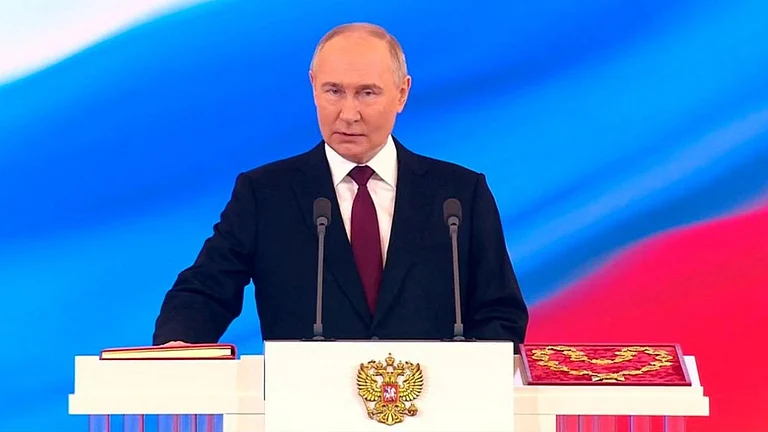
Putin Orders Expansion Of Ukraine Buffer Zone In 2026, Says Russian General

Russia’s military chief Valery Gerasimov says Moscow plans to widen a buffer zone in Ukraine’s Sumy and Kharkiv regions next year


Outlook News Desk
Curated by: Saher Hiba Khan
Updated on: 31 December 2025 


Russian President Vladimir Putin, left, listens to Russian Chief of General Staff Gen. Valery Gerasimov during a meeting with senior military officers at the Kremlin in Moscow, Russia, Monday, Dec. 29, 2025. Mikhail Metzel/Sputnik, Kremlin Pool Photo via AP

Summary of this article


Russia’s top general says Vladimir Putin has ordered expansion of a buffer zone inside Ukraine in 2026.


The planned expansion targets Ukraine’s northeastern regions of Sumy and Kharkiv near the Russian border.


Ukraine has rejected the buffer zone plan, calling it a justification for deeper Russian incursions.


Russia is moving ahead with plans to widen what it calls a buffer zone inside northeastern Ukraine, with President Vladimir Putin ordering its expansion in 2026, according to comments by the country’s top military officer reported on Wednesday.


Chief of the General Staff Valery Gerasimov said Russian forces were continuing to advance in northeastern Ukraine and that Putin had directed an expansion of the buffer zone next year in Ukraine’s Sumy and Kharkiv regions, close to the Russian border. According to Reuters, Gerasimov made the remarks while inspecting the “North” troop grouping, as reported by Russian state news agency RIA.


The “North” grouping, established in early 2024, has been operating in northeastern Ukraine with the stated aim of creating a buffer along the border and forcing Ukrainian units to retreat further back, allowing for additional advances. Reuters reported that Russian military officials describe the effort as part of a broader push to secure border areas.


Gerasimov’s comments came shortly after Russia vowed to retaliate over what it claimed, without providing evidence, was an attempted attack on Putin’s residence. Kyiv rejected the allegation, saying it was intended to derail peace efforts as the conflict approaches its fourth year, Reuters reported.

Related Content


Putin Says Russia Confident Of Victory In Ukraine War In New Year Address


Putin Warns Russia Will Use Force To Achieve War Goals If Peace Efforts Fail


EU Agrees €90 Billion Loan For Ukraine As Putin Accuses Kyiv Of Blocking Peace


Modi-Putin Strengthen Ties As India Balances Washington & Moscow


There was no immediate response from Ukrainian authorities to Gerasimov’s statements.

Putin has repeatedly framed the buffer zone as a defensive measure designed to push Ukrainian forces and weapons farther away from Russia’s border. He has cited cross-border shelling and drone attacks on Russian regions including Belgorod and Kursk as justification.


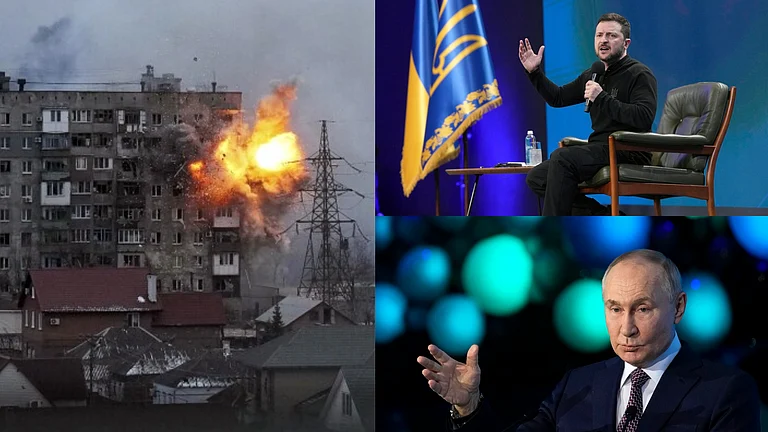
Ukraine has dismissed the concept, saying Moscow is using the buffer zone narrative to legitimise deeper incursions into its territory. President Volodymyr Zelenskyy has described Russia’s plans for Sumy and Kharkiv as “mad” and said Ukrainian forces would resist any attempt to seize or hold ground there.


(With inputs from Reuters)

Saudi Aramco Eyes Major Stake in New $11 Billion Indian Refinery

Saudi Aramco is poised to buy a 20% stake in a new refinery that India’s state-owned refiner Bharat Petroleum Corporation Limited (BPCL) plans to build with a total investment of about $11 billion, Indian news outlet Business Standard reports

BPCL plans to have the refinery built at the Ramayapatnam port in the state of Andhra Pradesh on the east coast of southern India. The refinery is planned to have a processing capacity of between 180,000 and 240,000 barrels per day (bpd).  

The Indian company, which is the country’s second-biggest state refiner with 706,000 bpd of crude processing capacity, plans to sell a 30–40% equity stake to outside investors. This stake would include a 20% interest to Saudi Aramco, a nearly 10% stake to Oil India Ltd (OIL), and another 4–5% equity stake to interested banks, according to a senior BPCL official who spoke to Business Standard.  

Earlier this year, BPCL secured the land for the new refinery. The Andhra Pradesh government allocated 6,000 acres for the refinery and petrochemicals project, which is expected to cost about $11 billion (967 billion Indian rupees). The state government has asked BPCL to launch commercial operations at the refinery by January 2029, per the order cited by Reuters.

Currently, BPCL operates three refineries in India. The company and other Indian refiners are looking to boost their crude processing and petrochemicals capacity to meet growing demand in the world’s third-largest crude oil importer. 

Saudi Arabia, for its part, looks to lock in future term sales for its crude in the top Asian markets, which are set to continue driving global demand growth in the coming years. India has even surpassed China as the single biggest driver of demand growth. 

Sources in India told Reuters earlier this year that Aramco was in discussions to invest in two planned refineries in India. 

Saudi Aramco is discussing buying a stake in the BPCL refining and petrochemical complex in south India, and is in separate talks with Oil and Natural Gas Corporation Limited (ONGC) for a proposed refinery in the Gujarat state on India’s west coast, the sources told Reuters.   

By Charles Kennedy for Oilprice.com


Investor Hesitation Stalls India's Offshore Oil Push

India has once again kicked the can down the road on its biggest oil and gas licensing round, extending the deadline for bids under OALP-X to February 18. It is the fourth extension since the round was launched with much fanfare during India Energy Week in February, and it says a lot about the gap between ambition and investor appetite.

OALP-X is not a small offering quietly tucked away in some dark corner of the upstream segment. It is the largest acreage round India has ever put on the table under its Hydrocarbon Exploration and Licensing Policy, covering nearly 192,000 square kilometers across 13 sedimentary basins. The mix is heavily offshore: ultra-deepwater, deepwater, shallow water, and a smaller slice of onshore acreage. In August, New Delhi had already pushed the deadline to October, citing the need to give bidders more time. Then came another extension to December. Now it is February.

Officially, there is no explanation this time around. But unofficially, the reasons are the usual suspects. Investor participation has been lacking, weighed down by regulatory complexity, tax burdens, and lingering uncertainty over drilling rules and fiscal terms. A recent increase in the GST rate on exploration and production inputs did not help, nor did the reality that the government take can reach as much as 60 to 70 percent of upstream revenues.

That is awkward timing for a country that depends on imports for more than 85 percent of its oil and wants that number lower, not higher. India’s crude import dependence hit a record in the last fiscal year, even as demand continues to climb and domestic production stays flat. The government knows this, which is why it has been courting foreign majors and talking up frontier basins like the Andaman offshore, sometimes with Guyana-scale comparisons that raise eyebrows.

There is interest on paper. Petrobras has signed letters of intent with Indian state producers. Exxon, Chevron, BP, and TotalEnergies have all inked cooperation agreements. But interest doesn’t necessarily translate into bids, and bids do not equal rigs in the water.

Repeated deadline extensions are so far managing to keep the round alive, despite signaling hesitation.

By Julianne Geiger for Oilprice.com

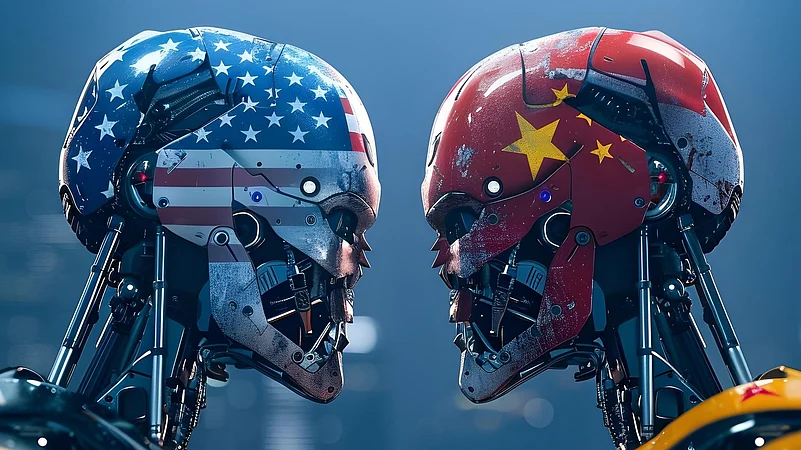
US vs China Tech Race 2025: Who Leads in AI, Semiconductors & Robotics

2025 marks a split in the tech race. The US leads in $109B AI investment and frontier models like GPT-5, while China dominates with 2M+ industrial robots and DeepSeek-R1 efficiency

Shashank Bhatt
Updated on: 31 December 2025 
BY Outlook Business Desk


US vs China Tech Race 2025

Summary of this article


US leads in frontier AI research, semiconductors and cloud infrastructure


China dominates robotics deployments, while pursuing self-reliance goals


DeepSeek's release served as wake-up call, showing China can build elite AI models


2025 was an inflection year in the US-China tech rivalry, with competition intensifying across multiple fronts simultaneously.


While the US leads in core technology development, AI frameworks, cloud infrastructure and quantum computing, and continues to attract global technical talent, China leads or is closing the gap rapidly in practical physical AI and robotics deployments such as drone deliveries, uncrewed taxis and large-scale factory automation; in building and installing digital infrastructure worldwide, particularly across the Global South; and in advancing technological self-sufficiency through aggressive industrial policy and state-backed incentives.

2025 was also one of the most active years for new technology launches, major investments and cross-industry collaborations. Beyond innovation and capital flows, the rivalry increasingly extended into geopolitics, with export controls, supply-chain strategy and industrial policy shaping where and how technologies were developed, deployed and commercialised in the race for long-term tech advantage.


US vs China: Head to Head Comparison

Goldman Sachs’ Top of Mind: The US-China Tech Race report argues that the US has maintained an advantage over China in frontier research and platform-level capabilities. This includes advanced semiconductor design and manufacturing know-how, foundational AI research and frameworks, large-scale cloud and datacentre infrastructure and early-stage quantum technologies. This lead is reinforced by a strong talent ecosystem that the US is able to attract.


On the other hand, China is described as moving ahead in large-scale, practical deployment and downstream application. The report highlights rapid rollouts of robotics and autonomous systems such as drones, delivery robots and uncrewed taxis, fast expansion of digital infrastructure at home and across parts of the Global South and a coordinated push for industrial self-reliance backed by state finance, procurement policies and local incentives.


The report notes that US export controls have slowed China’s access to advanced tools (like Nvidia’s H100 chips) but have not stopped technological progress. Instead, restrictions have accelerated domestic substitution efforts, including closer software–hardware co-design, experimentation with alternative chip architectures, indigenous tool development and more efficient use of slightly older semiconductor nodes.


China’s dominance in critical supply-chain segments, particularly rare-earth processing and magnet production, combined with access to abundant, low-cost power for large industrial projects, creates vulnerabilities for the US and complicates efforts by either country to achieve full technological self-sufficiency.


Nvidia Tests Optional Software to Verify Where its AI Chips are Running Amid Smuggling Claims


US Approach To Maintain Lead

Policy choices shaped much of the year. Washington combined Cold War style industrial mobilisation with market incentives. This included continued deployment of CHIPS Act grants, with roughly $50 billion allocated, an expanded Advanced Manufacturing Investment Credit under OBBBA raised to 35 percent, preservation of IRA production credits with tighter rules on Chinese-linked content, and a growing use of direct government equity and loan support, with about $10 billion announced, nearly $9 billion of it tied to Intel.

OBBBA also added a $1.5 billion appropriation that enables up to $200 billion in lending through the DoD’s Office of Strategic Capital, along with targeted funding such as $2 billion for the Defense Innovation Unit and $10 billion for an Industrial Base Fund.


To reduce commercial risk for emerging domestic supply chains, the US increasingly relied on offtake agreements, floor price mechanisms and procurement guarantees, particularly for rare earth downstream processing and magnet production, while signalling faster permitting for data centres and semiconductor fabs. At the same time, export controls, a widening Entity List, Section 232 investigations and outbound investment rules remained core tools to limit the transfer of cutting edge capabilities to China.

China’s Playbook

Beijing’s playbook is highly state-led and coordinated. China has clustered priorities into “chokehold” technologies (integrated circuits, machine tools, basic software, advanced materials, biomanufacturing), “emerging industries” for rapid scale-up (new-energy tech, aerospace, drones, robotics), and “future industries” that receive strategic R&D focus (quantum, brain–computer interfaces, embodied intelligence, 6G).


Local and central incentives, large funds, tax breaks, subsidised land and power, fast-track permitting and talent programmes, have driven fast scale-up but also frequent overcapacity and duplication at the regional level.


Major Moves of 2025

According to Stanford’s AI Index report, 2025 saw the technology race sharpen around inference, infrastructure and industrial policy.


Nvidia doubled down on inference-focused partnerships and licensing strategies to reinforce its advantage in AI compute, while large corporates such as Disney made billion-dollar investments that accelerated the commercial adoption of AI at scale. In China, hyperscalers including ByteDance announced aggressive AI capital-expenditure plans and pursued more compute-efficient model strategies in response to US export restrictions.


At the same time, semiconductor onshoring gathered pace amid record global investment in chipmaking equipment, with China leading in overall investment volume even as US export controls tightened further.


Quantum technologies also moved closer to commercial viability, supported by technical milestones and rising private funding. Across the broader ecosystem, AI-driven mergers, acquisitions and mega funding rounds increasingly concentrated talent and intellectual property among a small number of platform owners, reinforcing scale advantages at the top of the market.

Who’s Leading at the End of 2025?

By the end of 2025 the picture was nuanced rather than binary. The US maintained a lead in top-tier foundation models, cloud-scale AI, and cutting-edge training GPUs, while China gained ground in open-source momentum, domestic-scale deployment, and depth in select supply-chain segments.


On hardware, the US-Taiwan–Korea ecosystem continued to dominate the most advanced nodes and inference stacks, whereas China invested heavily in alternative accelerators and large-scale capacity, but lagged on EUV-dependent toolchains.
Published At: 29 December 2025 8:09 pm
AI-based Jobs Rise Across Sectors, 71% of White-Collar Employees Using AI: Indeed India MD

Data provided by the online jobs platform Indeed show that artificial intelligence opportunities, while still concentrated in the tech sector, are increasingly visible across non-tech industries as well

Vikash Tripathi
Updated on: 29 December 2025
BY Outlook Business Desk


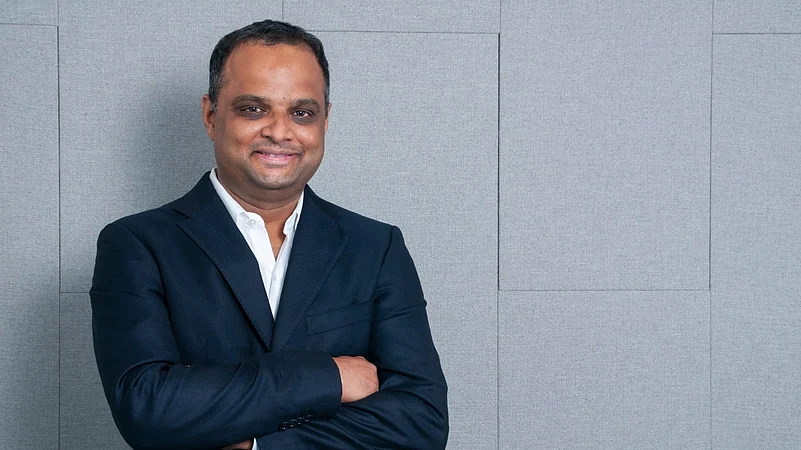
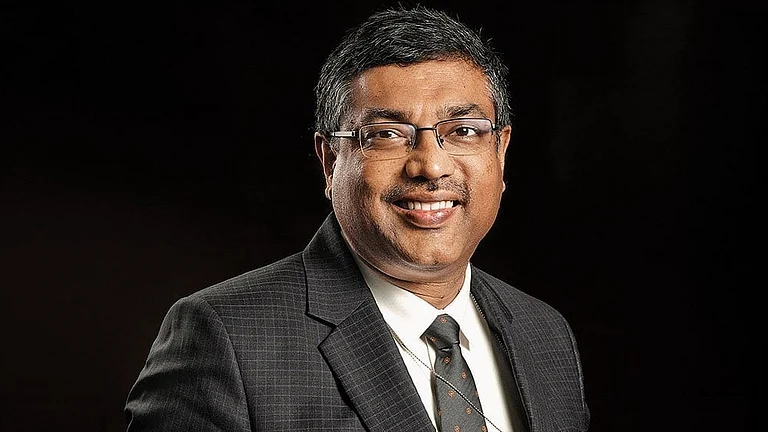
Sashi Kumar, Managing Director of Indeed India

Summary of this article


AI-linked roles are rising across sectors, with an 11% increase in mentions of AI in job descriptions, says Indeed India MD Sashi Kumar.


He said that Indian product companies and global capability centres (GCCs) of multinationals are doing deep AI work.


Indeed data show that while AI opportunities remain concentrated in tech, they are increasingly spreading across non-tech industries.


There has been a rise in roles demanding some sort of artificial intelligence capability across sectors, with an 11% increase in mentions of AI in job descriptions themselves, said Sashi Kumar, Managing Director of Indeed India. Adding to that, almost 71% of all white-collar employees in India reported that they are using AI in some shape or form for their jobs, for their day-to-day work today.


In an interview with Outlook Business, he also noted that many Indian companies that are in the product space and global capability centres (GCCs) operated by multinational companies are doing “some pretty deep work involving AI using some of the latest technologies.”

Data provided by the online jobs platform show that artificial intelligence opportunities, while still concentrated in the tech sector, are increasingly visible across non-tech industries as well.

Related Content


OpenAI Hiring for New Position, Offers $555K Salary to Tackle AI Safety & Cyber Risks


AI poses highest risk to white-collar jobs, focus must be on upskilling: MeitY Secy S Krishnan


Govt to Raise Fixed Costs for Urea Makers by Year-End: Fertilisers Secretary


H-1B Visa Approvals for Indian IT Services Drop to Decade Low Amid Tightened US Scrutiny


In India, 39% of data and analytics roles now mention artificial intelligence, the highest share among job categories, followed by software development at 23%, insurance at 18%, and scientific research at 17%. AI demand is also spreading across engineering disciplines, with industrial engineering at 17%, mechanical engineering at 11% and electrical engineering at 9.2%. Mentions of generative AI also continue to rise, with 1.5% of all job postings in India referencing it as of May 2025, a figure that has doubled since 2024.


Karnataka (2.4%) and Telangana (2.3%) have emerged as leading regional hubs for AI-related jobs, as per the Indeed data. Despite a slight dip in software development roles, the sector remains the largest, accounting for one in five job postings on Indeed India. Additionally, talent flow is increasingly shifting to Tier 2 and Tier 3 cities, reflecting the broader geographic spread of AI opportunities.


The shift comes as Indian IT companies and global capability centres (GCCs) set up by foreign companies try to leverage AI into their products and services to gain productivity improvements and open new avenues of revenue. Earlier, Outlook Business reported that enterprises are ready to pay as much as ₹60 lakh per annum for senior roles related to fields like AI/GenAI, cloud, data engineering, and cybersecurity, but there is a 40% to 53% talent gap.


Kumar says that “there will always be a talent gap, but what is interesting is that many employers are today pivoting to something called skills-based hiring to work up.”


“Employers are working backwards, figuring out what skills are relevant for doing that specific job and looking to hire for those skills so that people can get trained in using some of the newest available AI agents, etc. There is a talent gap. What many companies are doing is resorting to skills-based hiring so that they are able to widen the talent pool,” he added.


Employers Pushing AI Use

While employees are increasingly using AI tools in some form, the push is also coming from the employer side as well, indicating lower stigma around AI use.


“Companies are encouraging people to use AI to simplify tasks, not for anything else, because it boosts productivity,” noted Sashi Kumar, adding that a lot of companies and employees are cognisant that AI is not the end of everything.


“You still need to add the human touch. You still need to make it more human,” Kumar added.


The Indeed India MD also noted that a lot of layoffs in 2025 came from “companies increasingly adopting technology, specifically AI, which is impacting the kind of roles that exist.”


He claimed it was “more of a recalibration of what is available and what companies want to focus on hiring.”


“Many companies are very optimistic about their hiring numbers in the coming year. It’s not like AI has come in and said, you know, 100 people were doing this task and now, because AI is here, 100 becomes zero. I don’t think that has happened. In the next four to five years, that’s unlikely. What we’ve seen is that for those tasks, people who are equipped with AI and technology to do the work better than their counterparts have been able to cope much better than those who have not adopted technology,” he explained.


Indeed is also using AI to improve job matching, with a key initiative being Career Scout, which uses AI to understand a job seeker’s interests, skills, and preferences, helping them discover suitable roles and identify skills they may need to strengthen. It has been launched globally and is expected to roll out in India soon. On the employer side, Indeed is offering Talent Scout, which applies similar AI-driven matching to surface the most relevant candidates for open roles.


Govt May Extend Scope Of PLI Scheme To Job-Creating Sectors: Deloitte


Rising Manufacturing Jobs, but Few Takers

Indeed, which has been working in the Indian market for over a decade, added 310,000 new jobs on its platform each month between July and September 2025. Kumar noted that over the last five years, their traffic has grown by about 59% overall.


“We have a very strong dynamic across both job seekers and jobs. In 2020, five years ago, we used to add about 190,000 new jobs every month. That number has now gone up to around 290,000 to 300,000 jobs every month. There has also been a significant increase in the number of resumes added. We are now seeing about 800,000 resumes every month, which is almost double what it was around four years ago,” he noted.


He also noted that there has been a sharp rise in manufacturing jobs on the platform amid the government’s push in the sector, with several production-linked incentive (PLI) schemes and fiscal incentives for foreign companies to manufacture in India.


According to the Indeed Hiring Tracker, manufacturing hiring intent rose sharply by 80% year-on-year from FY25 to FY26, with the sector accounting for 37% of all employer hiring intentions in FY25.


Hiring activity spans both white-collar and blue-collar roles, though employee preferences continue to lag employer demand, according to Indeed.


Only 13% of employees chose production and manufacturing as their preferred domain in FY24, highlighting a persistent demand–supply mismatch. Blue-collar roles dominate hiring demand, driven largely by shop-floor, production, and operations roles across FY24 to FY26. Meanwhile, white-collar hiring remains selective but steady, with demand focused on areas such as quality control, supply chain, plant management, engineering, and process optimisation.


Published At: 29 December 2025 
From ‘Brain Rot’ To ‘Rage Bait’: Stuck In The Online Loop

'Rage bait’ is Oxford’s Word of the Year for 2025, while the word for 2024 was ‘brain rot’ - both toxic outcomes of banal online experiences. In between the two, we seem to have collectively reached nowhere.

Prof. Feza Tabassum Azmi
Updated on: 14 December 2025
THE OUTLOOK/INDIA


Rage Bait is world of the year 2025 announced by Oxford.
 Photo: IMAGO / Anadolu Agency

Summary of this article


Rage bait thrives on outrage: Deliberately provocative online content exploits anger to drive engagement, visibility, and monetization, reinforced by algorithms that reward extreme reactions.


A vicious cycle with “brain rot”: Rage bait and mind-numbing content feed each other, accelerating misinformation, polarisation, and emotional overstimulation while eroding attention, trust, and intellectual depth.


A deeper societal warning: The rise of these terms reflects a tech-driven ecosystem that manipulates human emotions for profit, raising urgent questions about mental health, public discourse, and what it means to be human online. make this points more crisp


When the rock band Beatles released their song Tomorrow Never Knows, they were probably unaware that the lyrics ‘turn off your mind, relax and float downstream; lay down all thoughts, surrender to the void’ would become symptomatic of a larger societal malaise half a century later.


‘Rage bait’ is Oxford’s Word of the Year for 2025. Oxford University Press (OUP) defines rage bait as “online content deliberately designed to elicit anger or outrage by being frustrating, provocative, or offensive, typically posted to increase traffic or engagement with a particular web page or social media content”. It’s a calculated manoeuvre that exploits human tendencies to react to meaningless controversies, falling in a trap much like “surrendering to the void”, as the Beatles would say.


The term is used to describe online content wilfully designed to provoke anger to create engagement (likes, comments, shares) to generate traffic, often for financial gains through ads, benefiting creators through inflated visibility. Online creators continue to churn out ‘rage bait’ content, where the goal is simple: post content that makes users viscerally angry and then bask in the thousands of shares and views, cashing in on outrage.

As Internet algorithms are designed to reward more provocative content, this has developed into practices such as rage-farming, a more consistently applied attempt to manipulate reactions and to build anger and engagement over time by seeding content with rage bait.


It signals a deeper shift in how we talk about online engagement. Rage bait aims to trigger emotional responses using anger as the ‘bait’. Angry reactions boost the content’s visibility. Such content, which is mainly fabricated, thrives on provocation by manipulating emotions – spreading misinformation, making blatantly incorrect statements, manufacturing unfounded conspiracy theories, posting freakish recipes, attacking pop culture figures or taking controversial political stand.


'Brain Rot' Becomes Oxford's Word Of The Year 2024


By tapping into strong emotional triggers, rage bait content compels people to respond creating a cycle of negativity. It can distract from real issues and polarize audience. The fact that a term like rage bait exists and has seen dramatic surge in usage is an irony in itself. This indicates we’re aware of the manipulation tactics we can be drawn into, and yet we succumb.


Last year Oxford selected ‘brain rot’ as the Word of the Year, amid serious concerns over the perceived dangers of mind-numbing content one is exposed to on social media. Brain rot is defined as ‘the supposed deterioration of a person’s mental or intellectual state as the result of overconsumption of online content, particularly trivial or inconsequential ones”.


The first recorded use of 'brain rot' was found in 1854 in Henry David Thoreau’s book Walden, who criticised society’s tendency to devalue complex ideas in favour of simpler ones, and sees this as indicative of a general decline in mental and intellectual effort.


The term initially gained traction among Gen Z and Gen Alpha who used it in a humorous, self-deprecating manner. It is both interesting and ironical that the term has been popularised by youngsters who themselves are the targets of the ‘brain rot’ phenomenon. As OUP highlights, it demonstrates a somewhat cheeky self-awareness in the younger generations about the harmful impact of social media.


Rage bait and brain rot are both metaphors of the times we’re living in. They have reference to how we are getting impacted by online content which is moving from being informal to becoming egregiously irreverent to often bordering on the bizarre. Together, they form a vicious cycle where the preposterous sparks engagement.


Millions today are spending hours mindlessly scrolling Instagram reels or binge-watching videos or just switching between tabs consuming huge quantities of nonsensical data, negative news, and meaningless updates. At the same time, one might be simultaneously texting and checking messages resulting in digitally inundating oneself with information leading to overstimulating the brain. The brain associates Internet scrolling with a feeling of gratification, even when one is aware of its negative consequences. In a way, mindless Internet scrolling becomes a hedonistic behavioral addiction. These activities affect the brain’s reward system.


So when one is zombie scrolling, one may be vacantly staring at the smart phone while compulsively flitting from one feed to another. Doomscrolling involves an overwhelming desire to be up to date on latest information, even when it’s disturbing and distressing. Indulging in such experiences is seriously damaging collective intellectual growth in the society today.


This brings back sociologist George Ritzer’s ideas, who in his 1993 book The McDonaldisation of Society, described how fast-food restaurant principles were becoming symbolic of a society being driven a very mechanical, fast-paced lifestyle, devoid of emotions and humanness. This was just when the Internet era was beginning to happen.

15 Years Of The Social Network | Revisiting Anxieties Around The Internet & Human Connection


In the free market of language, Ritzer’s analogy was a precursor to an increasingly hollowing societal fabric today. Shallow online interactions build cynicism that hampers public discourse and genuine understanding. It harms users’ mental health, increases polarization, creates divisiveness, desensitizes people, erodes trust and normalizes aggression.


Both brain rot and rage bait are outcomes of engagement-based economic ecosystem for online platforms. The business model is simple - generate outlandish content to be gobbled down by gullible users, amplified through algorithms, resulting in quick monetisation. Generative AI tools make such content easier and faster to produce.


As is said, online content is being engineered to fiddle with emotions. It raises questions of what it means to be human in a tech-driven world - and the extreme perils of online culture.


In our journey from ‘brain rot’ last year to ‘rage bait’ this year, we seem to have collectively reached nowhere.


Dr. Feza Tabassum Azmi
 is Professor of Management Studies & Research at Aligarh Muslim University, Aligarh)

Published At: 14 December 2025 
It’s More Than OK For Kids To Be Bored − It’s Good For Them

Many parents try to shield children from boredom due to work pressures, social expectations and easy access to screens, but research suggests that constant stimulation can hinder children’s ability to cope with negative emotions and build independence.

Outlook News Desk
Updated on: 22 December 2025 


Photo: Tribhuvan Tiwari

Summary of this article


Boredom is a natural and useful experience that encourages reflection, creativity and goal-setting, helping children develop curiosity, emotional regulation and essential life skills such as planning and self-direction.


Allowing short, manageable periods of boredom and unstructured time helps children become more resilient over time.


It also eases parental stress by reducing the pressure to keep children constantly entertained.


Boredom is a common part of life, across time and around the world. That’s because boredom serves a useful purpose: It motivates people to pursue new goals and challenges.


I’m a professor who studies communication and culture. I am currently writing a book about modern parenting, and I’ve noticed that many parents try to help their kids avoid boredom. They might see it as a negative emotion that they don’t want their children to experience. Or they might steer them into doing something that they see as more productive.


There are various reasons they want to prevent their children from being bored. Many parents are busy with work. They’re stressed about money, child care responsibilities and managing other parts of daily life. Making sure a child is occupied with a game, a TV show or an arts and crafts project at home can help parents work uninterrupted, or make dinner, without their children complaining that they are bored.


Parents may also feel pressure for their children to succeed, whether that means getting admitted to a selective school, or becoming a good athlete or an accomplished musician.


Children also spend less time playing freely outside and more time participating in structured activities than they did a few decades ago.

Easy access to screens has made it possible to avoid boredom more than ever before.

Many parents needed to put their children in front of screens throughout the pandemic to keep them occupied during work hours. More recently, some parents have reported feeling social pressure to use screens to keep children quiet in public spaces.

That is to say, there are various reasons why parents shy away from their kids being bored. But before striving to eliminate boredom completely, it’s important to know the benefits of boredom.


Benefits of boredom

Although boredom feels bad to experience in the moment, it offers real benefits for personal growth.


Boredom is a signal that a change is needed, whether it be a change in scenery, activity or company. Psychologists have found that the experience of boredom can lead to discovering new goals and trying new activities.

Harvard public and nonprofit leadership professor Arthur Brooks has found that boredom is necessary for reflection. Downtime leaves room to ask the big questions in life and find meaning.

Children who are rarely bored could become adults who cannot cope with boredom. Boredom also offers a brain boost that can cultivate a child’s innate curiosity and creativity.

Learning to manage boredom and other negative emotions is an important life skill. When children manage their own time, it can help them develop executive function, which includes the ability to set goals and make plans.

The benefits of boredom make sense from an evolutionary perspective. Boredom is extremely common. It affects all ages, genders and cultures, and teens are especially prone to boredom. Natural selection favors traits that offer a leg up, so it is unlikely that boredom would be so prevalent if it did not deliver some advantages.

Parents should be wary of treating boredom as a problem they must solve for their children. Psychologists have found that college students with overly involved parents suffer from more depression.

Other research shows that young children who were given screens to help them calm down were less equipped to regulate their emotions as they got older.

Boredom is uncomfortable

Tolerating boredom is a skill that many children resist learning or do not have the opportunity to develop. Even many adults would rather shock themselves with electricity than experience boredom.


It takes practice to learn how to handle boredom. Start with small doses of boredom and work up to longer stretches of unstructured time. Tips for parents include getting kids outside, suggesting a new game or recipe, or simply resting. Creating space for boredom means that there will be some stretches of time when nothing in particular is happening.


Younger children might need ideas for what they could do when bored. Parents do not need to play with them every time they are bored, but offering suggestions is helpful. Even five minutes of boredom is a good start for the youngest children.


Encouraging older children to solve the problem of boredom themselves is especially empowering. Let them know that boredom is a normal part of life even though it might feel unpleasant.

It gets easier

Children are adaptable.


As children get used to occasional boredom, it will take them longer to become bored in the future. People find life less boring once they regularly experience boredom.


Letting go of the obligation to keep children entertained could also help parents feel less stressed. Approximately 41% of parents in the U.S. said they “are so stressed they cannot function,” and 48% reported that “most days their stress is completely overwhelming,” according to a report from the U.S. surgeon general in 2024.


So the next time a kid complains, “I’m bored!” don’t feel guilty or frustrated. Boredom is a healthy part of life. It prompts us to be self-directed, find new hobbies and take on new challenges.


Let children know that a little boredom isn’t just OK – in fact, it’s good for them.


(This story is by The Conversation)

Published At: 22 December 2025