Wednesday, December 31, 2025

UK


Tory Shadow Attorney General and peer takes job representing sanctioned Russian oligarch


DECEMBER 30, 2O25

By the Ukraine Solidarity Campaign

The Ukraine Solidarity Campaign condemns the revelation that Lord Wolfson KC, a senior Conservative peer and Shadow Attorney General, is now representing sanctioned Russian oligarch Roman Abramovich in his appeal over billions in frozen assets.

This revelation comes as Ukrainians are being killed daily by Russia’s war of aggression, with no right of appeal against bombardment, occupation, torture, or the mass abduction of children.

Yet a billionaire oligarch long linked to the Kremlin’s system of power is afforded every legal avenue to protect his fortune.

Abramovich has assembled a heavyweight multinational legal team — including Eric Herschmann, a former senior adviser to Donald Trump — to challenge the freezing of more than £5.3 billion in assets. This raises profound questions about the Conservative Party and its long‑standing entanglement with Russian wealth.

For years, the Conservatives buried the Russia Report, accepted donations linked to oligarch networks, and delayed meaningful sanctions after Russia’s invasion of Ukraine in 2014. Now, while posturing as defenders of national security, a member of their own Shadow Cabinet is representing a sanctioned oligarch in a case that directly affects Ukraine’s ability to receive urgently needed funds.

This is not an isolated incident — it reflects a wider political drift. As the Ukraine Solidarity Campaign has warned, a Trump–Putin axis is reshaping global politics, empowering authoritarian forces.  The new US National Security Strategy signals a strategic shift toward accommodation with Russia and alignment with the populist far‑right in Europe.

The involvement of a former Trump adviser in Abramovich’s legal defence underscores this trend. It also raises serious questions about the Conservative Party under Kemi Badenoch’s leadership.

It is difficult to believe that a Shadow Cabinet member would take on such a case without the knowledge or approval of the party leadership. Are we seeing early indications that, ahead of any Trump–Putin attempt to impose an unjust peace on Ukraine, the Conservatives are preparing to return to ‘business as usual’ with Russia? Is this laying the groundwork for a future alignment with Nigel Farage by normalising  troubling attitudes of Reform UK toward Russia?

The situation surrounding Abramovich’s assets is emblematic of a broader failure. While Ukraine continues to resist invasion under extraordinary pressure, the UK has yet to transfer frozen Russian assets to Ukraine. Meanwhile, oligarchs continue to exploit the UK legal system to delay accountability.

The Ukraine Solidarity Campaign therefore calls for:

1. Full transparency

on why a Shadow Cabinet member is representing a sanctioned oligarch.

2. Immediate action by the UK Labour government

to ensure that all frozen Russian assets — including the proceeds of the Chelsea sale — are transferred to Ukraine as a matter of urgency.

3. Implementation of the Russia Report

and a complete break with oligarchic influence. The UK must confront the networks that enabled Russian wealth to embed itself in British political and financial life.

4. Emergency legislation

to prevent the Russian state and sanctioned individuals from exploiting the UK legal system to delay accountability. The rights of victims of Russian aggression must come before the privileges of oligarchs.

The European labour movement must resist attempts to impose an unjust peace on Ukraine and must campaign for the urgent provision of increased military, economic, and humanitarian support – funded by frozen Russian assets.

The Ukraine Solidarity Campaign stands firmly with the Ukrainian people. We declare: Occupation is not peace. With or without a deal manufactured by Putin and Trump, we will continue to campaign for Russian troops out and for a free and united Ukraine — free from oligarchs and occupiers.

Labour justice minister puts pressure on Tories over shadow attorney general representing Russian oligarch

Parliamentary under-secretary of state at the Ministry of Justice, Jake Richards MP has written to Kemi Badenoch expressing concern regarding a conflict of interest over the court case of former Chelsea football club owner, Roman Abramovich.

This is due to Badenoch’s Shadow Attorney General, and senior Conservative peer, Lord Wolfson KC, being part of Mr Abramovich’s legal team in his appeal over £2.5 billion in frozen assets from his sale of Chelsea FC. The government wishes to distribute this money once claimed to support the people of Ukraine following continued Russian aggression.

In a letter to the opposition leader, posted to his X account on 29 December, Richards points out that Shadow Attorney General is a “crucial role in formulating Conservative Party policy”. He then states that as “a paid representative of Mr. Abramovich, he has a financial interest in the question of whether and when Mr Abramovich’s assets are transferred to benefit the people of Ukraine”.

READ MORE: ‘Carol of the Bells: Christmas, Ukraine’s resistance and the fight for freedom’

Richards goes on to ask four important questions of the Conservative leader in his letter.

Firstly, whether the Conservative Party agrees with the government position that the £2.5 billion should be transferred to benefit the people of Ukraine without delay?

Secondly, what role Lord Wolfson specifically played in formulating Conservative policy on this matter, did he declare an interest during any such discussions or recuse himself from such discussions?

Richards then asks specifically of Badenoch, When or if Lord Wolfson informed her about the role he was playing in this court case.

Finally he asked what her position is in regard to a Shadow Cabinet member having “a financial interest in a case that has direct bearing on the Government, and therefore Opposition, policy?”

The justice minister concludes his letter by asking that if Wolfson is to continue to represent Mr Abramovich, he should not do so whilst serving in the Shadow Cabinet, leaving both the shadow minister and the leader of the opposition with a decision to make.

The letter was posted to his Richards’ X account and he also reposted from @LabourPress who call this matter “indefensible” stating, “Lord Wolfson can either be Shadow Attorney General or Roman Abramovich’s lawyer. He can’t be both.”

How Badenoch and the Conservative Party choose to respond remains to be seen.



Makhno was a Ukrainian anarchist revolutionary and the commander of an independent anarchist army in Ukraine from 1917–21.

Apr 9, 2025 ... July 2024 marked the 90th anniversary of the death of Nestor Ivanovych Makhno (1888–1934). Born a peasant in the southeastern Ukrainian city of ...

UK

Everyone Hates Elon: ‘Reform and Nigel Farage are definitely on our hit list’

30 December, 2025
Left Foot Forward

"There's a common thread here of people who are out for money and not out for helping ordinary people"


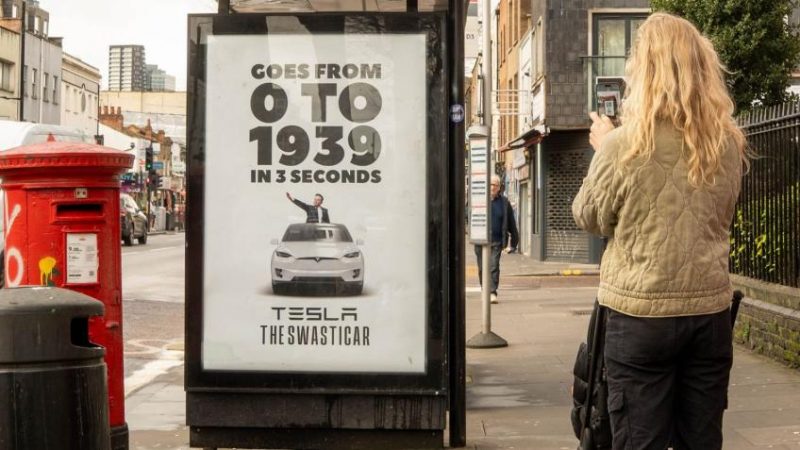
Everyone Hates Elon is the new anti-Elon Musk group grabbing people’s attention with satirical billboards targeting billionaires. Their most viral stunts? Re-branding Tesla as a ‘Swasticar’ after Musk’s infamous salute at Donald Trump’s inauguration. The simple but effective “Elon Musk is a bellend, signed the UK” poster.


The group also displayed banners of Trump with convicted sex offender Jeffrey Epstein to ‘welcome’ him during his state visit, and “took over” Venice ahead of Amazon founder Jeff Bezos’ wedding in June with a banner calling out the billionaire’s tax practices: “If you can rent Venice for your wedding, you can pay more tax.”

The group is the brainchild of three London friends, who were angry about the outsized influence Musk and other billionaires are wielding over democracy and people’s lives. Launched in January this year, their mission was simple: to stop Musk from interfering in UK politics and, more broadly, to “piss billionaires off one small action at a time”. Have they succeeded? One of the founders, Emma, who asks to remain anonymous, citing Musk’s history of legal action against campaigners and whistleblowers, says: “I think we’re pissing them off.”

“What does someone like Elon Musk care about? Probably very little, but he’s got a fragile ego,” she adds.

Evidence certainly suggests that they’re having an impact: Musk wasn’t happy about Tesla boycotts and railed against ‘left-wing activists’ targeting him, and Bezos had to move his wedding to a different venue in Venice due to local protests.
Nigel Farage is on the anti-Musk group’s list of people to target

So far, EHE has focused on US-based billionaires and political figures, now it is setting its sights on Reform and Nigel Farage. The highest earning MP in Parliament and Reform leader Nigel Farage is on Everyone Hates Elon’s list of people to target in the new year.

“Reform and Nigel are definitely on our hit list,” Emma says. While Farage isn’t a billionaire, “he is definitely part of that rich section of society who are out for themselves basically,” she says.

Farage has earned over £1.3 million from second jobs since he was elected in July 2024 and made 10 trips to the US for Trump fundraisers and cryptocurrency conferences.

“Nigel Farage is not hanging around helping the people in Clacton. He’s out doing the GB News show or selling gold for Gold Bullion,” Emma states.

“There’s a common thread here of people that are out for money and not out for helping ordinary people and that’s very much something we would want to target you know.”

In terms of their actions for next year, Emma says “We can’t really go into detail about what they are, but obviously we want to go after kind of cultural moments where people will be talking about these people.”

Everyone Hates Elon’s actions are crowdfunded, with the group raising hundreds of thousands of pounds over the past year to fund their stunts. For example, they raised £30,000 to put up photos of Trump with Epstein. They want to raise more to combat the rise of Reform in the new year.

Charities and left-wing groups failing to tackle Reform

Emma says she thinks the charity sector and other groups are “really failing” to tackle the rise of Reform. “I think people are sadly quite naive and maybe lazy about tackling Reform.”

“You know they are still polling the highest and what are we going to do about it? The right is very organised and I think we’re not really matching up to that at the moment and we need to urgently rethink that.”

The three members of the group worked in campaigning and social justice, and she said one of her main criticisms of charities, trade unions and left-wing groups is that their message often doesn’t cut through.

“I think that the left can be too earnest, too serious, but often, more than anything, boring.”
Left-wing politicians need to communicate more simply

She says left-wing politicians are also guilty of this too. For instance, Emma says Zarah Sultana uses “quite complex language about policies and NATO and whatever else, and actually what people need is to hear simple, clear messages that resonate”.

In her view, one exception of a good, simple communicator in the left is the Green Party’s new leader. “I think that’s why Zack Polanski has actually done quite a good job because he’s speaking in a language people can understand,” she says.

Emma says there is a problem with a lack of “directness” in political conversations in the UK. She points to the 2019 election as an example of the left’s ineffective messaging. Jeremy Corbyn’s Labour had multiple slogans that failed to cut through, “No one remembers them, but everyone remembered ‘Get Brexit Done’,”.

She says the left has “consistently failed” with getting its messaging to reach the masses. “We do need to get better at calling a spade a spade, and speaking like ordinary people do,” she says.

In the new year, that’s exactly what the campaign group will continue to do with their stunts. You can find out more about supporting Everyone Hates Elon’s work here.

Olivia Barber is a reporter at Left Foot Forward
Op-Ed

|
Will Mamdani’s Inauguration Open a New Chapter for New York City’s Muslims?

Muslim voters who backed Zohran Mamdani are now looking for him to follow through on his policy proposals.


By Nour Saudi
December 31, 2025


New York City Mayor-elect Zohran Mamdani speaks during a press conference on December 22, 2025.CHARLY TRIBALLEAU / AFP via Getty Images


On January 1, New York City’s first ever Muslim and South Asian mayor will take office, inheriting the largest police force in the United States while assuming responsibility for a city that’s seen a rise in immigration raids and deportations ever since Donald Trump became president over the last year. Zohran Mamdani’s victory in November came on the heels of a campaign focused on making the city more affordable. His messaging was clear, consistent, and connected directly to the concerns of New York workers in every community across the city.

The mayoral election saw the highest turnout in more than 50 years, thanks to Mamdani’s success with a wide coalition of groups. His campaign brought in new immigrant voters, particularly within South Asian communities, younger millennial and Gen Z voters, and Black voters who flipped from Andrew Cuomo thanks to consistent outreach. The campaign also spoke directly to Muslim voters, many of whom were motivated to cast a ballot because of the surge of Islamophobia, both on a national level and specifically hurled against Mamdani, especially as the election drew closer.

The attacks against Mamdani felt almost like outdated caricatures, reminiscent of a time when Muslim hate was much more bluntly spoken and acceptable across the political aisle. Systemic Islamophobia has long been normalized, but that more candid, virulent brand of hate was brought back into fashion with the rise of Donald Trump. And while the anti-Muslim rhetoric that dominated his 2016 campaign caused real harm, Trump was still generally regarded as extreme and outlandish, especially by Democrats. Now, Democrats, who’d long couched their harmful rhetoric and policies in flowery language and progressive aesthetics, jumped on the bandwagon, suggesting Mamdani’s win would make the city unsafe.


What changed? The genocide in Gaza, which illustrated clearly the dehumanization of Muslims and Arabs that was so pervasive across our institutions. Mamdani’s unequivocal stance against Israel’s genocide and his solidarity with pro-Palestinian student protesters made him inseparable from that very same dehumanization.

Tens of millions of dollars were spent attacking Mamdani, including on attacks that tried to paint him as a Muslim extremist. In one case, a pro-Cuomo group ran a video ad showing Mamdani smiling while the Twin Towers burned in the background. Mamdani was forced by media, in interviews, on talk shows, and from his own opponents, to repeatedly respond to accusations of antisemitism for his criticisms of Israel — allegations that are also rooted in anti-Muslim sentiment, suggesting any Muslim who condemns the genocide in Gaza must harbor hatred against Jews.


Majority of Americans Support Mamdani’s Affordability Proposals, Poll Finds
Nearly 7 in 10 respondents said they back the mayor-elect’s proposal to raise taxes on corporations and the 1 percent. By Sharon Zhang , Truthout November 12, 2025


Mamdani’s response to the wave of Islamophobia directed at him, however, signaled a turning point, not only in the election, but hopefully the future of the city as well. Addressing New York City’s roughly 1 million Muslims, Mamdani doubled down on his Muslim-ness and invited the rest of us to do the same. He challenged the casual racism and dehumanization of Muslims that has become so acceptable in this country, to the point that repeatedly questioning a Muslim about Jewish safety has been framed as not only reasonable, but in the public’s best interest.

And then he won, in spite of — or perhaps because of — all of the blatant attempts to tear him down.

While Muslims of every generation celebrated Mamdani’s win, millennials like myself, who came of age in a post-9/11 New York City, may have felt the significance of his victory the deepest. Members of this generation might have been too young to understand the shifting geopolitics of the time as the country would soon begin an endless war in the Middle East, but they were old enough to know that their place in this country, their sense of belonging, was being questioned. They felt that ostracization when a classmate made a “terrorist” joke, or when a family member was questioned by law enforcement. They heard the stories that swirled around campuses about FBI and New York City Police Department (NYPD) informants in Muslim student organizations. They learned, along with their elders, that the NYPD had been spying on our communities, mosques and campuses, surveilling young Muslims under the guise of public safety.

Many of these Muslim New Yorkers, who grew up in Mamdani’s generation, see themselves in him. They share a perspective similar to the one he shared during the campaign: the understanding that being a Muslim New Yorker after 9/11 meant becoming familiar with the anti-Muslim hate and fearmongering that has become embedded in our institutions, along with an urgent desire to make such hate politically toxic.

Political leaders on both sides have historically used anti-Muslim hate to further their own agendas. After 9/11, the anti-Muslim sentiment that became synonymous with the George W. Bush administration, which used the attacks to start an illegal war in Iraq and fuel the creation of the Department of Homeland Security, pushed Muslims to vote for Barack Obama and his promise of change. Obama then left office with a legacy of deporting more immigrants than any other president in U.S. history and carrying out more drone strikes on largely Muslim-majority countries in his first year than his predecessor Bush did in his entire tenure. Donald Trump’s Muslim ban, which was enacted in his first week in office, tore families apart. Again, Muslims chose “the lesser of two evils” in the next election. They reluctantly turned out for Obama’s former vice president, Joe Biden, who then facilitated and funded a horrific genocide in Gaza that killed more than 70,000 people.

Islamophobia is still being used by politicians to garner support. In Texas, Gov. Greg Abbott, who is running for a fourth term, recently designated the Council on American-Islamic Relations (CAIR), a civil rights group, a terrorist organization. In the same state, a Republican running for Congress has made anti-Muslim hate a focal point of her campaign, calling Muslims “terrorists” and promising to expel them from Texas if elected. Far right, anti-immigrant rhetoric like this has only increased under a Trump administration that has made immigrants the target of baseless attacks and often aggressive violence.

At the same time, the success of Mamdani’s campaign has already inspired other Muslims to pursue political office. Aber Kawas, a community organizer and member of the Democratic Socialists of America, like Mamdani, announced her run for New York State Assembly in Queens in early December after receiving the endorsement from the socialist group. In a post announcing her run, Kawas wrote, “I never planned to run for office, but in the last two years, there has been a massive political shift that has called for all of us to reexamine who should hold power,” citing similar issues around affordability that were the focal point of Mamdani’s campaign. If she wins, she would become the first Palestinian to serve in the state’s legislature. More importantly, it would add to the number of officials elected on the promise of protecting immigrants and making the city more affordable for its workers.

Of course, identity representation doesn’t equal tangible change — there is a laundry list of prior leaders across every level of office who are proof of that. Especially not after more than two years of an ongoing genocide in Gaza funded by our own tax dollars, it’s not enough for elected officials to simply come from marginalized identities. They must be willing to upend a status quo in which people struggle to afford even the most basic necessities while their government spends billions of dollars a year to support mass slaughter in Gaza instead.

Muslim voters who backed Mamdani are now looking for him to follow through on his policy proposals, from affordable housing to universal child care to raising the minimum wage — things that will actually make a real difference in their lives.

And they are not naive, either. Mamdani has advocated for reforms to policing, proposing a Department of Community Safety which would limit the role of police in responding to 911 calls concerning mental health and homelessness. But his decision to keep NYPD Commissioner Jessica Tisch, appointed by former Mayor Eric Adams, has left many of his supporters wary of his incoming administration. Under Tisch’s leadership, the NYPD amped up its crackdown on low-level offenses and cooperated with Immigration and Customs Enforcement to target and detain student protesters. Muslims and others are moving with caution, aware of the NYPD’s long history of surveilling Black and Brown communities and enacting policies that disproportionately harm our people.

Muslims have been exploited by both parties for so long, used as political pawns to incite fear and garner support for foreign policy objectives. In this fraught political moment, we must remember it is our right to call on our leaders to build the city we want to live in, one where our safety is prioritized and our needs are met. Like any elected official, Mamdani will face scrutiny as mayor over how well he makes good on his promises. His actions can also set the precedent for how Muslims are reflected in policy and governance for years to come. After a campaign in which we finally felt heard, and at a time when the stakes for our communities are so high, he bears a heavy responsibility.


This article is licensed under Creative Commons (CC BY-NC-ND 4.0), and you are free to share and republish under the terms of the license.


Nour Saudi
Nour Saudi is a New York City-based writer and audio journalist. She is currently a producer at Futuro Media, where she leads production on podcast series. She envisions a just and equitable media industry as one that goes beyond representation and identity, and actively and unequivocally calls out the harmful policies being enacted against historically marginalized communities.


As Towns and Cities Fight Off Data Centers, Calls Grow for a National Moratorium


The battle to build new data centers has pitted communities across the country against Silicon Valley.
December 30, 2025

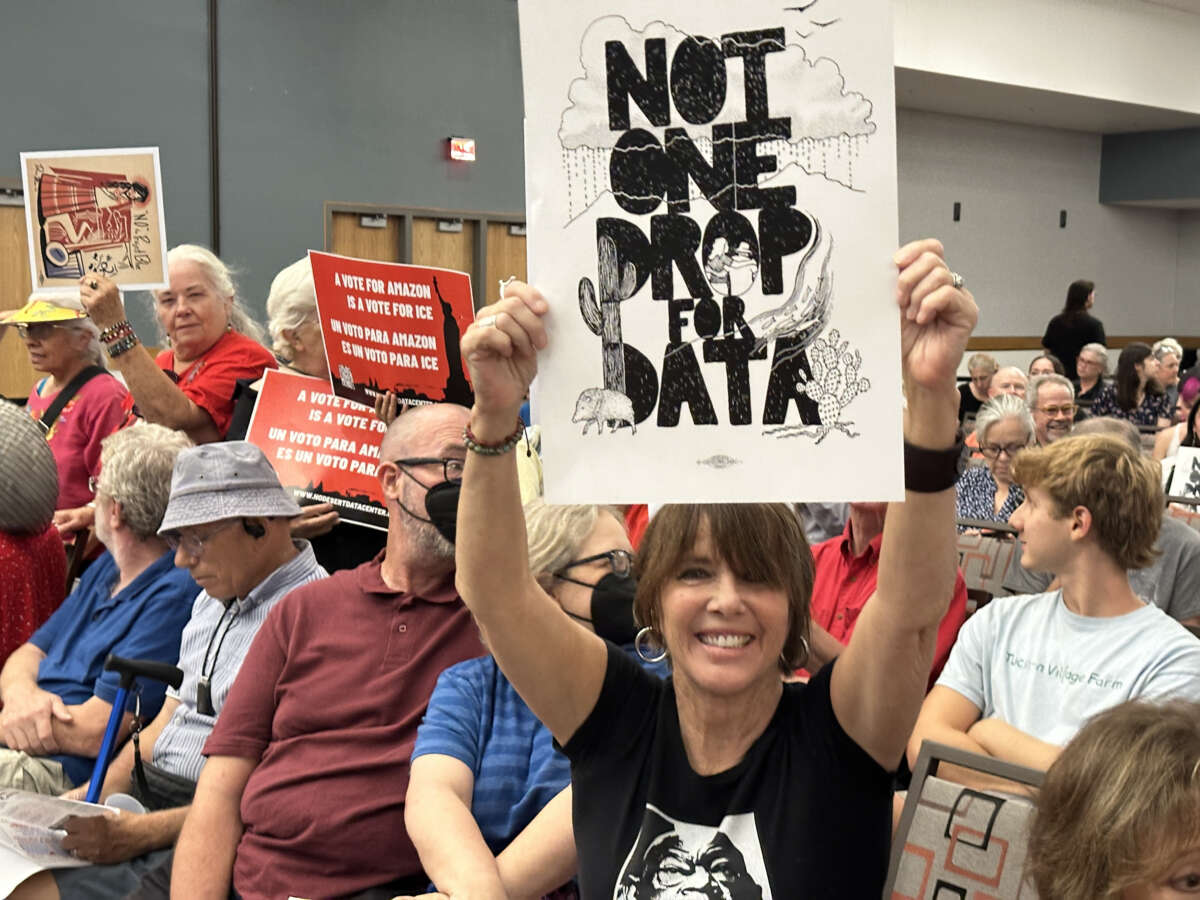
Community members protest against "Project Blue," a massive data center installation proposed by Amazon Web Services, at the Tucson Convention Center in Arizona on August 4, 2025.
Wild Horizons / Universal Images Group via Getty Images

Billionaire tech moguls talk as if the artificial intelligence revolution is inevitable, and it’s up to the rest of us to adapt. Earlier this year in a blog post, OpenAI CEO Sam Altman boasted that society is now “past the event horizon; the takeoff has started” toward building computer “superintelligence.” However, the industry is not just facing blowback from skeptics of the technology itself.

A growing grassroots movement is fighting back against another concrete and immediate AI threat — the rapid expansion in local communities of massive “hyperscale” data centers, along with the fossil fuel plants to power them. In localities across the countries, neighbors worked across partisan lines to engage in David versus Goliath battles with Big Tech. As those fights over data center buildout are set to explode in 2026, some groups are calling for a larger moratorium to build on local fights.

“This movement isn’t about ideology so much as communities recognizing that a small group of wealthy and powerful tech companies are exploiting essential resources and infrastructure, while pushing risks and costs onto the public,” said Jim Walsh, policy director at the environmental health group Food & Water Watch, in an email.

On December 8, Food & Water Watch joined more than 230 state and local environmental and community groups to send a letter to Congress demanding a national moratorium on the construction of new data centers. The groups called the rapid expansion of data centers one of the greatest environmental and social threats in generations.

“This expansion is rapidly increasing demand for energy, driving more fossil fuel pollution, straining water resources and raising electricity prices across the country,” the groups wrote. “All this compounds the significant and concerning impacts AI is having on society, including lost jobs, social instability, and economic concentration.


Secretive New Mexico Data Center Plan Races Forward Despite Community Pushback
To power the growing demand for AI, New Mexico is gearing up to build a data center with a city-sized carbon footprint. By Dan Ross , Truthout December 10, 2025

Sen. Bernie Sanders (I-Vermont) joined the call for a national moratorium earlier this month, which he repeated in an interview with CNN on December 28. A moratorium would “slow the process down,” Sanders said, giving policymakers time to catch up with the companies racing to build out AI infrastructure regardless of the impacts on working people.

“It’s not good enough for the oligarchs to tell us ‘you adapt,’” Sanders said during the interview. “Are they going to guarantee healthcare to all people? What are they going to do when there are no jobs? Make housing free?”

The rush to build new data centers emerged in 2025 as a major fault line dividing working people of all political stripes against Silicon Valley. Tech moguls such as OpenAI CEO Sam Altman saw stock prices skyrocket while cozying up to President Donald Trump and framing adoption of their technology as an inevitability. People threatened by the industry’s physical infrastructure buildout are not buying it.


People are experiencing the impacts firsthand, from drained water supplies to higher electricity bills.

Across the country, local coalitions are rising up to resist the construction of new AI data centers that threaten to degrade water supplies and raise energy bills while providing little economic benefit to the affected communities. From South Carolina to Pennsylvania, from Mississippi to Michigan, Arizona, and Texas, residents filled public meetings in 2025 to voice opposition to the Big Tech companies chasing lucrative tax breaks to build data centers in their neighborhoods. .

“We are seeing a huge grassroots backlash to data centers that crosses party lines because people are experiencing the impacts firsthand, from drained water supplies to higher electricity bills,” Walsh said.

A recent analysis from Walsh’s organization expects energy demand from data centers to triple between 2023 and 2028, when AI is projected to consume as much electricity as 28 million U.S. households.

Electricity prices in regions where existing data centers are concentrated are up 250 percent over the past five years, and U.S. energy costs on average are projected to increase at least 8 percent by 2030 thanks to AI and cryptocurrency mining.

Billions of gallons of clean water are needed to cool the systems inside data centers — enough water to serve more than 18 million households by 2028 — which is a major concern for desert communities in the Southwest where future access to water is already a major issue.

For example, the No Desert Data Center Coalition working to stop the proposed Project Blue data center in southern Arizona’s Pima County declares, “Not One Drop for any development that has no intention to actively regenerate & revitalize the land, and reconcile the harmful legacy of extractive industries in the Sonoran Desert.” In rural Saline, Michigan, residents recently gathered to protest what they called “secret deals” made between state officials and DTE Energy, which would provide power to a massive data center proposed to be built in the area.

“Further enraging communities is the fact that many of these projects are being negotiated behind closed doors with non-disclosure agreements between local officials, utilities, and tech companies that prevent the public from even knowing how much water or energy a project will use, or what public subsidies are involved,” Walsh said.

Despite the public scrutiny of the AI industry, the Trump administration has worked to shield the industry from regulation and accelerate data center buildout despite opposition from members of his own party.

In addition to Sanders’s call for a moratorium, other politicians are taking steps to demand more accountability. Democrats in Congress are currently investigating whether companies including Google, Meta, Microsoft, and Amazon are quietly passing the costs of running data centers onto consumers in the form of higher utility bills. In 2025, lawmakers across all 50 states considered at least 238 data center-related bills and enacted over 40 of them in 21 states, according to the MultiState policy tracker.

Most of the statewide legislation addresses energy usage, but some local efforts go further. Cities and towns in at least 14 states have passed moratoriums on data center development, according to Tech Policy Press. With only local politicians taking action so far, the movement for moratoriums on new data centers is pitting individual communities against some of the most powerful people in the world.

“Who is pushing this revolution in technology? It is the richest people in the world — Elon Musk, Zuckerberg, Bezos, Peter Thiel — multi, multi-billionaires are pouring hundreds of billions of dollars into implementing and developing this technology,” Sanders said.

“Do you think they are staying up nights worrying about working people and how this technology will impact those people? They are not. They are doing it to get richer and even more powerful.”
Bombshell report reveals Trump sent young women from Mar-a-Lago to Epstein

HUMAN TRAFFICKING


Democrats on the House Oversight Committee have released additional photos from the estate of Jeffrey Epstein, including ones of Donald Trump. (Photo: Epstein Estate/House Oversight and Reform Committee)

December 31, 2025

President Donald Trump has hinted about the falling out he had with Jeffrey Epstein after their years-long friendship, but the Wall Street Journal revealed specifics about the story in an exclusive report late Tuesday evening.

According to the report, Mar-a-Lago wasn't merely a frequent hangout for Epstein; the country club would also send Epstein young women to handle his "massages, manicures and other spa services."

A former Mar-a-Lago employee told the Journal that the "services" went on for years. Trump's staff warned each other about the kind of person Epstein was, according to former Epstein employees.

The spa employees would frequently warn each other about Epstein's sexual suggestions, reporting that he would expose himself during appointments.

Epstein was never a dues-paying member of Mar-a-Lago, but Trump still gave his close friends the perks. He even went so far as to tell the spa staff to treat Epstein as if he was a dues-paying member. Epstein's longtime companion, Ghislaine Maxwell, would frequently book the appointments on his behalf.

Everything stopped when an 18-year-old beautician returned from a "house call" to Epstein and said that he had pressured her for sex, the ex-employees told the Journal.

"A manager sent Trump a fax relaying the employee's allegations and urged him to ban Epstein, some of the former employees said. Trump told the manager it was a good letter and said to kick him out," the report said.

The woman gave details to human resources, but the incident was never reported to the police.

White House Press Secretary Karoline Leavitt alleged the report was false.

"No matter how many times this story is told and retold, the truth remains: President Trump did nothing wrong and he kicked Jeffrey Epstein out of Mar-a-Lago for being a creep," Leavitt said after claiming the Journal was "writing up fallacies and innuendo."

Trump is currently in a lawsuit against the Journal for a report that Trump submitted a note for Epstein's birthday book that included the outline of a woman's body. Trump denied the report even as the birthday book entries were published.

CNBC's Carl Quintanilla highlighted an excerpt of the report that talked about Trump's ex-wife, Marla Maples, being so "uneasy" about Epstein's presence that she didn't want to spend time with him or Trump when they were together. Still, Epstein continued to party at Mar-a-Lago with Trump.

Mother Jones editor-in-chief Clara Jeffrey cited the ongoing lawsuit between Trump and the Journal. The paper, she said, "continues to break news about their relationship..."

Washington Monthly's politics editor Bill Scher said he was speechless reading that Trump was willing to send young women to Epstein's mansion.

Linguist Luke Steuber remarked, "WSJ just blew this all up by carrying Trump's water. On a lot of people, I think it's going to work."

National security analyst Marcy Wheeler added, "What's interesting abt this story is 18-yo who returned to MAL saying Epstein had pressured her for sex is not clearly IDed as girl whose father was MAL member who really let Trump have it. She could still be, but if not, it would be THREE (known) MAL girls Epstein assaulted before he was reported."


In the Face of Anti-Trans Escalation, We Need More Than Legal Strategies

The swiftness with which Trump dismantled decades of meager, hard-fought protections exposed the limits of legal work.

December 31, 2025

People attend a Trans Day of Visibility rally in Washington, D.C., on March 31, 2025.BRENDAN SMIALOWSKI / AFP via Getty Images


In a year marked by escalating attacks on transgender people, the Trump administration has seemed to outdo its own cruelty at every turn. While the administration has led a series of attempts to curtail trans people’s rights, recognition, and safety, neither Congress nor the Supreme Court seem willing to provide a meaningful check on the administration’s brazen targeting of trans people and other demonized communities. Transgender people are rightly concerned about what the coming years will mean for our rights and survival opportunities. But as we close out 2025, I am convinced that this bleak moment offers us critical opportunities to build outside of the law and across movements for more transformative change.


The Anti-Trans Year in Review


On his first day in office, President Donald Trump made clear that he would follow through on his campaign promises to systematically target transgender people across law and government. He announced in his inaugural address that it would be the policy of the United States that there are only two sexes determined at conception and that being transgender is a “false claim.” To effectuate his declaration that transgender people do not exist, Trump has directed his administration to mandate discrimination against us in education, employment, housing, health care, the military, on our identification documents, and in carceral settings.

While attempting to upend legal protections via executive order and coercive funding threats, the administration has also used deliberately dehumanizing rhetoric to situate trans people as inherently fraudulent. The president has declared that being transgender is inconsistent with “an honorable, truthful, and disciplined life”; referred to medical treatment for transgender minors as “child abuse”; and consistently demeaned transgender life by referring to our very existence as “transgender insanity.”

The administration’s attacks on trans life have continued throughout this first year, culminating in the latest set of attacks by both the Justice Department and the Department of Health and Human Services.


Trump’s Anti-Trans Policies Embolden Far Right, But Our Existence Challenges It
Trans existence challenges the fundamental tenets of fascism and exposes the fragility of authoritarian power. By Zane McNeill , Truthout November 20, 2025


Earlier this month, the Justice Department announced a directive to abandon safety protocols for LGBTQ people in prison. In 2003, Congress passed and President George W. Bush signed the Prison Rape Elimination Act (PREA). PREA directed the Justice Department to address endemic sexual violence in custodial settings. Given the extensive data documenting that transgender people are uniquely vulnerable to sexual violence while in prison, the Justice Department’s PREA standards recommended specific protections to safeguard against violence targeted at individuals because of their LGBTQ status.

Now, the Trump administration is telling agencies to disregard those standards. It is hard to see this latest action as anything other than a command to increase violence against trans people in custody. Linda McFarlane, executive director of Just Detention International, an organization that has spent decades working to implement PREA, puts it plainly: “The Department of Justice would rather see incarcerated people, including children, be sexually abused than allow trans people to express their gender identity.”

In addition to the latest attacks on PREA standards, the administration also published two sets of proposed regulations that seek to block the provision of evidence-based, medically necessary care for transgender people under 18 — care that is supported by every major medical association in the United States, including the American Medical Association and the American Academy of Pediatrics. These rules threaten to cut off all federal Medicaid and Medicare funding to hospitals that treat transgender minors with puberty blockers, hormone therapy, or surgery to treat gender dysphoria. Though the regulations are not final, they reflect the administration’s far-reaching goal of limiting trans survival opportunities across all areas of life.

The swiftness with which the Trump administration has been able to do away with decades of meager but hard-fought protections exposes the limits of legal and policy work in securing meaningful protection.

Unfortunately, the administration has been helped considerably in its goal of targeting transgender people by a Supreme Court eager to undermine civil rights. While many of the administration’s actions transparently run afoul of longstanding statutory and constitutional protections, the Supreme Court has readily rubber-stamped them on its so-called emergency docket (the Supreme Court’s consideration of cases in a preliminary and “emergency” posture before it addresses the full merits). That has meant that lower court victories blocking the administration’s efforts to expel transgender people from openly serving in the United States military and to force transgender people to use passports that list our sex assigned at birth have been short-lived.

Even more troubling than the practical impact of allowing these sweeping policies to go into effect has been the Supreme Court’s apparent willingness to greenlight even more sweeping discrimination against transgender people. In an abbreviated and unsigned order in Trump v. Orr, the Supreme Court not only permitted the administration’s reversal of decades of policy across administrations that had allowed transgender people to update the sex designation on our passports, but it did so in a way that suggests that it may be impossible for transgender people to claim discrimination in many contexts moving forward. The court’s order reasoned: “Displaying passport holders’ sex at birth no more offends equal protection principles than displaying their country of birth — in both cases, the Government is merely attesting to a historical fact without subjecting anyone to differential treatment.” For this court, it appears that transgender people cannot claim discrimination when the government refuses to honor who we are.


Thinking Beyond Legal Advocacy


The swiftness with which the Trump administration has been able to do away with decades of meager but hard-fought protections exposes the limits of legal and policy work in securing meaningful protection.

Though the mainstream LGBTQ legal movement enjoyed a decade of success at the Supreme Court in cases challenging restrictions on marriage equality and clarifying that federal prohibitions on sex discrimination encompass prohibitions on anti-LGBTQ discrimination, the past year has shown how unstable even the clearest precedents against the pressures of a global movement to retrench norms around gender and sexuality.


Trans people have spent generations mapping possibility onto scarcity.

If we are to measure our prospects of future success solely on the metric of prevailing before the Supreme Court or convincing this administration to reduce its attacks, then there is little to be hopeful about for the coming year.

But if instead we look at this moment as a stark reminder of the limits of legal advocacy and as an opportunity to invest more in community and power-building, then we can begin to map out meaningful strategies for change.

That is not to say we give up on legal advocacy. Bringing challenges to discriminatory policies in state and federal court remains a vital tool for delay and harm reduction, but as the Supreme Court’s Orr order lays bare, it is temporary and limited. But alongside those challenges, those of us who have been fighting primarily on the legal terrain need to connect with broader movements for bodily autonomy, decriminalization, and disability justice, building power and cultural change.

Now is thus the time to dream and act outside of the confines of our legal advocacy. Trans people have spent generations mapping possibility onto scarcity. As just one example, the majority of trans people have had mismatching and inaccurate identification for part or all of our lives. We have a deep well of strategies for navigating around and through systems of governance that never contemplated our existence. And so now, we tap into and deepen that well.

In her recent press tour about her biography of the legendary Black trans leader Marsha P. Johnson, Tourmaline spoke often about problems and solutions. And she did so in the language of dreaming and manifesting, not in the language of law.


What we deserve is something bigger than the law offers us.

“We are in a moment with big, big problems, and we’re wanting to let in big, big solutions,” Tourmaline reflected to NPR. “And I think Marsha is someone who transmutes problems into solutions.”

Tourmaline went on: “And so I’m a big believer, just like Marsha was, in terms of the bigger the problem, the bigger the solution — right? — and that when we’re in these harsh conditions, that is the perfect time to imagine what is the world that we deserve.”

What we deserve is something bigger than the law offers us. While we are confronted with the law’s brutal and unimaginative limits, let’s move into 2026 with a dream for something more.

This article is licensed under Creative Commons (CC BY-NC-ND 4.0), and you are free to share and republish under the terms of the license.


Chase Strangio
Chase Strangio is a lawyer and trans activist in New York City. Follow him on Instagram: @chasestrangio.

'Psychological projection': MAGA’s 'very weird about sex' — and it’s hurting them

The community of “involuntary celibate" men that trend toward President Donald Trump’s Make America Great Again (MAGA) movement have had a difficult year.


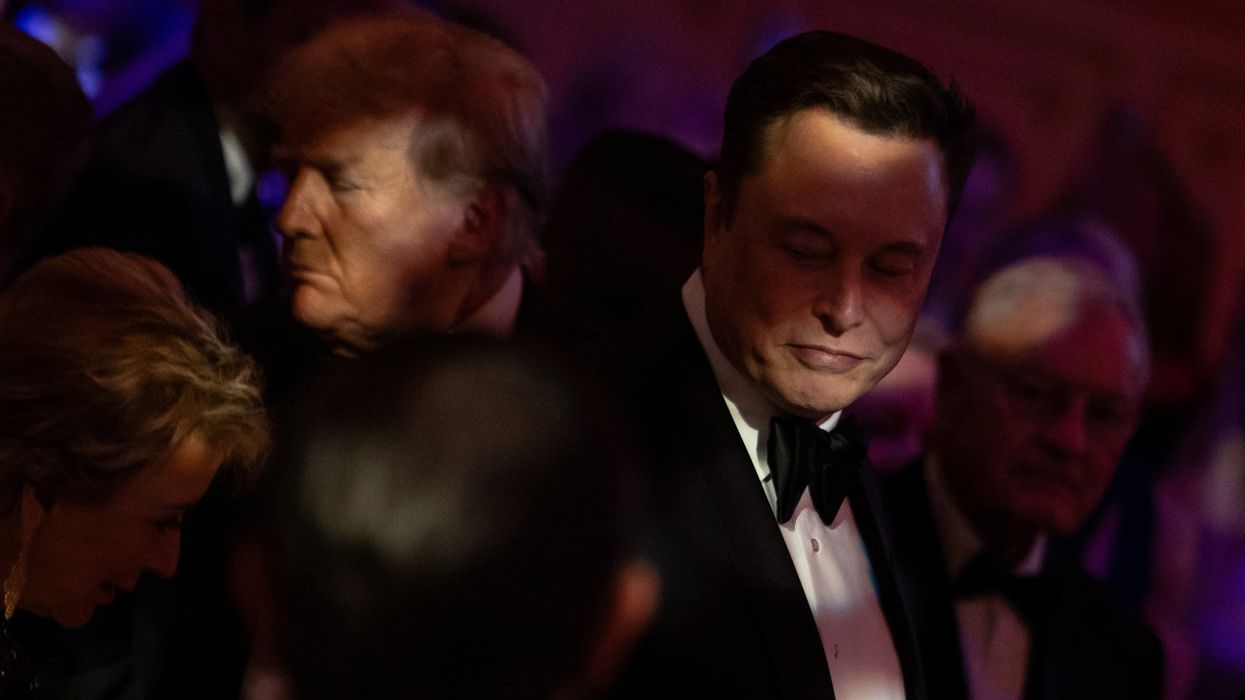
U.S. President-elect Donald Trump walks by Elon Musk during the America First Policy Institute (AFPI) gala at Mar-A-Lago in Palm Beach, Florida, U.S., November 14, 2024. REUTERS/Carlos Barria

December 31, 2025 
ALTERNET


The community of “involuntary celibate" men that trend toward President Donald Trump’s Make America Great Again (MAGA) movement have had a difficult year.

Salon columnist Amanda Marcotte noted Wednesday that the biggest loser of 2025 appears to be the incel movement, which seems to have reached its peak.

Marcotte began with popular MAGA influencer Sólionath, who "[defended] white supremacist murderers, [tried] to get people fired for not mourning Charlie Kirk ... and [concocted] lies about the [Jeffrey] Epstein files."

Sólionath ended his year by bashing the 99 percent of the world that has had sex at some point in their life, claiming that few people have actually ever done it.

Mocking "Nazi apologist" Nick Fuentes, Marcotte recalled the Piers Morgan interview asking if he's ever had sex.

“No, absolutely not,” Fuentes said. He then admitted he finds it "very difficult to be around” women. Any man who does manage to score will end up “henpecked.”

"You think you’re an expert on women, given you never got laid?" Morgan asked.

After a year in office, Trump's MAGA movement is faltering, young white men are bailing in droves and the "incel" world has stumbled into a marketing problem, Marcotte wrote.

“Trumpist leaders love pointing the finger at LGBTQ+ people and liberals, calling them ‘groomers’ and suggesting they’re violent perverts," she continued. "But in 2025, the nation really saw how much that behavior is old-fashioned psychological projection.”

The best example of that comes from the investigation files around sex offender Jeffrey Epstein, according to Marcotte. Trump has spent the past six months frantically trying to stop the release of the "the 5.2 million pages of documents" the government has on the federal investigation into Epstein

"The nation got a glimpse of the sexual world the president apparently inhabited, or at least stood in close proximity to, one which wasn’t glamorous but simply gross," said Marcotte.

“In 2025, ‘Mar-a-Lago face’ entered the lexicon, a term used to describe the combination of plastered-on makeup and aggressive plastic surgery that makes women look like inflatable sex dolls, as Trump’s apparent sexual tastes have morphed MAGA aesthetics into something inhuman," Marcotte continued.

Allthewhile, the world's richest man, Elon Musk, and self-appointed "First Buddy," was exposed for having "a fetish for impregnating women."

"It may not initially seem obvious why Mar-a-Lago face, incels, Elon's pregnancy fetish or the Epstein files are linked," wrote Salon's Amanda Marcotte. "But this is a year in which MAGA showed they are very weird about sex. And it's hurting them."

Ultimately, the right wing populates the internet with "sexually dysfunctional straight men who argue that their romantic woes aren’t due to their own failures, but because feminism has ‘ruined’ women," Marcotte closed. “Either way, there’s one thing I can predict with confidence: We’ll get another round of articles handwringing about why it’s so hard for Republicans to find a date, which will show no understanding that the answer was always obvious.”

Read the full column here.


The term "emotional plague" is not a derogatory phrase. It does not connote conscious malevolence, moral or biological degener acy, immorality, etc.

Apr 7, 2020 ... The murder of Christ : the emotional plague of mankind. by: Wilhelm Reich. Publication date: 1953; Usage: Public Domain Mark 1.0 Creative ...

Fifth Estate #383. plain PDF A4 imposed PDF Letter imposed PDF EPUB (for ... Reich obscures his own radical insight into the nature of the emotional plague.

Wilhelm Reich coined the phrase, 'The Emotional Plague' (Cpt. 16, Character ... www.orgonomy.org/articles/Science_Links/TJOG_42_2_extract_crist.pdf.

How 'pro-family' Trump is 'leaving millions of families in the lurch': analysis

President Donald Trump boarding Air Force One on September 7, 2025
 (Official White House Photo by Daniel Torok/Flickr)
December 31, 2025 
ALTERNET

President Donald Trump often describes himself as a champion of "pro-family" policies — a message aimed at his hardcore MAGA base and far-right Christian fundamentalist evangelicals. And Vice President JD Vance has taken that messaging a step further, attacking specific Democrats as "childless cat ladies" for not having biological children — including Rep. Alexandria Ocasio-Cortez (D-New York), former Vice President Kamala Harris and ex-Transportation Secretary Pete Buttigieg.

But The New Republic's Grace Segers, in a biting article published on New Year's Eve Day 2025, lays out a variety of Trump administration policies that she says are harmful to families.

"Since entering the White House for the second time," Segers observes, "President Donald Trump has explicitly cast himself as a 'pro-family' president. His administration has frequently adopted the language of the pronatalist movement, promoting ideas and policies intended to encourage Americans to have children. But many of the ostensibly family-oriented policies proposed by the White House and approved by Congress this year will primarily benefit higher-income households, leaving millions of lower income families in the lurch."

Segers attacks a long list of Trump positions, from tax cuts for the ultra-wealthy to health care policies to "dramatic changes to the Supplemental Nutrition Assistance Program, or SNAP, and Medicaid."

"The loss of SNAP benefits for families with children may in turn have a larger impact on society as a whole," Segers argues. "According to research by the Center on Poverty and Social Policy, every $1 lost in benefits for families with children would cost society between $14 and $20. Nearly 40 percent of all SNAP participants are children."

The number of Americans lacking health insurance decreased significantly during Joe Biden's presidency, but Segers warns that failing to fund subsidies for the Affordable Care Act of 2010, AKA Obamacare, will reverse that.

Larry Levitt, executive vice president of policy at KFF, told The New Republic, "In health care, it would be hard to find anything that's a positive for families."

Levitt, according to Segers, "noted that the pending expiration of enhanced Affordable Care Act subsidies will affect middle-income households, who will face far higher insurance costs in the new year."

"As such, millions of Americans may opt out of any health coverage rather than paying higher premiums," Segers warns. "Although moderate-income children may be able to receive health care through the Children's Health Insurance Program, which provides coverage for children whose families earn too much to qualify for Medicaid, a parent unable to afford their own health care through the Affordable Care Act marketplace may opt out of coverage for themselves."

Read Grace Segers' full article for The New Republic at this link.