Thursday, January 01, 2026

The ‘Sacred’ Pledge that Will Power the Relaunch of Far-Fight Militia Oath Keepers


 January 1, 2026

Stewart Rhodes, the founder of the Oath Keepers, a far-right militia, announced in November 2025 that he will relaunch the group after it disbanded following his prison sentence in 2023.

Rhodes was sentenced to 18 years in prison for seditious conspiracy and other crimes committed during the U.S. Capitol riot on Jan. 6, 2021.

In January 2025, President Donald Trump granted clemency to the over 1,500 defendants convicted of crimes connected to the storming of the Capitol.

Trump did not pardon Rhodes – or some others found guilty of the most serious crimes on Jan. 6. He instead commuted Rhodes’ sentence to time servedCommutation only reduces the punishment for a crime, whereas a full pardon erases a conviction.

As a political anthropologist I study the Patriot movement, a collection of anti-government right-wing groups that include the Proud Boys, Oath Keepers and Moms for Liberty. I specialize in alt-right beliefs, and I have interviewed people active in groups that participated in the Capitol riot.

Rhodes’ plans to relaunch the Oath Keepers, largely composed of current and former military veterans and law enforcement officers, is important because it will serve as an outlet for those who have felt lost since his imprisonment. The group claimed it had over 40,000 dues-paying members at the height of its membership during Barack Obama’s presidency. I believe that many of these people will return to the group, empowered by the lack of any substantial punishment resulting from the pardons for crimes committed on Jan. 6.

In my interviews, I’ve found that military veterans are treated as privileged members of the Patriot movement. They are honored for their service and military training. And that’s why I believe many former Oath Keepers will rejoin the group – they are considered integral members.

Their oaths to serving the Constitution and the people of the United States are treated as sacred, binding members to an ideology that leads to action. This action includes supporting people in conflicts against federal agencies, organizing citizen-led disaster relief efforts, and protesting election results like on Jan. 6. The members’ strength results from their shared oath and the reverence they feel toward keeping it.

Who are the Oath Keepers?

Rhodes joined the Army after high school and served for three years before being honorably discharged after a parachuting accident in 1986. He then attended the University of Nevada and later graduated from Yale Law School in 2004. He founded the Oath Keepers in 2009.

Oath Keepers takes its name from the U.S military Oath of Enlistment, which states:

“I, , do solemnly swear (or affirm) that I will support and defend the Constitution of the United States against all enemies, foreign and domestic; that I will bear true faith and allegiance to the same; and that I will obey the orders of the President of the United States …”

Informed by his law background, Rhodes places a particular emphasis on the part of the oath that states they will defend the Constitution against all enemies, foreign and domestic.

He developed a legal theory that justifies ignoring what he refers to as “unlawful orders” after witnessing the aftermath of Hurricane Katrina. Following the natural disaster, local law enforcement was assigned the task of confiscating guns, many of which officers say were stolen or found in abandoned homes.

Rhodes was alarmed, believing that the Second Amendment rights of citizens were being violated. Because of this, he argued that people who had military or law enforcement backgrounds had a legal duty to refuse what the group considers unlawful orders, including any that violated constitutionally protected rights, such as the right to bear arms.

In the Oath Keepers’ philosophy, anyone who violates these rights are domestic enemies to the Constitution. And if you follow the orders, you’ve violated your oath.

Explaining the origin of the group on the right-wing website “The Gateway Pundit” in November 2025, Rhodes said: “… we were attacked out of the gate, labeled anti-government, which is absurd because we’re defending the Constitution that established the federal government. We were labeled anti-government extremists, all kinds of nonsense because the elites want blind obedience in the police and military.”

Rebuilding and restructuring

In 2022, the nonprofit whistleblower site Distributed Denial of Secrets leaked more than 38,000 names on the Oath Keepers’ membership list.

The Anti-Defamation League estimated that nearly 400 of the names were active law enforcement officers, and that over 100 were serving in the military. Some of these members were investigated by their workplaces but never disciplined for their involvement with the group.

Some members who were not military or law enforcement did lose their jobs over their affiliation. But they held government-related positions, such as a Wisconsin alderman who resigned after he was identified as a member.

This breach of privacy, paired with the dissolution of the organization after Rhodes’ sentencing, will help shape the group going forward.

In his interview with “The Gateway Pundit,” where he announced the group’s relaunch, Rhodes said: “I want to make it clear, like I said, my goal would be to make it more cancel-proof than before. We’ll have resilient, redundant IT that makes it really difficult to take down. … And I want to make sure I get – put people in charge and leadership everywhere in the country so that, you know, down the road, if I’m taken out again, that it can still live on under good leadership without me being there.”

There was a similar shift in organizational structure with the Proud Boys in 2018. That’s when their founder, Gavin McInnes, stepped away from the organization. His departure came after a group of Proud Boys members were involved in a fight with anti-fascists in New York.

Prosecutors wanted to try the group as a gang. McInnes, therefore, distanced himself to support their defense that they weren’t in a gang or criminal organization. Ultimately, two of the members were sentenced to four years in prison for attempted gang assault charges.

Some Proud Boys members have told me they have since focused on creating local chapters, with in-person recruitment, that communicate on private messaging apps. They aim to protect themselves from legal classification as a gang. It also makes it harder for investigators or activist journalists to monitor them.

This is referred to as a cell style of organization, which is popular with insurgency groups. These groups are organized to rebel against authority and overthrow government structures. The cell organizational style does not have a robust hierarchy but instead produces smaller groups. They all adhere to the same ideology but may not be directly associated.

They may have a leader, but it’s often acknowledged that they are merely a figurehead, not someone giving direct orders. For the Proud Boys, this would be former leader Enrique Tarrio. Proud Boys members I’ve spoken to have referred to him as a “mascot” and not their leader.

Looking ahead

So what does the Rhodes interview indicate about the future of Oath Keepers?

Members will continue supporting Trump while also recruiting more retired military and law enforcement officers. They will create an organizational structure designed to outlive Rhodes. And based on my interactions with the far-right, I believe it’s likely they will create an organizational structure similar to that of the cell style for organizing.

Beyond that, they are going to try to own their IT, which includes hosting their websites and also using trusted online revenue generators.

This will likely provide added security, protecting their membership rolls while making it more difficult for law enforcement agencies to investigate them in the future.The Conversation

This article is republished from The Conversation under a Creative Commons license. Read the original article.

Alexander Lowie is a Postdoctoral associate in Classical and Civic Education at the University of Florida.

Interview With a Bolivarian Miliciana


January 1, 2026

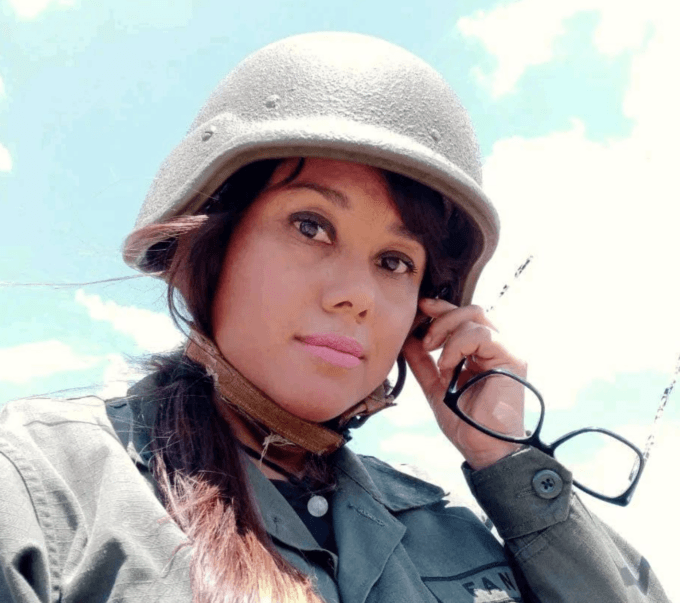
Her parents were too poor for her to get a proper education, and the schools were houses of neglect. With a family that couldn’t feed itself with love, it was time to move out and get to work. She was only twelve years old and it was 1997.

“I couldn’t continue my studies because there were so many of us at home, so many siblings,” said Yolimar Semprum, who spoke to me from Valencia in the centre of Venezuela.

Her employment was as a nanny for a family that wasn’t Venezuelan. She had to use her sisters papers in order to legally get the work taking care of children while she was still a child.

“But I needed a permit, and the permit I needed to stay with that family was given to me by my older sister.”

By 1999, Hugo Rafael Chávez Frias had become the elected president of Venezuela, and much to the surprise of cynics across the country, Chávez actually went about doing the things he campaigned on in during the election.

Right from the beginning of what he would term the Bolivarian Revolution, Hugo Chávez worked for a radical level of inclusivity, holding vast referendums and plebiscites, where the population determined it was time to write a new, democratic and emancipatory constitution.

That, too, took a long time. In the process of writing the new constitution, Venezuelans who had never been involved in public life were not just consulted, but were the collective drivers of the new society taking shape.

Yolimar, a teenager who had already hit the ceiling of the old society, was enthralled with the democratic rights that the government was going out of their way not only to recognize, but to teach and explain patiently to those who had previously been marginalized.

“In the late 90s, I wasn’t involved in politics because I wasn’t old enough yet, but after I turned 16, I started looking into registering with the National Electoral Council (CNE) so I could vote for socialism.” (Legal voting age in Venezuela is 18 years old)

In April of 2002, when Yolimar was 16, the first of many American attempts to overthrow the Bolivarian Revolution by force was launched.

“I was working, but I saw everything on television, and then after I saw that, the riots started in the country. People went out to protest, and there was complete chaos in the country because everyone wanted President Chávez to return to power at Miraflores Palace.

And then everyone dropped everything and we went to march, and we went out to protest. I had a sister who passed away, but she was older than me, and she also went out to protest. We went out together.

She also shared the same conviction that I had: The Bolivarian Revolution of this country brought about many changes in the way people and society think. Clearly, it made us more aware not only of our rights in the country, but also of that feeling as Venezuelans of caring for and protecting the homeland that our liberator Simón Bolívar bequeathed to us.”

Popular education, creating what Ché referred to as a socialist being, began before anything else. If you have a revolution, it must be both understood and participatory. Though she wasn’t able to return to studies full time due to needs for paying rent and eating, Yolimar continued her education once again by attending courses at Mision Robinson, one of the many missions created by Chávez to handle the foot dragging of the deputies of the prior republic.

These courses were taught in large part by other Venezuelans, though using the popular education programs developed in revolutionary Cuba.

“When Commander Chávez came to power, he thought a lot about people without education, like me, and he began to implement missions and large-scale missions so that people could study and to eradicate problems through the laws and the constitution. There are laws for workers so that they are not exploited in their jobs. There are laws that protect women from domestic violence. There are laws, there is a law in the constitution that gives workers the right to demand fair compensation for their work.

And Chávez came so that we could have a voice when we didn’t have one. All the laws that exist now in Venezuela are thanks to Commander Chávez.”

This is where you get the real sense of what the revolution has meant to Venezuelans. This confidence, this understanding of their own value. Self-pride, but wrapped up in internationalism (unless it’s time for a Baseball game). Chávismo, especially under Chávez himself, knew you couldn’t change society without working to get the people to believe in themselves.

“The revolution came into my life to change it in a very positive way. It made me very aware of everything I’ve already told you and much more.

This Chávez instilled in us a fighting spirit, a sense of not surrendering, of not giving up and fighting for this homeland, because it’s ours, it’s what we have, and nobody gave it to us.

It cost the Liberator [Simon Bolivar] dearly to break the chains that oppressed us, and he made us free, he made Venezuela free, and he gave us this homeland, okay?”

I have been struck, time and again, by the way that Chávez seemed to not just connect with the people, but to feel with them. Venezuelans had a sense that, given only 20 seconds to explain their trials and tribulations, Chavez would understand them and work to help them.

“When Commander Chávez arrived [in the 90’s] he took to the streets with his presidential candidacy and said many things that were true about the Fourth Republics and the previous governments before he came to power.

He captivated me; he touched my heart because I understood that Chávez was a man who wanted what was best for our country and for all Venezuelans. He wanted a country with people who progressed in every way: politically, socially, and in their studies.”

“Was he humane? Yes, he is sensitive, he is empathetic, he has a lot of empathy for the most vulnerable, he has a lot of empathy for those who have no voice, and he has a lot of love. It is a program, it is a model that promotes peace, love, and harmony among brothers and sisters.”

The realization of a politics in action, and the struggle to replace the current state with a communal state has been stalled in the years since Chávez’ death (to put it mildly).

While the economic strangulation of Venezuela escalated rapidly during the Obama administration, and with Canadian help trying to illegally install a fake “president” among other attempts to destroy Chávismo never wavering for a moment, Nicolas Maduro’s government has been beset by both external and internal problems. Nonetheless, Yolimar is a miliciana, and she joined the Bolivarian militia long before Donald Trump and Marco Rubio started trying to steal her country. Yolimar, all 1.5 meters of her, has been training to defend her rights, and her country.

“[I am] now ready to fight to stop the invasion. I am ready to go and fight and combat with my other comrades the foreign forces of the United States so that new generations like my daughter and others and those yet to come have a homeland, so that they have a free and sovereign independent country.”

“Of course, the Bolivarian Militia has a duty to contribute to the defense of [the country,]” she explained to me. I told Yolimar the point for me in doing this interview was to get a bit of a snapshot of today’s militia members. From 12 year old working class runaway, to single mom and woman who knows her rights– and how to use them– life and revolution have been almost the same thing since. Does she have anything that she would like us here in the West to know?

“Leave my country in peace? I want you to stay out of the country’s internal affairs, because Venezuelans understand each other and know how to handle our problems. We don’t want any intruders, any foreign forces, to come and occupy our country. We want to remain free, independent, and sovereign.

And I want the world to know that there is freedom of expression in Venezuela. I want them to know that here we have freedom of expression; we can think differently, speak differently, have different political leanings, not be revolutionary, and that’s why this country is sovereign, because we accept each other’s opinions.

In other words, we Venezuelans respect each other and respect everyone’s way of thinking. And the West has no right to interfere in our politics, our model, or even our very essence.”

Macdonald Stainsby is an anti-tar sands and social justice activist, freelance writer and professional hitchhiker looking for a ride to the better world, currently based in Vancouver, Canada. He can be reached at mstainsby@resist.ca