Monday, December 29, 2025

After 2025 recognition of a Palestinian state, what's next ?


The recognition of the State of Palestine by several Western countries in September, at France’s initiative, stood out as one of the key diplomatic moments of 2025. Largely symbolic for Palestinians, the move raised questions about whether it could break a decades-long geopolitical stalemate.


Issued on: 29/12/2025 
FRANCE24
By:Marc DAOU


This file photo shows Palestinians flying their flags during a rally in support for Gaza and celebrating the latest western nations recognitions of the Palestinian state ahead of the United Nations General Assembly meetings, in the West Bank city of Ramallah on September 23, 2025. © Nasser Nasser, AP

The Palestinian cause scored a symbolic victory in 2025 as several Western countries that had long shown caution or ambiguity formally recognised the State of Palestine.

In September, on the sidelines of the 80th United Nations General Assembly in New York, France, Britain, Portugal, Canada, Australia and Belgium, among others, announced they were recognising Palestine, as Israel continued its war in Gaza and stepped up settlement expansion in the occupied West Bank.
France takes the lead

France played a driving role in the unprecedented wave of recognitions, prompting strong opposition from Israeli Prime Minister Benjamin Netanyahu, who rejected the creation of a Palestinian state and described it as "a huge reward for terrorism", referring to Hamas and the October 7 attacks.


After years of rhetorical support for a Palestinian state, conditioned on prior peace with Israel, Paris ultimately decided to move to formal recognition on September 22, when President Emmanuel Macron addressed the UN General Assembly.

The decision was presented as an explicit endorsement of the two-state solution, long viewed as the central framework for resolving the Israeli-Palestinian conflict.

"This recognition is unquestionably a very important moment in the history of this conflict, as well as for French diplomacy, particularly in the way it was carried out," said Jean-Paul Chagnollaud, emeritus professor and honorary president of the Institute for Research and Studies on the Mediterranean and the Middle East (IREMMO). "There is indeed a symbolic dimension, but it is more than that, because it is a significant political act."

"France sought to rally part of the Western world that had previously been reluctant," he added, noting that the broader French initiative led to the New York Declaration, signed by 142 states.

France’s recognition formed part of a wider diplomatic push, including an international conference co-chaired with Saudi Arabia that culminated on September 12 in the UN General Assembly’s adoption of the New York Declaration, which described recognition of the Palestinian state as "essential and indispensable".

The declaration laid out what was described as an "irreversible" roadmap for a political settlement based on the two-state solution and excluded Hamas from any political role in Gaza.

"Ultimately, this kind of recognition comes down to the decision of one person – the president – who, like anyone else, has doubts and hesitations," Chagnollaud said. "Last spring, I wouldn’t have bet a euro on France recognising the (Palestinian) state. But what Emmanuel Macron saw in April, when he travelled close to Gaza during a visit to Egypt, and the atrocities then being committed, pushed him to act."
Limited effects

Despite opening the way for closer bilateral ties and increasing pressure on the Palestinian Authority to pursue reforms, the recognitions remain largely insufficient given the realities on the ground.

Even if France said the move increased pressure on Israel to accept the Gaza ceasefire demanded by US President Donald Trump a couple of weeks after the UN General Assembly, recognition has not ended the occupation, halted settlement expansion or stopped violence against Palestinian civilians. Nor has it sidelined Hamas, which continues to control the Gaza strip.

Without concrete implementation of the New York Declaration, stronger pressure on the Israeli government and a clear US willingness to rebalance power dynamics, the recognitions risk remaining largely symbolic, with little impact on Palestinians’ daily lives.

"The effects are clearly limited and, in some respects, counterproductive," Chagnollaud said. "They are limited because recognition has no direct impact, and because France and the Europeans lack leverage on the ground, unlike the Americans, who are clearly opposed to this recognition and to the New York Declaration."

"The move is counterproductive if all these states that have taken the step of recognition stop there,” he added. “And unfortunately, that is the case since they have not lifted a finger to jointly impose a reality on the ground, for example through sanctions against Israel, which has waged a war that has annihilated an entire society and is doing everything, including in the West Bank, to undermine the very idea of a Palestinian state."

The diplomatic momentum was soon overshadowed by Donald Trump’s peace plan, which succeeded in imposing a ceasefire in Gaza but was structured around US and Israeli security priorities, leaving intact the grievances that fuel violence and undermine prospects for lasting peace.

"We are heading towards the crushing of the Palestinian question, both literally and figuratively,” Chagnollaud said. “I even think that in 2026 we will witness one of the worst periods in Palestinian history."

This article was translated from the original in French by Anaƫlle Jonah.
SHAMEFUL

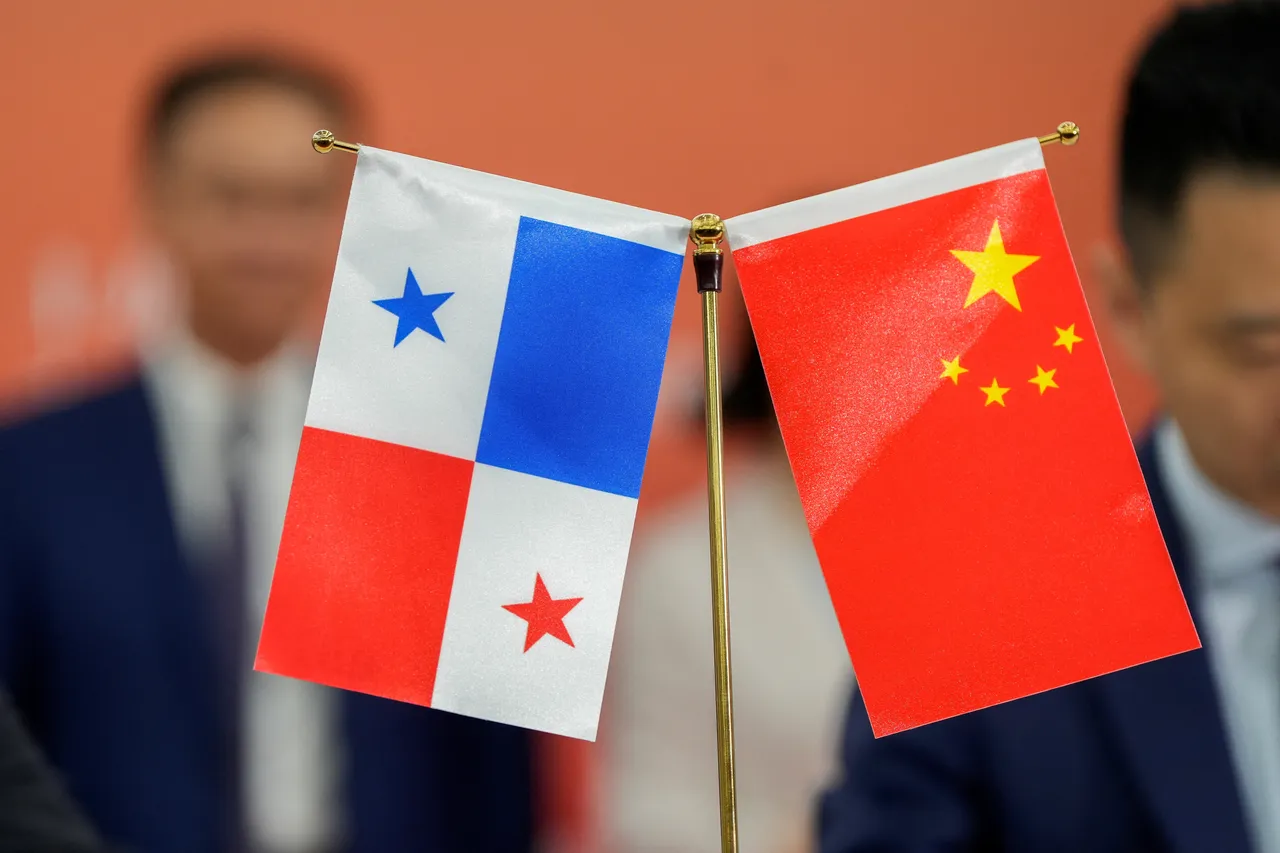
Panama tears down China ‘friendship’ monument amid US canal control claims

The removal of the Chinese monument near the Panama Canal has exposed rising political and diplomatic tensions surrounding control of the waterway.

China described the act as harmful to relations with Panama. / Reuters Archive

Near the entrance to the Panama Canal, a monument to China's contributions to the interoceanic waterway was torn down Saturday night by order of local authorities.

The move comes as US President Donald Trump has made threats in recent months to retake control of the canal, claiming Beijing has too much influence in its operations.

In a surprising move that leaders in Panama and China have criticised, the mayor's office of the locality of Arraijan ordered the demolition of the monument built in 2004 to symbolise friendship between the countries.

The mayor's office said in a statement that the monument, which overlooked the waterway spanning the Bridge of the Americas, had structural damage that posed a "risk."

But Panamanian President Jose Raul Mulino said Sunday that "there is no justification whatsoever for the barbarity committed," calling it "an unforgivable act of irrationality."

After personally inspecting the demolition, China's ambassador to Panama Xu Xueyuan said it was a "great pain for bilateral friendship," noting the insult to 300,000 Chinese-Panamanians.

Some members of the Chinese community witnessed the destruction, but police prevented them from reaching the lookout to stop it, according to videos published by local media.

In a video posted to X, the Chinese embassy called for a "thorough investigation" of the case and to "severely sanction" the "illegal, improper and vandalistic" actions.


RelatedTRT World - China clashes with Trump over Panama canal port deal


Vital for US, China

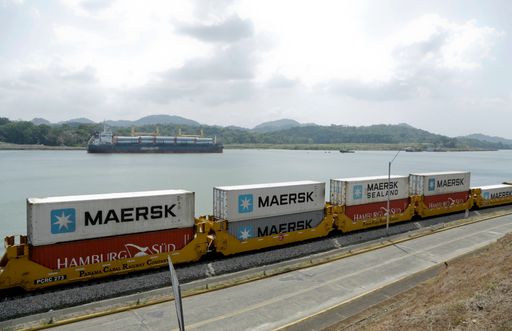
The US and China are the main users of the 80-kilometre canal, which sees the passage of five percent of global maritime trade.

The Panama Canal was under US control from 1914 to 1999, when it was taken over by Panama.

Trump has demanded preferential conditions for its use by US vessels.

Hong Kong-based Hutchison Holdings operates two ports on the Pacific and the Atlantic, but has agreed to sell them to US-based BlackRock.
RelatedTRT World - Panama pulls out of China's Belt and Road Initiative: President Mulino

SOURCE:AFP
Reclaiming LGBTQI+ Rights in Africa

December 29, 2025
author: Thapelo Moeketsi


A 2025 report by the European Parliamentary Research Service revealed that 31 countries in Africa still criminalize same-sex relationships. In September 2025, the number rose to 32, as Burkina Faso criminalized homosexuality. The hostility that the LGBTQI+ community in Africa faces stems from cultural and legal biases. Identifying as lesbian, gay, bisexual, transgender, or other queer identity (LGBTQI+) is illegal in most parts of the continent. Laws prohibiting same-sex relationships largely date back to the colonial era and continue to endanger the LGBTQI+ community. To end the hostility, African countries must repeal colonial-era laws and foster inclusion for the LGBTQI+ community. Local communities must confront harmful beliefs influencing homophobia and support survivors of LGBTQI-related violence.

Repealing colonial-era laws in Africa is necessary for progress and prosperity. A 2022 study by Ayodele Sogunro found that homophobia is not indigenous to Africa. Colonial authorities introduced and enforced homophobia through legal systems aimed at dividing and controlling Africans. Repealing these laws would be an opportunity for African countries to replace inherited oppression with African values of justice, community, and shared humanity. This will further recognise and restore the dignity of people identifying as LGBTQI+. It is with dignity that people can thrive and reach their potential, and contribute to the development of their communities and countries.

The progress realized in a few African countries offers hope for the continent. Angola, Mozambique, and Botswana have already repealed anti-LGBTQI+ laws. However, Ghana and Mali are moving in the opposite direction and proposing harsher measures. These countries and other African countries still hostile toward the LGBTQI+ community should follow the examples of Angola, Mozambique, and Botswana. They must realize that being outside the heterosexual norm is completely natural and normal. Laws and policies should not exclude people and make them feel uncomfortable because of their gender identity and sexual orientation. Rather, they should acknowledge ‌LGBTQI+ identities and allow individuals to express their sexual orientations freely.


…homophobia is not indigenous to Africa. Colonial authorities introduced and enforced homophobia through legal systems aimed at dividing and controlling Africans.

Education is critical to reshaping the views of Africans about LGBTQI+ and same-sex relationships. Schools should encourage empathy, diversity, and inclusion for the LGBTQI+ community. As the Nigerian writer, Chimamanda Ngozi Adichie, said, “The problem with stereotypes is not that they are untrue, but that they are incomplete. They make one story become the only story.” Adichie’s statement reflects how society reduces LGBTQI+ to a single harmful narrative, overlooking their full humanity and diverse experiences. This stereotypical narrative also fuels misunderstanding and hostility towards the LGBTQI+ community. Inclusive education fosters empathy, understanding, and an accepting society.

Broadening perspectives within and beyond the classroom is necessary. Schools should introduce critical discourses that challenge stereotypes about LGBTQI+. Schools should also be supportive spaces for LGBTQI+ students to express themselves freely and be vocal about their stories and experiences without the risk of exclusion or the influence of misinformation and bias. Educators can influence the acceptance or rejection of the LGBTQI+ community. They should encourage respect for LGBTQI+ identities, creating a safe environment for the community. Beyond the classroom, scholarship and research should encourage inclusive discourse and discourage anti-LGBTQI+ ideologies.

Victims and survivors of LGBTQI-related violence need support. LGBTQI+ individuals often face unjust arrests, forced anal examinations, and ‌so-called corrective rape. Victims of these acts deserve justice, protection, and healing. Governments must implement policies that prohibit such practices and instead hold perpetrators accountable. Justice must be unbiased, with a commitment toward protecting individual dignity regardless of an individual’s sexual orientation or gender identity.


Africans should embrace the Ubuntu concept, which encourages seeing one another as a community, not reducing individuals’ identities to whom they choose to love or be intimate with.

Support services—legal and psychosocial—should be readily available to the survivors of these inhumane acts. Private hospitals and healthcare providers can support LGBTQI+ survivors by offering safe, confidential, and inclusive medical care. Collaborating with LGBTQI+ advocacy organizations can also enhance staff training and improve the quality of care for these survivors. Such collaborations can also help establish clear referral pathways, ensuring survivors receive comprehensive support that addresses their medical, legal, and emotional needs.

Change must begin at the community level. African communities must embrace their values of shared humanity and compassion to support and protect everyone equally. Perpetrators of harmful practices often seek justification in cultural or religious traditions. These traditions should not justify discrimination. The values of respect, care, and togetherness enrich African traditions. These values prevail, regardless of sexual orientation or gender identity. By reviving these inclusive values through community dialogue and reorientation, societies can challenge stigma and foster safer environments for the LGBTQI+ community.

Traditional and religious leaders must help build inclusive communities. They can become powerful voices for acceptance and understanding. Addressing homophobia does not require adopting foreign ideologies. It should involve restoring the ideals of African societies that once valued harmony, inclusion, and mutual respect. Africans should embrace the Ubuntu concept, which encourages seeing one another as a community, not reducing individuals’ identities to whom they choose to love or be intimate with.

Africa’s rejection of LGBTQI+ people builds on colonial laws, fear of losing traditional or religious control, and misconceptions. Africa must restore justice and compassion and build a continent where everyone lives openly and safely.

Thapelo Moeketsi is a writing fellow at African Liberty. He is on X @Wil_Moeketsi.

Article was first published by Mamba Online.

Photo by Sophie Popplewell on Unsplash.


How Deepfakes Could Lead to Doomsday

America’s Nuclear Warning Systems Aren’t Ready for AI

STILL USING FLOPPY DISKS!


Erin D. Dumbacher
December 29, 2025
FOREIGN AFFAIRS

Since the dawn of the nuclear age, policymakers and strategists have tried to prevent a country from deploying nuclear weapons by mistake. But the potential for accidents remains as high as it was during the Cold War. In 1983, a Soviet early warning system erroneously indicated that a U.S. nuclear strike on the Soviet Union was underway; such a warning could have triggered a catastrophic Soviet counterattack. The fate was avoided only because the on-duty supervisor, Stanislav Petrov, determined that the alarm was false. Had he not, Soviet leadership would have had reason to fire the world’s most destructive weapons at the United States.

The rapid proliferation of artificial intelligence has exacerbated threats to nuclear stability. One fear is that a nuclear weapons state might delegate the decision to use nuclear weapons to machines. The United States, however, has introduced safeguards to ensure that humans continue to make the final call over whether to launch a strike. According to the 2022 National Defense Strategy, a human will remain “in the loop” for any decisions to use, or stop using, a nuclear weapon. And U.S. President Joe Biden and Chinese leader Xi Jinping agreed in twin statements that “there should be human control over the decision to use nuclear weapons.”

Yet AI poses another insidious risk to nuclear security. It makes it easier to create and spread deepfakes—convincingly altered videos, images, or audio that are used to generate false information about people or events. And these techniques are becoming ever more sophisticated. A few weeks after Russia’s 2022 invasion of Ukraine, a widely shared deepfake showed Ukrainian President Volodymyr Zelensky telling Ukrainians to set down their weapons; in 2023, a deepfake led people to falsely believe that Russian President Vladimir Putin interrupted state television to declare a full-scale mobilization. In a more extreme scenario, a deepfake could convince the leader of a nuclear weapons state that a first strike from an adversary was underway or an AI-supported intelligence platform could raise false alarms of a mobilization, or even a dirty bomb attack, by an adversary.

The Trump administration wants to harness AI for national security. In July, it released an action plan calling for AI to be used “aggressively” across the Department of Defense. In December, the department unveiled GenAI.mil, a platform with AI tools for employees. But as the administration embeds AI in national security infrastructure, it will be crucial for policymakers and systems designers to be careful about the role machines play in the early phases of nuclear decision-making. Until engineers can prevent problems inherent to AI, such as hallucinations and spoofing—in which large language models predict inaccurate patterns or facts—the U.S. government must ensure that humans continue to control nuclear early warning systems. Other nuclear weapons states should do the same.

CASCADING CRISES

Today, President Donald Trump uses a phone to access deepfakes; he sometimes reposts them on social media, as do many of his close advisers. As the lines become blurred between real and fake information, there is a growing possibility that such deepfakes could infect high-stakes national security decisions, including on nuclear weapons.


If misinformation can deceive the U.S. president for even a few minutes, it could spell disaster for the world. According to U.S. law, a president does not need to confer with anyone to order the use of nuclear weapons for either a retaliatory attack or a first strike. U.S. military officials stand at the ready to deploy the planes, submarines, and ground-based missiles that carry nuclear warheads. A U.S. intercontinental ballistic missile can reach its target within a half hour—and once such a missile is launched, no one can recall it.

Deepfakes could help create pretexts for war.

Both U.S. and Russian nuclear forces are prepared to “launch on warning,” meaning that they can be deployed as soon as enemy missiles are detected heading their way. That leaves just minutes for a leader to evaluate whether an adversary’s nuclear attack has begun. (Under current U.S. policy, the president has the option to delay a decision until after an adversary’s nuclear weapon strikes the United States.) If the U.S. early warning system detects a threat to the United States, U.S. officials will try to verify the attack using both classified and unclassified sources. They might look at satellite data for activity at known military facilities, monitor recent statements from foreign leaders, and check social media and foreign news sources for context and on-the-ground accounts. Military officers, civil servants, and political appointees must then decide which information to communicate up the chain and how it is presented.

AI-driven misinformation could spur cascading crises. If AI systems are used to interpret early warning data, they could hallucinate an attack that isn’t real—putting U.S. officials in a similar position to the one Petrov was in four decades ago. Because the internal logic of AI systems is opaque, humans are often left in the dark as to why AI came to a particular conclusion. Research shows that people with an average level of familiarity with AI tend to defer to machine outputs rather than checking for bias or false positives, even when it comes to national security. Without extensive training, tools, and operating processes that account for AI’s weaknesses, advisers to White House decision-makers might default to assuming—or at least to entertaining—the possibility that AI-generated content is accurate.

Deepfakes that are transmitted on open-source media are nearly as dangerous. After watching a deepfake video, an American leader might, for example, misinterpret Russian missile tests as the beginning of offensive strikes or mistake Chinese live-fire exercises as an attack on U.S. allies. Deepfakes could help create pretexts for war, gin up public support for a conflict, or sow confusion.

A CRITICAL EYE

In July, the Trump administration released an AI action plan that called for aggressive deployment of AI tools across the Department of Defense, the world’s largest bureaucracy. AI has proved useful in making parts of the military more efficient. Machine learning makes it easier to schedule maintenance of navy destroyers. AI technology embedded in autonomous munitions, such as drones, can allow soldiers to stand back from the frontlines. And AI translation tools help intelligence officers parse data on foreign countries. AI could even be helpful in some other standard intelligence collection tasks, such as identifying distinctions between pictures of bombers parked in airfields from one day to the next.

Implementing AI across military systems does not need to be all or nothing. There are areas that should be off-limits for AI, including nuclear early warning systems and command and control, in which the risks of hallucination and spoofing outweigh the benefits that AI-powered software could bring. The best AI systems are built on cross-checked and comprehensive datasets. Nuclear early warning systems lack both because there have not been any nuclear attacks since the ones on Hiroshima and Nagasaki. Any AI nuclear detection system would likely have to train on existing missile test and space tracking data plus synthetic data. Engineers would need to program defenses against hallucinations or inaccurate confidence assessments—significant technical hurdles.


It may be tempting to replace checks from highly trained staff with AI tools or to use AI to fuse various data sources to speed up analysis, but removing critical human eyes can lead to errors, bias, and misunderstandings. Just as the Department of Defense requires meaningful human control of autonomous drones, it should also require that each element of nuclear early warning and intelligence technology meet an even higher standard. AI data integration tools should not replace human operators who report on incoming ballistic missiles. Efforts to confirm early warning of a nuclear launch from satellite or radar data should remain only partially automated. And participants in critical national security conference calls should consider only verified and unaltered data.

In July 2025, the Department of Defense requested funds from Congress to add novel technologies to nuclear command, control, and communications. The U.S. government would be best served by limiting AI and automation integration to cybersecurity, business processes and analytics, and simple tasks, such as ensuring backup power turns on when needed.

A VINTAGE STRATEGY

Today, the danger of nuclear war is greater than it has been in decades. Russia has threatened to use nuclear weapons in Ukraine, China is rapidly expanding its arsenal, North Korea now has the ability to send ICBMs to the United States, and policies preventing proliferation are wavering. Against this backdrop, it is even more important to ensure that humans, not machines trained on poor or incomplete data, are judging the actions, intent, and aims of an adversary.

Intelligence agencies need to get better at tracking the provenance of AI-derived information and standardize how they relay to policymakers when data is augmented or synthetic. For example, when the National Geospatial-Intelligence Agency uses AI to generate intelligence, it adds a disclosure to the report if the content is machine-generated. Intelligence analysts, policymakers, and their staffs should be trained to bring additional skepticism and fact-checking to content that is not immediately verifiable, just as many businesses are now vigilant against cyber spear phishing. And intelligence agencies need the trust of policymakers, who might be more inclined to believe what their own eyes and devices tell them—true or false—than what an intelligence assessment renders.

Experts and technologists should keep working to find ways to label and slow fraudulent information, images, and videos flowing through social media, which can influence policymakers. But given the difficulty of policing open-source information, it is all the more important for classified information to be accurate.


AI can already deceive leaders into seeing an attack that isn’t there.

The Trump administration’s updates to U.S. nuclear posture in the National Defense Strategy ought to guard against the likely and unwieldy AI information risks to nuclear weapons by reaffirming that a machine will never make a nuclear launch decision without human control. As a first step, all nuclear weapons states should agree that only humans will make nuclear use decisions. Then they should improve channels for crisis communications. A hotline for dialogue exists between Washington and Moscow but not between Washington and Beijing.

U.S. nuclear policy and posture have changed little since the 1980s, when leaders worried the Soviet Union would attack out of the blue. Policymakers then could not have wrapped their heads around how much misinformation would be delivered to the personal devices of the people in charge of nuclear weapons today. Both the legislative and executive branches should reevaluate nuclear weapons posture policies built for the Cold War. Policymakers might, for example, require future presidents to confer with congressional leaders before they launch a nuclear first strike or require a period of time for intelligence professionals to validate the information on which the decision is being based. Because the United States has capable second-strike options, accuracy should take precedence over speed.

AI already has the potential to deceive key decision-makers and members of the nuclear chain of command into seeing an attack that isn’t there. In the past, only authentic dialogue and diplomacy averted misunderstandings among nuclear armed states. Policies and practices should protect against the pernicious information risks that could ultimately lead to doomsday.


ERIN D. DUMBACHER is Stanton Nuclear Security Senior Fellow at the Council on Foreign Relations.
A look at America minus immigrants as Trump immigration crackdown reshapes daily life

Hospitals, farms, classrooms and local businesses feel the impact of fewer arrivals as labour gaps widen communities, thin out and the US economy faces slower growth pressures


Lydia Depillis, 
Campbell Robertson
 Published 29.12.25


Eugene Graham watches as protesters stand off against police at a US Immigration and Customs Enforcement facility in Portland, Oregon, on October 5.AP

Across the US, someone is missing.


One year into President Donald Trump’s immigration crackdown, construction firms in Louisiana are scrambling to find carpenters. Hospitals in West Virginia have lost out on doctors and nurses who were planning to come from overseas. A neighbourhood football league in Memphis cannot field enough teams because immigrant children have stopped showing up.

America is closing its doors to the world, sealing the border, squeezing the legal avenues to entry and sending new arrivals and longtime residents to the exits.


Visa fees have been jacked up, refugee admissions are almost zero and international student admissions have dropped. The rollback of temporary legal statuses granted under the Biden administration has rendered hundreds of thousands more people newly vulnerable to removal at any time. The administration says it has already expelled more than 600,000 people.

Shrinking the foreign-born population won’t happen overnight. Oxford Economics estimates that net immigration is running at about 450,000 people a year under current policies. That is well below the two million to three million a year who came in under the Biden administration. The share of the country’s population that is foreign-born hit 14.8 per cent in 2024, a high not seen since 1890.

But White House officials have made clear they are aiming for something closer to the immigration shutdown of the 1920s, when Congress, at the crest of a decades-long surge in nativism, barred entry of people from half of the world and brought net immigration down to zero. The share of the foreign-born population bottomed out at 4.7 per cent in 1970.

There’s little doubt that major changes are in store. Immigration has woven itself so tightly through the country’s fabric — in classrooms and hospital wards, city parks and concert halls, corporate boardrooms and factory floors — that walling off the country now will profoundly alter daily life for millions of Americans.

Grocery stores and churches are quieter in immigrant neighbourhoods. Fewer students show up in Los Angeles and New York City. In South Florida, Billo’s Caracas Boys, a Venezuelan orchestra, puts on an annual holiday concert where generations of families come to dance salsas and paso dobles. This year, the orchestra announced at the last minute that it was cancelling the show because so many people are nervous about leaving home.

The changes will also be felt hundreds of kilometres from any ocean or national border, even in the snow-washed streets of Marshalltown, Iowa.

First Mexicans, some undocumented, came to Marshalltown in the 1990s to work at the pork processing plant. After a high-profile immigration raid there in 2006, refugees with more solid legal status arrived from Myanmar, Haiti and the Democratic Republic of Congo.

Now, Mexican, Chinese and Vietnamese restaurants dot the blocks around the grand, 19th-century courthouse. The population is 19 per cent foreign-born, and some 50 dialects are spoken in the public schools. The pews at the Spanish-language Mass at the local Catholic church overflow on Sundays, and, in 2021, a Burmese religious society built a towering statue of Buddha on the outskirts of town.

“You have more energy in the community,” said Michael Ladehoff, Marshalltown’s mayor-elect. “If you stay stagnant, and you don’t have new people coming to your community, you start ageing out.”


But with Trump’s crackdown on immigration gaining strength, local festivals are more thinly attended. Parents pull their children out of school when they hear about people being detained. The supervisor overseeing the construction of a high school sports stadium received a deportation letter, creating a conspicuous absence as the work finished up. The pork plant has let workers go as their work permits have expired.


Echo of past


Over the country’s first century, immigration was essentially unrestricted at the federal level. This began to change in the late 1800s, with the “great wave” of immigrants fleeing political oppression or seeking work. Starting in the 1870s and over the decades that followed, Congress barred criminals, anarchists, the indigent and all Chinese labourers.


By the turn of the 20th century, anti-immigrant sentiment was rampant.


Evidence is mixed on the effect of the 1920s restrictions on assimilation. Some researchers have found that, without newcomers arriving from their home countries, immigrants were more likely to marry American-born citizens and less likely to live in ethnically homogenous neighbourhoods.


Although the effects of the 1924 immigration restrictions are difficult to untangle from other developments — wars, technological advancements, the baby boom — wages rose for US-born workers in places affected by the immigrant restrictions. But only briefly. Employers avoided paying more by hiring workers from Mexico and Canada, countries not subject to immigration caps; American-born workers from small towns migrated to urban areas and alleviated shortages. Farms turned to automation to replace the missing labour. The coal mining industry, which was powered by immigrants now barred from entry, shrank.


And today? Construction wages have been rising, even as home building has been sluggish — a potential indication that deportations in the immigrant-heavy industry are bidding up salaries. The union representing workers in the pork processing industry sees an upside, too.


“I will certainly bring it up at the bargaining table that the way to solve a labour shortage is to pay more money,” said Mark Lauritsen, head of the meatpacking division at the United Food and Commercial Workers Union International.


The same is true in landscaping. Immigrant crews, working outside, were an easy deportation target over the summer. Come spring, said Kim Hartmann, an executive at a Chicago-area landscaping firm, the labour force could be 10 to 20 per cent smaller.


“It’s going to be much more competitive to find that individual who’s been a
foreman or a supervisor and has years of experience,” Hartmann said. “We know that drives costs up.”


Hands still matter


Many services still require humans, in person.


“If you’re an obstetrician, delivering a baby right in the moment, you need hands to lay on the patient,” said David Goldberg, a vice-president of Vandalia Health, a network of hospitals and medical offices in West Virginia.


Nearly a fifth of nursing positions are currently vacant in West Virginia — a state that is older, sicker and poorer than most — and the state faces a serious shortage of physicians in the coming years. The answer has been to look abroad. A third of West Virginia’s physicians graduated from medical schools overseas. Now that option is narrowing.


Similarly, nobody has figured out how to harvest delicate crops with machines.


“It’s not going to hop from the ground into a package without somebody’s hands being involved somewhere along the way,” said Luke Brubaker, who runs a dairy farm in Pennsylvania. To milk cows, feed them and deliver calves, he relies on more than a dozen foreign-born workers, most of them Mexican. He is not optimistic that he will be able to replace them.


Land of opportunity?


Dan Simpson, the chief executive of Taziki’s, a fast casual Mediterranean restaurant chain based in the Southeast, has been losing employees since the beginning of the year. These were not only dishwashers and cooks but also managers and assistant managers, who had come to the US with advanced degrees.


“If you zoom back, the bigger problem is that we’re tarnishing the brand of America,” Simpson said. Even if the United States opens up again, he said, “we’re going to need a campaign to fix the idea that America is not the land of opportunity.”


International students pay full-freight tuition that helps fund new programmes and basic costs at many US colleges. As international enrollment has dropped, many schools are facing budget holes.


Nearly half of the immigrants who legally came to the US from 2018 to 2022 were college-educated, according to the Migration Policy Institute, a nonpartisan think tank. Immigrants are far more likely than US citizens to start businesses; nearly half of this year’s Fortune 500 companies were founded by immigrants or the children of immigrants.


“You have an economy that is smaller, less dynamic and less diversified,” said Exequiel Hernandez, a professor at the Wharton School at the University of Pennsylvania.


Over the longer term, low immigration will collide with one inexorable trend: an ageing population in need of care just as fewer workers are available to provide it.


New York Times News Service
Nepal’s rapper-turned mayor enters PM race, shaking up March elections

Kathmandu Mayor Balendra Shah has joined forces with the Rastriya Swatantra Party in a bid to challenge Nepal’s traditional political power


Balendra Shah, 35, a former rapper and composer, attends Indra Jatra festival at Kathmandu Durbar Square in Kathmandu, Nepal, September 6, 2025. / Reuters

Two popular leaders have formed an alliance ahead of March parliamentary elections in Nepal that will challenge the older parties, which have dominated the Himalayan nation's politics for over three decades, party officials and analysts said on Monday.

Rapper turned Kathmandu mayor Balendra Shah, known as Balen, a popular elected official, joined the Rastriya Swatantra Party (RSP) or national independent party, led by a former TV host-turned politician Rabi Lamichhane on Sunday, party officials said.

They said under the agreement with RSP, 35-year-old Balen will become the prime minister if the RSP wins the March 5 elections, while Lamichhane will remain the party chief.

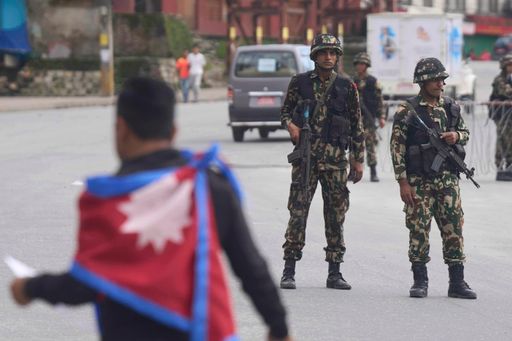
Both have vowed to address the demands raised during the Gen Z or youth-led protests against widespread corruption in September, in which 77 people were killed leading to Prime Minister KP Sharma Oli resigning.


RelatedTRT World - Will Nepal's political upheaval shift the balance of power in South Asia?


“It is a very smart and strategic move by the RSP to bring in Balen and his young supporters into its fold,” analyst Bipin Adhikari said.

“Traditional political parties are in pain for fear of losing their young voters to RSP,” he said.

The election commission says nearly 19 million of Nepal’s 30 million people are eligible to vote in the elections. Nearly one million voters – mostly youths – were added after the protests.

Balen was in the spotlight after the protests and was an undeclared leader of the youngsters who led the September protests.

He also helped form the interim government of former Chief Justice Sushila Karki to oversee the vote.

Oli’s Communist Party of Nepal (Unified Marxist-Leninist) or UML and the centrist Nepali Congress party have shared power between them for most of the past three decades and are most likely to be challenged by Balen.


Nepal's former rapper to run for PM in key vote after Gen Z protests

PUBLISHED ON
December 28, 2025 

KATHMANDU — Two popular leaders have formed an alliance ahead of March parliamentary elections in Nepal that will challenge the older parties which have dominated the Himalayan nation's politics for over three decades, party officials and analysts said on Monday (Dec 29).

Rapper turned-Kathmandu mayor Balendra Shah, known as Balen, a popular elected official, joined the Rastriya Swatantra Party (RSP) or national independent party, led by a former TV host-turned politician Rabi Lamichhane on Sunday, party officials said.

They said under the agreement with RSP, 35-year old Balen will become the prime minister if the RSP wins the March 5 elections while Lamichhane will remain the party chief.


Both have vowed to address the demands raised during the "Gen Z" or youth-led protests against widespread corruption in September in which 77 people were killed and led to Prime Minister K.P. Sharma Oli resigning.

"It is a very smart and strategic move by the RSP to bring in Balen and his young supporters into its fold," analyst Bipin Adhikari said.

"Traditional political parties are in pain for fear of losing their young voters to RSP," he said.

The election commission says nearly 19 million of Nepal's 30 million people are eligible to vote in the elections. Nearly one million voters — mostly youths — were added after the protests.

Balen was in the spotlight after the protests and was an undeclared leader of the youngsters who led the September protests.

He also helped form the interim government of former Chief Justice Sushila Karki to oversee the vote.

Oli's Communist Party of Nepal (Unified Marxist-Leninist) or UML and the centrist Nepali Congress party have shared power between them for most of the past three decades and are most likely to be challenged by Balen.


Read Also

Nepal says economy suffered $756m hit from Gen Z protests


Source: Reuters


Senegal: Where women’s bodies belong to everyone but themselves


Women’s protest against rape in Senegal in 2021. Screenshot from the video ‘Rape Cases in Senegal’ on the Le Dakarois 221 YouTube channel.

By Bowel Diop

In Senegal, women who are victims of rape can be condemned for trying to take control of their lives by having an abortion.

Like many other African countries, Senegal ratified the Maputo Protocol on December 27, 2004, an African Union treaty that promotes and protects the rights of women and girls across Africa. According to the provisions of Article 14, signatory states must:

Authorize medical abortion in cases of sexual assault, rape, incest, and where carrying the pregnancy to term endangers the mental and physical health of the mother or the life of the mother and fetus.

However, in Senegal, this right largely remains mere words. Human rights organizations, such as the International Federation for Human Rights (FIDH), the Senegalese League of Human Rights (LSDH), and the African Assembly for the Defence of Human Rights (RADDHO), a national NGO based in the Senegalese capital Dakar, denounce the State’s non-compliance with its international commitments. In 2024, these three organizations published their Dual Hardship report, warning that Article 14 of the Maputo Protocol has not been transposed into national legislation, and that women victims of rape or incest must consequently carry their pregnancy to term.

In Senegal, Article 305 of the Criminal Code prohibits abortion, except under limited therapeutic circumstances intended to save a mother’s life. This situation drives many women, including the victims of rape or incest, towards illegal, dangerous, and often life-threatening practices.

According to Prison-Insider, a France-based platform that shares information on prisons across the world, up to 46 percent of the women held in LibertĆ© VI prison in Senegal are convicted of infanticide, demonstrating the scale of the problem.

While the right to abortion is barely recognized, the reasons are not only legal, but also socio-cultural.

Religious argument

The religious argument is the most often used to justify the prohibition of abortion.  Although 95 percent of the Senegalese population is Muslim, the country is a secular republic. Article 1 of its constitution stipulates:

The Republic of Senegal is secular, democratic, and social. It ensures that all citizens are equal before the law, regardless of origin, race, gender, or religion. It respects all beliefs.

Under a secular state, the debate should stay within the medical and legal fields. It is worth noting that according to some Muslim traditions, the soul is breathed into the fetus 120 days after the embryo’s development, meaning that terminating a pregnancy before this date does not constitute ending a life.

In any case, all women have the right to make decisions about their bodies without any collective religious constraints. Should the argument that an unborn child has no say in the matter take away the rights of women whose consent was not requested?

Why sacrifice the lives of an already wounded conscious being for a potential life? This argument doesn’t hold up when looking at women’s mental health, physical health, or dignity. The right to bodily autonomy must take precedence. Asking a victim of rape or ’incest to carry an unwanted pregnancy to term for the sake of “societal values” is hypocritical, harsh, and deeply unjust.

Protecting moral standards

The other argument used against the right to abortion is that of tradition. What “moral standards” are we trying to protect? If “morals” mean controlling women’s bodies, then these morals are outdated. The “moral standards” we should protect are women’s dignity and freedom, not patriarchal conservatism.

The real issue is patriarchy, which continues to dictate what women should do with their bodies. The power of this ideology is such that some women, including educated women, defend it, proving to what extent patriarchal norms are internalized, even by those who should dismantle them.

In Africa, the arguments against abortion are strikingly similar and directly associated with three main areas: religion, traditions, and African values.” They revolve around the prohibition of killing found in three monotheistic religions, around the idea that abortion is an imported practice, foreign to local culture, which threatens the traditional moral values that consider motherhood a blessing. Another common argument is that an innocent, defenceless fetus should not pay for the circumstances of the pregnancy.

However, these arguments are primarily based on emotions, taboos, or a form of conservatism, and rarely on science, fundamental rights, or the reality of sexual violence. In Senegal, JGEN, an NGO committed to combating gender-based violence, has stepped up its calls for the law to stop criminalizing the victims of rape and incest, thus complying with the Maputo Protocol. 

As a woman, I support the unconditional right to abortion. All women should be able to freely decide what is best for their bodies, their lives, their health, and their future, especially in cases of rape or incest. Choice should be a right and not a luxury.


We could all easily be ‘Aco’: Slovenia’s controversial new law seeks to address the challenge of Roma integration

Novo Mesto, Slovenia. Image by Andrej via Wikimedia Commons. CC BY-SA 4.0.

In early October, Slovenians were stunned by the vicious murder of 48-year-old AleÅ” Å utar, a pub owner in the southeastern city of Novo Mesto who was more popularly known by his nickname, Aco. The killing took place outside the LokalPatriot nightclub after Å utar received a message from his son who said he was being threatened by a group of men. After he arrived on the scene, a group of men attacked Å utar, who was left with serious head trauma and ultimately succumbed to his injuries in hospital.

Initially the police arrested 21-year-old Sabrijan Jurkovič who is part of the Roma community in Novo Mesto. He was already known to the police for crimes he committed as a minor, including property offences and the sexual assault of a person younger than 15. However, he was released on December 12 because of a lack of evidence. The police have since arrested his 20-year-old cousin, Samire Å iljić, based on the testimony of six witnesses. Å iljić is alleged to have dealt the fatal blow to Å utar, while he was on weekend release from the Radeče Correctional Home, a facility for young offenders.

The case is primarily relying on eyewitness testimony because there is no CCTV coverage of the murder. Should the suspect be convicted of murder, current Slovenian law states he could serve a jail term of between five and 15 years.

Following Å utar’s untimely death, Slovenia’s Justice Minister Andrea Katic and Interior Minister Bostjan Poklukar resigned and stated in separate letters that they want to “contribute to the calming of the situation”, with both “assuming objective responsibility.” Their resignations were not solely related to the murder, but also to broad systemic failures regarding the integration of the Roma peoples into Slovenian society. Prime Minister Robert Golob, who leads the center-left Freedom Party, rushed to quell dissent by expressing concern the murder could be used to stoke ethnic hatred against the Romani people: “There must be no room for exploiting the tragedy with the aim of creating division or calling for a reckoning.”

Slovenia has been grappling with its inability to integrate part of the Roma community, as well as smaller portions of other minority groups. Tolerance across the nation has weakened, with a survey last year finding as much as 55 percent of respondents saying they wouldn’t like to have Roma as their neighbors, although a majority thought that Slovene attitudes toward the ethnic group were neither tolerant nor intolerant.

The European Commission Against Racism and Intolerance, meanwhile, noted in its 2025 report that incidents of hate speech are both prevalent and underreported due to a lack of trust in public institutions. In Slovenia, hate speech is only considered criminal if it “can jeopardize and disturb public law and order.”

Following protests over the murder, Slovenia’s government introduced the Measures to Ensure Public Safety Bill, also known as the Å utar Law, which would — among other measures — give police additional powers to enter neighborhoods or homes that are deemed security risks without a court order, and freeze social assistance for those who commit crimes. Golob said the law is about protecting victims and children and changing the categorization of petty crimes to misdemeanors so as to “eliminate the feeling of inviolability and impunity” that repeat offenders in southeastern Slovenia have.

In mid-November, parliament unanimously passed the law. The European Commission, which opposes all forms of discrimination including “anti-Gypsyism,” reacted by urging Slovenia to ensure the law’s enforcement doesn’t “disproportionately affect any community.”

A tale of two communities

Romani peoples living in Western Europe have broadly struggled with integration, with many community members involved in petty theft or other crimes. While large numbers of Roma are estimated to have criminal records, poverty and employment discrimination are some of the contributing factors behind these figures.

In Slovenia, the community is noticeably split between those who reside in the country’s southeastern part, such as in Dolenjska, Bela Krajina and Posavje, and have low rates of integration, school completion, language, and employment, and those known as Prekmurje Roma, who are situated in northeastern Slovenia. There, integration of Roma has made positive strides. In the town of Murska Sobota, for example, people regularly pay their taxes, citizens consciously improve themselves in line with their neighbors, and there is even a street named ‘Delavska Ulica’ (‘Workers’ Street’), because all Roma residents are employed.

In an interview with the daily newspaper Dnevnik a few weeks after Å utar’s death, the president of the forum of Roma Councillors, Darko RudaÅ”, commented on the collective punishment that occurs when a Romani person commits a crime, and why differences exist between the two communities: “In Prekmurje, the Roma were provided with the conditions and opportunities to develop…in the southeast, communities have been left on the street to so-called civil initiatives.” While advocating for the lifting of restrictions on municipalities to invest in informal settlements so that poverty and unemployment levels can be reduced, he did acknowledge that the employment opportunities provided to the Prekmurje group are based across the border in Austria.

Jernej Zupančič, who teaches at the University of Ljubljana, believes isolation of the community breeds crime problems, including those that spawn from a “breakdown in traditional Roma society.” Along with other academics, he agrees that poor leadership in Roma settlements helps worsen the situation and stresses that such problems are not limited to Romani citizens.

The majority of Slovenians learn about Romani people through media articles, which are typically skewed towards the cultivation of a negative image. The amplification of negative stories and the absence of positive ones, along with an atypical lifestyle, further deepen the “us versus them” divide.

In a Peace Institute report which looked into hate crimes in the country, Roma were found to be one of the most vulnerable groups; within the community, young girls faced increased rates of violence and discrimination. The team behind the report conducted interviews with various professionals, including a sociologist and counselor who deals with victim support and gender based violence, who confirmed that local social centers and schools are absolving themselves of responsibility when confronted with child marriage.

Legislative developments

On November 26, President Natasa signed off on the bill and it became law. Reaction was fierce and peppered with accusations that the law threatens “democratic reliability” and “treats identity as suspicion.”

Amnesty International condemned the measure as “draconian” and said the law could result in further marginalization of the Roma as it allows authorities to skirt the safeguards that are in place.

While stressing that the legislative developments are not reflective of problems within any ethnic group or community, the pace of the reforms reflect a desire to enact change after a murder committed by a Romani person.

The law’s implementation occurs at a precarious time for the Golob government, coming off the back of a defeat in the recent assisted dying referendum, and with spring elections looming large. Public opinion polls consistently show that the right-wing Slovenian Democratic Party (SDS) may well be poised to take power.

Delivering justice and promoting integration

Facebook post made by the Police Directorate in Novo Mesto

Screenshot of a Facebook post by the Police Directorate in Novo Mesto subjected to sarcastic comments. Out of over 1900 reactions over 930 are “haha” smiley, with 830 “likes.” Fair use.

Social media commentary has lampooned what it considers to be a two-tiered justice approach to dealing with Roma who commit crimes. Comments on a Facebook post made by the Police Directorate in Novo Mesto mocked the claims police made about ensuring public safety: “[U]ntil [the] next election…then everything will be the old way” and “[S]upposedly you’ve strengthened radar controls, I can’t find a connection [between that] and the current security situation in the area.”

Some of the comments also demanded confiscation of [illegal] weapons from residents of Roma settlements. On November 9, N1 TV reported that police seized automatic rifles, several pistols and ammunition there.

Citizens have also decried the rhetoric encouraging integration and understanding as empty in nature, suggesting that it allows politicians to suppress real concerns within communities. This may be a reflection of the plan outlined in Slovenia’s National Roma Integration Strategy 2021-2030, which promotes helping communities develop multidisciplinary groups to address issues and implementing action plans for Roma communities.

To date, however, the efforts have not resulted in closer integration, with even Romani activists saying the social strategy has stalled. Earlier this year, legislation was amended to attempt to curb school absenteeism rates among children by substituting cash for child benefits in a move that was said to target Roma, despite the law applying to all Slovenian children.

To create positive change within Roma groups, advocacy has encouraged supporting those who complete a certain level of education to take on meaningful roles and be given opportunities to succeed. The misunderstanding of why the enforcement of criminal behavior that results from ghettoization does not produce less crime has yet to be probed. Throwing money at the problem without strategic goals in mind leaves unresolved issues and fails to bridge trust gaps between societies with isolated ethnic factions.