Friday, April 30, 2021

Foreign aid: UK cuts its pledge to UN family planning by 85%

IMAGE COPYRIGHTSHEENA ARIYAPALA/DFID/FLICKR

The UK government has been accused of going back on its promises by cutting 85% of aid funding pledged to the United Nations global family planning programme.

The UN Population Fund says the UK had pledged £154m for its projects but now says it will get around £23m this year.

Advocates for family planning say it improves the rights of women and girls around the world.

The government said Covid meant tough but necessary decisions were needed.

A spokesperson for the Foreign and Commonwealth Development Office (FCDO) said temporary reductions in aid spending were vital as the pandemic had badly affected public finances.

The government announced last year it would cut UK aid spending from 0.7% of national income to 0.5% - which amounts to a reduction of more than £4bn. It has yet to confirm which programmes will be affected.

Some MPs defended the cuts at the time as being backed by the public, with some politicians arguing that domestic spending should come first during the pandemic.

Family planning includes the provision of contraceptives and maternal health care for millions of women in some of the world's poorest countries.

The UN Population Fund - known as UNFPA - said the UK decision would be "devastating for women and girls and their families across the world".

UNFPA executive director Dr Natalia Kanem said it "deeply regrets the decision of our longstanding partner and advocate to step away from its commitments at a time when inequalities are deepening and international solidarity is needed more than ever".

She estimated the £130m lost would have helped prevent about 250,000 maternal and child deaths, 14.6 million unintended pregnancies and 4.3 million unsafe abortions.

MSI Reproductive Choices, an organisation that provides contraception and safe abortion services around the world, is set to be affected by the cuts. In 2020 it received an estimated $8.5m (£6m) worth of commodities from the UNFPA.

"Over the last 10 years, we have seen the difference that the UK's leadership on this issue has made to millions of women around the world. The cuts will do untold harm to the progress made on preventing women dying from pregnancy related causes and jeopardise the government's commitments on girls' education and increasing resilience to the climate crisis," CEO Simon Cooke said.

Bekky Ashmore, an adviser with the charity Plan International UK, said the cuts would "devastate the lives of so many women and girls, often in the poorest and most marginalised communities around the world".

Manuelle Hurwitz, from the International Planned Parenthood Federation, said the cuts were "shameful".

"Globally, 217 million women want to avoid pregnancy but do not have access to modern contraceptives. With the funding withdrawal, this number will undoubtedly increase," she said, adding that the cuts would also force more girls out of school and contribute to an increase in maternal deaths and unsafe abortions.

'Basic right'

Ministers have previously said the UK was "world-leading" and "at the forefront of global efforts to promote sexual and reproductive health and rights for women and girls living in the world's poorest countries".

The former Department for International Development - which became part of an enlarged Foreign Office last year - described family planning projects as helping to break the "cycle of poverty" for many women.

Announcing a five-year funding plan worth £600m in 2019, former International Development Secretary Alok Sharma said the package would "help give millions of women and girls control over their bodies, so they can choose if, when and how many children they want".

"That is a basic right that every woman and girl deserves," he said.
IMAGE COPYRIGHTSHEENA ARIYAPALA/DFID/FLICK
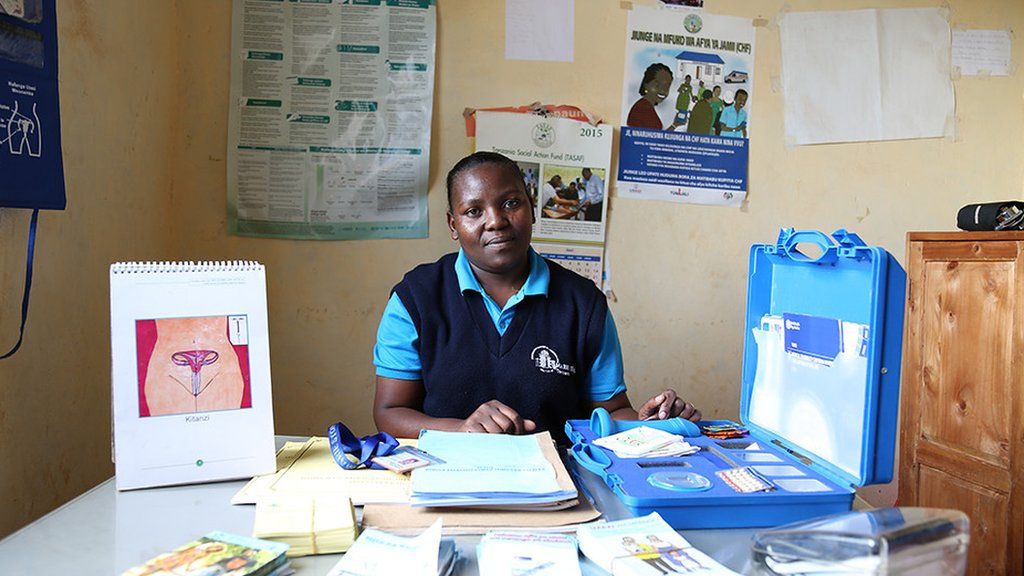
UK aid has supported family planning and women's health services around the world

Former international development minister Baroness Sugg, who resigned last year over the aid cuts, told the BBC that reducing support for family planning would "mean that women in 40 of the world's poorest countries will not have access to the voluntary contraception that will prevent millions of unintended pregnancies and unsafe abortions".

Tory MP Caroline Nokes, who chairs the Women's and Equalities select committee, said the cuts were "really regressive" and "a big mistake".

She told the BBC News Channel the UK needed to maintain its commitment to the poorest and "shouldn't be balancing our books on their backs", adding that MPs did not get to vote on the changes to the aid budget.

The Labour MP Sarah Champion, who chairs the International Development select committee, said she was "appalled and ashamed", describing the decision as "incredibly short sighted".

An FCDO spokesperson said: "The UK is a world leader on international development. In 2020 we were the third biggest aid donor globally, spending £14.5bn.

"The seismic impact of the pandemic on the UK economy has forced us to take tough but necessary decisions, including temporarily reducing the overall amount we spend on aid. We will still spend more than £10bn this year to fight poverty, tackle climate change and improve global health.

"We are working through what this means for individual programmes. Decisions will be announced in due course."

Asked about the cuts, the prime minister said the government had always been clear that it intended to return to spending 0.7% of national income on aid when it was "fiscally prudent to do so".

Earlier this week, the BBC obtained an internal FCDO memo that said funding for global water, sanitation and hygiene bilateral projects would be cut by more than 80%, prompting criticism from a leading charity.


Covid surge in India at level ‘never imagined’, says doctor with family in Delhi

Dr Meenal Viz, a Luton-based doctor with family members in India, said the country is facing a ‘humanitarian crisis’.

Dr Meenal Viz

By Emily Chudy
EVENING STANDARD UK
4/28/2021


The surge in Covid-19 cases in India will soon create a “humanitarian crisis”, a doctor who has family members in Delhi fears.

The country of nearly 1.4 billion has seen a dramatic spike in infections and deaths in recent weeks, overwhelming the national health system and leaving some dying without access to beds or oxygen.

Dr Meenal Viz, a Luton-based doctor, said that the next few weeks could see people “dying at numbers we probably have never imagined”.

Dr Viz, 28, described Delhi, where several family members including her aunt, uncle and cousin have been infected with Covid-19, as one of the country’s “worst-hit places at the moment”

“For a good part of the year, I’ve been trying to stay in touch with my family and especially my elderly grandmother, who hasn’t left the house in a year because she’s so terrified of what could potentially come her way.

“Last year we had lots of relatives who’ve been unwell with Covid; one of them had to actually get admitted into hospital, but luckily that was at a time where there wasn’t so much of a shortage of oxygen or ICU beds.

“I knew a year ago that there was going to be a point, whether a variant would come along, or once everyone could travel, that this would actually be quite deadly to the population in terms of the number of ICU beds, number of respirators… it would be catastrophic.”
HEALTH Coronavirus

She added: “One of my biggest worries is that it took some time for our leaders to put India on the red list for travel.

“I’m not sure why exactly that happened, but the worry is that if that comes here, all the hard work that we put in in the last year in lockdown and isolation and getting vaccinated might not be as fruitful as we’d hoped it would be.”

Dr Viz highlighted the need to deliver the vaccine to developing countries and work together to “help communities and societies”.

“I was reading a few days ago that a lot of companies don’t want to sell the patent in developing countries, because of the business side of things, but it’s actually our duty now as doctors and as scientists,” she told PA.

“We’re not just here to take care of patients, we’re here to help communities and societies come back from this really tragic year.

“There’s a damage that can’t be undone. We really need to think of the next few months, and I feel like a lot of leaders have failed to do that.”

Along with several other healthcare workers, Dr Viz works for Team Halo, a UN-backed initiative that has seen doctors and scientists volunteer to make TikTok videos addressing vaccine hesitancy.

Dr Punam Krishan, a Glasgow GP who is also part of the initiative, said: “My heart is breaking for what’s happening in India. It feels frighteningly close to home that anything can change at any time.

“We are so fortunate to have vaccines available.

“The situation in India highlights just how critical the continued take-up is as the vaccine rollout starts to reach younger generations here.”

The surge in India’s Covid-19 cases was described as “beyond heartbreaking” by Tedros Adhanom Ghebreyesus director-general of the World Health Organisation (WHO).

Dr Maria van Kerkhove, of the WHO Health Emergencies Programme, warned: “This can happen in any country if we let our guard down… The situation can grow if we allow it to and that is why it is important that every single person on the planet knows they have a role to play.”

The UK’s Foreign, Commonwealth and Development Office has said the first of nine plane-loads of life-saving kit, including ventilators and oxygen concentrators, would arrive in New Delhi early on Tuesday, with further consignments due to be dispatched later this week.

GASPING FOR BREATH

As Covid-19 reaches rural India, 
“people are dropping dead like flies”

Tough times.
April 28, 2021

On the evening of April 23, Dhanraj Singh, a 40-year blind man, arrived at the Sikanderpur community health centre in eastern Uttar Pradesh’s Ballia district, complaining of breathlessness. Singh, a resident of the nearby Bansi Bazar village, was running a temperature too. According to the doctor who attended to him, Singh collapsed within “hardly five-seven minutes”. The body was handed over to the family.

In any case, the doctor said he would not have been able to help–the centre has no oxygen supplies, not even for emergencies.

Singh looked like a “suspected Covid case”, but the doctor said he had no way to be sure. The centre has inexplicably stopped testing for a month.

“What can we say, we want to test but we can’t, it is an administrative decision,” said the doctor, who did not want to be identified. “We send people to the block primary health centre where testing is still happening, that is around 5 km-6 km away. It is a tragedy that we are such a big centre and yet we do not test in these times.

The Sikanderpur community health centre caters to almost 200 villages in the area.

Despite the lack of testing, it seems fairly clear that Covid-19 is sweeping through the towns and villages of Ballia, a district bordering Bihar. Even Ballia’s chief medical officer Rajendra Prasad admitted as much. “The spread is a little too much this time,” he said.

 “The rural areas are not spared.”

Uttar Pradesh started experiencing a surge in the first week of April with the number of cases exploding beginning the second week. On April 8, the state reported 8,490 new cases, crossing the previous peak of 7,016 cases registered in September 2020. However, half of these 8,490 confirmed cases were limited to the four districts of Lucknow, Prayagraj, Kanpur and Varanasi.

But things have grown worse from there. On April 25, the state reported nearly 38,000 cases. As of April 27 morning, the state has over 300,00 active cases. Experts say the true numbers are likely to be much higher given the state’s lackadaisical testing.

More ominously, the virus is no longer restricted to urban centres. The beleaguered health infrastructure of rural Uttar Pradesh, which recently saw migrants return home from city hotspots to vote in the panchayat elections, is already overwhelmed, conversations with people, doctors and administrators in multiple districts suggest.
“Gasping for breath”

“People are dropping dead like flies,” said Imran Ahmed.

A local activist from Ballia’s Sikanderpur, he has been helping people get access to oxygen, but rarely with any success. “All their family members have the same story to share: they develop a fever and then all of a sudden they are gasping for breath, but there is no oxygen anywhere.”

The doctor at the Sikanderpur community health centre confirmed as much. “Our daily patient load is 200-250 patients per day and 90% of the cases come with problems of cough, fever and breathlessness,” he said. “The more severe cases who need oxygen, there are eight-ten everyday, we refer to the district hospital.”

But there is no guarantee of oxygen in Uttar Pradesh’s district hospitals either, as Shivakant Pal of Sitapur’s Babupurwa village found out on April 24.

Pal’s mother Ramdevi Pal, 42, had been running a fever since April 20, but that morning she was struggling to breathe.

The family hired an autorickshaw and took her to a nearby private hospital where the doctor asked them to rush to the district hospital located some 30 km away. Ramdevi Pal’s oxygen saturation level had dropped to 35%, the ideal level being above 95%.

There, Shivakant Pal counted 72 beds–and one oxygen cylinder. His mother did not get any oxygen from it. She died gasping for breath at around 6.30 pm. “During the time we were there, at least five people died apart from my mother in the hospital, all of whom had come looking for oxygen. I saw with my own eyes,” said 20-year-old Pal. Officially, Sitapur did not report a single Covid-19 death that day.

That’s because, like Dhanraj Singh of Balia, Ramdevi Pal had never been tested for Covid-19.

Sitapur’s chief medical officer was not available for comment. A person in her office said she was in a meeting and there was “no problem” as such in the district.


SCROLL.INRamdevi Pal died gasping for breath in the Sitapur district hospital. She was never tested for Covid-19.


Desperate for oxygen

Uttar Pradesh’s chief minister Adityanath has repeatedly claimed that there was no shortage of oxygen in the state and even threatened to seize the property of those spreading “rumours” and trying to “spoil the atmosphere.”

Yet, accounts from across the state suggest it is facing a severe oxygen crisis.

For instance, when Sanjay Kushwaha, a resident of a village near the Indo-Nepal border, took his 35-year-old breathless elder brother Manoj Kushwaha to the Kushinagar district hospital on April 18, the doctors administered an injection, but no oxygen. Nor was a Covid-19 test done, Sanjay Kushwaha said, as it was a Sunday. “His condition was not improving so we moved him to a private hospital,” he added.

His brother was immediately put on oxygen at the private hospital, but a Covid-test was not done there either, according to Sanjay Kushwaha.

Manoj Kushwaha stayed on oxygen support for four days at the private hospital—but after that it too ran out of oxygen. “We were told to arrange our own cylinder because the hospital’s stocks had run out,” said Sanjay Kushwaha.

On April 24, the private hospital asked the family to transfer Manoj Kushwaha to the tertiary-care BRD Medical College in Gorakhpur, which according to Sanjay Khushawa refused to admit him. “They told us they are not taking in patients from private [hospitals],” he said.

Manoj Kushwaha was brought back to the Kushinagar district hospital, where died on April 25, bereft of any oxygen support.

Kushinagar’s chief medical officer did not respond to repeated calls seeking comment.


SCROLL.INSanjay Kushwaha, struggling to breathe, died without oxygen support at the Kushanagar district hospital.

‘Arrange your own cylinder’

It is the same story across districts: hospitals are asking relatives to get their own oxygen cylinders.

In Bahraich, when Akshay Srivastava’s mother’s oxygen levels dropped, the family managed to get a cylinder, but under tragic circumstances. An acquaintance, whom the cylinder was meant for, died the previous night. “Well, I don’t know whether there is an oxygen shortage or not, but I can tell you that we entered the district hospital with our own cylinder,” said Srivastava.

On Sunday evening, the family was struggling to get a refill–the district hospital authorities had told them they could not help since all the oxygen was earmarked for the Covid ward and Srivastava’s mother’s Covid test was still pending.

Srivastava’s mother has since been shifted to a Covid ward where family members said the hospital was administering her oxygen.

Bahracih’s chief medical officer Rajesh Mohan Srivastava said there were ample critical care beds in the district. “Our positivity rate is 1.5%,” he said. “People are getting whatever they want.”

But few other officials and doctors in the state seem to share that optimism. A senior official in the state’s health department based in one of the eastern districts, currently down with Covid-19 along with the rest of his family, said he was thanking his stars no one in the family needed oxygen yet.

“It is all about chance, in all probability I could not have managed too,” he said.
Deaths in the villages

Professor Gopal Nath heads the Virus Research and Diagnostic Lab at the Institute of Medical Sciences, Banaras Hindu University, expressed a grim view of the situation. “The community spread is so bad in the villages that people don’t know what to do or where to go,” he said. “Also, testing such huge numbers is difficult because where is the health staff to collect so many samples. To meet the current demand, we need ten times more staff.”

Nath who hails from a village on the Jaunpur-Varanasi border said he shuddered at the prospect of going there anytime soon. “We have done massive blunders,” he said. “The gram panchayat elections should have been postponed because not only did it see big gatherings, the elections have so much prestige attached to them that people from cities came home to vote carrying the virus with them.”

A four-phase panchayat election that began on April 15 is currently underway in Uttar Pradesh. The Allahabad high court refused to postpone it, despite an unprecedented Covid-19 surge in the state.

Nath’s fears about a surge in the wake of the elections seem to be well-founded. Situated on the outskirts of Varanasi town, Ramna was of late seeing four-five deaths each day, of people showing Covid-like symptoms, said Amit Patel whose wife is the elected head of the village

“Last night three people died in my village,” Patel told Scroll.in on Monday. “None of them were tested.”

The primary health centre at Ramna is neither testing people for the virus nor treating people with symptoms. Currently, it is only administering Covid-19 vaccines.

Varanasi’s chief medical officer was not available for comment. A representative from his office said he was attending the funeral of his father who died late Monday evening. The representative, however, did say that the “situation was extremely bad in the district.” “Probably the worst in the whole of Uttar Pradesh,” he said.

In adjoining Chandauli, the District Combined Hospital at Chakia, which serves a largely rural population, is predictably getting overwhelmed. The hospital has 50 critical care beds reserved for Covid patients. “Last year, at any point of time, a maximum of 13-14 beds were occupied,” said Usha Yadav who till recently headed the facility. “Now my staff tells me there are 100 patients with makeshift beds everywhere. So you can imagine what the situation is.”

The burst of cases in the mofussil districts has meant additional pressure on already overburdened health facilities in urban centres like Lucknow. “It is not like we are dealing with patients just from Lucknow–people from the villages are now flooding our hospital,” said Madhulika Singh, who owns a private hospital and a medical college in the city “From Faizabad, Gonda, Raebareli, Basti, Ambedkar Nagar, everyone is coming to Lucknow. There just aren’t enough hospitals there.”

This article first appeared on Scroll.in. We welcome your comments at ideas.india@qz.com.

Covid 19 coronavirus: Indians turn to black market for oxygen as health system crumbles

28 Apr, 2021 

India's Covid-19 death toll has exceeded 200,000 after a record number of 3293 were reported on Wednesday, as patients across India continue to pay extortionate black market prices for oxygen and essential medicines.

The second wave of Covid-19, believed to be driven by more contagious variants, has wreaked devastation on India and the current daily death tolls are thought to be up to 20 times higher than recorded figures.
A Covid-19 patient sits inside a car and breathes with the help of oxygen provided by a Gurdwara, a Sikh house of worship, in New Delhi, India. Photo / AP

Many state governments are not reporting Covid-19 deaths if there is comorbidity, in order to reduce panic and for political point-scoring, while testing shortages mean many Indians are dying before it is confirmed they have the virus.

"I can easily say that around 1000 Covid-19 cases are getting funerals every day. This figure is seven to eight times higher than the official figures," the manager of one crematorium in Delhi told the Daily Telegraph.

Multiple funeral pyres of victims of Covid-19 burn at a ground that has been converted into a crematorium for mass cremation in New Delhi, India. Photo / AP

Despite emergency ventilators and oxygen concentrators arriving from the United Kingdom, as well as Australia, Germany, and Ireland, there continues to be critical oxygen shortages across much of the country. Hundreds of patients are dying outside hospitals and in their homes each day as a result.

Oxygen cylinders are being sold on the black market for over £1000 ($1900) in Delhi, despite India's capital running out of oxygen. In non-Covid times an oxygen cylinder was available for around £60 ($115).

Indians unable to get admitted into a hospital are increasingly being forced to set up a makeshift Covid-19 ICU in their homes with a cylinder and hiring nursing staff to provide care.
A health worker gives cardiopulmonary resuscitation (CPR) to a Covid-19 patient waiting to be attended outside a government Covid-19 hospital in Ahmedabad, India. Photo / AP

However, this option is only open to wealthier Indians and on Wednesday morning, a 15-month-old baby died outside a government hospital in the eastern city of Visakhapatnam, after the hospital was unable to provide oxygen.

The girl's parents told the Indian media they begged staff for admission for 90 minutes before her tragic death and could not afford to purchase oxygen themselves.

On Tuesday, the Delhi high court warned the city's politicians that it would hand over control of the city's affairs to India's nationally ruling Bharatiya Janata Party (BJP), due to an escalating black market for medicines.
Beds lie inside an indoor stadium converted into a Covid-19 treatment centre for emergencies in the wake of the second serge of cases. Photo / AP

One Delhi resident told the Daily Telegraph they had been forced to pay £484 for a vial of remdesivir, despite the World Health Organisation (WHO) stating there is no evidence to suggest it improves survival and the market cap being £19.50.

"The price is going up every day but when your grandma is sick you are desperate and will pay that price," they said, after being told to purchase the drug by a doctor.

Relatives and municipal workers prepare to bury the body of a person who died of Covid-19 in Gauhati, India. Photo / AP

"The issue is that the Indian Government guidelines for drugs like remdesivir says that they may play a role in Covid-19 recovery whereas WHO has a conditional recommendation against it due to insufficient data," explains Dr Jyoti Joshi, the Head of South Asia at the Center for Disease Dynamics, Economics and Policy.

"This potential of use – even without evidence-based benefit – has created a huge demand for use in each patient, causing the public sector and even the private supplies to run out and lead to black marketing."

Relatives of a patient who died of Covid-19, mourn outside a government hospital in Ahmedabad, India. Photo / AP

Criminals have now begun taking advantage of the desperation and in the western city of Pune, four people were arrested for selling liquid paracetamol as seven vials of remdesivir at £334 each.

Many Indian states are currently under curfew to control the spread of the virus and the western state of Maharashtra, home to the financial capital of Mumbai, may extend its lockdown until mid-May.

Meanwhile, nearby Goa will enter into its first lockdown this year from Thursday after a spike in cases.


Wearable  glucose monitors shed light on  progression of Type 2 diabetes in Hispanic adults

Study by Sansum Diabetes Research Institute and Rice University points to new directions for improved diabetes care

RICE UNIVERSITY

Research News

IMAGE

IMAGE: DAVID KERR IS THE DIRECTOR OF RESEARCH AND INNOVATION AT SANSUM DIABETES RESEARCH INSTITUTE. view more 

CREDIT: IMAGE COURTESY OF SANSUM DIABETES RESEARCH INSTITUTE

HOUSTON - (April 29, 2021) - In one of the first studies of its kind, medical and engineering researchers have shown wearable devices that continuously monitor blood sugar provide new insights into the progression of Type 2 diabetes among at-risk Hispanic/Latino adults.

The findings by researchers from Sansum Diabetes Research Institute (SDRI) and Rice University are available online this week in EClinicalMedicine, an open-access clinical journal published by The Lancet.

"The fresh look at the glucose data sheds new light on disease progression, which could have a direct impact on better management," said Rice study co-author Ashutosh Sabharwal, professor and department chair in electrical and computer engineering and founder of Rice's Scalable Health Labs. "An important aspect of our analysis is that the results are clinically interpretable and point to new directions for improved Type 2 diabetes care."

The study builds on SDRI's groundbreaking research to address Type 2 diabetes in underserved Hispanic/Latino communities. SDRI's Farming for Life initiative assesses the physical and mental health benefits of providing medical prescriptions for locally sourced fresh vegetables to people with or at risk of Type 2 diabetes, with a focus on the Hispanic/Latino community. SDRI recently added a digital health technology called continuous glucose monitoring to this research.

Continuous glucose monitors track blood sugar levels around-the-clock and allow trends in blood glucose to be displayed and analyzed over time. The devices typically consist of two parts, a small electrode sensor affixed to the skin with an adhesive patch and a receiver that gathers data from the sensor.

"We found that the use of this technology is both feasible and acceptable for this population, predominantly Mexican American adults," said study co-author David Kerr, SDRI's director of research and innovation. "The results also provided new insights into measurable differences in the glucose profiles for individuals at risk of as well as with noninsulin-treated Type 2 diabetes. These findings could facilitate novel therapeutic approaches to reduce the risk of progression of Type 2 diabetes for this underserved population."

Sabharwal, who is also a co-investigator of the Precise Advanced Technologies and Health Systems for Underserved Populations (PATHS-UP) engineering research center, said, "The collaboration with SDRI aligns with our mission to use technology as an important building block to reduce health care disparities."

"We are excited about the application of digital health technologies for underserved populations as a way to eliminate health disparities and improve health equity," Kerr said. "This opens up potential for a larger number of collaborations to support SDRI's evolving focus on precision nutrition and also the expanded use of digital health technologies for both the prevention and management of all forms of diabetes."

###

Sabharwal is the Ernest Dell Butcher Professor of Engineering in Rice's Brown School of Engineering.

Study co-authors include Souptik Barua of Rice and Namino Glantz, Casey Conneely, Arianna Larez and Wendy Bevier of SDRI.

The research was supported by the Department of Agriculture (2018-33800-28404), the National Science Foundation (1648451), the Hearst Foundation, the Mosher Foundation, Sun Life Financial, the St. Francis Foundation and the Blooming Prairie Foundation.

Links and resources:

The DOI of the EClinicalMedicine paper is: 10.1016/j.eclinm.2021.100853

A copy of the paper is available at: https://doi.org/10.1016/j.eclinm.2021.100853

High-resolution IMAGES are available for download at:

https://sansum.org/images/Lancet-graphic-print.jpg

CAPTION: Sansum Diabetes Research Institute's Farming for Life initiative addresses Type 2 diabetes in underserved Hispanic/Latino communities by assessing the physical and mental health benefits of providing medical prescriptions for locally sourced fresh vegetables to people with or at risk of the disease. In a study of participants who wore continuous glucose monitors (CGMs), devices that measure blood sugar levels around-the-clock, researchers showed CGM data can provide new insights into the progression of Type 2 diabetes among at-risk Hispanic/Latino adults. (Image courtesy of Sansum Diabetes Research Institute)

https:/

Lateral flow testing should not be used as a green light for activities

Study suggests the screening tool is more effective at detecting higher quantities of viral RNA

PLOS

Research News

The United Kingdom government plans to implement mass scale population testing for SARS-CoV-2 infection using Lateral Flow Devices (LFDs), yet the devices' sensitivity is unknown. A study published in the open access journal PLOS Biology by Alan McNally at University of Birmingham, UK, and colleagues suggests while LFDs are highly effective in identifying SARS-CoV-2 in individuals with high quantities of viral RNA present on the test swab, they are inaccurate at diagnosing infections in individuals with lower viral loads.

LFDs are increasingly used to increase testing capacity and screen asymptomatic populations for SARS-CoV-2 infection in mass surveillance programs, yet there are few data indicating the performance of these devices. To determine the sensitivity of LFDs, researchers tested the nasopharyngeal swabs of 8,000 university students using the devices. Next, they validated all positive samples and randomly selected 720 negative samples out of 7,187 negatives for validation.

Using reverse transcription PCR tests, the authors estimated the true COVID-19 prevalence rate and compared it to LFD test results. The researchers were able to determine the LFDs' accuracy rate for different levels of virus, finding that while the test was able to detect infections in samples with higher levels of viral RNA at a 100% accuracy rate, the test's performance dropped significantly in samples with lower viral loads.

The results suggest that for individuals in the very early or very late stages of infection, LFDs are likely to produce a false negative result, pointing to the need for frequent testing. A limitation of the study was that emergent variants and their potential effects on LFDs' sensitivity with asymptomatic cases were not considered within the scope of the study. Independent research suggests that both the UK and South African variants can be reliably detected, but further studies are needed to determine whether the LFDs can detect infections at the same viral loads as with the SARS-CoV-2 strain examined in the current research.

According to the authors, "When used regularly, LFDs can be a highly effective tool in reducing overall community burden. We would strongly recommend that Lateral Flow Device testing is used to screen people at a very regular frequency, and that a negative result should not be used to determine that someone is free from SARS-CoV-2 infection. As such LFDs should not be used as a test-to-do"

###

Research article

Peer reviewed; Experimental study; Humans

In your coverage please use these URLs to provide access to the freely available articles in PLOS Biologyhttp://journals.plos.org/plosbiology/article?id=10.1371/journal.pbio.3001216

Citation: Ferguson J, Dunn S, Best A, Mirza J, Percival B, Mayhew M, et al. (2021) Validation testing to determine the sensitivity of lateral flow testing for asymptomatic SARS-CoV-2 detection in low prevalence settings: Testing frequency and public health messaging is key. PLoS Biol 19(4): e3001216. https://doi.org/10.1371/journal.pbio.3001216

Funding: The PCR testing in this manuscript is funded by the UK Department for Health and Social Care (DHSC) as part of pillar 2 testing, in an award made directly to the University of Birmingham. The provision of LFD tests is funded by DHSC as part of a national student testing program, and funded directly to the University of Birmingham. DHSC have had no role in in study design, data collection and analysis, decision to publish, or preparation of the manuscript.

Competing Interests: The authors have declared that no competing interests exist.

Nearly $500M a year in Medicare costs goes to 7 services with no net health benefits

UNIVERSITY OF CALIFORNIA - LOS ANGELES HEALTH SCIENCES

Research News

FINDINGS

A UCLA-led study shows that physicians frequently order preventive medical services for adult Medicare beneficiaries that are considered unnecessary and of "low value" by the U.S. Preventive Services Task Force -- at a cost of $478 million per year.

The researchers analyzed national survey data over a 10-year period, looking specifically at seven preventive services given a "D" rating by the task force, and discovered that these services were ordered more than 31 million times annually.

BACKGROUND

The U.S. Preventive Services Task Force, an independent panel appointed by the Department of Health and Human Services, makes recommendations on the value of clinical preventive services. Services rated D are considered to have no likely health benefit to specific patients and may even be harmful to them. Overall, the utilization of a variety of services considered unnecessary by the task force drives up health care spending by billions of dollars each year.

METHOD

The researchers examined data covering the years 2007 to 2016 from the annual National Ambulatory Medical Care Survey to determine how often, and at what cost, seven specific grade D services were utilized:

  • Asymptomatic bacteriuria screening in non-pregnant women
  • Cardiovascular disease screening in low-risk adults (rest or stress ECG)
  • Cervical cancer screening in women over age 65 (Papanicolaou or HPV test)
  • Colorectal cancer screening in those over age 85 (colonoscopy or sigmoidoscopy)
  • Chronic obstructive pulmonary disease screening in asymptomatic patients (peak flow or spirometry)
  • Prostate cancer screening in men 75 and older (prostate-specific antigen test)
  • Vitamin D supplementation for fracture preventing in postmenopausal women

The researchers note some limitations to the study. For instance, their method of estimating Medicare spending on these services may lack clinical details and therefore might misclassify some instances of appropriate care as low value.

IMPACT

Medicare could save nearly $500 million per year and protect patients against potential harm by no longer providing reimbursements for these services. Under the Affordable Care Act, the secretary of health and human services is authorized to prohibit payment for services rated D by the Preventive Services Task Force. In February 2021, the U.S. Office of Personnel Management's Federal Employees Health Benefits Program stopped covering (PDF) grade D services.

###

AUTHORS

Dr. Carlos Irwin Oronce, Dr. Joseph Ladapo, Dr. Catherine Sarkisian and Dr. John Mafi, all of UCLA, and Dr. A. Mark Fendrick of the University of Michigan. Dr. Mafi is also a researcher with Rand Corp.

JOURNAL

The study is published in the peer-reviewed Journal of General Internal Medicine.

FUNDING

The study was funded by the Veterans Affairs Office of Academic Affiliations (through the VA/National Clinician Scholars Program); the National Institute on Drug Abuse; the National Heart, Lung, and Blood Institute; the National Institute on Minority Health and Health Disparities; the National Institute on Aging, the UCLA Resource Center for Minority Aging Research/Center for Health Improvement of Minority Elders; the National Center for Advancing Translational Science; the UCLA Clinical and Translational Science Institute; the UCLA Vatche and Tamar Manoukian Division of Digestive Diseases; and the National Institute on Aging's Beeson Emerging Leaders career development award funded this study.

Battling public health misinformation online

UNIVERSITY OF PENNSYLVANIA SCHOOL OF NURSING

Research News

In a novel effort to combat COVID-19 misinformation, a group of women researchers, including nurse scientists from the University of Pennsylvania School of Nursing (Penn Nursing), launched the Dear Pandemic social media campaign in March 2020. It delivers curated, comprehensive, and timely information about the COVID-19 pandemic in a question-and-answer format. Complex topics such as COVID-19 aerosol transmission, risk reduction strategies to avoid infection, and excess mortality are explained in common language and shared widely.

Now with more than 100,000 followers and accounts on Facebook, Twitter, and Instagram, the campaign has an international and multilingual impact offering important public health insight via social media. An article in the journal Public Health Nursing describes how the campaign is combating misinformation about COVID-19.

"Dear Pandemic has demonstrated that consistently publishing high-quality content outside a peer-reviewed venue can result in incredible impact--personal behavior change, informed nodes of trust to further disseminate factual information, and resources for community providers navigating constantly evolving knowledge," says Penn Nursing's Ashley Z. Ritter, PhD, CRNP, the article's lead author.

Dear Pandemic is an example of necessary low-barrier information exchange with the public and a tool for community providers like nurses to stay informed of breaking news. Increased engagement of nurses in endeavors like Dear Pandemic amplifies the impact of collective interdisciplinary efforts to educate the public, contain misinformation, and motivate individual and systemic action, the article explains.

"Now is the time for nurses to flex their communication and trust muscles in both traditional and innovative ways to advance the health of the public through trusted, actionable messaging in addition to exceptional patient care," says co-author Shoshana Aronowitz, PhD, CRNP, a Fellow of the National Clinician Scholars Program.

###

The article "Dear Pandemic: Nurses as Key Partners in Fighting the COVID-19 Infodemic" is available online.

Additional coauthors of the article include Alison Buttenheim, PhD, of Penn Nursing, Lindsey Leininger PhD, of the Tuck School of Business at Dartmouth College; Malia Jones PhD, MPH, of the Applied Population Laboratory at the University of Wisconsin-Madison; Jennifer Beam Dowd PhD, of the Leverhulme Centre for Demographic Science at the University of Oxford; Sandra Albrecht PhD, MPH, of the Department of Epidemiology, Mailman School of Public Health at Columbia University; Amanda M. Simanek PhD, MPH, of the Joseph J. Zilber School of Public Health at the University of Wisconsin-Milwaukee; Lauren Hale PhD, of the Program in Public Health, Department of Family, Population, and Preventative Medicine at the Renaissance School of Medicine at Stony Brook University; and Aparna Kumar PhD, MPH, CRNP, of the College of Nursing at Thomas Jefferson University.

About the University of Pennsylvania School of Nursing

The University of Pennsylvania School of Nursing is one of the world's leading schools of nursing. For the sixth year in a row, it is ranked the #1 nursing school in the world by QS University and is consistently ranked highly in the U.S. News & World Report annual list of best graduate schools. Penn Nursing is ranked as one of the top schools of nursing in funding from the National Institutes of Health. Penn Nursing prepares nurse scientists and nurse leaders to meet the health needs of a global society through innovation in research, education, and practice. Follow Penn Nursing on: Facebook, Twitter, LinkedIn, & Instagram

COMMUNALISM

Study: Older adults found resilience during pandemic through community, human connection

OREGON STATE UNIVERSITY

Research News

Older adults were significantly affected by isolation and stress during Oregon's initial COVID-19 lockdown last spring, but they were also able to find connection and meaning in community, new hobbies and time for themselves, a recent Oregon State University study found.

If resilience is understood as the ability to see positives in the midst of a negative situation, then many of the study's participants demonstrated resilience during that time, the researchers said.

"A lot of times we think about resilience as a personality trait, and it's true that there are some qualities that may help people experience that. But in the end, resilience is something that is shared," said Heidi Igarashi, first author on the study and a recent doctoral graduate of OSU's College of Public Health and Human Sciences. "One of the things that came out in our study was the degree to which the people-connection was really significant."

The study, published in the Journals of Gerontology: Psychological Sciences, surveyed 235 adults ages 51 to 95 about their experiences from April 28-May 4, 2020, when Oregon's statewide stay-at-home order had been in place for about a month.

The online survey asked participants about recent and ongoing difficulties in their lives caused by COVID-19, as well as recent positive experiences.

People shared experiences at the personal, interpersonal and societal levels. Personal difficulties included the stress of constant vigilance around ensuring safety in everyday activities, as well as fear of death and uncertainty about the future. Interpersonal challenges included social isolation, lack of physical contact and fear for loved ones' health. Societal stressors were centered on lack of scientific leadership and concerns for the community at large.

While 94% of participants listed difficulties, roughly 63% shared positive experiences. At the personal level, these included things like trying new projects -- gardening, cooking -- and increased gratitude for the simpler, slower pace of life. Interpersonal joys were found in new friendships or reconnecting with old friends, and in people caring for one another. At the societal level, some noted the benefit to the environment from people driving less and the sense of increased community solidarity.

Older adults took comfort in seeing neighbors and friends taking care of each other, while simultaneously adding to community resilience by looking after friends and neighbors themselves and joining group efforts like mask-sewing drives, said co-author Carolyn Aldwin, the Jo Anne Leonard Endowed Director of the Center for Healthy Aging Research at OSU.

"It's a mistake to think of older adults as just being sort of victims during COVID," Aldwin said. "They're a lot more resilient than we think they are, and they're important for the community."

Many of the survey respondents engaged in Zoom calls with family and friends, enjoyed time spent in nature and finally finished projects that had been sitting in the closet or garage.

Retired folks had a harder time than those who are employed because the lockdown was more disruptive to their routine, including closing off regular volunteer opportunities because of older adults' high-risk status. But some respondents reported feeling relief at being able to focus on themselves for a change, with pursuits like meditation and journaling, rather than spending all their time caring for other people.

The study was conducted via internet survey, which affected response rates; the majority of participants were white, female, retired and highly educated, as opposed to the racial, ethnic and socioeconomic groups that have been hardest hit by COVID-19 infections and death, the researchers said.

But Aldwin cautions against assumptions about resilience among less-advantaged groups. While they may have experienced more loss and financial distress, a key factor in resilience is being able to find purpose in life, which can occur through helping others.

"There's this meaning that's found in caregiving, a reason for living, where our study group often didn't have these demands on them, and they were feeling a lack of sense of meaning," she said. "If you're the person who's holding the family together during this crisis, that's a source of meaning. Clearly we would have seen more loss and more difficulty, but we also might have seen sources of resilience that we didn't see in the study group."

###

Digital mental health interventions for young people are perceived promising, but are they effective

COLUMBIA UNIVERSITY'S MAILMAN SCHOOL OF PUBLIC HEALTH

Research News

April 29, 2021 -An increasing number of digital mental health interventions are designed for adolescents and young people with a range of mental health issues, but the evidence on their effectiveness is mixed, according to research by Columbia University Mailman School of Public Health and Spark Street Advisors.

Computerized cognitive behavioral therapy was found effective for anxiety and depression in adolescents and young people holding promise for increasing access to mental health treatment for these conditions. However, the effectiveness of other digital interventions, including therapeutic video games, mobile apps, or social networking sites, and addressing a range of other mental health outcomes remain inconclusive. The findings are published online in the journal JMIR Mental Health.

According to UNICEF, nearly 1 in 5 adolescents experience a mental health disorder each year but because of barriers to accessing and seeking care, most remain undiagnosed and untreated.

"While there is evidence that some interventions can be effective when delivered digitally, it is still somewhat of a wild west when it comes to digital mental health apps," said Nina Schwalbe, adjunct assistant professor of Population and Family Health at Columbia Mailman School.

The researchers conducted an analysis of 18 systematic reviews and meta-analyses of digital health interventions. In addition to the findings on computerized cognitive behavioral therapy, some therapeutic areas of digital interventions improved outcomes relative to controls for those who are on the waitlist for services, suggesting that the interventions can be used for supplementing and supplanting traditional mental health treatment in cases where access to care is limited or wait times to access are long.

The Investigators point out that the vast majority - over 90 percent - of interventions studied are implemented in high-income countries, with very little information about the background of participants. Therefore, the generalizability of the findings to young people from different socioeconomic, cultural, racial, or other communities is weak. ""It is critical to assess the effectiveness among different racial and ethnic groups and across geographies," observed Susanna Lehtimaki of Spark Street Advisors.

"There was also no indication of costs of developing the tools or long-term benefits," noted Susanna Lehtimaki of Spark Street Advisors. "Moving forward with effective digital health interventions, it will be important to understand how they fit within the public health ecosystem and to what extent they are effective across a range of settings with different resources or populations."

According to the research, digital mental health interventions were well accepted by those 10 to 24 years of age, however, dropout was common and adherence weak. Engagement of a health professional, peer, or parent as part of the digital intervention were found to strengthen the effectiveness.

Schwalbe notes, "In the spirit of "do no harm" it is really important that the excitement over the promise of digital mental health interventions does not cloud the need for high quality effectiveness studies in a range of settings and with a diverse group of youth." She also notes, "it should go without saying that adolescents also need to be consulted in every stage of the design process and while it may be assumed that young people prefer digital services, we need to continually challenge whether this is true."

###

Co-authors include Jana Martic, Spark Street Advisors; Brian Wahl, Spark Street Advisors and Bloomberg School of Public Health; and Katherine Foster, University of Washington.

Columbia University Mailman School of Public Health

Founded in 1922, the Columbia University Mailman School of Public Health pursues an agenda of research, education, and service to address the critical and complex public health issues affecting New Yorkers, the nation and the world. The Columbia Mailman School is the seventh largest recipient of NIH grants among schools of public health. Its nearly 300 multi-disciplinary faculty members work in more than 100 countries around the world, addressing such issues as preventing infectious and chronic diseases, environmental health, maternal and child health, health policy, climate change and health, and public health preparedness. It is a leader in public health education with more than 1,300 graduate students from 55 nations pursuing a variety of master's and doctoral degree programs. The Columbia Mailman School is also home to numerous world-renowned research centers, including ICAP and the Center for Infection and Immunity. For more information, please visit http://www.mailman.columbia.edu.

Research News

New York, NY--Research-practice partnerships (RPPs), long-term collaborations between researchers, policy makers and practitioners, represent an especially promising strategy for making sure that all children benefit from early childhood education, according to a journal released today by Princeton University and the Brookings Institution.

The journal, Future of Children, edited by Daphna Bassok of the University of Virginia and Pamela Morris of New York University's Steinhardt School, argues that RPPs are crucial for solving today's most pressing question in early childhood education--how to deliver high-quality prekindergarten programs at scale.

"Too often there is a disconnect between the questions researchers tackle and the ones that are more urgent and salient for policy makers or practitioners," said Bassok. "The findings from rigorous, well-designed research studies may not be particularly useful for addressing the real-life complexity that educators and policymakers face."

"The idea of research practice partnerships is that through close collaborations, researchers can do work that really helps policy makers address the big problems they are tackling and do the work fast enough to actually inform change," continued Morris. "Our hope is that this journal makes that clear."

RPPs are Designed to Improve Educational Outcomes

RPPs are defined by longevity, mutual decision-making and compromise, and the commitment of both parties to large-scale, systems-level problem solving, rather than a single project or research question.

In study after study, early childhood education programs developed by researchers have shown large benefits, holding out the promise of substantially narrowing the achievement gap between disadvantaged children and their better-off peers. But when cities and states establish large-scale prekindergarten programs, Bassok and Morris noted, the results are often far more modest. The important questions today aren't about whether early childhood education "works," but about how to invest limited resources to improve the quality of large-scale prekindergarten programs, support the early childhood workforce, and reach the children who need the most help.

"Delivering effective early childhood education at scale remains elusive," said Bassok. "Findings from promising research studies rarely make their way into early childhood practice; at the same time, policy and practice decisions are often made without research evidence to guide them."

That's partly because policy makers and practitioners have different priorities and work on different timelines than researchers do. Through collaboration, compromise, and long-term commitment, RPPs can help bridge the gap and produce research that's relevant and useful to policy makers and practitioners, while at the same time offering scholars opportunities for broad and innovative research wouldn't be possible in one-off studies of a single program or topic.

The Journal is a User Manual for Partnerships

Each article in the journal describes how a successful early childhood RPP confronted a major challenge or exploited an unexpected opportunity in the process of working together to create a research or funding agenda, develop measurement tools, take innovation to scale, navigate conflicting timelines, find a balance between academic rigor and feasibility, or build research capacity. In this sense, the journal offers both a user manual and a road map for future partnerships to follow.

"The COVID-19 pandemic has underlined the benefits of RPPs," Morris said. "Where RPPs were in place, researchers used their familiarity with the local context to help ease the sudden transition to remote learning."

For example, as COVID-19 spread in New York City, researchers in an established RPP there quickly assembled materials about remote learning, including a tool kit for teachers citywide, and offered resources to answer policy makers' most urgent questions.

"The pandemic has created large gaps in the services provided to our youngest learners, and opened the door for new collaborations as policy systems race to meet children's needs," continued Morris. "In this context, RPPs can support efforts to rebuild and reimagine early childhood education systems that can help all of our nation's children acquire strong foundations for kindergarten and beyond."

###

Visit http://www.futureofchildren.org to read "Research-Practice Partnerships to Strengthen Early Education" as well as past issues of the Future of Children.

About the Steinhardt School of Culture, Education, and Human Development

Located in the heart of New York City's Greenwich Village, NYU's Steinhardt School of Culture, Education and Human Development prepares students for careers in the arts, education, health, media and psychology. Since its founding in 1890, the Steinhardt School's mission has been to expand human capacity through public service, global collaboration, research, scholarship, and practice. To learn more about NYU Steinhardt, visit steinhardt.nyu.edu.

Disclaimer: AAAS and EurekAlert! are not responsible for the accuracy of news releases posted to EurekAlert! by contributing institutions or for the use of any information through the EurekAlert system.