TACO

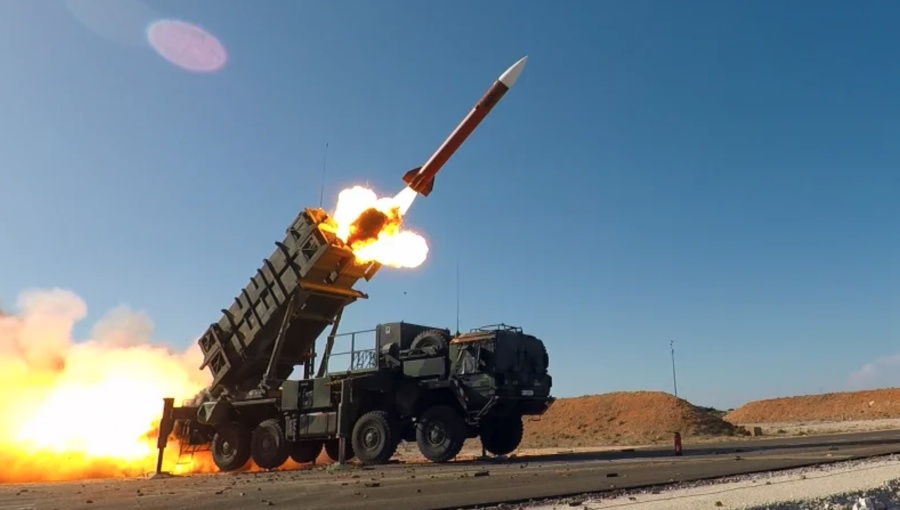
Test firing of a US Patriot missile. Photo Credit: Jason Cutshaw, U.S. Army Space and Missile Defense Command
August 1, 2026
Key Takeaways:
Ukrainian President Zelenskyy continues to press for stronger air defenses as Russian ballistic missile attacks intensify, while both sides remain far apart on the terms of any negotiated end to the war.
Ukraine has stepped up deep drone strikes inside Russia, targeting energy and logistics sites including multiple warehouses of the online retailer Wildberries, disrupting a portion of the company’s capacity.
President Donald Trump said the United States should be “very careful” about granting Kyiv a license to produce Patriot missiles as Ukraine seeks greater air defense capabilities to protect itself against Russia’s daily air attacks.
“These weapons are incredible. We have to be very careful about letting somebody build them,” Trump told journalists at a Cabinet meeting at Camp David on July 31, adding that his administration “have not agreed” to that yet.
“We’re talking about it. But it’s a hard thing to give away that kind of technology,” he said.
The US president’s comments came as Ukrainian President Volodymyr Zelenskyy returned to Kyiv from Washington, where the two leaders had discussed the possibility during what was described as a “good” meeting at the White House.
In recent weeks, Zelenskyy has urged Washington and Kyiv’s European allies to bolster the country’s air defenses amid escalating Russian ballistic missile attacks and help the country prepare for yet another harsh wartime winter.
Moscow has long targeted Ukraine’s energy infrastructure during the coldest months, leaving thousands of people without heat or electricity in freezing temperatures.
Writing on Telegram on July 31 after a phone call with US Vice President JD Vance, Zelenskyy said that “as Russia’s air attacks on our country continue unabated, air defense — specifically Patriot interceptors against ballistic missiles — remains a top priority.”
Reporting from the Ukrainian village of Radushne in the Dnipropetrovsk region on the same day, RFE/RL’s Ukrainian Service captured local residents mourning members of a family that had been almost entirely wiped out by a shocking Russian missile attack the previous day.
“This is an enormous tragedy for all of us, for our entire community,” a neighbor of the family named Luchia said, as six of the family’s 10 members were killed when the missile destroyed their home.
The White House has increasingly sought a negotiated solution to end the war in Ukraine since early 2025, when Trump took office. However, despite a number of meetings held over the past year, Kyiv and Moscow remain far apart in their negotiating terms.
As Kremlin is sticking to its hard-line position, demanding, among other things, full control over Ukraine’s key eastern Donetsk region, during July 31 meeting at Camp David, Trump said both sides “are going to have to make concessions” to end more than four-year-old war.
At the same time, trying to shift the initiative at the battlefield to its side, Ukraine has in recent months stepped up its deep strikes on energy and military infrastructure inside Russia, attacking facilities up to 1,000 kilometers from its border.
On July 31, Ukrainian drones continued to attack targets in Russia, including additional facilities belonging to the country’s largest online retailer, Wildberries, with regional officials and monitoring channels on Telegram reporting strikes in at least two regions.
The retailer said the strikes sparked a fire at its warehouse in the Volgograd region, reporting no injuries following the attack.
Another attack on a Wildberries facility was reported in Zelenodolsk in Russia’s oil-rich Republic of Tatarstan. According to the videos published online, the strike caused minor smoke, but no large-scale fire broke out.
Local residents also reported explosions in Kazan, the capital of Tatarstan, while the republic’s authorities said temporary restrictions had been imposed at airports in the region amid a drone alert, adding no damage or casualties had been reported.
In recent weeks, Ukrainian forces have struck at least 13 Wildberries warehouses across multiple Russian regions amid claims that the company is used to transport military-related goods.
Media reports estimate the Ukrainian drone campaign may have disrupted roughly 10 percent of Wildberries’ total warehouse capacity, potentially affecting the retailer’s logistics network across Russia.
About RFE RL
RFE/RL journalists report the news in 21 countries where a free press is banned by the government or not fully established.
View all posts by RFE RL →
A renewed Iran war would test already-diminished US interceptor inventories, the Center for Strategic and International Studies (CSIS) warned in a July 27 analysis by Mark F. Cancian and Chris H. Park, as combat operations since a ceasefire collapse have drawn further on stocks that were already stretched by the war's first phase.
The story of how those stocks got this low, and what Washington and its allies are now doing about it, runs through three linked developments over the past week.
The depletion: a third of Patriots, half of THAAD
CSIS estimates the US now holds roughly 759-827 Patriot interceptors and 234-278 THAAD interceptors, down from about 2,330 and 452 respectively before the war — a fall of around a third for Patriot and roughly half for THAAD. "The air defense campaign has been largely successful with high — though not perfect — interception rates," CSIS found, but sustaining that rate has required extensive use of interceptors even as Iranian launches have continued at a lower rate than before the ceasefire. Replenishing high-end stocks at this scale could take years, CSIS and outside analysts warn, despite expanded production efforts, leaving limited capacity for other contingencies if demand stays high.
The US Army has awarded Lockheed Martin (NYSE: LMT) a contract worth up to $58.6bn to produce PAC-3 MSE interceptors, converting an earlier one-year, $4.7bn deal into a seven-year procurement plan covering fiscal years 2026-2032, Reuters reported. Lockheed says the funding will let it triple PAC-3 MSE production capacity by the end of 2030 and grow headcount at its Camden, Arkansas plant by half, to around 1,850 jobs from 1,200; the company is investing a further $8bn-9bn through 2030 to modernise more than 20 US facilities, including new munitions centres in Alabama and Arkansas.
Even as it rebuilds its own stockpile, Boeing (NYSE: BA) — which manufactures the PAC-3 seeker head — has refused to license Ukraine to produce the component itself, Die Welt's Christoph Wanner reports. The Ka-band AESA seeker is the central bottleneck in the whole system, and Boeing needs around seven years to triple its own output even with expansion under way; building a full Ukrainian supply chain, factories and licences from scratch would take longer still.
The refusal leaves Kyiv's own request — 300 Patriot missiles before winter, which President Volodymyr Zelenskiy has raised directly with President Donald Trump — competing for a supply that Washington itself is now racing to rebuild for its own coalition commitments in the Gulf.

No comments:
Post a Comment