Dear Doug Burgum: The Soul of Our Nation Is Not for Sale
We cannot allow our shared natural heritage to be bulldozed, defunded, and sold off by men who look at a majestic forest and only see square footage for server racks.
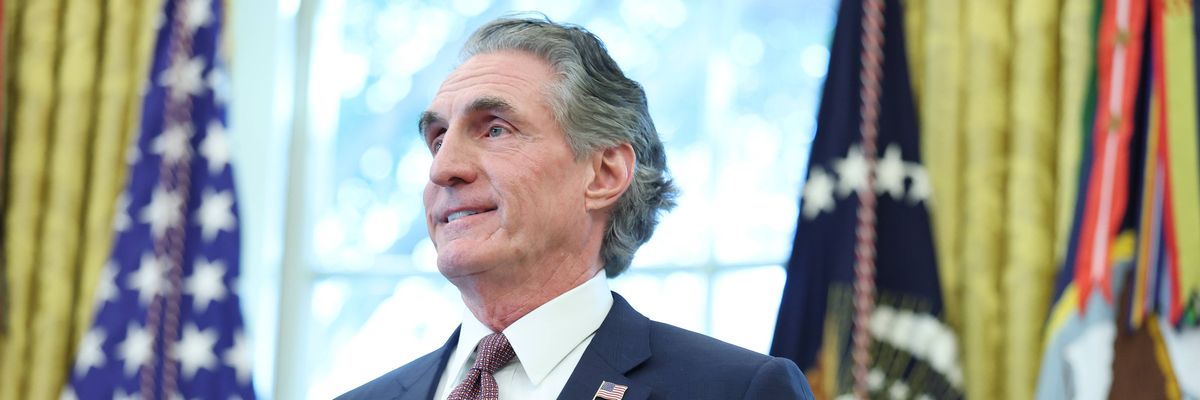 US Interior Secretary Doug Burgum speaks during an event with President Donald Trump in the Oval Office at the White House on October 06, 2025 in Washington, DC.
(Photo by Anna Moneymaker/Getty Images)
Brock Butler
Oct 01, 2026
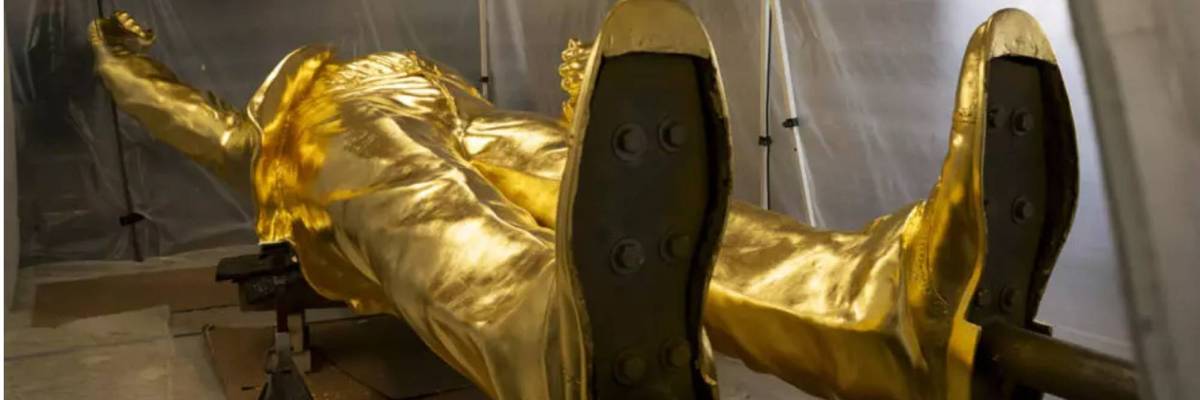
The New York Times summed it up best: it’s a story of “gold statues and staff cuts” disrupting America’s parks
We cannot allow our shared natural heritage to be bulldozed, defunded, and sold off by men who look at a majestic forest and only see square footage for server racks. Protecting our public lands is like protecting the soul of the nation—and that is sorely needed at this time.
And I hope my little musical contribution helps save the soul of our nation, check it out at AllHatDougBurgum.org.
Our work is licensed under Creative Commons (CC BY-NC-ND 3.0). Feel free to republish and share widely.
Brock Butler
Known as the Positive Vibe Technician for Perpetual Groove, Brock “The Rev” Butler founded the band with Adam Perry while attending SCAD (Savannah College of Art and Design) in 1997.
Full Bio >
We cannot allow our shared natural heritage to be bulldozed, defunded, and sold off by men who look at a majestic forest and only see square footage for server racks.
(Photo by Anna Moneymaker/Getty Images)
Brock Butler
Oct 01, 2026
Common Dreams
For most of my life, I’ve had a guitar in my hands and a melody in my head. Traveling this country as a musician, with Perpetual Groove and The Brock Butler Band, has allowed me to share music with people from all walks of life, and I know firsthand the profound power music has to bring us together. Being fortunate enough to travel as much as I have has also meant the opportunity to see a lot of this beautiful country firsthand.
I’ve become more aware and informed about the most corrupt administration in history, and its attempts (failed and successful) to develop public lands with everything from data centers to golf courses (as long as it’s not windmills, I guess?). I grew up in a rural area of Virginia and the thing I enjoy most about my visits home is the tranquility. I find my grounding out under the open sky. I’m lucky that where I grew up remains relatively intact. If a data center got plopped in the woods behind my home I’d be devastated. Everyone should have the opportunity to get grounded in lovely and peaceful places.
The quiet majesty of our public lands should remain unadulterated. I find profound inspiration in the vast, open spaces and the sheer awesomeness of nature. These places are where we go to breathe, to reflect, and to remember who we are. Whether you’re a hiker, a painter, or someone who loves to pick an instrument around a campfire, whatever your reason and intention to get out in nature might be, it should not be limited or compromised by easements and condominiums.
It seems like anything not nailed down is finding its way into the pockets of a handful of billionaires. And this includes our sacred public spaces.
That’s why every day the news is like torture: war, poverty, sickness—and through it all a looting of the public. It seems like anything not nailed down is finding its way into the pockets of a handful of billionaires. And this includes our sacred public spaces. I get told in comment sections often enough I should just stick to music.
So when my dear friend Alex Lawson, executive director of Social Security Works, asked if I was interested in helping to expose Secretary of the Interior Doug Burgum’s ongoing pilfering of our public lands through song, I jumped at the opportunity. Because while music can unite us, sometimes it needs to be wielded to shine a light on the wrongdoings of the powerful. And right now, no one is doing more wrong by our public lands than the man who defines the phrase “All Hat, No Cattle.” That man is US Secretary of the Interior Doug Burgum.
Burgum is treating our sacred landscapes like an industrial lot for tech billionaires. He has earned the moniker “Secretary AI” for his huddles with data center heavyweights, spending the last year taking a string of meetings with data center investors just as his agencies start handing over our lands for development. He is actively plotting to hand over more public lands to AI developers. We are witnessing an aggressive push to build data centers on public lands, with the administration considering more proposals than previously known. You only have to look at the massive facility—five times bigger than Meta’s—planned for public land near Boise, to see the scale of the threat, prompting leaders like Rep. Jared Huffman to lead the charge against this industrialization.
For most of my life, I’ve had a guitar in my hands and a melody in my head. Traveling this country as a musician, with Perpetual Groove and The Brock Butler Band, has allowed me to share music with people from all walks of life, and I know firsthand the profound power music has to bring us together. Being fortunate enough to travel as much as I have has also meant the opportunity to see a lot of this beautiful country firsthand.
I’ve become more aware and informed about the most corrupt administration in history, and its attempts (failed and successful) to develop public lands with everything from data centers to golf courses (as long as it’s not windmills, I guess?). I grew up in a rural area of Virginia and the thing I enjoy most about my visits home is the tranquility. I find my grounding out under the open sky. I’m lucky that where I grew up remains relatively intact. If a data center got plopped in the woods behind my home I’d be devastated. Everyone should have the opportunity to get grounded in lovely and peaceful places.
The quiet majesty of our public lands should remain unadulterated. I find profound inspiration in the vast, open spaces and the sheer awesomeness of nature. These places are where we go to breathe, to reflect, and to remember who we are. Whether you’re a hiker, a painter, or someone who loves to pick an instrument around a campfire, whatever your reason and intention to get out in nature might be, it should not be limited or compromised by easements and condominiums.
It seems like anything not nailed down is finding its way into the pockets of a handful of billionaires. And this includes our sacred public spaces.
That’s why every day the news is like torture: war, poverty, sickness—and through it all a looting of the public. It seems like anything not nailed down is finding its way into the pockets of a handful of billionaires. And this includes our sacred public spaces. I get told in comment sections often enough I should just stick to music.
So when my dear friend Alex Lawson, executive director of Social Security Works, asked if I was interested in helping to expose Secretary of the Interior Doug Burgum’s ongoing pilfering of our public lands through song, I jumped at the opportunity. Because while music can unite us, sometimes it needs to be wielded to shine a light on the wrongdoings of the powerful. And right now, no one is doing more wrong by our public lands than the man who defines the phrase “All Hat, No Cattle.” That man is US Secretary of the Interior Doug Burgum.
Burgum is treating our sacred landscapes like an industrial lot for tech billionaires. He has earned the moniker “Secretary AI” for his huddles with data center heavyweights, spending the last year taking a string of meetings with data center investors just as his agencies start handing over our lands for development. He is actively plotting to hand over more public lands to AI developers. We are witnessing an aggressive push to build data centers on public lands, with the administration considering more proposals than previously known. You only have to look at the massive facility—five times bigger than Meta’s—planned for public land near Boise, to see the scale of the threat, prompting leaders like Rep. Jared Huffman to lead the charge against this industrialization.
- YouTube
But Burgum isn’t just giving away our land; he is deliberately dismantling the infrastructure meant to protect it. After installing right-wing operatives, his Interior Department has blocked tens of millions in national park funds. Meanwhile, his highly touted national park fee scheme has raised only a quarter of what he promised.
The sheer volume of cancelled projects and defunded parks is staggering. Over the past month, local and national news have painted a devastating picture of what Burgum’s tenure looks like on the ground:The administration blocking $25 million in national park projects, while Oregon’s Senators are questioning where the money is even going
The feds rejected over 130 park projects last month, hitting California the hardest
Vital funds have been slashed everywhere: Yellowstone lost $428K for cultural resource projects, and Nevada’s parks are losing millions after federal funding blocks
The Interior Department is actively clawing back NPS money to fund Trump’s projects, allowing national park maintenance work to be sidelined as the “Freedom 250” takes precedence
Utah’s national parks are drowning in a $350 million maintenance backlog without federal help
Public land agency contractors have suffered a devastating $1.3 billion dip
Internally, the agencies are in crisis. The National Park Service is poised for an overhaul, spring buyouts have eaten into the Interior Department’s ranks, and staff fear a major agency shakeup.
But Burgum isn’t just giving away our land; he is deliberately dismantling the infrastructure meant to protect it. After installing right-wing operatives, his Interior Department has blocked tens of millions in national park funds. Meanwhile, his highly touted national park fee scheme has raised only a quarter of what he promised.
The sheer volume of cancelled projects and defunded parks is staggering. Over the past month, local and national news have painted a devastating picture of what Burgum’s tenure looks like on the ground:The administration blocking $25 million in national park projects, while Oregon’s Senators are questioning where the money is even going
The feds rejected over 130 park projects last month, hitting California the hardest
Vital funds have been slashed everywhere: Yellowstone lost $428K for cultural resource projects, and Nevada’s parks are losing millions after federal funding blocks
The Interior Department is actively clawing back NPS money to fund Trump’s projects, allowing national park maintenance work to be sidelined as the “Freedom 250” takes precedence
Utah’s national parks are drowning in a $350 million maintenance backlog without federal help
Public land agency contractors have suffered a devastating $1.3 billion dip
Internally, the agencies are in crisis. The National Park Service is poised for an overhaul, spring buyouts have eaten into the Interior Department’s ranks, and staff fear a major agency shakeup.
The New York Times summed it up best: it’s a story of “gold statues and staff cuts” disrupting America’s parks
We cannot allow our shared natural heritage to be bulldozed, defunded, and sold off by men who look at a majestic forest and only see square footage for server racks. Protecting our public lands is like protecting the soul of the nation—and that is sorely needed at this time.
And I hope my little musical contribution helps save the soul of our nation, check it out at AllHatDougBurgum.org.
Our work is licensed under Creative Commons (CC BY-NC-ND 3.0). Feel free to republish and share widely.
Brock Butler
Known as the Positive Vibe Technician for Perpetual Groove, Brock “The Rev” Butler founded the band with Adam Perry while attending SCAD (Savannah College of Art and Design) in 1997.
Full Bio >
One campaigner warned that the administration’s effort “to legalize most killings of endangered wildlife would essentially mean open season on species already on the brink of annihilation.”
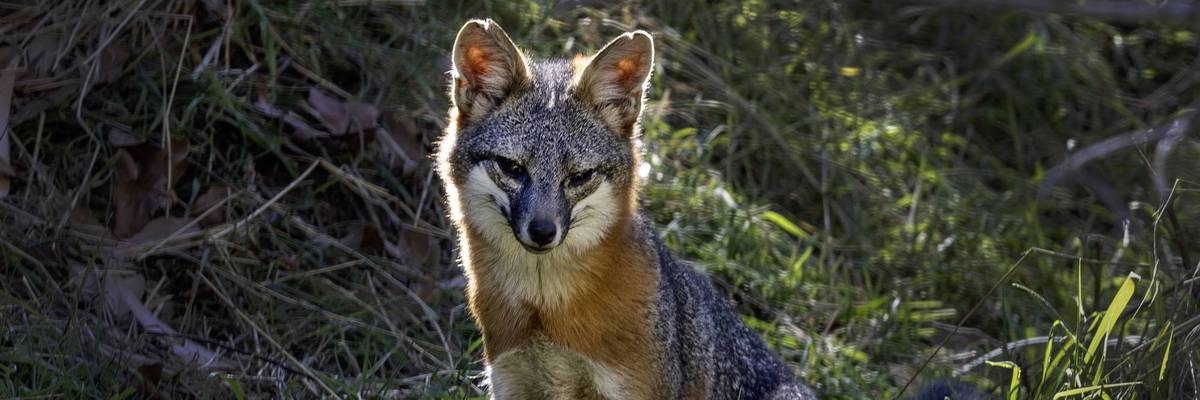
A federally endangered Catalina Island fox watches a mule deer fawn drinking water at a feral cat feeding station behind the Descanso Beach Club in Avalon, Catalina Island, California, on October 31, 2023.
(Photo by Allen J. Schaben/Los Angeles Times via Getty Images)
Jessica Corbett
Oct 01, 2026
COMMON DREAMS
Conservation groups that sued this summer over President Donald Trump’s administration rescinding the regulatory definition of “harm” in the Endangered Species Act updated their legal challenge on Thursday after yet another attack on the landmark law.
The coalition’s supplemental complaint explains to a federal court in Seattle that since the lawsuit was first filed in July, administrative leaders have directed various agencies to interpret the ESA to mean that only intentionally killing or wounding a protected species is illegal—a shift that critics condemned as “an all-out war on America’s wildlife.”
As the “harm” rescission took effect on September 14, US Fish and Wildlife Service Director Brian Nesvik issued a related memorandum with that interpretation—effectively allowing “incidental” killing. John Luce, general counsel at the National Oceanic and Atmospheric Administration, sent the same directive to eight sections of NOAA.
These memos “violate the plain language and overarching purpose of the ESA; they also lack any reasoned basis, are arbitrary and capricious, and failed to comply with applicable notice-and-comment rulemaking requirements,” the new filing argues, citing the Administrative Procedure Act. The coalition is asking the court to vacate the memos and bar the agencies from using their interpretations of the 1973 law.
“This despicable effort to legalize most killings of endangered wildlife would essentially mean open season on species already on the brink of annihilation,” said Noah Greenwald, endangered species co-director at the Center for Biological Diversity, in a Thursday statement. “It’s the most serious attack on imperiled animals since the Endangered Species Act was passed more than 50 years ago.”
“Without protection against the daily assaults of our modern world, Florida manatees, spotted owls, snowy plovers, and so many other animals that bring color to our world won’t stand a chance,” he warned, noting that “habitat destruction is the single biggest cause of species endangerment and extinction” in the United States and beyond.
Greenwald added that “with this destruction, the perils faced by plants and animals have grown exponentially. Such peril doesn’t come down the barrel of a gun, but it’s still a deadly threat, and the Endangered Species Act can and must protect our imperiled wildlife from this kind of careless killing.”
In addition to the center, the coalition behind the case includes Columbia Riverkeeper, Conservation Law Foundation, Conservation Northwest, Friends of the Wild Swan, Oregon Wild, Sierra Club, Swan View Coalition, and WildEarth Guardians, with legal representation by Earthjustice.
After the memos were exposed last month, Earthjustice attorney Ben Levitan declared that “the government’s new legal position is a prescription for extinction.”
“It says that as long as you claim you didn’t mean to kill an endangered species, the law can’t and won’t stop you,” he stressed. “That’s ridiculous—and a totally illegal, active misreading of the Endangered Species Act. We’ll see the Trump administration in court about this.”
Groups Call Senate Permitting Deal a ‘Blatant Giveaway to Big Oil and Big Tech’
“If it comes to pass, this deal would bulldoze America’s most important wildlife law,” said one campaigner.
“If it comes to pass, this deal would bulldoze America’s most important wildlife law,” said one campaigner.
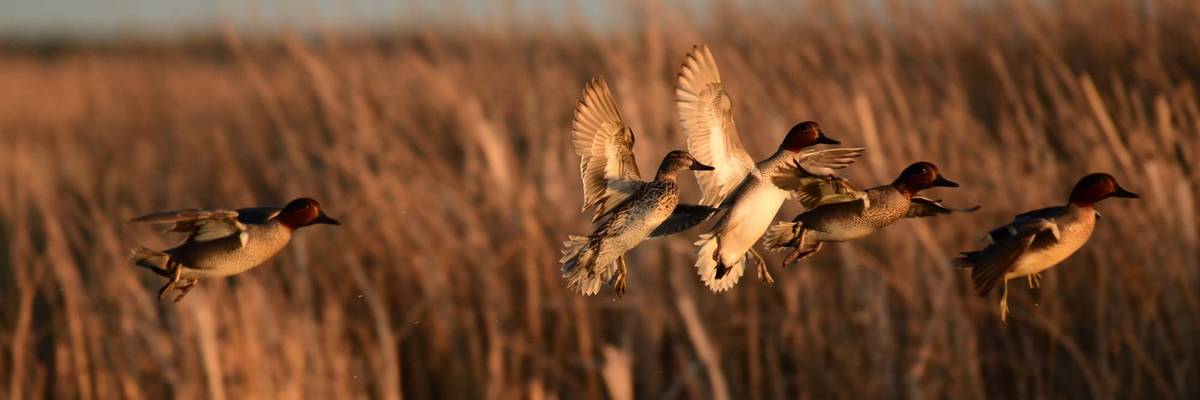
Green-winged teals are seen flying over water at Seedskadee National Wildlife Refuge in Wyoming on April 25, 2019.
(Photo by Tom Koerner/US Fish and Wildlife Service/flickr/cc)
Brett Wilkins
Sep 30, 2026
COMMON DREAMS
A bipartisan Senate proposal to overhaul federal permitting rules drew fierce opposition Wednesday from environmental and wildlife advocates, who warn that the legislation could significantly weaken the Endangered Species Act and other key protections in service of boosting President Donald Trump’s pro-fossil fuel and artificial intelligence agenda.
Senate negotiators—chiefly Democrats Martin Heinrich (NM) and Sheldon Whitehouse (RI) and Republicans Shelley Moore Capito (W.Va.) and Mike Lee (Utah)—reportedly reached an agreement Monday on the text of a sweeping permitting package intended to speed construction of energy and infrastructure projects.
While the full legislative text of the “Bipartisan American Affordability and Jobs Act of 2026” had not been publicly released as of Wednesday, reported provisions have prompted alarm among conservation groups, who warn that the proposal would weaken endangered species protections, shift federal authority and responsibility to states, limit scientific review and judicial oversight, and exempt some projects from key environmental consultations.
“If it comes to pass, this deal would bulldoze America’s most important wildlife law,” Defenders of Wildlife president and CEO Andrew Bowman said Wednesday. “We can build the infrastructure America needs without sacrificing the wildlife we have a responsibility to protect and that Americans cherish. Development should not come at the expense of science, accountability, or the ability of America’s most imperiled wildlife to survive.”
Oil Change International called the proposal “a blatant giveaway to Big Oil and Big Tech.”
“This ‘dirty deal’ threatens to raise electricity prices for working families by accelerating the buildout of energy-guzzling AI data centers and liquefied natural gas export projects,” said Oil Change International US campaigns manager Collin Rees. “Our recent research shows that the Trump administration’s support for reckless AI development and greater gas exports drives up energy costs for households.”
Brett Hartl, government affairs director at the Center for Biological Diversity (CBD), said that “this is a climate kill shot that condemns our most vulnerable communities to suffer decades more fossil fuel pollution.”
“It’s absurd to ensure our planet chokes with greenhouse gases, gut endangered species protections, and eviscerate the Clean Water Act for what seems to be a nearly meaningless victory against Trump’s war on offshore wind,” Hartl continued. “The minor benefits for renewable energy corporations are massively dwarfed by the gifts to the fossil fuel industry.”
“If this grotesque legislation becomes law, the paltry increases in renewable energy will be instantly devoured by AI data centers,” he added. “The only winners here are Elon Musk, Mark Zuckerberg, tech oligarchs, and the shareholders of fossil fuel companies.”
According to CBD:
Today’s package contains numerous provisions that lock in thousands of fossil fuel projects, including oil and gas pipelines, [liquefied natural gas] export terminals, and expanded fossil fuel drilling onshore and offshore approved by President Trump over the past two years. It also ensures that future fossil fuel pipelines and methane gas-generated electricity can never be challenged in court.
Additional provisions gut parts of the Clean Water Act, including the Section 401 authority of states to protect their rivers and streams from the impacts of building pipelines and the [Environmental Protection Agency’s] Section 404(c) permit veto authority, which has been used to stop projects like the Pebble Mine in Alaska.
The legislation weakens the National Historic Preservation Act and Tribal consultations, leaving most Tribal nations with no meaningful way to protect their sovereignty when faced with potential fossil fuel projects on their lands.
Furthermore, CBD noted, “the legislation guts the Endangered Species Act by allowing states to take over the Section 7 consultation process with minimal safeguards, turning one of the law’s strongest provisions into a state-run rubber stamp of dangerous projects.”
The Western Environmental Law Center described the proposal as a “five-alarm fire,” warning that it could weaken the Clean Water Act, Endangered Species Act, [National Environmental Policy Act], and other safeguards.
“The permitting deal is a betrayal of public lands, water, and wildlife, and environmental justice values that Westerners depend on,” said Erik Schlenker-Goodrich, the group’s executive director, who warned that the measure could ultimately “hobble the ability of future administrations to enact an ambitious climate and conservation agenda.”
Hartl called out Democrats Heinrich and Whitehouse for “giving away our most cherished environmental laws based on fantastical models that project a renewable energy utopia.”
“They’re rewarding a ruthless fossil fuel industry that will always put its quarterly profits ahead of a livable planet and future generations,” he said. “Trump promised fossil fuel companies that he’d do everything in his power to assist them in his second term, and Sen. Heinrich and Sen. Whitehouse seem hell-bent on helping Trump fulfill that promise.”
Bowman contended that “Congress should be looking for ways to make permitting more efficient rather than a Trojan horse to weaken the Endangered Species Act.”
“Efficiency and conservation are not opposing goals,” he added. “A durable permitting bill should deliver both. Congress should not lock in permanent damage to the Endangered Species Act simply to get a deal today.”
Conservationists Vow Court Fight as DHS Lifts Pause on Big Bend Border Construction
“We won’t let them destroy the wildest place in Texas without a fight,” the Center for Biological Diversity vowed.
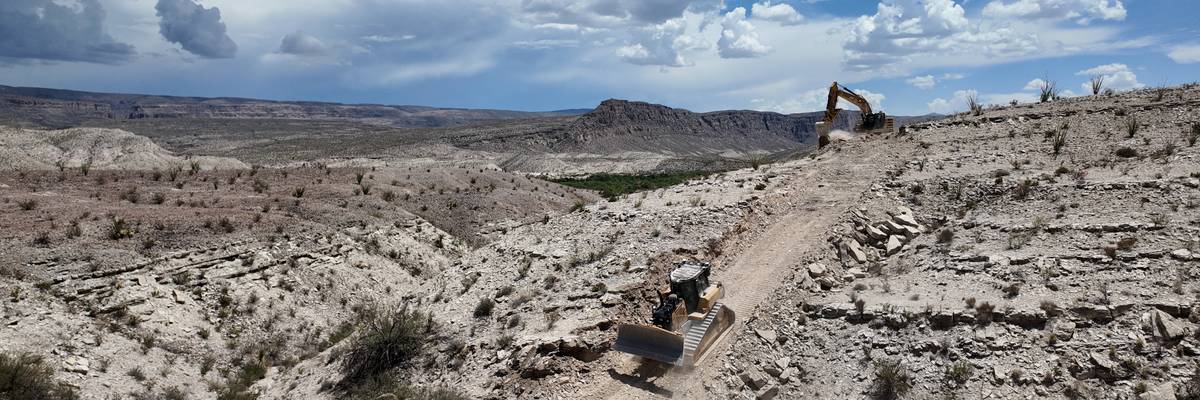
Construction of the Trump administration’s border barrier project procedes at Mariscal Mountain in Big Bend National Park in Texas on August 15, 2026.
(Photo by Laiken Jordah/Clenter for Biological Diversity)
Brett Wilkins
Sep 30, 2026
COMMON DREAMS
The Trump administration on Wednesday allowed a temporary pause on border construction in and around Big Bend National Park in Texas to expire, prompting renewed vows from conservationists and other opponents to fight the contentious project in court.
Laiken Jordahl, the national public lands advocate at the Center for Biological Diversity (CBD), posted a court document stating that US Customs and Border Protection (CBP)k “will lift the pause on ground-disturbing activities” related to the Department of Homeland Security’s (DHS) plan to build border barriers and other destructive infrastructure across one of the most remote and environmentally sensitive stretches of the US-Mexico border.
The government said Tuesday in a court filing that CBP is “actively considering adjustments” to the project “that would reduce its scope and avoid or minimize potential impacts, based on input received from the National Park Service and other stakeholders.”
However, those possible changes did not assuage opponents of the project, who span the political spectrum.
“We are disappointed, and urge the Department of Homeland Security to extend this pause,” Emily Thompson, executive director of the Coalition to Protect America’s National Parks, said Wednesday. “Continuing with construction of border barriers, roads, and associated infrastructure inside Big Bend National Park will do unprecedented damage to the park.”
Thompson continued:
Big Bend National Park stands out for its unique desert landscape. With more nesting bird species than any other national park, towering canyon walls, and the largest international dark sky reserve in the entire world, Big Bend is an integral addition to our nation’s natural heritage. The Trump administration’s plan to build a border wall through the park threatens all of this, heightening flood risk, inundating the skies with lights, and cutting off migration patterns for wildlife. Building in Big Bend would be mutilating an extraordinary landscape at a massive cost to the taxpayer—with little ultimate benefit.
Bob Krumenaker, chair of Keep Big Bend Wild and a former Big Bend National Park superintendent, asserted that “border security already works” in the park “without the need for intrusive construction.”
“The Border Patrol, the National Park Service, and local sheriffs already operate an effective surveillance system with ground and aerial patrols and unobtrusive, wireless sensors,” he noted. “The rugged terrain, huge distances, and harsh desert weather in the national park and in Mexico across the Rio Grande make this the least active section of the entire southern border for illegal crossings.”
CBD and other plaintiffs are already seeking a preliminary injunction in federal court. US District Judge Kathleen Cardone—an appointee of former President George W. Bush—is scheduled to hear testimony and evidence Friday in El Paso on the request to halt construction while the groups’ lawsuit proceeds. The plaintiffs argue that the Trump administration unlawfully waived dozens of federal laws to accelerate construction.
Indigenous peoples and their advocates have criticized DHS for waiving laws, including the Native American Graves Protection and Repatriation Act and the Archaeological and Historic Preservation Act, to enable the project’s construction.
In a statement issued Wednesday, CBD described some of the damage already done by construction in service of Trump’s deadly immigration crackdown:
Bulldozers started tearing into Big Bend National Park near the iconic Santa Elena Canyon in early August and were documented plowing new routes for vehicle barriers into both the east and west sides of Mariscal Mountain. Contractors have stockpiled heavy equipment across the Big Bend region, where staging yards have been cleared, worker camps built, and water wells drilled.
“We’ll be in court... in El Paso demanding a permanent halt to the destruction,” CBD said. “We won’t let them destroy the wildest place in Texas without a fight.
“We won’t let them destroy the wildest place in Texas without a fight,” the Center for Biological Diversity vowed.
Construction of the Trump administration’s border barrier project procedes at Mariscal Mountain in Big Bend National Park in Texas on August 15, 2026.
(Photo by Laiken Jordah/Clenter for Biological Diversity)
Brett Wilkins
Sep 30, 2026
COMMON DREAMS
The Trump administration on Wednesday allowed a temporary pause on border construction in and around Big Bend National Park in Texas to expire, prompting renewed vows from conservationists and other opponents to fight the contentious project in court.
Laiken Jordahl, the national public lands advocate at the Center for Biological Diversity (CBD), posted a court document stating that US Customs and Border Protection (CBP)k “will lift the pause on ground-disturbing activities” related to the Department of Homeland Security’s (DHS) plan to build border barriers and other destructive infrastructure across one of the most remote and environmentally sensitive stretches of the US-Mexico border.
The government said Tuesday in a court filing that CBP is “actively considering adjustments” to the project “that would reduce its scope and avoid or minimize potential impacts, based on input received from the National Park Service and other stakeholders.”
However, those possible changes did not assuage opponents of the project, who span the political spectrum.
“We are disappointed, and urge the Department of Homeland Security to extend this pause,” Emily Thompson, executive director of the Coalition to Protect America’s National Parks, said Wednesday. “Continuing with construction of border barriers, roads, and associated infrastructure inside Big Bend National Park will do unprecedented damage to the park.”
Thompson continued:
Big Bend National Park stands out for its unique desert landscape. With more nesting bird species than any other national park, towering canyon walls, and the largest international dark sky reserve in the entire world, Big Bend is an integral addition to our nation’s natural heritage. The Trump administration’s plan to build a border wall through the park threatens all of this, heightening flood risk, inundating the skies with lights, and cutting off migration patterns for wildlife. Building in Big Bend would be mutilating an extraordinary landscape at a massive cost to the taxpayer—with little ultimate benefit.
Bob Krumenaker, chair of Keep Big Bend Wild and a former Big Bend National Park superintendent, asserted that “border security already works” in the park “without the need for intrusive construction.”
“The Border Patrol, the National Park Service, and local sheriffs already operate an effective surveillance system with ground and aerial patrols and unobtrusive, wireless sensors,” he noted. “The rugged terrain, huge distances, and harsh desert weather in the national park and in Mexico across the Rio Grande make this the least active section of the entire southern border for illegal crossings.”
CBD and other plaintiffs are already seeking a preliminary injunction in federal court. US District Judge Kathleen Cardone—an appointee of former President George W. Bush—is scheduled to hear testimony and evidence Friday in El Paso on the request to halt construction while the groups’ lawsuit proceeds. The plaintiffs argue that the Trump administration unlawfully waived dozens of federal laws to accelerate construction.
Indigenous peoples and their advocates have criticized DHS for waiving laws, including the Native American Graves Protection and Repatriation Act and the Archaeological and Historic Preservation Act, to enable the project’s construction.
In a statement issued Wednesday, CBD described some of the damage already done by construction in service of Trump’s deadly immigration crackdown:
Bulldozers started tearing into Big Bend National Park near the iconic Santa Elena Canyon in early August and were documented plowing new routes for vehicle barriers into both the east and west sides of Mariscal Mountain. Contractors have stockpiled heavy equipment across the Big Bend region, where staging yards have been cleared, worker camps built, and water wells drilled.
“We’ll be in court... in El Paso demanding a permanent halt to the destruction,” CBD said. “We won’t let them destroy the wildest place in Texas without a fight.