Showing posts sorted by date for query Mutual Aid. Sort by relevance Show all posts

Sunday, August 16, 2026

 Poll Demonstrates Nearly Half of Young Americans Back Democratic Socialism


Nearly 4 out of 5 young voters described the US economy using negative terms.
August 14, 2026

Members of the Democratic Socialists of America gather outside of a Trump owned building on May Day on May 1, 2019 in New York City.Spencer Platt / Getty Images

Anew poll focusing on young people’s political views finds that, by a two-to-one margin, they tend to support rather than oppose the idea of democratic socialism.

The CNBC/Generation Lab poll published earlier this week, which focused on the opinions of Americans between the ages of 18-34, asked respondents if they had favorable views of the political and economic system of governance. Only 23 percent of those surveyed said they had an unfavorable view of democratic socialism, while 46 percent said they had a favorable opinion of it.

Souring views of the current capitalist economy may help to explain why this younger group of Americans is more likely to back the idea of democratic socialism than their older cohorts. Asked how they would describe the current state of the U.S. economy, 78 percent said it is either “bad,” “very bad,” or “couldn’t be worse.” Only 17 percent said it was “pretty good,” while a dismal 5 percent said it was “great” or “couldn’t be better.”

What’s more, young Americans are not confident that the economy is going to improve anytime soon, with 50 percent of respondents agreeing that the economy is only going to get worse in the future. Only 22 percent said they thought it would get better.

Changing views on democratic socialism come as more progressive Democrats, including those espousing democratic socialist viewpoints, are challenging establishment candidates or incumbents across the country.

For example, in Wisconsin this week, state Rep. Francesca Hong (D), a self-avowed democratic socialist, lost a gubernatorial primary election against Milwaukee County Executive David Crowley (D) by just 3,796 votes, out of more than 792,000 ballots cast in the August 11 race. Hong’s challenge to an establishment candidate in a state that is traditionally “purple” indicates that voters overall — not just young ones — are giving more consideration to democratic socialists.

Indeed, a CNBC survey published last month found that democratic socialism was more appealing to voters than President Donald Trump’s MAGA movement. The poll, which asked voters which political labels would make them more likely to support a candidate, found that 32 percent said they were more supportive of candidates self-identifying as democratic socialists, compared with 27 percent who said the same of candidates who identified as MAGA supporters.

Additionally, a Working Families Party/Justice Research Group poll in July also found openness from swing district voters to back candidates pushing for swift change, rather than those pushing for slow, incremental reforms, with 58 percent of respondents agreeing with the statement, “government needs leaders who will challenge the political establishment and fight for major change.” Nearly two-thirds of voters in that poll (64 percent) said they also agreed with the statement that “the country’s political and economic systems need fundamental change, not just small adjustments,” signaling a readiness for bold reforms like those pushed by democratic socialists.

Source: Jacobin

Generation Z is often described as distracted, cynical, politically inconsistent, or allergic to institutions. But this description misses the deeper rupture. What distinguishes this generation is not a lack of politics but the collapse of faith in the institutions and rules that once gave politics, work, and adulthood a recognizable structure.

For decades, capitalism promised young people a sequence: education would lead to work; work would lead to stability; stability would lead to a home, a family, and a life with some measure of dignity. This promise was never distributed equally. For many, it was always fragile. But for Generation Z, it has now become almost impossible to believe in.

Across very different societies, young people are entering adulthood through the same narrow door. Behind that door lie precarious jobs, unstable housing, student and consumer debt, algorithmically managed labor markets, climate anxiety, and political institutions that appear either too weak or too captured to change anything meaningful.

This generation does not trust parties, leaders, or institutions. Yet it also votes, boycotts, protests, organizes online, quits jobs, and channels its anger through digital platforms. Most importantly, it can turn everyday life into a political battleground. Its politics is fragmented, fast moving, leaderless, and often reabsorbed by the very markets it rejects. But it is politics nonetheless.

In interviews conducted for this article, Guy Standing, Emre Erdoğan, Christian Fuchs, and Anu Muhammad described different parts of the same crisis: the making of a generation with no secure occupational future, no stable social contract, and no convincing reason to believe that capitalism can still deliver on its promises.

A nineteen-year-old university student living in Istanbul puts it more bluntly: “I don’t have an ideology. I just have a world order that I hate.”

That sentence captures something larger than youthful anger. What we are witnessing is a generational rupture. Generation Z has not withdrawn from politics. It is simply disillusioned with the old language and model of politics. And it has grown up in a world where old political vocabularies can no longer make sense of the insecurity it faces.

Generation Z does not exist outside class relations. Changes in capitalism have reshaped the class structure and the conditions of work, and Gen Z has come of age within these new relations. What we describe as “Gen Z politics” should not be understood as the politics of a homogeneous generation but as a generational expression of a broader transformation in class relations.

A Generation Without an Occupational Future

The British economist and labor theorist Guy Standing has spent years describing the rise of a new class: the “precariat.” This is not simply a group of people with bad jobs. It is a class shaped by insecurity itself: unstable employment, irregular income, debt, the absence of occupational identity, and the constant requirement to retrain, rebrand, and remain available for work that may never become secure.

Standing understands the contemporary economy as “a globalized rentier age”: “We are living in the globalized rentier age of capitalism; income, wealth, and power are increasingly flowing to those who own wealth and to elites who own the main forms of property,” he says. “The vast majority of young adults will face unstable and insecure jobs. They will live with low and uncertain wages and will be in almost constant debt.”

For Standing, the issue is not merely that young people have worse labor conditions than previous generations. The issue is that each new generation is being drawn more deeply into the precariat than the one before it.

As he puts it, “Each new generation is more involved in this class than the previous one.” For standing, the work possibilities for young people are so bleak that they have “no occupational future.”Millions are online; everyone is visible; everyone is producing something. Yet workers often face the market alone.

“Individuals in the precariat are also forced to constantly search for jobs, retrain themselves, and find new sources of income,” Standing says. “Most of these activities are unpaid and invisible. Therefore, people cannot develop an occupational identity and cannot position themselves within a stable career line.”

This is the collapse of one of capitalism’s classic promises. The old story about work in liberal democracies was that it would give young people not only wages but direction, belonging, and a future. In the new labor market, work often gives them only exhaustion, uncertainty, and debt.

Standing also emphasizes that this condition produces bodily and psychological consequences. Chronic uncertainty does not remain outside the body. It turns into stress, illness, and fear.

“Especially young people, but everyone in the precariat generally, has to cope with chronic uncertainty,” he says. “This means facing ‘unknown unknowns’; that is, there is neither robustness to withstand shocks nor resilience to recover. The individual consequences of this are debt, stress, and increasing illnesses.”

This is not a temporary labor market problem. It is a political condition. When young people can no longer imagine a stable future through work, they also begin to lose faith in institutions that still speak as if such a future exists.

The Rules No Longer Work

Economic insecurity alone does not explain Generation Z’s politics. What makes the present rupture deeper is the collapse of the belief that society has clear and legitimate rules.

Political scientist Emre Erdoğan, whose research focuses on social trust, youth, and political behavior, describes this as a broader crisis of the postwar social order. Erdoğan argues that young people’s insecurity reflects the breakdown of the institutions that once gave capitalism legitimacy. “The post-1945 consensus has ended,” Erdoğan says.

“The United Nations order has ended. The system established by the World Bank, IMF, and World Trade Organization has collapsed. The welfare state has collapsed. What we call the safety net no longer exists. When you fall, who will hold you? The answer is: family, relatives, fellow countrymen. Not the state.”

Standing’s analyses explain the economic condition, and Erdoğan explains why it becomes political. Young people are not only struggling to find work. They are also struggling to understand which rules they are supposed to follow.

“You can no longer say to young people, ‘If you work hard, you will succeed,’” Erdoğan says. “We do not know how to succeed. People increasingly do not believe in the rules. There is no consensus on what is required to be successful in this society. Young people struggle not only to find jobs but to understand what rules they should follow. This uncertainty, over time, turns into a perception of structural injustice rather than a feeling of individual failure. And this perception feeds anger.”

This distinction matters. If young people believed their problems were merely personal failures, the result might be shame, withdrawal, or quiet despair. But when insecurity is understood as structural injustice, anger becomes political.Around the world, Generation Z has repeatedly been at the forefront of political upheaval.

A Greek Erasmus student in Istanbul describes this distrust starkly: “If I ever vote, it will probably be in protest or to destroy something, not because I trust some politician.”

This is not merely cynicism. It is an expression of anomie: a condition in which the rules of social life lose their legitimacy. The young person may still vote. They may still participate. But the act is no longer rooted in trust. It becomes an act of refusal.

Erdoğan has a single word for this condition: “resentment.”

In Turkey, this resentment appeared powerfully during the Gezi Park protests in 2013, when an environmental protest grew into a mass anti-government movement. While Gezi predates the political world of Gen Z, the resentments that Erdoğan identifies have since reappeared in more recent forms of protests: student movements, urban protests, online campaigns, consumer boycotts, and leaderless acts of refusal.Political expression is emerging in forms that older institutions struggle to read.

Around the world, Generation Z has repeatedly been at the forefront of political upheaval. This is not due to a shared generational ideology; it is a result of the shared experience of precarity and institutional distrust. From climate strikes to the women-led uprising in Iran to youth mobilizations in Bangladesh and Nepal to India’s recent “Cockroach” protests, Gen Z has repeatedly emerged as a disruptive force in moments of political crisis.

Anger is not new. What is new is its speed, its mobility, and the way it travels across streets, screens, workplaces, campuses, and markets.

Digital Capitalism and the New Terrain of Struggle

It is tempting to say that social media is the driver of Gen Z’s politics. But that would be too simple. Digital platforms did not create exploitation, debt, insecurity, or police violence. But they have changed the terrain on which these conflicts are seen, organized, accelerated, and monetized.

Media theorist Christian Fuchs, whose work focuses on digital labor and capitalism, argues that platforms should be understood not as the cause of contemporary uprisings but as mediators of social struggle under digital capitalism:

Social media is not the cause of contemporary protests, rebellions, and revolutions. Given that young people are highly proficient in technology, it is natural that they use all kinds of digital media in protest communication, coordination, and organization. Precarious labor is certainly an important factor in some Generation Z protests. However, we cannot say that these protests are ‘created’ by social media platforms. In digital capitalism, these platforms do not create exploitation and social struggles but rather mediate them.

The politics that have emerged among many members of Gen Z cannot be reduced to TikTok, Instagram, X, or any other platform. But they also cannot be understood outside them. Generational cohorts do not erase class. Rather, generational experience shapes the conditions under which class relations are experienced. Digital media has become one of the main spaces where Gen Z’s anger circulates, where protest is organized, where identities are formed, and where even opposition can be turned into content, data, and profit.

The contradiction lies in the conditions under which many young people now work. Even those who reject the system can be drawn into speculative digital markets, influencer economies, platform labor, and algorithmic competition. They may protest capitalism in the morning and be forced to perform for its platforms at night.

Digital capitalism does not stand outside young people’s lives. It structures their work, their communication, their attention, and increasingly their sense of self. Fuchs describes digital capital as global, while digital workers are local, isolated, and fragmented.

The problem is not only that platform labor is poorly paid. It is also that it is organized in ways that make collective power harder to build.

“Digital labor is often individualized and fragmented,” Fuchs says. “Workers operate disconnected from each other, and the possibilities for collective organization are weak. This makes them both more fragile and more easily exploitable.”

In other words, the digital economy creates a workforce that is constantly connected but politically separated. Millions are online; everyone is visible; everyone is producing something. Yet workers often face the market alone.

Fuchs argues that if capital has globalized, labor must also organize globally. “We need a transnational and global digital labor union where digital workers around the world unite against digital capital.”

This is where the discussion moves beyond youth culture. The question is not whether young people are more ironic, anxious, online, or impatient than previous generations. The question is this: Are new forms of labor and communication reshaping class formations? And if so, can these new forms of class politics escape being absorbed by the platforms through which they circulate?

Youth as Victim and Political Force

Anu Muhammad, a Bangladeshi economist known for his critiques of capitalism, sees unemployment and precarious work as inseparable from the capitalist market economy. But he also emphasizes that these conditions do not produce a single political outcome.

“The ruling classes see this situation as an opportunity to use young people,” Muhammad says. “Young people face uncertainty, precariousness, and hopelessness from an early age. While these conditions turn some into part of the system, they push others to question and oppose this order.”

This is one of the central contradictions of Generation Z politics, which mirrors the broader crisis of capitalism itself. Conditions of insecurity do not produce a single politics. They can produce resignation, nihilism, or adaptation — or opposition and revolt. One part of youth may become an apparatus of the system, while another becomes part of the resistance against it.This is not simply a group of people with bad jobs. It is a class shaped by insecurity itself: unstable employment, irregular income, debt, and the absence of occupational identity.

The 2024 uprising in Bangladesh showed the volatility of youth discontent. Similar patterns can be seen elsewhere. Young people are not always organized through parties. They are not always guided by coherent ideologies. Their movements are often unstable and internally contradictory. Yet they repeatedly appear at the center of political ruptures.

These dynamics are disconcerting to older political institutions. Parties often expect young people to enter politics through familiar channels: membership, campaigns, elections, ideological loyalty. But Generation Z often enters politics through crisis: a housing struggle, a climate disaster, a corruption scandal, a campus protest, or a viral video that crystallizes a broader injustice.

The result is a politics that is difficult to contain. It can be fast and morally intense. It can be amorphous. It can disappear and reappear. It can refuse leaders. It can distrust negotiation. But it cannot simply be dismissed as apolitical.

No Trust, but No Withdrawal

One of the paradoxes of Generation Z is this: distrust does not always lead to withdrawal. Young people may distrust institutions and still vote. They may hate the political system and still take to the streets. They may mock traditional politics and still develop strong moral judgments about work, consumption, identity, climate, war, and inequality.

One young person I spoke with described the collapse of the old career promise with brutal clarity: “Climbing the career ladder? I am just trying not to stay under the ladder. The house and car that previous generations had at the age of twenty-five are beyond even a dream for me.”

This is not merely a complaint about money. It expresses the breakdown of an entire moral economy. The old promise said that effort would be rewarded, that adulthood would become more stable over time, and that the future would be something one could reasonably plan. For many young people, that promise now looks like a historical relic.

Yet this loss of faith does not mean that young people have stopped acting. On the contrary, their politics often appears in places older generations do not recognize as political.

Politically active members of Gen Z boycott brands. They quit jobs. They build mutual aid networks. They amplify hashtags. They expose employers. They join street protests without joining parties. They use irony as a weapon. They turn consumption into judgment and digital visibility into pressure.The old promise said that effort would be rewarded, that adulthood would become more stable over time, and that the future would be something one could reasonably plan.

Some of this is easily commodified. Some of it is shallow. Some of it disappears as quickly as it appears. But the fact that it is contradictory does not mean that it is meaningless.

Standing sees in this process the possibility that the precariat — of which Gen Z makes up a disproportionate share — is slowly beginning to recognize itself as a class.

“We see that the precariat is slowly becoming ‘a class for itself’ worldwide,” he says. “In other words, being in the precariat is no longer seen as a sign of shame or failure but is increasingly recognized as a result of today’s global capitalism.”

This recognition is politically explosive. Once insecurity is no longer experienced as private failure, it can galvanize collective action.

A New Political Imagination

Generation Z is more than a demographic cohort. It is also an outcome: of decades of neoliberal restructuring, declining labor protections, rising debt, unaffordable housing, weakened welfare states, digital exploitation, and political systems that increasingly fail to represent social reality.

Its anger is contradictory, fragmented, and often co-opted by the market it rejects. It can become protest, but it can also become content. The young people who want to refuse the system are nevertheless often integrated into the platform economy.

But this does not make Generation Z apolitical. It shows that political expression is emerging in forms that older institutions struggle to read.

This generation is not outside politics. But it increasingly feels itself to be outside the old institutions of politics. Its politics do not necessarily begin with parties, programs, or ideological traditions. It begins with insecurity, humiliation, blocked futures, and the feeling that the rules are rigged — or no longer work at all.

The old language of politics asks whether these young people are left wing, liberal, conservative, populist, radical, or apathetic. But the deeper question may be different: What happens when a generation no longer believes that the system can offer it a future?

Capitalism’s crisis today is not only that it produces inequality. It is that its central promise has lost credibility. The old story — work hard and you can succeed — no longer convinces the generation expected to inherit the world.

Whether Gen Z’s rage and disillusionment produce resignation, reaction, or solidarity remains to be seen. What is clear is that more and more young people no longer see insecurity as a private failing but as a shared condition. Recognizing what appears to be a private misfortune as a shared public condition is where politics begins. It is what propels collective action and demands for structural change.


This article was originally published by Jacobin; please consider supporting the original publication, and read the original version at the link above.

Dora Mengüç is a journalist who previously served as news manager at Sözcü TV and has worked across major newsrooms for more than two decades. He is currently a correspondent for Deutsche Welle and writes internationally for outlets including Le Parisien Matin.

Interview


Mutual Aid Isn’t a Handout — It’s a Framework for Resistance


The co-directors of a new docuseries offer their theory of change for transcending capitalism and the state.
August 16, 2026


After neighbors took care of neighbors during the COVID-19 pandemic, the concept of mutual aid suddenly catapulted into the national spotlight. The speed and nimbleness with which mutual aid projects emerged was a strength, but it also meant many participants did not have preexisting relationships, trust, or shared political commitments.

What has happened to the mutual aid movement since then? Maroon and Cassa, longtime organizers with Mutual Aid Disaster Relief, are well-positioned to tackle this difficult question. They are co-directors of a new four-part docuseries, The Elements of Mutual Aid. After conducting more than 60 interviews for the series and embarking on an ongoing six-month speaking tour, they’ve taken the time to reflect on what they’ve learned.

In the conversation that follows, they discuss the mutual aid movement’s trajectory in recent years, strategies for tackling burnout, and offer their theory of change for transcending capitalism and the state.

A volunteer watches protesters from a mutual aid van on August 14, 2020, in Portland, Oregon.  Nathan Howard / Getty Images


The interview that follows has been lightly edited for clarity.

Ella Fassler: To start, could you tell the readers why you’re both using aliases for the interview?

Maroon: Yeah. We’re using aliases because, as anarchists, we’re more interested in promoting the work than our personal identities as filmmakers. We also know that this work is being highly surveilled by fascists, and so we also want to have some layer of illegibility to protect ourselves and our community.

So, in the first episode, you asked a lot of your interviewees to describe mutual aid in a few words. I figured I’d pass the baton to you. How would you describe it in brief?

Cassa: I would define mutual aid as a practice and value of meeting each other’s needs, caring for each other, and building power outside of the state.

Maroon: To add to that, mutual aid comes from our fungal, plant, and animal relatives, and Indigenous people have been practicing forms of mutual aid for tens of thousands of years.

Mutual aid as a concept and practice was popularized during the pandemic. Now democratic socialists are gaining momentum and popularity with platforms advocating for the state to provide people with basic necessities like health care and affordable housing. Why are you advocating for mutual aid rather than increased reliance on the state for getting our needs met?

Maroon: The nation-state model is a relatively new model of social organization that comes from European settler society. But there are many different forms of social organization that preexist and will outlast the state. It makes sense that people who live within states right now want the state to become more equitable, but we believe in a world beyond the state, and the experiments that we’re seeing right now that are the most exciting for us — led by Indigenous people — are those that are thinking far beyond state formations and thinking more about how to build territorial co-governance in ways that do not reproduce European social structure.

Mutual aid as a framework allows us to move in a way that’s horizontal rather than hierarchical or vertical, and it gives us a framework to be able to empower the agency of each other instead of creating these top-down formations. We want to create social structures from below and to the left — as the Zapatistas put it — where we take care of each other.

What are some of the experiments you mentioned that excite you most, particularly those covered in the series?

Maroon: One of the more exciting projects (or network of projects) that we got to interface with was the centers of mutual aid in Puerto Rico, where people — specifically Indigenous people — were taking territory from the state and reclaiming it for themselves, and building up a territorial analysis of self-reliance and self-governance.

It was really beautiful to be able to bring the film back to those communities four years later. To go back to Puerto Rico and get to see independent movements that are still thriving and still holding down the territory that they reclaimed after Hurricane Maria. They’ve been building up cooperative economic infrastructure, an Indigenous ideology and self-governance, and thinking about how they care for each other at a communal level rather than just giving people stuff.

While watching, I was curious about whether those networks in Puerto Rico survived. It seems like there’s a lot of turnover with mutual aid projects in the mainland United States. What do you think has allowed for networks to persist in Puerto Rico?

Cassa: The mutual aid centers’ initial tactic of occupying abandoned buildings in a moment of crisis is a huge reason why those projects have been able to sustain themselves and grow. In the mainland U.S., access to space is so expensive and scarce. So we’ve been talking with a number of groups here about the differences between Puerto Rico’s context and our context here and how to prepare for opportunities to take back space. When we do have physical space to hold that container for community, it really magnifies how much we’re able to do and what types of projects we’re able to take on.

The series also includes interviews with the Reclaiming Our Homes Movement, which occupied a number of homes in Los Angeles for several years, although those have since been taken away by the state.

We need to keep pushing for reclamation of buildings, housing, and land by and for communities because taking back resources is essential to our ability to take care of each other in the long term. It’s challenging under the thumb of empire, where private property is so highly policed. But we know different opportunities will emerge as crises continue to unfold.

Yeah, definitely. The reality of needing to sign a lease to rent space rather than occupying space centralizes power in groups that would have been more decentralized otherwise too.

Cassa: Yeah. I’ll also add that having a strong social fabric is essential to defending anything that we occupy. That’s something we’re tasked with rebuilding right now so that when opportunities do emerge, we have community identity with a stake in the places that we take back and the relational capacity to sustain those occupations.

Have you come to any new insights about the mutual aid landscape in the U.S. while filming and touring? What have you learned?

Maroon: So the two of us were able to be a part of Mutual Aid Disaster Relief’s workshop tour back in 2018, where we got to interface with dozens of communities around the country, learning from the way that they were responding to crisis and offering our theory of change. People back then were mobilized around the term a lot more deeply along the lines of anti-authoritarian and anti-fascist politics, and there was a lot more fresh energy at that time on the heels of Ferguson, Standing Rock, and Trump’s first presidency. The social shocks at that time also felt farther apart, and the state still had this veneer of decorum.


When there’s great need … how do we not allow our relational infrastructure to be compromised and our political edge dulled in the name of distributing goods?

In 2020, the term was popularized. There was an emphasis on the one-way distribution goods while the relational aspects and the fight back elements took more of a back seat.

So, the question we are asking right now is: When there’s great need — like [during] a natural disaster or global supply chain breakdown — how do we not allow our relational infrastructure to be compromised and our political edge dulled in the name of distributing goods?

We think that the low to the ground, long-term relational infrastructure is the sharpest part of mutual aid, rather than ideology as a driving force. People just “doing” — and I say doing with huge quotation marks around it — mutual aid on the weekends is far different than having communal infrastructure that builds resiliency, like neighborhood assemblies, tenants’ unions, collective housing, jail support, urban farms, radio networks, gun clubs, disaster hubs, etc. We’re seeing there’s a deep burnout with the concept of mutual aid right now because of this emphasis on distribution over the other critical elements of mutual aid.

How have those discussions been going on tour? When you’ve been bringing up that point, is it connecting with people?

Cassa: One of the main conversations we’re having with a lot of communities is how to break down the divide between givers and receivers of aid. How to be in real relationship and real community with people and understand our work as being actually mutual. A lot of communities are stuck on that question and it’s a hard one. It requires us to address power dynamics, think critically about how we’re showing up, and rebuild trust when there’s understandably a lack of it.

We need to be spending more time prioritizing these types of conversations. We need to be reflecting and strategizing together, and onboarding new people into these values. We can’t just show up at the food share, give away food, and then go home. It has to go deeper than that and be more strategic.

Yeah, for sure. In my experience with mutual aid projects over the years, there has been a lot of focus on day-to-day tasks at the expense of the bigger picture strategic questions. People may want to discuss and ask those questions, but there is a lot of burnout. There are issues with capacity. There’s a lack of affinity or trust. So, it’s this tricky chicken-or-egg situation where you want to ask those questions, but that takes extra capacity and your group is barely surviving.

Are there any projects or networks in the U.S. that you think are handling that problem well?

Cassa: We were just in Beacon Hill, Seattle, where they’re holding potlucks every month that also usually tackle a discussion question. They’re creating opportunities for people to be in real relationships with each other and reflecting on their conditions and how to address them. We think it’s really important to see more communities gathering, breaking bread together, and creating opportunities to process.

Maroon: Yeah, and relatedly, the popular gathering infrastructure is something that we really encourage people to lean into.

In 2020, in the wake of the murder of George Floyd, people in Minneapolis started to experiment with the popular assembly model of organizing in their neighborhoods. Over the last six years, they’ve built up relational and mutual support infrastructure — building out interconnected networks of care that allow for many working-class people to take care of each other, so that they can build up a collective analysis and power together.

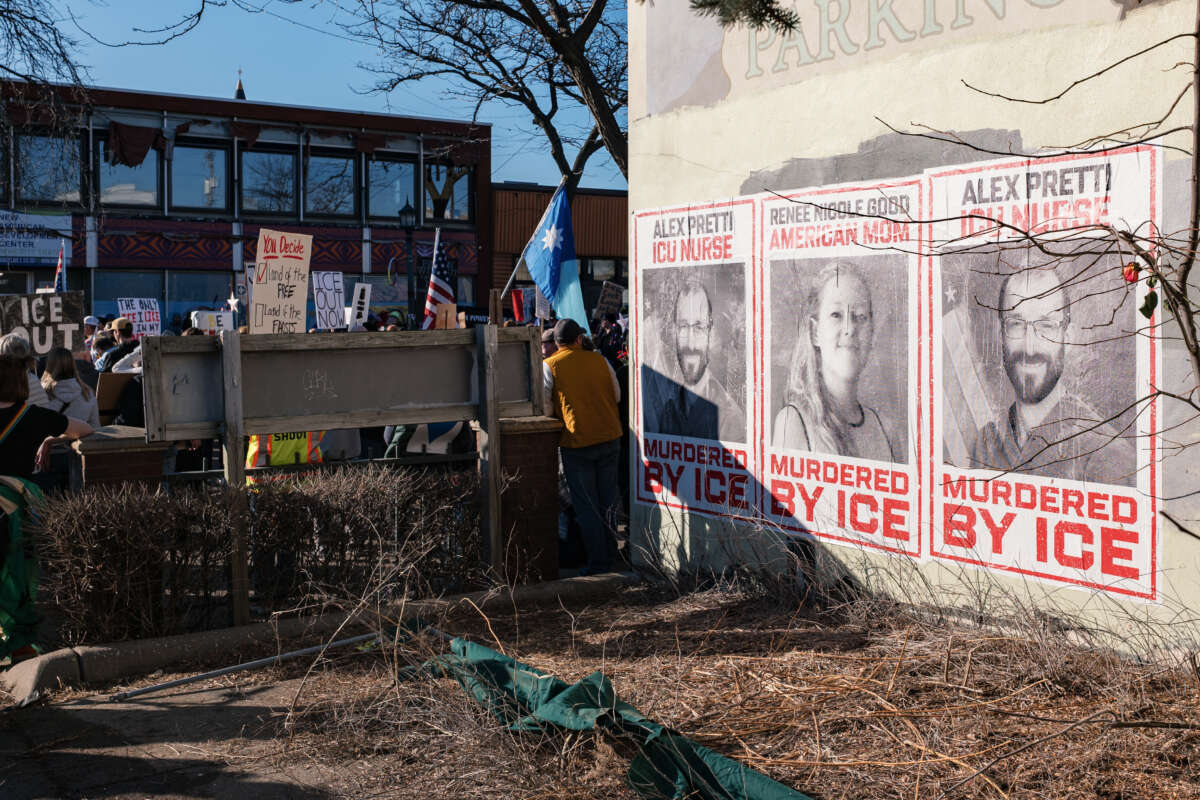
Then when the ICE surge happened in their city, they were able to fight back. It wasn’t organizations that were taking the forefront of the defense of their communities. It wasn’t ideology either. It was these relationships and the practice that people had of shutting down their streets to throw block parties, of taking care of their neighbors’ kids. That’s how they were able to do the work of protecting their neighborhoods; because they have been practicing it on a day-to-day level and building up an ethic of mutual aid that had a “fight back” element to it.

I’d love to cover that growth trajectory in more depth. Sometimes popular assemblies kick off with a lot of energy and then wither away.

Cassa: I’m sure that there were definitely low points. Sometimes I bet it was just a few people holding it down, but it still plants seeds, and that’s worth something at those rupture points.

Definitely. So, you interviewed a couple former Black Panthers in the film. The Black Panther Party seems to have set up one of the most robust mutual aid networks in United States history. They were feeding 20,000 kids every day before school, for example. I wonder if you have thoughts about what made that possible? What lessons can we learn from them?

Maroon: Yeah, we interviewed two prominent former Panthers, Lorenzo Kom’boa Ervin and JoNina Abron-Ervin, who later became anarchists in their lives. They both reflect on the party with a sobering analysis. They don’t romanticize it. They’re willing to critique it.

It’s true that the Panther Party was able to coordinate not just the free food for kids program, but also bus rides to prisoners and cop watch. They were able to do medical support like sickle cell anemia testing. There were so many different elements to their survival programs, and we can remember it because it had a central party identity. There was the name, it had membership, and it was highly disciplined.

This was also a downfall, and this is what the comrades who are our elders are warning us about, is creating a party politic that centralizes charismatic individual leaders and can be decapitated. That’s precisely what happened with the Black Panther Party. Infighting, conspiracy, and repression led to the downfall of the leadership, which then led to the destruction of the organization.

Many of our Panther elders talk about decentralization as a winning strategy. Illegibility is a winning strategy for us because if the state is able to identify key independent leaders, and then decapitate them from the movement, the movement is lost. We see people who were part of the Black Liberation Army, such as Ashanti Alston, who was also a former Panther, coming to the same conclusions. Through that time period of heightened struggle, there had to be an underground element, a less-visible element that the state was not able to repress.

It’s impressive to talk about the Black Panther Party survival programs and all the mouths they were feeding every day. And at the same time, so many people are being fed by the movement for mutual aid right now, and it doesn’t have a single leader or a single party politic behind it. I think that diffusion of work is actually the winning strategy, rather than creating a single form that we should follow.

Thanks so much for that. I agree that it’s harder to decapitate less-legible decentralized movements, but I question whether disconnected nodes lacking a coherent and coordinated strategy can build the power necessary to challenge the massive forces of the state and capitalism. For example, Rojava — a territory in north and east Syria of millions practicing decentralized organizing — was initially set up by the political party the PYD. What do you think about that?

Maroon: Yeah, that’s a great question. We just read James Stout’s work Against the State, where he talks about anarchists that have gone to war in Spain, Myanmar, and Rojava. One of the main points that he focuses on is scale and the tension of the anarchist politic of decentralization and refusal of hierarchical power being at odds with the capabilities to contest formal military power, and also the maintaining of large-scale territory once liberated from the nation-state.

He talks about the escalation ladder of moving up from small guerrilla bands and rebel militias into more formalized structures that are able to maintain a decentralized command-and-control model that doesn’t reproduce a hierarchy upon people who are engaged in militant struggle — and certainly not upon the people. I think there’s a lot to be learned from his analysis, which is coming from direct relationship with people in Rojava and Myanmar. They are thinking about what it looks like to build a libertarian socialist society that has gender liberation, ecology, and decentralized decision-making from below and to the left at the core of it. And so we agree — we do believe in creating larger structures that are legible to the working class, but illegible to the state, and are responsible and mature enough to handle territory.

That makes a lot of sense. Thanks so much for your time. Is there anything else you want to discuss? Where can people find you and the series?

Maroon: Thank you once again for your thoughtful questions. One thing that we didn’t mention was that we created a discussion guide to go alongside the film. We designed it in a way so that groups can read it together and co-facilitate.

We’ve got our website and Instagram. The series is free on YouTube and the open-source platform Kolektiva.


This article is licensed under Creative Commons (CC BY-NC-ND 4.0), and you are free to share and republish under the terms of the license.


Ella Fassler


Ella Fassler is an independent journalist based in Providence, Rhode Island. Their work on social movements, labor, technology and the carceral system has been featured in Teen Vogue, The Boston Globe, The Nation, Vice, The Appeal, Slate, Mic, In These Times, and elsewhere. Follow them on Twitter or Bluesky.


Source: Mondoweiss

Last week, Saudi Arabia, Türkiye, and Pakistan signed a defense pact that raised eyebrows around the globe. Although the Mecca Joint Defense Agreement had been discussed publicly for some time, its actual conclusion raises questions about its implications for the U.S.-Israeli war on Iran and the longer-term security playing field in the region.

Israel and its supporters reacted with consternation to the deal, while both Iran and the United States downplayed it. What exactly the agreement will mean in practice remains an open question, despite some grandiose statements that it is a NATO-like agreement.

The deal probably won’t change a lot in the short term. There are scant details about what would trigger the mutual defense agreement, and what would be required of partner countries if it were triggered.

But it reflects the increasing sense that the United States cannot be relied on as a guarantor of security and that small and medium-sized powers will have to take security architecture more into their own hands. While U.S. concerns and interests will not be ignored for the foreseeable future, the American role is shifting more towards arms merchant than strategic partner. 

The U.S. has only itself to blame for this decline in its reliability. It has not only made remarkably poor decisions of its own, but it has also helped Israel to emerge as an even greater threat to regional security than it historically has been, while neglecting all its other allies in favor of guarding Israel’s aggression and occupations. 

No trust in the United States

The second term of Donald Trump’s presidency has predictably been far more disastrous than the first. His foreign policy, in particular, has been marked by foolish decisions, massive corruption, and blunders that will have ramifications for many years after Trump’s departure from office.

Trump has directly endangered his allies in Saudi Arabia, Qatar, the United Arab Emirates, Kuwait, and Bahrain with his reckless attacks on Iran. His actions have raised the specter of real disaster in those countries. Their vulnerability to Iranian retaliation is acute. Iranian attacks, at their worst, could destroy the region’s oil industry and its desalination systems, effectively making those states uninhabitable. The UAE has reacted to this by doubling down on its partnerships with the U.S. and Israel, but the other nations have moved away, slowly, from the American orbit.

Trump’s arming of Israel and encouragement of its most radical nationalists has led to Israel expanding its zone of occupation back into Lebanon and farther than ever into Syria, while permitting escalating atrocities against Palestinians that recall the worst episodes of human history.

Making matters worse, Trump didn’t do these things by himself. He built on both his own first term in office and Joe Biden’s own reckless and immoral policies to magnify mistrust. 

As I’ve noted in the past, much of the Saudi loss of faith in the U.S. can be traced back to Trump’s refusal to act after Saudi oil fields were attacked by Ansar Allah. For Riyadh, that was the first major sign that the U.S. could not be counted on to keep its side of the long-held “oil-for-security” pact on which American-Saudi strategic relations were built.

Biden’s support of Israel’s ongoing genocide in Gaza, its attacks on Lebanon, and its invasion of Syria reinforced concerns over his lack of action to restore the Iran nuclear deal, which, at that time, could have built upon Iraqi and Chinese efforts that successfully lowered the tensions between Riyadh and Tehran. That was evidence that the United States, not just Donald Trump, was willing to sacrifice Gulf stability to support Israeli aggression.

The attack on Iran further undermined Arab confidence in the U.S. American allies had pressed for a diplomatic resolution to the tensions with Iran, despite some reports to the contrary. Riyadh and other Arab capitals were concerned that the attack on Iran was conceived and executed without taking their security needs into account or any consultations with them. 

This loss of confidence in Washington is serious. It is not solely about Trump or Biden, but grows out of the capricious nature of American domestic politics and a proven inability for one president to promise the next will keep to their agreements. That loss of confidence will not be easily reversed by future administrations. 

Iran and Israel

Türkiye, Pakistan, and Saudi Arabia all insist that this new pact is not meant to be directed at any other state in particular. While that is no doubt technically true, the deal is meant to deter attacks from potential enemy states, and the two states that are most likely to be of concern are Iran and Israel.

Publicly, Iran has not seemed worried. Foreign Ministry ​spokesman Esmaeil Baghaei said, “Any plan that is based on ‌the ⁠geopolitical and historical realities of the region, is comprehensive and inclusive, and correctly ​identifies the ​enemy ⁠and the threat, has a chance of ​helping to strengthen ​security ⁠and prevent instability and abuses by the Zionist enemy ⁠and ​its allies.”

Iran has certainly considered what the pact might mean to its strategy of retaliation against its Gulf neighbors in the event of an attack by the United States. Yet the calm that Baghaei expressed is likely genuine.

That’s because Iran can game out the implications. First, just because there is a NATO-style guarantee in the agreement doesn’t necessarily mean there will be an immediate, collective response to any Iranian attack. Ansar Allah attacked Saudi oil fields after the pact was signed, but Islamabad and Ankara did not respond.

More importantly, the pact raises the stakes of an American attack on Iran. Should Washington attack Iranian infrastructure in an escalation of the existing conflict, it must take into account the concern that Türkiye and Pakistan might respond to Iranian retaliation, even if by non-military means. That would risk a wide expansion of the war, and it is not at all clear who would shoulder the blame, especially if China felt that such expansion warranted its involvement. 

But the main focus of the agreement is less on concerns about Iran than on establishing a regional security regime. The trio of countries was very explicit about leaving the door open for other countries to join the defense pact; they hope to change the very nature of security strategy across the entire region. 

It is Israel, not Iran, that requires the region to rethink its entire security structure.

Türkiye had been reluctant to enter into a formal defense pact with the Saudis and Pakistanis, fearing international complications as its own regional ambitions grew. But American fickleness and rapidly increasing Israeli belligerence toward Ankara changed their mind.

Correctly identifying the source of regional stability as coming from Israel, not Iran, the three states came together to create a defense strategy focused on Israel, the one country the U.S. can’t even consider defending them against. 

For Saudi Arabia, this is a very clear message that Israel can forget about any notion of normalizing relations with Riyadh without ending the denial of Palestinian rights. Both Türkiye—due to its regional ambitions—and Pakistan—due to its rivalry with India, which is drawing ever closer to Israel—have a stake in backing Saudi Arabia in this regard.

The deal brings together three powers with unique capabilities: Türkiye’s military capabilities and vast arms production, Pakistan’s nuclear umbrella, and Saudi Arabia’s considerable resources. That makes the alliance a significant regional power, one that is capable of confronting even Israel militarily. 

The obvious goal is to deter Israel from its growing belligerence toward Türkiye, which Israeli officials have ominously labeled “the next Iran.” But more than that, the alliance, especially if it grows, creates a defense structure that is not just independent of the U.S. but independent of any concern about Israel’s interests, domestic or international.

That’s no small consideration. It was enough to scare Egypt away from joining the pact, even though it has been the fourth guest at many gatherings of the other three for strategy meetings and summits over the past year. 

Egypt has developed a deep dependence on the U.S. and Israel. It receives the second most annual military aid from Washington, behind Israel, and depends on Israel for a good deal of its energy supply in the form of natural gas. 

Because Egypt’s economy is in perpetual crisis, it would take considerable resources and time for it to be in a position where it could abandon Israel and anger Washington in this manner. The day that it does so may come, but not for some time. 

Egypt’s potential inclusion was controversial. Türkiye very much wanted Egypt in, due to its alignment with Cairo in several North African arenas. Saudi Arabia was opposed, due to growing tensions between Riyadh and Cairo, especially over Egypt’s relationship with the UAE, which is fast becoming a bitter regional rival to Riyadh. 

In the end, Egypt rendered the point moot by choosing to avoid choosing between Washington, Tel Aviv, and Abu Dhabi on the one hand, and Ankara and Riyadh on the other. 

The Mecca Agreement also strives to make it harder for Israel to continue its dominance over the Palestinians and its invasions of its neighbors in Lebanon and Syria. 

An American-based security regime allowed Israel total impunity. That was tolerable for some in the region when it was believed that the U.S. offered at least some mild restraint on Israeli excesses and protected its Muslim and Arab allies from attack. Those beliefs no longer hold.

The United States cannot even get Israel to go along with a plan for disarming Palestinian armed groups that would leave Gaza under effective American control and pacified, a deal that was clearly favorable to Israel. It has proven unable to move Israel out of its deadly occupation of southern Lebanon, and has not even tried to get Israel out of Syria, despite the fact that Washington has been supporting Syrian President Ahmed al-Sharaa’s efforts to reunite the country. 

For the past 50 years, the American-based security regime in the region has encouraged partnership with Israel, as pioneered by Egypt and Jordan in the 1980s, as the road to regional stability. That was followed by the disastrous Oslo Accords, increasing clandestine trade and cooperation between Israel and other Arab countries, and, finally, the Abraham Accords. 

All of these efforts at creating “partners for peace” only reinforced Israel’s belief that it could achieve peace and regional integration without ever compromising on Palestinian rights. 

With Israeli Prime Minister Benjamin Netanyahu’s decision to refuse to cooperate with Trump’s “Board of Peace” and the agreement to disarm Palestinians and have Israel withdraw from Gaza ahead of its reconstruction, the U.S.-Israel relationship is at a low ebb, despite the fact that many American leaders continue to insist on backing Israel regardless of how often it spits in Washington’s face.

The Mecca Pact can serve as a vehicle to increase pressure on Israel even as its popularity in the United States continues to wane, particularly if more countries join it. 

The Iran war, the invasion of Lebanon, the closure of the Strait of Hormuz, the ongoing occupation of Syria, and the threat to the holy sites in Jerusalem can all be traced back to Israel’s dominance of the Palestinians. While not every problem, by any means, in the Middle East is due to Israel’s apartheid and aggression, many of them are, while others cannot be resolved because of it. 

The Mecca pact is a first step toward a regional force that can stand against that, not out of concern for the Palestinian people (which, sadly, few states, if any, seem to have), but for their own interest in regional stability. If the pact expands, the pressure will increase, the potential for action will, at long last, widen. And if that coincides with the long-dreamed of shift in American policy, there is a real possibility for significant change, a force which even the obstinate nationalism of Israel could not resist. 


This article was originally published by Mondoweiss; please consider supporting the original publication, and read the original version at the link above.

Mitchell Plitnick is the president of ReThinking Foreign Policy. He is the co-author of Except for Palestine: The Limits of Progressive Politics and maintains the Cutting Through newsletter.