Sunday, July 05, 2026

Inspired by Seattle Program, Jayapal Bill Would Help US Families Buy Fruits and Veggies

“As families struggle to keep food on the table, Congress must prioritize work on efforts to lower costs and help Americans stay afloat,” said the Washington Democrat.



Shoppers browse the produce section of a Fresh Market grocery store in Wethersfield, New York 
(Photo by Luther Turmelle/Connecticut Post via Getty Images)


Jessica Corbett
Jul 02, 2026
COMMON DREAMS


As Americans face rising grocery prices under President Donald Trump and rally behind progressive policies and primary candidates, US Rep. Pramila Jayapal on Thursday introduced a bill that shows what kind of proposals could become reality with more Democrats like her in Congress.

Inspired by a program in her own district in Washington state, the chair emerita of the Congressional Progressive Caucus introduced the Fresh Bucks for Fresh Produce Act, which would create a pilot program at the US Department of Agriculture (USDA) that gives households earning 80% or less of their area’s median income $60 per month to buy fruits and vegetables.

The USDA pilot would be modeled on Seattle’s Fresh Bucks initiative, in which enrolled households “experience a 31% higher rate of food security and consume at least three daily servings of fruits and vegetables 37% more often than those assigned to a program waitlist,” according to University of Washington (UW) research published last August.

“I would classify both of those numbers as pretty large,” study co-author Jessica Jones-Smith a professor at UW and University of California, Irvine, said at the time. “We don’t routinely see interventions that work that well. It’s a pretty big impact on diet in terms of what we can do from a policy perspective and expect to make a difference in food insecurity.”

In Seattle—generally ranked as an expensive but livable metropolis—a single person living within city limits on a monthly income of $7,070, or $84,850 a year, can apply for the program. For a family of four, it’s $10,095 per month, or $121,150 annually. In January, the city the welcomed over 4,500 more local households off its waitlist and increased monthly benefits from $40 to $60.

Those enrolled in Seattle’s program can buy “fresh fruits and vegetables at supermarkets, and fresh, frozen, canned, and dried fruits and vegetables (with no added fats, sugars, or salt) at farmers markets and independent grocers” that accept Fresh Bucks cards.

Adam Porter, who directs the Meals on Wheels program at the Seattle-based Sound Generations, said Thursday that “older adults across King County are facing impossible choices as grocery prices continue to rise. Seattle’s Fresh Bucks program has had a substantial impact on our clients’ health and quality of life: We have seen firsthand how a targeted produce benefit can increase health equity, improve food security, and keep food dollars circulating locally.

“A USDA pilot modeled on that success would be a meaningful step toward healthier households and stronger community food systems nationwide,” Porter continued. In addition to his organization, groups endorsing Jayapal’s bill include the Center for Biological Diversity, Coalition for Organic and Regenerative Agriculture, Farm Action Fund, Food & Water Watch, National Education Association, Southern Poverty Law Center, White Center Community Development Association (WCCDA), and over a dozen more.

“In White Center and historically underinvested communities across King County, we see every day how rising grocery costs continue to strain working families, seniors, immigrants, and households already navigating increasing housing and living expenses,” said WCCDA executive director Aaron Garcia. “Access to healthy, culturally relevant food should not be determined by income—it should not be considered a luxury.”

“At WCCDA, we believe thriving communities require systems that make healthy food accessible, affordable, and attainable—and that investments in food access are investments in community health, economic stability, and opportunity,” Garcia said. “We strongly support Congresswoman Jayapal’s leadership in advancing innovative solutions that respond to the realities families face today while strengthening local food systems and neighborhood businesses that give us our vibrancy.”

“Expanding the proven Seattle Fresh Bucks model through a federal pilot offers an opportunity to increase food security, support local producers and retailers, and help communities across the country build healthier, more resilient futures,” he added.

Jayapal has celebrated recent primary wins by leftists in New York, and on Thursday, with the November midterms just four months away, she called out her Republican colleagues—who are trying to hang on to their narrow majorities in both chambers of Congress after using them to pass cuts to federal food and healthcare programs while giving more tax breaks to the rich.

“As families struggle to keep food on the table, Congress must prioritize work on efforts to lower costs and help Americans stay afloat,” said Jayapal, who is joined in sponsoring the bill by Democratic Reps. Alma Adams (NC), Nanette Barragán (Calif.), Chris Deluzio (Pa.), Shomari Figures (Ala.), Jahana Hayes (Conn.), Eleanor Holmes Norton (DC), Andrea Salinas (Ore.), Adam Smith (Wash.), and Shri Thanedar (Mich).

“While Republicans in Congress enacted legislation to raise food prices and are hell-bent on cutting food assistance, Seattle is once again leading the way with the Fresh Bucks program, which is successfully keeping people fed with nutritious food and reducing hunger,” she said. “We must pass this legislation to expand the program nationwide and get families in every corner of the country healthy produce they can afford.”


Experts Say Trump Cuts to Food Aid Have ‘Completely Subsumed’ RFK Jr.’s MAHA Agenda

A new report argues it is “impossible to reconcile” the Trump administration’s Make America Healthy Again rhetoric with unprecedented cuts to federal nutrition assistance.
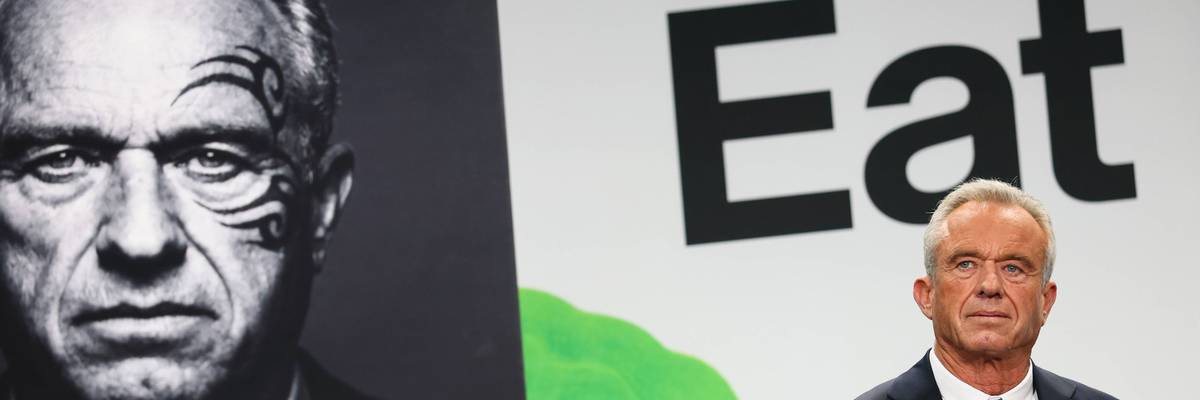


US Secretary of Health and Human Services Robert F. Kennedy Jr. stands silently next to a poster depicting him with legendary boxer Mike Tyson’s face tattoo during an event on February 11, 2026.
(Photo by Michael M. Santiago/Getty Images)


Jake Johnson
Jul 02, 2026
COMMON DREAMS

The unprecedented cuts to federal nutrition assistance that President Donald Trump and congressional Republicans enacted nearly a year ago directly undermine the administration’s “Make America Healthy Again” initiative, argues a new report by a pair of food policy experts.

The so-called MAHA project, spearheaded by Health and Human Services Secretary Robert F. Kennedy Jr., emphasizes the importance of a healthy diet to childhood development. But the new white paper, published Wednesday and authored by Joelle Johnson of the Center for Science in the Public Interest and Priya Fielding-Singh of George Washington University’s Global Food Institute, notes that research shows the Supplemental Nutrition Assistance Program (SNAP) “reduces food insecurity—which is itself linked to increased risk of poorer diets among children—and may improve health outcomes among households with low incomes.”

“How the administration’s health objectives can be achieved alongside policies that reduce both food access and nutrition education is a question these dual agendas do not resolve,” the report states. “Understanding this tension also helps explain why the administration’s MAHA messaging has at times appeared disconnected from the SNAP policies it has simultaneously pursued.”

The GOP’s One Big Beautiful Bill Act (HR 1) will inflict nearly $190 billion in cuts to SNAP over the next decade—the largest in the program’s history—and expand work reporting requirements, despite evidence showing that such mandates do virtually nothing to boost employment or reduce poverty. According to one estimate, the expanded SNAP work reporting requirements could cause nearly 70,000 avoidable deaths by 2040.

The Republican law also forces states to pay a portion of SNAP benefits for the first time, straining budgets and potentially forcing deeper food aid cuts.

Millions of people across the US—including more than 800,000 children—have lost SNAP benefits since Trump signed the Republican budget package into law on July 4, 2025. It is well established that food insecurity, which is on the rise across the US, is associated with chronic disease.

“It is impossible to reconcile the administration’s MAHA rhetoric on reducing chronic disease in childhood with the cruel cutbacks to SNAP brought about by HR 1,” Johnson, who serves as deputy director for healthy food access at the Center for Science in the Public Interest (CSPI), said in a statement. “Whatever MAHA initiatives CSPI might have otherwise supported are completely subsumed by the biggest cut to SNAP in the program’s history.”

“Cutting off food assistance for millions of families undermines MAHA’s stated goals of improving diet quality and preventing chronic disease.”

The new report stresses the “ripple effects” of the Trump-GOP SNAP cuts across the food safety net, pointing to negative impacts on kids’ eligibility for school meals and the Special Supplemental Nutrition Program for Women, Infants, and Children (WIC).

“Approximately 16 million children live in households that rely on SNAP to meet their basic food needs, and many will face cascading losses of access to other nutrition programs as a result of HR 1’s cuts,” the report warns. “Children who lose SNAP also risk losing automatic enrollment in WIC and free school meals, forcing families already stretched thin to navigate multiple re-enrollment processes with no guarantee of restored access.”

Trump and the GOP are not finished attacking nutrition assistance for low-income families. Last month, House Republicans approved legislation that would slash fruit and vegetable benefits for millions of young children and pregnant and postpartum women—a cut consistent with the White House’s budget proposal for the coming fiscal year.

“If we are serious about improving Americans’ health, we need policies that make healthy food more accessible, not less,” said Fielding-Singh, director of policy and programs at the Global Food Institute. “Cutting off food assistance for millions of families undermines MAHA’s stated goals of improving diet quality and preventing chronic disease. Food security and public health go hand in hand.”
US Jobs Report Offers ‘Grim Warning Signs’ for Cash-Strapped Working Families Under Trump

“Working Americans increasingly report that their paychecks can’t keep up with Trump’s high prices, but are not confident they’ll be able to find better opportunities,” noted one Groundwork Collaborative expert.


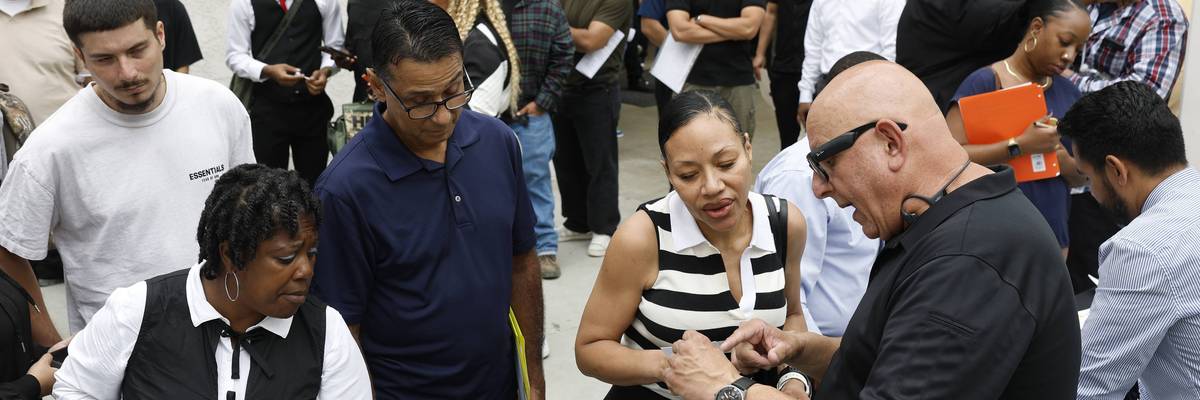
Thousands of job seekers meet with recruiters during the HIRE360 
Diversity Hiring Expo & Mega Career Expo on June 30, 2026, in Carson, California.
(Photo by Justin Sullivan/Getty Images)

Jessica Corbett
Jul 02, 2026
COMMON DREAMS

As President Donald Trump’s team on Thursday tried to paint the June jobs report as positive, economists and congressional Democrats called it “weak” and “disappointing,” with some also ripping the Republican administration’s harmful policies, from sweeping tariffs and the Iran War to the mass detention and deportation of immigrants.

The nation’s economy added just 57,000 jobs in June, or roughly half of what economists had anticipated, according to the latest monthly report from the US Bureau of Labor Statistics. BLS noted that “both the unemployment rate, at 4.2%, and the number of unemployed people, at 7.1 million, changed little in June.”


The Department of Labor (DOL) agency also revised job gains down for May by 43,000 and April by 31,000, and said that “over the year, average hourly earnings have increased by 3.5%.” That’s notably lower than the 4.2% annual inflation rate detailed by BLS a few weeks ago, as Americans struggle to afford groceries, housing, and other basic necessities during Trump’s second term.


“Today’s weak jobs numbers are grim warning signs of a struggling labor market,” Alex Jacquez, a former Obama administration official who is now Groundwork Collaborative’s chief of policy and advocacy, said in a statement.

“Job gains reflect temporary seasonal hires and other workers separated from the broader economy while the majority of the labor force is frozen,” he explained. “Working Americans increasingly report that their paychecks can’t keep up with Trump’s high prices, but are not confident they’ll be able to find better opportunities. They’re instead focused on trying to keep up with the president’s price hikes.”

Angela Hanks, a former DOL senior official who’s now chief of policy programs at The Century Foundation, similarly called the report “yet more evidence of a fragile economy under President Trump, with job growth coming in well below expectations and sizable downward revisions to the last two months.”

“While the unemployment rate dipped slightly to 4.2%, this number only tells us how many people are working—it doesn’t tell you whether people can afford to live,” she stressed. “The reality behind today’s jobs numbers is that the cost of living continues to outpace paychecks: 43% of Americans now say they’re worse off financially than they were a year ago, and year-over-year wage growth came in at 3.5%, below overall inflation of 4.2%—meaning that real wages are falling.”

“Looking beyond the topline numbers, more than half of all June job growth was concentrated in healthcare and social assistance, continuing a trend of these sectors propping up much of our economy,” she pointed out. “The labor force participation rate declined sharply and widely, with nearly every demographic group seeing declines, which partially explains the drop in the unemployment rate. Moreover, certain racial and age disparities actually worsened: Black youth unemployment rate rose to a whopping 26.8%, as did Hispanic youth unemployment, coming in at 20.1%—a reminder that this economy is not delivering for workers who are struggling the most.”

Hanks added that “while Trump will surely tout this moderate job growth as a win, not long ago numbers like today’s would have prompted serious concern. But families aren’t grading Trump on a curve: They feel the impacts of this administration’s chaotic and costly economic policies every day. Until working people can actually afford their lives—groceries, housing, healthcare, childcare—claims of a ‘strong economy’ will continue to ring hollow.”


In line with Hanks’ prediction, Trump’s messengers attempted to frame the figures positively, with his press secretary, Karoline Leavitt, celebrating the declining foreign-born labor force amid the administration’s deadly crackdown on immigrants, and her deputy, Kush Desai, claiming the report “reinforces that the American labor market remains solid.”

Acting Secretary of Labor Keith Sonderling—whom the president earlier this week nominated for the permanent post—said that “Trump’s America first agenda continues to provide greater wages for workers and certainty to the sectors which will fuel the next 250 years of US economic security.”


Meanwhile, with the midterm elections just four months away, the Democratic National Committee’s rapid response director, Kendall Witmer, declared that “Donald Trump’s failed economic agenda has driven working families into a corner as Americans worry about how to find a job and keep up with sky-high prices. The reality for working families is undeniable: Trump has wrecked the economy, leaving millions wondering how they will make ends meet with no relief in sight.”

“But Trump doesn’t give a shit—he’s only focused on building his vanity projects and using the power of the presidency to get even richer,” added Witmer, just two days after the president’s annual financial disclosures revealed that he pocketed an unprecedented $2.2 billion—over half of it from his family’s cryptocurrency grift—during his first year back in the Oval Office.

Congressman Ted Lieu (D-Calif.) took to social media over “another disappointing jobs report” and also called out GOP priorities, from erecting a giant arch in Trump’s honor to putting his name on various items, including passports and the $250 bill.

As Lieu concluded, “November is coming.”
Exposing the myth of the Independent voter

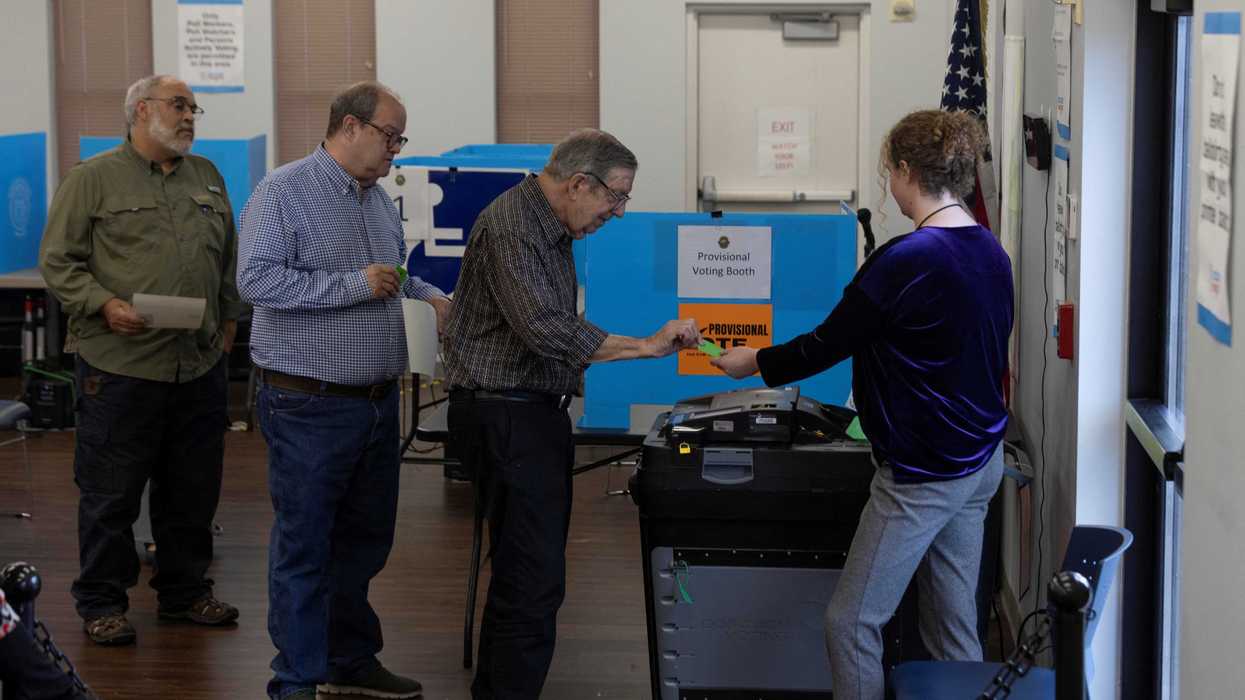
People wait to cast their ballots during early voting at the Floyd County Elections & Voter Registration for the special election for Georgia’s 14th Congressional District U.S. February 19, 2026. REUTERS/Alyssa Pointer

Sarah K. Burris
July 03, 2026
ALTERNET


The fastest-growing political party in the United States is the Independent Party, dwarfing growth in both the Democratic and Republican Parties. But so much remains misunderstood about the voting bloc.

Political pollster Frank Luntz pointed to a PsyPost report citing new data published in American Politics Research showing that most people identifying as Independents hold moderate ideologies with "open-mindedness." The data show that such voters are desperate for representation.

Karina Petrova wrote that many of these voters are barred from participating in the process, citing the closed primary system.


"In nearly half the country, residents who decline to choose a political party are legally prevented from voting in those early races," the report said.

Scholars clash when it comes to what an "Independent means." There is a party named the American Independent Party. Its claim to fame is that it nominated far-right, pro-segregation George Wallace to run for president in 1968. Most voters mean neither Republican nor Democrat when they think of "independent."


Early political theory treated Independents as having "a deficit of civic engagement rather than a meaningful personal ideology." Others assume that Independents are merely partisan voters trying to hide their affiliation.

Another perspective, wrote Petrova, is the idea of the frustrated voter, those who rejects both parties and the two-party system along with it.

"These individuals might hold a variety of personal convictions, but they are united by a generalized opposition to the current institutional structure of American voting," said the report.


Political scientists Eveline Dowling of the University of California, Davis, Nathan K. Micatka of the University of South Alabama and Caroline Tolbert of the University of Iowa conducted the investigation into the ideological leanings of those who purport to be Independent. They used voter data from 7.5 million unaffiliated voters and election participation from 2020, 2022 and 2023.

From the information collected, the researchers found that more often those who identify as Independents are typically younger and less likely to have earned a college degree.

Nine out of ten Independents were, indeed, "ideological moderates." It quickly dispels the myth that Independent voters are secret extremists.


Secondly, they found, particularly after the 2022 midterm election, that they want to see both parties crossing the line to create more bipartisan solutions. The highly educated are the ones who were "especially prone to assigning positive traits to the unaffiliated public," the report said.

However, the Catalist database found that it is using "use probabilistic models created by a vendor, which means the ideology scores are estimates rather than direct self-reported surveys. In addition, checking a box as an unaffiliated voter on a state registration form might involve different psychological motivations than telling a pollster you identify as an independent," the report explained, noting that the measurements used through this don't fully capture the "emotional fervor" attachment to making that choice.
Israel Reportedly Plotted to Assassinate Top Iranian Negotiators to Derail Peace Talks With US

“I can’t recall a government as terrified of peace as the one running Israel,” said one analyst.


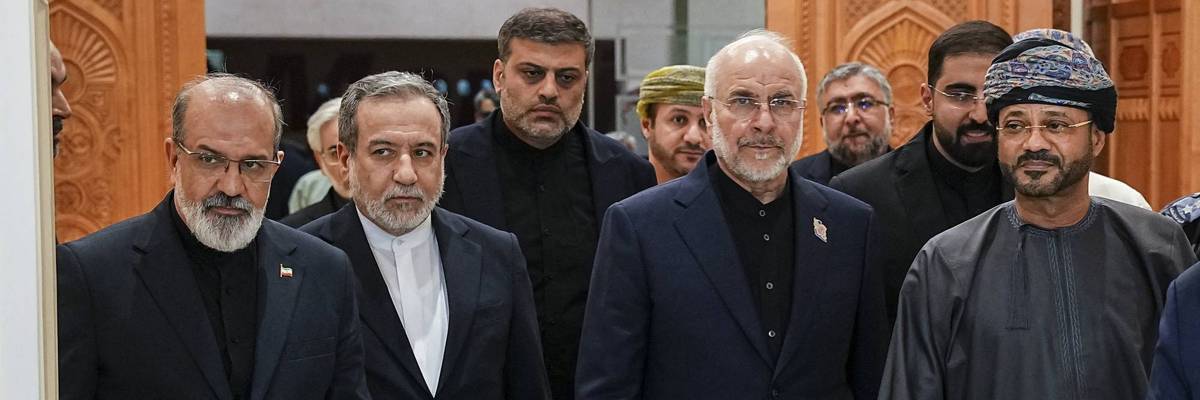
Iranian Foreign Minister Abbas Araghchi and Iranian parliament speaker Mohammad Ghalibaf walk with other officials inside a building in Muscat, Oman, on June 22, 2026.
(Photo by Hamed Malekpour/Middle East Images/AFP via Getty Images)


Jake Johnson
Jul 03, 2026
COMMON DREAMS


Trump administration officials reportedly believed that the Israeli government intended to assassinate Iran’s top negotiators—including the country’s foreign minister—during peace talks with the US in an effort to sabotage diplomatic progress.

The New York Times reported Thursday that “American concerns about the targeting of two particular Iranian officials—Abbas Araghchi, Iran’s foreign minister, and Mohammad Bagher Ghalibaf, the speaker of the Parliament—spiked during delicate ceasefire negotiations that began in April.” In response, the US “went so far as to ask other countries in the region to warn Iran about the possibility Israel could target the two officials,” according to the Times, which cited unnamed current and former American officials.

The US and Israel have killed dozens of top Iranian officials since launching their illegal joint war in late February. But the allied countries reportedly removed Araghchi and Ghalibaf from their target list in late March, opening the possibility of high-level negotiations to end the war.

But Israel remained bent on targeting the negotiators, according to the Times, whose reporting was later corroborated by The Washington Post.

The Times detailed one dramatic incident in April, when Ghalibaf was planning to travel to Pakistan’s capital to meet with US Vice President JD Vance:
Pakistani fighter jets escorted the Iranian airplanes carrying a delegation of more than 70 Iranians from the border of Iran to Islamabad and back again when the session was over.

But on the way back to Tehran, an Israeli security threat emerged.

Iran’s security forces notified the plane carrying Mr. Ghalibaf back to Tehran that they had picked up intelligence that Israel planned to attack the plane and that two Israeli fighter jets had entered Iran’s airspace from its western border near Iraq, the two officials said.

Mahdi Mohammadi, a senior adviser for Mr. Ghalibaf, who accompanied him to Islamabad, confirmed this account on his social media page. The plane made an emergency landing in the city of Mashhad, Iran’s closest airport to the Pakistani border, and the Iranian delegation traveled some eight hours by land back to Tehran, Mr. Mohammadi and the two officials said.

The Post reported that “cracks emerged” between the US and Israeli approaches to the war following Israel’s assassination of top Iranian national security official Ali Larijani in March.

“They’ve wiped out everybody,” Trump told reporters in late March, suggesting Israel’s assassination campaign was making it difficult to find potential negotiating partners.

Trita Parsi, executive vice president of the Quincy Institute for Responsible Statecraft, wrote in response to the new reporting that “Israel is a state that, on paper, is a US partner, but in reality is so extreme in its obsession to undermine US diplomacy that it even tries to assassinate those the US engages with in crucial negotiations.”

“I can’t recall a government as terrified of peace as the one running Israel,” Parsi added.

At present, the Israeli government—led by Prime Minister Benjamin Netanyahu—is endangering tenuous US-Iran peace talks with its continued occupation of and assault on Lebanon, which Iran has highlighted as a key factor in the negotiations.

Visiting occupied southern Lebanon earlier this week, Netanyahu declared to Israeli troops that “our insistence is that we will not leave... until the threat is removed.”

Parsi wrote earlier this week that “beyond his long-standing desire to use American force to subjugate Iran to Israeli domination and achieve a regional balance favorable to Israel,” Netanyahu “now also has stark political and personal reasons to restart the war” with Iran.

“The [US and Iran’s memorandum of understanding] has come at a steep political cost for Netanyahu,” wrote Parsi. “His prospects for reelection in October are weaker than they have been in months. Once seen as the Israeli leader uniquely capable of delivering President Trump, he now confronts the prospect that both the war and the ensuing diplomacy will leave Israel in a strategically weaker position—undermining the very case he has made for his leadership.”

“And of course,” Parsi added, “if he loses the elections, he will likely spend the next few years in jail, as he will lose his immunity as prime minister and face trial over corruption charges.”
1,022 Babies Among 21,500+ Children Killed by Israel in 1,000 Days of Gaza Genocide

“We could die at any moment. I hope the war stops for us,” said one 14-year-old Palestinian girl in Gaza. “I would like to live with love, peace, and an easy life.”


Palestinians mourn an infant who was killed by an Israeli airstrike in Deir al-Balah on January 9, 2025.
(Photo by Ali Jadallah/Anadolu via Getty Images)

Brett Wilkins
Jul 02, 2026
COMMON DREAMS

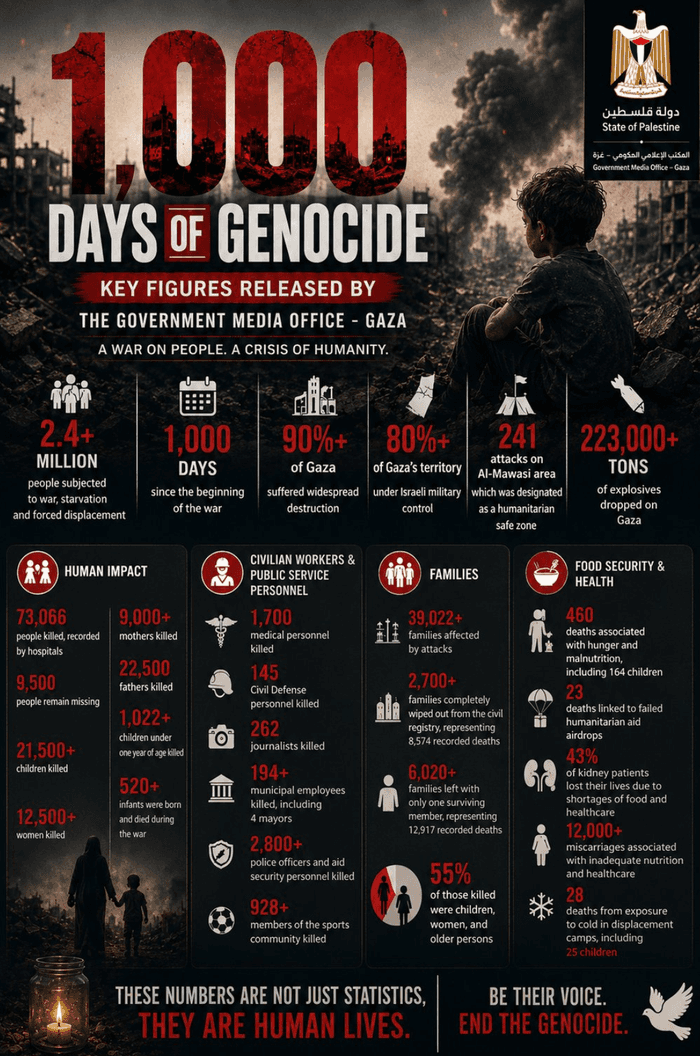
Over 21,500 children—1,022 of them babies—are among the more than 73,000 Palestinians killed by Israel since it launched the US-backed genocidal war on Gaza 1,000 days ago, including hundreds of minors slain since a one-way ceasefire took effect nine months ago, Gaza’s Government Media Office said Thursday.

In updated figures, the GMO said that at least 73,066 Palestinians have been killed since Israel began its war and siege on the Gaza Strip on October 7, 2023. A separate analysis published in mid-April by UN Women found that at least 38,000 women and girls were killed between October 2023 and December 2025.

The GMO said Thursday that at least 173,514 others—including more than 44,500 children—have been wounded, and 9,500 Palestinians are still missing and presumed dead and buried beneath the rubble of bombed-out buildings in the coastal strip, more than 90% of which has been destroyed and 80% of which is under Israeli control, according to officials.


(Source: Gaza Government Media Office)


More than 11,000 Gazan children have suffered what the United Nations Children’s Fund (UNICEF) called “life-changing injuries,” including as many as 4,000 amputations, many of them performed without anesthesia.

“Every day for the past 1,000 days, the world has failed 1 million children in Gaza by not intervening to stop the killing and maiming of children,” Ahmad Ahendawi, regional director at the charity Save the Children, said Thursday. “As their young, fragile bodies were blown to bits and pieces by bombs and missiles, the world sold those same weapons to the government of Israel [and]... continued trade agreements with the government of Israel.”

Early in the war, UNICEF called Gaza “the world’s most dangerous place to be a child.”


Classified Israel Defense Forces (IDF) data leaked last August suggested that 5 in 6 Palestinians, or 83%, killed during the war’s first 19 months were civilians. Experts attribute the high civilian death toll to Israel’s use of artificial intelligence in target selection, its dropping of 1,000- and 2,000-pound bombs—many of them supplied by the US—in densely populated urban zones, and relaxed rules of engagement allowing for an unlimited number of noncombatant casualties in airstrikes targeting a single Hamas operative, no matter how low-ranking.

Last month, a United Nations commission of inquiry found that 30% of those killed by Israel in Gaza have been minors, and that “the deliberate targeting of children is one of the key elements establishing genocidal intent of the Israeli authorities and security forces to destroy the Palestinian group, in whole or in part, in Gaza.”

The commission, which separately concluded that Israel is committing genocide in Gaza, used language consistent with Article II of the Genocide Convention, the international treaty against which Israel’s actions are being weighed by the International Court of Justice in The Hague. In December 2023, South Africa filed a genocide case against Israel at the ICJ that is now formally backed by around 20 nations.

IDF troops have admitted to witnessing alleged war crimes, including indiscriminate murder of women and children. Doctors and other international volunteers who worked in Gaza’s besieged hospitals during the genocide have reported the apparently deliberate targeting of Palestinian civilians, including children shot in the head and chest by Israeli snipers.

Palestinian survivors and witnesses have also accused IDF troops of summarily executing women and children.

“Every day for the past 1,000 days, the world has failed 1 million children in Gaza.”

The new GMO figures note 460 deaths from malnutrition—164 of them children—and 28 Palestinians, mostly children, who perished from hypothermia in camps housing many of the approximately 2 million people forcibly displaced by the war.

According to figures published last month by UNICEF, more than 1,000 Palestinians, including at least 265 children, have been killed by Israeli bombs and bullets since the October 2025 ceasefire took effect. UNICEF called the purported truce a “cruel and deadly illusion.”

All this in retaliation for the Hamas-led attack in which approximately 1,200 Israelis and foreign nationals were killed—some by so-called “friendly fire” and under the fratricidal Hannibal Directive—and 251 others abducted.

In the aftermath of the deadliest attack on Israel in its 75-year history, Israeli Prime Minister Benjamin Netanyahu—who is wanted by the International Criminal Court (ICC) in The Hague for alleged war crimes and crimes against humanity in Gaza, including murder and forced starvation—exhorted Israelis to “remember what Amalek has done to you.”

According to the Hebrew Bible, the nation of Amalek was an ancient archenemy of the Israelites whose total extermination—“man and woman, infant and suckling”—was commanded by the Abrahamic deity figure God.

Numerous Israeli leaders made similarly genocidal statements, including Israeli President Isaac Herzog, who asserted that there are no innocent people in Gaza, former Defense Minister Yoav Gallant—who is also wanted by the ICC for ordering the “complete siege” of Gaza blamed for fueling deadly famine and disease—and the influential far-right politician Moshe Feiglin.

“Every child in Gaza is the enemy,” Feiglin said last year. “We need to occupy Gaza and settle it, and not a single Gazan child will be left there.”

According to the new GMO figures, 39,022 families in Gaza have suffered Israeli massacres, with more than 2,700 families entirely wiped out and another 6,020 left with only a single surviving member. More than 58,800 children have been orphaned, including 2,700 who lost both parents, while 26,370 women are now widows.

In 2024, Save the Children published a report detailing how Israel’s onslaught has caused the “complete psychological destruction” of Gazan children. A subsequent study found that nearly all children in the embattled Palestinian enclave believed that their deaths were imminent—and nearly half of them said they wanted to die.

“We could die at any moment. I hope the war stops for us,” a 14-year-old girl identified as Amani told Save the Children in a report published Thursday.

“I hope the war stops so that I can continue my education in Gaza and live my rights as a human like any girl in other countries,” she added. “I would like to live with love, peace, and an easy life.”
Israel OKs 13 New Settlements to ‘Fracture’ West Bank and Create ‘Irreversible Status Quo’

One group called the move “yet another example of the abhorrent and utter disregard of the international rules-based order by Israel.”


Israeli Finance Minister Bezalel Smotrich holds a map of an area near the settlement of Maale Adumim, a land corridor known as E1, outside Jerusalem in the occupied West Bank, on August 14, 2025.
(Photo by Menahem Kahana/AFP via Getty Images)

Brett Wilkins
Jul 03, 2026
COMMON DREAMS

Israel’s Security Cabinet on Thursday approved the construction of 13 new settlements in the central West Bank, a move critics slammed as the latest effort to “fracturePalestine and cement Israeli control over the illegally occupied territory with the goal of annexation.

Israeli media reported that the Security Cabinet, led by Prime Minister Benjamin Netanyahu, gave the green light to the new settler colonies in the Binyamin area, with the first phase of construction expected to start in the coming months.

The Binyamin Regional Council has argued that now is the time for building the strategically located settlements due to political and security conditions, which present an opportunity to establish facts on the ground that will make Israeli control a fait accompli.

Condemning the approval as a “dangerous escalation,” the Jerusalem Governorate—a nominally administrative division of the Palestinian Authority—asserted that Israel’s settlement plan “seeks to create new geographical realities on the ground,” and would “undermine the prospects of establishing a geographically contiguous Palestinian state.”

That, say critics—and some Israeli officials—is the point. Netanyahu last year promised that “there will be no Palestinian state,” while Israeli Finance Minister Bezalel Smotrich, National Security Minister Itamar Ben-Gvir, and other officials have also vowed to annex some or all of the West Bank.

“Israel’s continued expansion of settlements in the occupied Palestinian territory is not an isolated policy decision but part of a long-standing strategy to entrench permanent Israeli control over occupied land, further Israeli annexation of Palestinian territory, and prevent any prospects of a viable and contiguous Palestinian state,” the UK-based International Center of Justice for Palestinians (ICJP) said in response to the Security Cabinet vote. “The Binyamin plan represents a significant escalation of that policy, accelerating changes to the occupied territory that would create an irreversible status quo.”

ICJP called the move “yet another example of the abhorrent and utter disregard of the international rules-based order by Israel” and “yet another attempt to further fragment Palestinian territory and isolate East Jerusalem from its surrounding Palestinian communities.”


Madar, the Palestinian Center for Israeli Studies, said Wednesday that construction of illegal Israeli settler outposts has soared from an average of 8 per year between 2012-22 to 32 in 2023, 62 in 2024, and 86 last year.

Palestinian officials and international human rights groups have long warned that Israeli settlement expansion is destroying the possibility of a two‑state solution.
United Nations resolutions and the UN’s International Court of Justice have affirmed the illegality of Israel’s settlements and occupation of Palestine, the latter of which the ICJ found in 2024 is an illegal form of apartheid that must end as soon as possible. The ICJ also ruled that Israeli settler colonization of the West Bank amounts to annexation, also a crime under international law.

Efforts by the Israeli government, military, and settlers to expand West Bank settlement activity have accelerated dramatically since the Hamas-led attack of October 7, 2023. With the world’s attention focused on Israel’s genocidal assault on Gaza, Israeli soldiers and settlers have ramped up the ethnic cleansing of Palestinians from the occupied territory.

Attacks on West Bank Palestinians, including pogroms carried out by mobs of settlers protected and sometimes joined by Israeli troops, have killed at least 1,105 Palestinians—at least 242 of them children—since October 2023, according to the latest report published by the UN Office for the Coordination of Humanitarian Affairs.
‘Going Out of Its Way to Enable Trump,’ US Supreme Court Has Used Secretive Shadow Docket Like Never Before

“That hugely consequential cases are decided with no transparency,” said one civil rights lawyer, “only adds to the court’s illegitimacy and further decreases the public’s confidence.”


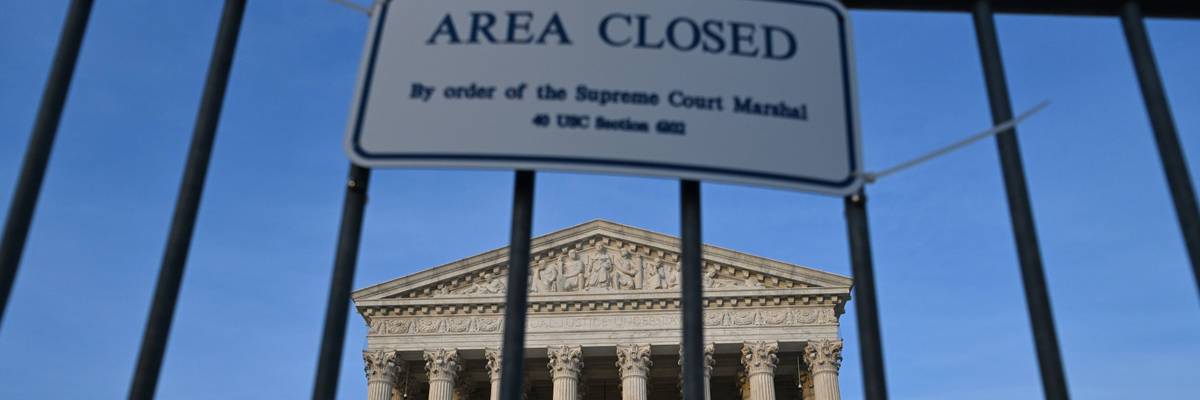
The area in front of the US Supreme Court in Washington, DC, is gated off on June 30, 2026.
(Photo by Li Rui/Xinhua via Getty Images)


Stephen Prager
Jul 02, 2026
COMMON DREAMS


As its conservative majority showed unprecedented deference to President Donald Trump, the US Supreme Court passed what ProPublica described as a “troubling milestone” during the term that ended last October.

For the first time in its modern history, an analysis published Wednesday found, the court decided more cases using its secretive “shadow docket” than using the regular process.

Unlike the so-called “merits docket,” in which cases undergo lengthy periods of review, parties file briefs and make oral arguments for their side, and the justices issue extensive signed rulings explaining their reasoning, shadow docket decisions are expedited and offer little mechanism for accountability.


They are often unsigned, with no final vote count or explanation of the court’s decision, and are often issued within hours of legal action being taken, leaving no time for deliberation or public input.

These cases are meant to be reserved for emergency or temporary interventions. But as Trump has attempted to exert unprecedented executive authority that often brazenly pushes legal boundaries, ProPublica found that the court’s use of the shadow docket has exploded.

The analysis found that during the last Supreme Court term, the court issued 63 decisions on the shadow docket, compared with just 56 on the merits docket. Analyzing more than two decades of decisions by the high court, they found that the court has never come close to issuing this many secret decisions in any previous term.

This is due largely to the Trump administration’s unprecedented petitioning to have cases decided on the shadow docket after elements of the president’s agenda were stymied by lower courts.

As ProPublica explained, the court “has repeatedly green-lit policies of his that lower courts have blocked—and has done so with little to no explanation,” and often the decisions have been highly consequential and “have thrown lower courts’ processes into turmoil and have sometimes directly contradicted longstanding legal precedent.”
On June 23, 2025, after a lower court had ruled that eight men being deported to South Sudan should have due process, the Supreme Court intervened after a request from the administration to stop that order. The men were deported. The majority didn’t issue an opinion justifying its ruling.

Three months later, the Supreme Court voted to allow immigration agents to stop people based on racial or ethnic characteristics while still-ongoing litigation against it proceeded. To justify the decision, Justice Brett Kavanaugh wrote a rare shadow docket opinion that people who were in the country legally would be “free to go after the brief encounter.” These became known as “Kavanaugh stops.” Last year, ProPublica found more than 170 citizens who had been stopped and detained by ICE agents. The more than 50 Americans held even after agents learned of their citizenship were almost all Latino.

And in May, while an election in Louisiana was already underway, the justices allowed the state to immediately redraw its electoral map, removing one of the two majority-Black voting districts. Louisiana can now use that map for the 2026 midterms as part of a nationwide redistricting battle for control of the House of Representatives—an effort touched off by Trump’s call for Republican-led states to create more safe seats for themselves.


An analysis by the legal group Court Accountability in October found that the Supreme Court sided with Trump 90% of the time in the 23 orders included in its analysis of his second administration through October 2025, nearly all of which were issued on the shadow docket.

“The patterns show a court going out of its way to enable Trump,” Stephen Vladeck, a law professor at Georgetown University and a Supreme Court analyst, told ProPublica.

Noting that the American public’s approval of the high court has fallen substantially in recent years, Leslie Proll, a civil rights lawyer and the former director of voting rights at the Leadership Conference on Civil and Human Rights, called the court’s unprecedented secrecy “utterly disgraceful.”

“That hugely consequential cases are decided with no transparency,” she said, “only adds to the court’s illegitimacy and further decreases the public’s confidence.”


Alito's influence on the Supreme Court may be reaching an all-time high


FILE PHOTO: U.S. Supreme Court Associate Justices Samuel Alito (L) and Clarence Thomas (Photo: Chip Somodevilla/Pool via REUTERS)
July 04, 2026
 ALTERNET


One of the most dangerous power players in the U.S. Supreme Court is at it again, wrote the New York Times in a report about the conservative Justice Samuel Alito.

Alito recalled in his youth his father tapping away on a calculator, trying to redraw electoral maps. All of that came to a head on Tuesday when Alito penned the landmark decision that struck another harmful blow to the Voting Rights Act. The decision ultimately makes it more difficult to bring racial discrimination challenges to districts.

But the end of Alito's career is leaving questions about whether he will retire, allowing President Donald Trump to appoint another far-right justice to stack the courts. According to those close to Alito, he has no desire to retire. But if Democrats take over Congress in the 2026 midterms, there could be a renewed call.

"People who know him say that he may not want to jeopardize the chance to have a successor who aligns with his ideology, and that he is mindful of what unfolded when Justice Ruth Bader Ginsburg died in September 2020," the report said. "Her death set off a confirmation scramble that allowed Mr. Trump to appoint her successor, the conservative Justice Amy Coney Barrett, shifting the makeup of the court."

While Alito was quiet in 2024, the past year brought more of his opinions to the bench. It appears Chief Justice John Roberts has assigned decisions for Alito to author when the court intends to hand Trump a "win," said Stanford law school professor Pamela Karlan.

“It’s hard to think of an area where Justice Alito’s views do not align completely with the conservative legal movement,” she added.

In his opinions on the Voting Rights Act and anything to do with race relations, the Times explained that those appearing before him "will have to provide evidence of intentional race discrimination to prevail. The ruling prompted a Republican scramble to redistrict across the South, and likely handed the GOP an edge ahead of the midterm elections."

Alito, a constitutional law professor at Yale, Akhil Reed Amar said it's simply that Alito has greater seniority on the court and his outsized role is easily explained by that.

“It’s a seniority system, and you don’t get the plum assignments in your early years,” Professor Amar said. “The longer you’re around, the more you get to write opinions in big cases.”

Those close to Alito maintain that he remains engaged with the court, despite checking out a day early for their summer break.


Trump's humiliation is tinged by stark signs of Supreme Court insanity

Robert Reich
June 30, 2026 


U.S. Supreme Court Associate Justices Samuel Alito (L) and Clarence Thomas wait for their opportunity to leave the stage at the conclusion of the inauguration ceremonies in the Rotunda of the U.S. Capitol on January 20, 2025 in Washington, DC. Chip Somodevilla/Pool via REUTERS


Today, the Supreme Court struck down Trump’s Day One executive order canceling the right to birthright citizenship. Good. That executive order declared that children born in the U.S. would not be considered citizens if their parents were living in the country illegally or were visiting the country on temporary visas.

The executive order never took effect. It was quickly blocked by multiple lower courts because it appeared to directly conflict with the 14th Amendment, which states that “all persons born or naturalized in the United States, and subject to the jurisdiction thereof, are citizens of the United States.”

The Trump regime appealed the lower-court rulings, contending that the 14th Amendment’s citizenship provision had been misunderstood for more than a century. The administration argued that the drafters of the amendment were focused on guaranteeing citizenship for the children of former slaves—and that the amendment was never intended to extend citizenship to the children of people who weren’t living in the country legally.

Trump and his Solicitor General, who argued this case before the Court, also said that narrowing birthright citizenship was necessary to prevent “birth tourism” — the practice of immigrants coming to the U.S. to give birth here and obtain citizenship for their child.

Trump has been vowing to try to change the law since entering politics in 2015, arguing the 14th Amendment was written specifically to enshrine the rights of freed slaves. His critics have countered that it was always designed to apply to the children of immigrants too. An 1898 Supreme Court decision confirmed that U.S.-born children of immigrant parents are entitled to American citizenship.

Today, Chief Justice John Roberts wrote that the deeply-rooted understanding that virtually everyone born on American soil is automatically a U.S. citizen was enshrined in the Constitution with the passage of the 14th Amendment in 1868: “Citizenship, then and now, was the right to have rights — to freely participate in our political community,” Roberts wrote. “The Framers of the Fourteenth Amendment extended that promise to every free-born person in this land. We keep that promise today.”

In another era, this would have been a no-brainer. No constitutional lawyer I know thought the Court would decide otherwise. The lower federal courts had consistently and unanimously ruled against Trump.

Had Trump won, it would have probably caused panic among recent immigrants and their families. Although Trump has insisted his policy would apply only to future births, it was far from clear that the logic of any win for Trump wouldn’t apply retrospectively if a future president (JD Vance? perish the thought) wanted to go there.

What I find troubling is that the decision was 5 to 4 rather than unanimous or nearly so, as it should have been.

Only five of the nine justices ruled against Trump on constitutional grounds. Brett Kavanaugh dissented on statutory grounds; while agreeing that Trump’s executive order was unlawful, he argued that the court should have resolved the case under federal immigration law rather than the Constitution.

The Court’s three most conservative justices — Clarence Thomas, Neil Gorsuch, and Samuel Alito — dissented. Thomas wrote for the group: “The Court adds to the sad history of the Fourteenth Amendment, which was designed and understood to secure equal rights for the freed Blacks but has instead been repurposed for political projects that the Reconstruction Congress did not support.”

Pure and utter claptrap.

Thomas, Gorsuch, and Alito are so far to the right of America that their views on this case and other matters should be presumed bonkers. Yet what’s particularly sobering is that Trump is only one justice away from having a Supreme Court majority that would have gone his way on this absurd reading of the 14th Amendment.

Clearly, the Supreme Court must be changed — either by expanding the number of justices or by invoking term limits on Supreme Court justices. The Constitution would permit both remedies.

Perhaps the best thing about today’s majority decision is that it’s such a direct repudiation of Trump, who has long taken a personal interest in the issue. During his 2024 campaign, he made curtailing birthright citizenship a key element of his immigration platform.


When the high court heard arguments on the case in April, Trump took the unprecedented step of showing up in person for the hearing, making him the first sitting president ever to attend a Supreme Court argument. For the Court to so directly reject his position today is surely a humiliation for Trump.


Robert Reich is an emeritus professor of public policy at Berkeley and former secretary of labor. His writings can be found at
https://robertreich.substack.com/. His new memoir, Coming Up Short, can be found wherever you buy books. You can also support local bookstores nationally by ordering the book at bookshop.org
Trump Loaded Up on Abbott Laboratories Stock Before His DOJ Dropped Criminal Probe

Abbott, which donated $500,000 to the president’s inaugural fund, faced an investigation stemming from alleged deadly contamination at one of its baby formula plants in Michigan.


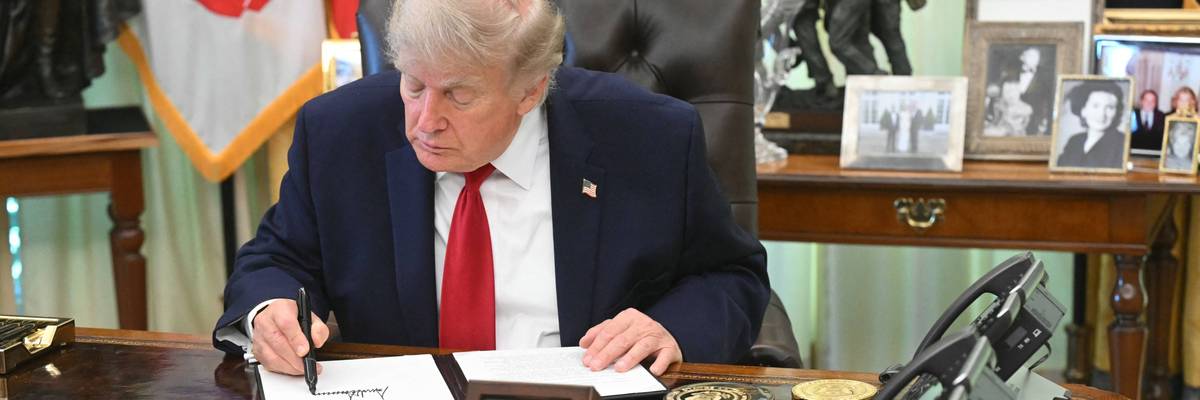
President Donald Trump signs a presidential memo in the Oval Office of the White House in Washington, DC on June 29, 2026.
(Photo by Saul Loeb/AFP via Getty Images)


Jake Johnson
Jul 02, 2026
COMMON DREAMS

US President Donald Trump last year purchased hundreds of thousands of dollars of Abbott Laboratories stock before his Justice Department dropped a years-long criminal investigation into the company, which was accused of misconduct after infant hospitalizations and deaths were linked to one of its baby formula factories.

The stock purchases were revealed in the president’s annual financial disclosure report, which spans 927 pages and shows thousands of trades valued at over $1 billion. Trump’s first purchase of Abbott stock last year was made in late September, and the president bought around $500,000 worth of shares in total in 2025, according to the nonprofit media organization More Perfect Union.

The Wall Street Journal reported on Sunday that “top decision makers” at the Department of Justice shut down the criminal investigation into Abbott—which donated $500,000 to Trump’s inaugural fund—even though “some prosecutors believed they had evidence to criminally charge the company under a law they have used to pursue other businesses for allegedly selling contaminated foods.”

“Prosecutors had been considering a misdemeanor charge against Abbott for violating the federal Food, Drug, and Cosmetic Act and a separate count for misleading the government,” the Journal reported, citing unnamed people familiar with the matter. “Investigators in early 2022 had found traces of a potentially deadly bacteria at its plant in Sturgis, Michigan, including on equipment very close to infant formula containers—as well as a long list of other problems.”

The Food and Drug Administration received reports of at least nine infant deaths linked to baby formula produced at Abbott’s Sturgis plant, which the company temporarily shut down amid fears of dangerous contamination. The Justice Department launched its investigation into Abbott, the largest infant formula manufacturer in the US, in 2023, under the administration of former President Joe Biden.

Trump’s DOJ has taken a far more lax approach to corporate enforcement, reaching sweetheart settlement deals with companies accused of price-fixing, stifling competition, and other illegal activities.

The Journal reported that the Justice Department and Abbott “reached a settlement to resolve” a separate but related civil lawsuit alleging that the company knowingly “failed to follow manufacturing standards to protect against the risk of contamination.”

“That suit, which was joined by 31 states, alleged that Abbott had a ‘culture of concealment’ at Sturgis and ‘withheld information from FDA related to the presence of microorganisms in the Sturgis facility,’” the Journal observed.


Last April, the investigative outlet ProPublica reported that workers at Abbott’s Sturgis plant—which resumed production in June 2022—said the company was still “engaging in unsanitary practices similar to those that led it to temporarily shut down.”

“Current and former employees told ProPublica that they have seen the plant in Sturgis, Michigan take shortcuts when cleaning manufacturing equipment and testing for microbes,” the outlet reported. “The employees said leaks in the factory are sometimes not fixed, a dangerous problem that can promote bacterial growth. They also said workers at the facility do not always take required swabs to check for pathogens while performing maintenance during production. Supervisors have urged workers to increase production and have retaliated against workers who complained about problems, the employees said.

Abbott, whose stock is down significantly year-to-date but up over the past month, called the ProPublica story “misleading” and impugned the motives of workers who spoke to the outlet.

Trump’s purchase of Abbott stock wasn’t the only buy that preceded significant action by his administration.

“On April 8, 2025, the day before Trump announced the tariff pause, the disclosure shows 327 individual stock purchases worth as much as $12.8 million, one of the largest single-day stock buying sprees disclosed in the filing,” Sludge reported on Wednesday. “The purchases included Apple, Microsoft, Nvidia, Amazon, and Alphabet, each valued as much as $250,000, along with scores of other companies. The S&P 500 jumped nearly 10% the following day when Trump announced the pause, one of the largest single-day gains in the index’s history.”

Fox host warns Trump will pay for his 'breathtaking' corruption


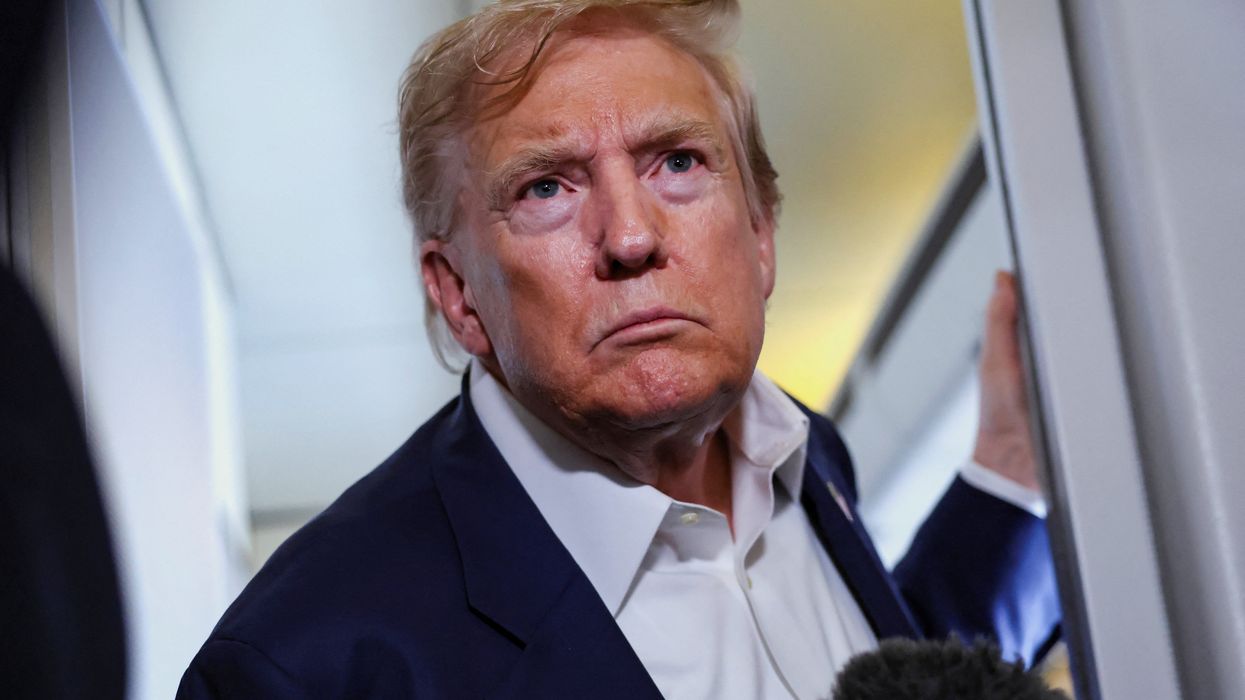
U.S. President Donald Trump reacts as he speaks to members of the media on board Air Force One en route from Scotland, Britain, to Joint Base Andrews, Maryland, U.S., July 29, 2025. REUTERS Evelyn Hockstein

July 03, 2026
ALTERNET

On Friday, Fox News host and political analyst Brit Hume offered a prediction that President Donald Trump is unlikely to appreciate. If the Democrats come out ahead in the midterms, the chief executive could find himself paying big for his "breathtaking" crypto corruption.

Hume's forecast comes in the wake of the president's 2025 financial disclosures earlier in the week, which revealed that his family raked in a shocking $1 billion from its cryptocurrency ventures while Daddy Trump regulated the market. As Mediate explains, "The filing reported roughly $500 million in income from World Liberty Financial, the crypto company founded with his sons Eric Trump, Donald Trump Jr., and Barron Trump, along with approximately $635 million from sales of the $TRUMP meme coin through CIC Digital LLC. The disclosure also detailed hundreds of millions of dollars in income from Trump’s real estate holdings and millions more from licensing deals and other business ventures. The president made more than $2 billion overall."

Another Fox News host, John Roberts, called the numbers "eye-popping," prompting Hume to respond, "It is, John, and I think the right word for this is unseemly, for a president to profit while in office.”


He continued, "Now, it’s not fair to say that he profited from the office, although, you know, that’s surely gonna be subject to investigation — particularly if the Democrats get control of one or both branches of Congress. But, if you wanted seemliness in the White House, Donald Trump was not your man, and if you wanted a guy that wasn’t very rich in the White House, he wasn’t your man for that either. The fact is that he’s a very rich guy, and when you hold the kind of holdings he has, you do get richer. This amount from crypto seems breathtaking, but as the point was made by you and [Treasury Secretary] Scott Bessent, not illegal. So, the people that don’t like Trump won’t like this. The people that do like Trump won’t care very much, in my judgement."

Hume is only partly true in regards to that last assertion. While much of MAGA has remained loyal to the president regardless of his financial improprieties, he's had pushback from some high-profile supporters. The New York Post, for example, which is typically complimentary toward Trump, declared that a recent story involving his sons' profiting off a Kazakhstan mining deal their father struck "stinks to high heaven." According to the Post, "The Lutnick [sons of Treasury Secretary Howard Lutnick] and Trump boys have been sloshing around in the muck since their dads came to power 18 months ago. They’ve profited handsomely from cryptocurrency deals while the government their fathers control were setting crypto policy.”
US-UK Medicine Deal Will Take ‘Wrecking Ball’ to NHS, Causing 229,000 Excess Deaths: Study

“We cannot afford to sit by while our NHS is picked apart by a foreign regime,” said one member of Parliament.


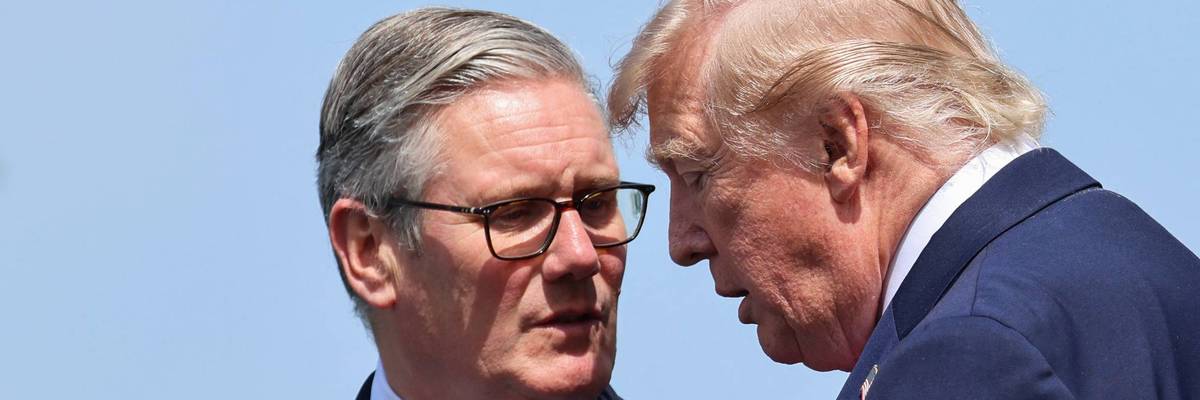
British Prime Minister Keir Starmer and US President Donald Trump speak during the G7 summit, in Evian, France on June 16, 2026.
(Photo by Ludovic Marin/pool/AFP via Getty Images)

Julia Conley
Jul 02, 2026
COMMON DREAMS

One member of British Parliament called on the Labour government to defend the country’s revered National Health Service “with everything we have and firmly stand up to the bully in the White House” after a study published Wednesday showed the UK-US pharmaceutical trade deal brokered last year is projected to cause 229,000 excess deaths as funding is stripped away from the NHS.

“It is a complete insult to patients who are suffering and dying on hospital trolleys and waiting months for treatment,” said Helen Morgan of the Liberal Democrats Party regarding the new analysis. “We cannot afford to sit by while our NHS is picked apart by a foreign regime.”

The study, conducted by researchers at the University of York, the University of Liverpool, and Christchurch Hospital in New Zealand and published in the British Medical Journal, found that £44.7 billion ($59.5 billion) will have to be diverted from health services by 2036 in order to pay for new medications under the deal.

The agreement was reached last December, with recently resigned Prime Minister Keir Starmer’s government agreeing to pay 25% more for new US medications over the next decade. The NHS will double the percentage of gross domestic product that it allocates for pharmaceuticals, from 0.3% to 0.6%, with the spending increasing from 10% to 12% of the universal healthcare system’s budget.

In exchange, the Trump administration agreed not to impose tariffs of up to 100% that he had threatened for UK medicines being imported to the US.

Science Minister Patrick Vallance insisted in April that the deal would give NHS patients access to “life-changing new medicines that they previously would have been denied” while boosting the UK’s “life sciences sector” by avoiding Trump’s tariffs.

“Scandalously, this backroom deal was not subject to any scrutiny in Parliament before being rushed through—and the government refuses to say what impact it will have on the NHS.”

But Sir Ciarán Devane, chief executive of the NHS Alliance, told The Guardian that the study raised “serious questions” about whether Britons will truly benefit from the agreement.

“If billions of pounds are diverted away from frontline care to meet higher medicines costs, the consequences for prevention, community services, and the treatment of long-term conditions could be profound,” said Devane. “The government must urgently publish the full impact assessment and ensure there is appropriate scrutiny of the deal if it could have such far-reaching implications for population health.”

The projected avoidable death toll in the study far exceeds that which the UK saw during the coronavirus pandemic, when 137,000 excess deaths were recorded between March 2020-June 2022.

“If the indirect effect on adult social care is also included, the increase in excess deaths is even greater (291,000),” reads the study.

The greatest number of excess deaths is projected to occur in patients suffering from cardiovascular, respiratory, and gastrointestinal issues as well as cancer.

Patients with “neurological, endocrine, musculoskeletal, and mental health problems” will also face “broader effects on quality of life,” the research states.

The government has assured the public that “frontline services” will be protected, notes the report, but “the NHS will need to fund this deal from allocations made six months before the deal was agreed. The evidence suggests that if additional public expenditure was available, it could be more effectively deployed within the NHS itself.”

The research projected that the greatest number of deaths would occur in cardiovascular, respiratory, gastrointestinal and cancer patients.

It added that there will also be broader harm caused to quality of life for patients in those sectors as well as “neurological, endocrine, musculoskeletal, and mental health problems”.

Tim Bierley, a campaigner with the UK-based group Global Justice Now, said that the report “adds to the overwhelming evidence that the Trump medicines deal risks taking a wrecking ball to our health and our economy.”

“Billions that could be spent on recruiting more NHS staff, cutting [general practitioner] waiting times, or improving our hospital care are set to be siphoned off by corporate giants in the pharma industry,” said Bierley, whose group has joined the campaign Just Treatment in filing a legal challenge against the deal. “Scandalously, this backroom deal was not subject to any scrutiny in Parliament before being rushed through—and the government refuses to say what impact it will have on the NHS.”

“The next prime minister,” said Bierley, “must change direction, stand up for our NHS, and unpick the mess left by their predecessors.”