Colombia: A Fractured Society Under U.S. Influence

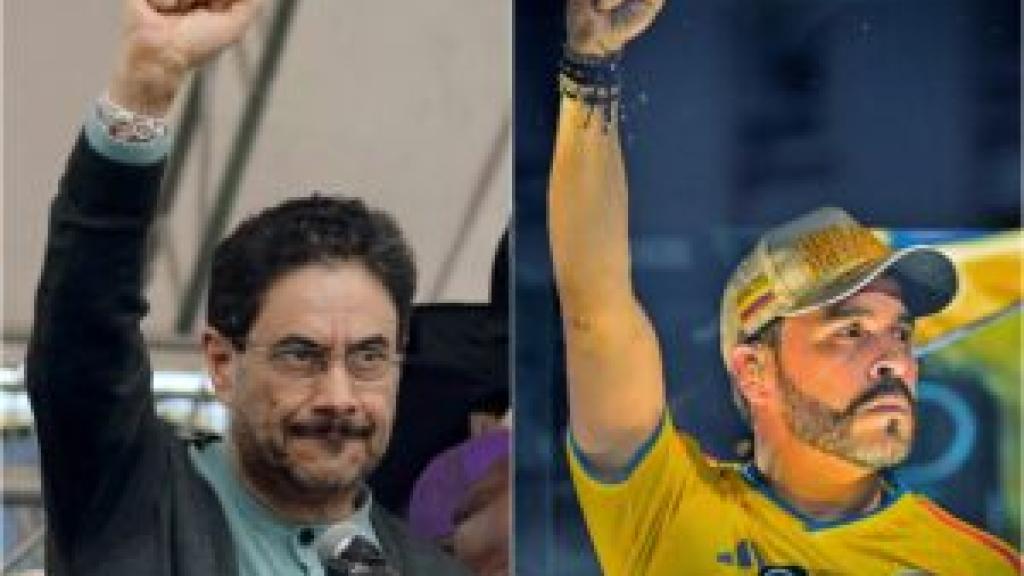
While President Donald Trump celebrated the 250th anniversary of U.S. independence in Washington July 4th with a megalomaniacal speech, Iván Cepeda, Colombian senator and candidate for the ruling Historic Pact candidate, warned that he would not recognize the victory of far-right candidate Abelardo de la Espriella unless he renounces his U.S. citizenship, withdraws his campaign promise to extradite and prosecute President Gustavo Petro, and commits to preserving key social reforms implemented by the Historic Pact government. Speaking to a rally in Cali, Cepeda also launched a new initiative to win upcoming governor, mayor, state assembly, and city council races in the October 2027 elections.
De la Espriella countered by accusing Petro of planning “a coup d´etat” and vowing to defend the results of the election with force, if necessary. He has announced plans to implement a set of measures to militarize the country kowtowing to Washington’s interests, and in stark contrast to current President Gustavo Petro’s commitment to dialogue. It’s no coincidence that the president-elect decided not to hold the presidential inauguration ceremony in Bolívar Square or at the National Capitol, but rather at a military base, in his own words, to pay tribute to “the true heroes of the nation: police officers and soldiers.”
The Constitution requires Congress approve the unusual request to move the civil ceremony to a military base, but clearly “El Tigre,” as he is known, has chosen to begin his term surrounded by tanks and troops. The high level of confrontation between the political forces that faced off in the June 21 election places the country in a state of tension that could lead to social upheaval.
From Acknowledging Victory to Peaceful Civil Disobedience
Iván Cepeda’s declaration in Cali that he will not recognize Abelardo de la Espriella as president of the Republic unless he complies represents a major change in stance. Cepeda accepted defeat three days after the election. The official vote count pronounced De la Espriella the winner by a margin of less than one percentage point (49.6% vs. 48.7%). Cepeda’s strategy now involves phased legal and political resistance, separating the realm of electoral data from questions of constitutional legitimacy.
Cepeda argues that his current stance does not contradict his previous one, since he quickly accepted the election results as an act of democratic maturity to prevent outbreaks of violence. He maintains that the vote count does not automatically satisfy all constitutional requirements that the elected candidate must meet to take office. His decision not to recognize De la Espriella under the current circumstances came after De la Espriella’s team confirmed June 30 that he would not renounce his U.S. citizenship. Cepeda argues that governing Colombia while under an active oath of allegiance to a foreign power violates Article 188 of the Constitution (the president symbolizes national unity) and renders the upcoming inauguration on August 7 an illegitimate act.
The U.S. Oath of Allegiance that De la Espriella swore to states in part: “I hereby declare, on oath, that I absolutely and entirely renounce and abjure all allegiance and fidelity to any foreign prince, potentate, state, or sovereignty, of whom or which I have heretofore been a subject or citizen;…” From a strictly ethical and political standpoint, it is very difficult to accept that the commander-in-chief of the Colombian Armed Forces has sworn to defend another country’s interests above any other allegiance.
If De la Espriella had renounced his U.S. citizenship, he would have left the opposition without a leg to stand on. His platform entails a profound, radical, and strategic alignment with U.S. foreign policy, and with the power of the presidency and millions of dollars at his disposal, he could dramatically shift Colombian policy in favor of the Trump administration.
But the extreme right politician refuses to yield to any pressure from the leftist opposition, after building his campaign narrative on his macho image and restoring top-down authority. Cepeda also demanded that De la Espriella clarify whether he is a “U.S. agent”, since, as a criminal defense attorney, he defended a former paramilitary leader who was an informant for the U.S. Drug Enforcement Administration (DEA).
For these reasons, Cepeda announced “civil disobedience against the violation of national dignity” and called on the 12.7 million Colombians who voted for him to follow his example. He said that “when the law, institutions, or authority conflict with moral conscience, citizens not only have the right but also the duty to resist peacefully, refusing to collaborate with injustice, disgrace, or oppression.”
The senator has also called for a major drive to recruit members to the Historic Pact to capitalize on the electoral fervor of recent months. In these next months, the party aims to consolidate its position as the leading political representation of the left. Cepeda emphasizes that his proposal is peaceful and compared it to the actions of Nelson Mandela or Martin Luther King, adding that the specific actions will be determined in consultation with social organizations. He said the main focus will be on disobeying laws and arbitrary measures that violate the Constitution.
The Economic and Security Program
De la Espriella’s central economic proposal, known as “Patria Milagro”, focuses on an aggressive pro-market model and an iron-fisted security policy. On the economic front, it includes austerity and downsizing the state, cutting the government apparatus by 40%, eliminating nearly 700,000 public sector jobs, merging ministries—including not restoring the work of the Ministry of Equality that was dissolved by the court the day before the elections–, tax cuts for the corporate sector and tax incentives to encourage private investment, the resumption of fracking, and doubling national oil production.
Regarding the defense and public order strategy for the 2026–2030 period, his “Second-Generation Democratic Security” plan relies on direct and deep cooperation with U.S. agencies. Specific aspects of the program include technological exchange and access to databases to streamline extradition processes for leaders of criminal gangs and drug trafficking organizations, increasing the National Navy’s presence in the Pacific and the Caribbean in interdiction operations closely coordinated with U.S. Southern Command (responsible for at least 211 extrajudicial executions in the region), resuming eradication of illicit crops using technologies provided by U.S. security contractors, advanced commando courses taught by U.S. Special Forces advisors, and cancellation of any negotiation or truce process with illegal armed organizations, among other measures. Furthermore, in typical Bukele fashion, De la Espriella has announced a plan to build ten large-scale prisons at an estimated cost of 8 billion dollars, and carry out joint operations and extensive military exchanges with the Trump administration to ostensibly combat drug trafficking.
After the election of De la Espriella, Secretary of State Marco Rubio gushed that “Colombia’s best days are yet to come” and issued an official statement outlining, vaguely, three key areas in which the Trump administration will work with the new government beginning August 7:
+ Make significant progress in regional security cooperation and the fight against drug trafficking
+ Jointly curb illegal immigration to the United States
+ Prioritize strengthening economic and trade ties
De la Espriella confirmed that starting August 7, Colombia will formally join the Trump administration’s security program, linked to the White House’s strategic doctrine, “Greater North America”. This plan, announced last March, seeks to redraw the perimeter of U.S. security and economic influence from Greenland to Ecuador, positioning Colombia as the primary defensive stronghold and military ally in northern South America, now considered “Greater North America”.
He also announced Colombia will join the Shield of the Americas, also created in March 2026 and made up of the far-right governments in the region. According to President Trump, the heart of the agreement “is a commitment to use lethal military force to destroy the sinister cartels and terrorist networks once and for all.” By designating drug cartels as terrorist organizations, not only is the use of lethal force permitted, but so are unilateral operations in the territories where they operate. During the inauguration ceremony, attended by 12 Latin American countries, National Security Advisor Stephen Miller stated that the United States “will not cede a single inch of territory in the hemisphere to its enemies or adversaries,” and admitted that the Trump administration is using “hard power, military power, and lethal force to defend the American homeland.” For nationalist sectors, many popular organizations and the left-wing opposition in Colombia, this level of coordination is seen as an alarming loss of autonomy and a surrender of national sovereignty to the expansionist interests of the United States.
The U.S. government and the international extreme right is preparing to back up De la Espriella. Shield of the Americas leaders issued a joint statement on Colombia July 10 warning, “We reject any action, statement, or decision that seeks to delegitimize the mandate conferred by the citizens…”
The March of Resistance
The new administration will presumably take office Aug. 7 amid an unprecedented political and social upheaval in the country. The president-elect has ordered the formal suspension of the presidential transition process across various state institutions because Gustavo Petro declared on social media that he does not recognize the legitimacy of De la Espriella’s victory. Petro announced that his term officially ends on August 6 at midnight and he will not hand over the presidential sash to his successor any time sooner.
Petro has called for a massive national march on July 20, Colombia’s Independence Day. He noted that the demonstrations in public squares across the country will serve as a “shout for independence,” to defend social reforms, and to listen to his official farewell address as head of state. The nationwide organization of the demonstrations seeks to lay the groundwork for resistance and to build toward regional elections in October of next year.
De la Espriella takes office amid strong, already declared civil resistance. Widespread dissent will almost certainly lead to a constant standoff between the streets and the presidential palace. By refusing to recognize the authority of the new executive branch’s directives, the opposition will turn to ongoing social mobilization as its primary counterweight to state power. As the new government prepares to impose state authority from the top down, the opposition is gearing up to challenge that authority from the streets. An historic struggle for state power is brewing in Colombia, with uncertain consequences for the nation and the region.
Electoral setback in Colombia opens a new phase of struggle
First published at New Politics.
The razor thin loss of the left in the presidential election in Peru and the left’s rejection of the legitimacy of the election of US citizen and ultra-right candidate Abelardo de la Espriella in Colombia have set the stage for a new period of social and class conflict in Latin America.
The political temperature in Colombia continues to rise following the contested official election results that have made extreme-right wing candidate Abelardo de la Espriella the presumptive president elect.
President Gustavo Petro has rejected the electoral results and called for national demonstrations on July 20 th , the day the new congress is to be seated. He wrote on X,
“The president of Colombia does not recognize the legitimacy of the incoming government. Abelardo did not win the elections.
“The national majority is called upon this July 20th to raise the cry of national independence in all public squares.”
Since the elections
On June 24, three days after the final round of Colombia’s presidential election, Senator Ivan Cepeda, the presidential candidate of the left-wing Pacto Historico and Alianza por la Vida, conceded the presidential race to Abelardo de la Espriella, the right-wing candidate and now the presumptive president elect of Colombia.
Cepeda said, “At this stage of the scrutiny of the ballots and voting, I have decided to accept the results of that process. They indicate that Abelardo de la Espriella is the new president of the Republic. I do it as an act of democratic responsibility… However, acceptance of the electoral result does not mean giving up the truth or remaining silent in the face of events that we consider serious and that marked this presidential campaign.”
Then, just six days later, Cepeda demanded that de la Espriella renounce his US citizenship and his ties to US intelligence and police agencies as a condition of assuming the presidency of Colombia. De la Espriella is a citizen of Colombia by birth, a naturalized citizen of the United States who has sworn to renounce all allegiances to all other countries, and also a citizen of Italy.
Cepeda called on the judicial authorities to act to protect Colombian sovereignty and called on the people of the country to engage in peaceful civil disobedience if de la Espriella does not renounce his ties to the USA.
President Gustavo Petro’s rejection of the election results and call for demonstrations began with the statement that,
“We have all the information regarding the IP server located in Los Angeles, California, owned by the Bautista brothers, which was integrated into the vote counting operation. Algorithms were used that substantially altered the vote count in favor of Abelardo. The algorithms that rigged the election results were used with the voter registration lists of those who never vote, replacing them with voters who could vote multiple times or with no registered voters at the polling stations.
“The polling stations abroad where Abelardo obtained 177,000 more votes than Cepeda had poll workers from Colombia who were not residents of the US or Spain, which is illegal. These polling stations also included voters brought in for the World Cup who were able to vote seven times using the names of those who never vote.
“The same thing happened in several regions of Antioquia and Medellín, in Norte de Santander, and at polling stations in northern Bogotá…. “The company that supplied the Bautista brothers with flawed algorithms and other support is an Israeli private intelligence firm called BlackCube.”
The opaque vote collection and counting software is owned by a private firm known as Thomas Greg and Sons. The company is owned by the Bautista family, Colombians now based in the United States. They have close ties to right-wing establishment politicians in both the United States and Colombia, and some of them have been convicted of financial crimes in the USA.
Separately, Petro announced that the government has uncovered evidence that a prominent Trump supporter in the United States named Dan Newlin had illegally donated $1.8 million to de la Espriella’s campaign. Newlin is a criminal defense attorney who has offices in Florida, Illinois, and in Medellin, Colombia. Trump had nominated him to be US ambassador to Colombia, but the nomination was rejected by the GOP dominated Senate Foreign Relations committee.
De la Espriella’s political position is rapidly deteriorating before he can even take office. Now, he says that his first action in office will be to issue a decree to establish an “urban defense force” reminiscent of Convivir, the legal cover used in the past by the Colombian paramilitary militias and death squads.
Although the situation in the country is very fluid and uncertain, tensions are rapidly rising between the left and right in Colombia, and between Latin American countries and the United States.
Who really won the election?
The National Election Council’s official vote count gave Abelardo de la Espriella 12,959,542 votes, less than 1% more than the 12,708,712 votes of Senator Ivan Cepeda. The voter turnout of 63.6 % was a record for this country.
The final complete official results were announced even though there had already been more than 57,000 challenges to irregularities such as vote buying and electronic fraud before Petro’s own announcement.
The widespread incidents of various types of fraud and irregularities had already led many supporters of the Pacto Historico to question Cepeda’s concession.
Luis Guillermo Perez Casas, a leader of the Pacto Historico, is heading the effort to collect evidence throughout the country at acciondenulidad2026@gmail.com. Casas is a human rights lawyer who served as Secretary General for the Americas of the International Federation for Human Rights (FIDH). So far, nearly 200,000 Colombians have signed up to help the effort.
A wide variety of irregularities and frauds have been recorded in addition to those related directly to US intervention. They include votes cast by dead people and children, photos of votes used to collect payments from vote buyers, officials of the registrar of voters preventing poll watchers from doing their jobs, and changes made to vote certifications after they had been filed.
If the vote count is not overturned, de la Espriella will take office on August 7. Until then, the current leftwing president, Gustavo Petro, will remain in office although he has already begun the transitional process of handing over the government to de la Espriella.
Under Colombia’s constitution, the losing candidate of the final round of voting for president automatically becomes a member of the country’s newly elected Senate. Nevertheless, the right is now talking about trying to block Cepeda from taking his seat in the senate if Cepeda does not recognize the official election results. If seated, Cepeda will become the President of the Senate (with powers similar to the Senate majority leader in the USA) since the Pacto Historico has the largest block in the Senate. The members of the newly elected Senate and Chamber of Representatives will be seated on July 20.
A polarized and divided country
This election continued trends apparent in the last election: while the multiparty system lives on in the legislative branch and in departmental and municipal governments, Colombia’s multiparty system is collapsing towards a new two-party system in presidential elections and the center is disappearing.
The new binary system is not a repeat of the old system of the Liberal Party and Conservative Party. Those old parties were led by different sections of the ruling class which had evolved from before the country’s struggle for independence. Their corrupt but violence plagued rule was transformed with the inauguration of the country’s 1991 constitution.
Instead, those two old parties and the various factions and machines of which they had been composed are now coalescing into one new right wing ruling class conglomeration.
They still hate each other as much as ever, but more than they hate each other, they fear the growing power of the working class and the oppressed. That power is coalescing into the new political party called the Pacto Historico.
The Pacto Historico is the current incarnation of a series of electoral coalitions of the left which formed for reasons more closely related to electoral law requirements and a drive to elect leaders of the left than from any serious desire to create a unified party of the working class and the oppressed. Despite its often reactive, haphazard, and improvised history, the Pacto has become a very close approximation to a mass party of the working class and oppressed. Its voter base consists mostly of the urban working class, and the organizations which support it include the country’s unions, much of its indigenous and Afro-descendant populations, and large parts of the feminist, LGBTQ+ and environmentalist movements.
A good approximation of the ascendant growth curve of the left in Colombia is found in its presidential election results which you can see in the chart below.
| Year | Candidate | Party | First Round | Second Round | ||
|---|---|---|---|---|---|---|
| votes | % | votes | % | |||
| 2002 | Luis Eduardo Garzon | Polo Democratico Independiente | 680,000 | 6.16% | ||
| 2006 | Carlos Gaviria Polo | Democratico Alternativa | 2,613,000 | 22.03% | ||
| 2010 | Gustavo Petro | Polo Democratico Alternativa | 1,331,000 | 9.14% | ||
| 2014 | Clara Lopez | Polo Democratico Alternativa | 1,958.5180 | 15.22% | ||
| 2018 | Gustavo Petro | Colombia Humana | 4,855,069 | 25.09% | 8,040,449 | 41.77% |
| 2022 | Gustavo Petro | Colombia Humana/Pacto Historico | 8,542,020 | 40.34% | 11,292,758 | 50.42% |
| 2026 | Ivan Cepeda | Pacto Historico/Alianz a por la Vida | 9,688,361 | 40.90% | 12,708,712 | 48.70% |
It’s worth noting that in 2010 and 2014, the Green Party ran presidential candidates which took votes away from the candidates of the Polo Democratico (In 2010 Antanas Mockus received 3,134,000 votes or 21.51%, and in 2014 Enrique Peñalosa received 1,064,000 votes or 8.27%.) Those were the only elections in which the Greens ran presidential campaigns in this country.
The Cabinet of Los que Siempre (Those who have always)
Much has been made of de la Espriella’s slickly packaged campaign, use of social media and artificial intelligence, and clever campaign slogans. Although all of this is true, the keys to his victory lay in the fact that he was an unknown quantity who appeared to be conservative and on the right. Unofficially and behind the scenes, his campaign united the political machinery of the right-wing parties to mobilize the conservative layers of Colombia’s middle class.
He campaigned as a political outsider, using the campaigns of Donald Trump in the USA, Nayib Bukele in El Salvador, Javier Milei in Argentina, and Rodolfo Hernandez here in Colombia (the candidate of the Colombian right who lost the 2022 presidential election) as his templates. As in those campaigns, de la Espriella is far from being an outsider, but he was a blank slate to the public. His dark past as a front man for the paramilitary AUC, as an attorney for drug dealers, money launderers and corrupt politicians, and as a close collaborator of the DEA and FBI, only began to become public as the campaign neared its end.
His campaign was built on lies. A man who had professed to be an atheist, he embraced religion and appealed especially to the growing evangelical churches of the country. He has placed two of their leaders in his new cabinet.
Knowing that the conservative petty bourgeoisie of the country had turned their backs on the traditional right-wing leadership, he promised he would make no deals with the traditional political parties and form a government of “los que nunca” (‘Those who never’ which means something like “the have nots” in English.) The slogan was a promise to rid the country of the corrupt right-wing politicians while remaining true to conservative values.
His choice of a vice president should have told his voters that this was a lie.
The new Vice President, Jose Manuel Restrepo, is a Colombian blue blood who is the descendant of three presidents and who was Minister of Finance in the scandal ridden government of Ivan Duque. Restrepo appears to be the de facto leader of the new government. Since the election, de la Espriella has disappeared from public view while Restrepo is constantly in the news and is leading the transition team of the new government.
If the choice of Restrepo did not alert de la Espriella’s voter base to his bait and switch game, his cabinet appointments have. His newly minted ministers mostly served in the right-wing governments of Alvaro Uribe and Ivan Duque, and key members are drawn from the elite of two of the most corrupt family dynasties of Colombia’s right: the Char family of Barranquilla which now controls the party known as Cambio Radical, and the Pastrana family which dominates the Conservative Party. That party’s patriarch is former President Andrés Pastrana who is famous for his 33 entries in the Epstein files.
| Faction | Name | Ministry | Notes |
|---|---|---|---|
| Char Family | Elsa Noguera | Minister of Transportation | Husband is a convicted drug dealer |
| Char Family | Rodrigo Lara Restrepo | Minister of the Interior | His father was a Minister of Justice who was assassinated at the orders of Pablo Escobar. |
| Char Family | Mauricio Gómez | Minister of Foreign Commerce | |
| Pastrana Family | Miguel Gómez Martínez | Minister of Finance | Grandson of Laureano Gomez, the most extreme right wing President in the history of Colombia. |
| Uribe Machine | Iván Cancino González | Minister of Justice | (Uribe, Gilinski, Odebrecht) |
| Uribe Machine | Lorena Angarita | Minister of Technology, Information and Communications | internet activist and senatorial candidate with no apparent education or qualifications |
| Uribe Machine | Paloma Valencia | Mines and Energy | Official Presidential candidate of Alvaro Uribe’s Centro Democratico |
| Evangelicals | Viviane Morales | Minister of Education | Former Procurador |
| Evangelicals | Jaime Andres Beltran | Minister of Housing | Former Mayor of Bucaramanga removed from office for violating election laws. |
| National Salvation Party | Retired General Jorge Eduardo Mora López | Minister of Defense | Career military officer closely connected to DEA. Removed by Petro from chain of command after he was investigated, but not convicted, for corruption. Senatorial candidate for the extreme right wing National Salvation Party |
| Unaffiliated | Fabio Alberto Arjona Hincapié | Minister of the Environment | A supposed environmentalist who supports fracking as well as strip mining of sensitive environments in the Andes |
Plans and threats
De la Espriella has made many promises and threats which involve aggressively using executive decrees rather than going through the legislative processes beginning with his attempt to use the transition process to witch hunt members of the current government.
Much of what he wants to do requires legislative action under the Colombian constitution, and other goals are flatly unconstitutional. While his campaign claims that all of the parties in the legislative branch except the Pacto Historico and the Alianza Verde have agreed to support the new government, this has not been confirmed by all of the party leaders, and even if they do, it is unlikely that they will be able to control all of their own parties’ legislators.
De la Espriella says he wants to diminish the size of the state, transfer powers and revenue from the central government to the notoriously corrupt departmental and municipal governments; encourage private investment, mining and fossil fuel; and launch a major offensive against armed groups and drug-trafficking organizations. All in the first 100 days of his government.
He also plans to resume aerial coca eradication using bioherbicides, build 10 Bukele style mega-prisons, revoke decrees against the use of the armed forces against civilian populations, subsidize the private health care system with an additional 10 trillion Colombian pesos, and launch a witch hunt against Gustavo Petro, officials who have served in his government, and the Pacto Historico.
More than these publicly advertised measures, de la Espriella has proposed to roll back the pension and land reforms of the Petro government, and despite his public pronouncements to the contrary, is expected to try to roll back the major gains in the minimum salary made under Petro’s government and improvements made to public education.
Where did the votes come from?
Regardless of whether de la Espriella’s election is legitimate and regardless of how many votes were falsely attributed to de la Espriella, Colombia is clearly divided into four major political sectors: the approximately 16,000,000 people who were eligible to vote but did not, the almost 10,000,000 politically active working class and oppressed voters of the Pacto Historico in the first round of voting, the 12,000,000 politically active middle-class and upper middle-class voters who voted for the right in the first round of the elections, and about 2,000,000 politically active swing voters.
A close look at the statistics and maps reveals that the Pacto Historico’s votes came from the poor and working-class neighborhoods of the big cities and from the Afro-Colombian and Indigenous regions of the country. In contrast, the votes of the right come from the middle class and upper middle-class neighborhoods of the big cities, and from the small cities and towns in the Andean region of the country which are still dominated by the old political machines. These same areas also account for much of the politically inactive population. Swing voters can be found everywhere but are mostly concentrated in the middle-class neighborhoods of the big cities.
This election revealed two big changes in the electorate. First, a large number of people who had never voted turned out at the polls, and most of these new voters supported the Pacto Historico. Second, the middle classes shifted to the right. The Pacto Historico’s winning margins decreased in some cities including Bogotá and in middle-class and upper middle-class precincts throughout the country.
This shift can be attributed to several factors. First, despite falling crime rates, the mainstream media has spent four years amplifying every crime committed in every city of the country and blaming Petro’s government for them. Second, Petro’s program of Paz Total (Total Peace) has failed to bring about the disarmament and demobilization of the armed groups that control the illegal drug trade and some isolated rural areas of the county. Third, the conflict between Petro’s government and the private health care industry has resulted in delays and denials of health care among patients who pay for premium health care services, and this has angered much of the
middle classes.
Fourth, the large increase in the minimum salary has caused the monthly administration fees in condominium complexes to go up and has increased the pay for the millions of women who work as maids and house cleaners. This has infuriated these voters even when they would be embarrassed to say so.
From 1970 to 2026 This election echoes the tumultuous election theft of 1970 but is very different in many, many respects. From 1958 to 1974, the two traditional parties of the Colombian ruling class, the Conservatives and Liberals, ruled the country in a more or less friendly power sharing agreement. Each party agreed to let the other party rule and take the lion’s share of the spoils of office for four years, and to then take over for their own turn at stealing from the public trough.
This agreement was called the National Front. In 1970, it was the Conservative Party’s turn to win the presidential election, so the Liberal Party did not run a presidential candidate. Unfortunately for the two parties, the former military dictator, Gustavo Rojas Pinilla, who had been turned out of power by the National Front agreement, decided to run against the Conservative Party candidate, Misael Pastrana.
Pinilla was winning the election when the government stopped reporting results, then declared a state of emergency, and then declared that Pastrana had won the election. For days after the election, there was fighting in the streets, and schools and business were closed.
Three years later, a new guerrilla movement, the April 19 Movement (Movimiento del 19 de abril, M-19), was formed in reaction to the election theft. Its most important aim was to fight for the simple democratic right of one person one vote. As a youth, Gustavo Petro joined M-19, and not much later, Ivan Cepeda joined the legal political party that it became after it demobilized in 1990. Both the Pacto Historico and the Alianza Verde are in important ways descended from M-19.
This time around, the right-wing will have a much more difficult time stealing the election. For one thing, Gustavo Petro is still president and commander in chief of the Colombian military, police and intelligence agencies. Even though the right wing maintains a powerful network within the miliary, police and government bureaucracy, it is far from having the control it exercised in 1970.
On the other hand, the Colombian left now has a mass party which did not exist in 1970, and most of the left has come in from the cold from its terrible detour into guerrillerismo.