Sunday, July 19, 2026


American Jews face a Democratic Party rethinking unconditional Israel support

(RNS) — A growing number of Democrats, and a growing number of American Jews, no longer want the U.S. to issue Israel a blank check.
Palestinians inspect damage to their tents following an Israeli airstrike in Khan Younis, Gaza Strip, Tuesday, June 30, 2026. (AP Photo/Abdel Kareem Hana)


(RNS) — American Jews woke up to a stark new reality Wednesday: Decades of unequivocal support for Israel is no longer a key plank of the Democratic Party.

That reality was plain when almost half of Democrats in the House of Representatives (103 out of 212) voted Wednesday (July 15) to cut all $3.3 billion in military and humanitarian aid to Israel from a foreign affairs spending bill. The measure failed and only one Republican supported it — Republican Rep. Thomas Massie of Kentucky, who sponsored the amendment to the bill.

But it underscored an emerging reality, that unconditional support for Israel’s actions in Gaza, the West Bank and Lebanon are no longer deemed acceptable by as many as half of elected Democrats.

Ian Lustick, professor emeritus of political science at the University of Pennsylvania and a consultant to past administrations on Israel, likened the result of the vote to a balloon popping.

“There’s a principle in physics and politics of constrained volatility,” Lustick said. “If there’s a tremendous amount of discontent that’s constrained over time because people are afraid or prevented from expressing it, it comes out explosively and fast, and that’s what happened.”

A growing number of Americans, including a growing number of American Jews, have soured on the Israeli government in the wake of the war in Gaza, with some calling it a genocide. Israel’s military assaults on Gaza, launched after Hamas’ October 7, 2023, attack on Israel that killed 1200 Israelis, have left more than 73,000 dead, according to the United Nations.

House Minority Leader Hakeem Jeffries, D-N.Y., speaks to reporters Thursday, July 16, 2026, at the Capitol in Washington. (AP Photo/J. Scott Applewhite)

Hakeem Jeffries, the top Democratic leader in the House, hinted as much. In a letter to his colleagues, Jeffries said he was voting against the amendment but would not pressure his colleagues to vote with him.

“For the good of Israel and the Palestinian people, American policy in the Middle East must change,” he wrote.

His predecessor, Rep. Nancy Pelosi, the former House speaker, went further and voted in favor of cutting aid to Israel.

“The American people are rightfully demanding an end to a perpetual cycle of war, and the Netanyahu government cannot maintain its current course,” Pelosi said in a statement. “Therefore, while this amendment is ill-conceived, I vote yes for the message that it sends.”

Ahead of the 2026 midterms, Democrats are facing increased pressure. Mainstream Democrats in Colorado, Illinois, New Jersey and New York have lost high-profile primary races to progressives who campaigned on ending U.S. military support for Israel.

Most notably, in a New York House district race, Brad Lander, who is Jewish and repeatedly described Israel’s military campaign in Gaza as a genocide, soundly beat Rep. Dan Goldman, the incumbent who, while criticizing some Israeli government actions, received funding from the American Israel Public Affairs Committee, one of the top-spending political groups in U.S. elections supporting pro-Israel candidates. (Goldman, during the campaign, said he felt AIPAC had been singled out.  “I do think there is an undercurrent of antisemitism in the degree to which AIPAC seems to be vilified,” he said.) 


RELATED: New polls show plummeting support among faith groups for Israeli government, Netanyahu


To some Israel supporters, such as Rep. Josh Gottheimer, a Democrat from New Jersey,  the vote was devastating. “I think people are bowing to political pressure instead of actually looking at the facts on this,” he told Politico.

Establishment Jewish institutions remain staunch supporters of Israel and oppose cuts in U.S. aid. The American Jewish Committee said in a statement it was “deeply disappointed” that so many lawmakers voted in favor of cutting all aid to Israel. The Jewish Democratic Council of America  called the vote a “cynical ploy by Republicans to divide Democrats.”

But more American Jewish institutions are also acknowledging criticism of Israel.

The Religious Action Center of Reform Judaism, the lobbying and advocacy arm of the country’s largest Jewish denomination, sent a letter to U.S. House members imploring them to vote against the measure to strip Israel of aid even as it acknowledged “genuine concerns about Israel’s conduct.”

“The behavior of the Israeli government is embarrassing,” Rabbi Jonah Dov Pesner, the center’s director, told RNS. “I can see why people are frustrated. But that doesn’t mean you just kind of summarily cut off aid. You have a rational conversation among allies, and you figure out what (are) the right policies (that) make sense to keep everybody safe.”

J Street, a progressive group long supportive of a two-state solution, said it opposed the House measure but that members could in good conscience vote “yes,” “no,” or “present,” because it was “one of the few opportunities to cast a recorded vote expressing opposition to the way American military assistance and American-supplied weapons have been used by the Israeli government.”

Dov Waxman, professor of Israel Studies at UCLA, said a divided Democratic Party is exactly where American Jews are, too.

“The Democrats’ position is not out of step with the views of many, if maybe not most, Jewish Americans,” Waxman said. “The idea that we’re going to send $3.3 billion dollars of military aid to Israel, without regard for what Israel is doing in the West Bank or in the Gaza Strip, that is something that most Americans, and at least a plurality of American Jews, oppose as well.”

Waxman said the House vote doesn’t signal an end of all support for Israel but an end of the blank check policy of unconditional support. 

A poll of American Jews earlier this year found that 70% of American Jews oppose unconditional military and financial assistance to Israel. (That 70% was broken into two categories: 26% said the U.S. should stop providing aid to Israel, and 44% said the U.S. should condition military and financial assistance to Israel by requiring Israel to comply with U.S. law.)

Among U.S. Jews under 35 years old, 51% favored stopping all aid to Israel, the poll commissioned by J Street found.

American Jews, about 70% of whom vote Democratic, also hold negative views of President Donald Trump. Asked if they might abandon the Democratic Party in light of its wavering support for Israel, Lustick said he doubted it.

“The visceral hatred of Trump is so deep that they will not vote Republican,” said Lustick. “There might be less enthusiasm for some Democrats, but we’ll learn a lot from the upcoming election.”

 

Some World Cup fans are blaming Brazil’s loss on evangelicals

(RNS) — ‘If we pray like a gringo, then we play like a gringo,’ fans claim in the debate over whether Catholic or Protestant faith favors football champions.
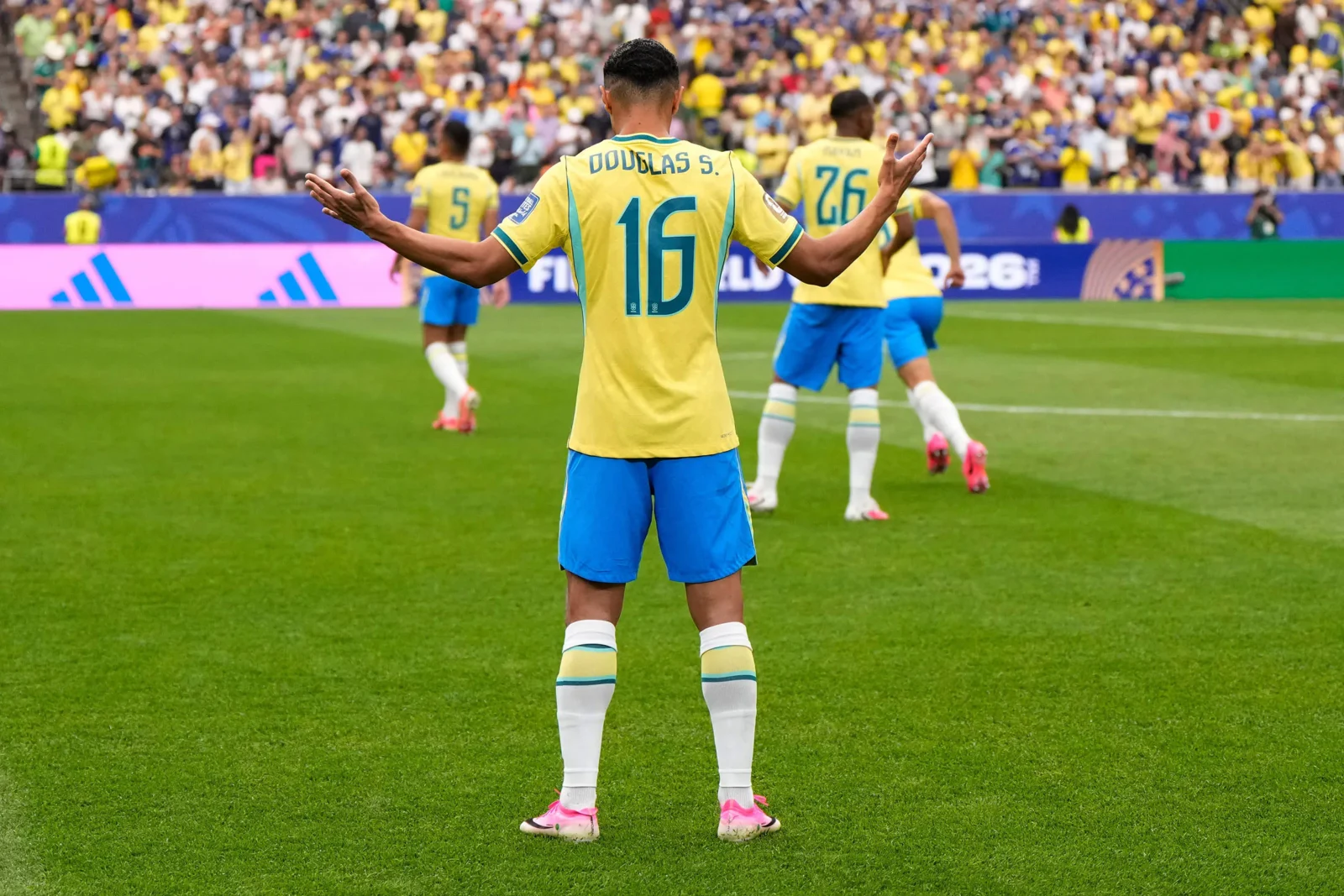
Brazil's Douglas Santos (16) prays before the World Cup round of 32 soccer match between Brazil and Japan in Houston on Monday, June 29, 2026. (AP Photo/Ashley Landis)


(RNS) — Brazil’s loss to Norway on July 5 eliminated the team that has won more FIFA World Cups than any other nation — five — and is the only one to have played in every edition of the tournament. But they haven’t tasted victory in more than 20 years.

The glorious days of Pelé earned him the admiration of fans far beyond Brazil. He led the team to FIFA World Cup victory three times between 1958 and 1970 and helped give the national team — the Seleção — a passionate global following that reached well past Latin America.

The players Ronaldo, Ronaldinho and Rivaldo, who lifted the trophy in 2002, charmed fans of the world’s most popular sport with their dribbling and “jogo bonito” (beautiful game).

The newer generations of the national team have spent years being measured against those memories. But after this early exit in the round of 16, fans and commentators online have circulated a theory. The team’s change in playing style, they argue, mirrors the religious transformation that’s been under way in Brazil for decades: The more evangelical the country has become, the worse their national team has performed.

Or, as one widely shared post put it, Brazil is suffering a “historic loss of aura.” Another popular line in the debate simply says: “If we pray like a gringo, then we play like a gringo.”

These fans link Catholicism, once the country’s overwhelming majority faith, to improvisation, the samba and the dribbling of past generations. Popular Catholicism in Brazil is often understood as more communal and festive, making fewer severe demands of religious commitment on its adherents, while evangelicalism in Brazil is more often associated with prohibitions and austerity. The fans supporting the theory associate evangelical growth in the country — and in the faith most current players themselves profess — to a more structured, austere, rigid way of playing.

The census numbers behind the internet theory are real. Brazil’s transition away from a Catholic majority has been one of the defining religious stories of Latin America over the past 40 years. Evangelical Christians, who made up roughly 9% of Brazilians in 1991, reached 27% by 2022, while Catholics fell from 83% to 57% over the same period.

Of the eight nations that have won the World Cup, six (Brazil, Italy, Argentina, Uruguay, Spain and France) are majority Catholic. The other victors, England and Germany, also have a fair share of Catholics.

More than three-fourths of Brazil’s current team are evangelical Christians. 

“But transposing that onto the players’ behavior and performance is a stretch,” said Pedro Feitoza, a historian of religion in Latin America and assistant professor at the University of Edinburgh. He attributes the theory mostly to nostalgia for the past, when Brazilian Catholics made up a strong majority.


The reasons for the shift are many, Feitoza told RNS, including the legal ease of opening a new church in Brazil. In many evangelical denominations, leaders rarely go through seminary training. And the movement’s responsiveness to pressures faced by lower-income Brazilians offers a sense of belonging and community along with the promise of upward mobility. There is also a tradition of individual evangelism, in which congregants are encouraged to convert friends, neighbors and relatives.

Still, close observers agree that Brazil’s national team has changed the way it plays.

“The traditional Brazilian style was boldness, dribbling, individual plays, less concern with tactics, offensive play,” Júlio Nascimento, a Brazilian sports journalist, told RNS. But he attributed the change to the way Brazilian players now leave for Europe very young and develop within a European style of play. They become pragmatic and tactically obedient, he said, with individual talent subsumed by the system.

An image of the Virgin Mary on a Brazil jersey during a Brazil-Scotland watch party in a public square on June 24, 2026, in New Haven, Connecticut. ( Helen Teixeira/RNS Photo)

Pedro Alamino, a Brazilian sports content creator who covers soccer, largely agreed. Soccer as a whole has changed, he said: Where dribbling and individual genius used to carry more weight, physical conditioning now counts for more. The national team’s identity is now shaped by Europe, the biggest market in this sport. For him, the game has lost some of the greater emphasis on a “winning spirit” and fighting mentality that it had in the past.

If there’s one change that reshaped players’ conduct off the field more than any other factor, both commentators agreed, it’s the rise of social media, and with it, players exposing far more of their personal lives than earlier generations did. But when asked whether this shift in off-field conduct could be attributed to religion, both were skeptical.

Evangelical players have long been part of Brazil’s winning teams. Seven players on Brazil’s 1994 World Cup-winning squad — including goalkeeper Cláudio Taffarel and defender Jorginho — were evangelical Christians, and several of them famously formed a prayer circle at midfield after the deciding penalty kick against Italy in the final. FIFA has since restricted political, religious or personal statements on national team uniforms, but such expressions of faith persist online, including among current players. Kaká, who won the Ballon d’Or (award for best player in the world) in 2007, was one of the most visible evangelical stars in Brazilian soccer.

And while the number of evangelicals on the team did rise around the same time Brazil’s results dropped off, Nascimento called that a coincidence. “To try to explain why the national team isn’t winning, people look for explanations,” he said.

The pace of evangelical growth has slowed in recent years. “As generations pass, believers develop different ways of relating to Brazilian culture,” Feitoza said, noting that evangelical symbols — worship music, for instance — are now part of mainstream Brazilian pop culture, and the friction between evangelicals and the Catholic majority has softened over time. “Being evangelical today, in 2026, is certainly different from what it was to be evangelical in 2000, or in the late 1990s,” he said.

Feitoza also cautioned against treating the two traditions as more distinct than they are in practice. Many symbols and practices attributed to evangelicalism are also absorbed and practiced within Brazilian Catholicism. Even the contrast between the festive spirit of popular Catholicism and the austerity and rigidity of evangelicalism has grown less visible in practice. “In Brazil’s complex religious reality,” he said, “in the end, both are drinking from a shared religious culture.”

Soccer, and especially the World Cup, has always done double duty, carrying national identity and cultural narratives along with the game. In a country where the national team’s reputation functions as a form of soft power and a pillar of national identity in ways few other countries share, 24 years without a title, with no clear turnaround in sight, is a hard “jejum” (fast) to sit through.

Even if the theory fails as an explanation for what happened on the field, its popularity may say something true about a deeper need many Brazilians feel to explain a loss that goes beyond soccer itself — the loss of such a strong Catholic majority in Brazil. The new Brazil is still working out what to make of its own faith, let alone its soccer.


Hindu group sues Chicago suburb to build temple, citing 1967 legal barrier

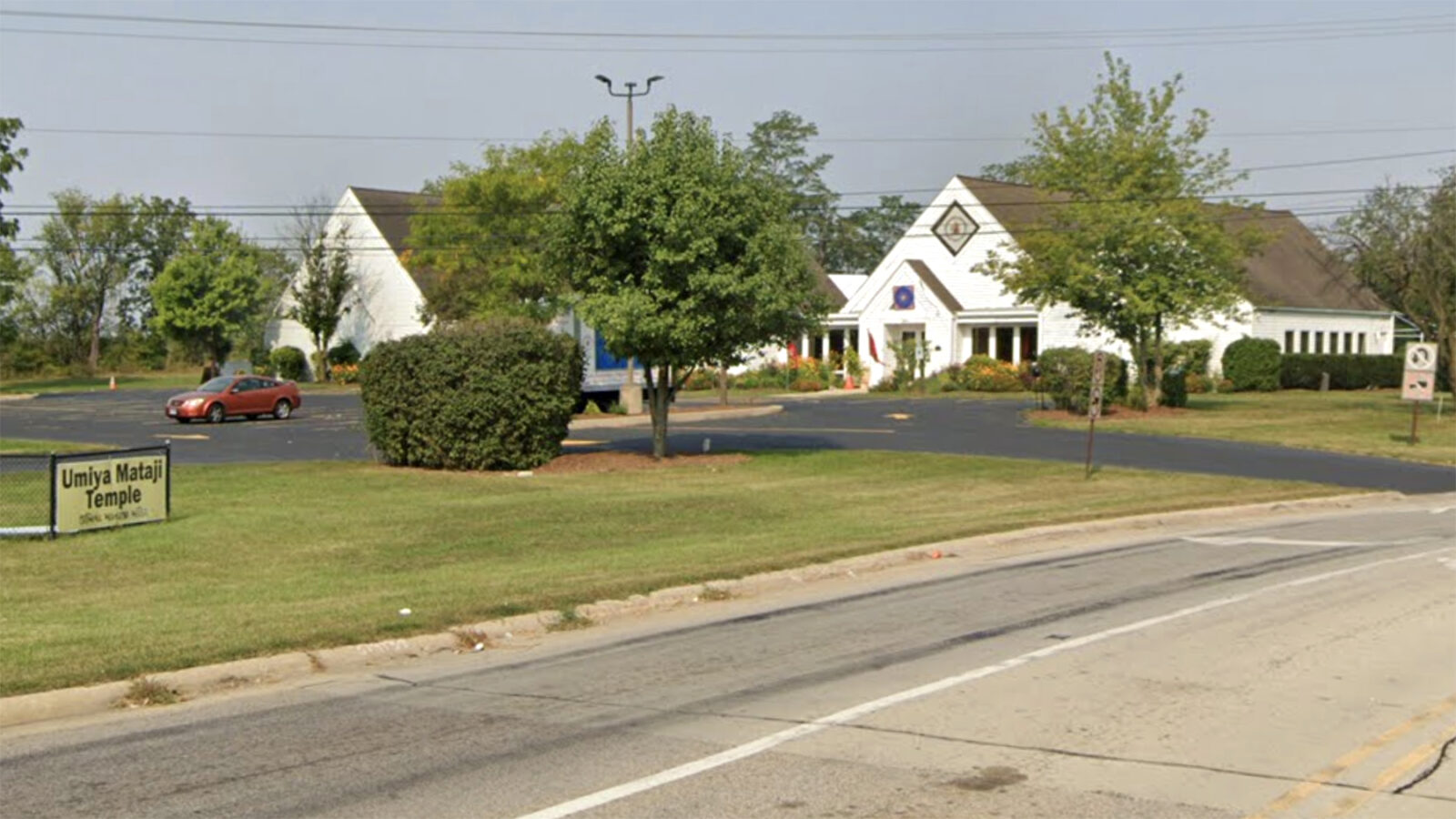
(RNS) — Umiya Mataji Sanstha, a Hindu community in Chicago's western suburbs, hopes to build a temple and homes for community members. But a 1960s-era consent decree stands in their way. Will a religious freedom law help their case?
Umiya Mataji Sanstha Chicago Midwest temple at the current site in West Chicago. (Image courtesy of Google Maps)

(RNS) — A Hindu group that wants to build a temple and residential project is suing a Chicago suburb to overturn a nearly 60-year-old legal agreement that blocks their plans.

The lawsuit, filed on Tuesday (July 14) by Umiya Mataji Sanstha Chicago Midwest, a Hindu religious community, said that a 1967 consent decree meant to create a buffer between a railroad line and residential homes governs a 34-acre property in Elgin, Illinois, which the Hindu community owns. 

Earlier this year, Elgin officials approved plans for a temple and houses to be built on the site, but that approval cannot be made final while the consent decree remains in place. The Hindu group, which serves the Kadva Patidar community, argues in the lawsuit that the consent decree could be used to religiously discriminate against them.

The plaintiffs have also asked for a preliminary injunction to bar the city from withholding final approval and permits and to bar neighbors from trying to enforce the 1967 consent decree.


 The decree, which does not mention race or religion, allows offices or other limited business development on the site but does not allow for homes to be built. A house of worship is not specifically barred or permitted on the site.

The city has no plans to oppose the lawsuit, but a group of about 300 nearby property owners still have the right to object under the consent decree. More than 20 local residents spoke at a zoning hearing earlier this year, voicing their opposition, citing traffic and environmental concerns. 

 “This opposition has absolutely nothing to do with religion,” said Jessica Astrug, a nearby resident who was among those voicing opposition to the project during a zoning meeting, according to the Daily Herald newspaper. 

Religious zoning cases are often complicated, involving logistical concerns like traffic and taxes along with issues of religious liberty and sometimes religious discrimination. Faith groups are subject to the same zoning laws as businesses, schools and other entities but governments also have to treat faith groups fairly. 

The lawsuit cites the 2000 federal law, the Religious Land Use and Institutionalized Persons Act (RLUIPA), which was designed to keep governments from using zoning to discriminate against religious groups. Whether the law applies here, and whether a decree with no mention of religion could still block a temple, is up for dispute. 

“It’s not a RLUIPA case,” said Alan Weinstein, professor emeritus at Cleveland State University and an expert in religious land use, adding RLUIPA is usually cited when a city or other government entity opposes a house of worship being built. That is not the case with this temple.

He also said that the Umiya Mataji Sanstha was likely aware of the restrictions on the property when they bought it. “That is a classic self-created hardship,” he said.

Weinstein also said that neighbors have likely grown used to having undeveloped land near them, and that will make them harder to convince. He did wonder if some kind of mediation between neighbors and the Hindu group would be a better approach than a suit.

John Mauck, attorney for the Hindu group, said his clients currently meet in West Chicago, another suburb, and have been looking for a place to build a temple for years. They finally settled on the current site. He said that the consent decree is outdated — and that the city no longer supports it. And he said the decree also gives nearby residents almost unlimited veto power over what happens on the site.

That could lead to unintended consequences, such as allowing a neighbor who dislikes Hindu and Indian Americans to block the temple.

“The fact that they have arbitrary exclusion rights, we’re saying, makes the 1967 court order illegal as applied to this situation,” he told RNS in an interview.

Mauck told RNS that the consent decree predates RLUIPA and has not been tested in court. The complaint asks the court to evaluate whether the decree is enforceable now that religious land use laws have changed.

“A decree that made sense under the conditions of its original creation is not entitled to perpetual protection,” he wrote in the complaint.

 Opinion

A faithful call to abolish ICE

(RNS) — As people of faith, we must call for the end of this ICE army, which has grown beyond legal accountability or moral control.
Protesters gather near a U.S. Immigration and Customs Enforcement facility in Scarborough, Maine, one day after the shooting of Johan Sebastián Durán Guerrero, Tuesday, July 14, 2026. (AP Photo/Robert F. Bukaty)


(RNS) — In less than a week, Immigration and Customs Enforcement has mercilessly taken two more lives.

Neither man appeared to have been the “intended target” of the operations that took their lives, according to news reports. But I would argue they were. Both were brown men. Both were immigrants. And the Trump administration’s mass deportation policies have intended to target immigrants of color all along.

Last week, after the killing of Lorenzo Salgado Araujo in Houston, the Department of Homeland Security said the victim was targeted because he “resembled” the person they were seeking. And for an operation that uses shameless racial profiling, of course he did, because he was brown. These tragic killings confirm that in the United States, all immigrants of color, regardless of legal status, are in imminent danger.

Araujo, 52, was from Mexico, but had been calling the U.S. home for 35 years, and his family told The New York Times he was likely months away from receiving a work permit. He worked as a homebuilder, supported his family, and on July 7, he was driving members of his construction crew to work when he was racially profiled and killed by ICE. His eldest son, Ronaldo Salgado, spoke through tears about the father taken from him and his siblings, and the husband his mother will not see again.

ICE officials claim Araujo “weaponized” his van and tried to ram an ICE vehicle, the same justification they tried to use for Renée Good’s killing. Of course, this time there is less evidence, as no civilians were present on the street and none of the officers had the body cameras they were supposed to wear, according to U.S. Rep. Sylvia Garcia

Days later, on Monday (July 13), ICE agents shot and killed 25-year-old Joan Sebastian Guerrero in Biddeford, Maine. Guerrero was a Colombian immigrant with work authorization and a Social Security number who regularly complied with immigration authorities as he sought asylum. He was working two jobs to support his family, including a 3-year-old daughter who is now left without her father. 

Guerrero’s dad described a son with “a lot of dreams to achieve,” and asked the question all these grieving families are left with: “He loved his family so much. I don’t know why they did this to him.”

In similar efforts to justify ICE agents’ reckless actions, DHS said Guerrero tried to flee during a traffic stop, and “fearing for public safety, an officer discharged his weapon.”

Although police officers are trained to preserve life whenever possible, this shouldn’t be shocking since training for ICE officers was reportedly diminished last year (ICE argues the training programming was instead “accelerated”). This is now a multibillion-dollar army that seems to have few legal bounds, is basically untrained and is armed to kill. They are nothing but bounty hunters who relish the unaccountable force they are able to use.


Since the start of President Donald Trump’s deportation crackdown, at least 23 people have been fired at and six people have been killed by federal agents. Nearly all of these fatal incidents involved agents firing at people in vehicles.

Meanwhile, ICE detained roughly 10,000 people over five days at the end of June — an average of about 2,000 arrests every day. After the recent fatal car shootings, DHS ordered ICE to halt most vehicle stops. But one day later, Trump rescinded the order and took to Truth Social to say, “The Radical Left Democrats would like to see this done, but it won’t happen on my watch.”

The Trump administration continues to argue that its mass deportation campaign targets violent criminals, but only about 3% of the individuals detained had violent felony convictions. The stories of ICE subjecting our innocent neighbors to violence and injury are beyond counting now, as the number of immigrants kidnapped off the streets and taken to detention centers without lawful process, by masked and armed agents with no uniforms or badges, also grows. Hundreds of thousands of families are left to wonder if their loved ones are alive, dead, or deported.

How is it that ICE can do this to Ruben Ray Martinez in South Padre Island, Texas, and Silverio Villegas-Gonzalez near Chicago, to Good and Pretti in Minneapolis as they tried to protect their neighbors, and now to Araujo in Houston and Guerrero and Biddeford, without repercussions or pause? Even after the killings, Stephen Miller, Trump’s White House deputy chief of staff, continues to enthusiastically push mass deportation with huge numerical goals.

Every one of these victims was our neighbor. Many of the future targets of these mass deportation efforts are also our neighbors. Many serve our communities or were part of our congregations. They were people who had friends, families and dreams in this country.

The Bible and Jesus call us to love and protect our neighbors, especially “the stranger” among us. Today, more than ever, that calling should also become a public policy demand from the faith community.

As people of faith, we must call for the abolition of this ICE army, which has grown beyond legal accountability or moral control. ICE is now rotten to the core and cannot be reformed or saved.

Every nation has the responsibility to maintain and enforce immigration laws and procedures. But it should be abundantly clear that those laws cannot be entrusted to an army that is corrupt and violent beyond redemption. The massive human failure of Trump’s immigration policy should be a wake-up call to millions of Americans that our nation needs a new set of immigration laws that are safe, fair, humane, compassionate and just. 


As people of faith, we will engage in deep and neighborly solidarity with our immigrant neighbors, many of whom are members of our faith communities. We will accompany our neighbors through this time of great trial and much suffering, offering the support and protection that they need. We will publicly protest ICE and warn our neighbors about attacks against them. We will offer our non-violent resistance to an unlawful and violent army.

Now, ICE could seek to intimidate by appearing at polling places or targeting communities exercising their constitutional rights. We will stand with those being threatened and defend the integrity of our democracy. We will not be silent in the face of fear. And we will pray and act for the abolition of ICE, a national disgrace that violates the God-given dignity of every person and our religious conscience.

(The Rev. Jim Wallis is Archbishop Desmond Tutu Chair and director of Georgetown University’s Center on Faith and Justice and is the author, most recently, of “The False White Gospel: Rejecting Christian Nationalism, Reclaiming True Faith, and Refounding Democracy.” A version of this commentary appeared on the Substack God’s Politics with Jim Wallis. The views expressed here do not necessarily reflect those of RNS.)