It’s possible that I shall make an ass of myself. But in that case one can always get out of it with a little dialectic. I have, of course, so worded my proposition as to be right either way (K.Marx, Letter to F.Engels on the Indian Mutiny)
Wednesday, August 26, 2026
Conservative Judge lays out Trump's 'high noon' plot to seize power if Republicans lose the midterms
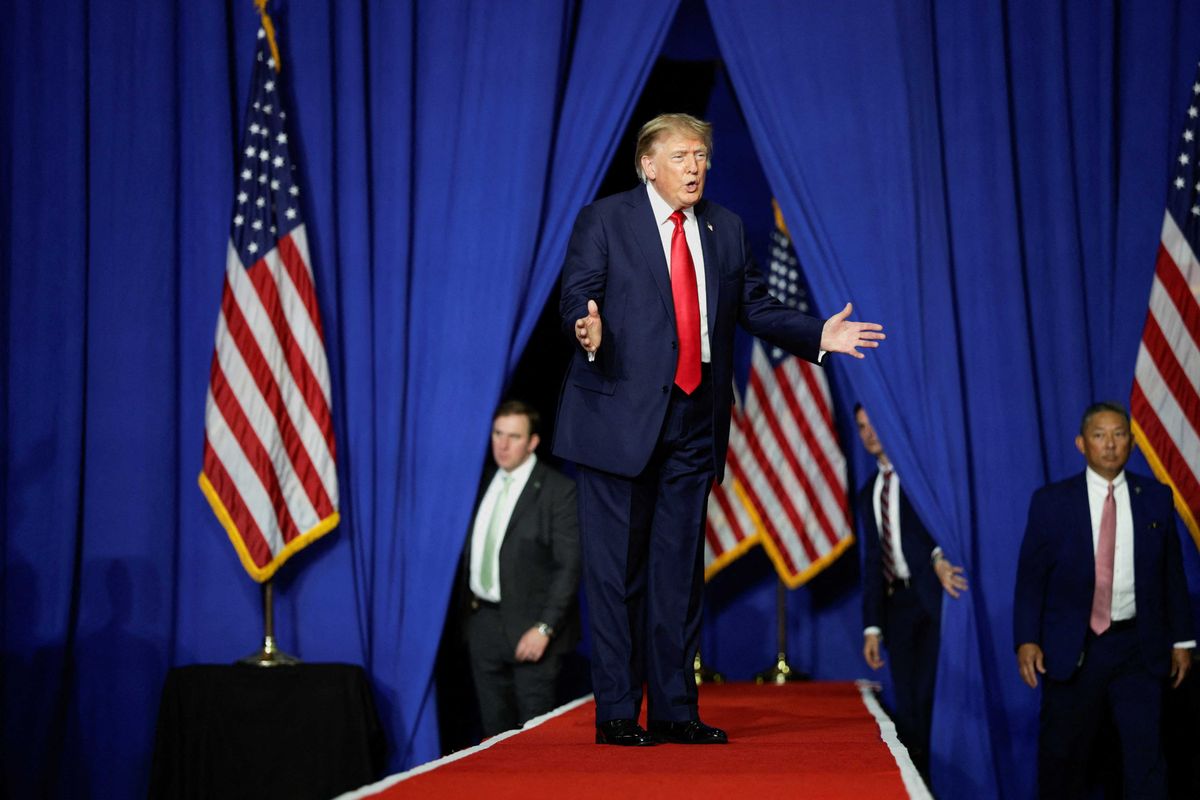
U.S. President Donald Trump gestures onstage during a campaign rally for U.S. Senator Darline Graham (R-SC) at the Myrtle Beach Convention Center in Myrtle Beach, South Carolina, U.S., August 21, 2026. REUTERS/Evan Vucci
Conservative judge Michael Luttig warned Monday that President Donald Trump seems likely to push Congress into a "high noon" scenario if the midterms don't go well for Republicans.
If public polling is any indication, Democrats could win both the House of Representatives and the Senate after the midterms, which would significantly imperil the Trump administration. Trump seems to have preemptively dispatched his son-in-law Jared Kushner to negotiate some kind of truce with House Minority Leader Hakeem Jeffries (D-NY), as reports of a meeting between the two men have rankled political analysts across the spectrum.
Luttig warned on a new episode of "The Court of History" podcast that a midterm wipeout for Republicans makes what he describes as "the final battle for America's democracy" all the more likely. The battle, he claimed, would take place on January 3, 2027.
That's the day that the 120th Congress is due to be sworn in. But that assumes that Republicans will agree to seat the newly elected Democrats. Speaker Mike Johnson (R-LA) has already shown a proclivity to delaying the certification of duly elected members after he held up Rep. Adelita Grijalva's (D-AZ) swearing-in for 50 days in 2025.
Congress adjourns at "high noon" on January 3, which means that Speaker Mike Johnson (R-LA) is no longer technically in charge of seating new members. In that scenario, the House Clerk would notify elected members that they have been seated. Luttig warned that Republicans may try to corrupt this process to maintain power after the midterms.
"There are already discussions around the country that Mike Johnson would fire the existing clerk and replace that clerk with a loyalist," Luttig said.
That poses a problem for newly elected members representing states with election conspiracists working in the halls of power, Luttig added. If the states refuse to certify a member's election, then the House Clerk would not list those members on the roll to be notified of their seating.
Trump hinted at this possibility in February when he told MAGA media personality Dan Bongino that Republicans needed to control the midterms to win the elections, a statement Luttig described as "breathtaking."
Trump ignoring 'gathering storm' pushing world toward total war: Conservative columnist
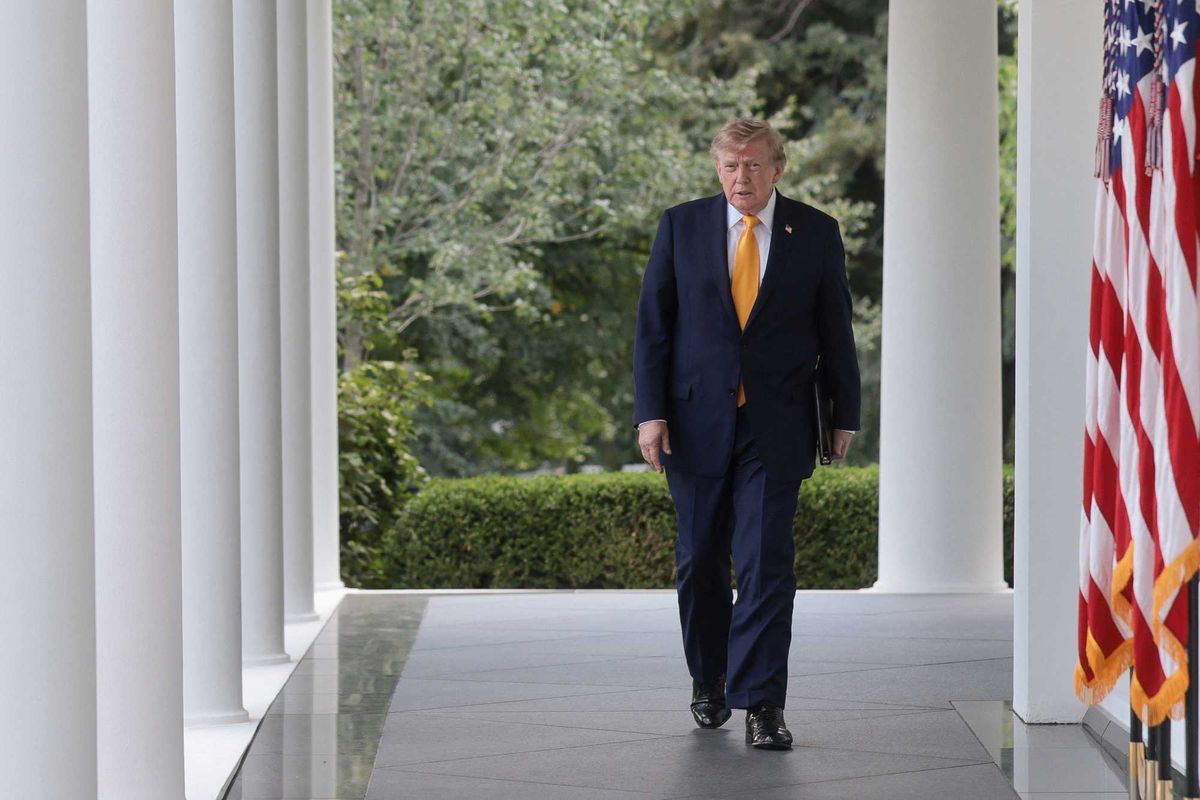
U.S. President Donald Trump walks as he attends to host a back-to-school-themed event to highlight his administration's education policies, in the Rose Garden at the White House in Washington, D.C., U.S., August 24, 2026. REUTERS/Jonathan Ernst
President Donald Trump appears to be ignoring a "gathering storm" that could tip the world into a total war, according to a new column.
What global conflicts like Ukraine's war against Russian aggression and Trump's war against Iran have exposed, according to a new essay from New York Times columnist Bret Stephens, is that the U.S. is ill-prepared to enter a global conflict as the country did during World War II. That poses a significant risk, Stephens argued, for the global order.
"In periods of economic distress, democracies almost always become more risk-averse, while dictatorships become risk-prone," Stephens wrote. "That’s a pattern of history worth recalling as we continue to drift, only dimly aware, toward the gathering storm."
He pointed to issues like Trump's sputtering economy and the infighting the president has provoked among Western allies as key differences between today's conflicts and World War II. Those trends threaten to hinder the ability of the West to thwart the operationally militarized axis of dictatorships that Russian President Vladimir Putin has assembled, Stephens added.
All of this could be made much worse if the U.S. tips into a recession, which became a little more likely after Trump escalated a trade war with Canada, causing the country to slap retaliatory tariffs on billions of dollars worth of American goods.
"President Trump complains of our allies’ weakness. The allies complain of Trump’s bullying, capriciousness, callowness, mendacity and incompetence. Both sides are right. The latest U.S. tariff salvo on Canada is a case in point: politically ill-advised, economically self-defeating, strategically enervating," the columnist explained.
Fox News host cuts Democrat's mic mid-rant after interview goes off the rails
Fox News channel logo (Photo credit: Poetra.RH / Shutterstock)
An interview with former Democratic National Committee chair Jaime Harrison on Fox News' "The Will Cain Show" went completely off the rails Tuesday evening, as Harrison accused Cain of inviting him on under false pretenses.
Harrison appeared genuinely blindsided when Cain pressed him on the influence of the Democratic Socialists of America on Senate primaries, and their possible ties to activists accused of antisemitism. Harrison, while he tried to respond, insisted that wasn't the topic Cain had told him they'd be discussing.
"Donald Trump literally sat down for dinner with Nick Fuentes, right?" said Harrison. "A white nationalist, antisemitic, Holocaust denier. Do you believe that Nick Fuentes represents every Republican?"
"Okay. It's not the first time I've heard this analogy in vogue, Jaime," said Cain, as Harrison tried to continue responding. "Hold on. That's inflammatory, and I'm going to respond to it so this conversation stays honest ... you have to have the intellectual consistency and honesty to distinguish a dinner from a Senate candidate."
Harrison escalated the confrontation, shortly prompting Cain to cut off the interview early.
"What's inflammatory is this," he said. "You invite somebody to come on your show to talk about the South Carolina Republican primary, and you don't even talk about the South Carolina Republican primary! This is the reason why you guys are disingenuous. Don't invite me to come on your show to talk about the South Carolina Republican primary when you spent all your time talking about DSA, which I’m not even a member of! So if you want to talk about the DSA, invite somebody from the DSA."
"Jaime, you can't hear me while you're talking!" shouted Cain as Harrison continued to try to speak. "If my staff told you we were talking about the Senate Republican primary, then I apologize. I was under no pretense that I would be talking to you about a Republican primary. All right, I'm going to have to cut you off."'
Cain turned to the audience as Harrison's mic and camera were cut.
"I would never book the former head of the DNC to talk about a Republican primary," he snapped. "What expertise or insight could I possibly hope? ... If that was communicated incorrectly to Jaime Harrison, my apologies to him and his staff."
CNN panel flags 'unusual chemistry' on display in surging Dem's Fox News interview
Panelists on "CNN This Morning" highlighted an unusually jocular interview on Fox News with Democratic Senate candidate Dr. Abdul El-Sayed.
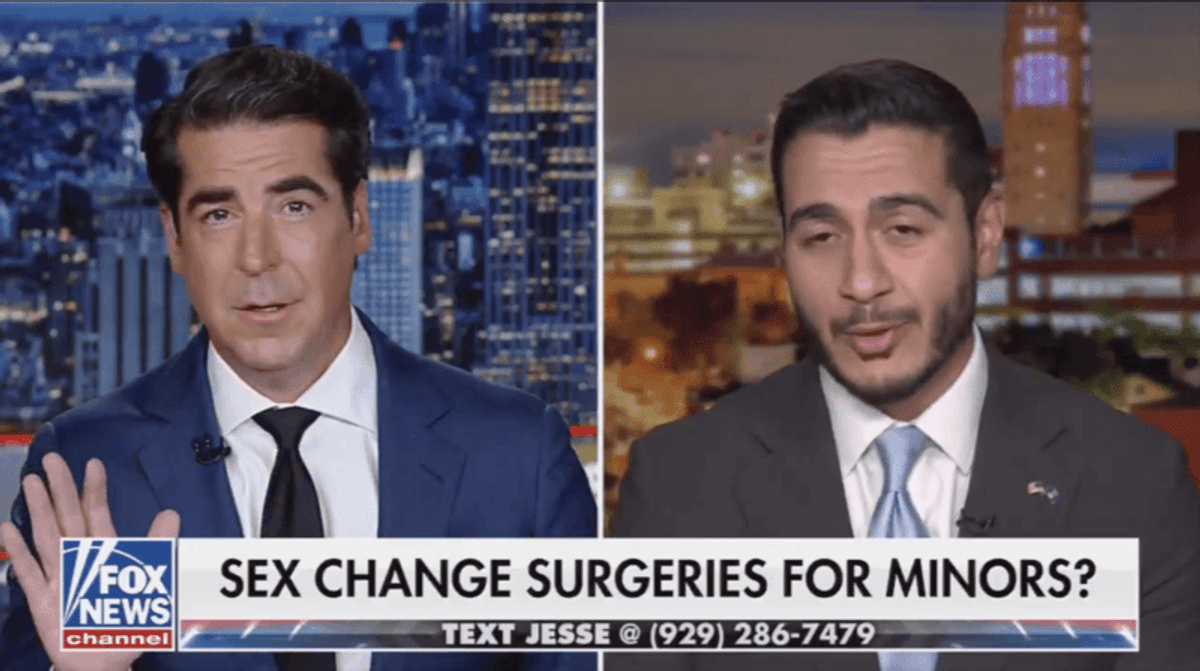
The Democratic Senate nominee in Michigan and host Jesse Watters frequently laughed as El-Sayed fielded questions – and asked some of his own – during a Monday night prime time appearance, and the broadcaster squirmed when the physician turned a question about gender-affirming surgery for minors around on him.
"You're a doctor," Watters said, and El-Sayed agreed. "So you think it's okay for a parent to slash his kid’s ding-a-ling off?”
“Do you really want to have this conversation?" El-Sayed retorted. "Are you circumcised?”
"Yeah," Watters replied. "But I mean that’s a personal question, doctor.”
Watters protested that circumcision was “different than castration,” but El-Sayed argued, “I’m just saying that yes, circumcision is surgery on a kid’s ding-a-ling.”
The CNN panel reacted to video clips of the interview, noting that it was not quite as combative as they would have expected.
"Felt like soft treatment, that's not coming up, and I don't know," said host Audie Cornish. "They started joking about circumcision at one point and the NFL. I was like, what's happening here?"
Axios correspondent Sara Fischer agreed, saying the two men seemed to genuinely enjoy the exchange.
"I definitely felt that there was like an unusual chemistry almost in this interview," Fischer said. "I thought it was so notable from both ends that Jesse Watters had him and that El-Sayed was willing to join. It clearly suggests that he's willing to do whatever it takes to reach as many voters as he possibly can. But also, I think when you think about the position that he's in, Michigan is such an interesting state, especially as it comes to this issue around Jews, and Fox is such an interesting network for him to position himself and try to go and reach out to people. Like, he's not trying to do this conversation just on MS NOW – like, that to me is significant and important."
Jesse Watters squirms after blunt 'personal question' left him cornered on his show
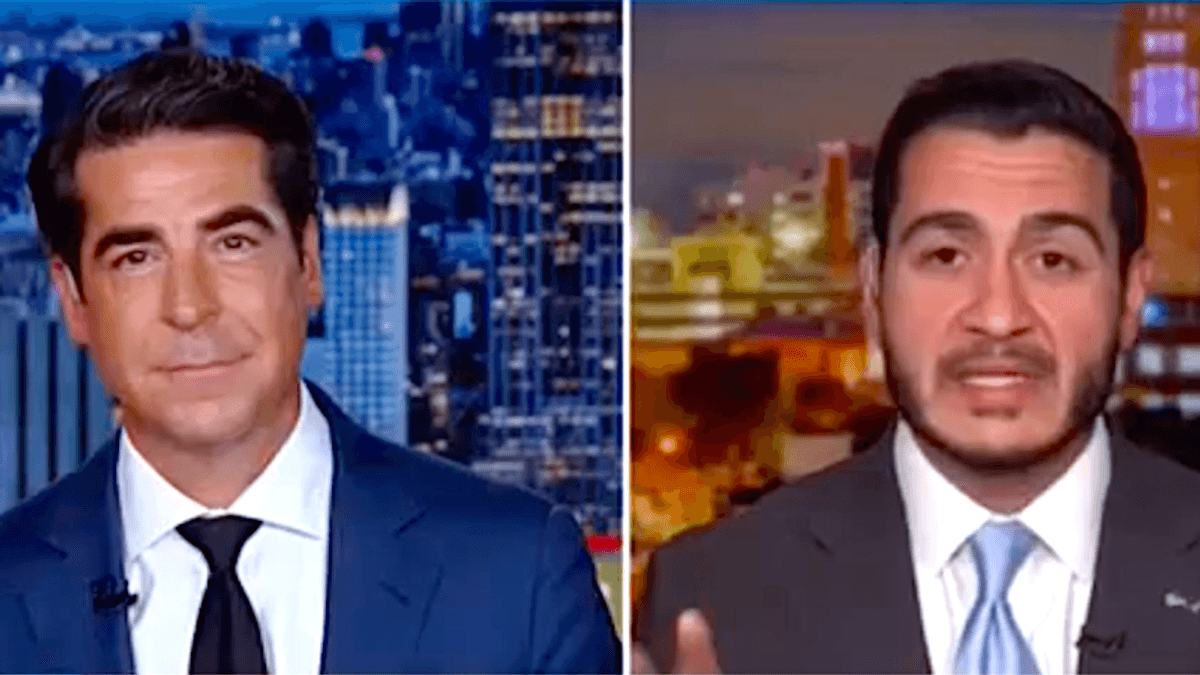
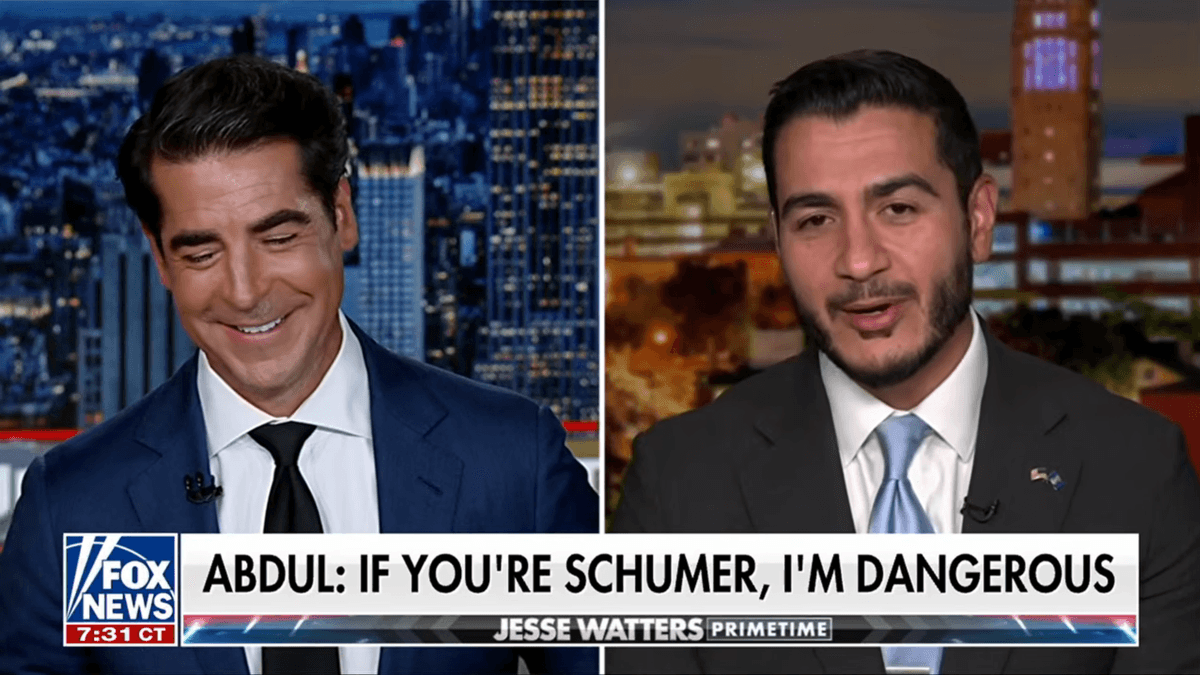
Fox News host Jesse Watters and Democratic Senate candidate Abdul El-Sayed on "Jesse Watters Primetime." / Fox News screenshot
Fox News host Jesse Watters was cornered during a fiery interview on Fox News over a "personal question."
Watters interviewed Abdul El-Sayed, a progressive in Michigan who earned the Democratic nomination for the U.S. Senate race, on Monday, where the two got into a tense back-and-forth about one political topic that made Watters a little uncomfortable. During one debate about health care, El-Sayed backed Watters into a corner that the host was all too eager to escape.
"I think the government shouldn't tell you what kind of health care you should have," El-Sayed said about allowing health care providers to offer gender-affirming care to minors. "If you disagree with that, then we agree to disagree."
Watters followed up by asking about El-Sayed's stance on genital mutilation.
"But, you're a doctor?" Watters shot back.
"I am," El-Sayed said.
Jesse Watters changes his tune about progressive after epic clash: 'I like him!'
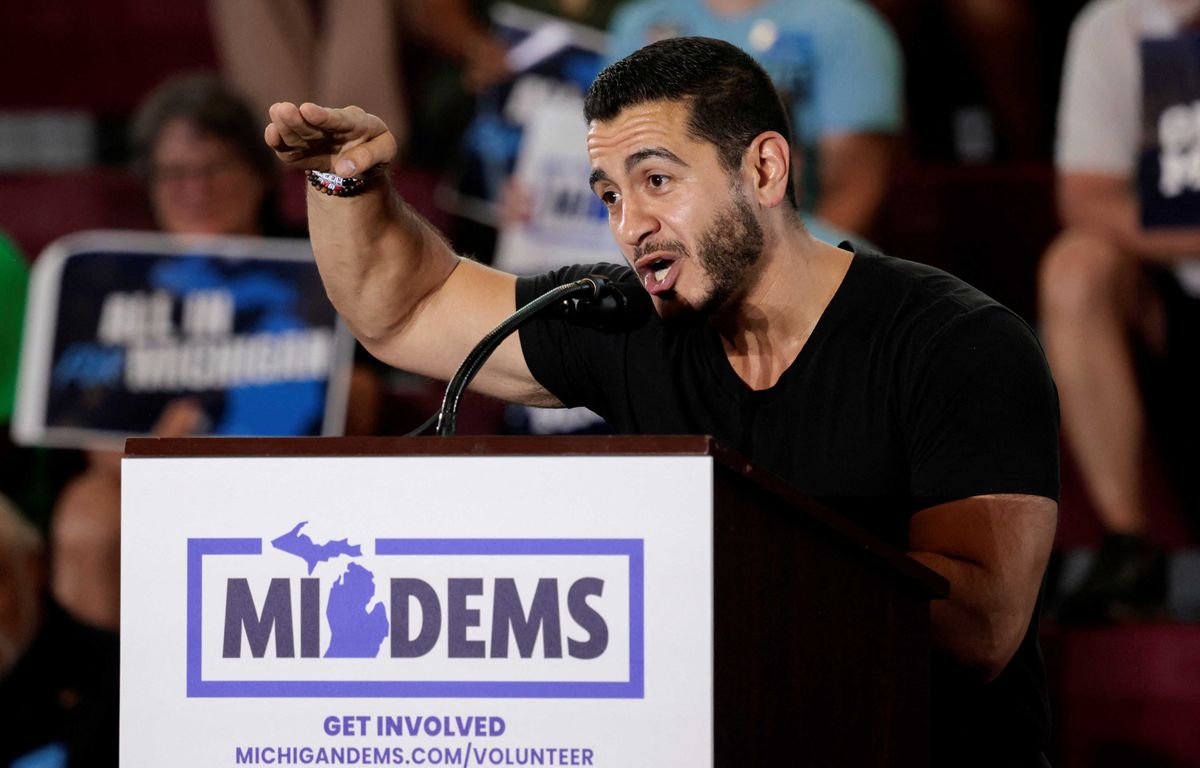
Abdul El-Sayed, Democratic candidate for U.S. Senate speaks during a Democratic unity rally in Detroit, Michigan U.S. August 7, 2026. REUTERS/Rebecca Cook
Right-wing Fox News anchor and commentator Jesse Watters grudgingly conceded Michigan Democratic Senate candidate Abdul El-Sayed was a worthy opponent during a segment of "The Five" on Tuesday evening.
The two went head to head in a dramatic clash Monday evening, where El-Sayed emerged with a ton of sound bites aimed at both base Democratic voters and undecided voters.
"El-Sayed is a compelling, confident guy, kind of a guy's guy," said Watters. "But I don't trust him. You know, I like him. I don't want to like him. I like him."
During the interview, Watters threw everything he had at El-Sayed, grilling him on a number of hot-button culture war issues and the agenda of the Democratic Socialists of America, among many other things.
One of the most eye-catching exchanges came during an argument over gender-affirming care for children; Watters demanded that El-Sayed, a doctor by training, give his position on whether it's okay for a parent "to allow their child to slash their ding-a-ling off," to which El-Sayed asked Watters if he is circumcised and pointed out that's the only common case of children's "ding-a-lings" being surgically altered.
In another segment, El-Sayed tricked Watters into half-conceding that his Republican opponent, former Rep. Mike Rogers, is a "beta" for not coming on Watters' show himself.
Jesse Watters concedes nasty insult of MAGA Senate hopeful landed
Abdul El-Sayed (right) appears on Fox News with Jesse Watters (left), Monday, Aug. 24, 2026. (Screengrab / Fox News)
Democratic Senate nominee Abdul El-Sayed tore into his Republican opponent Mike Rogers Monday night during an appearance on Fox News with an attack so biting that even conservative host Jesse Watters was forced to admit he found it “funny.”
“I have a lot to talk about when it comes to my work taking care of communities,” El-Sayed said, speaking of his run for Senate against his opponent backed by President Donald Trump.
“I’m looking forward to continuing to have those conversations, and I feel really good about being able to bring communities together and beat Mike Rogers, who you and I both agree is a beta and won’t come on your show and won’t debate me, in November.”
Watters, laughing, responded: “Didn’t agree to that, but that’s funny.”
As noted by Zeteo’s Martin Pengelly in an analysis published Tuesday, El-Sayed “made Watters laugh, repeatedly, by calling Rogers a ‘beta’ for avoiding campaign confrontation and not appearing on Watters’ show.”
Pengelly attributed the joke landing with the conservative host to El-Sayed employing a “frat-boy-ish edge” to his commentary, an observation shared by a CNN panel Tuesday morning, which noted the “unusual chemistry” between the conservative and progressive.
El-Sayed has repeatedly called out Rogers for refusing to confront him in a debate, including debates that would have been held on Michigan television stations Fox 2 and WDIV.
“Mike, I’m happy to wipe the floor with you on October 8th, but in case you think we forgot, I challenged you to five debates,” El-Sayed said in a recent statement. “I’ve accepted every single debate invite. On September 15th, I’m showing up to Fox 2’s debate and they’re prepared to run with an empty podium whether you have the courage to show up or not.”
ARGENTINA OR BRASIL
Outrage as Trump official refuses to name source of U.S. beef: 'Why not?'
U.S. Agriculture Secretary Brooke Rollins speaks with reporters at the White House in Washington, D.C., U.S., August 25, 2026. REUTERS/Evan Vucci
A Trump Cabinet secretary's inability to say from which country the U.S. will import beef is spurring online outrage.
On Tuesday, U.S. Secretary of Agriculture Brooke Rollins was asked which countries have been in talks with the U.S. about stepping up beef imports. The question came amid Trump's plan to allow up to 300,000 metric tons of foreign beef to enter the U.S. without higher tariffs, which has been met with backlash within the GOP.
Rollins told reporters, "I am not privy to talk about" where the U.S. will be getting its beef, which stirred disbelief and anger about the secrecy.
"Why not?" reacted Sen. Ruben Gallego (D-AZ) in a post on X.
"How is the Secretary of Agriculture not willing to talk about where Americans are getting their beef from?" asked journalist Aaron Parnas.
"Why does the Republican Party want to hide from Americans where their meat comes from?" demanded Ron Filipkowski, the editor-in-chief of the political news network MeidasTouch.
"Why is this a damn secret?" wondered former Missouri Senator Claire McCaskill. "If we are promoting foreign beef and importing it, don't we have a right to know where it is coming from?"
"The Trump administration refusing to tell us where beef is coming from should convince everyone not to buy it or eat it," cautioned activist and Karoline Leavitt foe Jamie Bonkiewicz.
"It's literally her job to be 'privy' to this information," Missouri congressional candidate Fred Wellman wrote in reaction to Rollins' response.
"The Trump administration is going to flood our markets with foreign beef and they're not going to tell you where it's coming from," warned progressive political commentator Brian Tyler Cohen.
"Sounds an awful lot [like] BULLS— to me from an administration that has lied more than 30,000 times during just the first Trump admin," blasted author Don Winslow.
"We're definitely eating horse meat," lamented Jack Cocchiarella, evoking another story where the Trump administration sent wild horses off to the slaughter in countries that eat horse meat.
'Not what we want!' Farmer torches Trump over 'raw deal' that puts 'American farmers last'
President Donald Trump's new plan to import hundreds of thousands of tons of beef will spell nothing but disaster, said John Boyd Jr., a cattle and soybean farmer who heads up the National Black Farmers Association, on MS NOW Monday.
"I believe that this is a raw deal," Boyd told anchor Katy Tur, noting that Trump "keeps making the announcement that he loves farmers, he loves cattlemen, and then undermines us with 300,000 metric tons of foreign beef that we don't even know where it's coming from," Boyd noted that there was a significant recall of Argentinian beef imports in the United States.
"There's no guarantee that the American people are going to see any savings in the local grocery stores," said Boyd. "This is more about helping meatpackers, in my opinion. So he put the American farmers last."
Boyd added that, on average, the U.S. is losing 77 farmers and cattlemen every day, with 300 farm foreclosures currently pending, and the administration is doing nothing about it.
As all this is going on, said Boyd, "we have the highest input cost in history due to this president's policies and his war with Iran. High fertilizer, high diesel fuel prices, $5 to $6 a gallon. And we never got over the impact of the president's tariffs. So here you have a ripple effect, in my opinion, for the first time in history for America's farmers going out, losing our farms every day, and the president makes another sour deal and punches the American farmers in the face."
The fact remains, he said, that if Trump really wanted to help farmers, "they would start to invest more money in knowing beginning farmers and cattle farmers; it takes a year to have a calf. So they started. Right now we can make a huge dent in the cattle shortage. And that's the problem. There's a shortage in America."
US Workers Have No Federal Protection From the Deadliest Weather Hazard
We protect workers from ladder falls, electric shocks, even excessive noise, with clear and enforceable rules, yet there is still no federal standard requiring employers to provide the basics on dangerously hot days.
A worker adjusts his helmet on a construction site under the sun as southern California faces a heatwave, in Los Angeles, on July 3 2024. (Photo by Etienne Laurent / AFP via Getty Images)
We are breaking past heat records, but they will not stand for long. Summer heat now arrives earlier, lasts longer, spikes higher, and lands in places that never planned for it.
For the tens of millions of Americans who work outdoors, and the millions more in warehouses, kitchens, and factories without air conditioning, there is still no federal standard requiring an employer to give a worker water, shade, rest, or training on a day when the heat can kill.
Between 1992 and 2019, more than 900 workers died from heat on the job, and every year tens of thousands more are sickened or injured—farmworkers collapsing in fields, roofers baking on exposed surfaces, laundry and dollar store workers laboring in buildings that trap heat like ovens. Those official numbers are undercounts, because heat deaths are chronically underreported.
Heat illness is not a scientific mystery. Heat stroke can kill in minutes, but staying safe is mostly about staying cool, hydrated, and getting help fast when confusion or dizziness sets in.
No one should be sent into a hotter, more volatile climate with nothing but the occasional popsicle and luck.
We protect workers from ladder falls, electric shocks, even excessive noise, with clear and enforceable rules. Yet there is still no federal standard requiring employers to provide the basics on dangerously hot days.
We came close. In 2024, the Occupational Safety and Health Administration (OSHA) proposed the first-ever national heat safety standard. In 2025, the agency heard weeks of testimony from workers, doctors, unions, and employers. Then the progress on a strong rule stalled.
Now, some in Congress want to bury it for good. The House Education and the Workforce Committee recently voted to advance the Heat Workforce Standards Act, which would bar the Labor Department from finalizing or enforcing the heat rule.
This isn’t a pause. It’s a lock on the door, designed to stop not just this administration but any future one from protecting workers from heat. The bill’s sponsor called workplace heat a problem that doesn’t need solving. Easy to say when you spend every day in air conditioning. Impossible to accept when your loved one doesn’t come home.
The industry groups behind the bill insist protections cost too much, the argument once made against seatbelts, hard hats, and fire exits. The numbers say otherwise. OSHA estimates a single average case of heat exhaustion costs more than $79,000 in medical bills, lost time, and lost productivity. Water and rest breaks are cheap. Hospitalizations and funerals are not.
Investors can. Companies that get ahead of this aren’t only doing right by their workers; they’re managing a financial risk that shows up in turnover, litigation, and lost output. The Natural Resources Defense Council and Trillium’s new guide for investors gives shareholders the questions to ask in the boardroom, and boards tend to listen when the people who own the company start asking them.
States can, and are. Seven now have heat standards, and lawmakers in Pennsylvania and Virginia are working to join them. Every state that acts protects its own workers now and builds the case that no one’s safety should depend on their zip code.
The people facing this risk grow our food, build our homes, deliver our packages, and cook our meals. Many of them will not ask for water or a break today—afraid of retaliation, afraid of losing a shift, afraid of losing a paycheck they cannot afford to lose. No one should have to weigh a livelihood against a life. And no one should be sent into a hotter, more volatile climate with nothing but the occasional popsicle and luck.
Employers who resist these rules imagine that breaks cost them too much. They have it backward. Heat is already hurting both workers’ health and their bottom line. Protections like water and rest don’t subtract from a workday, they only help workers do their job.
The toll from this summer is still being counted. Every party to this—Congress, employers, investors, states—can still decide how high it goes.
Our work is licensed under Creative Commons (CC BY-NC-ND 3.0). Feel free to republish and share widely.
Juanita Constible Juanita Constible is the senior advocate for environmental health at the Natural Resources Defense Council. Full Bio >
Trump quietly hands Congress a Saudi nuclear deal as he looks for way out of war: report
FILE PHOTO: U.S. President Donald Trump signs the "Genius Act", which will develop regulatory framework for stablecoin cryptocurrencies and expand oversight of the industry, at the White House in Washington, D.C., U.S., July 18, 2025. REUTERS/Annabelle Gordon/File Photo
President Donald Trump has submitted a nuclear agreement with the Kingdom of Saudi Arabia to Congress for approval, a move that has the potential to radically reshape the balance of power in the Middle East, according to a new report.
The Wall Street Journal reported on Tuesday, citing "an administration official," that the agreement includes a stipulation that Saudi Arabia recognize the State of Israel and sign the Abraham Accords. The Kingdom has not signed the accords because of Israel's resistance to Palestinian statehood.
The Journal added that the agreement is expected to set off "intense debate" on Capitol Hill.
"When Trump officials announced the 30-year accord last month, they said then that it would give U.S. companies a central role in developing Saudi Arabia’s nuclear infrastructure while excluding foreign competition," the report reads in part.
"But the deal has proved to be controversial because it would potentially open the door for uranium enrichment to take place on Saudi territory," it added.
The deal was submitted at a time when Trump appears to be looking for a way out of the war against Iran. Trump has threatened to increase hostilities with the regime if it does not relent, but those threats have thus far yielded no returns.
Meanwhile, public polling shows that more than three-quarters of Americans are against the war. Economic data has also pointed to the conflict for the ongoing economic challenges, which are also weighing on Trump's approval rating.
From Iraq to Gaza, We Are Failing in Our Debt to the Child
What heart refuses to protect and even worse, intentionally targets “the child” along with the people and institutions that provide the care and protection necessary to sustain the child’s life?
Palestinian children hold a press conference outside al-Shifa Hospital in Gaza City, Palestine on November 7, 2024. (Photo: Institute for Middle East Understanding/X)
“Whereas mankind owes to the child the best it has to give…”—United Nations Declaration on the Rights of the Child, 1959
There were Iraqi children before Gaza, before Hind. Before Iran and the Minab School bombing. Iraqi children dying by the thousands, as many as 500,000 as a result of US-supported UN economic sanctions and wars in Iraq. Governments expressed “concern.” International scholars and lawyers called it a genocide. Former Secretary of State under Bill Clinton, Madeleine Albright, called it a price worth paying.
Who are we; what universe is this where one writes again and again in support of children, of “the child” as if they were some political cause. It’s the new abnormal, where everyday brings news of children suffering, injured and dying, in Iraq, in Ukraine, and Sudan. In Gaza and the Occupied West Bank, in Iran and Lebanon to name a few.
The child is trapped in a car, shot dead; they are buried under the rubble of their bombed-out house, of their school or the hospital where they have just been born. They’re wounded, missing eyes, arms, and legs; missing parents and siblings, aunts and uncles.They’re missing all the little as well as the significant “stuff” that is, that should be, a child’s life. They’re sick and there are no doctors or medicines; they’re hungry and there’s no food or clean water. There’s no school, no mosque, no church, and no more neighborhood. Out of a house, in a tent or on the street, forcibly moved from here to there. What sort of world is this, what kind of culture. What heart refuses to protect and even worse, intentionally targets “the child” along with the people and institutions that provide the care and protection necessary to sustain the child’s life?
We know, everyone knows this is not the world “fit for Children” promised by global leaders at the UN some 30 years ago, yet it continues.
While instinct—some call it maternal—helps insure the future of a species, caring about and for one’s own offspring doesn’t necessarily translate to caring about all children. This enormous responsibility has been taken up by governments and international organizations; children need guaranteed special protections because they are “…innocent, vulnerable, and dependent.” The Convention on the Rights of the Child (CRC, 1990), the most widely endorsed human rights document in history, committed world leaders to giving children the “first call” on human and financial resources and know-how to address critical issues such as: poverty, education, child and maternal health, and protection during armed conflicts. With great fanfare, they reaffirmed these aspirations, calling for a world “fit” for children in 2002 at the UN Special Session on Children, the largest ever gathering for a UN Special Session.
The disconnect of words to actions and to the actual situation for children in 2002, as the Special Session convened, was not lost on those of us who cared about Iraq and Iraqi children. An estimated half million had died. The alarming increase in birth defects and childhood cancers was stressing a medical system under siege. The overall health of Iraqi children as measured by the Under 5 Mortality Rate (U5MR) “…the single most significant indicator of the state of a nation’s children…” had declined by 160% in the decade since the CRC. It was the largest decline in well-being by far for children in any country in the world. And this, like the overall destruction of Iraq and Iraqi society was brought on by war and sustained by the severe US-supported UN economic sanctions imposed by the very agency pledging to take responsibility for the world’s children.
International law failed to protect Iraqi children; it has failed Palestinian children for decades despite their well-documented fragility under Israeli occupation. And now, we watch as the already precarious “child” in Gaza and the Occupied West Bank suffers unimaginable atrocities.“Atrocity in the ordinary sense of the term, as evoking simply the shock and horror that most would feel in the face of such enormous and gratuitous human damage; a circumstance in which we would be hard-pressed not to disparage the justifications” (Joy Gordon, Invisible War: The United States and the Iraq Sanctions, 2010).
UN and human rights organizations wring their hands and issue condemnations. Some do not call this a genocide. The majority that might help to end this catastrophe has stood by—including women, mothers, and global health and human rights organizations—and watched the occupation and genocide kill and maim thousands and thousands of Palestinian children and their extended families. Watched as the very country is rendered uninhabitable. Stood silently by as the very ones seeking to protect Palestinian children are treated and prosecuted as terrorists.
The moving promises of UN declarations and their aspirations on behalf of children have come to nothing. We’re being subjected to a form of global violence Joy Gordon warned about, that of “a single nation,” or in today’s world, two nations—the US and Israel—“hijacking an institution of international governance, substituting their own agenda in place of the interests and will of the international community.” This should not stand.
According to the Ministry of Health, 73,386 Palestinians—including 21,000 children—were killed in the Gaza Strip and another 174,256 were injured between October 7, 2023 and August 9, 2026. This includes 1,258 fatalities and 4,295 injuries between the announcement of a ceasefire agreement on October 10, 2025 and August 9, 2026. We know, everyone knows this is not the world “fit for Children” promised by global leaders at the UN some 30 years ago, yet it continues. I’m at a loss. What can be said that hasn’t been said, or written that hasn’t been written. What poem or investigative article, what personal narrative could possibly bring an end to this carnage.
In 1915 Henry James declared, “The war has used up words, they have weakened, they have deteriorated…” Dr. Salma Al-Hadad, head of the pediatric oncology unit at Children’s Welfare Teaching Hospital in Baghdad since 1992, shared his view. After years of interviews revealing the struggles to save increasing numbers of patients with increasingly difficult cancers without even the most basic medicines and technology, she went silent. “The very hard times I’ve experienced over these years,” she wrote sometime in a mid-2000 email, “have rendered me silent. I find no comment.”
The moral universe owes a deep debt to the people of Palestine who have not gone silent, or ceased to document the atrocities against them. They pay for this every day with their lives, and in many cases the lives of other family members. I urge myself on. We have to repay that debt by breaking the silence even when we feel there is nothing more to say. Silence cannot be an option for those who are suffering under the weight of the atrocities being committed against children.
“All people,” wrote Leo Tolstoy, “live, Not by reason of any care they have for themselves, But by the love for them that is in other people.” If we truly care about “the child,” we have to increase our efforts on their behalf.
Our work is licensed under Creative Commons (CC BY-NC-ND 3.0). Feel free to republish and share widely.
Claudia Lefko Claudia Lefko, a long-time educator, activist and advocate for children, is the founding director of The Iraqi Children's Art Exchange and its project, Baghdad Resolve: An International Collaboration to Improve Cancer Care in Iraq. Full Bio >
12,000 Starbucks Workers Call for Boycott of Law-Breaking Coffee Chain
“We know when working people stand up together, we win.”
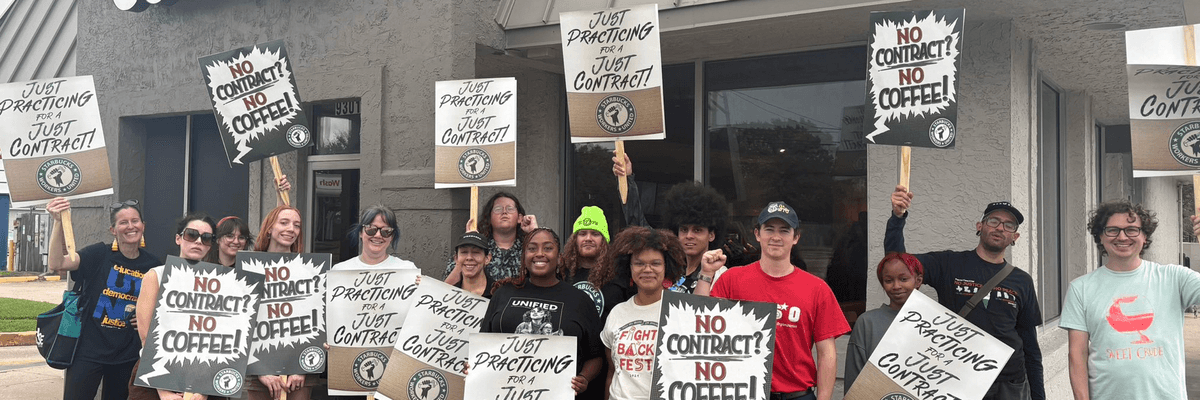
Starbucks workers in New Orleans take part in an October 7, 2025 demonstration at which they demanded company leaders negotiate a fair contract. (Photo by Starbucks Workers United/X)
Starbucks workers who have joined the unionizing effort that started in Buffalo, New York in 2021 and has spread to over 700 stores across the country called on all working people to show solidarity by boycotting the coffee chain, which has refused to finalize a union contract and has been accused of hundreds of labor violations.
“What we’re fighting for is simple: a minimum $17 per hour wage, enough hours to live on, better staffing in our stores, and basic workplace protections,” said Starbucks Workers United (SWU) Tuesday. “Every year, our living costs rise, but our wages don’t keep up—a growing pressure many American workers are feeling as corporate greed accelerates unchecked in our country.”
While the company “fuels working people” across the country every day, said the union, “it’s failing the workers who fuel its profits”—which rose to $25.5 billion in 2025.
Starbucks and the union returned to the bargaining table in April after a monthslong nationwide strike, with about 4,500 baristas reportedly picketing at 230 stores in more than 130 cities at the peak of the work stoppage.
SWU was originally calling for a minimum wage of $20 per hour. Baristas in 43 states make $16 per hour and under as a starting wage. The union is calling for 4% annual raises, arguing that inflation has eaten into any benefit provided by small annual raises.
The workers are also calling for a minimum of three staff members in stores at all times.
“The company is notorious for hiring additional workers while current workers are asking for more hours to survive. The union is demanding more hours for existing employees before new hires,” reported Labor Notes in April.
The union noted that the National Labor Relations Board and its judges “have found that Starbucks committed hundreds of labor violations and there are currently more than 550 unresolved unfair labor practice charges still pending against the company.”
The company has fired workers for organizing, illegally withheld wages and benefits, and illegally surveilled employees.
The call for a boycott coincided with the yearly release of Starbucks’ fall menu, including its popular pumpkin spice latte, which generated $2 billion for the company in its first decade.
“Starbucks has repeatedly demonstrated a lack of care for the workers who fuel the company’s profits by wasting millions of dollars on AI and technology that doesn’t work, launching countless gimmicky drinks designed to distract from real problems, and inventing pointless policies that do nothing but make our jobs harder,” said SWU.
“This ongoing, irrational behavior by Starbucks and its refusal to settle a fair union contract with workers leaves us with no other choice than to call for a boycott,” added the union. “We know when working people stand up together, we win.”
Trump board threatens to destroy 'unsafe' Kennedy Center in apocalyptic court filing
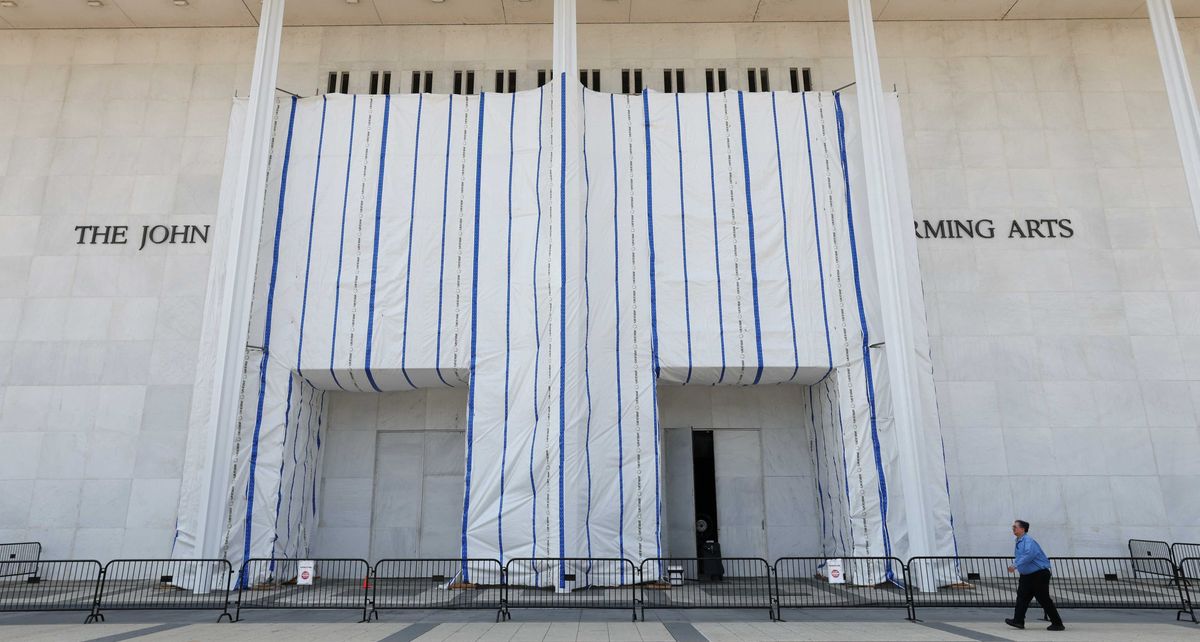
A man walks past the John F. Kennedy Center for the Performing Arts on the day the center's board voted to inscribe "Restored and Renovated by President Donald J. Trump" onto the building, in Washington, D.C., U.S., August 13, 2026. REUTERS/Kevin Lamarque
The Trump-installed board that runs the Kennedy Center told a federal judge the building will have to be torn down unless President Donald Trump's name goes on it.
Justice Department lawyers made the argument for Trump on Monday in a court filing before U.S. District Judge Christopher Cooper. It opposes an emergency motion by Rep. Joyce Beatty (D-OH), a board member who sued to stop the renaming.
The board voted on Aug. 13 to carve "Restored and Renovated by President Donald J. Trump" into the front of the building and to rename the grounds "President Donald J. Trump Plaza."
Without those efforts, the center "will deteriorate further into an unsafe, decrepit structure that will be required to be taken down," the filing said.
The government's lawyers then floated what might go up instead, "such as a large outdoor amphitheater overlooking the Potomac River that has been proposed, by some, for many years."
"Such a replacement will fail to adequately honor President John F. Kennedy, but would be simpler and more economical to build, operate, and maintain," the filing said.
The warning rests on a claim the brief repeats throughout, which is that the money follows the recognition. Without "prominent recognition" of Trump's efforts, "the donors will not contribute, and the Center will continue to be in a financial and structural death spiral," the filing said.
An order blocking the board "will cause donors to flee, financial contributions to dry up, and structural rehabilitation to stop," it added.
Trump took over the board in February 2025, removing trustees appointed by Democrats and installing allies who elected him chairman. The board renamed the institution for him last December.
"Congress gave the Kennedy Center its name, and only Congress can change it," Cooper ruled in May, ordering the name stripped from the facade.
The building is "structurally unsound, fundamentally unsafe, and embarrassing to the Nation's Capital," the filing said.
Beatty's lawsuit "almost guarantees the continued decline and eventual demise of the Kennedy Center, probably leading to the construction of a new, but very different kind, of venue," the government wrote.
Beatty called the board's vote a "new and breathtaking act of defiance" in her emergency motion last week.
"The Court should allow the Board and President Trump to bring the Center back to a level of greatness far higher than it has ever had before," the filing said. The board has agreed not to act before Sept. 8.