Trump's trade threats spiral out of control as Canada slaps down 100 pages of tariffs
David Edwards
August 25, 2026
RAW STORY
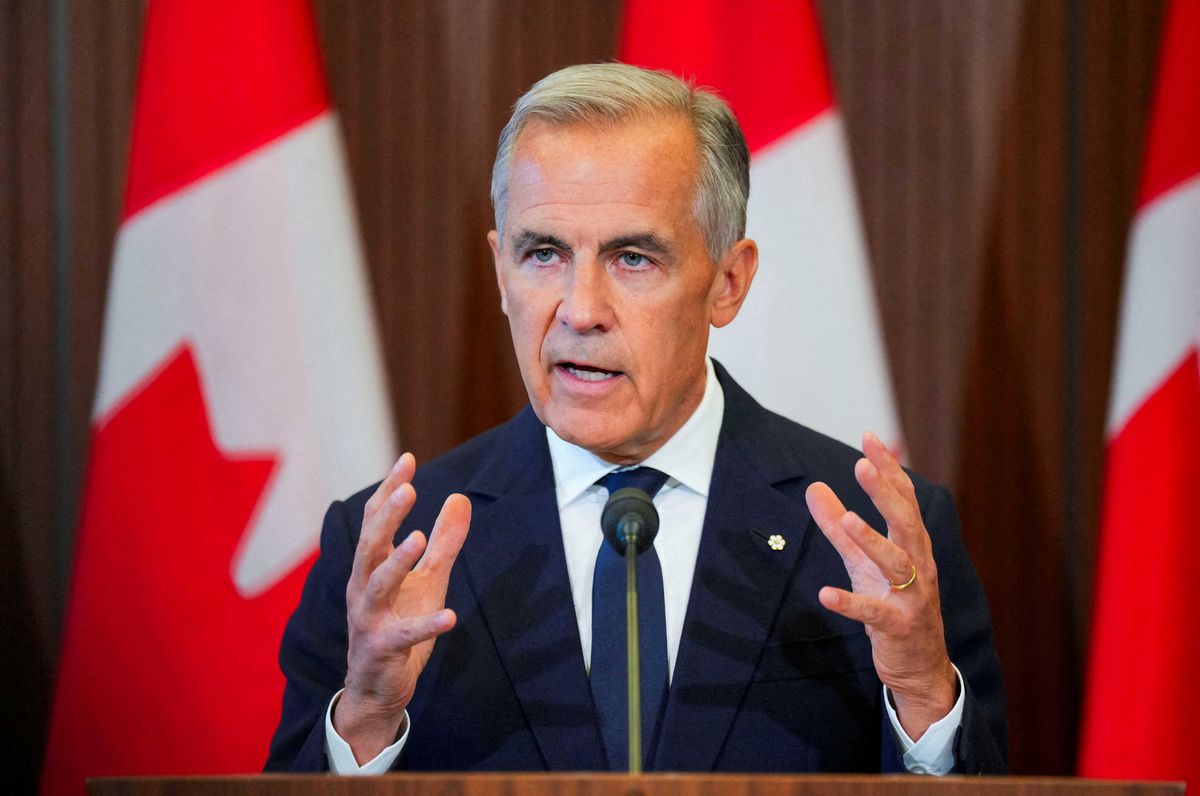
FILE PHOTO: Canada’s Prime Minister Mark Carney speaks with the news media after he suspended trade negotiations with the United States, in Ottawa, Ontario, Canada August 22, 2026. REUTERS/Chris Tanouye/File Photo
President Donald Trump spent Tuesday morning threatening Canada online while Ottawa put a nearly 100-page tariff schedule on the calendar he cannot stop.
Four Canadian cabinet ministers announced the retaliatory tariffs in Ottawa on Tuesday, according to the New York Times. The duties cover about 700 American products and take effect Sept. 8.
The rates range from 15 to 50 percent, matching the level Washington set for each product, according to CNBC. Prime Minister Mark Carney had promised a "dollar for dollar" response after talks collapsed Friday night, the Times reported.
The schedule runs nearly 100 pages, Global News senior journalist Mackenzie Gray reported on X. It taxes fish, stoves, carpets, men's suits and fishing rods.
"Our preference was to find a deal that benefits both countries," Canadian trade minister Dominic LeBlanc told CNBC's "Squawk Box" on Tuesday. "We still believe that's possible. But in the meantime, we're not waiting by the phone."
Trump answered on Truth Social, where he suggested halting business with Ontario and repeatedly floated renaming Lake Ontario to "Lake America," CNBC reported.
"I deal with many countries, and Canada is easily the most difficult and unreasonable," Trump wrote in one post.
Trump warned Monday that he would double tariffs on Canadian cars and auto parts to 50 percent, but not until Jan. 1, 2027, Global News reported. Canada's deadline is two weeks away.
Canada doubled its own tariffs on American steel and aluminum to 50 percent, the Times reported. Ottawa added $7.5 billion for businesses and workers harmed by the trade war, according to CNBC.
Senior Canadian officials said the list was not built to punish particular American businesses or states, but to help Canadian industry, Gray reported.
Trump has also complained that the United States runs a trade deficit with Canada. That gap exists largely because Americans buy Canadian crude oil, CNBC reported.
His tariffs have excluded oil, natural gas, potash and many minerals, according to the Times.
Polls taken before the tariffs took effect Saturday showed broad Canadian support for retaliation, the Times noted. Ontario Premier Doug Ford has pressed for it, while Alberta Premier Danielle Smith has urged restraint.
Canada's economy is about one-twelfth the size of the American economy, according to the Times, and economists say the resulting price increases will hurt Canadian companies, too.
FILE PHOTO: Canada’s Prime Minister Mark Carney speaks with the news media after he suspended trade negotiations with the United States, in Ottawa, Ontario, Canada August 22, 2026. REUTERS/Chris Tanouye/File Photo
President Donald Trump spent Tuesday morning threatening Canada online while Ottawa put a nearly 100-page tariff schedule on the calendar he cannot stop.
Four Canadian cabinet ministers announced the retaliatory tariffs in Ottawa on Tuesday, according to the New York Times. The duties cover about 700 American products and take effect Sept. 8.
The rates range from 15 to 50 percent, matching the level Washington set for each product, according to CNBC. Prime Minister Mark Carney had promised a "dollar for dollar" response after talks collapsed Friday night, the Times reported.
The schedule runs nearly 100 pages, Global News senior journalist Mackenzie Gray reported on X. It taxes fish, stoves, carpets, men's suits and fishing rods.
"Our preference was to find a deal that benefits both countries," Canadian trade minister Dominic LeBlanc told CNBC's "Squawk Box" on Tuesday. "We still believe that's possible. But in the meantime, we're not waiting by the phone."
Trump answered on Truth Social, where he suggested halting business with Ontario and repeatedly floated renaming Lake Ontario to "Lake America," CNBC reported.
"I deal with many countries, and Canada is easily the most difficult and unreasonable," Trump wrote in one post.
Trump warned Monday that he would double tariffs on Canadian cars and auto parts to 50 percent, but not until Jan. 1, 2027, Global News reported. Canada's deadline is two weeks away.
Canada doubled its own tariffs on American steel and aluminum to 50 percent, the Times reported. Ottawa added $7.5 billion for businesses and workers harmed by the trade war, according to CNBC.
Senior Canadian officials said the list was not built to punish particular American businesses or states, but to help Canadian industry, Gray reported.
Trump has also complained that the United States runs a trade deficit with Canada. That gap exists largely because Americans buy Canadian crude oil, CNBC reported.
His tariffs have excluded oil, natural gas, potash and many minerals, according to the Times.
Polls taken before the tariffs took effect Saturday showed broad Canadian support for retaliation, the Times noted. Ontario Premier Doug Ford has pressed for it, while Alberta Premier Danielle Smith has urged restraint.
Canada's economy is about one-twelfth the size of the American economy, according to the Times, and economists say the resulting price increases will hurt Canadian companies, too.
‘Canada Must Respond’: Ottawa Slaps Retaliatory Tariffs on US Goods After Trump Trade War Escalation
Canadian Prime Minister Mark Carney said his nation is not “going to accept” an “attitude at the negotiation table that Canada is a subsidiary of the United States.”
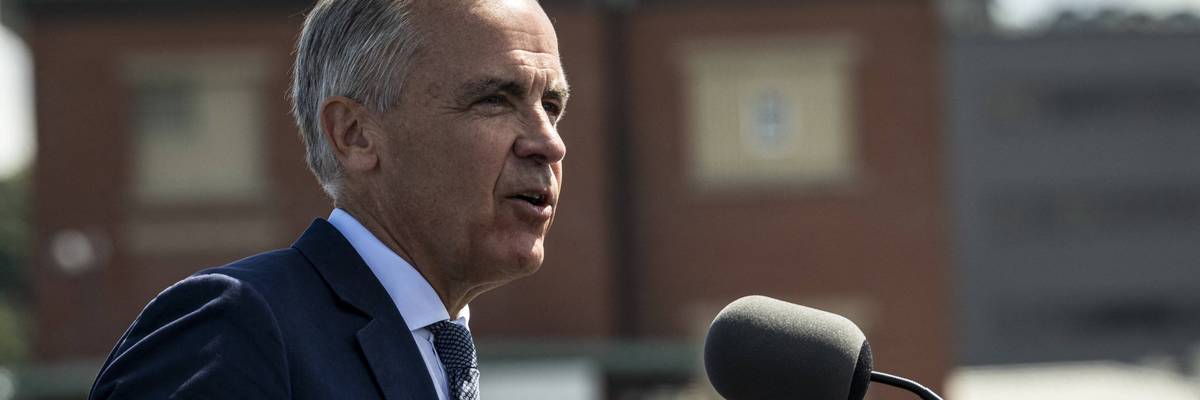
Canadian Prime Minister Mark Carney speaks about the trade dispute with the United States at the Davie Shipyard in Levis, Quebec, Canada on August 24, 2026.
(Photo by Andrej Ivanov/AFP via Getty Images)
Brett Wilkins
Aug 25, 2026
COMMON DREAMS
Canada announced Tuesday that it will impose roughly $20 billion in retaliatory tariffs on American imports in response to President Donald Trump’s 50% tariff on many of its goods after bilateral negotiations collapsed amid what Ottawa said were last-minute concessions that damaged the Canadian economy and intruded on its sovereignty.
The government of center-left Canadian Prime Minister Mark Carney said its countermeasures will cover roughly C$27.6 billion ($20 billion) worth of American products, with tariffs ranging from 15% to 50% on hundreds of categories including steel, aluminum, appliances, clothing, seafood, electronics, furniture, and dairy. The measures are scheduled to take effect September 8. Ottawa also unveiled billions of dollars in assistance for workers and businesses expected to be hurt by the conflict.
‘It’s War’: Trump’s 50% Tariffs Take Hold After US-Canada Trade Talks Collapse
“Canada must respond, and today we are, in a proportionate, targeted, and strategic way,” Canadian Finance Minister François-Philippe Champagne said during a press conference in Ottawa. “Today I’m announcing that Canada will match the United States tariffs dollar for dollar, rate for rate.”
“Canada’s counter-tariffs are designed primarily to provide protection for Canadian industry impacted by US tariffs and allow them to compete against US products in the Canadian market,” he added. “It’s all about fairness, it’s all about a level playing field, it’s all about supporting Canadian workers and Canadian businesses.”
It’s also apparently about political calculation ahead of November’s midterm elections, in which the congressional balance of power—and therefore Trump’s ability to pursue his agenda—is at stake.
The administration’s trade war with Canada is hitting industries concentrated in states where Republicans are fighting to defend vulnerable US Senate seats, including Maine’s lobster industry and Michigan’s auto sector, while Ohio and other Midwestern states face exposure via cross-border manufacturing and supply chains.
On Monday, Trump told Canadian leaders to “fall in line” or face “far WORSE” consequences than the new tariffs.
Carney retorted that Canadians are not “going to accept” an “attitude at the negotiation table that Canada is a subsidiary of the United States.”
Canadian anger toward Trump has surged as the US president has repeatedly threatened Canada’s sovereignty, including his frequent talk of making Canada the “51st state.” Canadian political leaders and labor organizations have largely rallied behind a tougher response, while a growing grassroots boycott of US products has become a symbol of national resistance.
“Canadians understand that maintaining our sovereignty and independence will entail consequences and sacrifices,” Calgary-based commentator Jen Gerson wrote Tuesday in The Guardian. “We did not bring this trade war on ourselves; we have merely refused to comply in advance to the unreasonable demands of a bad-faith actor. We will be punished for it. We have accepted this.”
“If nothing else, let the [United States’] retaliation be a warning to the rest of the Western alliance,” Gerson added. “Run, run. Protect yourselves. Move faster.”
Trump—the self-proclaimed “peace president” who has attacked more countries than any other US leader in modern history—has menaced a string of allies. He’s threatened to retake the Panama Canal, launch armed attacks on Colombia and Mexico, “bomb the shit” out of Oman, and take over Greenland.
Longtime US allies have taken notice—and action. Just as Russia’s invasion of Ukraine spooked Sweden and Finland into the North Atlantic Treaty Organization, Trump’s erratic aggression has pushed other countries in directions once thought highly unlikely. European Union membership for Iceland, long a politically moribund proposition, is now politically plausible amid developments including Trump’s Arctic saber-rattling. US tariff pressure on India is even incentivizing India to seek closer economic ties with China, a traditional adversary.
Trump’s increasingly aggressive and condescending rhetoric has left many Canadians feeling like their relationship with their southern neighbor has irreparably changed.
“America has changed, and... we will not return to our old relationship,” Carney said after Trump announced the 50% tariffs over the weekend.
“You’re at war when you get attacked,” the prime minister also said. “We got attacked.”
Such rhetoric was once the realm of comedy, like the 1995 satirical film Canadian Bacon, directed by Michael Moore and starring John Candy and Dan Aykroyd, about a struggling US president who manufactures a shooting war with Canada, invasion and all, in hopes of rallying Americans around a foreign enemy.
The premise was absurd because the notion of Washington deliberately provoking its peaceful northern neighbor into war seemed preposterous. Many critics have noted that under Trump, absurdity has become the new normal.
On Tuesday, Trump said he’s considering changing the name of Lake Ontario to “Lake America,” because, as one Bluesky account noted, “Trump likes to slap the name of America on everything.”
“Gulf of Mexico? Gulf of America. Strait of Hormuz? Strait of America. Lake Ontario? Lake America,” the account quipped, adding one more suggestion: “Epstein Island? America Island.”
Canadian Prime Minister Mark Carney said his nation is not “going to accept” an “attitude at the negotiation table that Canada is a subsidiary of the United States.”
Canadian Prime Minister Mark Carney speaks about the trade dispute with the United States at the Davie Shipyard in Levis, Quebec, Canada on August 24, 2026.
(Photo by Andrej Ivanov/AFP via Getty Images)
Brett Wilkins
Aug 25, 2026
COMMON DREAMS
Canada announced Tuesday that it will impose roughly $20 billion in retaliatory tariffs on American imports in response to President Donald Trump’s 50% tariff on many of its goods after bilateral negotiations collapsed amid what Ottawa said were last-minute concessions that damaged the Canadian economy and intruded on its sovereignty.
The government of center-left Canadian Prime Minister Mark Carney said its countermeasures will cover roughly C$27.6 billion ($20 billion) worth of American products, with tariffs ranging from 15% to 50% on hundreds of categories including steel, aluminum, appliances, clothing, seafood, electronics, furniture, and dairy. The measures are scheduled to take effect September 8. Ottawa also unveiled billions of dollars in assistance for workers and businesses expected to be hurt by the conflict.
‘It’s War’: Trump’s 50% Tariffs Take Hold After US-Canada Trade Talks Collapse
“Canada must respond, and today we are, in a proportionate, targeted, and strategic way,” Canadian Finance Minister François-Philippe Champagne said during a press conference in Ottawa. “Today I’m announcing that Canada will match the United States tariffs dollar for dollar, rate for rate.”
“Canada’s counter-tariffs are designed primarily to provide protection for Canadian industry impacted by US tariffs and allow them to compete against US products in the Canadian market,” he added. “It’s all about fairness, it’s all about a level playing field, it’s all about supporting Canadian workers and Canadian businesses.”
It’s also apparently about political calculation ahead of November’s midterm elections, in which the congressional balance of power—and therefore Trump’s ability to pursue his agenda—is at stake.
The administration’s trade war with Canada is hitting industries concentrated in states where Republicans are fighting to defend vulnerable US Senate seats, including Maine’s lobster industry and Michigan’s auto sector, while Ohio and other Midwestern states face exposure via cross-border manufacturing and supply chains.
On Monday, Trump told Canadian leaders to “fall in line” or face “far WORSE” consequences than the new tariffs.
Carney retorted that Canadians are not “going to accept” an “attitude at the negotiation table that Canada is a subsidiary of the United States.”
Canadian anger toward Trump has surged as the US president has repeatedly threatened Canada’s sovereignty, including his frequent talk of making Canada the “51st state.” Canadian political leaders and labor organizations have largely rallied behind a tougher response, while a growing grassroots boycott of US products has become a symbol of national resistance.
“Canadians understand that maintaining our sovereignty and independence will entail consequences and sacrifices,” Calgary-based commentator Jen Gerson wrote Tuesday in The Guardian. “We did not bring this trade war on ourselves; we have merely refused to comply in advance to the unreasonable demands of a bad-faith actor. We will be punished for it. We have accepted this.”
“If nothing else, let the [United States’] retaliation be a warning to the rest of the Western alliance,” Gerson added. “Run, run. Protect yourselves. Move faster.”
Trump—the self-proclaimed “peace president” who has attacked more countries than any other US leader in modern history—has menaced a string of allies. He’s threatened to retake the Panama Canal, launch armed attacks on Colombia and Mexico, “bomb the shit” out of Oman, and take over Greenland.
Longtime US allies have taken notice—and action. Just as Russia’s invasion of Ukraine spooked Sweden and Finland into the North Atlantic Treaty Organization, Trump’s erratic aggression has pushed other countries in directions once thought highly unlikely. European Union membership for Iceland, long a politically moribund proposition, is now politically plausible amid developments including Trump’s Arctic saber-rattling. US tariff pressure on India is even incentivizing India to seek closer economic ties with China, a traditional adversary.
Trump’s increasingly aggressive and condescending rhetoric has left many Canadians feeling like their relationship with their southern neighbor has irreparably changed.
“America has changed, and... we will not return to our old relationship,” Carney said after Trump announced the 50% tariffs over the weekend.
“You’re at war when you get attacked,” the prime minister also said. “We got attacked.”
Such rhetoric was once the realm of comedy, like the 1995 satirical film Canadian Bacon, directed by Michael Moore and starring John Candy and Dan Aykroyd, about a struggling US president who manufactures a shooting war with Canada, invasion and all, in hopes of rallying Americans around a foreign enemy.
The premise was absurd because the notion of Washington deliberately provoking its peaceful northern neighbor into war seemed preposterous. Many critics have noted that under Trump, absurdity has become the new normal.
On Tuesday, Trump said he’s considering changing the name of Lake Ontario to “Lake America,” because, as one Bluesky account noted, “Trump likes to slap the name of America on everything.”
“Gulf of Mexico? Gulf of America. Strait of Hormuz? Strait of America. Lake Ontario? Lake America,” the account quipped, adding one more suggestion: “Epstein Island? America Island.”
Trump roasted as 'greatest idiot' in a lifetime after Lake Ontario threat: 'Out of ideas'
Alexander Willis
August 25, 2026
Alexander Willis
August 25, 2026
RAW STORY
President Donald Trump floated the idea of changing the name of Lake Ontario to “Lake America” on Tuesday amid his ongoing trade feud with Canada, a pitch that was met with collective sighs by critics who spoke to their exhaustion with the chaotic Trump administration.
In a post on his social media platform Truth Social, Trump claimed that his administration was “giving serious consideration” to the name change as he did not “expect to [be] doing much business with Ontario any longer.” The idea is similar to his executive order issued in early 2025 to rename the Gulf of Mexico to the “Gulf of America,” a move that received intense scrutiny at the time.
Regarding Trump’s latest name-change idea — one that came amid Trump imposing 50% tariffs on some Canadian goods, and Canadian Prime Minister Mark Carney vowing to match said tariffs “dollar for dollar” — critics were quick to condemn it.
The Bulwark's Sam Stein quipped on X, "He's out of ideas."
Stephen Hayes, editor and CEO at The Dispatch, mocked, "It's still astonishing - ten years into the Trump era - that our president so often behaves like a 10 year-old. And that so much of our national policymaking is based on the juvenile emoting of an adult who functions like a preteen."
“We are living in the stupidest f------ times,” wrote Jason Willan, a prominent fantasy sports analyst, in a social media post on X.
Roland Ley, a former contributor for Euromaidan Press, called Trump the “greatest idiot” he had witnessed in his “lifetime.”
“Just as internationally 'Gulf of America' isn't recognised, this won't be either,” Ley wrote in a social media post on X. “Not even passed by the US Senate anyway.”
In response to Trump’s announcement, Canadian horse-racing photographer Julie Wright quipped, “Lunatic says what,” and prominent online influencer Mario Nawfal argued that Trump’s trade war was “getting silly” in a post on X to his more than 3.8 million followers.
“It would require a lot more than a President’s bad mood to change the name of a gulf or great lake!” Nawfal wrote. “Maybe a vote or something a bit more thought out.”
President Donald Trump floated the idea of changing the name of Lake Ontario to “Lake America” on Tuesday amid his ongoing trade feud with Canada, a pitch that was met with collective sighs by critics who spoke to their exhaustion with the chaotic Trump administration.
In a post on his social media platform Truth Social, Trump claimed that his administration was “giving serious consideration” to the name change as he did not “expect to [be] doing much business with Ontario any longer.” The idea is similar to his executive order issued in early 2025 to rename the Gulf of Mexico to the “Gulf of America,” a move that received intense scrutiny at the time.
Regarding Trump’s latest name-change idea — one that came amid Trump imposing 50% tariffs on some Canadian goods, and Canadian Prime Minister Mark Carney vowing to match said tariffs “dollar for dollar” — critics were quick to condemn it.
The Bulwark's Sam Stein quipped on X, "He's out of ideas."
Stephen Hayes, editor and CEO at The Dispatch, mocked, "It's still astonishing - ten years into the Trump era - that our president so often behaves like a 10 year-old. And that so much of our national policymaking is based on the juvenile emoting of an adult who functions like a preteen."
“We are living in the stupidest f------ times,” wrote Jason Willan, a prominent fantasy sports analyst, in a social media post on X.
Roland Ley, a former contributor for Euromaidan Press, called Trump the “greatest idiot” he had witnessed in his “lifetime.”
“Just as internationally 'Gulf of America' isn't recognised, this won't be either,” Ley wrote in a social media post on X. “Not even passed by the US Senate anyway.”
In response to Trump’s announcement, Canadian horse-racing photographer Julie Wright quipped, “Lunatic says what,” and prominent online influencer Mario Nawfal argued that Trump’s trade war was “getting silly” in a post on X to his more than 3.8 million followers.
“It would require a lot more than a President’s bad mood to change the name of a gulf or great lake!” Nawfal wrote. “Maybe a vote or something a bit more thought out.”
'Sounds like me': Trump confesses to CNN that he torpedoed trade talks with Canada
Robert Davis
August 25, 2026
Robert Davis
August 25, 2026
RAW STORY
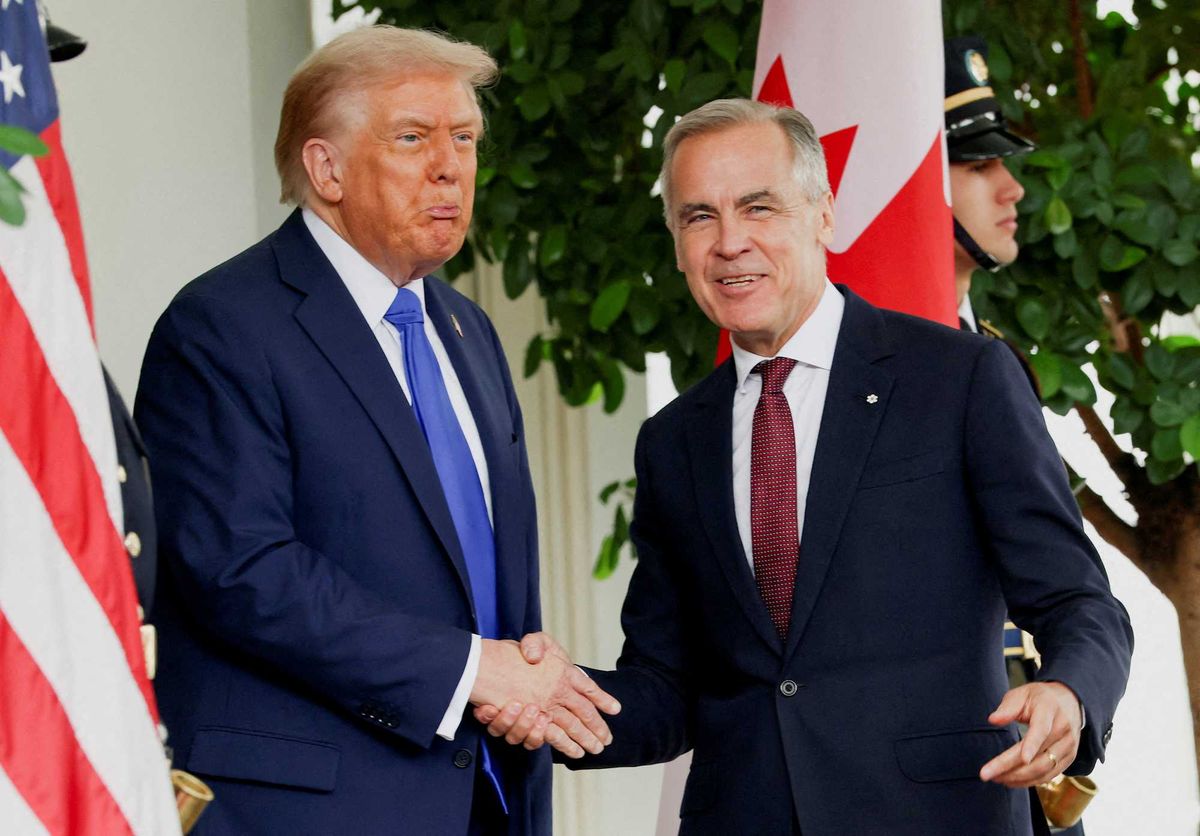
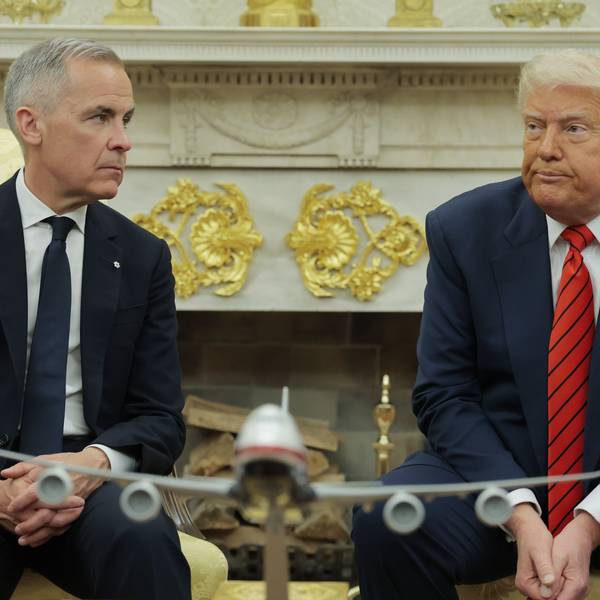
U.S. President Donald Trump welcomes Canada's Prime Minister Mark Carney at the White House in Washington, D.C., U.S., October 7, 2025. REUTERS/Evelyn Hockstein/File Photo
President Donald Trump admitted on Tuesday that he caused the intensifying trade war between the U.S. and Canada after he added conditions to the talks at the 11th hour.
Trump spoke briefly with CNN's Jim Sciutto after Canada announced retaliatory tariffs on a bevy of U.S. goods. During the call, Sciutto asked about Canadian officials' assertion that late-stage demands were inserted into the negotiations, and the president's response was eerily surprising.
Sciutto shared a snippet of the conversation on X.
“That sounds like me,” Trump told the reporter.
“So you don't deny it?” Sciutto responded.
The president replied, “No, no, I don't deny anything. So no, they have to pay a fair amount. And if they don't pay a fair amount, we won't make a deal. That's fine.“
The exchange stunned some of the president's critics.
"At least he admitted it. LOL. Clown show operation," Dean Blundell, a Canadian comedian, posted on X.
"How Donald Trump is sending America's manufacturing economy to the brink of the abyss," Grant Stern, executive editor for Occupy Democrats, posted on X.
U.S. President Donald Trump welcomes Canada's Prime Minister Mark Carney at the White House in Washington, D.C., U.S., October 7, 2025. REUTERS/Evelyn Hockstein/File Photo
President Donald Trump admitted on Tuesday that he caused the intensifying trade war between the U.S. and Canada after he added conditions to the talks at the 11th hour.
Trump spoke briefly with CNN's Jim Sciutto after Canada announced retaliatory tariffs on a bevy of U.S. goods. During the call, Sciutto asked about Canadian officials' assertion that late-stage demands were inserted into the negotiations, and the president's response was eerily surprising.
Sciutto shared a snippet of the conversation on X.
“That sounds like me,” Trump told the reporter.
“So you don't deny it?” Sciutto responded.
The president replied, “No, no, I don't deny anything. So no, they have to pay a fair amount. And if they don't pay a fair amount, we won't make a deal. That's fine.“
The exchange stunned some of the president's critics.
"At least he admitted it. LOL. Clown show operation," Dean Blundell, a Canadian comedian, posted on X.
"How Donald Trump is sending America's manufacturing economy to the brink of the abyss," Grant Stern, executive editor for Occupy Democrats, posted on X.
CNN's Daniel Dale smacks Trump with a stinging fact-check after latest Canada flop
Erik De La Garza
August 25, 2026
RAW STORY
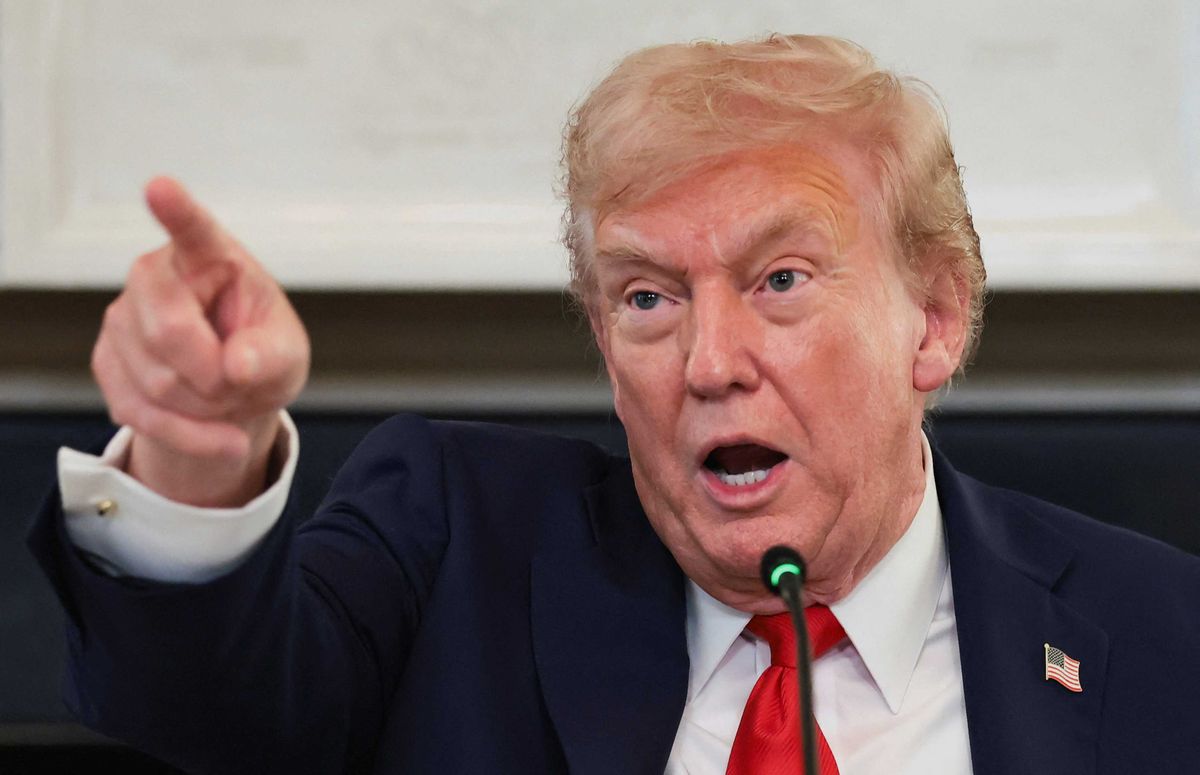
U.S. President Donald Trump points a finger as he speaks during a roundtable on antifa, an anti-fascist movement he designated a domestic "terrorist organization" via executive order on September 22, at the White House in Washington, D.C., U.S., October 8, 2025. REUTERS/Evelyn Hockstein
President Donald Trump repeated another series of false claims about Canada as his escalating trade war with the United States’ northern neighbor erupted again this week, according to a brutal CNN fact-check.
CNN’s Daniel Dale examined two social media posts Trump published Monday, beginning with the president’s claim that “Canada’s Unemployment Rate is now at 10%, and rapidly rising.”
“This is wrong on both counts,” Dale wrote Tuesday.
“Canada’s unemployment rate declined to 6.4% in July. That was the third consecutive month it had gone down,” Dale told readers. “It was also a two-year low.”
The rate would be approximately one percentage point lower if Canada calculated unemployment using the same methodology as the United States, Dale noted. The U.S. unemployment rate was 4.1% in July.
Trump’s claim that Canada conducts “95% of their business with the U.S” also came under the microscope.
“There’s no doubt that the Canadian economy is heavily reliant on the US, but there’s no apparent basis for Trump’s '95%' figure,” Dale found. According to his report, approximately 72% of Canadian merchandise exports went to the United States in 2025, down from roughly 76% the previous year and the lowest percentage since the early 1980s.
“And the figure fell below 70% in the first half of 2026,” Dale added.
While Dale acknowledged that the United States is less dependent on Canada than Canada is on the U.S., he stressed that Canada remains a critical trading partner, particularly for northern border states.
Erik De La Garza
August 25, 2026
RAW STORY
U.S. President Donald Trump points a finger as he speaks during a roundtable on antifa, an anti-fascist movement he designated a domestic "terrorist organization" via executive order on September 22, at the White House in Washington, D.C., U.S., October 8, 2025. REUTERS/Evelyn Hockstein
President Donald Trump repeated another series of false claims about Canada as his escalating trade war with the United States’ northern neighbor erupted again this week, according to a brutal CNN fact-check.
CNN’s Daniel Dale examined two social media posts Trump published Monday, beginning with the president’s claim that “Canada’s Unemployment Rate is now at 10%, and rapidly rising.”
“This is wrong on both counts,” Dale wrote Tuesday.
“Canada’s unemployment rate declined to 6.4% in July. That was the third consecutive month it had gone down,” Dale told readers. “It was also a two-year low.”
The rate would be approximately one percentage point lower if Canada calculated unemployment using the same methodology as the United States, Dale noted. The U.S. unemployment rate was 4.1% in July.
Trump’s claim that Canada conducts “95% of their business with the U.S” also came under the microscope.
“There’s no doubt that the Canadian economy is heavily reliant on the US, but there’s no apparent basis for Trump’s '95%' figure,” Dale found. According to his report, approximately 72% of Canadian merchandise exports went to the United States in 2025, down from roughly 76% the previous year and the lowest percentage since the early 1980s.
“And the figure fell below 70% in the first half of 2026,” Dale added.
While Dale acknowledged that the United States is less dependent on Canada than Canada is on the U.S., he stressed that Canada remains a critical trading partner, particularly for northern border states.
Trump just made toilet paper a lot more expensive
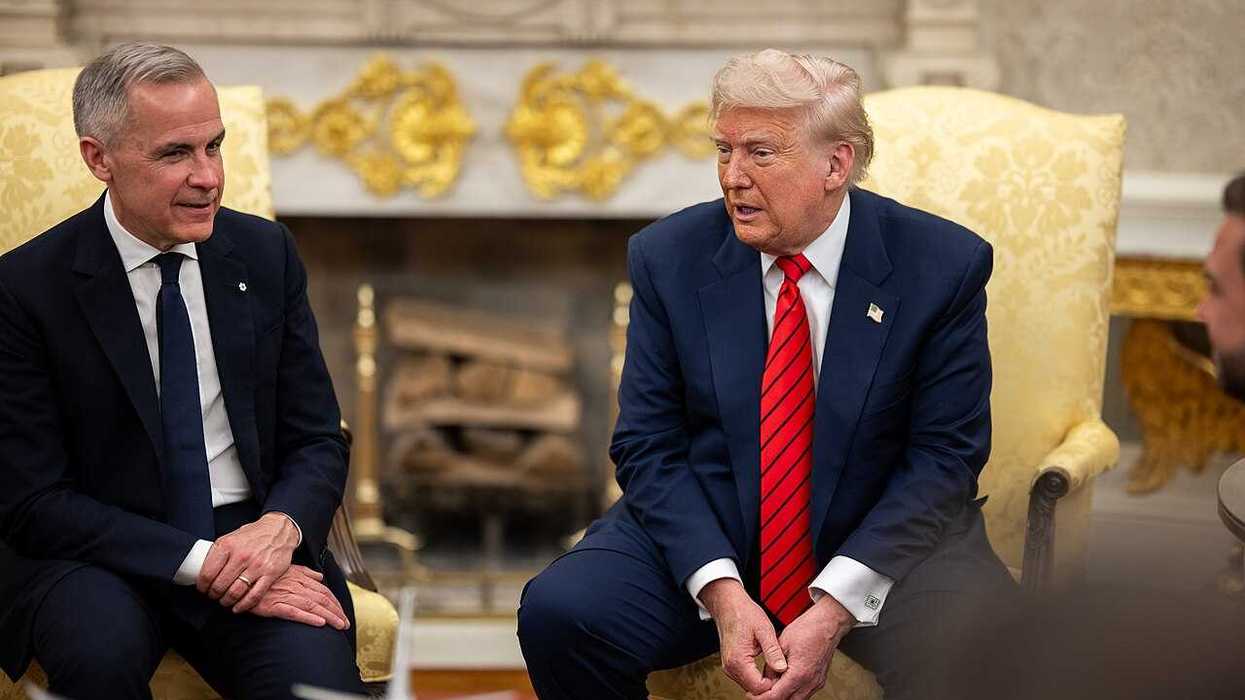
President Donald Trump meets with Canadian Prime Minister Mark Carney, Tuesday, May 6, 2025, in the Oval Office. (Official White House Photo by Daniel Torok/Flickr)
President Donald Trump meets with Canadian Prime Minister Mark Carney, Tuesday, May 6, 2025, in the Oval Office. (Official White House Photo by Daniel Torok/Flickr)
August 26, 2026
ALTERNET
After U.S. President Donald Trump threatened Canada with new 50 percent tariffs, Canada responded with retaliatory tariffs of their own on Tuesday. Tariffs on some Canadian goods imported into the United States, the Associated Press (AP) reports, could be as high as 50 percent. And according to The Guardian, Americans could face higher prices for paper products like toilet paper, facial tissues and paper towels as a result.
"Using the bathroom or having a cry is about to become more expensive for North Americans as the U.S. and Canada enter a full-fledged trade war that threatens to flush away decades of peaceful trading between the two nations," journalist Lauren Aratani reports in The Guardian. "After trade negotiations broke down between the two countries last weekend, Mark Carney, the Canadian prime minister, vowed to match U.S. tariffs 'dollar for dollar' and unveiled a list of nearly 900 American goods that will face 25 percent to 50 percent tariffs starting on 8 September."
Many economists, both liberal and conservative, have been warning that a trade war with Canada could cost U.S. homeowners a fortune — as many building and construction materials are imported into the U.S. from Canada. And according to a Canadian government website, "Canada's counter tariffs will apply to products covering $27.6 billion in imports from the U.S. and will focus on sectors such as steel, dairy, appliances, agricultural equipment, pulp and paper, and electronics, that are most impacted by U.S. tariffs."
Aratani emphasizes that "paper products are among the hardest-hit sectors, with Canada threatening to put tariffs of between 25 percent and 50 percent on 'toilet paper or face tissue stock' from 8 September in retaliation for a 50 percent hike from Washington DC."
"Though American toilet paper and tissues are often made domestically," Aratani explains, "they heavily rely on lumber-rich Canada for raw materials. Procter & Gamble, the owner of Charmin toilet paper, said last year that it would have to increase prices amid tariffs that were in place at the time. The U.S. imported $328m worth of toilet paper from Canada in 2024, according to the World Bank, making it by far the largest exporter of the product to the U.S. Retailers including Costco source much of their paper products from the country."
The Guardian reporter continues, "The U.S. accounts for more than 20 percent of global tissue consumption despite having only 4 percent of the world's population. The average American uses 141 rolls of toilet paper per year, making them No. 1 for No. 2s globally, just ahead of Germans, each using an average of 134 rolls annually."
After U.S. President Donald Trump threatened Canada with new 50 percent tariffs, Canada responded with retaliatory tariffs of their own on Tuesday. Tariffs on some Canadian goods imported into the United States, the Associated Press (AP) reports, could be as high as 50 percent. And according to The Guardian, Americans could face higher prices for paper products like toilet paper, facial tissues and paper towels as a result.
"Using the bathroom or having a cry is about to become more expensive for North Americans as the U.S. and Canada enter a full-fledged trade war that threatens to flush away decades of peaceful trading between the two nations," journalist Lauren Aratani reports in The Guardian. "After trade negotiations broke down between the two countries last weekend, Mark Carney, the Canadian prime minister, vowed to match U.S. tariffs 'dollar for dollar' and unveiled a list of nearly 900 American goods that will face 25 percent to 50 percent tariffs starting on 8 September."
Many economists, both liberal and conservative, have been warning that a trade war with Canada could cost U.S. homeowners a fortune — as many building and construction materials are imported into the U.S. from Canada. And according to a Canadian government website, "Canada's counter tariffs will apply to products covering $27.6 billion in imports from the U.S. and will focus on sectors such as steel, dairy, appliances, agricultural equipment, pulp and paper, and electronics, that are most impacted by U.S. tariffs."
Aratani emphasizes that "paper products are among the hardest-hit sectors, with Canada threatening to put tariffs of between 25 percent and 50 percent on 'toilet paper or face tissue stock' from 8 September in retaliation for a 50 percent hike from Washington DC."
"Though American toilet paper and tissues are often made domestically," Aratani explains, "they heavily rely on lumber-rich Canada for raw materials. Procter & Gamble, the owner of Charmin toilet paper, said last year that it would have to increase prices amid tariffs that were in place at the time. The U.S. imported $328m worth of toilet paper from Canada in 2024, according to the World Bank, making it by far the largest exporter of the product to the U.S. Retailers including Costco source much of their paper products from the country."
The Guardian reporter continues, "The U.S. accounts for more than 20 percent of global tissue consumption despite having only 4 percent of the world's population. The average American uses 141 rolls of toilet paper per year, making them No. 1 for No. 2s globally, just ahead of Germans, each using an average of 134 rolls annually."
‘The Red States, We’re Going to Hit Hard’: Canadian Politicians Vow to Make MAGA Pay for Trump’s Trade War
“We can put massive pain on the US,” said Ontario Premier Doug Ford.
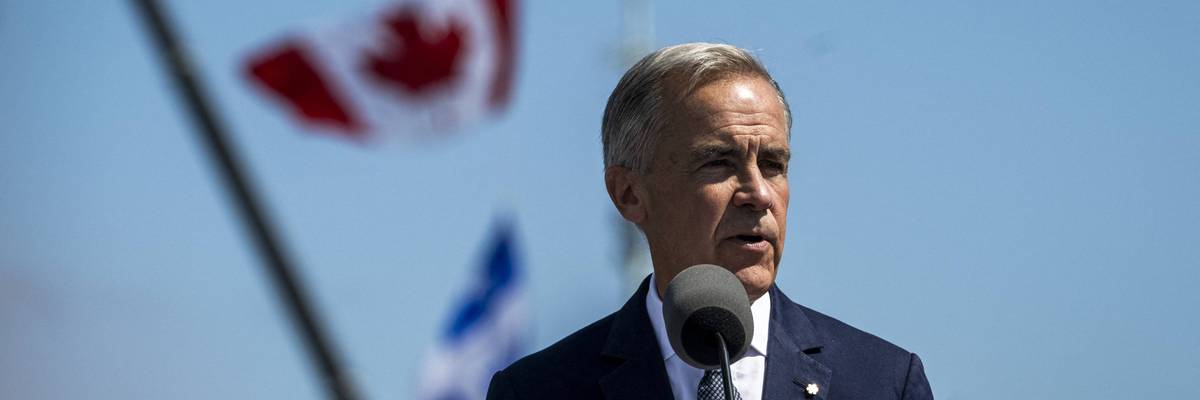
Canadian Prime Minister Mark Carney speaks about the trade dispute with the United States at the Davie Shipyard in Levis, Quebec, Canada on August 24, 2026.
(Photo by Andrej Ivanov/AFP via Getty Images)
Brad Reed
Aug 24, 2026
COMMON DREAMS
Politicians from Canada’s two biggest political parties vowed on Monday to hit back hard against US President Donald Trump’s trade war against their country.
Trade negotiations between the two countries collapsed last week after Trump reportedly sought to restrict Canada from striking trade deals with other nations, while also pressuring the country to scrap requirements aimed at preserving the use of the French language.
Speaking to reporters on Monday, Canadian Prime Minister Mark Carney warned that Trump’s aggression would come back to hurt US workers.
“It’s not a surprise that the US would take some form of reprisal to our response to their unjustified tariffs,” said Carney, a member of the center-left Liberal Party. “But what message does that send to the workers in Michigan and Ohio and Kentucky and Alabama who rely on Canadian demand? We’re their largest customer for automobiles, more than the European Union, Japan, Korea.”
Carney also said there was an “attitude at the negotiating table” from US officials that “Canada is a subsidiary of the United States,” which is “not something we’re going to accept.”
Ontario Premier Doug Ford, a member of the rival center-right Progressive Conservative Party, delivered a more strident rebuke to Trump, vowing that Canada’s response would deliver a hit to the president’s voters.
“The red states, we’re going to hit hard,” said Ford.
The Ontario premier then outlined all the ways his country can make life more painful for US consumers so long as Trump keeps trying to undermine Canadian sovereignty.
“If it gets really, really bad, I say everything’s on the table,” Ford said. “We need everyone to be on Team Canada and throw everything and the kitchen sink at them, no matter if it’s electricity, if it’s fuel, again, if it’s potash, if it’s uranium. We need to have everything on the table... we can put massive pain on the US. President Trump underestimates us. And that’s the biggest mistake.”
Trump lashed out at both Carney and Ford in a Monday morning Truth Social post.
“The USA will always be far bigger, richer, and stronger than Canada,” Trump wrote. “Without the United States, Canada couldn’t survive—it’s where they get all of their money and, because of their current bad leadership, primarily Governor Carney, and his Flunky, Ford, they will not be allowed to keep taking advantage of the United States—their key to survival.”
“We can put massive pain on the US,” said Ontario Premier Doug Ford.
Canadian Prime Minister Mark Carney speaks about the trade dispute with the United States at the Davie Shipyard in Levis, Quebec, Canada on August 24, 2026.
(Photo by Andrej Ivanov/AFP via Getty Images)
Brad Reed
Aug 24, 2026
COMMON DREAMS
Politicians from Canada’s two biggest political parties vowed on Monday to hit back hard against US President Donald Trump’s trade war against their country.
Trade negotiations between the two countries collapsed last week after Trump reportedly sought to restrict Canada from striking trade deals with other nations, while also pressuring the country to scrap requirements aimed at preserving the use of the French language.
Speaking to reporters on Monday, Canadian Prime Minister Mark Carney warned that Trump’s aggression would come back to hurt US workers.
“It’s not a surprise that the US would take some form of reprisal to our response to their unjustified tariffs,” said Carney, a member of the center-left Liberal Party. “But what message does that send to the workers in Michigan and Ohio and Kentucky and Alabama who rely on Canadian demand? We’re their largest customer for automobiles, more than the European Union, Japan, Korea.”
Carney also said there was an “attitude at the negotiating table” from US officials that “Canada is a subsidiary of the United States,” which is “not something we’re going to accept.”
Ontario Premier Doug Ford, a member of the rival center-right Progressive Conservative Party, delivered a more strident rebuke to Trump, vowing that Canada’s response would deliver a hit to the president’s voters.
“The red states, we’re going to hit hard,” said Ford.
The Ontario premier then outlined all the ways his country can make life more painful for US consumers so long as Trump keeps trying to undermine Canadian sovereignty.
“If it gets really, really bad, I say everything’s on the table,” Ford said. “We need everyone to be on Team Canada and throw everything and the kitchen sink at them, no matter if it’s electricity, if it’s fuel, again, if it’s potash, if it’s uranium. We need to have everything on the table... we can put massive pain on the US. President Trump underestimates us. And that’s the biggest mistake.”
Trump lashed out at both Carney and Ford in a Monday morning Truth Social post.
“The USA will always be far bigger, richer, and stronger than Canada,” Trump wrote. “Without the United States, Canada couldn’t survive—it’s where they get all of their money and, because of their current bad leadership, primarily Governor Carney, and his Flunky, Ford, they will not be allowed to keep taking advantage of the United States—their key to survival.”



.jpeg)



.JPG)