Tuesday, September 15, 2026


Energy beneath our feet: Could rock be used as a battery for renewables?
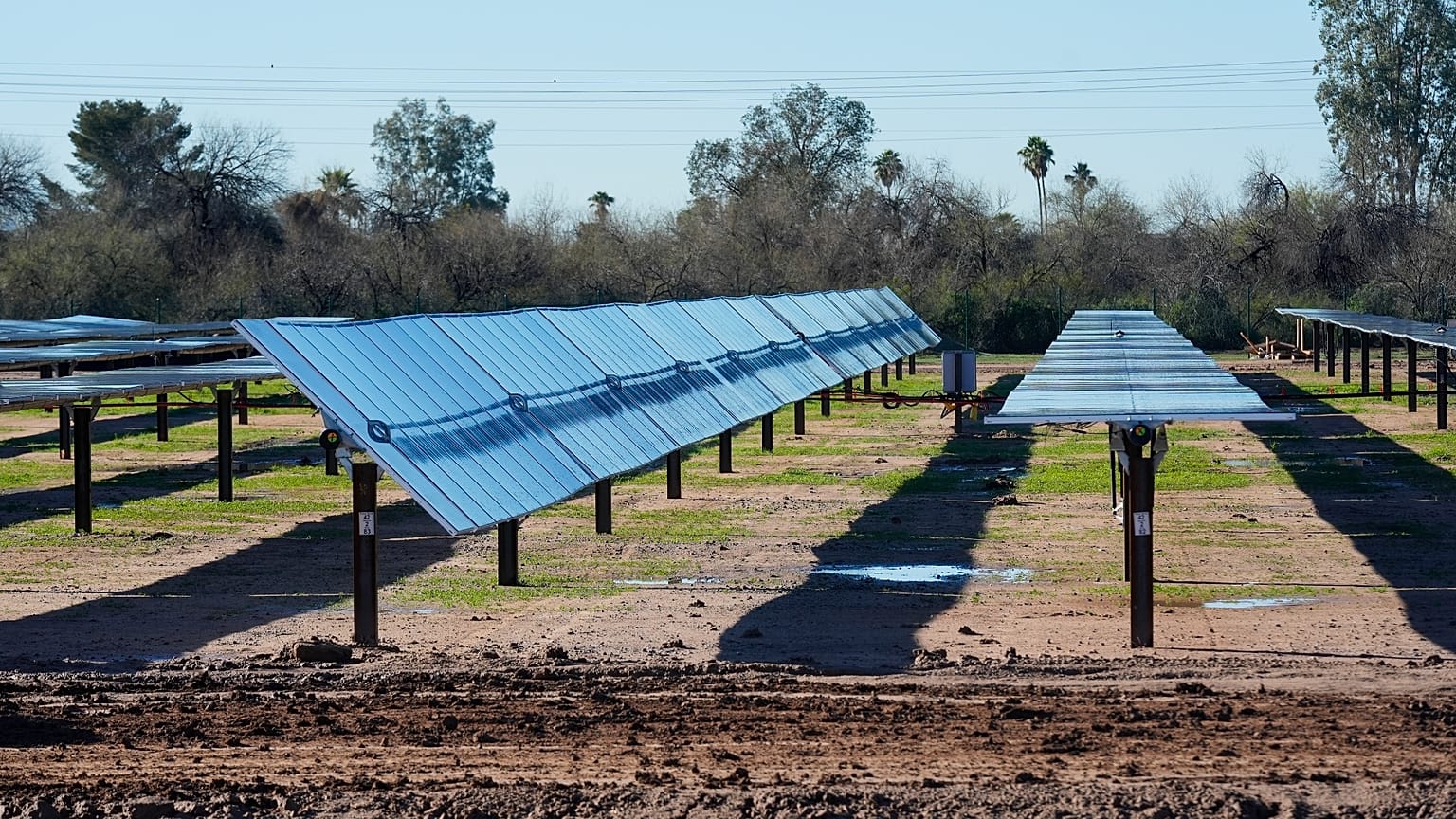
Energy in the rocks: could the underground be the battery we need for the energy transition?
Copyright AP Photo/Ross D. Franklin

By Diana Rosa Rodrigues
Published on

Portuguese scientists studied options for storing energy as compressed air in deep porous rock. In the best case, one reservoir could power a small town.

Storing energy underground may sound like science fiction, but it is not exactly a new practice in geological research. The first experiments were carried out in salt caverns in Germany in the 1970s. The process opens up a world of possibilities for renewable energy and the storage needs that come with it.

"One of the problems with the energy transition is that there is greater availability of energy from renewable sources which cannot be stored," Ricardo Pereira, a researcher at GeoBioTec at the NOVA School of Science and Technology in Lisbon, tells Euronews Earth. "It is possible to use that surplus electrical energy and store it temporarily in the rocks in the subsurface, at depths of 500, 1,000 or 2,000 metres," he explains.

"By using the ground, the rocks, as a kind of battery we can store amounts of energy capable of powering small towns, and that is the great advantage of this technology."

How can rocks be used to store energy?

In the case of porous rocks, the process consists of feeding air compressors with surplus electricity produced from renewable sources such as wind turbines or solar panels. The compressors then push air, without hydrogen or CO2 and therefore with no risk of explosion, down a well into a layer of porous rock at depth.

The air fills the spaces between the grains of rock, which are normally filled with non-drinkable salt water. This water is displaced without contaminating anything used for human consumption. The air remains trapped there, under pressure, like a "charged" battery that can be used as needed.

When required, the compressed air rises up the well and expands; that force drives turbines at the surface which generate electricity, just like a conventional power station but without burning fuel.

Pereira is one of the Portuguese scientists behind a study that set out to understand how much energy could be stored under different rock conditions.

"This study looks at how much energy could actually be stored under different geological conditions and at different depths using various physical or thermodynamic parameters," he says, noting that "different scenarios were developed" to "give an idea of the maximum amount of energy that can be stored at different depths".

Potential to store enough energy to power a city

Among the European Commission's energy priorities is the increase in energy storage capacity, which it considers "indispensable". Europe currently has about 55 gigawatts of storage capacity. The goal is to reach 200 gigawatts by 2030 in order to ease grid constraints, which increase the risk of blackouts and dependence on imported fossil fuels.

It is in this gigawatt deficit that compressed-air storage in porous rocks could play a role. Unlike lithium-ion batteries, which currently dominate the field, this technology is aimed at long-duration storage, making use of a natural resource that is abundantly available.

The research, a partnership between scientists at NOVA University Lisbon and the Instituto Dom Luiz at the Faculty of Sciences of the University of Lisbon, published in the journal Geoenergy, concluded that in the scenarios analysed "a single adiabatic-isobaric system is the most favourable, capable of providing up to 156 kWh m−3 of energy density and reaching up to 1 TWh of storage capacity at a maximum operating depth of 3,000 m".

"Obviously this is the maximum scenario, where all the optimum conditions are in place," stresses Pereira, noting that these figures nonetheless provide "an idea of the maximum scale and potential" of the process.

"Between an estimated minimum value and a theoretical estimated maximum value there is a whole range of possibilities, but what this study shows is that a single reservoir, and we are talking about a simulation for a single case, in the most favourable situation, this 1 TWh is very close to the consumption of some medium-sized cities in Portugal".

'Black start': Could underground energy storage have mitigated the Iberian blackout?

Besides offering large storage capacity, this process works through what is known as "black start", that is, the ability of an electrical system to start up without relying on the grid.

"Compressed air is almost immediate and therefore allows you to switch on and off almost instantly," Pereira explains, thereby helping to stabilise the electricity grid, something that is useful in situations such as the Iberian blackout. "It is something that, perhaps, if it had already been up and running in 2025, could have avoided some of those problems," says Pereira.

"Obviously the blackout problem was far more extensive and this would not be a magic recipe for solving an equivalent situation... but it would help to manage power on the grid."

According to the researcher, work is currently under way to determine the areas and geographical characteristics in Portugal where processes of this kind could be implemented, but the study already allows clear conclusions to be drawn to support that mapping.

"This is really one of the innovative aspects of this study: it shows, first, that the deeper we can place our reservoir in porous rocks, the more energy can be released," says Pereira. In this way, he adds, it is possible "to compare it with the consumption of certain coastal towns, especially some of the more industrialised cities, and to see what impact this could have on the decarbonisation of certain regions and on increasing energy independence from fossil fuel consumption".

Lisbon and Almada, both with high population and industrial density, are among the areas highlighted as having great potential.

Legislation is the main obstacle

For now, in Portugal the technology exists only on paper, with a timeframe for deployment, according to the researcher, of five to 10 years, to cover the various phases required: geological study, drilling of wells, pilot project and start of operations.

"There is a whole set of studies that have to be carried out, starting with characterising the subsurface geology at a given site. Each project is in itself a technical challenge and therefore the preliminary studies alone already take some time," he explains.

According to Pereira, in terms of financial viability, compressed-air energy storage emerges as a "very advantageous" solution, particularly when you compare the costs with other options such as green hydrogen, "which comes with very high costs".

He notes that China is one of the main countries investing in this type of project, with several already under way and others in the pipeline. In Europe, Germany also has some projects, although without many results so far, not least because "these technologies take years to plan, to do all the engineering and to get up and running".

In Portugal, the main obstacle is not economic but regulatory.

"So far, as far as I am aware, there is no specific legislation that would allow such projects to be implemented in Portugal. Everything beneath our feet belongs to the state, to all of us, and therefore there has to be specific regulation for this type of technology, just as there is now for carbon dioxide storage," the researcher says.

"Even if a bold company, keen to invest, wanted to commission a study, then a pilot and eventually reach the production phase, without legislation it cannot be done... There is a very real barrier here that prevents companies in Portugal from even starting a minimally robust study."

Huge potential for compressed-air energy storage – but questions remain

In Portugal, the researcher says, there is still a lack of in-depth knowledge about the impact of this technology on national energy consumption. "We can imagine that if in a given locality we are able to cut natural gas consumption during the night by 5, 10 or 15 per cent, what impact that would have at local or even national level," he explains, stressing that the country has a vast geological area with considerable potential.

"From what we know of the geology, and we are talking about a first assessment of a strip running from Lisbon to Aveiro, in geological terms the so-called Lusitanian Basin, which has a whole range of rocks with the potential to serve as reservoirs. We are talking about a huge area and at the same time one of the most industrialised in the country, with extensive deployment of wind, solar and even hydropower, in other words with the energy available to feed this process."

On the basis of studies carried out so far, and from the point of view of environmental sustainability, Pereira believes that this "methodology really has legs". It could even be a solution for the power grid and, with a series of commitments, "perhaps in 10 years' time, if all goes well, we will have compressed-air projects up and running, helping to manage the grid and to reduce energy problems in an affordable way and at reasonable cost," he argues.


 

Suspected sabotage brings Dutch rail network to a standstill on Budget Day

Numerous trains were cancelled as train travel was disrupted in some central regions of the Netherlands.
Copyright AP Photo

By Simon Ormiston
Published on

A wave of coordinated rail sabotage paralysed Dutch trains on Budget Day as the government calls for an investigation to reveal the perpetrators.

Rail travel across large parts of the Netherlands ground to a halt on Tuesday after authorities discovered tubes tied to tracks at roughly 20 locations, in what officials are treating as coordinated sabotage.

Rail infrastructure operator ProRail said deliberately placed objects had triggered widespread track-circuit failures.

"Materials were found at multiple locations on the track that were deliberately placed there," said ProRail in a statement.

"This causes section malfunctions. Sabotage appears to be involved," added the operator.

The devices caused signalling systems to read affected sections as occupied, halting all trains through them regardless of whether one was actually present.

The disruption began around 5:30am (CET) and hit the Amersfoort–Zwolle, Utrecht–Arnhem, Arnhem–Zutphen and Zwolle–Leeuwarden routes hardest, with national operator NS reporting severe knock-on delays around Zwolle, Deventer and Amersfoort during the morning commuter hours.

One train struck a tube near Steenwijk, in Overijssel and ProRail confirmed no one was injured.

Timing of disruption linked to Budget Day

Malfunctioning level crossings also disrupted road traffic in affected areas.

The disruption occurred on the same day as Prinsjesdag, the Netherlands' annual Budget Day, when the King traditionally processes through The Hague before large crowds.

Authorities have not said whether the two are connected.

State Secretary for Infrastructure and Water Management Annet Bertram said she was "deeply concerned" and called for a thorough investigation.

The National Police are leading that inquiry. No group has claimed responsibility, and ProRail says it does not yet know who was behind the attack or why.

The Trigger Is Now Curious: Physics Should Calibrate Its Taste – Analysis


Image: ChatGPT

September 15, 2026

By Burak Oktenli

Key Takeaways:

After 27 June the LHC entered Long Shutdown 3 toward the High-Luminosity machine (~June 2030). In August CMS reported two Level-1 unsupervised anomaly algorithms (AXOL1TL, CICADA) that in 2024 kept more than four billion events; about 740 million of those would not have been saved by any other Level-1 path.

A trigger already decides what physics can later exist. A false positive can still be studied; a miss is gone. Calibration, the author says, must cover what the model fails to keep, not only what it flags.

Three records are p
roposed: which model and threshold saved an event; tests of what the selector can miss; and why a shadow algorithm was allowed to change the archive. An anomaly score is not a discovery. Other fields that use AI to triage data face the same problem.

CMS is already using unsupervised machine learning to decide which collisions survive real-time data selection. Once a learned system helps shape the scientific archive, its blind spots and version history become part of the calibration problem.

On 27 June, CERN operators dumped the Large Hadron Collider’s final beams before the machine entered the four-year transformation that will turn it into the High-Luminosity LHC. The collider is quiet, but the decisions being made during Long Shutdown 3 will help determine what its experiments can preserve, reconstruct and eventually claim when beams return.

One development makes that question unusually concrete. In August, the CMS Collaboration reported the first sustained use of unsupervised anomaly detection in real-time LHC data selection. During 2024, two Level-1 algorithms, AXOL1TL and CICADA, selected more than four billion collision events for storage and analysis. Nearly 740 million of those events were not selected by any other Level-1 trigger algorithm and otherwise would not have entered the retained record.


That result moves the discussion beyond whether machine learning can run fast enough inside a trigger. It can. The harder scientific question is what calibration should mean when a learned selector helps decide which observations remain available for future physics.

The model does not decide what an event means. It acts earlier. It helps decide whether an event looks unusual enough to deserve scarce bandwidth before most collision data disappear. Once artificial intelligence sits that early in the measurement chain, calibration has to include not only what the model finds, but also what its selection process can fail to preserve.


A trigger is part of the measurement

The LHC produces collisions at a bunch-crossing rate of 40 MHz. CMS cannot store the full detector readout for every crossing. In the Phase-2 design, the upgraded Level-1 trigger is designed to accept up to about 750,000 events per second, while the High-Level Trigger reduces the stream to roughly 7,500 events per second for permanent storage.

Triggering has therefore always encoded scientific judgment. Physicists specify signatures worth retaining, including energetic muons and photons, jets, missing transverse momentum and more elaborate combinations. Every trigger menu answers an unavoidable practical question: what deserves bandwidth?

Learned anomaly detection changes how part of that judgment is produced. AXOL1TL is an unsupervised, signal-agnostic autoencoder operating in the CMS Level-1 Global Trigger. Trained on Zero Bias data, it assigns anomaly scores to incoming trigger objects in real time. Its production model entered operation in 2024 and was updated during 2024 and again for 2025 data taking. CICADA approaches the same general problem through calorimeter information. Together, the recent CMS results show that machine-learned selection is no longer a laboratory demonstration at the edge of collider physics. It is operating inside the machinery that allocates scientific attention.


The asymmetry of the event you never saved

The most important assurance problem follows from an asymmetry between false positives and false negatives.

A false positive is comparatively forgiving. The trigger retains an event that later proves ordinary. Physicists can reconstruct it, inspect it, compare it with backgrounds and decide that the anomaly was uninteresting.

A false negative is different. If a physically important collision receives an ordinary score and is rejected before full readout, the complete event cannot later be reconstructed as though the detector had stored it. What was missed has to be studied indirectly through diagnostic channels that were preserved by design.


This is the scientific difference between a model that recommends what to examine and a model that helps determine what can still be examined. The second system shapes the future evidence base before anyone knows which event will matter.

CMS already has important pieces of the answer. Zero Bias samples support training and evaluation. Firmware behavior can be compared with software emulation. Test-crate operation gives new algorithms a shadow environment before they influence ordinary readout. For Phase 2, Level-1 Data Scouting is being developed to capture trigger information at the full 40 MHz collision rate, creating a high-statistics stream for monitoring, diagnostics and selected analyses. The opportunity during Long Shutdown 3 is to treat these practices as a coherent calibration discipline for learned selection.
Three records a learned trigger should leave behind

First, preserve selection provenance. For an event retained through a learned anomaly path, the collaboration should be able to recover which model and firmware version acted, which threshold applied, the relevant detector and calibration state, and the score that placed the event on that path. This does not require attaching a large payload to every event. Durable references to versioned artifacts are enough if they remain recoverable. A trigger decision should be reproducible as part of the measurement history.

Second, preserve evidence about the misses. An anomaly detector can become highly sensitive to the wrong kind of strange. Detector noise, calibration transitions, unusual multiplicities or other artifacts may attract high scores while a physically important signature remains comparatively ordinary in the model’s representation. Validation should therefore test detector pathologies as well as experiment-specific signal injections, and blind benchmarks can help prevent teams from tuning the selector to the very anomalies used to judge it.

That concern is already visible in CMS research. Recent work on debiasing ultrafast anomaly detection quantified how model-selection procedures can bias an anomaly detector toward simulated benchmark signals and explored an alternative criterion based on agreement across learned representations. The lesson reaches beyond any one method: validation does not merely measure what the trigger recognizes. The validation design can influence what the trigger learns to treat as interesting.

Third, preserve the evidence behind changes in role. Whenever a learned selector moves from shadow operation into a path that affects retained data, or when its threshold, model or firmware changes materially, the evidence supporting that change should remain visible. Stability across runs, agreement between firmware and software emulation, sensitivity to pileup and detector faults, benchmark coverage and reproducibility across updates define the conditions under which the selector is allowed to shape the scientific record.

An anomaly score does not make a discovery

The conceptual boundary is simple but important. An anomaly score can earn an event a place in the retained stream. It cannot by itself give the event evidentiary weight as new physics.

A surprising event still has to survive detector reconstruction, calibration, background modeling, statistical controls, independent analyses and the judgment of the collaboration. The learned trigger preserves possibilities; the rest of the scientific process determines whether any of them deserve belief.

I argued recently in Eurasia Review’s Science section that scientific AI needs an explicit way to preserve uncertainty and surface observations that do not fit existing categories. Learned triggering is a particularly demanding version of that problem because the system acts before the full scientific record exists.

The assurance goal should therefore be inspectability. What did the selector find unusual? Which model and threshold were active? What detector state surrounded the decision? Which classes of events did validation show the model could miss? A useful learned trigger should leave enough evidence for later scientists to interrogate the selection that shaped their dataset.

Long Shutdown 3 is the design window

The timing is favorable. CERN’s updated accelerator schedule places the start of High-Luminosity LHC operations around June 2030. CMS is using the intervening shutdown to rebuild major parts of its trigger and data-acquisition architecture for higher rates, richer Level-1 information and pileup approaching 200 proton-proton interactions per bunch crossing.

Phase 2 will bring tracking information into the Level-1 decision and expand the diagnostic possibilities available through scouting. Calibration practices designed into that architecture now can become ordinary instrumentation rather than an after-the-fact response to a model problem.

The lesson extends beyond CERN. Astronomy, genomics, materials science and other data-intensive fields are moving machine learning upstream from analysis toward triage, prioritization and selection. The more an algorithm determines which observations survive for later scrutiny, the more its provenance, blind spots and change history become properties of the measurement system itself.

Particle physics is unusually well placed to establish that norm. Calibration, control samples, blind analyses, versioned software and adversarial scrutiny are already part of its experimental culture. Learned selection can be absorbed into the same discipline as another component capable of shaping what an experiment will later be able to know.

Calibrate the curiosity

Particle physics has always advanced by choosing what to ignore. The trigger makes that choice at extraordinary speed because the experiment has no alternative.

Machine learning makes part of that choice adaptive. Once a learned selector helps determine what survives long enough to become evidence, its validation envelope, version history and diagnostic channels belong inside the experiment’s calibration story.

The trigger has become curious. Physics should be able to show how that curiosity was calibrated.


About Burak Oktenli
Burak Oktenli holds an MBA and a Master of Professional Studies in Applied Intelligence from Georgetown University. His research addresses the governance of authority in autonomous and AI-enabled systems, and his writing has appeared at the Modern War Institute at West Point, RUSI, RealClearDefense, RealClearMarkets, and Geopolitical Monitor. He is the author of Authority Architectures for Autonomous Systems, a ten-volume series on how authority in autonomous systems is delegated, monitored and recovered, at authority-architecture.me.
View all posts by Burak Oktenli →


Serbia shows off Chinese robot dogs at military exercise

Serbia shows off Chinese robot dogs at military exercise
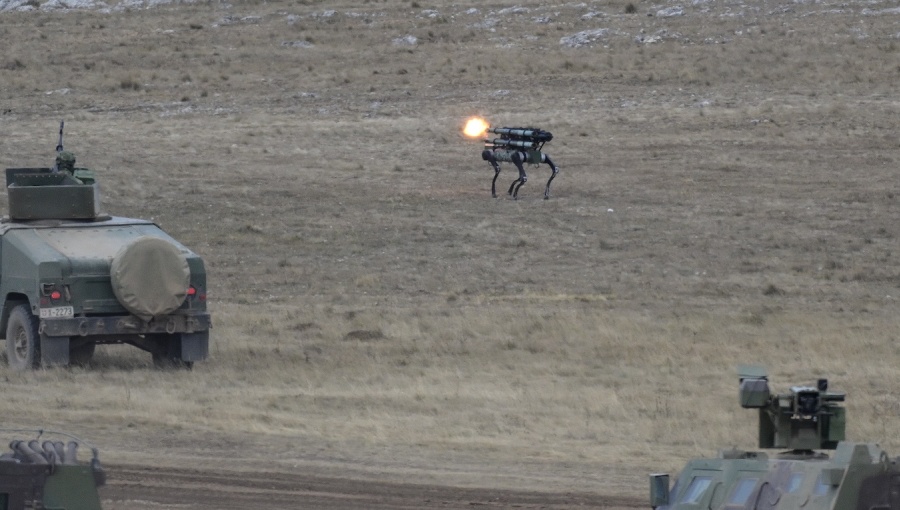
A "robot dog" at the Pobednik 2026 joint tactical live-fire exercise. / Serbia defence ministryFacebook
By Tatyana Kekic in Belgrade September 14, 2026

Serbia showcased its new "robot dogs" at a major military exercise on September 13, alongside drones, missile systems and other new equipment, as it pushes to modernise its armed forces and expand the use of unmanned systems.

The robot dogs were displayed at the "Pobednik 2026" live-fire exercise at the Pešter training ground in southwestern Serbia, near Sjenica. The robots can carry weapons including machine guns and grenade launchers and are intended to enter potentially mined or inaccessible areas ahead of special forces.

President Aleksandar Vucic said the exercise demonstrated for the first time an attack involving robotic and unmanned systems without direct human participation.

"Today you could see for the first time an attack by robotic, unmanned and unmanned aerial vehicles, without a single human," Vucic said, public broadcaster RTS reported.

The display comes weeks after Chinese robotics company AGIBOT opened a factory in the Serbian city of Sabac with Chinese automotive supplier Minth. The plant will assemble humanoid robots and robotic dogs and test their movement and vision systems as part of a wider €200mn investment plan.

Vucic has said Serbia could initially produce more than 5,000 robots a year and was testing humanoid robots for military applications.

Serbia also displayed China's HQ-17 air-defence system at the exercise, as well as domestically developed unmanned ground vehicles, drones and new multiple rocket launchers.

Belgrade has increasingly turned to China for military equipment, including drones, air-defence systems and CM-400AKG supersonic missiles, while also buying major weapons systems from Western suppliers such as French Rafale fighter jets.

Vucic said Serbia was developing a "digital army" to allow combat vehicles to transmit target information directly to artillery units, reducing battlefield decision-making time.

"We want peace and stability. We want to protect our sky and our land ourselves," he said.

The exercise took place amid continuing tensions between Serbia and neighbouring Kosovo and wider security concerns in the Western Balkans.

Serbia plans to reintroduce compulsory military service from March next year, with the planned service lasting 75 days.


How Belarus helps Russia and its drone arsenal target Ukraine and threaten NATO

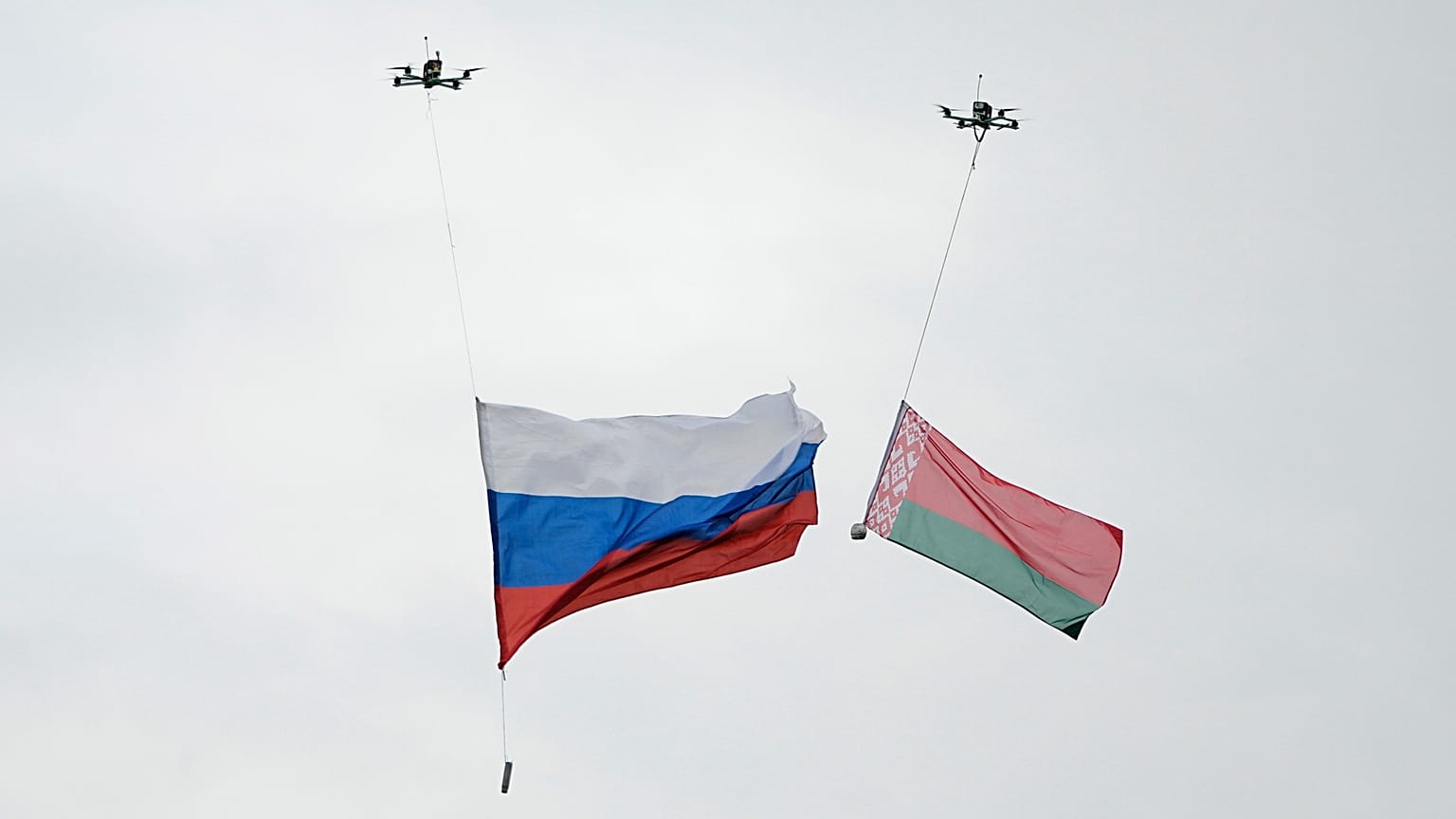
Drones each carry a Russia, left, and Belarus national flag, during the joint Russian-Belarusian military drills at a training ground near Barysaw, Belarus, Sept. 15,
Copyright AP Photo

By Sasha Vakulina
Published on


Belarus appears to have resumed providing infrastructure to support Russian drone attacks on Ukraine and is now also emerging as a threat to NATO after a drone flying from Belarus was shot down over Lithuania. Here's what we know.

The drone shot down by NATO over Lithuania overnight on Tuesday had entered the country’s airspace from neighbouring Belarus, Vilnius said.

The drone flew over Lentvaris close to the Lithuanian capital before being brought down near the village of PratkÅ«nai, according to Vilmantas Vitkauskas, head of Lithuania’s National Crisis Management Centre.

It was the first time a drone was shot down over Lithuanian territory.

The incident puts Minsk back in focus not only for helping Russia carry out drone attacks against Ukraine, but now also as a source of drone threats to NATO territory.

The incursion came just a day after Ukrainian officials said Russia was using Belarusian mobile networks and signal repeaters to support Shahed-type drones during attacks on western Ukraine.

Ukrainian President Volodymyr Zelenskyy's advisor Serhii “Flash” Beskrestnov said the flight paths of Russian drones during a mass attack on Saturday suggested they were making use of mobile networks across the border.

“If we look at the movement of jet-powered and conventional ‘Shaheds,’ they stay close to the border with Belarus," Beskrestnov said.

Beskrestnov said he believed the drones probably had access to Belarusian commercial LTE networks.

On Monday Ukraine’s State Border Guard Service separately said recent Russian attacks on the western regions of Rivne, Volyn and Lviv had been supported by communications infrastructure located inside Belarus.

“The air assets launched by Russia were fed with a signal through repeaters that were also located precisely on the territory of this country,” border guard spokesperson Andrii Demchenko said.

The claims suggest Russia is again making use of communications infrastructure inside Belarus to support its drone campaign against Ukraine, months after Kyiv demanded that the equipment be shut down.

Ukraine’s military intelligence chief Oleh Ivashchenko said last week that Kyiv had identified six repeater stations in Belarus used by Russian forces to relay video streams from strike drones, and that some of the equipment had resumed operating.

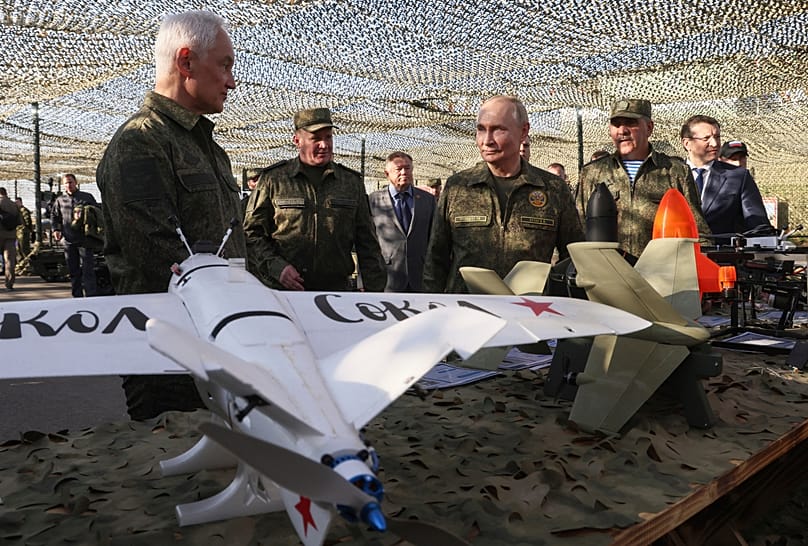
Vladimir Putin inspects Russian weapons and equipment at the Russian-Belarusian joint military drills "Zapad 2025", Russia, Sept. 16, 2025. AP Photo

The equipment has been a source of tension between Kyiv and Minsk since June, when Zelenskyy gave Belarus a week to dismantle or switch off the Russian-installed repeaters, warning that Ukraine would otherwise act itself.

Days later, Zelenskyy said the repeaters had stopped operating on 22 June, although it remained unclear whether they had actually been removed.

The shutdown did not last long. By the end of June Ukrainian military officials said the equipment had not been dismantled and that at least one repeater had been switched back on.

Their apparent return gives Russia another means of maintaining communications with strike drones operating close to Ukraine’s northern and western borders, including areas close to NATO territory.

Russia has increasingly used a mixture of mobile networks and radio technology to maintain links with its long-range strike drones and overcome Ukrainian electronic warfare.


No, the EU isn't demanding that Ukraine mobilise women against Russia's invasion


By James Thomas
Published on

Ukraine's counter-disinformation agency says that the claims originated with Russia's Foreign Intelligence Service.

Is the EU demanding that Ukraine mobilise women to bolster its forces against Russia's invasion?

It's a question that many social media users are debating after the allegations emerged on X and through Russian-language Telegram channels in recent weeks.

The answer, however, is no. Ukraine's Center for Countering Disinformation, a working body of the National Security and Defence Council of Ukraine, said that the claim originated from Russia's Foreign Intelligence Agency (SVR), which claimed, without evidence, that Brussels is pressuring Kyiv to forcibly conscript women.

Russia also wrongly said that the EU's foreign policy chief, Kaja Kallas, called the move "a step in the right direction", according to the counter-disinformation service.

However, there is no evidence that any EU politician has made such a demand, and no reputable news outlet has reported that Brussels is pressuring Kyiv to conscript women.

Women can join Ukraine's defence forces voluntarily, but there are currently no plans to mobilise them compulsorily; neither is there any legislation to do so making its way through parliament.

The Center for Countering Disinformation previously reported that pro-Russian propagandists had spread a false claim that Western media had launched a campaign in support of mobilising Ukrainian women.

According to the agency, the claim is based on an article published by The Telegraph about women's experiences serving in the army. However, the article only mentions mobilisation for women once, in the context of a drone operator's personal views.

The operator, named in the article as Katya, reportedly said that she found Israel's conscription of both sexes inspiring, and that she'd like to see the same implemented in Ukraine. The article itself does not advocate for that.

Andrius Kubilius, European Commissioner for Defence and Space, has also rejected suggestions that the EU is demanding that Ukraine force women into the army.

Speaking to journalists on 11 September following the first board meeting of the EU-Ukraine Drone Alliance, he said that he had "no information" on any such measure.

"I would say it would be strange if Europe will try to convince Ukrainians how to make mobilisation, including mobilisation of women," Kubilius said. "I am not surprised that that comes from the Kremlin."

The question of women's conscription has nevertheless gained attention elsewhere in Europe. Denmark extended compulsory military service to women from July 2025, with the first women entering the system under the new rules in 2026 as part of a lottery-style system. It joins Norway and Sweden in having an active, universal conscription model.

In late 2025, the German government decided to introduce a voluntary model of military service for men, sparking a debate about the role of women in the armed forces too.

However, Germany is not an outlier in Europe: for countries that have compulsory military service, female enlistment is voluntary for the majority.


How to save millions of lives as humanitarian funding falls? Taxing the rich

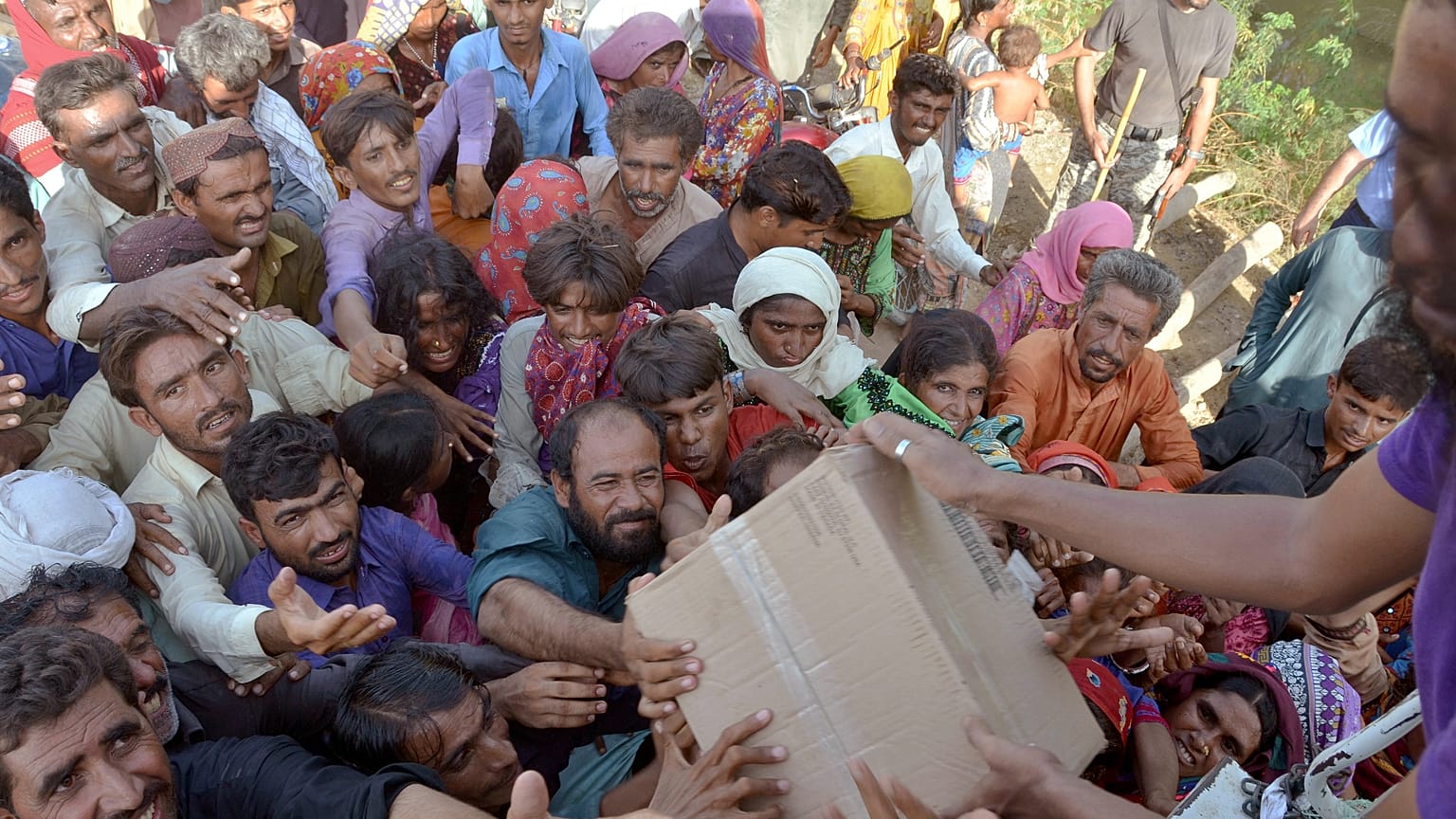
Displaced families, who fled their flood-hit homes, get relief aid distributed by soldiers of Pakistan rangers.
Copyright Copyright 2022 The Associated Press. All rights reserved.

By Giedre Peseckyte
Published on

Putting a 3% tax on billionaires' wealth could save up to 29.5 million lives among the most vulnerable populations by 2030, according to new research published in The Lancet, as traditional sources of humanitarian and development funding face an unprecedented squeeze.

Humanitarian and development assistance for low- and middle-income countries is facing an unprecedented squeeze — but the funding gaps could be filled by taxing the wealthy, potentially saving millions of lives, a new study says.

“With donor countries facing growing indebtedness and increasingly reallocating resources towards military spending, funding humanitarian assistance via the taxation of large fortunes was one of the most viable strategies,” said Lucio Exposito, senior economist of the study and researcher at the ICESI School of Economics and University of East Anglia School of Global Development in the United Kingdom

The research comes as international aid is undergoing its sharpest contraction on record.

Official development assistance (ODA) — government aid that promotes and specifically targets the economic development and welfare of low- and middle-income countries in areas such as health, sanitation, education, and infrastructure — was cut by nearly a quarter, with all major donors reducing their ODA in 2024 and 2025. It is expected that countries will further reduce their assistance from 2025 to 2026.

Such cuts have real-world consequences.

If current ODA defunding continues, it could amount to 7,6 million deaths, including 1,4 million deaths among children younger than 5 years by 2030, according to the research. Such a defunding scenario served as the baseline against which different wealth redistribution policies were evaluated.

Multiple wealth redistribution policies

In a world where there are over 3,000 billionaires, worth a record €17.4 ($20.1) trillion, up €3.46 ($4) trillion from last year, a 3% tax on their wealth would have the largest estimated effect, leading to 29.5 million fewer deaths by 2030. A 1% wealth tax was associated with 15.1 million averted deaths.

Other measures also produced sizeable effects. A tax on financial transactions, often known as a Tobin tax, was associated with around 24.5 million deaths averted, while a global minimum tax on multinational companies with revenues above €750 million was associated with approximately 20.1 million.

“In a world marked by extreme and widening inequalities and an unprecedented concentration of wealth, our results show the potential of alternative wealth redistribution policies—proposed in recent high-level international agreements to support global development—to mitigate the negative impacts of ODA defunding,” researchers said, stressing that these are modelled estimates rather than forecasts of deaths that will necessarily occur or be prevented.

Researchers analysed data from 59 low-income and lower-middle-income countries between 2002 and 2021, representing 3,9 billion people, then modelled how different taxation policies could offset projected aid reductions through 2030.

Wealth taxes have been implemented in a few countries. Spain introduced a solidarity wealth tax in 2022, applying rates of between 1.7% and 3.5% to individuals with net assets above €3 million. France has also debated a 2% tax on ultra-high-net-worth individuals, although a recent proposal was rejected by the Senate. Other countries, such as Sweden, implemented a wealth tax for several decades before abolishing it in 2007.

Wealth taxation has gained renewed political momentum internationally, including among wealthy individuals themselves. At the World Economic Forum in Davos earlier this year, hundreds of millionaires and billionaires from dozens of countries called on governments to increase taxes on the super-rich.

“We live in an extremely unequal world, where a small number of individuals and corporations are accumulating wealth at an unprecedented pace and scale, while millions of vulnerable people continue to die for lack of access to basic, often low-cost, humanitarian interventions,” said Davide Rasella, ICREA Professor at ISGlobal, who conceived and coordinated the study.

“Our findings show that implementing even modest wealth redistribution policies, such as those proposed in recent international agreements, could literally save tens of millions of lives in the coming years.”


Poland revives 60% windfall tax on fuel companies

Poland revives 60% windfall tax on fuel companiesFacebook
By bne IntelliNews September 15, 2026

Poland’s government has revived plans for a temporary windfall tax on fuel companies, proposing a 60% levy on revenues deemed to result from unusually high margins during this year’s energy-market disruption.

The tax would apply to fuel producers and companies importing or acquiring certain liquid fuels from other EU countries, PAP reported on September 14. The government is due to consider the proposal on September 15.

The taxable amount would be calculated as revenue exceeding what a company would have earned using its average 2025 fuel-sales margin, increased by 20%.

The government says this should exclude normal profitability and gains resulting from business expansion or investment. Payments would be made through monthly advances followed by an annual settlement.

The proposal replaces legislation passed by parliament in July that also imposed a 60% rate and was expected to raise about PLN4bn.

President Karol Nawrocki referred that law to the Constitutional Tribunal on July 24 before signing it, arguing that taxing gains dating from March violated the principle that legislation should not operate retroactively.

Government officials subsequently said a revised version would avoid retroactive taxation.

Warsaw wants the levy to recover part of the cost of measures introduced after the Middle East conflict and oil-supply disruption drove fuel prices higher. The government’s CPN fuel-price package cost about PLN4.7bn, while fuel companies benefited from sharply higher refining and trading margins, the Energy Ministry said.