Tuesday, September 15, 2026

Canada To Reshape Its Arctic Presence, Navy With German-Built Submarines


This photo illustration shows the stealthy, diamond-shaped hull of the Type 212CD submarine. TKMS

September 15, 2026
By Sentry

Key Takeaways:

Canada has chosen Germany’s TKMS for up to 12 Type 212CD conventional submarines to replace the Royal Canadian Navy’s four aging boats. Prime Minister Mark Carney announced the plan in July 2026 at CFB Halifax as NATO watches the Arctic and North Atlantic.

The 212CD, jointly designed with Norway, uses a diamond hull and diesel-plus-hydrogen fuel cells for longer submerged patrols. First four would be built in Germany, with delivery from 2034. Norway has raised its own order to six. CBC puts buy cost near $24 billion and lifetime sustainment near $100 billion.

Carney frames it as Canada’s largest defense buy, plus local maintenance and weapons work, after lifting spending to 2% of GDP with a 5% target by 2035. Germany’s Pistorius said Canada, Germany, and Norway could field 24 boats sharing Arctic and North Atlantic data. Negotiations start now; no contract is signed in the piece.


Canada has selected German manufacturer ThyssenKrupp Marine Systems (TKMS) to build a modern submarine fleet for the Royal Canadian Navy (RCN). The program includes up to 12 Type 212CD submarines that will replace the RCN’s four aging boats as NATO strengthens its stance against growing Russian activity in the Arctic and North Atlantic.

“The submarine is proven and capable, and widely used by our Allies,” Prime Minister Mark Carney said during the July 2026 announcement at Canadian Forces Base Halifax. “The type we’re moving to purchase will operate seamlessly alongside our NATO partners.”

Carney has raised Canada’s defense spending to 2% of GDP and pledged to reach 5% by 2035, which would meet the goal NATO set for members at its 2025 Hague summit.

Germany and Norway jointly developed the stealthy Type 212CD (Common Design). Its diamond-shaped hull reduces its sonar signature, and its propulsion system uses diesel engines with hydrogen fuel cell-based technology. This system allows the nonnuclear vessel to stay submerged for extended periods by generating electricity without needing air, according to the website Engineer Fix.

Canada envisions the agreement as part of a broader economic package that includes constructing maintenance facilities, establishing weapons production capabilities and expanding domestic sustainment operations, according to a CBC report. “This project is about much more than acquiring submarines. It builds Canadian industrial capacity,” Carney said. The submarines could cost about $24 billion and lifetime maintenance and sustainment could raise the total to roughly $100 billion, according to the CBC.

Carney said Canada will begin contract negotiations with TKMS immediately for what will be the nation’s largest ever defense procurement. The purchase could dramatically reshape the RCN. If TKMS delivers all 12 boats, a “full one-third to half of its fleet” would consist of the Type 212CD, according to the CBC. TKMS will build the first four submarines at its shipyards in Germany and could deliver them in 2034, according to news website Breaking Defense. Canada will become the third major operator of the Type 212CD class alongside Germany and Norway. Norway announced in December 2025 that it would increase its order for TKMS Type 212CD boats from four to six. TKMS is already building the first two submarines for the Norwegian order with an initial delivery scheduled for 2029. Officials said the interoperability of the Type 212CD submarines will help build a more coordinated Arctic deterrence network for NATO’s navies, including cooperation with the United States.


“Together, we will build the world’s largest and most advanced conventional submarine fleet,” German Minister of Defence Boris Pistorius said, according to the German news agency dpa. “Information gathered by our [nations’ planned] 24 submarines in the North Atlantic, the Arctic and the High North can be exchanged, analyzed and used quickly among us.”

German Chancellor Friedrich Merz called Canada’s purchase decision a strong signal of strategic cooperation. Canada, Germany and Norway entered a maritime security partnership in July 2024.

“In a more dangerous and divided world, Canada must be prepared to defend our interests, protect our citizens, build our economy and secure our future,” Carney said in a government statement. “To that end, we are making the largest defence procurement in our nation’s history with speed, ambition and discipline. Together with our German and Norwegian Allies, we will build at speed and scale to expand our strategic capabilities and create greater strategic autonomy.”


This article was published by Sentry

About Sentry
Sentry is a professional military magazine published by the Commander of United States Strategic Command to provide a forum for national security personnel.
From Ancestral Staple To Modern Mind Food


September 15, 2026

By Eurasia Review


Key Takeaways:

Texas Tech University Health Sciences Center is launching a trial on whether daily pecans change brain health in older adults with mild cognitive impairment (MCI)—memory or thinking trouble that is milder than dementia and can sometimes ease.

Leslie Shen and Volker Neugebauer point to pecans’ antioxidants, polyphenols, and fiber as possible ways to ease oxidative stress and neuroinflammation, and to pecans as a prebiotic that might act through the gut–brain axis. That is the hypothesis, not a result.

Sixty people age 50 and older with MCI will get pecans or a calorie-matched snack for three months. The American Pecan Promotion Board funds the work. Researchers also hope a simple snack could matter in rural areas with fewer clinic options.


Imagine a snack that satisfies your cravings while shielding your mind. Native to the southern United States and northern Mexico, pecans have been a staple for thousands of years. Indigenous people relied on pecans for nutrition, and they’ve become integral to many diets and customs. Most people eat pecans simply because they taste good, but emerging science reveals a better reason to pick up a bag. These versatile nuts could actively protect your mind.

A new clinical trial being conducted by researchers at Texas Tech University Health Sciences Center (TTUHSC) will examine whether pecans affect older adults with mild cognitive impairment (MCI).

“Food is medicine,” Leslie Shen, Ph.D., associate dean for research and professor of pathology at the TTUHSC School of Medicine, said. “The pecan is really rich in antioxidants, polyphenols and fiber. In this study, we are looking at how daily consumption of pecans can affect or improve brain health.”


People with MCI have more memory or thinking problems than others of their age. Symptoms are not as severe as those of Alzheimer’s disease or a related dementia. People with MCI can usually take care of themselves and carry out normal daily activities.

“The concern is that some of those patients may develop more severe cognitive decline over time,” Volker Neugebauer, M.D., Ph.D., TTUHSC faculty contributor, said. “It has also been reported that you can revert to normal functions. That’s what we’re trying to do with the pecan study: see if we can either delay or potentially mitigate and maybe even revert those mild cognitive symptoms.”

The trial, “Effects of Pecans on Brain Health in Older Americans with Mild Cognitive Impairment: Gut-brain Axis,” will enlist 60 people, ages 50 and older, with MCI.

For three months, study participants will be randomly assigned snacks, either pecans or a calorie-matched alternative.

“We believe that having antioxidants in your daily intake can really mitigate the oxidative stress or inflammation that causes brain aging,” Shen said. “That also is the cause of mild cognitive impairment.”

Neugebauer explained that neuroinflammation involves the abnormal activation of brain cells, which can impair neural function. Neuroinflammation is also linked to oxidative stress. One can trigger the other, and they can make each other worse.


“Antioxidants can help counteract excessive oxidative stress,” Neugebauer said. “Oxidative stress can damage nerve cells and other cells in the body, and the antioxidant properties of pecans could help mitigate that damage.”

Researchers will also evaluate if pecans influence gut health.

“This is an exciting new field called the brain-gut axis,” Shen said. “Research suggests that the bacteria living in our gut may affect brain health. By serving as a prebiotic food, pecans may help nourish beneficial gut bacteria, supporting gut health, strengthening immunity and potentially reducing inflammation in the brain.”

Jonathan Singer, Ph.D., director of the TTUHSC Garrison Institute on Aging Memory Clinic, said it’s important we understand what’s in our food and how foods can have a positive influence on health.

“We know from a lot of the literature that’s out there that there are a lot of foods that have positive effects on the brain, and so we’re excited to study this,” Singer said. “There aren’t a lot of clinical trials in this area for community members. People have said to us for years, ‘I have to go to Dallas. I have to go to Austin,’ but now we have it here. So, it’s really wonderful to be able to offer this.”

The trial is funded by the American Pecan Promotion Board. Shen said academic and industry collaborations such as this are valuable for sharing information.

“Academics can answer very specific scientific questions, but how can they disseminate those answers to the public?” Shen asked. “If the study can show a benefit to brain health, I believe the industries will do more promotion to deliver the results.”

Shen said she hopes this study can also raise awareness about the role of nutrition in health, especially in rural communities.

“I believe food is medicine; you can easily incorporate it into daily life, and it can work long-term,” Shen said. “I hope we can show that eating a healthy snack, like pecans, can help people better manage their health using a nutritional approach. This could provide more options for rural health populations who have limited resources sometimes.”
Thousands Of Horses Caught Up In Europe-Wide Trafficking Scheme


Photo Credit: Europol


September 11, 2026

By Eurasia Review

Key Takeaways:

Europol backed a Belgian-led operation on 8–9 September 2026 against a suspected network that moved horses across Europe with forged passports and altered microchips so their past and identity were hidden.

About 200 officers ran 24 searches in Belgium, Ireland, France, and the Netherlands, checking more than 1,000 horses. Some animals may have been resold under false IDs or sent to slaughter despite not being meant for food.

The probe is ongoing. Europol coordinated data-sharing and used food-fraud expertise from Operation OPSON because of the possible food-chain risk.


Europol has supported a major operation against a criminal network suspected of trafficking horses across Europe using falsified documents and manipulated microchips to conceal the animals’ true identities.

Between 8 and 9 September 2026, nearly 200 officers and representatives of different authorities took part in the operation across Belgium, France, Ireland and the Netherlands.

At the centre of this investigation led by Belgium is a suspected large-scale trade in horses whose identities and histories were allegedly manipulated to allow them to be moved and resold across Europe. Some of the animals may ultimately have been diverted into the food chain without their true origin and history being known.

This undermines the traceability systems designed to protect animal welfare and food safety and could result in horses not intended for human consumption being illegally sent for slaughter.


Giving horses new identities

Investigators suspect that forged horse passports and manipulated microchips were used to effectively give animals new identities. This allowed the suspects to obscure where the horses had come from, their previous history and whether they were eligible to enter the food chain.

Investigators are now working to establish the final destination of the animals. Horses are suspected of having been fraudulently resold under falsified identities, while others may have been diverted into the food chain.

Nearly 200 officers deployed across Europe

The coordinated operation, led by Belgium, saw authorities carry out 24 searches:
4 in Belgium (East Flanders and Brabant)
6 in Ireland (counties of Galway, Kilkenny, Tipperary, Kildare, Dublin, Donegal)
7 in France (Gard, Saône-et-Loire, Mayenne, Sarthe, Gironde, Haute-Saône)
7 in the Netherlands (Limburg, South Holland, North Brabant, Utrecht, Zeeland)

More than 1 000 horses were checked. Evidence seized during the searches is now being analysed. The investigation remains ongoing, with authorities in the participating countries working to identify further individuals potentially involved in the criminal network.

Europol supported the investigation, facilitating information exchange between the countries involved and providing operational coordination and analytical support.

Given the suspected link to the food chain, Europol also brought in expertise developed through Operation OPSON, which focuses on the trafficking of counterfeit and substandard food and beverages.

On the action days, Europol deployed experts to Belgium and Ireland to support the national authorities with the cross-checking of operational information against Europol’s databases and facilitate real-time information exchange between the participating countries.


Italy and wolves: living with a growing population amid myths and alarmism


By Euronews Roma
Published on

The latest data put Italy's wolf population at around 3,500 animals spread nationwide, and experts say it has since grown. Amid sightings and scares, what is being done and what must be known so farmers, residents and wolves can live side by side?

From the attacks in Puglia to sightings in Emilia-Romagna, Umbria and Lazio, the summer of 2026 was dominated by alarmism about wolves.

The wolves currently present in Italy are around 3,500 according to the data from the latest national monitoring exercise carried out by Ispra (source in Italian), the Higher Institute for Environmental Protection and Research, which dates back to 2022. Since then the population has increased by around 150 animals, mainly in the Alpine area.

However, it is not only the growing number of wolves or the sightings near built-up areas that have reopened the debate about the species.

In March 2026 Italy transposed the 2025 EU directive on the wolf's protection status, which amends the previous 1992 rules. The animal has thus gone from "highly protected species" to "protected species", raising questions among experts about how useful this downgrading really is.

Are there too many wolves in Italy? How real is the risk for people living in towns and cities and how should they behave? Euronews asked experts in the field to respond, debunking myths and scaremongering.

Should we be afraid of wolves?

"Wolf attacks remain an extremely rare phenomenon, so there is no real risk to people, but in recent years we have seen an increase in these cases, which we monitor very closely," says Piero Genovesi, head of the wildlife coordination service at Ispra, speaking to Euronews.

The institute was the first to carry out nationwide monitoring of the number and distribution of wolves in Italy using rigorous scientific methods. In the past, animals were counted at local and regional level on the basis of sightings and estimates, but the methods were not standardised.

Ispra's study was conducted between 2018 and 2022 and used a single protocol for sampling and data analysis across the country, as well as the most sophisticated statistical methods currently available. The figure of 3,500 animals is therefore an accurate estimate of the number of wolves actually present in the country; it is not a minimum figure, the experts stress.

"Numbers tell only part of the story: wolves are territorial animals that live in packs and they do not accept other animals in their territory. This means that numerical increases are not explosive, but that the species tends to colonise any area left free," explains Genovesi, noting that the wolf has gone from being a species almost extinct 50 years ago to one that is now found virtually everywhere, from the beaches of Rome and Puglia to the Po Valley.

The species' remarkable adaptability is the reason why sightings near cities are no longer so rare.

There were 19 incidents of wolves attacking humans between 2017 and 2024, according to Ispra data gathered thanks to cooperation with Life Wild Wolf, (source in Italian) an EU co-financed project that supports the authorities in preventing and managing interactions between humans and wolves.

The most significant figure, however, concerns the number of wolves involved in these attacks: only seven animals were responsible for all the cases, and a single female wolf committed 11 of them. Looking at the numbers, it is clear that these episodes are exceptional and that these particular wolves have developed abnormal behaviour, as confirmed by experts and by studies that have been focusing on this species for decades.

What is "confident behaviour"?

"In reality there is no need to be afraid of wolves: it is a species that keeps its distance; it is a shy, nocturnal animal that tends to avoid coming into contact with humans," says Marco Antonelli, zoologist and large carnivore specialist for WWF Italy.

Ispra has drawn up a specific protocol for the management of urban and 'confident' wolves, classifying wolf behaviour according to the level of risk it poses. While sightings near homes have always occurred and pose no risk, permanent settlements close to people carry a higher level of risk, up to increasingly worrying behaviour such as the predation of domestic animals and, ultimately, aggressive reactions towards humans.

"There may be different reasons why this kind of behaviour develops: certain human actions lead wolves to become used to and comfortable around people," explains Antonelli, adding that in some cases these are individual traits of specific animals that develop behaviour that departs from the norm.

Image of a wolf captured by a camera trap Foto concesse dall'Istituto di Ecologia applicata, in collaborazione con il progetto Life Wild Wolf

Downlisting and legislation in other European countries

The major novelty in 2026 is the so-called "downlisting", the move from the category of "highly protected" species to "protected" species. The difference is just a single word, but we will have to wait and see what changes in practice.

In March Italy approved the transposition of the 2025 EU directive and will have to bring previous rules into line with it by January 2027. The decision is triggering a wave of changes at national level: Germany, for example, has already transposed the new directive and is preparing to amend its national hunting law.

"It was a political choice, pushed by President von der Leyen. It was not necessary; wolves could already be culled under derogation, as provided for in the legislation," says Luigi Boitani, emeritus professor at La Sapienza University in Rome and one of the world's leading wolf experts.

His view is backed up by some figures: in Italy there have been cases of culls authorised as derogations from the rules, and there are countries where they took place regularly, such as France, which culled 250 wolves every year.

According to Piero Genovesi, by contrast, in the Italian system the downgrading brings technical changes, as it simplifies the bureaucratic procedure.

"Whereas previously authorisation from the Environment Ministry was required, based on a technical opinion from Ispra, now the regions can decide autonomously, still on the basis of a technical opinion," says Genovesi.

The current system should therefore be much more flexible, but it does not solve the real problem created by the growing number of wolves in Europe.

"The downgrading was essentially a political decision driven by very powerful farming lobbies at European level, in an attempt to solve the age-old issue of conflict between wolves and livestock farming," says Marco Antonelli, speaking to Euronews.

The difficult coexistence between wolves and farmers

Zootechnics is the science that deals with livestock breeding. And it is livestock farmers who have always been on the front line in denouncing the damage caused by wolves to their sector and the dangers faced by farm animals.

"Over the past 10 years, wolves are thought to have been responsible for preying on 0.6% of the livestock present in Europe, and the figures for Italy are very similar," says Antonelli, adding that the phenomenon should not be underestimated and should in fact be tackled with appropriate prevention strategies.

One of the most effective strategies is the use of so-called livestock guardian dogs, specially selected breeds of sheepdogs that look after and guard flocks. One of the best breeds for this job is found in Italy: the Maremma-Abruzzese sheepdog.

Other, more modern strategies include electrified and buried fences or raised night shelters, which provide effective protection for animals. Culls can be a solution to deal with animals that develop abnormal behaviour, but taken together these protective measures can ensure everyday coexistence between wolves and farmers.

"The data show that prevention strategies are much more effective than any culling strategy. A solution does exist, but it is not as simple as many make out, which is why the commitment of the authorities is also needed," Antonelli concludes.

Pack of wolves monitored by camera traps for the Life Wild Wolf project Foto concesse dall'Istituto di Ecologia applicata, in collaborazione con il progetto Life Wild Wolf

Beyond polarisation: "coexistence means compromise"

City dwellers can also play a part and need to know the right preventive behaviour to adopt. Above all, it is essential to ensure proper waste disposal, as rubbish is highly attractive to all kinds of wildlife.

Another important factor is the management of pets: in areas where sightings are frequent, experts advise against leaving pets unattended and, above all, against leaving pet food on the street, as it could attract wolves.

"The most dramatic change we are seeing today is the polarisation of opinion about wolves: the number of people wanting to defend them has grown a lot, and so has the number of people wanting to see them culled," says Luigi Boitani.

"The middle ground is still very small, yet that is what we should be aiming for: coexistence means compromise," the professor concludes. Knowledge of the species beyond opinions and myths is still limited, but pursuing it is the only long-term solution.


Kenya tests solar-powered ambulance for remote communities

A demonstration shows how Stella Juva can be used to provide medical care to a patient in a remote community in Kenya. 
AP Photo and JENS VERVOORT/STE

By Yolaine De Kerchove Dexaerde
Published on

A solar-powered ambulance designed to bring healthcare to remote communities is being tested in Kenya.

Known as Stella Juva, the vehicle was developed by students at Eindhoven University of Technology in the Netherlands. It is designed to reduce reliance on fossil fuels and electricity grids, which can be unreliable in some remote areas.

Yarno Basten, one of the innovators behind the project, said the idea came after discussions with NGOs working in Africa. They told the team that dependence on fuel and grid electricity could sometimes limit their ability to deliver healthcare.

A mobile clinic on wheels

Stella Juva is designed to function as more than an ambulance. It can carry medical equipment including an ultrasound scanner, portable X-ray equipment, a defibrillator and refrigeration for medical supplies.

Solar panels provide energy for both the vehicle and its medical equipment. But the amount of available energy means the team has had to carefully choose what equipment can be carried.

Medical equipment inside the solar-powered Stella Juva ambulance. AP Photo and JENS VERVOORT/STE

"It is very important to take the right equipment for the right use case because you can only use so much energy," Basten said.

The vehicle can travel up to 715km on a single charge under favourable conditions and has a top speed of 120km/h.

The prototype is being tested on Kenyan roads, including dusty and uneven routes in Narok County.

Taking healthcare to patients

The project is being developed with input from healthcare professionals working in the communities it is intended to serve.

Geoffery Sadera, a project officer at Amref Health Africa, said the vehicle could help health workers carry out diagnostic screening in areas with limited access to electricity.

"It will enable us to go and screen mothers and babies, catch complications early and refer them in real time," he said

The vehicle could also support referrals between community health facilities and larger medical centres.

The World Health Organization estimates that hundreds of millions of people worldwide are served by health facilities with either no electricity or an unreliable supply.

For Stella Juva's developers, the challenge is to see whether mobile renewable energy can help address both access to healthcare and access to reliable power.

The project remains at the testing stage as the team assesses how the vehicle performs in real-world conditions.

CHINA

Environmental Exploitation And Deception – Analysis


Forum Illustration

September 15, 2026

By Indo-Pacific Defense Forum

Key Takeaways:

The author says Beijing sells itself as a clean-energy leader while moving the dirtiest mining and smelting to weaker-rule states, especially along Belt and Road routes, for battery metals and rare earths.

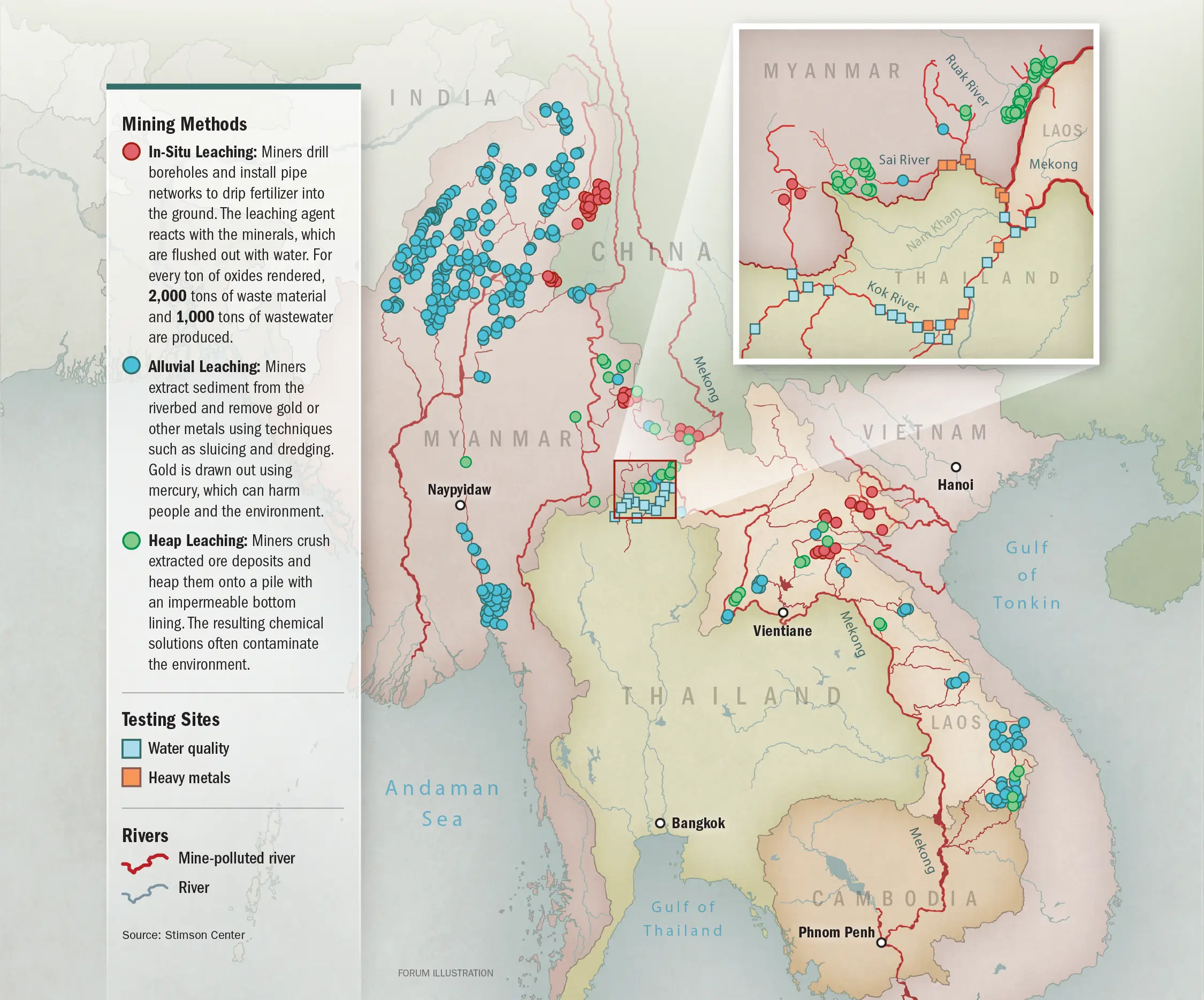
Indonesia: Chinese firms are said to dominate nickel refining; IMIP and other parks run on captive coal, with rainforest loss, pollution, and scores of worker deaths cited. Myanmar: rare-earth and gold mines in Shan and Kachin, amid civil war, are linked to arsenic and other runoff into the Kok and Mekong; Stimson counted more than 2,400 unregulated river-side sites in Myanmar, Laos, and Cambodia.

Similar patterns are claimed for Chinese-backed steel and pulp in Southeast Asia. Proposed answers: alternative supply chains, stronger host-country rules, satellite and ownership transparency, and buyer standards for EVs and electronics. The piece treats this as a health and security issue, not only an environment story.

Beijing has increasingly attempted to brand itself as a global leader in protecting the environment and providing clean energy and sustainable development. Yet underneath that propaganda lies a dark reality: China is exporting some of its worst environmental practices to developing nations through aggressive investments and resource-extraction campaigns, especially in critical minerals and raw-material industries. The result: widespread ecological destruction, toxic pollution and long-term damage to fragile ecosystems across Southeast Asia and beyond.

Examples range from nickel mining in Indonesia and rare-earth mining in Myanmar to steel and paper mills across the region, indicating a pattern of exploitation that starkly contrasts China’s professed environmental stewardship.

A geo-economic and humanitarian challenge is unfolding with implications for regional stability, public health and global security. The international community must develop solutions to China’s export of destructive environmental practices.

A Grab for Critical Minerals

As demand surges for electric vehicles (EV), renewable energy technologies and advanced electronics, the race for battery metals and rare-earth elements has intensified. Despite already being a processing leader, China has steadily expanded its reach by relocating the dirtiest, most polluting parts of its supposedly green supply chain, often to countries with weak environmental governance, lax enforcement or ongoing conflicts.

Many of the targeted countries, such as Indonesia, Laos and Myanmar, are strategically important for China under the framework of its hegemonic One Belt, One Road scheme. Beijing presents its infrastructure, smelters and industrial parks as investment or aid — but the underlying motive is resource control and profit, often at the cost of local health, ecology and sovereignty.

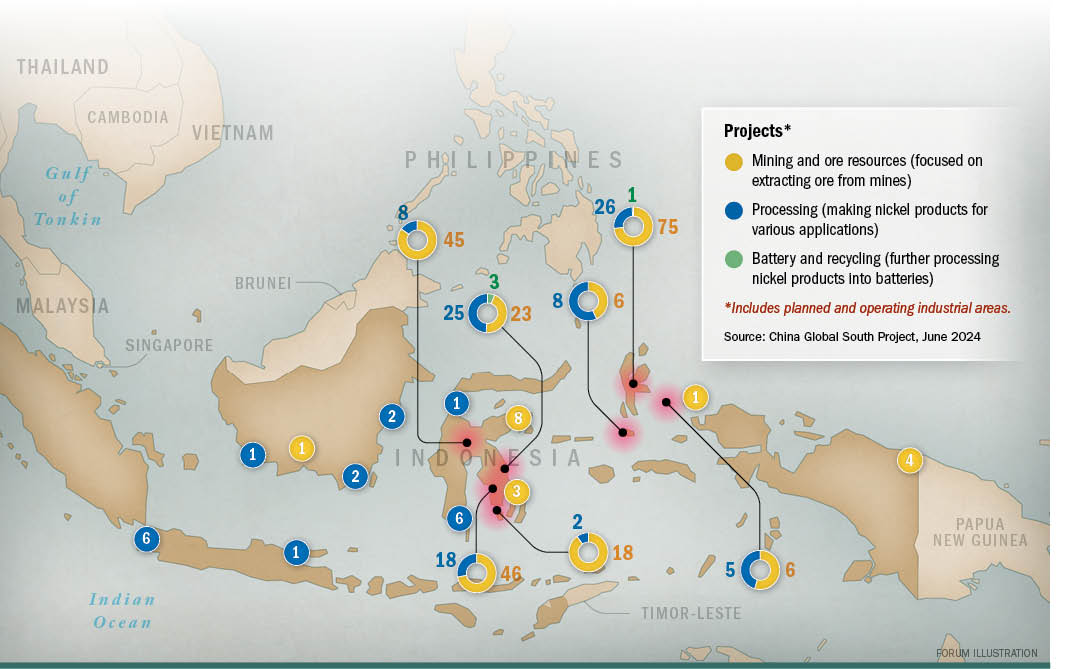
In Indonesia, which has the world’s largest nickel reserves, Chinese firms, notably Tsingshan Holding Group and Jiangsu Delong Nickel Industry Co., control about 75% of nickel refining capacity, the United States-based global security nonprofit C4ADS reported in February 2025.


“A lack of domestic control leaves Indonesia reliant upon Chinese investment and continued support of the industry, which may limit the government’s ability to hold the industry accountable and shape the sector for its own economic benefit,” C4ADS reported.

Meanwhile, in Myanmar’s border regions, such as Shan and Kachin states, Chinese state-affiliated mining firms have ramped up rare-earth extraction, often operating under little or no regulatory oversight due to the protracted civil war, reported the Thailand-based news website The Nation.

China’s pattern of expansion suggests a deliberate strategy: secure access to critical resources cheaply and at scale, while outsourcing the environmental cost to states with weaker regulatory capacity or greater political vulnerability.

Nickel in Indonesia: The Price of Batteries

Nickel is essential for stainless steel and EV battery production. But the way China’s nickel sector has expanded in Indonesia, particularly with coal-powered smelters and processing plants, has caused severe environmental and social damage, experts contend.

China has supported this expansion through predatory financing of the massive Indonesia Morowali Industrial Park (IMIP) on Sulawesi and other smelter clusters on Halmahera. Many of these facilities run on captive coal-fired power plants, even as their output feeds supposed clean-energy supply chains abroad.

IMIP is expected to have an annual coal-fired power capacity of 5 gigawatts, or nearly as much coal power as Mexico generates each year, according to advocacy group Mighty Earth. In addition to high emissions, these coal plants pollute the air, water and land, threatening local livelihoods, the Asia Pacific Solidarity Network reports.


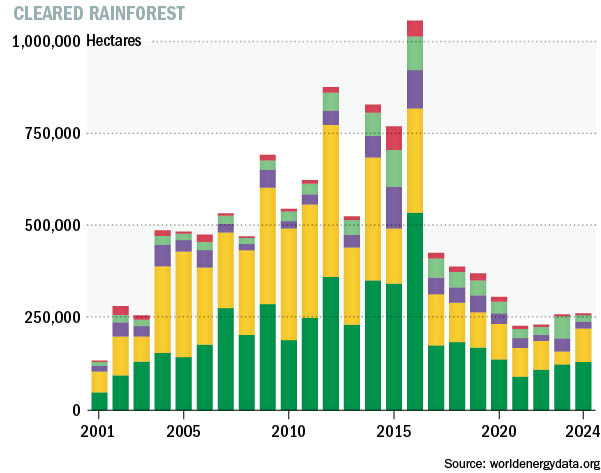
Deforestation has been extensive. Since 2000, over 8,700 hectares of rainforest have been cleared in the North Morowali region alone to make way for mines, smelters and infrastructure, according to environmental groups including Greenpeace Indonesia. This massive land conversion has destabilized local ecosystems, undermined watershed integrity and degraded habitat for biodiversity. Agricultural land and water sources vital to local communities have been disrupted, the groups report.

The pattern extends beyond Indonesia. In Papua New Guinea, testing at a Chinese-operated nickel mine revealed contamination patterns strikingly similar to those in Indonesia: inadequate containment systems, toxic runoff threatening communities and ecosystems, and dangerous levels of heavy metals, including hexavalent chromium, a carcinogen. Multiple contaminants exceed safety standards by orders of magnitude, demonstrating Chinese firms are systematically replicating harmful practices across the Pacific, according to a U.S. government analysis.

Pollution, Worker Deaths, Social Costs

The environmental toll is matched by alarming social costs. Chinese-backed nickel smelters in Indonesia were frequently accused of air and water pollution, soil contamination and biodiversity loss, according to a 2023 report by the London-based advocacy group Business and Human Rights Centre. The report, “Unpacking clean energy: Human rights impacts of Chinese overseas investment in transition minerals,” covered 18 countries with the Democratic Republic of the Congo, Indonesia, Myanmar, Peru and Zimbabwe recording the highest numbers of allegations.

At the same time, labor conditions in Indonesia have been repeatedly criticized as unsafe and exploitative. Between 2015 and 2023, more than 90 deaths and 100 injuries were reported in processing facilities there. In 2023, at least 60 deaths or serious accidents were linked to Chinese-owned smelters, including a fire at a Tsingshan-owned facility that killed 21 people and injured 38, according to Mongabay, a conservation and environmental science news platform.

Pollution and wastewater runoff have decimated fish populations, destroying livelihoods of people rely on fisheries and marine resources, environmental groups report.

Underlying many of these abuses are corruption and weak enforcement. Roughly one-third of over 330 nickel mining and refining projects in Indonesia had been accused of corruption or illegal mining, according to a 2024 investigation by the China Global South Project, a nongovernmental organization.

“Corruption and environmental damage in Indonesia’s nickel industry have become closely linked: when a nickel mining company operates illegally, the local community and ecology tend to suffer,” the report said. “The widespread Chinese financing of the Indonesian nickel industry seems to have led some to grow wary of Chinese investors and their relationships with local officials, since local governments have been broadly criticized for corrupt business dealings.”

Although the report cites China for the growth of Indonesia’s nickel mining industry, the expansion has negative consequences. What is promoted as foreign investment or industrial development often translates into a de facto resource grab, with environmental safeguards sacrificed for profits and speed.


Myanmar’s Mining and the Mekong Crisis


China’s drive to dominate rare-earth resources is matched by its readiness to outsource environmental harm to unstable frontier zones.

Historically, China conducted much of its rare-earth extraction within its borders. But domestic environmental and health concerns, especially contamination of soil and groundwater, led Beijing to shutter hundreds of small private mines after 2011, according to a June 2025 report in Le Monde, a French newspaper.

Rather than cleaning up heavily polluted sectors at home, including nickel smelting, rare-earth mining and heavy industry, China began relocating them. Beijing is recasting what was once a domestic problem as a so-called foreign development opportunity,
Le Monde reported.

The cost of producing heavy rare-earth elements such as dysprosium and terbium, both used in advanced weapons systems, is one-seventh the price in Myanmar than in China, according to Benchmark Mineral Intelligence, a London-based market research firm. To meet demand, China redirected extraction to neighboring Myanmar, particularly to conflict-affected territories in Shan and Kachin states. These regions, under the sway of ethnic armed organizations or remote military outposts, offer lax oversight and minimal accountability.

Satellite imagery shows explosive growth: mining sites, road networks and waste ponds cutting into once-untouched hillsides, according to the Shan Human Rights Foundation. These mines extract key rare-earth elements for export to China.

At least a dozen gold and rare-earth mines were established in southern Shan in 2025 alone, according to Zachary Abuza, a professor at the National War College in Washington, D.C.

Myanmar’s civil war has persisted for more than five years, producing a lawless border area mainly held by ethnic armed groups. Chinese firms operate via informal networks, often in alliance with the military junta as well as local militias or armed groups, making accountability nearly impossible, Abuza told the Al Jazeera news agency.

“In this vacuum, mining has exploded — likely with Chinese traders involved. The military in [Myanmar’s capital] Naypyidaw can’t issue permits or enforce environmental rules, but they still take their share of the profits,” he said.

In a November 2025 report, the Stimson Center think tank used satellite imagery to identify 2,420 unregulated mining sites on major river systems in Cambodia, Laos and Myanmar. “Over the last decade, a boom in unregulated mining has been sending dangerous contaminants such as cyanide, mercury, arsenic, and other heavy metals directly into scores of rivers throughout mainland Southeast Asia,” the report stated.

“Since the mining operation started [in Myanmar], there is no protection for the local people,” Sai Hor Hseng, a spokesman for the Shan Human Rights Foundation, which is based in the eastern Myanmar state, told Al Jazeera. The mining companies “don’t care what happens to the environment,” he said, or to those living downstream in Thailand.

Transboundary Pollution

The environmental harm is not constrained within Myanmar’s borders. Toxic runoff, including heavy metals and arsenic, has polluted the Kok River and its tributaries, which feed into the Mekong, threatening water supplies, fisheries and farming communities in northern Thailand, Laos and farther downstream.

Arsenic levels in parts of the Kok River and Mekong tributaries exceeded by as much as 40 times the levels defined as safe by health authorities, the Thailand-based CTN News portal reported in August 2025. Local communities report fish deformities and die-offs; farmers fear their crops will absorb toxins; residents have developed skin ailments after contact with contaminated water, all “traced to upstream mining operations” across the border in Shan, according to the Bangkok Post newspaper. Elevated arsenic levels also have been found in the Mekong.

The contamination potentially affects tens of millions of people across Southeast Asia. Downstream impacts of such mining ripple across borders, contaminating rivers, agricultural land, fisheries and communities in neighboring countries such as Laos and Thailand.

The cross-border pollution crisis is severely impacting millions of people in Chiang Rai in northern Thailand, who face risks to their livelihoods and health due to heavy metal contamination, particularly arsenic, in the Kok River, which flows into the Mekong and Sai rivers, Pianporn Deetes, director of Southeast Asia Campaigns at International Rivers, told the Bangkok Business newspaper.

“Local residents can no longer engage in traditional activities like fishing or operating tour boats, and farmers are worried that rice grown using water from the Kok River may be contaminated with arsenic, as rice tends to absorb arsenic well. Additionally, there have been reports of fish with unusual parasites, which correlate with mining activities disturbing the soil,” Deetes said.

Ben Hardman, Mekong legal director for the advocacy group EarthRights International, told Al Jazeera in August 2025 that residents worry that Shan and neighboring countries into which Myanmar’s rivers flow will suffer the same fate as Kachin, especially if rare-earth mine sites multiply to meet growing global demand.

“There’s a long history of rare-earth mining causing serious environmental harms that are very long-term, and with pretty egregious health implications for communities,” Hardman said. “That was the case in China in the 2010s, and is the case in Kachin now. And it’s the same situation now evolving in Shan state, and so we can expect to see the same harms.”


The pattern extends globally. Testing at Chinese-operated mining and refining facilities across the Pacific, Africa, Latin America and the Caribbean reveals the same systematic failures: adverse levels of mine waste, inadequate containment, and contamination threatening water supplies and communities. Regardless of commodity or location, Chinese firms prioritize profit extraction over environmental protection, leaving host nations to bear the costs of pollution and ecological damage.

Steel, Paper Production


China’s resource grab doesn’t stop at raw materials. Through investment, Chinese firms have exported steel production, paper mills and plantations to Southeast Asia and elsewhere in the Indo-Pacific, often bringing pollution-intensive technology, weak regulation guidelines and environmental degradation.

With pressure on domestic heavy industry mounting, such as stricter regulations, expansion limits and carbon-emission targets, many Chinese steel producers, for example, are shifting to Southeast Asia and beyond. As of 2023, China accounted for about 80% of total foreign investment in new steel capacity in Southeast Asia, according to a 2025 report by Agora Industry, a Germany-based think tank.

Most of these plants rely on older, coal-fired furnace technology, which produces the most harmful emissions, particulate matter and local pollution, Agora reported. The results are rising carbon emissions regionwide as well as local air and water pollution, strain on ecological systems, and deteriorating public health. Moreover, the flood of cheap Chinese steel into Southeast Asian markets undermines local producers, discouraging investment in cleaner and more environmentally responsible steel production, the SteelRadar website reported. Chinese-backed smelting companies in Indonesia, including Tsingshan Holding Group and PT Obsidian Stainless Steel, have been linked to air pollution, contaminated water systems, fisheries damage and deforestation, according to a 2026 report on the Dhaka Tribune website.

The world has observed similar patterns in China’s pulp-and-paper sector. In recent decades, China’s growing demand for timber and paper has driven massive plantation and logging operations in Southeast Asia. Large-scale concessions for pulpwood plantations have spread across Cambodia, Laos, Myanmar and Vietnam, often at the cost of natural forests, biodiversity and local land rights, according to the Wilson Center, a U.S.-based think tank. China’s Sun Paper Group, for example, has drawn criticism in the past decade for its paper mill operations in Laos that allegedly contaminated water, reduced agricultural quality and polluted nearby communities, causing illness among residents, according to news reports.

China-linked paper companies often acquire pulp from Southeast Asian plantations, effectively externalizing environmental degradation while reaping profits and meeting global demand. Communities displaced by these plantations lose access to forest resources; traditional agriculture and livelihoods are disrupted.


Despite China’s efforts to create a more sustainable domestic pulp-and-paper sector, its overseas supply chain — where timber is felled, plantations expanded and forests razed — remains a glaring contradiction to Beijing’s “green paper” narrative.

Strategic, Moral Leadership

Supply chain dominance in critical minerals and metals confers China with strategic leverage over industries from consumer electronics to defense. Yet evidence strongly suggests that Beijing is using its might not to build a sustainable future, but to export environmental destruction to some of the world’s most vulnerable communities, including many in Southeast Asia.

The international community, including governments, investors, multilateral institutions and civil society, must confront this reality. Transparency, accountability and enforceable standards are needed to prevent China’s exploitation in the name of clean energy, advocates say. Otherwise, emerging economies will be left with toxic landscapes, broken communities and ecological collapse while China prospers. Only by confronting such predation and holding all stakeholders accountable can peace, security and prosperity be ensured in the region.

China’s Export of Harmful Mining Practices Exacerbates Regional Pollution


China’s aggressive investments and resource mining pursuits, especially of rare-earth minerals, are accelerating environmental degradation across Southeast Asia and beyond.
Mekong River Tributaries Poisoned by Unregulated Chinese Mining

A boom in unregulated mining in the past decade has released arsenic, cyanide, mercury and other contaminants into rivers across Southeast Asia. Satellite imagery revealed more than 2,400 sites for unregulated in-situ leach (rare earth), heap leach (gold, copper, nickel, manganese) and alluvial mining (gold, silver, tin) on or alongside 43 rivers in Myanmar, Laos and Cambodia. Nearly 800 of the sites are along Mekong tributaries. China is driving much of this surge, given the cost of producing rare-earth elements such as dysprosium and terbium, both used in advanced weapons systems, is one-seventh the price in Myanmar than in China, according to Benchmark Mineral Intelligence. Locations affected by Myanmar’s prolonged civil war, such as Shan and Kachin states, seem especially susceptible to such exploitation.

Case Study: China’s Exploitation of Indonesia’s Key Resources

Nickel Mining Nexus

Indonesia is the world’s largest nickel ore supplier, providing about half of global demand in 2023. Chinese companies own about 90% of Indonesia’s nickel processing facilities, and China accounts for up to 70% of all investments in Indonesia’s nickel industry, according to government officials. China’s entrenched role in Indonesia’s nickel sector has contributed to the proliferation of practices that exploit local communities and the environment.

Mining and Processing Projects 350+ projects studied; $70.2 billion in investments
Chinese shareholders control at least 75 of some
350 projects studied.
More than one third of projects were accused of or involved in corruption or illegal mining.
Water pollution is the top concern for villagers living near nickel mines and factories.
Nickel industry’s coal-power use may lead to 5,000 annual deaths by 2030 due to air pollution.
Source: 2024 China-Global South Project “Nickel Nexus” report


Deforestation in Indonesia

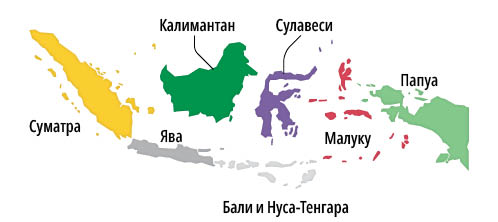
In addition to causing pollution through mineral extraction and processing practices, the pursuit of critical minerals has accelerated deforestation. Since 2000, for example, over 8,700 hectares of rainforest have been cleared in Indonesia’s North Morowali region in Sulawesi alone to make way for mines, smelters and infrastructure.


Reversing Environmental Degradation Caused by China

China’s exportation of harmful mining practices can be reduced by international enforcement of environmental and social standards and by increased coordination among the United States and its Allies and Partners.

The following measures can mitigate environmental damage, minimize future damage,


curtail China’s harmful practices and protect vulnerable populations and lands from abuses linked to global demand for critical minerals.

Promote Alternative Supply Chains, Strict StandardsMore countries could invest in domestic mining and processing capacity or in recycling critical minerals, under stricter environmental standards, reducing reliance on China-dominated supply chains.
Support mining and processing operations that adopt best practices, such as promoting wastewater treatment, responsible waste management and reforestation, rather than enabling the lowest-cost, highest-pollution model.

Support Regulatory Capacity, Governance in Host CountriesInternational organizations such as the United Nations and development banks should provide financial, technical and institutional support to strengthen environmental regulation, monitoring and enforcement in developing countries.

Civil-society organizations, local communities and media must be empowered to monitor, report and hold investors and governments accountable.

Promote Supply Chain Transparency

Use technology, including satellite monitoring, blockchain-based supply-chain tracing and remote sensing, to detect illicit mining, deforestation, pollution and waste mismanagement.

Publish data on ownership, financing, environmental assessments, pollution incidents and compliance so companies, regulators and the public know who is responsible and where.

Strengthen Environmental, Human Rights RequirementsGovernments, multilateral institutions and investors in allied and partner nations should demand that companies sourcing minerals or materials from abroad conduct rigorous environmental and social due diligence, covering not only mines and smelters but also supply-chain impacts and downstream pollution.

Host nation governments also should enforce licensing, environmental impact assessments and community consultation, and ensure transparency.

Apply Economic Pressure Nations and trading blocs should adopt policies and regulations that consider environmental impact and responsible sourcing, including for EVs, electronics and renewables.


This article was published by Indo-Pacific Defense FORUM


About Indo-Pacific Defense Forum
Indo-Pacific Defense Forum is sponsored by the United States Indo-Pacific Command (USINDOPACOM) and publishes daily online articles, daily social media updates and a quarterly magazine to provide timely updates on the Indo-Pacific security environment.
View all posts by Indo-Pacific Defense Forum →

From tiny houses to skis: This Swedish company is finding creative uses for retired wind turbines


By Angela Symons
Published on

What happens to decommissioned wind turbines and blades? Some are finding new life as buildings.

Europe is on track for a record wind year, with 8.8 GW of new capacity installed in the first half of 2026 – a 30 per cent jump year on year.

That’s enough electricity to power around seven million European households and replace fossil fuel imports equivalent to 25 LNG tankers a year, according to industry nonprofit WindEurope.

But every turbine that goes up eventually means one coming down – and manufacturers are still working out how to make sure none of the materials go to waste.

Up to 90 per cent of a wind turbine’s mass is made of easily recyclable materials like steel, copper, aluminium and concrete. Composite materials, which make up the majority of blades, are more problematic.

“Separating the composite materials from the resin requires specialised processes, often involving high temperatures or other energy-intensive treatment methods,” Eva Julius-Philipp, Director of Environment and Sustainability of Business Area Wind at Vattenfall, tells Euronews Earth. “In some cases, these processes can affect the quality and value of the recovered materials, making large-scale recycling more challenging.”

Since introducing a landfill ban on blades, nacelle covers and nose cones in 2021, the Swedish company has come up with some creative alternatives.

Inside the tiny house converted from a wind turbine nacelle by Vattenfall and design studio Superuse. Vattenfall

From blades to buildings: Turbine components get a second wind

From the ground, it’s hard to appreciate just how large wind turbines are. Putting it into perspective, Vattenfall teamed up with design studio Superuse to turn a retired wind turbine nacelle cover – which houses the mechanical and electrical equipment – into a compact living space.

Four metres wide, 10 metres long and three metres high, the box once sat atop an Austrian wind tower. It’s now a tiny house fitted with a kitchen, bathroom and living space equipped with a heat pump, solar panels and a solar water heater.

It was showcased at Dutch Design Week in 2024 as part of an initiative exploring how materials could be reused with as little energy and emissions-intensive processing as possible.

Blades, too, have been re-envisioned as building materials. After being decommissioned in 2023, the 57 blades from Danish onshore wind farm Nørre Økse Sø found new life as a facade for a multistorey carpark in the city of Lund.

It’s opened the door to a multitude of inventive uses for retired blades, from frames for solar panels to alpine skis.

“Projects such as the Tiny House, blade-based building projects and recycled skis are not yet a large-scale solution, however they are intended to help us gain experience, develop new applications and stimulate the market for circular solutions,” says Julius-Philipp.

Provided it’s safe to do so, extending the operational lifetime of existing components through reuse and refurbishment is the preferred option, she adds.

The Niels Bohr car park in Lund is partly constructed from rotor blades from decommissioned wind turbines. Vattenfall

Recycling wind turbine blades: A multilayered challenge

Wind turbine blades can be between 50 and 100 metres long and are designed to spin in harsh weather for up to 25 years. What makes them so durable is also what makes them difficult to recycle: materials such as glass fibre, carbon fibre, epoxy resin, balsa wood, metals and various fillers pressed tightly together in layers.

Aiming to achieve 100 per cent circularity for these composite materials by 2030, Vattenfall is working on new ways of reusing, repurposing, refurbishing and recycling blades.

“When composite materials cannot be recycled at a high value, they can be processed through energy recovery and/or cement co-processing,” says Julius-Philipp.

Currently, Vattenfall uses mechanical recycling processes to turn blade material into composite flakes or fillers for new products, while pyrolysis – a thermal recycling process – recovers fibres and other secondary materials.

But technology isn’t the only challenge: “Decommissioned blades do not become available in a steady and predictable flow, which makes it harder for recycling solutions to scale economically,” adds Julius-Philipp.

As the first generation of major European wind farms reaches the end of its operational lifespan in the coming years, more blades will enter retirement, increasing the need for solutions that are “scalable, cost-efficient and low in energy use,” she adds.

The EU has not yet enforced a ban on landfilling decommissioned blades. Only Austria, Finland, Germany and the Netherlands have their own binding national bans, and WindEurope is now pushing Brussels to make the commitment legally binding across all member states.

“What is needed now is a regulatory framework that enables circular value chains and secondary raw materials to scale,” says Julius-Philipp, who hopes the European Commission’s Circular Economy Act, expected to be proposed later this year, will help provide it.

EVI Ski and Norwegian recycling company Gjenkraft collaborated with Vattenfall to use glass and carbon fibres from decommissioned wind turbine blades to manufacture skis. Vattenfall

Designed to recycle: The future of turbine blades?

Increasingly, manufacturers are taking end-of-life into consideration when designing turbine blades.

Siemens Gamesa’s RecyclableBlades, which are used at Vattenfall’s offshore windfarm Hollandse Kust Zuid (HKZ) in the Netherlands, are one example.

These blades use a resin type that dissolves in a low-temperature, mildly acidic solution. This separates the resin from the other materials in the blade: fiberglass, carbon fiber, plastic, wood and metal, without significantly impacting their properties – allowing for a broader use of the recycled materials in new high-quality products.

“While recyclable blades are not yet widely adopted, we see growing emphasis on developing technologies that enable more efficient blade recycling and help retain the value and quality of the recovered materials,” says Julius-Philipp.