Friday, October 02, 2026

Alarm Grows Over ‘Clearly Illegal’ Trump-Rubio Election Meddling in Brazil

“The Trump-Rubio interventions, with the collaboration of the Bolsonaro clan, have made the Flávio campaign into another US regime change operation. This should be defeated.”
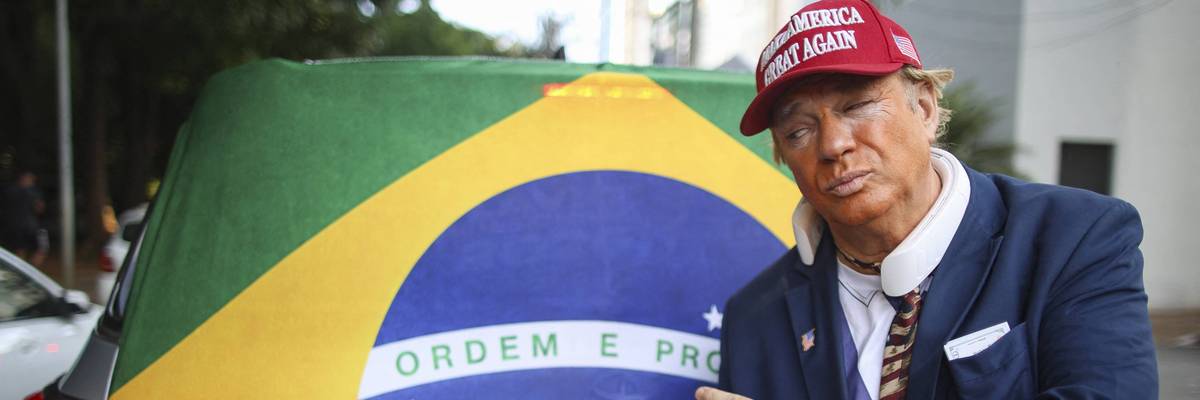


A man wearing a mask depicting US President Donald Trump attends a rally of Brazilian right-wing presidential candidate Flavio Bolsonaro in Goiania, Brazil, on September 27, 2026.
(Photo by Sergio Lima/AFP via Getty Images)

Jake Johnson
Sep 30, 2026
COMMON DREAMS

Brazilian officials, pro-democracy advocates, and US lawmakers are growing increasingly concerned about apparent efforts by President Donald Trump and Secretary of State Marco Rubio to interfere in the Latin American country’s upcoming election.

Reuters reported Wednesday that Brazil’s spy agency “confirmed the existence of interference from the United States as well as Russia” in the presidential election, the first round of which will take place on October 4. Brazilian President Luiz Inácio Lula da Silva is running for reelection against Sen. Flavio Bolsonaro, the son of former far-right President Jair Bolsonaro—who is currently serving a 27-year prison sentence under house arrest for orchestrating a coup attempt in 2022.

Democratic lawmakers in the US have raised alarm about the Trump administration’s election meddling in Brazil in recent days as the contest approaches. Earlier this week, Democratic Sens. Jeanne Shaheen (NH), Peter Welch (Vt.), and Tim Kaine (Va.) wrote in a letter to Rubio that “over the course of President Trump’s second term, we have seen US officials engage in a campaign of interference and destabilization in Brazil.”

“The administration’s most recent actions point toward an effort to interfere with, and potentially undermine, Brazil’s general election in October,” the lawmakers wrote. “Senator and presidential candidate Flávio Bolsonaro’s recent Oval Office meeting with President Trump, undertaken while attempting to mitigate a domestic political scandal, underscores the administration’s willingness to insert itself in the election.”

The senators’ letter followed a separate demand by more than 30 Democrats in the US House that Rubio “confirm whether the administration will commit to respecting Brazil’s electoral process and to recognizing its certified outcome.” The House Democrats demanded a response from the Trump administration by October 1.

“Particularly given the tragic history of US involvement in the 1964 military coup against Brazil’s democratically elected government at the time, as well as subsequent US support for the resulting military dictatorship,” the lawmakers wrote, “the United States has a responsibility to support the democratic institutions that so many Brazilians, across generations, struggled to build.”

Trump has been a vocal defender of Flávio Bolsonaro’s father, saying he is “not guilty of anything” and describing his prosecution as a “witch hunt”—echoing Trump’s attack on investigations into his own effort to subvert the 2020 election in the US. Last year, Trump hit Brazil with a 40% tariff, accusing the country’s leaders of “persecuting former President of Brazil Jair Bolsonaro.”

“It was not just a trade maneuver,” political scientist Octavio Amorim Neto said of the tariff in an interview published Thursday, noting that “Bolsonarism explicitly applauded [Trump’s economic attack], while Brazil’s traditional right did not vigorously defend national sovereignty, saying that everything was Lula’s fault.”

Over the summer, Brazil denied visas to two top US State Department officials “whom the Trump administration planned to dispatch on a mission to cast doubt on the fairness and integrity of the country’s electoral system,” The Washington Post reported in July.

Mark Weisbrot, co-director of the Center for Economic and Policy Research, wrote in an op-ed for The Los Angeles Times earlier this week that Trump’s intervention in Brazil’s electoral process “undermines a basic and generally cherished right to self-determination, as well as the right to democracy itself.”

“It is even clearly illegal under the Charter of the Organization of American States, to which the United States is a signatory,” wrote Weisbrot. “The Trump-Rubio interventions, with the collaboration of the Bolsonaro clan, have made the Flávio campaign into another US regime change operation. This should be defeated, for the sake of Brazil and the whole hemisphere.”
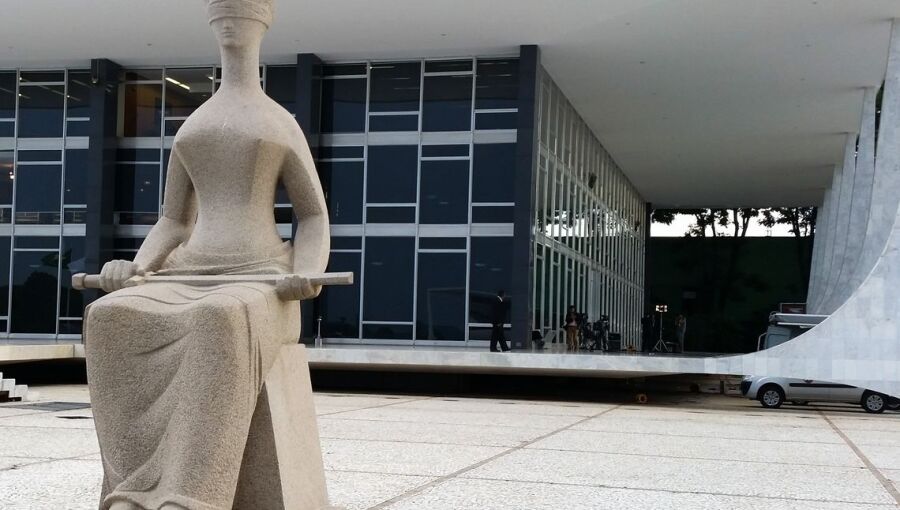
US grant targeting Brazil's top court fuels meddling fears before vote

US grant targeting Brazil's top court fuels meddling fears before vote
The move followed a report by The Guardian that the US government had earmarked $1mn for a project called "Countering Lawfare and Censorship in Brazil," which targets the Supreme Court. / agencia brasilFacebook
By IntelliNews Latin America October 2, 2026

Brazil has asked federal police to investigate a $1mn US State Department grant aimed at its Supreme Court, just days before a presidential election in which President Luiz Inácio Lula da Silva faces right-wing senator Flávio Bolsonaro in a tight race.

Attorney General Jorge Messias filed the request with the Federal Police and Prosecutor General Paulo Gonet on October 1, a day after The Guardian reported that the Trump administration had steered money from the department's Human Rights and Democracy Fund (HRDF) into a programme titled "Countering Lawfare and Censorship in Brazil". It would fund civil-society groups opposing what the programme calls judicial overreach and censorship by the court.

Foreign meddling "cannot be tolerated", Messias said, calling the revelation "an important alert for Brazilian sovereignty".

"The information is especially serious in light of Brazil's electoral process and the recent episodes of external pressure on our institutions," he said.

The complaint, signed by Messias and three other officials of the Attorney General's Office (AGU), argues that the money was explicitly intended to finance groups working to destabilise and undermine Brazil's judiciary. It asks investigators to identify those responsible and whoever received the funds inside the country.

The grant lands in the final days of a campaign already dominated by claims of US interference. The row dates back to July 2025, when Donald Trump slapped 50% tariffs on Brazilian goods over what he called a "witch hunt" against Flavio's father, former president Jair Bolsonaro, who was later sentenced by the Supreme Court to 27 years in prison for plotting a coup following his 2022 election defeat. Washington also sanctioned Supreme Court Justice Alexandre de Moraes, who oversaw the case, after lobbying by Jair Bolsonaro's younger son Eduardo, before dropping Moraes from the sanctions list in December.

The Brazil award is one of 43 controversial grants worth a combined $176.9mn, which the State Department obligated on September 30, hours before the money was due to lapse at the end of the US fiscal year, according to a source cited by The Guardian. Together they take up most of the $205mn Congress appropriated for the whole fund. The largest, $40mn, goes to a consortium led by the anti-communist Victims of Communism Memorial Foundation. Other awards support a group promoting white Afrikaner rights in South Africa and early-warning networks for Christians in Nigeria, while a $2mn programme titled "Promoting Western Civilization Allies" aims to boost far-right groups in Central Europe and the Balkans.

Senator Jeanne Shaheen, the top Democrat on the Senate Foreign Relations Committee, had held up $22mn of the awards, including those focused on Brazil, South Africa and Nigeria. Secretary of State Marco Rubio personally signed a memo to disregard her holds, a Democratic congressional aide told the paper. Sources said senior administration figures had lobbied for the awards personally.

The new grants are overseen by Samuel Samson, a deputy assistant secretary of state. In July, Brazil refused visas to Samson and Assistant Secretary Riley Barnes ahead of a planned trip to Brasilia that Washington said would cover "election integrity" and freedom of expression.

Brasilia has spent the campaign building defences against outside pressure. Its intelligence agency ABIN raised its assessment of the risk of US interference to a "critical level" in a confidential report in late August, and in September briefed French and German counterparts on alleged US and Russian meddling. President Lula da Silva used his UN General Assembly speech on September 22 to warn world leaders against foreign interference in the vote.

The government is also holding informal talks with diplomatic missions from Canada, Japan, Australia and EU countries on a joint response once results are announced, The New York Times reported on September 28, citing three senior foreign diplomats. Brazilian officials told the paper that any US help for Flavio Bolsonaro, who met Trump at the White House in May, could include new measures designed to damage Lula's image. The Trump administration denies trying to interfere.

In line with the Trump administration's renewed focus on the Western Hemisphere, which has helped elect right-wing leaders across most Latin American nations in recent years, Rubio has underscored the stakes of the vote by stating that Brazil "is our next challenge." Brazil and Mexico are the only two major countries in the region still led by leftist leaders.

Meanwhile in Washington, three Democratic senators including Shaheen have urged Rubio to commit to recognising whoever wins.

Lula goes into the October 4 vote with a narrow lead. A Datafolha poll for Folha de S.Paulo and TV Globo, carried out from September 29 to October 1, gives the 80-year-old leftist incumbent 45% of valid votes against 40% for Flavio Bolsonaro, up from 43% and 39% a week earlier. That leaves both short of the 50% plus one needed to win outright.

In a simulated runoff, Lula has 48% to Flavio Bolsonaro's 45%, a technical tie given the poll's two-point margin of error. Both candidates are rejected by 45% of voters, and 17% say they could still change their minds. The second round would be held on October 25.

As part of a string of last-minute pre-election moves, Lula issued a provisional measure banning online betting on September 25, a week after a 15% increase in Bolsa Família welfare payments. His support among women, the main target of the betting ban according to the campaigns, rose from 42% to 45% of total votes in a week. A fake post claiming Flavio Bolsonaro would strip Our Lady of Aparecida of her title as Brazil's patron saint coincided with a rise in Lula's support among Catholic women from 45% to 50%, while the senator gained five points among evangelicals, where he now leads Lula 52% to 26%.

Both frontrunners pulled out of the campaign's final debate, set for October 1, which TV Globo then cancelled, citing "legal uncertainty" after rulings by the electoral court and the Supreme Court. Flavio Bolsonaro blamed "censorship imposed by the electoral court", which had barred the broadcaster from keeping an empty seat on stage for Lula, who appeared on a popular podcast instead.

The same day, police arrested a man who tried to climb the Supreme Court's fences and threw a backpack onto a bus stop, before ruling out a bomb threat. The court has spent the campaign under attack from the right over Bolsonaro's conviction, and is itself mired in the Banco Master scandal, which has pushed public distrust in it to a record high.

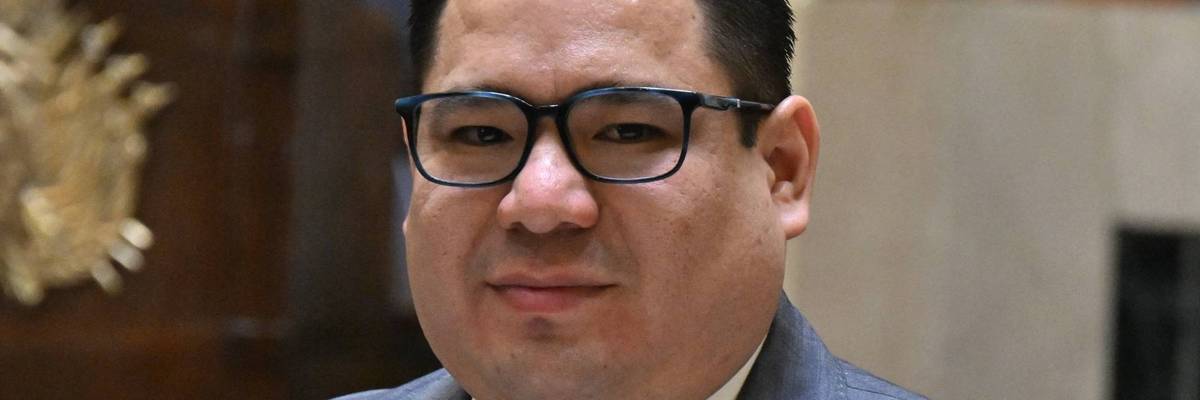
Days After Rubio Pulls Visa, Agents in Bolivia ‘Kidnap’ Attorney General Who Charged ‘MAGA’s Man in LatAm’

“We denounce before the entire Bolivian population this intervention that is being carried out illegally,” said an official from Attorney General Roger Mariaca’s office.


Bolivian Attorney General Roger Mariaca attends his swearing-in ceremony in La Paz, Bolivia on October 22, 2024.
(Photo by Aizar Raldes/AFP via Getty Images)

Julia Conley
Oct 01, 2026
COMMON DREAMS

The Bolivia Public Prosecutor’s Office on Thursday denounced “the kidnapping of our attorney general” after the country’s top law enforcement official, Roger Mariaca, was intercepted and detained at Viru Viru International Airport in Santa Cruz, along with a prosecutor from the city.

Observers were quick to note that the arrests took place weeks after Mariaca’s office arrested Fernando Cerimedo, a political operative with ties to right-wing campaigns across Latin America.

Cerimedo also has a business partnership with President Donald Trump’s former campaign manager, Brad Parscale—a connection that helped earn Cerimedo the nickname “MAGA’s Man in LatAm.”


Marco Antonio Oviedo, Bolivia’s interior minister, said the two officials were arrested on suspicion of criminal organization, money laundering, and drug trafficking.

The arrests were carried out with the “cooperation of the US government” as part of the “fight against terrorism,” said Oviedo.

They were detained days after the Trump administration revoked their visas and those of more than a dozen other people from Bolivia, Colombia, and Ecuador.

The US State Department had accused them of corruption and having ties to drug trafficking, similar to allegations against Venezuelan President Nicolás Maduro, who was abducted by US military forces in January.

Trump, Secretary of State Marco Rubio, and other officials have taken numerous actions that they say are aimed at combating drug trafficking in Latin America, including bombing dozens of alleged drug boats, partnering with countries across the region on military operations, and creating the Shield of the Americas, an alliance with right-wing governments including that of Bolivian President Rodrigo Paz that is ostensibly aimed at defeating drug cartels and organized crime.

The Trump administration claimed Mariaca had taken “bribes to facilitate drug trafficking and help violent criminals evade justice.” Mariaca denied the accusations on Monday and said his visa had been revoked as part of an effort at “interference” and “political pressure” due to his investigation into Cerimedo.

Cerimedo’s arrest in August was in connection with the attempted murder of a lawyer and activist with whom he reportedly had a relationship.

“He’s also being investigated for collusion in drug trafficking and other activities during his time as a presidential adviser to Rodrigo Paz,” reported journalist Ollie Vargas.

On social media, Ryan Grim of Drop Site News called the detention of Mariaca “fallout from the arrest of Cerimedo,” while another observer replied, “That’s your Marco Rubio pulling the strings.”

After the arrests, a special police unit reportedly searched the Santa Cruz Departmental Prosecutor’s Office, Mariaca’s office, and the attorney general’s home.

“We denounce before the entire Bolivian population this intervention that is being carried out illegally,” Claudia Pardo, the head of communications at the Public Prosecutor’s Office, told the press.

Journalist Joseph Bouchard noted that while claiming to fight drug trafficking in Latin America, the Trump administration is “actively protecting allied drug traffickers and criminals,” such as former Honduran President Juan Orlando Hernández, who was convicted in 2024 of helping the Sinaloa Cartel import hundreds of tons of drugs into the US. Trump pardoned Hernández last November, weeks before his administration invaded Venezuela and abducted Maduro.

The administration “bankrolled Fernando Cerimedo, who is now jailed in Bolivia for ties to drug trafficking,” said Bouchard, “and the US forced Bolivia to jail his prosecutor.”
Federal Judge Rejects Trump’s Rationale for Hiding Memo on ‘Cold-Blooded Murder’ at Sea

“No president can arbitrarily assassinate people from the sky based on their sole say-so,” said one legal expert.


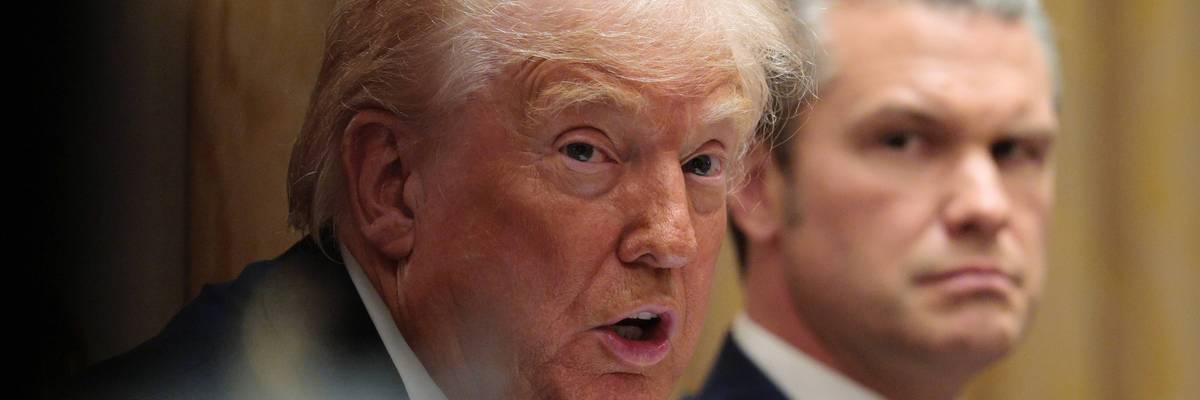
US Secretary of Defense Pete Hegseth (R) looks on as US President Donald Trump speaks during a meeting of his Cabinet in the Cabinet Room of the White House on December 2, 2025 in Washington, DC.
(Photo by Chip Somodevilla/Getty Images)

Julia Conley
Sep 30, 2026
COMMON DREAMS

A key memo from the Office of Legal Counsel at President Donald Trump’s Department of Justice has underpinned the administration’s yearlong campaign of bombing boats in the Caribbean Sea and eastern Pacific Ocean, and the White House has been adamant that the document should be kept secret.

But on Wednesday, Judge Paul Engelmayer in the US District Court for the Southern District of New York rejected the administration’s rationale for keeping the memo hidden, saying that the Department of Defense and US Southern Command have adopted its contents as its “working law” while conducting 70 strikes on boats and killing at least 234 people who officials claimed, without evidence, were “narco-terrorists.”

After the ACLU and the Center for Constitutional Rights (CCR) filed a Freedom of Information Act request calling for the release of the 40-page memo, the administration argued it needed to remain secret to protect confidential deliberations and attorney-client communications.

Engelmayer noted that administration officials have repeatedly cited the memo in public statements to explain why it was bombing dozens of boats that it claimed were operated by drug cartels—which experts and family members of some of the victims have called into question.

“The agency defendants cannot claim surprise from this consequence of the executive branch’s repeated public statements embracing the OLC memo—and it only—as setting out the legal parameters for the boat strikes,” Engelmayer wrote.

Jeffrey Stein, staff attorney with the ACLU’s National Security Project, called the order “a huge step in the right direction of ensuring that the government does not get to summarily execute people based on secret law.”

“The public deserves to know how our government is justifying the cold-blooded murder of hundreds of civilians,” said Stein.

The judge ordered the administration to turn the memo over to him so he can determine whether it should be released to the public. He also ordered officials to provide information about who has seen the memo and how they have used it, and called on the administration to provide details on whether the memo could be protected from public view as a “closely held presidential advice document.”


Engelmayer gave the administration until October 14 to comply with the order.

The boat strikes have been carried out as part of Trump’s stated push to defeat drug cartels in Latin America. Sen. Tim Kaine (D-Va.) has pointed out that there is little evidence the administration is ensuring it is targeting drug boats, as the presence of drugs on a boat has not been identified as “targeting criteria” for the operation in congressional briefings. Some victims have been identified as fishermen and other people who had little, if any, involvement with drug trafficking.

Beyond that, legal experts say that even if the 234 victims were drug traffickers, the boat bombings constitute extrajudicial killings and violations of international law—something Trump himself appeared to brag about last week when he said at the United Nations General Assembly that “we don’t waste our time” addressing alleged drug crimes in the court system.

“No president can arbitrarily assassinate people from the sky based on their sole say-so,” said Baher Azmy, legal director for CCR. “If the OLC opinion seeks to dress up the obvious illegality of these serial murders in legalese to provide Trump cover, the public needs to see that analysis and ultimately hold accountable all those who facilitate murder in the United States’ name.”


‘Dangerous for Democracy’: White House Airs More Pro-Trump Propaganda on Taxpayer Dime

“The president and his administration have gone from breaking the law to trampling it,” said a former White House special counsel.


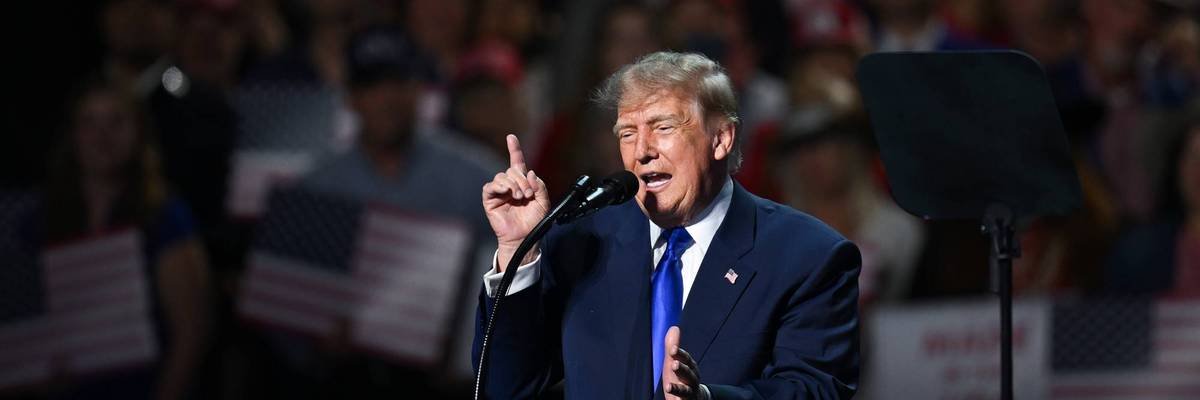
US President Donald Trump speaks on stage on the first day of the Republican midterm convention on September 9, 2026 in Dallas, Texas.
(Photo by Brandon Bell/Getty Images)

Jake Johnson
Sep 28, 2026
COMMON DREAMS


The White House recycled material from President Donald Trump’s 2024 campaign for a new taxpayer-funded ad that aired nationwide this past weekend, just weeks before the high-stakes November midterms.

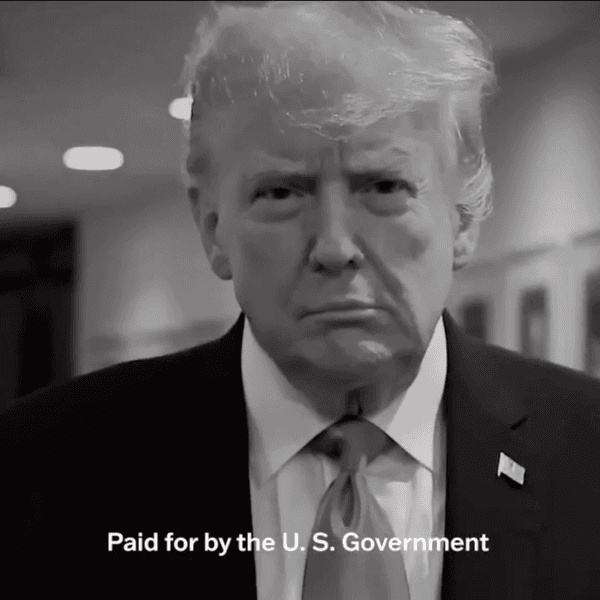
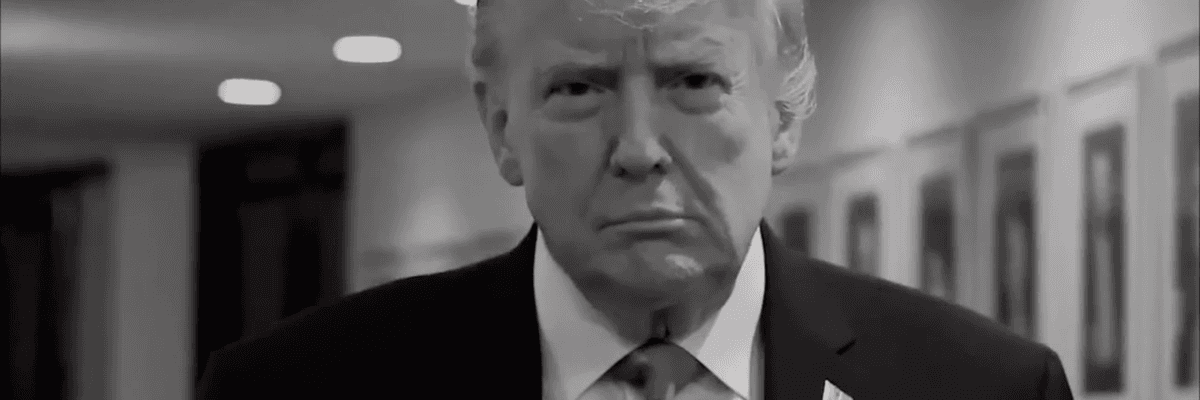
The 30-second black-and-white ad features Trump walking down a hallway to audio of him vowing to “demolish the deep state” and “expel the warmongers from our government,” even as the president wages an illegal and deeply unpopular war on Iran that has killed thousands and driven up prices at home and around the world. During the final 10 seconds of the ad, white text appears at the bottom of the screen stating, “Paid for by the US government.”

The ad is just the latest taxpayer-funded, explicitly pro-Trump spot that the White House has launched in recent days, prompting alarm from lawmakers and government watchdog organizations who say the administration is using public funds to flood airwaves with the president’s campaign ads shortly before an election.

Watch the newly aired ad:


Richard Painter, who served as the White House’s chief ethics lawyer in the George W. Bush administration, said the taxpayer-funded campaign ads “could be an impeachable offense,” noting that “Congress has expressly prohibited government-sponsored political propaganda, which is dangerous for democracy.”

The federal government appears to have spent more than $1 million on pro-Trump ads in recent days, The New York Times reported on Sunday, citing an estimate from AdImpact.

Last week, as Common Dreams reported, the White House launched a taxpayer-funded ad in which Trump declares that “America will never be a communist country” and promotes tax cuts he signed into law, delivering a massive windfall to the rich and large corporations.

Norm Eisen, former White House special counsel for ethics and government reform, told the Times on Sunday that “the president and his administration have gone from breaking the law to trampling it.”

“The prior ad was bad enough,” said Eisen, “but this one openly repurposes prior political conduct.”

US Sen. Chris Murphy (D-Conn.) wrote on social media that Republicans shouldn’t be taken seriously when they claim to care about “waste, fraud, and abuse” as the president and leader of their party runs campaign ads with taxpayer money.

“What a cult this party has become,” Murphy added.

Complaint Demands Broadcasters Stop Airing Trump’s Illegal Taxpayer-Funded Ads

“This administration’s repeated and flagrant violations of the law, including the Hatch Act, are an affront to taxpayers and our democracy.”


Public Citizen is urging regulators and broadcasters to pull President Donald Trump’s unlawful taxpayer-funded campaign advertisements off the air. The third one, declaring a “final battle,” resembles one of his 2024 campaign ads.
(Image: screen grab/US government via AdImact)

Jessica Corbett
Sep 29, 2026
COMMON DREAMS

The watchdog group Public Citizen this week filed a pair of complaints urging regulators and broadcasters to pull President Donald Trump’s unlawful taxpayer-funded campaign advertisements off the air and demanding a federal investigation into them.

In recent weeks, amid mounting speculation that Republicans could lose their congressional majorities in the November midterm election, television stations have aired short videos that the White House claims are “public service announcements” but which a range of critics contend are obvious campaign ads—and illegal, as they clearly state they are “paid for by the US government.”

Public Citizen’s Tuesday complaint to the Federal Communications Commission (FCC), the Federal Trade Commission (FTC), and broadcasters highlights that “at least three campaign ads, paid for by taxpayer dollars, appear to violate the federal law against using taxpayer funds to finance propaganda (5 USC §3107) and related provisions of the appropriations laws as well as the Hatch Act (5 USC §7324).”

While “broadcast stations are strictly prohibited from censoring or rejecting ads sponsored by legally qualified political candidates,” the complaint notes, they also “may be held liable for airing any advertisement that is in violation of federal law,” which “explicitly prohibits using appropriated public funds for government propaganda, self-aggrandizement, or partisan political advertising.”

The group urges the FCC and FTC “to direct broadcasters to stop broadcasting these apparently illegal campaign advertisements and call on individual broadcasters to cease airing the campaign advertisements,” emphasizing the responsibility of both agencies and broadcasters “to keep the airwaves fair and honest and operate in the ‘public interest, convenience, and necessity.’”

The first ad, initially posted to the White House YouTube account earlier this month, features Trump pledging to “defeat communism, socialism, and Marxism, in America,” and the song “Love Me” by JMSN, who did not sign off on its use. The second one aired Friday and includes clips from the president’s Fourth of July weekend speech at Mount Rushmore. A third, resembling one of Trump’s 2024 campaign ads, was played during “Saturday Night Live,” “Fox News Sunday,” and several football games.

The administration’s decision to reject widespread criticism and air yet another “piece of taxpayer-funded political propaganda during the mass-viewing moment of Sunday football is appalling and alarming,” declared Public Citizen co-president Lisa Gilbert. “These illegal ads should immediately be pulled from the air, and the White House’s many apparent violations of the law should be investigated.”

After the first ad, Public Citizen submitted a complaint to the US Office of Special Counsel (OSC) and the Government Accountability Office (GAO) Forensic Audits and Investigative Service. The group sent another on Monday, arguing that the new “Final Battle” ad is a “brazen” violation of federal law that “doesn’t even mention a pending government action. It simply tries to stir up hysteria among voters and depicts Trump as a great hero working to save the nation from grave threats.”

“Like the other previous two campaign advertisements Trump and the White House are billing to taxpayers, these ads are designed to boost the character of Donald Trump, generally void of any legitimate government purpose, target the voting public shortly before the 2026 midterm elections, and constitute violations of the law against using government resources for propaganda purposes and the Hatch Act,” the group continued.

“Public Citizen is once again writing your offices requesting an investigation into who produced these ads and at what cost to taxpayers, and to take appropriate remedial actions to enforce the federal law,” the organization added.

Leading Democrats in the US Senate and House of Representatives said Monday that the White House used funding allocated for US Customs and Border Protection to pay for the ads. Government ethics experts, lawmakers, and other critics have ripped the ads, with some even pointing to them as further evidence that Trump should be impeached a historic third time.

“This administration’s repeated and flagrant violations of the law, including the Hatch Act, are an affront to taxpayers and our democracy,” said Craig Holman, a government ethics expert with Public Citizen. “The FCC and other oversight agencies are charged with ensuring this type of abuse of taxpayer funds does not happen. But that system only works if they take action.”

‘Just Despicable’: MS NOW and CNN Air Trump’s Illegal Taxpayer-Funded Ads


“So your hosts are on air all day saying this is illegal while you are taking the money and running the ads? Just gross,” said one MS NOW critic.


President Donald Trump appears in a taxpayer-funded ad that has aired on major cable news networks..
(Image: screenshot by US government via AdImact)


Brad Reed
Oct 01, 2026
COMMON DREAMS

CNN and MS NOW are both airing taxpayer-funded ads that promote President Donald Trump, who last month tried to ban the cable news networks from White House grounds.

As The Washington Post reported on Wednesday, two pro-Trump ads have aired on MS NOW and CNN this week in select markets, even though legal experts and government watchdogs say the ads violate laws prohibiting taxpayer funds for political propaganda.

In a statement provided to the Post, MS NOW spokesperson Richard Hudock defended the decision to run the ads.

“We know the size, engagement, and influence of the MS NOW audience, and apparently the White House does, too,” said Hudock. “The decision to spend taxpayer dollars to reach our audience speaks for itself.”

The MS NOW spokesperson also emphasized that “accepting an advertisement is not an endorsement of its message, and purchasing airtime will never purchase favorable coverage.”

This justification drew an angry rebuke from Ron Filipkowski, editor-in-chief of MeidasTouch.

“This is just despicable by MS NOW, which has accepted stolen taxpayers dollars for 38 illegal ads,” Filipkowski wrote in a Thursday social media post. “Give me a break with this bullshit statement too. So your hosts are on air all day saying this is illegal while you are taking the money and running the ads? Just gross.”

According to a Wednesday report from Status, some MS NOW insiders are “pissed” about the decision to air the Trump ads, with some noting that the network’s viewers will “hate” seeing them.

Government watchdog Public Citizen on Tuesday filed complaints with the Federal Communications Commission (FCC) and the Federal Trade Commission (FTC) demanding that the government-funded Trump ads be taken off the air.

However, Trump-appointed Trump FCC Chairman Brendan Carr told reporters on Wednesday that he is not planning any investigation into the ads, which he described as “public service announcements” despite the fact that they feature audio of the president personally vowing to “defeat communism, socialism, and Marxism in America.”

“I don’t think there’s anything unique or different about it,” said Carr. “There’s nothing in there that strikes me that merit any sort of FCC review.”


Revealed: Officials didn't know Trump raided their budgets to fund his ads


(REUTERS)

October 01, 2026 
ALTERNET

President Donald Trump’s national ad buy featuring himself immediately drew critics over laws against using taxpayer money to fund political advertising. But government sources now tell NBC News that Trump did not even alert administrators that their budgets would be footing the bill.

“They didn’t sign off on it,” an official said of CBP leaders. “They were thinking, ‘There’s no way they’re going to try to take the funding from CBP for those ads.’”

“Senior leaders at Customs and Border Protection were cut out of the decision to use their agency’s funds for a national ad buy featuring … Trump and learned about it from a news report, according to a Department of Homeland Security official with direct knowledge of the decision-making process,” said NBC reporter Julia Ainsley.

CBP Commissioner Rodney Scott and his senior advisers “were not included in several meetings where the idea of spending the agency’s money on the ads was discussed,” the official said. And while CBP leaders were told that the White House was interested in using the agency’s funds for an ad campaign, the official said, they were not given the opportunity to weigh in. Nor were they told when the final decision had been made.

Instead, Scott and CBP leadership learned that agency funds had been blown for the ad campaign from a Wall Street Journal report earlier this week, the DHS official said.


Ainsley reports that CBP leaders’ being left in the dark over the decision “suggests new tensions between the agency and DHS and White House officials, which have ebbed and flowed since the start of Trump’s second term.”

The DHS official added that Scott and his top advisers often are only asked to weigh in on decisions about border operations, not broader policies or funding.

A White House official told NBC that the ad campaign was Trump’s idea, and also that Trump picks the ads himself.


“It’s reminding viewers that there has been a lot done during the first year and a half,” the official said, adding that the ads will run through Election Day. “Some of it is a feel-good Americana-type message. It runs the gamut of a lot of different messaging points. And it is messaging points that are our strongest points.”

Democratic appropriators bashed the CBP expenditures saying Trump ads were not the intent by Congress when it appropriated CCPB funds. Senate Majority Leader John Thune (R-S.D.) also criticized the White House this week for using public rather than private funds on the ads., saying “it shouldn’t be paid for with taxpayer dollars.”

Political ad-tracking firms estimates that the administration has spent more than $4 million so far on the ads, reports NBC. And a DHS spokesperson told NBC that “DHS follows all applicable rules for contracting decisions and keeps all decision makers informed. All contracting decisions are made in accordance with applicable law.”


But when asked by NBC if saying that decision-makers are kept “informed” meant that CBP leaders had a say in the ad funding decision, Ainsley said the DHS spokesperson did not respond.

The White House, when asked, threw the question into a loop by referring questions back to DHS, said NBC.
Trump’s Bombastic UN Diatribe Marked a New Low for US Leadership

In directly challenging an international system that is arguably dead, his diatribe puts front and center the state of American decline on the global stage.


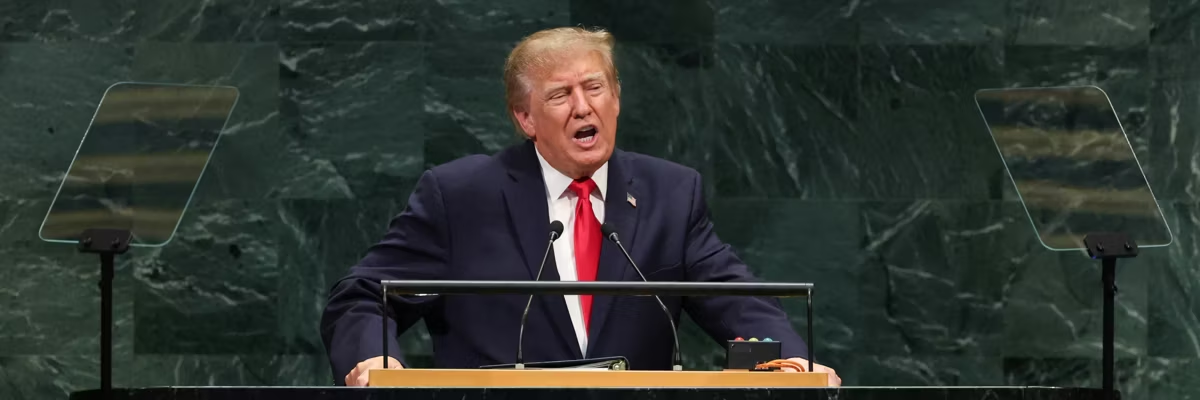
US President Donald Trump addresses the 81st United Nations General Assembly at the United Nations Headquarters in New York, on September 22, 2026.
(Photo by Timothy A. Clary / AFP via Getty Images)

Alexander Langlois
Oct 01, 2026
Common Dreams


Hegemonic decline comes in many different forms. From the Roman empire to the Islamic caliphates of old, great powers of the world have repeatedly risen and collapsed under the weight of their excess. While the arc of human history and empire carry diverse experiences and paths, it is near the end of the imperial line that often sees some of humanity’s most volatile moments. Today, the United States represents the end of that line in a rapidly transforming world, with US President Donald Trump’s United Nations General Assembly speech embodying a challenge to the international system and the American decline accompanying and driving it.

To be sure, no one should be surprised by bombastic rhetoric at the UNGA’s annual gatherings. World leaders often use the international forum more as an opportunity to bolster their domestic image at home than for diplomacy and problem solving, as intended. This dynamic is understandable: As the adage goes, “All politics is local.”

Yet it is this exact cliché that makes Trump’s speech different.

The world understands the United States in this context: An empire at the height of its decline, hellbent on aggrandizement in a desperate attempt to grip what remains of its global primacy, even at the expense of the international system.

Approaching the UNGA podium on day one of the plenary session speeches by world leaders from countries like Brazil, Türkiye, and France, Trump understood his political position. The supposed leader of the free world, the American president is in his second and final term in the White House, which has reached a pinnacle moment that will define his legacy.

That moment and legacy are imperiled, if not already ruined. Trump’s sinking domestic approval rating, at its lowest across his two presidential terms, stems from a disastrous domestic and global economy hitting the working class and most vulnerable. His ongoing forever war with Iran and its allies in the Middle East with no end or direction drives those economic problems and the worsening polls.

As such, Trump finds himself underwater politically. His response has been clear: He is as stubborn as ever.

The president launched into a tirade at the UNGA. Opening with a statement that could understandably be confused for a stump speech on a campaign trail or rhetoric meant for the State of the Union, he boasted about his would-be accomplishments at home and abroad. Trump repeated his old lie that he has single-handedly ended multiple wars across the globe. He claimed to have saved the United States, kicking of a “Golden Age of America” while arguing that the country has never been stronger.

Yet it was his rhetoric on multiple American wars in 2026 that should speak. On Venezuela, Trump openly bragged about overthrowing a neighboring country to extract their natural resources—in this case, oil. He gloated about military strikes on alleged cartel boats in the Caribbean Sea, actions amounting to extrajudicial killings. He threatened military action against another neighbor—Cuba—in the near future.

If these boasts reflect a foreign policy disconnected from international law, then Trump’s comments on Iran mark an insult to humanity. In this regard, the American president openly used genocidal language to threaten the country he has taken the United States to war with for the last seven months, openly pondering: “Do I annihilate the Islamic Republic and do it quickly… Do I drive them into hell with no chance of survival and no hope of future greatness [f]or generations?”

To use such bombastic rhetoric at the UNGA—the heart of global diplomacy, even for all the UN’s warts—marks a new low for American leadership and foreign policy. In directly challenging an international system that is arguably dead, his diatribe puts front and center the state of American decline on the global stage.

These words represent the mindset of an American president who chose a war of aggression against a sovereign state without authorization from the US Congress, meaning American citizen approval, the UN Security Council, or any real international legal basis. These checks—largely cast aside in recent decades—exist with their own warts specifically because this war represents a strategic and humanitarian disaster, as have the wars of the past that informed the international legal system the world understands today.

Instead of leaning into concepts of diplomacy and humanity, playing a leading role in bringing nations together through diplomacy and in support of the principles of international law, the president of the United States has leaned deeper into imperial and interventionist desires, going so far as to hearken to a pre-World War II system of chaos in which the world operated on a simple rule: “To the winner goes the spoils.” Trump used this cliche when discussing American efforts to steal Venezuelan oil.

Instead of recognizing the pain that war, in no small part waged by US weapons and defended in the UNSC by American diplomats, Trump espoused the importance of it in perpetuity to fight some ill-defined “evil.” Instead of recognizing how the inertia of US foreign policy has become an illness for people at home and abroad alike that many akin to the true “evil,” he crowed on about war and violence as if they constitute abstract concepts and games, not real consequences for people around the globe.

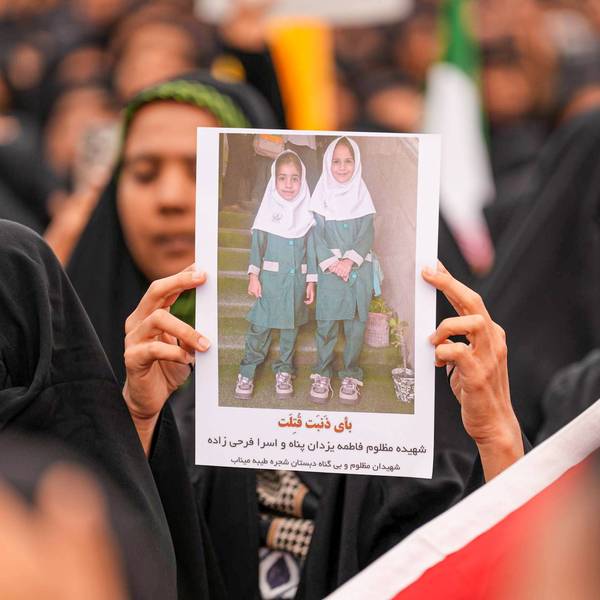
The people of Minab, where American missiles hit a school full of children and teachers, killing over 150 civilians, would dispute the abstractness of American power and the giddy willingness to use it in such brutal fashion. Iranians writ large can and do contest the use of genocidal language against their country and civilization. The American people, tired of war amid major domestic problems at home, do not see strength in their president bragging about his would-be personal accomplishments abroad that reflect more of the same mistakes of the past.

People around the world did not see a man espousing American greatness at the UNGA. They witnessed a leader with immense power brag about his ability to cause unspeakable pain and suffering at will as his popularity at home collapses. This comes as the United States proves itself incapable of seriously using its position as a global power to enact real change for the better abroad. In fact, it uses that position in increasingly malign ways and has done so for years.

The world understands the United States in this context: An empire at the height of its decline, hellbent on aggrandizement in a desperate attempt to grip what remains of its global primacy, even at the expense of the international system.

From Ukraine to Gaza to Iran, the old world is regressing to a time before the international legal system was crafted in a way that proclaimed and systematized a simple term: “Never again.” While states will always act with raw power considerations and national interests in mind, the international system marked a valid and worthwhile attempt to temper humanity’s worst instincts. Trump and other leaders of the world, like Russia’s Vladimir Putin and Israel’s Benjamin Netanyahu, represent those worst instincts, explaining why they work to destroy ideals that ultimately improve the human experience—diplomacy, cooperation, development, and human rights.

The UNGA, despite Trump’s ramblings, can and should remind the world that these values matter, just as pure national interests can still be informed by such principles. Such an approach to foreign policy is not a contradiction as strength and humanism are not mutually exclusive. Instead, they must form the basis of how Washington and other capitals approach the world now and in the future.


Our work is licensed under Creative Commons (CC BY-NC-ND 3.0). Feel free to republish and share widely.


Alexander Langlois
Alexander Langlois is a foreign policy analyst focused on US foreign policy, restraint, and progressive realism in the Middle East. He is currently the senior editor for Democracy for the Arab World Now's (DAWN) Democracy in Exile journal.
Full Bio >


Deep-Dive Investigation Examines Minab School Bombing: ‘One of the Worst US War Crimes Since Vietnam’

“There was no school left,” said the father of a 6-year-old girl killed in the attack. “I thought I was asleep and having a nightmare.”


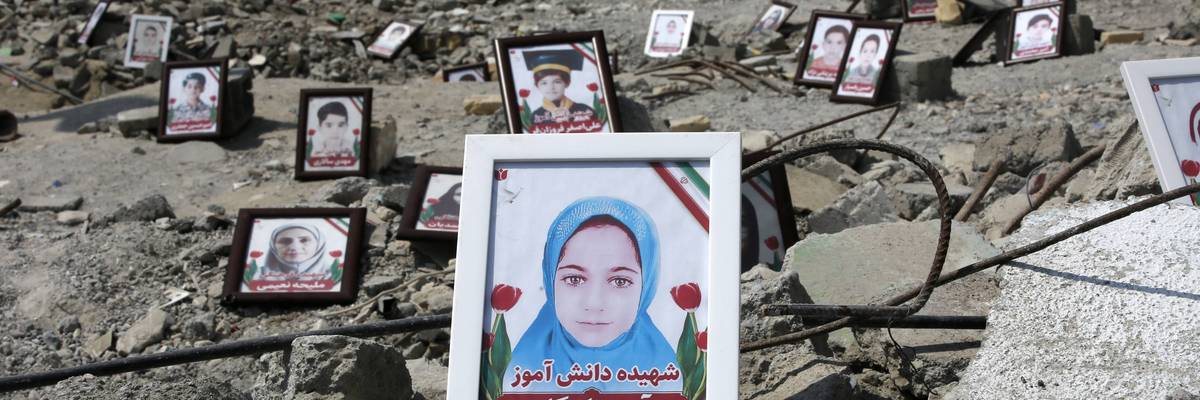
Photos of children and others killed in the US strike on the Shajareh Tayyebeh School in Minab, Iran are displayed in the rubble of the site on September 10, 2026.
(Photo by Fatemeh Bahrami/Anadolu via Getty Images)

Stephen Prager
Sep 30, 2026
COMMON DREAMS

Survivors, parents, and first responders provided harrowing firsthand accounts of the US bombing of an elementary school on the first day of the US-Israeli war with Iran as part of a new Drop Site News investigation demonstrating that the school had publicly operated as a civilian institution for more than a decade.

The report, published Wednesday, provides new eyewitness accounts from those who lost loved ones when US Tomahawk missiles hit the Shajareh Tayyebeh School in Minab, which killed 120 children and dozens of others, and has been described as “one of the worst US war crimes since Vietnam.”


UN Experts Say US War Crimes Likely in Iran School, Sports Complex Massacres


Amnesty Says US-Israeli Attacks With Indiscriminate Weapons in Tehran May Have Been War Crimes

“The children were five years old and all they did was yell, ‘Miss! Miss!’ and were crying. I ran to the children. I just said, ‘Get under the table!” recalled preschool teacher Hossniyeh Salem. “I didn’t think they were going to strike the school. I just thought that some place had been hit. I said, ‘Don’t be afraid, sit down.’”

“Two simultaneous sounds. They’re still in my ear. My son even describes them—'Wooosh, boom! Woosh, boom!’—and then the explosion very close by,” Salem said. “Plaster was falling, the ground was shaking, and at that moment I just looked at my preschool girls and my son, and I said to myself, ‘It’s over. Now is the time when we go under the rubble, it’s going to fall now,’” she continued. “Then there were no more sounds. The class was full of smoke and dust.”


Yaghoub Yazdanpanah, a literature teacher at another school about eight miles from Minab, described the moment he learned that the school his 6-year-old daughter, Fatemeh, attended had been bombed.

“I left my classroom, ran home, took my car, and sped to Minab. When I arrived, I said, ‘Oh no!’ The unimaginable had happened,” he said. “There was no school left. Two-thirds of the school, maybe more, had been destroyed. Smoke was rising from all over the school. It had turned into rubble. For a moment, I thought I was asleep and having a nightmare.”

Yazdanpanah said he already knew the worst had happened well before he received his daughter’s body at an overwhelmed hospital that night.

“We knew our children had been martyred; we knew our children were no longer with us,” he said. “When they brought Fatemeh, she was in one piece because she had been in her teacher’s arms [when she died].”

“There was no school left.”

The US has still not accepted responsibility for the Minab attack, even though an internal Pentagon investigation has concluded that US forces struck the school using two Tomahawk missiles. In the initial days after the attack, President Donald Trump claimed that Iran had been responsible before backing off the claim, stating, “I just don’t know enough about it.”

Drop Site obtained images of the missile fragments from the site, which an independent weapons inspector said “all appear to be remnants of Tomahawk missiles.” Iran is not known to possess Tomahawks. A UN fact-finding mission report released earlier this month determined that the school had been “the intended point of impact” rather than collateral damage.


People are seen scouring the wreckage at the site of the February 28, 2026 bombing of the Shajareh Tayyebeh girls’ elementary school in Minab, Iran. (Photo by Mehr News Agency/Wikimedia Commons)

Adm. Brad Cooper, the commander of US Central Command (CENTCOM) told Congress in May that the school was “located on an active [Islamic Revolutionary Guard Corps] cruise missile base.”

Wes Bryant, a former senior targeting adviser at the Pentagon, told Drop Site he’d never seen any indication that the school was on an active missile site and explained that even if it was, “it doesn’t matter.”

“Those children, all those civilians, are still non-combatants and protected, so it’s really disgusting to hear that,” he said. “This wasn’t even fragmentation that hit a school next to another target. This was deliberately targeted very, very clearly and obviously. So at the very least, [it was a] complete mischaracterization of the target.”

There was abundant evidence of the school’s civilian use that would have been available to those who conducted the strike. The school was part of a compound that included barracks for the elite IRGC but was redeveloped for civilian use beginning in 2014. It had publicly and officially operated as a school since 2015.

The school had a very active online presence with a website that prominently displayed classroom activities and school events. Meanwhile, satellite imagery captured just two months before the attack showed children standing in the schoolyard outside the building.

An investigation from Bloomberg found that the school had been placed on a list of targets for the war’s opening salvo that was assembled in part using the Maven artificial intelligence system developed by Palantir, which reportedly did not classify it as a school.

The UN report emphasized that even if the attack can be boiled down to an intelligence failure, it still likely amounted to a war crime because the US attacked despite readily available evidence that the building was a school, a failure investigators said went “beyond mere negligence” and amounted to recklessness toward the risk of striking civilians.


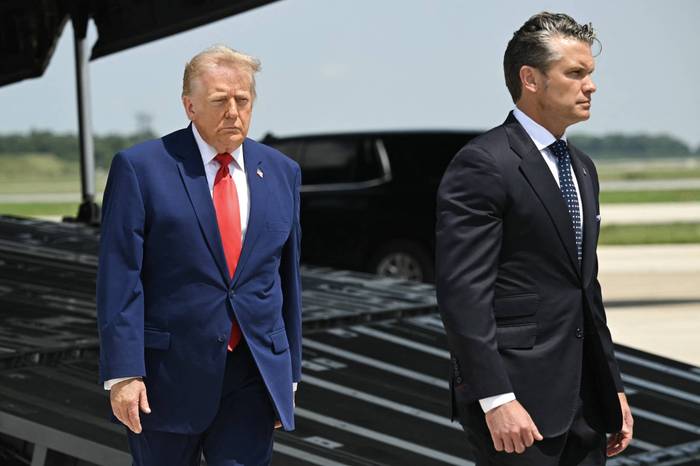
US President Donald Trump and Secretary of Defense Pete Hegseth attend a dignified transfer event for US service members killed during operations in the Middle East, at Dover Air Force Base in Dover, Delaware, on July 22, 2026. (Photo by Saul Loeb/AFP via Getty Images)

Hala Rharrit, a career former US Foreign Service officer who spent 17 years at the State Department before resigning in 2024, remains unsatisfied by the government’s efforts to downplay the attack as a “mistake.”

“There’s no way to say that this was some type of error,” Rharrit told Drop Site. “You’re either saying that our US Military is completely incompetent, that despite the multiple layers of review, everybody messed up—or there was something very, very sinister about this strike.”

According to data from the Human Rights Activists News Agency, the vast majority of US-Israeli strikes during the first 40 days of the war did harm to civilians or civilian infrastructure, contradicting repeated claims that the US “never targets civilians.” At minimum, the data shows at least 1,701 civilians have been killed, but HRANA has stressed that the true death toll is likely substantially higher.

Defense Secretary Pete Hegseth has spent his tenure dissolving guardrails meant to prevent civilian casualties, denouncing “stupid rules of engagement,” and saying the military should pursue “lethality” over “legality.” Trump, meanwhile, has repeatedly threatened mass destruction upon Iran, including that the “entire civilization” would “die.”

“The administration and Hegseth have made it quite clear that they don’t really care about civilian casualties. That may also have been true of previous bombing campaigns that predate the Trump administration, but it is even more the case than in the past, and they have made it clear that troops do not need to be concerned about consequences,” said Harrison Mann, a former US Army major and intelligence analyst for the Defense Intelligence Agency (DIA).

“There is no mystery about what coordinates those missiles hit, and that question would have been answerable on the day of the strikes,” he told Drop Site. “The only way that CENTCOM would not know is that they are choosing to be willfully ignorant.”
Updated Google Satellite Images Show ‘Apocalyptic’ Destruction of Gaza by Israel

One Palestinian from Gaza said the imagery “shows you the Israeli barbarism and terrorism that the world lets happen.”


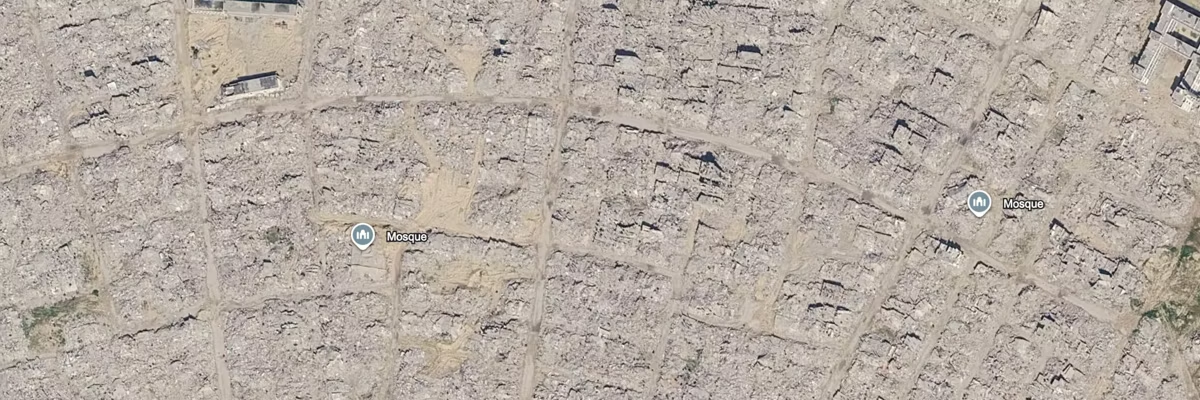
This Google Earth satellite image shows Israel’s total destruction of the Tal as Sultan refugee camp in Rafah, Gaza, Palestine.
(Photo by Google Earth)

Brett Wilkins
Sep 28, 2026
COMMON DREAMS

Updated Google satellite imagery shared Monday on social media provides a new perspective on the staggering scale of Israel’s obliteration of the Gaza Strip, showing entire neighborhoods reduced to rubble and vast stretches of a formerly dense urban landscape transformed into barren wasteland.

The images from Google—which is accused of complicity in the Gaza genocide—can be viewed on both Google Earth and Google Maps and show extensive destruction throughout the Palestinian territory. In some locations, roads and familiar landmarks remain visible amid enormous fields of gray rubble where homes, businesses, schools, and other civilian structures once stood.

“I’ve walked through much of the destruction in Gaza myself, but I couldn’t bear looking at the map,” Palestinian journalist Abubaker Abed posted on social media. “It shows you the Israeli barbarism and terrorism that the world lets happen.”


“I’ve been to those places, I have seen the scale of the destruction—it was really heartbreaking,” Abed told The New Arab. “But when you see all the destruction in just one active website, it really broke my heart. I couldn’t even bear continuing looking at that because seeing the place where I grew up, seeing the place where I was born, [lying] in ruins in that way was absolutely heart-shattering.”

US writer Linda Mamoun noted that “Google Maps shows photos and reviews for thousands of places in Gaza that don’t exist anymore. You can scroll through an entire world that Israel destroyed.”

The Google images help affirm independent assessments documenting the extraordinary scale of Gaza’s destruction. According to the United Nations Satellite Center (UNOSAT), 201,290 structures—or approximately 82% of all structures in Gaza—had sustained damage as of June. More than 134,400 structures were classified as destroyed, while over 13,800 were severely damaged. UNOSAT also estimated that 328,627 housing units had been damaged.

The devastation shown in the new imagery is particularly stark in Rafah in southern Gaza. Israel ignored a May 2024 order from the International Court of Justice to “immediately halt” its assault on the city of approximately 275,000 people, as well as other acts enumerated in Article II of the Genocide Convention. A South Africa-led genocide case against Israel at the ICJ is currently in the written phase, which will continue until at least May 2029.

“You can scroll through an entire world that Israel destroyed.”

“Look at these satellite images of Gaza and listen to the inconsistency, the hypocrisy, and the ugliness of the soul of the deniers... who will tell you above all not to use the word genocide,” wrote Rima Hassan, a French leftist member of European Parliament.

In a social media post, UK journalist David Yelland said: “I recommend spending a few minutes on Google Earth today looking at Gaza. Keeping the media out has meant we have not seen this before. Make your own mind up.”

Another British journalist, Piers Morgan, called the images “horrifying.”

“Now we know why [Israeli Prime Minister Benjamin] Netanyahu continues to ban international media from Gaza,” he added.

A UN report published last week estimates that approximately 1.9 million of Gaza’s roughly 2.2 million people have been displaced by Israel’s assault—many of them more than once—and around 60% of the strip’s residents have lost their homes. The publication also said that 92% of economic establishments in Gaza were destroyed or damaged, and that the territory needs about $71.5 billion for reconstruction and recovery.

Since launching the war in retaliation for the Hamas-led attack of October 7, 2023, Israeli forces have killed at least 74,022 Palestinians and wounded upward of 175,980 others, according to Gaza officials. The majority of those killed, they say, were women and children. At least 1,421 Palestinians have been killed and 4,983 wounded since the October 2025 ceasefire took effect.

Netanyahu and Yoav Gallant, his former minister of defense, are wanted by the International Criminal Court in The Hague for alleged war crimes and crimes against humanity in Gaza, including murder and forced starvation.

Some Israelis and their supporters expressed satisfaction and even pride in the satellite images of Gaza’s annihilation.

“If updated Google satellite images of Gaza have not troubled you, see a doctor,” said Lebanese diplomat Mohamad Safa. “Supporting mass killing and distribution on this scale is really a pathological issue.”