Friday, October 02, 2026

After 50 Years of Anti-Choice Hyde Amendment, Campaigners and Lawmakers Say ‘Enough Is Enough’

“Everyone, no matter who they are, where they live, how much money they make, or how they get their insurance, deserves access to abortion care without barriers.”
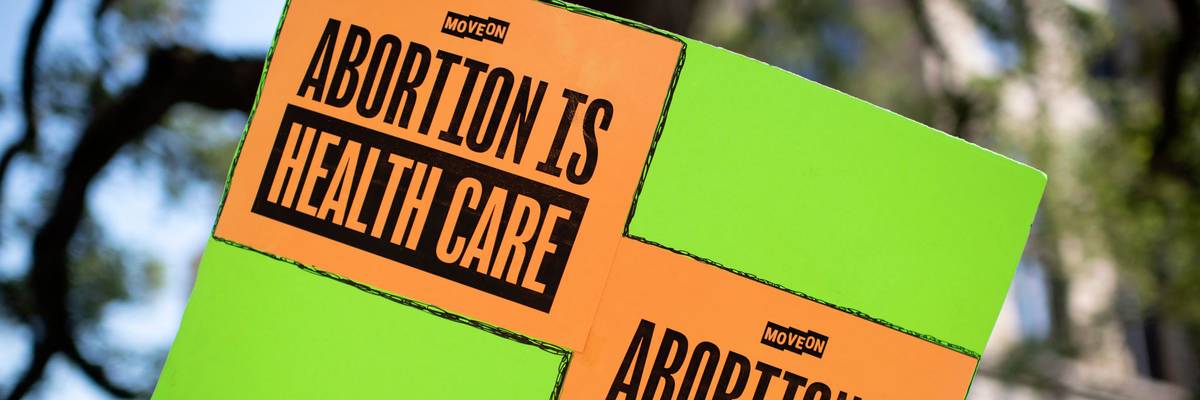


An abortion rights demonstrator holds a sign outside of the Harris County Courthouse during the Women’s Wave march in Houston, Texas, on October 8, 2022.
(Photo by Mark Felix/AFP/Getty Images)


Julia Conley
Sep 30, 2026
COMMON DREAMS

On Wednesday, reproductive rights groups marked half a century of abortion care being “baselessly set apart from all other healthcare,” with coverage for abortions blocked in government-funded healthcare plans like Medicaid, which about 16 million women of reproductive age rely on.

“Our constituents have suffered the consequences,” said the Congressional Reproductive Freedom Caucus, chaired by Reps. Diana DeGette (D-Colo.) and Ayanna Pressley (D-Mass.).

For 50 years, the Hyde Amendment—proposed by the late Rep. Henry Hyde (D-Ill.), who expressed his wish to prevent “anybody having an abortion” and said blocking federal funds within the Medicaid program from being used for care was the best way to do so—has stopped hundreds of thousands of people from obtaining abortion care, and has been called by anti-abortion groups “one of the greatest achievements of the pro-life movement to date.”

The Reproductive Freedom Caucus denounced the budget rider that has been reeimplemented in appropriations bills every year since 1976 as “a dangerous, racist, and classist abortion ban. An abortion ban for the working class and people of color, who disproportionately receive health insurance through the federal government.”

The caucus noted that more than 200 House Democrats have supported efforts to repeal the amendment, and advocacy groups on Wednesday called on Congress to pass the Equal Access to Abortion Coverage in Health Insurance (EACH) Act, which would permanently repeal the Hyde Amendment.


“Without solutions like the EACH Act, the Hyde Amendment will continue to force people with low incomes to struggle for the care they need or carry a pregnancy against their will,” said the National Women’s Law Center (NWLC). “Everyone, no matter who they are, where they live, how much money they make, or how they get their insurance, deserves access to abortion care without barriers.”

In addition to low-income people who rely on Medicaid, said the National Network of Abortion Funds (NNAF), the Hyde Amendment blocks abortion care for Indigenous people who use the Indian Health Service, people in federal prisons, disabled people, military service members and their families, and federal employees, among others.

Twenty-nine states follow Hyde Amendment restrictions, which include “exceptions” for pregnancies resulting from rape or incest or cases in which a pregnant person’s life is at risk. Twenty-one states use state funds to cover abortion care, but nearly half of US women of reproductive age who use Medicaid live in states that either ban abortion care or bar them from getting abortions using the federally funded healthcare plan.

NNAF highlighted the network’s decades of work to counter the Hyde Amendment by ensuring people who need abortions can access funding, which abortion funds across the country obtain through grassroots donations as they also advocate to end the Hyde Amendment.

“By the 1990s—less than two decades after Hyde first passed—28 abortion funds had formed across the country. Twenty-two of those funds started the National Network of Abortion Funds (NNAF) in 1993,” said NNAF. “We joined together to build strategic power and end the Hyde Amendment. Today, our network has nearly 100 member abortion funds, and our fight against Hyde continues.”

“The fierce abortion funds in our network have raised money, arranged travel, connected folks to clinics, provided practical support, and fought restrictions in their states and communities,” the group added. “Despite endless challenges, their tireless work has built power for our collective goal: Make abortion accessible for all.”

Abortion funds have helped people obtain care across the country, but the NWLC emphasized that the Hyde Amendment has still left hundreds of thousands of women with no choice but to pay for abortions out of pocket—often pushing them to delay care while they gather funds or to carry a pregnancy to term when they don’t want to or can’t afford to become a parent.

“While abortion costs vary by location, facility, and stage of pregnancy, the median out-of-pocket costs in 2023 were $563 for medication abortion, $650 for first-trimester procedural abortion, and $1,000 for second-trimester abortion care,” said NWLC. “Those costs account for just the procedure itself, not additional expenses. And yet, nearly half of American families cannot afford the true cost of living... So, when the Hyde Amendment denies someone abortion care, the compounding costs can push people further into a struggle to survive and meet basic needs.”

Dr. Jamila Perritt, president and CEO of Physicians for Reproductive Health, remembered Rosie Jimenez, a 27-year-old mother and aspiring teacher who died in 1977, almost exactly a year after the Hyde Amendment was passed, after being denied Medicaid coverage for an abortion.

“Hyde has harmed generations of people seeking abortion care,” said Perritt. “Women like Rosie Jimenez, the first known person to die because of Hyde Amendment restrictions, should still be here. No one, no matter what insurance they have access to or who they are, should be denied abortion care, full stop.”

Stateline reported Tuesday that with weeks to go until the midterm elections and President Donald Trump’s approval rating plummeting to record lows, anti-abortion groups are increasingly concerned that a Democratic majority could repeal the amendment, which it came close to doing in 2022.

“If there becomes a pro-abortion majority in Congress, then Hyde is going to be one of the first things to go, probably, especially because it’s been in the spotlight more recently,” Gavin Oxley, spokesperson for Americans United for Life, told Stateline. Particularly since Trump told Republicans to be “a little flexible” on the Hyde Amendment when the party was pushing to end subsidies under the Affordable Care Act, Oxley said “there are some Republicans who may not be as committed to protecting Hyde.”

Perritt expressed hope that Congress could pass the EACH Act, which now “has the highest amount of support... ever seen with over 200 co-sponsors.”

“As a DC-based OB-GYN and abortion provider, I see patients burdened with the cost of abortion care, forcing them to choose between basic living needs and lifesaving healthcare,” she said. “The Hyde Amendment is a zero-sum constraint that is not about patients’ health and autonomy, but instead about punishing people for making informed decisions about their bodies, families, and futures. Enough is enough.”

“We do not need another Hyde Amendment anniversary,” said Perritt. “We need to repeal the Hyde Amendment for good.”

UN Experts Demand End to Trump’s Third-Country Deportations

Countries the US has entered into deals with “lack the capacity to protect the rights of migrants sent there by wealthy nations seeking to shirk their international obligations.”


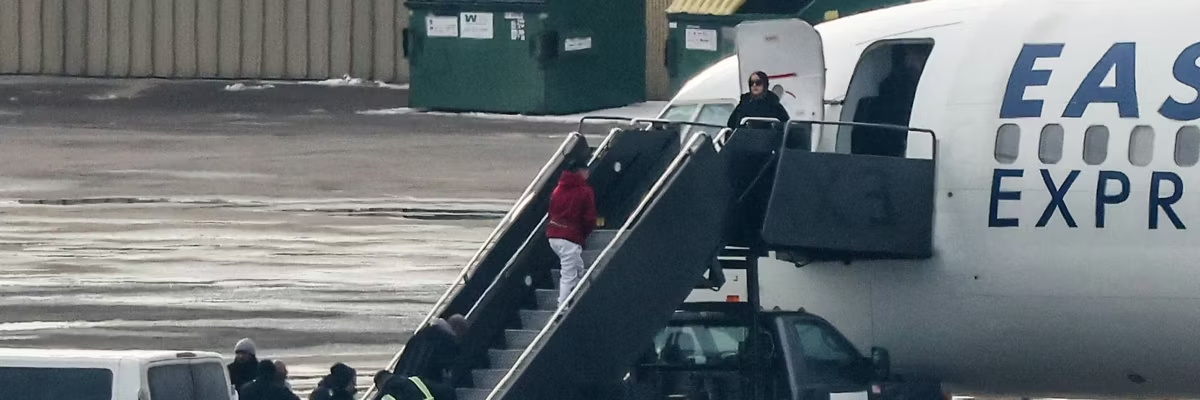
Shackled people board a deportation flight at the Minneapolis-Saint Paul International Airport in Saint Paul, Minnesota, on February 5, 2026.
(Photo by Charly Triballeau/AFP via Getty Images)

Julia Conley
Sep 29, 2026
COMMON DREAMS


Two dozen United Nations human rights experts on Monday demanded that the Trump administration end its deportation of immigrants, including refugees and asylum-seekers, to countries to which they have no connection—a practice that has set off “a cascade of human rights violations,” according to the experts.

Advisers to the UN Human Rights Council sent a communication to the US and the 35 countries President Donald Trump has struck deportation deals with—agreements that the White House has spent at least $40 million on, according to a congressional report released earlier this year.


“These migrants are being transferred to countries or territories with which they have no ties, which can be a traumatizing and isolating experience that compounds harms already suffered, which triggered their fleeing to the US in the first place,” said the experts. “Others are sent to places where they risk further violence or discrimination based on gender, sexual orientation, gender identity, or human rights advocacy.”

Critics have warned that the arrangements appear to be aimed at circumventing US laws that prohibit Trump from refoulement—sending people back to the countries they fled when they sought asylum in the US. Some of the countries Trump has struck deals with have ultimately sent asylum-seekers back to their home countries, according to The Guardian.

Deported people have also faced violence and the threat of torture in the third countries they’ve been sent to. As Common Dreams reported last week, Ahmed Soliman, an Egyptian national, and Samson Birhane, who is from Eritrea, were being detained in “an overcrowded police cell, in inhumane conditions” in Malabo, Equatorial Guinea—one of several countries Trump has struck deals with despite its record of human rights abuses.

Amnesty International warned the two men are at risk of being tortured.

The countries Trump is sending people to, said the 24 experts on Monday, “lack the capacity to protect the rights of migrants sent there by wealthy nations seeking to shirk their international obligations.”

“The harms caused by this US government scheme are no longer hypothetical,” they said. “For migrants in situations of particular vulnerability, the consequences can be deadly.”

About 20,000 people have been taken by bus to Mexico, while more than 5,000 have been flown to countries across Africa, Latin America, the Caribbean, and Asia. About a third of the deals have been struck with African nations.

“The harms caused by this US government scheme are no longer hypothetical. For migrants in situations of particular vulnerability, the consequences can be deadly.”

The UN experts released their statement days after the First Circuit Court of Appeals ruled that the administration must give migrants “a meaningful opportunity” to appeal the government’s plan to send them to a country they have never lived in.

Last Thursday, Solicitor General D. John Sauer filed an emergency application with the US Supreme Court, seeking authorization to continue the third-country deportations as they have been carried out, with “assurances” from governments that people sent by the US will not face persecution or torture. Sauer claimed the removals are “an essential tool to remove certain aliens, including some of the worst criminal aliens,” but numerous people sent to third countries have had no criminal records.

Also last week, Sen. Tim Kaine filed several privileged resolutions to compel the Trump administration to release assessments of countries with which it has made deportation deals.

“Through third-country deportations, the Trump administration is stripping people of due process, disappearing them, and sending them to countries all over the world where they risk further harm,” said Amnesty International USA on Monday. “The US government must end this cruel practice.”


Supreme Court OKs Third-Country Deportations—For Now—Despite ‘Cascade of Human Rights Violations’

“The harms caused by this US government scheme are no longer hypothetical,” UN experts stressed. “For migrants in situations of particular vulnerability, the consequences can be deadly.”


People take part in an April 9, 2025 protest in Caracas, Venezuela against the deportation of alleged Venezuelan criminals from the United States to a high-security prison in El Salvador.
(Photo by Jesus Vargas/picture alliance via Getty Images)

Brett Wilkins
Sep 29, 2026
COMMON DREAMS


The US Supreme Court on Tuesday temporarily cleared the way for the Trump administration to resume rapidly deporting immigrants to countries other than their own, even as United Nations experts warned that the policy is putting deportees at heightened risk of human rights violations.

In a one-page order, the justices—who did not rule on the legality of the policy—stayed a lower court ruling that required the administration to give people facing a so-called third-country deportation notice wan opportunity to raise concerns that they could face persecution or torture in the destination country. The court agreed to hear the administration’s appeal, with oral arguments scheduled for December.

The high court said it will consider whether the US District Court for the District of Massachusetts has jurisdiction over the case, whether it had authority to issue classwide relief, and whether the Trump administration’s policy violates federal immigration law, the Constitution’s due process clause, the Foreign Affairs Reform and Restructuring Act, or the Convention Against Torture.

The court’s three liberal justices—Sonia Sotomayor, Elena Kagan, and Ketanji Brown Jackson—said they would have rejected the administration’s request to lift the lower-court order.


US Attorney General Todd Blanch responded to the order on social media, posting, “Now for the second time, SCOTUS just granted our stay in conducting all third-country removals of illegal aliens.”

“Again, this is entirely lawful and a critical tool for immigration enforcement,” he added. “Unlike the lower court, SCOTUS waited to hear from both sides before making the decision.”

Tuesday’s ruling came one day after two dozen United Nations human rights experts urged the United States and 35 countries that have entered deportation agreements with the Trump administration to halt the practice, which is “triggering [a] cascade of human rights violations including torture.”

“These migrants are being transferred to countries or territories with which they have no ties, which can be a traumatizing and isolating experience that compounds harms already suffered,” the experts said, warning that they face “further violence or discrimination based on gender, sexual orientation, gender identity, or human rights advocacy.”

“The harms caused by this US government scheme are no longer hypothetical,” the experts stressed. “For migrants in situations of particular vulnerability, the consequences can be deadly.”


The UN experts’ warning followed an urgent appeal issued earlier this month by Amnesty International that two men deported to Equatorial Guinea under a secret deal—one of them Egyptian and the other Eritrean—were at risk of being tortured in detention in the African nation, which has an abysmal human rights record. Amnesty said that the men had already been beaten and violently arrested by police after arriving in the country.

The Trump administration has deported roughly 25,000 people to more than two dozen countries under often secret agreements and at a cost to taxpayers of tens of millions of dollars. Most have been sent to Mexico, while others have been transported to countries including Liberia, Guyana, and Equatorial Guinea.

The Supreme Court has already intervened in a related case involving eight men whom the administration sought to deport to war-torn South Sudan, although only one was originally from that country. In that case, Sotomayor warned that the policy exposed “thousands to the risk of torture or death.”

The justices’ latest order will remain in effect until the court issues its judgment in the case. Until then, the administration can resume the expedited removals that the lower court had sought to restrict.

Housing Protests Across Spain Win Concessions After Eviction of 87-Year-Old Sparks Uprising

The Cabinet of Prime Minister Pedro Sánchez approved two decrees aimed at protecting tenants, but Spain’s leftist social rights minister called the two-part strategy a “trap.”


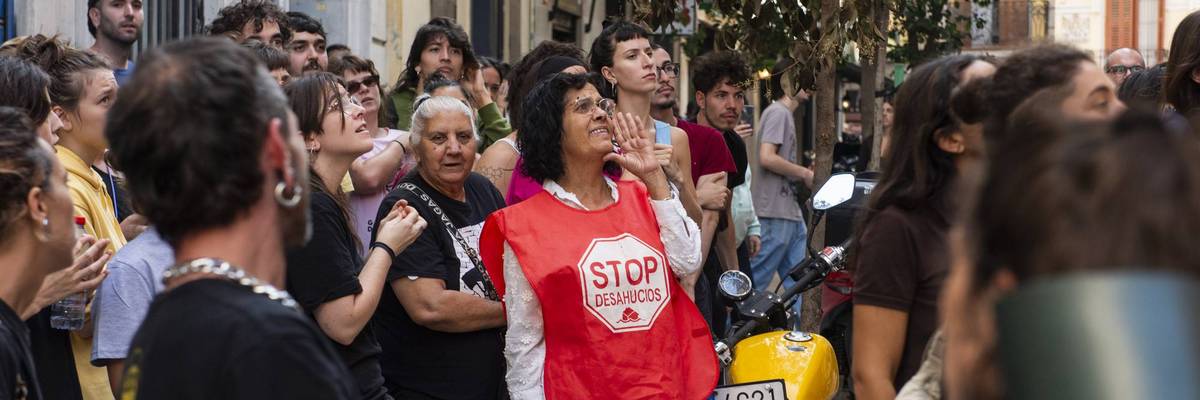
Hundreds of people halt an eviction on Calle Navas de Tolosa in Madrid, Spain on September 29, 2026.
(Photo By Victor Fernandez/Europa Press via Getty Images)


Brett Wilkins
Sep 29, 2026
COMMON DREAMS


Spain’s Cabinet on Tuesday agreed to take other measures meant to address a growing housing crisis amid nationwide protests triggered by an 87-year-old woman’s temporary eviction—but some leftists warned that splitting the proposed reforms into two parts was an intentional ruse designed for one key demand to be rejected by lawmakers.

María del Carmen Abascal Martín‘s eviction on September 23 sparked demonstrations in Madrid and cities across Spain, including Barcelona, Sevilla, Málaga, Santiago, Murcia, Palma, and Zamora. On Saturday, around 30,000 people marched in Madrid, while hundreds of tents subsequently sprang up in the Puerta del Sol, where protesters have been camping out for days, demanding major reforms to Spain’s housing system. On Tuesday, protesters in Madrid also successfully stopped a planned eviction on Calle Navas de Tolosa, with the expulsion postponed until October 14.


Prime Minister Pedro Sánchez’s Spanish Socialist Workers’ Party (PSOE)-led Cabinet announced two decrees on Tuesday, which must now be approved by lawmakers if they are to take effect. One of the measures would guarantee protections against evictions of economically or socially vulnerable tenants through 2030, extend certain existing rental contracts until the end of 2028, regulate short-term and room rentals, and bar so-called vulture funds from purchasing homes until 2028.

The second decree seeks automatic renewal of rental contracts—a key demand of tenant organizers—although that measure faces a more uncertain path to parliamentary passage.

Abascal’s eviction had quickly become a symbol of a housing crisis driven by rising costs and a supply shortage that has priced many people out of the market in Europe’s fourth-largest economy. The 87-year-old, who had lived in her Retiro apartment since 1956, was evicted after the property was acquired by the real estate firm Urbagestión, which reportedly jacked up her monthly rent from roughly €500 to €1,650.

Images of Abascal being removed from her home on a stretcher by police sparked global outrage and demands for Spain’s socialist-led government to halt her eviction and protect vulnerable tenants from forced displacement.

Under an agreement reached with Urbagestión, Abascal will return after leaving the hospital under an eight-year lease, paying no more than 30% of her income—approximately €500 a month. The agreement was reached after more than four hours of negotiations involving her family, lawyer, the Madrid municipal housing agency, and the Madrid Tenants Union.


Activists attributed both Abascal’s return home and the government’s concessions to the power of mass mobilized people.

“Seeing that this has an outcome gives us hope,” one protester, Laura, told Spanish public broadcaster RTVE. Another demonstrator, Gracia, declared, “Every night here is a victory.”

Simón, a protester who spent the night at the encampment, told EFE: “We’re not camping out just for the sake of camping. We’re making a demand. It’s great that Maricarmen is getting her apartment back, but more measures are needed.”

Fina Parra, a spokesperson for the Madrid Tenants Union, called Abascal’s eviction “the straw that broke the camel’s back because it touched all of our hearts.”

Parra stressed that the protesters’ objective is not “a half-measure law,” but legislation that “actually stops the bleeding of evictions.”

Sara Barros, a protester interviewed by Democracy Now!, said, “What we are demanding is that the rental market be regulated, because rents are unaffordable and people simply cannot afford them.”

Progressive politicians also welcomed the reversal of Abascal’s eviction—which Sánchez called a “social tragedy”—and looked forward to implementing reforms.

“The street got Maricarmen to stay,” said Gerardo Pisarello, the leftist first secretary of the Congress of Deputies, the lower chamber of Spain’s Parliament. “If we have already achieved one victory, we can achieve another.”

Some leftists are wary of the Sánchez government’s decision to split the housing package in a way that makes the most important tenant protection easier to defeat in Parliament.

Minister of Social Rights Ione Belarra of the Podemos party called the decision “a trap” whose “only objective” is to “whitewash the government and contain social mobilization.”

Belarra further contended that Sánchez’s strategy is “the opposite of what should be done when you really want to solve the housing problem.”
Ahead of High-Stakes Election, Analysis Details Economic Gains of Brazil Under Lula

“The past almost four years have seen Brazil accomplish a great deal in terms of bringing people out of poverty, creating jobs, curbing hunger, and raising standards of living.”


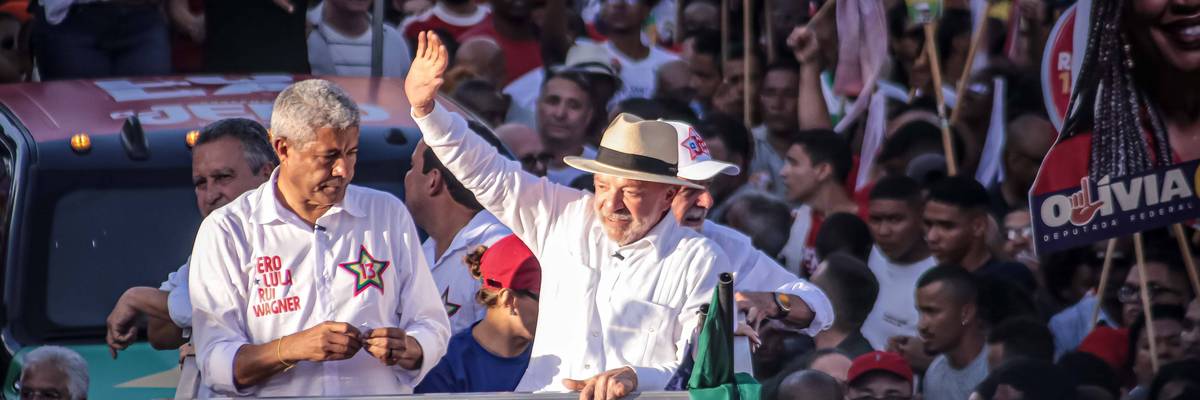
Brazilian President Luiz Inacio Lula da Silva, Bahia Gov. Jeronimo Rodrigues, Sen. Jaques Wagner, and Senate candidate Rui Costa attend a campaign event on August 28, 2026 in Salvador, Brazil.
(Photo by Joao Aurelio/NurPhoto via Getty Images)


Brad Reed
Sep 30, 2026
COMMON DREAMS

An analysis released Wednesday documents some of the major economic gains that Brazil has made over the past four years during the third term of President Luiz Inácio Lula da Silva, who is currently in a close battle for reelection against rival Flávio Bolsonaro.

The analysis, published by the US-based Center for Economic and Policy Research (CEPR), finds that, between 2022 and 2025, the Brazilian economy grew by a cumulative 8.9%, easily outpacing the average rate of growth in other South American countries.

This growth has been coupled with a drop in the unemployment rate, which has fallen from more than 9% in the second quarter of 2022 to just 5.4% in the second quarter of 2026.

Both poverty and food insecurity fell dramatically in the first two year’s of Lula’s term, the analysis finds, and in 2025, “Brazil was removed from the Food and Agriculture Organization’s Hunger Map after chronic undernourishment fell below 2.5%.”

CEPR’s report also gives credit to Lula’s policies for improved economic conditions, including a new minimum wage law, an expanded maternity leave program, and increased average payments to low-income families given through the Bolsa Família program.

The economy during Lula’s term is far from perfect, however, and the report flags high interest rates set by Brazil’s central bank as a key factor in raising consumers’ borrowing costs and increasing the rate of household delinquency.

CEPR also noted the negative impact of online betting apps, which Lula has pledged to ban starting next month, on Brazilian workers.

“Brazilian households lost an estimated R$62.5 billion (US$11.2 billion) to online betting in 2025,” the report says, “while some 802,000 Bolsa Família households spent more than 2% of their income on betting in January 2025.”

Jake Johnston, CEPR’s director of international research, said that “the past almost four years have seen Brazil accomplish a great deal in terms of bringing people out of poverty, creating jobs, curbing hunger, and raising standards of living.”

“This was done,” Johnston added, “despite the lingering impact of the Covid pandemic, external economic shocks that affected the global economy, and excessively high interest rates.”

The first round of Brazil’s presidential election is set to take place on Sunday, and recent polls show Lula with a narrow lead over Bolsonaro, son of former Brazilian President Jair Bolsonaro, who is still serving a criminal sentence for efforts to instigate a coup after his loss in the 2022 election.
Alarm Grows Over ‘Clearly Illegal’ Trump-Rubio Election Meddling in Brazil

“The Trump-Rubio interventions, with the collaboration of the Bolsonaro clan, have made the Flávio campaign into another US regime change operation. This should be defeated.”


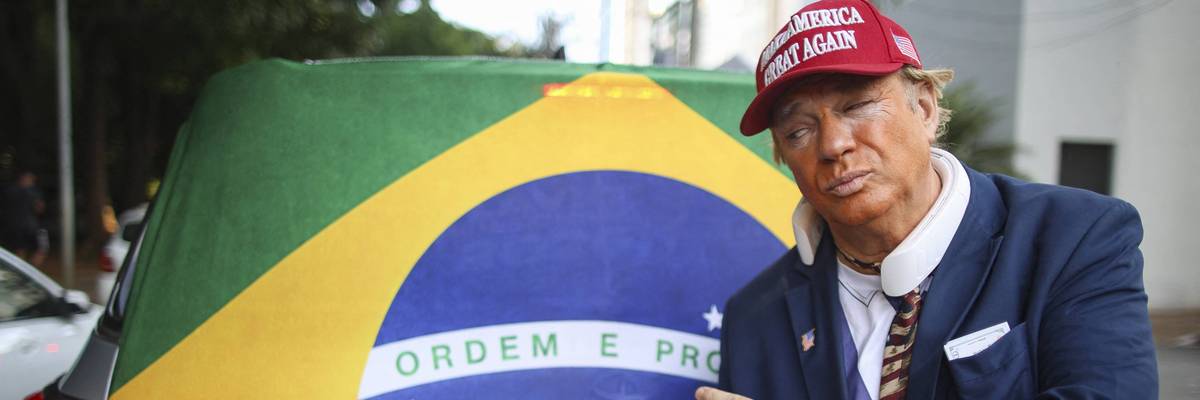
A man wearing a mask depicting US President Donald Trump attends a rally of Brazilian right-wing presidential candidate Flavio Bolsonaro in Goiania, Brazil, on September 27, 2026.
(Photo by Sergio Lima/AFP via Getty Images)

Jake Johnson
Sep 30, 2026
COMMON DREAMS

Brazilian officials, pro-democracy advocates, and US lawmakers are growing increasingly concerned about apparent efforts by President Donald Trump and Secretary of State Marco Rubio to interfere in the Latin American country’s upcoming election.

Reuters reported Wednesday that Brazil’s spy agency “confirmed the existence of interference from the United States as well as Russia” in the presidential election, the first round of which will take place on October 4. Brazilian President Luiz Inácio Lula da Silva is running for reelection against Sen. Flavio Bolsonaro, the son of former far-right President Jair Bolsonaro—who is currently serving a 27-year prison sentence under house arrest for orchestrating a coup attempt in 2022.

Democratic lawmakers in the US have raised alarm about the Trump administration’s election meddling in Brazil in recent days as the contest approaches. Earlier this week, Democratic Sens. Jeanne Shaheen (NH), Peter Welch (Vt.), and Tim Kaine (Va.) wrote in a letter to Rubio that “over the course of President Trump’s second term, we have seen US officials engage in a campaign of interference and destabilization in Brazil.”

“The administration’s most recent actions point toward an effort to interfere with, and potentially undermine, Brazil’s general election in October,” the lawmakers wrote. “Senator and presidential candidate Flávio Bolsonaro’s recent Oval Office meeting with President Trump, undertaken while attempting to mitigate a domestic political scandal, underscores the administration’s willingness to insert itself in the election.”

The senators’ letter followed a separate demand by more than 30 Democrats in the US House that Rubio “confirm whether the administration will commit to respecting Brazil’s electoral process and to recognizing its certified outcome.” The House Democrats demanded a response from the Trump administration by October 1.

“Particularly given the tragic history of US involvement in the 1964 military coup against Brazil’s democratically elected government at the time, as well as subsequent US support for the resulting military dictatorship,” the lawmakers wrote, “the United States has a responsibility to support the democratic institutions that so many Brazilians, across generations, struggled to build.”

Trump has been a vocal defender of Flávio Bolsonaro’s father, saying he is “not guilty of anything” and describing his prosecution as a “witch hunt”—echoing Trump’s attack on investigations into his own effort to subvert the 2020 election in the US. Last year, Trump hit Brazil with a 40% tariff, accusing the country’s leaders of “persecuting former President of Brazil Jair Bolsonaro.”

“It was not just a trade maneuver,” political scientist Octavio Amorim Neto said of the tariff in an interview published Thursday, noting that “Bolsonarism explicitly applauded [Trump’s economic attack], while Brazil’s traditional right did not vigorously defend national sovereignty, saying that everything was Lula’s fault.”

Over the summer, Brazil denied visas to two top US State Department officials “whom the Trump administration planned to dispatch on a mission to cast doubt on the fairness and integrity of the country’s electoral system,” The Washington Post reported in July.

Mark Weisbrot, co-director of the Center for Economic and Policy Research, wrote in an op-ed for The Los Angeles Times earlier this week that Trump’s intervention in Brazil’s electoral process “undermines a basic and generally cherished right to self-determination, as well as the right to democracy itself.”

“It is even clearly illegal under the Charter of the Organization of American States, to which the United States is a signatory,” wrote Weisbrot. “The Trump-Rubio interventions, with the collaboration of the Bolsonaro clan, have made the Flávio campaign into another US regime change operation. This should be defeated, for the sake of Brazil and the whole hemisphere.”

US grant targeting Brazil's top court fuels meddling fears before vote

US grant targeting Brazil's top court fuels meddling fears before vote
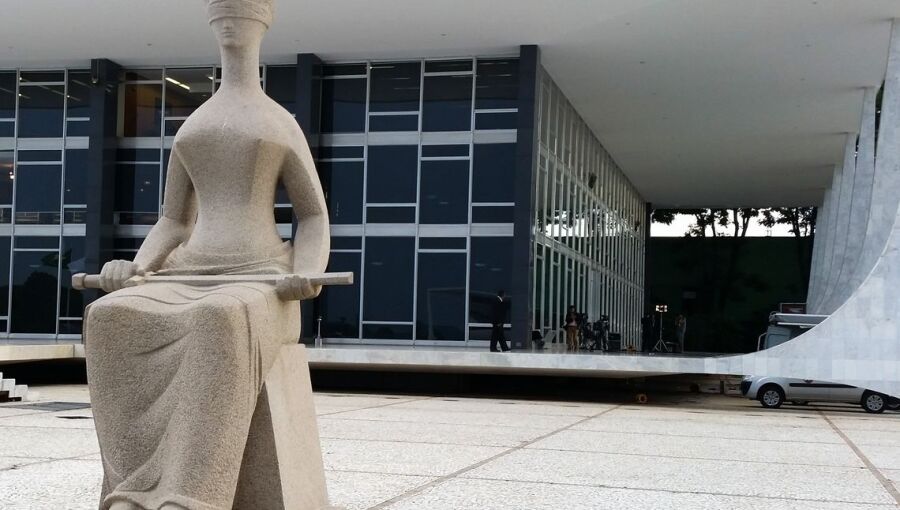
The move followed a report by The Guardian that the US government had earmarked $1mn for a project called "Countering Lawfare and Censorship in Brazil," which targets the Supreme Court. / agencia brasilFacebook
By IntelliNews Latin America October 2, 2026

Brazil has asked federal police to investigate a $1mn US State Department grant aimed at its Supreme Court, just days before a presidential election in which President Luiz Inácio Lula da Silva faces right-wing senator Flávio Bolsonaro in a tight race.

Attorney General Jorge Messias filed the request with the Federal Police and Prosecutor General Paulo Gonet on October 1, a day after The Guardian reported that the Trump administration had steered money from the department's Human Rights and Democracy Fund (HRDF) into a programme titled "Countering Lawfare and Censorship in Brazil". It would fund civil-society groups opposing what the programme calls judicial overreach and censorship by the court.

Foreign meddling "cannot be tolerated", Messias said, calling the revelation "an important alert for Brazilian sovereignty".

"The information is especially serious in light of Brazil's electoral process and the recent episodes of external pressure on our institutions," he said.

The complaint, signed by Messias and three other officials of the Attorney General's Office (AGU), argues that the money was explicitly intended to finance groups working to destabilise and undermine Brazil's judiciary. It asks investigators to identify those responsible and whoever received the funds inside the country.

The grant lands in the final days of a campaign already dominated by claims of US interference. The row dates back to July 2025, when Donald Trump slapped 50% tariffs on Brazilian goods over what he called a "witch hunt" against Flavio's father, former president Jair Bolsonaro, who was later sentenced by the Supreme Court to 27 years in prison for plotting a coup following his 2022 election defeat. Washington also sanctioned Supreme Court Justice Alexandre de Moraes, who oversaw the case, after lobbying by Jair Bolsonaro's younger son Eduardo, before dropping Moraes from the sanctions list in December.

The Brazil award is one of 43 controversial grants worth a combined $176.9mn, which the State Department obligated on September 30, hours before the money was due to lapse at the end of the US fiscal year, according to a source cited by The Guardian. Together they take up most of the $205mn Congress appropriated for the whole fund. The largest, $40mn, goes to a consortium led by the anti-communist Victims of Communism Memorial Foundation. Other awards support a group promoting white Afrikaner rights in South Africa and early-warning networks for Christians in Nigeria, while a $2mn programme titled "Promoting Western Civilization Allies" aims to boost far-right groups in Central Europe and the Balkans.

Senator Jeanne Shaheen, the top Democrat on the Senate Foreign Relations Committee, had held up $22mn of the awards, including those focused on Brazil, South Africa and Nigeria. Secretary of State Marco Rubio personally signed a memo to disregard her holds, a Democratic congressional aide told the paper. Sources said senior administration figures had lobbied for the awards personally.

The new grants are overseen by Samuel Samson, a deputy assistant secretary of state. In July, Brazil refused visas to Samson and Assistant Secretary Riley Barnes ahead of a planned trip to Brasilia that Washington said would cover "election integrity" and freedom of expression.

Brasilia has spent the campaign building defences against outside pressure. Its intelligence agency ABIN raised its assessment of the risk of US interference to a "critical level" in a confidential report in late August, and in September briefed French and German counterparts on alleged US and Russian meddling. President Lula da Silva used his UN General Assembly speech on September 22 to warn world leaders against foreign interference in the vote.

The government is also holding informal talks with diplomatic missions from Canada, Japan, Australia and EU countries on a joint response once results are announced, The New York Times reported on September 28, citing three senior foreign diplomats. Brazilian officials told the paper that any US help for Flavio Bolsonaro, who met Trump at the White House in May, could include new measures designed to damage Lula's image. The Trump administration denies trying to interfere.

In line with the Trump administration's renewed focus on the Western Hemisphere, which has helped elect right-wing leaders across most Latin American nations in recent years, Rubio has underscored the stakes of the vote by stating that Brazil "is our next challenge." Brazil and Mexico are the only two major countries in the region still led by leftist leaders.

Meanwhile in Washington, three Democratic senators including Shaheen have urged Rubio to commit to recognising whoever wins.

Lula goes into the October 4 vote with a narrow lead. A Datafolha poll for Folha de S.Paulo and TV Globo, carried out from September 29 to October 1, gives the 80-year-old leftist incumbent 45% of valid votes against 40% for Flavio Bolsonaro, up from 43% and 39% a week earlier. That leaves both short of the 50% plus one needed to win outright.

In a simulated runoff, Lula has 48% to Flavio Bolsonaro's 45%, a technical tie given the poll's two-point margin of error. Both candidates are rejected by 45% of voters, and 17% say they could still change their minds. The second round would be held on October 25.

As part of a string of last-minute pre-election moves, Lula issued a provisional measure banning online betting on September 25, a week after a 15% increase in Bolsa Família welfare payments. His support among women, the main target of the betting ban according to the campaigns, rose from 42% to 45% of total votes in a week. A fake post claiming Flavio Bolsonaro would strip Our Lady of Aparecida of her title as Brazil's patron saint coincided with a rise in Lula's support among Catholic women from 45% to 50%, while the senator gained five points among evangelicals, where he now leads Lula 52% to 26%.

Both frontrunners pulled out of the campaign's final debate, set for October 1, which TV Globo then cancelled, citing "legal uncertainty" after rulings by the electoral court and the Supreme Court. Flavio Bolsonaro blamed "censorship imposed by the electoral court", which had barred the broadcaster from keeping an empty seat on stage for Lula, who appeared on a popular podcast instead.

The same day, police arrested a man who tried to climb the Supreme Court's fences and threw a backpack onto a bus stop, before ruling out a bomb threat. The court has spent the campaign under attack from the right over Bolsonaro's conviction, and is itself mired in the Banco Master scandal, which has pushed public distrust in it to a record high.


Days After Rubio Pulls Visa, Agents in Bolivia ‘Kidnap’ Attorney General Who Charged ‘MAGA’s Man in LatAm’

“We denounce before the entire Bolivian population this intervention that is being carried out illegally,” said an official from Attorney General Roger Mariaca’s office.


Bolivian Attorney General Roger Mariaca attends his swearing-in ceremony in La Paz, Bolivia on October 22, 2024.
(Photo by Aizar Raldes/AFP via Getty Images)

Julia Conley
Oct 01, 2026
COMMON DREAMS

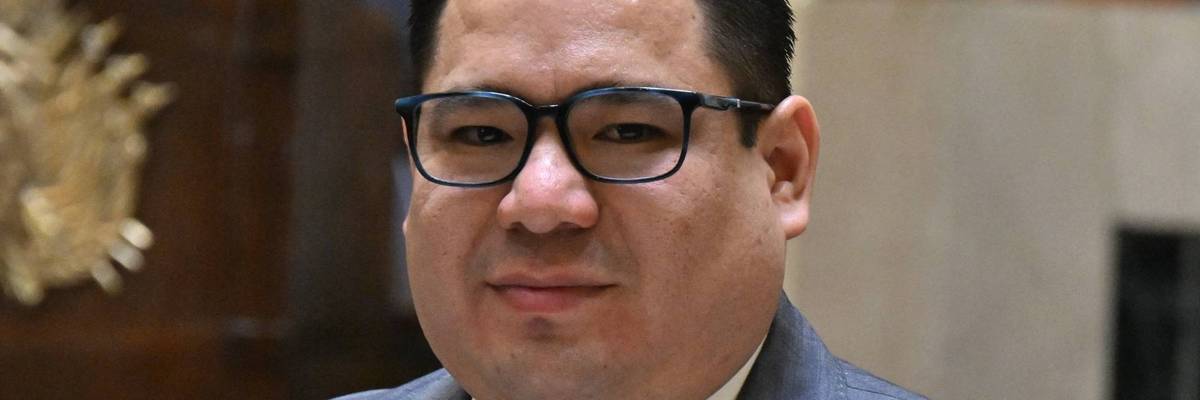
The Bolivia Public Prosecutor’s Office on Thursday denounced “the kidnapping of our attorney general” after the country’s top law enforcement official, Roger Mariaca, was intercepted and detained at Viru Viru International Airport in Santa Cruz, along with a prosecutor from the city.

Observers were quick to note that the arrests took place weeks after Mariaca’s office arrested Fernando Cerimedo, a political operative with ties to right-wing campaigns across Latin America.

Cerimedo also has a business partnership with President Donald Trump’s former campaign manager, Brad Parscale—a connection that helped earn Cerimedo the nickname “MAGA’s Man in LatAm.”


Marco Antonio Oviedo, Bolivia’s interior minister, said the two officials were arrested on suspicion of criminal organization, money laundering, and drug trafficking.

The arrests were carried out with the “cooperation of the US government” as part of the “fight against terrorism,” said Oviedo.

They were detained days after the Trump administration revoked their visas and those of more than a dozen other people from Bolivia, Colombia, and Ecuador.

The US State Department had accused them of corruption and having ties to drug trafficking, similar to allegations against Venezuelan President Nicolás Maduro, who was abducted by US military forces in January.

Trump, Secretary of State Marco Rubio, and other officials have taken numerous actions that they say are aimed at combating drug trafficking in Latin America, including bombing dozens of alleged drug boats, partnering with countries across the region on military operations, and creating the Shield of the Americas, an alliance with right-wing governments including that of Bolivian President Rodrigo Paz that is ostensibly aimed at defeating drug cartels and organized crime.

The Trump administration claimed Mariaca had taken “bribes to facilitate drug trafficking and help violent criminals evade justice.” Mariaca denied the accusations on Monday and said his visa had been revoked as part of an effort at “interference” and “political pressure” due to his investigation into Cerimedo.

Cerimedo’s arrest in August was in connection with the attempted murder of a lawyer and activist with whom he reportedly had a relationship.

“He’s also being investigated for collusion in drug trafficking and other activities during his time as a presidential adviser to Rodrigo Paz,” reported journalist Ollie Vargas.

On social media, Ryan Grim of Drop Site News called the detention of Mariaca “fallout from the arrest of Cerimedo,” while another observer replied, “That’s your Marco Rubio pulling the strings.”

After the arrests, a special police unit reportedly searched the Santa Cruz Departmental Prosecutor’s Office, Mariaca’s office, and the attorney general’s home.

“We denounce before the entire Bolivian population this intervention that is being carried out illegally,” Claudia Pardo, the head of communications at the Public Prosecutor’s Office, told the press.

Journalist Joseph Bouchard noted that while claiming to fight drug trafficking in Latin America, the Trump administration is “actively protecting allied drug traffickers and criminals,” such as former Honduran President Juan Orlando Hernández, who was convicted in 2024 of helping the Sinaloa Cartel import hundreds of tons of drugs into the US. Trump pardoned Hernández last November, weeks before his administration invaded Venezuela and abducted Maduro.

The administration “bankrolled Fernando Cerimedo, who is now jailed in Bolivia for ties to drug trafficking,” said Bouchard, “and the US forced Bolivia to jail his prosecutor.”
Federal Judge Rejects Trump’s Rationale for Hiding Memo on ‘Cold-Blooded Murder’ at Sea

“No president can arbitrarily assassinate people from the sky based on their sole say-so,” said one legal expert.


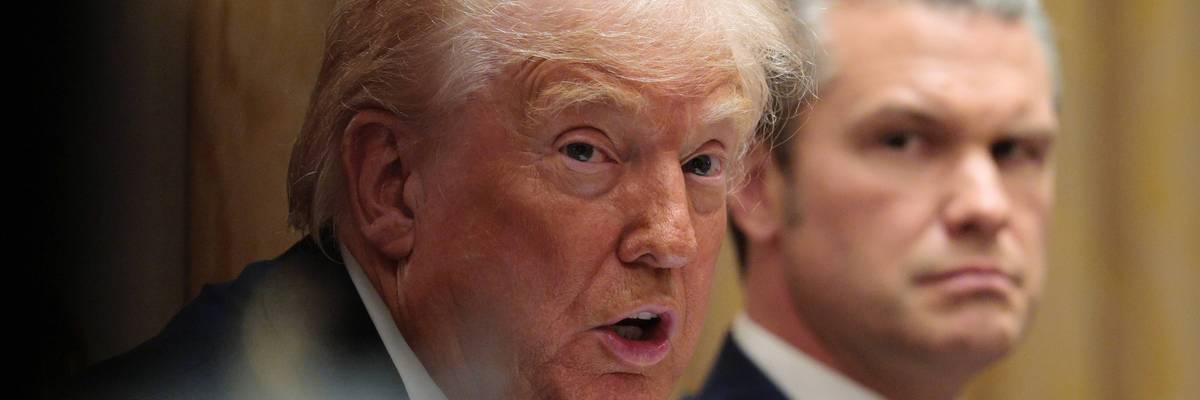
US Secretary of Defense Pete Hegseth (R) looks on as US President Donald Trump speaks during a meeting of his Cabinet in the Cabinet Room of the White House on December 2, 2025 in Washington, DC.
(Photo by Chip Somodevilla/Getty Images)

Julia Conley
Sep 30, 2026
COMMON DREAMS

A key memo from the Office of Legal Counsel at President Donald Trump’s Department of Justice has underpinned the administration’s yearlong campaign of bombing boats in the Caribbean Sea and eastern Pacific Ocean, and the White House has been adamant that the document should be kept secret.

But on Wednesday, Judge Paul Engelmayer in the US District Court for the Southern District of New York rejected the administration’s rationale for keeping the memo hidden, saying that the Department of Defense and US Southern Command have adopted its contents as its “working law” while conducting 70 strikes on boats and killing at least 234 people who officials claimed, without evidence, were “narco-terrorists.”

After the ACLU and the Center for Constitutional Rights (CCR) filed a Freedom of Information Act request calling for the release of the 40-page memo, the administration argued it needed to remain secret to protect confidential deliberations and attorney-client communications.

Engelmayer noted that administration officials have repeatedly cited the memo in public statements to explain why it was bombing dozens of boats that it claimed were operated by drug cartels—which experts and family members of some of the victims have called into question.

“The agency defendants cannot claim surprise from this consequence of the executive branch’s repeated public statements embracing the OLC memo—and it only—as setting out the legal parameters for the boat strikes,” Engelmayer wrote.

Jeffrey Stein, staff attorney with the ACLU’s National Security Project, called the order “a huge step in the right direction of ensuring that the government does not get to summarily execute people based on secret law.”

“The public deserves to know how our government is justifying the cold-blooded murder of hundreds of civilians,” said Stein.

The judge ordered the administration to turn the memo over to him so he can determine whether it should be released to the public. He also ordered officials to provide information about who has seen the memo and how they have used it, and called on the administration to provide details on whether the memo could be protected from public view as a “closely held presidential advice document.”


Engelmayer gave the administration until October 14 to comply with the order.

The boat strikes have been carried out as part of Trump’s stated push to defeat drug cartels in Latin America. Sen. Tim Kaine (D-Va.) has pointed out that there is little evidence the administration is ensuring it is targeting drug boats, as the presence of drugs on a boat has not been identified as “targeting criteria” for the operation in congressional briefings. Some victims have been identified as fishermen and other people who had little, if any, involvement with drug trafficking.

Beyond that, legal experts say that even if the 234 victims were drug traffickers, the boat bombings constitute extrajudicial killings and violations of international law—something Trump himself appeared to brag about last week when he said at the United Nations General Assembly that “we don’t waste our time” addressing alleged drug crimes in the court system.

“No president can arbitrarily assassinate people from the sky based on their sole say-so,” said Baher Azmy, legal director for CCR. “If the OLC opinion seeks to dress up the obvious illegality of these serial murders in legalese to provide Trump cover, the public needs to see that analysis and ultimately hold accountable all those who facilitate murder in the United States’ name.”


‘Dangerous for Democracy’: White House Airs More Pro-Trump Propaganda on Taxpayer Dime

“The president and his administration have gone from breaking the law to trampling it,” said a former White House special counsel.


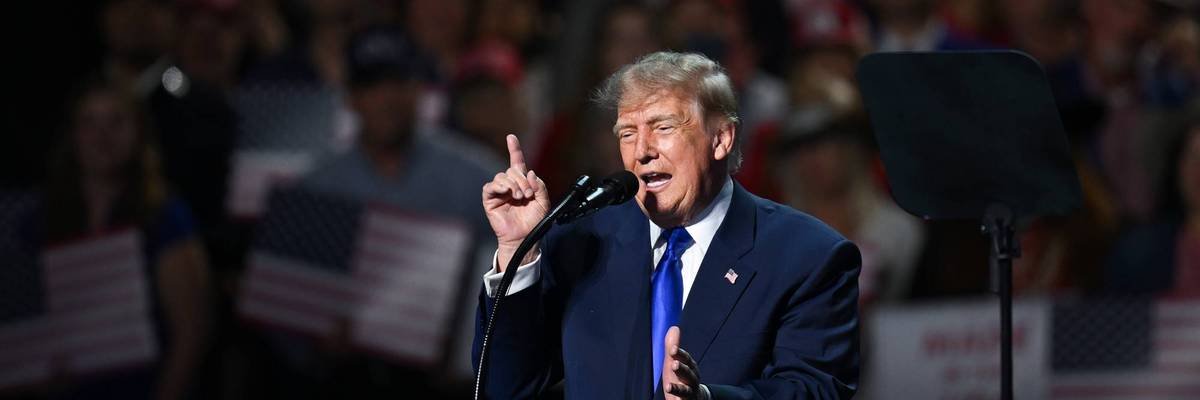
US President Donald Trump speaks on stage on the first day of the Republican midterm convention on September 9, 2026 in Dallas, Texas.
(Photo by Brandon Bell/Getty Images)

Jake Johnson
Sep 28, 2026
COMMON DREAMS


The White House recycled material from President Donald Trump’s 2024 campaign for a new taxpayer-funded ad that aired nationwide this past weekend, just weeks before the high-stakes November midterms.

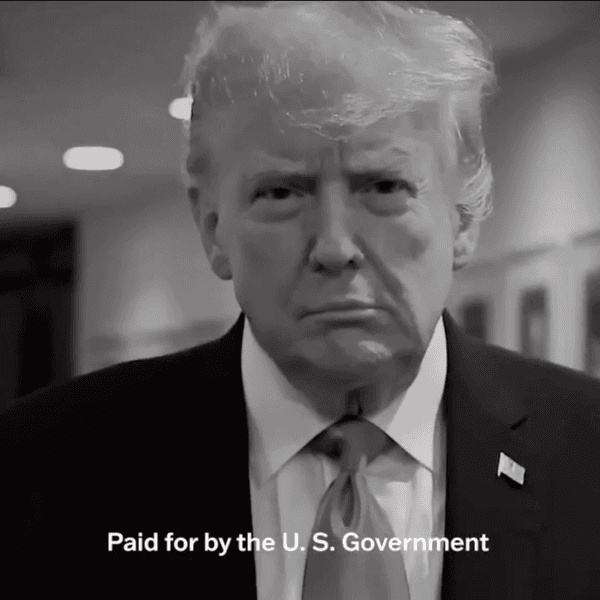
The 30-second black-and-white ad features Trump walking down a hallway to audio of him vowing to “demolish the deep state” and “expel the warmongers from our government,” even as the president wages an illegal and deeply unpopular war on Iran that has killed thousands and driven up prices at home and around the world. During the final 10 seconds of the ad, white text appears at the bottom of the screen stating, “Paid for by the US government.”

The ad is just the latest taxpayer-funded, explicitly pro-Trump spot that the White House has launched in recent days, prompting alarm from lawmakers and government watchdog organizations who say the administration is using public funds to flood airwaves with the president’s campaign ads shortly before an election.

Watch the newly aired ad:


Richard Painter, who served as the White House’s chief ethics lawyer in the George W. Bush administration, said the taxpayer-funded campaign ads “could be an impeachable offense,” noting that “Congress has expressly prohibited government-sponsored political propaganda, which is dangerous for democracy.”

The federal government appears to have spent more than $1 million on pro-Trump ads in recent days, The New York Times reported on Sunday, citing an estimate from AdImpact.

Last week, as Common Dreams reported, the White House launched a taxpayer-funded ad in which Trump declares that “America will never be a communist country” and promotes tax cuts he signed into law, delivering a massive windfall to the rich and large corporations.

Norm Eisen, former White House special counsel for ethics and government reform, told the Times on Sunday that “the president and his administration have gone from breaking the law to trampling it.”

“The prior ad was bad enough,” said Eisen, “but this one openly repurposes prior political conduct.”

US Sen. Chris Murphy (D-Conn.) wrote on social media that Republicans shouldn’t be taken seriously when they claim to care about “waste, fraud, and abuse” as the president and leader of their party runs campaign ads with taxpayer money.

“What a cult this party has become,” Murphy added.

Complaint Demands Broadcasters Stop Airing Trump’s Illegal Taxpayer-Funded Ads

“This administration’s repeated and flagrant violations of the law, including the Hatch Act, are an affront to taxpayers and our democracy.”


Public Citizen is urging regulators and broadcasters to pull President Donald Trump’s unlawful taxpayer-funded campaign advertisements off the air. The third one, declaring a “final battle,” resembles one of his 2024 campaign ads.
(Image: screen grab/US government via AdImact)

Jessica Corbett
Sep 29, 2026
COMMON DREAMS

The watchdog group Public Citizen this week filed a pair of complaints urging regulators and broadcasters to pull President Donald Trump’s unlawful taxpayer-funded campaign advertisements off the air and demanding a federal investigation into them.

In recent weeks, amid mounting speculation that Republicans could lose their congressional majorities in the November midterm election, television stations have aired short videos that the White House claims are “public service announcements” but which a range of critics contend are obvious campaign ads—and illegal, as they clearly state they are “paid for by the US government.”

Public Citizen’s Tuesday complaint to the Federal Communications Commission (FCC), the Federal Trade Commission (FTC), and broadcasters highlights that “at least three campaign ads, paid for by taxpayer dollars, appear to violate the federal law against using taxpayer funds to finance propaganda (5 USC §3107) and related provisions of the appropriations laws as well as the Hatch Act (5 USC §7324).”

While “broadcast stations are strictly prohibited from censoring or rejecting ads sponsored by legally qualified political candidates,” the complaint notes, they also “may be held liable for airing any advertisement that is in violation of federal law,” which “explicitly prohibits using appropriated public funds for government propaganda, self-aggrandizement, or partisan political advertising.”

The group urges the FCC and FTC “to direct broadcasters to stop broadcasting these apparently illegal campaign advertisements and call on individual broadcasters to cease airing the campaign advertisements,” emphasizing the responsibility of both agencies and broadcasters “to keep the airwaves fair and honest and operate in the ‘public interest, convenience, and necessity.’”

The first ad, initially posted to the White House YouTube account earlier this month, features Trump pledging to “defeat communism, socialism, and Marxism, in America,” and the song “Love Me” by JMSN, who did not sign off on its use. The second one aired Friday and includes clips from the president’s Fourth of July weekend speech at Mount Rushmore. A third, resembling one of Trump’s 2024 campaign ads, was played during “Saturday Night Live,” “Fox News Sunday,” and several football games.

The administration’s decision to reject widespread criticism and air yet another “piece of taxpayer-funded political propaganda during the mass-viewing moment of Sunday football is appalling and alarming,” declared Public Citizen co-president Lisa Gilbert. “These illegal ads should immediately be pulled from the air, and the White House’s many apparent violations of the law should be investigated.”

After the first ad, Public Citizen submitted a complaint to the US Office of Special Counsel (OSC) and the Government Accountability Office (GAO) Forensic Audits and Investigative Service. The group sent another on Monday, arguing that the new “Final Battle” ad is a “brazen” violation of federal law that “doesn’t even mention a pending government action. It simply tries to stir up hysteria among voters and depicts Trump as a great hero working to save the nation from grave threats.”

“Like the other previous two campaign advertisements Trump and the White House are billing to taxpayers, these ads are designed to boost the character of Donald Trump, generally void of any legitimate government purpose, target the voting public shortly before the 2026 midterm elections, and constitute violations of the law against using government resources for propaganda purposes and the Hatch Act,” the group continued.

“Public Citizen is once again writing your offices requesting an investigation into who produced these ads and at what cost to taxpayers, and to take appropriate remedial actions to enforce the federal law,” the organization added.

Leading Democrats in the US Senate and House of Representatives said Monday that the White House used funding allocated for US Customs and Border Protection to pay for the ads. Government ethics experts, lawmakers, and other critics have ripped the ads, with some even pointing to them as further evidence that Trump should be impeached a historic third time.

“This administration’s repeated and flagrant violations of the law, including the Hatch Act, are an affront to taxpayers and our democracy,” said Craig Holman, a government ethics expert with Public Citizen. “The FCC and other oversight agencies are charged with ensuring this type of abuse of taxpayer funds does not happen. But that system only works if they take action.”

‘Just Despicable’: MS NOW and CNN Air Trump’s Illegal Taxpayer-Funded Ads


“So your hosts are on air all day saying this is illegal while you are taking the money and running the ads? Just gross,” said one MS NOW critic.


President Donald Trump appears in a taxpayer-funded ad that has aired on major cable news networks..
(Image: screenshot by US government via AdImact)


Brad Reed
Oct 01, 2026
COMMON DREAMS

CNN and MS NOW are both airing taxpayer-funded ads that promote President Donald Trump, who last month tried to ban the cable news networks from White House grounds.

As The Washington Post reported on Wednesday, two pro-Trump ads have aired on MS NOW and CNN this week in select markets, even though legal experts and government watchdogs say the ads violate laws prohibiting taxpayer funds for political propaganda.

In a statement provided to the Post, MS NOW spokesperson Richard Hudock defended the decision to run the ads.

“We know the size, engagement, and influence of the MS NOW audience, and apparently the White House does, too,” said Hudock. “The decision to spend taxpayer dollars to reach our audience speaks for itself.”

The MS NOW spokesperson also emphasized that “accepting an advertisement is not an endorsement of its message, and purchasing airtime will never purchase favorable coverage.”

This justification drew an angry rebuke from Ron Filipkowski, editor-in-chief of MeidasTouch.

“This is just despicable by MS NOW, which has accepted stolen taxpayers dollars for 38 illegal ads,” Filipkowski wrote in a Thursday social media post. “Give me a break with this bullshit statement too. So your hosts are on air all day saying this is illegal while you are taking the money and running the ads? Just gross.”

According to a Wednesday report from Status, some MS NOW insiders are “pissed” about the decision to air the Trump ads, with some noting that the network’s viewers will “hate” seeing them.

Government watchdog Public Citizen on Tuesday filed complaints with the Federal Communications Commission (FCC) and the Federal Trade Commission (FTC) demanding that the government-funded Trump ads be taken off the air.

However, Trump-appointed Trump FCC Chairman Brendan Carr told reporters on Wednesday that he is not planning any investigation into the ads, which he described as “public service announcements” despite the fact that they feature audio of the president personally vowing to “defeat communism, socialism, and Marxism in America.”

“I don’t think there’s anything unique or different about it,” said Carr. “There’s nothing in there that strikes me that merit any sort of FCC review.”


Revealed: Officials didn't know Trump raided their budgets to fund his ads


(REUTERS)

October 01, 2026 
ALTERNET

President Donald Trump’s national ad buy featuring himself immediately drew critics over laws against using taxpayer money to fund political advertising. But government sources now tell NBC News that Trump did not even alert administrators that their budgets would be footing the bill.

“They didn’t sign off on it,” an official said of CBP leaders. “They were thinking, ‘There’s no way they’re going to try to take the funding from CBP for those ads.’”

“Senior leaders at Customs and Border Protection were cut out of the decision to use their agency’s funds for a national ad buy featuring … Trump and learned about it from a news report, according to a Department of Homeland Security official with direct knowledge of the decision-making process,” said NBC reporter Julia Ainsley.

CBP Commissioner Rodney Scott and his senior advisers “were not included in several meetings where the idea of spending the agency’s money on the ads was discussed,” the official said. And while CBP leaders were told that the White House was interested in using the agency’s funds for an ad campaign, the official said, they were not given the opportunity to weigh in. Nor were they told when the final decision had been made.

Instead, Scott and CBP leadership learned that agency funds had been blown for the ad campaign from a Wall Street Journal report earlier this week, the DHS official said.


Ainsley reports that CBP leaders’ being left in the dark over the decision “suggests new tensions between the agency and DHS and White House officials, which have ebbed and flowed since the start of Trump’s second term.”

The DHS official added that Scott and his top advisers often are only asked to weigh in on decisions about border operations, not broader policies or funding.

A White House official told NBC that the ad campaign was Trump’s idea, and also that Trump picks the ads himself.


“It’s reminding viewers that there has been a lot done during the first year and a half,” the official said, adding that the ads will run through Election Day. “Some of it is a feel-good Americana-type message. It runs the gamut of a lot of different messaging points. And it is messaging points that are our strongest points.”

Democratic appropriators bashed the CBP expenditures saying Trump ads were not the intent by Congress when it appropriated CCPB funds. Senate Majority Leader John Thune (R-S.D.) also criticized the White House this week for using public rather than private funds on the ads., saying “it shouldn’t be paid for with taxpayer dollars.”

Political ad-tracking firms estimates that the administration has spent more than $4 million so far on the ads, reports NBC. And a DHS spokesperson told NBC that “DHS follows all applicable rules for contracting decisions and keeps all decision makers informed. All contracting decisions are made in accordance with applicable law.”


But when asked by NBC if saying that decision-makers are kept “informed” meant that CBP leaders had a say in the ad funding decision, Ainsley said the DHS spokesperson did not respond.

The White House, when asked, threw the question into a loop by referring questions back to DHS, said NBC.