Friday, October 02, 2026

Afghanistan Reduced Opium Production: What Was The Impact On Drug Trafficking? – Analysis


Cultivating poppies in Afghanistan for opium. Photo Credit: Tasnim News Agency.


September 28, 2026

By Geopolitical Monitor
By Damián Jacubovich


Key Takeaways:

UNODC figures show Afghan opium poppy area falling from ~232,000 ha (2022) after the Taliban ban to 10,200 ha in 2025 (~296 tonnes potential output; Alcis/EUDA ~414 tonnes). Farm sales income is estimated at $134 million in 2025, down 48% from 2024; drought also played a role.

The author says that does not prove the world heroin market shrank: EUDA cites ~12,000 tonnes of estimated Afghan stocks, Myanmar area up 17% (output ~flat), and ~9,116 ha of poppy reported in Balochistan—hectares are not proven replacement tonnes.

Criminal profits cannot be read off farm losses: revenue, cost, and margins differ by stage; groups may tap stocks, new sources, or other drugs. Relocation is a hypothesis to test, not a finding.


Afghanistan reduced the area devoted to opium poppy cultivation from approximately 232,000 hectares in 2022 to 10,200 in 2025. The scale of this decline raises three related questions that require different answers.

First, can state intervention drastically reduce a major source of drug production? In Afghanistan, the answer is yes. Second, has that reduction produced an effective contraction in the international opium and heroin market? Large accumulated stockpiles and the possible emergence of alternative suppliers make the answer less certain. And third, what consequences has the ban had for criminal organizations’ revenues and profitability, and what can we infer about drug trafficking globally?

Did the ban reduce opium production in Afghanistan?

In April 2022, the Taliban authorities banned opium poppy cultivation. According to the United Nations Office on Drugs and Crime (UNODC), Afghanistan cultivated approximately 232,000 hectares in 2022 and produced an estimated 6,200 tonnes of opium. Cultivated area fell to 10,800 hectares in 2023, rose to 12,800 in 2024 and declined again to 10,200 in 2025. UNODC estimated potential production at 296 tonnes in 2025. Drought and crop failures also contributed to the latest decline, so not every change can be attributed exclusively to the ban.

The contraction is unmistakable, although estimates differ. The European Union Drugs Agency (EUDA) cites an Alcis estimate of 414 tonnes of Afghan opium production in 2025, compared with UNODC’s 296 tonnes. Comparisons over time should therefore use a consistent statistical series.

The economic consequences are also clear at farm level. UNODC estimates that farmers’ income from opium sales to traders fell from $260 million in 2024 to $134 million in 2025, a decline of 48 percent.


The answer to our first question is clear: following the ban, opium cultivation in Afghanistan fell dramatically. Afghan farmers also suffered a substantial loss of income. Yet their losses do not establish that international intermediaries and distributors experienced an equivalent decline. A smaller harvest does not necessarily mean that less opium is available on the market.
Did the fall in Afghan production contract the international opium and heroin market?

Cultivation is only the first link in a longer commercial chain involving traders, processors, transporters, intermediaries, and distributors. The market impact of lower harvests also depends on accumulated stocks, alternative suppliers, prices, and demand.

Stockpiles create a time lag between production and supply. The European Drug Report 2026 cites an Alcis estimate of approximately 12,000 tonnes of opium stored in Afghanistan in 2025. This is an estimate, not a physical inventory. EUDA reports that stockpiles, processing and adulteration practices, and supply management by trafficking networks have helped sustain heroin availability in Europe despite the decline in Afghan cultivation.

Stocks can sustain sales without equivalent new production, but they may eventually be depleted, become more expensive, or cease to be accessible to particular networks. The evolution of supply as these stocks diminish will be essential to evaluating the ban’s lasting market effects.

Alternative producers present a different question. UNODC reports that Myanmar’s cultivated area increased by 17 percent, from 45,200 hectares in 2024 to 53,100 in 2025. Its estimated opium output, however, rose by only 1 percent because yields fell. Internal conflict, displacement, and economic difficulties also affect cultivation there. These figures establish expansion in another country, not that the Afghan ban caused it or that Myanmar has replaced Afghan supply.


Pakistan offers a different kind of evidence. EUDA cites satellite analysis suggesting approximately 9,116 hectares of poppy cultivation in Balochistan in 2025, potentially rivaling Afghanistan’s 2025 output. This suggests a possible alternative source of supply, but hectares are not tonnes: neither the volume produced nor effective replacement of Afghan supply has been established.

We must distinguish three propositions: simultaneous expansion elsewhere, displacement causally linked to the Afghan ban, and actual replacement of supply. Each requires different evidence. The answer to the second question remains open: the production decline is established, but the extent and duration of its effects on the international opium and heroin market are not. Even if that market contracts, we still need to establish who bears the economic losses—and which activities, if any, take their place.
What happened to criminal organizations’ revenues and profitability—and what does this tell us about global drug trafficking?

This question brings me back to a hypothesis I began developing in 2014 while examining changes in Latin American drug trafficking and its expansion into Argentina. I borrowed a concept from the economics of globalization: relocation.

My hypothesis involved two mechanisms. State pressure—stronger controls, enforcement, and higher operating costs—could encourage certain activities to move to territories with lower risks. Expanding demand could also attract organizations, alter routes and draw previously peripheral territories into new consumer markets. Relocation could therefore reflect both a response to state intervention and the search for new commercial opportunities.

Afghanistan provides a case in which to investigate this hypothesis, but the available evidence does not yet confirm it. The central question is what happens to economic opportunities when a major source of production shrinks. Some may disappear permanently; others may be taken up by new suppliers, organizations, or activities. Relocation is one possible mechanism of that transformation, and its existence and scale must be demonstrated case by case.

Criminal organizations are not interchangeable with the markets in which they operate. An intervention may dismantle a network without eliminating consumer demand or the opportunities that attracted other actors. Some organizations may lose their business; others may draw on stockpiles, find suppliers, or diversify. There is no single global drug-trafficking organization making coordinated decisions.

The economic terms also matter. Revenue is the money received from sales; profit is what remains after costs; profitability relates profit to the resources required. Supply contraction can affect prices, costs, and margins differently at each stage. Prices and traded volumes may help estimate revenue, but profit also requires information on costs, and profitability requires relating profit to the resources employed. Higher heroin prices could increase an intermediary’s revenue without raising profit if procurement and operating costs also rise.

The documented fall in Afghan farmers’ income cannot simply be transferred to international traffickers’ accounts. Nor would a contraction in the heroin market and falling profits among organizations involved in it establish an equivalent decline in global drug-trafficking profits. Different organizations, substances, and markets may experience opposite outcomes; there is no single profitability figure for the entire illicit drug economy.


Testing the broader impact would require establishing which organizations lost income and profit, whether those losses persisted, whether other actors took their place, and whether activities shifted to other markets. Illicit markets do not provide conventional financial statements, but wholesale and retail prices, traded volumes, seizures interpreted alongside other indicators, estimated margins, financial flows, and changes in distribution may offer partial evidence.

Consumer behavior matters too. Reduced heroin availability could lead some people to consume less and others to turn to different substances. EUDA warns that synthetic opioids and stimulants warrant monitoring as possible market shifts; it does not establish that widespread substitution has already occurred because of the Afghan ban. A smaller heroin market could coexist with growth elsewhere, but that possibility remains to be tested.

The ban’s impact on the revenues and profitability of organizations involved in opium and heroin remains uncertain. Establishing its consequences for drug trafficking globally requires an even broader investigation.
Three Questions, Three Different Answers

The first question has a clear answer: state intervention can drastically reduce a major source of drug production. Afghanistan’s cultivation figures demonstrate this.

The second remains open. Stockpiles have cushioned the impact of smaller harvests, while alternative suppliers, prices, and consumption will help determine whether the international opium and heroin market undergoes a lasting contraction.

The third demands a wider inquiry. Even if that market contracts, we must establish which organizations lose revenue and profit, which adapt and whether those losses translate into a reduction in the illicit drug economy as a whole. The outcome could be lasting contraction, partial adaptation, or a transformation of criminal activities. Relocation is one mechanism to investigate, not a conclusion to assume.

Afghanistan has demonstrated that opium production can be drastically reduced. What remains to be demonstrated is whether that reduction also shrinks the market and, beyond it, the economic opportunities and profits of criminal organizations.


This article was published by Geopolitical Monitor.com


About Geopolitical Monitor
Geopoliticalmonitor.com is an open-source intelligence collection and forecasting service, providing research, analysis and up to date coverage on situations and events that have a substantive impact on political, military and economic affairs.
View all posts by Geopolitical Monitor →
The Iran Crisis Runs Through Banks As Much As Oil Routes – Analysis


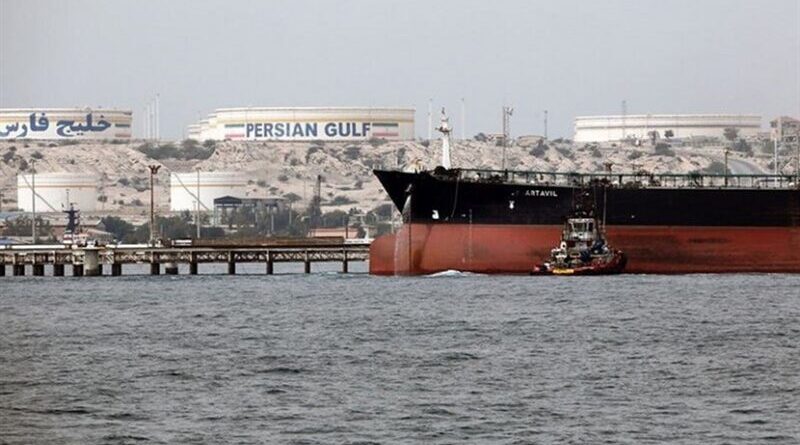
File photo of an oil tanker in Iran


Key Takeaways:

After a Sept. 14 Gulf–Iran meeting slipped, the author links Houthi hits that shut Saudi’s 1,200-km east–west pipeline, a UKMTO-reported projectile strike in Hormuz, and August U.S. Treasury moves (Dubai/Asia designations; “Operation Economic Outcast”) as twin pressure on oil routes and Iran’s money channels.

Drawing on Farrell and Newman, the piece treats SWIFT-era surveillance and cutoff—not the strait itself—as true “weaponised interdependence”: geography vs. scale-built payment nodes; Carter’s 1979 freeze through 2012/2018 SWIFT exclusions and failed INSTEX are the lineage.

Iran’s Aug. 8 Hormuz terms include sanctions relief and unfrozen assets; the author argues the less-visible financial choke, not PGSA-style transit rents, will set the price of reopening—and that overusing it could nudge limited alternative circuits.


Middle East diplomacy appeared to falter on Monday, September 14, after a planned meeting between Iran and other Gulf states was postponed, while attacks around two of the region’s most important oil transit routes deepened concern about global energy supplies.The escalation had built over the weekend. Houthi strikes on Saudi Arabia, the world’s biggest oil exporter, forced the closure of its 1,200-km east-west pipeline, a key route used to move crude across the kingdom while bypassing the Strait of Hormuz. The shutdown helped push oil prices more than 3 percent higher.

At the same time, Hormuz itself remained exposed. The British maritime security agency UKMTO said on Sunday, September 13, that a vessel had been struck by a projectile while moving through the strait, causing a fire and forcing the crew to evacuate. Together, the pipeline closure and the incident in Hormuz highlighted the vulnerability of both the main waterway and the alternative route around it.


The security escalation coincided with renewed economic pressure from Washington. On August 7, the US Treasury’s Office of Foreign Assets Control sanctioned a network operating between the Gulf and Asia, accusing it of helping Iran’s shadow banking system move hundreds of millions of dollars illicitly. The designations targeted two Dubai exchange houses, financial intermediaries, front companies linked to an Iranian bank and shell companies based in Hong Kong and Singapore.

Just over two weeks later, on August 24, the Treasury secretary announced “Operation Economic Outcast”, marking a return to financial pressure after months dominated by military escalation. Unlike the broad sanctions imposed after the US withdrawal from the nuclear deal in 2018, the new campaign targets entities accused of helping Iran exploit loopholes and keep parts of its economy functioning despite restrictions. Seen together, the August 7 designations and the August 24 campaign point to a shift from broad punitive measures to tighter control of the financial channels that allow sanctioned trade to continue. The campaign is therefore less a conventional escalation than an attempt to close the gaps in the sanctions architecture.


While public attention has focused on Hormuz as the obvious chokepoint, financial sanctions have remained at the margins of the debate. Yet the financial network may be the more decisive pressure point. Hormuz has become the symbol of weaponised interdependence, but the less visible chokepoint – the system that allows Iran to move money and sustain trade – may be the one that matters most.
From frozen assets to network control: a story spanning almost 50 years

The history of financial sanctions against Iran began on November 14, 1979, ten days after the seizure of the US embassy in Tehran and on the same day the Iranian government announced its intention to withdraw its holdings from American institutions. Under Executive Order 12170, President Jimmy Carter ordered the freezing of Iranian government and central bank property subject to US jurisdiction, extending the measure to balances held at all foreign branches and subsidiaries of American banks, including those in Europe. The crisis ended almost a year and a half later, on January 20, 1981, with the Algiers Accords, whose negotiation also covered the fate of the frozen Iranian funds.

The 1979 measure, though a relatively conventional form of sanction based on controlling assets subject to US jurisdiction, made clear the potential scope of financial-network leverage. Inevitably, within a few decades, the target shifted from dollar flows to the channels through which they are transferred. At the centre of this shift was SWIFT, the cooperative established in Belgium in 1973 by 239 banks from fifteen countries to standardise international interbank messaging. SWIFT is not a bank and does not execute payments, but transmits the instructions through which intermediaries carry them out. Its growing centrality has turned it into an essential piece of international payments infrastructure, from which excluding users can create significant leverage.


The concept of weaponised interdependence, developed by Henry Farrell and Abraham Newman in 2019, helps explain this mechanism, showing how global economic networks tend to concentrate around a small number of nodes and how states with effective jurisdictional control over such nodes can convert that centrality into two distinct capabilities: observing the flows that pass through them, known as the panopticon effect, and selectively cutting them off, known as the chokepoint effect.

In SWIFT’s case, these capabilities developed through different channels. The cooperative is subject to Belgian law and the supervision of the National Bank of Belgium. However, one of its operating centres is located in the United States.

After September 11, 2001, the Treasury, through the Terrorist Finance Tracking Program, gained access to messages stored at SWIFT’s American site, reflecting the panopticon effect. After the programme became public in 2006, European objections over data protection led to it being brought within a negotiated framework. Since 2010, the transfer of financial messaging data from the European Union to the United States has been governed by an agreement that limits US requests.

The capacity for exclusion, the chokepoint effect, by contrast, emerged in 2012, when a decision of the Council of the European Union banned providers of specialised financial messaging services from operating on behalf of Iranian institutions subject to asset freezes, including SWIFT. That same day, SWIFT announced it had been instructed to suspend services, which were cut off on March 17 that year. The measure was thus formally European but adopted under strong American pressure. In practice, without directly imposing the disconnection, Washington used its position within the network to steer the action of another jurisdiction.

The most significant case, however, came after the US withdrawal from the JCPOA, the Joint Comprehensive Plan of Action, in May 2018, when European and American policy diverged openly. In August, the updated Blocking Regulation entered into force, under which the European Union barred its own operators from complying with extraterritorial US sanctions, while then Treasury Secretary Steven Mnuchin publicly warned that SWIFT itself could be sanctioned should it continue serving designated institutions.

On November 5, the day the second tranche of US sanctions was reactivated, SWIFT nonetheless suspended access for some Iranian banks, citing the stability of the global financial system and making no mention of the US sanctions, a decision the European Commission called regrettable. The exclusion was thus no longer aligned with the European position, as it had been in 2012, but ran against it. Europe’s attempt to build an independent channel with INSTEX, established in 2019 and wound up in 2023 after a single transaction, only exposed the gap between intention and the capacity to create a workable alternative to SWIFT.

That the panopticon and chokepoint effects remain active today is shown by the designations of August 7, 2026. To reconstruct the network described at the outset, the Treasury identified not only the companies involved but also the individuals running their operations, a sign of sustained intelligence-gathering over time. On this basis, it then warned that foreign financial institutions risk losing access to US correspondent accounts, indirectly fuelling the phenomenon of overcompliance as well.

Is Hormuz a chokepoint?

In recent months, there has been a proliferation of articles describing Hormuz as a chokepoint to which, by transitive property, the theory of weaponised interdependence could be applied — a reading that, besides being imprecise, risks diluting the theory’s proper meaning. There is no doubt that the Strait is one of the most important geoeconomic chokepoints globally, but it belongs to a different category from the one through which weaponised interdependence manifests itself.

The nodes in the networks described by Farrell and Newman are the result of concentration produced by economies of scale — that is, successive economic choices that have made alternatives costly — whereas Iranian control over the Strait derives from geography and from the military capacity to interdict passage through it.

What the two positions yield to those who hold them is also quite different. Control of the Strait produces above all a transit rent, which Tehran has sought to institutionalise through the Persian Gulf Strait Authority (PGSA), while centrality in a payments network yields knowledge of the flows passing through it and the ability to condition the intermediaries taking part in it. This also explains how the former position can be neutralised by the latter, as happened when the US declared transit tolls unauthorised and sanctioned the PGSA.

Forty-seven years of exclusion have not produced an Iranian response capable of substituting for the main international payments infrastructure. Channels developed with Russia remain marginal, while oil exports pass largely through opaque circuits, some of which were hit precisely by the designations of August 7, 2026.
The price of reopening Hormuz

On August 8, Iran set out six conditions for reopening the Strait, three of which concern the financial dimension: compensation for war damage, the lifting of sanctions and the release of frozen assets. As of today, the June 17 memorandum has expired and the negotiation remains stalled on everything relating to the economic and military conditions attached to any future reopening.

The direction of American pressure seems set to continue. On August 13, the Treasury secretary signalled new economic measures of unprecedented scope, increasing the risk that prolonged use of this tool could push affected actors to seek alternatives, as shown by the growth, albeit still very limited, of alternative financial circuits.

The point, then, was never only about control of Hormuz. Recent months have made clearer than ever that the financial network through which Iran conducts its trade is the chokepoint best suited to serving as a coercive lever. It is this network, less visible and less covered by the media, that forms an essential part of Washington’s strategy against Iran and that will decisively determine the price of reopening Hormuz.


About the author and editor:

Giulia Olini is PhD Candidate in Institutions & Politics (International Relations concentration) at Università Cattolica del Sacro Cuore, Milan. Her PhD project asks whether the logic of weaponized interdependence operates within the transatlantic alliance itself, tracing how dollar-based financial infrastructures have been mobilised since 2001.

Giuseppe Francaviglia, Commissioning Editor, 360info

Source: This article was published by 360info


About 360info
360info provides an independent public information service that helps better explain the world, its challenges, and suggests practical solutions. Their content is sourced entirely from the international university and research community and then edited and curated by professional editors to ensure maximum readability. Editors are responsible for ensuring authors have a current affiliation with a university and are writing in their area of expertise.
View all posts by 360info →


Beijing's Trojan runway hands China its first full-blown military base in Southeast Asia

Beijing's Trojan runway hands China its first full-blown military base in Southeast Asia
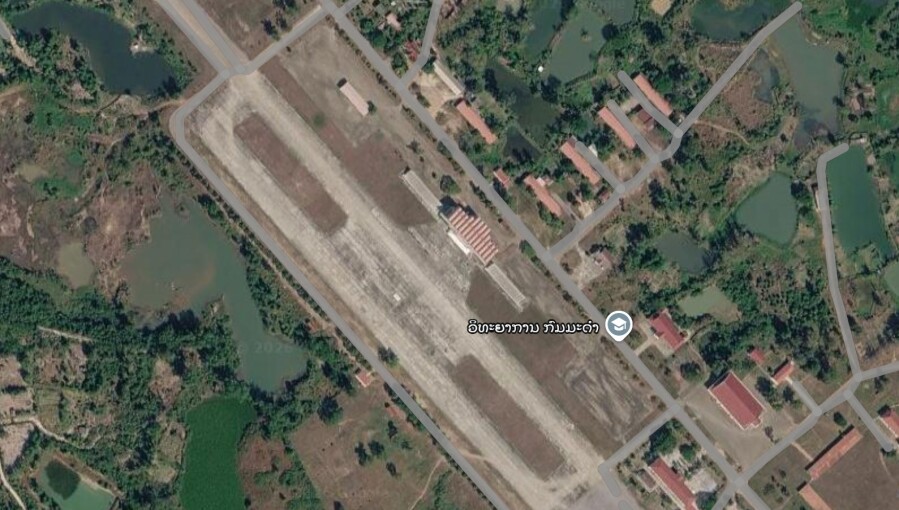
Analysts say the facility north of Vientiane could be the People's Liberation Army's first full-fledged base in Southeast Asia. / Google MapsFacebook
By Mark Buckton in New Taipei October 2, 2026

China has opened a military training centre at a newly built airfield in Laos, giving the People's Liberation Army (PLA) a foothold that one regional analyst called its first full-fledged base in Southeast Asia.

Sources indicate that China's Ministry of National Defence has claimed the China-Laos Joint Support and Training Centre and the China-Laos Friendship Aviation Academy have now begun operating at Ban Keun airport in an area about 50 km north of the Lao capital Vientiane.

The same sources suggest the two institutions are currently run jointly by both sides and are meant to help Laos strengthen the training of its air force pilots, according to the ministry. It was also added that they were "not directed against any third party" although Taiwanese authorities as well as Japanese and a number of other Southeast Asian governments will be watching developments carefully. 

The statement did not say what personnel, equipment or aircraft would be based at the site but commercial satellite imagery (see above) shows the site was cut out of farmland over the past year, with work starting in late 2025 and still going on in early September. A paved runway, a taxiway and new buildings now stand where only a rough dirt strip was visible until last year, Reuters reported on September 30. It is believed US forces used the same area during Washington's war in Laos in the 1960s and 1970s.

The opening makes Laos the third country to host a PLA outpost abroad. China has run a logistics base in Djibouti in Northeast Africa since 2017, for years its only foreign military base, and it operates a joint training and support centre at Cambodia's Ream naval base on the Gulf of Thailand. Unlike Ream, Ban Keun sits inland, in a one-party state that borders China, Vietnam, Thailand, Cambodia and Myanmar, and as such hands the PLA a runway in the middle of mainland Southeast Asia.

Rachel Vandenbrink of the Australian Strategic Policy Institute said the "joint support and training centre" label suggested the PLA could be seeking "persistent access to a logistics hub that can support forces rotating through Laos", perhaps with a small forward support element.

"Unlike Ream Naval Base, this military logistics base in Laos is more ostensibly similar to the one in Djibouti," Collin Koh of Singapore's S Rajaratnam School of International Studies wrote on X. "It may not be wrong to conclude this is the first full-fledged PLA overseas base in Southeast Asia."

Phnom Penh has repeatedly denied any permanent Chinese military presence at Ream, and in January the USS Cincinnati became the first US warship to call at the base since its China-funded renovation. China also holds three island bases in the much disputed South China Sea, on Fiery Cross, Mischief and Subi reefs in the Spratlys, each with a 3 km military-grade runway.

Washington, which runs a large network of its own overseas bases of its own, has tracked Beijing's moves with suspicion. A Pentagon report had listed 22 countries where China may have plans for military facilities, and Laos was not among them, according to Reuters.

Thailand, which faces Vientiane across the Mekong River, said through its defence ministry's Rear Admiral Surasant Kongsiri that it respected Laos' sovereign right to make its own decisions but would "closely monitor developments". 

Laos has a small air force that flies a handful of dated Chinese- and Russian-designed aircraft, and Lao troops have usually needed to visit Vietnam, Russia or China for advanced training.

The airfield now adds a military layer to ties with Beijing that are already heavily economic. The 1,035 km China-Laos Railway has linked Kunming and Vientiane since December 2021, and on September 18 the two countries launched a digital yuan payment link that lets Chinese visitors pay Lao merchants from their e-CNY wallets. Beijing has also been folding security co-operation into its diplomacy across the region, from policing to defence talks with Vietnam.


Tokyo sets record with 34 straight days of rain

Tokyo sets record with 34 straight days of rain
/ Alex Knight - UnsplashFacebook
By IntelliNews - Tokyo Bureau September 29, 2026

Rain fell in central Tokyo for a 34th consecutive day on September 29, the longest such streak since records began in 1886, The Yomiuri Shimbun reported on September 29.

The unbroken run of wet weather in the Japanese capital, which began on August 27, has been driven by an autumn rain front that has stalled along the southern coast of Honshu, the country's main island. Japan's late-summer and early-autumn rainy spells are a regular feature of the climate, but a stationary front of this duration over a major metropolitan area is rare.

The previous record was 33 days, set in 2019 between June 27 and July 29, according to the Japan Meteorological Agency.

More rain is forecast for central Tokyo from September 30 onwards, meaning the record could be extended further.

At JR Tokyo Station on the morning of September 29, commuters and travellers hurried away from the platforms under umbrellas.

A 76-year-old company employee from Yokohama, waiting for a bus on the way to work, said the daily humidity was oppressive and left him feeling low, and that he hoped for dry, clear autumn skies soon.

Moldova faces severe water shortage as Dniester flow falls to 15% of average

Moldova faces severe water shortage as Dniester flow falls to 15% of average
This year's drought has caused dramatic declines in water levels in both the Dniester and the Prut. / Moldova environment ministryFacebook
By Iulian Ernst in Bucharest September 30, 2026

Moldova is facing a severe water shortage after flows in the Dniester and Prut rivers fell sharply, prompting the government to declare a 60-day state of emergency in the hydrological sector from September 26.

The Environment Ministry said the Dniester, the main source of water for public networks in several Moldovan cities, including Chisinau, was experiencing an unprecedented decline in water levels. Ukraine, which operates the Novodnestrovsk Reservoir upstream of Moldova, has told Moldovan authorities it cannot release more water than is flowing into the reservoir without risking depletion of its reserves.

Natural inflows into the reservoir, and consequently the outflows, have averaged about 27 cubic metres per second over the past two weeks, according to the Environment Ministry. Ukraine has said that releasing more water would risk exhausting reserves needed to supply communities already affected by the shortage.

Moldova and Ukraine failed to reach an agreement at an extraordinary meeting of the Dniester Commission on September 29, NewsMaker reported. The meeting was convened after Ukraine reduced releases from the reservoir on September 25, a move Moldovan commission member Ilya Trombitsky said had not been properly coordinated with Moldova.

“The commission decided nothing today. They left in a huff,” Trombitsky, executive director of the Dniester River Guardians Association Eco-TIRAS, told NewsMaker.

President Maia Sandu has warned that the drought has caused dramatic declines in water levels in both the Dniester and Prut. Authorities are monitoring water intakes and preparing measures to address further deterioration.

Prime Minister Vasile Tofan held a meeting on September 29 with representatives of the Environment Ministry, Apele Moldovei, Chisinau City Hall and Apă-Canal Chișinău to discuss potential scenarios and measures should Dniester levels continue to fall.

The Prut is also under pressure, with discharged water flow reduced to 14 cubic metres per second. Sandu said only 72 centimetres remained before the level at which water would no longer be discharged through the hydrotechnical system. Water from the Prut supplies localities in the Ungheni, Cahul, Cantemir, Glodeni, Fălești and Leova districts.

Meteorologists have issued a Code Red warning for the Dniester between Naslavcea and Camenca, where flow is about 15% of the multi-annual average, according to Moldova1 public broadcaster. Code Orange applies to the Dubăsari and Tudora sectors, at about 30% of average.

On the Prut, Code Orange is in effect between Criva-Costești and Ungheni-Brânza, where flows are 20-30% of average, while the Costești-Ungheni sector is under Code Yellow, with flows at 35-40% of average. Code Red also covers the Draghiște, Cubolta, Ciulucul Mic and Botna rivers, where flows are 10% or less of their multi-annual averages.

Central Europe’s battery belt bets on made-in-EU rules

Central Europe’s battery belt bets on made-in-EU rules
Samsung set up its EV production plant in Hungary in 2016.FacebookTwitterLinkedIn


By Clare Nuttall in Glasgow October 1, 2026

Europe will have enough home-made battery cells by 2030 to supply every electric car covered by the EU's planned local content rules, campaign group Transport & Environment (T&E) said on October 1.

The analysis, released as negotiations on the EU's Industrial Accelerator Act (IAA) reach a critical stage, contradicts carmakers' claims that the proposed Made-in-EU criteria are too ambitious, T&E said in a press release. The rules would cover corporate cars and private cars bought with subsidies or tax breaks, and the cell supply would be sufficient provided all planned projects are built, including those T&E rates as medium-confidence.

Requiring cells and cathode active materials to be made locally could lift EU battery demand by 34% in 2027 compared with the current baseline, T&E estimated. That would give Hungary, Poland and Slovakia, where Asian battery makers have spent billions of euros on plants over the past decade, a guaranteed market at a time when Chinese battery imports enter the EU at virtually no tariff.

"The future of European industrial competitiveness hinges on a simple question: will high value clean tech jobs come to Europe or remain in Asia?" said Xavier Sol, T&E's director for sustainable investments and batteries.

The cathode bottleneck

Cells are no longer the main problem. The weak point is the midstream: cathode active materials (CAM) and their precursors (pCAM), which go into the cells. China controls up to 90% of global CAM and pCAM capacity for lithium-ion batteries, depending on the chemistry, and 95% for lithium iron phosphate (LFP), according to T&E.

CAM plants need large, stable offtake deals with European cell makers, which in turn depend on a predictable electric vehicle market. T&E says the proposed CAM requirement for corporate cars is feasible, but more capacity is needed to cover private cars, and it wants a minimum Made-in-EU share for pCAM, sourced from trusted partners, added to the act.

"Recent years have shown that, unfortunately, a strong European battery value chain won't build itself: competition from Asia is simply too large," Sol said.

Local content rules for electric vehicles under the EU-UK Trade and Cooperation Agreement are due to take effect in January, and carmakers are again lobbying for a last-minute delay, T&E said.

Hungary rethinks its battery boom

Hungary has become the world's fourth-largest maker of EV batteries, with more than 10,000 jobs created by the sector. Industry officials put approved investments at €26.5bn across more than 40 companies and projects last November, when Samsung SDI agreed to expand its plant at God, near Budapest, in a HUF995bn (€2.6bn) project backed by HUF133bn (€348mn) of state aid.

The new government of Peter Magyar is taking a harder line on the industry the former government under Viktor Orban courted. A new environmental authority will start work on January 1, with fines of up to HUF5bn (€13.7mn) for the worst breaches and a "three strikes" rule for repeat offenders, as part of tougher rules for battery makers. Debrecen's mayor told Chinese separator maker Semcorp to leave the city in July after inspectors found heavy metals in the groundwater at its site.

Neither CATL's giant plant in Debrecen nor BYD's car factory in Szeged has been cancelled, but the agreements are under review and preferential treatment has ended, as the new government unwinds the Orban economy.

Elsewhere in the region, Volkswagen's battery arm PowerCo will take 49% of the Surany plant in Slovakia, a 20GWh LFP cell and cathode project led by China's Gotion High-Tech, under a September 28 deal that also covers sites in Spain and Morocco. The Surany venture is valued at about €480mn, with Gotion holding 51%. Chinese aerogel maker IBIH, which supplies thermal materials for EV batteries, opened a €10mn plant in Trnava in August.

Poland is home to LG Energy Solution's plant near Wroclaw, one of Europe's largest cell factories. South Korean battery makers there are shifting their lines towards new chemistries, and Seoul and Warsaw made the industry part of a strategic partnership signed in April.

NO ALBERTA SEPARATION! STAY IN CANADA

NoToScapegoating.ca


The UCP is working overtime to control the narrative around the October 19 referendum. But there is one thing they are hoping you don't look at.


It’s this website:


Why don't they want you to see it? It completely dismantles their spin.


On this site, we debunk every single piece of their spin. We break down exactly how this referendum is just a major scapegoating exercise to point fingers at newcomers and divide working people.

Don't let their narrative go unchallenged. Read the facts, download the voter guide, and share the link with three co-workers or family members.


And remember the plan for October 19:

  • Vote NO on questions 1 through 9.
  • Vote to REMAIN in Canada on question 10.

In solidarity,


CUPE Alberta

Fox host said to be 'nearly in tears' after ill-timed jobs report wallops Trump admin

Alexander Willis
October 2, 2026 
RAW STORY


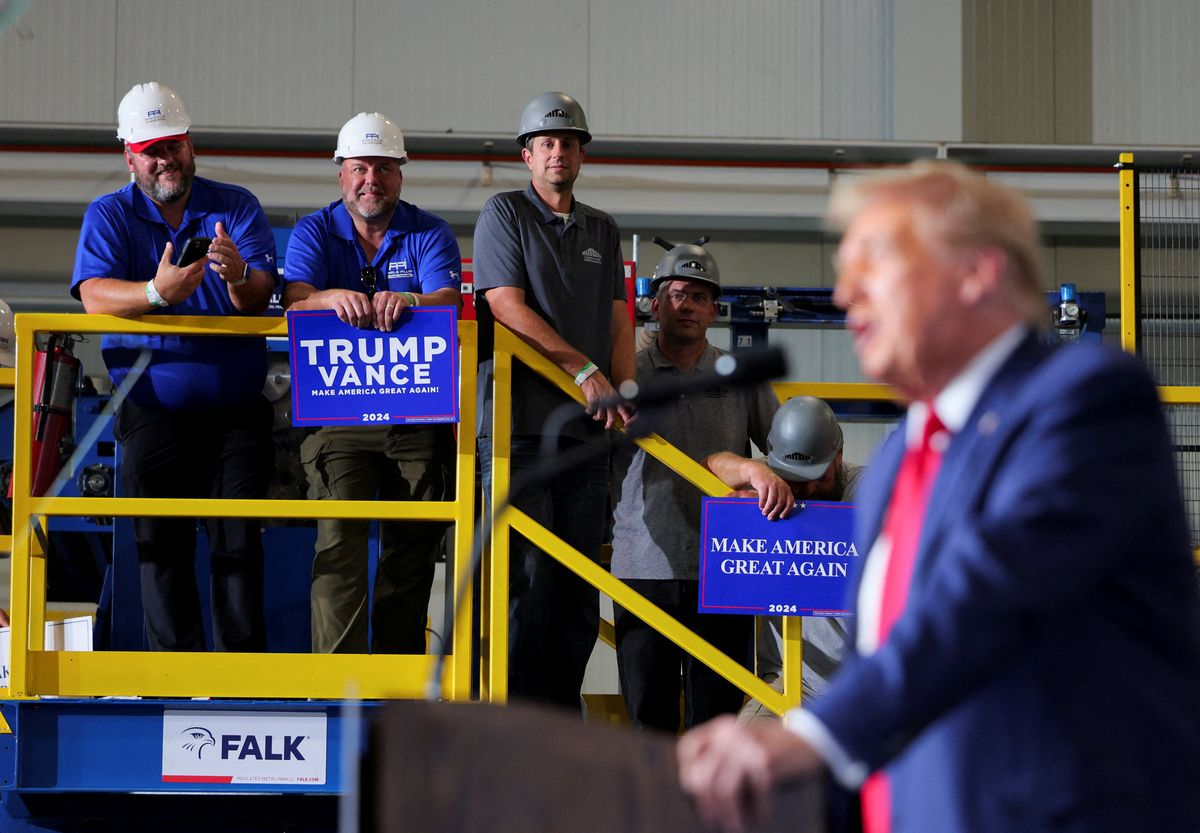
FILE PHOTO: Workers listen to Republican presidential nominee and former U.S. President Donald Trump as he makes a campaign stop at manufacturer FALK Production in Walker, Michigan, U.S. September 27, 2024. REUTERS/Brian Snyder/File Photo


Fox Business’ Charles Payne was “nearly in tears” Friday after the Labor Department’s latest jobs report fell “far short of expectations,” independent journalist Aaron Rupar said.

“The rate of growth has slowed dramatically, and that just exacerbates this inflationary situation because gasoline is up, but the rate of growth of your wages is not,” a solemn-looking Payne said on Fox Business. “It gets back again to policy.”

According to the Labor Department, 29,000 jobs were added to the U.S. economy in September, far below the 84,000 analysts were expecting. The unemployment rate increased from 4.1% to 4.2%, and job numbers for August and July were revised to show “60,000 fewer jobs than previously reported.”

As noted by countless critics, the jobs report will be the last such report before the midterms, with MeidasTouch Editor-in-Chief Ron Filipkowski predicting outrage from President Donald Trump over the report’s findings.

“Who does Trump fire this time after the latest terrible jobs report? The person who did the math?” Filipkowski asked in a social media post on X.

Retired U.S. Air Force Col. Moe Davis joked that the report had ushered in “Trump’s Golden Shower Age,” a tongue-in-cheek reference to Trump’s frequent claims that the United States is experiencing a “New Golden Age.”

“It's another weak jobs report,” wrote Nebraska historian Dennis P. Crawford in a social media post on X. “In contrast, the economy created 256,000 jobs in December 2024. Trump promised an economic boom beginning on day one. Where is it?”

CNBC called the jobs report a “big miss,” CNN said the report “came in surprisingly cold,” and activist, author and former Wall Street executive Amy Siskind laid the blame squarely at Trump’s feet.

“Another bad jobs report and revisions for lower hiring over the summer. This is the Trump era,” Siskind wrote in a social media post on X.


‘Surprising’ US jobs report falls ‘far short of expectations’: reports

Alexander Willis
October 2, 2026 
RAW STORY


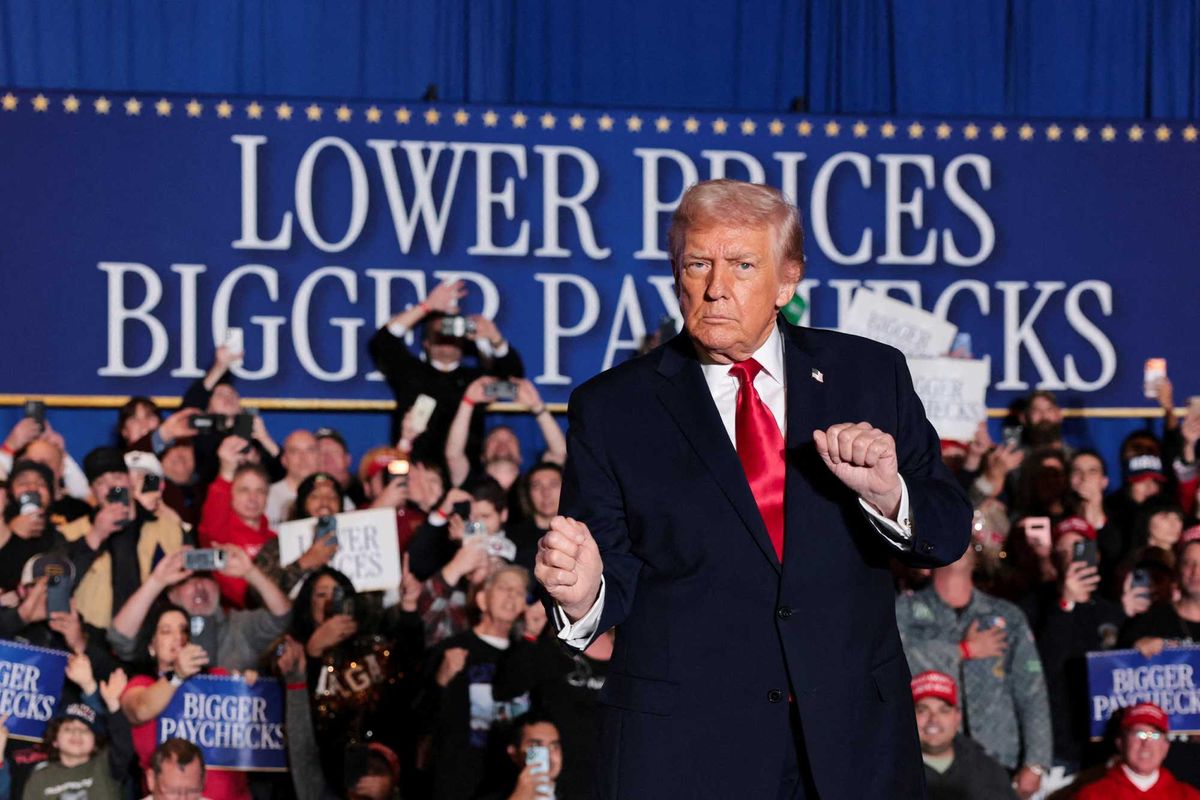
FILE PHOTO: U.S. President Donald Trump gestures as he arrives to deliver remarks on the U.S. economy and affordability at the Mount Airy Casino Resort in Mount Pocono, Pennsylvania, U.S. December 9, 2025. REUTERS/Jonathan Ernst/File Photo

A total of 29,000 jobs were added to the U.S. economy in September, according to a report published Friday from the Labor Department, a figure “far short of expectations,” The Wall Street Journal reported.

According to the Journal, analysts were expecting 84,000 jobs to be added to the U.S. economy in September, a figure nearly three times greater than what the Labor Department reported. Additionally, the unemployment rate for September was also found to be slightly worse than what analysts predicted, ticking up from 4.1% to 4.2%.

The jobs report, which CNBC described as “pointing to a surprising soft spot in the labor market and broader economy,” was released as markets closely watch the Federal Reserve, which analysts suspect may vote to hike interest rates for a second time later this month.

The Labor Department’s report also included revisions to job numbers it had reported for August and July.

“In addition to the weakness in September, the August jobs count was revised lower to reflect a gain of 133,000 while July switched from a gain to a loss as payrolls fell by 10,000,” CNBC reported. “The revisions in total showed 60,000 fewer jobs than previously reported.”

The report comes as President Donald Trump’s deeply unpopular war against Iran continues to rattle the U.S. economy, with Fox Business hosts recently voicing fears that it may trigger a recession in the coming months.