Europe will have enough home-made battery cells by 2030 to supply every electric car covered by the EU's planned local content rules, campaign group Transport & Environment (T&E) said on October 1.
The analysis, released as negotiations on the EU's Industrial Accelerator Act (IAA) reach a critical stage, contradicts carmakers' claims that the proposed Made-in-EU criteria are too ambitious, T&E said in a press release. The rules would cover corporate cars and private cars bought with subsidies or tax breaks, and the cell supply would be sufficient provided all planned projects are built, including those T&E rates as medium-confidence.
Requiring cells and cathode active materials to be made locally could lift EU battery demand by 34% in 2027 compared with the current baseline, T&E estimated. That would give Hungary, Poland and Slovakia, where Asian battery makers have spent billions of euros on plants over the past decade, a guaranteed market at a time when Chinese battery imports enter the EU at virtually no tariff.
"The future of European industrial competitiveness hinges on a simple question: will high value clean tech jobs come to Europe or remain in Asia?" said Xavier Sol, T&E's director for sustainable investments and batteries.
The cathode bottleneck
Cells are no longer the main problem. The weak point is the midstream: cathode active materials (CAM) and their precursors (pCAM), which go into the cells. China controls up to 90% of global CAM and pCAM capacity for lithium-ion batteries, depending on the chemistry, and 95% for lithium iron phosphate (LFP), according to T&E.
CAM plants need large, stable offtake deals with European cell makers, which in turn depend on a predictable electric vehicle market. T&E says the proposed CAM requirement for corporate cars is feasible, but more capacity is needed to cover private cars, and it wants a minimum Made-in-EU share for pCAM, sourced from trusted partners, added to the act.
"Recent years have shown that, unfortunately, a strong European battery value chain won't build itself: competition from Asia is simply too large," Sol said.
Local content rules for electric vehicles under the EU-UK Trade and Cooperation Agreement are due to take effect in January, and carmakers are again lobbying for a last-minute delay, T&E said.
Hungary rethinks its battery boom
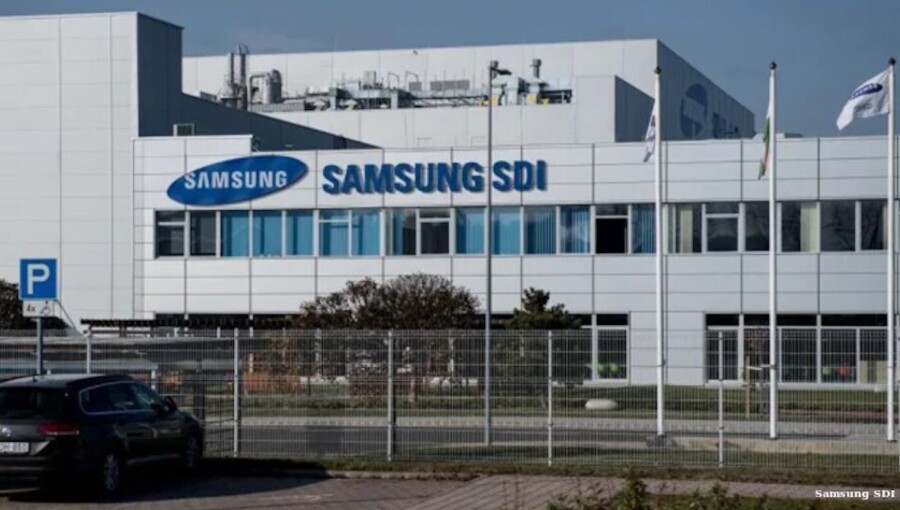
Hungary has become the world's fourth-largest maker of EV batteries, with more than 10,000 jobs created by the sector. Industry officials put approved investments at €26.5bn across more than 40 companies and projects last November, when Samsung SDI agreed to expand its plant at God, near Budapest, in a HUF995bn (€2.6bn) project backed by HUF133bn (€348mn) of state aid.
The new government of Peter Magyar is taking a harder line on the industry the former government under Viktor Orban courted. A new environmental authority will start work on January 1, with fines of up to HUF5bn (€13.7mn) for the worst breaches and a "three strikes" rule for repeat offenders, as part of tougher rules for battery makers. Debrecen's mayor told Chinese separator maker Semcorp to leave the city in July after inspectors found heavy metals in the groundwater at its site.
Neither CATL's giant plant in Debrecen nor BYD's car factory in Szeged has been cancelled, but the agreements are under review and preferential treatment has ended, as the new government unwinds the Orban economy.
Elsewhere in the region, Volkswagen's battery arm PowerCo will take 49% of the Surany plant in Slovakia, a 20GWh LFP cell and cathode project led by China's Gotion High-Tech, under a September 28 deal that also covers sites in Spain and Morocco. The Surany venture is valued at about €480mn, with Gotion holding 51%. Chinese aerogel maker IBIH, which supplies thermal materials for EV batteries, opened a €10mn plant in Trnava in August.
Poland is home to LG Energy Solution's plant near Wroclaw, one of Europe's largest cell factories. South Korean battery makers there are shifting their lines towards new chemistries, and Seoul and Warsaw made the industry part of a strategic partnership signed in April.

No comments:
Post a Comment