Thursday, October 15, 2026

Trump Announces $80 Billion Taiwan - Alaska LNG Deal

  • Trump announces a potential $70–80 billion Taiwan LNG deal, covering 30% of Alaska LNG's planned output over 20 years.

  • South Korea disputes its proposed $50–54 billion investment, insisting participation depends on commercial viability.

  • Alaska LNG offers a route around Hormuz, but enormous development costs and unfinalized agreements threaten the project's future.

President Donald Trump has announced a massive new energy agreement with Taiwan, claiming the island will purchase between $70 billion and $80 billion worth of liquefied natural gas from Alaska over the next two decades, as Asian importers scramble to secure supplies beyond the increasingly dangerous Strait of Hormuz.

In a Truth Social post on Wednesday, Trump said Taiwan had committed to purchasing 30% of the planned Alaska LNG project's output for 20 years, alongside a $4.4 billion equity investment.

The president described the arrangement as the largest LNG offtake agreement in history, arguing that the commitments would guarantee the project's success.

Taiwan's Ministry of Economic Affairs subsequently confirmed plans to purchase approximately 6 million metric tons of LNG annually and invest up to $4.4 billion in the development.

However, Taipei stopped short of confirming a binding agreement, emphasizing that investment arrangements, ownership stakes and commercial terms remain subject to further negotiations.

Deliveries could begin as early as 2032, provided construction proceeds as planned.

The proposed Alaska LNG project, led by Glenfarne Group, would transport natural gas from Alaska's North Slope through an approximately 800-mile pipeline to a liquefaction terminal on the state's southern coast, with planned export capacity of 20 million metric tons annually.

Its geographical advantage has become increasingly attractive following the Iran war, which has severely disrupted LNG shipments through the Strait of Hormuz. Alaska offers Asian buyers a direct Pacific shipping route that avoids the Middle Eastern chokepoint entirely.

As Oilprice.com previously reported, the conflict has revived interest in the long-delayed project, with Asian importers increasingly prioritizing supply security over cost.

However, Alaska’s costly pipeline and difficult terrain threaten to outweigh its shipping advantage, with capital costs approaching $2.7 billion per million tonnes of annual LNG capacity. An October 7 article from Oilprice.com's Natalia Katona concludes that geographical challenges may erode the project's competitiveness in a world where LNG supply is expected to grow throughout the late 2020s and early 2030s.

Earlier this month, Trump announced that South Korea would invest approximately $50 billion to $54 billion in Alaska LNG as part of a broader bilateral investment agreement.

Seoul has since challenged that characterization.

South Korea's industry minister, Kim Jung-kwan, said the country had not committed to the investment, stressing that participation would depend on commercial viability and compliance with domestic procedures, according to Reuters.

The uncertainty is significant given the project's estimated $44 billion to $55 billion price tag.

Oilprice.com Tsvetana Paraskova highlighted earlier this month that Alaska LNG's development costs could exceed those of competing U.S. Gulf Coast projects by more than twofold on a capacity-adjusted basis.

For Taiwan and South Korea, the attraction of bypassing Hormuz is undeniable. Whether that geopolitical advantage justifies tens of billions in additional investment remains the central question.

For now, Trump's ambitious Alaska LNG vision has growing political momentum, but its commercial future still hinges on binding supply agreements, committed financing and final investment decisions.

By Tom Kool for Oilprice.com


Taiwan Plans to Invest $4.4B in Alaska LNG, Subject to Negotiations
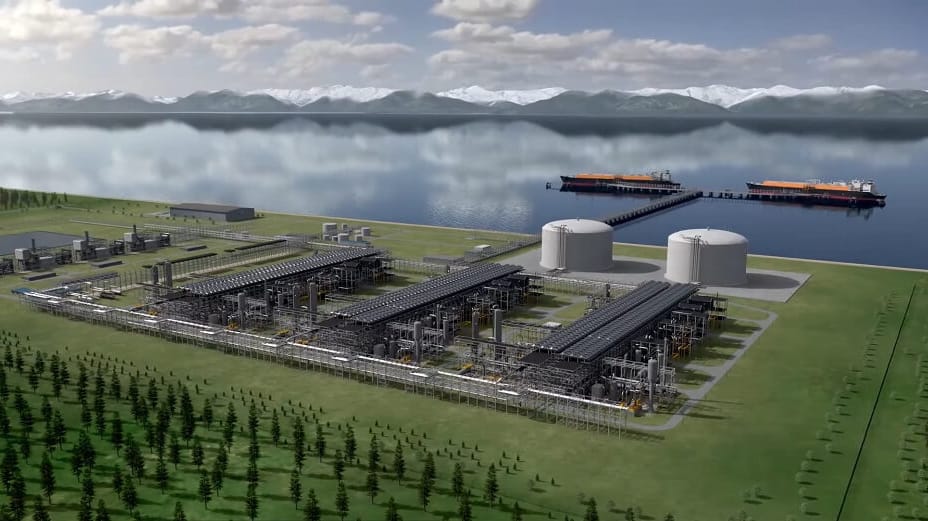
The proposed Alaska LNG liquefaction plant on Cook Inlet (Alaska LNG)

On Wednesday, Taiwan's government confirmed that it currently plans to buy six million tonnes per annum of LNG from the Alaska LNG megaproject, and it intends to make a $4.4 billion investment in the construction of the system, subject to further negotiations. 

In a statement on his social media platform on Wednesday, President Donald Trump confirmed that Taiwan had agreed to an "offtake commitment" equaling 30 percent of the plant's output "because this is now a U.S. federal government project." New York-based investment company Glenfarne Group and the state-owned Alaska Gasline Development Corporation are the project's sole owners, holding equity stakes of 75 percent and 25 percent respectively.

Taiwan's energy ministry couched its commitment in terms of an ongoing negotiating process, pledging "an estimated maximum" investment amount only after further study and budgeting. "Specific investment arrangements, shareholding ratios, and related conditions will be handled according to subsequent negotiations and commercial contract procedures," the ministry said. 

Alaska LNG is a longstanding proposal for an infrastructure network to pipe abundant North Slope gas resources across the state to Cook Inlet for liquefaction and export. It would require construction of an 800-mile line connecting gas fields on the Artic tundra to an LNG plant rated at 20 million tonnes per annum. 

At one time, Alaska LNG had support from BP, ExxonMobil and ConocoPhillips and was advancing steadily as a private-sector venture. All three oil majors backed out in 2016 following an independent assessment of the project's economics. At present, a New York-based investment company and the state-owned Alaska Gasline Development Corporation own the equity in Alaska LNG.

With the need to construct a $9 billion gas treatment plant at the Arctic northern side, then build an 800-mile overland supply pipeline through rugged wilderness, the megaproject is expected to cost $45-55 billion for 20 mtpa of capacity. This works out to as much as $2.7 billion per mtpa, much higher than the $1.6 billion per mtpa capex cost for the LNG Canada Phase 2 project in Kitimat, British Columbia. About 900 nautical miles apart, the two sites are natural competitors: they target the same East Asian market, and at similar scale. Two weeks ago, LNG Canada got the green light from private investors for its $23 billion Phase 2 expansion, which will double its capacity to 28 mtpa. 

The Trump administration has been asking Asian allies to make comparable investments in Alaska LNG, and President Donald Trump announced a $50 billion South Korean commitment to the project last week. South Korea's energy ministry responded that a complete commercial feasibility study would have to be done before any final investment decision. 

STATE CAPITALI$M

White House Turns to Korean War-Era Law as Diesel Prices Stay Above $6


  • Trump invokes the Defense Production Act to expand Delek’s 74,000-bpd Texas refinery amid record-high U.S. fuel prices.

  • Gasoline remains above $4.30 per gallon and diesel near $6.30, with refinery expansion unlikely to provide relief before the midterms.

  • The U.S.-Russia diesel deal fails to calm markets, as global supply shortages push wholesale diesel prices toward $200 per barrel.

The United States has used a 1950 authority to help boost fuel production at a small Texas refinery, Vice President JD Vance said on Tuesday, as the Trump Administration is running out of levers to lower record-high fuel prices.

“I am pleased to announce that the Trump administration, working with the refinery at Delek, has used the Defense Production Act and we’re going to expand the refinery right here in Tyler, Texas,” Vance said at a political rally in Texas.

“We want millions of gallons of commercial-grade and military-spec fuel to come out of this refinery, in addition to what it’s already producing,” the Vice President said.

The Defense Production Act, originally enacted in 1950 in response to the start of the Korean War, is a federal law granting broad authority to the President to direct private businesses to produce critical materials and services for national defense and emergency preparedness.

With the midterm elections looming, the Trump Administration has entertained in recent weeks various ideas to increase fuel availability in the United States. From a ban on diesel exports (now ruled out) to a deal with Vladimir Putin for Russian diesel deliveries (actually announced), no option has been off limits for the Administration facing record-high diesel prices and gasoline prices at their highest level for autumn ever.

At the Texas rally, VP Vance did not provide any timelines or volumes for the “millions of gallons” of additional fuel Delek’s 74,000-barrel-per-day refinery would produce. It is uncertain how much time the refinery expansion would take or if the Defense Production Act would be extended to other refineries in the United States.

It’s certain that additional output is unlikely to hit the market within three weeks and lower fuel prices ahead of the midterm elections on November 3.

Despite slight declines in recent days, gasoline and diesel prices remain elevated. The U.S. national average price of a gallon of regular gasoline set a record for October, and this has been the first October ever to see the national average above $4 per gallon. As of Tuesday, the national average was $4.34 per gallon.

The national diesel average was at $6.28 a gallon, lower than $6.31 a week ago, but so much more than $3.65 at this time last year.

Diesel prices will remain high and above $6 per gallon for quite some time, analysts say, noting that the deal with Russia for diesel supply wouldn’t make much (or any) difference.

The global diesel market is exceptionally tight because of the Middle East conflict, with too little fuel making it out of the Strait of Hormuz, as well as a lack of supply from Russia, whose refineries are struggling to produce fuel amid Ukrainian drone attacks.

The U.S.-Russia “diesel deal” – if it is executed at all – is for 35.76 million barrels in total—volumes equivalent to about 10 days of U.S. domestic diesel demand or just over one single day of global demand, analysts say.

After an initial decline in wholesale diesel prices on Friday, diesel futures prices spiked again this week, with ULSD in New York and gasoil in London both rising to trade around $200 per barrel on Tuesday, Ole Hansen, Head of Commodity Strategy at Saxo Bank, said.

Tom Kloza, chief energy advisor at Gulf Oil, noted on Tuesday, “Absolutely stunning price spikes in wholesale diesel today…Market clearly not believing that Russian oil is on the way.”

The U.S. retail diesel price record of $6.53 per gallon could be topped by the midterms, according to Kloza.

Patrick De Haan, head of petroleum analysis at GasBuddy, said on Tuesday, “wholesale diesel prices not blinking over Russia/US ‘deal’”, and that “$6/gal diesel may be here to stay for now- truckers and farmers not going to see any relief anytime soon.”

By Tsvetana Paraskova for Oilprice.com

The Ore Wars: An Interactive History (2002–2026) — How the Global Race for Minerals Reshaped Power and Industry
On Oct 14, 2026 


The Ore Wars: From Traditional Mining to the Strategic Battle for Critical Minerals


The global race for mineral resources has evolved into a major economic and geopolitical contest, reshaping trade relations, industrial policies and national security strategies between 2002 and 2026. From iron ore and copper to lithium, cobalt, nickel and rare earth elements, countries are increasingly competing to secure the raw materials essential for manufacturing, renewable energy, electric vehicles, defence equipment and advanced technologies.

Often described as the “Ore Wars,” this struggle reflects the growing importance of mineral supply chains in determining economic competitiveness and strategic influence. What began as a contest for traditional industrial commodities has expanded into a broader competition over critical minerals, processing capacity, mining technology and control of global supply networks.

2002–2008: China’s Industrial Boom Changes the Mining Landscape


The early 2000s marked a turning point in global mineral demand. China’s rapid industrialisation, infrastructure expansion and urbanisation drove a significant increase in demand for iron ore, copper, aluminium and other industrial commodities.

Mining companies expanded production, new projects attracted investment, and resource-rich countries gained greater bargaining power. Australia, Brazil and several African nations strengthened their positions as important suppliers of raw materials.

The period also exposed a fundamental weakness in global manufacturing: countries with limited domestic mineral resources increasingly depended on international supply chains. As demand grew, competition for long-term supply agreements, mining concessions and access to ports and railways intensified.

2008–2015: Commodity Volatility and Resource Nationalism


The global financial crisis of 2008 disrupted commodity markets, demonstrating how closely mining revenues were connected to international economic conditions. Although prices fell sharply during the crisis, demand recovered in subsequent years, particularly as major economies introduced stimulus measures and infrastructure investments.

Governments in mineral-rich countries increasingly sought greater economic benefits from their natural resources. Royalties, export restrictions, local processing requirements and revisions to mining contracts became important policy tools.

The debate shifted beyond extracting ore to determining who would capture the greatest value from it. Countries began reassessing whether exporting unprocessed minerals was sufficient to support long-term industrial development.

2016–2020: Electric Vehicles Bring Critical Minerals into Focus


The expansion of electric vehicles, battery manufacturing, wind power and solar energy changed the strategic importance of minerals. Lithium, cobalt, nickel, graphite and rare earth elements became increasingly important to emerging industries.

China developed a strong position across several mineral processing and manufacturing supply chains. Meanwhile, countries with significant reserves began exploring ways to attract investment in domestic refining, battery production and advanced manufacturing.

The United States, European countries, Japan and other industrial economies increasingly recognised that access to critical minerals could influence their energy transition and technological competitiveness.

The COVID-19 pandemic in 2020 further exposed vulnerabilities in international supply chains. Disruptions to transportation, mining operations and industrial production strengthened calls for diversified suppliers, strategic stockpiles and more resilient sourcing arrangements.

2021–2023: Supply Security Becomes a National Priority


As economies recovered from the pandemic, demand for energy-transition materials continued to attract investment. Governments introduced or expanded policies intended to strengthen domestic production, encourage recycling and reduce dependence on concentrated supply networks.

The United States introduced major clean-energy and manufacturing incentives, while the European Union advanced efforts to improve access to critical raw materials. Other countries pursued partnerships with resource-rich economies to secure supplies for their industrial sectors.

At the same time, the mineral market experienced considerable price volatility. Rapid changes in lithium and other battery-material prices highlighted the risks associated with investment cycles, uncertain demand forecasts and the pace of new mining projects.

The competition increasingly involved not only mineral reserves but also processing facilities, technical expertise, financing and access to advanced manufacturing capabilities.

2024–2026: The Strategic Battle Moves Beyond Mining

By the middle of the 2020s, the Ore Wars had become a contest over entire mineral value chains. Governments and companies increasingly focused on securing supplies of copper, lithium, nickel, graphite, cobalt and rare earth elements while reducing exposure to concentrated processing capacity.

Copper gained strategic importance because of its extensive use in electricity networks, renewable-energy installations, data centres and electrification. Lithium and graphite remained important to battery supply chains, while rare earth elements played essential roles in selected high-performance magnets, electronics and defence applications.

Export controls, investment screening, trade restrictions and strategic partnerships became increasingly important instruments of industrial policy. Countries also placed greater emphasis on recycling, alternative materials and technologies designed to reduce mineral intensity.

India, with its expanding manufacturing ambitions, renewable-energy investments and electric-mobility market, has strong incentives to diversify mineral sourcing, develop domestic processing capabilities and strengthen international partnerships. For other emerging economies, the challenge is to turn mineral wealth into jobs, infrastructure, technology transfer and higher-value industrial production.

The outcome of this period will depend not only on geological resources but also on how effectively countries develop infrastructure, attract responsible investment, manage environmental impacts and establish reliable trading relationships.

Why the Ore Wars Matter

The competition for minerals has consequences far beyond the mining industry.
Economic power: Access to reliable mineral supplies can influence manufacturing costs, industrial growth and national competitiveness.
Energy transition: Copper, lithium, graphite, nickel and other materials support different parts of clean-energy and electrification supply chains.
National security: Selected minerals are essential for defence systems, semiconductors, communications equipment and advanced manufacturing.
Trade and diplomacy: Mineral agreements increasingly shape relationships between resource-producing and industrial economies.
Environmental responsibility: Mining expansion raises questions about water use, land degradation, biodiversity, waste management and the rights of local communities.
Industrial development: Countries that invest in refining, recycling and manufacturing can capture more value than those that depend solely on exporting raw ore.


The Road Ahead: Who Will Control the Mineral Economy?


The next phase of the Ore Wars will be shaped by the balance between resource availability, technological innovation, environmental responsibility and geopolitical competition.

Countries with substantial reserves may enjoy an initial advantage, but geological wealth alone does not guarantee industrial leadership. Refining capacity, skilled workers, affordable energy, efficient logistics, access to capital and stable regulations will remain critical.

Recycling could also become a more important source of supply as batteries, electronics and renewable-energy equipment reach the end of their useful lives. New extraction techniques and alternative materials may reduce pressure on certain resources, although their commercial impact will vary by mineral and application.

For mining companies, the challenge will be to expand production while controlling costs and meeting increasingly demanding environmental and social expectations. For governments, the priority will be to balance resource sovereignty with investment, international cooperation and reliable trade.

Conclusion

From China’s industrial expansion in the early 2000s to the strategic mineral competition of 2026, the Ore Wars illustrate how natural resources have become central to global economic and political power. The contest is no longer simply about who possesses the richest deposits. It is about who can extract, process, transport, recycle and transform minerals into the technologies that will shape the future.

Deaths prompt South African miners’ safety review, minerals council CEO says


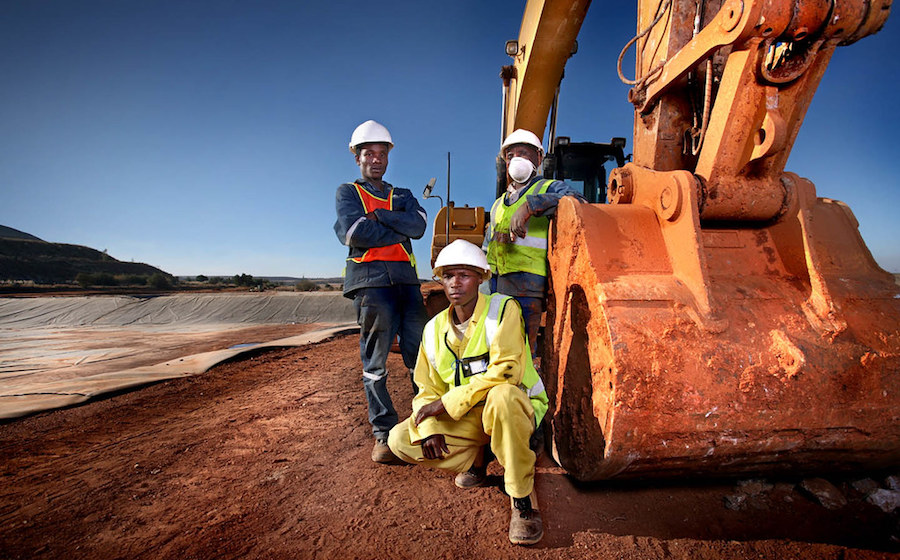
(Image courtesy of Sibanye Stillwater.)

South African miners are reviewing safety protocols as the number of fatalities this year is already above the last two, Minerals Council South Africa CEO Mzila Mthenjane told Reuters.

53 deaths were recorded as of October 12, Mthenjane said, compared with historic lows of 41 in 2025 and 42 in 2024.

There is concern amongst mining companies and particularly CEOs over the current safety performance, Mthenjane said.

Workers have a right to say no to unsafe work and the sector is looking at the implementation of controls, he said.

Mthenjane said most fatalities were reported in the gold and platinum sectors because they were the biggest employers.

South Africa’s mining output fell 12.7% year on year in August, compared with a revised decrease of 7.0% in July.

(Reporting by Olivia Kumwenda-Mtambo; Editing by Alexander Smith)


D.E.I. IS MERIT

Former Rio Tinto, Anglo American executive named ICMM’s first woman CEO


The International Council on Mining and Metals (ICMM) has appointed Froydis Cameron-Johansson as its first woman president and CEO to lead the organization as it focuses on advocating for responsible production and value chains for critical metals and minerals.  

Cameron-Johansson previously held senior roles at Rio Tinto (ASX, LON: RIO) and Anglo American (LON: AAL) and started her career at Shell. She will succeed Rohitesh Dhawan on Nov. 23. Dhawan, who has led the organization for five years, will support the leadership transition until the end of 2026. 

“It’s a great privilege to follow on from Ro and lead ICMM at a time when responsible mining and metals have never mattered more,” Cameron-Johansson said in a statement. “The industry’s future depends on listening to society as much as on delivering for it, and I look forward to working with the team, our members and stakeholders to strengthen trust, raise performance and demonstrate the contribution that responsible mining can make.” 

ICMM said that Cameron-Johansson was appointed after a ‘rigorous competitive’ selection process.  

“Froydis’s passion for mining, sustainability and delivery, combined with her knowledge and experience, made her the outstanding candidate to guide ICMM into its next chapter,” Iván Arriagada, Chair of ICMM and CEO of Antofagasta (LON: ANTO), said.  

The incoming CEO will inherit an organization working to strengthen mining standards and demonstrate the industry’s contribution to economic development while addressing environmental and social concerns, ICMM said.  

Leadership transition 

During his tenure, Dhawan helped advance the establishment of the Global Tailings Management Institute and the Consolidated Mining Standard Initiative, two efforts aimed at improving accountability and responsible practices across the sector. 


Canadian Chrome Company launches First Nations advisory committee


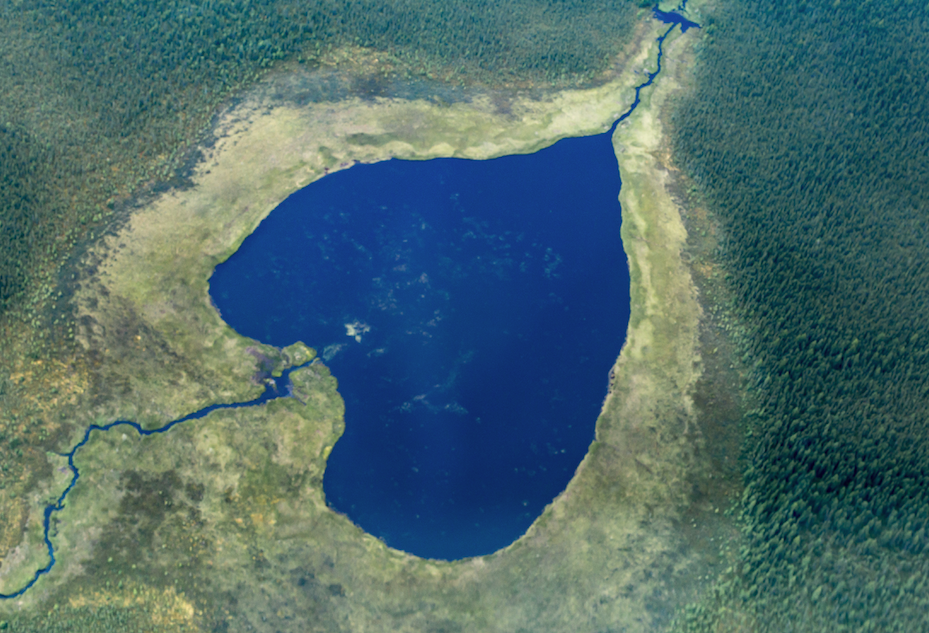
Aerial view of lake in Ring of Fire, Ontario. Stock image.

The Canadian Chrome Company (CSE: CACR) says three members of local First Nations have agreed to serve as inaugural members of a steering committee. The committee is aimed at increasing First Nations participation with regards to CCC’s Ring of Fire assets.

The Canadian Ring of Fire is a remote, crescent-shaped mineral belt in the James Bay Lowlands of Northern Ontario, containing massive deposits of critical minerals such as chromite, nickel, copper, and platinum.

In a company news release, CCC identified these individuals as Theresa Okimaw-Hall, former Chief of Attawapiskat First Nation, Lawrence Baxter, former Chief of Marten Falls First Nation, and Vida Baxter, a member of Marten Falls First Nation. 

The company says the members involvement is personal and does not reflect the views of Marten Falls or Attawapiskat First Nation.

“We want prospective counterparties to hear Indigenous perspectives before any form of transaction regarding the sale of our company or its assets is settled,” said Frank Smeenk, CCC’s CEO. “These three have agreed to sit as the start of that advice.”

Ring of Fire assets

The news follows the company’s previously announced plans to review strategic alternatives, including the possible sale of the company or its assets. 

CCC’s current Ring of Fire interests include a 90% joint-venture interest in the Koper Lake project and 30% in the Big Daddy project. Neither project has completed pre-feasibility study or feasibility study. The company did not disclose results of any additional economic analysis.

The company says it is planning a presentation for prospective buyers, merger partners or funding sources.


Phosphate giant seeks foreign investors as war hits finances


(Image: OCP Group. )

Morocco’s phosphate giant OCP SA is looking to attract foreign investors for some of its businesses, as supply disruptions caused by the Iran war hit profits at the state-owned company.

OCP has started talks with local and foreign investors for a potential equity injection in Mzinda, its new fertilizer hub in central Morocco that’s slated to start production next year, according to a person familiar with the matter. That comes after surging sulfur prices forced OCP to slow Mzinda’s development as it sought financing to pay contractors and suppliers, the person said, requesting anonymity because the discussions are private.

Soaring costs for fertilizer inputs such as sulfur — caused by disruptions to flows through the Strait of Hormuz — are squeezing Morocco’s biggest company by revenue. OCP reported a first-half loss last month and may suspend dividends this year. The company won’t ask the Moroccan state, which owns almost 95% of the firm, for equity, the person familiar said.

OCP’s media department couldn’t immediately comment.

With the company seeking to bolster its finances, it entered a joint-venture in July with Koch Ag & Energy Solutions, which will invest in Jorf Fertilizers Co.

The firm will also consider equity injections from foreign investors into its new subsidiary OCP Specialty Products and Solutions, which handles chemicals outside fertilizers, the person familiar said. SPS generated much of its $1 billion revenue last year from purified phosphoric acid that’s used in electric vehicle batteries and fluorine.

OCP may also seek foreign investment in Uranext, a subsidiary of SPS that specializes in the extraction of uranium from phosphates, the person familiar said.

OCP, which controls over two-thirds of the world’s phosphorus deposits, reduced production in May and June by bringing forward maintenance originally scheduled for the last two months of 2026, the person said. That’s because it was running short of sulfur, which is used to produce phosphoric acid, they added.

To counter that shortage, the company has boosted output of so-called TSP, a fertilizer that requires less sulfur and no ammonia. It’s also seeking partnerships with traders such as Bunge and Louis Dreyfus Co. to promote increased TSP use in places such as Brazil and Argentina, the person said.

To further cut its reliance on sulfur from the Persian Gulf, OCP is also looking to supplies from places including Spain, Canada, Kazakhstan and the US Gulf Coast. 

It also plans to acquire Chinese industrial technology to extract sulfur from locally mined pyrites. OCP, the world’s biggest buyer of sulfur, is targeting output of 1 million tons in 2027, with the potential for as much as 4 million tons in 2030, which would equate to about half of its current requirements, the person familiar said.

OCP is also looking at long-term shipping contracts to replace its reliance on the spot market, in a bid to achieve annual savings of as much as 2 billion dirhams ($203 million). The company has worked with the Massachusetts Institute of Technology to determine its shipping requirements.

(By Souhail Karam)


Trump says ‘massive’ oil, gas, mineral exploration set to begin in Greenland


Credit: Gage Skidmore | Flickr, under licence CC BY-SA 2.0.

US President Donald Trump said on Wednesday that “massive oil, gas and mineral exploration”was set to begin on Greenland, a contentious statement on a territory that has resisted his efforts to control it and has banned new drilling for crude.

Trump described the Danish Arctic island which is run by a semi-autonomous government as “our new and beautiful Greenland” in a social media post that hailed what he said were US gains from a security deal signed in September.

The Greenlandic prime minister’s office declined to comment on Trump’s statement.

The Danish foreign ministry and Greenland’s ministry of mineral resources did not immediately respond to requests for comment.

Trump hails US security gains

Greenland has been caught up in a confrontation with Trump who has been saying since 2019 the US should buy or take the strategically located and mineral-rich island for security reasons. On several occasions, he refused to rule out force.

Along with Denmark, the US and Greenland reached an agreement last month to allow the US to boost its military presence on the island – a deal that had appeared to settle the standoff.

The agreement did not allocate any rights for mining or drilling.

“Massive Oil, Gas, and Mineral Exploration is getting ready to begin,” Trump wrote in a post on his Truth Social platform.

“There are Experts that are saying that the amount of easily available Oil is far greater than that of almost any land, anywhere in the World,” he added without naming any specific deals or specific development.

Greenland banned uranium mining in its territory along with all future exploration of oil in 2021.

The government has said it is reviewing whether a Texas firm, Greenland Energy, can use permits predating that prohibition.

The company said in August this year it had plans to drill for oil in 2027 at an untested basin on Greenland’s east coast, although it lacked its own permit to do so. The previous owner, ARCO, spent heavily on seismic work in the 1970s but never drilled.

Independent Danish security policy advisor Jacob Kaarsbo said Trump’s comments could be seen as a sign that his desire to control Greenland remained unchanged.

“It is extremely dangerous to view this agreement between the Trump administration and Denmark as something that has altered Trump’s intentions,” he said.

The 10-page deal between the US, Denmark and Greenland paved the way for two new military bases and Trump’s “Golden Dome” missile defence system, while reaffirming Danish sovereignty and Greenlanders’ right to self-determination.

“Any future attack on the United States will have to come across Greenland, where our Defense will routinely knock down drones, missiles, or any other form of weapon not yet even conceived,” Trump said in his post on Wednesday.

“It gives us time, location, and sightline, like nowhere else in the World!” he added.

(Reporting by Louise Rasmussen in Copenhagen and Rhea Rose Abraham in Bengaluru; Editing by Christian Schmollinger and Andrew Heavens)


BAN DEEP SEA MINING

Deep-sea mining faces surprise risk of rocks catching fire

Environmental groups warn seabed mining may harm fragile marine habitats and disrupt ecosystems. (Stock image by magdal3na.)

Scientists at the United States Geological Survey (USGS) have discovered that some metal-rich rocks recovered from the deep ocean can spontaneously combust when exposed to air and processed, raising unexpected safety concerns for a potential new mining industry.

The finding follows a 2022 research expedition to the Escanaba Trough, off the Oregon–California border, where two of 57 hydrothermal rock samples ignited during laboratory processing. 

The reactions generated temperatures exceeding 100°C and completely oxidized the original material, according to a study published in Nature’s Scientific Reports.

“The production of heat through exothermic reactions has not been investigated in seafloor massive sulfide deposits but has the potential to cause rapid onset fires on ships,” the researchers wrote.

The discovery introduces another challenge for companies seeking to extract valuable metals from the ocean floor. While deep-sea sulfide deposits contain copper, zinc, gold and silver, their behaviour during recovery, transportation and processing remains poorly understood, the researchers noted. 

The findings could influence safety standards as governments and mining companies assess the commercial potential of seabed resources.

Unexpected reactions

The USGS collected the samples in collaboration with the Bureau of Ocean Energy Management (BOEM) and the National Oceanic and Atmospheric Administration (NOAA), using a remotely operated vehicle to investigate four regions of the Escanaba Trough.

Located within the US Exclusive Economic Zone, the trough contains mineral deposits formed by hydrothermal activity that concentrates metals, including copper, zinc and iron, on the seafloor.

Most of the recovered rocks contained substantial quantities of metal sulfides. However, when researchers freeze-dried and crushed the samples in the laboratory, two underwent rapid oxidation and generated enough heat to ignite.

To determine what caused the reactions, scientists compared the samples’ mineral composition, chemistry and thermal behaviour.

They initially considered whether petroleum or tar trapped within the deposits could explain the combustion. Hydrothermal processes and heavy sedimentation can produce petroleum-like materials capable of self-heating when exposed to oxygen.

Instead, the investigation identified nanocrystalline marcasite, an unstable form of iron sulfide, as the likely culprit.

The scientists determined that exposure to oxygen and mechanical forces from crushing or grinding could trigger heat-generating oxidation in the rocks.

“The new research suggests that some seafloor massive sulfide rocks have physical and chemical properties that could make them behave very differently from comparable mineral deposits mined on land,” the USGS said in a statement.

The findings do not establish that all marcasite-bearing deposits present a combustion hazard. Rather, they identify specific mineral characteristics that may warrant closer examination before commercial extraction begins.

Mining implications

The research comes as interest in deep-sea mineral resources grows, driven by demand for metals used in infrastructure, manufacturing and energy technologies.

The International Seabed Authority (ISA) has awarded exploration contracts for polymetallic sulfide deposits along the Northern Mid-Atlantic Ridge and Southwest Indian Ridge, although commercial extraction under those contracts has not begun.

Unlike minerals that remain under relatively stable conditions on the seafloor, recovered sulfide rocks would encounter major environmental changes during mining operations.

“If seafloor massive sulfide mining occurs, rocks brought to the surface would experience conditions dramatically different from those on the seafloor, including exposure to oxygen and changes in temperature, pressure, and moisture,” the USGS said.

“Such changes could affect how sulfide minerals react and how much heat they generate.”

Those risks could require operators to assess mineral stability before extraction and develop procedures for handling, storing and transporting potentially reactive material. The possibility of heat buildup aboard vessels presents a particular concern where large quantities of crushed sulfide rock could be concentrated in enclosed spaces.

Deep-sea mining companies The Metals Company (Nasdaq: TMC) and Deep Sea Minerals (CSE: SEAS) did not respond to MINING.COM’s requests for comment on potential operational safety concerns or whether they had assessed similar risks.

The findings add an occupational safety dimension to an industry already facing scrutiny over its potential environmental effects.

Environmental groups have warned that seabed mining could damage fragile marine habitats, disturb sediments and threaten ecosystems that scientists have only begun to understand. The consequences of large-scale extraction remain uncertain, particularly in deep-ocean environments where recovery from disturbance may be slow.

Chinese researchers found in early October 11,700 new viruses in the Clarion-Clipperton zone, where the ISA has issued 31 exploration contracts. Bowen Hou and Lilan Zhang of Chongqing University, and Dong Sung of China’s Second Institute of Oceanography, investigated the ‘virome’ of the Clarion-Clipperton to establish what they call a “vital pre-mining baseline of microbial ecosystem for future environmental impact assessments.” They’ve published their results in Nature Communications.

For prospective operators, the USGS research suggests that conventional approaches to handling sulfide ores may not adequately address the conditions encountered during deep-sea mining.

Further testing will be needed to determine how widely reactive marcasite occurs in seabed deposits and whether the laboratory results translate into comparable hazards during industrial operations.


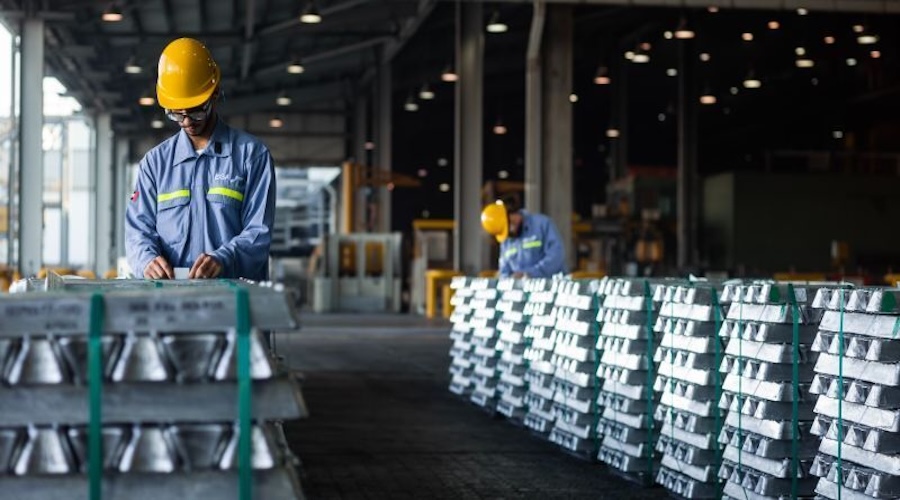
Op-Ed: Aluminum’s calm belies lingering supply-chain stress


Emirates Global Aluminium is the world’s largest ‘premium aluminum’ producer. Credit: Emirates Global Aluminium | LinkedIn

 (The opinions expressed here are those of Andy Home, a columnist for Reuters)

 Iranian missile attacks on Gulf smelters and the blocking of the Strait of Hormuz have knocked out almost 3 million metric tons of aluminium production capacity. Yet, eight months on, the market is seemingly unconcerned.

Indeed, London Metal Exchange (LME) three-month aluminium CMAL3 is now trading just above $3,000 per ton, which is where it was in early February before the US and Israel unleashed Operation Epic Fury against Iran.

Traders are betting that a combination of rising output in Indonesia and higher product exports from China can tide things over until the Gulf smelters are repaired and shipping fully resumes in the Strait of Hormuz.

The surface calm, however, masks lingering stress in a physical supply chain that is still reeling from the unprecedented disruption.

Plugging the gaps

Gulf production of primary aluminium slumped by an annualized 2.8 million tons between February and May, according to the International Aluminium Institute.

The collapse reflected the forced shutdown of Emirates Global Aluminium’s Al-Taweelah smelter and damage to Aluminium Bahrain’s facility, as well as logistics problems at other Gulf operators.

Regional production has since been creeping higher as both plants undergo repairs and ramp production back up, but the August run-rate of 3.5 million tons annualised was still 2.6 million tons below pre-hostility levels.

China and Indonesia have stepped in to plug the gap.

China’s exports of primary metal are constrained by a hefty 30% export duty, but outbound volumes of alloy doubled year-on-year to 349,000 tons in the January to August period.

Exports of semi-finished products such as aluminium plate, sheet and strip surged by 774,000 tons to 4.46 million tons over the same period.

Indonesia’s new Chinese-owned smelters are also ramping up at speed. The country exported 114,000 tons of primary metal in July, a fresh monthly record.

Around half of last year’s Indonesian aluminium exports went to China but shipments since the Iran war have been dispersed across Asia, Europe and even the US.

Physical stress

Improved availability in Asia has caused physical premiums to ease from their June highs.

Japanese buyers have negotiated a fourth-quarter delivery premium of $255 per ton over the LME cash price, which marks a 35% decline from the previous quarter.

However, that’s still higher than the $200-per-ton premium that was trading at the start of the Iran war, attesting to continued tension even in this relatively well-supplied part of the market.

European buyers are paying significantly more for their physical metal.

The CME European duty-paid premium EPDc1 is trading at $559 per ton over LME cash, double the level at the end of February.

US buyers, of course, are paying more than anyone else for their aluminium with the US Midwest premium trading at an elevated $2,312 per ton over LME cash, though this is as much about President Donald Trump’s 50% import tariffs as anything else.

Low inventory

Elevated premiums are sucking available metal into the physical supply chain, leaving LME stocks at multi-year lows.

Registered inventory of 238,625 tons is the lowest level this century. Most of what remains is Russian metal, which reduces its appeal to most Western buyers.

LME off-warrant inventory has also been steadily shrinking since February and now totals just 73,509 tons, which is the lowest reading since the LME introduced this category of stocks reporting in 2020.

Time-spreads have eased considerably since June, when the cash premium over three-month metal CMAL0-3 jumped to over $100 per ton.

But there is lingering tightness in the front part of the curve. After a period of mild contango, cash has just returned to a small premium over three-month metal again.

Time-spread tension is likely to remain a feature of the London market as long as physical premiums remain so high.

The aluminium market has proved highly resilient to the sudden loss of so much production, but the stress lines are still there beneath the calm surface.

(Writing by Andy Home; Editing by Marguerita Choy)


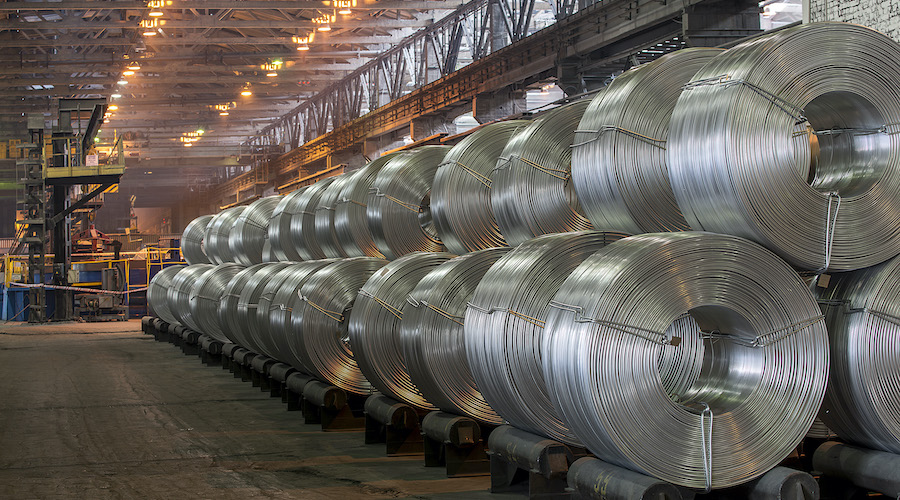
Russian aluminium’s share of available LME stocks almost 100% in September

Aluminum factory in Russia. (Reference image by uc_rusal_photo_gallery, Wikimedia Commons.)

The share of available Russian-origin aluminium stocks in London Metal Exchange warehouses rose to almost 100% in September from 95% in August, exchange data showed on Wednesday, leaving only a tiny amount of Indian metal as an alternative.

Total available, or on-warrant, aluminium inventories 6.5% to 226,675 metric tons at the end of last month, the lowest since March 2025, as conflict in the Middle East tightens global supply.

Available Russian aluminium stocks fell by 3,425 tons to 226,625 tons last month, but their share of total rose to 99.98% as Indian stocks, the only other origin material available, dropped by 12,400 tons to just 50 tons.

Many traders have shunned Russian metal even though material produced before April 13, 2024, remains eligible for trading. Aluminium made in Russia after that date was barred from the LME warehousing system to comply with Western sanctions.

“We’ve got to a place where I think the market has accepted that the (aluminium) stocks are where they are at this very low level and the quantity that is in there isn’t really wanted,” StoneX senior metals analyst Natalie Scott-Gray said on a webinar on Wednesday.

“It’s going to take time for these stocks actually to start to increase. If we look at even the queues for materials or cancelled warrants, there’s not a lot of orders for it.”

Meanwhile, the share of Chinese-made copper in available LME copper stocks fell to 28% at the end of September from 44% the previous month.

Total available copper stocks rose to 131,450 tons from 111,175 tons at the end of August as a drop in the arbitrage to ship metal to the US COMEX exchange incentivised more deliveries on to the LME.

The volume of available Chinese copper fell by 12,125 tons to 37,275 tons, while volumes from Chile and Democratic Republic of Congo increased.

The share of Chinese-origin nickel edged down to 69% of available LME stocks at the end of September from 70% the prior month.

(Reporting by Tom Daly; Editing by Alexander Smith)