Transparency says Georgia prosecuting volunteer soldiers who fought for Ukraine in parallel with Russian charges
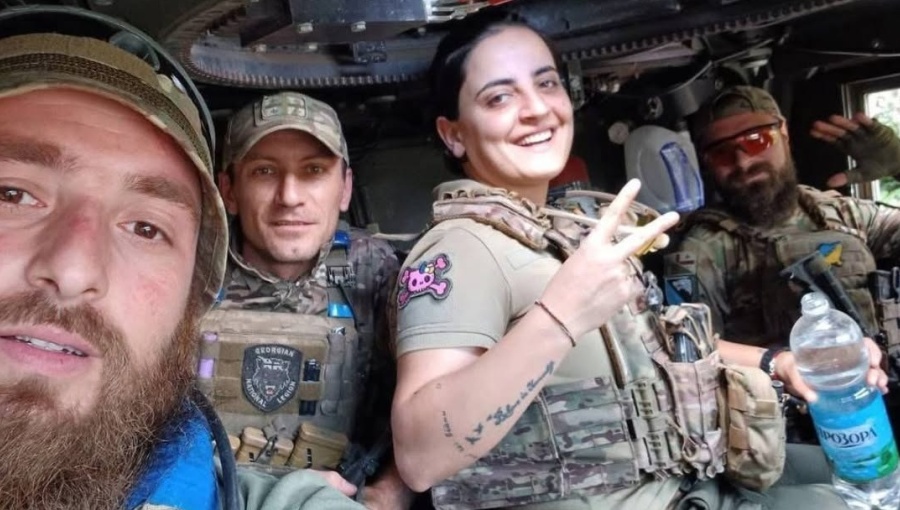
Georgia is prosecuting people who have fought for Ukraine, often even after Russia has already brought cases against the same individuals, according to a report published by Transparency International Georgia.
The watchdog says findings in its report, titled “The Hunt for Georgian Fighters: A Coordinated Operation by Ivanishvili and the Kremlin”, raise the question of whether the Georgian government is trying to win favour with Moscow.
Georgia has had no diplomatic relations with Russia since the countries’ 2008 war, but its ruling Georgian Dream party – founded by Bidzina Ivanishvili who is widely seen as Georgia’s de facto leader – is widely and frequently accused by opposition parties and Western governments of acting in Moscow's interests. The government denies this and says it protects Georgia's sovereignty.
The report focuses on Georgians who have fought for Ukraine after Russia's full-scale invasion of the country started in February 2022. The best known Georgian group of voluntary soldiers in Ukraine is the Georgian National Legion, a unit formed in 2014 during battles in eastern Ukraine's Donbas region. It is commanded by Mamuka Mamulashvili, who said in 2024 that it had from 1,200 to 1,300 fighters. Footage recently posted on social media shows its troops on the front line.
Russia sentenced Mamulashvili in absentia to 23 years in prison in 2024 and designated the Legion a terrorist organisation.
Ukraine's military intelligence has said that no unit by that name is part of its own structure. Slovakia banned Mamulashvili from entering the country after Prime Minister Robert Fico accused the Legion of a role in protests there.
The report says Georgia has brought cases against several of the same people Russia has prosecuted, often soon after the Russian proceedings began. Transparency International Georgia says this does not in itself prove the two governments are working together. But it says that when public attacks on volunteers are followed by prosecution or imprisonment, there are reasonable grounds for suspicion. It dates the campaign of prosecution to 2022, when Irakli Garibashvili, then prime minister, called Georgian volunteers flying to Ukraine "mercenaries", and ruling party figures warned they could lose Georgian citizenship.
Clearest example
The clearest example in the report is that of Giorgi Baramidze, a former defence minister who fought in Ukraine in 2022. In February, a court in Russian-occupied Donetsk sentenced him in absentia to six and a half years as a "mercenary". On September 11, Georgian authorities arrested him in Tbilisi on sabotage and treason charges over remarks about prisoner exchanges made in an online programme, for which he later apologised. The group says the charges have no legal basis and conflict with Article 10 of the European Convention on Human Rights, which protects freedom of expression, and questions why he needed to be held before trial.
It notes that the investigation began after a complaint from the State Service for Veterans Affairs, signed by officials including Malkhaz Topuria, who it says also signed letters to Russian President Vladimir Putin urging Georgian military neutrality and better relations with Russia.
Other cases in the report show different ways the Georgian system has been used. Aleko Elisashvili and Irakli Okruashvili, who both fought in Ukraine and are on Russia's wanted list, received long sentences that the group calls disproportionate or politically driven. Elisashvili was given 13 years for terrorism after allegedly trying to set fire to a courthouse reception area, which the group says justified at most an arson charge carrying up to six years. It has listed Elisashvili as a political prisoner. Okruashvili, jailed for eight months in 2025 for failing to appear before a parliamentary commission, was handed a further five years and three months in a case open since 2013, delivered as his release neared.
Davit Katsarava, an activist who fought in Ukraine, was, it is claimed, beaten by riot police at a protest in May 2024, but was then made the guilty party and fined.
The report also points to Georgian action against the Legion's commander. Mamulashvili says Russia identified more than 70 Legion members through cooperation with Georgia. In 2023, Georgia's State Security Service named him as an alleged organiser of a plot to destabilise the country, and in 2024 it summoned other volunteers for questioning. He says about 300 people who fought in Ukraine are now wanted in Georgia.
The group also notes the UK's sanctions on four Georgians, Mamuka Pipia, Giorgi Iremadze, Nikoloz Mzhavanadze and Paata Abuladze, who met the head of the Russian-installed authorities in Donetsk in 2025. It says he offered those authorities a list of Georgian fighters and asked that they be punished. Abuladze denies acting on behalf of Georgian Dream, the ruling party.
Transparency International Georgia concludes that, taken together, the cases point to a consistent policy of targeting Georgians who have taken Ukraine's side, and calls for scrutiny of whether the policy serves the country's interests. The report does not quote the Georgian authorities.
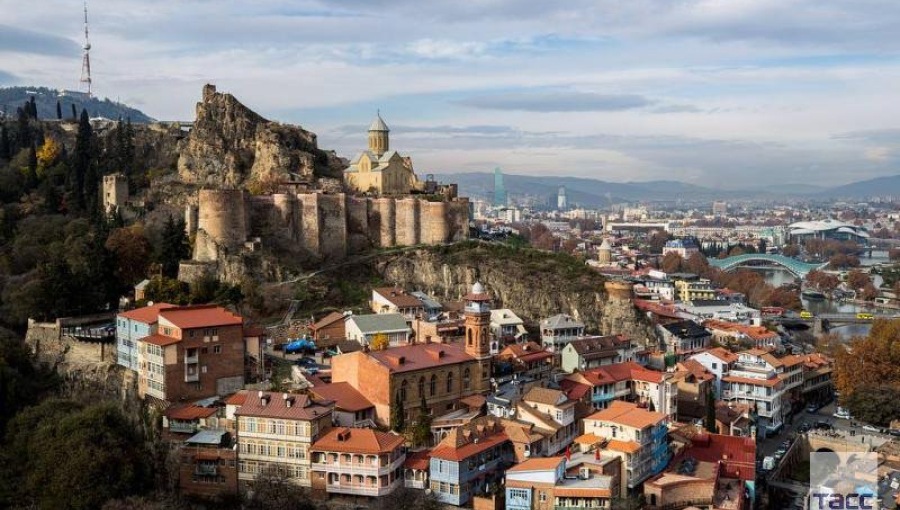
The EU has acknowledged that its policy towards Georgia is neither changing the course of the Georgian Dream government nor protecting Europe's own strategic interests, and will return to the issue in January, JAMnews reported on October 13.
"Our current approach is not creating enough pressure to bring about change, nor is it allowing us to fully pursue Europe's strategic interests. We will return to this issue in January," EU foreign policy chief Kaja Kallas said after a meeting of foreign ministers in Luxembourg on October 12, 2026.
The admission leaves Brussels with an awkward choice: how to raise the pressure on Tbilisi without losing a partner it needs in the Black Sea region. The meeting announced no new sanctions on Georgia, only concern over democratic backsliding, as Georgian Dream presses ahead with a constitutional lawsuit to ban the main opposition parties and the European Parliament calls for sanctions on Bidzina Ivanishvili, the party's founder.
A candidate on paper
Enlargement Commissioner Marta Kos has already described Georgia as a candidate "on paper only", and Brussels is drawing up accession roadmaps for Montenegro, Albania, Moldova and Ukraine without it. "As long as they are not moving forward - and are actually moving backwards because of the laws they have adopted - and until there is progress and steps towards European values, we will not cooperate with them," Kos said.
The EU is instead working with civil society. Its ambassador to Georgia, Pawel Herczynski, announced €38mn ($42mn) of new projects for 2026 at a Europe Day event in Telavi, covering education, jobs, rural development and food quality.
Member states bordering the Black Sea are keen to keep Georgia close. "It is very important to involve them in the dialogue on how we ensure security in the Black Sea region," said Bulgarian Foreign Minister Velislava Petrova-Chamova. Romania's Oana-Silvia Toiu stressed energy and transport links, though she rejected Tbilisi's claim that Brussels is the one boycotting dialogue.
Identity, not institutions
Georgian Dream insists its European choice is unchanged while turning on the EU's institutions. Prime Minister Irakli Kobakhidze says the European Commission's leadership is blocking a reset and claims the EU is demanding adoption rights for same-sex couples, a demand that appears in no official EU document. Parliamentary speaker Shalva Papuashvili challenged Kos to say "exactly what she objects to" in Christian values, though her remarks concerned laws and democratic backsliding.
The rhetoric has sharpened. Papuashvili called the Telavi event a political rally and accused Herczynski of breaching the Vienna Convention, and Tbilisi mayor Kakha Kaladze said that "if you gave Kaja Kallas a map, she wouldn't be able to point out where Georgia is."
The cost of balancing
The government defends its refusal to join sanctions on Russia as pragmatic, and Kobakhidze has cited Washington's easing of restrictions on Russian diesel in its support. That position looks less comfortable after Moscow banned Georgian wines, beer and mineral water this month. "Betting on the Russian market will one day lead to disaster," said Gigi Tsereteli, chairman of the opposition European Georgia party.
Papuashvili points instead to growth that has outpaced EU members and candidates, with the economy expanding by an average of 7.6% in the first eight months of the year. "Those who listen to Brussels suffer economic damage, while those who do not see economic growth," he said. The opposition expects January to bring a tougher EU line, though Tsereteli noted that Brussels has so far been "reluctant to take that final step" of blocking Georgia's path to membership altogether.

No comments:
Post a Comment