Trump Announces $80 Billion Taiwan - Alaska LNG Deal
- Trump announces a potential $70–80 billion Taiwan LNG deal, covering 30% of Alaska LNG's planned output over 20 years.
- South Korea disputes its proposed $50–54 billion investment, insisting participation depends on commercial viability.
- Alaska LNG offers a route around Hormuz, but enormous development costs and unfinalized agreements threaten the project's future.
President Donald Trump has announced a massive new energy agreement with Taiwan, claiming the island will purchase between $70 billion and $80 billion worth of liquefied natural gas from Alaska over the next two decades, as Asian importers scramble to secure supplies beyond the increasingly dangerous Strait of Hormuz.
In a Truth Social post on Wednesday, Trump said Taiwan had committed to purchasing 30% of the planned Alaska LNG project's output for 20 years, alongside a $4.4 billion equity investment.
The president described the arrangement as the largest LNG offtake agreement in history, arguing that the commitments would guarantee the project's success.
Taiwan's Ministry of Economic Affairs subsequently confirmed plans to purchase approximately 6 million metric tons of LNG annually and invest up to $4.4 billion in the development.
However, Taipei stopped short of confirming a binding agreement, emphasizing that investment arrangements, ownership stakes and commercial terms remain subject to further negotiations.
Deliveries could begin as early as 2032, provided construction proceeds as planned.
The proposed Alaska LNG project, led by Glenfarne Group, would transport natural gas from Alaska's North Slope through an approximately 800-mile pipeline to a liquefaction terminal on the state's southern coast, with planned export capacity of 20 million metric tons annually.
Its geographical advantage has become increasingly attractive following the Iran war, which has severely disrupted LNG shipments through the Strait of Hormuz. Alaska offers Asian buyers a direct Pacific shipping route that avoids the Middle Eastern chokepoint entirely.
As Oilprice.com previously reported, the conflict has revived interest in the long-delayed project, with Asian importers increasingly prioritizing supply security over cost.
However, Alaska’s costly pipeline and difficult terrain threaten to outweigh its shipping advantage, with capital costs approaching $2.7 billion per million tonnes of annual LNG capacity. An October 7 article from Oilprice.com's Natalia Katona concludes that geographical challenges may erode the project's competitiveness in a world where LNG supply is expected to grow throughout the late 2020s and early 2030s.
Earlier this month, Trump announced that South Korea would invest approximately $50 billion to $54 billion in Alaska LNG as part of a broader bilateral investment agreement.
Seoul has since challenged that characterization.
South Korea's industry minister, Kim Jung-kwan, said the country had not committed to the investment, stressing that participation would depend on commercial viability and compliance with domestic procedures, according to Reuters.
The uncertainty is significant given the project's estimated $44 billion to $55 billion price tag.
Oilprice.com Tsvetana Paraskova highlighted earlier this month that Alaska LNG's development costs could exceed those of competing U.S. Gulf Coast projects by more than twofold on a capacity-adjusted basis.
For Taiwan and South Korea, the attraction of bypassing Hormuz is undeniable. Whether that geopolitical advantage justifies tens of billions in additional investment remains the central question.
For now, Trump's ambitious Alaska LNG vision has growing political momentum, but its commercial future still hinges on binding supply agreements, committed financing and final investment decisions.
By Tom Kool for Oilprice.com
Taiwan Plans to Invest $4.4B in Alaska LNG, Subject to Negotiations
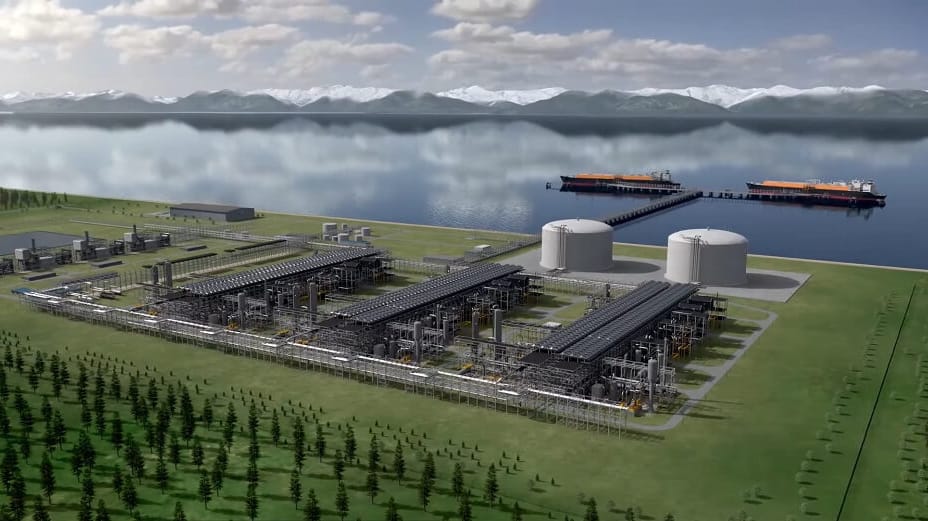
On Wednesday, Taiwan's government confirmed that it currently plans to buy six million tonnes per annum of LNG from the Alaska LNG megaproject, and it intends to make a $4.4 billion investment in the construction of the system, subject to further negotiations.
In a statement on his social media platform on Wednesday, President Donald Trump confirmed that Taiwan had agreed to an "offtake commitment" equaling 30 percent of the plant's output "because this is now a U.S. federal government project." New York-based investment company Glenfarne Group and the state-owned Alaska Gasline Development Corporation are the project's sole owners, holding equity stakes of 75 percent and 25 percent respectively.
Taiwan's energy ministry couched its commitment in terms of an ongoing negotiating process, pledging "an estimated maximum" investment amount only after further study and budgeting. "Specific investment arrangements, shareholding ratios, and related conditions will be handled according to subsequent negotiations and commercial contract procedures," the ministry said.
Alaska LNG is a longstanding proposal for an infrastructure network to pipe abundant North Slope gas resources across the state to Cook Inlet for liquefaction and export. It would require construction of an 800-mile line connecting gas fields on the Artic tundra to an LNG plant rated at 20 million tonnes per annum.
At one time, Alaska LNG had support from BP, ExxonMobil and ConocoPhillips and was advancing steadily as a private-sector venture. All three oil majors backed out in 2016 following an independent assessment of the project's economics. At present, a New York-based investment company and the state-owned Alaska Gasline Development Corporation own the equity in Alaska LNG.
With the need to construct a $9 billion gas treatment plant at the Arctic northern side, then build an 800-mile overland supply pipeline through rugged wilderness, the megaproject is expected to cost $45-55 billion for 20 mtpa of capacity. This works out to as much as $2.7 billion per mtpa, much higher than the $1.6 billion per mtpa capex cost for the LNG Canada Phase 2 project in Kitimat, British Columbia. About 900 nautical miles apart, the two sites are natural competitors: they target the same East Asian market, and at similar scale. Two weeks ago, LNG Canada got the green light from private investors for its $23 billion Phase 2 expansion, which will double its capacity to 28 mtpa.
The Trump administration has been asking Asian allies to make comparable investments in Alaska LNG, and President Donald Trump announced a $50 billion South Korean commitment to the project last week. South Korea's energy ministry responded that a complete commercial feasibility study would have to be done before any final investment decision.

No comments:
Post a Comment