Friday, October 23, 2026


RAGOZIN: Expelled from Latvia after investigating the far right

RAGOZIN: Expelled from Latvia after investigating the far right
IntelliNews columnist Leonid Ragozin has been expelled from Latvia, his home for the last 12 years. / IntelliNewsFacebook
By Leonid Ragozin October 21, 2026

Last week I received a notification about my expulsion from Latvia, my only home where I lived for the last twelve years and the land of my ethnic Latvian ancestors. It referred to an earlier decision by the foreign ministry to declare me persona non grata which has never been officially announced.

Tweeting on the occasion, Latvia’s new populist Prime Minister Andris Kulbergs falsely claimed that I was justifying the Russian aggression in Ukraine. But he did by subtweeting my statement on the expulsion which contained the following line: “I condemn the Russian aggression and support Ukraine’s sovereignty over occupied territories”. This line alone could earn me a prison sentence if I were in President Vladimir Putin’s Russia.

This highlights the absurdity of what I see as my political persecution in Latvia. It doesn’t matter for my persecutors what my real views are and where I stand on Ukraine. They are levying this sadistic punishment on me, I believe, primarily as a long-brewing revenge for an investigation into the links of the current interior minister’s far-right party with Kyiv-based Russian neo-Nazis who propagated white terrorism of Norwegian mass shooter Anders Breivik variety. 

They also appear to have been using me as a soft target in their own political machinations during the election period at the time when xenophobia and paranoid witch-hunt for “Kremlin’s agents”, often imaginary ones as in my case, is one of the best-selling products on the Baltic political market.

No charges, no right to appeal

The notification letter regarding my deportation contained no reference to any statements or actions that could have prompted this decision. But it explicitly states that the decision didn’t warrant hearing out my explanations about any of my perceived transgressions. If I were given a chance to explain myself, I’d learn what I am being punished for. That’s what the Latvian authorities are clearly trying to avoid, perhaps because it would immediately expose the flimsiness and lawlessness of the charges.

Apart from being denied any knowledge about the causes of this punishment, I am also being explicitly denied justice, Designed for diplomats enjoying immunity from prosecution, not for ordinary people, persona non grata status cannot be appealed in court. 

In the run-up to these events, senior Latvian MEP Rihards Kols gave a simple and honest explanation as to why this tool should be applied to me. Arguing on X (Twitter) with Foreign Minister Baiba Braže (who insisted that my expulsion should be handled by the interior ministry), he said: 

“You know perfectly well why the interior ministry path doesn't work: the [security] services don't establish a direct threat, the revocation would be appealed, the state would lose in court. That's exactly why the legislator has provided for the option to include a person on the undesirable list by the foreign ministry – a political, non-appealable decision.”

Kols is no random person in the story.  He is a foreign policy bigwig at the Nacionālā Apvienība (National Alliance) party, which has been campaigning for my deportation for seven years.

A sojourn with Russian Nazis

The story begins in 2019 when I co-authored an investigation exposing a link between Nacionālā Apvienība and Russian neo-Nazis who found a new home in Kyiv after Maidan revolution. They saw post-Maidan Ukraine as a more “racially pure” alternative to Putin’s Russia and described Putin as a heir of “Judeo-Bolshevik regime” that populated Russia with millions of migrants from predominantly Muslim Central Asian states. 

In March that year, their online platform Wotanjugend, still flourishing in Ukraine, circulated the 80-page Russian translation of the manifesto published by white terrorist Brenton Tarrant before he killed 51 people in two mosques in Christchurch, New Zealand. They also distributed manifestos of other white terrorists. They continue, up until now, to glorify the members of BORN - a Russian neo-Nazi gang, with links in Putin’s administration and security services, which murdered antifa activists and migrants, as well as famous Russian lawyer Stanislav Markelov and his Ukrainian friend, journalist Anastasia Baburova.

I met with these Russians in Kyiv, including with one directly linked to BORN, and wrote a story about them in 2016. My Latvian investigation emerged as a by-product three years later. As I kept following Wotanjugend people on social networks, I noticed that a group of Nacionālā Apvienība members engaged with them in Kyiv. 

The Latvian nationalists attended a festival of NSBM (national-socialist black metal) organised in Kyiv by Russian neo-Nazi Aleksey Lyovkin, currently a key RVC figure, and Azov movement ideologist Olena Semeniaka. The festival was accompanied with a conference called Pact of Steel, after the Hitler-Mussolini pact. One of the Latvians, Agris Purviņš, presented a lecture at the conference.

The story, published by the Latvian investigative outlet Re:Baltika and co-authored by its editor, Sanita Jemberga, resulted in Nacionālā Apvienība’s secretary-general Raivis Zeltīts leaving the post and the party. He went on to create a party called Austošā Saule (Rising Sun), the name likely inspired by Greece’s neo-Nazi Golden Dawn with whom he liaised. Despite numerous complaints by the far right, the Latvian media watchdog found that our article adhered to the best journalistic standards. 

As soon as the story was published, I became exposed to an incessant campaign of smear and intimidation by the Latvian far right whose support in society is very limited but who - due to their aggressive toxicity - have a disproportionately outsized influence on the country’s policies. An MP for Nacionālā Apvienība, Jānis Iesalnieks, posted what I interpreted as a death threat on Twitter - a picture of a grave accompanied with a comment that Re:Baltika has chosen to walk along the fir-tree path (referring to the tradition of pathing routes of funeral processions with fir tree branches).

In the next few years, I participated in the investigation into the assassination of journalist Pavel Sheremet, conducted by the Ukrainian media outlet Zaborona, drawing the ire of Ukrainian secret services whose agents were charged as suspects by Ukrainian police detectives. I also became the target of Western war industry lobbyists through my frantic and idealistic attempts to prevent an all-out conflict by chronicling and contextualising the events of 2019-22 that led to Putin’s brutal invasion. I deem the latter a criminal and unforgivable act, in case you wonder.

In 2021, the Ukrainian infowar collective Informnapalm posted a smear piece about me in eleven European languages (the idea is to deplatform and defund me across Europe). The Latvian version was published on the website of Zēltits’ new party. Apart from ridiculous insinuations about my political position and biography, its original version contained the doxxed home address of my elderly mother in Moscow. This version was circulated to million-strong audiences by prominent infowar personalities and senior officials, such as former Estonian president Toomas Henryk Ilves. 

At that point, I got swamped by an avalanche of death and anal rape threats posted by government-connected pro-Ukrainian and far right infowar groups. It was daily, unspeakable and sadistic horror. 

In April 2022, the then Latvian defence minister Artis Pabriks published an official letter falsely accusing me of being an agent of Kremlin’s influence and demanding my deportation from Latvia after my rather innocent interview with the Latvian public broadcaster LSM. This happened in the context of the election campaign in Latvia. Pabriks led, along with Ilves’s wife, the candidate list of a party which lost miserably and was knocked out of the parliament. There were no consequences for me at the time.

Electoral machinations

The events of 2026 also unfolded in the election context. In the last week before the election, held in October, I became a subject of the campaign. This happened on the initiative of two ministers from the parties which fared badly in opinion polls and at least one of then was on the verge of being knocked out - the far right Nacionālā Apvienība and the centrist Jaunā Vienotība (New Unity). 

Interior Minister Jānis Dombrava (NA) and Foreign Minister Baiba Braže (JV) took to arguing on X on the subject of which of them should be responsible for deporting me from Latvia. For a few crucial days before the vote, they kept pointing fingers at each other because they were visibly afraid of taking political responsibility for what clearly smacked of Putin-style political persecution.

That exchange produced the only instance when a Latvian official listed my perceived misdemeanours which he thought were sufficient to kick me out of my home. Dombrava claimed that I “blamed the West for Russia's aggressive actions”; “spoke about the ineffectiveness of sanctions, labelling them as ones that provoke Russia”; “sought to justify Russia's aggressive foreign policy”,  “discredited Ukraine, its political leadership, and its armed forces”.

Apart from criticising the ineffectiveness of Western sanctions (obvious to all of my sources in Russia), each of these accusations is a piece of slanderous falsehood. But more importantly, what Dombrava is listing are thought crimes that might be punishable in an Orwellian totalitarian society, not in a democratic state confined by the rule of law. The bit about discrediting the Ukrainian armed forces is particularly amusing, given how it mirrors the draconian Russian laws on discrediting the Russian army which threaten me with a lengthy prison sentence if I ever return to Russia - for nearly all of my publications in recent years. 

The politicians involved in the spat pointed out that “competent bodies”, a Soviet-era expression standing for secret services, didn’t see any grounds for declaring me a threat to Latvia’s national security. It is worth noting that I was screened by the Latvian security service, VDD, every year for nine years in a row until I received the status of EU permanent resident in 2024 and there has never been an attempt by VDD to caution me or warn me about any articles or statements.

At that point, Braže refused to succumb to the pressure from NA members. But when the votes were counted, it turned out that both parties had managed to enter the parliament, having suffered considerable losses. Braže’s Jaunā Vienotība came last, receiving 19% fewer votes than in the previous election. But having turned into parliamentary dwarves, the two parties emerged as potential kingmakers in the new coalition, led by the winner - Apvienotais saraksts, the party of the populist Prime Minister Andris Kulbergs. 

My sources suggest that coalition-shaping manoeuvres may have prompted Braže to make a drastic decision and announce on X on October 7 that her ministry had begun the procedure of declaring an unnamed Russian citizen persona non grata. She said the decision was prompted by “new information from competent bodies”. Simultaneously, Latvian officials began anonymously informing Latvian and international journalists that the person in question was me.

Six days later, I received an official notification from the department of migration (PMLP) stating that I was being expelled on the grounds of the foreign minister’s decision to declare me persona non grata.

Character assassination 

Because the Latvian government has made every effort to conceal from me the official reasons for the expulsion, I am left wondering what may have prompted Braže’s change of tack and this inhumane, sadistic punishment levied on a person who had already fled a cruel tyrannical regime in his country of citizenship. Or what new information the “competent bodies” may have obtained.

The only clues I am getting is from the industrial smear campaign, which accompanied the story at the time when the ministers took to discussing my deportation in public. 

The campaign was led by the far right Polish channel Visegrad24 which has been accused multiple times of spreading fake news, including by yours truly. Infowar personalities, like Michael Weiss and Oz Katerji, also joined in, distorting my statements and spreading outright disinfo. Katerji claimed that I travelled back to Russia after March 2022. That’s a blatant lie.

The main accusations focused on my interview with Canadian journalist Aaron Mate. Two elements of the interview have been cherrypicked to build a case against me. To put things in perspective before I address these elements, AI-powered analysis of the interview reveals 17 instances in which I make statements that fall under the Russian draconian laws on discrediting the armed forces, five of them with “high risk” of imprisonment, should I ever step on the Russian soil again. But my persecutors couldn’t care less about that.

The first episode pertains to a statement in which I tried to explain the Kremlin’s line of thinking in the conflict. I said that Putin’s regime sees Russia as the underdog that’s always compelled to strike first. This is what I believe the Kremlin thinks, not what Leonid Ragozin thinks. However this line was mendaciously used by Infowar personalities to accuse me of justifying Russia aggression. 

Here is the direct quote: “The way it works is, I guess the main thing to start with is that Russia, or at least the Kremlin and Putin's regime, they don't believe they're fighting with Ukraine. They're fighting with the West. So by definition, they consider themselves as underdogs in this battle.” 

The key word here is “they” and I carry on:  “But because they always consider themselves as the underdogs and as the side that is being under constant pressure from the West, encroaching on its former sphere of influence, on its strategic interests, it compels them to respond… with brutal force.” (The quote is shortened for clarity).

What I got wrong

The second bit, I admit, is more problematic and I regret that I explained myself awkwardly, failing to express my genuine position on a sensitive issue. Russia, I said, “as a general rule” and “with many exceptions” tries to avoid killing civilians. 

Direct quote: “Whether it's because the Russian regime is more brutal by definition, or whether it's because Russia has a greater capacity, there was obviously more brutality on the Russian side. But as you said, as a general rule, they went for military and industrial targets and they tried to avoid killing civilians or they tried to avoid striking civilian targets. There were many exceptions from this.”

On “civilian targets”, it’s just a slip of tongue which contradicts what I said just a few minutes earlier as I was justifying Ukrainian drone attacks against Russian airports (as “Kremlin agents” routinely do, you know): “But then, of course, Russia attacks loads of civilian targets. So Ukraine has the right to do so, obviously”. 

The problem is with what I said about civilians. What I tried to convey there was that we are not yet at the stage of escalation in which Russia has begun conducting mass and deliberate destruction of high-rise apartment blocks in cities in which the vast majority of Ukrainians live, in Kyiv, Odesa and other main population centres away from the frontline. But I did mention in the interview that apartment blocks do often get hit - either directly by the Russians or as a result of the work of Ukrainian air defences (and god forbid I should blame the Ukrainians for defending themselves).

Then I point out what most observers of this conflict know well - that the ratio of civilian to military casualties in this conflict is disproportionately low compared to pretty much any other conflict in recent history: “The number of civilian casualties compared with the number of military casualties was quite low for all sorts of reasons, but one of the reasons is that I don't think there is a deliberate policy by Russia to target civilians, which may change. And there is also a way in which the Russians do target civilians, turn their lives into a nightmare by destroying critical energy and heat and water supply infrastructure. In that sense, even though they don't kill many civilians, they make their lives quite terrible." Of course my haters only used the first sentence in this chunk of the interview and forgot the second. 

But I deeply regret these insensitive words because I failed to mention the systematic killing of civilians by Russian drone operators in frontline cities like Kherson, as well as mass and deliberate destruction of high-rise buildings during the storming operations in Donbas. It am sorry for hurting the feelings of those affected by these brutal actions by the Russian military, directly or indirectly. 

Of course I mentioned and condemned these attacks on many previous occasions as my tweets and article can attest. “Horrible video and self-evident war crime by Russian drone operators”, I wrote on August 4 over President Volodymyr Zelensky’s tweet about a human safari incident in Kherson.

So I wonder how would you answer this question: Is evicting me from the only real home that I ever had in my life for this slip is an adequate punishment for what was clearly was a non-deliberate mistake? 

If Latvia’s security service ever allowed me to express myself on the issue, I would have happily done so. But the fact that I was explicitly refused to provide one and that no real accusations have been brought against me, makes me think that my mistake in Aaron Mate’s interview has nothing to do with the real reasons for my political persecution. 

The true reason perhaps is my investigation into Latvia’s main far-right party as well as my criticism of the way the way the West has been handling this conflict and its motives within it, which I stand by. 

More than anything, I am hated for instances where I point to the erosion of democracy and rule of law in Ukraine and the rest of Eastern Europe, falsely justified by the necessities of war. I get maximum bashing when I call it what I think it is: Putinisation. 

Too harsh? Well, my persecution in Latvia appears to prove me right.


Japanese firms shut websites over PHP security flaw

Japanese firms shut websites over PHP security flaw
/ Unsplash - Markus Spiske


By IntelliNews - Tokyo Bureau October 23, 2026

Sony Group (TYO: 6758), Nojima (TYO: 7419) and Bandai Namco Holdings (TYO: 7832) were among the Japanese companies that took online services offline while dealing with a vulnerability in the PHP programming language, the Yomiuri Shimbun reported on October 23.

The disruption reached retail, transport and finance. Companies chose to suspend web services before any harm occurred, putting the protection of customer data ahead of convenience as cyberattacks become more frequent.

Sony launched emergency maintenance on the night of October 21 at Sony Store, the online shop selling the group's smartphones and game consoles. Some services were unavailable until around 7pm the next day. The group also shut down the official website of its semiconductor subsidiary.

Electronics retailer Nojima took its official website and online shopping site down at 8:30pm on October 21. It brought them back on the morning of October 22 once it had confirmed they were secure. Bandai Namco began maintenance at about 10pm on October 21, and by 5pm on October 22 parts of its amusement arcade online services and online store were still suspended.

Central Japan Railway halted bookings for the private booth workspaces it operates at major Tokaido Shinkansen stations.

Takahashi, of Tokyo-based security company Trend Micro, said applying software fixes takes some time. He added that the gap in recovery between companies came down largely to whether they had organised staff with the business impact in mind, and that firms which had not prepared for such a scenario would struggle to respond quickly.

Banks and other financial institutions restricted some web services. Payment functions such as deposits, withdrawals and transfers were not affected. Mitsubishi UFJ Morgan Stanley Securities suspended online identity checks and other services from the evening of October 21.

Tokio Marine & Nichido Fire Insurance stopped displaying its website from the early hours of October 22. A spokesperson said the company had emergency patches ready but went offline to avoid damage while the work was carried out. The insurer described the decision as a difficult one. It said it took precautionary action to keep customer data safe and to prevent a prolonged outage.

Another financial industry source said their systems had stayed offline on vendor instructions until the vulnerability was fixed. The source added that preventive shutdowns to stop customer data leaks would become more important.


Myanmar to import Russian LNG

Myanmar to import Russian LNG
/ Shaah Shahidh - UnsplashFacebook
By IntelliNews - Phnom Penh Bureau October 22, 2026

Myanmar is preparing to import Russian liquefied natural gas (LNG) while Moscow is also set to supply satellite navigation, communications and Earth observation technology. The two countries signed 12 agreements and memoranda when Myanmar President Min Aung Hlaing visited Moscow in August 2026 and met Russian President Vladimir Putin at the Kremlin.

According to Irrawaddy, the deals give Russia a fresh outlet for its energy exports as Western sanctions and the war in Ukraine strain its finances. Brown said the liquid portion of Russia's National Wealth Fund fell to a record low of about $159bn on September 1. For Myanmar, the technology arrives as its armed forces fight ethnic armed organisations in a conflict dating back to independence in 1948.

The Myanmar President's Office said the gas talks also covered onward deliveries of Russian LNG to China and Thailand, which would make the country a possible regional hub. Myanmar holds proven reserves of about 22.5 trillion cubic feet of gas and exports much of its output.

In April, Russian Energy Minister Sergei Tsivilev opened energy talks with Ko Ko Lwin, Myanmar's Energy Minister, covering crude oil, LNG and petroleum products. The Myanmar side, through its Ministry of Electricity and Energy, sought long-term supply, secure transport, quality guarantees and favourable prices, and the ministry also concluded a Memorandum of Cooperation with RC-Investments.

After a four-year pause, Myanmar began importing LNG again in late 2025. The cargoes originate at the Bintulu complex in Malaysia and are offloaded at the Thilawa floating storage unit close to Yangon. According to a Kpler forecast, imports in 2026 will reach roughly 0.4mn tonnes, chiefly to supply the Thanlyin and Thaketa power plants.

Russia's commitments under the Roscosmos agreement include an ASPOS opto-electronic telescope station, a COSPAS-SARSAT ground station, navigation data and stations for satellite navigation measurements, as well as help in choosing and training astronauts from Myanmar. Min Aung Hlaing held talks with Roscosmos Director General Dmitry Bakanov on August 19, covering nano-satellites, Earth observation imagery and Rassvet, a low-orbit communications system.

Bureau 1440, the developer of Rassvet and part of Russia's X Holding, describes the network's satellites as "5G base stations in orbit". The network targets an orbit of about 800 km and advertises speeds of up to 1 Gbit/s.


Rolex, vaccine lobbyists and call girls haunt Flávio Bolsonaro days before Brazil vote

Rolex, vaccine lobbyists and call girls haunt Flávio Bolsonaro days before Brazil vote
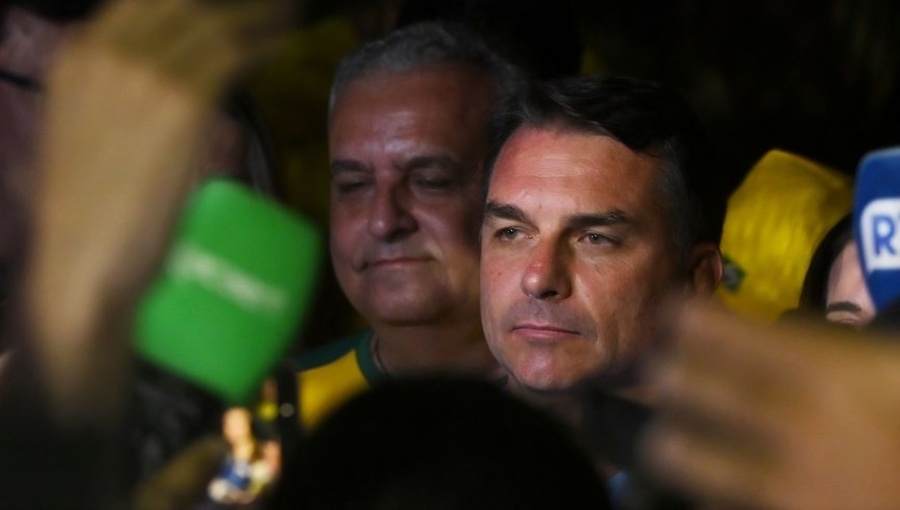
The allegations come as the race is too close to call. A Quaest poll published on October 21 after the first public debate three days earlier put Flávio Bolsonaro on 45% and Lula on 44%, a statistical tie given the two-point margin of error. / xinhuaFacebook
By IntelliNews Latam desk October 22, 2026

Flávio Bolsonaro, the right-wing frontrunner in Brazil's presidential election, was entertained on a speedboat in Brasília by businessmen seeking a Covid-19 vaccine contract in 2020, at a party attended by call girls where he was given a Rolex watch, according to an investigation published four days before the October 25 runoff against President Luiz Inácio Lula da Silva.

The bombshell report by Piauí, a Brazilian monthly magazine, alleges that the senator spent the afternoon of July 17 2020 on Lake Paranoá with executives from Precisa Medicamentos, which was then trying to sell Brazil's government the Covaxin vaccine developed by India's Bharat Biotech. Brazil recorded more than 1,100 Covid deaths that day while Jair Bolsonaro, the senator’s father and then president, repeatedly dismissed the threat posed by the virus.

The allegations come as the race is too close to call. A Quaest poll published on October 21, after the candidates’ October 18 first heated debate, put Flávio Bolsonaro on 45% and Lula on 44%, down from a 46% to 44% lead a week earlier and within the two-point margin of error.

Flávio Bolsonaro had not commented by the time of publication, Piauí said.

According to the magazine, Danilo Trento, Precisa's institutional director, and Francisco Maximiano, its owner, flew from São Paulo to Brasília the night before with a travel agent and three women brought along for the occasion. The private jet had previously been used by Daniel Vorcaro, the jailed former owner of Banco Master, whose collapse has become the dominant corruption scandal of the campaign.

Piauí said it reconstructed the outing from interviews with an unnamed person who was on board, as well as pilots, parliamentary aides and a former congressman, and from financial and phone records obtained by congressional inquiries. It alleges that the senator went below deck with more than one of the women and that, once the boat had docked, Trento took the Rolex off his own wrist and put it on the senator's.

Trento cut off contact when told the details of the story, the magazine said. Maximiano's lawyers did not respond to its requests for comment.

The Covaxin deal became the centrepiece of a 2021 Senate inquiry into the Bolsonaro government's handling of the pandemic. The contract priced doses at BRL80, against about BRL56 offered by Pfizer and BRL18 by AstraZeneca. It was cancelled before any payment was made after a health ministry official raised concerns. The inquiry's final report recommended charges against 78 people, including Flávio Bolsonaro, Trento and Maximiano.

At the time, the senator defended Precisa. He later dismissed the affair, saying: "It's the first time in my life I've seen a misappropriation of public funds where not a single real was paid."

Piauí also reported that three months after the boat trip, the senator arranged and joined a video call between Maximiano and Gustavo Montezano, then head of the state development bank BNDES, to discuss financing for a new telecoms venture. BNDES said at the time that no financing was agreed. For his part, Flávio Bolsonaro said he had no "commercial or financial relationship" with Maximiano.

Brian Winter, analyst and editor-in-chief of Americas Quarterly, described the report as "the long-rumoured piece of anti-Flávio kompromat" expected in the final days of the race. But he doubted it would shift the outcome on its own, arguing that "long magazine articles are not what move voters in 2026".

The bigger risk for the right-wing senator, according to Winter, lay in the October 23 final televised debate, where Lula will likely press him to deny the report. The race could turn if video or images of the outing surfaced, with Flávio Bolsonaro floating that possibility during the campaign.

The senator already faces a series of investigations. In May, leaked messages published by The Intercept Brasil showed he had negotiated up to $24mn from Vorcaro to fund a biopic of his father, former president Jair Bolsonaro, who is in jail after being convicted of plotting a coup following his 2022 defeat to Lula. Flávio Bolsonaro said the funding was a private sponsorship and that no favours were exchanged. Federal police are also investigating him for suspected money laundering linked to lawyer Willer Tomaz, according to reports on October 19. He denies wrongdoing in both cases.

In September, the news site PlatôBR reported that the senator had received a separate Rolex, worth BRL305,000 ($60,000), bought by a lawyer who lobbied authorities in Brasília.

Earlier scandals show that revelations can hurt him, at least temporarily. After the film-funding disclosures in May, an AtlasIntel/Bloomberg survey showed Lula moving from narrowly behind to a lead of about seven points. Political analyst Lula Guimarães told the AP at the time that the damage would have been greater had the allegations surfaced closer to election day. Flávio Bolsonaro eventually recovered and topped the October 4 first round with 47.03% of valid votes against Lula's 45.16%.

The seasoned leftist incumbent, meanwhile, has his own headaches on corruption. Lula spent 19 months in prison on corruption and money-laundering convictions that were later annulled. His eldest son, Fábio Luís Lula da Silva, is under federal police investigation over alleged influence peddling linked to health ministry dealings, and is also caught up in a pension-fraud inquiry. He denies wrongdoing, and Lula has said he will not shield him. In June, Jaques Wagner, a close ally, stepped down as the Workers’ Party leader in the Senate after the Supreme Court accused him of taking payments and an apartment worth more than $1mn in exchange for defending Banco Master’s interests in Congress.

Analysts have argued that Brazil's deep polarisation makes committed voters unlikely to switch sides over corruption claims, and that disillusionment is more likely to keep voters at home. Abstention reached 21% in the first round on October 4, the highest since 1998, despite compulsory voting.

A BBC News Brasil poll aggregator puts Flávio Bolsonaro on 46% and Lula on 44%, with their likely ranges of support overlapping. Investors have broadly backed the senator as more likely to rein in public spending, and the Ibovespa index jumped 7.7% to a record after his first-round lead.


Southeast Asian neighbours fume as Indonesia’s fire crisis chokes millions

Southeast Asian neighbours fume as Indonesia’s fire crisis chokes millions
/ Malachi Brooks - UnsplashFacebook
By IntelliNews - Surabaya Bureau October 23, 2026

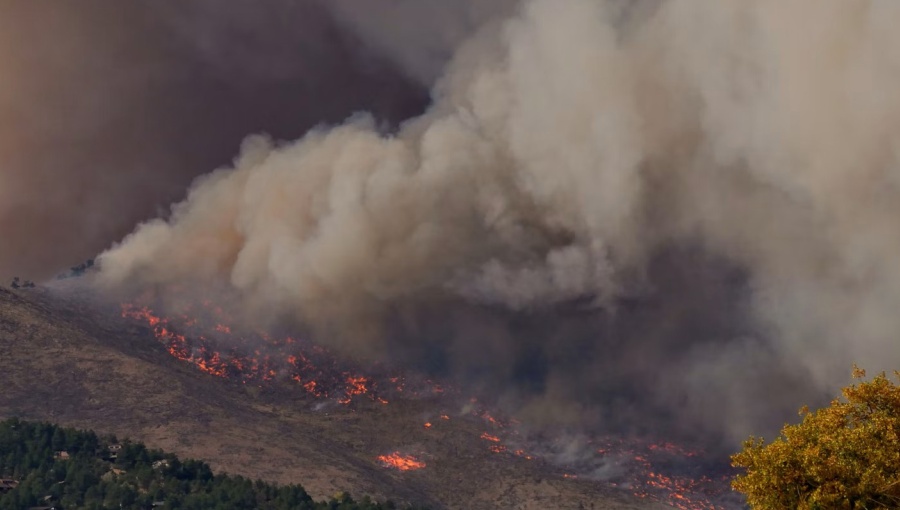
While severe drought driven by a "Godzilla" El Niño provided the dry spell across Southeast Asia in 2026, recent reports show that Indonesia’s wildfires, rampant in Sumatra and Kalimantan as well as in Papua and some areas in Java, are not an unavoidable act of nature. The fires are a predictable, preventable outcome of deliberate man-made land clearing attempts.

As a result, two neighbours of Indonesia, Singapore and Malaysia have become the most outspoken collateral of the haze. In an effort to hold accountable the responsible parties, Singapore’s National Environment Agency (NEA) has issued formal Preventive Measure Notices (PMNs) to 10 Indonesian concession owners whose lands were matched to cross-border haze plumes, The Straits Times reports. The outcry from both countries has flooded the internet, begging Indonesia to take over control of the land.

The devastating effects of land-clearing

It has been found that commercial agricultural operators and forestry concession holders routinely employ illegal "slash-and-burn" methods to clear land. This is the cheapest way to clear peatland for palm oil, timber, and pulp plantations, but is a reckless move that ignites underground carbon deposits that can burn uncontrollably for weeks.

What begins as corporate cost-cutting on concession land in West Kalimantan or South Sumatra rapidly expands into a multi-billion-dollar environmental crime, destroying local ecosystems and exporting toxic particulate matter across international borders.

As a result, Indonesian law enforcement and environmental agencies have increasingly targeted the corporate entities profiting from these operations. National Police Chief Suyudi Ario Seto confirmed that authorities are investigating 98 corporate cases, with investigators gathering evidence to hold company owners and major shareholders criminally liable, Tempo reports. Simultaneously, the Ministry of Forestry has sealed off 57 commercial sites and imposed administrative sanctions on 32 plantation companies covering more than 12,900 hectares of scorched land.

Cross-border legal actions have intensified scrutiny on specific market players. Under its Transboundary Haze Pollution Act (THPA), some of the named companies include the Kalimantan-based concessions: PT Buana Megatama Jaya, PT Mananjung Hayak, and PT Baratama Putra Perkasa and Sumatra-based concessions: PT Bumi Andalas Permai, PT Bumi Mekar Hijau, PT SBA Wood Industries, PT Paramitra Mulia Langgeng, PT Sumatera Alam Anugerah, PT Hutan Lestari Raya, and PT Bangkanesia.

This interconnected supply chain has prompted regulatory bodies like the Singapore Exchange (SGX) to demand formal disclosures from major listed agribusinesses, including Golden Agri-Resources, Wilmar International, and Bumitama Agri.

However, investigations reveal that corporate responsibility is not purely domestic. Indonesian authorities and independent forest watchdogs confirm that many targeted concessions involve complex foreign ownership structures, including equity stakes, parent holding groups, and joint ventures linked to investors in Malaysia and Singapore. But the fact that this happens under the sovereignty of Indonesian land, still puts the country under the spotlight.

The domestic human toll and economic loss

Within Indonesia, the consequences of this corporate negligence are felt most acutely by vulnerable populations and smallholders. Over 300,000 people have suffered from acute respiratory infections (ARI) since August, with almost 70,000 cases involving toddlers diagnosed with bronchitis and pneumonia, DW reports.

According to the Centre of Economic and Law Studies (Celios), total potential economic losses from January to August 2026 stand between IDR39.29 trillion ($2.2bn) and IDR123.1 trillion. Direct commercial disruptions in retail, agriculture, and hospitality reached IDR29.54 trillion (0.23% of national GDP).

When accounting for medical treatment and lost income for an estimated 17.4mn people exposed to hazardous smoke, health-related expenses surge to IDR93.56 trillion, an amount equal to 67.6% of Indonesia's 2026 national health budget. At the grassroots level, smallholders in provinces like South Kalimantan have suffered catastrophic losses as fires spread into family plots, destroying crops and forcing low-income families into medical debt.

The number of fire victims have increased significantly too. The latest casualty number is five - people who were killed volunteering in firefighting at Bromo Tengger Semeru National Park in East Java. the five deceased were trapped by sudden flare-ups and strong winds. Four other deaths were caused by smoke inhalation and include an infant and an elderly person as well as people with pre-existing asthmatic conditions.

In what could be classified as one big gas chamber given NASA’s satellite imaging, carbon monoxide levels are surpassing normal levels meaning that the victim tally might increase even post-haze as long-term health problems kick-in.

It is not only people affected as wildlife is also suffering from the loss of their natural habitat, Kompas reports. The WWF notes that Kalimantan is home to around 222 mammal species (including 44 endemic creatures) 420 types of bird (37 endemic), 100 amphibians and 394 fish (19 endemic). And the ongoing forest and land fires in East Kotawaringin Regency (Kotim), Central Kalimantan have devastated local wildlife habitats, driving protected species into human settlements and agricultural land in search of food and refuge.

Between August and October 2026, the Sampit Post of the Natural Resources Conservation Agency (BKSDA) and local rescue volunteers successfully evacuated multiple animals in weakened, sick, or injured states, including an injured silvery lutung (Trachypithecus cristatus) in Tanah Mas and four orangutans across Baamang and Mentaya Hilir. Notably, a 20-year-old female orangutan named Ira was rescued on October 14 in Baamang Hulu after her destroyed part of the forest forced her onto a resident's farm; BKSDA continues to monitor five additional hotspot sightings where orangutans have encroached upon residential and plantation perimeters.

Many other animals meanwhile have succumbed directly to the flames and habitat destruction before rescue teams could reach them. Joint patrols conducted by animal welfare activists and BKSDA officers in burnt-out concessions, such as Terantang Hilir Village, have uncovered carcasses of protected wildlife, including two pangolins and various snake species killed during the infernos. Evacuation efforts remain fraught with danger and logistical hurdles, as rescuers and volunteers are forced to navigate treacherous terrain marked by deep potholes, fallen root networks, and thick toxic smoke, highlighting the severe biodiversity loss caused by the recurring wildfires.

Regional casualties

The toxic haze generated by these man-made fires is not confined to a single geographic vector. At first, Indonesia insisted that the haze wouldn’t travel north towards Singapore and Malaysia. But as the severity of the fire increased, the smoke has not only moved exclusively northward, but the wind corridors have even dispersed hazardous PM2.5 haze in every direction, impacting multiple neighbouring nations.

The first is Singapore, with its 24-hour Pollutant Standards Index (PSI) that has climbed to read 230 - the equivalent of a very unhealthy reading. Economist Prof. Euston Quah estimates the 2026 haze could cost Singapore up to SGD3.9bn ($3.1bn) in healthcare costs, lost tourism, and reduced business productivity.

In Sarawak, Malaysia on the island of Borneo, the Air Pollutant Index (API) reached a hazardous 201, and authorities extended school closures across multiple districts. Sunway University economist Prof. Yeah Kim Leng estimates daily economic losses between MYR20mn ($4.9mn) and MYR50mn, leading local municipal leaders to publicly suggest that Indonesian regional authorities compensate affected Malaysian states for health and tourism damages.

To the south, Timor-Leste became the latest haze casualty, disproving the assumption that the haze only travels north. The thick smoke plumes drifting south forced Timor-Leste authorities to issue a three-day nationwide closure of all schools starting on October 15 to protect children from severe air pollution.

For the Philippines and overall broader corridor, the local health departments in the central and southern Philippines issued stay-at-home advisories due to airborne haze, while Australian meteorologists actively tracked high-altitude smoke corridors extending over the Indian Ocean toward Christmas Island.

Diplomatic friction

While President Prabowo Subianto's administration has deployed more than 60,000 security personnel, 47 aircraft, and accepted technical assistance from Japan and neighbouring ASEAN states, regional partners maintain that suppression is merely reactive.

Singapore Senior Minister K. Shanmugam noted that while taking administrative or legal action against foreign-linked concession holders carries diplomatic nuances, enforcing laws against irresponsible operators aligns directly with Indonesia's own public health interests. With the ASEAN Coordination Centre for Transboundary Haze Pollution Control maintaining a Level 3 Alert, neighbouring countries are demanding stronger preventive law enforcement, strict land-use oversight, and the elimination of financial incentives for illegal burning to break the annual cycle of man-made environmental destruction.

The situation within Indonesia is slowly escalating. The general public’s distrust with the government due to the way they are handling the haze problem has driven local environment organisations to protest at Jakarta's Welcome (Selamat Datang) landmark with members of Greenpeace Indonesia hanging signs calling the government incompetent in mitigating the expanding fire as well as for corruption. At least eight people have been detained by police because of the protests.

And still the haze enveops the region. More coordinated protests are expected in the days to come as the whole region watches the government’s ever-changing strategies in putting the fires out.

Serbia’s student movement stages mass rally ahead of snap election

Serbia’s student movement stages mass rally ahead of snap election
/ studenti.org.rsFacebook
By Tatyana Kekic in Belgrade October 23, 2026

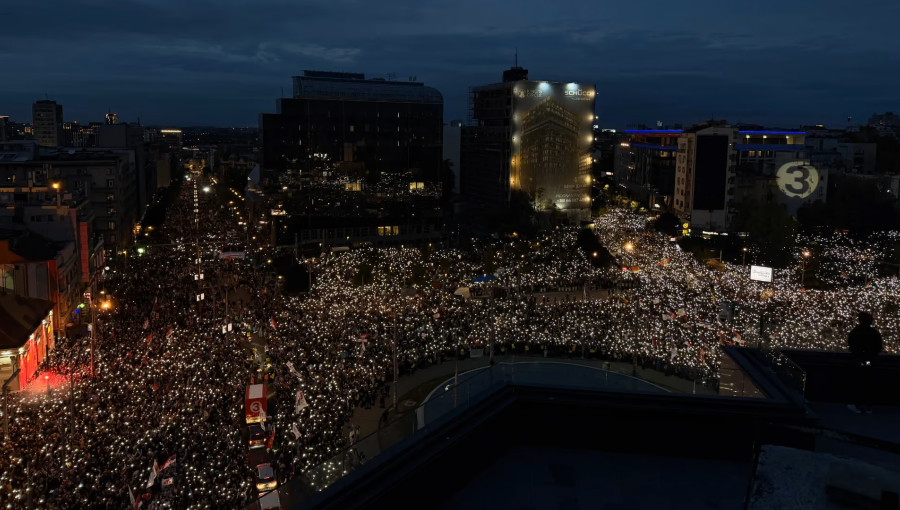
Tens of thousands of students and their supporters filled central Belgrade on the evening of October 22 in a final show of strength before the October 25 parliamentary election, as the ruling party staged its own rally across the city.

The atmosphere at Slavija Square was jubilant. Flags and banners supporting the student movement waved above the crowd, music played and people sang together, raising the torches on their mobile phones.

Long columns of students and supporters had set off from different parts of the Serbian capital, converging on the central roundabout. They cheered, whistled and waved as they made their way through the streets, drawing residents to their balconies to watch or join the procession.

By the evening, tens of thousands had gathered at Slavija for the final rally of the Student List, the movement’s electoral vehicle, under the slogan “Victory Is Calling”.

The euphoric scenes offered another illustration of the movement’s ability to mobilise people across Serbia after nearly two years of regular student-led protests, street blockades and demonstrations. Supporters have travelled to Belgrade on foot from towns and cities across the country in the days leading up to the rally.

The question is whether that enthusiasm can translate into votes on Sunday, when Serbs elect a new parliament.

A tale of two cities

Across the city, the ruling Serbian Progressive Party (SNS) held its own final campaign rally at a sports hall in New Belgrade, where former president and candidate for prime minister Aleksandar Vucic addressed supporters.

Outside the venue, buses brought in party supporters as patriotic music played over loudspeakers and pleskavica (Serbian burgers) were prepared.

Vucic, who has dominated Serbian politics for more than a decade, delivered his five-point programme, promising improvements in living standards, wages, pensions, healthcare, energy and education.

He accused the student-backed list of lacking answers to the country’s problems. When some members of the audience began chanting insults directed at the students, calling them ‘Ustashe’ (Croatian fascists), Vucic intervened from the stage to quieten them before urging supporters to vote for his list, United Serbia, on Sunday.

The two gatherings presented contrasting images of the campaign’s final hours: an established political party relying on its organisation and a grassroots students movement seeking to turn a mass protest movement into an electoral force.

The rallies came as the campaign entered its final hours before the start of the pre-election silence at midnight.

From protests to the ballot box

The student movement emerged after a concrete canopy collapsed at the railway station in Novi Sad on 1 November 2024, killing 16 people. The disaster prompted widespread anger over alleged corruption, government accountability and failures of public institutions.

The movement has since attracted support well beyond university campuses, with students taking their message to smaller towns and villages, including areas where the ruling party has traditionally enjoyed strong backing.

Its campaign has also made extensive use of social media to reach voters, organise events and build a sense of collective purpose.

According to data reported by BBC Serbian, the SNS spent about €105,000 on advertising on Meta platforms, including Facebook and Instagram, between 16 September and 15 October. The Student List spent around €122,000, the highest amount among election participants.

But the movement faces a formidable opponent. The SNS has extensive local networks, greater access to traditional media and the support of many older voters and public-sector employees. The campaign has also been marked by allegations of pressure on public-sector workers and concerns about the fairness of media coverage.

The Centre for Research, Transparency and Accountability (CRTA) found that government representatives accounted for 69% of political airtime on national television during extended prime-time broadcasts between 9 and 30 September, compared with 31% for the opposition. Of coverage devoted to the Student List, 88% was negative in tone, the organisation reported.

The student movement, meanwhile, has yet to establish the same kind of nationwide political organisation as the ruling party. Its electoral challenge will depend in part on whether the enthusiasm seen at rallies can bring undecided voters and those who rarely vote to the polls.

Despite the odds stacked against the opposition, opinion polls published during the campaign have suggested a close contest. A survey by NSPM published on October 20 even put the Student List ahead on 44.4% and United Serbia on 42.7%.

Whether the energy of the streets can withstand the advantages of an entrenched political machine will become clearer when polling stations close on Sunday.