Friday, September 25, 2026

Turkish forces to withdraw from strategic military base in northern Iraq

A Turkish soldier patrols the area near the Turkey-Iraq border, in the province of Sirnak, Tuesday, Oct. 23, 2007.
Copyright Copyright 2007 AP. All rights reserved.


By Burcu Basaran
Published on

Turkey will gradually hand over the Bashiqa-Zilkan camp, where it has had troops since 2015, to the Iraqi government.

Turkey has reached an agreement with Baghdad to gradually transfer control of the strategic Bashiqa-Zilkan military base in northern Iraq to the Iraqi government.

The deal follows an understanding between the two countries over the progress Iraq has made with regard to strengthening security measures in the area as well as reasserting Iraqi state authority there.

The decision was announced in a joint statement issued after a meeting in New York between Turkish President Recep Tayyip Erdoğan and Iraqi Prime Minister Ali al-Zaidi on the margins of the United Nations (UN) General Assembly.

According to the statement, Turkey will hand over the camp in stages, in line with an agreed timetable.

However, no specific date has yet been set for the withdrawal of Turkish troops.

The United States Ambassador to Turkey and special envoy for Syria and Iraq, Tom Barrack, has welcomed the agreement.

"History rarely announces its turning points; it stitches them quietly," he wrote in a post on X. "Ankara returning Zilkan to Baghdad by agreed mechanism and timeline is one such thread: Iraqi sovereignty and Turkish security, both served. What looks like chaos from afar is a region weaving its own order".

The deal

Turkey and Iraq have agreed on fully establishing the authority of the Iraqi state in Sinjar and ending the presence of "banned foreign armed elements" in the region.

In the joint statement, it was also stated that the two countries had agreed to deepen their security cooperation.

Turkey has long been calling on the Iraqi government to curb the activities of Kurdistan Workers' Party (PKK)-linked groups other non-state armed actors operating in Sinjar.

Earlier this month, the Iraqi government announced that the Sinjar Resistance Units, a Yazidi armed group affiliated with PKK, had agreed to lay down their arms and that fighters who met the conditions would be integrated into the Iraqi security forces.

The group, which is reported to have played a role in the fight against ISIL, is regarded by Turkey as a security threat because of its ties to the PKK.

Why is Bashiqa-Zilkan important?

Bashiqa-Zilkan is one of several Turkish military facilities that have long been a point of contention between Turkey and Iraq.

Turkey established a military presence in the area in 2015 to support operations against ISIL and assist local security forces.

Turkey maintains other military bases in northern Iraq, where it conducts operations against the PKK. The Bashiqa-Zilkan camp is the furthest from the Turkish border.

Iraq has previously called on Turkey to withdraw its troops from the area. Ankara, however, has insisted that its military presence is necessary to carry out operations against the PKK and to protect Turkey's national security.

The Bashiqa-Zilkan agreement comes as Turkey's latest effort to end its long-running conflict with the PKK continues.

As part of this new peace process, the PKK announced last year that it was dissolving itself and would cease armed actions against Turkey.

US withdrawal from Iraq

The United States is also in the process of winding down its military presence in Iraq.

US officials say a plan is in place for the hundreds of American troops stationed in the north of the country to leave by 30 September.


Finland and Sweden scramble Quick Reaction Alert jets to intercept Russian aircraft

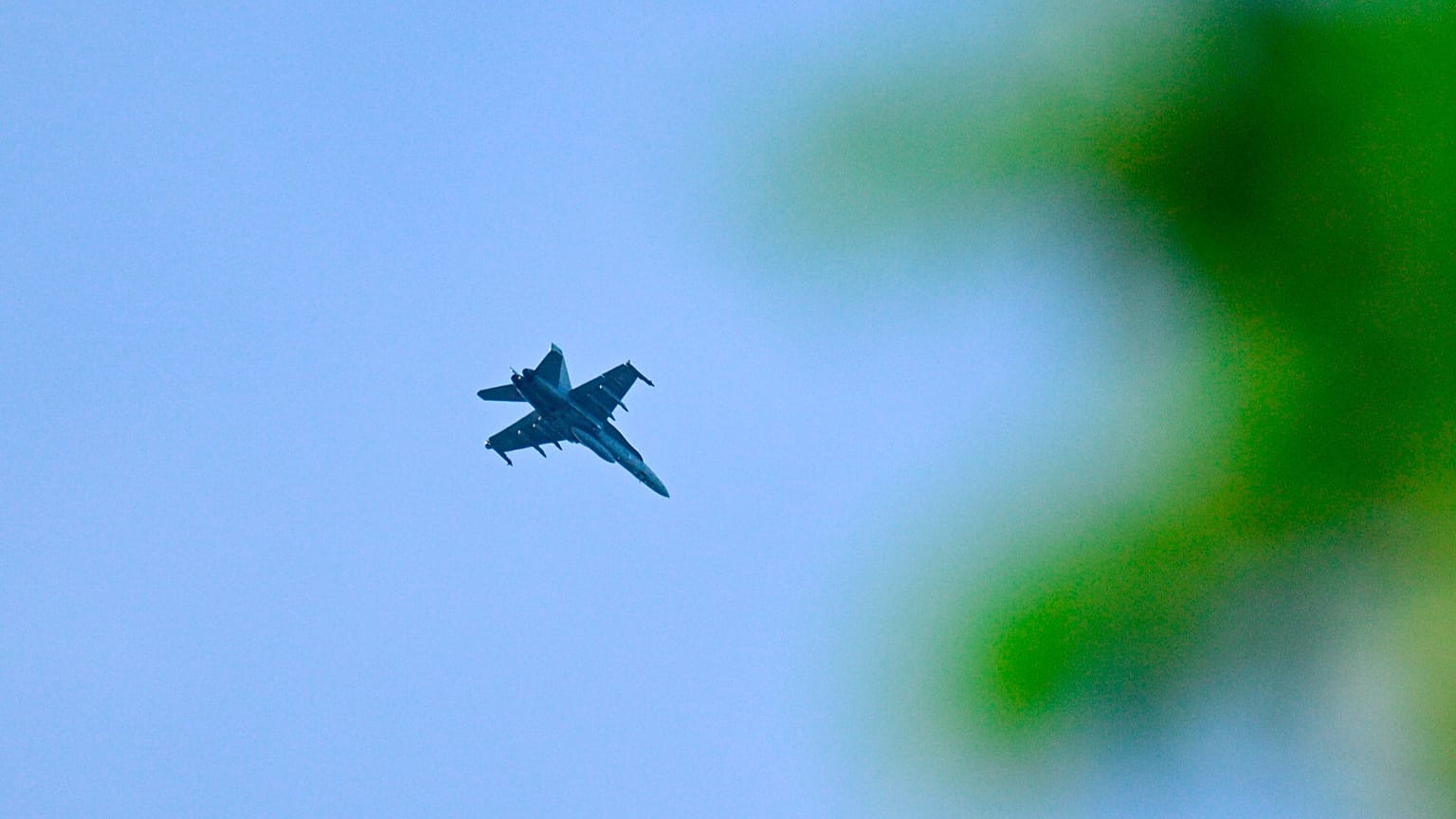
A Hornet fighter of the Finnish Air Force flying above Helsinki, 15 May, 2026
Copyright AP Photo

By Gavin Blackburn
Published on

European countries have been on high alert for any Russian interference, with fears that Moscow could target Kyiv's Western backers as the Kremlin's invasion of Ukraine drags on into its fifth year.

Finland's air force said on Friday that Swedish and Finnish fighter jets had been scrambled to identify Russian fighter jets flying over the Gulf of Finland.

The air force said that the two Nordic countries' Quick Reaction Alert (QRA) jets had been scrambled on Thursday.

They had identified a Russian detachment consisting of a Tu-134 transport aircraft, MiG-31 fighter jets and Su-30 fighter jets "in international airspace over the Gulf of Finland."

According to the military it was the first joint operational "identification mission" for the two air forces.

Swedish Prime Minister Ulf Kristersson commented on the operation on X, saying that "the Baltic Sea has never been as vulnerable as it is now - but it has also never been better protected than it is right now."

Tensions over the Baltic Sea have risen sharply in recent years and Nordic jets are regularly scrambled to intercept Russian aircraft.

In the wake of Russia's 2022 invasion of Ukraine, Sweden and Finland both dropped decades of military non-alignment and joined NATO.

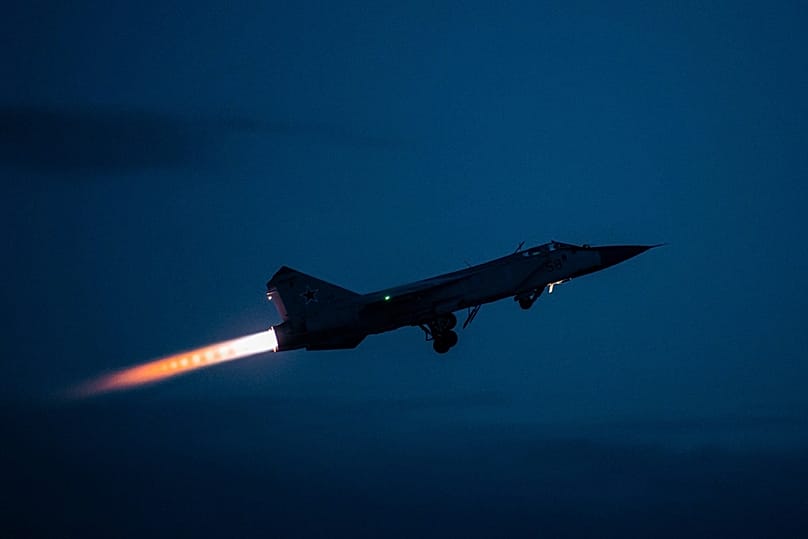
A MiG-31 fighter of the Russian air force takes off at an air base during military drills in Tver region, 14 February, 2022 AP Photo

The incident came on the same day that the Danish Defence Intelligence Service (DDIS) said that the risk of Russian military action against NATO countries was growing and an outright invasion was "highly unlikely" but possible.

"There is a low but growing risk that Russia will launch a limited military attack against one or several NATO countries bordering Russia," Thomas Ahrenkiel, the head of the DDIS, told a press conference at which he presented an updated assessment of the threat from Russia.

He said that the agency still considered it "highly unlikely that Russia would see any interest in invading a NATO country, but we cannot rule it out".

In the DDIS assessment, the agency said that Russia would likely carry out more so-called "hybrid attacks" against targets in the West.

It noted that in the past such attacks had "mainly been aimed at creating fear and weakening public support for aid to Ukraine".

But they had now started to include actions meant to stop support from reaching Ukraine, such as sabotage against defence companies or railway transports carrying military equipment, the agency said.

The DDIS said it thought Russia would intensify such attacks, which could also include "destructive cyber attacks that cripple critical societal functions."

Europe on alert

European countries have been on high alert for any Russian interference, with fears that Moscow could target Kyiv's Western backers as the Kremlin's invasion of Ukraine drags on into its fifth year.

In November, NATO military officials said a new US anti-drone system had been deployed to the alliance’s eastern flank.

And following a violation of Polish airspace, NATO Secretary General Mark Rutte announced the formation of the Eastern Sentry programme, which aims to deter further Russian incursions.

Some European officials described the incidents as Moscow testing NATO’s response, which raised questions about how prepared the alliance is against potential threats from Russia.

The Kremlin has dismissed allegations that Russia is behind some of the unidentified incursions in Europe as "unfounded."


Trump makes 'final decision' to grant Ukraine Patriot licence, Zelenskyy says


By Nathan Rennolds & Gavin Blackburn
Published on

Kyiv has been pushing for a licence to produce Patriot interceptors domestically, arguing that they are crucial to its ability to defend against Russian ballistic missile attacks.

Ukrainian President Volodymyr Zelenskyy said on Friday that US President Donald Trump told him he would allow Ukraine to produce advanced Patriot air defence missiles, after a series of reversals on the issue.

Kyiv is facing a shortage of the missiles, needed to counter Russia's increasing drone and missile attacks on the country, the latest of which killed a 14-year-old boy in the capital on Friday.

During his latest visit to the United States this week, Zelenskyy renewed calls for air defence support, and for the Patriots, which remain the only system reliably able to counter Russia's powerful ballistic missiles.

"At our last meeting, President Trump emphasised to me that yes, I have made a final decision. Ukraine will receive licences for the production of Patriot missiles," Zelenskyy said in a voice note to journalists.

In July, Trump said it would be "pretty cool" to grant Ukraine the licences, before backtracking, saying the United States should be "very careful" before granting Ukraine authorisation.

Ukraine has reported an acute shortage of Patriot interceptors since the United States and Israel went to war with Iran in February, diverting supplies of the advanced systems.

Even if the licences are granted, establishing industrial capacity would require more than a year and would not meet Kyiv's immediate needs.

And Kyiv, preparing for winter, has renewed calls for urgent support.

It needs 5% of the United States' Patriot interceptor missiles to get through the winter and 10% to destroy all of Russia's ballistic projectiles, Zelenskyy said last month.

'Savage and sickening strike'

Moscow has also been aiming at the capital with newly developed jet-powered drones, which have succeeded in bypassing some of the drone interception systems developed by Ukraine.

While it used to target Kyiv mainly during the hours of darkness, Moscow now often attacks in broad daylight.

As people were making their way to work on Friday morning, a drone struck a residential building in the city, killing a 14-year-old boy.

Zelenskyy denounced the attack, calling it "an absolutely savage and sickening strike, devoid of any military logic."

AFP journalists on the spot saw residents gathering around a multi-storey building, with apartments on the ninth and 10th floors left charred by the attack.

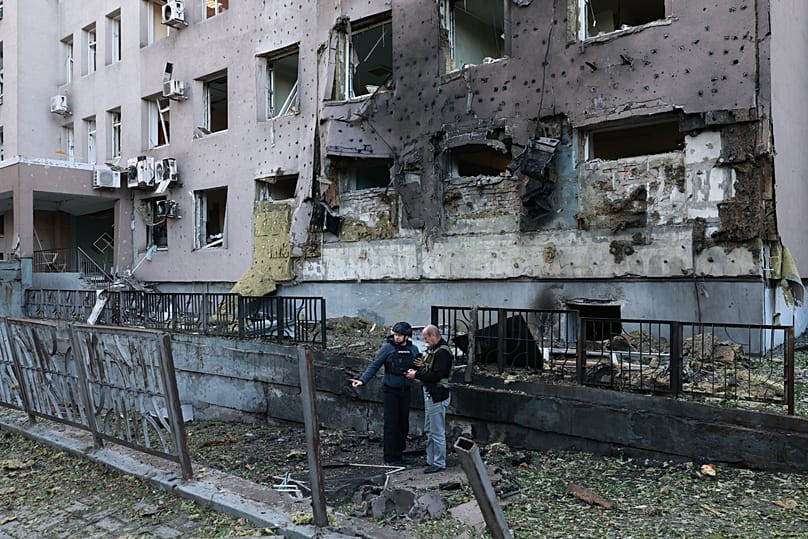
Police officers stand in front of a hospital damaged in a Russian drone strike in Zaporizhzhia, 25 September, 2026 AP Photo

Mykyta Sysoyev, a 23-year-old IT specialist, said he was woken up by an explosion but only realised the strike had hit his own building when he checked the news.

"My jaw dropped a bit," he said. "It's strange: on the one hand, I've got used to it, but on the other, people are constantly dying."

Asked about the increase in drone strikes, he added: "This is a technological race and a technological war...Unfortunately, people will suffer while we're searching for solutions."

In the southern region of Odesa, another person was killed in a repeated strike on a postal facility, authorities said.


EU countries agree to release long-stalled €6.6 billion in military aid for Ukraine


By Jorge Liboreiro
Published on

The decision to release €6.6 billion through the European Peace Facility comes at a critical juncture for Ukraine, which is grappling with a significant shortfall in its Ministry of Defence budget that could jeopardize drone deliveries.

European Union countries have agreed to release a €6.6 billion programme of military aid for Ukraine that had stalled since spring 2023, when Hungary imposed a controversial veto that paralysed the initiative.

The agreement at the political level was reached on Friday during a meeting of the Political and Security Committee in Brussels.

"That's good news for Ukraine and bad news for Russia," High Representative Kaja Kallas wrote on social media, announcing the news.

"Moscow's hybrid attacks try to intimidate Europe into scaling back its support for Ukraine. Europe is doing the opposite."

The so-called European Peace Facility (EPF) was designed to partially reimburse weapons and ammunition that member states donate to Ukraine.

In the early years of the war, the EPF was considered one of the bloc's central lines of assistance and was regularly topped up with fresh money.

But in May 2023, Hungary, under then-Prime Minister Viktor Orbán, slapped a veto that stopped the scheme dead in its tracks.

Budapest complained about Kyiv's decision to add OTP Bank, Hungary's largest commercial bank, to its list of "international sponsors of war". The name-shaming catalogue was discontinued in 2024 after pushback from Western allies.

Still, Hungary kept its veto in place, angering other capitals. The EPF eventually fell off the radar as Brussels set up new assistance programmes.

The deadlock was broken only this year when Orbán lost the parliamentary elections in April, and Prime Minister Péter Magyar came to power. Since then, member states have been negotiating the terms for the release of the €6.6 billion.

According to Kallas, the agreement reached on Friday splits the pot into three strands:

  • €4.7 billion for reimbursements
  • €1 billion for joint procurement of military equipment
  • €900 million for the EU mission that trains Ukraine's armed forces

Some countries will wire their share of €4.7 billion in reimbursements directly to Ukraine, Kallas said without naming them.

Several legislative acts need to be adopted before the money is actually released.

The news comes at a precarious time for Ukraine, which is staring down a $27 billion (€23.67 billion) shortfall in its Ministry of Defence.

The European Commission and the International Monetary Fund are in talks with the Ukrainian government to determine a possible solution.

On Friday, Ukrainian President Volodymyr Zelenskyy warned the budget crunch needed to be resolved between October and November to pay for drone deliveries scheduled for the first three months of 2027.

"Everyone understands that Ukraine cannot be left on its own and that more must be invested in Ukrainian-made drones and missiles, because most of this deficit is precisely the funding needed for weapons," Zelenskyy said.

"Everyone understands how difficult it is to get through this period amid constant strikes. Ukraine will not be left alone."


Ukraine's steel industry stops for the first time in 100 years

Ukraine's steel industry stops for the first time in 100 years
Lost Donbas coking coal, a blockaded Odesa and Russian missiles on the blast furnaces have shut down the industry that earned almost a quarter of Ukraine's export revenue before the war. / bne IntelliNews
By Ben Aris in Berlin September 25, 2026

Ukraine went a whole week in September without smelting a single tonne of steel, the first time in 100 years, as Russian missiles and a closed Black Sea shut down its second-biggest export industry.

Oleksandr Vodoviz, head of the office of Metinvest's chief executive, speaking at an earlier Kyiv International Economic Forum. Source: Military Summary

"In September there was a week when Ukraine, for the first time in 100 years, did not smelt a single tonne of steel," Oleksandr Vodoviz, head of the office of Metinvest's chief executive, told the Economic Resilience Forum hosted by Forbes Ukraine in Kyiv on September 23, Interfax-Ukraine reported.

All of the country's big steelmakers - ArcelorMittal Kryvyi Rih, Metinvest, the Petrovsky works in Dnipro and pipe and wheel maker Interpipe - have been hit and are not working, he said.

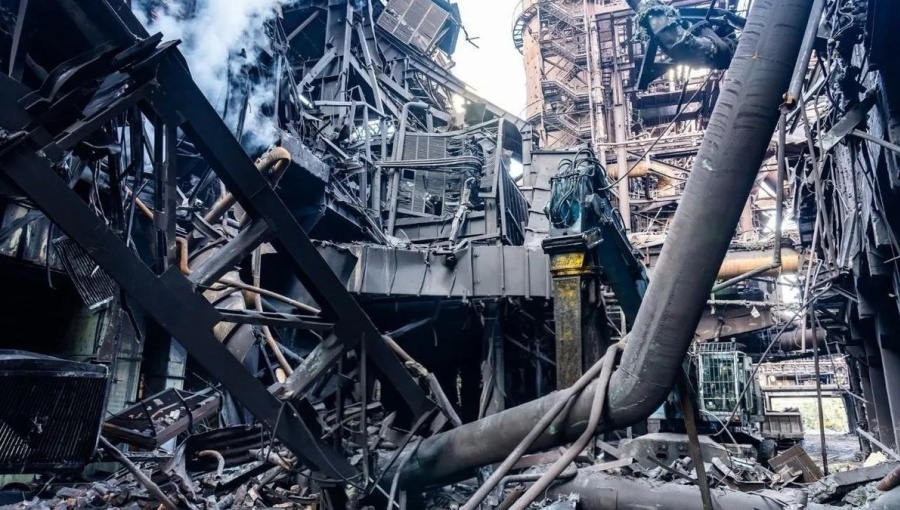
"Absolutely all plants are destroyed," Vodoviz said. "There were multiple hits at each. Many people have lost their lives. We are not operating."

That is going to be a big problem. While Ukraine famously was, together with Russia, the world’s biggest grain exporter, in 2021 the biggest export category was metals, which earned $15.98bn against $15.55bn for crops that year. Since then total exports have almost halved from $68.2bn in 2021 to $40.3bn last year and metals only brought in $4.7bn in 2025, with their share in exports was halved to 11.7%. Now that will fall to zero


Ukraine's exports 2021-2025

Total goods exports

2021
$68.24bn
 
2025
$40.3bn


Metals exports
2021
$15.98bn
 
2025
$4.7bn


Metals' share of exports
2021
23.40%

2025
11.70%

Everything else
2021
$52.26bn
 
2025
$35.6bn
Sources: Economy Ministry via the Cabinet of Ministers, State Customs Service via Mezha


Fortress plants under attack

The Kremlin has been targeting Ukraine’s main factories and plants as part of its economic war, but as steel mills are also very effective as fortresses for Armed Forces of Ukraine (AFU) fighters to hold up in in the battles with Russia’s invading troops, many plants have also been the scene of intense battles and been destroyed in the process.

The most famous was the siege of the Azovstal steelworks in Mariupol, the port city on the Sea of Azov in the Donetsk region. Ukrainian defenders led by the Azov Regiment, alongside marines, border guards and police, held out in the plant's tunnels for weeks after Russian forces had surrounded the city, sheltering civilians until they were evacuated in early May.

Cut off from supplies and with hundreds wounded, the garrison was ordered by Kyiv to lay down its arms after 82 days of fighting, in its commander Denys Prokopenko's count. The last defenders surrendered on May 20, 2022, and Mariupol has been under Russian occupation ever since.

More than 2,000 went into captivity by Russia's count. At least 50 were killed in July 2022 when the prison at Olenivka where many were held was blown up. 188 came home in the September 2022 prisoner swap, which Kyiv paid for by handing over Viktor Medvedchuk, and others have followed in later exchanges. But more than 600 Azov fighters remain in Russian captivity, 270 of them convicted of terrorism, according to Azov commander Colonel Bohdan Hrishenkov, United24 Media reported in August. The owner of the plant, Ukraine’s richest man, Rinat Akhmetov, says the plant is beyond repair and worth a reported $1.4bn. Now all his metallurgical plants have gone offline, the basis of his fortune.

IntelliNews has a ledger tracking the attacks and production status of Ukraine’s leading metallurgical plants in its metallurgy ledger that posts a full list of the is updated every day and is included in the IntelliNews Missile War Monitor.

Destruction of Ukraine’s economy

Metals were Ukraine's biggest source of hard currency before the war, and the industry has stopped just as Kyiv needs every dollar it can earn. The draft 2027 budget leaves a $32.6bn hole to be filled by foreign partners, the hryvnia hit a record low against the euro in August and the National Bank of Ukraine raised its key rate to 16% on September 17. Losing steel on top of the grain trapped by the port blockade of Odesa takes out the country's two biggest export earners at once.

And the destruction of the metallurgical sector comes on top of the more recent Russian effort to systematically destroy Ukraine’s retail infrastructure, following Ukrainian President Volodymyr Zelenskiy’s launch of a warehouse war that Russian President Vladimir Putin said had opened a “Pandora’s box” and transition from a war of attrition that has been running for the last four years to the start of a total war.

Rebuilding the metal plants after the eventual end of the conflict will be extremely difficult and require many billions of dollars of investment. Five of Metinvest's blast furnaces and two at ArcelorMittal Kryvyi Rih have been destroyed, Vodoviz said. Restarting a furnace costs about $50mn and building a new one about $500mn. Metinvest restarted one furnace at Zaporizhstal, and it ran for about 10 hours before the plant was hit again by Russian missiles. The company asked ministries for help and was offered UAH2mn-5mn ($44,000-$111,000), he said, and the government has no plan for dealing with the wrecked plants. Metinvest can plan only about a month ahead.

From a quarter of exports to almost nothing

In 2021, the last year before the full-scale invasion, Ukraine exported $15.98bn of base metals and metal products out of $68.24bn of goods, the Cabinet of Ministers said, about 23% of merchandise exports and about 8% of that year's GDP of $199.8bn, on World Bank data. Adding iron ore, the mining and metals complex earned $22.2bn, a third of all exports, according to industry think tank GMK Center. The country made about 21.4mn tonnes of steel that year.

The war cut that down in stages. By 2025 exports of the mining and metallurgical complex had fallen to $6.2bn, or 15.2% of exports, and the sector's share of GDP had slipped to 5.5% from 7.2% a year earlier. On a narrower count of metallurgical products alone, exports were $4.7bn in 2025, about 9% of the total and roughly 2% of GDP, and fell to $1.7bn in the first five months of 2026, about 7% of exports and more than two-thirds below pre-war levels.

Steel output fell 57.3% y/y in August to 277,000 tonnes and pig iron 65.6% to 257,100 tonnes, according to the Ukrmetalurgprom industry association, LIGA.net reported on September 9. By mid-September Russian strikes had idled 90% of steel output and Metinvest had declared force majeure on some contracts. In the week Vodoviz described, it was zero.

The coal went first

The first big blow came from the front line rather than the air. As IntelliNews reported, taking out the Pokrovske coal mine in Donetsk region, owned by Metinvest, very effectively brings Ukraine’s metal production to a halt without touching any of the plants themselves.

The mine was the only source of the coking coal Ukraine's blast furnaces need - the country's other mines in government-held territory produce thermal coal of the wrong grade for steelmaking. Metinvest shut it on January 13, 2025 as Russian troops closed in on Pokrovsk, and the steel industry had to import about 2.5mn tonnes of coking coal a year, Dragon Capital analyst Denys Sakva said at the time – a lot of it from Russia, the only local source of coking coal.

"With its loss, Ukraine's steelmakers are now completely dependent on foreign coal supplies," Sakva said at the time.

Metinvest began shipping coal from its US mines under its United Coal Company, adding sea and rail freight to the cost of every tonne of steel, and by September 2025 was planning to sell the loss-making US unit. The mine had supplied about two-thirds of domestic coking coal demand in 2023, and its loss followed the destruction of Mariupol's Azovstal and Illich works in 2022, which had left the sector working at 15-20% of capacity by early 2023.

Then the ports

The second blow was the closure of the Odesa ports since the missile war escalated in July. Russia's strikes on merchant shipping and the Greater Odesa terminals from late July, part of a wider drone war crippling ports on both sides of the Black Sea, shut the route that carried about half of Ukraine's steel exports, 95% of its pig iron and half its iron ore in the first half of 2026. Industry estimates put the loss at $150mn-200mn a month in export revenue, and the same blockade that set off a global food price shock by trapping Ukraine's grain could cost the economy 5.3% of GDP by 2027 on one estimate.

Ironically it is overflowing warehouses that brought the iron ore producers to a halt, not Russian bombs. Pivdennyi GZK in Kryvyi Rih, controlled by Akhmetov and Vadym Novynskyi, stopped mining at the end of July because shiploads of ore had piled up in warehouses and ports with nowhere to go. Ferrexpo halted its Poltava plant, Ukraine's biggest pellet producer, from August 3 while the plant itself remains largely untouched thanks to three of four planned vessels stuck in port and one struck by a Russian drone. Metinvest's southern ore plant stood idle for the same reason.

And finally the missiles

Now things have gone up a notch and the plants themselves are taking damage. The strikes on the steelworks themselves began in August. A ballistic missile hit Zaporizhstal in mid-August, killing seven workers and stopping the plant, and on the night of August 16 a missile hit ArcelorMittal Kryvyi Rih, forcing a partial shutdown. The two works make about 70% of Ukraine's steel. Kamet Steel in Dnipropetrovska oblast followed, and repeated barrages in early September disabled blast furnaces at all three works.

"The margin of safety is almost exhausted," Ukrmetalurgprom president Oleksandr Kalenkov said in August, warning that further escalation could cost the country half its foreign-currency earnings from mining and metals.

Even before the missiles, EU tariff quotas and the carbon border adjustment mechanism were set to cut exports by 1.3mn-1.5mn tonnes a year, pushing the industry into a "perfect storm", and Metinvest warned in August that EU trade curbs threatened half of Zaporizhstal's capacity. Vodoviz listed the same three problems on September 23: the strikes, the blocked ports and EU restrictions on Ukrainian metal.

Ukraine's economy has been shutting down since Russia turned on its power grid last winter, and Kyiv halved its 2026 growth forecast to 0.5% in August, before the worst of the strikes on the steel mills. Steel survived the loss of Mariupol, the loss of Donbas coal and four years of blackouts. What finally stopped it was a closed sea and a campaign of missiles aimed at its furnaces.

Russia's own mills lifted output 3.3% in July on strong demand from the military industrial sector.

 

Euronews explains: What would a US diesel export ban mean to European countries?

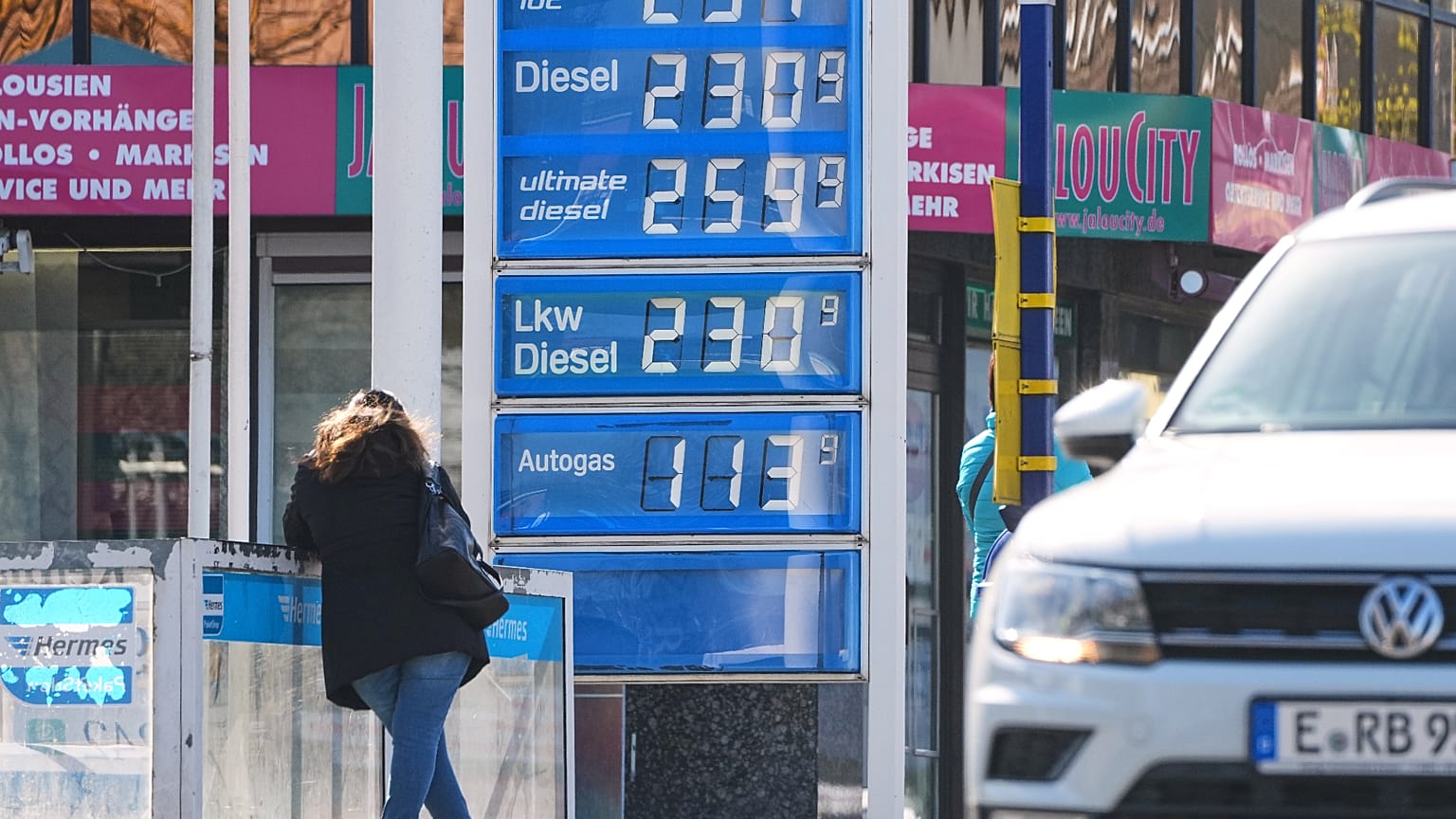
People wait for the bus at a fuel station in the City centre of Essen, Germany, that shows high fuel prices due to the war in Iran, Wednesday, April 1, 2026.
Copyright AP Photo / Martin Meissner

By Marta Pacheco
Published on

The EU has deepened energy ties with the US while seeking to reduce its exposure to geopolitical shocks. Yet US plans to limit diesel exports expose how quickly commercial dependence can become a strategic vulnerability.

A United States ban on diesel exports would not necessarily leave Europe’s fuel stations empty overnight, but it could push up prices, forcing European governments into another round of emergency intervention just as households, farmers and hauliers are feeling the effects of the wider energy crisis.

The prospect of Washington keeping those barrels at home is especially uncomfortable for Brussels, which acknowledged the bloc’s dependency on US diesel after ditching Russian energy. The Commission said the issue was being discussed with EU countries and the industry.

The bloc is already facing a fuel shortage after the war with Iran disrupted supplies from the Middle East, while Russia has also restricted diesel exports.

Meanwhile, European diesel prices have more than doubled since the beginning of the year and were about 38% higher year-on-year in mid-September, while refineries around the world are operating close to full capacity.

Analysts argue that a potential US ban would remove a crucial supply source from an already exceptionally tight global market.

“For Europe, the immediate effect is higher prices. North-West Europe would have to bid up to pull in replacement cargoes, and it would be bidding against the Mediterranean, Latin America and West Africa for the same limited pool of barrels,” Zameer Yusof, an energy analyst at market intelligence platform Kpler, told Euronews.

The EU has become far more reliant on US diesel since the loss of Russian supplies. The US has supplied around 180,000 barrels a day (b/d) of the EU’s roughly 580,000 b/d of extra-EU diesel imports this year — about 32%, up from 17% in 2025.

The dependence is even more striking in North-West Europe, where US supplies account for around 200,000 b/d out of 350,000 b/d from outside the region — roughly 57%, compared with 37% last year, according to Kpler figures.

That concentration means a partial US export ban could still have a sizeable impact on prices.

However, removing 30% of US supplies would not necessarily mean European diesel prices rise by 30%, or by a corresponding fraction, Kpler argues. Buyers would be forced to compete aggressively for replacement barrels, potentially pushing prices sharply higher.

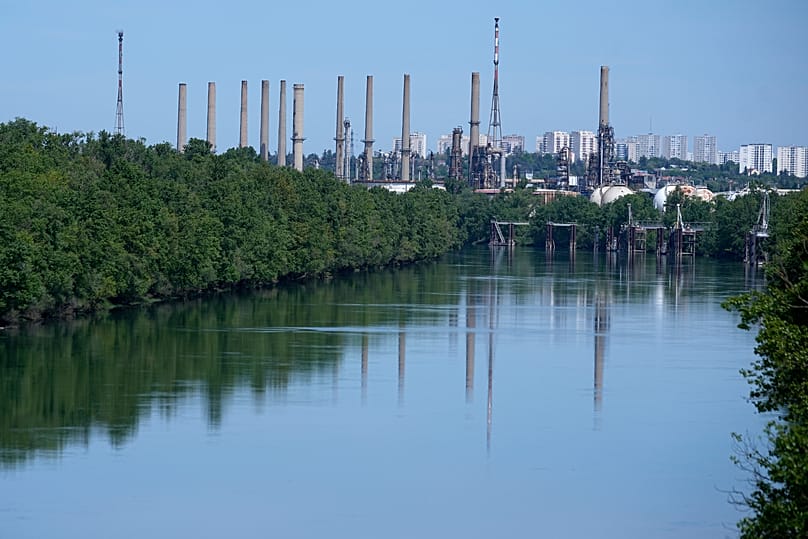
The Feyzin Total oil refinery is seen outside Lyon, France, Friday, April 17, 2026. AP Photo / Laurent Cipriani

France hit first

Within the EU, France appears to be the most vulnerable country. French President Emmanuel Macron said on Thursday that the proposed ban would be “catastrophic”. The country is heading to the polls in 2027, with the energy crisis fuelling far-right rhetoric.

Before the Trump administration touted a diesel ban, the French leader asked the Commission to temporarily relax fuel specifications so European refineries could produce more diesel and jet fuel. He also urged Brussels to coordinate a second release of emergency oil reserves.

A US export ban would strengthen that argument: if Europe cannot count on imported refined fuel, it needs to squeeze more output from its own refineries. However, European refineries cannot manufacture hundreds of thousands of additional barrels overnight.

Paris imported about 63,000 b/d of US diesel this year, around 36% of its diesel imports. Its dependence is compounded by refinery closures at Grandpuits and Donges, leaving the country structurally short of diesel, Kpler warned.

The UK is also heavily exposed, importing about 50,000 b/d from the US, or 26% of its diesel imports, Kpler said. The closure of the Grangemouth refinery has increased its reliance on imports.

However, there is one cushion. Diesel is among Europe’s most heavily stored oil products, meaning inventories could absorb at least part of an initial disruption. That could prevent an immediate shortage, although it would not eliminate the underlying price pressure if the ban were to last.

Southern European markets have somewhat more protection from domestic and Mediterranean refining. Italy gets only around 4% of its diesel imports from the US, while Spain gets about 19%. Portugal is barely exposed. Spain’s Cartagena, Bilbao and Huelva refineries provide an important domestic supply buffer.

Europe has few obvious replacements

The bigger problem is what happens after the initial stocks are used. Europe cannot simply replace American diesel with another major supplier.

“India is the only credible substitute, but its export availability has been affected sharply,” Yusof said.

Indian exports have already fallen sharply — from around 582,000 b/d last year to 352,000 b/d this year. Indian diesel shipments to Europe have declined even more dramatically, from about 163,000 b/d to roughly 50,000 b/d.

Indian refiners are instead finding better returns in East Africa and Southeast Asia, while questions over Russian crude used in some Indian refineries also complicate European trade.

China and South Korea cannot realistically fill the gap either. Their diesel shipments to Europe this year were tiny — roughly 1,000 b/d from China and 2,000 b/d from South Korea

China faces EU restrictions on products made from Russian crude, while South Korea’s exports are tied up by established contracts in Asian markets and its overall export availability has declined.

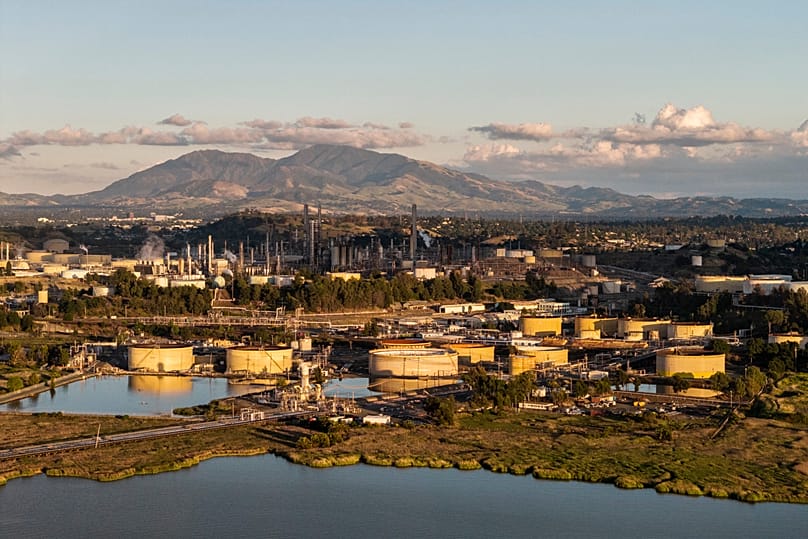
An aerial view of the Martinez Refining Company is seen during sunset in Martinez, Calif., Wednesday, April 22, 2026. AP Photo / Stephen Lam/San Francisco Chronicle

Time to rethink the definition of energy security

The diesel episode exposes a deeper weakness in Europe’s energy strategy.

The EU’s current predicament raises questions about whether the bloc needs larger strategic stocks of refined fuels, more resilient European refining capacity and stronger mechanisms for coordinating fuel supplies during a crisis.

Asked whether it was considering a second release of strategic oil reserves, the International Energy Agency had not responded at the time of publication.

The Commission’s decision to discuss the issue through its oil coordination group suggests Brussels is already treating it as an energy security question rather than a mere commercial dispute.

Meanwhile, the proposed US diesel ban appears to be driven in part by domestic political pressure. US diesel prices are nearly $7 a gallon, creating pressure on the Trump administration to demonstrate that it is doing something about the cost of living ahead of the November midterms.

US Energy Secretary Chris Wright has been sounding out refiners about a voluntary restriction on exports as an alternative to a blanket 90-day ban.

A briefing from the Energy Policy Research Foundation (EPRF) argued that a US diesel export ban would likely backfire, since refiners are already running at full capacity and cannot produce more without new capacity.

“Cut off from export markets, Gulf Coast refiners would see storage fill and margins fall, and many would reduce runs to catch up on maintenance postponed during the crisis. Because gasoline and diesel are produced together, the result would be less gasoline, diesel, and jet fuel, and higher pump prices,” the EPRF briefing said.