Thursday, October 15, 2026


Fincantieri Modernizes Wisconsin Yards with Investment by US Navy and MARAD

Fincantieri Marine Group Wisconsin
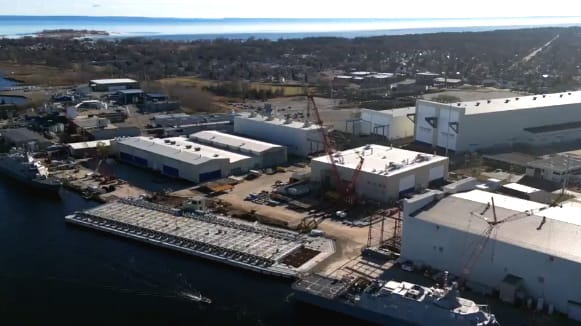
Fincantieri Marine Group is receiving investments from the USN and MARAD to modernize its Wisconsin shipyards

The U.S.-based division of Fincantieri reports it is moving forward with  $10 million in new U.S. Navy and U.S. Maritime Administration (MARAD) funding. The investment is for advanced manufacturing and workforce investments across its Wisconsin shipyards. 

The investment consists of approximately $8.3 million in Navy Shipbuilding Capability Industrial Base (SCIB) funding and a $1.3 million MARAD Small Shipyard Grant. The company says it is part of its long-standing investments in its U.S. shipyards to expand and modernize American shipbuilding. Since establishing its presence in the United States two decades ago, Fincantieri reports it has invested more than $800 million in its U.S. shipyards, which include three Wisconsin shipyards and a repair and sustainment facility in Jacksonville, Florida.

“This investment is an important demonstration of the Navy’s confidence in Fincantieri, our people and our ability to be a partner in strengthening American shipbuilding,” said George Moutafis,  CEO of Fincantieri Marine Group. “It also complements our efforts to put proven advanced manufacturing technologies into the hands of our employees so that we can deliver at speed. Together, these investments are helping create the industrial capabilities, skilled workforce and modern infrastructure needed to support the Navy’s future fleet requirements.” 

The company said the investments will accelerate ongoing modernization of Fincantieri’s Wisconsin System of Shipyards, adding advanced cutting, forming, welding, and automation capabilities that will improve production efficiency and strengthen the shipyards’ ability to execute the Landing Ship Medium (LSM) program and other current and future shipbuilding requirements. 

The Navy agreement also enables Fincantieri to continue to offer its Employee Dependent Care Contribution Program through 2027. The annual tax-free $5,000 payment has helped employees offset childcare and elder care costs. 

In addition to the federal funding, Wisconsin's governor Tony Evers recently announced state support, which will include $232,788 to train Fincantieri workers to operate and program advanced robotic welding systems.


North Korea Tests Sub-Launched "Strategic" Cruise Missile

KCNA
Courtesy KCNA

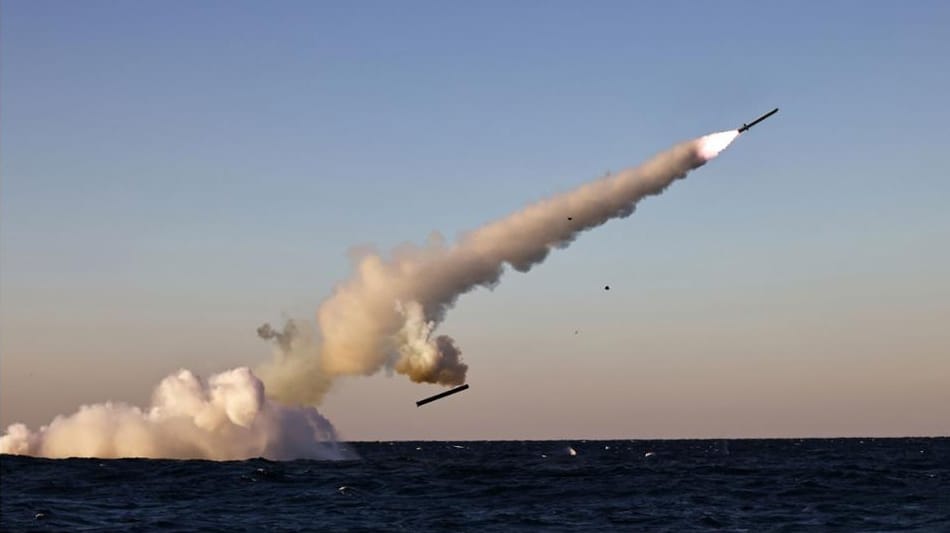
On Wednesday, North Korean forces tested two different types of missiles that can be launched from underwater, according to Pyongyang's state-owned media. If effective in operation, the submarine-launched missiles would give the North a way to conduct attacks with less notice, and would provide a strike or counterstrike capability that is harder to target and eliminate. 

"The test-fire aimed to examine the current mobilized posture of the underwater combat systems and contributed to getting the Navy skilled in performing its strategic missions and showcasing high reliability, trustworthiness and ability of the war deterrents of the DPRK," state outlet KCNA said in a statement.  

KCNA's phrasing is official language, and the inclusion of the word "strategic" in the event description suggests to analysts that the missiles may be nuclear-capable. The outlet described the devices as "strategic cruise missiles," and official photos depicted the missiles on a horizontal flight path. 

While KCNA published an accompanying image of a submarine, it is not known whether the North possesses an operational sub with the capability to launch missiles of this type. North Korea has been known to conduct submerged missile launch testing with a purpose-built submersible launch platform. 

North Korea has previously tested one type of submarine-launched cruise missile, the Pulhwasal-3-31, last seen in January 2024. It unclear how closely the two devices tested this week were related to the previously-disclosed model. 


In a statement Monday, U.S. Pacific Command confirmed that North Korea had test-launched two ballistic missiles and said that the event did not pose a threat. The command has not yet commented on the claimed cruise missile launch. 

North Korea spends an estimated 25 percent of GDP on defense, more than any other nation outside of an active conflict zone, and has long emphasized development of its nuclear weapons program. In recent years it has invested heavily in its naval capabilities, including two destroyers fitted for ballistic missiles. It has a strong defense relationship with Russia, and is believed to be receiving some degree of military technical assistance in exchange for munitions and manpower for the front in Ukraine. 

 The Toronto Star recently published an article with this headline:  


PM Mark Carney pledged to ‘Buy Canadian.’ Since then, $7.8 billion in contracts went to American corporations


It’s true – the Liberals have dramatically increased the amount of taxpayer dollars awarded to U.S.-controlled companies since Mark Carney became prime minister.  


In fact, nearly a third of all government contract dollars now go to U.S. companies like Lockheed Martin and Amazon.


Does that sound like “Buying Canadian” to you? 


Frankly, at any other time, this would be a major news story. Instead, it’s a single article behind a paywall.  


While Donald Trump’s reckless antics provide Mark Carney a shady cover to hand billions to U.S. companies, it’s up to us – all of us – to ensure there’s a loud, public opposition.  


Add your name to keep billions of dollars in taxpayer funds away from U.S. megacorporations.  


Tell Carney to stop buying American


While Trump's chaotic trade policies put economic pressure on Canadians, the Liberals are increasing the amount of our tax dollars flowing to the U.S. economy – to the tune of billions. 


In fact, since Mark Carney was elected:  

  • The top four government contracts have all gone to U.S. companies.
  • The government maple-washed its own numbers by counting locally incorporated subsidiaries of U.S. companies as Canadian.
  • The share of government contracts going to U.S. companies increased by over 50%.  

As New Democrats, we believe private profits should support the public good in a sovereign economy.  


The Liberals seem to have every aspect of that principle completely backwards, and while their actions reflect that, it's up to all of us to call them out.    


Add your name below to help ensure the Liberals stop buying American with our tax dollars: 


ndp.ca/stop-buying-american


In solidarity,  


NDP Policy Team 

INTERVIEW: Linde LienHwa fuels Taiwan’s hydrogen push, one refuelling station at a time

INTERVIEW: Linde LienHwa fuels Taiwan’s hydrogen push, one refuelling station at a time
/ Linde LienHwa

By Newsbase analysts October 15, 2026

NewsBase Horizons, the thought leadership side of the IntelliNews sister site Newsbase, spoke with Jerry Lin, Merchant & Clean Energy Business Development Manager at Linde LienHwa during the ongoing NET-ZERO TAIWAN / ENERGY TAIWAN event in the Taiwanese capital, discussing the direction the company is taking with promoting and enabling hydrogen use in Taiwan.

“We are definitely moving in this direction,” through a solution Linde LienHwa calls “hydrogen as a service” Lin says. He stressed that the offering goes beyond the fuel itself though: “It’s not just selling hydrogen. We are providing a total solution, including supply of hydrogen, refuelling stations, and everything in between that goes into this business.”

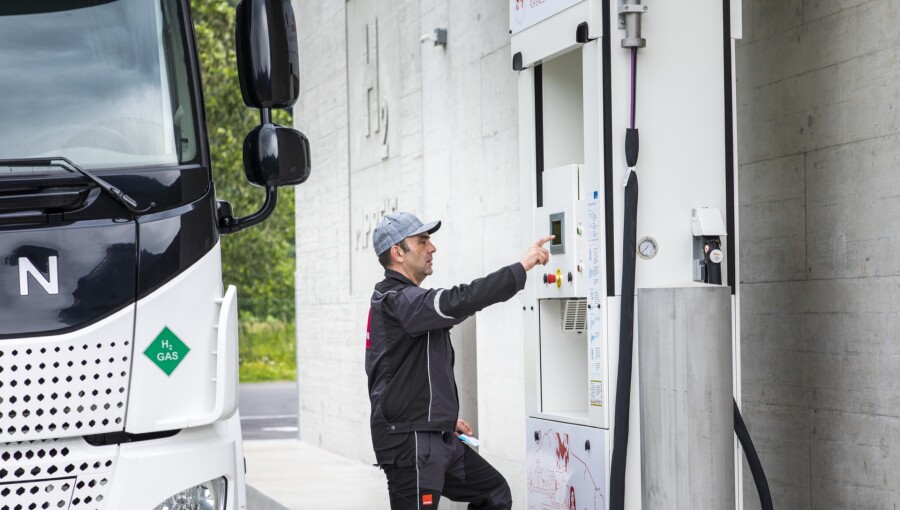
At present, the company is focusing on heavy-duty transportation, which Lin currently sees as the best market for hydrogen. In doing so, Lin pointed to better service and loading capacity than regular fuels, “a very short refuelling time” and a reasonable fuel cost, provided there are government subsidies forthcoming.

On company targets in the next 12 months and in the years ahead, Lin said Linde LienHwa built its first hydrogen station in Taiwan last year, in Kaohsiung in the south of the country. As of late 2026, it is aiming to add another station in the north, perhaps near Taipei or in the centre of the country around Taichung, Taiwan’s second largest city.

On what kind of subsidies the company needs from the government, Lin cannot offer details at present but responds that “The government is actually working on this as well,” as those officials the firm is in contact with understand that hydrogen still costs far more than electricity or diesel he states. To this end Lin claims the government is looking to compensate the emerging sector with subsidies so that hydrogen’s cost per kilometre matches what electricity and diesel users pay in fuelling their vehicles.

But when pushed on the type of hydrogen being used; grey hydrogen derived from natural gas, blue hydrogen the product of the same natural-gas process, but with most of the CO₂ captured and stored underground and green hydrogen made by electrolysis to split water into hydrogen and oxygen, Lin added a new form of hydrogen to the mix. “We call our hydrogen a low carbon hydrogen,” he said. “So we don’t actually specify it as a colour” in the more commonly used sense.

He explained that the company’s steam reforming technology naturally produces carbon dioxide alongside hydrogen, but Linde LienHwa captures this CO2 and uses it in other processes. It then uses this low-carbon hydrogen across all of its products, customers and markets.

NewsBase Horizons put to Lin the view held by many, that hydrogen is still seen as an out-of-reach fuel of the future because it cannot be easily transported, to do so is expensive and for a number of other physical reasons; a problem captive hydrogen projects are now working to circumvent in some parts of Asia.

According to Lin this is a question of demand. In some countries, he said, liquid hydrogen is used during the transportation process because the volumes being shifted are huge. In Taiwan, a tiny island when viewed alongside other hydrogen markets such as India, Lin reveals that the company uses trailers to transport hydrogen as a gas, which he considers more reasonable for the local market - and presumably the easiest option in that trucks are able to reach any part of Taiwan by road in as little as four to five hours.

For now then, while the Linde LienHwa infrastructure in Taiwan is still modest given the company’s lone refuelling station, and some aspects of improving that set up are still vague with significant expansion some way off, the firm’s goal of “having another one, maybe in the north or in the central areas in the coming years” remains Taiwan’s best bet at enabling hydrogen to gain a proper foothold in the country.

Taiwanese industrial groups adopt oxyfuel tech as gas supplier courts hydrogen truck fleets

Taiwanese industrial groups adopt oxyfuel tech as gas supplier courts hydrogen truck fleets
/ Linde LienHwaFacebook
By Mark Buckton in Taipei October 14, 2026

Taiwan's TCC, Walsin Lihwa, King Lien Chung and Lotung Steel have all taken up oxyfuel combustion systems supplied by Linde LienHwa, Taiwan’s largest industrial gas manufacturer, the company said on October 12.

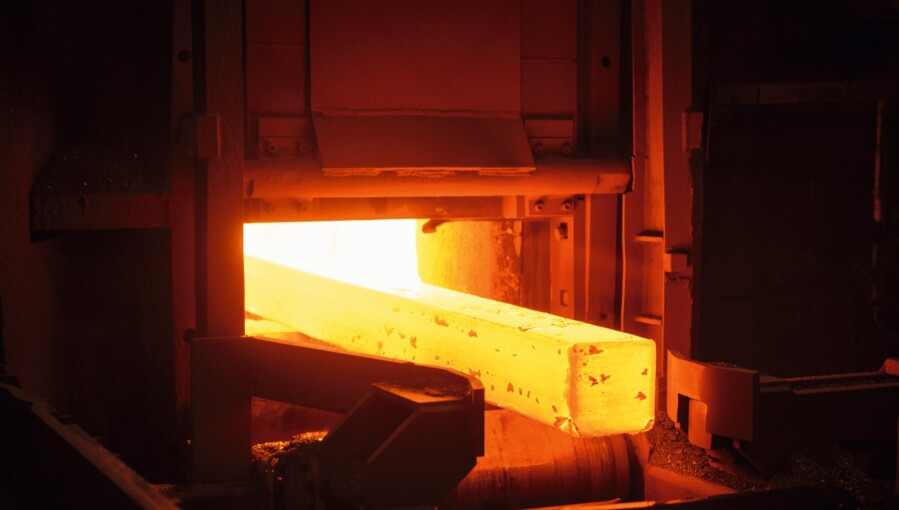
The technique feeds oxygen into a furnace instead of, or in addition to, ordinary air. Since air is 79% nitrogen, which does nothing to help fuel burn, stripping it out cuts the volume of exhaust gas and makes combustion more efficient, a press release by Linde LienHwa says. The company says that fuel use can fall by as much as half and production capacity can rise by a similar margin, with results varying by process and operating conditions. The systems also work with a range of furnace designs, and a flameless version can at least halve reheating times.

The pressure to adopt such measures globally is growing, particularly in Taiwan now that the country has moved into a new stage of carbon pricing, pushing manufacturers to use energy more efficiently and bring down emissions.

“Oxyfuel combustion can help high-emitting industries improve their combustion processes and energy efficiency, making it an important option for industrial decarbonisation,” said Jeffery Shan, Vice President, Bulk Gases and Clean Energy, Linde LienHwa. “Leading companies in Taiwan, including TCC, Walsin Lihwa, King Lien Chung and Lotung Steel, are adopting these technologies as part of their broader energy-saving and decarbonisation strategies.”

The company cited results from Japan, where Chiyoda Steel installed OXYGON, Linde’s flameless oxyfuel system. Gas consumption there dropped by 58.2%, and the time needed to preheat ladles shrank from 5 hours 40 minutes to 3 hours.

Hydrogen push targets commercial vehicles

The gas supplier is also trying to get hydrogen into commercial fleets across Taiwan. Christine Miao, Vice President, Corporate Communications, Linde LienHwa, said trucks, buses and logistics vehicles have become the main force behind hydrogen mobility.

“Following the completion of our hydrogen refueling station last year, Linde LienHwa has worked with group affiliates Lien Hwa New Energy and Asia Hydrogen Energy to connect logistics fleets and transportation operators with hydrogen mobility solutions. By combining procurement and service models, we aim to reduce customers’ upfront capital investment and accelerate adoption,” Miao added.

Central to that effort for Linde LienHwa is a Hydrogen-as-a-Service (HaaS) offering, developed with partners from the logistics, transport and hydrogen sectors. Rather than paying the full cost of expensive equipment and infrastructure at the outset, customers can obtain hydrogen and associated infrastructure services under long-term contracts or pay-per-use terms.

Market data also back the focus on heavier vehicles, according to Linde LienHwa. Figures from SNE Research show that commercial hydrogen vehicles held up better than passenger models in the first half of 2025, when demand for the latter softened. The International Energy Agency (IEA) sees heavy-duty trucks as the only part of the fuel cell vehicle market that is expanding quickly with the global hydrogen vehicle market forecast to reach $427.3bn by 2031, up from $57.1bn in 2023, a compound annual growth rate of 29.4%.


Taiwan defends offshore wind tenders against CIP criticism

Taiwan defends offshore wind tenders against CIP criticism
/ Nicholas Doherty - UnsplashFacebook
By IntelliNews - New Taipei Bureau October 15, 2026

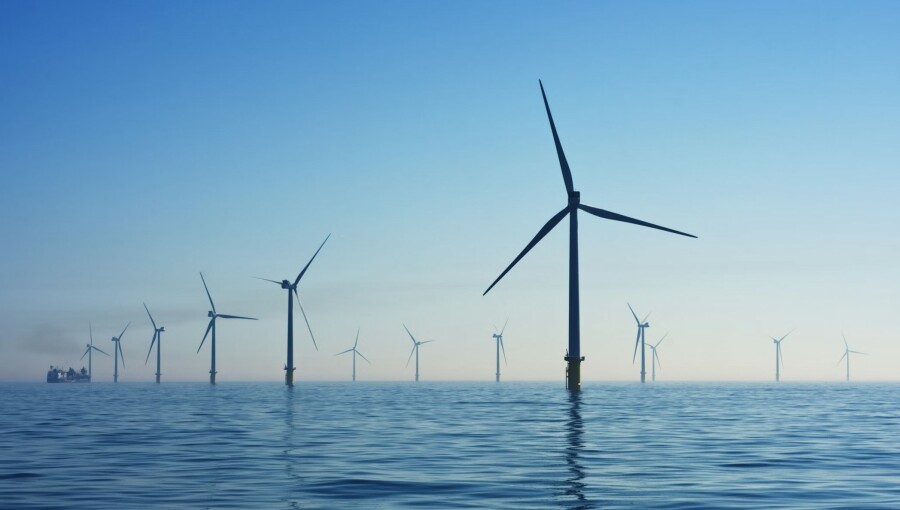
Taiwan's Energy Administration hit back at Copenhagen Infrastructure Partners (CIP) after the Danish fund's local chief said the government had rushed its offshore wind tenders, Taiwan Times reported on October 14. The agency, part of the Ministry of Economic Affairs, said it found the remarks puzzling and regrettable because CIP has won more capacity than any other developer.

The row comes as Taiwan prepares to allocate capacity under the third round of its zonal offshore wind programme. Bids for Round 3-3 closed at the end of September, and the ministry plans to finish selection and announce allocations before the end of the year. 

Hsu Nai-wen, managing director of CIP, made the comments at the Taiwan International Smart Energy Week. Hsu said Rounds 3-1 through 3-3 had failed to draw investors and urged the government to make bidding rules and market conditions more attractive in Round 3-4. Hsu also called for a full survey of available sea areas before that round.

Hsu said holding Round 3-4 in the first half of next year would be too soon. The earlier rounds had failed because they were constantly rushed, Hsu said, adding that many developers wanted bolder changes to the tender rules.

Hsu said CIP had joined every government tender since the second-phase selection in 2018. After each win it had paid on schedule and secured financing on time with backing from state-owned shareholders, including during the COVID-19 pandemic, Hsu added.

Future projects will have to move into deeper waters, Hsu said, citing concerns from NGOs and weaker winds closer to shore. Deeper sites require more advanced technology and cost more, and very few developers in Taiwan can build them, Hsu noted. Hsu said better screening of bidders and greater lending by domestic banks would be key to that shift.

The Energy Administration said Taiwan had pursued offshore wind for more than a decade. It said every round had gone through public consultation and reached consensus before a fair selection process began. The view of one company could not erase what Taiwan had achieved, the agency added.

In Round 3-3, CIP bid with its Fengmiao 3 offshore wind farm, while Ørsted entered the Dadu 1 project. The two sites, off Taichung and Changhua, overlap heavily, and only one is expected to be selected.


Colombia’s De la Espriella faces first major protests after two months in office

Colombia’s De la Espriella faces first major protests after two months in office
The protesters' demands ranged from labour rights and public education to teachers’ health conditions and the rights of Indigenous communities. / xinhuaFacebook
By Cynthia Michelle Aranguren Hernández in Bogota October 14, 2026

Thousands of demonstrators took to the streets of Bogotá on October 14 in a nationwide day of protest against the government of President Abelardo de la Espriella, two months after he took office on August 7. Trade unions, teachers, Indigenous organisations, political movements and social collectives joined the marches to challenge the government’s economic, labour and security policies.

Supporters of former leftist president Gustavo Petro were among those who gathered in the Plaza de Bolívar. Petro himself took part in the Bogotá march alongside opposition senator Iván Cepeda, El Espectador reported. Protests were also scheduled in Medellín and other major cities.

The demands ranged from labour rights and public education to teachers’ health conditions and the rights of Indigenous communities. Fabio Arias, president of the CUT trade union confederation, said the marches had been called to reject the government’s measures on labour rights, pension reform and the minimum wage, as well as changes to police protocols for demonstrations, according to La FM.

Those changes lie at the heart of a dispute over civil liberties. On October 13, the eve of the protests, De la Espriella signed Decree 1525, modifying a 2021 protocol on police action during demonstrations. The text establishes prioritising dialogue and mediation as a general rule, but states that this does not delay police action against individuals who commit physical violence. The president said on X that peaceful protest is respected but that violence, vandalism and blockades are not tolerated. Cepeda said the decree had been issued “to repress social protest.”

De la Espriella followed the protests from the Casa de Nariño. He thanked the National Union of Judicial Workers and Prosecutors for rejecting the marches, saying Colombia “cannot keep being held hostage by those who seek to paralyse it”, according to Semana.

The marches also severely disrupted Bogotá’s transport network. By around midday, TransMilenio said 200,538 passengers had been affected by operational changes, and that its tally would continue to be updated. Eight stations along Carrera 10 faced temporary closures and return manoeuvres. One march set out from Fontibón, in western Bogotá, at 6am bound for the Plaza de Bolívar. Heavy rain and hail fell on the square during the march.

Foreign policy, where the right-wing leader has broken sharply with his predecessor, has deepened the political divide. On September 8 in Barranquilla, De la Espriella and US Secretary of State Marco Rubio announced a roadmap built around rebuilding the country, recovering the economy and shielding the hemisphere, cementing a closer alignment with Washington. Two memorandums of understanding, on civil nuclear energy and critical minerals, were also signed.

Colombia also reinstated its free-trade agreement with Israel on October 13, reversing Petro’s decision to terminate it, and on October 14 reopened its embassy in Jerusalem, becoming the tenth country to do so. The moves unwind the diplomatic break Petro ordered in May 2024 over Israel’s controversial military campaign in Gaza.

Energy policy is another fault line. State oil company Ecopetrol went four years without signing new exploration contracts under Petro, whereas De la Espriella’s government is seeking to reactivate exploration and even to consider fracking, angering environmentalists across the country.

The protests also come as the government tries to contain a widening deficit. The Finance Ministry aims to cut next year’s shortfall to 7.2% of GDP, from a projected 9.4%, through a spending-cut bill, while the government has recently opened talks with the IMF that could lead to a programme mandating lower investment and less aid for the poorest.

Transparency says Georgia prosecuting volunteer soldiers who fought for Ukraine in parallel with Russian charges

Transparency says Georgia prosecuting volunteer soldiers who fought for Ukraine in parallel with Russian charges
The Georgian National Legion is the best known of the Georgian voluntary units of soldiers fighting for Ukraine. / Georgian National Legion, social media post


By IntelliNews Eurasia desk October 14, 2026

Georgia is prosecuting people who have fought for Ukraine, often even after Russia has already brought cases against the same individuals, according to a report published by Transparency International Georgia.

The watchdog says findings in its report, titled “The Hunt for Georgian Fighters: A Coordinated Operation by Ivanishvili and the Kremlin”, raise the question of whether the Georgian government is trying to win favour with Moscow.

Georgia has had no diplomatic relations with Russia since the countries’ 2008 war, but its ruling Georgian Dream party – founded by Bidzina Ivanishvili who is widely seen as Georgia’s de facto leader – is widely and frequently accused by opposition parties and Western governments of acting in Moscow's interests. The government denies this and says it protects Georgia's sovereignty.

The report focuses on Georgians who have fought for Ukraine after Russia's full-scale invasion of the country started in February 2022. The best known Georgian group of voluntary soldiers in Ukraine is the Georgian National Legion, a unit formed in 2014 during battles in eastern Ukraine's Donbas region. It is commanded by Mamuka Mamulashvili, who said in 2024 that it had from 1,200 to 1,300 fighters. Footage recently posted on social media shows its troops on the front line.

Russia sentenced Mamulashvili in absentia to 23 years in prison in 2024 and designated the Legion a terrorist organisation.

Ukraine's military intelligence has said that no unit by that name is part of its own structure. Slovakia banned Mamulashvili from entering the country after Prime Minister Robert Fico accused the Legion of a role in protests there.

The report says Georgia has brought cases against several of the same people Russia has prosecuted, often soon after the Russian proceedings began. Transparency International Georgia says this does not in itself prove the two governments are working together. But it says that when public attacks on volunteers are followed by prosecution or imprisonment, there are reasonable grounds for suspicion. It dates the campaign of prosecution to 2022, when Irakli Garibashvili, then prime minister, called Georgian volunteers flying to Ukraine "mercenaries", and ruling party figures warned they could lose Georgian citizenship.

Clearest example

The clearest example in the report is that of Giorgi Baramidze, a former defence minister who fought in Ukraine in 2022. In February, a court in Russian-occupied Donetsk sentenced him in absentia to six and a half years as a "mercenary". On September 11, Georgian authorities arrested him in Tbilisi on sabotage and treason charges over remarks about prisoner exchanges made in an online programme, for which he later apologised. The group says the charges have no legal basis and conflict with Article 10 of the European Convention on Human Rights, which protects freedom of expression, and questions why he needed to be held before trial.

It notes that the investigation began after a complaint from the State Service for Veterans Affairs, signed by officials including Malkhaz Topuria, who it says also signed letters to Russian President Vladimir Putin urging Georgian military neutrality and better relations with Russia.

Other cases in the report show different ways the Georgian system has been used. Aleko Elisashvili and Irakli Okruashvili, who both fought in Ukraine and are on Russia's wanted list, received long sentences that the group calls disproportionate or politically driven. Elisashvili was given 13 years for terrorism after allegedly trying to set fire to a courthouse reception area, which the group says justified at most an arson charge carrying up to six years. It has listed Elisashvili as a political prisoner. Okruashvili, jailed for eight months in 2025 for failing to appear before a parliamentary commission, was handed a further five years and three months in a case open since 2013, delivered as his release neared.

Davit Katsarava, an activist who fought in Ukraine, was, it is claimed, beaten by riot police at a protest in May 2024, but was then made the guilty party and fined.

The report also points to Georgian action against the Legion's commander. Mamulashvili says Russia identified more than 70 Legion members through cooperation with Georgia. In 2023, Georgia's State Security Service named him as an alleged organiser of a plot to destabilise the country, and in 2024 it summoned other volunteers for questioning. He says about 300 people who fought in Ukraine are now wanted in Georgia.

The group also notes the UK's sanctions on four Georgians, Mamuka Pipia, Giorgi Iremadze, Nikoloz Mzhavanadze and Paata Abuladze, who met the head of the Russian-installed authorities in Donetsk in 2025. It says he offered those authorities a list of Georgian fighters and asked that they be punished. Abuladze denies acting on behalf of Georgian Dream, the ruling party.

Transparency International Georgia concludes that, taken together, the cases point to a consistent policy of targeting Georgians who have taken Ukraine's side, and calls for scrutiny of whether the policy serves the country's interests. The report does not quote the Georgian authorities.

EU admits its Georgia policy is failing as Tbilisi doubles down on confrontation
EU admits its Georgia policy is failing as Tbilisi doubles down on confrontation
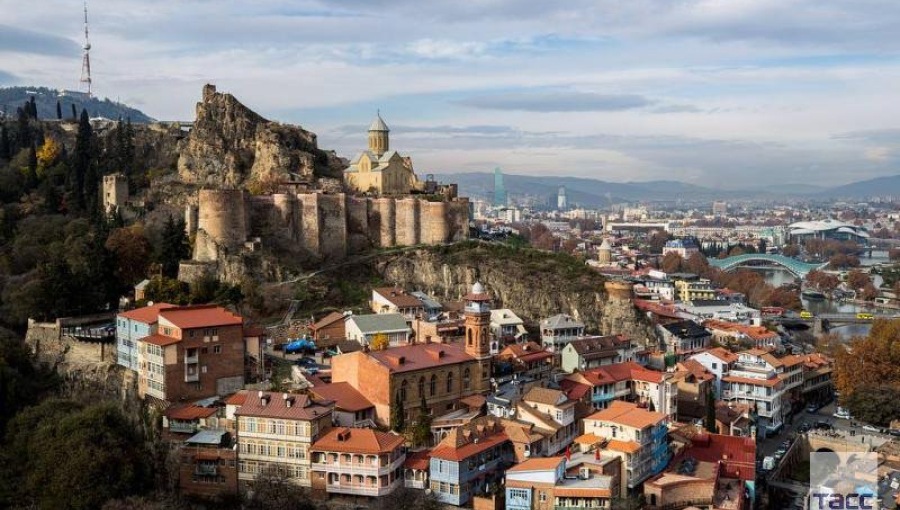
Brussels will revisit its approach in January, caught between pressure on Georgian Dream and its interest in a Black Sea partner, while the ruling party recasts the dispute as a defence of Christian values. / bne IntelliNewsFacebook
By Ben Aris in Berlin October 14, 2026

The EU has acknowledged that its policy towards Georgia is neither changing the course of the Georgian Dream government nor protecting Europe's own strategic interests, and will return to the issue in January, JAMnews reported on October 13.

"Our current approach is not creating enough pressure to bring about change, nor is it allowing us to fully pursue Europe's strategic interests. We will return to this issue in January," EU foreign policy chief Kaja Kallas said after a meeting of foreign ministers in Luxembourg on October 12, 2026.

The admission leaves Brussels with an awkward choice: how to raise the pressure on Tbilisi without losing a partner it needs in the Black Sea region. The meeting announced no new sanctions on Georgia, only concern over democratic backsliding, as Georgian Dream presses ahead with a constitutional lawsuit to ban the main opposition parties and the European Parliament calls for sanctions on Bidzina Ivanishvili, the party's founder.

A candidate on paper

Enlargement Commissioner Marta Kos has already described Georgia as a candidate "on paper only", and Brussels is drawing up accession roadmaps for Montenegro, Albania, Moldova and Ukraine without it. "As long as they are not moving forward - and are actually moving backwards because of the laws they have adopted - and until there is progress and steps towards European values, we will not cooperate with them," Kos said.

The EU is instead working with civil society. Its ambassador to Georgia, Pawel Herczynski, announced €38mn ($42mn) of new projects for 2026 at a Europe Day event in Telavi, covering education, jobs, rural development and food quality.

Member states bordering the Black Sea are keen to keep Georgia close. "It is very important to involve them in the dialogue on how we ensure security in the Black Sea region," said Bulgarian Foreign Minister Velislava Petrova-Chamova. Romania's Oana-Silvia Toiu stressed energy and transport links, though she rejected Tbilisi's claim that Brussels is the one boycotting dialogue.

Identity, not institutions

Georgian Dream insists its European choice is unchanged while turning on the EU's institutions. Prime Minister Irakli Kobakhidze says the European Commission's leadership is blocking a reset and claims the EU is demanding adoption rights for same-sex couples, a demand that appears in no official EU document. Parliamentary speaker Shalva Papuashvili challenged Kos to say "exactly what she objects to" in Christian values, though her remarks concerned laws and democratic backsliding.

The rhetoric has sharpened. Papuashvili called the Telavi event a political rally and accused Herczynski of breaching the Vienna Convention, and Tbilisi mayor Kakha Kaladze said that "if you gave Kaja Kallas a map, she wouldn't be able to point out where Georgia is."

The cost of balancing

The government defends its refusal to join sanctions on Russia as pragmatic, and Kobakhidze has cited Washington's easing of restrictions on Russian diesel in its support. That position looks less comfortable after Moscow banned Georgian wines, beer and mineral water this month. "Betting on the Russian market will one day lead to disaster," said Gigi Tsereteli, chairman of the opposition European Georgia party.

Papuashvili points instead to growth that has outpaced EU members and candidates, with the economy expanding by an average of 7.6% in the first eight months of the year. "Those who listen to Brussels suffer economic damage, while those who do not see economic growth," he said. The opposition expects January to bring a tougher EU line, though Tsereteli noted that Brussels has so far been "reluctant to take that final step" of blocking Georgia's path to membership altogether.