Importers Begin to Cut Orders After 145 Percent Tariff on China
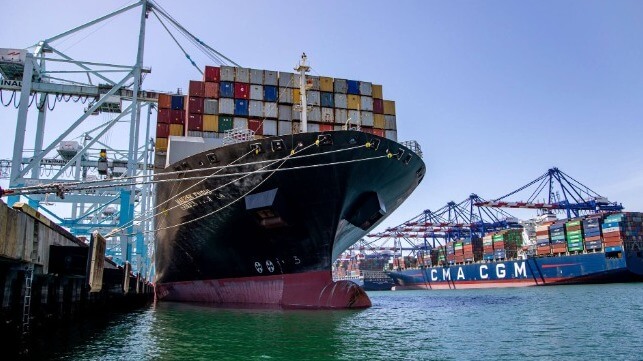
American importers are beginning to delay or cancel orders in China due to the White House's new 145 percent tariff on Chinese goods - and some U.S. firms may even abandon import cargo on the dock because they can't afford to pay the extra duties, though the White House has promised an exemption for goods already in transit.
Even before the latest hike, Chinese manufacturers faced a tariff of 20 percent from earlier White House actions. Many have already discounted their goods to the lowest profitable price in order to offset the effects. "It is a deal breaker," toy factory owner Chen Qingxin told the Wall Street Journal. "No room for doing business anymore, for both sides."
Given the effective doubling of their wholesale costs, American retailers are already beginning to cancel or defer orders. E-commerce giant Amazon began to revoke orders this week, according to Bloomberg, and has already canceled shipments of summer goods like air conditioners, beach chairs and scooters.
Exporters in China are also adapting to a new reality. "All factory orders are suspended. Any goods that have not been loaded will be cancelled and goods that are already at sea will be re-priced," one manufacturing executive told SCMP. "The loss on each container we ship is now greater than the profit we used to make on two containers." He added that his firm has heard from at least one U.S. client that the goods would be abandoned on the dock when they arrived because the tariffs make them too expensive to sell.
"The major trend we see is shippers looking to not accept their freight," supply chain consultant Joseph Esteves told CNBC. "A lot of these companies are levered financially. They don’t have the working capital requirements and they don’t have the cash. So they simply cannot just take on this [tariff] and hope to see what happens."
The steep tariff on China may force U.S. importers to diversify their supply chains to other alternatives, like Cambodia and Vietnam, already popular options for the "China plus one" diversified sourcing strategy. But there is little chance that more low-end consumer goods will end up being produced in America, some in the supply chain business say.
"They’re absolutely not going to go back to the United States," said Casey Barnett, president of the American Chamber of Commerce in Cambodia, told CNBC. "I can’t imagine that Americans want to sit down and sew a pair of sweatpants for long hours of the day."
China has also imposed its own retaliatory tariff of 84 percent on U.S. goods, and the increased cost is expected to hit agricultural interests hard, particularly soybean farmers. U.S. manufacturers may also feel the effects of a slowdown. In California, a leading maker of CNC industrial machine tools - Haas Automation - has announced that it is scaling back hiring, production and overtime because of a "dramatic decrease in demand for our machine tools from both domestic and foreign customers."
White House Softens Proposal for Steep Port Fees on Chinese Ships
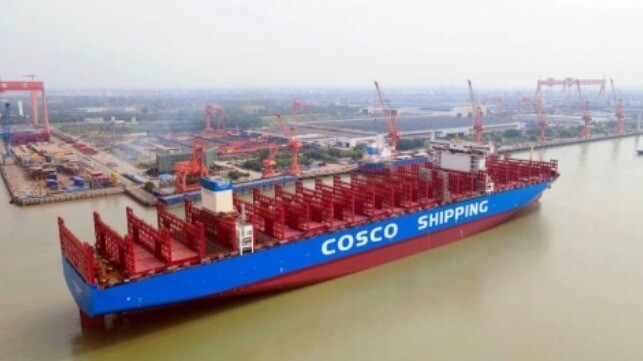
As markets continue to fall on the news of a 145 percent tariff on all Chinese goods, the White House has quietly signaled that it will soften its plans for multimillion-dollar port fees on Chinese ships - fees that U.S. oil companies, exporters and farmers strongly opposed.
Six sources with knowledge of the matter told Reuters that the White House may delay or reduce the fees proposed by the Office of the U.S. Trade Representative (USTR). The head of the office, Trade Representative Jamieson Greer, confirmed Tuesday that some of the fees might not be put into action and might not be added together.
The fees - which could have cost up to $3.5 million per port call for Chinese-built ships, under the original plan - drew protests from major domestic industries. The fees would have raised the cost of shipping for exporting oil, grain, machinery and other goods, making them less competitive or pricing them out of the global market, with broader effects on the U.S. economy. Some smaller U.S.-based carriers like Atlantic Container Line (ACL) warned that they would have to shut down American operations, and at least one major U.S. shipowner - Genco - said that it might cease calling in U.S. ports. Energy Products Partners, a leading U.S. midstream firm, warned that the fees would also have a devastating impact on oil and gas exports. If the fees take effect, "there will be no ‘drill baby drill’ [and] the ‘liquid gold’ under our feet would stay in the ground," EPP told Lloyd's List.
Reuters' sources said that USTR had not considered all types and sizes of ships when it formulated the port fees. The multimillion-dollar flat-fee structure was designed only with the largest container ships in mind; the impacts on tankers, bulkers, ro/ros and smaller boxships were not taken into account before the policy proposal was released. Now that USTR is looking at the broader effects on shipping, the fee structure will likely be recalibrated based on vessel size, making it proportional to the amount of cargo carried.
The administration's new executive order on revitalizing American maritime - a policy directive signed Tuesday - could be used as an alternative way to pursue USTR's domestic objectives, instead of penalizing foreign-flag shipowners with fees on Chinese ships, according to World Shipping Council President & CEO Joe Kramek.
"The Executive Order outlines several encouraging elements that reflect a serious focus on rebuilding the American maritime industry," Kramek said Thursday. "Measures to impose retroactive port fees would disadvantage all aspects of the supply chain - from consumers to farmers, from energy producers to manufacturers."
WSC previously raised the possibility of a legal challenge to USTR's fees. Last month, Kramek suggested that USTR's action was a plan to boost U.S. domestic shipbuilding, rather than a proposal to counter unfair trade practices. "Generating demand for domestic products and raising government revenue – whether to support a domestic industry or for other purposes – are not permissible bases for actions under Section 301," said Kramek in a statement last month, referring to the U.S. Trade Act of 1974.

No comments:
Post a Comment