Tensions Break Out Across Syria As Promising Honeymoon Wanes – Analysis
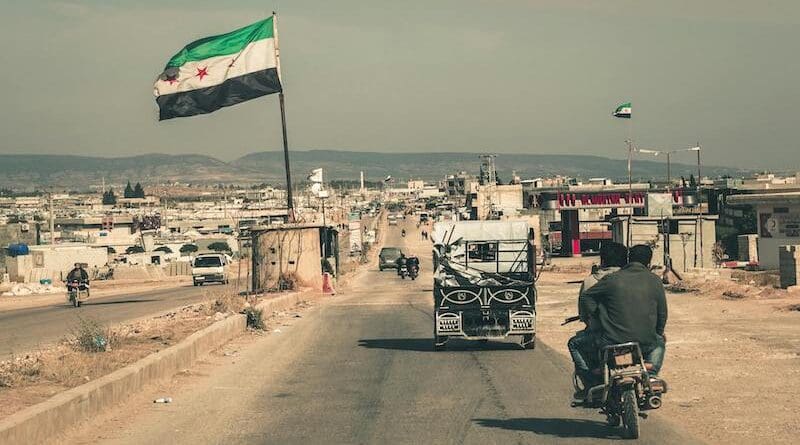
On December 8, 2024, Syrian opposition forces overthrew the Bashar al-Assad government. The group, Hayat Tahrir al-Sham (HTS), formed a new government with its leader, Abu Mohammed al-Jawlani, at the helm. However, the hope for a stable Syria has not lasted. Instability deepens as Damascus fails to fill the power vacuum across multiple fronts.
Weak control over security forces and the re-emergence of Islamic State (IS) fighters are chipping away at al-Jawlani’s six-month-old charm offensive. Widespread sectarian conflict has predictably erupted as HTS attempts to consolidate power. In addition, the US has withdrawn its military presence in the region. This will undoubtedly derail al-Jawlani’s expectations for stability, and also challenge his grip on jihadist militants within government ranks.
Jihadist militants target minority ethnic groups
Ethnic and sectarian conflict has now engulfed the whole of Syria. The US withdrawal from a base near the Koniko gas field in the Deir ez-Zor and Al-Tanf areas has undoubtedly opened the door for IS and other jihadists to mobilize and engage hostilities against minority groups such as Alawites, Druze, Orthodox Christians and Kurds.
The massacre of Alawites in Latakia at the hands of HTS security forces and jihadist militants was the initial sign of the chaos to come. As recent as last month, HTS and jihadist elements targeted minority communities across Damascus outskirts and eastern regions. Their primary goal is to expand territorial control and repress any dissent against the HTS government. Damascus deflects media attention by claiming pro-Assad elements are behind the chaos, but evidence clearly points to extremist HTS groups inciting conflict.
Fighting between al-Qaeda-affiliated HTS militants and Druze and Kurdish militias has returned to old areas of contention such as Manbij, north of Aleppo, but has also been present across the rest of Syria. Clashes in the Jaramana, Sahnaya and Mezzeh districts of Damascus specifically target Druze. In the town of Ashrafiyah, Druze civilians were attacked by armed elements that included men wearing IS patches on unmarked military uniforms. Jihadist militants continue to threaten civilians in Latakia and Aleppo.
In addition, concern has grown among Kurds following the appointment of Hatem Ihsan Fayyad al-Hayes, also known as Abu Hatem Shaqra, to the position of commander of the 86th Division, responsible for Raqqa, Deir ez Zor and Hasakah. Previously, Abu Hatem Shaqra served as the leader of Ahrar al-Sharqiya, a Turkish-backed militant group. Ahrar al-Sharqiya is responsible for the killing of Hevrin Khalaf, a Syrian-Kurdish politician. As such, Abu Hatem Shaqra is sanctioned by the US. He has also been accused of several extrajudicial killings.
Abu Hatem Shaqra is not an isolated case. Across Syria, unidentifiedarmed groups are conducting extrajudicial executions of known Assad regime affiliates as well as Druze militias. Meanwhile, al-Qaeda-affiliated HTS elements have targeted students across Suweida, and other jihadist militants continue to threaten civilians in Latakia and Aleppo. HTS gunmen even orchestrated a raid on the Layli Al-Sharq restaurant in Damascus. While HTS has denied involvement, the capital’s residents are concerned over the heavy-handed approach employed by government forces.
Similar incidents across the country further expose al-Jawlani’s sham charm offensive. HTS continues to cover up the crimes of extremist militants within the government ranks. Clearly, al-Jawlani’s HTS forces have failed to fill a security vacuum, and Damascus has no grip over its own forces.
Foreign interests and militants also pose a problem
Further, clashes in the east and northeast represent major threats beyond Syria’s borders. Foreign jihadist militants have re-emerged across Ashrafiyat, Deir ez Zor, Hasakah and Raqqa, possibly threatening the route of natural gas from Qatar through Jordan. This could bring devastating effects to the Syrian civilians who rely on Qatar’s resources. In addition, the Syrian Democratic Forces (SDF), a US-backed Kurdish force, remain concerned over the future of jihadist elements detained at the al-Hol and Roj camps. Over 8,000 foreign fighters from 60 countries remain at these camps, raising alarms over potential threats of foreign fighters targeting the camps in efforts to break out detainees.
The resurgence in foreign IS activity in Syria has not gone unnoticed by the global powers. Despite their withdrawal from military bases in Syria, the US continues to carry out counter-terrorism operations along eastern regions. The US administration has demanded accountability from the HTS government, particularly from “foreign terrorist fighters [in] any official roles.” The US also remains hesitant regarding sanctions on al-Jawlani, al-Qaeda affiliates and institutions.
In contrast, European governments choose to closely engage the HTS government. While Türkiye leads the way in lobbying western capitals to lift sanctions on al-Jawlani and others, Qatar aims to support the HTS government with aid and natural gas. Both governments have come under increasing criticism for their “Islamist-friendly” approach across the region. However, widespread chaos in Syria restricts aid as well as al-Jawlani’s efforts to gain sanctions relief. Al-Jawlani remains under the global microscope, and his proposed visit to Paris will further increase the scrutiny on his government’s ability to prosecute human rights violations and protect minorities.
- The views expressed in this article are the author’s own and do not necessarily reflect Fair Observer’s editorial policy, where this article appeared.

Fernando Carvajal
Fernando Carvajal served on the UN Security Council Panel of Experts on Yemen from April 2017 to March 2019 as a regions and armed groups expert. He has nearly 20 years of experience conducting fieldwork in Yemen and is a specialist in Yemeni politics and tribal relations.

No comments:
Post a Comment