Solidarity movement cautiously welcomes Canada’s recognition of Palestinian state
August 1, 2025
By Dave McKee
PEOPLES VOICE
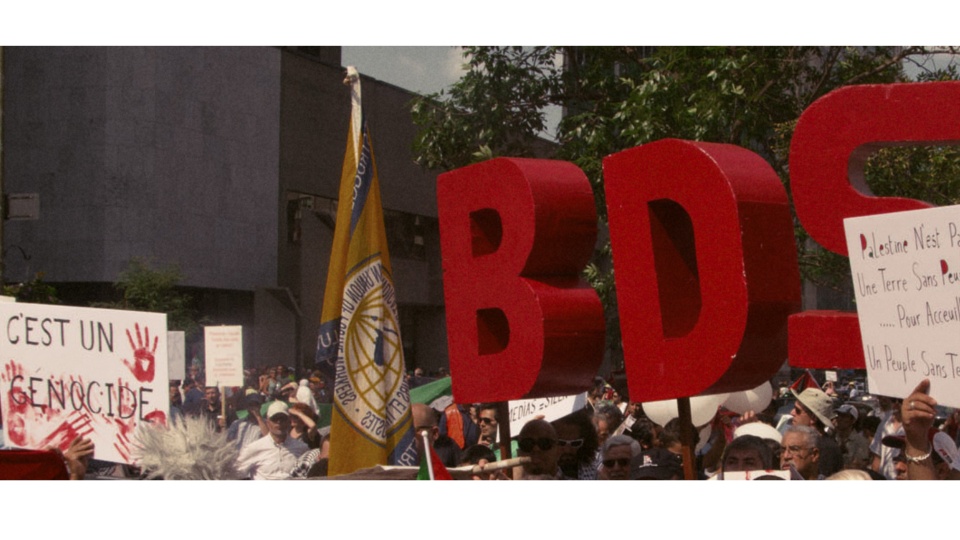
A Palestine solidarity demonstration by trade union activists in Montreal.
A Palestine solidarity demonstration by trade union activists in Montreal.
| Photo via People's Voice
TORONTO—Canadians for Justice and Peace in the Middle East (CJPME) announced July 31 that it cautiously welcomes Prime Minister Mark Carney’s announcement that Canada will recognize a Palestinian state.
However, the solidarity organization expressed its deep concern over the conditional nature of the statement and the domestic context in which it was made, specifically noting new revelations about Canada’s complicity in Israel’s genocide against Palestinians.
“The timing of the announcement comes just one day after a bombshell report revealed the extent of Canada’s deceptive pause on arms transfers and far-reaching military cooperation with Israel during its assault on Gaza,” reads the statement.
“CJPME believes this context underscores both the growing power of Palestine solidarity movements and the government’s attempt to distract from more substantive accountability.”
CJPME believes that recognition of Palestinian statehood can only be made meaningful if Canada immediately enacts a comprehensive, two-way arms embargo with Israel, investigates Canadian companies potentially violating the embargo, and implements broad economic sanctions to hold Israel accountable for its genocide in Gaza and its system of apartheid and illegal occupation.
Jason Toney, Director of Media Advocacy at CJPME, warned that Carney seems to be trying to play the role of “kingmaker” in Palestine.
“Calling for elections while dictating who can participate makes a mockery of democracy. Palestinians, not foreign powers, must decide their future. Canada’s role should be to support truly fair and free elections.
“Demanding Palestinian demilitarization as a precondition for recognition while arming Israel is both the epitome of hypocrisy and denies Palestinians the very basic foundation of statehood itself. This is not recognition of a state, it’s a demand to capitulate to Israel’s dominance of Palestinians forever.
“The timing of this announcement is deeply suspect. Carney’s government appears more interested in deflecting attention from the damning arms trade revelations than in delivering real justice for Palestinians. Recognition is meaningless without sanctions on Israel. Palestine solidarity advocates won’t be placated by symbolic gestures.”
The declaration that Carney intends to recognize Palestine also came on the same day that U.S. President Donald Trump imposed fresh tariffs on Canada following failed negotiations between the two countries.
People’s Voice
CONTRIBUTOR

Dave McKee
Dave McKee is the editor of People's Voice, Canada's leading English-language socialist publication.
TORONTO—Canadians for Justice and Peace in the Middle East (CJPME) announced July 31 that it cautiously welcomes Prime Minister Mark Carney’s announcement that Canada will recognize a Palestinian state.
However, the solidarity organization expressed its deep concern over the conditional nature of the statement and the domestic context in which it was made, specifically noting new revelations about Canada’s complicity in Israel’s genocide against Palestinians.
“The timing of the announcement comes just one day after a bombshell report revealed the extent of Canada’s deceptive pause on arms transfers and far-reaching military cooperation with Israel during its assault on Gaza,” reads the statement.
“CJPME believes this context underscores both the growing power of Palestine solidarity movements and the government’s attempt to distract from more substantive accountability.”
CJPME believes that recognition of Palestinian statehood can only be made meaningful if Canada immediately enacts a comprehensive, two-way arms embargo with Israel, investigates Canadian companies potentially violating the embargo, and implements broad economic sanctions to hold Israel accountable for its genocide in Gaza and its system of apartheid and illegal occupation.
Jason Toney, Director of Media Advocacy at CJPME, warned that Carney seems to be trying to play the role of “kingmaker” in Palestine.
“Calling for elections while dictating who can participate makes a mockery of democracy. Palestinians, not foreign powers, must decide their future. Canada’s role should be to support truly fair and free elections.
“Demanding Palestinian demilitarization as a precondition for recognition while arming Israel is both the epitome of hypocrisy and denies Palestinians the very basic foundation of statehood itself. This is not recognition of a state, it’s a demand to capitulate to Israel’s dominance of Palestinians forever.
“The timing of this announcement is deeply suspect. Carney’s government appears more interested in deflecting attention from the damning arms trade revelations than in delivering real justice for Palestinians. Recognition is meaningless without sanctions on Israel. Palestine solidarity advocates won’t be placated by symbolic gestures.”
The declaration that Carney intends to recognize Palestine also came on the same day that U.S. President Donald Trump imposed fresh tariffs on Canada following failed negotiations between the two countries.
People’s Voice
CONTRIBUTOR
Dave McKee
Dave McKee is the editor of People's Voice, Canada's leading English-language socialist publication.
If France, the U.K. and Canada recognize a Palestinian state, what happens?
August 1, 2025
JUANA SUMMERS, HOST:
This week, the United Kingdom and Canada joined France in recently announcing plans to formally recognize a Palestinian state. These announcements came amid growing international alarm over reports of mass starvation in Gaza, the worst hunger crisis in nearly two years of war between Israel and Hamas. But if these moves were meant to pressure Israel on humanitarian aid or an end to the war, Israel and its closest ally, the United States, both dismissed them as a reward for Hamas. So does this change anything? Let's hear now from Michael Lynk, law professor emeritus at Western University in Ontario. He was also a U.N. special rapporteur for human rights in the occupied Palestinian territory from 2016 to 2022. Thank you for being here.
MICHAEL LYNK: Pleased to be here. Thank you for having me.
SUMMERS: So Michael, just to start - 147 countries, so about three-quarters of the world's countries, already recognize Palestinian statehood. So what does it mean for a country to have relations with what it calls a fellow country of Palestine?
LYNK: What it means is that countries that recognize another country recognize the sovereignty and control that that country has or should have over that territory. So for Palestine, what it would mean is if Canada and France and the United Kingdom now recognize the state of Palestine, they're recognizing its sovereignty over East Jerusalem, the West Bank and Gaza and that they would be opposed to and probably compelled to take diplomatic action in support of Palestinian exercise of its sovereignty over those territories, which, of course, right now, are under the full control of Israel. So it would mean these countries would be opposed to infringements on that sovereignty by the 360 Israeli settlements on that territory and the thousands of Israeli troops on that territory. So it has both symbolic meaning and consequential legal and political meaning, as well.
SUMMERS: Let me ask you this. When we talk about countries like the United Kingdom, Canada and France, they are more influential than a lot of those other 140 some odd nations. These are G7 members that we're talking about, major Western powers to members of the U.N. Security Council. So I wonder, to your mind, what might this mean for diplomacy? Could these moves affect the international balance of power as it relates to the Israeli-Palestinian conflict?
LYNK: That's true. And on the positive side, as you said, I mean, now, 3 of the 7 G7 countries recognize Palestine as a state. Thirteen of the 20 members of the G20 recognize Palestinian sovereignty. And 4 of the 5 permanent members of the Security Council of the United Nations now recognize Palestine as a state. But there's also a political reality here, as well - is that there's unlikely to be forward moves to try to change the situation on the ground substantially if the United States is not on board. The United States still holds a veto power over admitting Palestine as a full member at the United Nations. The United States provides much of Israel's weaponry. It provides it with diplomatic shield at the United Nations and in other international forums. So as long as the relationship between the United States and Israel remains as firm and as tight as it is, it's hard to see how we're going to have any substantial moves to change the reality on the ground.
SUMMERS: France, the U.K. and Canada, they've long supported a two-state solution, two separate sovereign states for Israel and for Palestinians, but they have not really acted on that support until now. Why do you think that's happening now?
LYNK: Quite simply, the carnage in Gaza and the repeated Israeli obstruction of a Palestinian state coming into fruition. The Israelis hold most of the cards for the ability of the Palestinians to achieve their freedom and to be able to exercise their rights as a state. And they do that through, obviously, their troops on the soil and their 360 settlements in East Jerusalem and the West Bank, but particularly over the last three to four months, where levels of starvation are heading towards a famine...
SUMMERS: Right.
LYNK: ...And I think have shocked the conscience of the world. So all of this, I think, is meant to tell Israel, change your behavior. I'm afraid it may not happen. This announcement by Canada, the United Kingdom and France certainly will irritate Israel, but I'm not convinced it's going to change their behavior. The only real way for a Palestinian state to come into being is through, I think, a concerted economic boycott or sanctioning of Israel. Only by suspending weapons sales, only by suspending free trade agreements, only by suspending, I think, the sale of Israeli surveillance and technology will Israel feel the political and economic cost of pursuing this path of suffocating the possibility of a Palestinian state. Anything less may be important at a symbolic level, but it's not going to radically change what is going on short of taking decisive action.
SUMMERS: Michael Lynk, a former U.N. independent expert on human rights in the Palestinian territories. Michael, thank you so much.
LYNK: Thank you so much for having me. A real pleasure.
Copyright © 2025 NPR. All rights reserved. Visit our website terms of use and permissions pages at www.npr.org for further information.
Accuracy and availability of NPR transcripts may vary. Transcript text may be revised to correct errors or match updates to audio. Audio on npr.org may be edited after its original broadcast or publication. The authoritative record of NPR’s programming is the audio record.
August 1, 2025
NPR/PBS
Heard on All Things Considered
By Michelle Aslam , Juana Summers
NPR's Juana Summers speaks with Michael Lynk, former U.N. Special Rapporteur for human rights in Palestinian territories, about recent international moves to recognize a Palestinian state.
By Michelle Aslam , Juana Summers
NPR's Juana Summers speaks with Michael Lynk, former U.N. Special Rapporteur for human rights in Palestinian territories, about recent international moves to recognize a Palestinian state.
JUANA SUMMERS, HOST:
This week, the United Kingdom and Canada joined France in recently announcing plans to formally recognize a Palestinian state. These announcements came amid growing international alarm over reports of mass starvation in Gaza, the worst hunger crisis in nearly two years of war between Israel and Hamas. But if these moves were meant to pressure Israel on humanitarian aid or an end to the war, Israel and its closest ally, the United States, both dismissed them as a reward for Hamas. So does this change anything? Let's hear now from Michael Lynk, law professor emeritus at Western University in Ontario. He was also a U.N. special rapporteur for human rights in the occupied Palestinian territory from 2016 to 2022. Thank you for being here.
MICHAEL LYNK: Pleased to be here. Thank you for having me.
SUMMERS: So Michael, just to start - 147 countries, so about three-quarters of the world's countries, already recognize Palestinian statehood. So what does it mean for a country to have relations with what it calls a fellow country of Palestine?
LYNK: What it means is that countries that recognize another country recognize the sovereignty and control that that country has or should have over that territory. So for Palestine, what it would mean is if Canada and France and the United Kingdom now recognize the state of Palestine, they're recognizing its sovereignty over East Jerusalem, the West Bank and Gaza and that they would be opposed to and probably compelled to take diplomatic action in support of Palestinian exercise of its sovereignty over those territories, which, of course, right now, are under the full control of Israel. So it would mean these countries would be opposed to infringements on that sovereignty by the 360 Israeli settlements on that territory and the thousands of Israeli troops on that territory. So it has both symbolic meaning and consequential legal and political meaning, as well.
SUMMERS: Let me ask you this. When we talk about countries like the United Kingdom, Canada and France, they are more influential than a lot of those other 140 some odd nations. These are G7 members that we're talking about, major Western powers to members of the U.N. Security Council. So I wonder, to your mind, what might this mean for diplomacy? Could these moves affect the international balance of power as it relates to the Israeli-Palestinian conflict?
LYNK: That's true. And on the positive side, as you said, I mean, now, 3 of the 7 G7 countries recognize Palestine as a state. Thirteen of the 20 members of the G20 recognize Palestinian sovereignty. And 4 of the 5 permanent members of the Security Council of the United Nations now recognize Palestine as a state. But there's also a political reality here, as well - is that there's unlikely to be forward moves to try to change the situation on the ground substantially if the United States is not on board. The United States still holds a veto power over admitting Palestine as a full member at the United Nations. The United States provides much of Israel's weaponry. It provides it with diplomatic shield at the United Nations and in other international forums. So as long as the relationship between the United States and Israel remains as firm and as tight as it is, it's hard to see how we're going to have any substantial moves to change the reality on the ground.
SUMMERS: France, the U.K. and Canada, they've long supported a two-state solution, two separate sovereign states for Israel and for Palestinians, but they have not really acted on that support until now. Why do you think that's happening now?
LYNK: Quite simply, the carnage in Gaza and the repeated Israeli obstruction of a Palestinian state coming into fruition. The Israelis hold most of the cards for the ability of the Palestinians to achieve their freedom and to be able to exercise their rights as a state. And they do that through, obviously, their troops on the soil and their 360 settlements in East Jerusalem and the West Bank, but particularly over the last three to four months, where levels of starvation are heading towards a famine...
SUMMERS: Right.
LYNK: ...And I think have shocked the conscience of the world. So all of this, I think, is meant to tell Israel, change your behavior. I'm afraid it may not happen. This announcement by Canada, the United Kingdom and France certainly will irritate Israel, but I'm not convinced it's going to change their behavior. The only real way for a Palestinian state to come into being is through, I think, a concerted economic boycott or sanctioning of Israel. Only by suspending weapons sales, only by suspending free trade agreements, only by suspending, I think, the sale of Israeli surveillance and technology will Israel feel the political and economic cost of pursuing this path of suffocating the possibility of a Palestinian state. Anything less may be important at a symbolic level, but it's not going to radically change what is going on short of taking decisive action.
SUMMERS: Michael Lynk, a former U.N. independent expert on human rights in the Palestinian territories. Michael, thank you so much.
LYNK: Thank you so much for having me. A real pleasure.
Copyright © 2025 NPR. All rights reserved. Visit our website terms of use and permissions pages at www.npr.org for further information.
Accuracy and availability of NPR transcripts may vary. Transcript text may be revised to correct errors or match updates to audio. Audio on npr.org may be edited after its original broadcast or publication. The authoritative record of NPR’s programming is the audio record.
Abbas welcomes Portugal’s plan to recognize Palestinian state in September
Palestinian leader urges more countries to follow suit amid growing wave of recognition pledges
Aysar Alais, Tarek Chouiref |01.08.2025 - TRT/AA
RAMALLAH, Palestine/ISTANBUL
Palestinian President Mahmoud Abbas on Friday praised Portugal’s decision to begin the process of recognizing a Palestinian state this September, calling it a key step toward advancing a two-state solution.
“This is a positive and courageous decision by Portugal, one that strengthens the path toward peace and reflects the growing consensus of the international community,” Abbas said in a statement carried by the official WAFA news agency.
He urged countries that have not yet recognized a Palestinian state “to take similar serious steps in support of peace.”
Portuguese media reported Thursday that Prime Minister Luis Montenegro plans to move forward with recognition during the UN General Assembly session in September, pending consultations with President Marcelo Rebelo de Sousa and parliamentary parties.
The announcement comes amid a wave of recognition momentum. On Thursday, Finnish President Alexander Stubb said he would approve recognition if his government submits a proposal, noting that “the time has come for Finland to decide.”
France, Britain, Canada, and Malta have also indicated plans to recognize a Palestinian state in September, while Australia has signaled it may follow.
Earlier this week, 15 Western nations, including France, issued a joint call for recognition and an immediate ceasefire in Gaza.
In recent months, Spain, Norway and Ireland officially recognized a Palestinian state, followed by Slovenia in June, bringing the total number of UN member states recognizing Palestine to 149 out of 193.
Palestinian leader urges more countries to follow suit amid growing wave of recognition pledges
Aysar Alais, Tarek Chouiref |01.08.2025 - TRT/AA
RAMALLAH, Palestine/ISTANBUL
Palestinian President Mahmoud Abbas on Friday praised Portugal’s decision to begin the process of recognizing a Palestinian state this September, calling it a key step toward advancing a two-state solution.
“This is a positive and courageous decision by Portugal, one that strengthens the path toward peace and reflects the growing consensus of the international community,” Abbas said in a statement carried by the official WAFA news agency.
He urged countries that have not yet recognized a Palestinian state “to take similar serious steps in support of peace.”
Portuguese media reported Thursday that Prime Minister Luis Montenegro plans to move forward with recognition during the UN General Assembly session in September, pending consultations with President Marcelo Rebelo de Sousa and parliamentary parties.
The announcement comes amid a wave of recognition momentum. On Thursday, Finnish President Alexander Stubb said he would approve recognition if his government submits a proposal, noting that “the time has come for Finland to decide.”
France, Britain, Canada, and Malta have also indicated plans to recognize a Palestinian state in September, while Australia has signaled it may follow.
Earlier this week, 15 Western nations, including France, issued a joint call for recognition and an immediate ceasefire in Gaza.
In recent months, Spain, Norway and Ireland officially recognized a Palestinian state, followed by Slovenia in June, bringing the total number of UN member states recognizing Palestine to 149 out of 193.

No comments:
Post a Comment