In 2024, Belgium passed pioneering legislation granting sex workers full employment rights, including access to maternity leave, health insurance, unemployment benefits and pension rights. ENTR visited the country to understand what difference the new law has made on the ground and whether in Belgium, sex work has become a job like any other.
Issued on: 15/09/2025 -
By:
Renée BERTINI/
Jade BRIEND-GUY/
ENTR
FRANCE24
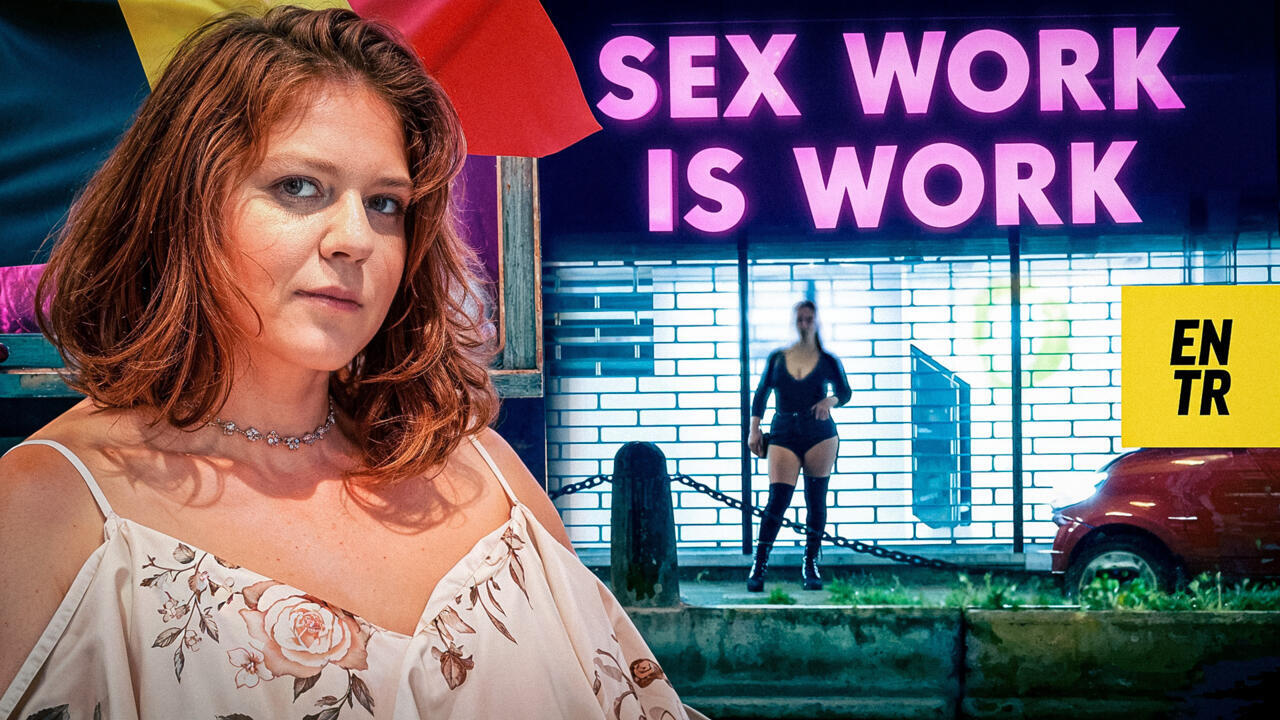
Belgian sex worker takes the ENTR team through her day-to-day life © ENTR
"Prostitutes united will never be defeated!” The revisited popular chant echoed through the naves of the Béguinage church, in the Belgian capital Brussels. Singing, fists pumping in the air, was a group of sex workers who had taken over the site for the day.
On June 2, sex workers in several major European cities, including Barcelona, Berlin and Brussels, celebrated the birth of their activist movement. They marked the date when, in 1975, around 50 sex workers occupied the Church of Saint-Nizier in Lyon to protest for more rights.
Fifty years later, the demands of sex workers remain largely the same, regardless of the country: greater recognition of their work and its hardship, as well as measures to improve their safety.
But this year, in Brussels, this commemoration felt like a victory lap for many of the participants. Sex worker rights organisations such as Utsopi and Espace P worked tirelessly to push for the establishment of contracts for sex workers in Belgium.
Belgium decriminalised sex work in 2022, passed a law on employment contracts in May 2024 and finally made it official in December of the same year.
Six months later, this measure continues to be celebrated as a step further in sex worker labour law, compared to other European neighbours. Although other countries, such as the Netherlands, Germany and Austria, also authorise and regulate sex work, they have not gone as far in recognising the rights of sex workers.
"Prostitutes united will never be defeated!” The revisited popular chant echoed through the naves of the Béguinage church, in the Belgian capital Brussels. Singing, fists pumping in the air, was a group of sex workers who had taken over the site for the day.
On June 2, sex workers in several major European cities, including Barcelona, Berlin and Brussels, celebrated the birth of their activist movement. They marked the date when, in 1975, around 50 sex workers occupied the Church of Saint-Nizier in Lyon to protest for more rights.
Fifty years later, the demands of sex workers remain largely the same, regardless of the country: greater recognition of their work and its hardship, as well as measures to improve their safety.
But this year, in Brussels, this commemoration felt like a victory lap for many of the participants. Sex worker rights organisations such as Utsopi and Espace P worked tirelessly to push for the establishment of contracts for sex workers in Belgium.
Belgium decriminalised sex work in 2022, passed a law on employment contracts in May 2024 and finally made it official in December of the same year.
Six months later, this measure continues to be celebrated as a step further in sex worker labour law, compared to other European neighbours. Although other countries, such as the Netherlands, Germany and Austria, also authorise and regulate sex work, they have not gone as far in recognising the rights of sex workers.
On top of allowing formal employment, Belgium has also recognised five rights specific to sex workers, such as the rights to refuse a client or specific sexual practices.
However, these new legislative frameworks are slow to put in place. According to the Belgian government, only 11 employment contracts had been signed as of August this year. On top of that, those contracts only apply to sex workers who are employed in dedicated establishments, such as bars or massage parlours.
Such profiles do not represent the majority of professionals in the sector, either because they remain independent or because they are in precarious situations, such as people who are undocumented or victims of human trafficking.
So, do these measures really change the daily lives of sex workers in Belgium? ENTR spoke to them on-the-ground to find out.
ENTR is a digital space for open discussion about what really matters, what holds us back and what connects us all.
ENTR exists in 9 languages: English, Bulgarian, Dutch, French, German, Hungarian, Polish, Portuguese and Romanian.

No comments:
Post a Comment