Blank Sailings Hit New Record in Response to Tariff Pressure
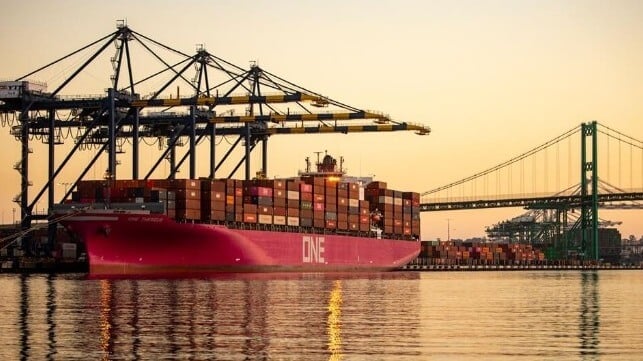
The latest data from consultancy Project44 shows that blank sailings have surged to new heights as demand on U.S.-China routes has fallen. The blanks for October are on track to exceed levels seen during the early months of the COVID-19 pandemic, when consumer demand in the West cratered and imports fell off quickly.
The "Liberation Day" tariff rollout is largely responsible for this month's drop, the consultancy believes. The number of blank sailings has been on the rise throughout the year, and has been concentrated on trade lanes most affected by tariffs. Volumes have risen and fallen on a weekly or monthly basis in line with the tariff cost of importation, which has fluctuated dramatically, but overall net trade volumes remain the same as last year. Any shifts in sourcing out of high-tariff countries (China) may take years to fully appear, Project44 predicts; for now, the overall proportions of East-West trade remain about the same, and the cost of the tariffs is being divided up between manufacturers, importers and end users.
On China-to-U.S. routes alone, there are currently 67 planned blank sailings, according to Project44. China-USWC blanks are up 46 percent year-over-year, and SE Asia-USWC blanks are up by 41 percent. (In the other direction, USWC-SE Asia blanks are up 75 percent.) "These lanes remain among the heaviest trafficked in the world, and the surge in cancellations underscores how carriers are managing weaker U.S. import demand and adjusting for uncertainty created by ongoing tariff measures," the consultancy noted.
The pattern suggests a twofold response to tariff pressures: cuts on the high-volume transpacific services to support rates, and cuts on U.S. export services to match. Export volume from the U.S. to China is down about 40 percent year-over-year, and has been consistently low throughout 2025.
“Carriers are blanking sailings at an intensity we haven’t seen since the early pandemic period. The strategy is less about crisis response this time and more about maintaining rate stability in a tariff-distorted market," said Project44 researcher Bart De Myunck.
US Warns Ships to Pay USTR Port Fees Before Arrival or Face Denials
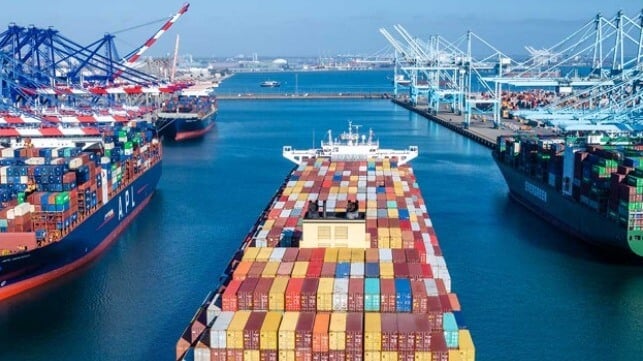
U.S. Customs and Border Protection issued the first guidance for the pending USTR Section 301 Vessel Fees related to Chinese-owned, operated, or built ships, warning operators that the fees are their responsibility and should be paid at least three days before arrival at their first U.S. port. It was the first statement to provide clarification and a further indication that the U.S. is still preparing to implement the fees on October 14.
A statement from CBP was anticipated to provide guidance on the payment mechanisms for the fees, which range from $50 per net ton for Chinese-owned or operated ships to $18 per net ton, or $120 per container discharged, for Chinese-built ships. Car and vehicle Ro-Ros are paying $14 per net ton. The fees are due before the ship arrives at its first U.S. port, and each ship will pay up to five times per year.
“The burden for determining if a vessel owes the fee is on the operator, NOT CBP,” the statement emphasizes. “Responsible parties are strongly encouraged to pay fees prior to vessel arrival as vessels without proof of payment will be subject to denial of lading or unlading operations, or granting of clearance withheld, until proof of payment can be verified.”
As expected, CBP is using the pay.gov website, warning operators not to expect to pay at the port of entry. The website will calculate the fees once the basic parameters are selected and the vessel information is provided. Payment will be made through electronic bank transfers.
Overall, the statement contained no significant new information for the shipping community ahead of the introduction of the fees. There is still a lot of uncertainty in the details of the program, and the shipping community is waiting for guidance. Jeanne Grasso, a partner at the law firm Blank Rome, notes they are still waiting on the FAQ expected from the U.S. Trade Representative.
Another uncertainty is the current shutdown of the U.S. federal government due to a budget dispute with the U.S. Congress. The USTR was among the agencies that were furloughing most of their staff until the budget is resolved.
Carriers have been working to redeploy vessels in anticipation of the beginning of the fee program, which has been delayed since April 2025. However, analysts have still estimated that the top 10 container carriers alone could face fees of more than $3.2 billion in 2026. Yet, despite the price tag, many of the carriers continue to order new vessels to be built in China.
The original goal of the USTR program was to penalize China for its unfair business practices with its shipbuilding industry and its rapid rise to market dominance, as well as China's efforts at exerting influence over the shipping industry broadly. The Trump administration added the additional fees on all foreign-built car and vehicle carriers and adopted measures that had been promoted in Congress for LNG carriers. In the first phase, LNG carriers are exempt from the fees, but the program sets longer-term goals for a portion of U.S. LNG exports to be carried on U.S.-built LNG carriers.

No comments:
Post a Comment