Chinese cars for Iranian copper: How sanctions revived barter trade
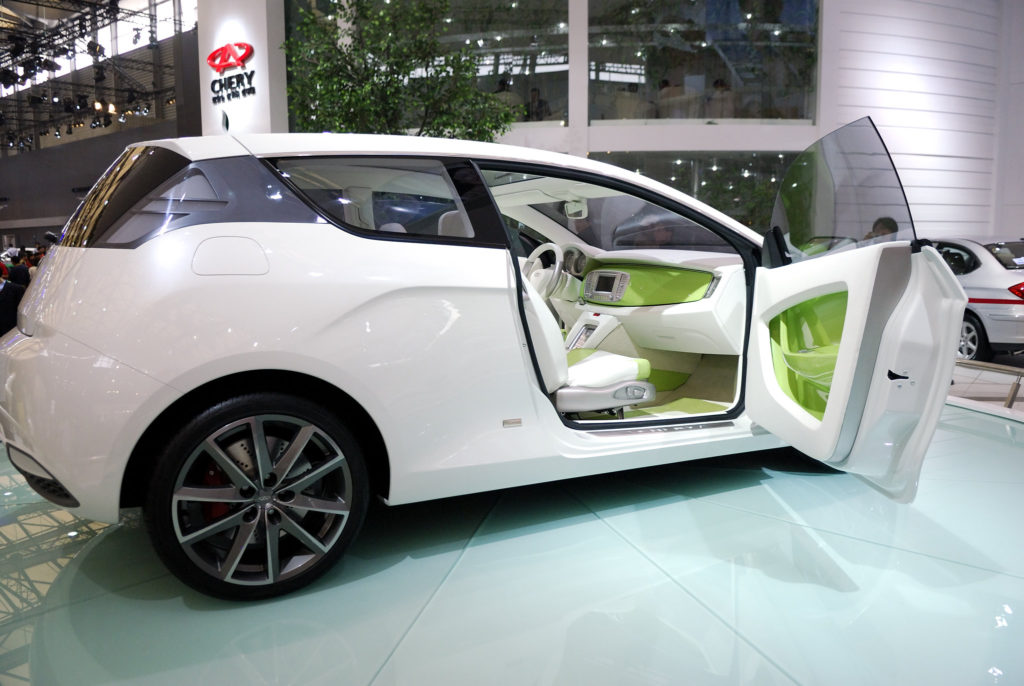
Every few months, a consignment of car parts rolls off a production line in an industrial town on China’s mighty Yangtze River. The engines and chassis are sent to a different factory to be half-assembled into what is known as “knocked down” form, before being loaded into containers and shipped to their final destination: Iran.

But these half-built cars are not paid for in cash. Instead, they are exchanged for containers of Iranian copper and zinc to feed China’s vast metals industry.
The cars-for-metals trade, described to Bloomberg News by four people with knowledge of the situation, offers a rare insight into how an unprecedented wave of western sanctions has fragmented the global trading system and spurred a renaissance in the age-old art of barter.
The barter trade revolves around a clutch of companies from Anhui province in China’s industrial heartland — among them Chery Automobile, the carmaker which last month raised $1.2 billion in an initial public offering in Hong Kong, and Tongling Nonferrous Metals Group Holdings, a leading metals company.
Now the biggest exporter of Chinese cars to the world and the 11th-largest passenger vehicle company globally, Chery’s car parts form a key link in a complex web of trade where vehicles have been bartered for metals and even cashew nuts in order to sidestep payment headaches created by an ever-proliferating wave of US sanctions.
There’s no suggestion that Chery, Tongling, or any of the other companies named in this story are in breach of sanctions.
The automaker doesn’t actually barter directly with Iran, instead selling parts and technology to a different company in Anhui province, which assembles them into semi-knocked down vehicles which are sent to Iran, said the people, who asked not to be identified discussing private information. And US and European sanctions on Iran apply specifically to individuals and companies from those countries and anyone using their currencies, meaning that Chinese companies can continue to do business there without breaking any sanctions as long as they trade in rials or yuan. Under Chinese law, trade with Iran remains legal.
Representatives from both Chery and Tongling didn’t respond to multiple requests for comment for this story.
Since its founding three decades ago, Chery has become a success story for Beijing’s foreign trade policy under the Belt and Road Initiative, doing business everywhere from Iran and Cuba to Russia, where since 2022 Chery has vied with Philip Morris for the title of the largest foreign company by revenues. It has made its home province of Anhui into China’s No. 1 producer of cars in the first half of 2025, fulfilling a goal to transform its hometown of Wuhu into “China’s Detroit.”
In its IPO prospectus, the company says that it had stopped doing business in both Iran and Cuba by the end of 2024, and pledged to scale down its business in Russia to “negligible” levels by 2027. It said its legal adviser Hogan Lovells had assessed that its activities in countries subject to sanctions “did not represent a primary sanctioned activity or a violation of the US primary sanctions and the secondary sanctions risk is relatively limited.”
Still, it was notable that the banks leading Chery’s IPO were all Chinese; the company had picked JPMorgan Chase & Co. to be part of the deal, but the US bank dropped out before signing a formal mandate. JPMorgan had concerns about Chery’s disclosures, including of its business dealings with sanctioned countries, according to three people familiar with the matter, who asked not to be identified discussing private deliberations.
A JPMorgan representative declined to comment.
The Chinese Foreign Ministry’s Spokesperson’s Office said it wasn’t aware of the trade, but “as a principle, China has always firmly opposed illegal unilateral sanctions. Normal cooperation between countries and Iran within the framework of international law is reasonable, just, and legal, and should be respected and protected.”
Rapid expansion
Chery first entered the Iranian market in 2004, setting up a company with a local partner. The local venture, called Modiran Vehicle Manufacturing, or MVM, went on to become the most popular foreign car brand in the country.
It was a time of rapid expansion for Chery. The company had been established only a few years earlier, in 1997, when the Wuhu government brought in a young engineer called Yin Tongyue to build a local car manufacturer. The textile industry, the mainstay of the city’s economy, had fallen on hard times, so the local government needed to find a new driver of growth.
A farmer’s son who had grown up in Anhui province, Yin bought an assembly plant in Spain and an engine plant in Britain, and moved both to Wuhu, producing his first car in 1999.
Exports soon became Chery’s biggest strength. The company began selling its cars abroad in 2001, long before most Chinese car brands, when a Syrian car dealer visiting China had spotted a Chery car on the street and persuaded Yin to let him import a handful of the vehicles, according to an interview Yin gave in 2018.
Ever since, producing low-cost cars and selling them all over the world has been a big part of Chery’s strategy — its most popular model is priced at the equivalent of just $7,000. In recent years, even as rival Chinese carmakers have made big strides in electric vehicle technology and ramped up their own exports, Chery has maintained its position as the top exporter of Chinese-branded passenger vehicles thanks to its fleet of cheap, gasoline-fueled cars that are more affordable than offerings from rivals like BYD Co. Last year, 40% of its sales were outside China. The group reported total annual revenue of 270 billion yuan ($38 billion) for 2024.
For many years, Iran was Chery’s most important international market. By 2016, the country accounted for more than half of its international sales, according to a local bond prospectus. “I am proud to see Chery cars everywhere in Iran,” Yin said in an interview that year as he accompanied President Xi Jinping on a state visit to Iran — the only Chinese automotive executive to do so. “Chinese cars are like our high-speed railway system: it is value-added and of good quality, it can represent China and should be marketed overseas.”
Sanctions escalate
The barter trade with Iran began about six or seven years ago, according to the people familiar with the trades. The shift coincided with a sharp escalation of US sanctions against Iran during Donald Trump’s first term as president. Those sanctions — the result of Trump’s decision to abandon a 2015 nuclear accord — drastically reduced Iran’s access to the global financial system, making it more difficult for Iranian companies to pay for imported goods.
Chery’s local bond prospectuses offer a glimpse of the scale of the potential problem. In March 2017, Chery’s Iranian affiliate MVM owed the Chinese company 2.2 billion yuan ($325 million), its single largest such exposure.
Under Chinese laws and regulations, trade with Iran remained legal and Chinese diplomats repeatedly stated that Beijing would maintain its economic cooperation with Iran, notwithstanding the US sanctions.
Nonetheless, the tougher restrictions created numerous headaches. In practice, large Chinese state-owned enterprises — especially those with extensive overseas networks in finance and other sectors — became extremely conservative and largely avoided any direct business dealings with Iranian entities. As a result, trade between China and Iran started to be carried out through multiple layers of shell companies.
And so the cars-for-metals barter trade began — with two other companies from Anhui province playing key roles.
One of them was Tongling Nonferrous Metals Group Holdings, one of China’s largest metals companies. It’s based in the city of Tongling — just 90 kilometers from Wuhu, in Anhui province — the site of the first copper industry in modern China, where construction of a mine and smelter began right after the People’s Republic was formed in 1949.
Tongling stepped into a key role in the barter trade, helping China to access Iran’s rich metal ores in an increasingly competitive marketplace.
The deal envisaged the sale of up to 90,000 cars a year, one of the people said. Chery would supply parts and technology to a third company based in Anhui province, in the city of Anqing, which would then ship them to Iran, usually in semi-knocked down form. Once they arrived in Iran, the vehicles would be assembled locally and sold under the MVM brand. In return, an equivalent value of Iranian metals — mostly in the forms of unprocessed ores and concentrates — would be delivered to China, where Tongling’s commercial team would broker its distribution to other Chinese companies.
Chery and Tongling are two of Anhui province’s largest companies, and both have significant state ownership: Tongling’s parent company is wholly owned by the Anhui provincial government, while Chery’s largest shareholder is the Wuhu city government. An email to Anhui’s state-owned assets regulator wasn’t answered.
The quantities and types of metals sold under the deal have varied over the years. Parcels of Iranian metals including copper and zinc sometimes appear for sale on the Chinese market in connection with the barter deal, according to several of the people, who asked not to be identified discussing private information. And it’s not just metals: separate people familiar with the matter said some Iranian agricultural products, including cashew nuts, had at points in recent years also been delivered to China in exchange for vehicles.
The amounts involved in the cars-for-metals barter are relatively small — equivalent to hundreds of millions of dollars, according to Bloomberg calculations — compared with China’s total exports to Iran of about $9 billion last year. Still, they highlight the resurgence of barter trade that has been spurred by successive waves of western sanctions.
In the 1980s and 1990s, barter trade was relatively common, as the political divides of the Iron Curtain and the collapse of the Soviet Union meant hard currency was often inaccessible or simply nonexistent. Commodity traders bartered Cuban cigars for milk powder and Uzbek cotton for corn.
Barter trade fell out of use in the past three decades, as the dollar dominated global trade flows thanks to the scale of the US banking system and the dominance of dollar-denominated contracts for pricing commodities. While that’s still largely the case, the proliferation of sanctions in recent years has begun to spur an increase in the use of different currencies and even barter for commodities from Russia, Venezuela, Iran and elsewhere.
Sri Lanka has traded tea for Iranian oil, for example, while more recently Beijing sent $2 million of auto parts to Iran in exchange for pistachios. Barter trade with Russia has also been increasingly common since 2022, when a plethora of Western sanctions have placed the economy under severe strain. The country’s economy ministry even issued a guide to barter trade last year.
For Chery, the trade flow involving Iran — as well as others with other countries under sanctions — has caused headaches as it prepared in recent months to sell its shares to the public for the first time.
In its prospectus, Chery said that Iran and Cuba had each generated no more than 0.5% of its revenues in the previous three years. Russia had accounted for as much as 25.5% of its total revenue in 2023, but it had already begun to wind down its business with the sale of certain local assets and distribution channels in April.
Still, there were no western banks leading Chery’s IPO, in part due to concerns over its disclosures about its work in sanctioned countries, including Iran, according to several of the people. The same issue put off some potential investors, the people said.
In the end, Chery sold a stake of 5% in the IPO. The largest single investor, taking around one in every seven shares on offer, was a Chinese state-owned investment vehicle.

No comments:
Post a Comment