FASCIST FRONT IN CENTRAL EUROPE
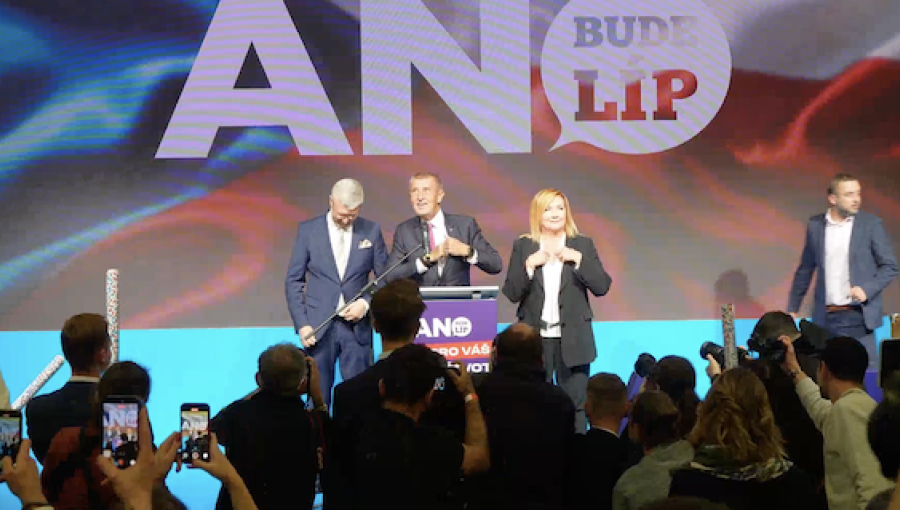
Czech billionaire ex-prime minister Andrej Babiš, the leader of the populist ANO party, is in talks with the far right and anti-EU Freedom and Direct Democracy (SPD) party and anti-green and staunchly Eurosceptic Motorists for Themselves to form the next government in Prague, after ANO's victory in the Czech general election this weekend.
Although it is not yet clear whether Babiš will be able to form an ANO minority cabinet, backed by SPD and the Motorists in the parliament, or bring SPD and the Motorists to government positions, it is likely that Czechia will have the most Eurosceptic cabinet yet seen.
“I will be a strong leader,” Babiš was quoted as saying by Czech Television (CT) on October 6, when he met SPD deputy Radim Fiala, sidelining earlier speculation that ANO’s number two Karel Havlíček could replace Babiš as the party’s nominee for prime minister to address his conflict of interest stemming from his ownership links to food, agriculture and chemical conglomerate Agrofert.
“There are talks between ANO, SPD and Motorists taking place, and these will certainly take place in many further rounds,” the country’s liberal President Petr Pavel was quoted as saying by Czech Radio (CRo), after he held talks with five party leaders at the Prague Castle.
Pavel is expected to task the scandal-hit Babiš, who is standing trial in a subsidy fraud case, with forming the cabinet despite the ANO leader’s controversies.
“We are putting together bodies of the Chamber of Deputies, that is, leadership and committees,” Fiala said after meeting Babiš, fuelling speculation that SPD leader Tomio Okamura could become the next parliament speaker. Okamura faces police charges following the investigation into the anti-immigration campaign carried out by the SPD last year.
Member of the European Parliament and the Motorists’ honorary chairman, Filip Turek, widely known since the European Parliament elections for his home collection of Nazi-era memorabilia, was more open with CT, telling the broadcaster that the Motorists could take the foreign affairs, environment and culture portfolios.
The Motorists became newcomers to the parliament after they made pledges not to take Czechia out of the EU and Nato in the latter part of their campaign. They also pushed to diffuse the controversies surrounding Turek, which include allegations of domestic violence, threats and rape of his ex-partner.
Motorists chairman Petr Macinka, a former aide to eurosceptic ex-president Václav Klaus, was clear in an interview with CRo that “the ambitions of the Motorists are to be part of the next government”.
Macinka also said that “I cannot imagine programme agreement with other political parties” besides ANO and the SPD, “because they want something totally contradictory to what we want”.
Macinka also pointed to previous cooperation between ANO and the Motorists in the Patriots for Europe European Parliament grouping. He concluded that he even expects to reach an agreement with ANO on budget issues, where the ANO programme requires more public spending while the Motorists campaigned on an austerity ticket.
ANO, like the Motorists, stated previously they it doesn’t want to challenge the country's EU and Nato memberships, in tune with largely pro-EU and pro-Western sentiments in the Czech society, but the SPD has repeatedly called for an EU membership referendum.
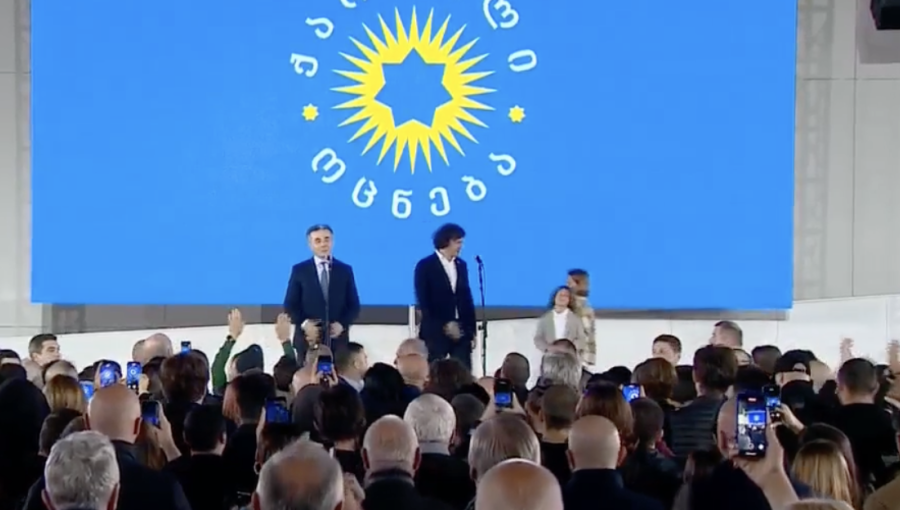
Georgia’s ruling Georgian Dream party secured a sweeping victory in nationwide local elections on October 4, according to preliminary results from the Central Election Commission (CEC).
The opposition partially boycotted the polls, which were held under what critics describe as an increasingly repressive political climate. On the day of the vote, an estimated 100,000 protesters gathered in Tbilisi in one of the country’s largest demonstrations in nearly a year.
With all 3,061 precincts counted, Georgian Dream won 80.8% of the vote in municipalities across the country, data from the CEC showed. In many constituencies, the party’s share exceeded 80% or even 90%, and its mayoral candidates ran unopposed in several races.
Official turnout was 40.93%, well below the level recorded in the previous municipal elections. Participation in the capital was the lowest nationwide, with only 31.08% of eligible voters casting ballots in Tbilisi, where incumbent mayor Kakha Kaladze was re-elected.
As voting was underway, tens of thousands of demonstrators filled Rustaveli Avenue and Liberty Square in central Tbilisi, calling for the resignation of the government and the formation of a “technical government.” The rally was one of the largest since protests began in late 2024 after Georgian Dream halted the country’s EU integration process.
The demonstration, mainly peaceful, turned chaotic in the evening when a group of protesters attempted to storm the presidential palace, as reported by bne IntelliNews' correspondent in Tbilisi. Riot police dispersed the crowd after clashes broke out.
The opposition had hoped the mass turnout would reinvigorate the protest movement that has persisted for months but failed to translate the show of support into a broader political breakthrough. By 9 pm, most demonstrators had left the area.
The local elections, which saw limited independent observation, are likely to further entrench the ruling party’s dominance in national politics and deepen divisions in Georgia.
Georgian Dream, founded by billionaire Bidzina Ivanishvili, has faced mounting criticism from Western governments and local activists for what they describe as democratic backsliding and pressure on independent media and civil society.
As the results came in, EU Enlargement Commissioner Marta Kos wrote on X: "Yesterday’s local elections in Georgia were held after months of increasing repression … Citizens’ rights to freedom of assembly & expression must be upheld.”

No comments:
Post a Comment