Hungary has world's second-largest LEGO plant after €140mn expansion
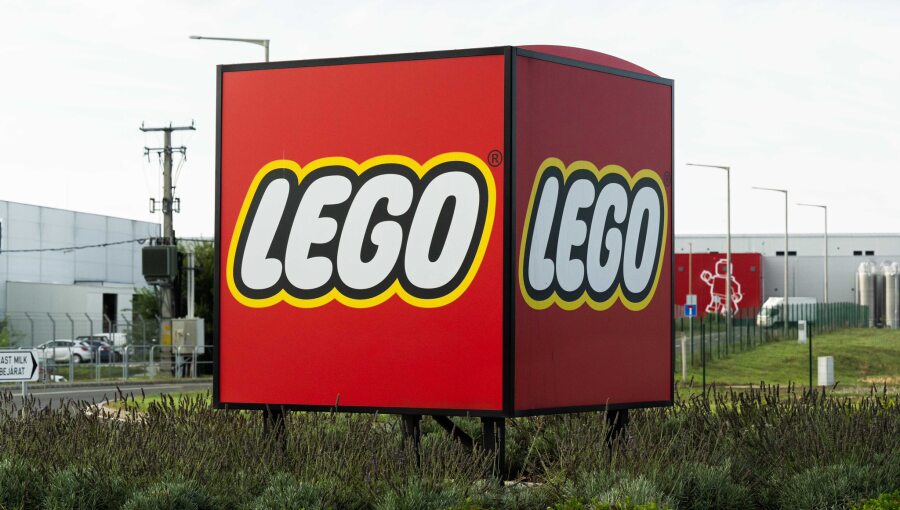
Danish toy maker LEGO has inaugurated a HUF54bn (€140mn) capacity expansion at its Hungarian base, making the manufacturing base in northeastern Hungary its second-largest plant globally and the largest in Europe, Minister of Foreign Affairs and Trade Péter Szijjártó said at a ceremony on October 2.
The government provided HUF4.3bn grant to the company, which is the region’s largest employer with 4,300 workers. LEGO added 300 new jobs and plans to increase its workforce to 5,000 next year.
Production capacity rose by 30% as the factory’s size grew by 262,000 sqm, and the plant now covers the entire manufacturing process, he added. LEGO installed more than 1,000 injection-molding machines and 73 packaging lines.
The Danish group plans to reduce its reliance on fossil gas and to reduce CO2 emissions by 37% by 2032, compared to 2019 at a global level
The Danish company plans to swap natural gas for geothermal heating to cover its electricity needs, and the capacity of the solar parks will exceed 17 MWp by the end of 2026. The site currently has three solar parks which contain more than 24,000 solar panels.
LEGO was recognised several times as one of the most attractive workplaces in Hungary.
The company reported a record HUF106bn in revenue last year, up from HUF92bn a year earlier. After-tax profit fell 9% to HUF2.4bn.
At the ceremony, Szijjarto said that bilateral trade between Hungary and Denmark rose to a new record and Hungarian exports to Denmark increased by 15% in 2025. In the past ten years, the government supported investments worth HUF230bn by seventeen Danish companies, creating 4,500 jobs, he added
‘We have the product to play the game’: Can BYD’s meteoric rise in Europe continue?
“The conversion rate from test drive to purchase is outstanding in every market,” BYD’s Maria Grazia Davino told The Big Question.
As the popularity of EVs continues to grow in Europe, so too does the strength of Chinese manufacturer BYD.
The firm's first models, the Atto 3, Han and Tang, officially hit European forecourts in late 2022, though other companies had begun importing them in the preceding years. Since then, their range has grown to offer at least 10 different vehicles.
According to data from the European Automobile Manufacturers’ Association (ACEA), BYD had a 1.1% market share of new vehicle registrations in the EU in July 2025, up from 0.4% in the same period the year before.
In the first half of 2025, unit sales increased 251.3% compared to the previous year, while EU new car registrations on the whole decreased 0.7% in that same period.
But with increased import tariffs for Chinese manufacturers making it harder to stay competitive, are European fears of a Chinese takeover unfounded?
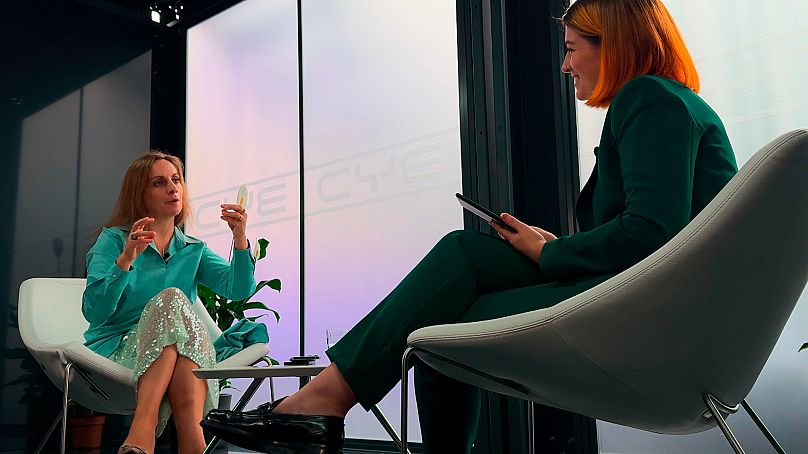
In this episode of The Big Question, Euronews reporter Hannah Brown sat down with Maria Grazia Davino, senior vice president and regional managing director at BYD Europe, to discuss the firm’s vision for its future in the bloc.
BYD takes on Europe
Davino, who joined the company earlier this year from Stellantis, spoke with a clear confidence in BYD’s vehicles. Perhaps, in part, due to her own experience.
“People sit in the car and you surprisingly see that the immediate acceptance is there—actually we exceed customers' expectations,” she explained.
“This is not only my direct experience, [it’s] what I observe, what customers tell me, what dealers tell me. The conversion rate from test drive to purchase is outstanding in every market.”
“BYD comes to Europe with a full commitment to enrich the industry,” Davino told The Big Question.
“We have superior technology and the product to play the game. There has been some narrative around it—like ‘you want to conquer’—no, it's not about conquering, we can't, we are so small compared to the others.
“I always say we are fuelled by the challenges that also humble us, and we are here to enrich the industry.”
Tougher competition for non-European companies
Right now in the EU, Chinese manufacturers pay an additional import tariff, on top of the standard 10%. SAIC, once China’s largest auto manufacturers, faces the steepest additional tariff at 35.3%. Geely, the parent company of Volvo, pays 18.8%, and BYD pays 17%.
Many vehicles made by the US firm Tesla are also manufactured in China, although the company’s additional tariff comes to just 7.8%. Despite this, BYD managed to outsell Musk’s famous EV brand in Europe for the first time in April 2025.
In addition to these tariffs, France recently announced incentives for consumers to buy EVs assembled in Europe and equipped with a European battery, a move designed to support European manufacturers.
“It just makes the competition tougher, but we are okay in competing,” Davino said.
“That's our company culture, you know. We are there to collaborate and compete, so we'll have to face it, be better, find alternatives so we will continue to compete.”
In a bid to strengthen the company’s presence in the bloc and boost competitiveness by avoiding import tariffs, BYD has established a manufacturing plant in Hungary. Production is set to begin by the end of the year.
“So the first product we will be producing there is a Dolphin Surf. And that's just a start, because at our plants, we can produce more than one car line, so that makes our productivity very flexible,” Davino told The Big Question.
“The teams at the dealers are also growing, and our brand in the market requests a certain number of qualified salespeople. So we also contribute to the [training and] qualification of these people.
Will hybrids continue to outperform EVs?
Right now, hybrids are the most popular vehicle by power type, making up 34.8% of all new car registrations in Europe in the first half of 2025.
The key to their popularity, according to Davino, is that they’re providing a “convenient alternative”.
“You have a true electric vehicle with a 100km range. For example with the Seal 6 DM-i Touring that we have brought on the market now, just launched, you have a vehicle that does not give you any anxiety. With our vehicle, you can go up to 1,350 kilometres range,” She claimed that recent drivers were able to drive from Warsaw to Munich without needing to stop to refuel.
As technology improves and EV range increases, Davino said she can’t predict if the popularity of full electrics will surpass hybrids, emphasising that it's consumers deciding the fate of the industry.
The Big Question* is a series from Euronews Business where we sit down with industry leaders and experts to discuss some of the most important topics on today’s agenda.****

No comments:
Post a Comment