Explainer
The geopolitically sensitive region of Ladakh in northern India recently experienced an unusual wave of anger after four civilians were killed in a protest by police, and a popular environmental activist was arrested. The discontentment in this fragile territory may not bode well for India’s Prime Minister Narendra Modi.
Issued on: 30/09/2025 -
FRANCE24
By: Diya GUPTA
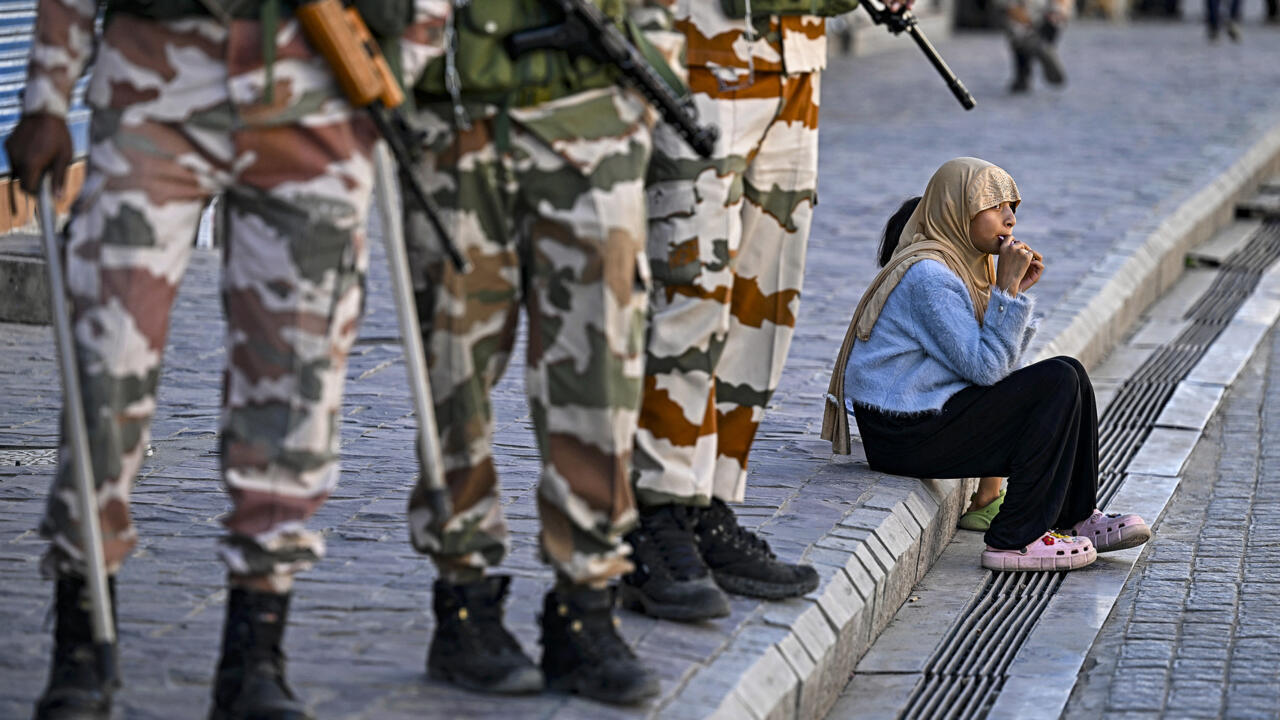
Indo-Tibetan Border Police (ITBP) personnel stand guard near closed shops as a girl enjoys a chocolate after curfew was partially relaxed for a few hours in Leh on September 27, 2025. © Tauseef Mustafa, AFP
Known for its stark beauty and strategic importance in South Asia, India’s northern Ladakh region had remained relatively calm for decades, despite being outlined by some of the most volatile borders in the world. That changed on September 24, after weeks of demonstrations and protests culminated in some of the worst violence in the area since the late 1980s.
Four died and dozens were injured after police opened fire when protesters – who had been peacefully demonstrating for weeks prior – set alight a local office of India’s ruling BJP (Bharatiya Janta Party), injuring security personnel. India’s Home Ministry said police fired in “self-defense” and blamed the violence on “provocative speeches” by Sonam Wangchuk, a popular climate activist who had led the demonstrations since September 10 by going on hunger strike. Wangchuk was subsequently arrested under India’s stringent National Security Act, for allegedly inciting violence.
The protests in Ladakh and, more significantly, New Delhi’s reaction to them, do not bode well for the Modi-led government, eroding trust in a region that has historically aligned with India’s central government during wars and frequent scuffles along the Line of Actual Control (LAC): the de facto line that separates Indian-controlled territory from territory controlled by China.
Growing demands for autonomy
The growing discontentment among Ladakhi people – particularly the younger generations – has been brewing for at least six years.
Ladakh was semi-autonomous until 2019 when the BJP government split it from the former Indian-administered state of Jammu and Kashmir. Under the new law, Ladakh lost its ability to self govern and was folded into India’s direct administrative control. At the time, many Ladakhi people including Wangchuk accepted the new administration, unlike in neighbouring Kashmir, which suffered a spate of violence and crackdown on any dissent.
But over time, Ladakhis began to feel that direct control from the centre did not work in their favour. The ruling BJP party within the territory agreed to autonomy: a promise that has not been met.
"People realised that losing all autonomy was a problem. We lost control over the land, over our own employment and many important decisions are in the hands of bureaucrats who don’t have knowledge of the people or culture," says Mohommad Ramzan Khan, a local lawyer who was born and raised in Ladakh’s capital Leh. Khan is a member of the Leh Apex Body, one of the groups responsible for organising the protests. "We had been appealing for statehood – some legislative control or constitutional safeguard that would give local people agency," he says.
Known for its stark beauty and strategic importance in South Asia, India’s northern Ladakh region had remained relatively calm for decades, despite being outlined by some of the most volatile borders in the world. That changed on September 24, after weeks of demonstrations and protests culminated in some of the worst violence in the area since the late 1980s.
Four died and dozens were injured after police opened fire when protesters – who had been peacefully demonstrating for weeks prior – set alight a local office of India’s ruling BJP (Bharatiya Janta Party), injuring security personnel. India’s Home Ministry said police fired in “self-defense” and blamed the violence on “provocative speeches” by Sonam Wangchuk, a popular climate activist who had led the demonstrations since September 10 by going on hunger strike. Wangchuk was subsequently arrested under India’s stringent National Security Act, for allegedly inciting violence.
The protests in Ladakh and, more significantly, New Delhi’s reaction to them, do not bode well for the Modi-led government, eroding trust in a region that has historically aligned with India’s central government during wars and frequent scuffles along the Line of Actual Control (LAC): the de facto line that separates Indian-controlled territory from territory controlled by China.
Growing demands for autonomy
The growing discontentment among Ladakhi people – particularly the younger generations – has been brewing for at least six years.
Ladakh was semi-autonomous until 2019 when the BJP government split it from the former Indian-administered state of Jammu and Kashmir. Under the new law, Ladakh lost its ability to self govern and was folded into India’s direct administrative control. At the time, many Ladakhi people including Wangchuk accepted the new administration, unlike in neighbouring Kashmir, which suffered a spate of violence and crackdown on any dissent.
But over time, Ladakhis began to feel that direct control from the centre did not work in their favour. The ruling BJP party within the territory agreed to autonomy: a promise that has not been met.
"People realised that losing all autonomy was a problem. We lost control over the land, over our own employment and many important decisions are in the hands of bureaucrats who don’t have knowledge of the people or culture," says Mohommad Ramzan Khan, a local lawyer who was born and raised in Ladakh’s capital Leh. Khan is a member of the Leh Apex Body, one of the groups responsible for organising the protests. "We had been appealing for statehood – some legislative control or constitutional safeguard that would give local people agency," he says.
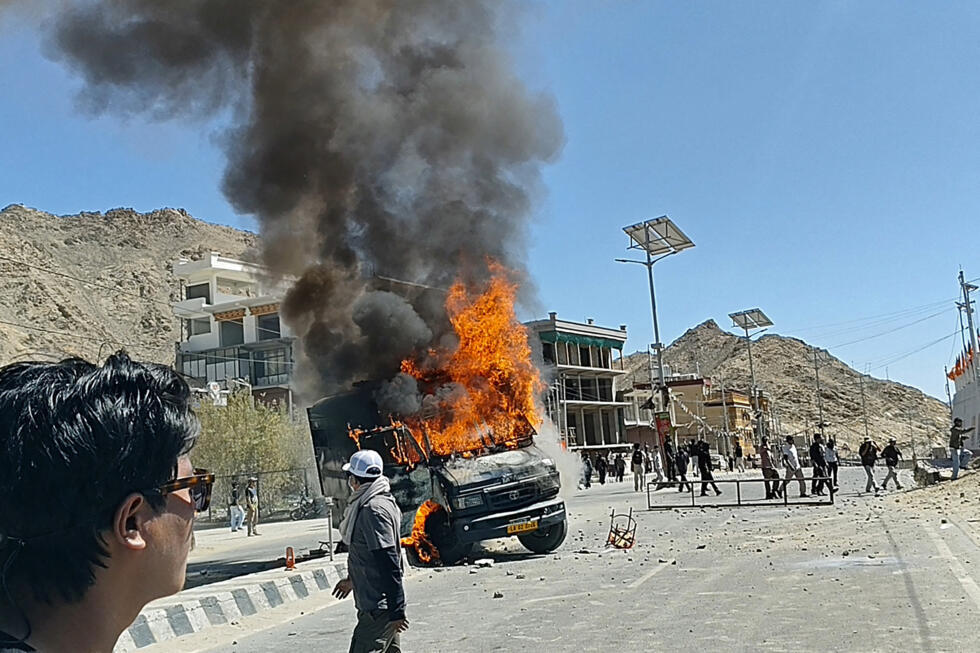
A police vehicle torched by demonstrators is pictured along a street near the Bharatiya Janata Party (BJP) office in Leh on September 24, 2025. © Tsewang Rigzin, AFP
One of the most pressing issues aside from widespread unemployment, according to Khan, is how Ladakh’s fragile lands and ecosystems have been handled. "The land is linked to the culture here, and its ecosystem is very vulnerable to all of these industries and hotels that are opening," he explains. Since bringing Ladakh under its control, the government has announced large-scale tourism, solar and industrial projects in Ladakh that require thousands of acres of land. Khan adds that despite the rampant development, Ladakh’s youth remain unemployed.
Ladakh’s local advocacy bodies, which mainly comprised the Leh Apex Body and Kargil Democratic Alliance, had been appealing for autonomy for years, but the Modi-led central government continues to ignore the demands. The frustrated Ladakhi population, led largely by the two groups and Sonam Wangchuk, began a formal demonstration on September 10. Wangchuk – considered a hero by many for his environmental work – went on a hunger strike along with his followers, refusing to eat until their demands were met.
‘A kind of Gen-Z revolution’
The protests remained peaceful until the 14th day of the hunger strike, when two elderly demonstrators on hunger strike collapsed and had to be hospitalized. This was the turning point that, according to Khan, spurred Ladakh’s youth to join the movement.
Khan was shocked by what he saw the next day. Martyrs Park, where the protests were taking place, was so full of protesters there was barely any space to move. "There must have been six or seven thousand people there. I hadn’t expected it at all." Khan adds that most of the protesters on that day were young, and as Wangchuk himself said in a video statement, "It was an outburst of youth, a kind of Gen-Z revolution, that brought them to the streets."
One of the most pressing issues aside from widespread unemployment, according to Khan, is how Ladakh’s fragile lands and ecosystems have been handled. "The land is linked to the culture here, and its ecosystem is very vulnerable to all of these industries and hotels that are opening," he explains. Since bringing Ladakh under its control, the government has announced large-scale tourism, solar and industrial projects in Ladakh that require thousands of acres of land. Khan adds that despite the rampant development, Ladakh’s youth remain unemployed.
Ladakh’s local advocacy bodies, which mainly comprised the Leh Apex Body and Kargil Democratic Alliance, had been appealing for autonomy for years, but the Modi-led central government continues to ignore the demands. The frustrated Ladakhi population, led largely by the two groups and Sonam Wangchuk, began a formal demonstration on September 10. Wangchuk – considered a hero by many for his environmental work – went on a hunger strike along with his followers, refusing to eat until their demands were met.
‘A kind of Gen-Z revolution’
The protests remained peaceful until the 14th day of the hunger strike, when two elderly demonstrators on hunger strike collapsed and had to be hospitalized. This was the turning point that, according to Khan, spurred Ladakh’s youth to join the movement.
Khan was shocked by what he saw the next day. Martyrs Park, where the protests were taking place, was so full of protesters there was barely any space to move. "There must have been six or seven thousand people there. I hadn’t expected it at all." Khan adds that most of the protesters on that day were young, and as Wangchuk himself said in a video statement, "It was an outburst of youth, a kind of Gen-Z revolution, that brought them to the streets."
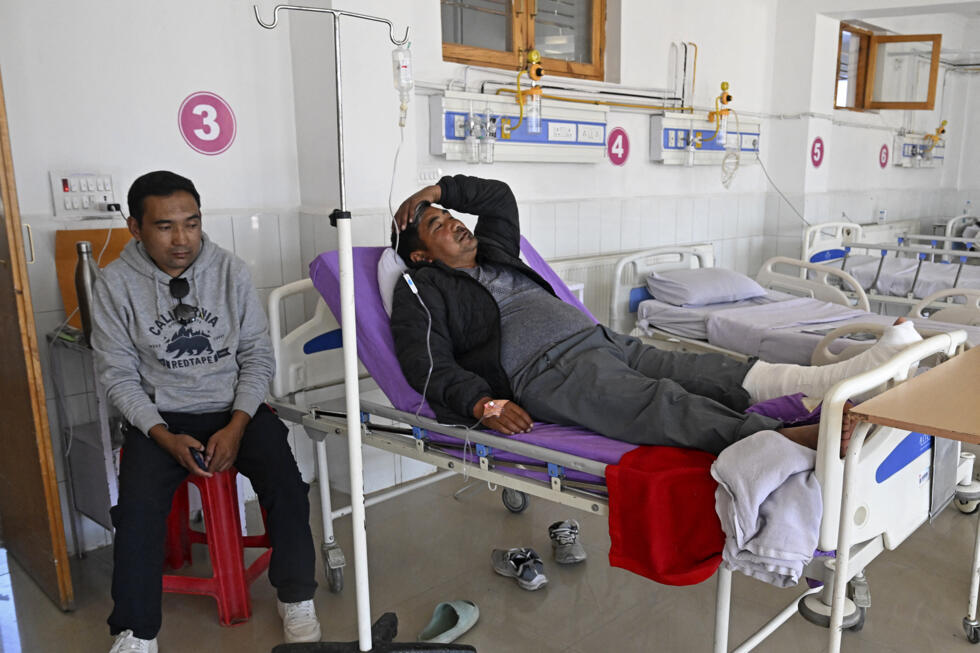
An injured protester undergoes treatment at a local hospital in Leh on September 25, 2025. © Tauseef Mustafa, AFP
Khan says the younger generation "seemed frustrated with all of us appealing for peaceful protests" and became rowdy. "They threw stones, torched a police vehicle and then went up to the BJP office and burnt it. I think they were fed up with us too. They had lost that faith in government and democracy."
Sonam Wangchuk made public appeals to end the violence, and called off his own hunger strike before his arrest on September 26. Since the clashes, a curfew has been in place in several parts of the territory.
Khan says the younger generation "seemed frustrated with all of us appealing for peaceful protests" and became rowdy. "They threw stones, torched a police vehicle and then went up to the BJP office and burnt it. I think they were fed up with us too. They had lost that faith in government and democracy."
Sonam Wangchuk made public appeals to end the violence, and called off his own hunger strike before his arrest on September 26. Since the clashes, a curfew has been in place in several parts of the territory.
A case of tragic irony
In a case of tragic irony, one of the four local men who were killed at the protests was a 46-year-old soldier who served in the Indian army and fought in the 1999 Kargil war against Pakistan. Videos of the man's tearful father have been going viral on social media.
Ladakhi soldiers have played a key role in fighting India’s battles along these volatile borders. The region has seen multiple wars over the past decades with Pakistan and with China, with whom India has had several border skirmishes in recent years.
Read moreChinese weapons pass combat test in India-Pakistan clash – with flying colours
"My own father and grandfather served with the Indian army," says Ramzan Khan. "Almost every home in the area has someone who’s fought at the border – so there’s a huge sense of betrayal right now, and a huge change of sentiment towards the central government." Indian officials have also labelled the protesters ‘anti-national’, even alleging that they may have had foreign influence and funding from Pakistan or China. "There has been a huge shift in sentiment – not towards the country, but towards the administration".
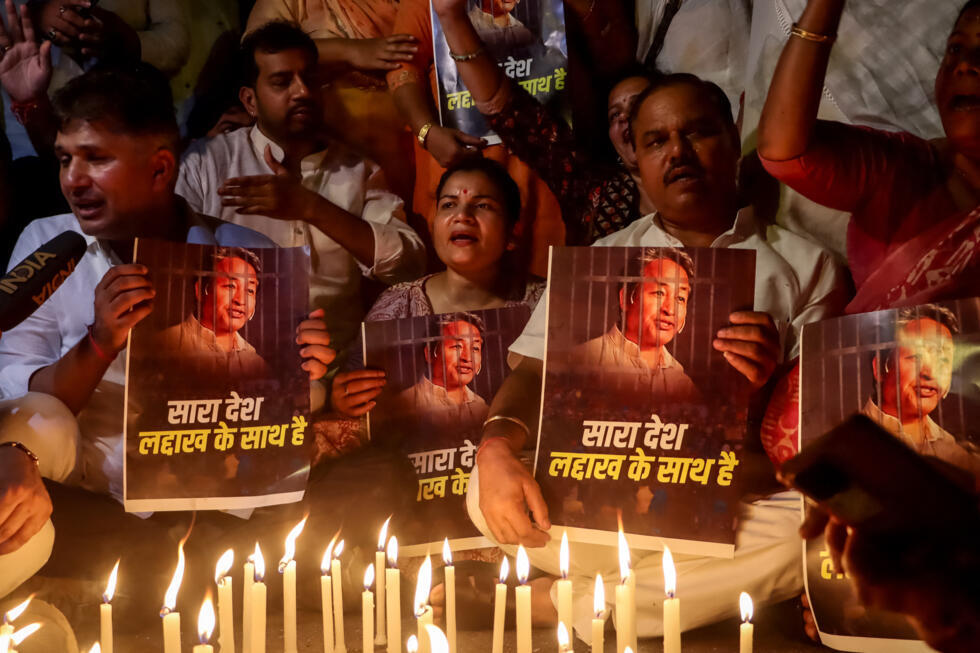
Supporters of the Aam Aadmi Party (AAP) take part in a candlelight vigil protesting against the arrest of climate activist Sonam Wangchuk, at Jantar Mantar in New Delhi on September 26, 2025. © AFP
According to Taiwan-based Indo-China analyst Aadil Brar, media in China has been pointing out the irony in arresting Wangchuk (who is well known in China as the inspiration behind a hugely popular Bollywood film) and labelling him ‘anti-national’. Wangchuk had vocally called for the boycott of Chinese goods to protest against the ‘expansionist’ attitude of the Chinese government. "The patriotic voice that spoke out against China is now being detained by his own government for a peaceful protest. In that regard, Indian democracy comes across as unstable and fragile in the Chinese media," he says.
‘A playground for India and China’
Brar says that while there hasn’t been any official word from China, the context of the protests means they have greater geopolitical significance. Ladakh is a high-altitude plateau that is flanked by two contentious zones. To its east lies Aksai-Chin, which is held by China but claimed by India, and to its West lies Gilgit Baltistan, in Pakistan-administered Kashmir.
According to Taiwan-based Indo-China analyst Aadil Brar, media in China has been pointing out the irony in arresting Wangchuk (who is well known in China as the inspiration behind a hugely popular Bollywood film) and labelling him ‘anti-national’. Wangchuk had vocally called for the boycott of Chinese goods to protest against the ‘expansionist’ attitude of the Chinese government. "The patriotic voice that spoke out against China is now being detained by his own government for a peaceful protest. In that regard, Indian democracy comes across as unstable and fragile in the Chinese media," he says.
‘A playground for India and China’
Brar says that while there hasn’t been any official word from China, the context of the protests means they have greater geopolitical significance. Ladakh is a high-altitude plateau that is flanked by two contentious zones. To its east lies Aksai-Chin, which is held by China but claimed by India, and to its West lies Gilgit Baltistan, in Pakistan-administered Kashmir.
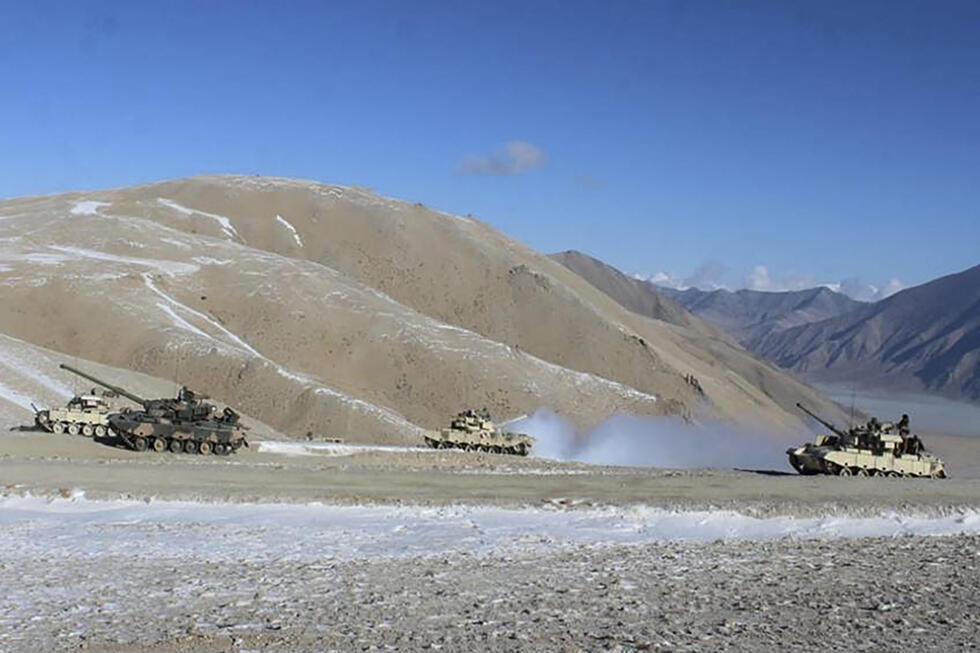
This undated handout photograph released by the Indian Army on February 16, 2021 shows Chinese soldiers and tanks during military disengagement along the Line of Actual Control. © Indian army via AFP
"You have to think of this region as a militaristic playground for India and China. This is an active military zone between two nuclear armed powers, with thousands of troops on either side: by some reports, over 100,000 each. Both countries have invested so much to develop the region's infrastructure. And Ladakh holds so much historical significance. In the Chinese narrative, the border remains unsettled. So you have to place the protests and uprisings within that framework. The ongoing discontentment will not be a good thing for New Delhi, especially in the long run."
For now, China and India are experiencing a moment of relative calm along the border. Ladakh’s future and autonomy are still to be determined, but the Modi government's attitude towards the protests is likely to alienate a community of people whose cooperation has been key in maintaining relative stability. Whether that instability will affect relationships and borders with India’s neighbours is yet to be seen.
"You have to think of this region as a militaristic playground for India and China. This is an active military zone between two nuclear armed powers, with thousands of troops on either side: by some reports, over 100,000 each. Both countries have invested so much to develop the region's infrastructure. And Ladakh holds so much historical significance. In the Chinese narrative, the border remains unsettled. So you have to place the protests and uprisings within that framework. The ongoing discontentment will not be a good thing for New Delhi, especially in the long run."
For now, China and India are experiencing a moment of relative calm along the border. Ladakh’s future and autonomy are still to be determined, but the Modi government's attitude towards the protests is likely to alienate a community of people whose cooperation has been key in maintaining relative stability. Whether that instability will affect relationships and borders with India’s neighbours is yet to be seen.

No comments:
Post a Comment