
Port fees have kicked in after Washington said China's dominance of the global maritime, logistics and shipbuilding sectors resulted from unfair policies and practices.

China-owned COSCO is expected to end up paying almost half of the US port fees incurred (FILE: January 22, 2021)Image: DPR/picture alliance
The US and China on Tuesday began charging additional port fees on vessels linked with each other's country as a trade war between the world's two largest economies moves to the high seas.
US President Donald Trump's administration announced earlier this year it would be imposing the fees on China-linked ships, prompting the reciprocal move by Beijing announced last week.
What are the port fees?
China has said special charges will be levied on ships that are US-owned, operated, built or flagged but that Chinese-built vessels would be exempted.
Another exemption will be empty ships that are going to Chinese shipyards to be repaired, according to a report by state broadcaster CCTV.
The extra port fees charged by China are to be collected at the first port of entry on a single voyage or for the first five voyages within a year, with the billing cycle starting on April 17.
US probe suggests unfair practices by China
The move by Washington to impose the fees on Chinese-linked shipping came after an investigation by the previous administration of President Joe Biden concluded that China's dominance of the global maritime, logistics and shipbuilding sectors resulted from unfair policies and practices.
Analysts say that China-owned container carrier COSCO is likely to be hardest hit by the new fees, which are expected to cost $3.2 billion (€2.8 billion) in 2026.
The port fees come as the trade war between the US and China escalated further on Friday, with Trump threatening to impose new 100% tariffs on goods from China in return for China cutting its exports of critical minerals.
Trump also threatened to put export controls on "any and all critical software" by November 1.
Edited by: Wesley Rahn
Timothy Jones Writer, translator and editor with DW's online news team.
USTR and Chinese Retaliation Take Center Stage
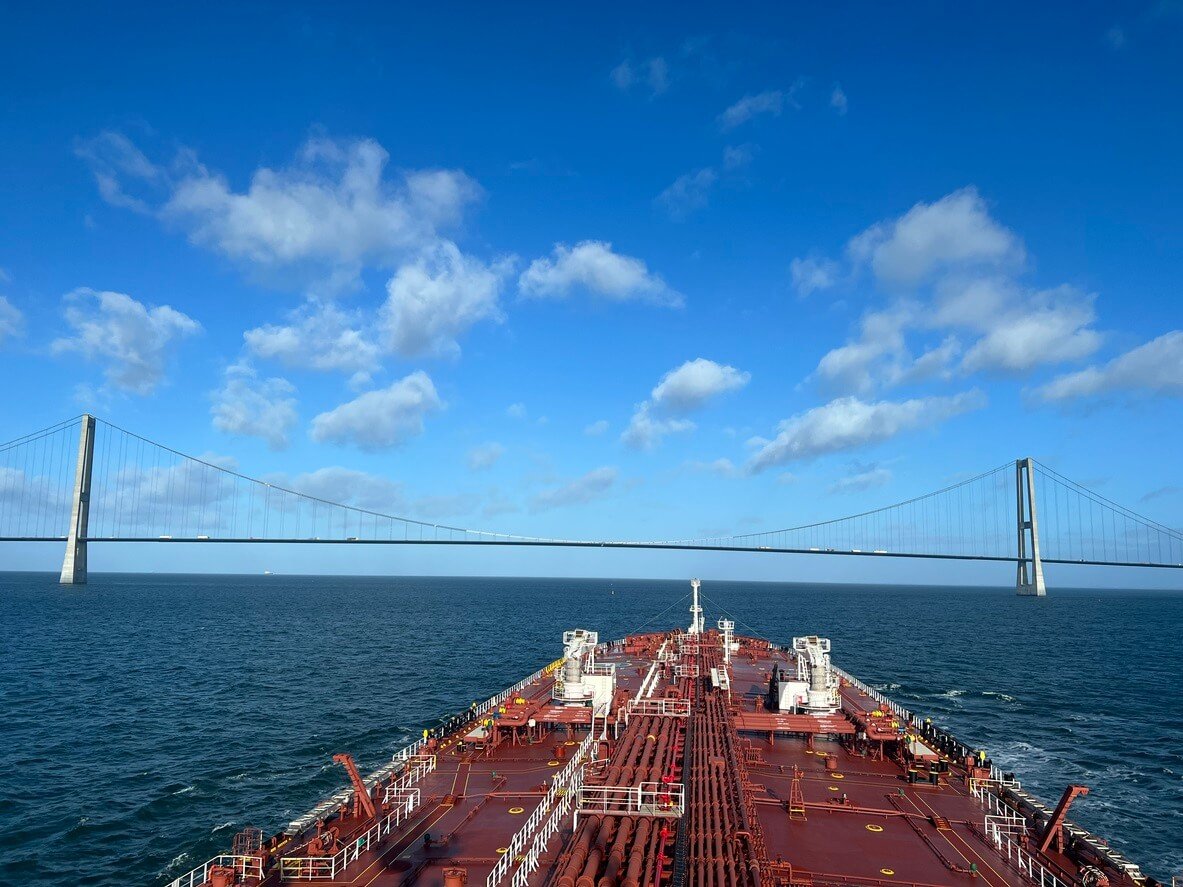
On Tuesday, October 14, the port fees targeting the Chinese maritime sector will go into effect. The Office of the United States Trade Representative (“USTR”) announced these fees in a detailed notice on April 17, 2025, but the plan included a 180-day grace period. The grace period allowed vessel owners and operators to adjust their operations and/or reposition their vessels to minimize the impact of these fees.
On Friday morning, the Chinese Ministry of Transport (MOT) announced that China will impose their own fees, targeting vessel with U.S. connections. The Chinese port levies are a direct “tit-for-tat” response to the USTR fees, which, according to China “seriously violate the fundamental principles of international trade and the China–U.S. Maritime Agreement, causing severe disruption to maritime trade between the two countries.” These Chinese port fees, which will also go into effect on October 14 and are equivalent to the USTR charges imposed on Chinese owned/operated vessels, have thrown the tanker market in turmoil. It seems that, not for the first time, the shipping industry is caught up in the geopolitical jostling between the United States and China.
According to the announcement of the Chinese MOT, the “Special Port Service Fee” will be imposed on the following categories of vessels: (1) Vessels owned by U.S. enterprises, organizations, or individuals; (2) Vessels operated by U.S. enterprises, organizations, or individuals; (3) Vessels owned or operated by enterprises or organizations in which U.S. enterprises, organizations, or individuals directly or indirectly hold 25% or more of the equity, voting rights, or board seats; (4) Vessels flying the U.S. flag, and (5) Vessels built in the United States. The fee levels, phased implementation and the additional provisions (only pay at the first port of call and no more than five times per year) closely mirror those of the USTR (see Tables 1 and 3).
What will be the implications of these Chinese fees? The number of U.S. flagged and /or U.S. built vessels is small and they rarely call China, so the impact on those vessel categories will be minimal. However, the fees are also applicable to vessels owned or operated by US businesses, organizations or individuals. More importantly, it covers ships owned by companies in which US individuals directly or indirectly hold 25% or more of the company’s equity, including voting rights and board seats. This casts a wide net and could affect many public shipping companies with a listing on U.S. stock exchanges. The potential impact is significant.
At this point, it remains unclear what will happen next. According to one of our brokers, the tanker market has been “frozen” after the Chinese announcement. Many vessels that could be impacted by this rule are already on their way to China. Will they be exempt from these fees since their fixtures predate the announcement or not? Will owners try to get (Chinese) charterers to pay? What do charterparties say about this? Will private non-U.S. shipowners be in the driver’s seat now? The VLCC market already jumped on the back of new OFAC sanctions which targeted several Chinese ports and terminals because of their role in facilitating Iranian crude imports into China. Are further freight rate increases in the cards?
At first glance, these new fees, if they are indeed implemented and enforced as written, are likely to hurt China more than the U.S, at least in the short term. The heightened uncertainty in the market will cause owners that are at risk of being subject to these fees to avoid Chinese cargoes. This will limit the pool of available vessels for Chinese charterers and likely mean higher transportation costs for Chinese imports. We will need to wait to see if and how these measures will be implemented. According to their announcement, “The Chinese Ministry of Transport will formulate and issue detailed implementation measures in due course.” It will be an interesting few days until October 14.
The opinions expressed herein are the author's and not necessarily those of The Maritime Executive.

No comments:
Post a Comment